
by Anthony Murisco, Public Engagement Librarian
Labor Day is now behind us. This can only mean one thing for the students of New York City: It’s time for school to start again. The first day of school creeps up differently in other parts of our country. As a former public-school student from Long Island, I always think of Labor Day as the last day of freedom. Even if you have a day or two before the actual start, those hours are spent shopping, cramming in that reading list, and getting into the school mindset once again.
Whether it comes from a friend you haven’t seen all summer or as part of an assignment, one of the classic questions on the first day of school is always “How did you spend your summer?” In honor of the students attending classes for the first time this week, I wanted to share my own summer experience at California Rare Book School in Los Angeles.

Since 2005, the California Rare Book School, CalRBS for short, has been able to provide professional development to those interested in rare and historical work. Their courses serve a wide array of needs of those interested in information science, whether library professionals, museum curators, or rare book collectors. All are invited to apply. The project is headed by the Department of Information Studies at the School of Education and Information Studies over at UCLA.

Most of the CalRBS courses take place at the UCLA Campus, though the school is looking to expand. During this summer, a few courses were offered online, one in Mexico, and another in Brooklyn in conjunction with Booklyn. One course this summer even took place at The Huntington!

There are no prerequisites, and you don’t need to be affiliated with a library or university to apply. I met fellow students ranging from recent college graduates to lifelong learners and university librarians to rare book dealers. It’s a diverse group of individuals!
Each course only accepts twelve students. The small class sizes allow for better discussion and further involvement with the material. Your cohort is together from about 9am-5pm for the entire week. Don’t worry, there’s plenty of time for networking with the book aficionados from the other courses during the breaks or the various after-hours events.
Students are expected to attend the entire week. Be punctual! You’re expected to complete the assigned readings before class and participate in discussions. Different courses have different expectations.
In my course, “Pop Bibliography,” we were also expected to complete a final project. Building on what we had learned throughout the week, we were to inspect a tome from popular culture and look at it through a “pop bibliographic” lens.
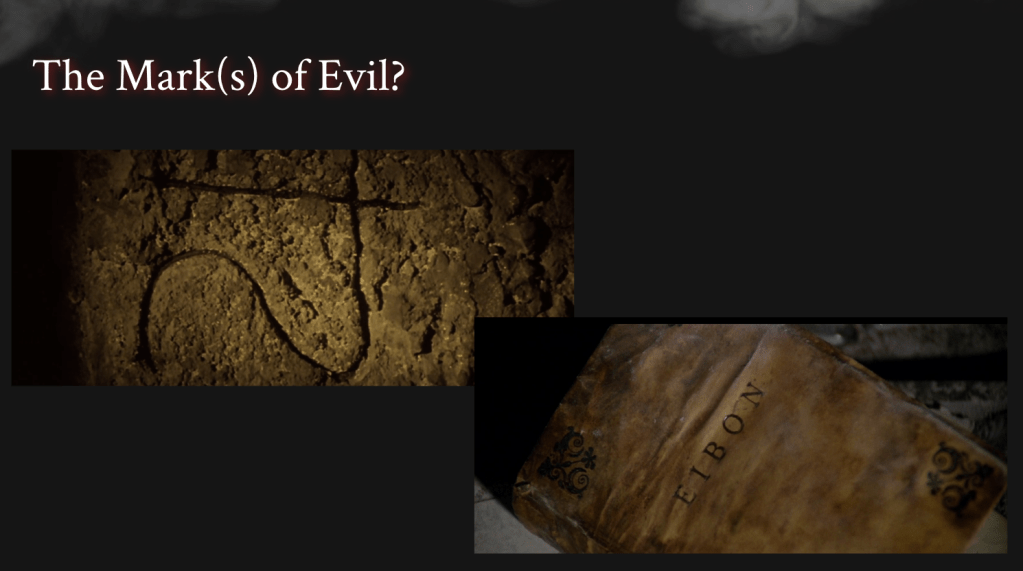
As someone with a background in Culture Studies, I was excited to see Pop Bibliography on the menu this past summer. I’ve immersed myself in pop culture as far back as I can remember. Adding bibliography into the mix was just combining my two favorite things!
“Pop Bibliography” concerns the study of book history through a popular lens. We were looking at why old, dusty, or mystical books are made to look as they do in the media we consume. How did matters end up with this way? And what are we to make of the fetishization of books in our current culture?
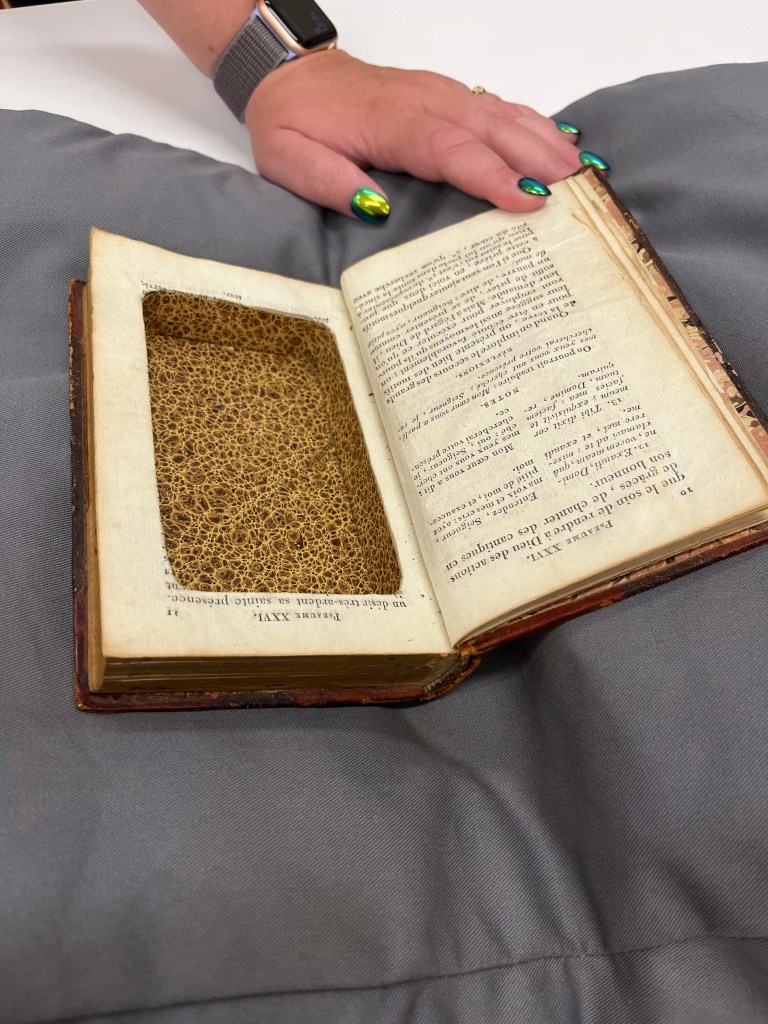
The course instructor, Allie Alvis, is the curator of special collections over at the Winterthur Library. That library has a fantastic online presence. You may have seen their social media accounts, Book Historia, where Allie provides an up-close look at rare books. Showing the items in this format opens them up to a whole new audience. Some viewers may have never seen an illuminated manuscript handled before. Allie even had one of their videos go viral about the myth of using white gloves to handle rare material.

Not only did Allie have an exciting schedule of topics prepared for us, but they invited outside speakers as well!
Prop-maker, collector, and historian Michael Corrie shared items and stories behind some of the screen’s various literature.

We got to listen and speak to game designer, Josh Sawyer, talk about the Peabody-award-winning game he directed, Pentiment. The story concerns a 16th-century illuminator caught up in a murder mystery plot. Beautiful and highly researched, accurate text abounds.

There were also a few class trips! We were treated to a look at some of the holdings over at The Getty with the associate curator of manuscripts, Larisa Grollemond. We got to see authentic Middle Age binding as well as rebound manuscripts.

A whole day was spent over at The Huntington. First, we looked inside their exhibit, “Remarkable Works, Remarkable Times,” where we were treated to iconic pieces from their collection, including an Ellesmere manuscript of Chaucer’s The Canterbury Tales. Joel Klein, the Molina Curator for the History of Medicine and Allied Sciences, gave us a presentation of various materials. This included the recently acquired (or reacquired) Vesalius book, De humani corporis fabrica. After recent coverage we felt as if we were being introduced to a celebrity! Afterwards the rest of the RBS students joined our class for a presentation by Magali Rabasa on radical publishing in Latin America. We got to see how the same book was reworked by the different presses, leading to different expressions of the material object.
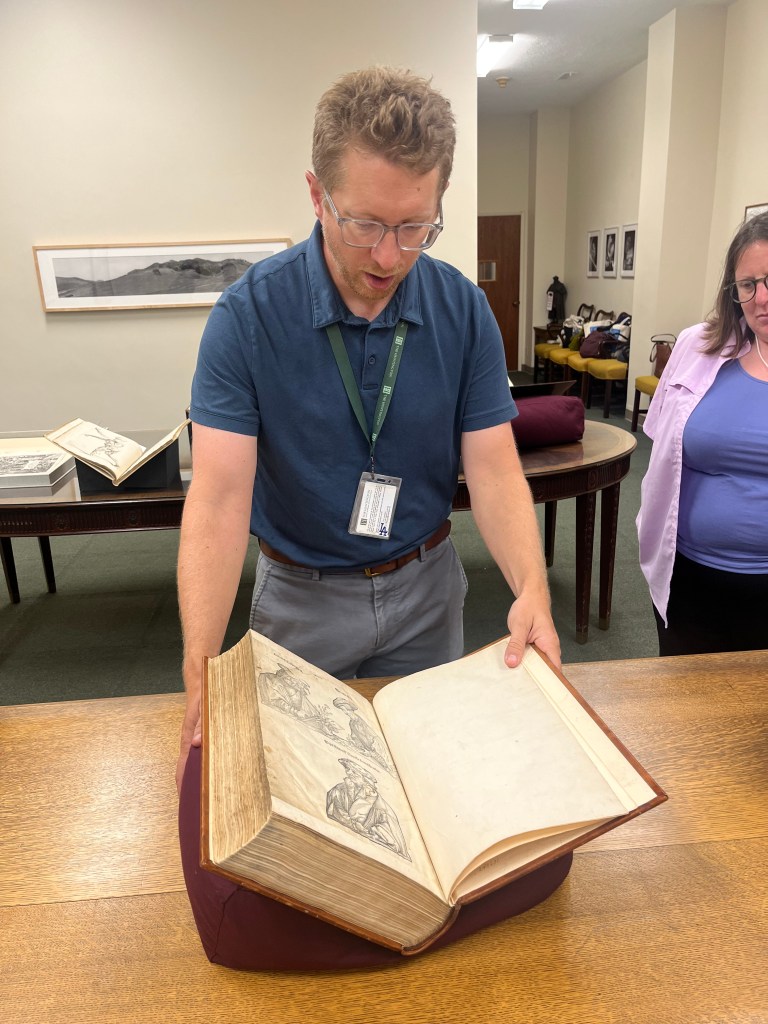
As we were on the campus, we got a glimpse at some of the items in the UCLA Special Collections. Jet Jacobs, Head of Public Services, Outreach and Community Engagement, brought us on a tour.
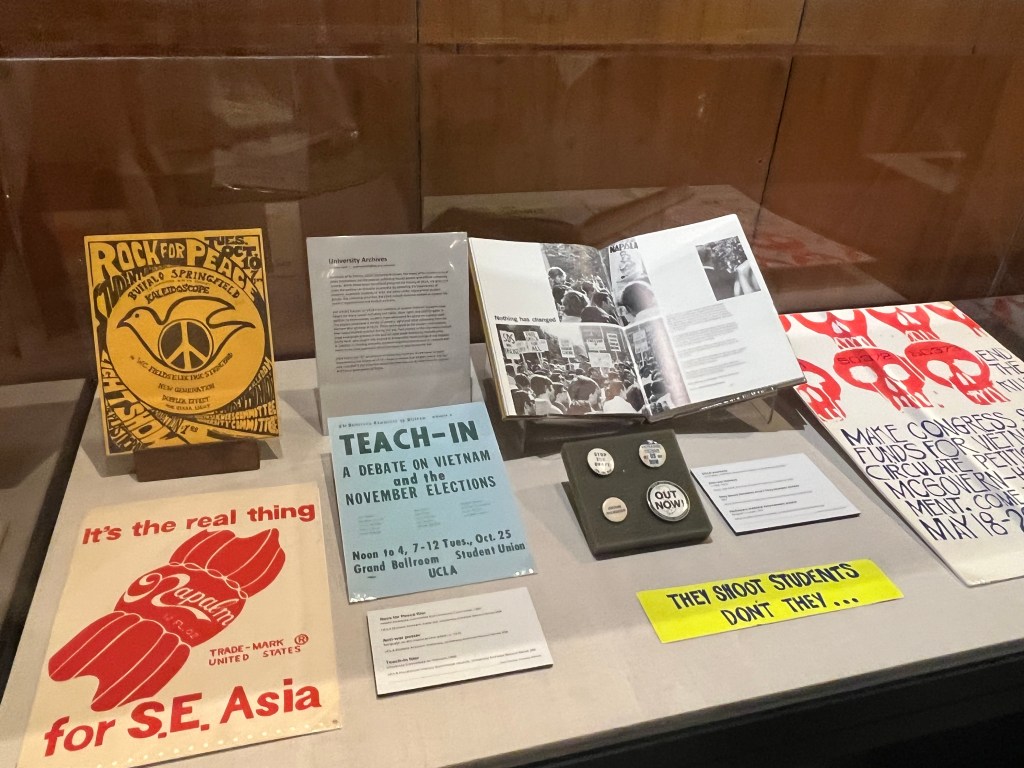
Although our focus was on Western material, Devin Fitzgerald, Curator of Rare Books and History of Printing, as well as a specialist in East Asian book history, gave us a chance to look at items printed in China, Japan, and Korea.

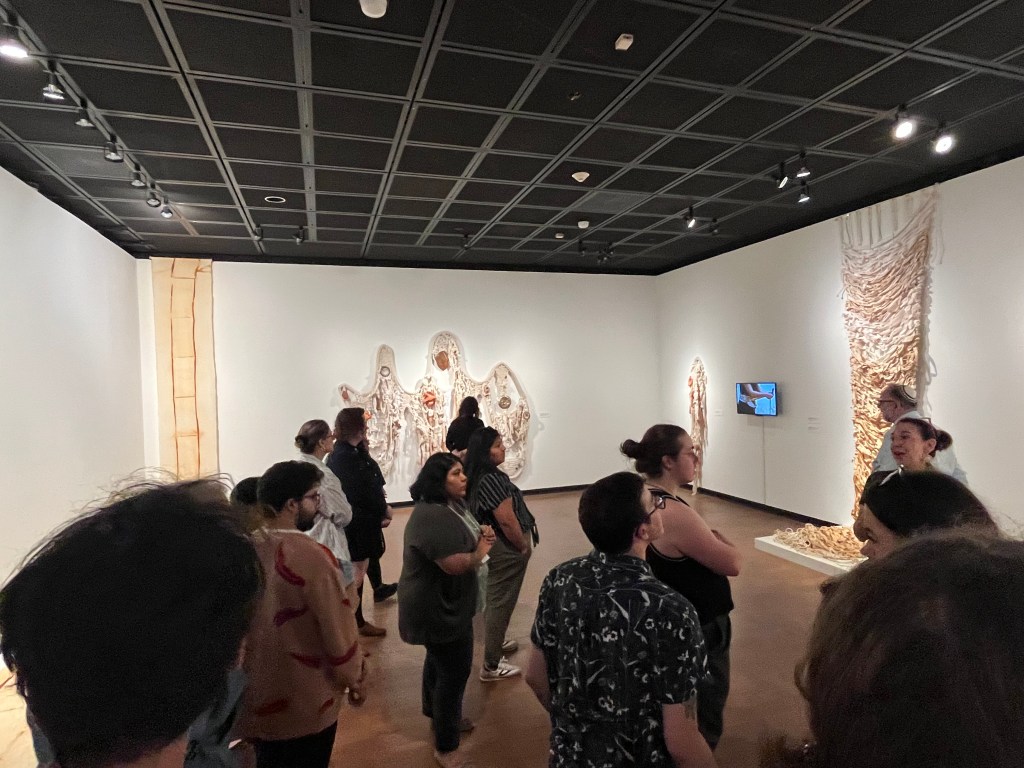
We ended our week with a department-wide celebration at the Fowler Museum at UCLA. They gave us a special tour of their latest exhibit, Sangre de Nopal/Blood of the Nopal. This exhibition teaches visitors about the Indigenous origins of cochineal, a particular red dye that was developed and first used by the Zapotec peoples. The exhibit featured work by Tanya Aguiñiga and Porfirio Gutiérrez.
I will admit that I was surprised how wiped out I was by the end of the week. I hadn’t been in a grad school class in a few years. College was even further away. Nine-to-five learning is quite a workout for your brain. Then you must go back to your room to do the readings for the next day, or perhaps a small assignment. Working on the final project takes time that you need to budget for too. I won’t deny the intensity of the program, but those who enroll will feel highly rewarded afterwards. There’s a reason why it’s going to celebrate twenty years in 2025. A huge thank you to Allie Alvis, Robert D. Montoya, Sean Pessin, and Liza Mardoyan. I am looking forward to seeing what classes are going to be offered next year!

Whether we realize it or not, a lot of our first glimpses of “rare” or “old” books come from popular culture. For one, the Walt Disney animated canon is full of them. Before we get to the animation and songs, we see those mighty books open. Our first taste of public health is no exception. How many future doctors first heard of Gray’s Anatomy through the wordplay of the long-running nighttime soap, Grey’s Anatomy? What about those who were inspired by seeing the young Doc McStuffins perform exams on her stuffies?
Despite being noted as a type of populism, there is a merit to studying and immersing yourself in popular culture. Culture critic Richard Dyer sees the work as a “battleground between progressive, subversive and conservative meanings.” That idea may make sitting through reruns of a Housewives franchise with your friends a little more palatable.
References:
Nowak, Samuel. “Popular Is Political Richard Dyer Talks to Samuel Nowak about Popular Culture, University and Politics.” Interviews, Museum of Contemporary Art in Krakow, Jan. 2012, en.mocak.pl/popular-is-political-richard-dyer-talks-to-samuel-nowak-about-popular-culture-university-and-politics. Accessed 04 Sept 2024.
 Books, Health and History