Researching Neuropsychiatry and Veterans Hospitals During the 1930s at the New York Academy of Medicine 

By Dr. Michael Robinson, National Army Museum Research Fellow, University of Birmingham (UK), and the Library’s 2024 Paul Klemperer Fellow in the History of Medicine 

I spent one month working in the New York Academy of Medicine’s magnificent library and reading room in the autumn of 2024. This residency enabled me to look at a host of materials dedicated to the treatment of mentally ill American Army veterans of the First World War during the Great Depression (1929–1939). I undertook this research hoping to utilise the USA as an important comparative case study on my current research project dedicated to mental illness and British Great War veterans during the 1930s. By examining mental breakdown and psychiatric medical care during this decade, this research seeks to reveal the delayed traumatic after-effects of war service on ex-service personnel and the potential for additional psychosocial determinants to influence mental ill-health.  

I first became interested in the American experience of post-First World War disability and mental healthcare owing to its regular appearance in the archival records of Britain’s Ministry of Pensions, the government agency responsible for distributing veterans’ pensions and medical care. During the inter-war period, British policymakers regularly cited the US experience of veteran after-care as a deterrent and a case study to avoid replicating. They actively held up the US system as being unfairly exclusive, costly, and liberal owing to its incremental but costly expansion of veteran rights and facilities. Britain significantly reduced its liability on behalf of veterans during the 1920s and 1930s, including the closure of most veterans’ hospitals. Veterans’ medical care in Britain was primarily outsourced to broader public health facilities, the civilian welfare state, and the charity sector.  

By contrast, the US witnessed increased state liability, including a vast financial outlay in funding exclusive Veterans Administration (VA) hospitals and medical facilities. In 1936, owing to the two nations’ inversed approaches to veteran care, one Ministry of Pensions official described the UK and US responses as being of ‘opposite extremes.’1 The primary purpose of my time at the NYAM was to better understand why the British and US systems were the complete inverse of one another. I also sought to appreciate how these contrasting policy trajectories and medical infrastructures affected the lives of mentally ill veterans.  
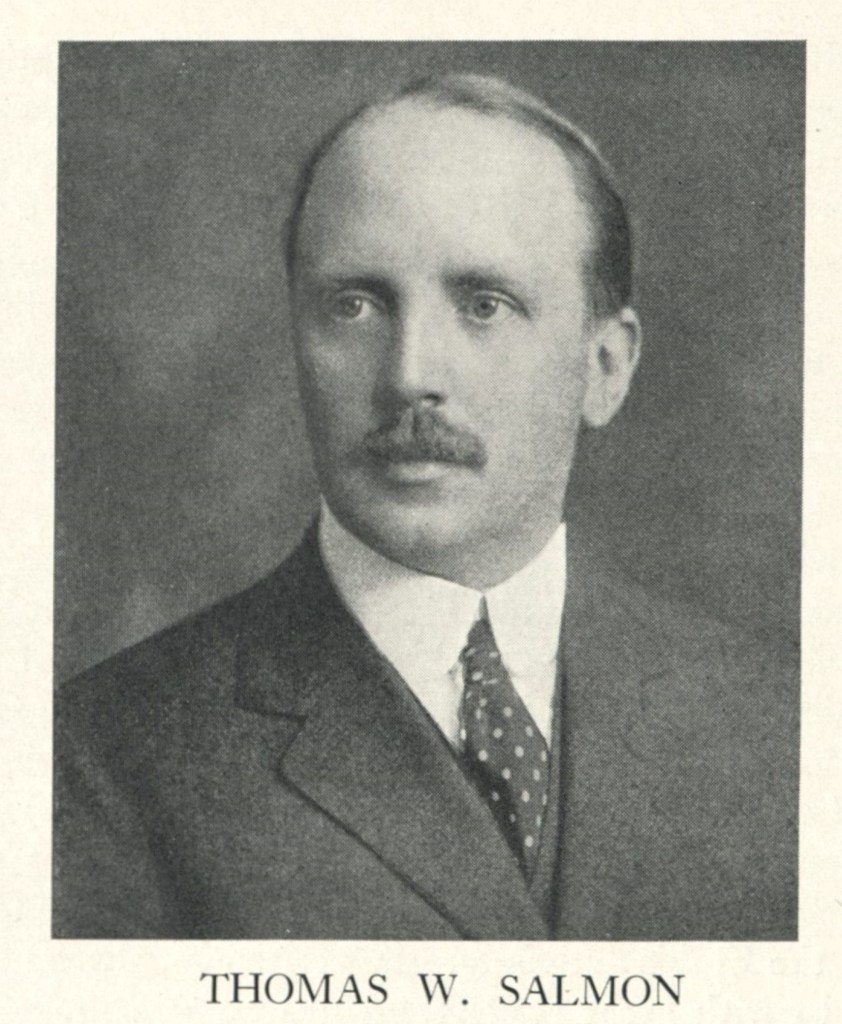
Portrait of Thomas Salmon, from History of the Interurban Clinical Club 1905-1937, edited by David Riesman (1937).

This comparative approach first led me to NYAM records relating to Dr. Thomas Salmon (1876–1927). For those unfamiliar, Salmon was the American Expeditionary Forces’ chief consultant in psychiatry during the First World War. Before this important role, following the country’s entry into the global conflict in 1917, Salmon visited England to study how it dealt with mental wounds during the war to help inform his country’s approach.2 As a leading figure in the US National Hygiene Movement before and after his war service, the records of Salmon’s war experience reflect a relatively progressive military medical official. He regularly stressed the environmental causes of soldiers’ breakdown. In short, Salmon was more inclined to blame combat neurosis and stress on the dehumanising and brutalising effects of war service than citing faulty hereditary genetics, as was more apparent amongst British military officials. This more empathetic outlook continued into Salmon’s advocacy on behalf of veterans following his return to America. Unlike the more reclusive and disillusioned Dr. Charles Myers, the British Army’s leading psychiatric official, Salmon advocated for healthcare and welfare on behalf of the mentally disabled First World War veterans during the initial post-war years. Described by his biographer as a successful ‘spokesman for veterans,’ the force of Salmon’s personality and his effective collaboration with the American Legion help explain why the American mentally ill veteran stopped being admitted into larger public mental hospitals.3 Instead, the US Federal Government established exclusive medical facilities for veterans from the early 1920s onwards.  

Salmon died unexpectedly whilst sailing near Long Island in 1927. Reflecting his prestige amongst his contemporaries, the National Committee for Mental Hygiene, an advocacy organization founded in 1909 by Clifford W. Beers, set up the Salmon Committee on Psychiatry and Mental Hygiene at the New York Academy of Medicine in 1931.4 Regardless, the exclusive medical infrastructure he had helped establish continued to cater to mentally ill First World War veterans into the 1930s. In stark contrast to Britain’s minuscule and dwindling psychiatric infrastructure, the VA provided seventeen neuropsychiatric facilities across its national network of forty-nine hospitals. It offered 10,633 beds for mental ailments, marking a 467% increase over 1921’s availability. The number of beds would be set to increase for the rest of the decade.5 With this exclusive federal medical care program for veterans, the VA published its Medical Bulletin journal throughout the 1930s. Pouring through these issues reveals a lively forum of VA medical officials discussing the continued difficulties of treating veterans during this period.  

Regarding neuropsychiatry—I was struck by how hospital superintendents, nurses, vocational trainers, and social workers regularly articulated a holistic approach to mental healthcare. They cited the psychosocial determinants of health outside of hospital walls. This includes, for example, the detrimental impact of unemployment and poverty on an individual’s mental and bodily health, the emasculating stigma attached to male mental illness, and the potential for harmful self-medication practices such as alcoholism.  

United States Veterans’ Bureau Medical Bulletin (1931), a collection of articles by VA staff and associates dedicated to all aspects of veteran after-care. These various scans come from volume 7.

The materials I reviewed at the NYAM provide a complex and nuanced picture of the post-war treatment of mentally ill World War One veterans. On the one hand, they give an image of an expansive, caring and financially generous veterans’ system. On the other hand, however, they provide comparatively little insight into the personal perspectives of veteran patients to verify the progressive narrative offered by medical officials. In addition, contemporary medical journals reveal increasing resentment from American citizens regarding the spiralling costs of veteran medical care with little in return in terms of cure and recovery.6 This counter-narrative also appears worthy of further research.  

Before arriving in New York, I was unsure how exactly the USA would fit into my larger project of Great War veterans during the Great Depression. However, my time at the NYAM proved incredibly rewarding by revealing how fascinating and unique an American case study is. I look forward to continuing this research into 2025. 

Notes: 

1 Nineteenth Annual Report of the Ministry of Pensions, 1935-1936, 33. 

2 For a write-up of Salmon’s observations and recommendations, see Thomas Salmon, The care and treatment of mental diseases and war neuroses (“shell shock”) in the British Army (War Work Committee of the National Committee for Mental Hygiene, 1917). 

3 E. D. Bond, Thomas W. Salmon: Psychiatrist (W. W. Norton & Co, 1950), 160. 

4 For more information on the Salmon Committee on Psychiatry and Mental Hygiene and its records that are held in the NYAM, see https://www.nyam.org/library/collections-and-resources/archives/finding-aids/ARN-0006.html/ [last accessed 18 November 2024]. 

5 E. O. Crossman and Glenn E. Myers, ‘The neuropsychiatric problem in the US Veterans’ Bureau,’ Journal of the American Medical Association, vol. 94, no. 7 (1930), 473–478. 

6 For example, see the Crossman and Myers article cited above. 
Tracing the Transmission of Early Modern Recipe Knowledge in the New York Academy of Medicine Library

By Sheryl Wombell, University of Cambridge, and the Library’s 2024 Audrey and William H. Helfand Fellow.

In seventeenth-century Europe, knowledge about health and healing was shared with family, friends, and acquaintances. In the case of printed books, wider audiences were reached. A significant subset of these communications took the form of recipes: sets of instructions telling one how to make something. These might be instructions for making medicines in the home, with a range of ingredients from the inexpensive and easily sourced, to the rare and exotic products available due to expanding trade. Or they could be instructions to make culinary formulations, which were interpreted as having an impact on the body’s condition due to the lasting influence of the ancient theory of the four humours. Individual recipes, which could be as short as a line or as long as tens of pages, were gifted, traded, and passed around early modern social networks.

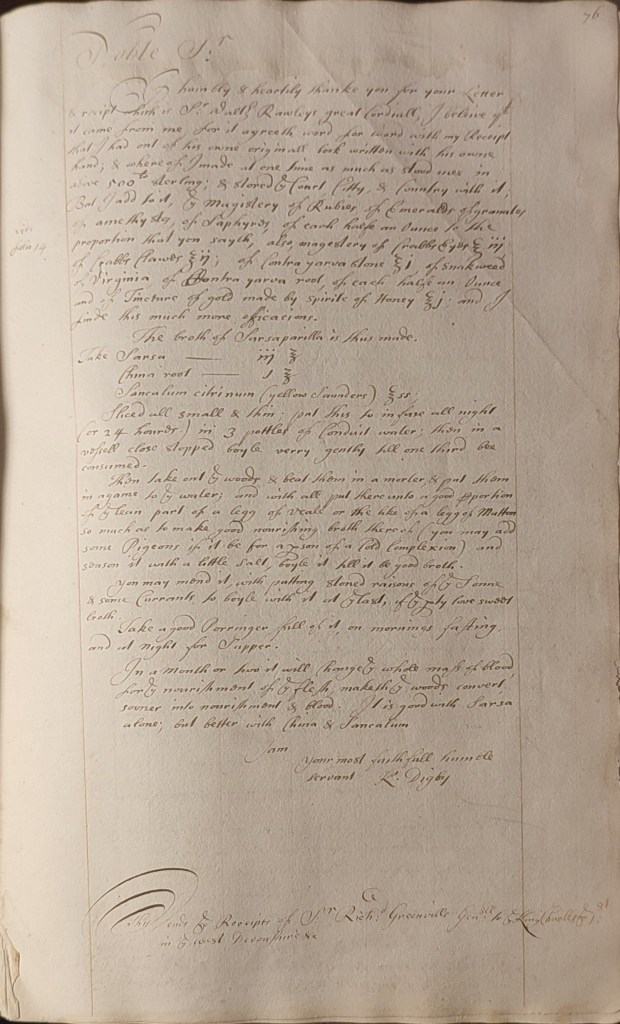
A letter penned by the courtier and privateer Sir Kenelm Digby, likely to Sir Richard Grenville, 1st Baronet of Kilkhampton, demonstrates the mobility of recipes in the mid-seventeenth century.i In it, Digby thanks Grenville for sending him a recipe for ‘Sir Walter Rawleys great Cordiall’ but questions its provenance:

I beleive th[a]t it came from me, for it agreeth word for word with my Receipt that I had out of his owne originall book written with his owne hand; & whereof I made at one time as much as stood mee in above 500 [pounds] sterling; & stored the Court, Citty, & Country with it; But I add to it, the Magistery of Rubies, of Emeralds of granales of amethystes, of Saphyres, of each halfe an Ounce to the proportion that you sayth, also, magestery of Crabbs Eyes [3 oz], of Crabbs Clawes [2 oz]; of Contra yarva stone [1 oz], of snakweed of Virginia, of Contra yarva root, of each halfe an Ounce and of Tincture of gold made by spirite of Honey [1 oz]; and I finde this much more efficacious.

The circular path of recipes that Digby describes – when a recipe he believes to be his own is unwittingly returned to him – is testament to the lively early modern traffic in recipe dissemination and collection.

Fig. 1: Copy of a letter from K. Digby in MS ‘Old Doctor 1690’, f. 76, New York Academy of Medicine Library.

Manuscript collections of recipes survive in archives around the world, and the New York Academy of Medicine Library holds a rich cache of such volumes. Thanks to winning their Helfand Fellowship in 2024, I had the privilege of spending five weeks on a close reading of the early modern medical recipe collections at NYAM. This research forms part of my PhD project, which looks at the mid-seventeenth century production, management, and transmission of knowledge about health and healing amongst exiled and mobile elites, including Digby. While my work to date had focused on three key media – printed medical books, manuscript recipe collections, and consultation letters – somewhat in isolation from each other, at NYAM I had the time and resources to explore the relationships between these formats.

One such connection was the integration of transcribed letters into larger manuscript collections. Digby’s letter, for example, was copied into a large bound volume of recipes, letters, and transcriptions from printed books titled ‘Old Doctor 1690’. But in handling the manuscripts I was also confronted with material traces of transmission. In another manuscript, for example, is a recipe for ‘Costiveness to help’, that is, how to relieve constipation. Next to the instructions are two small, shiny blobs of dried red sealing wax. While this is not conclusive evidence that the recipes on the page were copied into a letter, it does indicate that the notebook lay open while a letter was sealed – and likely written – in its vicinity. Through this tiny physical sign, we learn something of the co-presence of writing and collecting practices across the distinct but interrelated media of letters and recipe books.

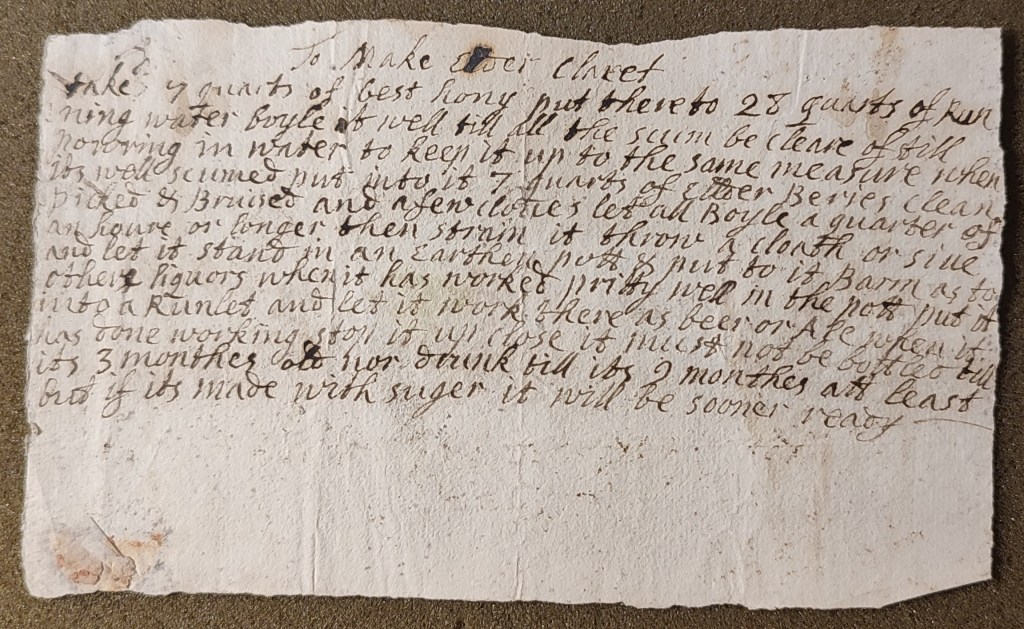
The objects of transmission themselves also appear in these recipe collections. A notebook belonging to Owen Salesbury holds a loose paper slip with instructions ‘To Make Elder Claret’ and sent ‘To Mrs Longford att her hous in Wrexham’. Folded slips could be enclosed in a larger letter, or they could constitute the entire missive. The inclusion of the address on this example suggests the latter. The contents of the slip were not transcribed into the body of the notebook but containing it within the bound volume preserved its knowledge. We don’t know precisely how or when a slip sent – or intended to be sent – to a Mrs Longford ended up in Salesbury’s manuscript, but it offers further evidence of the close connections between ephemeral letter formats and the more durable objects of recipe collections.
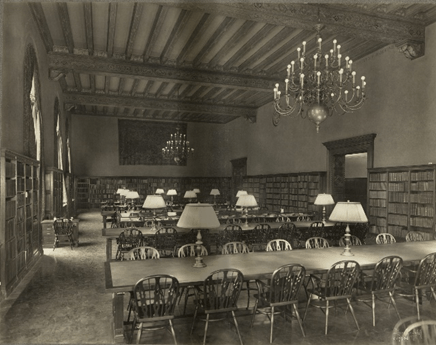
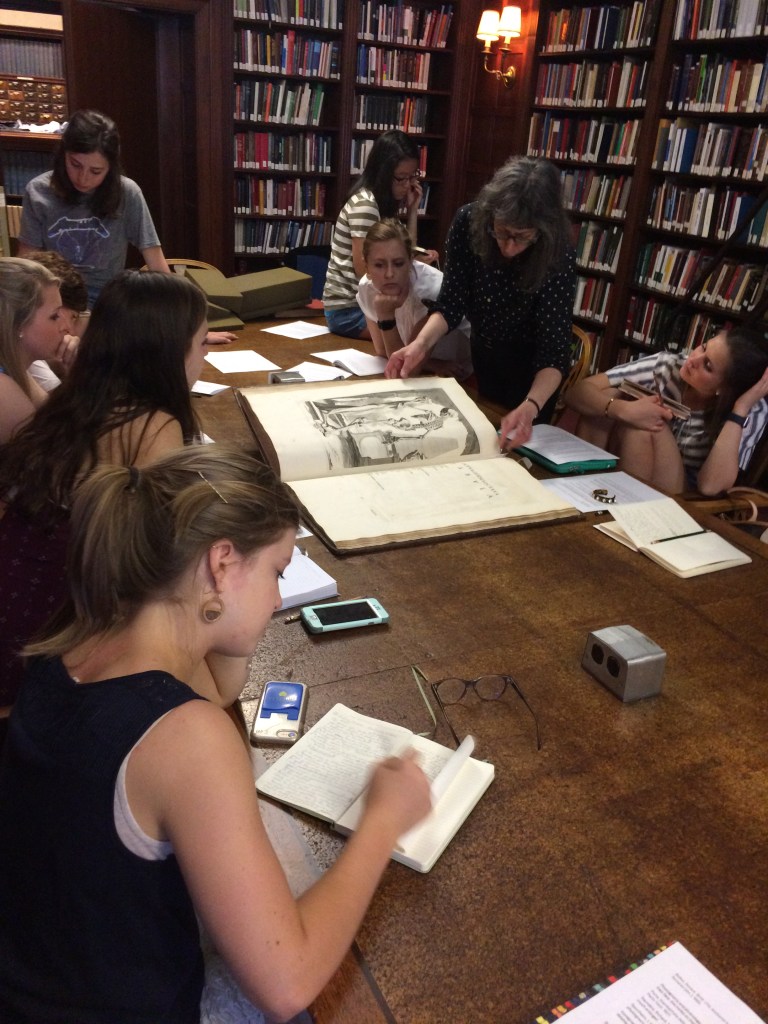
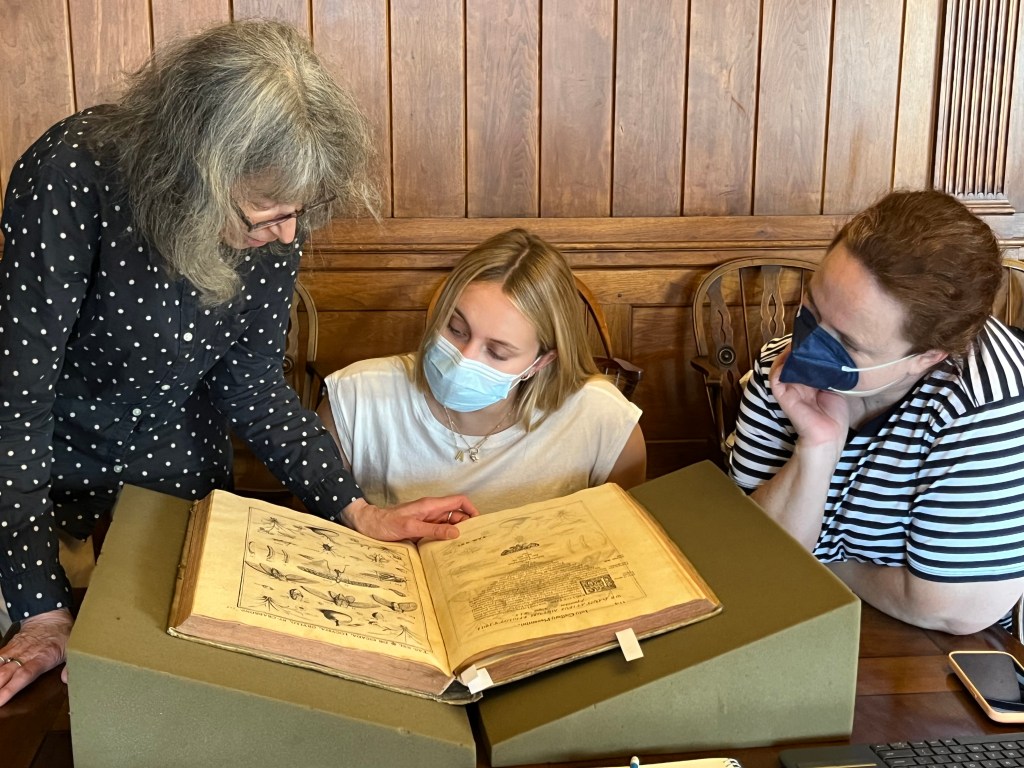
Spending time in the NYAM Library’s collections allowed me to get to grips with evidence of early modern recipe transmission. While digitised surrogates of manuscripts have been invaluable in my research, handling these collections has enriched my analysis by bringing their material qualities – size, varying durability, the spatial relationships between their contents, and signs of use – to the fore.

Further Reading:

Ken Albala, Food in Early Modern Europe (London: Bloomsbury Academic, 2003).

James Daybell, The Material Letter in Early Modern England: Manuscript Letters and the Culture and Practice of Letter-Writing, 1512–1635 (Basingstoke: Palgrave Macmillan, 2012).

Elaine Leong, Recipes and Everyday Knowledge: Medicine, Science, and the Household in Early Modern England (Chicago and London: University of Chicago Press, 2018).

Alisha Rankin, ‘Recipes in Early Modern Europe,’ Encyclopedia of the History of Science (2023), https://doi.org/10.34758/fvw2-w336.

Combatting Tuberculosis in America After its Microbial Discovery 

By Sean Purcell, The Media School, Indiana University-Bloomington and the Library’s 2023 Helfand Fellow 

Mr. Purcell completed his Fellowship residency in the summer of 2023 and will present his research by Zoom on Thursday, December 7 at 4 p.m. (EST). To attend his talk, “A Portrait of Tuberculosis (as a Young Microbe): Representing Consumption at the Turn of the Twentieth Century,” register through NYAM’s Events page. 

I spent a month over the spring and summer looking through the New York Academy of Medicine Library collections, working towards a mixed methods dissertation, titled The Tuberculosis Specimen: The Dying Body and its Use in the War Against the “Great White Plague.” I came to the library with an interest in the visual culture surrounding tuberculosis at the turn of the twentieth century, and in my research, I have cast a wide net, looking at an array of images, from doctors’ portraits to children at play, from histological samples to photographs of wet specimens. 

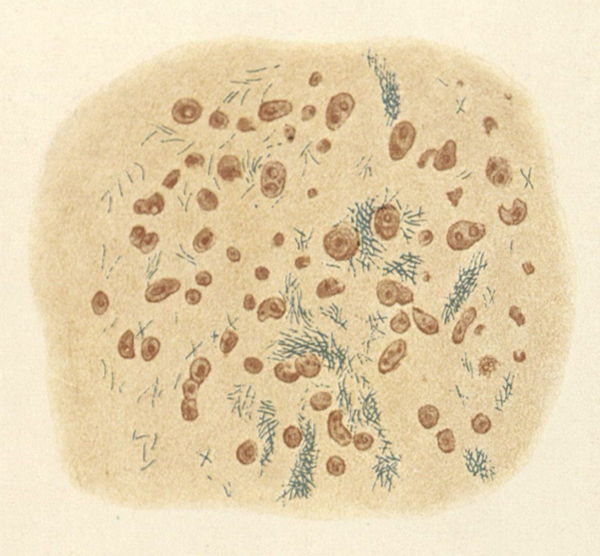
The turn of the twentieth century saw major shifts in the public, professional, and governmental interventions against tuberculosis. Robert Koch’s 1882 essay on the microbial cause of the disease led to a broad shift in how medical professionals and the lay public understood and combatted the disease. Koch had figured out a process to isolate the bacteria in laboratory animals and used a series of chemical baths to stain Mycobacterium tuberculosis a bright blue (fig. 1). Seeing the bacteria clear as day under the microscope helped move germ theory forward, and forced doctors and health worker to reconsider how to treat a disease that was, prior to Koch’s essay, considered a constitutional malady. The period after Koch’s essay saw the rise of public health interventions against the disease and the popularization of the tuberculosis sanatorium. 

Figure 1. An illustration of Mycobacterium tuberculosis. From Aetiology of Tuberculosis, 1890, Robert Koch.  

The most influential figure in the burgeoning sanatorium movement was Edward Livingston Trudeau. A doctor who had sought a cure for his own tuberculosis in upstate New York, Trudeau built his own laboratory and sanatorium, the Adirondack Cottage Sanatorium, in 1880 (figs. 2 & 3). This institution became a central fixture in the decades to come, as it was equipped with research facilities, and published its public-facing journal for tuberculous patients, The Journal of Outdoor Life.  

Figure 2. The most reproduced image from the Adirondack Sanatorium, showing the first cottage where patients were treated. From A history of the National Tuberculosis Association; the anti-tuberculosis movement in the United States, 1921, Adolphus S. Knopf.  
Figure 3. A view of the facilities at Trudeau’s Adirondack Sanatorium. From A history of the National Tuberculosis Association; the anti-tuberculosis movement in the United States, 1921, Adolphus S. Knopf. 

While Trudeau’s sanatorium was the most prominent institution, it was far from the only one. Many for-profit institutions opened their doors during this period, in addition to the development of publicly funded sanitaria in certain states. Assisting the larger, long-term treatment facilities, some cities and hospitals adopted a dispensary system, where tuberculous patients could get assistance and medicine within an urban space.  

These dispensaries served patients, but also sought to teach the urban poor lessons on hygiene. Doctors and public health workers reeled at the dusty, ill kept living conditions of the urban poor, and argued that improper sputum management, poor ventilation, and dark living conditions were contributing to tuberculosis infections in American cities (figs. 4 & 5). While ideas regarding the “healing air” of a specific environment were becoming out of fashion for tuberculosis practitioners in the early 1900’s, most doctors argued that tuberculous patients should get away from the polluted and uncirculated air common to urban environments (figs. 6 & 7).  

Figure 4. An exhibit showing the unhealthy living conditions of the working poor. The caption reads: “Type of tenement house room as first seen by Department of Health Nurse. Man is ill with Tuberculosis. Baby is ill with Scarlet Fever. Others are in danger of infection. Family is destitute.” From “Album of photographs of exhibits by various departments of the City of New York, Royal S. Copeland, Commissioner, and various health agencies,” 1921.  
Figure 5. An exhibit showing the interventions of a public health nurse. The caption reads: “Same room after nurse has performed her duties. Man has been removed to Sanatorium. The baby has been removed to hospital. Financial aid has been obtained and landlord has been induced to paint room. Instruction has been given to mother in personal hygiene, cleaning up, order, proper diet.” From “Album of photographs of exhibits by various departments of the City of New York, Royal S. Copeland, Commissioner, and various health agencies,” 1921. 
Figure 6. A day camp run by Bellevue Hospital where patients could spend time outdoors on a boat. From New York City’s Institutions for the Tuberculous: Clinics, Sanatoria, Preventoria, Day Camps and other Agencies, 1926, The Tuberculosis Sanatorium Conference of Metropolitan New York. 
Figure 7. Tuberculous patients were instructed to spend as much time as possible outside, no matter the weather. From Pulmonary tuberculosis, its modern and specialized treatment, 1907, Albert Philip Francine.  

The fight against tuberculosis in this period saw a collection of different interventions, and the New York Academy of Medicine’s library offers a unique glimpse into the work of scientists and medical professionals who were trying to fight the disease. My time here as a Helfand fellow has been a boon to this research because of the library’s extensive collections, much of which has not been digitized. 
 
References:  
Feldberg, Georgina D. Disease and Class: Tuberculosis and the Shaping of Modern North American Society. (New Brunswick: Rutgers University Press, 1995). 

Koch, Robert. “Aetiology of Tuberculosis.” Translated by T. Saure. Transactions of the Massachusetts Medical Association. (New York: William R. Jenkins, 1890).  

Koch, Robert. “Die Ätiologie der Tuberculose.” In Gesammelte Werke von Robert Koch, 1:446–54, 467–565. (Leipzig: Verlag Von Georg Thieme, 1912). 

FIT Visits the NYAM Library

By Dr. Evelyn Rynkiewicz, Assistant Professor of Ecology,. Department of Science and Mathematics at the Fashion Institute of Technology, State University of New York.

My name is Dr. Evelyn Rynkiewicz, I am a professor of ecology at the Fashion Institute of Technology. I teach a course there called “Disease Ecology in a Changing World,” and my background and research is in disease ecology of coinfecting parasites in mice. I wanted to present a course like this for FIT students because diseases are something that affect all of us, everyone has experience being sick, and because emerging infectious diseases are a growing global issue (even before the Covid-19 pandemic, which is of course still impacting us). The challenge in teaching science courses at FIT is that our students mainly have majors in the design and business fields, not in the sciences, so I try to make the course material relate to their backgrounds and experiences as much as possible, to make the content more relevant to them. I also want to increase science literacy in my students, making them comfortable reading, understanding, and talking about science in their personal and professional lives.

I learned about the New York Academy of Medicine Library after seeing the “Germ City” exhibit at the Museum of the City of New York. I got in contact with the Historical Collections Librarian, Arlene Shaner, who set up a visit to show me some of the materials she thought would relate to my course. I was blown away! I knew my students would love to see these historical documents. These materials highlight not only the art and history of how scientists and the public interacted with diseases through time, but also show how intertwined social, economic, and political issues are with how society’s experiences of disease.

Our class took a field trip to the NYAM Library and was shown an array of material; from Hooke’s book on microscopy, Edward Jenner’s work describing his development of the first vaccine, to posters and leaflets used from WWII to the present day to inform people about diseases such as malaria, HIV, or tuberculosis. I am always excited to see what students find interesting from this visit. Many enjoyed seeing the graphic design and illustrations used in the posters, such as those by Dr. Seuss and Keith Haring. Others picked up on how women and marginalized groups were often those who did a lot of the work caring for sick and infected people. Some just liked seeing the historical materials related to New York and being able to see how their home was impacted by diseases in the past.

One of the main assessments for the course is a creative research project where students choose a disease to study and then make a presentation with something creative related to that disease that would help someone learn more about it. I encourage the students to think about how they could use their skills learned from their major and apply it to this topic. The field trip to the NYAM Library provides the initial inspiration for this. I am always so proud and surprised at what they come up with!

Here are some of the things they created:

A drawn movie poster. The fake film is called Dengue Island. The artist, Arriana Tan is credited as the filmmaker. A drawing of a giant  brown mosquito hovers over a small community.

Arriana Tran, a Fashion Business Management major, created a movie poster. Inspired by the warnings her parents shared with her on the risk of becoming infected with Dengue in her parent’s home country of the Philippines.

A malaria testing and monitoring kit. The left of the image is the packaging mock-up. The right lists what would be included; an insect net, spray, educational material, and the tests. It also gives ordering instructions.

Packaging Design major Ethan Wolfsberg designed a malaria testing and monitoring kit that would be able to be used in remote areas that are heavily impacted by this disease. A real-life version would be made in languages appropriate for the area. 

An image of a globe surrounded by various people of different color, size, and shape. On the globe is says "PrEP."

To reduce the stigma of taking PreP, Francis Lavery, also a Fashion Business Management major, made an image that emphasizes that this treatment is appropriate for everyone.

A paper doll. The bald character is wearing a green shirt and blue pants.

Illustration major Leia Garrette wanted to visually show how infection with the agent of Lyme Disease impacts all parts of the body. She created a paper doll where each layer illustrated a different system (e.g. muscles, nervous system) accompanied by an explanation of how each is affected by the infection.

A flyer that reads "Spread Help, Not Disease!" it talks about a theoretical Zika virus support group.

This flyer was created by Sarah Sepulveda from Fashion Business Management. Her plan was for a support group for parents worried about or impacted by Zika virus. There was a focus on Brazil where the outbreak was especially significant in 2016.

Once again, a huge thanks to Arlene and the others at NYAM for their help and insight. I look forward to more collaboration!

Views and Voices of Older New Yorkers

By Mario Rubano, MPH, Center for Healthy Aging, NYAM

Today’s guest blogger is Mario Rubano, Policy Associate at NYAM’s Center for Healthy Aging. Mr. Rubano plays a central role in the Academy’s next Then & Now event, “The Opportunities and Challenges of Healthy Aging in New York City.” He conducted the interviews documenting the experiences of older New Yorkers and will moderate the discussion of those experiences with historians Kavita Sivaramakrishnan, PhD, and David G. Troyansky, PhD. The event takes place online on Tuesday, November 15, 5:00 to 6:00 pm; you can register here.

The NYAM Library’s “Then & Now” series has explored a wide variety of medical and public health issues, bringing experts and researchers into dialogue with the broader NYAM community. As the Academy’s 175th anniversary celebrations wind down, we’re delighted to feature a different set of experts—older New Yorkers.

NYAM has been at the forefront of NYC older adult health and policy since 2006, when it first joined the Global Age-friendly Cities project, an international effort spearheaded by the World Health Organization (WHO). The following year saw the development of Age-friendly NYC, an award-winning partnership that reimagined how the City could meet the needs of its older residents. This shift was rooted in the 8 Domains of Livability, a collection of interconnected categories that captured the most vital aspects of healthy living for older adults in urban centers. Today, the Center for Healthy Aging (CHA) embodies this legacy in its ongoing mission to improve the health and well-being of current and future aging populations.

The 8 Domains of Livability

At present, New York City is home to roughly 1.2 million individuals aged 65+, and we were lucky enough to settle down with five of the busiest of them for personal interviews via Zoom. The participants, drawn from a network of grassroots age-friendly community groups, shared their insights, memories, experiences, and opinions (with classic New York panache) in a discussion structured around the 8 Domains of Livability. Each of the participants has maintained an active relationship with local community-based organizations, community boards, volunteer groups, or, in one case, as a part-time Reservist working with NYAM. What was immediately clear across each of the interviews was the devotion that each participant has to this city. Whether born-and-bred or a transplant, these New Yorkers were as energized by the city as one could possibly be, and it’s this vigor that brought their reflections to life.

Our Interviewees!

If a single takeaway were to be drawn from these five interviews, it would be that “progress” is a constant process rather than a state-of-being or condition that is achieved. The domain of transportation illustrates this idea. The participants all remarked on the tremendous improvements in comfort and capacity that the public transportation system has undergone over their lifetimes. The advent of air conditioning to ease the misery of a summertime, rush-hour commute, the growing fleet of accessible kneeling buses that simplify the boarding process for individuals with mobility challenges, and the creation of station transfers were all viewed as highlights over the years. Yet, we also heard about significant lapses in the management of bus lines that blatantly ignore the needs of older New Yorkers and, in many instances, place undue burdens on communities of color.

Healthcare access also changed in remarkable ways, both positive and negative, over the course of their lifetimes. House calls from family doctors who knew and treated entire communities gave way to newer models of care that, while noted for their efficiency and quality, were seen as impersonal and disconnected. We heard sobering stories of healthcare in the years before desegregation and the ongoing effects of Robert Moses’ infrastructure projects, like the Cross Bronx Expressway. These stories demonstrate the necessity of continued civic and community engagement, even after broad, landmark victories. Legislative progress—such as that initiated by the Americans with Disabilities Act in 1990—must be continuously refined to ensure that the promises of better lives remain intact in an increasingly complex world.

This project has been a thrilling process in itself, and we look forward to sharing these New Yorkers’ stories, and hearing the commentary by our guest historians, Drs. Kavita Sivaramakrishnan and David Troyansky, at the upcoming November 15th Then & Now event.

William Helfand’s Pharmaceutical Trade Cards and the Changing Character of Drug Advertising

By Joseph Bishop, Princeton University, and the Librarys 2022 Audrey and William H. Helfand Fellow

Mr. Bishop completed his Fellowship residency in summer 2022 and will present his research by Zoom on November 8 at 4:00 (EST). To attend his talk, “Pharmaceutical Visions: How US Drug Companies and Ad Agencies Revamped Their Credibility by Marketing with Scientific Imagery,” register through the Academy’s Events page.

This spring I spent weeks immersed in the vast historical materials available at the New York Academy of Medicine (NYAM) Library. I had the honor of receiving the Audrey and William H. Helfand Fellowship to pursue a project that I believe would have interested Bill Helfand: an examination of the changes in medical advertising at the turn of the twentieth century. During his life, Helfand amassed an extensive collection of fascinating drug and medical memorabilia and visual art. Much of his collection and work illuminates the dynamic between drugmakers and the public during the late nineteenth and early twentieth century.  Significant portions of Helfand’s collection are available at NYAM, and I took advantage of the richly colored and wide-ranging collection of patent medicine trade cards. NYAM also has mountains of pharmaceutical, medical, and allied trade journals and magazines brimming with pharmaceutical advertisements.

At the turn of the twentieth century, the American public saw the rise in large corporate pharmaceutical companies, national and corporate advertising, and federal drug regulation. An important question is what prompted the transformations in medical visual culture that helped to portray drug companies as scientific and research-oriented. To answer that question, I compare late-nineteenth-century patent medicine trade cards with medical ads in LadiesHome Journal in the 1920s. This comparison reveals a transition from entertainment and fantasy to a preoccupation with scientific progress and medical authority. My research at NYAM has led me to conclude that drug companies and ad agencies emphasized scientific and medical imagery to revamp their medical credibility and professional image amid national drug regulation and the public’s anger with the industry’s past association with patent medicine.

American patent medicine companies faced scrutiny for producing nostrums with cryptic contents and questionable efficacy during the first decade of the twentieth century. They depended on local advertisement imagery that reflected the nineteenth-century public’s anxieties and aspirations. Popularizations of science were created for various reasons—from entertainment to informing citizens—but they all served to increase scientific and medical awareness within the American public. Philadelphia-based ad agency N. W. Ayer’s accounts show that patent medicine was their most lucrative commodity category, carrying 26 percent of their total revenue in 1878, and their second-most lucrative commodity in 1900, carrying 15 percent. By 1879 in the US, more than 400 religious weeklies each needed a steady flow of advertising revenue to stay in business. Newspapers generated patent medicine business, and medical advertisements sustained newspapers. Nostrum manufacturers developed new marketing techniques, created novel distribution systems, pioneered brand-name products, became an economic link between urban and rural centers, and expanded markets.

Americans living through the last two decades of the nineteenth century saw an explosion of advertising trade cards. Retailers gave away these pocket-sized cards, often stuffed in product packaging as a bonus and easily collectible by customers. Patent medicine companies used these cards extensively, as they proved to be a very successful sales medium. Many people collected cards into albums and created scrapbooks, which children sometimes received as birthday or Christmas gifts.

Image 1:“Ayer’s Ague Cure Is Warranted to Cure All Malarial Disorders”
Dr. J. C. Ayer & Co. (Lowell, MA)
Produced ca. 1875–1895
From the William H. Helfand Collection of
Pharmaceutical Trade Cards at The New York Academy of Medicine
Chromolithograph, 6.1 x 11.6 cm

Trade cards such as Ayer’s Ague Cure (Image 1) evoke an aura of connection with nature and adaptation to the surrounding environment. The image in the bottom right corner depicts an alligator and a couple of frogs discussing Ayer’s Cure as if they used it to protect themselves from malaria. The ad implies that Ayer’s product helps one adapt to one’s environment just as well as the alligators and frogs adapt to theirs.

Image 2: “Cas-car-ria Is Worth Its Weight in Gold”
Product: Cas-car-ria
Produced ca. 1875–1895
From the William H. Helfand Collection of
Pharmaceutical Trade Cards at The New York Academy of Medicine
Chromolithograph, 5.8 x 7.8 cm

On the other hand, Cas-car-ria’s trade card (Image 2) depicts a young girl holding a switch and a dog together, fending off miniature demons labeled with ailments. Cas-car-ria’s ad evokes notions of animal protection and self-protection, implying that when patients take Cas-car-ria, they harness the animal within, unleashing the strength required to fight off external demons.

The explosion of ads promoting proprietary medicines and their incessant hyperbole and mistruths eventually provoked strong public reactions that demanded transparency and regulation. There were always calls to rein in the quackery, but the inundation of promotion drove the regulation of patent medicine to become a public priority.

Image 3: “What is in your medicine cabinet?”
Ladies’ Home Journal, February 1924, p. 144
Manufacturer: E. R. Squibb and Sons
From Ohio State University

Examining Ladies’ Home Journal during the 1920s illustrates these changes in advertising.  At this point, advertisements offered a different portrayal of scientific medicine and appealed to a more docile public regarding medical professionals. A Squibb pharmaceutical ad depicts a well-organized medicine cabinet (Image 3). The caption asks, “What is in your medicine cabinet? Are they products your physician would approve?” This approval seeking from medical authority plays into the new values of placing faith in the trained judgment of scientific and medical authority. 

Image 4: “Zonite: the World War Antiseptic”
Ladies’ Home Journal, March 1924, p. 192
Manufacturer: Zonite
From Ohio State University

Ads for Zonite (Image 4) ran images of scientists wearing lab coats and examining test tubes, drawing a scientific aura into its products. Zonite also associated its product with scientific discoveries, like the Carrel-Dakin fluid (i.e., diluted bleach), a critical antiseptic used in World War I.

Image 5: “Why the familiar cake of Yeast Foam is now eaten as well as used in bread”
Ladies’ Home Journal, May 1921, p. 49
Manufacturer: Northwestern Yeast Co. (Chicago, IL)
From the University of Michigan

The ad for “Yeast Foam” (Image 5) also appeals to scientific and medical authority, depicting a man wearing a medical coat and peering into a microscope. In the foreground are two circular illustrations of microscopic specimens—one containing germs and the other germ-free. The ad portrays a professional man immersed in scientific work, suggesting that the product has been carefully vetted through scientific scrutiny for quality assurance.

Similarly, the Fleischmann advertisement (Image 6) depicts two men in lab coats working at a table equipped with flasks, a beaker, a microscope, and other scientific instruments. The caption below the image states, “Messages of startling importance from the laboratory of the scientist.” Text within the ad notes how Fleischmann’s Yeast cures various diseases. In the case of skin diseases, the ad relies on a general sense of medical authority: “Many physicians and hospitals are prescribing Fleischmann’s Yeast for impurities of the skin. It has yielded remarkable results.”

Image 6: “Ten or fifteen years of life”
Ladies’ Home Journal, September 1921, p. 45
Manufacturer: The Fleischmann Company (New York, NY)
From the University of Michigan

The values of corporate ad agencies following the patent medicine era are not only a reaction to muckraking journalism and reform movements. The use of scientific medical imagery conveying authority and professional judgment was also largely about revamping the medical credibility of US drug companies and corporate ad agencies; they benefited handsomely during the patent medicine era but later needed to diminish their connections to these fraudulent products. Ad agencies traced the American public’s anxieties and aspirations as they shifted from loose whimsy about panaceas in the late nineteenth century to a reverence for qualified scientific and medical experts and institutions at the beginning of the twentieth century. By tracing this transition in medical imagery, we can glean how drug companies and ad agencies shaped products to elevate their professional clout.

Then & Now: The Past and Future of Medical Libraries

By Paul Theerman, Arlene Shaner, Bert Hansen, and Melissa Grafe

On Tuesday, October 18, three esteemed librarians and historians will gather—virtually—to discuss the history and prospect of medical libraries. The event features the Library’s own Historical Collections Librarian, Arlene Shaner, speaking on the development of our collections; historian of medicine Dr. Bert Hansen, on how libraries helped shape the development of medicine through history; and Dr. Melissa Grafe, head of the Medical Historical Library at Yale School of Medicine, on the future of historical collections such as the Academy Library’s. If you are interested in attending, please register here. To learn about what these speakers will present, keep reading!

Étienne-Louis Boullée’s grand 1785 design for a French National Library.[1]

Arlene Shaner, “‘A Rich Storehouse’: The NYAM Library’s Extraordinary Collections”

Arlene Shaner, our first panelist, will talk about the evolution of the NYAM Library and its collections, starting with Isaac Wood’s gift of his set of Martyn Paine’s Commentaries to the brand-new organization on January 13, 1847. What he and the early Academy Fellows had in mind was a working collection of books and journals that they would create for their own use. Because the Academy had no home of its own, and very little money, the collections grew at a very modest pace for the first few decades.

The purchase of a building in 1875 provided space for the collections to grow. The generosity of Dr. Samuel Smith Purple, who donated over 2000 journal volumes of his own after the Academy moved into its West 31st Street brownstone (at left), coupled with the 1878 decision of the Fellows to open the Library to all who wished to use it, dramatically changed the Library’s trajectory.

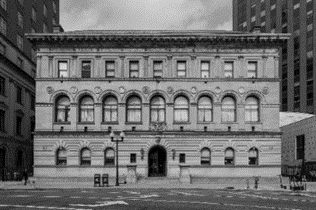
The Academy Library at 17 West 43rd Street

It opened the door to what Librarian Janet Doe later referred to as “a snowball of gifts which has rolled down through the years, gathering momentum and throwing off new snowballs that roll into other libraries.”

Shaner will offer a brief overview of some of the major gifts that helped the library become one of the most important history of medicine collections in the country, if not the world, and also tell the much less well known story of how the Library contributed to the growth of many other collections. She will also look briefly at how changes in the way information is disseminated have transformed, and continue to transform, the NYAM Library.

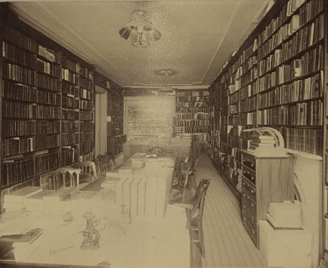
The former Main Reading Room in the  Academy’s current building.
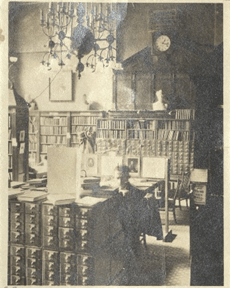
The Rare Book and History Room in the 1930s, now the Drs. Barry and Bobbi Coller Rare Book Reading Room.

Bert Hansen, “The Academy Library’s Contributions to American Medicine.”

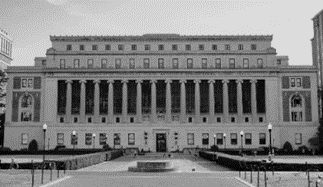
Our second panelist, historian Bert Hansen, notes that his earliest memories picture libraries as storehouses of precious treasure, an image reinforced by an architecture that made them look like giant-sized strongboxes or jewelry boxes. Built of large stone blocks and fortified like a castle, libraries he fondly recalls include the main public libraries in Chicago, Newark, and New York City, plus Butler Library at Columbia and the Morgan Library from his college years (as seen below, with NYAM the sixth). The decorated, jewelry-box style often continues inside with marbled lobbies and wood-paneled reading rooms.

But for this presentation, Hansen has gone in a new direction, focusing his attention on the kinds of contribution that libraries like that of NYAM have made to education and the world of learning in serving people who would never enter the building to examine the treasured volumes. In the recent past, virtual use through digitization has become common and will surely expand in the future. But his look at the prior century and a half will highlight other, sometimes-forgotten modes of service as examples of NYAM’s—and other research libraries’—many contributions to American medicine.

Melissa Grafe, “Preservation, Access, and the Future”

Our final panelist, librarian and historian Melissa Grafe, glimpses into the future of medical libraries and the role of physical collections in an increasingly online world. Grafe looks at the ways that technology has become deeply integrated in both medicine and in the libraries that support the medical community. Grafe will connect these modern currents to the rich trove of materials that NYAM assembled over 175 years, and the larger history that has made NYAM’s library one of the major collections connecting medical history to the present.


References

[1]Nancy Spiegel, the University of Chicago Library’s bibliographer for art and cinema, writes:

In the late 18th century, a new vision of the library arose within the context of expanding literacy, and the increased publication of books and journals for the general reading public. Enlightenment architect Étienne-Louis Boullée (1728–1799) envisioned a grand design in his proposal for a French National Library in 1785. In Boullée’s presentation, the state would take responsibility for the collection, ordering, and dissemination of all available information to its citizens.

The design for the main reading room featured a vast, barrel-vaulted ceiling and a modern shelving arrangement: stacked galleries of books over flat wall-cases. These seemingly endless bookcases were open and easily browsable, in dramatic contrast to the earlier medieval system of chaining that bound both books, and readers, to a specific location. Visitors are free to wander about and converse in small groups, but there is no provision of study desks or chairs for extensive research in this idealized environment.

Nancy Spiegel, “The Enlightenment and grand library design,” The University of Chicago Library News, April 26, 2011: https://www.lib.uchicago.edu/about/news/the-enlightenment-and-grand-library-design/, accessed October 7, 2022. The image is from Étienne-Louis Boullée, Mémoire sur les moyens de procurer à la bibliothèque du Roi les avantages que ce monument exige, 1785.

A Network of Eugenic Maternalism: Finding the New York Babies’ Welfare Association at the New York Academy of Medicine Library

By Jamie Marsella, Department of the History of Science, Harvard University, and the Library’s 2022 Paul Klemperer Fellow

Ms. Marsella completed her Fellowship residency in summer 2022 and will present her research by Zoom on September 7 at 4:00 pm (EDT). To attend her talk, “‘Where Once There Was Only Friction’: Religion, Eugenic Maternalism, and the Babies’ Welfare Association, 1908–1920,” register through the Academy’s Events page.

I’ll start this blog post with a confession: before sitting down in the NYAM Rare Book Room, I was worried there might not be enough materials to keep me busy for a full month. How profoundly wrong I was!

I arrived at NYAM to conduct research for my dissertation—an exploration of the New York Babies’ Welfare Association (1912–1920). The BWA was an organization that aimed to standardize maternal and pediatric public health programs while remaining a loose federation of public health and child welfare organizations, including private philanthropic and religious groups.

The Babies’ Welfare Association was created by the New York City Bureau of Child Hygiene in 1912. Neither organization has a stand-alone archival collection, nor do most of the 120+ individual organizations within the BWA. Before arriving, I could not have known that the NYAM Library would hold more relevant materials than I could ever have imagined.

The BWA was abundantly represented within the NYAM collections. This makes sense since, for the first two decades of the twentieth century, the BWA was a well-known, highly publicized organization in New York City. The Chief of the Bureau and President of the BWA, Dr. Sara Josephine Baker (1873–1945),[1] was a household name not only in New York, but throughout the country, with movie reels produced by Fox Studios, a monthly Good Housekeeping column, multiple books on child health and parenting, a regular radio broadcast, and constant coverage in the local and national press.

An informative organizational chart created by the BWA from Report of the Babies’ Welfare Association, 1912–1915.

Unlike negative eugenic programs (i.e., sterilization, anti-miscegenation laws) that came to dominate later in the century, early twentieth-century reformers understood eugenic reform as a combination of heredity and environmental conditions. In this framework, improved sanitation, nutrition, and hygiene could improve individuals and enable them to pass on these improvements to their future offspring. The BWA emphasized these changes in the environment, promoting them as eugenic maternalism. In other words, the BWA understood mothers as the family’s first line of defense against disease and, therefore, an essential part in preventing “racial degeneration.” The BWA, therefore, targeted immigrant neighborhoods with the explicit desire to “improve” white-ethnic communities and prevent future supposedly dysgenic generations.

I came to NYAM hoping to better understand why Catholic and Jewish organizations might be interested in participating in this eugenic standardization project and how their participation may have shaped how the BWA understood and operationalized eugenics. I also hoped to clarify the role that Black reformers and patients played within the BWA. Based on what I had gleaned from digitized sources, the BWA’s work with Black philanthropic groups was inconsistent, and their relationships were unclear.

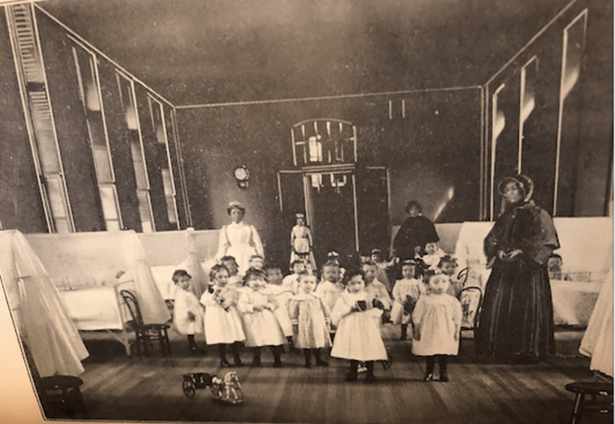
Sisters of Charity and their young charges at the New York Foundling Asylum.
Image Courtesy of the New-York Historical Society.

The materials I’ve reviewed at NYAM paint a complicated and nuanced picture. Some religious organizations, like the New York Foundling Asylum and other benevolent institutions run by women religious, understood their own religious missions as Catholics in a way that blended nicely with the assimilationist goals of eugenic maternalism.

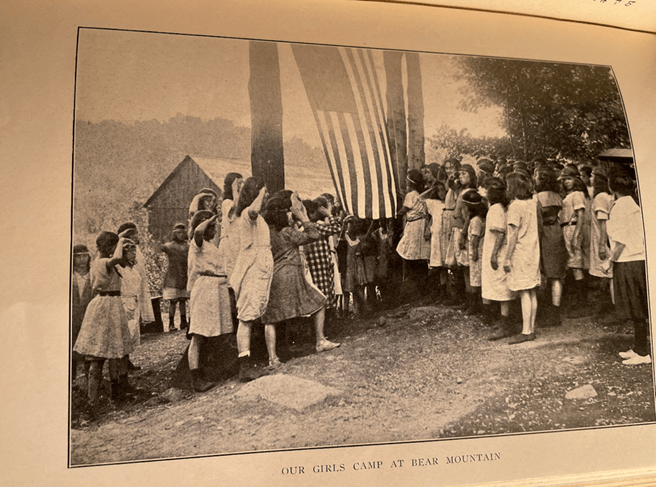
Young girls from the Hebrew Orphan Asylum practicing patriotism at a camp excursion.
Hebrew Orphan Asylum. Report of the Ninety Ninth Annual Meeting and the Ceremonies Commemorating the Centennial Anniversary of the founding of the Hebrew Orphan Asylum, 1822–1922. 1922; New York Academy of Medicine Library.

Similarly, Jewish organizations like the United Hebrew Charities or the Brooklyn Federation of Jewish Charities understood their work as both a religious mission and an assimilating force. Such groups were eager to associate their religious and cultural practices with Americanism, especially in the face of rising antisemitism.

Most BWA members held a capacious view of their work beyond childcare, health and hygiene, or charitable aid. As I continued to work through the Library’s documents, it became clear that members of the BWA were pursuing something far broader than public health or bodily hygiene. These programs were about “right living”—teaching women and children how to conduct themselves in public and private, how to understand one’s role as a (future) citizen, or how to raise and nurture the future citizens in their care.

The graduating class of nurses trained at the Lincoln Hospital, 1905.
Lincoln Hospital and Home. Sixty-Fifth Annual Report, 1904–1905. 1905;
New York Academy of Medicine Library.

Within these different organizational records, there were also small glimpses of public health work specifically targeting the Black community. While the connections between the BWA and Black New Yorkers remained muddled, my time at NYAM has helped me understand this reflects the nature of the work, which was sporadic at best and exploitative at worst. The Lincoln Hospital and Home (a BWA member) is one exception to this general rule. The hospital trained Black nurses, many of whom then worked in the hospital treating both Black and white patients or worked with the Henry Street Settlement House (another member) in their Visiting Nursing Service.

Ultimately, my time at NYAM was invaluable. The materials there allowed me to better understand how the members of the BWA negotiated amongst themselves to create a standardized eugenic program that could encompass different ethnicities and religions.  


References

[1] For more information on S. Josephine Baker, see “Highlighting NYAM Women in Medical History: Sara Josephine Baker, MD, DrPh” on the NYAM blog “Books, Health, and History.”

‘Sick and In Prison’: Airborne Disease and Prison Reform in the career of John Howard (1726–1790) 

By Dr. Paul E. Sampson, Assistant Professor of History, The University of Scranton 

2020 Audrey and William H. Helfand Fellow in the History of Medicine and Public Health 

Over the course of the past year, I have had the privilege of spending four weeks researching in the spectacular rare book collection of the Library of the New York Academy of Medicine. My book project is entitled “Ventilating the Empire: Environmental Machines in Britain, 1700–1850” and comprises a scientific and social history of ventilation in Britain and the British empire during the long eighteenth century, roughly 1688 to 1815. By examining the design and deployment of ventilating machines in slave and naval ships, prisons and public buildings, I ask how devices designed to protect human beings from environmental hazards became a means of dividing British society along class and racial lines.  

Text Box

The primary subject of my research has been the life and career of prison reformer John Howard (1726–1790). I examine Howard’s career through the context of his work on “Jail Fever” (AKA typhus) which contemporary physicians and medical experts understood as an airborne disease. I argue that a key feature of Howard’s celebrity was his perceived invulnerability to airborne diseases. In addition, his influence helped to shift the discourse of prison reform away from overall institutional sanitation and towards methods intended to control the hygiene and morality of individual prisoners. 

For those unfamiliar, John Howard was a noble-born, intensely religious man who was appointed sheriff of Bedfordshire in 1773. One of his duties was to inspect local prisons. Unlike many of his genteel contemporaries, he took this job seriously. He was appalled by the conditions of the prisons in Bedfordshire, and to spur reform and gather ideas for improvement, he made a series of lengthy tours to visit as many prisons as he could throughout the British Isles and continental Europe. His first published book, The State of the Prisons in England and Wales (1777), detailed his visits to dozens of county jails and bridewells (workhouses), including careful notes of the fees charged to prisoners, their daily workload, the prison diet, and the overall sanitation.  

One of the primary goals of Howard’s travels was to find the best means of preventing the spread of disease. By the 1750s, prisons were increasingly perceived as public health hazards. The filthy and diseased condition of prisoners in London’s Newgate prison became a public scandal after the Lord Mayor and 56 others died of jail fever in the weeks following an audience with prisoners. Following the contemporary etiology of fever, the outbreak was attributed to the “putrid effluvia” exhaled in the breath of sick prisoners that had imparted a “poisonous quality” to the air in the courtroom.1 By 1774, Howard had achieved celebrity status by helping to author the “Act for Preserving the Health of Prisoners in Gaol.” This act stated that jail fever was caused by the “want of cleanliness and fresh air” and mandated that all interior walls and ceilings be scraped and white-washed annually and “constantly supplied with fresh air, by means of hand ventilators or otherwise.”2  

However, in the wake of this achievement, Howard’s attitudes about preventing fever had begun to shift. During his tours of European prisons, he was puzzled that he rarely encountered “jail distempers” there. To explain the disparity between these and disease-ridden English institutions, Howard developed a theory of jail fever based entirely on his own “experience.” He argued that prisoners could only be infected if privation, filth, and personal intemperance weakened them enough for the contagion to take hold. Young and healthy convicts who were used to “vigorous exercise” quickly became infected due to the “sudden change of diet and lodging” that “so affects the spirits of new convicts, that the general causes of putrid fevers exert an immediate effect on them.” As a counter-example, Howard pointed to himself. During his first tours, he wrote, he had attempted to avoid breathing in contagion by “smelling to vinegar… and changing my apparel…constantly and carefully.” A few years later, however, he wrote that he “entirely omitted” such precautions. In his opinion, the real protection against infection were his habits of “temperance and cleanliness” as well as the power of “divine providence.”3 

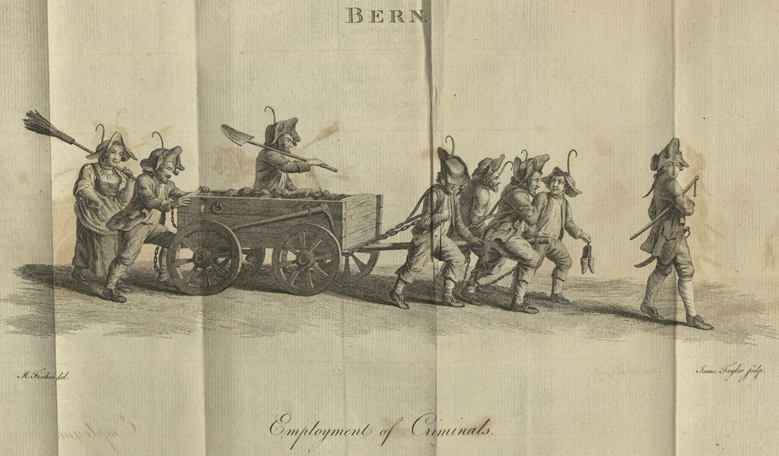
Image 2: Howard was keenly impressed by the prison regime in Bern, Switzerland. Howard wrote that the city was “one of the cleanest I have seen” and included illustrations of the employment of male and female prisoners as street cleaners. Note the iron collars with hooks affixed to the prisoners’ necks to deter escape attempts.  
“Employment of Criminals” and “Employment of female Criminals,” in John Howard. The State of the Prisons in England and Wales. 2nd. Ed. (Warrington: T. Cadell, 1780) 109–10. Images courtesy of the New York Academy of Medicine Library. 
 

By the time the second edition of State of the Prisons came out in 1780, Howard had visited hundreds of disease-ridden institutions and avoided contracting a serious infection. While friends privately cautioned him against such continual risk-taking, Howard’s superhuman invulnerability to disease had become a key feature of his celebrity.4 Celebratory poems about Howard became, in the estimation of two literary scholars, “nearly ubiquitous in the 1780s and 1790s” as poets from Erasmus Darwin to William Cowper celebrated his arduous travels and selfless virtue.5 William Hayley’s 1780 Ode, Inscribed to John Howard attributed Howard’s “matchless fame” to his “valor’s adventr’ous step” through “malignant cells” where “fierce contagion, with affright, repels.”6

Image 3: George Romney’s study for a never-completed painting of John Howard visiting a prison or lazaretto. Howard is the figure standing defiantly on the far left.  
George Romney, John Howard Visiting a Lazaretto (1790–95). Courtesy of the Museum of Fine Arts, Boston, MA. 
 

This vision of Howard as a heroic and invincible figure appeared in numerous prints and lithographs and was captured evocatively in an unfinished work by famed painter George Romney, who depicted a defiant Howard striding confidently into scenes of melodramatic suffering and disease.7  

Despite his reputation, Howard wasn’t able to evade contagion forever. While travelling through southern Ukraine in the winter of 1790, Howard contracted a serious fever and died two weeks later.8 Notwithstanding his untimely death, Howard’s emphasis on invigorating labor, self-regulation, and instilling personal hygiene in convicts exerted an enormous influence. By the heyday of the modern penitentiary in the mid-nineteenth century, Howard was lauded as the founder of “prison science.”9 While jails designed during Howard’s life reflected the eighteenth-century emphasis on eliminating effluvia via ventilation, their nineteenth-century successors focused instead on insuring that each inmate was placed in solitary confinement and given a strict regimen of work and moral instruction.10  

In my larger project, I argue that this is partially due to a shifting locus of responsibility for preventing airborne disease. The attention of reformers shifted from the condition of the institution to the character of the individual, who became responsible for his or her own cleanliness and ventilation. To briefly illustrate this point, I will conclude with a quotation written several years after Howard’s death by naval health reformer Gilbert Blane: 

Those only whose duty leads them to consider the subject, are aware how much the welfare of the human species depends on ventilation and cleanliness; and no one could render a greater service to his fellow creatures, than to impress on their minds the necessity of cultivating them as moral and religious duties.11 


1. See, for example: John Pringle, Observations on the Nature and Cure of Hospital and Jayl-Fevers (London: A. Millar, 1750); “Account of the Fatal Assize,” CLA/035/02/049, Gaol Committee, 1750–1755, Notes on Ventilating Newgate, London Metropolitan Archives.

2. Act for Preserving the Health of Prisoners in Gaol and Preventing the Gaol Distemper, 1774, 14 Geo. III, c. 59.

3. John Howard, The State of the Prisons in England and Wales 2nd. Ed. (Warrington: T. Cadell 1780) 430–31.

4. Thomas Taylor, Memoirs of John Howard (London: John Hatchard, 1836) 386–87.

5. Gabriel Cervantes and Dahlia Porter, “Extreme Empiricism: John Howard, Poetry, and the Thermometrics of Reform,” The Eighteenth Century, 57:1 (Spring 2016): 97.

6. William Hayley, “Ode, Inscribed to John Howard” (Boston: J. White et. al. 1795 [1780]).

7. George Romney, John Howard Visiting a Prison or a Lazaretto, 1790–95, courtesy of the Museum of Fine Arts, Boston, MA.

8. John Aikin, A View of the Life, Travels, and Philanthropic Labours of the Late John Howard (Boston: J. White et. al., 1794) 120–25.

9. William Hepworth Dixon, John Howard and the Prison World of Europe, 2nd ed. (London: Jackson and Walford, 1850) 1.

10. Robin Evans, The Fabrication of Virtue: English Prison Architecture 1750–1840 (London: Cambridge UP, 1982) 104–114; Michael Ignatieff, A Just Measure of Pain (London: Penguin, 1978) 3–14.

11. Gilbert Blane, “Letter to John Hippisley,” in Observations on the Diseases of Seamen (London: 1799): 614–15.