Then & Now: The Past and Future of Medical Libraries

By Paul Theerman, Arlene Shaner, Bert Hansen, and Melissa Grafe

On Tuesday, October 18, three esteemed librarians and historians will gather—virtually—to discuss the history and prospect of medical libraries. The event features the Library’s own Historical Collections Librarian, Arlene Shaner, speaking on the development of our collections; historian of medicine Dr. Bert Hansen, on how libraries helped shape the development of medicine through history; and Dr. Melissa Grafe, head of the Medical Historical Library at Yale School of Medicine, on the future of historical collections such as the Academy Library’s. If you are interested in attending, please register here. To learn about what these speakers will present, keep reading!

Étienne-Louis Boullée’s grand 1785 design for a French National Library.[1]

Arlene Shaner, “‘A Rich Storehouse’: The NYAM Library’s Extraordinary Collections”

Arlene Shaner, our first panelist, will talk about the evolution of the NYAM Library and its collections, starting with Isaac Wood’s gift of his set of Martyn Paine’s Commentaries to the brand-new organization on January 13, 1847. What he and the early Academy Fellows had in mind was a working collection of books and journals that they would create for their own use. Because the Academy had no home of its own, and very little money, the collections grew at a very modest pace for the first few decades.
The purchase of a building in 1875 provided space for the collections to grow. The generosity of Dr. Samuel Smith Purple, who donated over 2000 journal volumes of his own after the Academy moved into its West 31st Street brownstone (at left), coupled with the 1878 decision of the Fellows to open the Library to all who wished to use it, dramatically changed the Library’s trajectory.
The Academy Library at 17 West 43rd Street

It opened the door to what Librarian Janet Doe later referred to as “a snowball of gifts which has rolled down through the years, gathering momentum and throwing off new snowballs that roll into other libraries.”

Shaner will offer a brief overview of some of the major gifts that helped the library become one of the most important history of medicine collections in the country, if not the world, and also tell the much less well known story of how the Library contributed to the growth of many other collections. She will also look briefly at how changes in the way information is disseminated have transformed, and continue to transform, the NYAM Library.
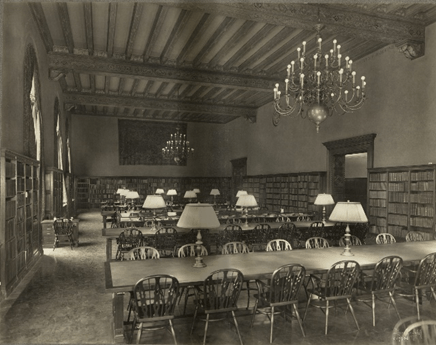
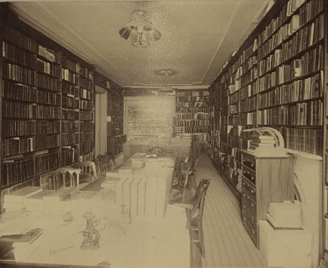
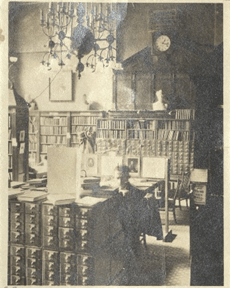
The former Main Reading Room in the  Academy’s current building.
The Rare Book and History Room in the 1930s, now the Drs. Barry and Bobbi Coller Rare Book Reading Room.

Bert Hansen, “The Academy Library’s Contributions to American Medicine.”

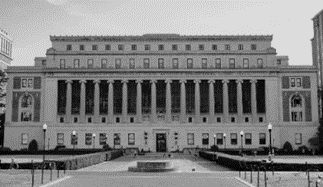
Our second panelist, historian Bert Hansen, notes that his earliest memories picture libraries as storehouses of precious treasure, an image reinforced by an architecture that made them look like giant-sized strongboxes or jewelry boxes. Built of large stone blocks and fortified like a castle, libraries he fondly recalls include the main public libraries in Chicago, Newark, and New York City, plus Butler Library at Columbia and the Morgan Library from his college years (as seen below, with NYAM the sixth). The decorated, jewelry-box style often continues inside with marbled lobbies and wood-paneled reading rooms.

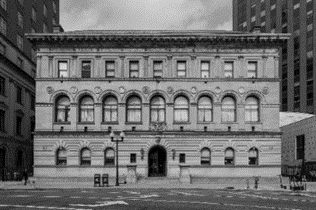
But for this presentation, Hansen has gone in a new direction, focusing his attention on the kinds of contribution that libraries like that of NYAM have made to education and the world of learning in serving people who would never enter the building to examine the treasured volumes. In the recent past, virtual use through digitization has become common and will surely expand in the future. But his look at the prior century and a half will highlight other, sometimes-forgotten modes of service as examples of NYAM’s—and other research libraries’—many contributions to American medicine.

Melissa Grafe, “Preservation, Access, and the Future”

Our final panelist, librarian and historian Melissa Grafe, glimpses into the future of medical libraries and the role of physical collections in an increasingly online world. Grafe looks at the ways that technology has become deeply integrated in both medicine and in the libraries that support the medical community. Grafe will connect these modern currents to the rich trove of materials that NYAM assembled over 175 years, and the larger history that has made NYAM’s library one of the major collections connecting medical history to the present.


References

[1]Nancy Spiegel, the University of Chicago Library’s bibliographer for art and cinema, writes:

In the late 18th century, a new vision of the library arose within the context of expanding literacy, and the increased publication of books and journals for the general reading public. Enlightenment architect Étienne-Louis Boullée (1728–1799) envisioned a grand design in his proposal for a French National Library in 1785. In Boullée’s presentation, the state would take responsibility for the collection, ordering, and dissemination of all available information to its citizens.

The design for the main reading room featured a vast, barrel-vaulted ceiling and a modern shelving arrangement: stacked galleries of books over flat wall-cases. These seemingly endless bookcases were open and easily browsable, in dramatic contrast to the earlier medieval system of chaining that bound both books, and readers, to a specific location. Visitors are free to wander about and converse in small groups, but there is no provision of study desks or chairs for extensive research in this idealized environment.

Nancy Spiegel, “The Enlightenment and grand library design,” The University of Chicago Library News, April 26, 2011: https://www.lib.uchicago.edu/about/news/the-enlightenment-and-grand-library-design/, accessed October 7, 2022. The image is from Étienne-Louis Boullée, Mémoire sur les moyens de procurer à la bibliothèque du Roi les avantages que ce monument exige, 1785.

A Network of Eugenic Maternalism: Finding the New York Babies’ Welfare Association at the New York Academy of Medicine Library

By Jamie Marsella, Department of the History of Science, Harvard University, and the Library’s 2022 Paul Klemperer Fellow

Ms. Marsella completed her Fellowship residency in summer 2022 and will present her research by Zoom on September 7 at 4:00 pm (EDT). To attend her talk, “‘Where Once There Was Only Friction’: Religion, Eugenic Maternalism, and the Babies’ Welfare Association, 1908–1920,” register through the Academy’s Events page.

I’ll start this blog post with a confession: before sitting down in the NYAM Rare Book Room, I was worried there might not be enough materials to keep me busy for a full month. How profoundly wrong I was!

I arrived at NYAM to conduct research for my dissertation—an exploration of the New York Babies’ Welfare Association (1912–1920). The BWA was an organization that aimed to standardize maternal and pediatric public health programs while remaining a loose federation of public health and child welfare organizations, including private philanthropic and religious groups.

The Babies’ Welfare Association was created by the New York City Bureau of Child Hygiene in 1912. Neither organization has a stand-alone archival collection, nor do most of the 120+ individual organizations within the BWA. Before arriving, I could not have known that the NYAM Library would hold more relevant materials than I could ever have imagined.

The BWA was abundantly represented within the NYAM collections. This makes sense since, for the first two decades of the twentieth century, the BWA was a well-known, highly publicized organization in New York City. The Chief of the Bureau and President of the BWA, Dr. Sara Josephine Baker (1873–1945),[1] was a household name not only in New York, but throughout the country, with movie reels produced by Fox Studios, a monthly Good Housekeeping column, multiple books on child health and parenting, a regular radio broadcast, and constant coverage in the local and national press.

An informative organizational chart created by the BWA from Report of the Babies’ Welfare Association, 1912–1915.

Unlike negative eugenic programs (i.e., sterilization, anti-miscegenation laws) that came to dominate later in the century, early twentieth-century reformers understood eugenic reform as a combination of heredity and environmental conditions. In this framework, improved sanitation, nutrition, and hygiene could improve individuals and enable them to pass on these improvements to their future offspring. The BWA emphasized these changes in the environment, promoting them as eugenic maternalism. In other words, the BWA understood mothers as the family’s first line of defense against disease and, therefore, an essential part in preventing “racial degeneration.” The BWA, therefore, targeted immigrant neighborhoods with the explicit desire to “improve” white-ethnic communities and prevent future supposedly dysgenic generations.

I came to NYAM hoping to better understand why Catholic and Jewish organizations might be interested in participating in this eugenic standardization project and how their participation may have shaped how the BWA understood and operationalized eugenics. I also hoped to clarify the role that Black reformers and patients played within the BWA. Based on what I had gleaned from digitized sources, the BWA’s work with Black philanthropic groups was inconsistent, and their relationships were unclear.

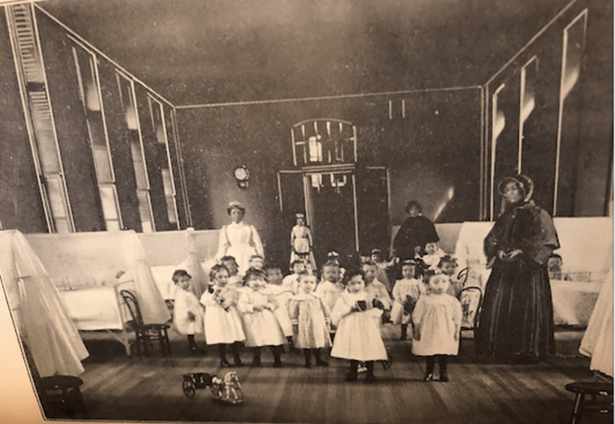
Sisters of Charity and their young charges at the New York Foundling Asylum.
Image Courtesy of the New-York Historical Society.

The materials I’ve reviewed at NYAM paint a complicated and nuanced picture. Some religious organizations, like the New York Foundling Asylum and other benevolent institutions run by women religious, understood their own religious missions as Catholics in a way that blended nicely with the assimilationist goals of eugenic maternalism.

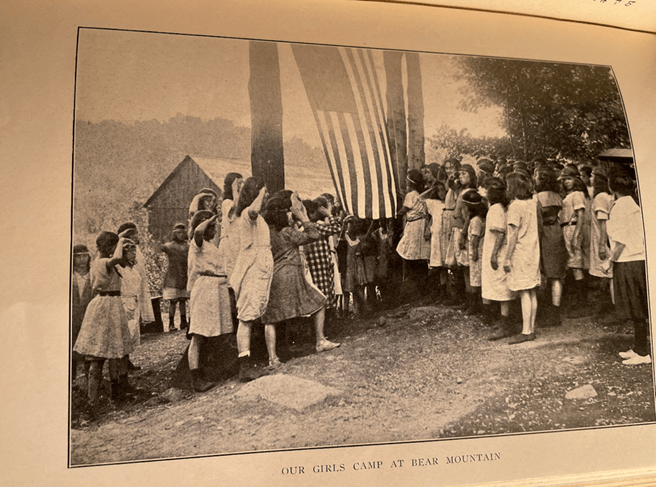
Young girls from the Hebrew Orphan Asylum practicing patriotism at a camp excursion.
Hebrew Orphan Asylum. Report of the Ninety Ninth Annual Meeting and the Ceremonies Commemorating the Centennial Anniversary of the founding of the Hebrew Orphan Asylum, 1822–1922. 1922; New York Academy of Medicine Library.

Similarly, Jewish organizations like the United Hebrew Charities or the Brooklyn Federation of Jewish Charities understood their work as both a religious mission and an assimilating force. Such groups were eager to associate their religious and cultural practices with Americanism, especially in the face of rising antisemitism.

Most BWA members held a capacious view of their work beyond childcare, health and hygiene, or charitable aid. As I continued to work through the Library’s documents, it became clear that members of the BWA were pursuing something far broader than public health or bodily hygiene. These programs were about “right living”—teaching women and children how to conduct themselves in public and private, how to understand one’s role as a (future) citizen, or how to raise and nurture the future citizens in their care.

The graduating class of nurses trained at the Lincoln Hospital, 1905.
Lincoln Hospital and Home. Sixty-Fifth Annual Report, 1904–1905. 1905;
New York Academy of Medicine Library.

Within these different organizational records, there were also small glimpses of public health work specifically targeting the Black community. While the connections between the BWA and Black New Yorkers remained muddled, my time at NYAM has helped me understand this reflects the nature of the work, which was sporadic at best and exploitative at worst. The Lincoln Hospital and Home (a BWA member) is one exception to this general rule. The hospital trained Black nurses, many of whom then worked in the hospital treating both Black and white patients or worked with the Henry Street Settlement House (another member) in their Visiting Nursing Service.

Ultimately, my time at NYAM was invaluable. The materials there allowed me to better understand how the members of the BWA negotiated amongst themselves to create a standardized eugenic program that could encompass different ethnicities and religions.  


References

[1] For more information on S. Josephine Baker, see “Highlighting NYAM Women in Medical History: Sara Josephine Baker, MD, DrPh” on the NYAM blog “Books, Health, and History.”

Controlling Substances: The Evolution of the American Moral and Medical Drug Policy Regime 

By Logan Heiman, Digital Collections Manager

Senate hearings on narcotic addiction in 1969.

American drug policy as we know it today categorizes marijuana as a Schedule I substance, meaning that it is considered to place users under high risk for abuse and not accepted by the FDA or DEA as safe for use as medication with or without supervision. The FDA and DEA have rejected multiple petitions to reschedule marijuana under less restrictive categories from governmental and non-governmental entities. The Controlled Substances Act of 1970 governs federal drug policy in the United States as part of a broader effort to curtail the sale, distribution, and consumption of illegal drugs by the Nixon administration, later known as the War On Drugs. 

The “La Guardia Report,” 1944.

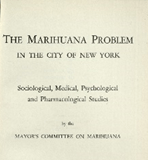
The status quo of American drug policy extends farther back than 1970, however. When the United States Congress passed the Marihuana Tax Act championed by Federal Bureau of Narcotics Commissioner Harry Anslinger in 1937, it was a watershed moment in the history of drug policy regulation. The legislation represented a victory for marijuana opponents who successfully convinced lawmakers of a link between cannabis usage and addiction, deviance, and criminality. New York City Mayor Fiorello La Guardia looked skeptically upon the Marihuana Tax Act and its pretext. He thus called upon the New York Academy of Medicine to prepare a report drawing from a wide variety of academic disciplines to scrutinize the drug law and the beliefs about drugs held by its proponents. In the “La Guardia Report” of 1944, the Mayor’s commission on marihuana use demonstrated that the widespread fear, even panic, around marijuana use was greatly overblown.

NYC’s Overdose Prevention Center
(Photo credit: OnPoint NYC)

In the 1950s and ’60s, the Academy continued to emphasize drug addiction as a treatable condition. During 1995 and 1996, NYAM’s Committee on Medicine in Society looked specifically at the concept of harm reduction. The Academy recommended policy changes that were, for the time, cutting edge. These included expansion of treatment programs, acceptance of methadone treatments, special efforts for those incarcerated, better training for medical professionals, and, especially, expanding needle exchange programs and decriminalizing needle distribution and possession. The Library’s Then and Now event “Drug Policy and Harm Reduction Services” brought that history up to the present time. A stellar panel mentioned NYAM’s continuing work in harm reduction, looked at the racial component of America’s drug control regime, considered the experience of those working in NYC’s new Overdose Prevention Centers, and noted that the most recent White House National Drug Control Strategy champions “harm reduction to meet people where they are.” For at least a quarter century, NYAM has supported the people-centered approach that lies at the heart of harm reduction. We wait to see where the national strategy goes next.

Color Our Collections 2022—175th Anniversary Edition

by the NYAM Library Team

Our annual Color Our Collections week kicks off today! From February 7 through 11, libraries, archives, museums, and other cultural institutions showcase their collections through free, downloadable coloring books. A hundred or so books are gathered at ColorOurCollections.org. Follow #ColorOurCollections on Twitter, Instagram, Facebook, and other social media platforms to participate.

As part of the NYAM-wide celebration of our 175th anniversary, this year our coloring book presents images from our history. We feature our buildings and library reading rooms through the years, along with some of their marvelous details of design. Other images allude to NYAM’s work cleaning up the city streets, improving maternal health, and weighing in on the public health effects of using marijuana. All these stories and more are found in the new NYAM timeline. Here we present a few coloring sheets to help while away your hours; for more, check out our whole coloring book.

Dr. Robert Latou Dickinson’s pen-and-ink drawing of the new Rare Book and History of Medicine Room, from NYAM’s 1933 Annual Report.

Rabbits! A possible lobby ceiling decoration for the Academy’s 1926 building, in a pen-and-ink drawing from the NYAM archives.

“King Garbage Reigns,” from Harper’s Weekly, February 7, 1891. In the 1920s, the work of the Academy’s Committee on Street and Outdoor Cleanliness helped form NYC’s Department of Sanitation.

The pamphlet cover for A Letter to Expectant Mothers (1911), in the Records of the Committee for the Reduction of Infant Mortality of the New York Milk Committee.

Cannabis sativa, in Leonhart Fuchs, De historia stirpivm commentarii insignes (1542). The Academy’s report on the public health impact of marijuana usage, commissioned by Mayor Fiorello LaGuardia, was published in 1944.

‘Sick and In Prison’: Airborne Disease and Prison Reform in the career of John Howard (1726–1790) 

By Dr. Paul E. Sampson, Assistant Professor of History, The University of Scranton 

2020 Audrey and William H. Helfand Fellow in the History of Medicine and Public Health 

Over the course of the past year, I have had the privilege of spending four weeks researching in the spectacular rare book collection of the Library of the New York Academy of Medicine. My book project is entitled “Ventilating the Empire: Environmental Machines in Britain, 1700–1850” and comprises a scientific and social history of ventilation in Britain and the British empire during the long eighteenth century, roughly 1688 to 1815. By examining the design and deployment of ventilating machines in slave and naval ships, prisons and public buildings, I ask how devices designed to protect human beings from environmental hazards became a means of dividing British society along class and racial lines.  

Text Box

The primary subject of my research has been the life and career of prison reformer John Howard (1726–1790). I examine Howard’s career through the context of his work on “Jail Fever” (AKA typhus) which contemporary physicians and medical experts understood as an airborne disease. I argue that a key feature of Howard’s celebrity was his perceived invulnerability to airborne diseases. In addition, his influence helped to shift the discourse of prison reform away from overall institutional sanitation and towards methods intended to control the hygiene and morality of individual prisoners. 

For those unfamiliar, John Howard was a noble-born, intensely religious man who was appointed sheriff of Bedfordshire in 1773. One of his duties was to inspect local prisons. Unlike many of his genteel contemporaries, he took this job seriously. He was appalled by the conditions of the prisons in Bedfordshire, and to spur reform and gather ideas for improvement, he made a series of lengthy tours to visit as many prisons as he could throughout the British Isles and continental Europe. His first published book, The State of the Prisons in England and Wales (1777), detailed his visits to dozens of county jails and bridewells (workhouses), including careful notes of the fees charged to prisoners, their daily workload, the prison diet, and the overall sanitation.  

One of the primary goals of Howard’s travels was to find the best means of preventing the spread of disease. By the 1750s, prisons were increasingly perceived as public health hazards. The filthy and diseased condition of prisoners in London’s Newgate prison became a public scandal after the Lord Mayor and 56 others died of jail fever in the weeks following an audience with prisoners. Following the contemporary etiology of fever, the outbreak was attributed to the “putrid effluvia” exhaled in the breath of sick prisoners that had imparted a “poisonous quality” to the air in the courtroom.1 By 1774, Howard had achieved celebrity status by helping to author the “Act for Preserving the Health of Prisoners in Gaol.” This act stated that jail fever was caused by the “want of cleanliness and fresh air” and mandated that all interior walls and ceilings be scraped and white-washed annually and “constantly supplied with fresh air, by means of hand ventilators or otherwise.”2  

However, in the wake of this achievement, Howard’s attitudes about preventing fever had begun to shift. During his tours of European prisons, he was puzzled that he rarely encountered “jail distempers” there. To explain the disparity between these and disease-ridden English institutions, Howard developed a theory of jail fever based entirely on his own “experience.” He argued that prisoners could only be infected if privation, filth, and personal intemperance weakened them enough for the contagion to take hold. Young and healthy convicts who were used to “vigorous exercise” quickly became infected due to the “sudden change of diet and lodging” that “so affects the spirits of new convicts, that the general causes of putrid fevers exert an immediate effect on them.” As a counter-example, Howard pointed to himself. During his first tours, he wrote, he had attempted to avoid breathing in contagion by “smelling to vinegar… and changing my apparel…constantly and carefully.” A few years later, however, he wrote that he “entirely omitted” such precautions. In his opinion, the real protection against infection were his habits of “temperance and cleanliness” as well as the power of “divine providence.”3 

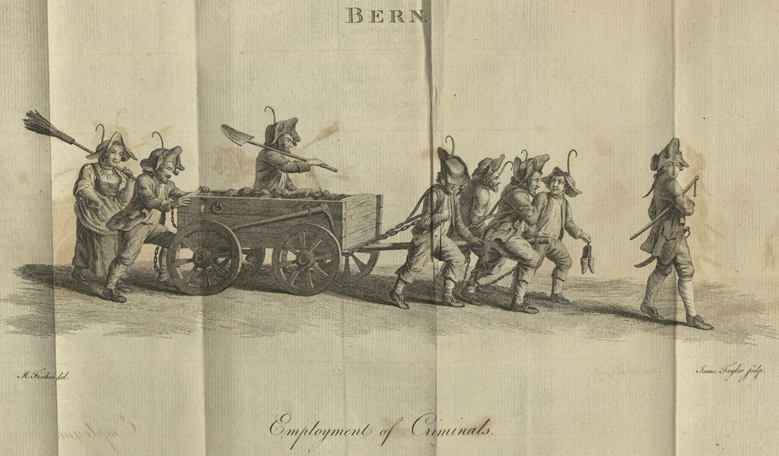
Image 2: Howard was keenly impressed by the prison regime in Bern, Switzerland. Howard wrote that the city was “one of the cleanest I have seen” and included illustrations of the employment of male and female prisoners as street cleaners. Note the iron collars with hooks affixed to the prisoners’ necks to deter escape attempts.  
“Employment of Criminals” and “Employment of female Criminals,” in John Howard. The State of the Prisons in England and Wales. 2nd. Ed. (Warrington: T. Cadell, 1780) 109–10. Images courtesy of the New York Academy of Medicine Library. 
 

By the time the second edition of State of the Prisons came out in 1780, Howard had visited hundreds of disease-ridden institutions and avoided contracting a serious infection. While friends privately cautioned him against such continual risk-taking, Howard’s superhuman invulnerability to disease had become a key feature of his celebrity.4 Celebratory poems about Howard became, in the estimation of two literary scholars, “nearly ubiquitous in the 1780s and 1790s” as poets from Erasmus Darwin to William Cowper celebrated his arduous travels and selfless virtue.5 William Hayley’s 1780 Ode, Inscribed to John Howard attributed Howard’s “matchless fame” to his “valor’s adventr’ous step” through “malignant cells” where “fierce contagion, with affright, repels.”6

Image 3: George Romney’s study for a never-completed painting of John Howard visiting a prison or lazaretto. Howard is the figure standing defiantly on the far left.  
George Romney, John Howard Visiting a Lazaretto (1790–95). Courtesy of the Museum of Fine Arts, Boston, MA. 
 

This vision of Howard as a heroic and invincible figure appeared in numerous prints and lithographs and was captured evocatively in an unfinished work by famed painter George Romney, who depicted a defiant Howard striding confidently into scenes of melodramatic suffering and disease.7  

Despite his reputation, Howard wasn’t able to evade contagion forever. While travelling through southern Ukraine in the winter of 1790, Howard contracted a serious fever and died two weeks later.8 Notwithstanding his untimely death, Howard’s emphasis on invigorating labor, self-regulation, and instilling personal hygiene in convicts exerted an enormous influence. By the heyday of the modern penitentiary in the mid-nineteenth century, Howard was lauded as the founder of “prison science.”9 While jails designed during Howard’s life reflected the eighteenth-century emphasis on eliminating effluvia via ventilation, their nineteenth-century successors focused instead on insuring that each inmate was placed in solitary confinement and given a strict regimen of work and moral instruction.10  

In my larger project, I argue that this is partially due to a shifting locus of responsibility for preventing airborne disease. The attention of reformers shifted from the condition of the institution to the character of the individual, who became responsible for his or her own cleanliness and ventilation. To briefly illustrate this point, I will conclude with a quotation written several years after Howard’s death by naval health reformer Gilbert Blane: 

Those only whose duty leads them to consider the subject, are aware how much the welfare of the human species depends on ventilation and cleanliness; and no one could render a greater service to his fellow creatures, than to impress on their minds the necessity of cultivating them as moral and religious duties.11 


1. See, for example: John Pringle, Observations on the Nature and Cure of Hospital and Jayl-Fevers (London: A. Millar, 1750); “Account of the Fatal Assize,” CLA/035/02/049, Gaol Committee, 1750–1755, Notes on Ventilating Newgate, London Metropolitan Archives.

2. Act for Preserving the Health of Prisoners in Gaol and Preventing the Gaol Distemper, 1774, 14 Geo. III, c. 59.

3. John Howard, The State of the Prisons in England and Wales 2nd. Ed. (Warrington: T. Cadell 1780) 430–31.

4. Thomas Taylor, Memoirs of John Howard (London: John Hatchard, 1836) 386–87.

5. Gabriel Cervantes and Dahlia Porter, “Extreme Empiricism: John Howard, Poetry, and the Thermometrics of Reform,” The Eighteenth Century, 57:1 (Spring 2016): 97.

6. William Hayley, “Ode, Inscribed to John Howard” (Boston: J. White et. al. 1795 [1780]).

7. George Romney, John Howard Visiting a Prison or a Lazaretto, 1790–95, courtesy of the Museum of Fine Arts, Boston, MA.

8. John Aikin, A View of the Life, Travels, and Philanthropic Labours of the Late John Howard (Boston: J. White et. al., 1794) 120–25.

9. William Hepworth Dixon, John Howard and the Prison World of Europe, 2nd ed. (London: Jackson and Walford, 1850) 1.

10. Robin Evans, The Fabrication of Virtue: English Prison Architecture 1750–1840 (London: Cambridge UP, 1982) 104–114; Michael Ignatieff, A Just Measure of Pain (London: Penguin, 1978) 3–14.

11. Gilbert Blane, “Letter to John Hippisley,” in Observations on the Diseases of Seamen (London: 1799): 614–15.

Celebrating National Hispanic Heritage Month: Dr. Ildaura Murillo-Rohde, PhD, RN, FAAN

By Logan Heiman, Digital Collections Manager

September 15 marks the beginning of National Hispanic Heritage Month, which celebrates the cultures, traditions, heritage, and achievements of those in the United States who trace their roots to Spain and the Spanish-speaking countries of Latin America. At the New York Academy of Medicine, we are celebrating the accomplishments and contributions of Hispanic Americans to medicine and public health in the United States. According to survey data compiled by the National Center for Health Workforce Analysis in 2018, more than 10% of registered nurses in the United States identified as Hispanic, Latino, or Spanish. Contrast this with Ildaura Murillo-Rohde’s remarks about the paucity of representation in Washington, DC, for Hispanic nurses early in her career: “I saw that I was the only Hispanic nurse who was going to Washington to work with the federal government, review research and education grants, etc. There was nobody else. I looked behind me and thought: ‘Where are my people?’”

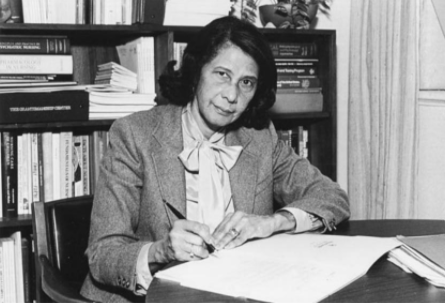
Ildaura Murillo-Rohde, PhD, RN, FAAN (1920–2010). National Association of Hispanic Nurses.

Ildaura Murillo-Rohde (1920–2010) was a Panamanian American nurse, academic, and health policy advocate who championed of the unique health care needs of Hispanic populations. Murillo-Rohde earned a nursing diploma from the Medical and Surgical Hospital School of Nursing in San Antonio, Texas, before obtaining an undergraduate degree in the teaching and supervision of psychiatric nursing from Teachers College, Columbia University, in 1953. Upon graduation, she joined Bellevue Psychiatric Hospital, working with patients diagnosed with “Puerto Rican syndrome,” the name for a condition first used to describe traumatized Puerto Rican soldiers in the Korean War. Wayne County General Hospital’s Psychiatric Division in Michigan then recruited her before she returned to New York to open Elmhurst General Hospital’s first psychiatric division in Queens. In 1971 she became the first Hispanic nurse to earn a PhD from New York University.

Throughout her career Murillo-Rohde maintained a strong commitment to growing the ranks of Hispanic nurses. Informed by her experience as a reviewer of federal research and education grants, she also sought to boost the number of policy experts advising lawmakers on the health care concerns of Hispanic communities. In the 1970s, Murillo-Rohde was an active member of the American Nurses Association (ANA), where she mounted a two-year-long effort to include the Ad Hoc Committee of the Spanish-Speaking/Spanish Surname Nurses’ Caucus in the ANA’s administrative structure. In 1975, with a group of about 15 nurses, Murillo-Rohde formed the National Association of Hispanic Nurses (NAHN) after the ANA rejected attempts to formally recognize the caucus.

Murillo-Rohde in the 1970s. Barbara Bates Center for the Study of the History of Nursing, MC 172.

Since its inception, NAHN has worked broadly to improve health care delivery and outcomes for the Hispanic community in the United States. Today, the organization sponsors an award for distinction in nursing scholarship, research, and practice, as well as a scholarship for Hispanic students enrolled in nursing programs that lead to licensure.

NAHN also publishes Hispanic Health Care International, featuring research and scholarship on issues of import to US and international Hispanic populations. Judith Aponte, a 2012 NYAM Fellow and Associate Professor of Nursing at Hunter College, is a former editor-in-chief of HHCI.

Beyond her role as founder and first president of NAHN, Murillo-Rohde was an expert on psychotherapy, marriage, and family therapy, and served in several roles in academic administration, including Dean of the College of Nursing at SUNY Downstate Medical Center. Murillo-Rohde’s influence was felt internationally as well through her appointment as WHO’s psychiatric consultant to the Guatemalan government, establishing a pilot program to train personnel in psychiatric care. She further served as Permanent UN Representative to UNICEF for the International Federation of Business and Professional Women. Murillo-Rohde passed away in her native Panama in 2010 at the age of 89.

References

1. Aponte, Judith. School of Nursing at Hunter College, City University of New York, 2021. http://www.hunter.cuny.edu/nursing/faculty/judith-aponte

2. Brush, Barbara & Villarruel, Antonia (2014). “Heeding the Past, Leading the Future.” Hispanic Health Care International. 12. DOI: 10.1891/1540-4153.12.4.159.

3. Feldman Harriet, PhD, RN, FAAN, et al. Nursing Leadership: A Concise Encyclopedia. 2nd ed., Springer Publishing Company, 2011, p. 393.

4. Ildaura Murillo-Rohde Papers, Barbara Bates Center for The Study of The History of Nursing, School of Nursing, University of Pennsylvania.

5. Portillo, Carmen. “25 and Counting.” Minority Nurse Magazine. 30 Mar. 2013. https://minoritynurse.com/25-and-counting/

6. U.S. Department of Health and Human Services, Health Resources and Services Administration, National Center for Health Workforce Analysis. 2019. Brief Summary Results from the 2018 National Sample Survey of Registered Nurses, Rockville, Maryland. https://data.hrsa.gov/DataDownload/NSSRN/GeneralPUF18/nssrn-summary-report.pdf

Color Our Collections 2021

by the NYAM Library Team

Our annual Color Our Collections week kicks off today! From February 1st through 5th libraries, archives, museums, and other cultural institutions showcase their collections through free, downloadable coloring books. A hundred books or so are gathered at ColorOurCollections.org. Follow #ColorOurCollections2021 on Twitter, Instagram, Facebook, and other social media platforms to participate.

The NYAM Library’s coloring book presents images from the Renaissance to the 20th century. Here are a few coloring sheets to help while away your hours; for more, check out our whole coloring book.

From Diversions for the Sick, published by the Life Conservation Service of the John Hancock Mutual Life Insurance Company (Boston, around 1938).
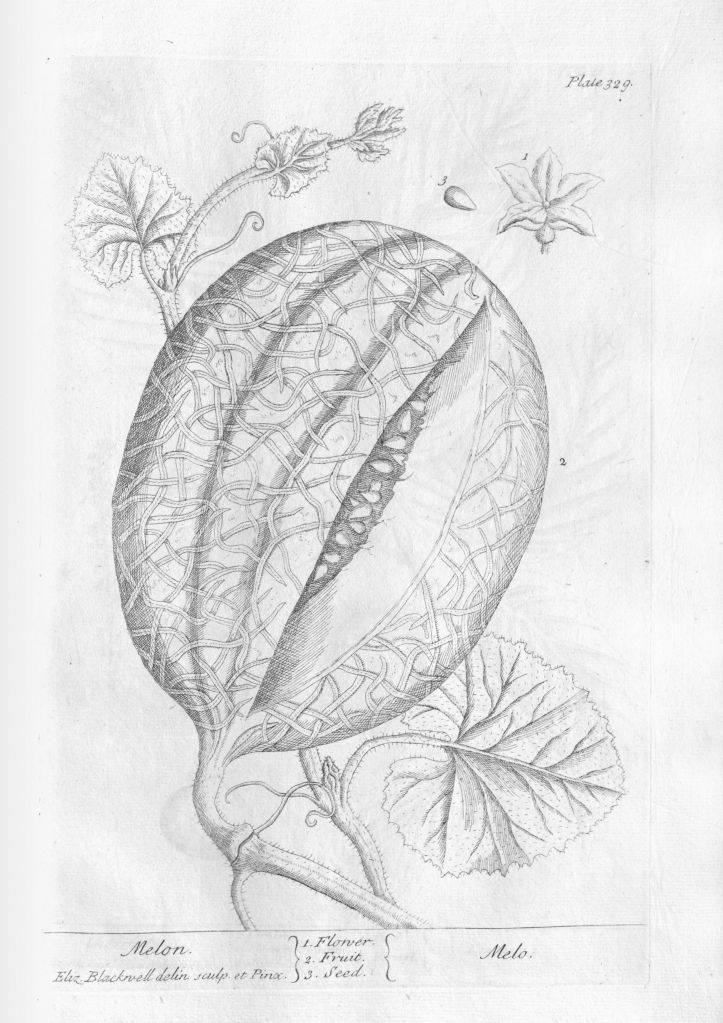
“Melon,” from Elizabeth Blackwell’s collection of botanical plates, A curious herbal (London, 1739).
“Gyre Falcon,” from Ulisse Aldrovandi, Ornithologiae . . . (Bologna, 1599).

Enjoy!

English-Language Manuscript Cookbooks

By Stephen Schmidt, Manuscript Cookbooks Survey

Over the course of a decade, culinary historian Stephen Schmidt has advised the NYAM Library on our extensive manuscript cookbook collection. This blog post is a version of the essay he wrote about our digital collection Remedies and Recipes: Manuscript Cookbooks. As part of Bibliography Week 2021, he is speaking on “Manuscript Cookbooks and Their Audience” on January 30.

Introduction to Manuscript Cookbooks

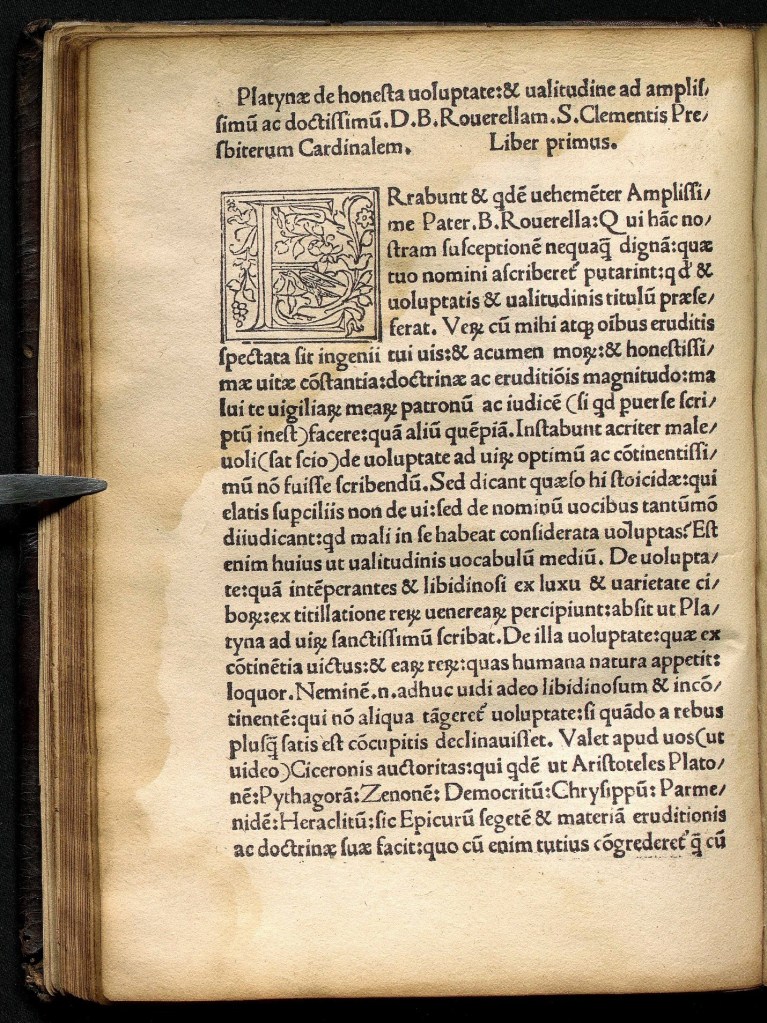
The modern Anglo-American tradition of manuscript cookbooks might be said to begin with the world’s first printed cookbook, De honesta voluptate et valetudine, or “On right pleasure and good health.” Written by the celebrated humanist writer Bartolomeo Sacchi, known as Platina, and first published around 1474, the book was translated into Italian, French, and German within a few decades of publication, and it remained widely read throughout Europe into the early eighteenth century. The book featured both a new cuisine and, just as importantly, a new attitude toward food and cooking. Platina presented an interest in food and its preparation as a kind of connoisseurship akin to the connoisseurship of painting, music, or literature. Europe came to call Platina’s attitude toward food and cooking “epicurean,” and those who espoused it “epicures.” At the dawn of the sixteenth century, these new individuals were emblematic of the Renaissance European world.

Platynae De honesta uoluptate: & ualitidine (Venice,  1498)

When Italian epicureanism was first unleashed in Europe, England was in the throes of its own cultural and intellectual Renaissance. Among the English elite classes, the quest for new knowledge found expression in the collecting and creating of recipes, known then and well into the nineteenth century by the now-archaic word “receipts.” Originally the word receipt meant a prescription for a medicine or remedy. During the Renaissance, as the knowledge-hungry English began to write and collect prescription-like formulas for all sorts of things, the term receipt broadened accordingly: directions for farming and building; formulas for chemistry and alchemy; recipes for practical household products like cleaning solutions and paints, and, amid the growing epicurean spirt of the time, food recipes. The sixteenth-century English made a distinction between receipts pertaining to the home and commonly undertaken by women, and receipts for things involving work outside the home, assumed to be the concern of men. Thus, most who collected food and drink recipes also collected receipts for medicines, remedies, cosmetics, and household necessities such as candles, cleaners, pesticides, fabric dyes, and ink. Today, these books of mixed home recipes are often referred to as “cookbooks” when a substantial portion of their recipes concern food and drink.

Cookbooks in History—Manuscript and Print

There is a persistent belief that in the early modern world recipes originated in the home and then were subsequently picked up in print cookbooks. In fact, this was true in England only during the Renaissance, that is, up to about 1625. Only about a dozen cookbooks were published in England, from the first, in 1500, to that date. This may have been due to a lack of demand, but it was also surely due to the thorny practical problem that, cookbooks being a new idea, a community of writers possessing the specialized skills needed to produce them had yet to develop. Printers solved this problem in the only way they could: by cobbling together their printed cookbooks from manuscript cookbooks compiled by ladies of the peerage and then slapping titles and, in some instances, putative authors on them, all of whom, of course, were men. In most instances, the women who actually wrote these cookbooks were unacknowledged—some of their manuscripts may well have been pilfered from their estates—although two Renaissance cookbook authors, John Partridge and Gervase Markham, did explicitly credit noble ladies as the true originators of their printed books. While manuscript cookbooks preceded print cookbooks during the English Renaissance, this situation was soon to change.

G.M. [Gervase Markham], The English House-Wife (1637), in A way to get wealth: containing sixe principall vocations or callings, in which every good husband or housewife may lawfully imploy themselves (London, 1638)

During the seventeenth century, the number of published cookbooks grew rapidly in England, as did the number of manuscript cookbooks, to judge from those now extant. As the use of printed cookbooks spread, most recipes in manuscript cookbooks cycled through print at some point. In fact, quite a few manuscript cookbooks compiled after the mid-seventeenth century contain recipes copied verbatim from print. As English cookbook publishing matured, female cookbook authors appeared, starting with the remarkable Hannah Woolley, active in the 1650s through the early 1670s. In the eighteenth and nineteenth centuries, female cookbook authors, who generally branded themselves “experienced housekeepers” rather than professional cooks, dominated English and American cookbook publishing. The relationship between manuscript and print, however, remained the same: recipes cycled from print into manuscript and back into print again, until cooking fashions changed and the old recipes were replaced by new ones.

The NYAM Collection

The eleven NYAM receipt books in Recipes and Remedies show the same organization patterns common to most manuscript books in the English-language tradition. For example, in most of the NYAM books, the culinary recipes are separated from the medical and household recipes in some fashion. In some of the NYAM books, recipes are clustered by subject matter, that is, a clutch of food recipes will be followed by a clutch of medical recipes, and so on. In other NYAM manuscript cookbooks, the culinary recipes are written from the front of the notebook while the medical and household recipes are written from the back of the notebook going toward the center. In one item in the NYAM collection, the medical and household recipes are also written upside down in relation to the culinary recipes, making the separation more explicit.

“a receipt for pound cake,” from Hoffman cook book : manuscript, circa 1835-1870

The Hoffman cook book in the NYAM collection is rare in that it unveils a style of cooking outside the mainstream norm. Written in halting English by a German immigrant to America, this highly interesting cookbook is composed primarily of German-inflected recipes like those we today associate with the so-called Pennsylvania Dutch. It also contains recipes for standard American dishes, such as roast turkey, pumpkin pie, and pound cake, but approached in idiosyncratic ways by a woman struggling to interpret a cuisine that was foreign to her. While the author of this cookbook was a cultural and linguistic outsider and her cooking outside the contemporaneous American mainstream, she was also a woman of privilege, a member of a prosperous German-American family that had owned paper mills in Maryland since the eighteenth century. For these reasons she was the sort of person, whether in Germany or America, who would be expected to use recipes and perhaps also to collect them.

Manuscript cookbook authors tended primarily to collect recipes for fruit preserves, fruit and flower wines, sweet dishes, cakes, and, after 1700, breads and cakes served at breakfast or with tea. About half of the manuscript cookbooks in the NYAM collection reflect the typical manuscript preference for sweets. Most of the culinary and drink recipes in Gemel book of recipes and A collection of choise receipts are geared to banqueting, an extravagant repast of sweets that was sometimes served after important meals and sometimes staged as a stand-alone party during the sixteenth and seventeenth centuries. Recipe book, 1700s titles its culinary section “Wines, Sweetmeats, & Cookery”; recipes in the first two categories far outnumber those in the last. Receipt book, 1848–circa 1885, by an American woman named Jane Beck, can be aptly described as a cake cookbook. This inclination can be explained, in part, by the fact that many ladies personally participated in preserve-making, distilling, and baking, while relegating the preparation of the principal dishes of dinner entirely to their cooks. In addition, the success of sweet dishes and cakes hinges on precise recipes, while savory dishes can be successfully executed intuitively, without recipes, at least by good cooks, or so people seem to have believed. Finally, up through the nineteenth century, the biggest per capita consumers of sugar in the world were the British, with the Americans not far behind.

“For the Jaundies” and “Almond Butter,” from A collection of choise receipts : manuscript, circa 1680-1700

Conclusion

Manuscript cookbooks contain insights that historical printed cookbooks lack. Manuscript recipes are likely to have been cooked from, if not by the person who collected the recipe and wrote it down in her book, at least by the person from whom the recipe was collected. Thus manuscript cookbooks contain concrete details that historical printed cookbooks generally lack: the precise motion of the hand in stirring; the most suitable cuts of meat; the time that a cooking process takes; the signs that something is going wrong; the size and number of molds needed for individual cakes; the clues that a dish is done; and so on. Manuscript recipes not only illuminate the making of specific dishes but also basic kitchen conditions and broad practices in historical cooking.

A special feature of manuscript cookbooks is that they reflect the tastes of individual households. Thus, while most printed cookbooks published between 1675 and 1800 outline the same three basic recipes for lemon cream, contemporaneous manuscript cookbooks present dozens of different recipes for this favorite dessert, some tart and others sweet, some rich and others lean, suiting the varied tastes of the epicures of centuries past.

Living through COVID-19: What can we learn from typhoid epidemics of the past?

by guest contributor Jacob Steere-Williams, PhD, Associate Professor of History, College of Charleston.

Join us for Steere-Williams’ talk on typhoid on September 23. 

For decades, thinking about and learning from past pandemics has largely been an academic exercise, one for historians and archivists who specialize in public health. Now, in the midst of a generation-defining pandemic, COVID-19, there has been an explosion of public interest in epidemics and epidemiology. Before 2020, few Americans outside of infectious disease specialists routinely spoke the words “contact tracing” and “case fatality,” or knew the difference between isolation and quarantine.

The recent surge in popular understandings of epidemics has centered on some familiar examples, such as the 1918–1919 influenza pandemic, the mistakenly called “Spanish Flu.”[1] As this was the most significant pandemic of the 20th century, the comparisons make sense, and the public health struggle between individual rights and community health is as apt now as it was then. Other historians, seeing the rise of xenophobia as a cultural response to COVID-19 in the West, have perceptively turned our attention to 19th-century pandemics of cholera and bubonic plague. Then, as now, a uniquely durable, yet startlingly western approach to framing pandemics has been to blame Asian people and Asian cultural practices.[2] 

At a time when the cultural mileage of past pandemics is perhaps at its height in modern history, we might fruitfully turn to the history of a relatively unexplored disease, typhoid fever, to think about our current moment.

Typhoid fever is a food- and water-borne infectious disease, the most virulent of the Salmonella family. The disease continues to wreak havoc on the Global South, killing about 200,000 people each year. In the western world typhoid was at its height in the 19th century, when it was a ubiquitous and insidious reality in North America and Western Europe. In Britain, for example, typhoid annually struck up to 150,000 people, taking the lives of 20,000 each year.

Thomas Godart, “Head and Neck of a Patient Suffering from Typhoid Fever.” Courtesy of the Wellcome Library.

Typhoid’s patterns of distribution were erratic; it might spare a community for months or even years, then erupt as a local outbreak. Epidemiologists today discuss COVID-19 as a cluster disease, exploding in localized events not unlike the way that typhoid did in the past.

Interestingly, typhoid outbreaks continued after the introduction of early sanitary improvements such as toilets, pumped water, and sanitation systems. In the second half of the 19th century no infectious disease was as central to the rise of public health than typhoid. Typhoid was a model disease because the burgeoning group of public health scientists, the first to call themselves epidemiologists, saw that stopping typhoid’s different pathways—through food, water, and healthy human carriers—could transform the nation through preventive public health.[3]

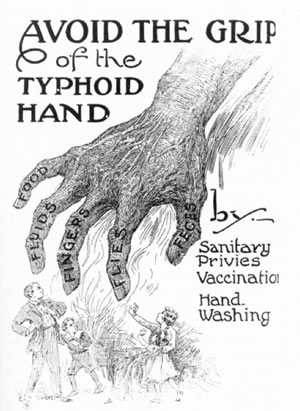
“Avoid the Grip of the Typhoid Hand,” in G.S. Franklin, “Sanitary Care of Privies” (1899), from “Health and Sanitation: Disease and the Working Poor,” https://www.wm.edu/sites/wmcar/research/danvilledig/millworker-life/health-sanitation/index.php.

The story of typhoid in the 19th century is one deeply tied to the emergence of modern epidemiology, which George Buchanan, Chief Medical Officer of Britain’s central public health office, called “the minute observations of particular outbreaks.”[4] Epidemiological practice does not operate in a vacuum, then or now with COVID-19; it is inherently a political exercise. Everyday people, business owners, and politicians have to be convinced about the science of disease communication, requiring complex rhetorical strategies that tell us a great deal about the inherent struggles of public health.

“Transmission of Typhoid Fever,” in George Whipple, Typhoid Fever; Its Causation, Transmission, and Prevention (New York: John Wiley and Sons, 1908).

__________

Notes

[1] See, for example, a recent blog post in Nursing Clio: Jessica Brabble, Ariel Ludwig, and Thomas Ewing, “‘All the World’s a Harem’: Perceptions of Masked Women During the 1918–19 Flu Pandemic,” Nursing Clio. https://nursingclio.org/2020/09/08/all-the-worlds-a-harem-perceptions-of-masked-women-during-the-1918-1919-flu-pandemic/.

[2] Catherine E. Shoichet, “What historians hear when Trump calls coronavirus ‘Chinese’ and ‘foreign,’” CNN. https://www.cnn.com/2020/03/12/us/disease-outbreaks-xenophobia-history/index.html.

[3] Graham Mooney, “How to Talk About Freedom During a Pandemic,” The Atlantic. https://www.theatlantic.com/ideas/archive/2020/05/freedom-pandemic-19th-century/611800/.

[4] George Buchanan, “On the Dry Earth System of Dealing with Excrement,” Annual Report of the Medical Officer of the Privy Council for 1870. Parliamentary Papers. London: Eyre and Spottiswoode, 1871, 97.