A Summer Script for Relaxation

by Anthony Murisco, Public Engagement Librarian

Relaxation is just what the doctor ordered! Specifically, Dr. George S. Stevenson of the National and International Association for Mental Health. In his book, How to Deal with Your Tensions (1957), he says that “anxiety and tension” are essential parts of being alive. If we did not experience these feelings, we wouldn’t be equipped to manage the high or low-intensity situations we experience day to day.  It is indeed an anxious time. We face threats such as climate change and the spread of misinformation. Writing in 1957, Dr. Stevenson spoke of real high tensions his society faced, “While it is true that we live today under pressure of intense competition, economic uncertainty, and the possibility of war…” Stevenson continued, “our ancestors faced other perils of equal magnitude.” It is important to realize each generation has its own struggles. 
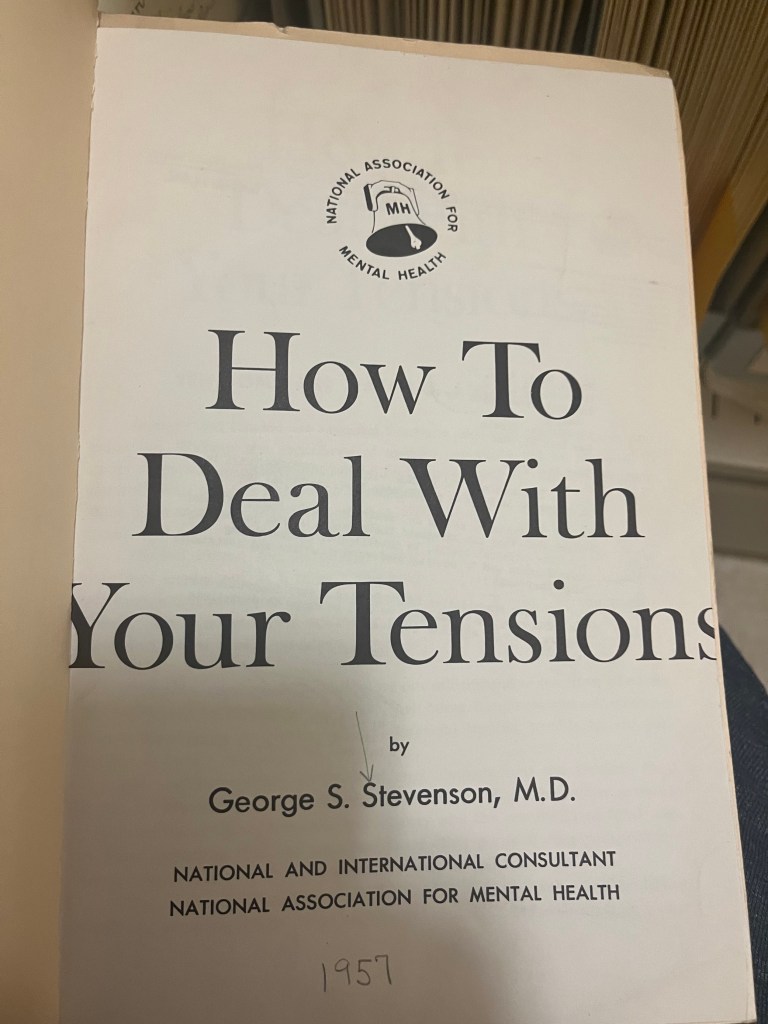
The title page of How To Deal With Your Tensions by George S. Stevenson, MD. It carries the seal of approval from the National Association for Mental Health. The emblem for that is a large bell with MH inscribed on it.

Dr. Stevenson produced eleven tenets for dealing with our feelings. These range from “Talk It Out” to “Shun the ‘Superman’ Urge’ to “Give the Other Fellow A Break.” We know these ideas but hearing them prescribed feels different.

One of Stevenson's tips. This says "7. Shun the "Superman" Urge" and features a balding man with glasses and a pipe wearing a costume similar to Superman. His hands are at his sides in classic Superman fashion.

The two that we want to focus on are #2, “Escape for a While,” and #11, “Schedule Your Recreation.” His ideas of escape are not necessarily jetting off to an island vacation! You can find escape by “[losing] yourself in a movie or a book or a game.” Even a “brief trip or change of scene” can make you feel relaxed. Public parks are beautiful places to go for a stroll. 

Scheduling recreation is sometimes hard—especially for an adult. When  we are younger, we get scheduled vacation. The summer is ours! As adults, we have more responsibilities. As Dr. Stevenson mentioned, we don’t have to schedule a week-long trip! We can buy tickets in advance to the latest blockbuster or art-house film. We can schedule an hour or two before bed to transport ourselves with the help of a book. 

Another of Stevenson's steps is "11. Schedule your recreation." This image features a woman making a ship in a bottle. She stands next to an array of tools while she places a tiny tool into the bottle. It looks as though she has almost finished the project.

This summer we asked, “How are you recharging?” We want to hear what recreation and relaxation you have been taking part in. Dr. Stevenson has spoken of the benefits but so have others. 

In 1924, Joseph Ralph, a psychologist and psychoanalyst, declared that he had found the fountain of youth. It was not in some unobtainable secret cave, and he was not going to keep it to himself. The secret to still being young was electronic relaxation, a method of inducing tension.

The title page of "The Man Who Stopped Growing Old." This features a portrait of the subject, Jason Ralph. It identifies him as well as his profession of psychologist and psycho-analyst.

Ralph declared that the secret to eternal youth lived in the cell’s protoplasm. Through wear and tear, the protoplasm becomes weak, causing us to age. The agent responsible was not our physicality but instead our mental conflicts. Our intense emotional reactions cause the protoplasm inside the cells to harden. If hardened, they can no longer provide us with the energy we need. He deduced that this is why we acted “older.”  By creating tension, Ralph believed the protoplasm was being stretched and worked out like a muscle.

Even your insurance company wants you to relax! Metropolitan Life Insurance gave advice in their pamphlet “Relax and Revive.” In comparing the body to the mechanical machines, we use daily, they remind us that “extra care avoids shutdowns.”
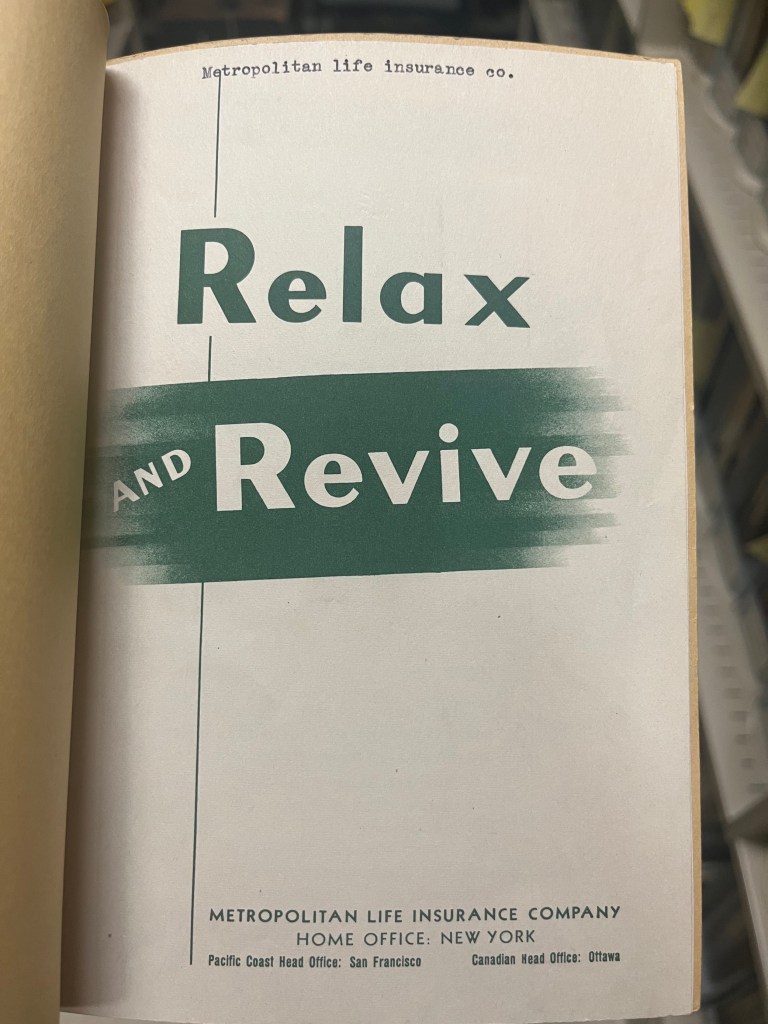
The title page for Relax and Revive by Met Life. The font is turquoise.

Whether we get a day, a whole weekend, or the entirety of a season, it’s important to carve out time for yourself. As Met Life put it, “How you use your precious hours of leisure is of the greatest importance in keeping yourself fit, and in fighting the good fight on the home front.” To take care of what you need to take care of, you have to start with yourself.

Like Dr. Stevenson, the insurance company wanted you to figure out what works best for you. Besides the typical ways we think of recreation, the pamphlet stated that perhaps just sitting there is what works for you! “Maybe idleness is your recreation. That’s all right too.”

An image of a man showing the fish that he and his son caught to his neighbor. The two adult men are separated by a fence. The boy has climbed the fence to proudly speak with his dad.

While we all may have ideas of what recreation is, it looks different for all. We wanted to share how people have been relaxing so far this summer. We’ve gotten pictures, postcards, and stories from fellow NYAM staff, friends, family, and patrons. We thank everyone for their responses so far.

The staff here at NYAM filled out beautiful New York City—centric postcards. They relayed their goals for the summer, which included personal goals (vacations, exercise, spending time with family and pets, and of course, recovery), as well work goals (planning notable events, organizing office space, and remembering to respond to emails on time).

A colorful illustrated postcard of times square. The iconic yellow taxi rides through the street. Marquees for Broadway productions illuminate the sky. They are Phantom of the Opera, West Side Story, Hair, and South Pacific.

We even got a response from a friend of a famous 100-foot-tall ape…

A response that reads "This summer I am climbing the Empire State Building with a giant gorilla."

Parks are always fun to visit during the summer. This one comes from Theodore Roosevelt National Park in North Dakota, one of 63 with that distinction.

A scan of a postcard from Theodore Roosevelt National Park. This shows the Painted Canyon. The canyon appears very yellow.

Indiana seems like a popular destination this summer. Three of our postcards come from different parks there.

Rachel visited Wolf Park and talked about the different wildlife she saw there, including foxes, turtles, and of course, wolves! She mentioned how the park gave her tips on how to help the wildlife there and in the larger environment.

A scan of a postcard from wolf Park. Three wolves are howling to the left. There is another wolf who is howling to the right,.

Megan went on a trip to Turkey Run State Park in Indiana where she went on a hike for her recent birthday. She loved being in nature with her sister and best friends.

A scan of a postcard from Turkey Run State Park. It shows a walking bridge surrounded by green trees.

Our Historical Collections Librarian sent a postcard from a road trip she took. One of her stops brought her to the Indiana Dunes National Park. There she got to walk along the Lake Michigan Shoreline!

A scan of a postcard from Indiana Dunes National Park. It is the shoreline of Lake Michigan. The sun is setting right in the middle.

One of our patrons, Dr. Sharon Packer, sent us these photos from Bearsville, New York. The pictures remind us of the beauty and therapeutic power of relaxing in our natural environment. For those in a big city, it’s nice to get away for a bit. We are lucky to live only a train ride away from such different scenery. There also looks to be delicious home cooking! Both making and eating are perfect relaxation practices.

A photo with a blooming pink flower in frame. Behind it is a small, shy brown dog looking at the camera.
A delicious looking quiche that is set in front of a red barn. The quiche has cut scallions on top.

We don’t want to scare you; the summer is not over yet! With that, we are still collecting postcards and pictures.

Postcards/letters can be sent to:
Attn – NYAM Library
The New York Academy of Medicine
1216 Fifth Avenue
New York, NY 10029

Or you can always e-mail us at: librarysocial@nyam.org.

We look forward to hearing from you! And more importantly, we hope you are having a relaxing summer.

A large pink flower is in focus.

References:
Harris, Antron. The Man Who Stopped Growing Old : Joseph Ralph, Psychologist and Psycho-analyst, Discoverer of the Electronic Relaxation Method of Mental and Physical Rejuvenation. B.F. Tibby, 1924.

Metropolitan Life Insurance Company. Relax and Revive. Metropolitan Life Insurance Company, 1920?.

Stevenson, George S. How to Deal with Your Tensions. National Association for Mental Health, c1957.

May 2023 NYAM Library Wrap-Up

By Anthony Murisco, Public Engagement Librarian

May brought us flowers and a lot to celebrate on social media!

Throughout the month of May we observed Mental Health Awareness Month. This included sharing information and graphics from the National Alliance on Mental Illness. On May 11, we observed National Children’s Mental Health Awareness Day. Kids often imitate adult behavior. Passing down healthy habits, including ones related to mental health, is imperative!

A colorful illustration of a group of kids. They are in front of a door. One boy is tying roller skates. A blonde haired girl is running to another boy who is riding a fake horse with a cowboy hat.

The popularity of Star Wars continues to this day. Just after the movie’s premiere in the late 1970’s, President Carter and the National Immunization Program asked the film’s two droids, R2-D2 and C-3PO, to star in a campaign promoting immunization. A television commercial and a poster were made for this, with the latter in our collection.

The Star Wars droids are asking parents of Earth to immunize their children in this printed PSA.

School nurses are some of the first healthcare workers that children meet. On May 10th we celebrated them. National School Nurses Day invites us to thank these caregivers. This photograph from Health Work in the Schools by Ernest Bryant Hoag and Lewis M. Terman shows a school nurse in action.

A black and white image. Caption reads "School nurse recording pulse and temperature in an open-air class."

Who better than to help us celebrate Mother’s Day and Women’s Health Week than the Roman goddess of women’s health, Juno. She made her appearance in 1950 at the Cleveland Health Museum, helping to explain how the female body worked.

A photograph of the transparent Juno statue from the side. Juno is a life-size woman.

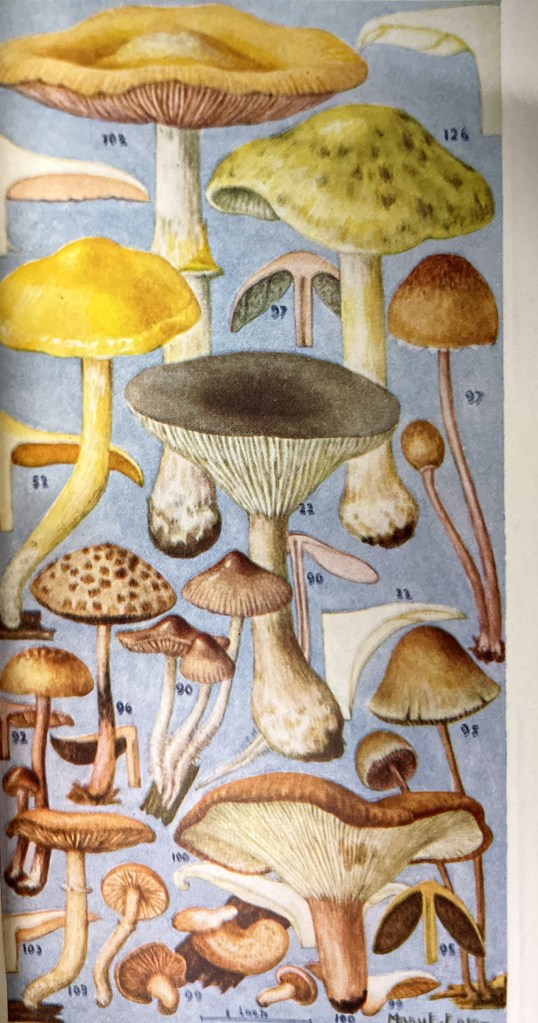
Do you like foraging for your food? Then you probably celebrated National Mushroom Hunting Day on May 17th. The Field Book of Common Gilled Mushrooms by William S. Thomas helps you identify which you can eat and which you cannot!

A colorful illustration of various mushrooms.

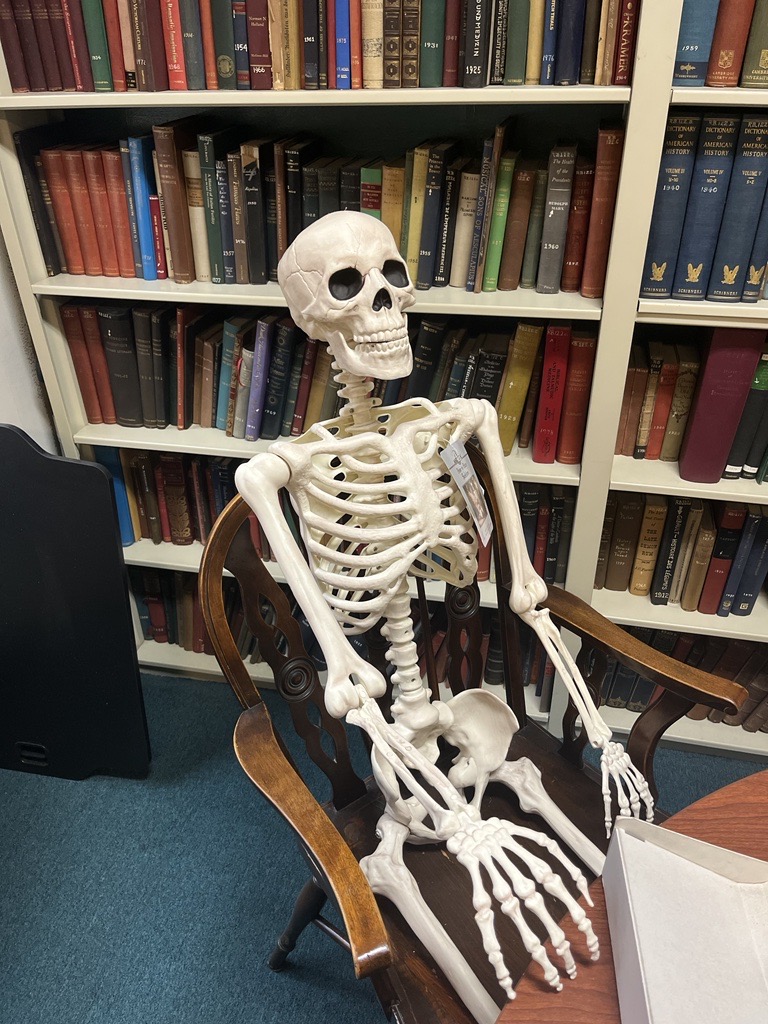
World Goth Day happened on May 22nd. The macabre is at the forefront of this often-misunderstood subculture. We showed off some of the many skeletons in our collection, including this from The Last Will and Testament of Basil Valentine by Basil Valentine.

A skeleton stands on a platform.

One of New York City’s prominent bridges, The Brooklyn Bridge, celebrated its 140th birthday on May 24th. It appears on a card from our William H. Helfand Pharmaceutical Trade Card collection promoting Lydia E. Pinkham’s Vegetable Compound.

The front side of the trading card. A drawing of the "East River Bridge" is front and center with ships sailing around it. Lydia E. Pinkham's Vegetable compound is a featured banner in the middle of the bridge.

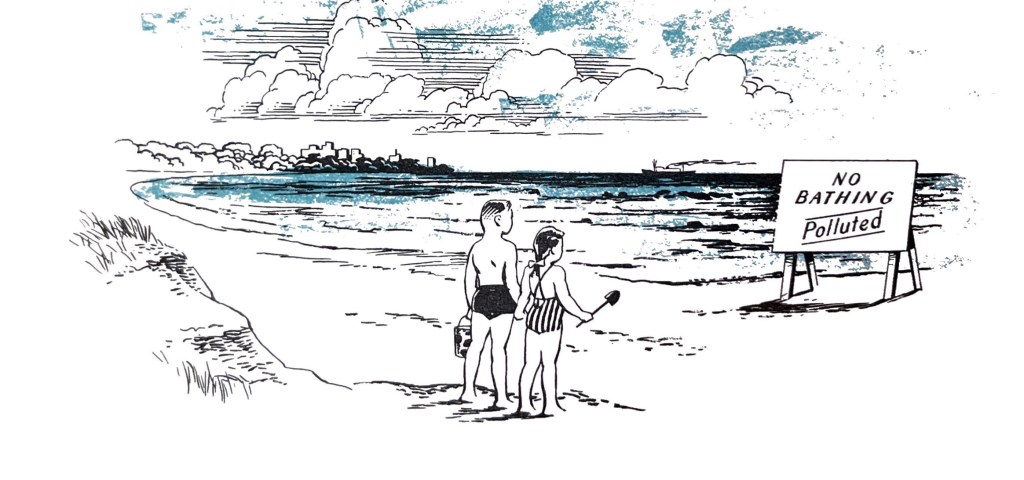
International Plastic Free Day on May 25th seeks to have at least one day without single-use plastics. The day usually falls around Memorial Day, a long weekend often spent enjoying picnics, the beach, or hiking, all occasions tempting us to be wasteful. To keep on enjoying, we need to squash the usage of these products.

An illustration of two beach-goers unable to go to the beach. A sign reads "No Bathing. Polluted."

Throughout the month, artists used the hashtag and prompt #MerMay as a creative inspiration signaling mermaids and mermen. Towards the end of the month, we shared another image from the Helfand Trade Card collection, this one featuring the aquatic folk using Ayer’s Hair Vigor to attract sailors.

Four mermaids are applying hair tonic. In the background a fifth mermaid is approaching a ship.

Finally, we are counting down the days until Museum Mile Festival 2023! On Tuesday, June 13th, cultural institutions along Museum Mile on 5th Avenue will be celebrating with extended hours, giveaways, and a look inside the collections. The NYAM Library will be set up at 103rd and 5th—come visit us!

The New York Academy of Medicine Library posts updates like this throughout the week. We can be found online over at Facebook, Instagram, and Twitter. Check back here or on our social media for more chances for a look inside our collection!

A skeleton sits in a chair. They are surrounded by old books.

Speaking For Themselves: Mental Health Memoirs

By Anthony Murisco, Public Engagement Librarian 

Since 1949, May has been recognized in the United States as Mental Health Awareness Month. The National Association for Mental Health, now Mental Health America, set up the month of educational events to clear up misconceptions about mental health and provide resources to those who need them.  

The knowledge of public health is always changing. What may have been taken as fact years ago is not necessarily the truth now. This is true for understanding mental health, or formerly, mental hygiene.  


From November 8th to 15th in 1912, the National Committee for Mental Hygiene and the Committee on Mental Hygiene of the New York State Charities Aid Association hosted a conference at the College of the City of New York. These two organizations brought together some of the leading minds on the subject. This was a relatively new idea. Modern understanding of psychiatry had begun less than a hundred years earlier.  

The goal of this conference was what the public could do regarding their own mental health. They came up with six tenets. 

While worded harshly in today’s terms, these suggestions try to offer a compassionate understanding of mental illness. The fourth, “Speak and think of insanity as a disease and not as a crime,” stands out as something we continue to struggle with today.  
 

One of the forefathers of the mental health awareness movement would not be considered a traditional mental health expert. Clifford Whittingham Beers was born in 1896. Mental illness ran in his family. He himself served several stints in mental institutions. Upon the cruel treatment inflicted upon him at these hospitals, he went on to write a memoir on the subject. In A Mind That Found Itself, he writes of the degradation that he and his fellow patients were subject to. This memoir was key to providing a voice for those who were afraid to speak of their own illness. In 1909 Beers founded the organization now called Mental Health America.  
 

From the first edition of A Mind That Found Itself.

Since the publication of Beers’ book, several writers have explored their own experience. These mental health memoirs offer both guidance and companionship to those who also suffer. They provide maps for those who care about those who may be suffering and allows a peek inside minds that many cannot comprehend.  

Some of these authors bring humor to their reflections.  Two funny people wrote about their own struggles. Kevin Breel is a Canadian comedian. He also suffers from depression. His memoir, Boy Meets Depression, allows readers into the mind of someone who experienced the mental illness early on in life. Sara Benincasa is known for being a comical blogger. Her own memoir Agorafabulous! reveals her fight with depression as well as agoraphobia, the fear of leaving one’s house.  

Graphic memoirs allow us to see with the author’s vision. In dealing with mental health, we get to experience dark visions or the physical manifestation of anguish.  


The Hospital Suite by John Porcellino starts off with a hospitalization. After his illness, Porcellino’s health didn’t get better. His brief stint had taken a toll on his mental health. He writes about the experience of his recovery from an obsessive-compulsive episode. Porcellino is candid about his struggles and his fears of his bouts recurring. 


Ellen Forney was diagnosed with bipolar disorder before her thirteenth birthday. Afraid of stunting her creativity, she seeks treatment that will help her fulfill her potential. She begins to look at other artists who have suffered from mental illness. Finding all minds are different, she wonders what’s going to be best for her. Forney takes us on her personal highs and lows in Marbles. 


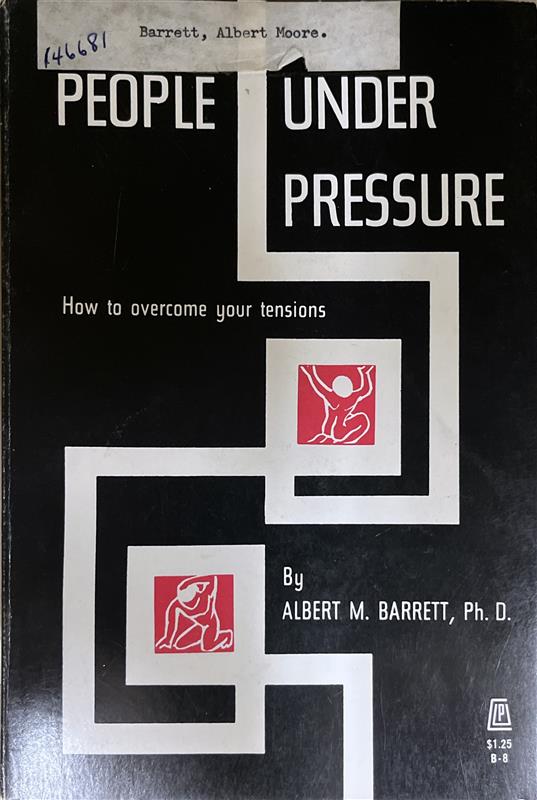
Towards the end of his work on the epidemic of mental fatigue and pressure, People Under Pressure, Albert M. Barrett, MD, offered a sympathetic take on mental health challenges. For fifteen years prior to his 1960 publication, he worked alongside counselors and therapists. Barrett urges us to consider a different point of view. He writes, “For no man is an island, and the relief we provide other human beings will reflect itself in our own peace of mind.” Compassion is vital towards greater public health. 
 
 
References: 

Barrett, Albert M. People under Pressure. College and University Press, 1960.  

Benincasa, Sara. Agorafabulous!: Dispatches from My Bedroom. William Morrow Paperbacks, 2013.  

Breel, Kevin. Boy Meets Depression: Or Life Sucks and Then You Die Live. Harmony Books, 2015.  

Clifford, Beers W. A Mind That Found Itself; an Autobiography. Longmans, Green, and Co., 1908.  

Forney, Ellen. Marbles: Mania, Depression, Michelangelo, & Me: A Graphic Memoir. Gotham Books, 2012.  

National Committee for Mental Hygiene, and State Charities Aid Association (N.Y.). Committee on Mental Hygiene. Proceedings of the Mental Hygiene Conference and Exhibit at the College of the City of New York…. Committee on Mental Hygiene of the State Charities Aid Association, 1912.  

Porcellino, John. The Hospital Suite. Drawn & Quarterly, 2014.  

Frederick Banting and the Isolation of Insulin

By Paul Theerman, Director

F. G. Banting, December 27, 1922.
(All photos from the University of Toronto Libraries.)

One hundred years ago, on December 21, 1922, Frederick Grant Banting (1891–1941) addressed the New York Academy of Medicine. He had been invited to give a talk on his new therapy that used insulin to treat diabetes. Less than a year earlier, in January 1922, the first diabetes sufferer had been successfully treated for this invariably fatal condition. Less than a year later, on December 10, 1923, Banting’s name was read out at the Nobel ceremony in Stockholm, as he and John Macleod were awarded the prize in Physiology or Medicine. During this Nobel month—the annual prizes were given out last Saturday, the 10th—we take a look at this signal discovery.

The story of the isolation and therapeutic use of insulin can be told as a remarkably short and direct one. After medical and surgical training at the University of Toronto and serving in World War I, Frederick Banting set up his medical practice in London, Ontario. He also taught there, at the University of Western Ontario, and as part of preparing for his lectures, he considered a possible solution to a persistent problem in diabetes studies. For over 50 years, medical researchers had explored the role of the pancreas gland in digestion, and specifically in diabetes. This condition is characterized by high levels of sugar in the urine, leading to frequent urination, increased thirst and hunger, and dramatic weight loss. The condition can progress to the acute symptoms of nausea, vomiting, and coma, eventually leading to death. There is no cure. In Banting’s time, sufferers faced a near-starvation diet as part of a difficult and short life.

By the turn of the century, diabetes researchers had focused on the role in diabetes of the “islets of Langerhans,” microscopic glands spread throughout the pancreas. They supposed that a hormone produced by these glands—called “insulin” from the Latin word for “island,” given its source in the islets—played a crucial role in sugar metabolism. To use this insight therapeutically, though, ran up against a seemingly insurmountable challenge. One could hope to treat diabetes by administering an extract from the glands, and the usual way of preparing such extracts was to grind up the organ and then isolate and purify the hormone. But most of the pancreas produces digestive juices, and these juices promptly broke down the hormone. In 1920, Banting, reading through the medical literature, had a crucial insight: tying off the pancreatic duct could cause the rest of the pancreas to deteriorate, leaving behind only the insulin-producing islets. He took his idea to physiologist J. R. R. Macleod (1876–1935) at the University of Toronto, who provided him with a laboratory, experimental animals, and a medical student to help, Charles H. Best (1899–1978).

By April 2021, Banting and Best had begun work, tying off the pancreatic ducts in dogs, waiting for the pancreas to deteriorate, and then isolating the insulin from the remaining pancreatic tissue.

They soon turned instead to fetal calves as an insulin source—at an early stage of development, the islets of Langerhans already produced the hormone, while the pancreas’s digestive enzymes had not yet begun to be produced. In December Macleod assigned biochemist James Collip (1892–1965) to the project, to help purify the insulin and avoid allergic reactions.

After success in dogs, in January 1922 came the first successful therapeutic use in humans, at Toronto General Hospital, on 14-year-old Leonard Thompson. Then living on a 450-calorie-per-day diet and shrunk to 65 pounds, Thompson responded well to the insulin injections, and went on to live many more years. On February 7 Banting and Best announced their success at the Academy of Medicine of Toronto.

There was an immediate world-wide response. Patients flocked to Toronto for treatment. By 1923, the Eli Lilly Company was producing insulin commercially. In June 1923, John D. Rockefeller, Jr., contributed $150,000—equivalent to over $2.6M today—to 15 hospitals in the United States and Canada to support the use of insulin, including two New York hospitals, the Physiatric Institute and Presbyterian Hospital; two hospitals in Toronto; and $5,000 for the Banting-Best Fund of the University of Toronto. By December 1923, J. Sjöquist in his Nobel Presentation Speech could state: “Since [its discovery], the new remedy, the production of which does not offer any great technical difficulties, has come into use in practically all countries and with favourable results.”

Banting’s rewards were immediate and great. In 1922, he was given a Senior Demonstrator position at the University of Toronto, and the next year elected to the Banting and Best Chair of Medical Research at the University of Toronto. In August 1923 he made the cover of Time magazine. In December 1923 he and Macleod were awarded the Nobel Prize in Medicine or Physiology. Banting shared the credit and his prize money with Charles Best while Macleod did the same with James Collip. In 1925, the Banting Research Foundation was established, a private institution that supported his research, as well as that of other Canadian scientists. In 1934, he received a knighthood from King George V, and the following year was made a Fellow of the Royal Society.

In 1930, Banting was appointed the inaugural departmental chair of the Banting and Best Department of Medical Research. There he developed an interest in aviation medicine. With his help, Wilbur R. Franks (1901–1986), his Toronto colleague, developed an aviation “g-suit.” This garment used water-filled bladders to counteract the g-forces that developed during rapid acceleration that pulled blood away from the brain and caused blackouts. Banting was on his way to England to assist Franks in testing the suit for wartime use when his plane crashed in Newfoundland, near the town of Musgrave Harbour. He died February 21, 1941, at the age of 49. The New York Academy of Medicine had awarded Banting honorary Fellowship in 1933; at their May 1941 meeting, the Fellows honored his memory.

The story of insulin is, of course, more complex than this quick sketch affords. Historian Michael Bliss has looked more closely at Banting’s complicated life, and various authors have considered Banting’s long line of predecessors, the tensions among the Toronto team, and how credit was granted—or not—for isolating insulin. What is sure, though, is that this advance improved the lives of millions within a dramatically short span of time—a rare feat in the history of medicine.


Bibliography

Frederick G. Banting, “Facts; Biographical; Nobel Lecture,” The Nobel Prize in Physiology or Medicine 1923, https://www.nobelprize.org/prizes/medicine/1923/banting/facts/, accessed November 30, 2022.

F. G. Banting and C. H. Best, “The Internal Secretion of the Pancreas,” The Journal of Laboratory and Clinical Medicine, 7 (5; February 1922): 256–71.

Michael Bliss, Banting: A Biography (Toronto: University of Toronto Press, 1992).

Michael Bliss, The Discovery of Insulin (Chicago: University of Chicago Press, 1982).

Alberto de Leiva, Eulàlia Brugués, and Alejandra de Leiva-Pérez, “El descubrimiento de la insulina: continúan las controversias después de noventa años/The discovery of insulin: Continued controversies after ninety years,” Endocrinología y Nutrición (English Edition) 58/9 (November 2011): 449–56. DOI: 10.1016/j.endoen.2011.10.001. https://www.elsevier.es/en-revista-endocrinologia-nutricion-english-edition–412-articulo-the-discovery-insulin-continued-controversies-S2173509311000614, accessed November 30, 2022.

“The Discovery and Early Development of Insulin,” The University of Toronto Libraries, March 2003, https://insulin.library.utoronto.ca/, accessed November 30, 2022.

Allison Piazza, “Shoot That Needle Straight (Item of the Month),” Books, Health, and History, November 18, 2016, https://nyamcenterforhistory.org/2016/11/18/shoot-that-needle-straight-item-of-the-month/, accessed November 30, 2022.

“Rockefeller Gives $150,000 for Insulin,” The New York Times, June 20, 1923.

James Ralph Scott, “In Memoriam, Frederick Grant Banting,” Bulletin of the New York Academy of Medicine 17 (5; May 1941): 400–402.; https://www.ncbi.nlm.nih.gov/pmc/articles/PMC1933643/?page=1, accessed December 13, 2022.

J. Sjöquist, “Presentation Speech [on the occasion of the award of the Nobel Prize in Physiology or Medicine to Frederick Grant Banting and John James Richard Macleod],” December 10, 1923. The Nobel Prize in Physiology or Medicine 1923, https://www.nobelprize.org/prizes/medicine/1923/ceremony-speech/, accessed November 30, 2022.

Ignazio Vecchio, Cristina Tornali, Nicola Luigi Bragazzi, and Mariano Martini, “The Discovery of Insulin: An Important Milestone in the History of Medicine,” Frontiers in Endocrinology. 9 (23 October 2018): 613. doi: 10.3389/fendo.2018.00613. https://www.ncbi.nlm.nih.gov/pmc/articles/PMC6205949/, accessed November 30, 2022.

William Helfand’s Pharmaceutical Trade Cards and the Changing Character of Drug Advertising

By Joseph Bishop, Princeton University, and the Librarys 2022 Audrey and William H. Helfand Fellow

Mr. Bishop completed his Fellowship residency in summer 2022 and will present his research by Zoom on November 8 at 4:00 (EST). To attend his talk, “Pharmaceutical Visions: How US Drug Companies and Ad Agencies Revamped Their Credibility by Marketing with Scientific Imagery,” register through the Academy’s Events page.

This spring I spent weeks immersed in the vast historical materials available at the New York Academy of Medicine (NYAM) Library. I had the honor of receiving the Audrey and William H. Helfand Fellowship to pursue a project that I believe would have interested Bill Helfand: an examination of the changes in medical advertising at the turn of the twentieth century. During his life, Helfand amassed an extensive collection of fascinating drug and medical memorabilia and visual art. Much of his collection and work illuminates the dynamic between drugmakers and the public during the late nineteenth and early twentieth century.  Significant portions of Helfand’s collection are available at NYAM, and I took advantage of the richly colored and wide-ranging collection of patent medicine trade cards. NYAM also has mountains of pharmaceutical, medical, and allied trade journals and magazines brimming with pharmaceutical advertisements.

At the turn of the twentieth century, the American public saw the rise in large corporate pharmaceutical companies, national and corporate advertising, and federal drug regulation. An important question is what prompted the transformations in medical visual culture that helped to portray drug companies as scientific and research-oriented. To answer that question, I compare late-nineteenth-century patent medicine trade cards with medical ads in LadiesHome Journal in the 1920s. This comparison reveals a transition from entertainment and fantasy to a preoccupation with scientific progress and medical authority. My research at NYAM has led me to conclude that drug companies and ad agencies emphasized scientific and medical imagery to revamp their medical credibility and professional image amid national drug regulation and the public’s anger with the industry’s past association with patent medicine.

American patent medicine companies faced scrutiny for producing nostrums with cryptic contents and questionable efficacy during the first decade of the twentieth century. They depended on local advertisement imagery that reflected the nineteenth-century public’s anxieties and aspirations. Popularizations of science were created for various reasons—from entertainment to informing citizens—but they all served to increase scientific and medical awareness within the American public. Philadelphia-based ad agency N. W. Ayer’s accounts show that patent medicine was their most lucrative commodity category, carrying 26 percent of their total revenue in 1878, and their second-most lucrative commodity in 1900, carrying 15 percent. By 1879 in the US, more than 400 religious weeklies each needed a steady flow of advertising revenue to stay in business. Newspapers generated patent medicine business, and medical advertisements sustained newspapers. Nostrum manufacturers developed new marketing techniques, created novel distribution systems, pioneered brand-name products, became an economic link between urban and rural centers, and expanded markets.

Americans living through the last two decades of the nineteenth century saw an explosion of advertising trade cards. Retailers gave away these pocket-sized cards, often stuffed in product packaging as a bonus and easily collectible by customers. Patent medicine companies used these cards extensively, as they proved to be a very successful sales medium. Many people collected cards into albums and created scrapbooks, which children sometimes received as birthday or Christmas gifts.

Image 1:“Ayer’s Ague Cure Is Warranted to Cure All Malarial Disorders”
Dr. J. C. Ayer & Co. (Lowell, MA)
Produced ca. 1875–1895
From the William H. Helfand Collection of
Pharmaceutical Trade Cards at The New York Academy of Medicine
Chromolithograph, 6.1 x 11.6 cm

Trade cards such as Ayer’s Ague Cure (Image 1) evoke an aura of connection with nature and adaptation to the surrounding environment. The image in the bottom right corner depicts an alligator and a couple of frogs discussing Ayer’s Cure as if they used it to protect themselves from malaria. The ad implies that Ayer’s product helps one adapt to one’s environment just as well as the alligators and frogs adapt to theirs.

Image 2: “Cas-car-ria Is Worth Its Weight in Gold”
Product: Cas-car-ria
Produced ca. 1875–1895
From the William H. Helfand Collection of
Pharmaceutical Trade Cards at The New York Academy of Medicine
Chromolithograph, 5.8 x 7.8 cm

On the other hand, Cas-car-ria’s trade card (Image 2) depicts a young girl holding a switch and a dog together, fending off miniature demons labeled with ailments. Cas-car-ria’s ad evokes notions of animal protection and self-protection, implying that when patients take Cas-car-ria, they harness the animal within, unleashing the strength required to fight off external demons.

The explosion of ads promoting proprietary medicines and their incessant hyperbole and mistruths eventually provoked strong public reactions that demanded transparency and regulation. There were always calls to rein in the quackery, but the inundation of promotion drove the regulation of patent medicine to become a public priority.

Image 3: “What is in your medicine cabinet?”
Ladies’ Home Journal, February 1924, p. 144
Manufacturer: E. R. Squibb and Sons
From Ohio State University

Examining Ladies’ Home Journal during the 1920s illustrates these changes in advertising.  At this point, advertisements offered a different portrayal of scientific medicine and appealed to a more docile public regarding medical professionals. A Squibb pharmaceutical ad depicts a well-organized medicine cabinet (Image 3). The caption asks, “What is in your medicine cabinet? Are they products your physician would approve?” This approval seeking from medical authority plays into the new values of placing faith in the trained judgment of scientific and medical authority. 

Image 4: “Zonite: the World War Antiseptic”
Ladies’ Home Journal, March 1924, p. 192
Manufacturer: Zonite
From Ohio State University

Ads for Zonite (Image 4) ran images of scientists wearing lab coats and examining test tubes, drawing a scientific aura into its products. Zonite also associated its product with scientific discoveries, like the Carrel-Dakin fluid (i.e., diluted bleach), a critical antiseptic used in World War I.

Image 5: “Why the familiar cake of Yeast Foam is now eaten as well as used in bread”
Ladies’ Home Journal, May 1921, p. 49
Manufacturer: Northwestern Yeast Co. (Chicago, IL)
From the University of Michigan

The ad for “Yeast Foam” (Image 5) also appeals to scientific and medical authority, depicting a man wearing a medical coat and peering into a microscope. In the foreground are two circular illustrations of microscopic specimens—one containing germs and the other germ-free. The ad portrays a professional man immersed in scientific work, suggesting that the product has been carefully vetted through scientific scrutiny for quality assurance.

Similarly, the Fleischmann advertisement (Image 6) depicts two men in lab coats working at a table equipped with flasks, a beaker, a microscope, and other scientific instruments. The caption below the image states, “Messages of startling importance from the laboratory of the scientist.” Text within the ad notes how Fleischmann’s Yeast cures various diseases. In the case of skin diseases, the ad relies on a general sense of medical authority: “Many physicians and hospitals are prescribing Fleischmann’s Yeast for impurities of the skin. It has yielded remarkable results.”

Image 6: “Ten or fifteen years of life”
Ladies’ Home Journal, September 1921, p. 45
Manufacturer: The Fleischmann Company (New York, NY)
From the University of Michigan

The values of corporate ad agencies following the patent medicine era are not only a reaction to muckraking journalism and reform movements. The use of scientific medical imagery conveying authority and professional judgment was also largely about revamping the medical credibility of US drug companies and corporate ad agencies; they benefited handsomely during the patent medicine era but later needed to diminish their connections to these fraudulent products. Ad agencies traced the American public’s anxieties and aspirations as they shifted from loose whimsy about panaceas in the late nineteenth century to a reverence for qualified scientific and medical experts and institutions at the beginning of the twentieth century. By tracing this transition in medical imagery, we can glean how drug companies and ad agencies shaped products to elevate their professional clout.

Then & Now: The Past and Future of Medical Libraries

By Paul Theerman, Arlene Shaner, Bert Hansen, and Melissa Grafe

On Tuesday, October 18, three esteemed librarians and historians will gather—virtually—to discuss the history and prospect of medical libraries. The event features the Library’s own Historical Collections Librarian, Arlene Shaner, speaking on the development of our collections; historian of medicine Dr. Bert Hansen, on how libraries helped shape the development of medicine through history; and Dr. Melissa Grafe, head of the Medical Historical Library at Yale School of Medicine, on the future of historical collections such as the Academy Library’s. If you are interested in attending, please register here. To learn about what these speakers will present, keep reading!

Étienne-Louis Boullée’s grand 1785 design for a French National Library.[1]

Arlene Shaner, “‘A Rich Storehouse’: The NYAM Library’s Extraordinary Collections”

Arlene Shaner, our first panelist, will talk about the evolution of the NYAM Library and its collections, starting with Isaac Wood’s gift of his set of Martyn Paine’s Commentaries to the brand-new organization on January 13, 1847. What he and the early Academy Fellows had in mind was a working collection of books and journals that they would create for their own use. Because the Academy had no home of its own, and very little money, the collections grew at a very modest pace for the first few decades.

The purchase of a building in 1875 provided space for the collections to grow. The generosity of Dr. Samuel Smith Purple, who donated over 2000 journal volumes of his own after the Academy moved into its West 31st Street brownstone (at left), coupled with the 1878 decision of the Fellows to open the Library to all who wished to use it, dramatically changed the Library’s trajectory.

The Academy Library at 17 West 43rd Street

It opened the door to what Librarian Janet Doe later referred to as “a snowball of gifts which has rolled down through the years, gathering momentum and throwing off new snowballs that roll into other libraries.”

Shaner will offer a brief overview of some of the major gifts that helped the library become one of the most important history of medicine collections in the country, if not the world, and also tell the much less well known story of how the Library contributed to the growth of many other collections. She will also look briefly at how changes in the way information is disseminated have transformed, and continue to transform, the NYAM Library.

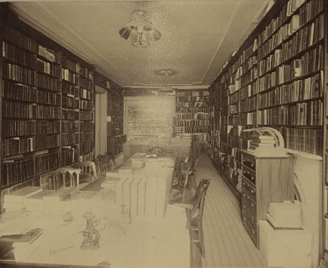
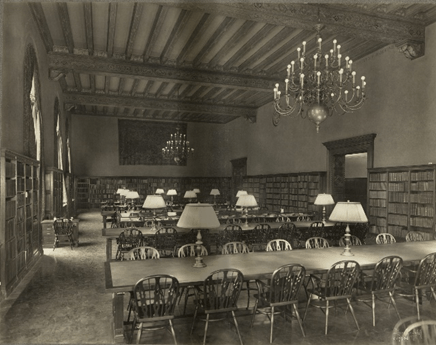
The former Main Reading Room in the  Academy’s current building.
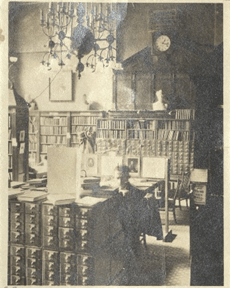
The Rare Book and History Room in the 1930s, now the Drs. Barry and Bobbi Coller Rare Book Reading Room.

Bert Hansen, “The Academy Library’s Contributions to American Medicine.”

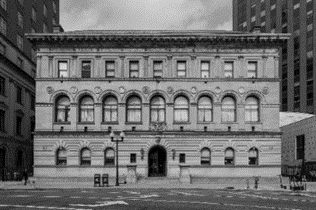
Our second panelist, historian Bert Hansen, notes that his earliest memories picture libraries as storehouses of precious treasure, an image reinforced by an architecture that made them look like giant-sized strongboxes or jewelry boxes. Built of large stone blocks and fortified like a castle, libraries he fondly recalls include the main public libraries in Chicago, Newark, and New York City, plus Butler Library at Columbia and the Morgan Library from his college years (as seen below, with NYAM the sixth). The decorated, jewelry-box style often continues inside with marbled lobbies and wood-paneled reading rooms.

But for this presentation, Hansen has gone in a new direction, focusing his attention on the kinds of contribution that libraries like that of NYAM have made to education and the world of learning in serving people who would never enter the building to examine the treasured volumes. In the recent past, virtual use through digitization has become common and will surely expand in the future. But his look at the prior century and a half will highlight other, sometimes-forgotten modes of service as examples of NYAM’s—and other research libraries’—many contributions to American medicine.

Melissa Grafe, “Preservation, Access, and the Future”

Our final panelist, librarian and historian Melissa Grafe, glimpses into the future of medical libraries and the role of physical collections in an increasingly online world. Grafe looks at the ways that technology has become deeply integrated in both medicine and in the libraries that support the medical community. Grafe will connect these modern currents to the rich trove of materials that NYAM assembled over 175 years, and the larger history that has made NYAM’s library one of the major collections connecting medical history to the present.


References

[1]Nancy Spiegel, the University of Chicago Library’s bibliographer for art and cinema, writes:

In the late 18th century, a new vision of the library arose within the context of expanding literacy, and the increased publication of books and journals for the general reading public. Enlightenment architect Étienne-Louis Boullée (1728–1799) envisioned a grand design in his proposal for a French National Library in 1785. In Boullée’s presentation, the state would take responsibility for the collection, ordering, and dissemination of all available information to its citizens.

The design for the main reading room featured a vast, barrel-vaulted ceiling and a modern shelving arrangement: stacked galleries of books over flat wall-cases. These seemingly endless bookcases were open and easily browsable, in dramatic contrast to the earlier medieval system of chaining that bound both books, and readers, to a specific location. Visitors are free to wander about and converse in small groups, but there is no provision of study desks or chairs for extensive research in this idealized environment.

Nancy Spiegel, “The Enlightenment and grand library design,” The University of Chicago Library News, April 26, 2011: https://www.lib.uchicago.edu/about/news/the-enlightenment-and-grand-library-design/, accessed October 7, 2022. The image is from Étienne-Louis Boullée, Mémoire sur les moyens de procurer à la bibliothèque du Roi les avantages que ce monument exige, 1785.

The Academy’s 1964 Report on Homosexuality

By Logan Heiman, Digital Collections Manager, and Paul Theerman, Director

When the New York Academy of Medicine published its 1964 report in its Bulletin,[1] it followed a salvo of other reports sounding the alarm about “the problem of homosexuality.” The committee’s findings, reported in the New York Times and other outlets, made plain the Academy’s position on the issue: “homosexuality is indeed an illness. The homosexual is an emotionally disturbed individual who has not acquired a normal capacity to develop satisfying heterosexual relationships.” The committee’s attention to homosexuality arose from its concern about a perceived connection between homosexuality and two other phenomena it had previously studied—the proliferation of “salacious literature,” as stories with gay characters became more and more visible; and the spread of sexually transmitted diseases. Committee members linked several factors to the emergence of homosexual traits in early childhood, many of them related to parenting practices, including “neglect, rejection, overprotection, [and] overindulgence.”

The report also struck a harsh note against efforts by gay and lesbian activists to promote acceptance over tolerance, prescribing psychotherapy as offering “the greatest probability of benefit.” The Committee on Public Health offered improved sex education as another needed intervention, citing society’s “preoccupation with sex as a symbol” as a challenge to implementing this recommendation.

Excerpt from Barbara Gittings’s editorial
rebuking the Academy’s report.
The Ladder: A Lesbian Review 8(11) (August 1964).

In its immediate aftermath, as well as in the following years, the report drew sharp criticism and condemnation from gay and lesbian activist groups and medical professionals. In June 1964, the Daughters of Bilitis, the United States’ first political and civil rights organization for lesbians, strongly rebuked the findings of the report, writing in a June 13, 1964, letter “to express our disappointment in noting that a report so widely publicized, and originating with so reputable a group as yours, offered so little substantiation for the claims made.”[2]

A decade later, Dr. William Ober wrote to Dr. James McCormack of the Committee on Public Health asking the New York Academy of Medicine to host a conference based on changing public attitudes regarding homosexuality and the views of doctors who “had to revise their thinking.” No evidence exists to suggest the committee responded to this request. But in the course of that decade came the Stonewall riots, in June/July 1969, protesting police aggression against the LGBTQ+ community. Professional opinions changed. Famously, Dr. John E. Fryer (1937–2003), disguised as “Dr. Henry Anonymous,” addressed the 1972 meeting of the American Psychiatric Association to share the challenges he faced as a gay psychiatrist. His testimony, as well as the work of pioneering psychological researcher, Evelyn Hooker, had an effect. In 1973 the APA, under the leadership of NYAM Fellow Alfred M. Freedman (1917–2011), removed “homosexuality” as an illness in its authoritative Diagnostic and Statistical Manual, a move hailed as “the single most important event in the history of what would become the lesbian, gay, bisexual and transgender movement.”[3]

Rainbow colors symbolize NYAM’s commitment to all people in its 175th year, expressed here on the Academy building entrance at its Access: Health event, June 7, 2022.

Since the time of the report, the medical community has increasingly “de-medicalized” gayness.[4] The Academy has itself taken steps to become a more open, equity-focused institution. During Pride Month 2021 we looked at our own history in “Virtual Visit: From the LGBTQ+ Archives.” For this year’s Pride Month, NYAM formally disavows the 1964 report on homosexuality. In an official statement, NYAM President Dr. Judith Salerno wrote, “The report was incorrect and perpetuated views that were not supported by science, and we recognize that NYAM’s inaction on addressing its content is shameful. It has taken us since 1964 to publicly acknowledge this report and we apologize for the hurt that this report, and our silence, has inflicted on the LGBTQIA+ community.” Read the full statement here.


[1]Homosexuality: A Report by the Committee of Public Health, The New York Academy of Medicine,” Bulletin of the New York Academy of Medicine 40(7) (July 1964): 576–80. The article notes the committee’s approval of the report on May 11, 1964.

[2] The letter was reprinted in The Ladder: A Lesbian Review immediately following Gittings’s editorial.

[3] A concise historical article is Jack Drescher, “Out of DSM: Depathologizing Homosexuality,” Behavioral Sciences 5 (December 2015): 565–75; a more popular account is Ray Levy Uyeda, “How LGBTQ+ Activists Got ‘Homosexuality’ Out of the DSM,” JSTOR Daily, May 26, 2021, accessed June 8, 2022. For Freedman’s role, see “Alfred Freedman, a Leader in Psychiatry, Dies at 94,” The New York Times, April 20, 2011. Sue Hyde, LGBTQ activist and organizer, provided the assessment quoted in the obituary.

[4] Resistance in the medical community to the APA diagnostic change was long-lived. In 1976, a group of psychiatrists met at NYAM, though not under its auspices, to promote that homosexuality was an indicator of mental illness. Gay activists “zapped” them with disruptive demonstrations, recounted in John D’Emilio, “Zapping the New York Academy of Medicine, April 6, 1976,” Outhistory: It’s About Time!, n.d., accessed June 8, 2022. Even in 2002, Dr. Jack Drescher, chair of the APA’s Committee on Gay, Lesbian, and Bisexual Issues, noted that “every year, we get a group of people who . . . ask for homosexuality to be put back in the manual. . . . They’re, interestingly, the only group who does it. Every other group wants their diagnoses taken out . . . .” Drescher is quoted in Robert DiGiacomo, “Dr. H. Anonymous ‘Instant cure’ recalled: Being gay was an illness 30 years ago,” AGLP Newsletter, 28(3) (August 2002): 16–18 (reprinted from the Philadelphia Gay News), accessed June 8, 2022.

Library Luminaries: Dr. Archibald Malloch

This post is the second in a four-part series showcasing notable figures in the history of the Academy Library, as we celebrate our 175th anniversary. The first post focused on Dr. Samuel Smith Purple.

By Arlene Shaner, Historical Collections Librarian

Dr. Archibald Malloch (1887–1953)
Academy Librarian, 1925–1949

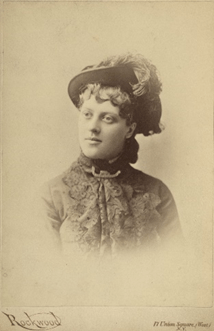
On September 17, 1925, Dr. Linsly Williams, the director of the New York Academy of Medicine, sent Dr. Archibald Malloch (1887–1953) a letter offering him the position of Librarian. The offer came after the Academy’s first dedicated librarian, John S. Brownne, retired in August of 1925 after 45 years of service. His assistant, Mrs. Laura E. Smith, became the Acting Librarian, while Dr. Williams and the Committee on Library searched for a new librarian.


Laura E. Smith, Malloch’s predecessors
John Stuart Brownne (1854–1931) and

The Academy could not have been more fortunate in its selection of Thomas Archibald Malloch. A professionally trained physician, he had already demonstrated an interest in the history of medicine and possessed a growing knowledge of the world of rare books and libraries. Canadian by birth, Malloch was the son of Dr. Archibald E. and Mary Frances Reynolds Malloch. His father was a notable physician in Hamilton, Ontario, and had been a house surgeon to Joseph Lister in Glasgow in 1868. Malloch recalled that Lister paid a visit to the family home in 1876. The senior Dr. Malloch also established a long-lasting friendship with Sir William Osler, and the relationship extended across the generations, with family visits to Oxford and correspondence cementing the bond between the younger Malloch and the older doctor.

Malloch graduated from the medical school at McGill University in 1913 and began work as a pathologist and bacteriologist until the outbreak of World War I. He joined the Canadian Red Cross, serving in the Friends’ Ambulance Unit at Dunkirk; Antoine Depage’s military hospital at De Panne, under the direction of the Belgian Red Cross; at a hospital for convalescent officers at Burley-on-the-Hill, Rutland; at Alford House in Lincolnshire, which had been converted to a hospital for officers; and finally in the McGill Unit at Canadian General Hospital No. 3 near Boulogne. After the war, he took appointments at St. Bartholomew’s Hospital and Queen’s Square Neurological Hospital in London. In December 1919, Malloch moved to the Osler household in Oxford as one of the attending physicians who cared for Osler until his death on December 29th.

Despite a busy professional life, he began publishing articles about his wartime medical experiences in 1915. His first article about a specifically historical topic, “Sir John Finch and Sir Thomas Baines,” appeared in the Proceedings of the Royal Society of Medicine the following year, prompted by his experience in Burley. That article, exploring the thirty-six-year friendship between two seventeenth-century physicians, grew into Malloch’s first short book, Finch and Baines. A seventeenth century friendship. More articles appeared, most of them about medical topics. After Osler’s death in 1919, at the request of his widow, Grace Revere Osler, Malloch continued to live in Oxford through 1921, working as one of the editors of the Bibliotheca Osleriana, the catalogue of Osler’s books that became the foundation of the Osler Library of the History of Medicine at McGill University. Malloch started practicing medicine in Montréal in 1922, dividing his time between his medical work and his bibliographic work and returning to Oxford for months at a time to work on the Bibliotheca.

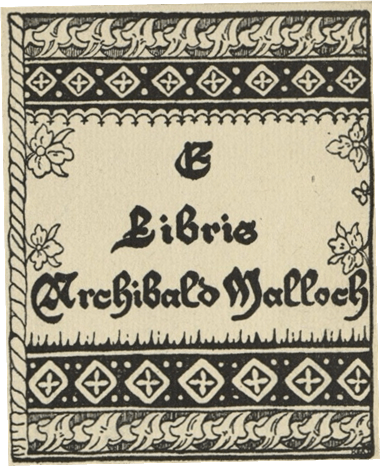
Archibald Malloch was a collector in his own right. Here is his personal bookplate.

When Williams offered Malloch the position of Librarian, he was about to return to England. During the last few months of 1925, he visited medical libraries in England, Scotland, Ireland, and Paris, as well as several Parisian booksellers. He took advantage of these opportunities to develop plans for the library he was about to lead. He officially took up his new duties on January 1,1926 and began thinking about how to bring his vision of a much-expanded Academy Library to life. In his first report on the needs of the Library, published in the June 1926 issue of the Bulletin of the New York Academy of Medicine, Malloch wrote of the many ways the Library could provide more services to Fellows, to the public, and to other medical libraries. He argued for a larger staff to care for the ever-increasing collection of periodicals, for exhibits, for greater outreach services, and for the expansion of both the modern and the historical collections, noting that “a library is judged chiefly by its general usefulness in supplying modern books and periodicals and those for as far back as a hundred years. But by other libraries and by the cultured and educated, a library is also judged by its possession of medical treasures in the guise of written or printed medical works.”[1] He also recognized that everything he was proposing would require a significant financial investment, an issue that would be a challenge from the beginning of his tenure until he retired due to ill health in 1949.

Malloch’s time at the Academy was marked by notable achievements. He supervised the relocation of about 140,000 books, journals, and pamphlets from the West 43rd Street building to the new Academy building—our current one—in the late summer and fall of 1926, assuring that the Library would be ready for visitors when the new building opened in November. He made brilliant hires, bringing on Janet Doe in 1926, to supervise the periodicals department, and Gertrude Annan, in 1929, to work as the rare book librarian. Both women developed enormous reputations in the world of twentieth-century medical librarianship, and both eventually succeeded him as Librarian.[2] He enlarged the Library’s holdings of unique and rare medical works by making well-considered purchases and accepting a number of important gifts. Working with Dr. Samuel Lambert and Dr. Williams, he raised $185,000 for the 1928 purchase of the Edward Clark Streeter Collection of manuscripts and important early printed medical books, adding about 1,200 volumes to the Library’s then-modest rare book collection. Twenty years later, in 1948, he also helped convince the New-York Historical Society and the Brooklyn Museum to donate the Edwin Smith Surgical Papyrus, the most important single gift ever made to the collections.

The new “Rare Book and History Room,” opened 1933, as sketched by Dr. Robert Latou Dickinson.

Malloch’s greatest wish, however, was for a room specifically to house the Library’s rare books and the reference collection to support them. Edward S. Harkness offered a gift of $350,000 towards that project, provided that an additional $400,000 in new endowment funds be raised. With the support of Lambert, Williams, and a Building Committee headed by Dr. Arthur Duel, the funds were successfully in hand by May of 1931, as Williams reported to Malloch in a telegram: “Four hundred fund completed… Your rare book room assured.”[3] The new Rare Book and History Room opened to readers on June 15, 1933.

Malloch passed away on September 19, 1953, at the age of 67, after suffering from heart disease for several years. After his death, the rare book room was renamed the Malloch Room in his honor. As a result of a large donation from the Samuel J. and Ethel LeFrak Charitable Trust and Charitable Foundation, Inc., in 2012 the room was renamed again, and it is now the Drs. Barry and Bobbi Coller Rare Book Reading Room. Dr. Malloch’s many accomplishments continue to live on in the Library, though, through the richness of its collections and the settings in which readers use them to this day.


Notes

[1] “The needs of the Library.” Bulletin of the New York Academy of Medicine vol. 2:6 (1926), p. 293.

[2] Janet Doe succeeded Malloch directly, serving from 1949 to 1956, and Annan succeeded her, serving up to her retirement in 1970.

[3] Doe, J. “The Malloch Room.” Bulletin of the New York Academy of Medicine vol. 30:3 (1954): 221–2.


References

Academy Bookman. 6:3 (1953), the Malloch memorial issue.

“Archibald Malloch Librarian of the New York Academy of Medicine 1925–1949,” Academy Bookman vol. 2:2 (Spring 1949), pp. 2–5.

Doe, J. “The Malloch Room.” Bulletin of the New York Academy of Medicine vol. 30:3 (1954): 221–2.

Heaton, C. E. “Archibald Malloch, M.D.—1887–1953.” Bulletin of the New York Academy of Medicine vol. 30:5 (1954): 399–401.

“The needs of the Library.” Bulletin of the New York Academy of Medicine vol. 2:6 (1926): 287–98.

New York Academy of Medicine Archives. “Malloch, Archibald. 1925–1953. Letter engaging as librarian, 1925; correspondence; tributes…1949, 1953.”

New York Academy of Medicine Archives. “Malloch Rare Book and History Room. Correspondence re founding, 1928–1954.”

Van Ingen, Philip. The New York Academy of Medicine: Its First Hundred Years. New York: Columbia University Press, 1949.

Maternal Mortality In New York City: NYAM’s Landmark 1933 Study

By Paul Theerman, Director

NYAM’s 1933 maternal mortality report is one of the 30 highlights of “Celebrating NYAM Milestones,” prepared for our 175th anniversary in 2022.

In 1930, the New York Academy of Medicine began a major project that resulted in the landmark report Maternal Mortality in New York City, published in 1933. In its work, the Academy was part of a great movement in the first third of the 20th century that devoted greater efforts to the problem of maternal mortality. Many reasons led to this increased emphasis in public health communities. In the American context, though, the foundation of the Children’s Bureau in 1912 brought these issues to the fore.

In the late 19th and early 20th centuries, the settlement house movement focused attention on the plight of children in urban slums and tenements. The issue eventually reached President Theodore Roosevelt, who convened the first White House Conference on Children in 1909. Three years later President Taft signed the act establishing the U.S. Children’s Bureau as a part of the Department of Labor, the first Federal agency dedicated to the welfare of children. Under its dynamic first director, Julia Lathrop (1858–1932), the bureau mounted multi-pronged programs to address the social needs of children and mothers and helped set the agenda for increased study of maternal mortality over the following years. In 1930 the bureau mounted a White House conference on child health and protection, which included maternal mortality in its scope, and in 1933, it issued a report on maternal mortality in 15 states. Its work played a leading role in the international focus on maternal health; the Library’s collections hold over 15 professional and lay studies on maternal mortality dating between 1925 and 1937, covering such disparate geographical regions as Philadelphia, Scotland, and Birmingham, Alabama. Thus when the New York Academy of Medicine took on its study, it was adding its voice to the ongoing international effort.

Dr. Ransom Spafard Hooker, 1907

The Academy began its study of maternal mortality in New York City in 1930, with the assistance of the New York Obstetrical Society and the support of the Commonwealth Fund. Under the auspices of the Academy’s Public Health Relations Committee, Dr. Ransom S. Hooker (1874–1957), a prominent surgeon, was appointed director of the study. From 1930 to 1932, the city’s Health Department provided, and the Academy analyzed, 2,014 case reports on women’s deaths from childbirth as well as deaths of pregnant women. For each case, the physician was interviewed, and if the death took place in a hospital, that institution was inspected.

The analysis found huge gaps in perinatal care and obstetrical practice, partly among midwives but chiefly among physicians. The report’s chief recommendation was for increased education and training, both popular and professional. Prospective mothers should know and be able to ask for what they needed in perinatal care. Both generalist physicians and the newly forming specialist obstetricians should receive better obstetrical training in medical schools and through hospital internships. The report called for a reduction in surgical interventions “undertaken merely to alleviate pain or shorten labor.” It recommended that hospitals provide separate obstetrical clinics, wards, and delivery rooms, overseen by trained obstetricians, with rigid rules to maintain asepsis, including masking. Based on the data—which showed better results for midwife-assisted births—the report supported the practice of home delivery. Nonetheless it called for more training and greater supervision of midwives, preferably by physicians. The report concluded that “the rate of death was unnecessarily high . . . [and] two-third of all the deaths studied could have been prevented.”

The Commonwealth Fund published the landmark study on November 20, 1933, followed by the Academy’s summary in its publication Health Examiner. Iago Galdston, secretary of its Medical Information Bureau, provided major press outlets with a précis of the study, titled “Why Women Die in Childbirth,”. One sign of its reach: the January 1934 meeting of the Maternity Center Association, attended by over 500 people, focused on the report, and emphasized public education in the search for better outcomes. Four years later, Galdston adapted the study for lay audiences, including results from Philadelphia and the U.S. Children’s Bureau, as Maternal deaths—the ways to prevention (1937), also published by the Commonwealth Fund.

Immediately after the study’s release, however, obstetricians—and especially those of the New York Obstetrical Society, which helped guide the Academy’s research—thought that their authority and expertise were being questioned. In April the society released a “counter-report” upholding its members’ obstetrical abilities against the “unskilled hands” of general physicians and midwives. Some obstetricians raised their objections within the Academy, both on the report and the publicity around it. The Academy mounted an investigation, which confirmed both the results of the report and the manner of its release. And even as it objected to the report, the Society came together with the Academy in March 1934 to jointly advise the city’s Department of Health on productive ways forward. These efforts bore fruit: from 1935 to 1938, maternal mortality rates in New York City dropped by a third, from 51 to 38 deaths per 10,000 live births, and then dropped further, reaching 22 by 1942. The trend continued over the next 40 years.

What was missing in the Academy’s analysis? Any serious consideration of why health disparities played out along racial lines. That mortality followed race was clear. Each woman’s ostensible race was noted, and the results were reported out by race. The report stated that “the death rate from puerperal causes for the Negro [sic] population . . . greatly exceeds that for the white population.” The Children’s Bureau’s 1933 report found a rate for non-white women nearly twice that of white women—a conclusion that, sadly, remains virtually unchanged almost a hundred years on. Neither of these studies directly addressed causation, and when the Children’s Bureau did so in 1940, as one historian noted, they marked out Black women as inherently poor prospects for motherhood, the origin of “the Black maternal blame narrative.”

Begun in the 1930s, NYAM’s work continues to the present in the 2018 New York Maternal Mortality Summit and the ongoing efforts of the Women’s Health Research and Well-being Working Group.

_________

Sources:

King, Charles R. “The New York Maternal Mortality Study: A Conflict of Professionalization.” Bulletin for the History of Medicine 65 (1991): 476–502.

New York Academy of Medicine, Committee on Public Health Relations. Maternal Mortality in New York City: A Study of All Puerperal Deaths, 1930–1932. New York: The Commonwealth Fund, 1933. Quotation on p. 163.

Owens, Deirdre Cooper, and Sharla M. Fett. “Black Maternal and Infant Health: Historical Legacies of Slavery.” American Journal of Public Health 109(10)(October 2019): 1342–45. https://ajph.aphapublications.org/doi/10.2105/AJPH.2019.305243, accessed March 4, 2022.

“Ransom Hooker, Surgeon, Is Dead; Former Director in Field at Bellevue Made Study Here of Maternal Mortality.” The New York Times, April 12, 1957, p. 25.

Stokes, Anson Phelps. Stokes Records: Notes Regarding the Ancestry and Lives of Anson Phelps Stokes and Helen Louisa (Phelps) Stokes. 4 vols. New York: Privately printed, 1915, 3:130, is the source of the photograph of Ransom Spafard Hooker.

Taylor, Morgan. “An Untold Story: Black Maternal Mortality in the United States.” Nursing Clio, January 20, 2022. https://nursingclio.org/2022/01/20/an-untold-story-black-maternal-mortality-in-the-united-states/, accessed March 4, 2022.

Van Ingen, Philip. The New York Academy of Medicine: Its First Hundred Years. New York: Columbia University Press, 1949. Pp. 441–50.

U.S. Center for Disease Control, National Center for Chronic Disease Prevention and Health Promotion, Division of Reproductive Health. “Achievements in Public Health, 1900–1999: Healthier Mothers and Babies.” MMWR 48(38) (October 1, 1999): 849–58. https://www.cdc.gov/mmwr/preview/mmwrhtml/mm4838a2.htm, accessed March 4, 2022.

U.S. Department of Health and Human Services, Administration for Children and Families, Administration on Children, Youth and Families, Children’s Bureau. The Story of the Children’s Bureau. Washington, DC: The Children’s Bureau, [2012].

U.S. Department of Labor, Children’s Bureau. Maternal Deaths: A Brief Report of a Study Made in 15 States. Bureau Publication No. 221. Washington: Government Printing Office, 1933.

‘Sick and In Prison’: Airborne Disease and Prison Reform in the career of John Howard (1726–1790) 

By Dr. Paul E. Sampson, Assistant Professor of History, The University of Scranton 

2020 Audrey and William H. Helfand Fellow in the History of Medicine and Public Health 

Over the course of the past year, I have had the privilege of spending four weeks researching in the spectacular rare book collection of the Library of the New York Academy of Medicine. My book project is entitled “Ventilating the Empire: Environmental Machines in Britain, 1700–1850” and comprises a scientific and social history of ventilation in Britain and the British empire during the long eighteenth century, roughly 1688 to 1815. By examining the design and deployment of ventilating machines in slave and naval ships, prisons and public buildings, I ask how devices designed to protect human beings from environmental hazards became a means of dividing British society along class and racial lines.  

Text Box

The primary subject of my research has been the life and career of prison reformer John Howard (1726–1790). I examine Howard’s career through the context of his work on “Jail Fever” (AKA typhus) which contemporary physicians and medical experts understood as an airborne disease. I argue that a key feature of Howard’s celebrity was his perceived invulnerability to airborne diseases. In addition, his influence helped to shift the discourse of prison reform away from overall institutional sanitation and towards methods intended to control the hygiene and morality of individual prisoners. 

For those unfamiliar, John Howard was a noble-born, intensely religious man who was appointed sheriff of Bedfordshire in 1773. One of his duties was to inspect local prisons. Unlike many of his genteel contemporaries, he took this job seriously. He was appalled by the conditions of the prisons in Bedfordshire, and to spur reform and gather ideas for improvement, he made a series of lengthy tours to visit as many prisons as he could throughout the British Isles and continental Europe. His first published book, The State of the Prisons in England and Wales (1777), detailed his visits to dozens of county jails and bridewells (workhouses), including careful notes of the fees charged to prisoners, their daily workload, the prison diet, and the overall sanitation.  

One of the primary goals of Howard’s travels was to find the best means of preventing the spread of disease. By the 1750s, prisons were increasingly perceived as public health hazards. The filthy and diseased condition of prisoners in London’s Newgate prison became a public scandal after the Lord Mayor and 56 others died of jail fever in the weeks following an audience with prisoners. Following the contemporary etiology of fever, the outbreak was attributed to the “putrid effluvia” exhaled in the breath of sick prisoners that had imparted a “poisonous quality” to the air in the courtroom.1 By 1774, Howard had achieved celebrity status by helping to author the “Act for Preserving the Health of Prisoners in Gaol.” This act stated that jail fever was caused by the “want of cleanliness and fresh air” and mandated that all interior walls and ceilings be scraped and white-washed annually and “constantly supplied with fresh air, by means of hand ventilators or otherwise.”2  

However, in the wake of this achievement, Howard’s attitudes about preventing fever had begun to shift. During his tours of European prisons, he was puzzled that he rarely encountered “jail distempers” there. To explain the disparity between these and disease-ridden English institutions, Howard developed a theory of jail fever based entirely on his own “experience.” He argued that prisoners could only be infected if privation, filth, and personal intemperance weakened them enough for the contagion to take hold. Young and healthy convicts who were used to “vigorous exercise” quickly became infected due to the “sudden change of diet and lodging” that “so affects the spirits of new convicts, that the general causes of putrid fevers exert an immediate effect on them.” As a counter-example, Howard pointed to himself. During his first tours, he wrote, he had attempted to avoid breathing in contagion by “smelling to vinegar… and changing my apparel…constantly and carefully.” A few years later, however, he wrote that he “entirely omitted” such precautions. In his opinion, the real protection against infection were his habits of “temperance and cleanliness” as well as the power of “divine providence.”3 

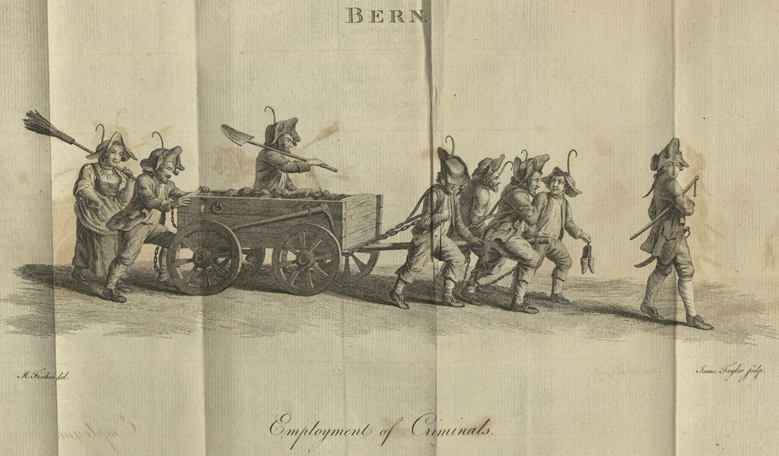
Image 2: Howard was keenly impressed by the prison regime in Bern, Switzerland. Howard wrote that the city was “one of the cleanest I have seen” and included illustrations of the employment of male and female prisoners as street cleaners. Note the iron collars with hooks affixed to the prisoners’ necks to deter escape attempts.  
“Employment of Criminals” and “Employment of female Criminals,” in John Howard. The State of the Prisons in England and Wales. 2nd. Ed. (Warrington: T. Cadell, 1780) 109–10. Images courtesy of the New York Academy of Medicine Library. 
 

By the time the second edition of State of the Prisons came out in 1780, Howard had visited hundreds of disease-ridden institutions and avoided contracting a serious infection. While friends privately cautioned him against such continual risk-taking, Howard’s superhuman invulnerability to disease had become a key feature of his celebrity.4 Celebratory poems about Howard became, in the estimation of two literary scholars, “nearly ubiquitous in the 1780s and 1790s” as poets from Erasmus Darwin to William Cowper celebrated his arduous travels and selfless virtue.5 William Hayley’s 1780 Ode, Inscribed to John Howard attributed Howard’s “matchless fame” to his “valor’s adventr’ous step” through “malignant cells” where “fierce contagion, with affright, repels.”6

Image 3: George Romney’s study for a never-completed painting of John Howard visiting a prison or lazaretto. Howard is the figure standing defiantly on the far left.  
George Romney, John Howard Visiting a Lazaretto (1790–95). Courtesy of the Museum of Fine Arts, Boston, MA. 
 

This vision of Howard as a heroic and invincible figure appeared in numerous prints and lithographs and was captured evocatively in an unfinished work by famed painter George Romney, who depicted a defiant Howard striding confidently into scenes of melodramatic suffering and disease.7  

Despite his reputation, Howard wasn’t able to evade contagion forever. While travelling through southern Ukraine in the winter of 1790, Howard contracted a serious fever and died two weeks later.8 Notwithstanding his untimely death, Howard’s emphasis on invigorating labor, self-regulation, and instilling personal hygiene in convicts exerted an enormous influence. By the heyday of the modern penitentiary in the mid-nineteenth century, Howard was lauded as the founder of “prison science.”9 While jails designed during Howard’s life reflected the eighteenth-century emphasis on eliminating effluvia via ventilation, their nineteenth-century successors focused instead on insuring that each inmate was placed in solitary confinement and given a strict regimen of work and moral instruction.10  

In my larger project, I argue that this is partially due to a shifting locus of responsibility for preventing airborne disease. The attention of reformers shifted from the condition of the institution to the character of the individual, who became responsible for his or her own cleanliness and ventilation. To briefly illustrate this point, I will conclude with a quotation written several years after Howard’s death by naval health reformer Gilbert Blane: 

Those only whose duty leads them to consider the subject, are aware how much the welfare of the human species depends on ventilation and cleanliness; and no one could render a greater service to his fellow creatures, than to impress on their minds the necessity of cultivating them as moral and religious duties.11 


1. See, for example: John Pringle, Observations on the Nature and Cure of Hospital and Jayl-Fevers (London: A. Millar, 1750); “Account of the Fatal Assize,” CLA/035/02/049, Gaol Committee, 1750–1755, Notes on Ventilating Newgate, London Metropolitan Archives.

2. Act for Preserving the Health of Prisoners in Gaol and Preventing the Gaol Distemper, 1774, 14 Geo. III, c. 59.

3. John Howard, The State of the Prisons in England and Wales 2nd. Ed. (Warrington: T. Cadell 1780) 430–31.

4. Thomas Taylor, Memoirs of John Howard (London: John Hatchard, 1836) 386–87.

5. Gabriel Cervantes and Dahlia Porter, “Extreme Empiricism: John Howard, Poetry, and the Thermometrics of Reform,” The Eighteenth Century, 57:1 (Spring 2016): 97.

6. William Hayley, “Ode, Inscribed to John Howard” (Boston: J. White et. al. 1795 [1780]).

7. George Romney, John Howard Visiting a Prison or a Lazaretto, 1790–95, courtesy of the Museum of Fine Arts, Boston, MA.

8. John Aikin, A View of the Life, Travels, and Philanthropic Labours of the Late John Howard (Boston: J. White et. al., 1794) 120–25.

9. William Hepworth Dixon, John Howard and the Prison World of Europe, 2nd ed. (London: Jackson and Walford, 1850) 1.

10. Robin Evans, The Fabrication of Virtue: English Prison Architecture 1750–1840 (London: Cambridge UP, 1982) 104–114; Michael Ignatieff, A Just Measure of Pain (London: Penguin, 1978) 3–14.

11. Gilbert Blane, “Letter to John Hippisley,” in Observations on the Diseases of Seamen (London: 1799): 614–15.