Researching Neuropsychiatry and Veterans Hospitals During the 1930s at the New York Academy of Medicine 

By Dr. Michael Robinson, National Army Museum Research Fellow, University of Birmingham (UK), and the Library’s 2024 Paul Klemperer Fellow in the History of Medicine 

I spent one month working in the New York Academy of Medicine’s magnificent library and reading room in the autumn of 2024. This residency enabled me to look at a host of materials dedicated to the treatment of mentally ill American Army veterans of the First World War during the Great Depression (1929–1939). I undertook this research hoping to utilise the USA as an important comparative case study on my current research project dedicated to mental illness and British Great War veterans during the 1930s. By examining mental breakdown and psychiatric medical care during this decade, this research seeks to reveal the delayed traumatic after-effects of war service on ex-service personnel and the potential for additional psychosocial determinants to influence mental ill-health.  

I first became interested in the American experience of post-First World War disability and mental healthcare owing to its regular appearance in the archival records of Britain’s Ministry of Pensions, the government agency responsible for distributing veterans’ pensions and medical care. During the inter-war period, British policymakers regularly cited the US experience of veteran after-care as a deterrent and a case study to avoid replicating. They actively held up the US system as being unfairly exclusive, costly, and liberal owing to its incremental but costly expansion of veteran rights and facilities. Britain significantly reduced its liability on behalf of veterans during the 1920s and 1930s, including the closure of most veterans’ hospitals. Veterans’ medical care in Britain was primarily outsourced to broader public health facilities, the civilian welfare state, and the charity sector.  

By contrast, the US witnessed increased state liability, including a vast financial outlay in funding exclusive Veterans Administration (VA) hospitals and medical facilities. In 1936, owing to the two nations’ inversed approaches to veteran care, one Ministry of Pensions official described the UK and US responses as being of ‘opposite extremes.’1 The primary purpose of my time at the NYAM was to better understand why the British and US systems were the complete inverse of one another. I also sought to appreciate how these contrasting policy trajectories and medical infrastructures affected the lives of mentally ill veterans.  
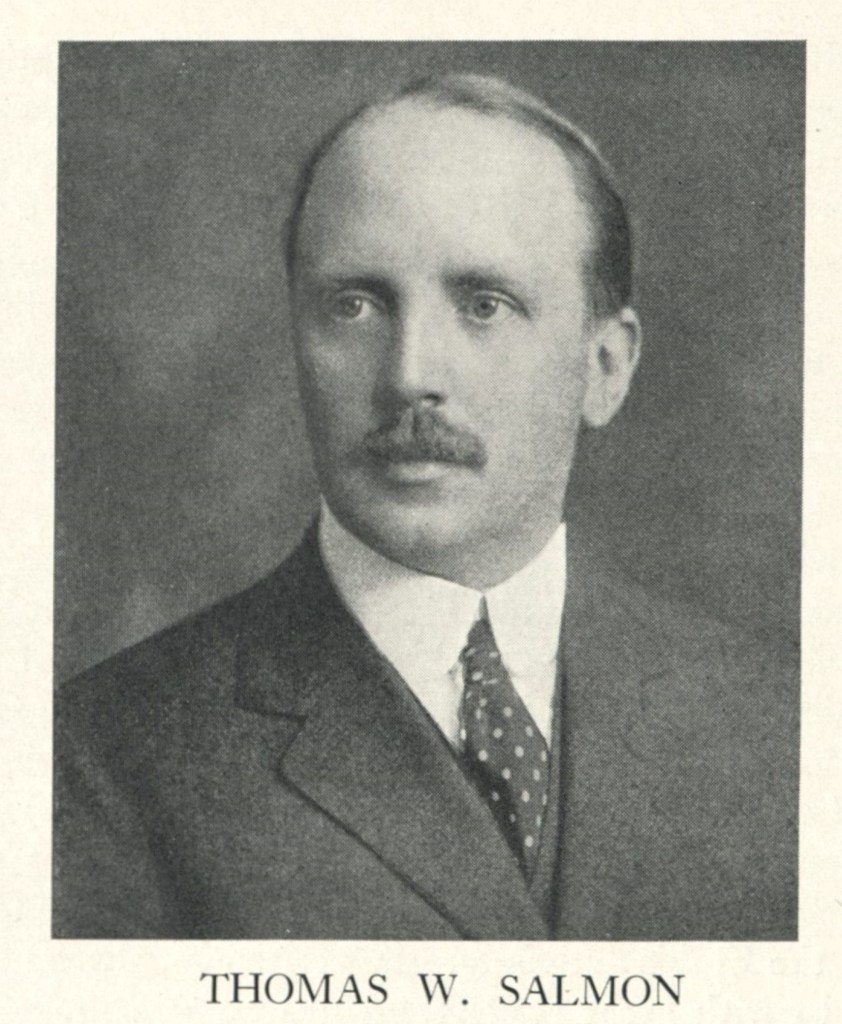
Portrait of Thomas Salmon, from History of the Interurban Clinical Club 1905-1937, edited by David Riesman (1937).

This comparative approach first led me to NYAM records relating to Dr. Thomas Salmon (1876–1927). For those unfamiliar, Salmon was the American Expeditionary Forces’ chief consultant in psychiatry during the First World War. Before this important role, following the country’s entry into the global conflict in 1917, Salmon visited England to study how it dealt with mental wounds during the war to help inform his country’s approach.2 As a leading figure in the US National Hygiene Movement before and after his war service, the records of Salmon’s war experience reflect a relatively progressive military medical official. He regularly stressed the environmental causes of soldiers’ breakdown. In short, Salmon was more inclined to blame combat neurosis and stress on the dehumanising and brutalising effects of war service than citing faulty hereditary genetics, as was more apparent amongst British military officials. This more empathetic outlook continued into Salmon’s advocacy on behalf of veterans following his return to America. Unlike the more reclusive and disillusioned Dr. Charles Myers, the British Army’s leading psychiatric official, Salmon advocated for healthcare and welfare on behalf of the mentally disabled First World War veterans during the initial post-war years. Described by his biographer as a successful ‘spokesman for veterans,’ the force of Salmon’s personality and his effective collaboration with the American Legion help explain why the American mentally ill veteran stopped being admitted into larger public mental hospitals.3 Instead, the US Federal Government established exclusive medical facilities for veterans from the early 1920s onwards.  

Salmon died unexpectedly whilst sailing near Long Island in 1927. Reflecting his prestige amongst his contemporaries, the National Committee for Mental Hygiene, an advocacy organization founded in 1909 by Clifford W. Beers, set up the Salmon Committee on Psychiatry and Mental Hygiene at the New York Academy of Medicine in 1931.4 Regardless, the exclusive medical infrastructure he had helped establish continued to cater to mentally ill First World War veterans into the 1930s. In stark contrast to Britain’s minuscule and dwindling psychiatric infrastructure, the VA provided seventeen neuropsychiatric facilities across its national network of forty-nine hospitals. It offered 10,633 beds for mental ailments, marking a 467% increase over 1921’s availability. The number of beds would be set to increase for the rest of the decade.5 With this exclusive federal medical care program for veterans, the VA published its Medical Bulletin journal throughout the 1930s. Pouring through these issues reveals a lively forum of VA medical officials discussing the continued difficulties of treating veterans during this period.  

Regarding neuropsychiatry—I was struck by how hospital superintendents, nurses, vocational trainers, and social workers regularly articulated a holistic approach to mental healthcare. They cited the psychosocial determinants of health outside of hospital walls. This includes, for example, the detrimental impact of unemployment and poverty on an individual’s mental and bodily health, the emasculating stigma attached to male mental illness, and the potential for harmful self-medication practices such as alcoholism.  

United States Veterans’ Bureau Medical Bulletin (1931), a collection of articles by VA staff and associates dedicated to all aspects of veteran after-care. These various scans come from volume 7.

The materials I reviewed at the NYAM provide a complex and nuanced picture of the post-war treatment of mentally ill World War One veterans. On the one hand, they give an image of an expansive, caring and financially generous veterans’ system. On the other hand, however, they provide comparatively little insight into the personal perspectives of veteran patients to verify the progressive narrative offered by medical officials. In addition, contemporary medical journals reveal increasing resentment from American citizens regarding the spiralling costs of veteran medical care with little in return in terms of cure and recovery.6 This counter-narrative also appears worthy of further research.  

Before arriving in New York, I was unsure how exactly the USA would fit into my larger project of Great War veterans during the Great Depression. However, my time at the NYAM proved incredibly rewarding by revealing how fascinating and unique an American case study is. I look forward to continuing this research into 2025. 

Notes: 

1 Nineteenth Annual Report of the Ministry of Pensions, 1935-1936, 33. 

2 For a write-up of Salmon’s observations and recommendations, see Thomas Salmon, The care and treatment of mental diseases and war neuroses (“shell shock”) in the British Army (War Work Committee of the National Committee for Mental Hygiene, 1917). 

3 E. D. Bond, Thomas W. Salmon: Psychiatrist (W. W. Norton & Co, 1950), 160. 

4 For more information on the Salmon Committee on Psychiatry and Mental Hygiene and its records that are held in the NYAM, see https://www.nyam.org/library/collections-and-resources/archives/finding-aids/ARN-0006.html/ [last accessed 18 November 2024]. 

5 E. O. Crossman and Glenn E. Myers, ‘The neuropsychiatric problem in the US Veterans’ Bureau,’ Journal of the American Medical Association, vol. 94, no. 7 (1930), 473–478. 

6 For example, see the Crossman and Myers article cited above. 
Tracing the Transmission of Early Modern Recipe Knowledge in the New York Academy of Medicine Library

By Sheryl Wombell, University of Cambridge, and the Library’s 2024 Audrey and William H. Helfand Fellow.

In seventeenth-century Europe, knowledge about health and healing was shared with family, friends, and acquaintances. In the case of printed books, wider audiences were reached. A significant subset of these communications took the form of recipes: sets of instructions telling one how to make something. These might be instructions for making medicines in the home, with a range of ingredients from the inexpensive and easily sourced, to the rare and exotic products available due to expanding trade. Or they could be instructions to make culinary formulations, which were interpreted as having an impact on the body’s condition due to the lasting influence of the ancient theory of the four humours. Individual recipes, which could be as short as a line or as long as tens of pages, were gifted, traded, and passed around early modern social networks.

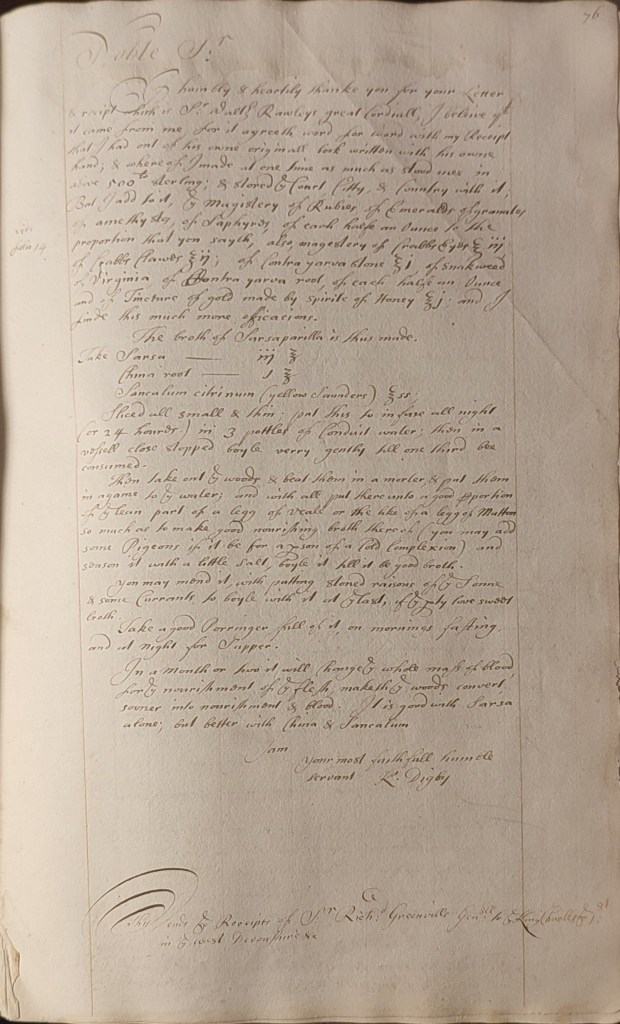
A letter penned by the courtier and privateer Sir Kenelm Digby, likely to Sir Richard Grenville, 1st Baronet of Kilkhampton, demonstrates the mobility of recipes in the mid-seventeenth century.i In it, Digby thanks Grenville for sending him a recipe for ‘Sir Walter Rawleys great Cordiall’ but questions its provenance:

I beleive th[a]t it came from me, for it agreeth word for word with my Receipt that I had out of his owne originall book written with his owne hand; & whereof I made at one time as much as stood mee in above 500 [pounds] sterling; & stored the Court, Citty, & Country with it; But I add to it, the Magistery of Rubies, of Emeralds of granales of amethystes, of Saphyres, of each halfe an Ounce to the proportion that you sayth, also, magestery of Crabbs Eyes [3 oz], of Crabbs Clawes [2 oz]; of Contra yarva stone [1 oz], of snakweed of Virginia, of Contra yarva root, of each halfe an Ounce and of Tincture of gold made by spirite of Honey [1 oz]; and I finde this much more efficacious.

The circular path of recipes that Digby describes – when a recipe he believes to be his own is unwittingly returned to him – is testament to the lively early modern traffic in recipe dissemination and collection.

Fig. 1: Copy of a letter from K. Digby in MS ‘Old Doctor 1690’, f. 76, New York Academy of Medicine Library.

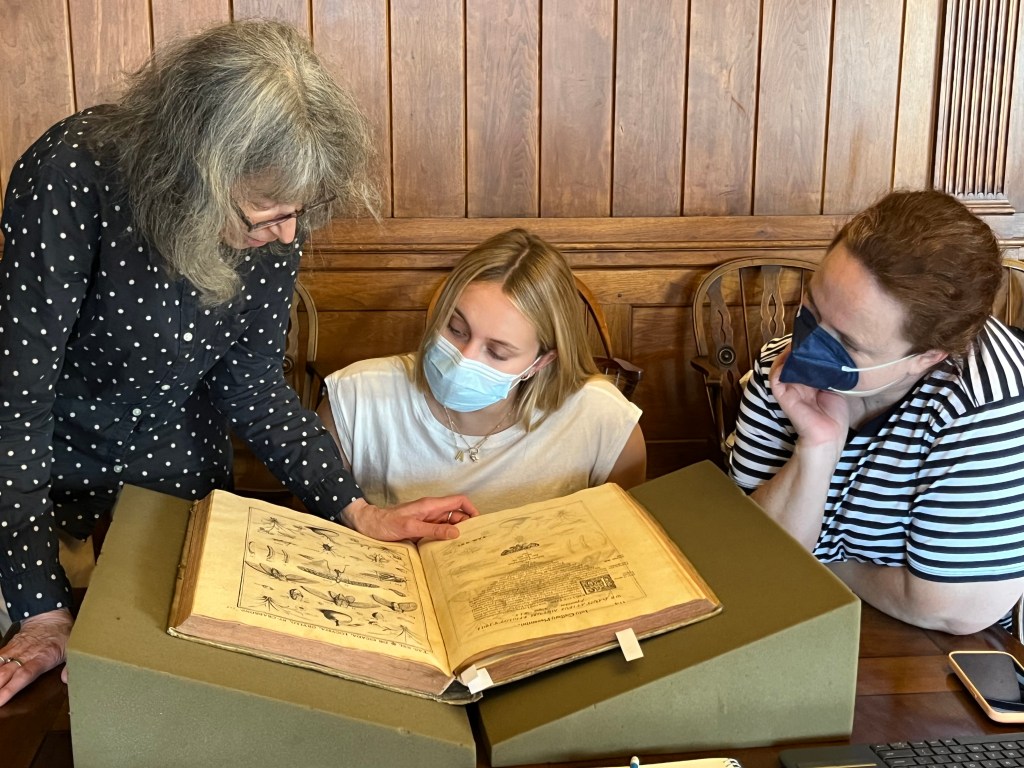
Manuscript collections of recipes survive in archives around the world, and the New York Academy of Medicine Library holds a rich cache of such volumes. Thanks to winning their Helfand Fellowship in 2024, I had the privilege of spending five weeks on a close reading of the early modern medical recipe collections at NYAM. This research forms part of my PhD project, which looks at the mid-seventeenth century production, management, and transmission of knowledge about health and healing amongst exiled and mobile elites, including Digby. While my work to date had focused on three key media – printed medical books, manuscript recipe collections, and consultation letters – somewhat in isolation from each other, at NYAM I had the time and resources to explore the relationships between these formats.

One such connection was the integration of transcribed letters into larger manuscript collections. Digby’s letter, for example, was copied into a large bound volume of recipes, letters, and transcriptions from printed books titled ‘Old Doctor 1690’. But in handling the manuscripts I was also confronted with material traces of transmission. In another manuscript, for example, is a recipe for ‘Costiveness to help’, that is, how to relieve constipation. Next to the instructions are two small, shiny blobs of dried red sealing wax. While this is not conclusive evidence that the recipes on the page were copied into a letter, it does indicate that the notebook lay open while a letter was sealed – and likely written – in its vicinity. Through this tiny physical sign, we learn something of the co-presence of writing and collecting practices across the distinct but interrelated media of letters and recipe books.

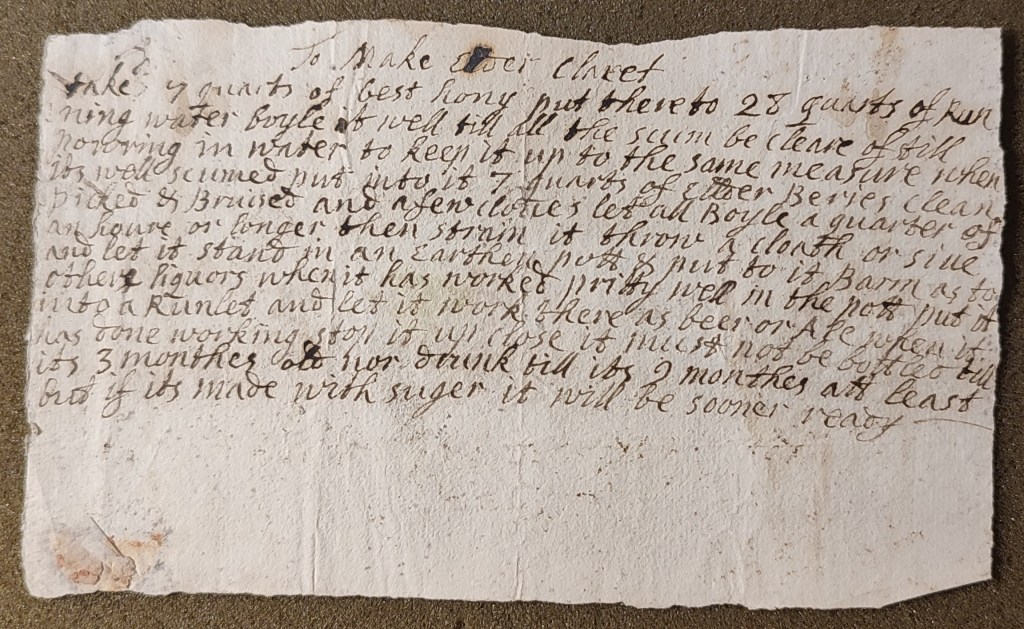
The objects of transmission themselves also appear in these recipe collections. A notebook belonging to Owen Salesbury holds a loose paper slip with instructions ‘To Make Elder Claret’ and sent ‘To Mrs Longford att her hous in Wrexham’. Folded slips could be enclosed in a larger letter, or they could constitute the entire missive. The inclusion of the address on this example suggests the latter. The contents of the slip were not transcribed into the body of the notebook but containing it within the bound volume preserved its knowledge. We don’t know precisely how or when a slip sent – or intended to be sent – to a Mrs Longford ended up in Salesbury’s manuscript, but it offers further evidence of the close connections between ephemeral letter formats and the more durable objects of recipe collections.
Spending time in the NYAM Library’s collections allowed me to get to grips with evidence of early modern recipe transmission. While digitised surrogates of manuscripts have been invaluable in my research, handling these collections has enriched my analysis by bringing their material qualities – size, varying durability, the spatial relationships between their contents, and signs of use – to the fore.

Further Reading:

Ken Albala, Food in Early Modern Europe (London: Bloomsbury Academic, 2003).

James Daybell, The Material Letter in Early Modern England: Manuscript Letters and the Culture and Practice of Letter-Writing, 1512–1635 (Basingstoke: Palgrave Macmillan, 2012).

Elaine Leong, Recipes and Everyday Knowledge: Medicine, Science, and the Household in Early Modern England (Chicago and London: University of Chicago Press, 2018).

Alisha Rankin, ‘Recipes in Early Modern Europe,’ Encyclopedia of the History of Science (2023), https://doi.org/10.34758/fvw2-w336.

Combatting Tuberculosis in America After its Microbial Discovery 

By Sean Purcell, The Media School, Indiana University-Bloomington and the Library’s 2023 Helfand Fellow 

Mr. Purcell completed his Fellowship residency in the summer of 2023 and will present his research by Zoom on Thursday, December 7 at 4 p.m. (EST). To attend his talk, “A Portrait of Tuberculosis (as a Young Microbe): Representing Consumption at the Turn of the Twentieth Century,” register through NYAM’s Events page. 

I spent a month over the spring and summer looking through the New York Academy of Medicine Library collections, working towards a mixed methods dissertation, titled The Tuberculosis Specimen: The Dying Body and its Use in the War Against the “Great White Plague.” I came to the library with an interest in the visual culture surrounding tuberculosis at the turn of the twentieth century, and in my research, I have cast a wide net, looking at an array of images, from doctors’ portraits to children at play, from histological samples to photographs of wet specimens. 

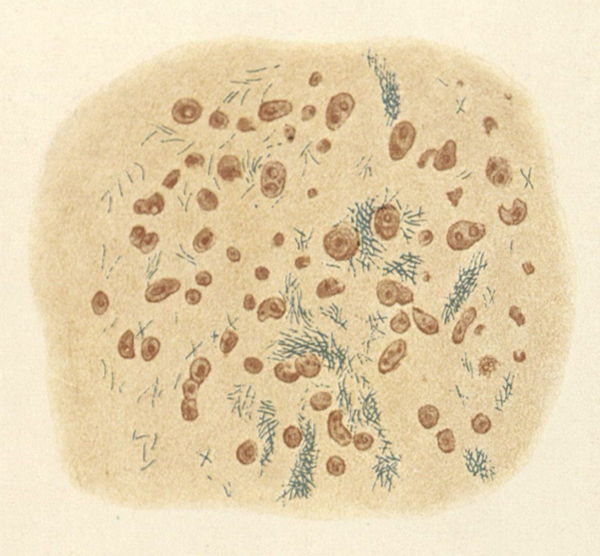
The turn of the twentieth century saw major shifts in the public, professional, and governmental interventions against tuberculosis. Robert Koch’s 1882 essay on the microbial cause of the disease led to a broad shift in how medical professionals and the lay public understood and combatted the disease. Koch had figured out a process to isolate the bacteria in laboratory animals and used a series of chemical baths to stain Mycobacterium tuberculosis a bright blue (fig. 1). Seeing the bacteria clear as day under the microscope helped move germ theory forward, and forced doctors and health worker to reconsider how to treat a disease that was, prior to Koch’s essay, considered a constitutional malady. The period after Koch’s essay saw the rise of public health interventions against the disease and the popularization of the tuberculosis sanatorium. 

Figure 1. An illustration of Mycobacterium tuberculosis. From Aetiology of Tuberculosis, 1890, Robert Koch.  

The most influential figure in the burgeoning sanatorium movement was Edward Livingston Trudeau. A doctor who had sought a cure for his own tuberculosis in upstate New York, Trudeau built his own laboratory and sanatorium, the Adirondack Cottage Sanatorium, in 1880 (figs. 2 & 3). This institution became a central fixture in the decades to come, as it was equipped with research facilities, and published its public-facing journal for tuberculous patients, The Journal of Outdoor Life.  

Figure 2. The most reproduced image from the Adirondack Sanatorium, showing the first cottage where patients were treated. From A history of the National Tuberculosis Association; the anti-tuberculosis movement in the United States, 1921, Adolphus S. Knopf.  
Figure 3. A view of the facilities at Trudeau’s Adirondack Sanatorium. From A history of the National Tuberculosis Association; the anti-tuberculosis movement in the United States, 1921, Adolphus S. Knopf. 

While Trudeau’s sanatorium was the most prominent institution, it was far from the only one. Many for-profit institutions opened their doors during this period, in addition to the development of publicly funded sanitaria in certain states. Assisting the larger, long-term treatment facilities, some cities and hospitals adopted a dispensary system, where tuberculous patients could get assistance and medicine within an urban space.  

These dispensaries served patients, but also sought to teach the urban poor lessons on hygiene. Doctors and public health workers reeled at the dusty, ill kept living conditions of the urban poor, and argued that improper sputum management, poor ventilation, and dark living conditions were contributing to tuberculosis infections in American cities (figs. 4 & 5). While ideas regarding the “healing air” of a specific environment were becoming out of fashion for tuberculosis practitioners in the early 1900’s, most doctors argued that tuberculous patients should get away from the polluted and uncirculated air common to urban environments (figs. 6 & 7).  

Figure 4. An exhibit showing the unhealthy living conditions of the working poor. The caption reads: “Type of tenement house room as first seen by Department of Health Nurse. Man is ill with Tuberculosis. Baby is ill with Scarlet Fever. Others are in danger of infection. Family is destitute.” From “Album of photographs of exhibits by various departments of the City of New York, Royal S. Copeland, Commissioner, and various health agencies,” 1921.  
Figure 5. An exhibit showing the interventions of a public health nurse. The caption reads: “Same room after nurse has performed her duties. Man has been removed to Sanatorium. The baby has been removed to hospital. Financial aid has been obtained and landlord has been induced to paint room. Instruction has been given to mother in personal hygiene, cleaning up, order, proper diet.” From “Album of photographs of exhibits by various departments of the City of New York, Royal S. Copeland, Commissioner, and various health agencies,” 1921. 
Figure 6. A day camp run by Bellevue Hospital where patients could spend time outdoors on a boat. From New York City’s Institutions for the Tuberculous: Clinics, Sanatoria, Preventoria, Day Camps and other Agencies, 1926, The Tuberculosis Sanatorium Conference of Metropolitan New York. 
Figure 7. Tuberculous patients were instructed to spend as much time as possible outside, no matter the weather. From Pulmonary tuberculosis, its modern and specialized treatment, 1907, Albert Philip Francine.  

The fight against tuberculosis in this period saw a collection of different interventions, and the New York Academy of Medicine’s library offers a unique glimpse into the work of scientists and medical professionals who were trying to fight the disease. My time here as a Helfand fellow has been a boon to this research because of the library’s extensive collections, much of which has not been digitized. 
 
References:  
Feldberg, Georgina D. Disease and Class: Tuberculosis and the Shaping of Modern North American Society. (New Brunswick: Rutgers University Press, 1995). 

Koch, Robert. “Aetiology of Tuberculosis.” Translated by T. Saure. Transactions of the Massachusetts Medical Association. (New York: William R. Jenkins, 1890).  

Koch, Robert. “Die Ätiologie der Tuberculose.” In Gesammelte Werke von Robert Koch, 1:446–54, 467–565. (Leipzig: Verlag Von Georg Thieme, 1912). 

FIT Visits the NYAM Library

By Dr. Evelyn Rynkiewicz, Assistant Professor of Ecology,. Department of Science and Mathematics at the Fashion Institute of Technology, State University of New York.

My name is Dr. Evelyn Rynkiewicz, I am a professor of ecology at the Fashion Institute of Technology. I teach a course there called “Disease Ecology in a Changing World,” and my background and research is in disease ecology of coinfecting parasites in mice. I wanted to present a course like this for FIT students because diseases are something that affect all of us, everyone has experience being sick, and because emerging infectious diseases are a growing global issue (even before the Covid-19 pandemic, which is of course still impacting us). The challenge in teaching science courses at FIT is that our students mainly have majors in the design and business fields, not in the sciences, so I try to make the course material relate to their backgrounds and experiences as much as possible, to make the content more relevant to them. I also want to increase science literacy in my students, making them comfortable reading, understanding, and talking about science in their personal and professional lives.

I learned about the New York Academy of Medicine Library after seeing the “Germ City” exhibit at the Museum of the City of New York. I got in contact with the Historical Collections Librarian, Arlene Shaner, who set up a visit to show me some of the materials she thought would relate to my course. I was blown away! I knew my students would love to see these historical documents. These materials highlight not only the art and history of how scientists and the public interacted with diseases through time, but also show how intertwined social, economic, and political issues are with how society’s experiences of disease.

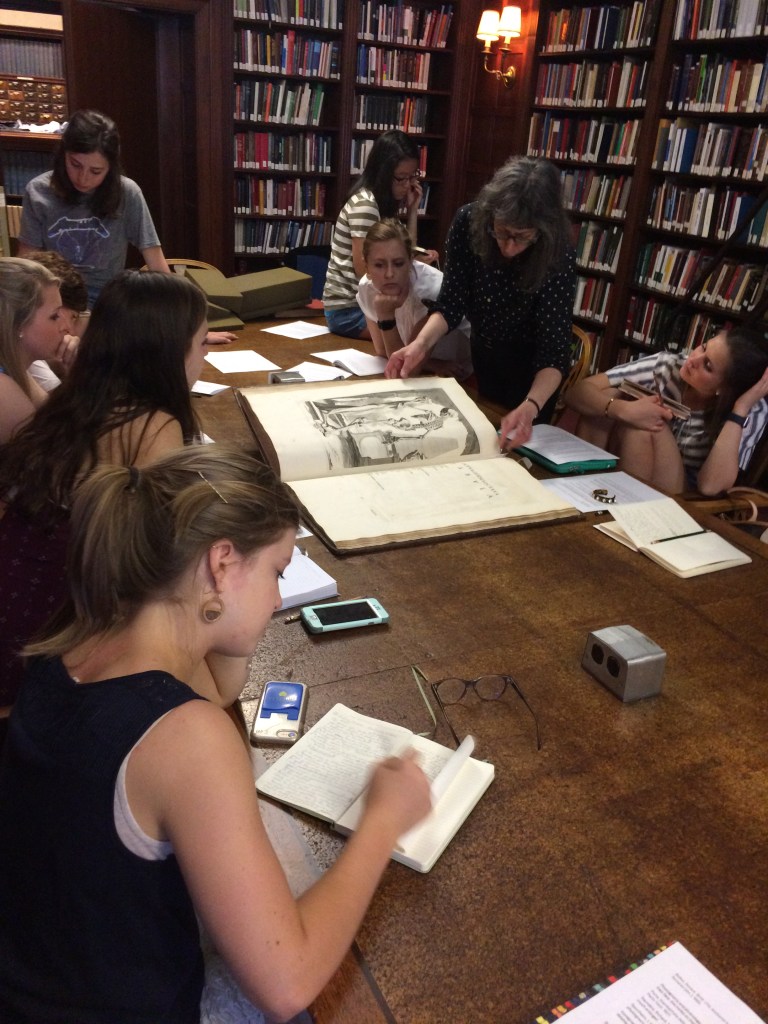
Our class took a field trip to the NYAM Library and was shown an array of material; from Hooke’s book on microscopy, Edward Jenner’s work describing his development of the first vaccine, to posters and leaflets used from WWII to the present day to inform people about diseases such as malaria, HIV, or tuberculosis. I am always excited to see what students find interesting from this visit. Many enjoyed seeing the graphic design and illustrations used in the posters, such as those by Dr. Seuss and Keith Haring. Others picked up on how women and marginalized groups were often those who did a lot of the work caring for sick and infected people. Some just liked seeing the historical materials related to New York and being able to see how their home was impacted by diseases in the past.

One of the main assessments for the course is a creative research project where students choose a disease to study and then make a presentation with something creative related to that disease that would help someone learn more about it. I encourage the students to think about how they could use their skills learned from their major and apply it to this topic. The field trip to the NYAM Library provides the initial inspiration for this. I am always so proud and surprised at what they come up with!

Here are some of the things they created:

A drawn movie poster. The fake film is called Dengue Island. The artist, Arriana Tan is credited as the filmmaker. A drawing of a giant  brown mosquito hovers over a small community.

Arriana Tran, a Fashion Business Management major, created a movie poster. Inspired by the warnings her parents shared with her on the risk of becoming infected with Dengue in her parent’s home country of the Philippines.

A malaria testing and monitoring kit. The left of the image is the packaging mock-up. The right lists what would be included; an insect net, spray, educational material, and the tests. It also gives ordering instructions.

Packaging Design major Ethan Wolfsberg designed a malaria testing and monitoring kit that would be able to be used in remote areas that are heavily impacted by this disease. A real-life version would be made in languages appropriate for the area. 

An image of a globe surrounded by various people of different color, size, and shape. On the globe is says "PrEP."

To reduce the stigma of taking PreP, Francis Lavery, also a Fashion Business Management major, made an image that emphasizes that this treatment is appropriate for everyone.

A paper doll. The bald character is wearing a green shirt and blue pants.

Illustration major Leia Garrette wanted to visually show how infection with the agent of Lyme Disease impacts all parts of the body. She created a paper doll where each layer illustrated a different system (e.g. muscles, nervous system) accompanied by an explanation of how each is affected by the infection.

A flyer that reads "Spread Help, Not Disease!" it talks about a theoretical Zika virus support group.

This flyer was created by Sarah Sepulveda from Fashion Business Management. Her plan was for a support group for parents worried about or impacted by Zika virus. There was a focus on Brazil where the outbreak was especially significant in 2016.

Once again, a huge thanks to Arlene and the others at NYAM for their help and insight. I look forward to more collaboration!

In Praise of Ephemera: Disability History and the New York Academy of Medicine Library

By Dr. Eileen V. Wallis, Professor of History, California State Polytechnic University—Pomona, and the Library’s 2020 Paul Klemperer Fellow

Dr. Wallis completed her Fellowship residency in summer 2022 and will present her research by Zoom on August 2 at 4:00 pm (EDT). To attend her talk, “California and the Search for Medical Legitimacy, 1850–1880,” register through the Academy’s Events page.

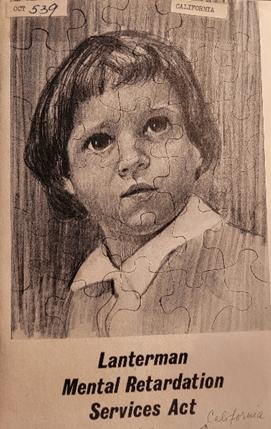
As true of many researchers, the hunt for historical primary and secondary sources for my book project, “California and the Politics of Disability, 1850-1970,” has led me down many paths. This book project uses Los Angeles County as a case study to understand how the interplay between state and county governments shaped the lived experiences of Californians deemed “mentally disordered” from 1850 to 1970. “Mentally disordered” was not a socio-medical category, but rather a bureaucratic one. It is, however, still a useful construct for understanding the ways in which California’s politicians, doctors, and progressive reformers lumped together populations experiencing what today we would consider two distinct categories of disability—mental illnesses and developmental disorders—for their own convenience.[1] These were also the two populations arguably most vulnerable to institutionalization in this era, as well as the ones least likely to leave primary sources behind them. The time span of this study was chosen because it encompasses the rise of institutions for the disabled in California; the shift in them from care custodialism; the era of overcrowding, abuse, and crisis; and the ultimate dismantling of most state institutions for the disabled, a process that began in the late 1950s and culminated with the passage of the Lanterman Disability Service Act in 1969 and the beginning of the era of deinstitutionalization.

Disabled Americans are frequently absent from or hidden within the historical record. The study of sickness and disability, Gracen Brilmyer writes, is often marked by “layers of absences, subtleties, inaccuracies, and perspectives that are embodied in records, archives, and the lack thereof.”[2] However, because the New York Academy of Medicine Library began collecting so early, and because the Academy’s interests were so wide-ranging, it has amassed a strong collection of materials of use to anyone interested in the history of disability in the United States. Interestingly, many of the items it holds related to and in some cases created by Californians cannot be found in collections in the Golden State, but only in New York City at the Academy Library.

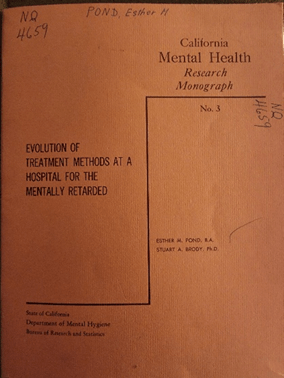
“Evolution of Treatment Methods of a Hospital for the Mentally Retarded” California Mental Health Research Monograph no. 3, 1965. New York Academy of Medicine Library

In 1965, two researchers working for California’s Department of Mental Hygiene, Esther Pond and Stuart Brody, produced a report called “Evolution of Treatment Methods of a Hospital for the Mentally Retarded.” Focused on what was then-called the Sonoma State Hospital in Sonoma County, California, the state’s oldest institution for the developmentally disabled, this report was officially California Mental Health Research Monograph no. 3.[3] It was prepared specifically for use by the Department, printed on cheap paper, given only a pink paper cover, and was likely expected to be, eventually, discarded. The Department certainly could not have anticipated that it would still exist, more than fifty years later, tucked away in a filing cabinet in the New York Academy of Medicine Library.

Sonoma Home for the Feeble Minded,
California State Archives
Biennial Report of the State Department of Mental Hygiene, p. 3, New York Academy of Medicine Library

Indeed, a remarkable number of materials generated by California’s Department of Mental Hygiene, which operated all of California’s state asylums and institutions for the mentally ill and developmentally disabled through the late 1960s, found their way into the Library’s collections. Another example is the 1950–1952 Biennial Report of the California State Department of Mental Hygiene. Like “Evolution of Treatment Methods,” this report has only a paper cover and is held together with staples. It is, however, lushly illustrated with photos, charts, and graphs, including a page featuring both then-Governor of California Earl Warren (soon to be Chief Justice of the United States Supreme Court) and Department head Frank Tallman commenting favorably about the work then being done. Because it covers the years 1950 to 1952, the Biennial Report captures California’s asylums and institutions as the state both embarks on a massive post-war building spree but is also beginning to look for quicker ways to “treat and release” individuals. The report excitedly discusses the use of invasive treatments and psychosurgeries such as electroshock (now known as electroconvulsive therapy or ECT), insulin shock, and lobotomies as heralding a promising new era of medical treatment. The modern reader, of course, knows this is not what would ultimately happen. To read such a report today is jarring, but it is, nonetheless, a valuable snapshot of a key transitional moment for both California and indeed for the care of mentally ill and disabled Americans nationwide.

Cover, “Lanterman Mental Retardation Services Act” brochure, c. 1971. New York Academy of Medicine Library

Many of these items are only discoverable by using the Library’s printed catalog, as they were acquired before the advent of online catalogs and have not yet been included in the Library’s projects to convert its printed catalogs to digital form. Some are what is known as ephemera, items that were created for a “specific, limited purpose” and for “one-time or short-term use.”[4] In the last two decades historians have found them to be an incredibly rich source of information, often capturing information about people (women, African Americans, the working classes, etc.) who are “rarely visible in archival collections or mainstream publications.”[5] These absences become more profound the farther back in time one travels. Thus, scholars often make use of institutional and medical reports like Pond and Brody’s and the Biennial Report to try to excavate from within them as much as possible about the lived experiences of Californians in state institutions during the nineteenth and twentieth centuries.

For the researcher interested in American disability history, the Library’s printed catalog volumes lead to a treasure trove of primary sources, and well-worth exploring alongside the online catalog. When combined with its other holdings, the New York Academy of Medicine Library’s collections show tremendous promise for furthering our understanding of the history of disability in the United States.[6]


References

[1] English authorities used the term in similar ways, although usually without including mental illness. For a discussion of that context, see Mark Jackson, The Borderland of Imbecility: Medicine, Society, and the Fabrication of the Feeble Mind in Late Victorian and Edwardian England (Manchester: Manchester University Press, 2000).

[2] Gracen Brilmyer, “Towards Sickness: Developing a Critical Disability Archival Methodology,” in Journal of Feminist Scholarship Volume 17 Issue 17 (Fall 2020): 27.

[3] Sonoma State Hospital began in the 1870s as California’s first state Home for Feeble-Minded Children, a name which unfortunately tells us a great deal about how these individuals were perceived by society at the time. It later became the Sonoma State Home, the Sonoma State Hospital, and finally the Sonoma Developmental Center.

[4] The nature of such items unquestionably poses challenges for librarians and archivists, both in their physical care and in how to catalog them. Rebecca Alternatt and Adrien Hilton, “Hidden Collections within Hidden Collections: Providing Access to Printed Ephemera,” in The American Archivist Volume 75, No. 1 (Spring/Summer 2012): 173.

[5] There is debate in the field as to what is and what is not ephemera. Rebecca Altermatt and Adrien Hilton, for example, argue that any kind of government document is not ephemera. However, as this report was not a publication of the state of California itself but of one department within that government, and created for short-term internal use, the question is open for debate. Altermatt and Hilton, 173.

[6] As disability history and Disability Studies have evolved as research fields, scholars have pushed to move us beyond the medical model of disability, which sees disability as mainly a pathology, as something to be cured, to the social model, which urges an examination of disability as both a social construction and as a lived experience. As scholars Susan Burch and Ian Sutherland explain, “disability is often less about physical or mental impairments than it is about how society responds to impairments.” Susan Burch and Ian Sutherland, “Who’s Not Here Yet? American Disability History,” in Radical History Review Issue 94 (Winter 2006): 128–29.

“Filth is the Arch Enemy of Health”: The Committee on Public Health and Waste Management in New York City

This guest post is by Tina Peabody, 2019 Audrey and William H. Helfand Fellow at the New York Academy of Medicine, and a doctoral candidate in history at the University of Albany, SUNY focusing on the urban environment in the United States. She is currently completing her dissertation entitled “Wretched Refuse: Garbage and the Making of New York City”, a social and economic history of waste management in New York City between the 1880s and 1990s.

The Committee on Public Health at the New York Academy of Medicine is well known for their role in creating the Department of Sanitation in 1929, through the development of the Committee of Twenty on Street and Outdoor Cleanliness. However, the broader Committee’s activism on sanitation has a longer and more complex history. Soon after its formation in 1911, the Committee on Public Health decried the conditions of city streets. They held conferences on sanitation in 1914 and 1915 which included representatives of the Department of Street Cleaning and other municipal departments.[1] While Department of Street Cleaning Commissioner J. T. Fetherston claimed he could not update equipment nor flush streets with water, he nonetheless encouraged the Committee to educate the public about the connections between dirt and disease.[2]  With that in mind, the Committee wrote a report in 1915 which connected the pathogens in street dirt to illness.[3]

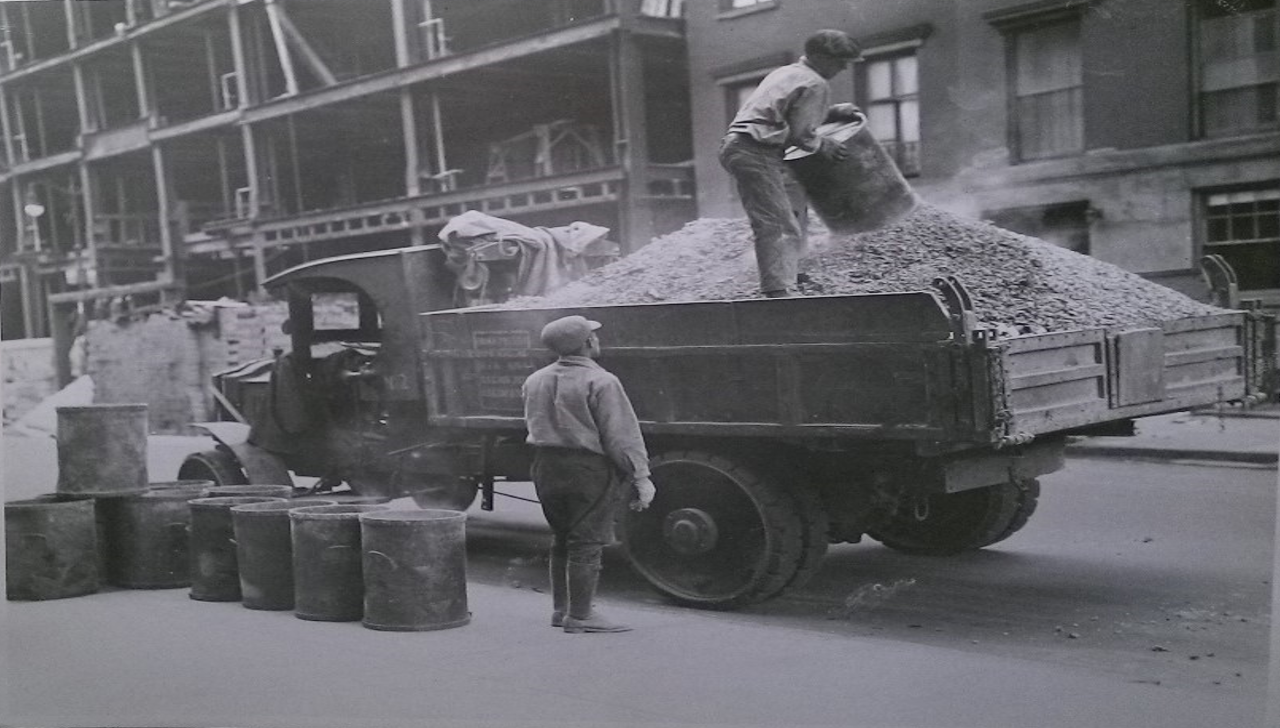
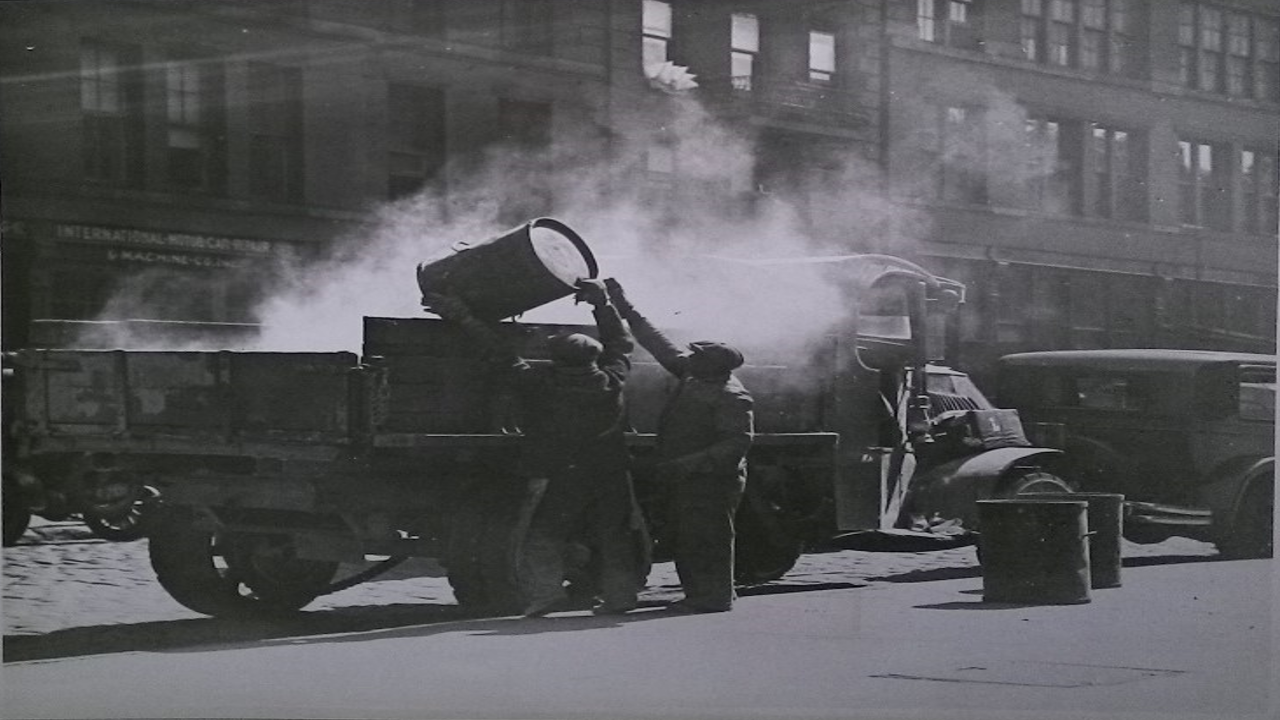
Two men hauling garbage into an open refuse truck.

Commitee of Twenty, Dusty Trucks 2

The Committee of Twenty was particularly concerned about open refuse trucks which could spew dust and debris. Images: Committee of Twenty, Committee on Public Health Archives, New York Academy of Medicine, ca. 1930.

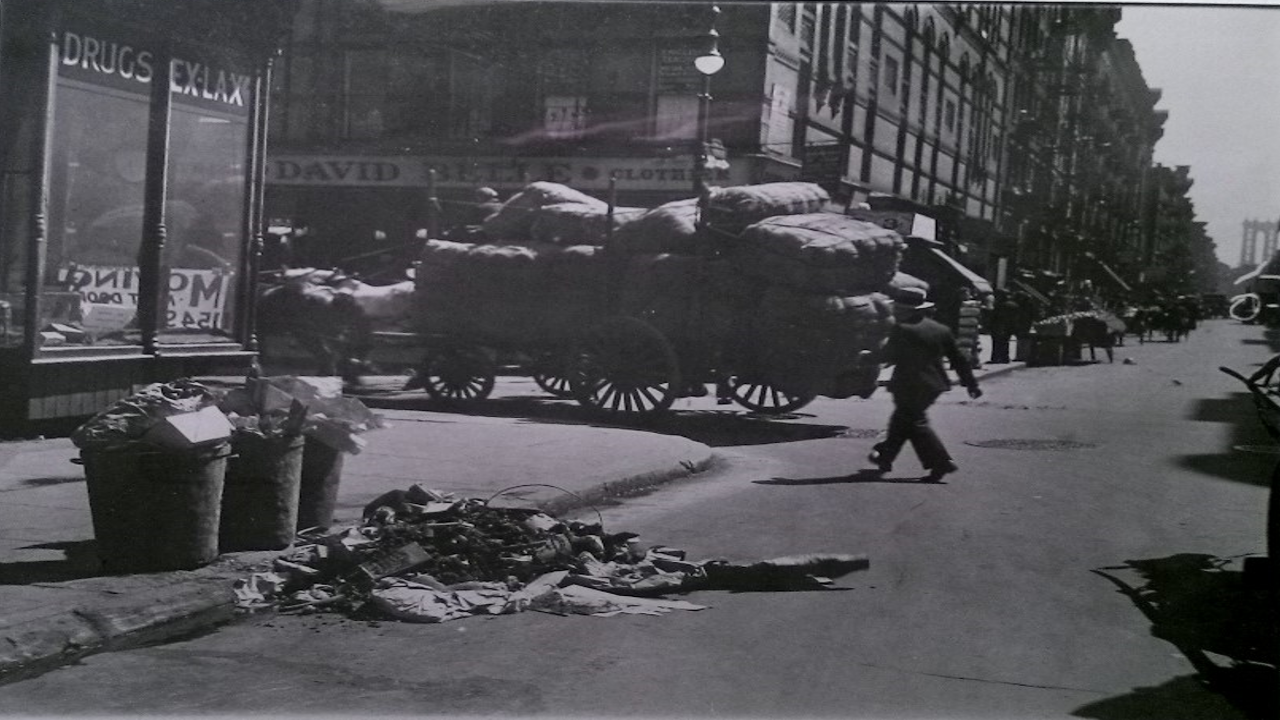
In 1928, a subcommittee called The Committee of Twenty was formed, in part because conditions did not improve substantially after the conferences and report.[4]  Among their recommendations, the Committee of Twenty supported the creation of a unified sanitation agency with full control over street cleanliness.[5]  They envisioned themselves as educators for the Department of Sanitation as well as the public, and they researched the latest collection methods and equipment from Europe to recommend improvements.[6] The newly-created Department of Sanitation, however, resisted investing in the recommended equipment, partially due to the expense.[7] Still, the Committee monitored street conditions, and kept photographic evidence of city and private sanitation trucks spewing dust and debris on the streets or other violations of sanitary ordinances.

Commitee of Twenty, Dirty Streets

Picture of overflowing refuse cans from the Committee of Twenty. Image: Committee of Twenty, Committee on Public Health Archives, New York Academy of Medicine, ca. 1930.

The Committee of Twenty also educated the public about outdoor cleanliness and especially the connections between dirt and disease. They issued pamphlets warning that “filth is the arch enemy of health,” and urged them to take personal responsibility for clean streets. “Do not put all the blame on the city administration,” one pamphlet read. “This is your city. A clean city means better health, better business; greater happiness for all; respect for law and order.”[8]  Along with educational literature, they placed litter baskets around the city, and posted signs which reminded New Yorkers of sanitary practices like “curbing” dogs.[9]  They also encouraged public participation in solving sanitary problem in novel ways, such as holding a contest for the best litter basket design in 1930.[10] 

Committee of Twenty, Don't

Educational Pamphlet from the Committee of Twenty. Image: Committee of Twenty, Committee on Public Health Archives, New York Academy of Medicine, ca. 1930.

The Committee was also influential in the citywide cleanup effort in preparation for the 1939 New York World’s Fair. Members of the Committee of Twenty and their allies argued that the Fair was the perfect opportunity for improving street cleanliness. Committee members Bernard Sachs and E. H. L. Corwin wrote that New York City was “the ‘Wonder City of the World,’ beyond a doubt; the ‘cleanest city,’ by no means. But we must make it that.”[11]  In line with the idea, Mayor Fiorello LaGuardia declared April 1939 “dress up paint up” month, and launched a broad beautification effort which included removal of litter, dog waste, and even “beggars, vagrants and peddlers.”[12]  Bernard Sachs was the representative for the Committee of Twenty on the Mayor’s Committee on Property Improvement, which was developed for the cleanliness campaign.

Committee of Twenty, Why Clean Streets 1

Educational pamphlet from the Committee of Twenty. Image: Committee of Twenty, Committee on Public Health Archives, New York Academy of Medicine, ca. 1930.

Committee of Twenty, Why Clean Streets 2

Educational pamphlet from the Committee of Twenty. Image: Committee of Twenty, Committee on Public Health Archives, New York Academy of Medicine, ca. 1930.

In 1950, the Committee on Public Health supported an initiative to introduce alternate side street parking to allow street cleaning unobstructed from parked automobiles, but otherwise was much less active on sanitation issues after the 1939 World’s Fair.[13]  At a meeting with Department of Sanitation Commissioner Andrew Mulrain in 1950, the Committee even debated whether unclean streets actually did cause disease.[14]  One Dr. Lincoln wondered if clean streets were not simply a matter of “public pride.” [15]  Still, the Committee’s early work on outdoor cleanliness would have a lasting legacy, particularly in terms of public education. The Outdoor Cleanliness Association, which was formed shortly after the Committee of Twenty [16], continued their educational work with regular cleanliness drives through the 1950s and 1960s in coordination with the Sanitation and Police departments.

References

 [1] “Minutes of the Meeting of the Public Health, Hospital, and Budget Committee October 26, 1914,” The Public Health Committee of the New York Academy of Medicine Minutes 1914–1915 (New York, NY), 74; “Minutes of the Meeting of the Public Health, Hospital, and Budget Committee Conference on Street Cleaning May 7, 1915,” The Public Health Committee of the New York Academy of Medicine Minutes 1914–1915 (New York, NY), 153–55.

[2] “Minutes of the Meeting of the Public Health, Hospital, and Budget Committee,” November 16, 1914, The Public Health Committee of the New York Academy of Medicine Minutes 1914–1915 (New York, NY), 84–85; “Minutes of the Meeting of the Public Health, Hospital, and Budget Committee Conference on Street Cleaning May 7, 1915,” The Public Health Committee of the New York Academy of Medicine Minutes 1914–1915 (New York, NY), 153-54 .

[3] Committee on Public Health, “Thirty Years in Community Service 1911–1941: A Brief Outline of the Work of the Committee on Public Health Relations of the New York Academy of Medicine” (The New York Academy of Medicine, 1941), 79.

[4] Committee on Public Health, “Thirty Years in Community Service 1911–1941,” 80.

[5] “Minutes of the Meeting of the Executive Committee of the Committee on Public Health Relations,” May 14, 1928, The Public Health Committee of the New York Academy of Medicine Minutes 1927–1928 (New York, NY), 134; Committee on Public Health, “Thirty Years in Community Service 1911–1941: A Brief Outline of the Work of the Committee on Public Health Relations of the New York Academy of Medicine,” 10.

[6] Committee on Public Health, “Thirty Years in Community Service 1911–1941,” 80.

[7] Committee on Public Health, “Memorandum of a Conference between Dr. William Schroeder, Jr., Chairman, Sanitary Commission…..May 19, 1931,” 1–4, Committee on Public Health Archives, Box 4, Folder 50c.

[8] Committee of Twenty on Street and Outdoor Cleanliness, “Why Clean Streets? Because Filth Is the Arch Enemy of Health” (New York Academy of Medicine, n.d.), Special Collections, New York Academy of Medicine Library.

[9] Committee on Public Health, “Thirty Years in Community Service 1911–1941: A Brief Outline of the Work of the Committee on Public Health Relations of the New York Academy of Medicine,” 80.

[10] Committee of Twenty on Street and Outdoor Cleanliness, “Prize Contest for the Design of a Litter Basket For New York City” (New York Academy of Medicine, n.d.), Special Collections, New York Academy of Medicine Library.

[11] Bernard Sachs and E. H. L. Corwin, “Fair Offers Opportunity: City Is Urged to Institute a Program of Outdoor Cleanliness,” New York Times, July 4, 1938.

[12] Marshall Sprague, “Clean City for Fair: Public and Private Groups Hard at Work Dressing Up New York for April, 1939 Mayor Is Enthusiastic Keeping Waters Pure Refurbishing Statues Beautification Drives,” New York Times, September 18, 1938; Elizabeth La Hines, “Drive Is Begun For a Tidy City During the Fair: Outdoor Cleanliness Group to Ask Wide Aid in Fight on Sidewalk Rubbish One Nuisance Abated Aid Through New Equipment Model for Other Cities,” New York Times, April 9, 1939.

[13] Committee on Public Health, “Pioneering in Public Health for Fifty Years” (The New York Academy of Medicine, 1961), 62.

[14]  “Minutes of the Meeting of the Subcommittee on Street Sanitation,” June 21, 1950, The Public Health Committee of the New York Academy of Medicine Minutes 1949–1950 (New York (N.Y.)), 473.

[15]  Ibid.

[16]  George A. Soper, “Attacking the Problem of Litter in New York,” New York Times, November 5, 1933.


The Medical Journals of U.S.-Occupied Haiti

This guest post is by Matthew Davidson, a doctoral candidate at the University of Miami and the 2019 Paul Klemperer Fellow at the New York Academy of Medicine. His research examines public health in Haiti during the 1915-1934 U.S. occupation.

During the nineteen years of the early twentieth century that the United States occupied Haiti (1915-1934), U.S. officials liked to claim that they had brought modern medical thought to the Caribbean country. Their contention was bunk, but it apparently felt very real when the Haitian physician, Dr. François Dalencour, received a letter from a French colleague asking for copies of any Haitian medical publications. “I was ashamed,” Dalencour later wrote, “of being obliged to tell the truth, to say that there were none. [i] He would have been able to send along reports authored by the occupation medical service, but there was apparently nothing current otherwise. Haiti, Dalencour decided, needed a medical journal.

Soon after, he established one.

LeJournalMedicalHaitien_May1920_1_watermark

The first issue of Le Journal Médical Haïtien (NYAM). 

The occupation, it turns out, was indeed an important period for Haitian medical thought. As was the case in other fields, it provoked a flurry of intellectual production. Consequently, whereas doctors such as Dalencour lamented the lack of Haitian medical publications at the start, by the end the local medical establishment could boast of several. U.S. officials claimed this was a sign of how far medicine in Haiti had “progressed” under their tutelage, but it was truly more the product of Haiti’s own medical tradition. [ii] Meant to advance medical practice and public health policy, the journals provided a forum for Haitian practitioners to debate and discuss all sorts of matters related to health and medicine in the country.

Dalencour’s periodical, Le Journal Médical Haïtien, was arguably the most important of the occupation-era publications. Not only was it the first, founded in May 1920, but it also did the most to open up space for the Haitian medical profession to articulate ideas and positions about their field. With U.S. personnel otherwise completely dominating all aspects of medicine and public health in Haiti, Le Journal Médical Haïtien was the only venue (outside of individual private practices) actually controlled by Haitians. It accordingly brought together “all members of the Haitian Medical Corps, without any distinction”: doctors, pharmacists, dentists and midwives. [iii] In doing so, the journal bridged longstanding divisions within the medical corps and laid the foundation for further independent initiative.

As Le Journal Médical Haïtien facilitated the reorganization of the Haitian medical profession, it also laid bare the lie that the occupation brought medical modernity to the country. After all, it was not because the U.S. introduced “scientific medicine” or any other set of ideas to Haiti that the journal appeared. Rather, it had its genesis in the pre-occupation period. As Dalencour wrote in the first issue, the project was first conceived in 1903. He was still a medical student at the time, so establishing a journal for medical reform was a “somewhat pretentious idea.” [iv] Nonetheless, it was then, well before the Americans landed, that the first steps were taken to establish a “general review of the medical movement in Haiti” (as Le Journal Médical Haïtien was later billed). The principles laid out by Dalencour and his collaborators in 1920 were even the same as those declared in 1903. All that had changed was the name. Dalencour had originally chosen the title Haïti Médicale, but – further reflecting the strength of Haiti’s pre-occupation medical and intellectual traditions – another journal had taken that name in 1910. [v]

The next to emerge was Les Annales de Médecine Haïtienne. Established in 1923 by two young doctors, Drs. N. St. Louis and F. Coicou, Les Annales was associated with a newly reorganized union, le Syndicat des Médecins. Much more oppositional in outlook, the journal was conceived as an “organ for the expansion of medicine in Haiti and for the defense of the interests of the medical corps.” [vi] Explicitly anti-occupation, it actively contested the U.S. health project in Haiti and worked to organize Haitian doctors against it under the auspices of le Syndicat des Médecins. It was not merely a political publication, though, for it also carried articles dedicated to public health education and research in the medical sciences. Over time, such articles became more and more prominent, and as the occupation ended Les Annales de Médecine Haïtienne essentially transitioned to purely scientific journal. U.S. medical sciences, however, continued to be received coolly.

LesAnnalesDeMedecineHaitienne

May-June 1932 issue of Les Annales de Médecine Haïtienne (Schomburg Center, NYPL).

The last of the occupation-era publications was the only one that owed its existence to the occupation health project. The Bulletin de la Société de Médecine d’Haïti, founded with that society in 1927, was the sole journal fostered by U.S. officials, and it was the only one to have U.S. practitioners on its editorial board or to publish articles authored by occupation doctors. The society itself was organized and controlled by the occupation health service, the Service d’Hygiène. Accordingly, most independent doctors (i.e., those not directly employed by the Service d’Hygiène) tended to find the Société “too American” and remained outside of it. [vii] Nonetheless, the Bulletin was more than just an American journal based in Haiti.

BulletinDeLASocieteDeMedecineDHaiti_Jan1927_1_watermark

The first issue of the Bulletin de la Société de Médecine d’Haïti (NYAM).

The Bulletin de la Société de Médecine d’Haïti was an important register for the medical sciences in Haiti. From 1927 until the end of the occupation, it published an impressive array of scholarship, much of it by Haitian practitioners. With an emphasis on medical specialization, it tended to be more concerned with the medical sciences than with public health policy or practice, and it accordingly developed a reputation for being the most scientific of the journals. As a project, however, the Bulletin mostly just brought to fruition ideas and proposals first put forth in the pages of Le Journal Médical Haïtien (or by the 1890 Société de Médecine de Port-au-Prince before that). In form as much as in content, then, the Bulletin was as Haitian as it was American. Consequently, when the American editors shuttered the journal in 1934 with the end of the occupation, the Haitian medical establishment remained committed to the project: it lived on as the Bulletin du Service d’Hygiene et d’Assistance Publique – Medicale et Sanitaire.

BulletinDuServiceDHygieneEtDAssistancePublique_Jun1934_1_watermark

The first issue of the Bulletin du Service d’Hygiene et d’Assistance Publique – Medicale et Sanitaire (NYAM).

Each of these journals have largely been overlooked by historians, despite being incredibly rich sources. With their debates about public health policy, research on various health matters, clinical notes, correspondence between doctors and medical officials, translated articles from abroad, social commentary, and more, they offer significant insight into the state of medical care and the politics of health during the occupation. They would also be of interest to anyone thinking about Haitian social and intellectual history more generally. Few copies of each journal still exist, but they – with the exception of Les Annales – can be found at the New York Academy of Medicine library.

References

[i] Dalencour, François, « En Manière de Programme. » Le Journal Médical Haïtien (Première Année, No. 1, May, 1920; New York Academy of Medicine Library).

[ii] See, for instance, Parsons, Robert P., History of Haitian Medicine (New York: Paul B. Hoeber Inc., 1930).

[iii] Dalencour, François, « En Manière de Programme. » Le Journal Médical Haïtien (Première Année, No. 1, May, 1920; New York Academy of Medicine Library).

[iv] Dalencour, François, « En Manière de Programme. » Le Journal Médical Haïtien (Première Année, No. 1, May, 1920; New York Academy of Medicine Library).

[v] Haïti Médicale was published from 1910-1913, and then was briefly revived again in 1920.

[vi] Les Annales de Médecine Haitienne (9eme Année, No. 3 &4, Mars-Avril 1932; Schomburg Center for Research in Black Culture, New York Public Library).

[vii] Bordes, Ary, Haïti Médecine et Santé Publique sous l’Occupation Américaine, 1915-1934 (Haiti: Imprimerie Deschamps, 1992), 300.

Death, Deformity, Decay: Memento Mori and the Case of the Colloredo Twins

This guest post is by Rach Klein. Rach is an art history Masters Candidate at McGill University whose research focuses on the early modern grotesque, medical illustration, and print. She is a current recipient of a Joseph-Armand Bombardier grant, as well as a Michael Smith Foreign Studies scholarship.

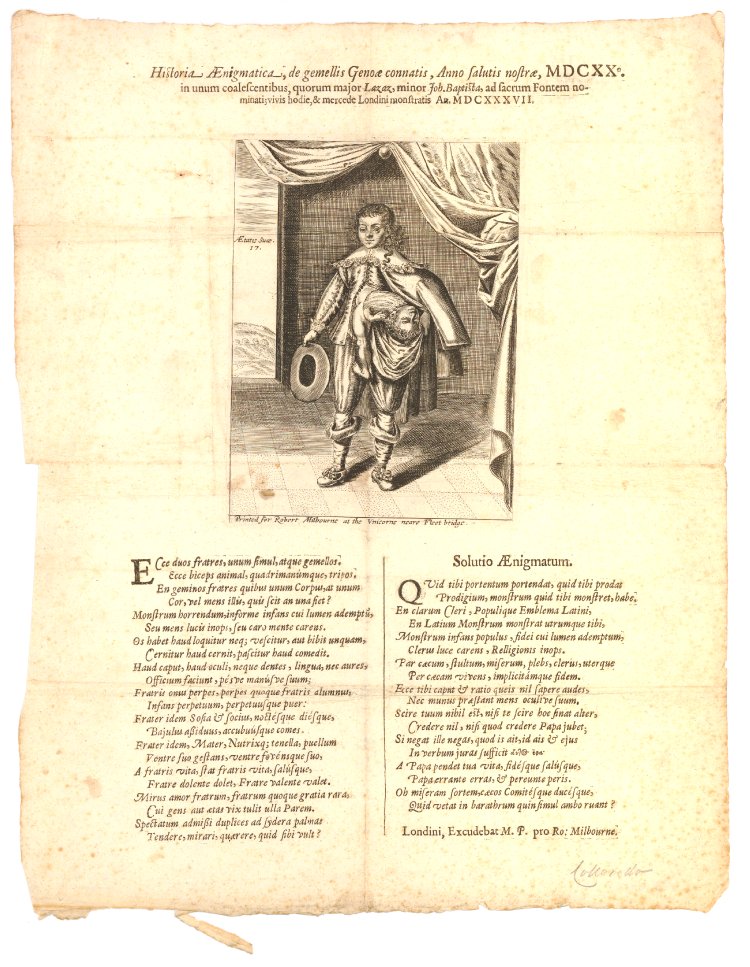
Throughout the last month I have had the privilege of working in the NYAM Library, looking directly at their remarkable collection of broadsheets and rare books.  The opportunity to closely examine the objects and images that I am studying is unparalleled. My research locates a framework for viewing 17th-century non-normative and “freakish” bodies in the memento mori traditions of the previous century. Memento mori, a Latin phrase meaning, “remember you will die,” became shorthand for a host of visual imagery and cultural objects rooted in medieval Christian theory, which permeated the European early modern.  With a specific focus on the culture of spectacle employed by early modern “shows of wonder” and touring freak shows, the research that I have been doing at NYAM combines visual analysis with medical history and disability studies to suggest that integral to the creation of early modern “freaks” is a manipulation of non-normative persons into objects that spark mortuary contemplation. Guiding this research is the case of Italian conjoined/parasitic twins Lazarus Colloredo and Joannes Baptista Colloredo (1617–1646). Their journey, which is remarkably well-documented in both text and image (for example, see Fig. 1), showcases the duality of the so-called “freak body” and its links to mortuary philosophy.

Historia Ænigmatica, de gemellis Genoæ connati

Fig. 1. Mylbourne, R. (Publisher). (1637). Historia Ænigmatica, de gemellis Genoæ connatis, [Engraving]. © The Trustees of the British Museum. Licensed under CC-BY-NC-SA 4.0.

In 1617, Lazarus and Joannes Baptista Colloredo were born into a life of spectacle and uncertainty. Protruding laterally from the breast of Lazarus was his twin brother, Joannes Baptista, whose malformed body lived partially inside him. Unable to speak or move independently, Joannes Baptista was deemed a “parasitic twin”.  As living persons that defy expectations of the “normative,” visual documentation of the Colloredo twins’ spectacular bodies/body provides insight into anxieties about the boundaries between animate/inanimate, normal/abnormal, beauty/ugliness, soul/body, and, ultimately, life/death. Jan Bondeson calls attention to how remarkable their story is, even within the history of conjoined twins. He says:

Conjoined twins are the result of imperfect splitting of a fertilized ovum and the site of conjunction depends on which part of the splitting has not occurred. Lazarus and Joannes Baptista Collerado represent one of the very few convincing cases of viable omphalopagus parasiticus twins (who lived).[1]

The words in parentheses here, “who lived,” iterate the challenges of piecing together a history of marginalized persons such as those who are disabled and deformed, and the gentle surprise provoked by the twins’ survival.

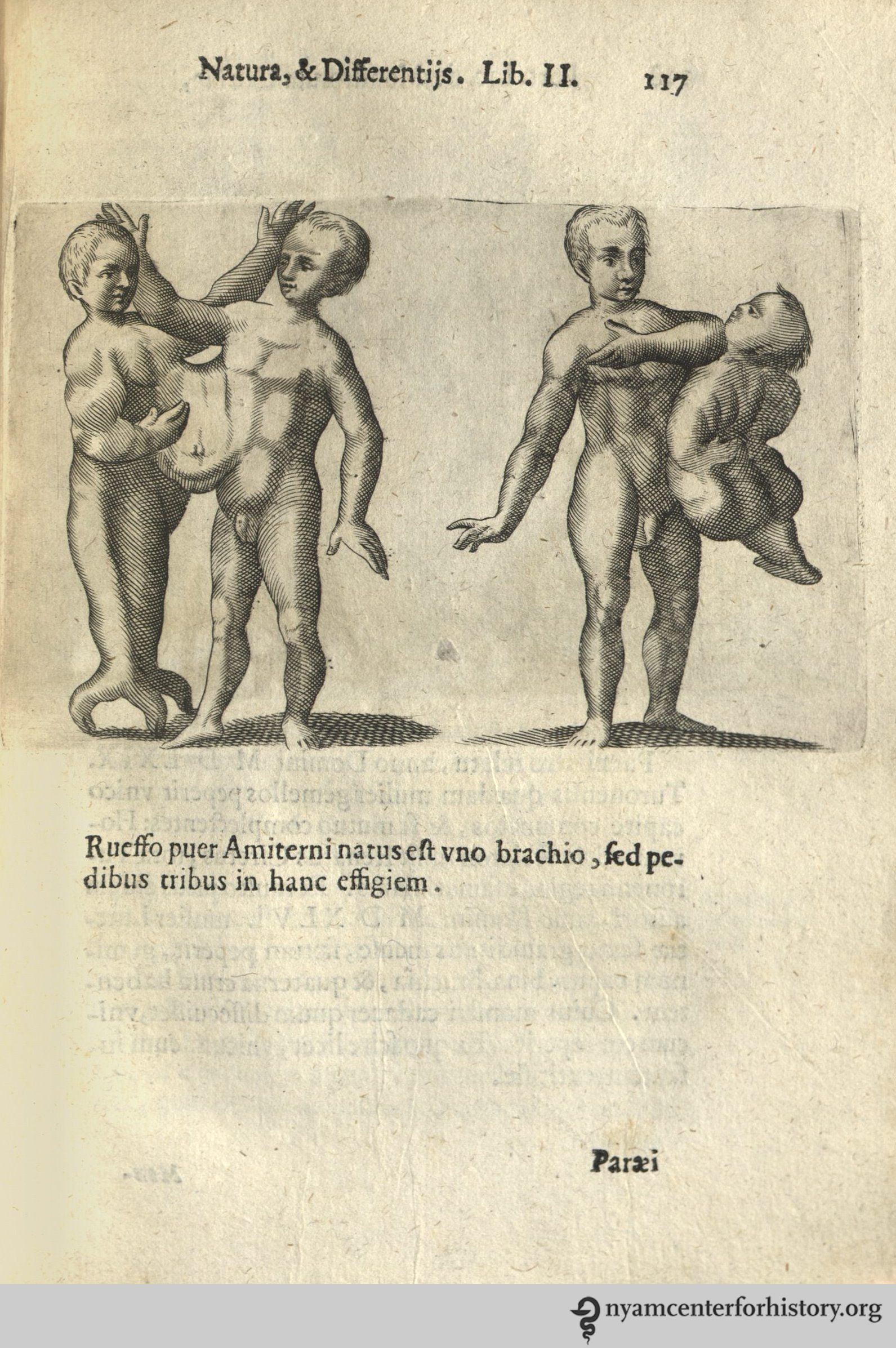
Perhaps the most interesting discovery found throughout my research is the nonlinear timeline in scholarship about these twins due to a misattributed/incorrectly labelled print from Giovanni Battista de’Cavalieri’s series of engravings, Opera nel a quale vie molti Mostri de tute le parti del mondo antichi et Moderni (Monsters from all parts of the ancient and modern world), published in 1585 (Fig. 2). This image, which is reprinted in Fortunio Liceti’s 1634 De Monstrorum Caussis (Fig. 3), is captioned with the twins’ names and place of birth, despite having been created thirty-years prior to their birth. As with many “freakish” bodies, the accuracy of their experience exists separately from its visual history.[2]

Although these contradictions of dates and attributions make reproducing a clean narrative difficult, they reflect a larger theme of teratology: that bodies are detached from persons, and imaginative ideals misaligned from lived experience. The image by de’ Cavalieri was likely a representation of an earlier set of conjoined twins in the 16th century, perhaps based on conjoined twins mentioned by Ambrose Paré in 1530. This image is subsequently reproduced in Liceti’s 1665 edition of his work, now titled De Monstris. Hence, the twins’ image has been collapsed into a narrative that took place well before their birth, and which frames them as simultaneously alive and dead.


Liceti_DeMonstrorumCaussis_1634_117_watermark

Fig. 3. Liceti, F. (1634). [Rueffo puer Amiterni natus uno brachio, fed pedibus tribus in hanc effigiem] (p. 117). De monstrorum caussis, natura, et differentiis libri duo … Padua, Italy: Apud Paulum Frambottum.

Worries and uncertainties over death and the body make themselves known in images and stories documenting the “freakish” body. Art that has been traditionally deemed “grotesque,” “macabre,” or more colloquially, simply “disturbing” is part of a symbolic system that expresses metaphysical anxieties about what lurks beneath the surface of the body. I am not attempting to medicalize nor romanticize the history of those who are or have been designated as disabled, deformed, monstrous, and freakish. Rather, my aim is to provide a critical and historical study of how non-normative bodies have been catalogued as a memento mori for its witnesses and used by able-bodied viewers as tools of self-reflection and meditation, a practice that actively erases personhood in favour of objectification.[3]

References

[1] Bondeson, Jan. The Two-headed Boy: And Other Medical Marvels. Ithaca, NY: Cornell University Press, 2000.

[2] Jillings, Karen. “Monstrosity as Spectacle: The Two Inseparable Brothers’ European Tour of the 1630s and 1640s.” Popular Entertainment Studies 2, no. 1 (2011): 54–68.

[3] My work is particularly indebted to the disability, feminist, and race scholarship of Tobin Siebers (Disability Aesthetics), Rana Hogarth (Medicalizing Blackness: Making Racial Difference in the Atlantic World, 1780-1840), and Elizabeth Grosz (Volatile Bodies).

Further Reading

Bates, A. W., Emblematic Monsters: Unnatural Conceptions and Deformed Births in Early Modern Europe. Amsterdam: Rodopi, 2009.

Benedict, Barbara M. Curiosity: A Cultural History of Early Modern Inquiry. Chicago, IL: University of Chicago Press, 2002.

Daston, Lorraine, and Katharine Park. Wonders and the Order of Nature, 1150-1750. New York: Zone Books, 2012.

Thomson, Rosemarie Garland. Freakery: Cultural Spectacles of the Extraordinary Body. New York: New York University Press, 2008.