The French Quarter is at the heart of New Orleans. This area is known for its unique architecture. A blend of traditions from its former colonizers, France and Spain, bred a new style. Fires and other calamities since the 18th century may have destroyed most of the original buildings, but a distinct style remains in the neighborhood.
Following the Louisiana Purchase in 1803, New Orleans experienced an influx of people from other states, eager to seize new opportunities. Louisiana and, of course, New Orleans were now part of the United States of America. New rules brought forth new laws. Under the rule of their new country’s leaders, medicine, for one, could only be practiced and administered by licensed professionals.
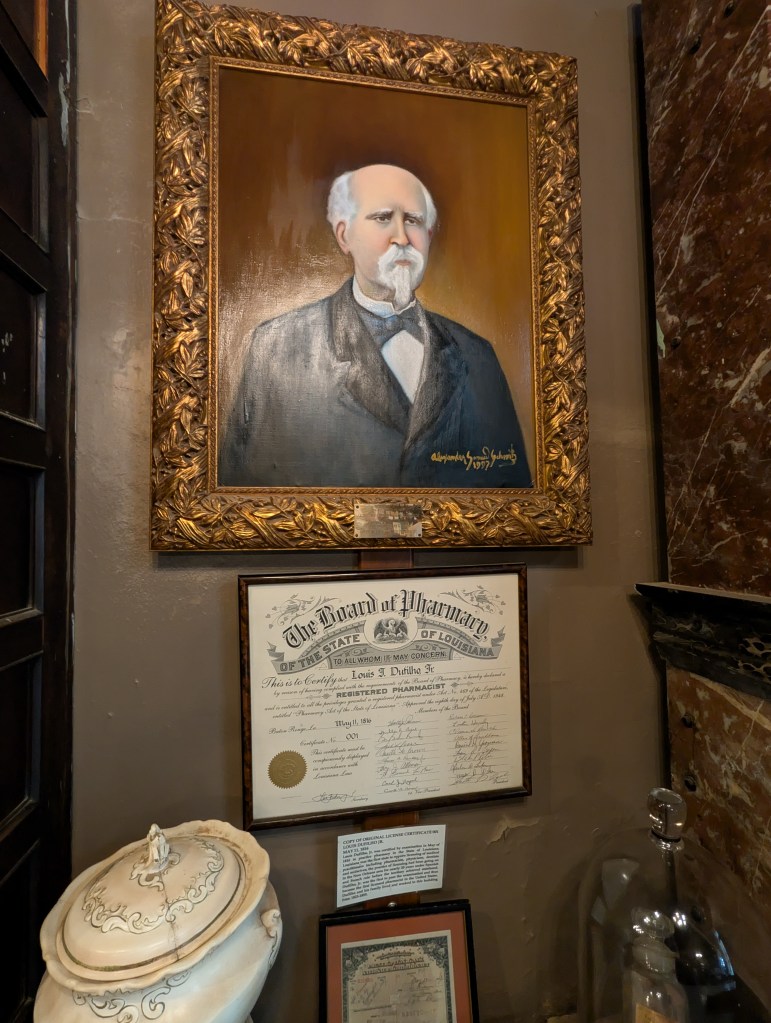
The Board of Pharmacy of the new state of Louisiana granted its first certificate to Louis J. Dufilho Jr. in May of 1816. Dufilho was not only the first Louisianan to do this but also the first licensed pharmacist in the entire United States. In 1823, he and his family came to the French Quarter to establish their pharmacy. From 1823 until 1855, Dufilho served the people of this fast-growing American port.
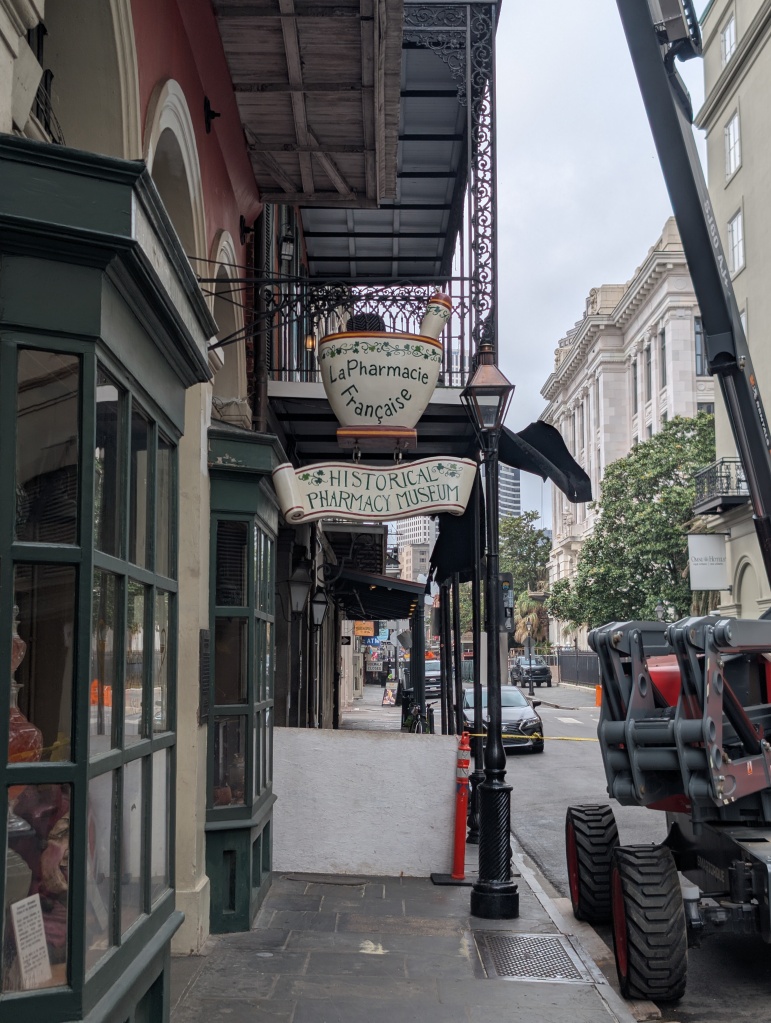
In April of 2025, over 200 years later, a group of us gathered outside a building on a hot New Orleans day. Although the building was going through a brief period of routine touch-ups, it still stood out. A sign with a mortar and pestle declares “Le Pharmacie Française,” with a sign below indicating that this is indeed the “Historical Pharmacy Museum.”
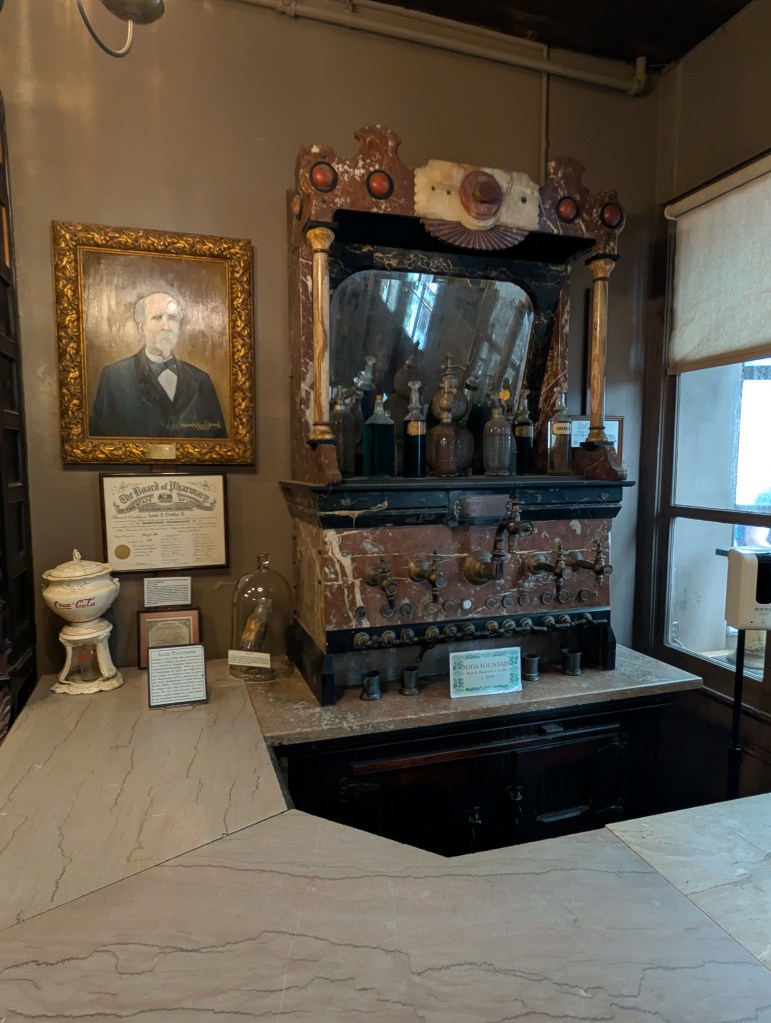
This is the home of the New Orleans Pharmacy Museum at 514 Chartres Street. We were welcomed not only by our tour guide but also by a giant soda fountain from 1855. The decommissioned soda pump still holds the necessary ingredients needed to make proper medicinal concoctions. Before the tour officially started, we were allowed to roam and explore the first floor. New Orleans’ early relationship to the history of a pharmacy was about to be unspooled for us. Our packed crowd consisted of residents from many different states and an entire family from Ireland.
There are two types of tours available here: a self-guided tour, complete with a text guide to help you understand the collection, or a group tour led by a tour guide. The historian we were fortunate enough to have as our tour guide helped bring the sights we were seeing to life. It has been proven that creating an engaging lesson increases the likelihood of retaining that knowledge.
The Pharmacy Museum doesn’t shy away from the realities of the early pharmacy industry. What could easily come across in a sensationalized manner—to engage visitors or promote clicks—is given context. The way they present their material fosters a dialogue with what we know now. In 2018, the Museum even commissioned local artist Kate Lacour to create an illustrated guide to items from their permanent collection. Do No Harm reminds us not to scoff at earlier treatments; the goal has always been healing.
During my visit, something struck me about seeing physical copies of the items I had previously read about. I have seen countless advertisements and trade cards discussing the wonders of Lydia E. Pinkham’s treatments, and now some items were in front of me!
From our digital trade card collection, “Yours for Health, Lydia E. Pinkham.”
This harmony between museums and libraries furthers understanding. The item that I read about is authentic, and that item, which I see before my very eyes, has a history we can explore inside a book.
At the end of the tour, our guide asked us to look at the slate floor we had been on the whole time. She informed us that the floor has not changed since Dr. Dufilho and his family resided there, some 200 years ago! She left us with this thought so that we could think about all those who had also set foot in the building over the years. Knowing what we learned about the evolution from house to historical building, for what purposes had these people come the way that we had?
As we approach summer, with vacation and/or time off approaching, take a moment to think about what you might want to learn more about. Whether you’re visiting an entirely different country, a different state, or even staying local and opening a book, there are plenty of stories waiting to be shared.
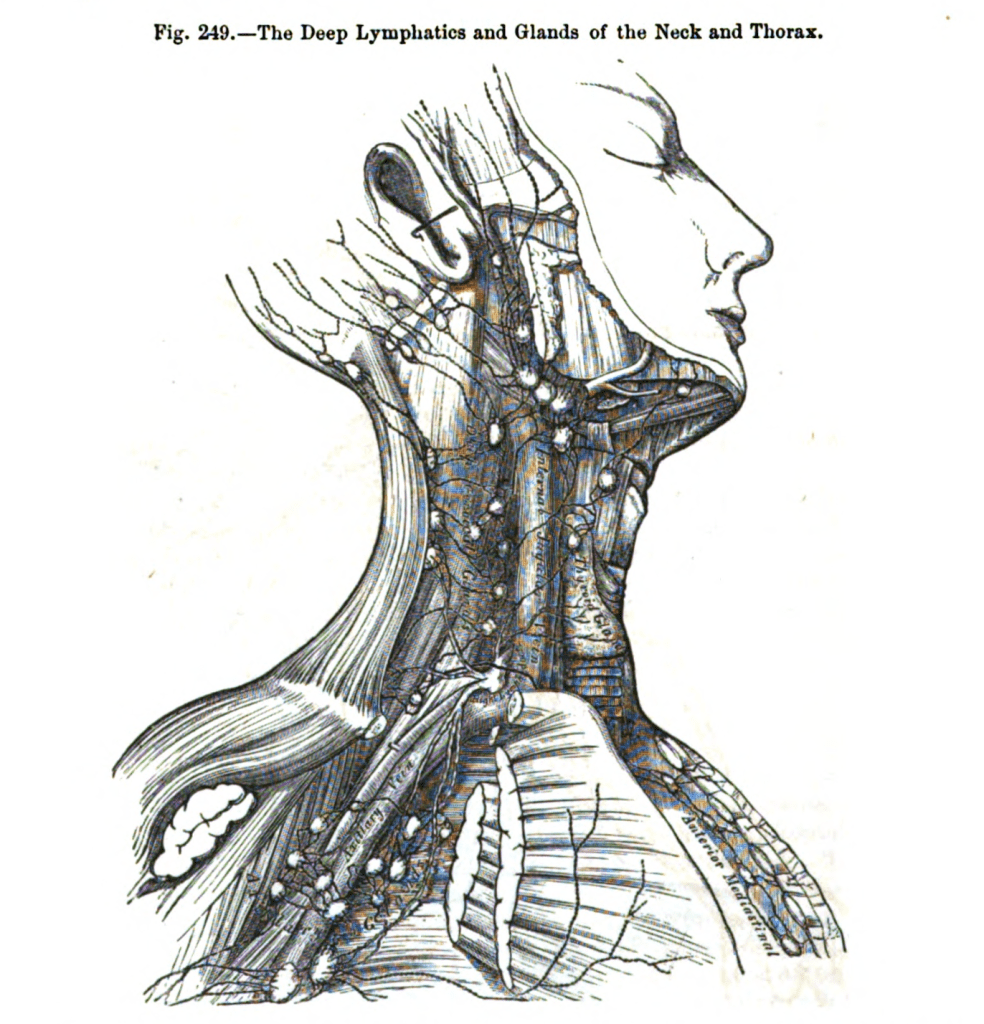
Anatomy, Descriptive and Surgical was first published in 1858. The author, Dr. Henry Gray, had intended to create an “accurate view of anatomy” for students and practitioners, for the application of practical surgery. This work was to be an inexpensive textbook from the mind of the celebrated wunderkind, who had already been published, celebrated, and named a Fellow of the Royal Society by the age of only 25.
Illustration From 2nd American Edition of Anatomy…
For the illustrations, Gray re-teamed with Dr. Henry Vandyke Carter, another anatomist/surgeon who was a skilled anatomical artist. Their previous collaboration had been Gray’s 1854 book, On the Structure and Use of Spleen. The new work was to be their biggest collaboration yet. Unfortunately it was also their last: Gray died in 1861 of smallpox, contracted from caring for his nephew. Before his passing, he had completed a second edition of his Anatomy that corrected minor mistakes and added illustrations by a Dr. Westmacott.
Illustration From 2nd American Edition of Anatomy…
Since its original publication in 1858, the book succeeded in both its original purpose and became culturally synonymous with the profession. Descriptive and Surgical Anatomy became a key text, although now the title was shortened to Gray’s Anatomy, both easier to say and in honor of the author. Editions of the book were not just for professionals either. It became part of the Western canon. For example, performance artist Spalding Gray used the title for his one-man piece, later a Steven Soderbergh film, in which he muses on his options after being diagnosed with a rare ocular disease.
The title has never gone out of print. The key textbook even adapted with technology. Back in 2005, as the 39th edition of Gray’s Anatomy was set to be published, one could purchase a virtual edition for an additional $60. At the same time, another Gray—or rather, Grey—would take over the cultural context….
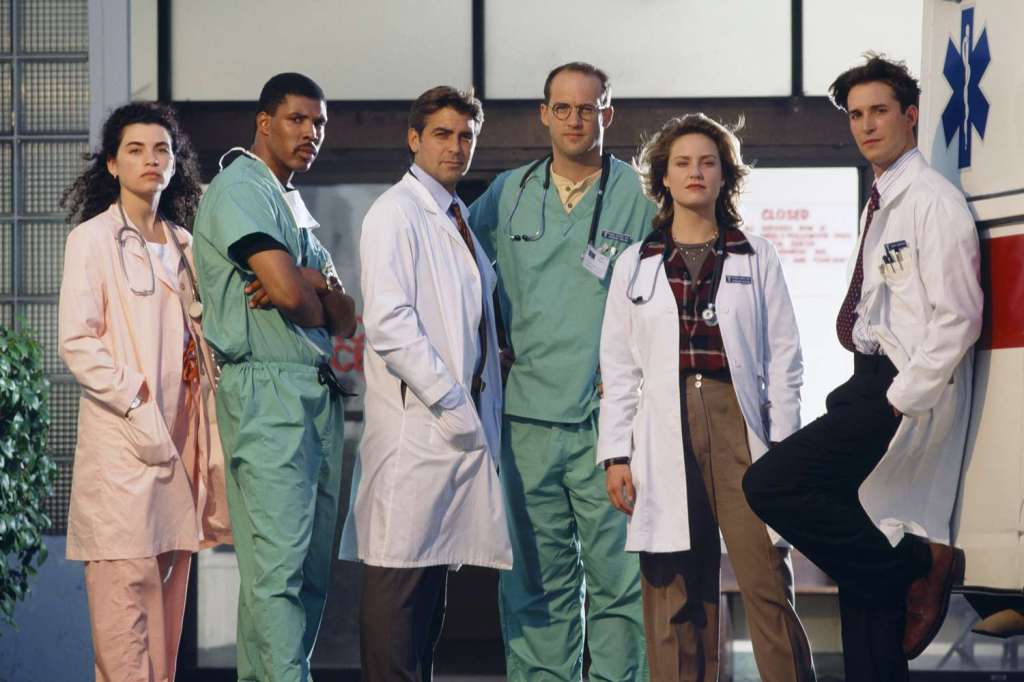
There was no shortage of doctors on television. ER (1994–2009) was created by writer Michael Crichton. Although he never obtained his medical license, Crichton had graduated with his MD from Harvard Medical School. Crichton first scripted ER in the 1970s with the idea of making it a film. It reflected the rotations he took part in. When it was filmed in 1994 as a two-hour television pilot, not much was changed. During his short-lived medical career, he had become disenchanted with how corporate he believed medical care had become. ER is set in the fictional, financially tight, Cook County General Hospital in Chicago. Crichton’s mind-set comes through in some of his other work, including the (also) hospital-set, body-snatching horror film, Coma.
ER set a gold standard for hospital dramas. Crichton believed that for the first time on television they provided “realism” of what things were like an emergency room. Subsequent hospital television would have to do something different. This led to a more stylized approach as it went on for Chicago Hope (1994–2000). Scrubs (2001–2010) was different in that it was a comedy that mixed in the reality of the job. Then there were the countless unsuccessful rip-offs that couldn’t find their own unique voice, lasting one season or less. Plus, for early seasons, ER had up and coming actor George Clooney as part of their cast. He would go on to be one of the biggest names in Hollywood.
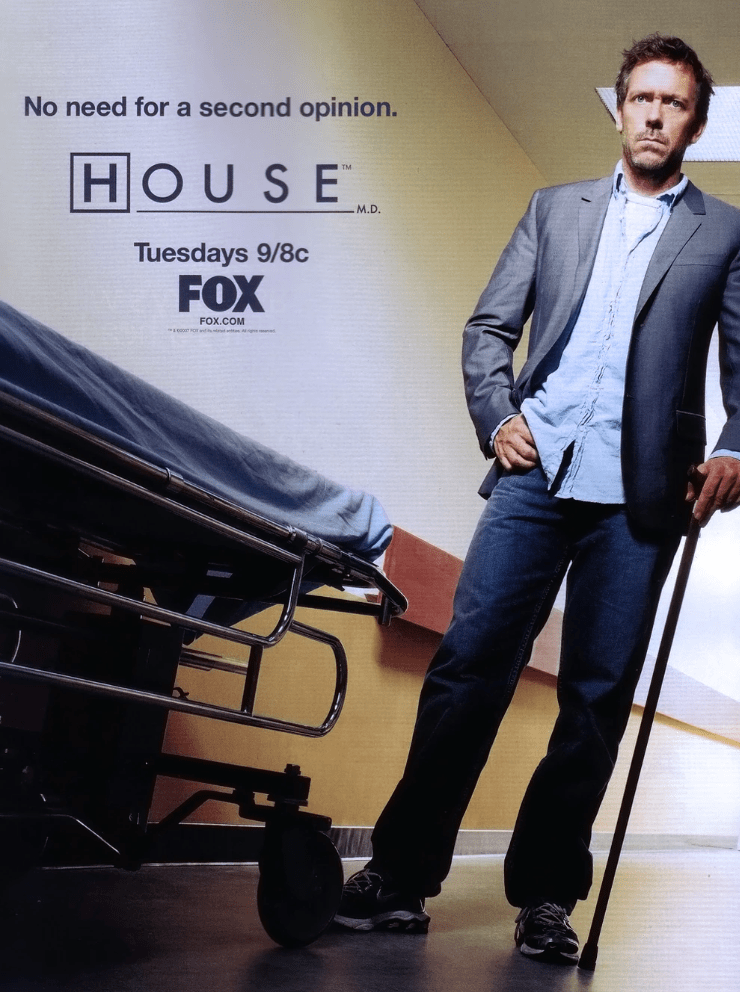
House, MD premiered in 2004 on FOX and starred British actor Hugh Laurie as the titular, misanthropic doctor. Creator David Shore looked to Sherlock Holmes as inspiration for his character. House gave his patients and viewers a methodical approach to his diagnoses, which were, more often than not, some rare disease, disorder, or occurrence. House had managed to give the medical yet another new take.
In 2005, ABC didn’t show much confidence in their latest pilot. It was another medical drama. They couldn’t even agree on a name: Complications, Surgeons, Miss Diagnosis, Grey’s Anatomy, it didn’t matter. They believed nothing they could top ER, which was still a ratings and critical juggernaut ten years in. But they were riding high after successfully rolling out two dramas in the last year, Desperate Housewives and Lost.
First-time creator Shonda Rhimes believed she had a show that would once again break a hospital-set mold. She tended to associate hospitals with “good things.” It was the place where they would “fix” you. Rhimes understood that there had to be a balance between that sentiment and the real lives that those who worked there had. “They’re just people at work.”
With those intentions in mind, executive producer Peter Horton tried to keep it looking “real.” He wanted the characters to look worn out; it’s a tough job! He wanted them to be unglamorous, with little to no make-up. This is most evident in the first episode. They found that even getting real-looking scrubs on the actors wouldn’t make for must-see tv, so they pivoted to it the reality rest on the emotional heft of being in a hospital. The remaining eight episodes of the abbreviated first season reflected that.
Those who worked on the show were skeptical. “It’s doctors with teenage dialogue,” Thomas Burman, a special effects makeup artist recalled thinking. Initial reviews were mixed, including people stating that the show needs “a brain.” Entertainment Weekly had reservations but overall found it enjoyable. ABC could take a loss if this, in their eyes, “generic” mid-season replacement (never a good sign in television terms) fizzled out.
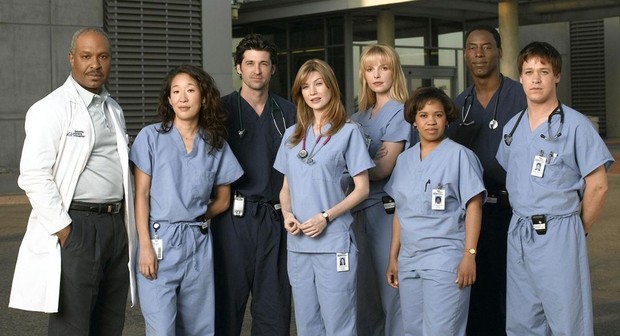
On March 27th, 2005, the first episode of Grey’s Anatomy, “A Hard Day’s Night,” premiered at 10pm, following a season two episode of Desperate Housewives. Audiences were introduced to the main character and narrator, Meredith Grey (Ellen Pompeo), as she and her intern cohort endured their first 48 hours at Seattle Grace. Meredith’s voiceovers give context and comfort. (Coincidentally, a different Gray, Henry Gray, offered a similar “welcoming tone” in the earlier editions of his Anatomy, according to Bill Hayes’s The Anatomist. Unlike Meredith Grey’s, Henry Gray’s voice was taken out of later editions.) Meredith continues to narrate today, 20 seasons in. The episode was the most-watched mid-season premiere in years.
The fresh faces of the season one cast of Grey’s Anatomy
Over the course of the next few weeks, the fervor for Grey’s Anatomy only grew. It was originally only intended to have a four-week run in the coveted post Housewives Sunday slot. ABC kept it for the rest of the season. It would air on Sundays again for the second season, which was even bigger, including a whopping 27 episode order. The stars including Pompeo, Sandra Oh, Katherine Heigl, and Chandra Wilson experienced career highs. There was a career resurgence of 80s teen heartthrob, Patrick Dempsey. Grey’s Anatomy also added to the cultural vernacular! “McDreamy,” Grey’s name for her on-again, off-again lover, Dr. Derek Shepherd (Dempsey), changed the 80’s “Mc-” critique of capitalism to something (or someone) that is craved.
Two years into its run, Andrew Holtz, MPH, wrote a book on the intricate science featured on House, MD. Seeing the success of the other popular doctor show, he wrote The Real Grey’s Anatomy in 2010.As a faculty member, he was given the opportunity for intimate access to the lives of medical students and the patients in care at Oregon Health and State University (OHSU). Grey’s Anatomy was used as the framework to show what reality is like and what a fictional show gets right—or gets wrong. Holtz apologized to fans who were seeking more in-depth analysis of their favorite program.
In the introduction to Holtz’s book, a fourth-year resident laments, “None of them have bags under their eyes…. That is so far away from the reality of interns.” As accurate to “reality” as the show wants to be, especially Peter Horton’s original concerns on their glamour, Grey’s Anatomy is first and foremost a consumer product. Justin Chambers, who played original intern Alexander Karev, notes that “we need to be appointment television every week.” This is why you have event episodes, like the season two, post—Super Bowl bomb scare two-parter, and why difficult surgeries go hand in hand with the complicated interpersonal conflicts the characters go through. It’s art! The show employs medical advisers, and writers work with the objective to only tell stories that have a recorded case. From there, they can tell the story however they want, even if it makes those advisers “roll their eyes” or “pull their hair out”! Real medical terminology has to be learned by the actors, which sometimes is harder for them than a whole monologue.
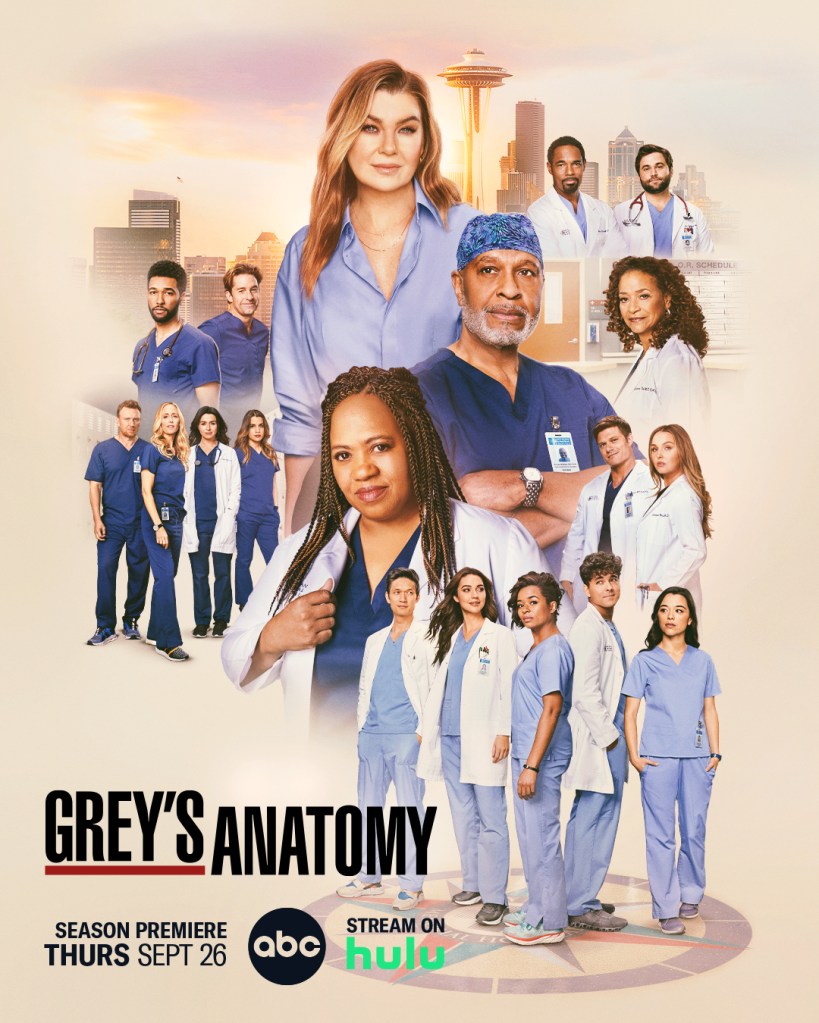
Current Grey’s Anatomy promotional Image courtesy of ABC.
Grey’s Anatomy continues to be popular as it enters twenty years on air and will conclude its 21st season sometime in May 2025. We know it continues to be one of the most watched shows. Are doctors part of this audience too?
Doctors mention they may get the occasional real-life question that they see stemming from the show. In 2013 Cosmopolitan offered a q+a with a GP, Dr. Emma Wilding, who was asked about some of the more “out there” instances. She was happy to oblige.
Author Eric Berger looked into the television doctor effect for Annals of Emergency Medicine and concluded that while the occasional patient misunderstanding may occur, the show served to open up a dialogue between doctor and patient. If we’re to continue to fight misunderstanding and create personable communication between medicine and people, perhaps having the staff of Seattle Grace—or as it was renamed, Grey Sloan Memorial—as our allies benefits everyone.
On February 8th, 2021, the city of Boston was celebrating in a big way. For Dr. Rebecca Lee Crumpler’s 190th birthday, the city had decided to declare the entire day in her honor. Despite this high honor, many still do not know who she is.
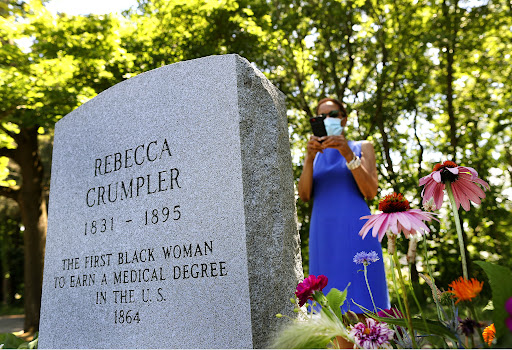
The largest newspaper in Boston, The Boston Globe, introduced readers to the local hero’s story in February 2020. At the time, Crumpler and her second husband, Arthur, were buried in an unmarked grave. Noting the significance of Crumpler, the first Black female doctor in the United States, the local Hyde Park Historical Society teamed up with the Friends of the Hyde Park Library to raise money for a proper headstone.
A follow-up in July of the same year informed the readers of a ceremony held to unveil the memorial. It also helped give a little more insight into the life of Dr. Crumpler; born Rebecca David in 1831, she was raised in Pennsylvania by her aunt. While growing up, she was shown what it meant to be a caretaker as she saw her aunt provide care for those in their neighborhood. She left for Charlestown, Massachusetts, and married her first husband, Wyatt Lee, in 1852. From working as a nurse from 1852–1860 for various doctors and their letters of recommendation, she was accepted into the New England Female Medical College.
In the middle of her schooling, her husband passed away from tuberculosis. She graduated in 1864 as the first Black woman in the United States to do so, as well as the only Black woman to graduate from New England Female Medical College before it merged with another medical school in 1873. The following year, she married Arthur Crumpler. They settled and spent the rest of their lives in Hyde Park, a neighborhood in south Boston. In her 1883 book, A Book of Medical Discourses: In Two Parts, Dr. Crumpler opens with a dedication; “To Mothers, Nurses, and all who may desire to mitigate the afflictions of the human race, this book is prayerfully offered.” The Boston Globe article mentions how she faced plenty of adversity in her profession, including white pharmacists who refused to fill scripts signed by her. Despite all of this, nothing could stop her from helping the people who needed her.
It wasn’t her own education, in the very same area where Crumpler once walked, that taught Boston University Medical School student Dr. Melody McCloud about this pioneer. Rather it was when, freshly graduated, she moved to Atlanta, Georgia, around 1981. There she learned about Dr. Crumpler and the Rebecca Lee Society, an organization made up of Black female physicians. Speaking on Crumpler and other forgotten physicians, McCloud told the Boston Globe, “There are a lot of accomplishments of Blacks that are left out of the history books.”
In her 2013 book, Hidden Figures: The American Dream and the Untold Story of the Black Women Mathematicians Who Helped Win the Space Race, writer Margot Lee Shetterly coined the titular term. The “hidden figures” in her story are three Black women, Mary Jackson, Katherine Johnson, and Dorothy Vaughan, who were instrumental in bringing the first astronauts into space. Despite being crucial to the team, they were hardly spoken of. Shetterly uncovered the story through talking to those who were there. From Johnson, she learned of Jackson; through Jackson, she got to Vaughan. The stories are passed down through the people who lived it and with the help of communities like the Rebecca Lee Society. With Shetterly’s help, Hidden Figures has been able to inspire others. It was even made into a movie! What can we do to these other “hidden” heroes?
In 2020 national attention was given to the Crumplers’ Hyde Park memorial thanks to NBC Nightly News. Since then, Dr. Crumpler and her accomplishments are being recognized more and more. Symposiums are now being held in her honor, the first being at Boston University School of Medicine in conjunction with her 190th birthday. She also began popping up in an unlikely place: children’s picture book biographies.
Her Own Image
Writers and illustrators have become masterful in non-fiction storytelling for kids. . Some of these books are storytime staples. The illustrations bring history and people back to life. Can it be done for someone who has no surviving pictures?
A quick Google search of “Rebecca Lee Crumpler”
If you were to do an image search for “Rebecca Lee Crumpler,” you’d get some results. Unfortunately, none of these is the woman you are looking for! Despite commercial photography coming of age during her lifetime, any images of her have been lost to time. She is often mistakenly identified as other Black women, including Mary Eliza Mahoney. Boston University’s student-run newspaper made this mistake in its coverage of Dr. Rebecca Lee Crumpler Day, and eventually retracted and rectified its error, one of the few to do so.
Given the absence of portraits, how can you project this person?
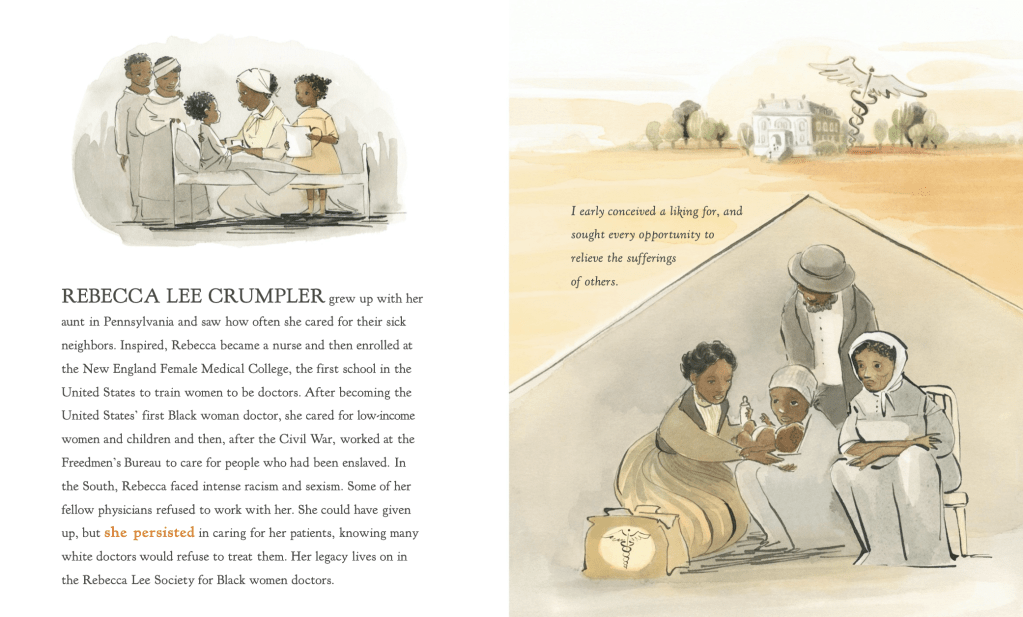
Alexandra Boiger has showed us the lives of many historical and contemporary women as the illustrator of Chelsea Clinton’s She Persisted series. For She Persisted in Science, Boiger was able to pictorialize Crumpler’s life based on her research on the “physical and emotional” state of those at the time. Boiger told the Library, via e-mail, that she was “always trying to balance the harshness of the time with the heart and love of the people and Dr. Rebecca Lee Crumpler herself.” Her images succeed in showing the care that, as Crumpler herself wrote, she was striving for.
Shani Mahiri King’s 2024 book Finding Rebecca is both an ode to Crumpler and an act of research. From studying Crumpler and the lives of 19th-century Black Americans, he worked with his illustrator, Nicole Tadgell, to show us how she may have lived. Tadgell herself is an accomplished illustrator with a slew of historical picture books under her belt. King paired his own findings with the direct words of Crumpler from Medical Discourses, not only to tell her story but to inspire others.
King believes that more history is just waiting to be uncovered: hidden figures, histories, legends, all ready to have their stories told. The book ends with a call to action: “You too are a historian, you too are an author, and you too can help teach all of us about people who should be more famous than they are.”
References:
“Changing the Face of Medicine | Rebecca Lee Crumpler.” Nih.gov, 3 June 2015, cfmedicine.nlm.nih.gov/physicians/biography_73.html. Accessed 26 Feb. 2025.
Clinton, Chelsea. She Persisted in Science. Penguin, 1 Mar. 2022.
Crumpler, Rebecca Lee. A Book of Medical Discourses, in Two Parts. 1883. Boston, Cashman, Keating, printers, collections.nlm.nih.gov/catalog/nlm:nlmuid-67521160R-bk.
Jonas, Anne. “Boston Honors Rebecca Lee Crumpler Day — First Black Woman in the US to Receive Medical Degree.” The Daily Free Press, 8 Feb. 2021, dailyfreepress.com/2021/02/08/boston-honors-rebecca-lee-crumpler-day-first-black-woman-in-the-us-to-receive-medical-degree/. Accessed 26 Feb. 2025.
King, Shani Mahiri. Finding Rebecca. Tilbury House Publishers and Cadent Publishing, 15 Oct. 2024.
We all want work-life balance. It’s beneficial to both physical and mental health. But what would you do to achieve it? That’s the conceit at the heart of the hit Apple TV+ show, Severance. Now in its second season, the show continues to be an interesting take on American office culture.
Severance follows the office life of a group of workers at the Lumon Corporation. Our protagonists work in the “Macrodata Refinement” department, and they have all agreed to a procedure to separate the two parts of their life: home and work. The titular “severance” refers to a medical procedure whereby a chip is implanted in the worker’s brain that allows them to sever their two experiences. Those at work are called “innies” and those at home are called “outies.”
In the world of the show, this procedure is highly contested with the general public. We see protests against the severance procedure, questionable ethics amongst politicians, and mysterious protocols that leave you with time lost. The lives of these workers have been signed away to work, and they don’t know the conditions their own “outies” have agreed to.
As long ago as 1913, the Metropolitan Life Insurance Company wanted the worker to reflect on that very question! In a pamphlet in the Library’s collections, “The Health of the Worker,” the company asks, “Do you know that a great many men and women die every year on account of the conditions under which they work? Do you know that if a man goes into certain trades, it means he will have five, ten, or fifteen years less of life than if he earned his living in some other way?” While these concerns address the unethical practices that were nonetheless legal in “shops,” workers everywhere were called upon to look after one another. There may be physical challenges at any job! Questions to ask yourself include, “Is your workroom overcrowded? Is your workroom kept clean and in good order? Do you help to keep the workroom clean and in good order?” Solidarity! They weren’t even addressing the psychological toll that these conditions have on workers. Those fights would come even later….
Dr. T. M. Fraser’s findings and suggestions regarding work life from Human stress, work, and job satisfaction: a critical approach (1983) remain pertinent in 2025 and in Severance’s own fictional world. The literal physical “exploitation in an inhumane environment” of workhouses he writes about may not be something that those who work in an office or the cubicles in the basement of Lumon face. That’s why Fraser builds on previous pro-worker literature by also discussing the mental labor of menial, repetitive, or over-stimulating tasks. A human can experience a “system overload” when the “physical or psychosocial environment” becomes overwhelming. Fraser’s use of systems or even mechanical language is deliberate. Even machines need to be well taken care of for them to continue operations! Why shouldn’t human workers?
In recent years, our real-world work life has been changing. For the Financial Times, Lucy Kellaway lamented what could be the death of the office in the early months of the COVID-19 lockdown in “We will miss the office if it dies.” She states that if more telecommuting is the way of the future, “office workers everywhere should stand in the street and weep at what they are losing.” Her words may read as overly dramatic, especially to the “innies” in the basement at Lumon, but she has a point! The office was created to be a small community. Without this space, “it’s hard to know how a company could ever create any sort of culture or any fellow feeling.” The office is the “great leveler”; everyone had to come to work! From the desk workers up to the boss, the collective goes beyond the boundaries of salary.
Because the severance procedure doesn’t exist yet in our real world, the viewer is left to think about the ethical implications. By creating a split side of yourself, whose only existence is to work without all the benefits that come with getting a job, you devalue part of yourself. Workers fought for the checks and balances that come with a career. That should also apply to those “innies” who were dropped into the world. “Innies” are forced to endure day after day of all they are ever meant to know: punching a clock. No family life, no romantic life. They don’t even have the luxury of watching the latest streaming show! This strict 9-5 lifestyle of the pre-industrial days negates all who have come before us in the struggles of humanity. Extremist viewpoints on industrialism believe that self-fulfillment should come from the job you have. Once again, this doesn’t consider the humanity behind the worker. Especially as “outies” may live their life however they want. It may be possible to find work you love but the class system that industrialism has provided us with makes it hard for many.
The Macrodata Refinement Team works behind their computers all day. They didn’t choose to do this; their “outies“ chose it for them! The team is not even clear about what it is that they are doing. Their feelings instruct them to place a set of numbers into a box. When they reach a certain percentage, they are gifted with work branded tchotchke, a caricature, and sometimes the chance to pick out a song for an office-wide dance party.
They aren’t the only “severed team” down there. We are slowly introduced to members of the Optics and Design Team. Sometime during the history of Lumon, it became known that different divisions would get into physical alterations, leading to separation between work teams. No current employees are aware of the veracity of these claims, yet they are still cautious of interacting with their fellow workers. They’re cautious, that is, until the workers find a way to talk and befriend each other, some even finding love. Workers united for this right! It’s among the lines of the unity of keeping your workplace clean and safe that the 1913 worker pamphlet talked about. Socialization is part of health! This is all to the dismay of a faceless, voiceless executive board.
There was a point when the “water-cooler century”—as Kellaway described it—may have been ending. Around the time of her article, written mid-2020, it looked like these places that had often become “second homes,” with work families, or at least work friends, seemed to be going away. Some companies had adapted to more telecommuting, others had gone all back to the office (including federal workers recently), and others adopted the hybrid model. Hybrid work has been proven to boost productivity and morale!
The creators of Severance seem purposefully coy as to the setting, time, or year of their story. The technology used to perform their job looks antiquated and yet this mind-altering procedure seems futuristic. When cell phones are used, we aren’t seeing the latest smartphone. We don’t know if they suffered through a pandemic or if telecommuting was ever an option. All we know is their life at the office lacks any historical or cultural context.
Human beings are layered. We have what Fraser calls a “diversity of stresses” in our lives that sometimes spill over into our work. This is what makes us human. This is what makes the workplace so special: different humans coming together to be united in a cause. The titular severance procedure that brings us the “innies” and “outies” is ostensibly meant to cure that, but why would we ever want that?
We’re right in the middle in what’s known as the “season of giving.” Technically, this is a term used by philanthropic organizations to describe the last two months of the year. Often, it’s done for the purposes of a tax-deductible write-off at the end of the year. This may not be the only reason; it’s also just a generous way to give back to the community.
The 1958 edition of Giving USA by the American Association of Fund-Raising Counsel.
Let’s explore some homemade gifts from the NYAM Library’s cookery collections, and look also at “the gift of life”: blood.
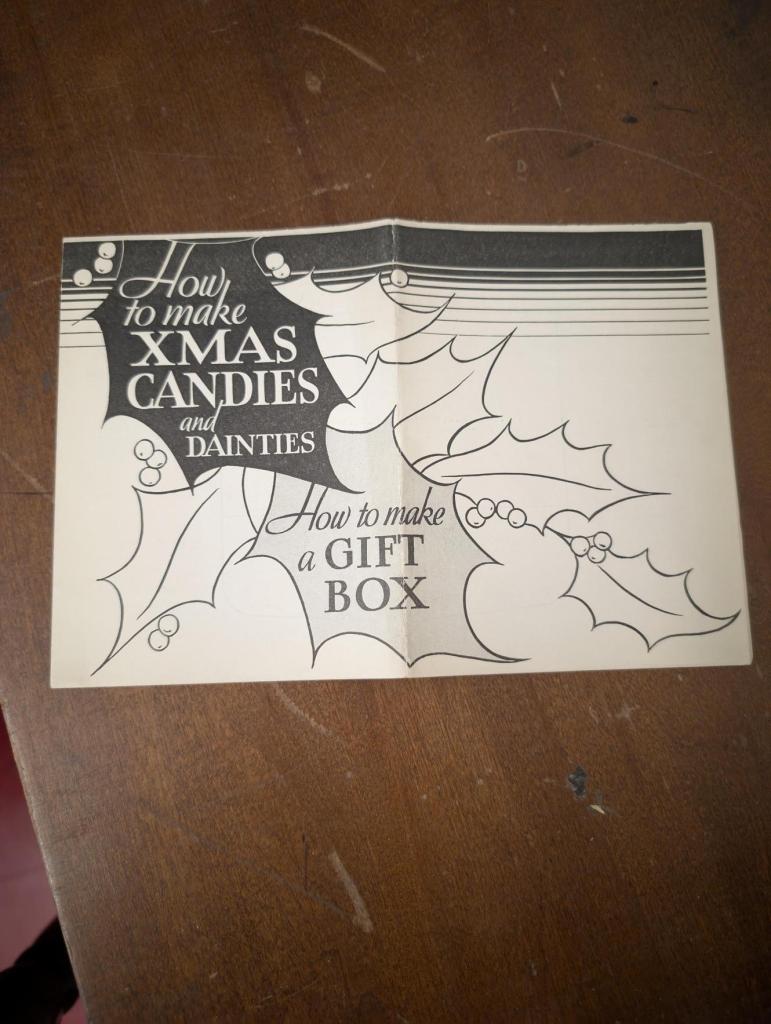
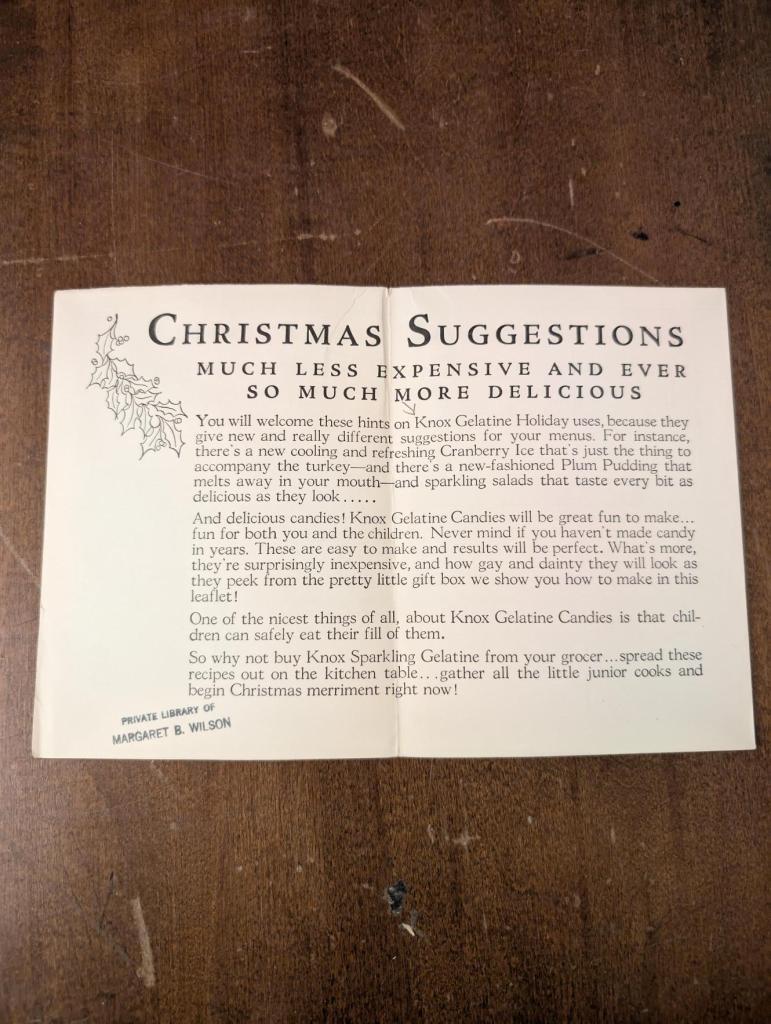
At this time of year, holidays lead to gifts being exchanged! Most gifts don’t have to be huge. In fact, the Knox Gelatine Company believes that there are some presents “much less expensive and ever so much more delicious.” They invite you and your “little junior cooks” to bake one of their recipes to give this holiday season. You can follow a reusable pattern to make gift boxes for these candies. Make as many as you want!
Knox also gifts you with some relaxation; they’ve offered up three different menu options for what to serve on Christmas and New Year’s. You still must find recipes for most of the meals they suggested, but they do include recipes for a few dishes. If you’ve managed to give yourself ample time to prepare, you find that the company is offering to send you a free copy of one of their cookbooks. Perhaps the rest of the recipes can be found there.
Knox isn’t the only company with an opinion on home-baked presents. Betty Crocker says, “A gift you bake is a gift from the heart.” In this case, she is talking about her “Stir-N-Roll Mince Pie.” You may want to reserve this hearty dish for dear loved ones, as the woman on the advertisement does. There’s even the suggestion to add apples for a fruitier, more seasonal dish. Betty then gives you instructions for exactly how to wrap the mince pie. She reminds you that by giving this dish, you may be giving away one of your pie pans. Otherwise, use a cardboard one!
Betty isn’t done with gift suggestions yet. On the back, you can follow a recipe for “Cherry Cordial Chiffon Cake.” A stipulation is to “make only with Sofstasilk [cakeflour] and Wesson oil.” Who knew an advertisement could be so delicious? Once again, she shares how to present the baked gift. Betty calls it a “glamorous cover for a glamorous cake!”
While these gifts don’t cost as much as a tax-deductible donation, there are some gifts that you can give that are free. They might just save a life too.
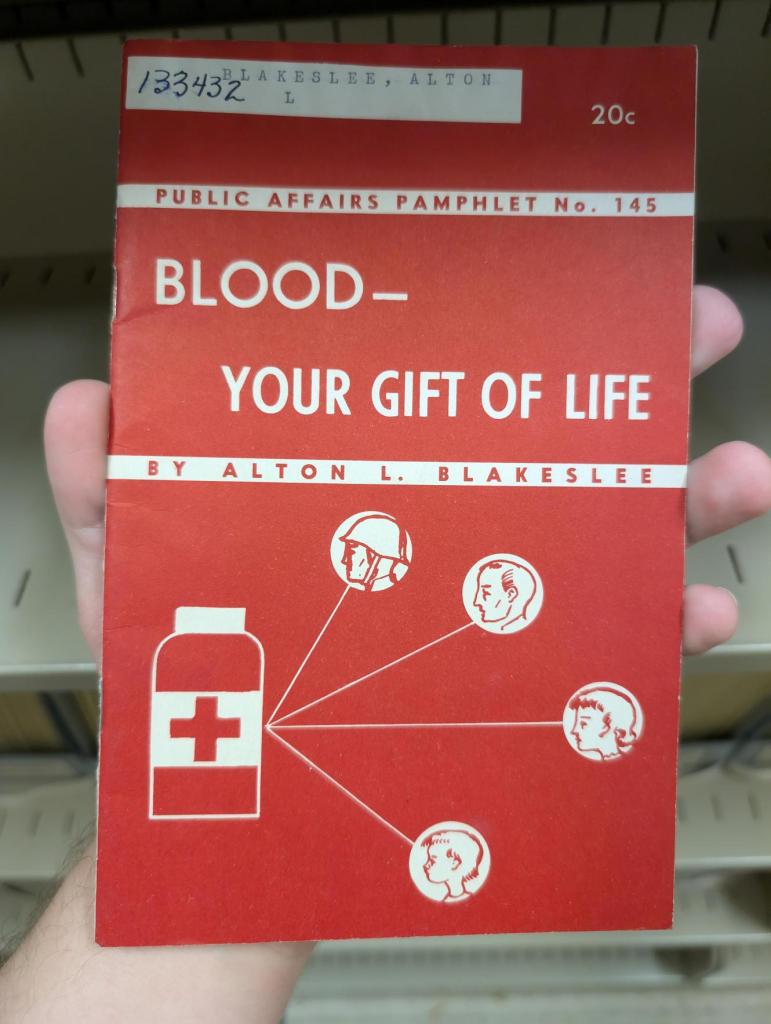
Alton L. Blakeslee, a science writer for the Associated Press, was brought on by the American Red Cross, to plead their case through a 1951 pamphlet, “Blood—your gift of life.” We were a year into America’s involvement in the Korean War. Our soldiers overseas needed the most crucial “life-saving medicine,” blood.
Blakeslee writes that Americans are lucky. The American Red Cross set up an “efficient, working” system of donation centers and organizations that safely allow us to donate blood.
Having that healthy supply of blood allowed doctors and hospitals to provide care for the sick and those otherwise in need. Unfortunately, need has “skyrocketed” due to the overseas conflict. Now a stockpile was urgent, to be a ready line of defense.
The pamphlet explains why blood is important, for those who may not think about it too much. It’s true, we do take it for granted. Blood is described as not only the “magic gift” of our lives, indeed “the river of life.”
Blood donations can only come from other people. Blakeslee explains that a “normal person” should have around 12 to 13 pints of blood in their body. That fact helps sell the idea of giving a pint or two for the stockpile. He also waxes poetically on what he refers to as our “miracle fluid,” reminding us again that we have the possibility to help save others with no harm to ourselves.
If you’re wondering how your blood can make an impact, he included a chart. Considering eight pints of blood in all, that amount can help eight different people; those same eight pints can be used to make various lifesaving blood products that would help thirty or more people! Your one (or two) pints can make a difference.
Going through the history of blood donation, Blakeslee clears up some misconceptions. This includes the idea that people cannot receive blood from different races. This was just three years after President Truman ended segregation in the armed forces, in 1948, while the American Red Cross gave up the practice of segregating blood by race only the year before, in 1950. Blakeslee offers a little bit of humor on the situation by saying it won’t “give the recipient…. any of the giver’s characteristics.” He goes on to say blood from a happy person wouldn’t make a “grump” any happier.
Blakeslee believes that the gift of giving is a reward into itself. That is and will always be true. Thanks to support from generous donors, in 2024 the American Red Cross is sometimes able to provide something in exchange for your time and blood. They put out a press release this past August declaring an emergency. The record setting temperatures that the United States had been experiencing made collecting more difficult. They say that at least 100 drives had been affected, while the demand for a large blood supply is still constant. During the summer drought, they offered gift cards. Right now, from December 16th into the new year, you can get a long-sleeve shirt with a snowman graphic. Sometimes you’ll get a cookie that really hits the spot. Just remember that blood donation is a great cause!
What you would see on RedCross.org this holiday season.
Expanding your mind during the “season of giving” may help you choose what to gift this year. Whether it’s for your family or another’s, gifts don’t have to be extravagant. It’s the thought that counts.
From all of us at the New York Academy of Medicine Library, we wish you a happy and healthy holiday season!
By Dr. Michael Robinson, National Army Museum Research Fellow, University of Birmingham (UK), and the Library’s 2024 Paul Klemperer Fellow in the History of Medicine
I spent one month working in the New York Academy of Medicine’s magnificent library and reading room in the autumn of 2024. This residency enabled me to look at a host of materials dedicated to the treatment of mentally ill American Army veterans of the First World War during the Great Depression (1929–1939). I undertook this research hoping to utilise the USA as an important comparative case study on my current research project dedicated to mental illness and British Great War veterans during the 1930s. By examining mental breakdown and psychiatric medical care during this decade, this research seeks to reveal the delayed traumatic after-effects of war service on ex-service personnel and the potential for additional psychosocial determinants to influence mental ill-health.
I first became interested in the American experience of post-First World War disability and mental healthcare owing to its regular appearance in the archival records of Britain’s Ministry of Pensions, the government agency responsible for distributing veterans’ pensions and medical care. During the inter-war period, British policymakers regularly cited the US experience of veteran after-care as a deterrent and a case study to avoid replicating. They actively held up the US system as being unfairly exclusive, costly, and liberal owing to its incremental but costly expansion of veteran rights and facilities. Britain significantly reduced its liability on behalf of veterans during the 1920s and 1930s, including the closure of most veterans’ hospitals. Veterans’ medical care in Britain was primarily outsourced to broader public health facilities, the civilian welfare state, and the charity sector.
By contrast, the US witnessed increased state liability, including a vast financial outlay in funding exclusive Veterans Administration (VA) hospitals and medical facilities. In 1936, owing to the two nations’ inversed approaches to veteran care, one Ministry of Pensions official described the UK and US responses as being of ‘opposite extremes.’1 The primary purpose of my time at the NYAM was to better understand why the British and US systems were the complete inverse of one another. I also sought to appreciate how these contrasting policy trajectories and medical infrastructures affected the lives of mentally ill veterans.
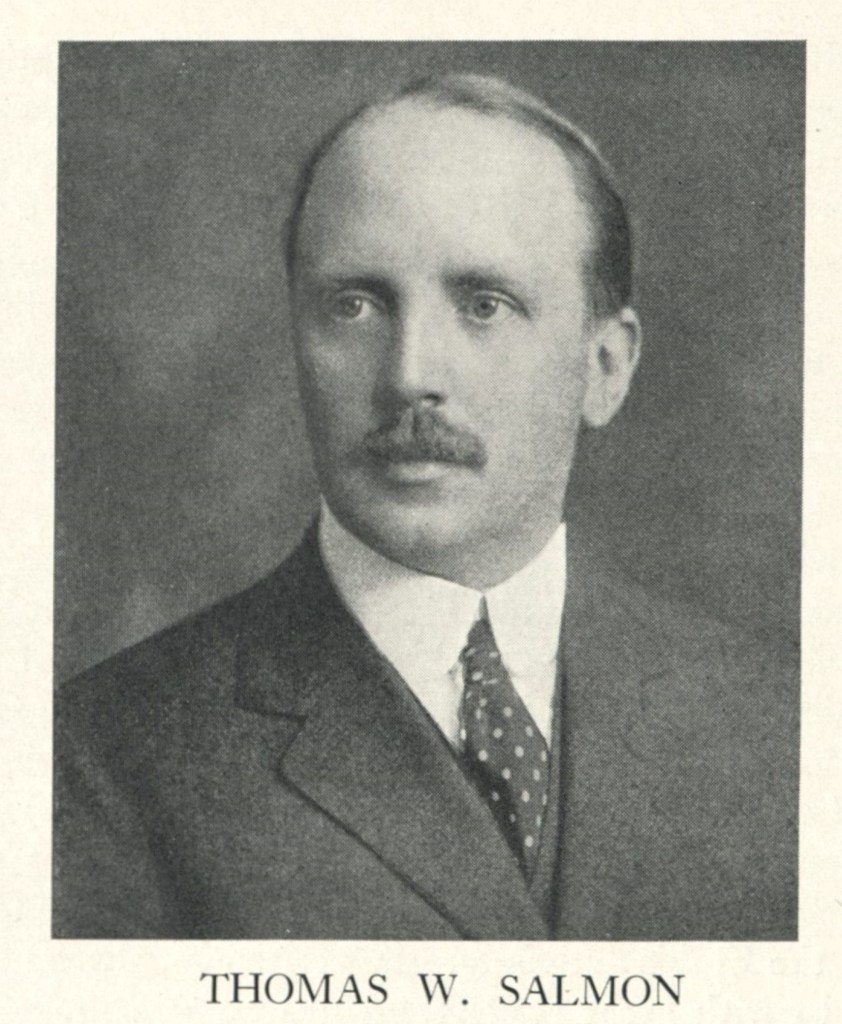
Portrait of Thomas Salmon, from History of the Interurban Clinical Club 1905-1937, edited by David Riesman (1937).
This comparative approach first led me to NYAM records relating to Dr. Thomas Salmon (1876–1927). For those unfamiliar, Salmon was the American Expeditionary Forces’ chief consultant in psychiatry during the First World War. Before this important role, following the country’s entry into the global conflict in 1917, Salmon visited England to study how it dealt with mental wounds during the war to help inform his country’s approach.2 As a leading figure in the US National Hygiene Movement before and after his war service, the records of Salmon’s war experience reflect a relatively progressive military medical official. He regularly stressed the environmental causes of soldiers’ breakdown. In short, Salmon was more inclined to blame combat neurosis and stress on the dehumanising and brutalising effects of war service than citing faulty hereditary genetics, as was more apparent amongst British military officials. This more empathetic outlook continued into Salmon’s advocacy on behalf of veterans following his return to America. Unlike the more reclusive and disillusioned Dr. Charles Myers, the British Army’s leading psychiatric official, Salmon advocated for healthcare and welfare on behalf of the mentally disabled First World War veterans during the initial post-war years. Described by his biographer as a successful ‘spokesman for veterans,’ the force of Salmon’s personality and his effective collaboration with the American Legion help explain why the American mentally ill veteran stopped being admitted into larger public mental hospitals.3 Instead, the US Federal Government established exclusive medical facilities for veterans from the early 1920s onwards.
Salmon died unexpectedly whilst sailing near Long Island in 1927. Reflecting his prestige amongst his contemporaries, the National Committee for Mental Hygiene, an advocacy organization founded in 1909 by Clifford W. Beers, set up the Salmon Committee on Psychiatry and Mental Hygiene at the New York Academy of Medicine in 1931.4 Regardless, the exclusive medical infrastructure he had helped establish continued to cater to mentally ill First World War veterans into the 1930s. In stark contrast to Britain’s minuscule and dwindling psychiatric infrastructure, the VA provided seventeen neuropsychiatric facilities across its national network of forty-nine hospitals. It offered 10,633 beds for mental ailments, marking a 467% increase over 1921’s availability. The number of beds would be set to increase for the rest of the decade.5 With this exclusive federal medical care program for veterans, the VA published its Medical Bulletin journal throughout the 1930s. Pouring through these issues reveals a lively forum of VA medical officials discussing the continued difficulties of treating veterans during this period.
Regarding neuropsychiatry—I was struck by how hospital superintendents, nurses, vocational trainers, and social workers regularly articulated a holistic approach to mental healthcare. They cited the psychosocial determinants of health outside of hospital walls. This includes, for example, the detrimental impact of unemployment and poverty on an individual’s mental and bodily health, the emasculating stigma attached to male mental illness, and the potential for harmful self-medication practices such as alcoholism.
United States Veterans’ Bureau Medical Bulletin (1931), a collection of articles by VA staff and associates dedicated to all aspects of veteran after-care. These various scans come from volume 7.
The materials I reviewed at the NYAM provide a complex and nuanced picture of the post-war treatment of mentally ill World War One veterans. On the one hand, they give an image of an expansive, caring and financially generous veterans’ system. On the other hand, however, they provide comparatively little insight into the personal perspectives of veteran patients to verify the progressive narrative offered by medical officials. In addition, contemporary medical journals reveal increasing resentment from American citizens regarding the spiralling costs of veteran medical care with little in return in terms of cure and recovery.6 This counter-narrative also appears worthy of further research.
Before arriving in New York, I was unsure how exactly the USA would fit into my larger project of Great War veterans during the Great Depression. However, my time at the NYAM proved incredibly rewarding by revealing how fascinating and unique an American case study is. I look forward to continuing this research into 2025.
Notes:
1 Nineteenth Annual Report of the Ministry of Pensions, 1935-1936, 33.
2 For a write-up of Salmon’s observations and recommendations, see Thomas Salmon, The care and treatment of mental diseases and war neuroses (“shell shock”) in the British Army (War Work Committee of the National Committee for Mental Hygiene, 1917).
3 E. D. Bond, Thomas W. Salmon: Psychiatrist (W. W. Norton & Co, 1950), 160.
5 E. O. Crossman and Glenn E. Myers, ‘The neuropsychiatric problem in the US Veterans’ Bureau,’ Journal of the American Medical Association, vol. 94, no. 7 (1930), 473–478.
6 For example, see the Crossman and Myers article cited above.
By Sheryl Wombell, University of Cambridge, and the Library’s 2024 Audrey and William H. Helfand Fellow.
In seventeenth-century Europe, knowledge about health and healing was shared with family, friends, and acquaintances. In the case of printed books, wider audiences were reached. A significant subset of these communications took the form of recipes: sets of instructions telling one how to make something. These might be instructions for making medicines in the home, with a range of ingredients from the inexpensive and easily sourced, to the rare and exotic products available due to expanding trade. Or they could be instructions to make culinary formulations, which were interpreted as having an impact on the body’s condition due to the lasting influence of the ancient theory of the four humours. Individual recipes, which could be as short as a line or as long as tens of pages, were gifted, traded, and passed around early modern social networks.
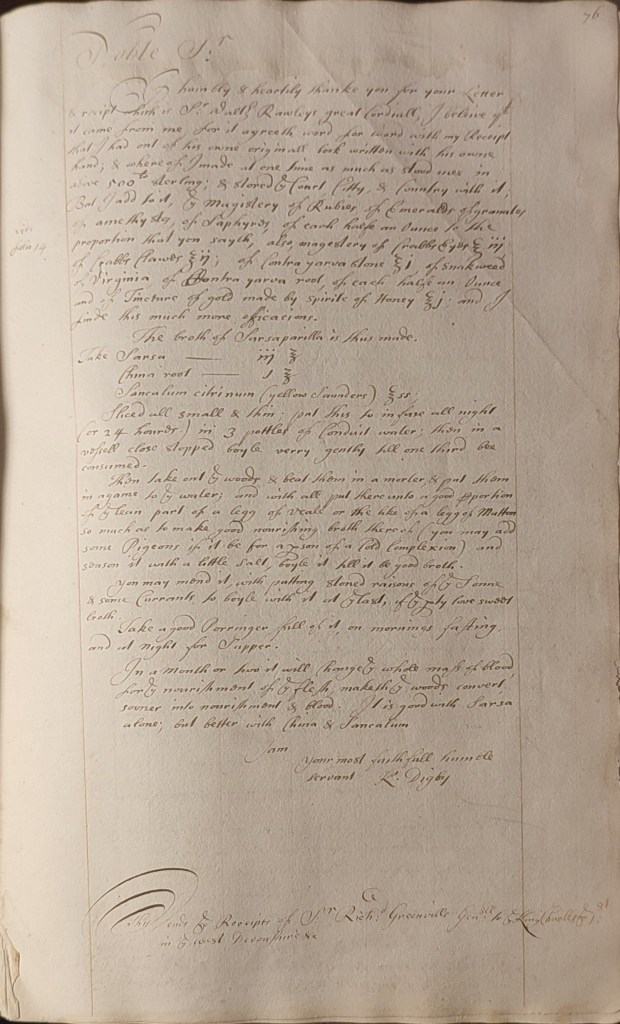
A letter penned by the courtier and privateer Sir Kenelm Digby, likely to Sir Richard Grenville, 1st Baronet of Kilkhampton, demonstrates the mobility of recipes in the mid-seventeenth century.i In it, Digby thanks Grenville for sending him a recipe for ‘Sir Walter Rawleys great Cordiall’ but questions its provenance:
I beleive th[a]t it came from me, for it agreeth word for word with my Receipt that I had out of his owne originall book written with his owne hand; & whereof I made at one time as much as stood mee in above 500 [pounds] sterling; & stored the Court, Citty, & Country with it; But I add to it, the Magistery of Rubies, of Emeralds of granales of amethystes, of Saphyres, of each halfe an Ounce to the proportion that you sayth, also, magestery of Crabbs Eyes [3 oz], of Crabbs Clawes [2 oz]; of Contra yarva stone [1 oz], of snakweed of Virginia, of Contra yarva root, of each halfe an Ounce and of Tincture of gold made by spirite of Honey [1 oz]; and I finde this much more efficacious.
The circular path of recipes that Digby describes – when a recipe he believes to be his own is unwittingly returned to him – is testament to the lively early modern traffic in recipe dissemination and collection.
Fig. 1: Copy of a letter from K. Digby in MS ‘Old Doctor 1690’, f. 76, New York Academy of Medicine Library.
Manuscript collections of recipes survive in archives around the world, and the New York Academy of Medicine Library holds a rich cache of such volumes. Thanks to winning their Helfand Fellowship in 2024, I had the privilege of spending five weeks on a close reading of the early modern medical recipe collections at NYAM. This research forms part of my PhD project, which looks at the mid-seventeenth century production, management, and transmission of knowledge about health and healing amongst exiled and mobile elites, including Digby. While my work to date had focused on three key media – printed medical books, manuscript recipe collections, and consultation letters – somewhat in isolation from each other, at NYAM I had the time and resources to explore the relationships between these formats.
One such connection was the integration of transcribed letters into larger manuscript collections. Digby’s letter, for example, was copied into a large bound volume of recipes, letters, and transcriptions from printed books titled ‘Old Doctor 1690’. But in handling the manuscripts I was also confronted with material traces of transmission. In another manuscript, for example, is a recipe for ‘Costiveness to help’, that is, how to relieve constipation. Next to the instructions are two small, shiny blobs of dried red sealing wax. While this is not conclusive evidence that the recipes on the page were copied into a letter, it does indicate that the notebook lay open while a letter was sealed – and likely written – in its vicinity. Through this tiny physical sign, we learn something of the co-presence of writing and collecting practices across the distinct but interrelated media of letters and recipe books.
Fig. 2: Wax in ‘Pagett recipes for medical remedies: autograph manuscript signed, c. 1640–1650’, f. 73, New York Academy of Medicine Library.
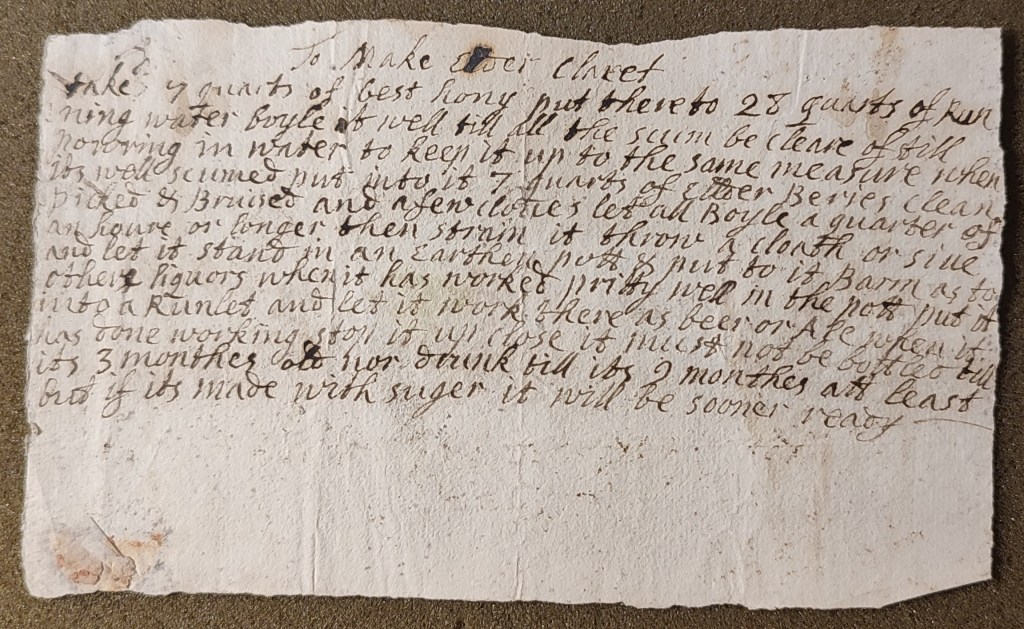
The objects of transmission themselves also appear in these recipe collections. A notebook belonging to Owen Salesbury holds a loose paper slip with instructions ‘To Make Elder Claret’ and sent ‘To Mrs Longford att her hous in Wrexham’. Folded slips could be enclosed in a larger letter, or they could constitute the entire missive. The inclusion of the address on this example suggests the latter. The contents of the slip were not transcribed into the body of the notebook but containing it within the bound volume preserved its knowledge. We don’t know precisely how or when a slip sent – or intended to be sent – to a Mrs Longford ended up in Salesbury’s manuscript, but it offers further evidence of the close connections between ephemeral letter formats and the more durable objects of recipe collections.
Figs. 3 and 4: Paper slip in ‘Collection of medical recipes, poems, prayers, and charms: autograph manuscript signed, 1638–1642’, New York Academy of Medicine Library.
Spending time in the NYAM Library’s collections allowed me to get to grips with evidence of early modern recipe transmission. While digitised surrogates of manuscripts have been invaluable in my research, handling these collections has enriched my analysis by bringing their material qualities – size, varying durability, the spatial relationships between their contents, and signs of use – to the fore.
Further Reading:
Ken Albala, Food in Early Modern Europe (London: Bloomsbury Academic, 2003).
James Daybell, The Material Letter in Early Modern England: Manuscript Letters and the Culture and Practice of Letter-Writing, 1512–1635 (Basingstoke: Palgrave Macmillan, 2012).
Elaine Leong, Recipes and Everyday Knowledge: Medicine, Science, and the Household in Early Modern England (Chicago and London: University of Chicago Press, 2018).
This Summer, the NYAM Library hosted our first-ever Public Engagement Intern. Rebecca is about to enter her second year as a Library Science student at Pratt. As part of her internship, she was asked to produce a blog post on a topic of her own choosing. If you are a library science graduate student interested in an internship at our library, be sure to look out for calls on our social media channels.
As the New York Academy of Medicine’s Library Public Engagement Intern, I’ve had the incredible opportunity and privilege to work with the library’s collection. Inspiration can strike anywhere in the library’s vast holdings, but it struck me when I stumbled across some wheat-free recipe pamphlets among the cookery items in the collection, one of many subject strengths of the NYAM Library. The number of wheat-free pamphlets and recipes in the collection, all dating from 1917 and 1918, piqued my interest. I was intrigued and eager to learn more about why so many of these pamphlets might be in the collection, as they reminded me of current day online recipe blogs. Were people in 1918 cutting wheat because of dietary restrictions or to follow the latest fad diet? Digging deeper into the collection would reveal the answer.
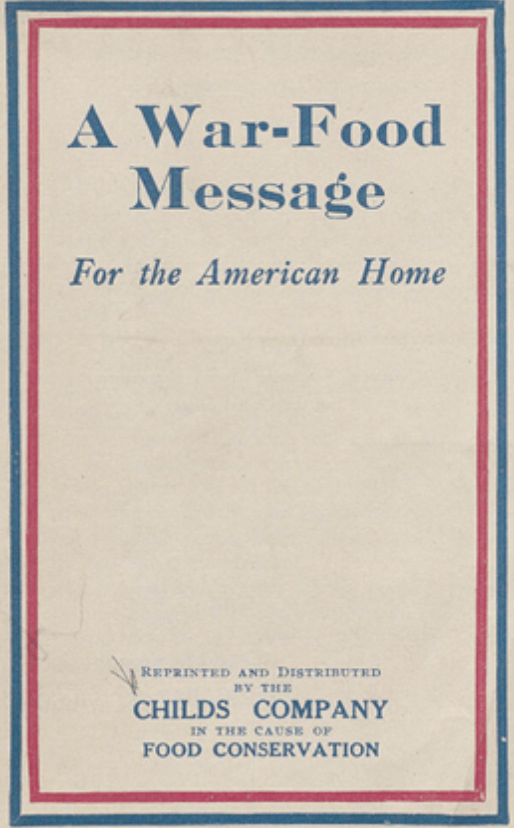
While I didn’t find any recipe books on the South Beach, Paleo, or Keto diets in the collection, I found plenty of recipe pamphlets urging citizens to conserve wheat, sugar, meat, fats, and milk (Wilson et al., 1917). I found pamphlets and posters encouraging Americans to conserve wheat to increase exports to Allied countries, and British ones encouraging their citizens to cut out wheat due to the decreased production. These pamphlets and recipe books were clearly of great historical importance, but is there a reason why the library collected so many specific pamphlets on rationing wheat? For answers I turned to the collection where I found all these pamphlets: the Margaret Barclay Wilson Collection of Books on Foods and Cookery.
Margaret Barclay Wilson: Fellow of the New York Academy of Medicine, Professor of Home Economics and Head of the Physiology and Hygiene Department at Hunter College, Honorary Librarian at Hunter College, Doctor of Medicine, friend of Andrew Carnegie, and pioneer and expert in food economy, there is no shortage of accolades for the remarkable Dr. Wilson (Tanzer, H. 1948). In 1929 Dr. Wilson generously donated her collection of over 4,000 works of cookery and nutrition to the NYAM Library. Her collection contains many items dealing with food rationing because she was commissioned by the British government to prepare a report on how to deal with food shortages caused by World War I. The government was interested in any and all ways to combat these shortages. For wheat shortages that included, finding alternatives to wheat, encouraging people to reduce and ration the use of wheat, and regulating the production and use of wheat. Dr. Wilson prepared a report on the use of flour in the making of bread, which was used to mitigate the ongoing wheat shortage change the laws regarding the use of flour in making bread. As she also served as a member of the advisory council of the New York City Health Department from 1915 to 1917, where she prepared papers on food economy for circulation by the department, her collection on food rationing includes items from both the US and abroad (Tanzer, H. 1948).
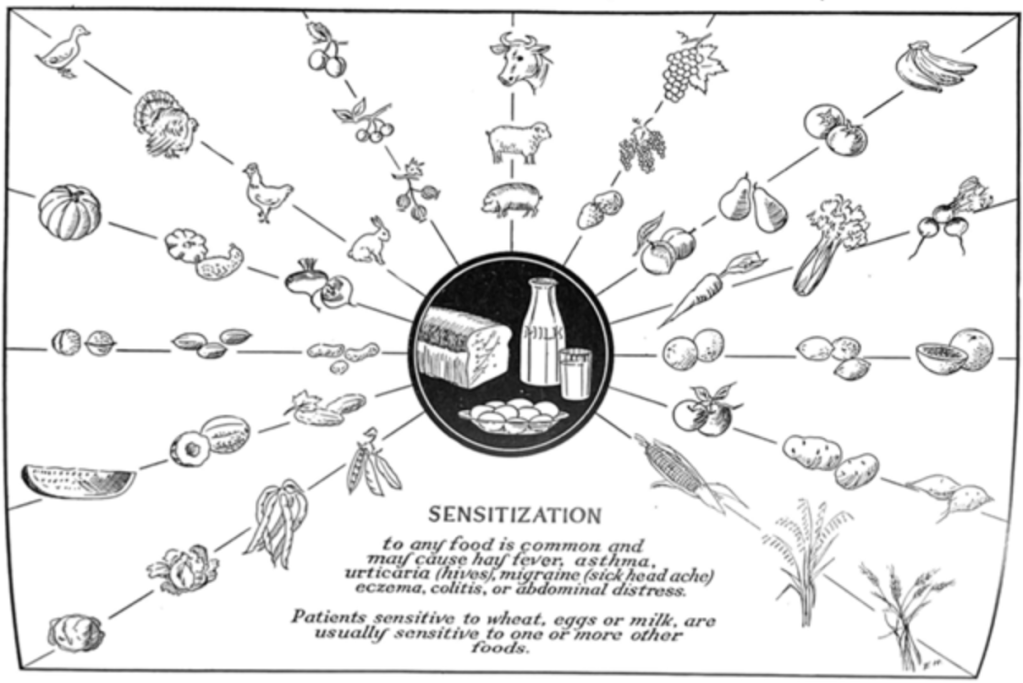
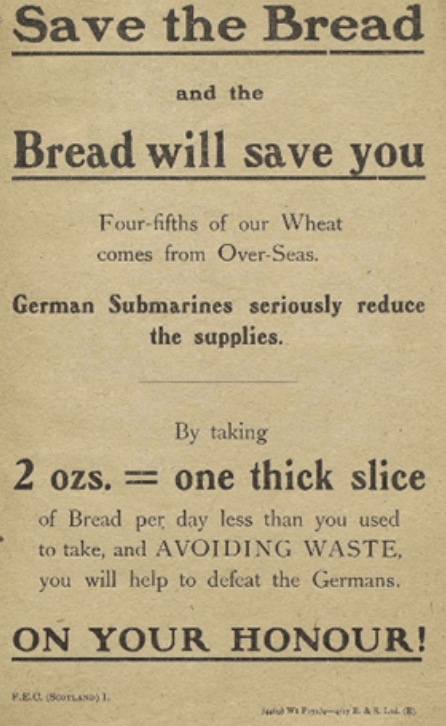
The governments of the allied forces and various other organizations detailed the best methods for rationing wheat and other target food groups. Rationing was encouraged through various means: having one wheatless meal a day, eating less cake, pastries, and pie, using bread scraps in cooking, replacing bread with other carbohydrates such as potatoes, and fully or partially replacing wheat in recipes (Haskin, 1917) (National Wholesale Grocers’ Association of the United States, 1917). Through a series of pamphlets, cookbooks, and posters, citizens and patriots were encouraged to save two ounces of bread per person per day lest rationing become mandatory (F.E.C. (Scotland), 1917) (J., 1917). Many of these books and pamphlets appealed directly to women as they controlled 90% of the food consumption of America. One recipe book even begins with a letter from Herbert Hoover, head of the US Food Administration for the war effort and future US president, appealing directly to American women to pledge themselves to the food conservation cause (Haskin, 1917).
The war had already caused a global food shortage, and America’s allies, including the United Kingdom and France, were relying more than ever on imports of wheat (F.E.C. (Scotland), 1917). America was one of the exporters, expected to make up almost half of the necessary supply (Chaddock, 1917). But between the dwindling surplus from the good harvest years of 1914 (the first year of the war, of which 37% of the yield was exported) and 1915, and a barely sufficient harvest in 1916, the projected harvest for 1917 would not be enough (Chaddock, 1917). The wheat was not safe as it was shipped across the Atlantic since shipments were susceptible to attack by German U Boats (F.E.C. (Scotland), 1917). If the US government could convince people to conserve one pound of wheat flour per week, 133,000,000 bushels of wheat would be saved (National Wholesale Grocers’ Association of the United States, 1917). The New York State Food Commission, Bureau of Conservation even decreed that for every pound of wheat flour the seller also had to sell a pound of authorized wheat flour substitute (New York (State) & United States Food Administration, 19). The main strategy to conserve wheat, however, was to publish tested recipes that cut out or cut back on wheat with flour alternatives recommended by the US Food Administration (Royal Baking Powder Company, 1918). Baking at home was proclaimed a national duty (Chance et al., 1917).
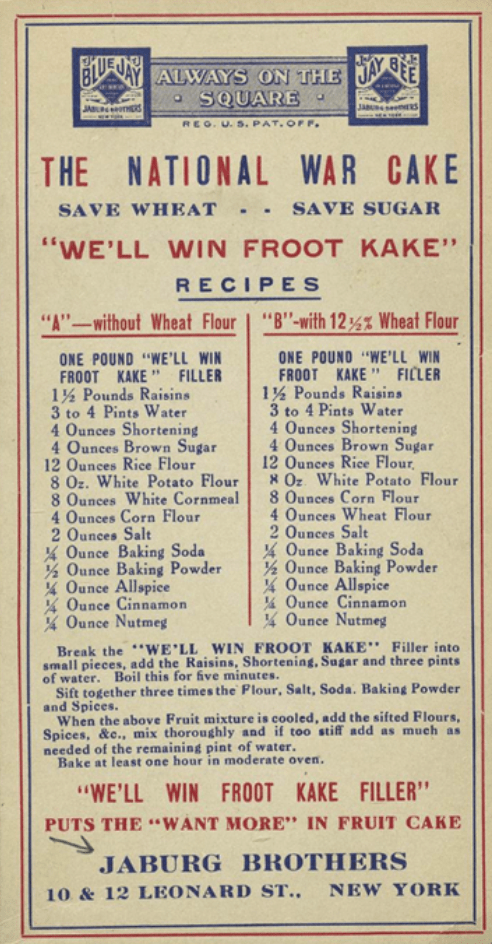
My research inspired me to try my hand at one of these war time recipes. I had no shortage to choose from. These recipes advised the reader to forgo white flour completely and fully or partially substitute whole wheat flour and bread flour with many other flours and ingredients. These replacements included corn meal, oat flour, barley flour, oatmeal, graham flour, rye flour, boiled and mashed potatoes (sweet or white), buckwheat flour, hominy, cooked rice, breadcrumbs, tapioca, and maize flour. While I was tempted by some intriguing sounding recipes like “Spider Corn Bread” (Derouet, 1917), “Eggless, Milkless, Butterless Cake” (Royal Baking Powder Company, 1918), “Cornmeal and Prune Fluff” (New York City Food Aid Committee, 1917), “Date and Hominy Gems” (Neil, 1917), “Virginia Spoon Bread” (Chaddock, 1917) or “Invalid Pudding” (Chance et al., 1917), I ultimately decided to go with a more familiar recipe to ensure I could easily source the ingredients and didn’t need to procure any additional kitchen equipment.
As I am not only “rationing wheat to support the war effort” but must stick to a gluten-free diet for health reasons, I had to find a recipe that was not only wheat-free, but also gluten-free (without wheat, barley, or rye). Many of the recipes only reduced wheat, instead cutting it out completely, or substituted rye or barley flour, and so were not truly wheat- or gluten-free. Luckily there are many recipes available in the collection, so I still had plenty of options that were both wheat-free and gluten-free. One pamphlet, published by the Royal Baking Powder Company, had several suitable recipes to choose from. The pamphlet, titled “Wheatless Recipes,” was published in New York. On the cover it quotes the US Food Administration and calls to “let all who can go without wheat.” All the recipes on the page above fit the criteria, but I’m going to stick to the classic Chocolate Cake because its wheat substitution is unique. This recipe substitutes a mix of oat/rice/barley flour and mashed potatoes for wheat flour.
I was extremely pleased with how the cake came out; it is a bit dense, almost like a pound cake, which I guess is to be expected due to the inclusion on mashed potatoes. Even 4 teaspoons of baking powder were not enough to make this recipe light and fluffy. Also, since the recipe calls for only one cup of brown sugar, it is not super sweet. If you prefer your desserts on the less-sweet side, this is perfect for you, but if you have more of a sweet tooth, like me, you can serve it with frosting or ice cream.
I had fun asking my family and friends to try the cake and ask if they could identify what was different about the cake. Many mentioned it wasn’t very sweet and that it was dense, but no one could guess I used oat flour and mashed potatoes instead of wheat flour. If you try this or any of the other recipes, let us know how they turn out!
The Associate Alumnae of Hunter College, Lewinson, R., Hahn, E. A. (Ed.). (1946, January). Margaret Barclay Wilson A.B., M. Sc., M. D., Sc. D. The Alumnae News.
This upcoming weekend marks New York City’s annual Pride Parade. The parade and the events surrounding it help make NYC’s celebration of pride the largest in North America, as well as one of the biggest in the world. It will also mark the 55th anniversary of the Stonewall Riots, a defining moment in gay rights history. From June 28th until July 3rd, 1969, the community fought for their existence. These riots helped LGBTQIA+ individuals be seen and heard on a larger scale than ever before.
Stonewall has come to symbolize a turning point in gay rights. Before that pushback event, the struggle had seemed like an uphill battle. That was one reason that gay people came together for solidarity and advocacy.
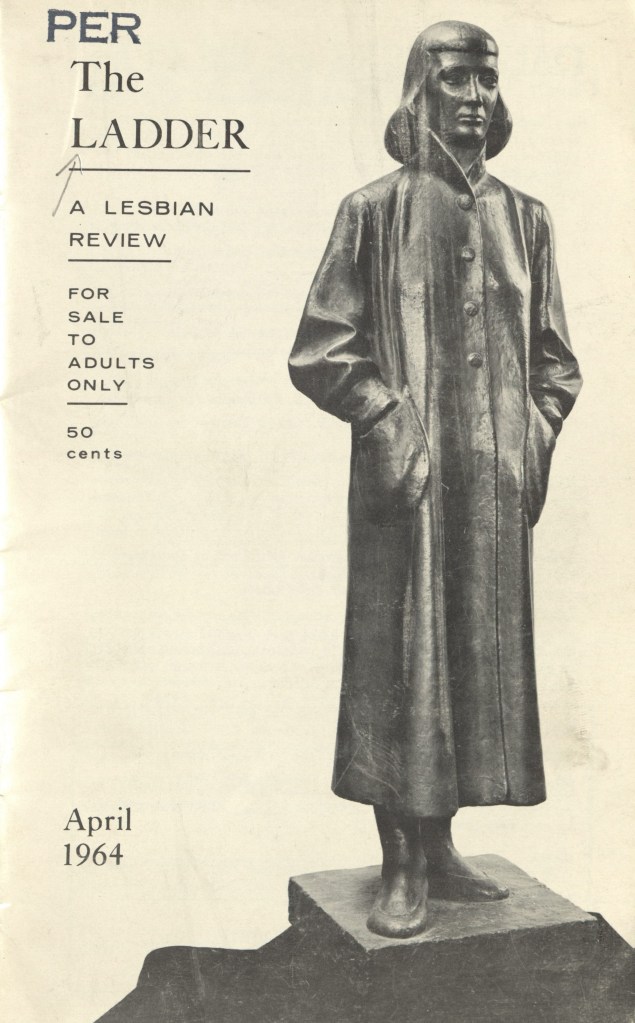
The Daughters of Bilitis began in 1955 with a mission to bring lesbians together. Under the guise of a poetry club, named after a fictional contemporary of Sappho, they began with just a few members. What started in San Francisco quickly grew to other parts of the country. By 1958, a dedicated meeting space was even opened in New York City.
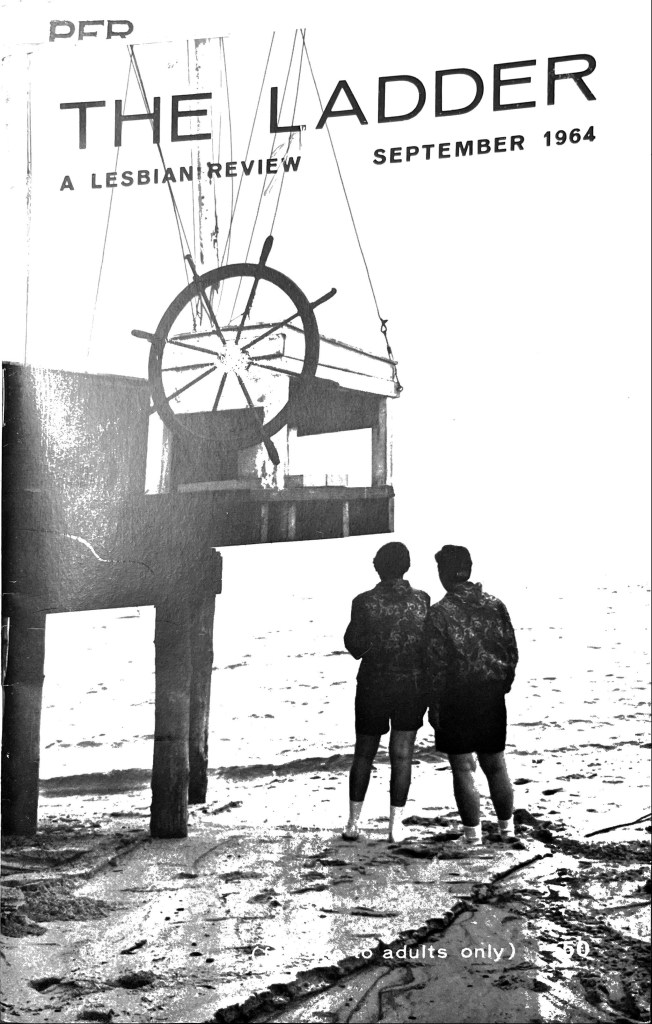
The Ladder was the Daughters’ monthly publication, begun in 1956. There you could find short stories, poetry, personal essays, book reviews, and anything else that dealt with women who loved women. One of their more bustling sections was the letters to the editors where women from all over the country could weigh in on issues. More on this later!
Issues usually began with the Daughters’ mission statement. Broken into four points that the group had decided were important, they sought to take back the narrative of their lives. They used personal stories and experiences with experts in the medical, psychological, and sociological fields to push back against social oppression. And they had enough of a reach to do so! It made sense that they were going to respond to a 1964 report by their New York City neighbors, the New York Academy of Medicine.
In May 1964, NYAM’s Committee on Public Health adopted a report on homosexuality, and published it in the July issue of the Academy’s Bulletin. The Committee had its own thoughts on the “problem.” The report labeled the homosexual as an “emotionally disturbed individual who has not acquired a normal capacity to develop satisfying heterosexual relationships” and stated that these problems may have begun in early childhood. Not only did these conclusions further demonize those who were already living on the fringe of society, but they made those involved in their upbringing culpable too.
[In 2022, NYAM President Judith A. Salerno, disavowed the report. As the organization looked back on its 175th anniversary, she felt it was only just to “be accountable for our actions—and also for our inactions throughout our history.” It is a tenet of a historical collection that we believe to move forward, we must look at the past.]
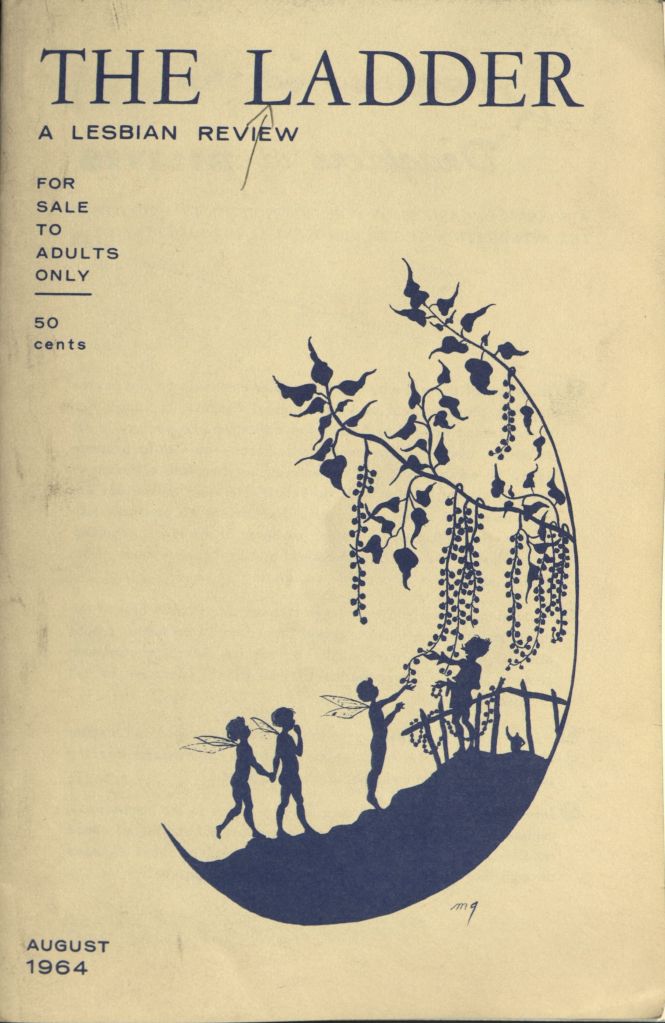
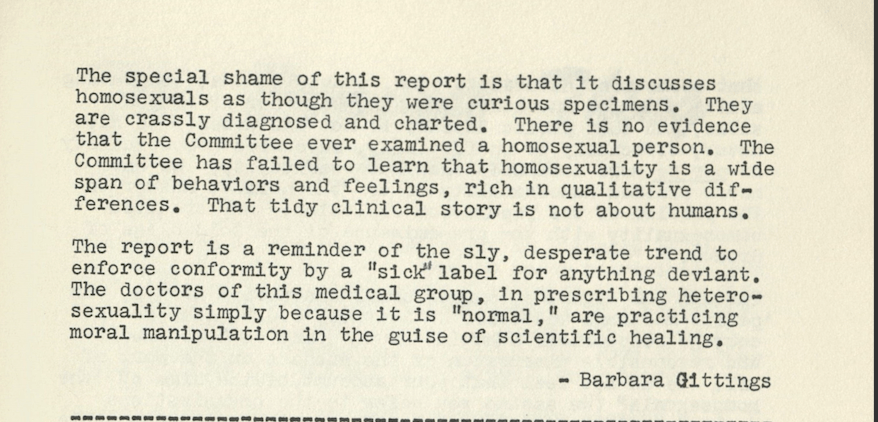
The Editorial column for the August 1964 issue brought the issue to the fore. With a footprint all over the country, they couldn’t be sure that all their readers had seen the report. Editor Barbara Gittings wanted them to know: it is out there.
Could this professional opinion change how you were looked at? “That tidy clinical story is not about humans,” Gittings reminded her readers, even as she assured them not to worry too much. The Academy’s report did not tell the stories that the real people who write and read the magazine could. Regular readers are told of the “moral manipulation” on the part of those who had never met a homosexual.
After addressing those she feels are the most important—the readers—she turns to the “Gentlemen” of the Committee on Public Health. Gittings’ editorial included her June 13th letter to NYAM and asked them to reconsider what they wrote. She called out the “misleading statements” about the Daughters of Bilitis and other gay organizations. Gittings even extended an invitation to attend their annual convention, on June 20th of that year. The Daughters wanted them to see what the organization was about. The invitation went unanswered.
The Daughters of Bilitis officially disbanded in 1970 amidst the larger social upheaval of gay rights and the larger second wave of feminism. The Ladder was published until it was discontinued in 1972.
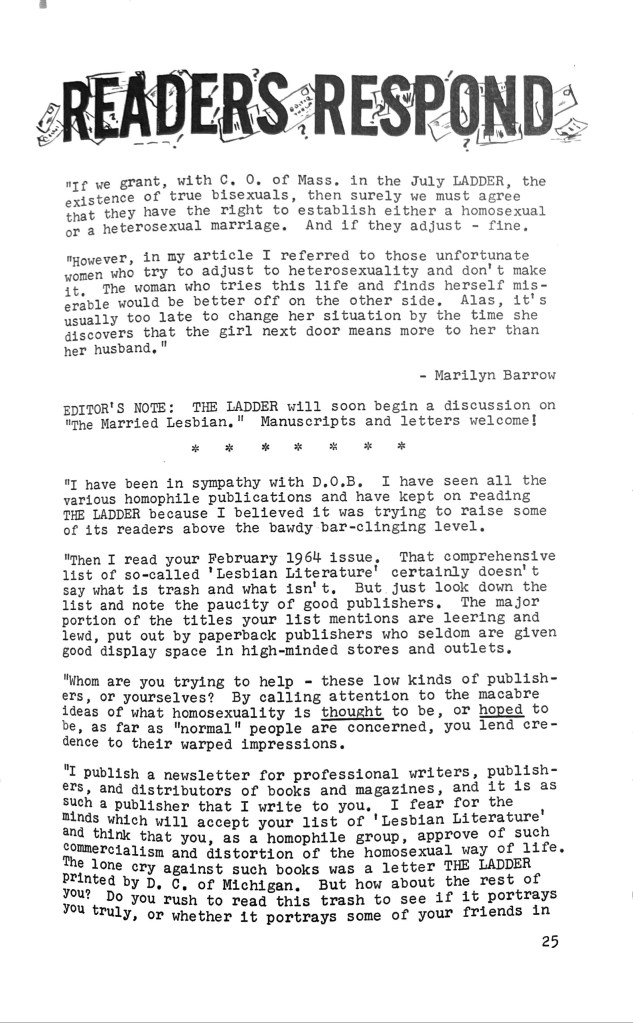
While it was around, The Ladder provided one of the only outlets for gay women to be seen or to see themselves. They didn’t have to agree with everything that the magazine published. And if they didn’t see what they wanted to, they weren’t afraid to ask for it. This brings us back to the letters section, “Readers Respond.”
The September 1964 issue’s letters section was dominated by a long, anonymous letter from a New York publisher, tired of what she perceived as the overwhelming amount of “leering and lewd” lesbian literature. But her tone then changes dramatically, ending with an aspiration: “I hope you don’t mind my frankness or my anger, but I think it’s about time that lesbians came out of the shadows to prove their lives are not filled with cobwebs but that they are genuine human beings as worthy of love, respect, and the good life as anyone else!”
We needed Pride more than ever back then. This is why we still celebrate it now.
Each year Furman University, located in South Carolina, offers a three-week May term, where students are encouraged to take experiential courses that build on their academic interests and take them in new directions. Inspired by programs bringing medical students into museums, undergraduate students have been coming to New York to focus on the skills of observation and communication since 2017.
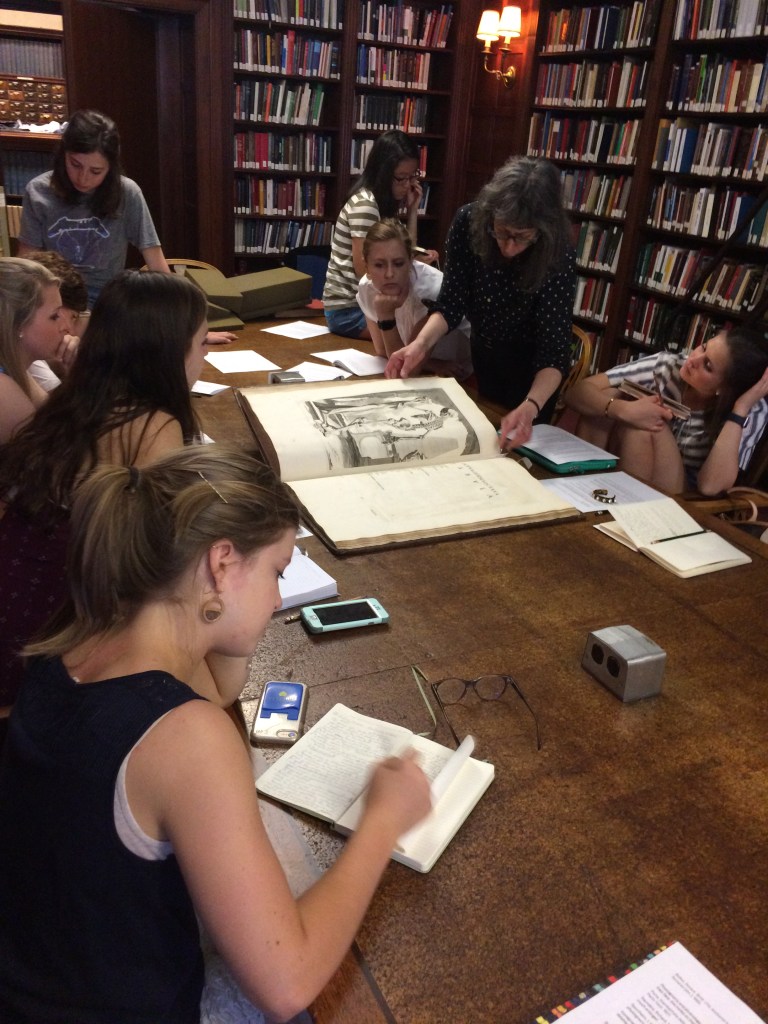
The first class session from the first year the class was taught, back in 2017.
Many of the students are on track for medical careers. This course, “The Art and Science of Observation,” is designed to use art as a “rehearsal space” for interpreting complex, sometimes contradictory visual information; by talking through the processes of looking, students can become better aware of their biases, the ways they reach conclusions, and learn to be more comfortable with differences of opinion.
Two of this year’s students looking at the 1491 edition of Heinrich Louffenberg’s Versehung des Leibes, an illustrated guide to health composed in 1429.
One of the challenges is helping students understand the constructed nature of images, especially when they seem “realistic” or “factual.” Our visits with Arlene Shaner in the Library of the New York Academy of Medicine have been instrumental in breaking down the pretense of objectivity, even in medical and scientific illustration.
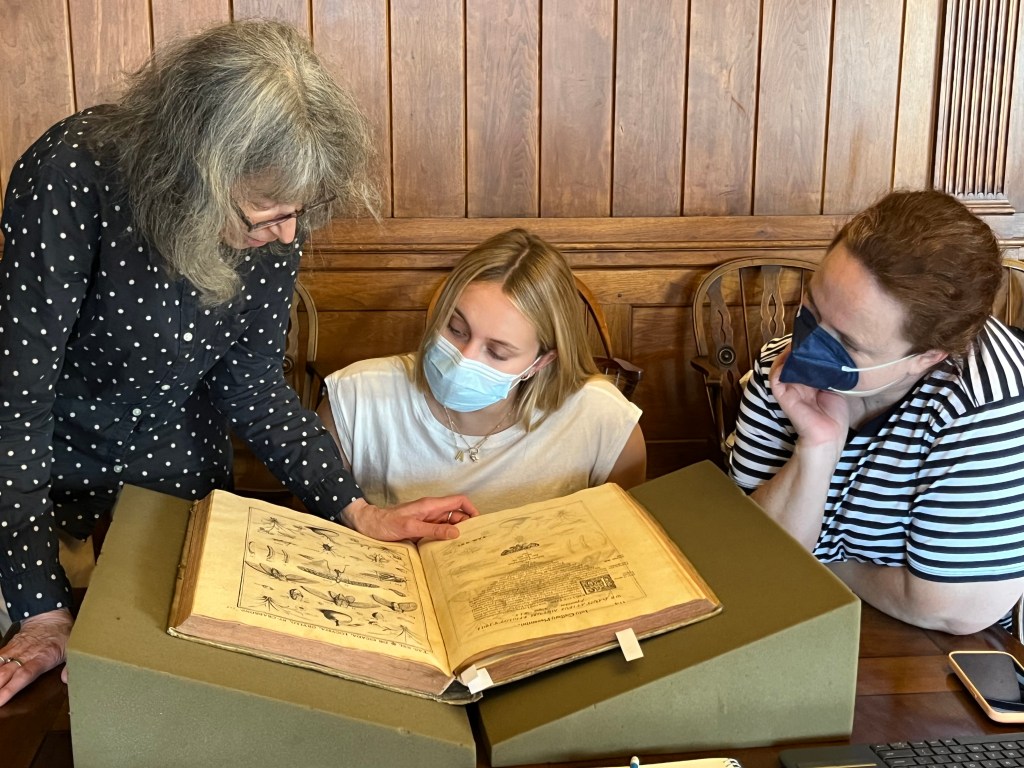
Historical Collections Librarian Arlene Shaner (L) and Professor Sarah Archino (R) looking at Giulio Casseri’sDe vocis… from 1601 with a student.
Our program is fortunate enough to visit the library three times during the May course. During the first two meetings, students trace a history of illustrated medical and scientific texts, learning under Arlene’s guidance about how print technology, art, circulation, and scientific understanding have unfolded over the centuries. Moving from Vesalius to 20th-century popular media, our students understand from first-hand experience how information has been created, copied, and circulated, especially in a pre-digital world.
Medical historian Bert Hansen meets with the class each year in a special session to talk about medical prints and caricatures.
At our third meeting, students enjoy being able to work directly with books from the collection. They choose a text and then select an image – or a small set of images – to analyze. The students deconstruct the image to consider its materiality, audience, and integration with text. This helps construct a better understanding of how one book can signify a larger system of learning and intellectual history.
A 2022 student’s detailed notes about the book she chose to study closely.
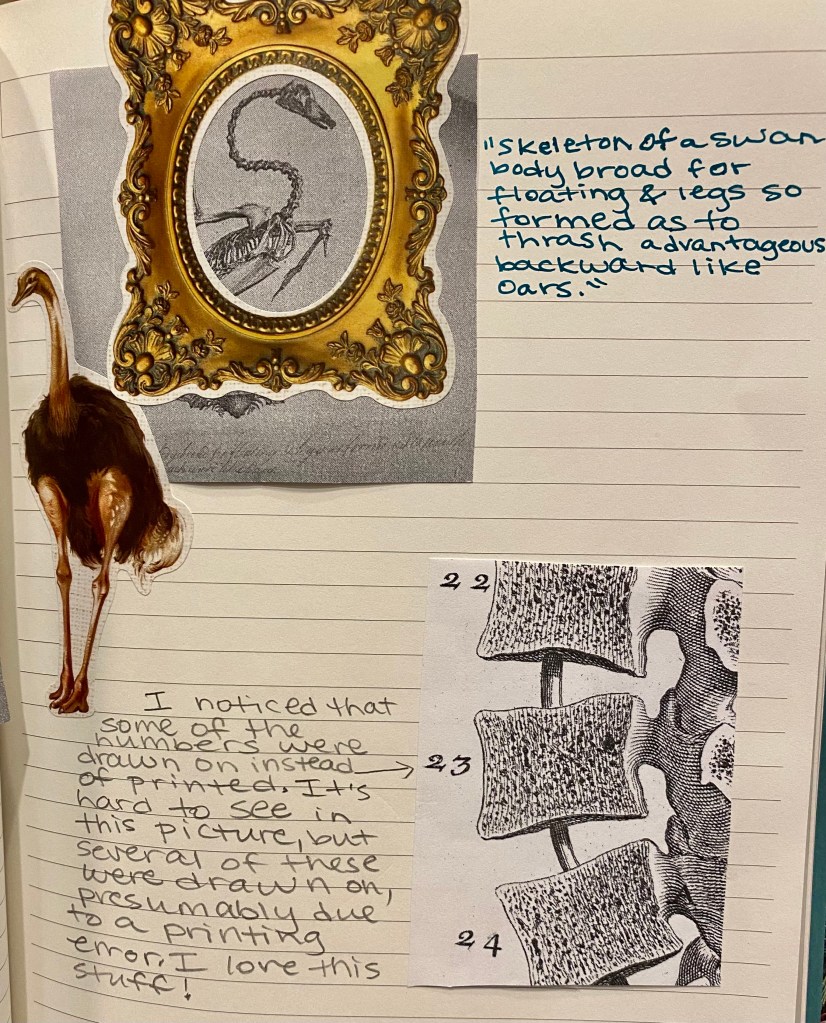
A few examples of student work reveal how they interpret this assignment – from those who transform their notes into a visual scrapbook (material which then found its way into a senior’s ceramics project), to analyses that consider the text’s original function and audience – be it a neurological surgeon of the 16th century or a family doctor on the 19th-century American frontier.
Part of a student project from 2022.
Our visits to the library are always a highlight of our time in New York, in no small part thanks to the wealth of resources, the accessibility of this collection, and the enthusiastic guidance and insight of Arlene Shaner. We look forward to working together in the future!
One of the 2022 students working with her book, the first American edition of George Spratt’s Obstetric Tables, with its many lift the flap images, published in 1850.
If you are interested in bringing your own class for research within our collection, please reach out to library@nyam.org.
































 Books, Health and History