
by Anthony Murisco, Public Engagement Librarian
We’re right in the middle in what’s known as the “season of giving.” Technically, this is a term used by philanthropic organizations to describe the last two months of the year. Often, it’s done for the purposes of a tax-deductible write-off at the end of the year. This may not be the only reason; it’s also just a generous way to give back to the community.

Let’s explore some homemade gifts from the NYAM Library’s cookery collections, and look also at “the gift of life”: blood.
At this time of year, holidays lead to gifts being exchanged! Most gifts don’t have to be huge. In fact, the Knox Gelatine Company believes that there are some presents “much less expensive and ever so much more delicious.” They invite you and your “little junior cooks” to bake one of their recipes to give this holiday season. You can follow a reusable pattern to make gift boxes for these candies. Make as many as you want!
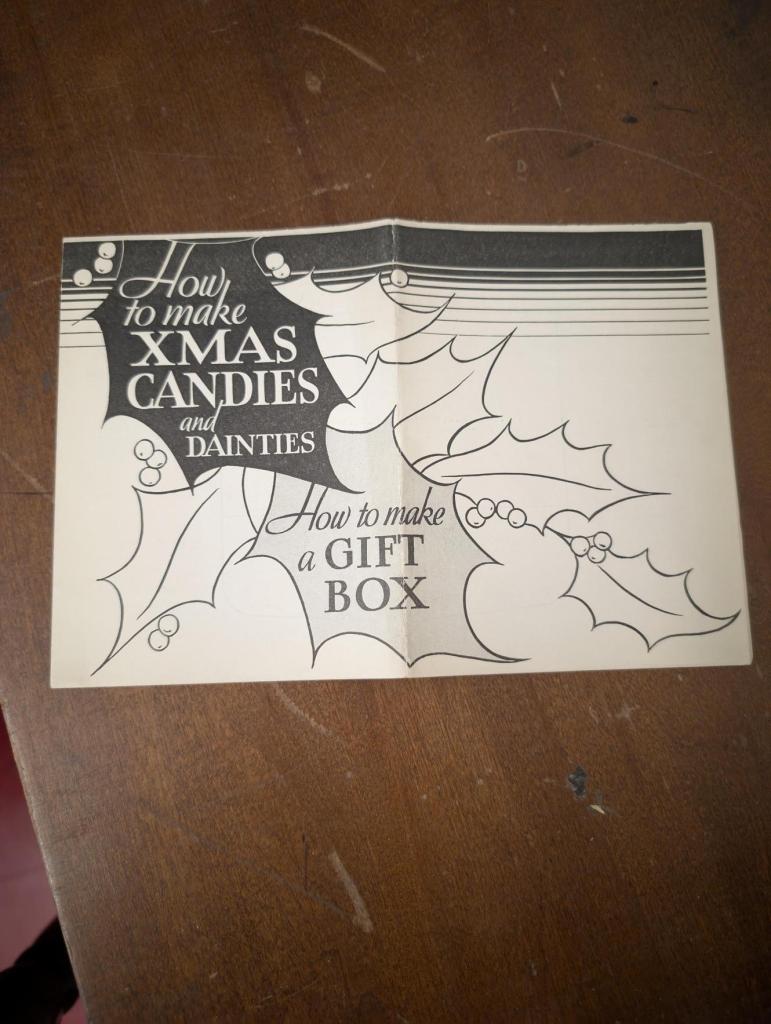
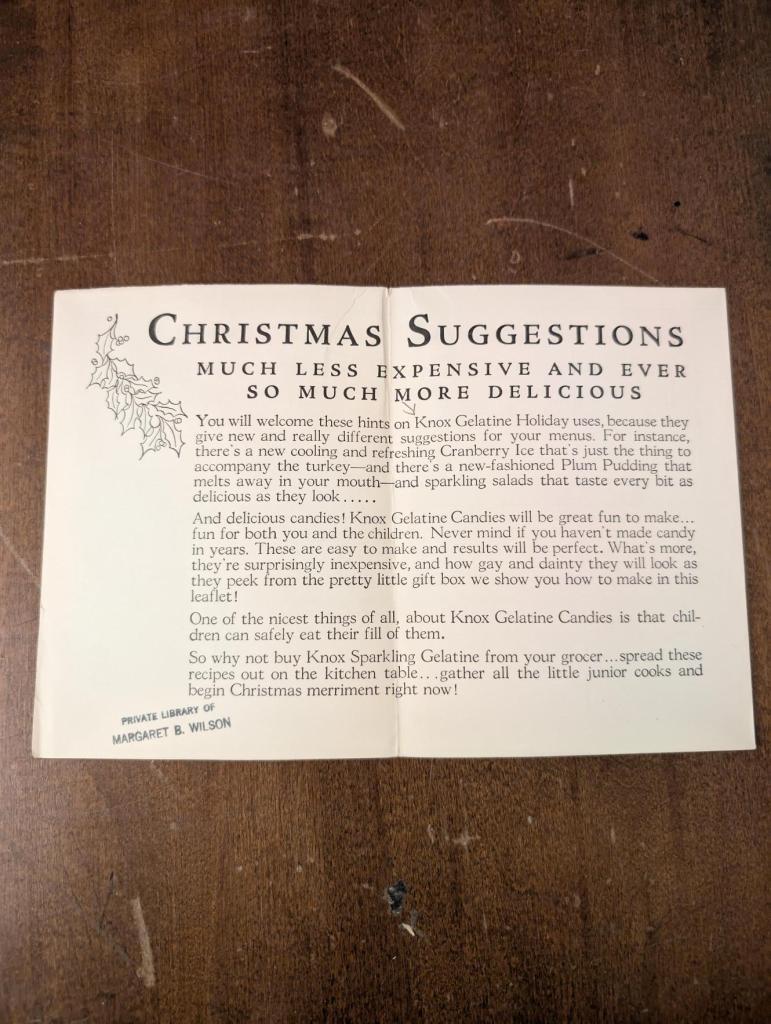

Knox also gifts you with some relaxation; they’ve offered up three different menu options for what to serve on Christmas and New Year’s. You still must find recipes for most of the meals they suggested, but they do include recipes for a few dishes. If you’ve managed to give yourself ample time to prepare, you find that the company is offering to send you a free copy of one of their cookbooks. Perhaps the rest of the recipes can be found there.

Knox isn’t the only company with an opinion on home-baked presents. Betty Crocker says, “A gift you bake is a gift from the heart.” In this case, she is talking about her “Stir-N-Roll Mince Pie.” You may want to reserve this hearty dish for dear loved ones, as the woman on the advertisement does. There’s even the suggestion to add apples for a fruitier, more seasonal dish. Betty then gives you instructions for exactly how to wrap the mince pie. She reminds you that by giving this dish, you may be giving away one of your pie pans. Otherwise, use a cardboard one!

Betty isn’t done with gift suggestions yet. On the back, you can follow a recipe for “Cherry Cordial Chiffon Cake.” A stipulation is to “make only with Sofstasilk [cakeflour] and Wesson oil.” Who knew an advertisement could be so delicious? Once again, she shares how to present the baked gift. Betty calls it a “glamorous cover for a glamorous cake!”

While these gifts don’t cost as much as a tax-deductible donation, there are some gifts that you can give that are free. They might just save a life too.
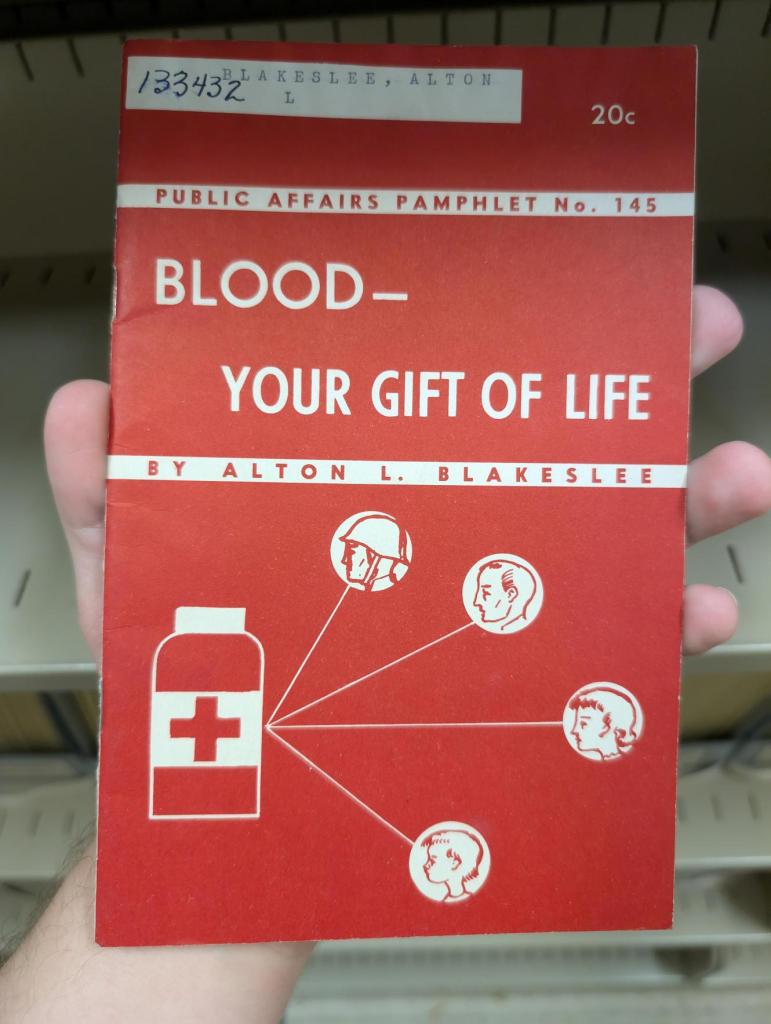
Alton L. Blakeslee, a science writer for the Associated Press, was brought on by the American Red Cross, to plead their case through a 1951 pamphlet, “Blood—your gift of life.” We were a year into America’s involvement in the Korean War. Our soldiers overseas needed the most crucial “life-saving medicine,” blood.

Blakeslee writes that Americans are lucky. The American Red Cross set up an “efficient, working” system of donation centers and organizations that safely allow us to donate blood.
Having that healthy supply of blood allowed doctors and hospitals to provide care for the sick and those otherwise in need. Unfortunately, need has “skyrocketed” due to the overseas conflict. Now a stockpile was urgent, to be a ready line of defense.
The pamphlet explains why blood is important, for those who may not think about it too much. It’s true, we do take it for granted. Blood is described as not only the “magic gift” of our lives, indeed “the river of life.”

Blood donations can only come from other people. Blakeslee explains that a “normal person” should have around 12 to 13 pints of blood in their body. That fact helps sell the idea of giving a pint or two for the stockpile. He also waxes poetically on what he refers to as our “miracle fluid,” reminding us again that we have the possibility to help save others with no harm to ourselves.
If you’re wondering how your blood can make an impact, he included a chart. Considering eight pints of blood in all, that amount can help eight different people; those same eight pints can be used to make various lifesaving blood products that would help thirty or more people! Your one (or two) pints can make a difference.

Going through the history of blood donation, Blakeslee clears up some misconceptions. This includes the idea that people cannot receive blood from different races. This was just three years after President Truman ended segregation in the armed forces, in 1948, while the American Red Cross gave up the practice of segregating blood by race only the year before, in 1950. Blakeslee offers a little bit of humor on the situation by saying it won’t “give the recipient…. any of the giver’s characteristics.” He goes on to say blood from a happy person wouldn’t make a “grump” any happier.

Blakeslee believes that the gift of giving is a reward into itself. That is and will always be true. Thanks to support from generous donors, in 2024 the American Red Cross is sometimes able to provide something in exchange for your time and blood. They put out a press release this past August declaring an emergency. The record setting temperatures that the United States had been experiencing made collecting more difficult. They say that at least 100 drives had been affected, while the demand for a large blood supply is still constant. During the summer drought, they offered gift cards. Right now, from December 16th into the new year, you can get a long-sleeve shirt with a snowman graphic. Sometimes you’ll get a cookie that really hits the spot. Just remember that blood donation is a great cause!

Expanding your mind during the “season of giving” may help you choose what to gift this year. Whether it’s for your family or another’s, gifts don’t have to be extravagant. It’s the thought that counts.
From all of us at the New York Academy of Medicine Library, we wish you a happy and healthy holiday season!
References:
American Red Cross. Accessed December 13, 2024. https://www.redcross.org/.
Blakeslee, Alton L. c.1951. Blood, your gift of life. New York : Public Affairs Committee[in association with the American Red Cross].
General Mills, Inc. [1945-1960]. Betty Crocker says : “a gift you bake is a gift from the heart”. Betty Crocker, General Mills.
“Giving Tuesday is coming…” IRS Tax Tips, IRS.gov, 15 Nov. 2022, https://www.irs.gov/newsroom/giving-tuesday-is-coming-now-is-a-good-time-to-review-tax-benefits-for-charitable-giving. Accessed 16 Dec 2024.
“Red Cross National Blood Inventory Plummets 25% in July — Declares Emergency Blood Shortage.” American Red Cross. Accessed December 16, 2024. https://www.redcross.org/about-us/news-and-events/press-release/2024/red-cross-national-blood-inventory-plummets-in-july-declares-emergency-blood-shortage.html?srsltid=AfmBOopY1znjUaoNvMMeQhjzBiz-OjWsuGUxeA6WJaqsCSTQHrHpHzcu.
 Books, Health and History