“Artist of Death” Frederik Ruysch at NYAM: Guest Post by Morbid Anatomy’s Joanna Ebenstein

Ruysch1

1720 frontispiece to Opera Omnia, 1721.

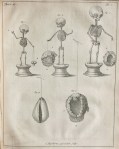
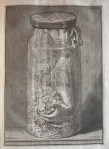
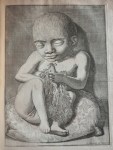
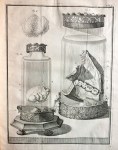
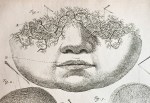
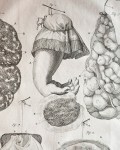
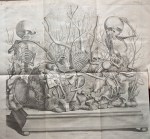
My very favorite figure operating at the intersections of art and medicine–and probably the most bizarre to the modern eye–is Dutch anatomist, artist, preparator, and early museologist Frederik Ruysch (1638-1731). A pioneer in the art of preserving the human body, he was famed for his uncannily life-like and imaginative human preparations (i.e. bits of bodies preserved for study) which he achieved through a combination of injections of colored wax and a secret alcohol-based preservation formula. He is best remembered today for his lavish memento mori-themed tableaux utilizing real human fetal skeletons and other bits of human remains (see images 15-18) which are beautifully explained by Steven Jay Gould in his book Finders, Keepers: Eight Collectors:

Ruysch made about a dozen tableaux, constructed of human fetal skeletons with backgrounds of other body parts, on allegorical themes of death and the transiency of life… Ruysch built the ‘geological’ landscapes of these tableaux from gallstones and kidneystones, and ‘botanical’ backgrounds from injected and hardened major veins and arteries for “trees,” and more ramified tissue of lungs and smaller vessels for ‘bushes’ and ‘grass.’

The fetal skeletons, several per tableau, were ornamented with symbols of death and short life–hands may hold mayflies (which live but a day in their adult state); skulls bemoan their fate by weeping into ‘handkerchiefs’ made of elegantly injected mesentery or brain meninges; ‘snakes’ and ‘worms,’ symbols of corruption made of intestine, wind around pelvis and rib cage.

Quotations and moral exhortations, emphasizing the brevity of life and the vanity of earthly riches, festooned the compositions. One fetal skeleton holding a string of pearls in its hand proclaims, ‘Why should I long for the things of this world?’ Another, playing a violin with a bow made of a dried artery, sings, ‘Ah fate, ah bitter fate.’

Rusych showcased his thousands of human preparations in his own cabinet of curiosities visited by medics and philosophers, as well as members of the aristocracy and royalty. Here, one could see not only his fantastic tableaux, but also his imaginative human specimens in glass jars, preserved organs, exotic birds, butterflies and plants. Ruysch published several lavishly illustrated guides to his cabinet; in image 1, above, you can see an allegorical view of his museum as depicted in a frontispiece to his Opera Omnia, 1721.

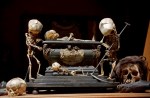
Very sadly, none of Ruysch’s astonishing tableaux are known to exist today, and are only known to us through book illustrations. One can get a sense of what the real thing probably looked like, however, in image 19, a contemporaneous 17th fetal skeleton tableau emblazoned with a memento-more-themed Virgil quote; this photo was featured in my recent exhibition The Secret Museum, on which you can find out more here. You can also still see visit many of Ruysch’s wet preparations in collections such as the St. Petersburg Kunstkammer (which has 916 of them), Museum Bleulandinum in Utrecht, and the Anatomisch Museum LUMC in Leiden.

All of these images, save the photo, are drawn from the exceptionally rich Ruysch holdings of the NYAM Historical collections. Hear more about Frederick Ruysch at the October 5th Festival of Medical History & the Arts, when Daniel Margoscy will speak on “The Anatomy of the Corpse: Ruysch, Descartes, and the Problem of Wax.”

This post was written by Joanna Ebenstein of the Morbid Anatomy blog, library and event series; click here to find out more.

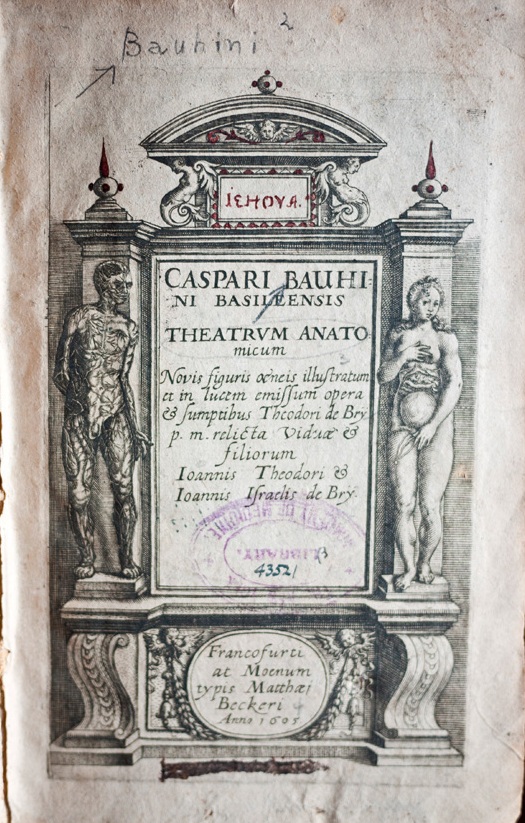
Theatrum Anatomicum, by Caspar Bauhin and Theodor de Bry, 1605 : Guest Post by Morbid Anatomy’s Joanna Ebenstein

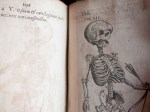
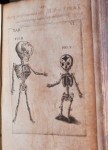
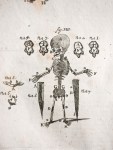
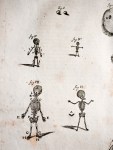
Bauhin1Here are some wonderful images from another of my favorite books in the NYAM historical collections, Theatrum Anatomicum (1605), by Caspar Bauhin and Theodor de Bry. This edition also has some especially lovely image ghosting going on.

This post was written by Joanna Ebenstein of the Morbid Anatomy blog, library and event series; click here to find out more.
Festival of Medical History & the Arts

We are excited to announce our first all-day extravaganza, co-curated by Lawrence Weschler, Morbid Anatomy, and the Center, and featuring esteemed speakers, artists workshops, behind-the-scenes tours, and more. Please check the Festival of Medical History & the Arts page and schedule for more information.

save the date Oct 5

NYC History of Medicine Events in October — Hildebrandt, Tresch, Largent, and Warner

By Lisa O’Sullivan, Director

This month sees an exciting line up of history of medicine (and science) events in NYC. In fact, almost a festival. Hope to see you at some or all…

On October 10, NYAM’s Malloch lecture series begins with an exploration of the practice of anatomy under the Third Reich, with Dr Sabine Hildebrandt discussing the impact and legacy of the 1933-1945 period. More details here.

At the NYPL’s Cullman Center, John Tresch discusses his new book “The Romantic Machine” on October 11. Tresch explores the connections between Romanticism and industrialization in Paris after Napoleon, drawing on examples from art, literature, opera, scientific discoveries, and technological advancements. Find details here.

On October 17, Mark Largent is appearing at NYAM to discuss his new book “Vaccine: The Modern American Debate”. In it he explores the history of the vaccine-autism debate and argues that it obscures a constellation of concerns held by many parents.  More details here.

And on Oct 18 the A.C. Long Health Sciences Library at Columbia will host Prof. John Harley Warner, who will speak on “The Image of Modern Medicine: Professional Identity, Aesthetic Belonging and the American Doctor, 1880-1950.” Prof. Warner focuses on the visual choices that American physicians made in representing their profession, their work, and themselves during 1880’s through the 1940’s. Details here.

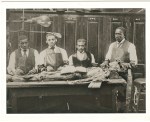
Click for larger size (possibly disturbing) images from Prof. Warner’s work with James Edmonson, Dissection.


University of Pennsylvania School of Medicine, Philadelphia, 1895. European-American dissecting teams (left) and African-American teams (right) were racially segregated after the medical student body at the University of Pennsylvania was integrated. DHMC

More upcoming events can be found on our Calendar. Please feel free to get in touch at please email history@nyam.org if you have an event you would like to see featured.

2011-2012 Helfand Fellow

Earlier this year we were delighted to host artist and scholar Cindy Stelmackowich as our 2011-2012 Helfand Fellow. Cindy was kind enough to share her thoughts on the Fellowship, and how it fits into her research trajectory.

“Receiving the 2011-2012 Helfand Fellowship in the History of Medicine has wonderful meaning to me, on both personal and professional levels. In fact, the opportunity to conduct research in the Rare Book Room at the New York Academy of Medicine completes a circle for me; its rich holdings have been pivotal to my development as a scholar.

Antoine Toussaint de Chazal, Maladies du Poumon [Lung cancer, lung cysts], 1829-1935, lithograph, 15 x 7.5 inches, pl. ll. in Anatomie pathologique du corps humain by Jean Cruveilhier. (Paris 1829-1835).


Arriving to New York from Canada for the residency at the Rare Book Room in March and April 2012 was not the first time I had an extended stay in New York City. After I finished an M.A. in Art History in 1999 from Carleton University in Ottawa, I moved to New York and worked in a contemporary gallery in SoHo as a curatorial assistant. Visiting galleries and exhibitions was a daily activity for me. Featured at The New York Public Library at this time was an exhibition entitled Seeing is Believing – a wonderful exhibition that focused on the ways illustrations were essential in spreading new scientific and medical ideas. I was hooked! I knew at that moment that not only did I now want to complete a Ph.D, but I needed to see and learn more about the illustrations and rare books I was exposed to in that exhibition. The exhibition labels noted that a number of the medical books were from the collection of the Rare Book Room at the New York Academy of Medicine. Off I went to find this treasure-trove of a library on Fifth Avenue. Needless to say, I continued to consult The Rare Book holdings at the New York Academy of Medicine while writing my dissertation on nineteenth-century anatomical atlases; no scholarly attention had previously been conducted to analyze this specific group of important medical publications and visual diagrams.

It was thereby very heartening to receive the 2011-2012 Helfand Fellowship at a time when I had finished my dissertation and am happily preparing a book manuscript on anatomical and pathological atlases. At the end of my residency in April 2012, I presented a public presentation on my research entitled Picturing Pathology: Morbid Anatomy Diagrams, Pathological Atlases and Disease 1800–1840. This paper examined how pathological ideas were embedded in new types of visual representations and newly re-ordered types of anatomical textbooks. It focused on the complex web of interconnections among disease, the body and visual representation; how aesthetic strategies, visual codes and rhetorical tropes attempted to represent key pathological concepts, discoveries and models of perception as visual diagrams became crucial to this young discipline of pathology.

The two images included in this posting represent the new types of visual imagery that emerged within medicine at the beginning of the nineteenth century in France and Britain as new systems of pathology were developing. Doctors used these innovative pathological illustrations to teach medical students how to identify signs of morbidity and disease. The desire for precise diagrams based on minute dissections of diseased tissues was of great interest to both surgeons and medical students; physicians began to either commission artists to execute detailed diagrams to add to their novel publications or spent years executing drawings of their findings. Renowned for his artistic skill as well as his anatomical knowledge, Sir Robert Carswell for example, executed the drawings in his 1838 folio-sized atlas entitled Pathological Anatomy: Illustrations of the Elementary Forms of Diseasehimself, and, as an expert lithographer, personally transferred the drawings to stone for the lithographs used in the atlas.

Robert Carswell, Neoplasms of the peritoneum, the stomach, the kidneys, the portal vein and the lung, 1832, lithograph, 13.8 x 9 inches, plate III., in Pathological Anatomy. Illustrations of the Elementary Forms of Disease by Robert Carswell. (London 1832-1838).

My scholarly interest in  these early pathological manuals outline how the dead body was initially made into a working pathological object by the profession. Central to this work is a close analysis of the visual languages of this specific archive of pathological diagrams. In this regard, I am interested in how art – its grammar, forms, aesthetic strategies – articulated and represented pathological concepts, discoveries and models of perception in the young field of pathological anatomy. This study examines the aesthetic theories that informed the dissection diagrams’ languages of representation; such as the Western art historical models and academic techniques in the art schools where anatomical illustrators were trained. Furthermore, my project will examine the myriad of representational techniques that encoded these unique images so that the various types of morbid specimens appeared as systematic, encyclopedic collections of disease.

Thank you once again to Bill and Audrey Helfand for creating and endowing this Fellowship at the New York Academy of Medicine, and to the librarians and staff in the Rare Book (Arlene Shaner and Rebecca Pou) for making my residency fruitful and enriching.

In 2012-2013, Cindy will be a Postdoctoral Fellow with the “Situating Science Strategic Knowledge” Cluster group at University of King’s College and Dalhousie University in Halifax. Her most recent publication, “The Instructive Corpse: Dissection, Anatomical Specimens and Illustration in Early-Nineteenth Century Medical Education,” will appear in a special September 2012 issue of Spontaneous Generations: A Journal for the History and Philosophy of Science devoted to “Visual Representation and Science.” You can view some of Cindy’s artistic investigations here.