How I Spent My Summer Vacation

by Anthony Murisco, Public Engagement Librarian

Labor Day is now behind us. This can only mean one thing for the students of New York City: It’s time for school to start again. The first day of school creeps up differently in other parts of our country. As a former public-school student from Long Island, I always think of Labor Day as the last day of freedom. Even if you have a day or two before the actual start, those hours are spent shopping, cramming in that reading list, and getting into the school mindset once again.  

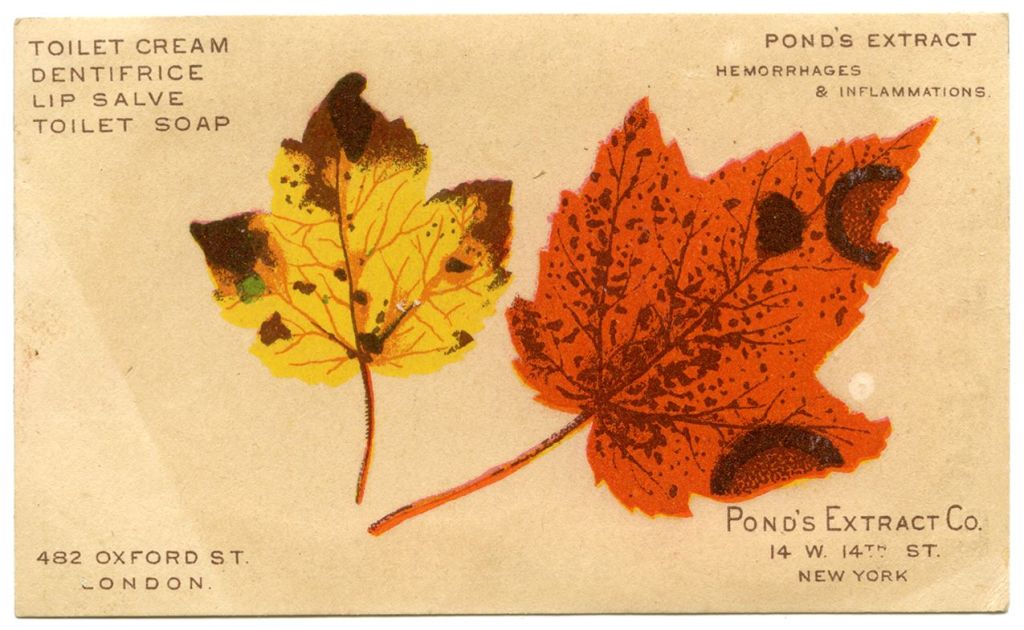
Autumnal leaves featured on a Pond’s Extract Co. trade card.

Whether it comes from a friend you haven’t seen all summer or as part of an assignment, one of the classic questions on the first day of school is always “How did you spend your summer?” In honor of the students attending classes for the first time this week, I wanted to share my own summer experience at California Rare Book School in Los Angeles.  

Since 2005, the California Rare Book School, CalRBS for short, has been able to provide professional development to those interested in rare and historical work. Their courses serve a wide array of needs of those interested in information science, whether library professionals, museum curators, or rare book collectors. All are invited to apply. The project is headed by the Department of Information Studies at the School of Education and Information Studies over at UCLA.

Joe Bruin, UCLA’s Mascot

Most of the CalRBS courses take place at the UCLA Campus, though the school is looking to expand. During this summer, a few courses were offered online, one in Mexico, and another in Brooklyn in conjunction with Booklyn. One course this summer even took place at The Huntington!

At The Huntington

There are no prerequisites, and you don’t need to be affiliated with a library or university to apply. I met fellow students ranging from recent college graduates to lifelong learners and university librarians to rare book dealers. It’s a diverse group of individuals!  
 
Each course only accepts twelve students. The small class sizes allow for better discussion and further involvement with the material. Your cohort is together from about 9am-5pm for the entire week. Don’t worry, there’s plenty of time for networking with the book aficionados from the other courses during the breaks or the various after-hours events.  

Students are expected to attend the entire week. Be punctual! You’re expected to complete the assigned readings before class and participate in discussions. Different courses have different expectations. 

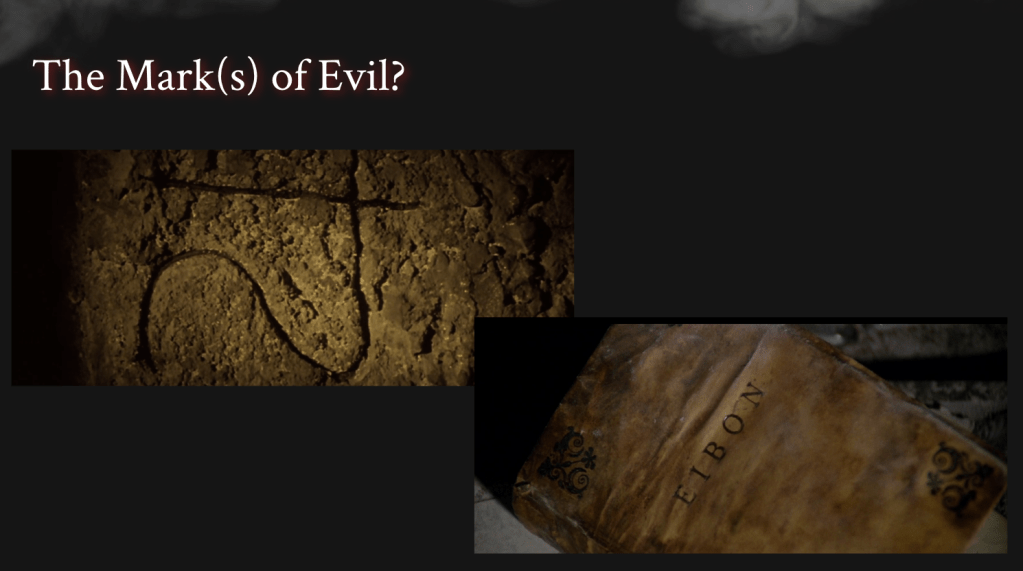
In my course, “Pop Bibliography,” we were also expected to complete a final project. Building on what we had learned throughout the week, we were to inspect a tome from popular culture and look at it through a “pop bibliographic” lens.  

A slide from my final project on the book of Eibon from Lucio Fulci’s The Beyond (1981)

As someone with a background in Culture Studies, I was excited to see Pop Bibliography on the menu this past summer. I’ve immersed myself in pop culture as far back as I can remember. Adding bibliography into the mix was just combining my two favorite things! 

“Pop Bibliography” concerns the study of book history through a popular lens. We were looking at why old, dusty, or mystical books are made to look as they do in the media we consume. How did matters end up with this way? And what are we to make of the fetishization of books in our current culture?  

The course instructor, Allie Alvis, is the curator of special collections over at the Winterthur Library. That library has a fantastic online presence. You may have seen their social media accounts, Book Historia, where Allie provides an up-close look at rare books. Showing the items in this format opens them up to a whole new audience. Some viewers may have never seen an illuminated manuscript handled before. Allie even had one of their videos go viral about the myth of using white gloves to handle rare material.  

Not only did Allie have an exciting schedule of topics prepared for us, but they invited outside speakers as well!

Prop-maker, collector, and historian Michael Corrie shared items and stories behind some of the screen’s various literature.  

Michael with a print page from Gary Ross’ Pleasantville (1998).

We got to listen and speak to game designer, Josh Sawyer, talk about the Peabody-award-winning game he directed, Pentiment. The story concerns a 16th-century illuminator caught up in a murder mystery plot. Beautiful and highly researched, accurate text abounds.  

There were also a few class trips! We were treated to a look at some of the holdings over at The Getty with the associate curator of manuscripts, Larisa Grollemond. We got to see authentic Middle Age binding as well as rebound manuscripts.

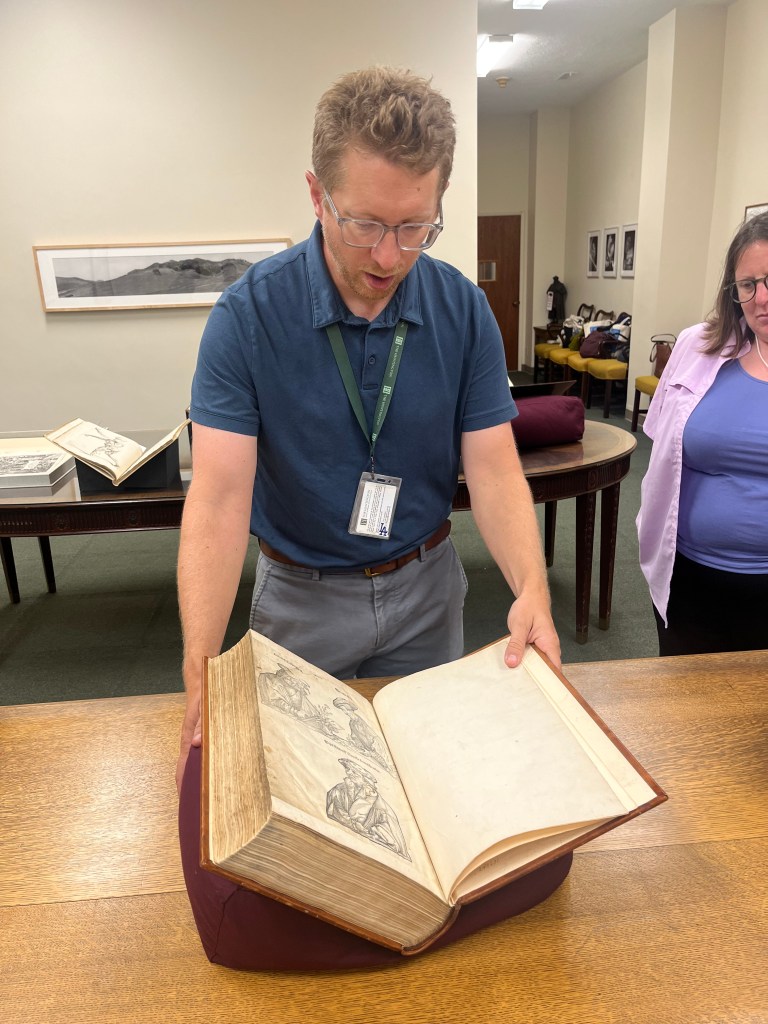
A whole day was spent over at The Huntington. First, we looked inside their exhibit, “Remarkable Works, Remarkable Times,” where we were treated to iconic pieces from their collection, including an Ellesmere manuscript of Chaucer’s The Canterbury Tales. Joel Klein, the Molina Curator for the History of Medicine and Allied Sciences, gave us a presentation of various materials. This included the recently acquired (or reacquired) Vesalius book, De humani corporis fabrica. After recent coverage we felt as if we were being introduced to a celebrity! Afterwards the rest of the RBS students joined our class for a presentation by Magali Rabasa on radical publishing in Latin America. We got to see how the same book was reworked by the different presses, leading to different expressions of the material object.  

As we were on the campus, we got a glimpse at some of the items in the UCLA Special Collections. Jet Jacobs, Head of Public Services, Outreach and Community Engagement, brought us on a tour.  

Although our focus was on Western material, Devin Fitzgerald, Curator of Rare Books and History of Printing, as well as a specialist in East Asian book history, gave us a chance to look at items printed in China, Japan, and Korea. 

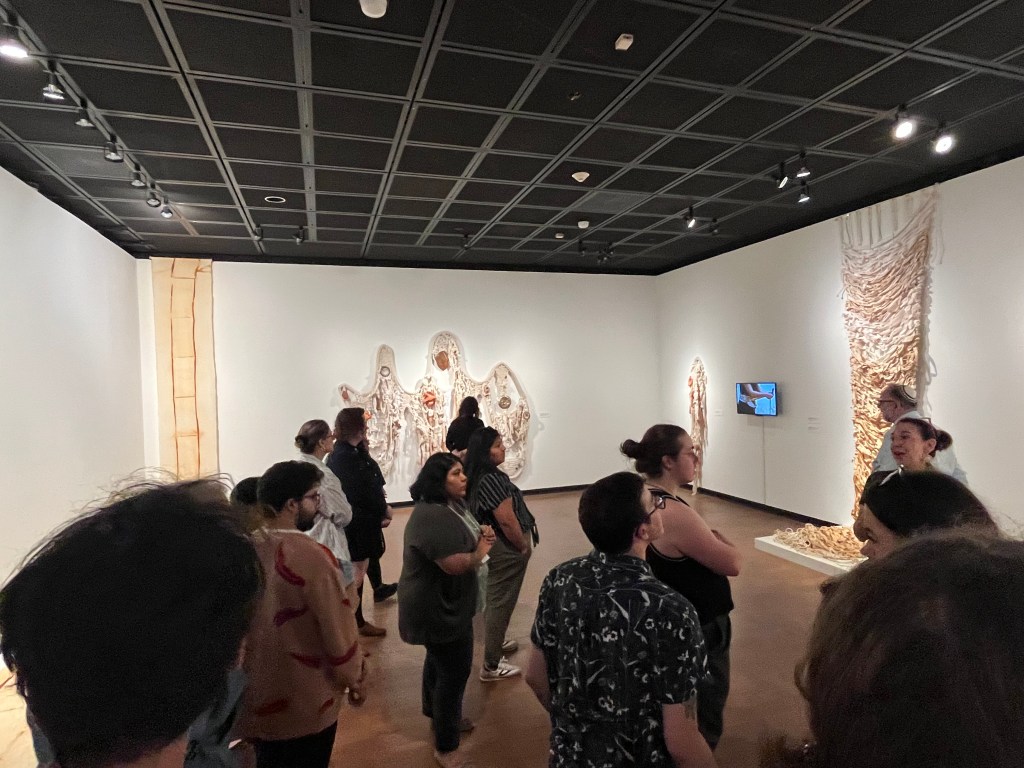
We ended our week with a department-wide celebration at the Fowler Museum at UCLA. They gave us a special tour of their latest exhibit, Sangre de Nopal/Blood of the Nopal. This exhibition teaches visitors about the Indigenous origins of cochineal, a particular red dye that was developed and first used by the Zapotec peoples. The exhibit featured work by Tanya Aguiñiga and Porfirio Gutiérrez

I will admit that I was surprised how wiped out I was by the end of the week. I hadn’t been in a grad school class in a few years. College was even further away. Nine-to-five learning is quite a workout for your brain. Then you must go back to your room to do the readings for the next day, or perhaps a small assignment. Working on the final project takes time that you need to budget for too. I won’t deny the intensity of the program, but those who enroll will feel highly rewarded afterwards. There’s a reason why it’s going to celebrate twenty years in 2025. A huge thank you to Allie Alvis, Robert D. Montoya, Sean Pessin, and Liza Mardoyan. I am looking forward to seeing what classes are going to be offered next year!  

Replica of the Book of the Dead from the classic Brendan Fraser film, The Mummy (1999; Sommers).

Whether we realize it or not, a lot of our first glimpses of “rare” or “old” books come from popular culture. For one, the Walt Disney animated canon is full of them. Before we get to the animation and songs, we see those mighty books open. Our first taste of public health is no exception. How many future doctors first heard of Gray’s Anatomy through the wordplay of the long-running nighttime soap, Grey’s Anatomy? What about those who were inspired by seeing the young Doc McStuffins perform exams on her stuffies?  

Despite being noted as a type of populism, there is a merit to studying and immersing yourself in popular culture. Culture critic Richard Dyer sees the work as a “battleground between progressive, subversive and conservative meanings.” That idea may make sitting through reruns of a Housewives franchise with your friends a little more palatable.  
 
References:  
Nowak, Samuel. “Popular Is Political Richard Dyer Talks to Samuel Nowak about Popular Culture, University and Politics.” Interviews, Museum of Contemporary Art in Krakow, Jan. 2012, en.mocak.pl/popular-is-political-richard-dyer-talks-to-samuel-nowak-about-popular-culture-university-and-politics. Accessed 04 Sept 2024.  

Sinking Our Teeth into a Poem

by Anthony Murisco, Public Engagement Librarian

As the April showers (hopefully) dwindle down, out come May flowers. The passage of the month means the conclusion of April’s celebrations, including National Poetry Month, and the commencement of the festivities of May, including National Dental Care Month. We’re going to combine both, with a poem by a dental care worker.

Anterior teeth model from Ash & Sons Catalogue (1886)

John Thomas Codman (d. 1907) was the an active speaker at various dental gatherings. He was also one of the more prolific writers on dentistry. But he wrote about more than teeth and dental issues. Dr. Codman’s writing appeared in mass market publications and he wrote about the co-op community he belonged to in the 1894 book, Brook Farm, Historic and Personal Memoirs.
 

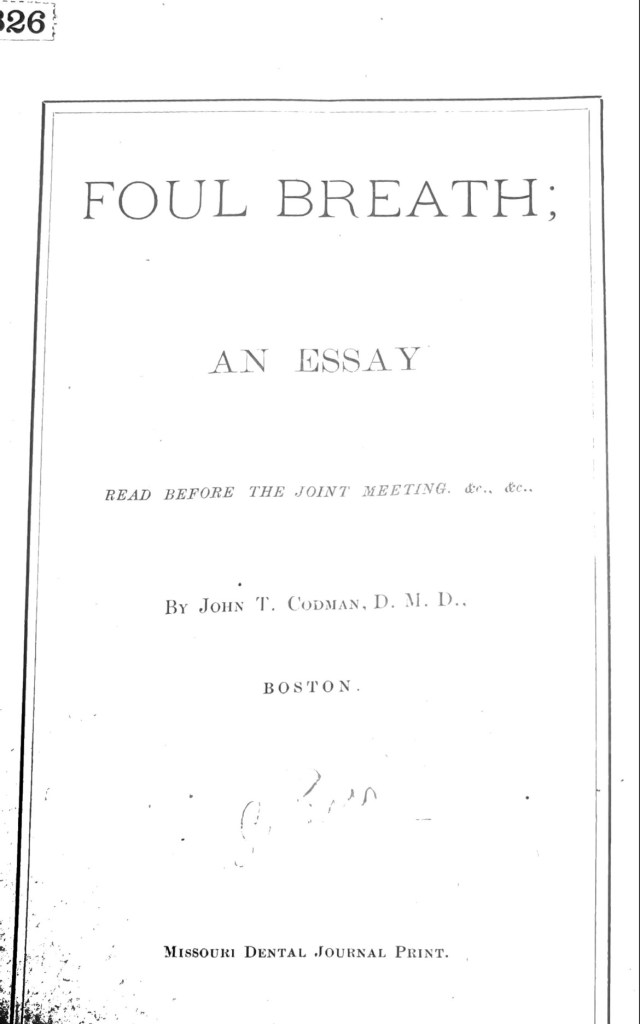
Codman broke a sensitive issue when he wrote his essay, “Foul Breath.” When speaking on the problem, he hinted at dentistry’s higher involvement with the human body; “I cannot but think that the neglect is occasioned by want of that knowledge of its primary causes, and a lack of general knowledge of the relation of all the organs, one to another, that work together for the sustenance and maintenance of the life and health of all of our corporate frames.” His words call for a well-rounded, holistic approach to the whole profession. Really, who knew one could wax so poetic about bad breath?  

Well, if you were at the 1866 meeting of the American Dental Association, you would know. In the Doric Hall of the State House in Boston, Dr. Codman welcomed the guests with a poem encompassing the birth and battles fought by our nation. It includes dental puns and nods to popular attractions in Boston. He even manages to add in a few pop culture references!

Today we bring you a slightly abridged version of this welcome poem

The Dentists’ Welcome.

Welcome, ye knights of the forcep and plugger,
The Bay State invites, embrace her and hug her;
Her arms are outstretched, and her years not so few,
That her check might mantle with blushes anew;
The friends of her dear sons from near and from far,
To her impulses pure, how welcome they are.

So, friends, from the West take a chair and sit down,
In the capitol old of this capital town;
In the hall where the “assembled wisdom” meet,
When the winter comes in with its flying sleet,
And leave only when the tubers begin to grow,
And shoots of the corn are too old for the crow.

‘Ecod, what is that which hangs high in mid air?
My professional friend, no wonder you stare;
‘Tis the ghost of a fish, long salted and sold,
But never like Hamlet’s, shall its tale unfold;
‘Tis a pity, for if he was minded to blow,
And tell all he knows of the actions below,
The “lately Departed” would wriggle and squeak,
And some heads, like curs’ tails, be drooping and weak;
He’d prove to us all what we know not before,
That men could be made of nothing but jaw.

Ye friends from the East, as ye trod the rotunda,
Saw yet the battle-flags rent all asunder?
Uncover! Bow low! For those stains are of blood
Of the martyrs that fell by field and by flood.
Ah! Could but th enote of the trumpet again
Awake the departed by hill and by plain,
And turn back the tide of the nation’s great day,
With the blot on its banner of slavery, say,
Who would sound it? Lives there such a man now?
Then shrivel his muscles and wrinkle his brow;
His right arm be palsied and dried up by his tongue,
In lines most accursed let his name be sung.

Rest, martyrs, the sound of battle is o’er,
And your feet tread soft on the Elysian shore.

Ye who come from North, Easy, South, and “far West,”
Our programme is ready, so join in with zest.
Here’s Liberty’s “cradle,” where the babe was rocked,
Such a naked little thing that the nurse was quite shocked.
She has grown pretty large since that time you’ll say,
And larger still grows with the flight of each day.
New members she’s had, and as everyone knows,
The president adds daily V. toes and V. toes.

There’s Breed’s hill, called Bunker’s where the boys had a fight,
What there is left of it, just a very small mite,
With a big pile of stones on it, so it shan’t blow away,
And to commemorate a sort of Bull Run in its day,
Only the bull didn’t run on that eventful morn,
And the Yankee boys’ pluck took the bull by the horn.

Here’s Harvard beyond, the famed “seat of learning”
For lads who are able to keep the torch burning;
The poor must digest what the schoolmaster teaches,
Driven in at the head and seat of the breeches.

Here’s Agassiz’s museum of fishes and bones,
With birds, beasts and reptiles, plants, skeletons, and stones,
And many other things that deserve your attention,
As the auctioneer says, “too numerous to mention.”

Here’s the Natural History, with molusks and “crusty”
Pickled snakes done in bottles, and specimens musty;
Here’s a good chance to “compare” the jaw-bones of owls,
With the dodo and eagle, and all sorts of fowls;
Here you can sit on a “rush-bottom” and study with ease
Whether the walrus eats pork, or the elephant cheese;
Here’s molar teeth, to pull would take forceps immense,
Got up, like the drama, at unlimited expense.

But now let us hasten, the mastodon waits;
Just imagine the creature wearing two pair of skates,
Gliding about on thick ice in the river;
Should the cold climate his carcase make shiver,
The Yankees might “guess” that his heartiest shake
Was a touch of the long-remembered earthquake.
Here’s the footprints of birds, tremendous “Shanghies,”
That could life young pigs high and dry from their sties,
And swallow them whole, spite of any protest,
With paving stones plenty to make them digest.

We’ll look at the Hospitals, City and State;
Should fortune be right, or unfortunate fate,
We need not the privilege seek for or beg
Of seeing the surgeon “make a hand of a leg.”
If Paddy could jest thus, why can’t I declare
That oft a broken arm is a humerus affair.

‘Twould take paper and ink by the ton, more’s the pity,
To tell all the wonders to be seen in our city;
So I shan’t do it, but let you explore for yourselves,
And lay up your treasures on memory’s fair shelves.

Then there’s the serious part, the weighty discussion,
The clash of ideas in serious concussion;
The din of the clinic with twenty filled chairs,
And the usual amount of splitting of hairs.
There is delegate 1, with wisdom erratic,
And delegate 2, with mallet automatic;
Like Uriah Heep, here’s a chair that can tumble
From dignified straight-back to posture most “’umble;”
But to make the thing equal, and state it right fair,
The owner is sure to set a “heap” by his chair.

…………………

My welcome is most done—it’s no welcome that tires–
And I fear that I keep you from other desires.

And now for a breath of the saltiest sea air,
A dip and a splash in Venus’ deep lair;
The steamer is ready, we wait not the oar,
Strike up, sweetest music,– away goes the shore!

Now let the gay laugh grow louder and louder,
As sweet on the nostril comes smell of the chowder;
Here’s filling to put in—there’s plate-work enough here
To last a smart dentist to the end of the year.
Success to him, say I, he fortune can win
Whose filling, in spite of the water, stays in.

With great hopes for our future, for peace while we stay,
May the star of the dentist mount high into day,
Is my wish; so, therefore, to part in good cheer,
One little conundrum I’ll venture just here.
Why is the dentist, when fishing, I pray,
Engaged in the trade he follows each day?
Can’t guess it, you say, you slyest of vulpines–
Because he, no double, will pull out some skull-pins.

A short little poem from another dentist, Dr. Ferguson.

Some of Dr. Codman’s other writings can be found in our collection. You can also find there’s a lot of poetry written by medical professionals. To see for yourself, contact library@nyam.org for an appointment.

References:  
“John Thomas Codman Brook Farm collection,” Harvard Library,https://hollisarchives.lib.harvard.edu/repositories/24/resources/3381, accessed April 30, 2024. 

Codman, John T. Foul Breath. Boston, 1879. 

Codman, John Thomas. Welcome poem: to the members of the American Dental AssociationBoston : Wright & Potter, 1866.

Holiday Sweets with Pet Milk 

By Anthony Murisco, Public Engagement Librarian 
 
Despite the name, Pet Milk isn’t for your furry friends! Formerly the Helvetia Milk Condensing Company, the company broke ground in Highland, Illinois in 1885. For years, they would be the standard for canned and condensed milk. If their own words are to be believed, they may have even given whole milk a run for their money.  

Pet Milk’s messaging made them seem like the All-American brand of milk. They were there when future President Teddy Roosevelt fought alongside other soldiers in the Spanish-American War. The canned beverage was available for our troops overseas during both great wars. What was more American than providing nourishment and daily vitamins for these heroes? When they returned, seeing the brand name in their cupboard or on the store shelves could trigger strength and loyalty. Milk was the drink of choice with the average American’s dinner. It’s no wonder that the brand had garnered such popularity! 

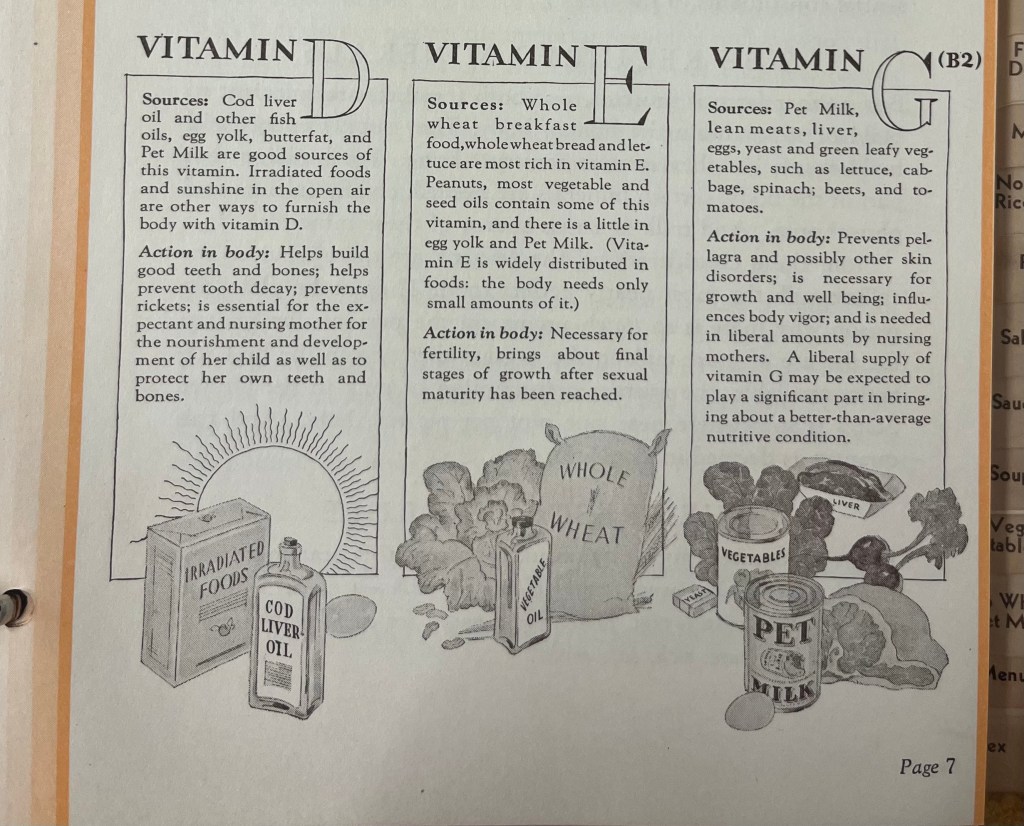
The 1932 Pet Cookbook comes after two huge American events; the end of World War I and the Great Depression. In their introduction, Pet Milk boasts of “a valuable new quality,” the addition of vitamin D. An essential vitamin, it prevents rickets in children. Despite this priceless addition, the company reminds readers—in big font—that; “the cost of Pet Milk has not been increased because of the extra sunshine vitamin D it now contains.” As Americans struggle amidst an economic downfall, the values of an American company remain true to their customers.  

The cookbook is a masterpiece of marketing and nutrition. Each recipe inside specifically calls for Pet Milk. This was done not only because they put out the recipe book, they assure you, but because their product is unlike other kinds of milk, including “ordinary whole” milk. With milk being “one of the most important of all our items of food,” or even “the most nearly perfect food,” you want to be sure you are choosing the right kind! The vitamins contained in a serving of Pet Milk span the alphabet. This isn’t the case with any other milk, they claimed. The company speaks of the importance of “irradiated” milk: using ultra-violet rays to provide an extra dose of Vitamin D.  

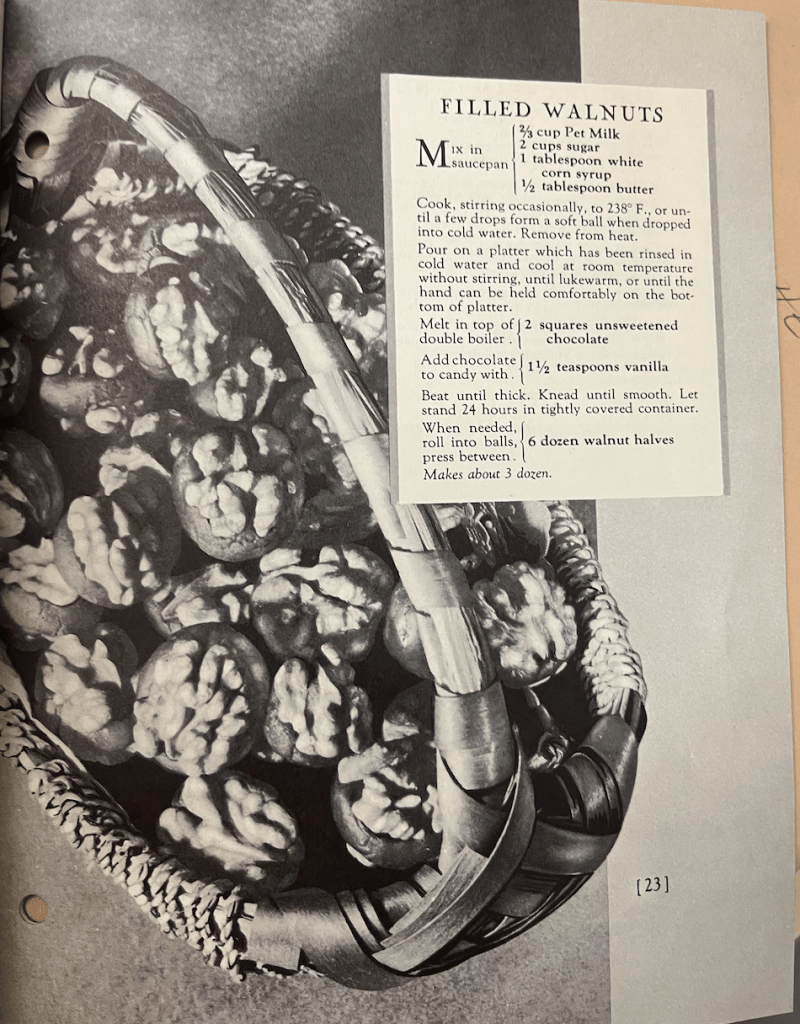
The company claims that typical whole cow’s milk could vary in taste, while Pet Milk’s provides uniform taste. For that reason, they believe it should be the standard to use in recipes. Don’t believe their words? Pet Milk boasts of the “melt-in-your-mouth texture” that stems from making candy with their product and tells you why. The photomicrograph on the left shows fewer numbers and larger crystals when making candy with regular milk. The image on the right shows what happens when you make candy with Pet Milk. Smaller crystals, and more of them, results in an eruption of flavor for your taste buds. The company was so confident in their science that it appeared almost verbatim two years later in a holiday- themed recipe book.  

Candies may be one of the most “desirable” gifts for your “holiday entertaining.” It’s not just for the younger ones! “Sweet-toothed” adults also appreciate getting treats during the holiday season. Brand loyalty is important here, Pet says. Your family will taste the difference when you make your holiday sweets with Pet Milk. And of course, you’re providing them with all the added nutrients you’ve come to expect!  

Any of these recipes featured can be replicated today. Pet Milk may not have the panache it once had but it is still available. Other brands of condensed milk can also be substituted. We cannot confirm or deny whether the lack of “flavor crystals” will impact the taste. You might want to make a couple batches just in case….  

If you can somehow manage to save some of these delicious candies for gifting, you’ll want to dress them up a bit. Pet Milk provides some suggestions for how you’ll want to give these out. Head over to your local “ten-cent store” for various containers to put them in. You can get creative here. For an added look, “flowers” made of cellophane-wrapped candies can be draped on top.  

From all of us at the New York Academy of Medicine Library, we wish you a happy and healthy holiday season. Seasons’ eatings!  

References:  
“Our History,” PET Milk, https://www.petmilk.com/history, accessed December 15, 2023. 

Pet Milk Company. Candies. St. Louis, Mo.: Pet Milk Co., 1934. 
 
Pet Milk Company. The Pet cookbook: 700 cost-saving recipes for better food / tested and approved by Good Housekeeping Institute. St. Louis, Mo.: Pet Milk Co., 1932.  

The Art of Anatomy with the Art Students League

By Arlene Shaner, Historical Collections Librarian

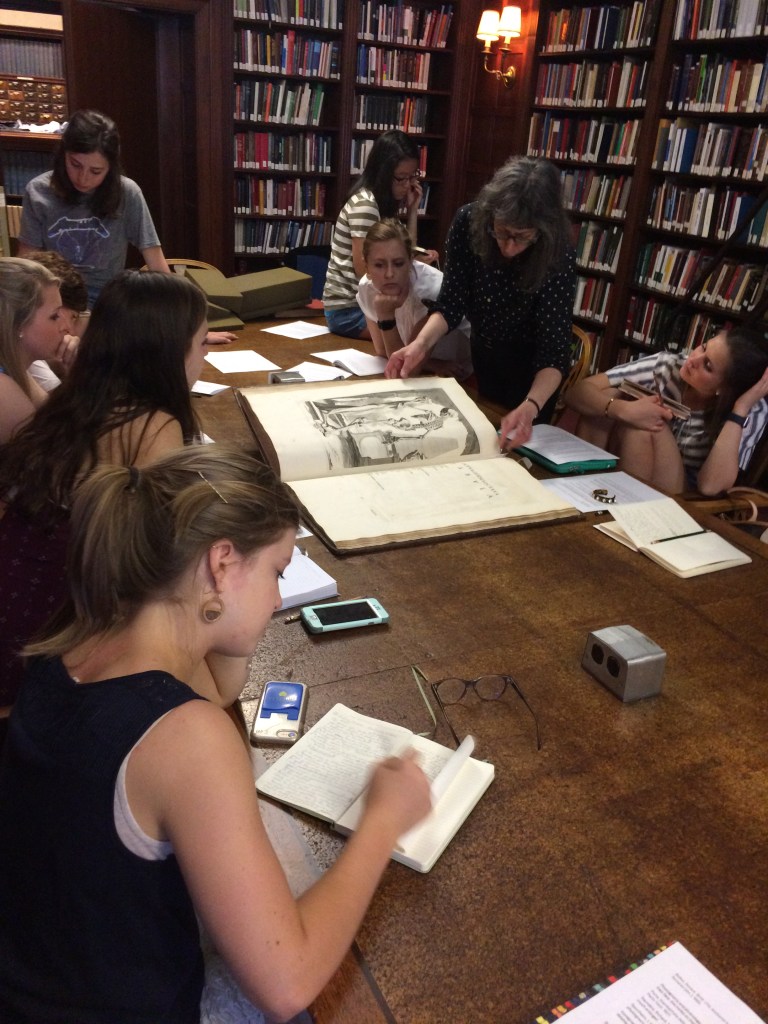
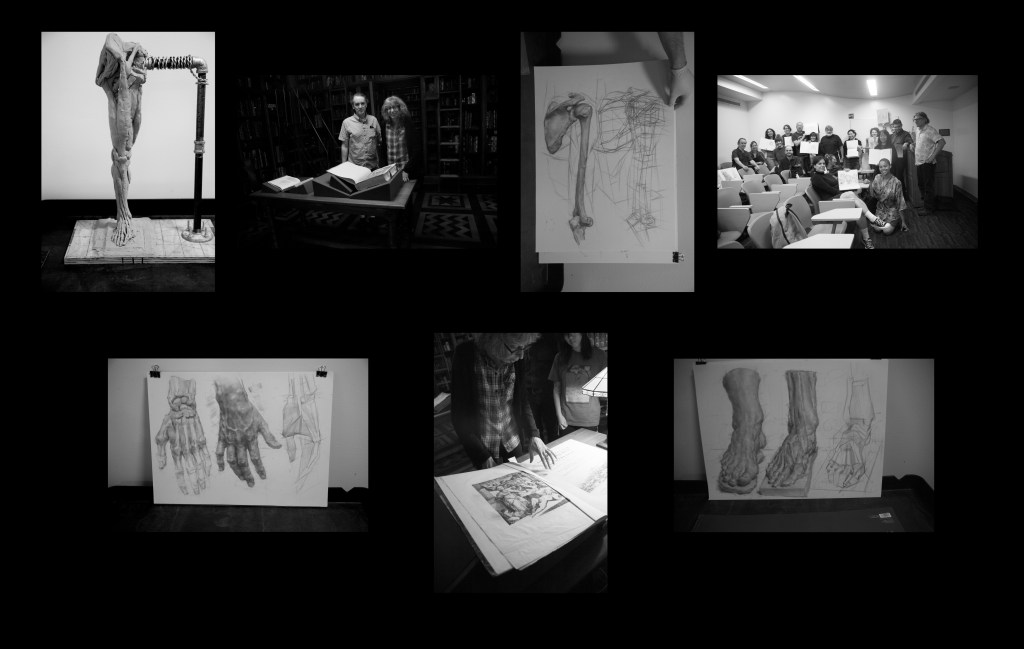
In July 2023, artist and teacher Dan Thompson brought a group of students to the Library’s Drs. Barry and Bobbi Coller Rare Book Reading Room. The students were here in New York for a week-long workshop organized by the Art Students League, “Musculoskeletal Gross Anatomy for the Figurative Artist.” We looked at anatomical atlases dating from the early 16th through the mid-20th centuries. Viewing items from our collection—like the first two images here—and engaging with the students made up the first day of the workshop. The balance took place in the Weill Cornell Medicine anatomy lab, where students worked directly with cadavers.

From Nouveau recueil d’ostéologie et de myologie…, 1779, by Jacques Gamelin

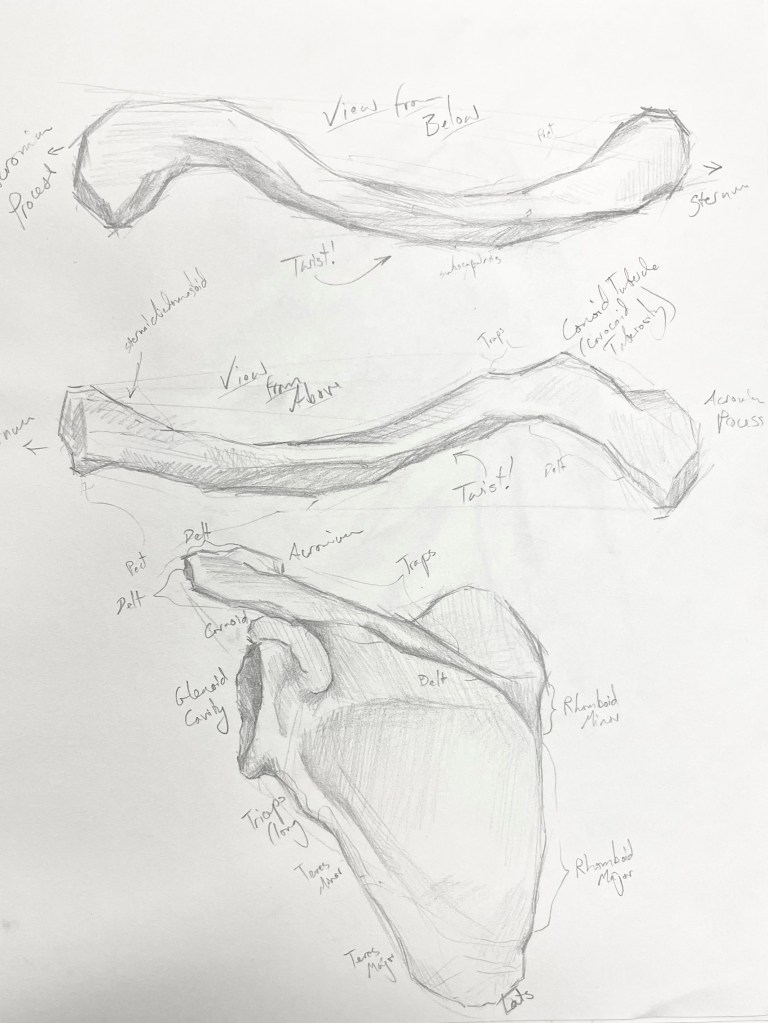
As the course description explains, “This course presents the study of anatomy as a convergence between anatomical and structural drawing. Motivated students of representational art will have unparalleled opportunities for developing detailed anatomical knowledge through their work in Cornell College of Medicine’s anatomy lab, where they will explore the complexities of the body through the study of prosections and cadavers. Prosections are specially prepared human anatomical specimens, wrapped in a damp preservative, as well as plastinated specimens, which allow for the study of deeper and more isolated anatomical structure. Through laboratory drawing, participating students will become more familiar with the manner of interlocking deeper forms—forms which are not typically clear on anatomical models (due to the haphazard ways that art school skeletons are wired together). Ultimately, students will work towards achieving greater anatomical clarity and validity in their drawing studies, which will be applied to creating higher quality figurative work in the visual arts, from a finer appreciation of human construction.”

From Anatomie du gladiateur combattant…, 1812, Jean-Galbert Salvage

Dan teaches at the New York Academy of Art and I have hosted Dan’s New York Academy of Art students here for several years; I first hosted his workshop for the Art Students League in the summer of 2022. This year Dan invited me to visit Weill Cornell’s anatomy lab with the workshop class so that I could gain a deeper understanding of how he teaches with human specimens and watch students make their own drawings and sculptures from cadavers, prosections, and plastinated specimens. Being in the anatomy lab was, for me, a transformative experience, as I had never had the opportunity to see actual cadavers and specimens and think about their relationship to images from historical texts that I share with classes when they visit. 

Workshop participant Karina Fuhrman shared images from the visit to the rare book room. The drawings were done by Dan Thompson and the sculpture was done by Karina during her time in the dissection lab.

After the class had ended, I asked if the students would be willing to send their work to me so that we could share it with a broader audience. Many sent images, and it is a privilege to be able to show some of those here.

Artist: Alan Lee
Artist: Anna Charuvastra
Artist: Chalice Mitchell
Artist: Eva Avenue
Artist: Jae Park
Artist: Kristin duCharme
Artist: Renee Wang

Classes from many local institutions regularly visit the rare book room to engage with materials from our collections. Dr. Evelyn Rynkiewicz, who teaches at FIT, has brought her class “Disease Ecology in a Changing World” more than once. After their 2022 visit, she wrote a blog post about the experience, which you can find here.   
 
If you are interested in bringing your class to the New York Academy of Medicine Library, please reach out to ashaner@nyam.org.

Hello, Summer!

By Anthony Murisco, Public Engagement Librarian

As we pass the longest day of the year, we arrive at summer!  

We began our celebration of the summer with the annual Museum Mile Festival on Tuesday, June 13th. Each year, all the cultural institutions along 5th Avenue get together to highlight what we have to offer. Think of it as a block party for museums! The stretch starts around 85th Street with The Met and ends at 110th with The Africa Center.  
 
This year the Museum Mile Festival celebrated its 45th anniversary. It also happened to be the 100th birthday of our neighboring institution, The Museum of the City of New York! From where we were set up, we could hear the titular song from the new musical “New York, New York” in observance. 

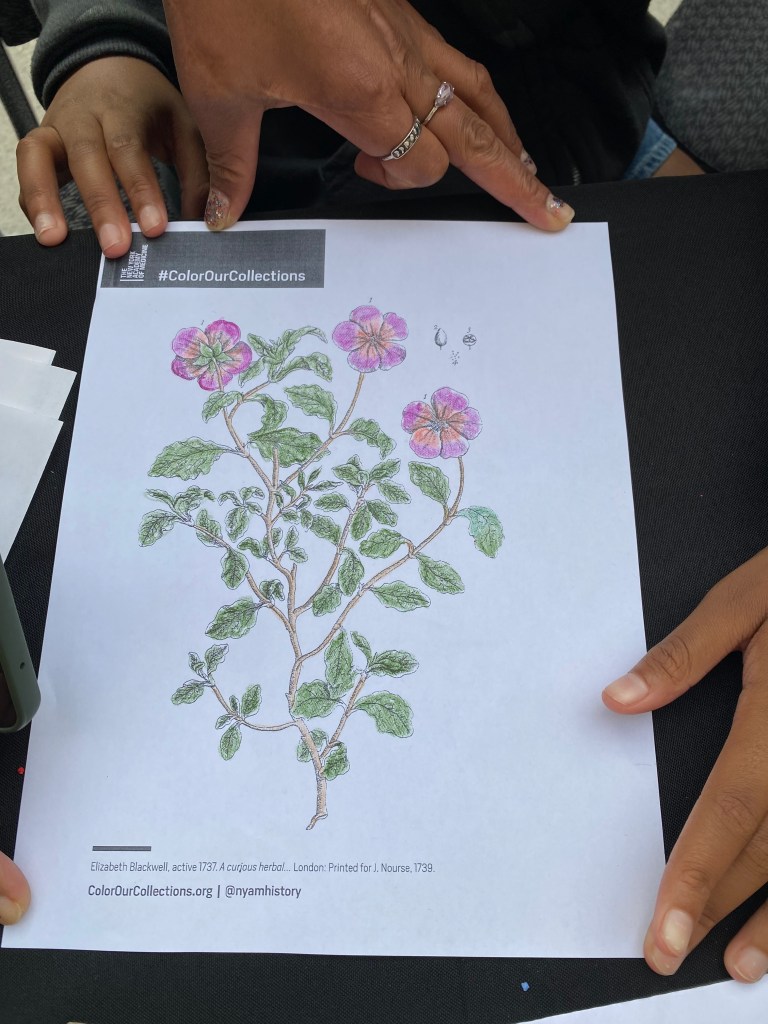
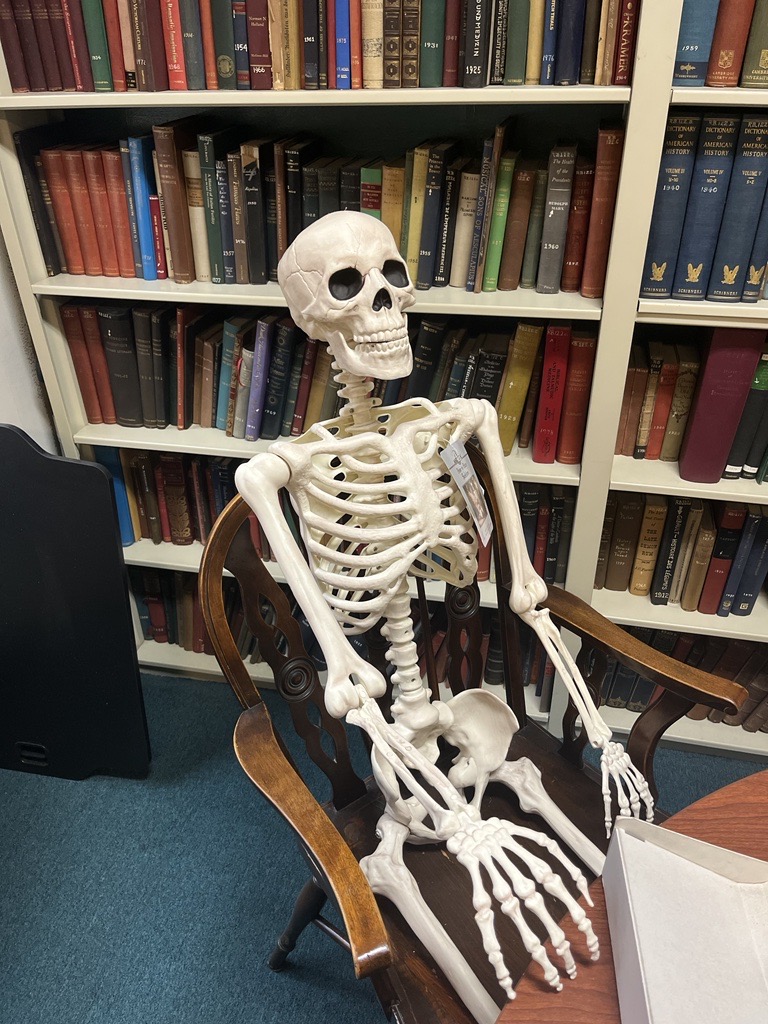
NYAM’s table was set up outside 103rd Street right across from Central Park. Our set-up highlighted the treasures from our collection with replicas of assorted pamphlets. This included a photo-op with our new skeletal employee. There were plenty of crayons on hand for visitors to engage in sheets from our Color Our Collections coloring books. Sidewalk chalk was on offer to decorate the closed city streets.  

The NYAM Team enjoyed talking with the passers-by. These encounters gave us ideas on how best to invite the community through our doors to engage with our organization. A reminder that throughout the year on the first Monday of every month at 12 pm (holidays excepted), we offer tours of our library highlighting a portion of the collection. While we understand it may not be possible for some to attend, we continue to look for other ways to highlight our rich holdings.  

For some, the Museum Mile Festival is their unofficial kick-off to summer. Others wait for the official start on the day of the summer equinox. Students may celebrate on the last day of classes when their summer vacation starts. 

While not all of us get that traditional summer vacation, the season brings to mind the need for some real relaxation. Whether it be lying by the beach, going for a run in the park, or seeing your favorite baseball team play, we each have our own ideas of what it means to take it easy. It could be a tropical vacation that’s been on your calendar for months, or a day trip you take with friends out East to a winery. One doesn’t have to spend time lamenting a lost youth!  

Some like to relax by swimming. We’ve previously investigated tips and tricks to make your swimming more artful or, the proper scientific form. Others visit different places. Our blog has also shared what happens when the God of love needs some rest and relaxation. It goes to show that if they need it, we do too. 

Here at NYAM, we want to hear how you are spending this leisure time. Send us a postcard detailing what you’ve been up to in your downtime or  some photos or videos (no faces please!) at librarysocial@nyam.org or the New York Academy of Medicine, 1216 Fifth Avenue, New York, NY 10029 (Attn: Library). We’re excited to see what you are up to!  

Throughout the summer we hope to share with you what others have been doing. We need to recharge once in a while. Your relaxation tips might inspire others! You never know what may lie in your own backyard.  

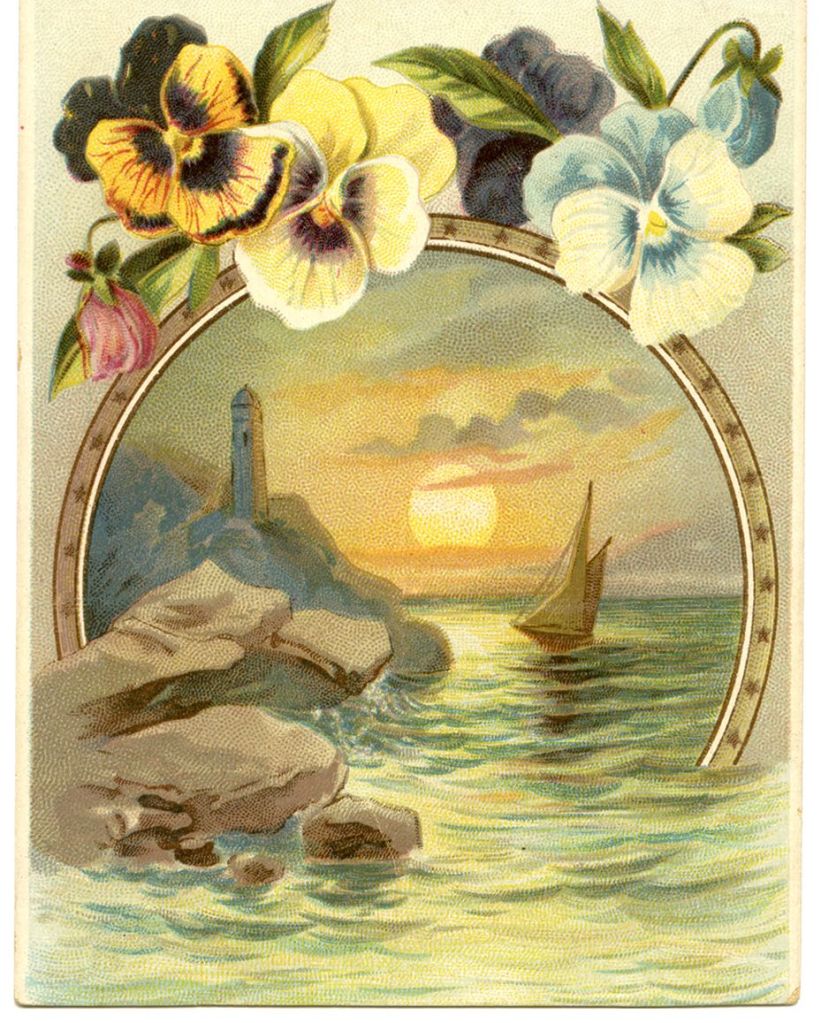
(Enjoyed the colorful, illustrated images? They come from our William H. Helfand Collection of Pharmaceutical Trade Cards collection which is available to view online!)

May 2023 NYAM Library Wrap-Up

By Anthony Murisco, Public Engagement Librarian

May brought us flowers and a lot to celebrate on social media!

Throughout the month of May we observed Mental Health Awareness Month. This included sharing information and graphics from the National Alliance on Mental Illness. On May 11, we observed National Children’s Mental Health Awareness Day. Kids often imitate adult behavior. Passing down healthy habits, including ones related to mental health, is imperative!

A colorful illustration of a group of kids. They are in front of a door. One boy is tying roller skates. A blonde haired girl is running to another boy who is riding a fake horse with a cowboy hat.

The popularity of Star Wars continues to this day. Just after the movie’s premiere in the late 1970’s, President Carter and the National Immunization Program asked the film’s two droids, R2-D2 and C-3PO, to star in a campaign promoting immunization. A television commercial and a poster were made for this, with the latter in our collection.

The Star Wars droids are asking parents of Earth to immunize their children in this printed PSA.

School nurses are some of the first healthcare workers that children meet. On May 10th we celebrated them. National School Nurses Day invites us to thank these caregivers. This photograph from Health Work in the Schools by Ernest Bryant Hoag and Lewis M. Terman shows a school nurse in action.

A black and white image. Caption reads "School nurse recording pulse and temperature in an open-air class."

Who better than to help us celebrate Mother’s Day and Women’s Health Week than the Roman goddess of women’s health, Juno. She made her appearance in 1950 at the Cleveland Health Museum, helping to explain how the female body worked.

A photograph of the transparent Juno statue from the side. Juno is a life-size woman.

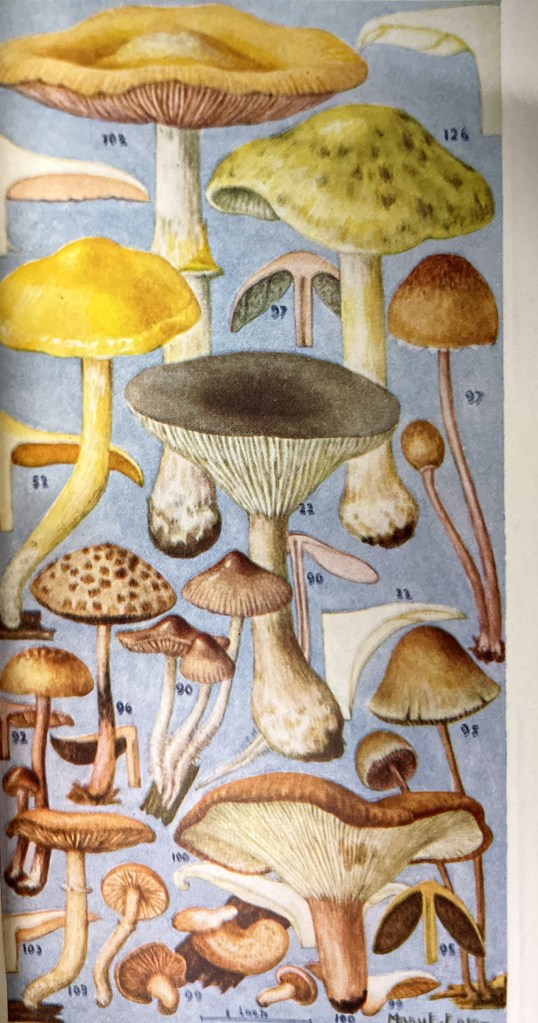
Do you like foraging for your food? Then you probably celebrated National Mushroom Hunting Day on May 17th. The Field Book of Common Gilled Mushrooms by William S. Thomas helps you identify which you can eat and which you cannot!

A colorful illustration of various mushrooms.

World Goth Day happened on May 22nd. The macabre is at the forefront of this often-misunderstood subculture. We showed off some of the many skeletons in our collection, including this from The Last Will and Testament of Basil Valentine by Basil Valentine.

A skeleton stands on a platform.

One of New York City’s prominent bridges, The Brooklyn Bridge, celebrated its 140th birthday on May 24th. It appears on a card from our William H. Helfand Pharmaceutical Trade Card collection promoting Lydia E. Pinkham’s Vegetable Compound.

The front side of the trading card. A drawing of the "East River Bridge" is front and center with ships sailing around it. Lydia E. Pinkham's Vegetable compound is a featured banner in the middle of the bridge.

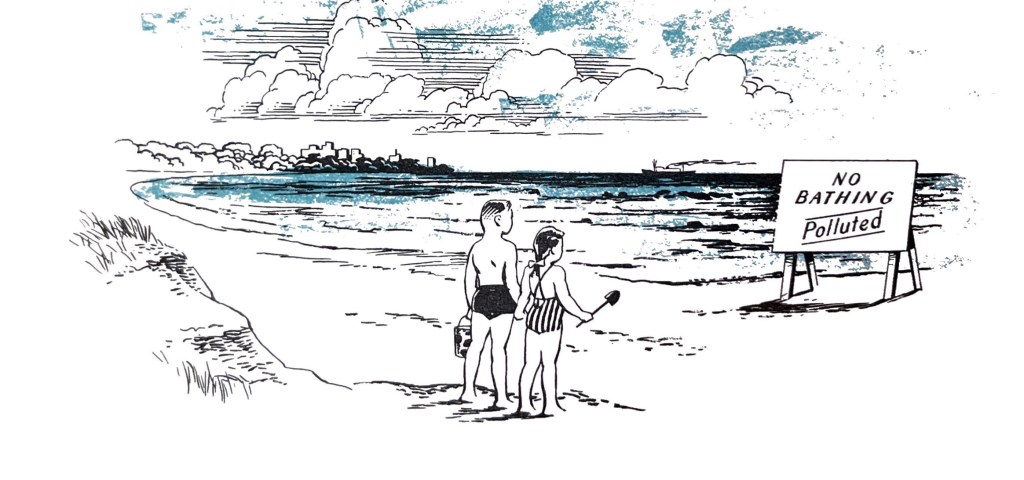
International Plastic Free Day on May 25th seeks to have at least one day without single-use plastics. The day usually falls around Memorial Day, a long weekend often spent enjoying picnics, the beach, or hiking, all occasions tempting us to be wasteful. To keep on enjoying, we need to squash the usage of these products.

An illustration of two beach-goers unable to go to the beach. A sign reads "No Bathing. Polluted."

Throughout the month, artists used the hashtag and prompt #MerMay as a creative inspiration signaling mermaids and mermen. Towards the end of the month, we shared another image from the Helfand Trade Card collection, this one featuring the aquatic folk using Ayer’s Hair Vigor to attract sailors.

Four mermaids are applying hair tonic. In the background a fifth mermaid is approaching a ship.

Finally, we are counting down the days until Museum Mile Festival 2023! On Tuesday, June 13th, cultural institutions along Museum Mile on 5th Avenue will be celebrating with extended hours, giveaways, and a look inside the collections. The NYAM Library will be set up at 103rd and 5th—come visit us!

The New York Academy of Medicine Library posts updates like this throughout the week. We can be found online over at Facebook, Instagram, and Twitter. Check back here or on our social media for more chances for a look inside our collection!

A skeleton sits in a chair. They are surrounded by old books.