Godman’s mammals: An Illustrated Natural History

By Rebecca Pou, Archivist

I have our rare book cataloger, Tatyana Pakhladzhyan, to thank for introducing me to American Natural History, a delightful three-volume set by John D. Godman (1794-1830), a physician, lecturer, and naturalist. She initially came across it in our S.132 section, which comprises books on zoology, natural history, and mineralogy (The Academy library has a unique classification system – watch the blog for an upcoming series on our staffers’ favorite sections.)   After consulting with our curator, the decision was made to move the book into our Americana collection.

Godman, American Natural History, 1826-1828.

Engraved, added title page in Godman’s American Natural History, 1826-1828.

Though he is best known as a naturalist, Godman first made a name for himself as a medical man. Godman studied at the University of Maryland Medical School, graduating in 1818. He then moved around Pennsylvania and Maryland for a few years and succeeded in Philadelphia as a lecturer. Godman moved to Cincinnati in 1821, where he briefly taught at the Medical College of Ohio.1,2

In 1822, Godman moved back to Philadelphia. The next year he took over leadership of the Philadelphia School of Anatomy.1 Godman had a lifelong interest in nature, but it is in this period that he began to focus on his natural history studies. He became a member of the Academy of Natural Sciences of Philadelphia, the Franklin Institute, and American Philosophical Society.2 In 1826, he became the chair of anatomy at the Rutgers Medical College in New York City, but he was ill with tuberculosis and soon resigned. Too sick to lecture, he devoted himself to his literary pursuits and died in 1830. In his later years, he wrote a series of nature essays that were first published in a magazine and then posthumously as a collected work, Rambles of a naturalist.1,2 These essays are considered to be significant yet understudied American nature writings.2

Godman also contributed to medical literature, both as a writer and editor. He published a work on fasciae of the human body, Anatomical Investigations, in 1824. While living in Cincinnati, he edited the short-lived Western Quarterly Report of Medicine, Surgical, and Natural Science, which was the first medical journal published west of the Alleghanies.1,2 He later served on the editorial board of the Philadelphia Journal of the Medical and Physical Sciences, which was renamed the American Journal of Medical Sciences thanks to his efforts.1

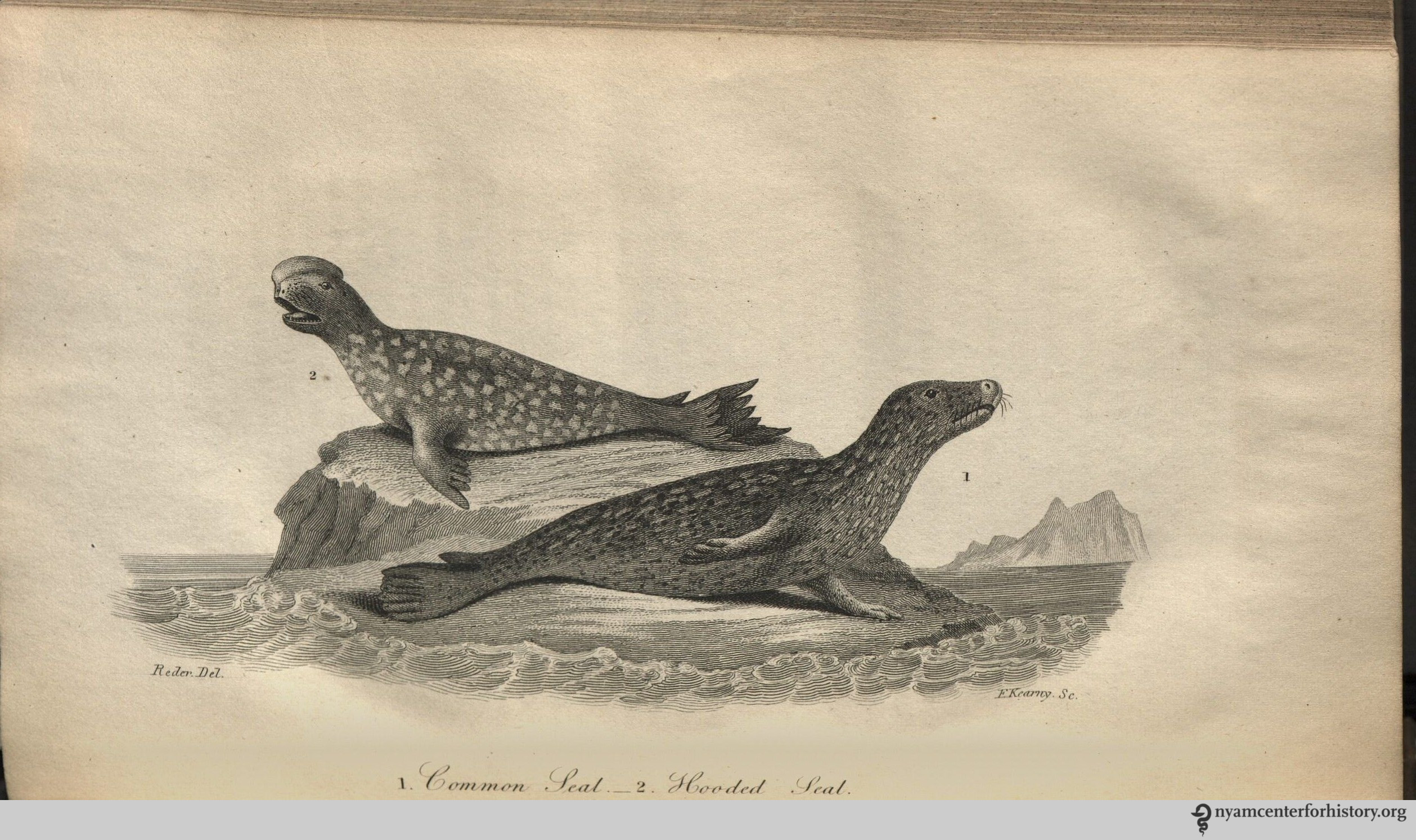
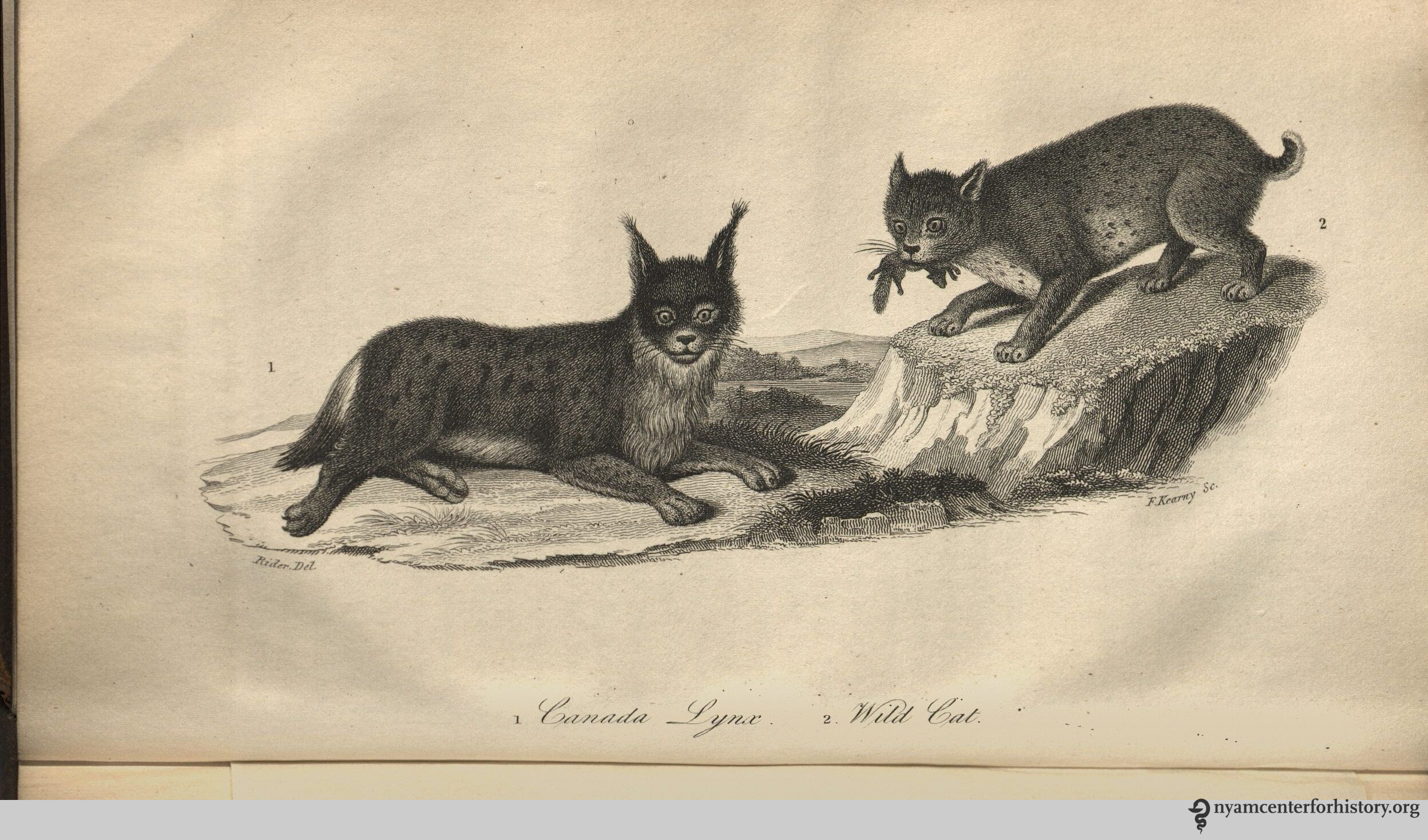
American Natural History is Godman’s effort to document and classify North American mammals. The creatures include wolves, bears, seals, cats, weasels, the domestic dog, and the decidedly American bovine, the bison. The descriptions are accompanied by illustrations depicting the animals with remarkably expressive faces.

godman_americannaturalhistory_1826_v1_bats

Bats from Volume I of Godman’s American Natural History, 1826-1828.

As Godman details in the preface, he started on American Natural History in 1823 and anticipated a speedy year to year and a half of work to publish the first volume. Instead, the first two volumes were published in 1826 and the third followed in 1828. He explains the delay:

“It has been frequently necessary to suspend it for weeks and months, in order to procure certain animals, to observe their habits in captivity, or to make daily visits to the woods and fields for the sake of witnessing their actions in a state of nature. On other occasions we have undertaken considerable journies, in order to ascertain the correctness of statements, or to obtain sight of an individual subject of description.” (pp v-vi).

Godman’s emphasis on observation paid off; his work is noted for its accurate descriptions.2,3

Harlan_FaunaAmericana_tp_watermark

Title page of Harlan’s Fauna Americana, 1825. Click on enlarge.

Looking further down the same shelf, we found another early American book on mammals, Richard Harlan’s Fauna americana: being a description of the mammiferous animals inhabiting North America. This was published just a year before American Natural History. Harlan’s book was based on A. G. Demarest’s Mammologie (1820). Godman openly criticized Harlan for this reason and maintained the superiority of his work. A rivalry developed between the two, with Godman generally considered the victor.2 Wesley C. Coe corroborates this in his article “A Century of Zoology in America.” He regards Harlan’s text as “a compilation of work from European writers…[that] had little value,” while Godman’s is an “illustrated and creditable work.”4 Nevertheless, Fauna americana will soon join American Natural History on the shelves of our Americana collection.

Please enjoy this selection of illustrations from American Natural History:

godman_americannaturalhistory_1826_v1_commonwolf_duskywolf_watermark

Common wolf and dusky wolf in Volume I of Godman’s American Natural History, 1826-1828. Click to enlarge.
godman_americannaturalhistory_1826_v1_seals_watermark

Common and hooded seals from Volume I of Godman’s American Natural History, 1826-1828. Click to enlarge.
godman_americannaturalhistory_1826_v1_lynxandwildcat_watermark

Canada lynx and wild cat in Volume I of Godman’s American Natural History, 1826-1828. Click to enlarge.
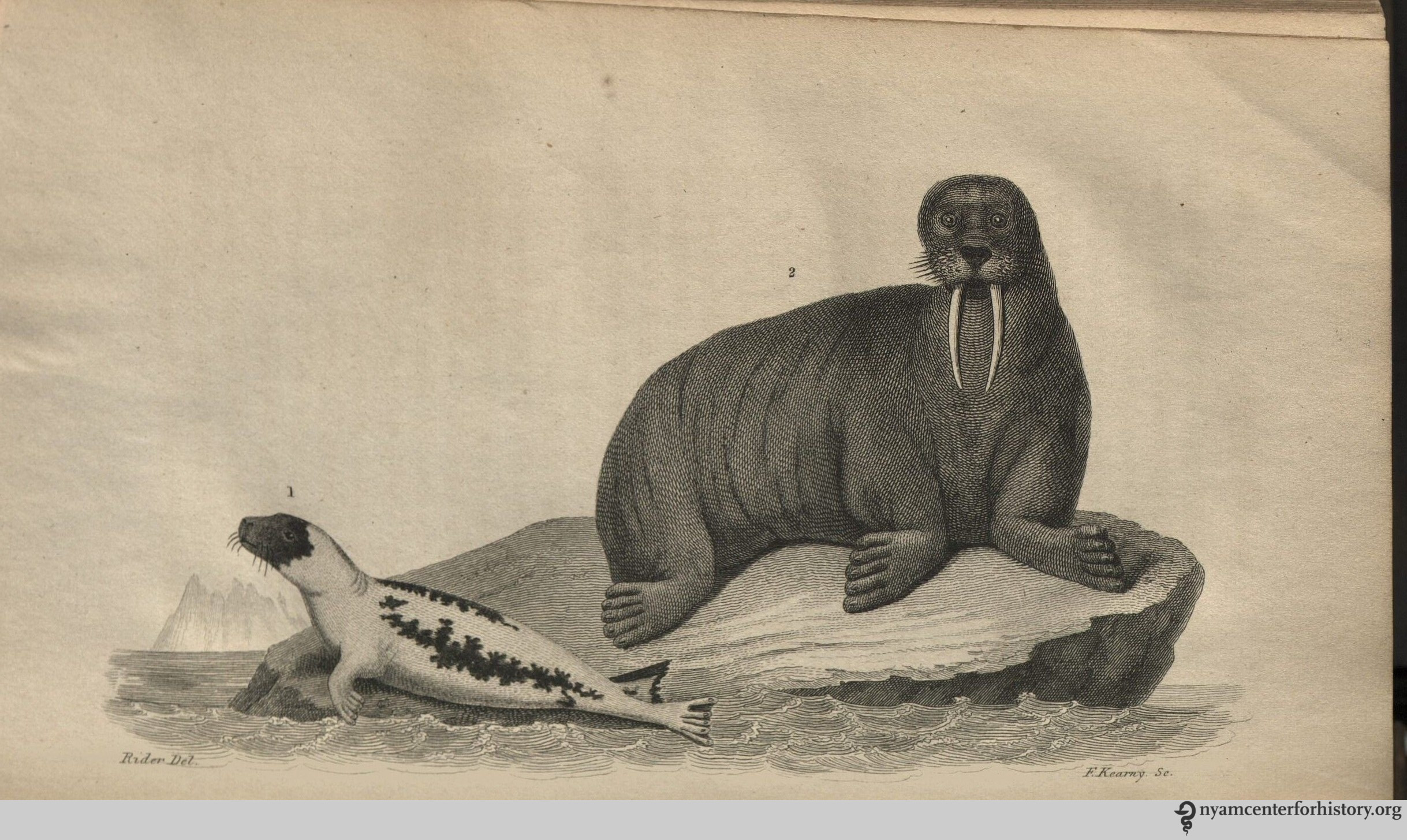
godman_americannaturalhistory_1826_v1_harpseal_walrus_watermark

Harp seal and walrus in Volume I of Godman’s American Natural History, 1826-1828. Click to enlarge.
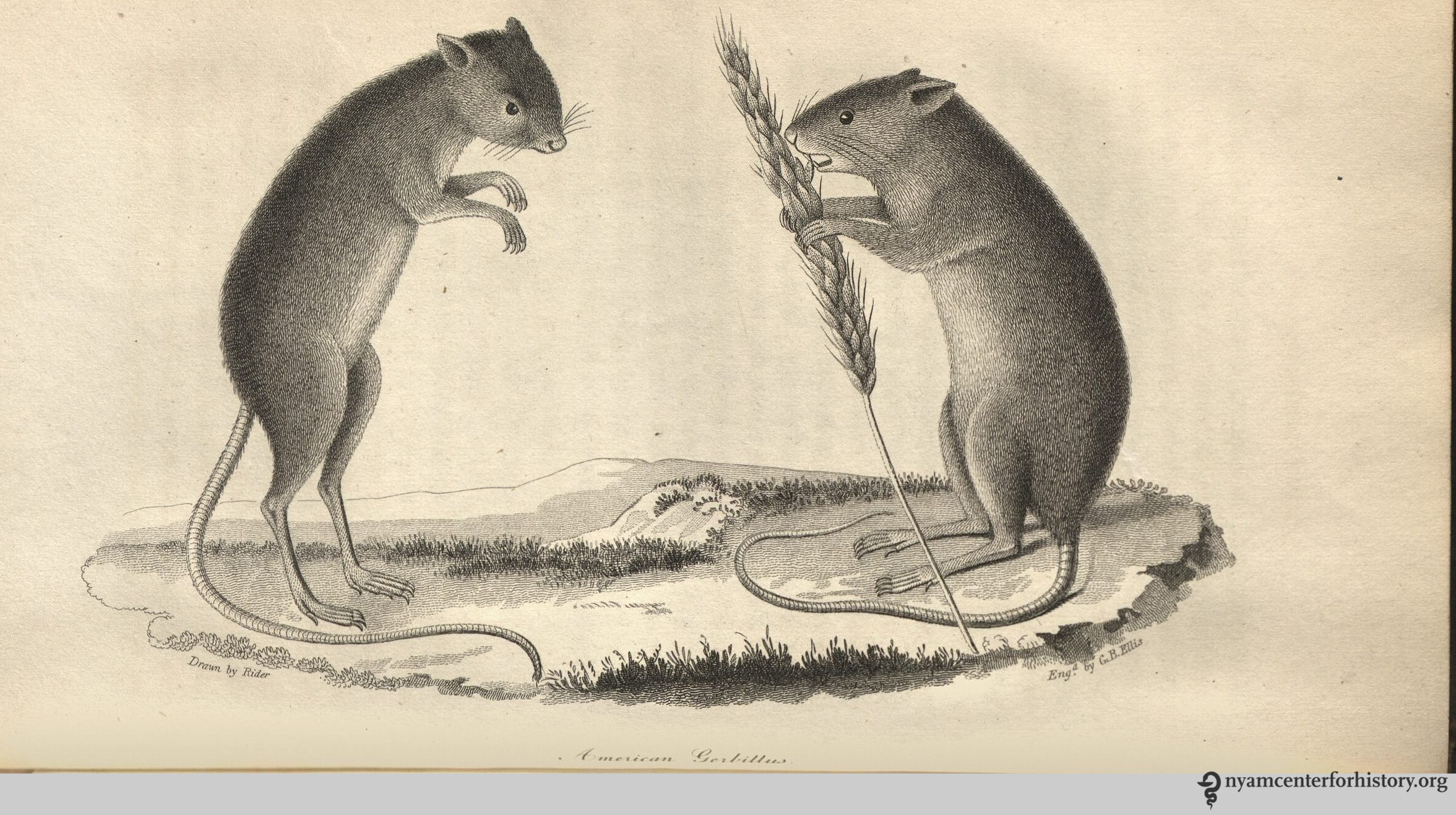
godman_americannaturalhistory_1826_v2_americangerbillus_watermark

American gerbillus in Volume II of Godman’s American Natural History, 1826-1828. Click to enlarge.
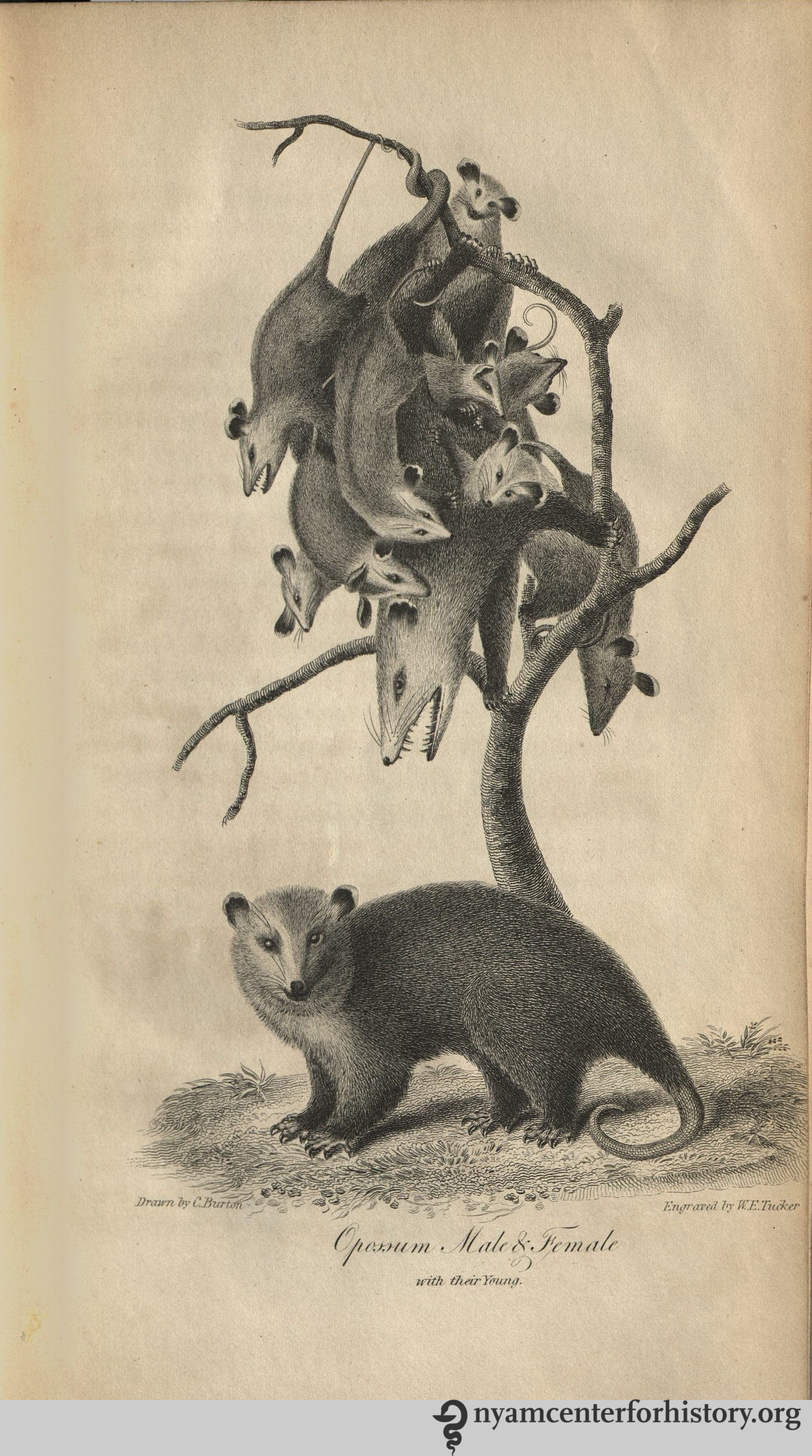
godman_americannaturalhistory_1826_v2_opossums_watermark

Opossums in Volume II of Godman’s American Natural History, 1826-1828.

godman_americannaturalhistory_1826_v2_goatandantilope_watermark

Mountain goat and prong-horned antilope in Volume II of Godman’s American Natural History, 1826-1828.

godman_americannaturalhistory_1828_v3_bison_watermark

Bison in Volume III of Godman’s American Natural History, 1826-1828. Click to enlarge.

godman_americannaturalhistory_1828_v3_dolphin_watermark

Dolphin in Volume III of Godman’s American Natural History, 1826-1828. Click to enlarge.

References

  1. “Godman, John Davidson.” In Dictionary of American biography, edited by Allen Johnson. New York : Charles Scribner’s Sons, 1931.
  1. Rosen, Susan A. C. “John D. Godman, MD.” In Early American nature writers: a biographical encyclopedia, edited by Daniel Patterson, Roger Thompson, and J. Scott Bryson. Greenwood Publishing Group, 2008. Retrieved from http://books.google.com, July 28, 2016.
  1. Faul, Carol. “Godman, John Davidson.” In Biographical Dictionary of American and Canadian Naturalists and Environmentalists, edited by Keir B Sterling. Westport, Conn: Greenwood Press, 1997. Retrieved from http://books.google.com, July 28, 2016.
  1. Coe, Wesley. “A Century of Zoology in America.” The American Journal of Science series 4, 46 (1918): 355-398. Retrieved from http://books.google.com, July 28, 2016.
 

The Influence of Sunshine and Pure Air: New York City Parks and Public Health

By Emily Miranker, Project Coordinator

My first picnic of the summer was picture-book perfect. Norman Rockwell would have approved: my friends and I clustered on blankets sipping lemonade, lightly toasted by the sun and gently cooled by a breeze, occasionally tossing a stray ball back to a child or sharing tidbit of our cold chicken lunch with an eager puppy.

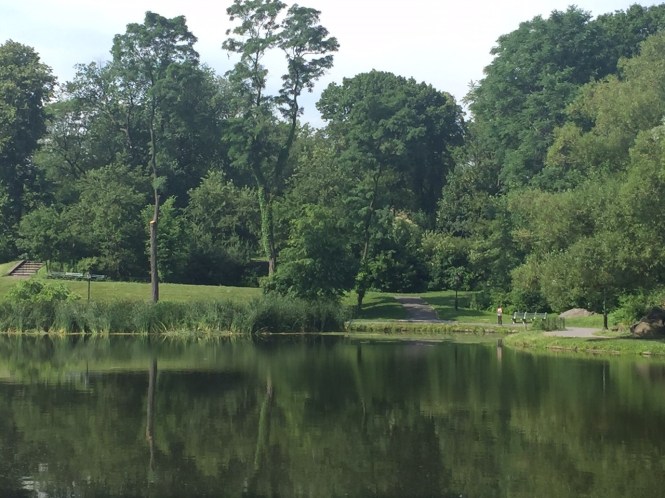
Central Park - Harlem Meer_EM

Central Park’s Harlem Meer.  Photo:  Emily Miranker

The belief that public parks are “a fundamental need of city life,”1  goes very deep. The father of American landscape architecture, Frederick Law Olmsted ‑to whom (along with Calvert Vaux) New York City owes not only Central Park; but Prospect Park, Carroll Park, Fort Greene Park, the Parade Ground and Von King Park,2 commented that it was more than delight in nature that made parks so vital. There was a health benefit too. “The enjoyment of scenery employs the mind without fatigue and yet exercises it; tranquilizes it and yet enlivens it; and thus, through the influence of the mind over the body gives the effect of refreshing rest and reinvigoration to the whole system.”3

The Park Association of New York City (today New Yorkers for Parks) took up Olmsted’s charge after his death. Several small associations banded together in 1908 to form The Parks and Playgrounds Association of the City of New York; primarily concerned with advocating for children with no outdoor spaces in their neighborhoods. This organization merged with the Battery Park Association and the Central Park Association to become the Park Association in 1928. “Our purpose,” they declared, was to advocate park extension, defense and betterment, as parks were “essential to the mental, moral and physical well-being of city dwellers.”4  The starting point was that ever persistent New York City need: land.

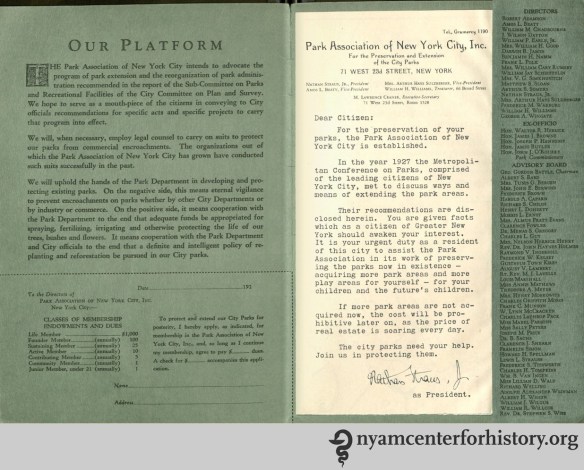
Our collection boasts a wonderfully-designed pamphlet from this period soliciting support for the Park Association.  The pamphlet argues for the maintenance of city parkland, and the acquisition and development of more land dedicated to greenspace.

The pamphlet includes a colorful fold-out map. On the map, green illustrates the city’s parks as of 1927, yellow, the land purchased and intended for park use but not yet developed, and red, land recommended for purchase by the 1927 Metropolitan Conference on Parks but not yet purchased by the city.

parkassociation_toprotectandextend_map_192

Fold-out map published by the Park Association of New York City.  To Protect and Extend our City Parks for Posterity.  ca. 1927.

parkassociation_toprotectandextend_1_192

Inside of pamphlet with introductory letter from President Nathan Straus.  To Protect and Extend our City Parks for Posterity.  ca. 1927.

The pamphlet’s call to action is to “make the yellow and red green.” Indeed, many of those patches on the map have since become green.

The Trust for Public Land (TPL), whose mission to create and protect land for people ensuring healthy and livable communities is much like the Park Association’s just on the national scale, spends a fair amount of time bolstering their advocacy for parks with research on the health benefits they provide. In 2006, TPL released a white paper on the health benefits of parks, underscoring the argument that parks are a wise investment for communities.5 You can read the report online for percentages, statistics, financials, and citations of peer-reviewed work; but in brief: greenways enable people to exercise, improve mental health, offer vital space for child play, and contribute to the creation of stable communities

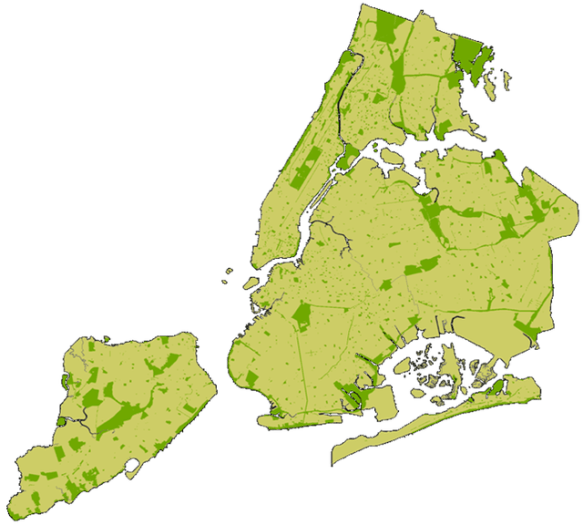
columbiau_builtenvironmentmap_2016

A 2011 geographic map of the distribution of parks and playgrounds done by the Built Environment and Health research team at Columbia University.6

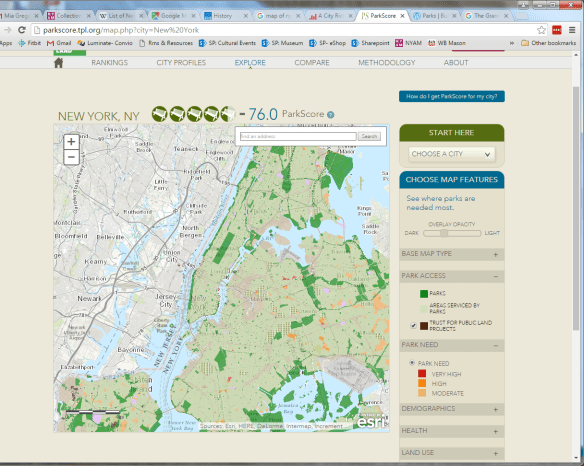
trustforpubliclandsparkscore_map_2016

Map of New York City parkland (the dark green) created by The Trust for Public Land’s ParkScore rating system.7

A Fellow of The New York Academy of Medicine wrote on this very topic back in 1899. Dr. Orlando B. Douglas bemoans the lack of numbers to support his firm belief in the rejuvenating power of parks in The Relation of Public Parks to Public Health, written for the American Park and Outdoor Art Society. What he lacks in hard scientific data, he makes up for in poetic writing:

douglas,o_relationofpublicparks_1899

Orlando B. Douglas’ The Relation of Public Parks to Public Health, published in 1899.

While he didn’t have the same kind of data to fortify his arguments available to TPL more than a hundred years later, Douglas supports his claims that “the public park system in cities resulted in diminishing the rate of nervous disease [and] the improvement of the general health in cities”9 with testimony from twenty-one other doctors throughout the state of New York. I imagine that Dr. Douglas would have been thrilled at our ability today to quantify the beneficial effects of parks; though his pamphlet is more enjoyable reading than modern white papers.

References

1.  To Protect and Extend our City Parks for Prosperity. New York: Park Association of New York City; 1929.

2. “Olmsted-Designed New York City Parks,” NYC Parks. Accessed June 14, 2016. https://www.nycgovparks.org/about/history/olmsted-parks

3. Frederick Law Olmsted, “The Yosemite Valley and the Mariposa Grove of Big Trees,” The Saturday Evening Post, July 18, 1868.

4. To Protect and Extend our City Parks for Prosperity. New York: Park Association of New York City; 1929.

5. “Parks,” Built Environment and Health Research Group at Columbia University. Accessed June 14, 2016. https://beh.columbia.edu/parks/

6. “ParkScore: New York, NY,” The Trust for Public Land. Accessed June 14, 2016. http://parkscore.tpl.org/map.php?city=New%20York

7.  https://www.tpl.org/health-benefits-parks accessed June 14, 2016.

8.  The Relation of Public Parks to Public Health. Boston: Rockwell and Churchill Press; 1899.


Walt Whitman, ‘Manly Health,’ and the Democratization of Medicine

Today’s post is by Zachary Turpin, a doctoral candidate in English at the University of Houston. Back in April, The New York Times published an article announcing Mr. Turpin’s uncovering of a nearly 47,000-word journalistic series called “Manly Health and Training” written by the poet Walt Whitman under a pseudonym.  Learn more about Whitman’s health writings here in New York this coming Monday, July 18th at 6pm and join Zachary Turpin for his talk Up!: Manhood, Democratic Medicine, and Walt Whitman’s Secret Health Writings. The lecture is co-sponsored by The New York Public Library. Mr. Turpin will be joined by Dr. Isaac Gewirtz, Curator of The Henry W. and Albert A. Berg Collection at The New York Public Library, for a conversation about Whitman’s interests in health and poetry.  The talk is free, but please register here.  

Near the beginning of “Manly Health and Training” (1858), Walt Whitman’s covertly published health and physiology tract, the poet says the following to the young men of America:

If you are a student, be also a student of the body, a practiser of manly exercises, realizing that a broad chest, a muscular pair of arms, and two sinewy legs, will be just as much credit to you, and stand you in hand through your future life, equally with your geometry, your history, your classics, your law, medicine, or divinity. Let nothing divert you from your duty to your body. Up in the morning early! Habituate yourself to the brisk walk in the fresh air—to the exercise of pulling the oar—and to the loud declamation upon the hills, or along the shore. Such are the means by which you can seize with treble gripe upon all the puzzles and difficulties of your student life—whatever problems are presented to you in your books, or by your professors. Guard your manly power, your health and strength, from all hurts and violations—this is the most sacred charge you will ever have in your keeping.

Whitman’s formal schooling ended at the age of 11, but he was never an anti-intellectual (quite the opposite.) Why, then, does he position exercise—and in particular, a muscular body—as more vital to readers’ lives than math, history, law, medicine, or spirituality? Is he sincere?

whitmangood

Daguerreotype portrait of Walt Whitman, 1853.  Rare Book Division, The New York Public Library.

These are some of the questions I will attempt to answer in my upcoming talk at The New York Academy of Medicine (July 18th). But I will begin, here, by emphasizing that Whitman almost certainly means what he says.

In the U.S. in the mid-19th century, medicine was reaching the end of a long, slow shift in its epistemological foundations. What for centuries had been a stubbornly inductive system of assumption and a priori logic, had gradually come to rely more and more upon observation and deduction. By the time Whitman was secretly writing “Manly Health,” Americans were less likely than ever to approach their bodies as perfect creations, or illness as a mere deviation from perfection. Instead, physiologically the body had gradually been recast—based on extensive physiological observation—as an imperfect thing.

Gone was the Vitruvian man, of perfect geometric proportions:

leonardo-da-vinci-1125056_1920

Leonardo da Vinci.  The Proportions of the Human Body According to Vitruvius (The Vitruvian Man.)  Image in the public domain.

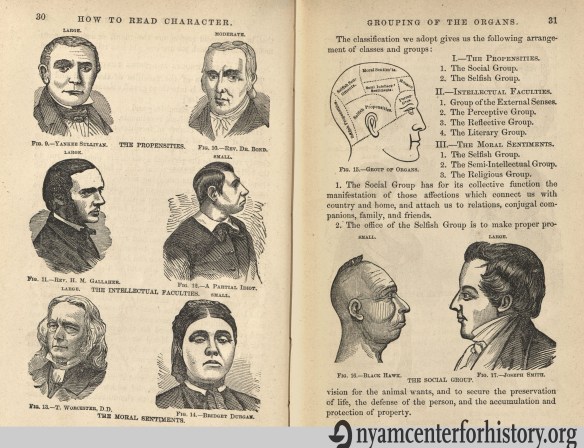
In his stead, grew the “sciences”—which we now generally agree are pseudosciences—of physiognomy, phrenology, and eugenics. These pursuits combined complicated measurement and categorization with the belief that, based on variations of external physiology one could deduce the internal characteristics of personality, morality, and social worth. In part, such systems may be considered reactions to increasing cultural diversity in America. It is notable that the original theorists of many such systems were white; furthermore, American physiognomists and phrenologists tended to assign the highest values to classically white-European, or “Teutonic,” features: high foreheads, “noble” brows, “patrician” noses, and so on. Such values have had a deep effect on the social mores of the US—and not a few are still floating around today, as hard-to-eradicate racist rationalizations.

wells_howtoreadcharacterf_1874watermark

Books like How to Read Character: A New Illustrated Hand-Book of Phrenology and Physiognomy published in 1874 were popular during Whitman’s lifetime.

simms_physiognomyillustrated_1891watermark

Frontispiece illustration in Joseph Simms’ Physiognomy Illustrated; or Nature’s Revelations of Character, published in 1891.

But beyond obsessions with racial and ethnic categorization, deductive reasoning had a further influence on American physiological discourse. It made it a democratic enterprise.

To put it plainly, if a body begins in imperfection, by definition it may be improved upon. The notion that the body is malleable—may be changed, manipulated, whittled down or built up—mirrors a longstanding American mythos of self-reliance, one that has its roots in the writings of everyone from John Smith and Jonathan Edwards, to J. Hector St. John de Crèvecœur and Ralph Waldo Emerson. Not to mention, Walt Whitman himself. Such a narrative of “pulling yourself up by your bootstraps” is still present today, and in the field of health and wellness is perhaps more powerful than ever. The popularity of extreme cardiovascular workouts, cosmetic surgery, yoga clothing lines, self-help books, and diet narratives of all types—from “paleolithic” to “blood type” to “detox” to “alkaline”—are a testament to that. (And incidentally, they all have long histories in American fad dieting—Whitman would likely recognize a number of them.)

There is a further corollary here. If the body had come to be defined by its measurement and malleability (which it was, and arguably still is), and scientific observation grew to be a more widespread, middle-class pursuit (which it had), then nearly anyone with a pen and paper could theorize, publicize, and popularize their own “answer” to physiological problems. Such answers are overwhelmingly evident in 19th-century periodical literature, which is positively overflowing with fad diets, patent medicines, calisthenic regimens, baldness cures, skin bleaches, snake oils, and self-help narratives of all types.

FinalMrs. Winslow's Soothing Syrup-p1aniuvmjiubpvt7de0knl14do

Mrs. Winslow’s Soothing Syrup, formulated in Maine in 1849,  contained 65 milligrams of morphine per fluid ounce.  Image from our William H. Helfand Collection of Pharmaceutical Trade Cards.

ayerscherrypectoral_watermark

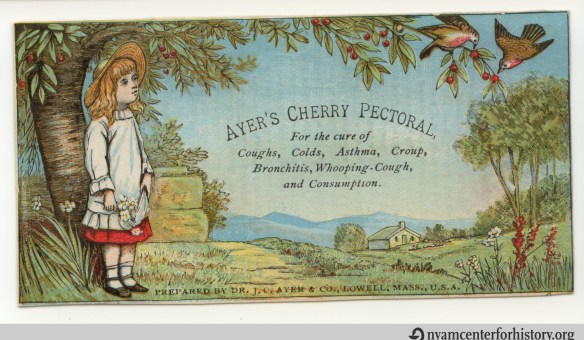
Ayer’s Cherry Pectoral, first produced by a Charleston druggist in 1865, claimed to cure coughs and contained an opium derivative.  Image from our William H. Helfand Collection of Pharmaceutical Trade Cards.

HeroinCoughs_PracticalDruggistv5n5-May1899_watermark

Ad published in The Practical Druggist and Pharmaceutical Review of Reviews, volume 5, number 5, 1899.

Walt Whitman’s newly rediscovered self-help narrative, “Manly Health and Training,” is unique in its importance to the history of American physiological and medical thought, but it was by no means unusual for its time. In my upcoming talk at the Academy, I look forward to talking more about its discovery, its place in Whitman’s life’s work, and its implications for American literary and medical discourses.

Anatomical Illustrations: A Round-Up from our Visualizing Anatomy Workshop

Kriota Willberg, the author of today’s guest post, explores the intersection of body sciences with creative practice through drawing, writing, performance, and needlework.

On Mondays in June, I taught a drawing class in collaboration with staff at The New York Academy of Medicine Library.

The Visualizing and Drawing Anatomy workshop was open to artists as well as first time drawers willing to be challenged by the visual complexity of the human body in a short four-week course. Using the Academy’s historical collection as reference and instruction, artists and hobbyists learned to draw the body and found inspiration in the variety of illustrations.

Arlene

Historical Collections Librarian Arlene Shaner shared her knowledge about the collection with participating artists.

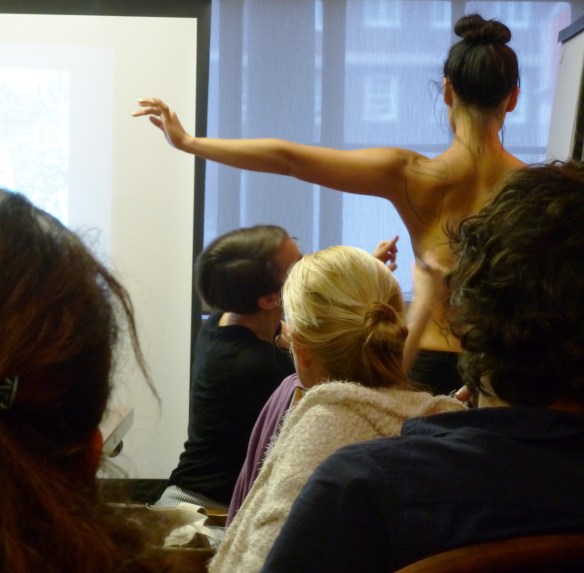
Working with rare books, a live model, and short presentations about the musculoskeletal system, workshop participants practiced looking through the skin to the model’s bony structures and large muscle groups.

In_Class2_NYAM2016

Drawing muscular anatomy on the model, we can compare a living body to images from historical texts.

Participants drew the model’s anatomy in class, and practiced during the week by doing various homework assignments.

In_Class4_NYAM2016

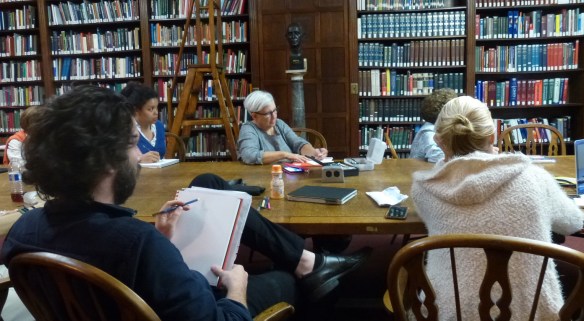
Artists drawing in our Hartwell Reading Room from our live model.

WhitTaylor2016anatomy1

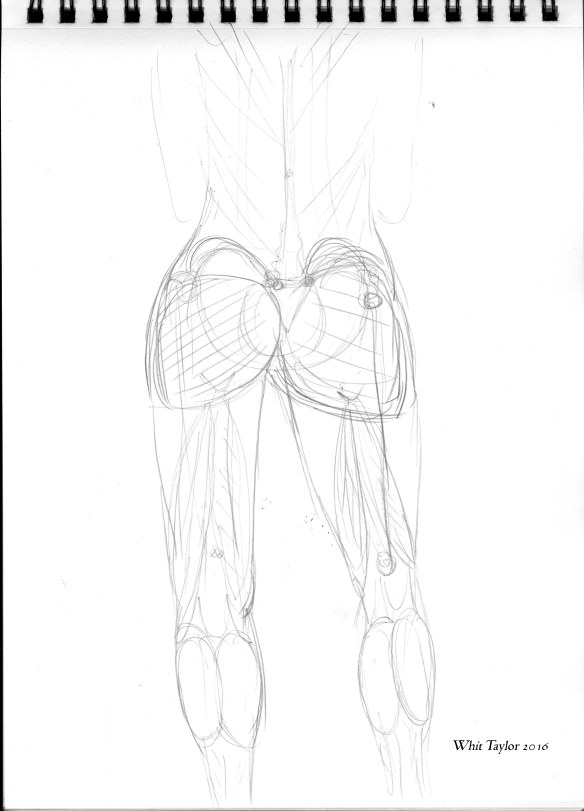
Whit Taylor’s in class sketches of muscular anatomy from the live model.

WhitTaylor2016anatomy2

A second sketch by workshop participant Whit Taylor.

Debbie Rabina2016_4

Debbie Rabina’s in class sketch of the live model.

AllisonWhite4_2016

Allison White’s in class sketch of muscular anatomy from the live model.

Some homework used copied images from Vesalius and Dürer as subjects to anatomize with skeletal and muscular systems.

4Shaw_susan_Durer_Hmk2

Susan Shaw’s homework of anatomized Dürer images.

One of the participants proposed earning some extra credit, and anatomized two characters drawn by cartoonist Josh Bayer.

3Shaw_susan_Bayer2

Susan Shaw did a great job of re-configuring these skeletons to suit Josh Bayer’s iconoclastic drawing style.

Josh Bayer’s original cartoon can be viewed here.

Working with the historical collection as a teaching tool was very gratifying. I found new points of interest in familiar images, and developed a deeper appreciation for the artists and anatomists who generated so much rich material.

I love watching people draw.  As I watched this group work with the collection and the live model, I could observe and celebrate their growth during the course of the workshop. Witnessing the hard work, diligence, and growth of this group was truly inspiring!

17th Century Recipes, Fit for a Gala

By Arlene Shaner, Historical Collections Librarian

The New York Academy of Medicine hosted its annual fund-raising gala at the Mandarin Oriental on June 14th.  Gala attendees had the opportunity to sample two treats based on recipes from one of our favorite manuscript receipt books.

The Academy Library has 37 manuscript receipt books, most of which contain a mix of culinary, medicinal and household recipes. Some of them have been featured already on our blog (see earlier posts on Mother Eve’s Pudding, and English Gingerbread). The Recipes Project also featured an interview with Anne Garner, our Curator of Rare Books and Manuscripts, about the print and manuscript historical recipe books in our collection.

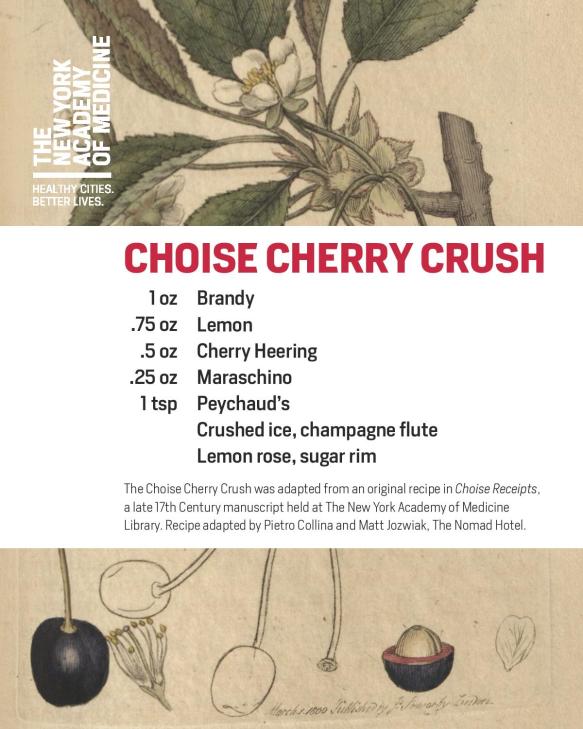
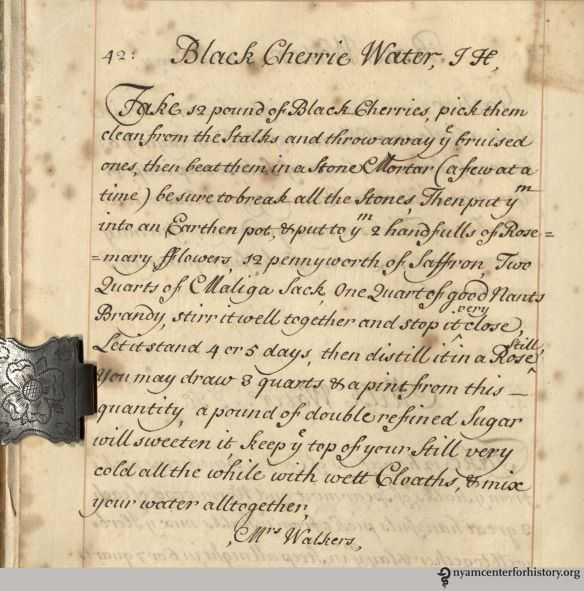
One of our favorite manuscripts is A Collection of Choise Receipts from the late seventeenth century. Inspired by a recipe for Black Cherry Water in the manuscript, Pietro Collina and Matt Jozwiak created a signature cocktail, the “Choise Cherry Crush,” for gala guests. You can try your hand at mixing one up if you are so inclined.

Gala Cocktail Flyer-page-001

The adapted recipe for the Choise Cherry Crush, adapted from A Collection of Choise Receipts (1680)

The drink was inspired by this 1680 recipe:

choise-recipe-cherry-water copy

“Black Cherrie Water,” A Collection of Choise Receipts, 1680.

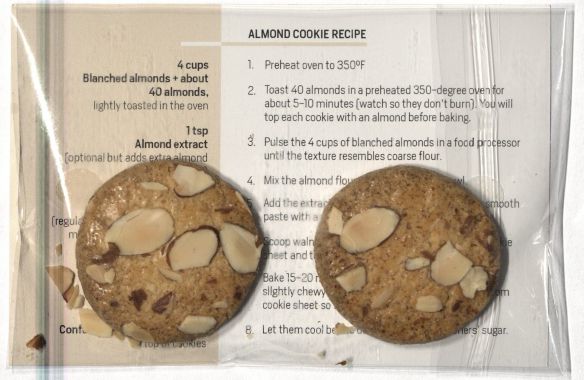
On their way out at the end of the evening, guests received bags with a pair of almond cookies also adapted from a recipe in Choise Receipts.

Postcard with cookies

The finished  give-away almond cookies, pictured with their recipe, adapted from A Collection of Choise Receipts (1680)

There are several recipes for cookies or little cakes made with almonds in the manuscript.  My favorite, “The Lady Lowthers Receipt for to make Bean Bread” a cookie that very much resembles a macaron in texture, takes its name from the slivered almonds that look like little beans that are mixed into the dough.

choise-bean-bread-0001 copy

“Lady Lowthers Receipt, for to make Bean Bread,” from A Collection of Choise Receipts, 1680.

The recipe for Almond Bisketts that we reproduced for the gala, however, seems to be missing a crucial ingredient: almonds!

Choise original almond biskett

The front of the recipe postcard produced for our give-away cookies for the gala.

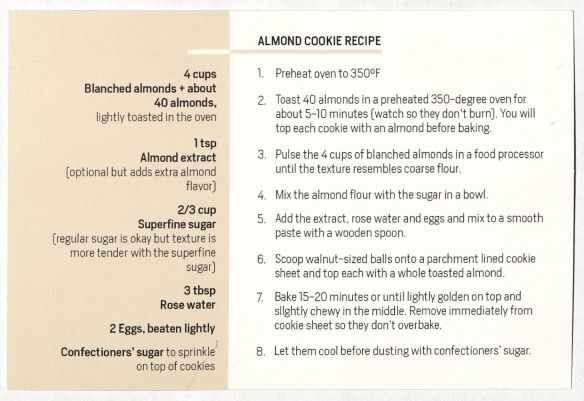
Only when examining the full page of the manuscript, on which a very similar recipe for Almond Cakes appears directly above the one reproduced on the postcard, does it become clear that the “half a pound of fflower” referred to in this recipe would be made from ground almonds.  The adapted recipe printed on the back of our card makes that clear.

Choise adapted recipe

The adapted recipe, on the back of the postcard.

If you make a batch of these tasty cookies, let us know how they turn out!  Better yet, send us a picture and we’ll post it on Instagram.

Digitizing Medical Journals of State Societies

By Robin Naughton, Ph.D., Head of Digital

State medical journals digitized for the MHL collective project.

State medical journals digitized for the MHL consortium.

The New York Academy of Medicine Library is digitizing state society medical journals as part of a mass digitization project with the Medical Heritage Library (MHL), a digital curation consortium. The Academy Library is one of five collaborators on the project, along with the College of Physicians of Philadelphia; the Countway Library of Medicine at Harvard University; the Health Sciences and Human Services Library, University of Maryland; the Founding Campus; and the University of California at San Francisco.

Together, the MHL team is actively working to digitize 48 state society journals, more than 3,800 volumes that span much of the 20th century. Digitizing the state medical journals will provide open access to quality historical resources in medicine for researchers and the general public, letting them explore connections between medicine and society.

State medical journals digitized for the MHL collective project.

State medical journals digitized for the MHL collective project.

Evenly splitting the volumes among the MHL team makes the process of mass digitization more manageable and very collaborative. The Academy Library has already digitized almost 50% of the state medical journals assigned to it since Fall 2015. The journals are scanned by the Internet Archive (IA) and are publicly available as part of the Library’s and MHL’s collections on the IA site. Our digitized assets are open for anyone to access and use. Thus far, we have digitized journals representing 24 states and almost 238, 000 images.

The volumes are digitized in their entirety, showing the journals’ articles and  advertising. For example, in Alaska Medicine (vol. 29, 1987), as you read the article “Alaska State Hepatitis B Program – Past, Present and Future” by Elizabeth A. Tower, you can’t help but notice the advertisement for medical transcription. It is hard to resist the “Hello …. Museum of Primitive Civilizations and Hieroglyphs?”

Scan from Alaska Medicine, vol. 29, 1987.

Scan from Alaska Medicine, vol. 29, 1987.

State medical journals are valuable resources that should lead to many new and novel projects for researchers in the history of medicine. Look for more on the project as it progresses.

Explore our collection.