Mother Eve’s Pudding Redux

Image

By Erin Albritton, Head of the Gladys Brooks Book & Paper Conservation Laboratory

Last month, we kicked off National Poetry Month by sharing a rhyming recipe for Eve’s Pudding from our manuscript collection. Although charming, the recipe lacked the level of specificity to which most modern cooks have become accustomed. To solve this problem, cooking teacher and food historian Steve Schmidt (who will be delivering NYAM’s Friends of the Rare Book Room lecture on May 23rd) was kind enough to send along the following adaptation, together with a recipe for Cold Sweet Sauce that is scrumptious when drizzled over the top:

For the pudding:
3/4 cup (3 ounces) fine dry bread crumbs, plus a handful for coating the basin or bowl
1/3 cup plus 1 tablespoon (3 ounces) sugar
1 Tbsp all-purpose flour
1 tsp grated or ground nutmeg
1/2 tsp ground cinnamon
1/2 tsp salt
3 medium (about 1 1/4 pounds) firm, dry apples, such as Golden Delicious
2/3 cup (3 ounces) currants
3 large eggs, beaten until light and frothy
6 Tbsp (3 ounces) unsalted butter, melted and cooled
1 Tbsp strained fresh lemon juice

For the Cold Sweet Sauce:
1 stick of butter
2/3 cup confectioners’ sugar
1-2 Tbsp of brandy or lemon juice
A pinch of nutmeg

Very generously grease a 5- to 6-cup heatproof bowl or pudding basin with butter or solid vegetable shortening. Sprinkle the inside of the bowl with a handful of dry bread crumbs, tilt the bowl in all directions until coated and then tap the excess crumbs out.

Mix the 3/4 cup crumbs, sugar, flour, nutmeg, cinnamon, and salt in a bowl. Peel the apples and grate on the shredding plate of a box grater down to the cores. Stir the apples and currants into the crumb mixture, then the beaten eggs, then the melted butter and lemon juice. Pack the mixture into the prepared bowl, cover tightly with foil, set an upside-down plate on top of the foil, and steam the pudding for 3 hours in sufficient simmering water to reach halfway up the sides of the bow

While the pudding is steaming, make sauce by melting butter and whisking in sugar, brandy and nutmeg. Remove the pudding from the pot and let rest 15 minutes before unmolding. Drizzle (or drench!) with sauce and enjoy.

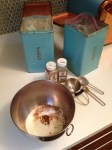
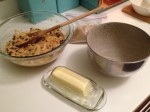
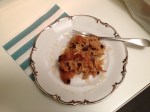
Below is a photo essay documenting one staff member’s kitchen adventure making this recipe (click to enlarge and open photo gallery). The next time you’ve got a couple of hours and find yourself craving a delicious dessert (with a bit of history), give Eve’s Pudding a try . . . you’ll be glad you did!

Acne Can Be a Social Handicap

By Johanna Goldberg, Information Services Librarian

This is the second in an intermittent series of blogs featuring advertisements from medical journals. You can find the first here.

The ads below come from two dermatology journals—the first five from the Journal of Investigative Dermatology and the last from the International Journal of Dermatology—and span nearly two decades. They promise not only a better quality of life through medical intervention, but also show cultural standards of work, social interaction, and beauty.

1955: We love the cartoon depictions of each gendered occupation, barefoot sailor and all.

1955: We love the cartoon depictions of each gendered occupation, barefoot sailor and all.

1955: Only people with perfect skin drink martinis.

1955: Only people with perfect skin drink martinis.

1955: Why do these “adolescents” look 40+?

1955: Why do these “adolescents” look 40+?

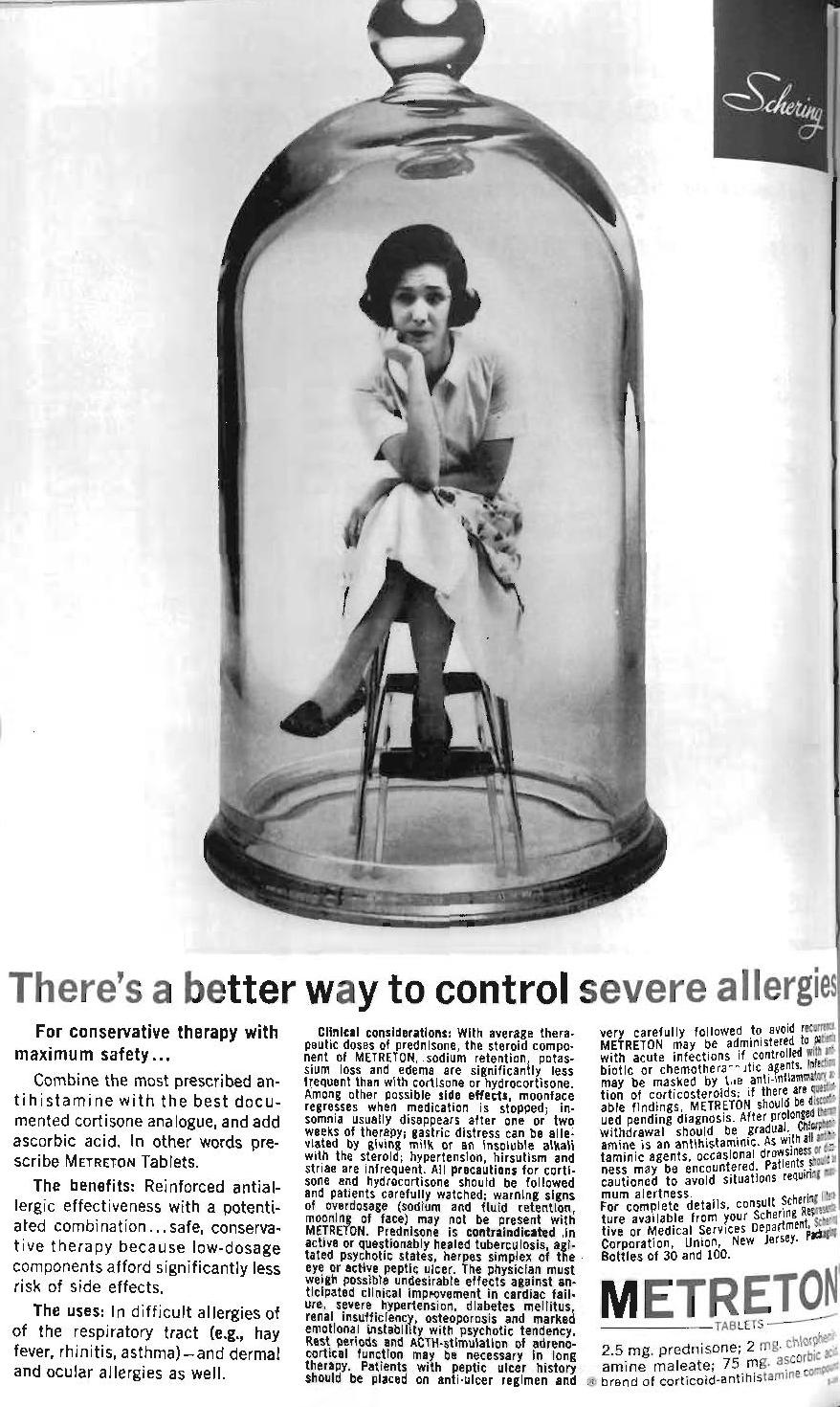
1963: Probably coincidentally, this ad appeared the same year The Bell Jar was published.

1963: Probably coincidentally, this ad appeared the same year The Bell Jar was published.

1963: Grenz rays are a mild form of radiation widely used from the 1940s–1970s to treat inflammatory skin diseases. While some practitioners still use Grenz rays, evidence of their efficacy remains limited.1,2

1963: Grenz rays are a mild form of radiation widely used from the 1940s–1970s to treat inflammatory skin diseases. While some practitioners still use Grenz rays, evidence of their efficacy remains limited.¹,²

1973: Nothing like nudity to convince doctors to recommend a medicated powder.

1973: Nothing like nudity to convince doctors to recommend a medicated powder.


1. Lindelöf, B., & Eklund, G. (1986). Incidence of malignant skin tumors in 14,140 patients after grenz-ray treatment for benign skin disorders. Archives of Dermatology, 122(12), 1391–1395.

2. National Institute for Health and Care Excellence (NICE). (2010, March 30). Grenz rays therapy for inflammatory skin conditions (interventional procedures consultation). Guidance/interventional procedures. Retrieved April 24, 2013 from http://www.nice.org.uk

An Elegy on the Death of a Mad Dog

By Rebecca Pou, Project Archivist

To celebrate National Poetry Month, we are sharing a poem from our collection each week during April.

Our last poem, An Elegy on the Death of a Mad Dog, is by Oliver Goldsmith (1730-1774). Our Rare Book Room contains an Oliver Goldsmith Collection, which includes 112 editions of his novel The Vicar of Wakefield, along with many of his other works. Most of the collection was donated by Mrs. Alberta Clay, the daughter of NYAM’s first director, Linsly R. Williams, M.D., in 1942.

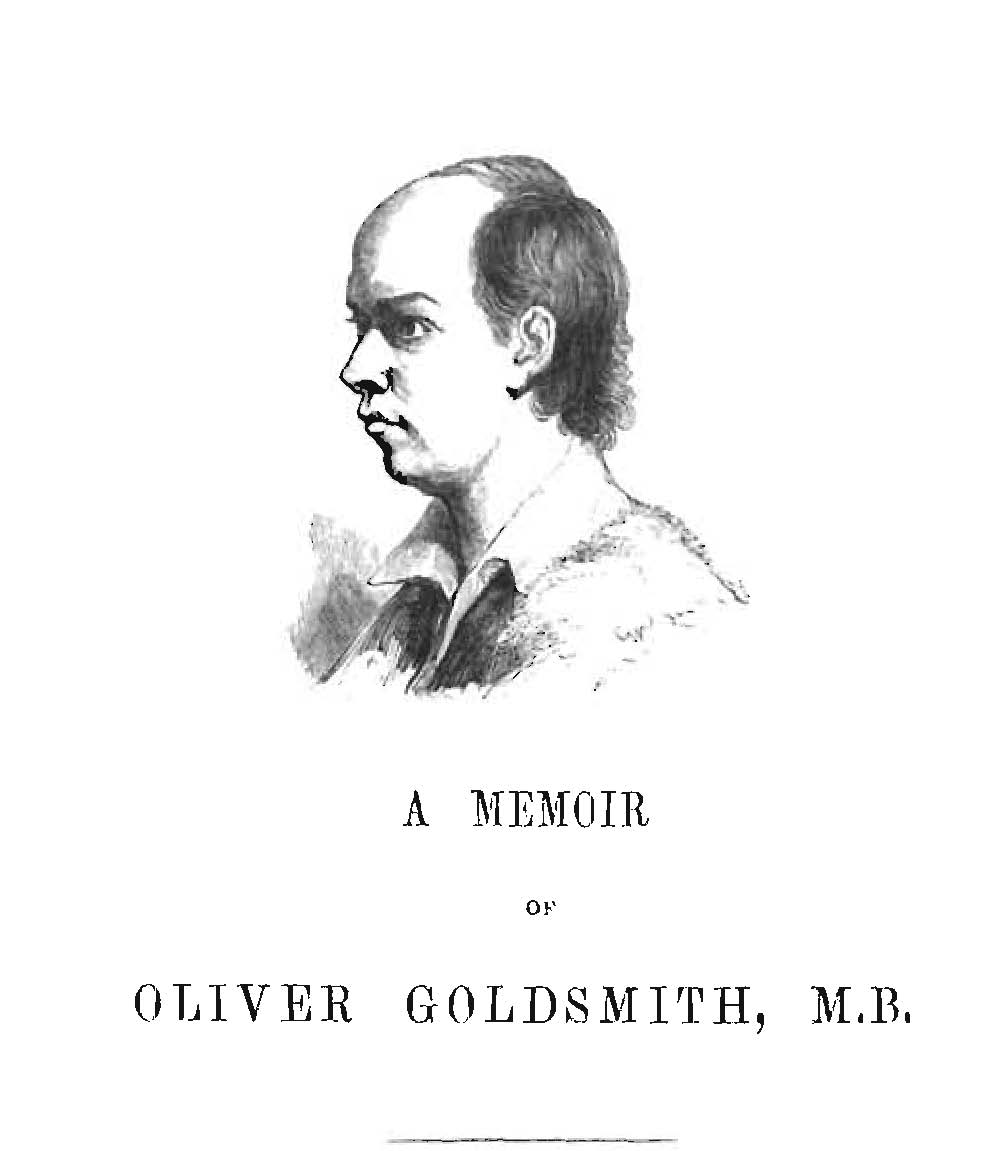
Goldsmith port_1863Oliver Goldsmith may seem to be a bit out of place in a medical collection, but NYAM has an interest in works of literature by and about physicians. Before establishing himself as an essayist, poet, and novelist, Goldsmith attempted a career in medicine. Goldsmith studied medicine in Edinburgh and Leyden, although it is not certain he ever received his medical degree. In London, he worked for a time as an apothecary’s assistant and a physician, but ultimately he devoted himself to writing. Still, despite his questionable credentials, Goldsmith was considered a doctor and often attributed as “Oliver Goldsmith, M.B.”

An Elegy on the Death of a Mad Dog is found in The Vicar of Wakefield, where the Vicar asks his son to recite it, and in collections of Goldsmith’s works and poetry. This version and the images are from The Poetical Works of Oliver Goldsmith, M.B. from 1863.

Goldsmith Mad dog 1863

An Elegy on the Death of a Mad Dog

Good people all, of every sort,
Give ear unto my song ;
And, if you find it wondrous short –
It cannot hold you long.

In Islington there was a man
Of whom the world might say,
That still a godly race he ran –
Whene’er he went to pray.

A kind and gentle heart he had,
To comfort friends and foes ;
The naked every day he clad –
When he put on his clothes.

And in that town a dog was found :
As many dogs there be ;
Both mongrel, puppy, whelp, and hound,
And curs of low degree.

This dog and man at first were friends ;
But, when a pique began,
The dog, to gain some private ends,
Went mad, and bit the man.

Around, from all the neighbouring streets,
The wondering neighbours ran ;
And swore the dog had lost his wits,
To bite so good a man.

The wound it seem’d both sore and sad
To every christian eye ;
And, while they swore the dog was mad,
They swore the man would die.

But soon a wonder came to light,
That show’d the rogues they lied :
The man recover’d of the bite ;
The dog it was that died.

Sources:

“Oliver Goldsmith.” Concise Dictionary of British Literary Biography. Vol. 2. Detroit: Gale Research, 1992. Biography In Context. Web. 24 Apr. 2013.

“Oliver Goldsmith.” Encyclopædia Britannica. Encyclopædia Britannica Online Academic Edition. Encyclopædia Britannica Inc., 2013. Web. 25 Apr. 2013.

Preservation Week Quiz

By Christina Amato, Book Conservator

In recognition of Preservation Week, NYAM conservators have prepared a quiz. The following mystery objects are used in the NYAM Gladys Brooks Book and Paper Conservation Lab. Prove your preservation moxie by choosing which description best matches each item.

Image 1:
Image 1a.  Pest remediation instrument. The small nozzle can reach into the gutters of books, and capture crawling insects and larva via suction. They are whisked into the clear chamber, where they will peacefully expire in the oxygen deprived environment.

b.   Nebulizer. The clear chamber is used to heat water, and the resulting steam can be directed very precisely with the small nozzle onto areas that require humidification (such as crumpled paper or vellum.) The chamber can also be filled with a dilute adhesive, which can be used to consolidate flaking media.

c.   Airbrush. The clear chamber is filled with dilute paint, usually watercolor or acrylic, and is used to tone cloth or Japanese paper for repairing books. It is also frequently used with leather dye to tone calf or goatskin.

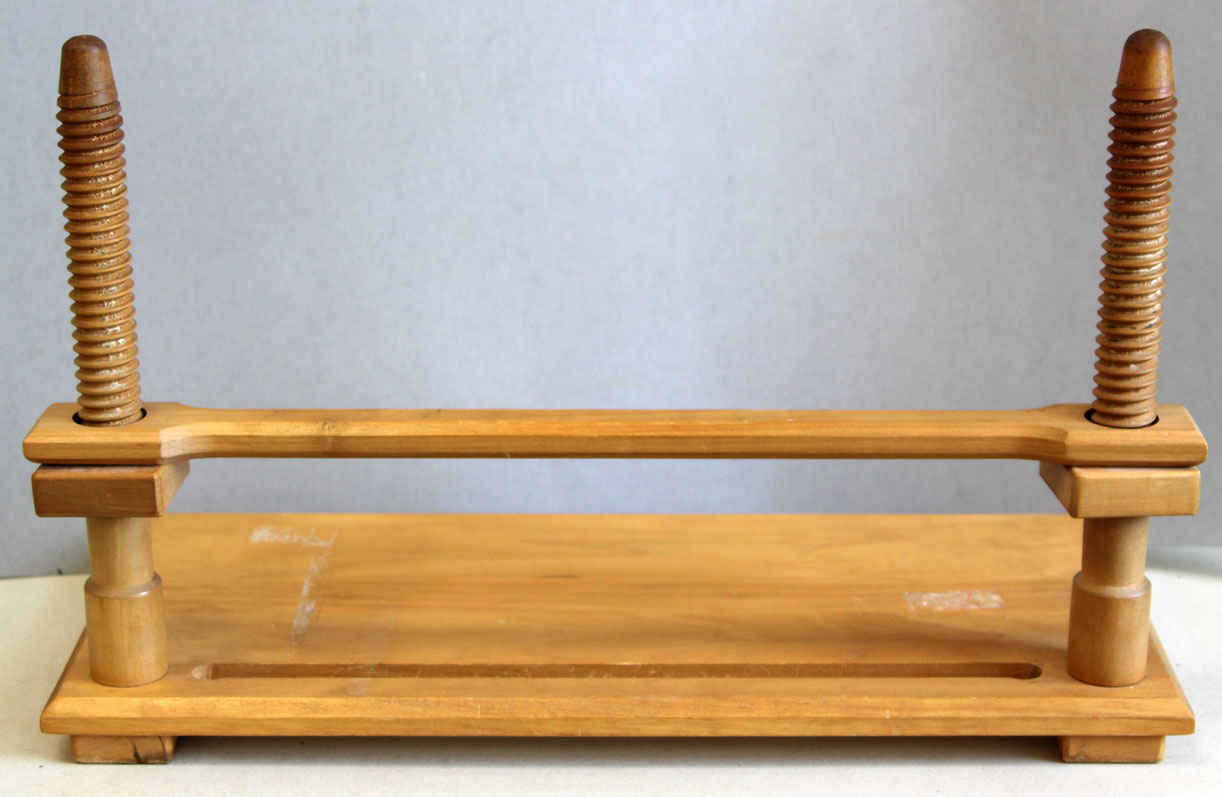
Image 2:
Image 2

a.   Sewing frame. Books are occasionally completely disbound and resewn in the lab.  Cord, or linen “tape”, is pulled taut from the horizontal  bar to the base, and books are sewn onto the cords.

b.   Parchment stretching frame. Crumpled parchment is humidified, and attached to the frame using specialized clips. The horizontal bar is slowly raised until the parchment is taut, where it is left to dry.

c.   Traction device. Long hours spent stooped over a bench can lead to a host of orthopedic insults. Conservators are wise to take a few minutes every day to “stretch out on the rack.”

Image 3:
Image 3

a.   Pamphlet binder. Pamphlets are passed between the jaws of this device, which affixes the pages together with stainless steel tackets.  The jaws can be adjusted to accommodate pamphlets of varying thicknesses.

b.   Tape dispenser. Specialized mending tape is applied to torn pages when fed through the jaws. Can also be used with duct tape.

c.   Leather paring device.  A two-sided razor blade is attached to the top jaw; pieces of leather are passed through the jaws, until the desired thickness is reached.  It is often necessary to thin out leather quite a bit before using it to repair a book.

Image 4:
Image 4

a.   Pest Remediation Dome. Books that have been infected with insects can be placed inside the dome. Oxygen is gradually pumped out of the dome, gently suffocating any insects within.

b.   Incubator. Conservators in the Gladys Brooks Book and Paper Conservation lab are world renowned for their hand processed silk thread, which is used in a variety of conservation applications. Silk worms are lovingly and painstakingly raised in the dome from larva, until they are ready to be harvested.

c.   Humidity dome and suction table. Paper or vellum that requires humidification, for flattening, for example, can be placed inside the dome, where the humidity is gradually increased until the desired level is reached. Beneath the dome is a suction table; it can be used to force solvents through a piece of paper, for stain reduction and other applications. 

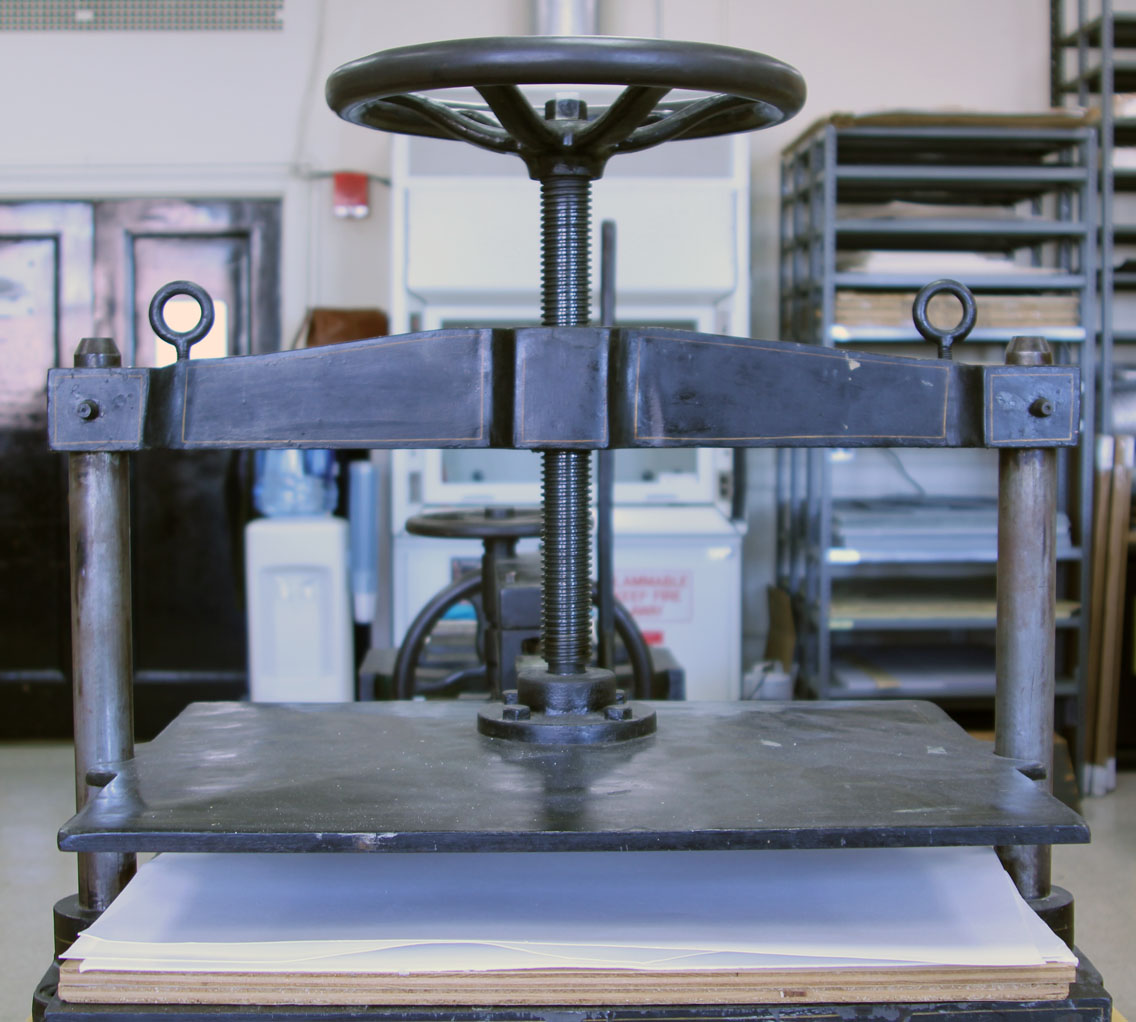
Image 5:
Image 5

a.   We don’t actually know. We saw it at Restoration Hardware, and thought it looked cool.

b.   Book Press. This is used to apply pressure to books, after treatment, to prevent warping during drying. It can also be used to flatten single sheets of paper.

c.   Book truck. Books are held in place underneath the platen; the truck can then be safely driven around the lab. The large wheel at the top is used for steering. 

Answers:

1. b         2.  a        3. c         4. c         5. b

Scoring:

5 out of 5: Preservation Superstar! Congratulations! You are tapped into the pulse of preservation!

4 out of 5: Preservation B Lister: Not bad! You have a generally solid understanding of preservation!

3 out of 5: Preservation Dilettante: You know a little about preservation, but could stand to step it up.

2 out of 5: Preservation Novice: It sounds like preservation isn’t your strongest suit but there’s hope yet.

1 out of 5: Preservation Rookie: Things are not looking so good for you, preservation-wise.

0 out of 5: Preservation Lightweight: At least there’s nowhere to go but up.

Syphilis, or the French Disease

By Rebecca Pou, Project Archivist

To celebrate National Poetry Month, we are sharing a poem from our collection each week during April.

Portrait of Fracastorius from Homocentrica, Venice: 1538.

Portrait of Fracastorius from Homocentrica. Venice, 1538.*

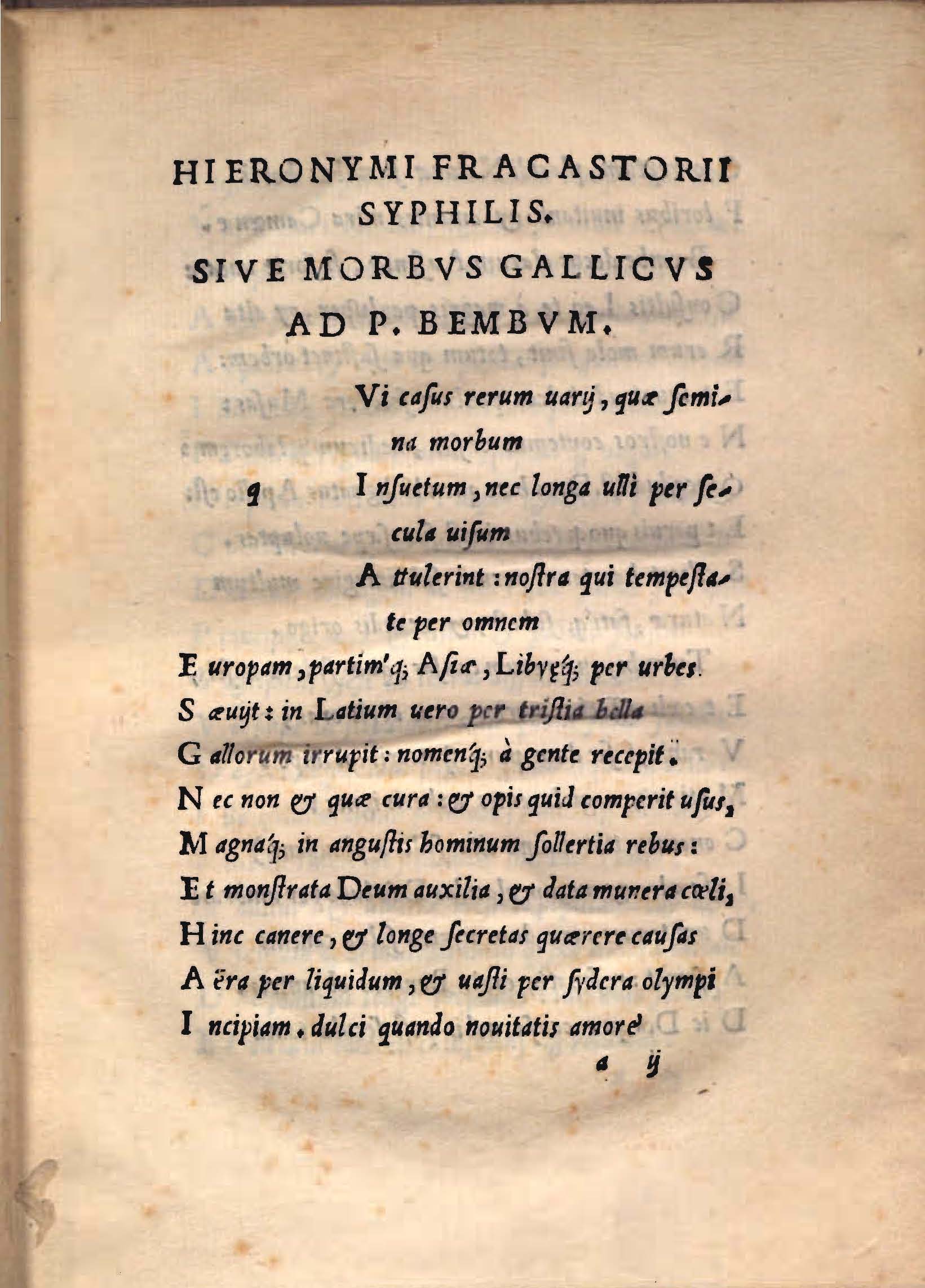
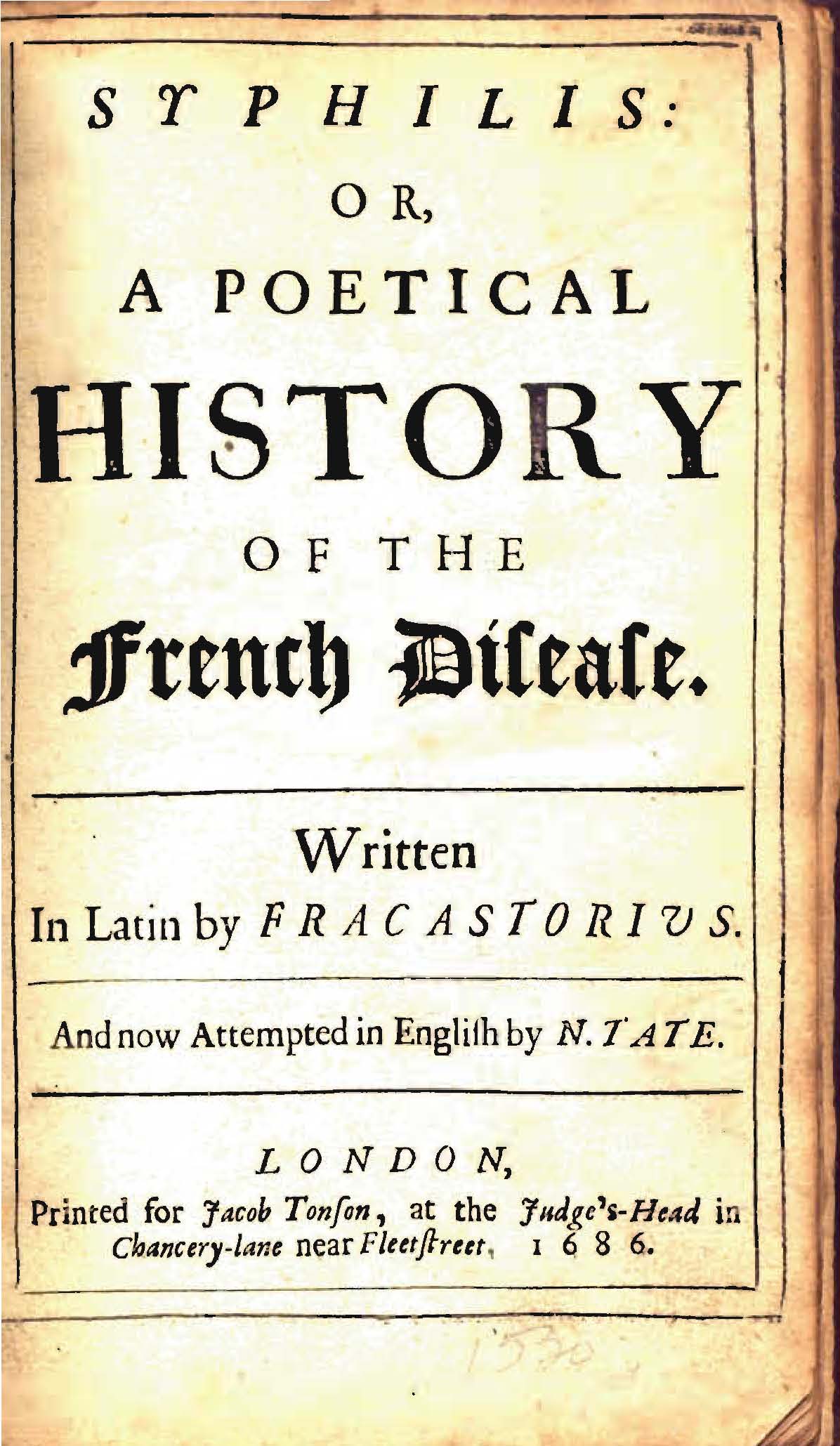
Syphilis seems like an unlikely topic for a poem, yet it is the subject of an important and popular work. Syphilis, or the French Disease, was first published in 1530. At that time, syphilis was new to Europe and spreading fast. To the Italians it was the “French disease,” to the French the “Italian disease,” with many other countries blaming one another for bringing the infection to their citizens. Written in Latin by the multi-faceted Italian physician and poet Fracastorius, the poem was translated into many languages, reflecting the great desire to understand this disease. Our collection holds multiple editions, including the original, pictured above, and several English versions (this post features two English translations – one is pictured below and another as the excerpts).

In the poem, which is broken into three parts, we learn of the disease and some popular treatments of the time, including mercury and the plant remedy guaiac. We also read the tale of a shepherd named Syphilus, supposedly the first person afflicted with the disease, which was his punishment for spurning the sun. Excerpts from each of the poem’s books, taken from William Van Wyck’s translation, are below.

Book 1

Within the purple womb of night, a slave,
The strangest plague returned to sear the world.
Infecting Europe’s breast, the scourge was hurled
From Lybian cities to the Black Sea’s wave.
When warring France would march on Italy,
It took her name. I consecrate my rhymes
To this unbidden guest of twenty climes,
Although unwelcomed, and eternally.
………………
O Muse, reveal to me what seed has grown
This evil that for long remained unknown!
Till Spanish sailors made west their goal,
And ploughed the seas to find another pole,
Adding to this world a new universe.
Did these men bring to us this latent curse?
In every place beneath a clamorous sky,
There burst spontaneously this frightful pest.
Few people has it failed to scarify,
Since commerce introduced it from the west.
Hiding its origin, this evil thing
Sprawls over Europe
………………

Albrecht Durer's woodcut of a syphilitic man.

Albrecht Durer’s woodcut of a syphilitic man, 1496.*

Book 2

Soon is repaired the ruin of the flesh,
If lard be well applied that’s good and fresh,
Or dyer’s colors of a soothing power.
If some poor soul, impatient for the hour
Of sweet release, should find too slow this cure,
And yearning for a quicker and more sure,
Then stronger remedies without delay
Shall kill this hydra another way.
………………
All men concede that mercury’s the best
Of agents that will cure a tainted breast.
To heat and cold sensitive’s mercury,
Absorbing the fires of the this vile leprosy
And all the body’s flames by its sheer weight…
………………

Book 3

An ancient king had we, Alcithous,
Who had a shepherd lad called Syphilus.
On our prolific meads, a thousand sheep,
A thousand kine this shepherd had to keep.
One day, old Sirius with his mighty flame,
During the summer solstice to us came,
Taking away the shade from all our trees,
The freshness from the meadow, coolth from breeze.
His beasts expiring, then did Syphilus
Turn to this horror of a brazen heaven,
Braving the sun’s so torrid terror even,
Gazing upon its face and speaking thus:
‘O Sun, how we endure, a slave to you!
You are a tyrant to us in this hour.
………………
The sun went pallid for his righteous wrath
And germinated poisons in our path.
And he who wrought this outrage was the first
To feel his body ache, when sore accursed.
And for his ulcers and their torturing,
No longer would a tossing, hard couch bring
Him sleep. With joints apart and flesh erased,
Thus was the shepherd flailed and thus debased.
And after him this malady we call
SYPHILIS, tearing at our city’s wall
To bring with it such ruin and such a wrack,
That e’en the king escaped not its attack.
………………

* From Van Wyck, William. The sinister shepherd: a translation of Girolamo Fracastoro’s Syphilidis; sive, De morbo gallico libri tres. Los Angeles, 1934.

The Craniad

By Johanna Goldberg, Information Services Librarian

To celebrate National Poetry Month, we are sharing a poem from our collection each week during April.

In 1817, the work of two fathers of phrenology, Franz Joseph Gall and Johann Gaspar Spurzheim, inspired poetry.

As explained by authors Francis Jeffrey and John Gordon in the preface of The Craniad: Or, Spurzheim Illustrated. A Poem in Two Parts:

“It is not our intention to conduct our readers through all the delightful mazes of the Craniologic paradise. We shall give them a bird’s-eye view of this garden of intellectual sweets; but should they feel disposed to examine every object minutely, they can leave the point of view which we have chosen for them, descend, and lose themselves, at leisure, in the charming confusion of the romantic labyrinth.”

Here is an excerpt from this “bird’s-eye view,” emphasizing the view of the poets (and their inspiration) that the shape of our heads and brains determine our futures—our criminality, careers, and guilt or innocence in a court of law.

Why do men fight,—and steal,—and cheat,—and
lie,—
String crime on crime, till strung on ropes they die?
“ Because within and on their skulls are found,
“ First known to Gall’s and Spurzheim’s tact pro-
found,
“ Organs, which mark the cause with obvious case,
“ Nature is sick, and crime is her disease.
. . .
To one thing more than others, not inclined—
Some think that education forms the mind.
Hence view we talents every day misplaced ;
Great public situations, too, disgraced !

Hnce [sic] have we preachers in our courts of law,
And lawyers in the pulpit—that’s a flaw.
We’ve some physicians who should nurses be,
And tend on those from whom they take a fee.
We’ve barbarous bungling surgeons, now and then,
Fit only to be barbers’ journeymen ;
Poor paltry puling poets,–who, Lord knows,
Should try to learn to write some decent prose.
Horse-jockies sometimes sit in Parliament !
On jockeying there, by dangerous habits bent,
Whilst many a genius lives by grinding knives,
And many a dunce without a genius thrives.
. . .
When Barristers learn Craniology,
Closer examinations we shall see ;
They then can make each witness shew his skull,
To see if ‘twill his evidence annul,
And if there’s evidence that this is so,
They’ll render it more evident, we know.
And poor unhappy criminals may then
Get leave to feel the skulls of jury-men ;
And when a man’s indicted for a rape,
His neck may then be saved by its own shape.
. . .
Behold a new employment for the blind,
With sense of tact so wondrously refined.
Let them be Craniologers, have schools,
In which succeeding blind may learn their rules ;
Let them have rank and titles with the great,
Be called, “ Prime Craniologers of state.
Such intellectual feelers, of the land,
Would form a useful, and important band ;
They could correct all errors in our courts,
And wavering doubts decide by their reports.”

Mother Eve’s Pudding

By Rebecca Pou, Project Archivist

To celebrate National Poetry Month, we are sharing a poem from our collection each week during April. With the support of the Pine Tree Foundation of New York, we are currently cataloging our manuscript recipe collection, which is the source of our first poem. The rhyming recipe was in both English and American cookbooks through the end of the nineteenth century, but this particular version is most likely from the last quarter of the eighteenth century.

To try out a modern take on this recipe, see “Mother Eve’s Pudding Redux.”

A recipe in verse for Mother Eve’s Pudding, late 18th-century.

To Make Mother Eves Pudding

To make a good Pudding pray mind what your taught

Take two penny worth of Eggs when twelve for a groat

Six ounces of bread Let Moll eat the Crust

The Crumb must be grated as small as the Dust

Take of the same Fruit that Eve once Cozen

Well pared and Chop’d at Least half Dozen

Six ounces of Currans from the Grit you must sort

Least they break out your teeth and spoil all the Sport

Six ounces of Sugar wont make it to sweet

Some Salt and a nutmeg will make Compleat

Three Hours it must boil without any Flutter

Nor is it Quite Finished without melted Butter

Modeling History: Making a Stiff-Board Parchment Binding with a Slotted Spine

This post comes from the 2012 Gladys Brooks conservation intern, Morgan Adams. Morgan is currently interning in the Thaw Conservation Center at the Morgan Library & Museum

As the 2012 Gladys Brooks intern I had the pleasure of working with Senior Book Conservator Anne Hillam on a model of a stiff-boards parchment binding with a slotted spine, a style seen commonly in Italian bindings of the 16th-17th centuries.

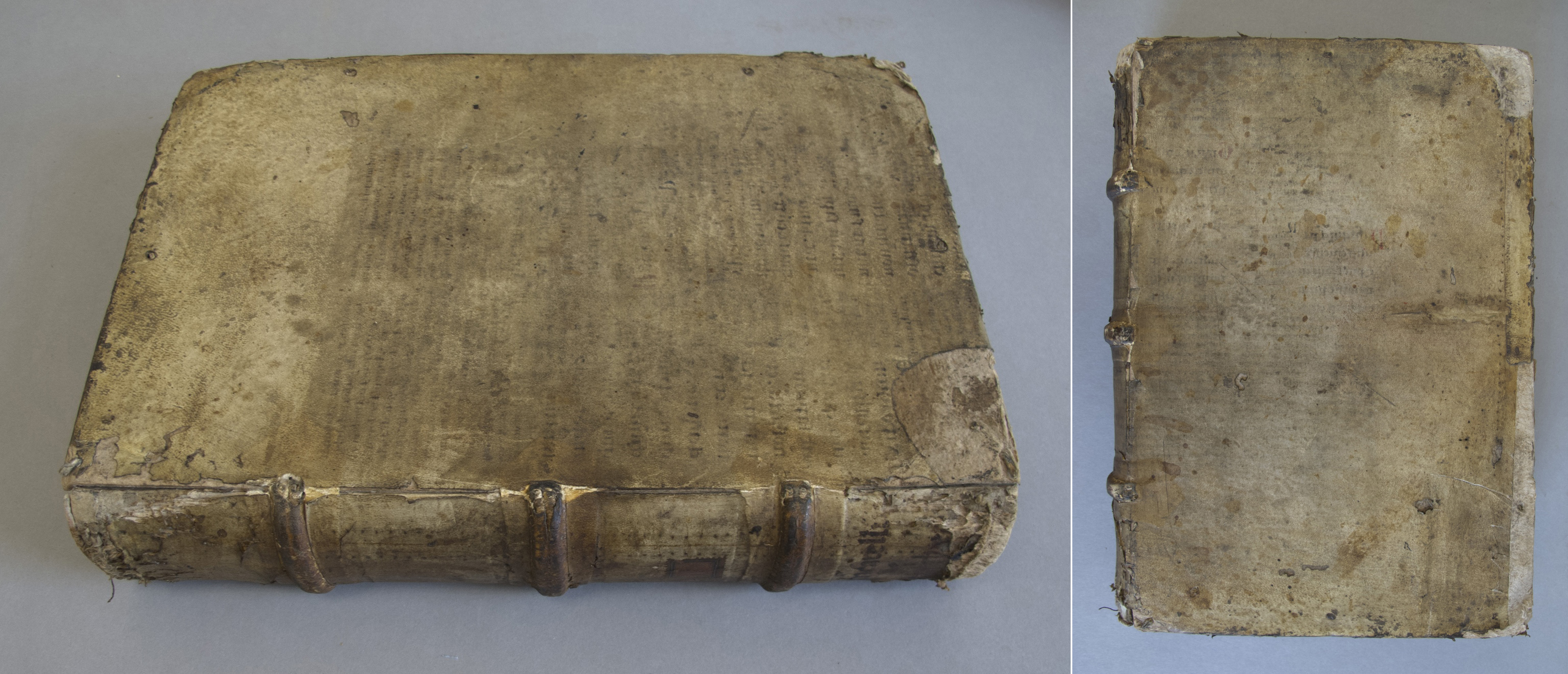
An example of a stiff-boards parchment binding with a slotted spine from the NYAM collection: Trincavello, De differentiis febrium, Venice, 1585. Left: Back cover and spine. Right: Front cover.

An example of a stiff-boards parchment binding with a slotted spine from the NYAM collection: Trincavello, De differentiis febrium, Venice, 1585. Left: Back cover and spine. Right: Front cover.

A unique feature of this binding is the juxtaposition of the parchment and alum-tawed skin used to cover the book’s spine. Slots cut in the parchment across the spine reveal the alum-tawed skin patches covering the sewing supports. It is a combination with structural as well aesthetic advantages: The alum-tawed skin provides the flexibility necessary to conform to the raised sewing supports, while the parchment provides a more durable surface to protect the bulk of the spine.

Trincavello (1585): Detail of spine showing the alum-tawed skin patch adhered over sewing support. The original color of the patch can be seen where the parchment is split along the shoulder of the spine.

Trincavello (1585): Detail of spine showing the alum-tawed skin patch adhered over sewing support. The original color of the patch can be seen where the parchment is split along the shoulder of the spine.

To prepare for this binding, we made detailed examinations of six books printed in Venice between 1508 and 1585 in the NYAM special collections. In conjunction with Sylvia Pugliese’s study of this binding style at the National Library Marciana in Venice, we selected material and structural features that exemplified the binding style. These features are highlighted in the images below, which show the steps of the binding process and the finished model.

The text block is sewn on three laminated alum-tawed supports.

The text block is sewn on three laminated alum-tawed supports.

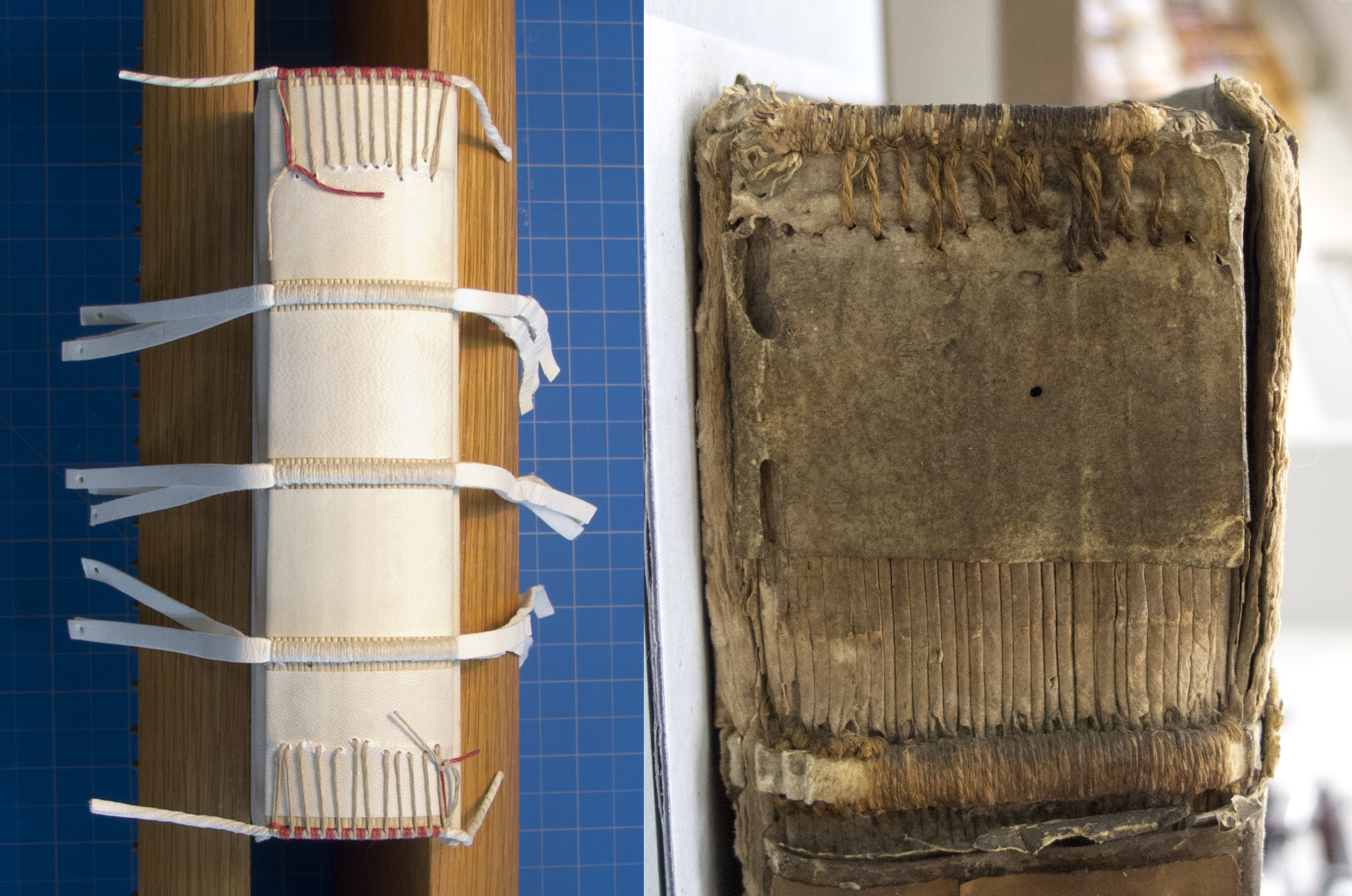
Left: The text block is rounded and backed and the spine is lined with parchment. Endbands are sewn through the spine lining on twisted alum-tawed skin supports.

Left: The text block is rounded and backed and the spine is lined with parchment. Endbands are sewn through the spine lining on twisted alum-tawed skin supports. Right: Galen, Omnia quae extant in Latinum sermonem convsera, Venice, 1556, detail of the spine showing an endband, parchment spine lining, and one sewing station.

Left: Endbands seen from above. Right: Galen (1556) detail of the front bead endband sewn in red and white thread.

Left: Endbands seen from above. Right: Galen (1556) detail of the front bead endband sewn in red and white thread.

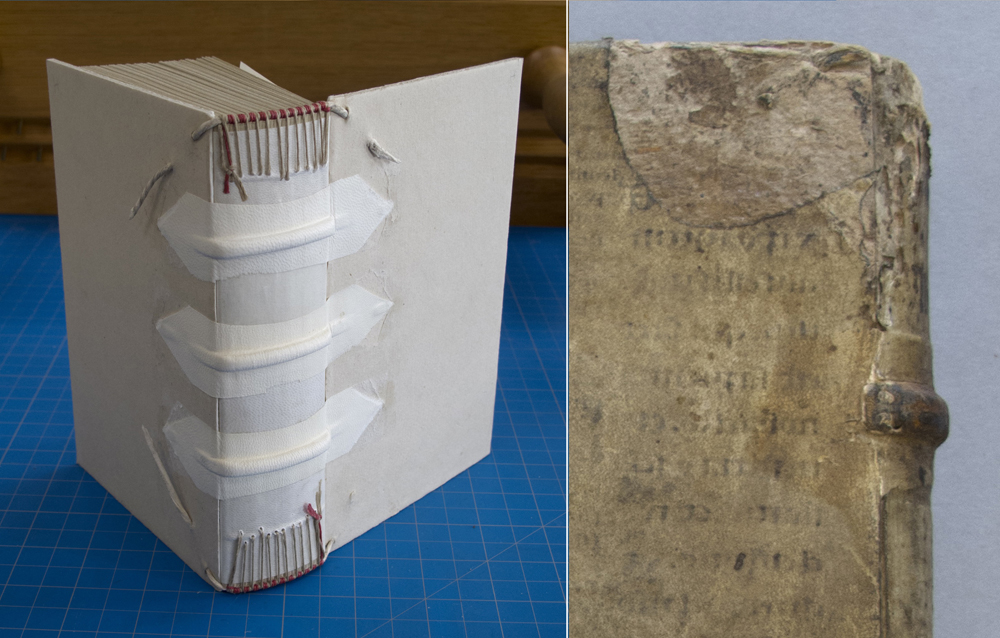
Left: The sewing supports are laced into the boards and then covered in alum-tawed skin patches. The endband cores are also laced into the boards. Right: Trincavello (1585), detail showing the "arrow-point" shaping of the alum-tawed skin patch underneath the parchment and the endband core that has been laced through the board and trimmed off flush with the board.

Left: The sewing supports are laced into the boards and then covered in alum-tawed skin patches. The endband cores are also laced into the boards. Right: Trincavello (1585), detail showing the “arrow-point” shaping of the alum-tawed skin patch underneath the parchment and the endband core that has been laced through the board and trimmed off flush with the board.

A template is prepared for cutting the slots in the parchment. The binding is now ready to be covered.

A template is prepared for cutting the slots in the parchment. The binding is now ready to be covered.

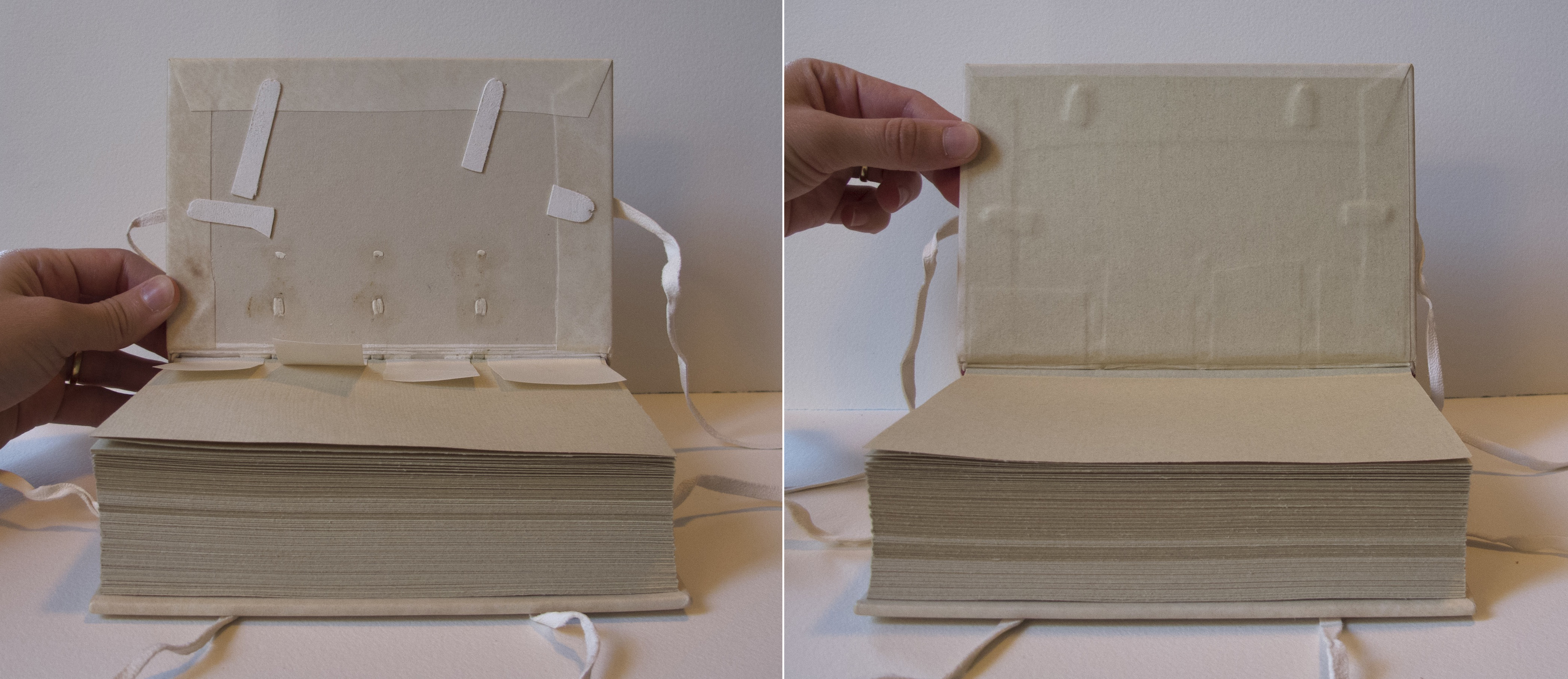
After the parchment cover is adhered, ties are laced through the boards at the fore-edge, head and tail. The parchment spine linings are adhered to the interior face of the board and the endsheet is pasted down.

After the parchment cover is adhered, ties are laced through the boards at the fore-edge, head and tail. The parchment spine linings are adhered to the interior face of the board and the endsheet is pasted down.

Trincavello (1585), The surface of the pastedown reveals the ends of ties formerly  laced through the board.

Trincavello (1585), The surface of the pastedown reveals the ends of ties formerly laced through the board.

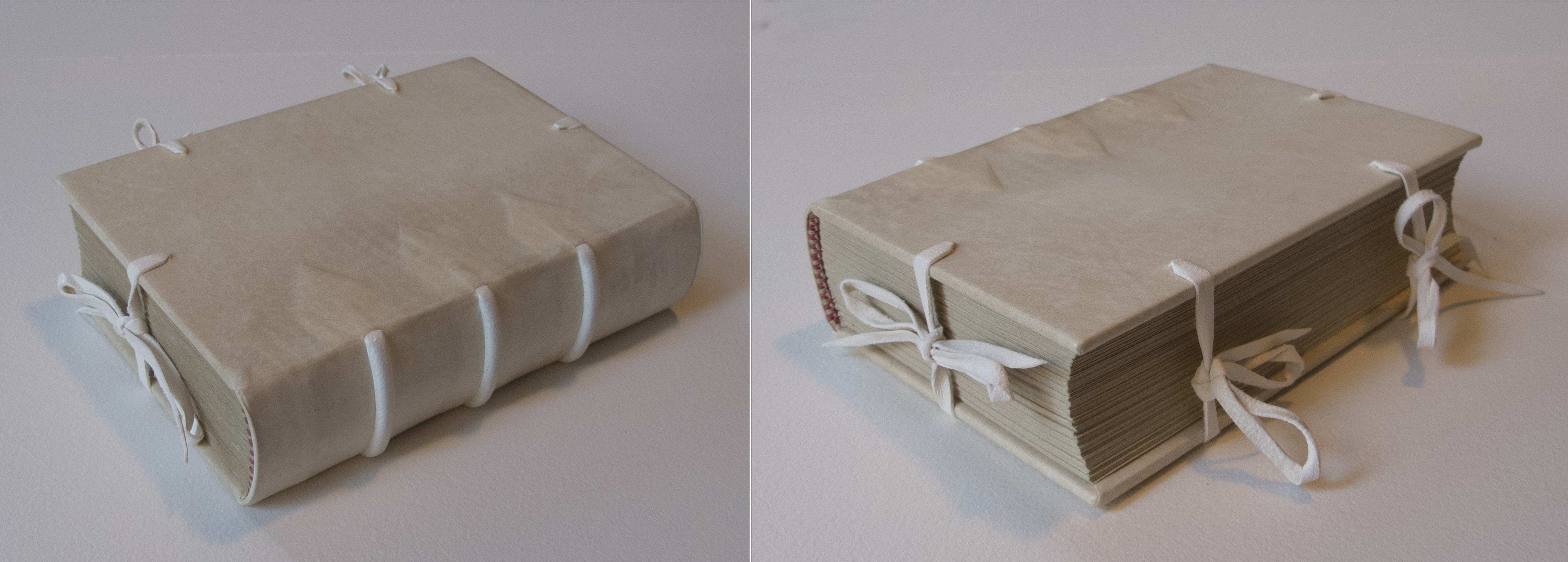
Finished model, complete with ties on fore-edge, head, and tail.

Finished model, complete with ties on fore-edge, head, and tail.

[1] Sylvia Pugliese, “Stiff-Board Vellum Binding with Slotted Spine: Survey of a Historical Bookbinding Structure,” in Papier Restaurierung – Mitteilungen der IADA, Vol. 2 (2001), Suppl., S. 93-101.

Cookery for a Jewish Kitchen

By Johanna Goldberg, Information Services Librarian

Aunt Sarah's Cookery Book-page-001

Passover begins the night of March 25. In preparation, we’re sharing some recipes from an early English-language Jewish cookbook in our collection. The library and rare book room house a large number of cookery-related items, as nutrition and health are inextricably linked.

After the cost of books plummeted in the 1800s, Jewish cookbooks came on the scene, first in Germany around 1815. In 1846, the first English-language cookbook was released in London.¹

The cookbook in our collection, Aunt Sarah’s Cookery Book for a Jewish Kitchen, was published in Liverpool in 1872.

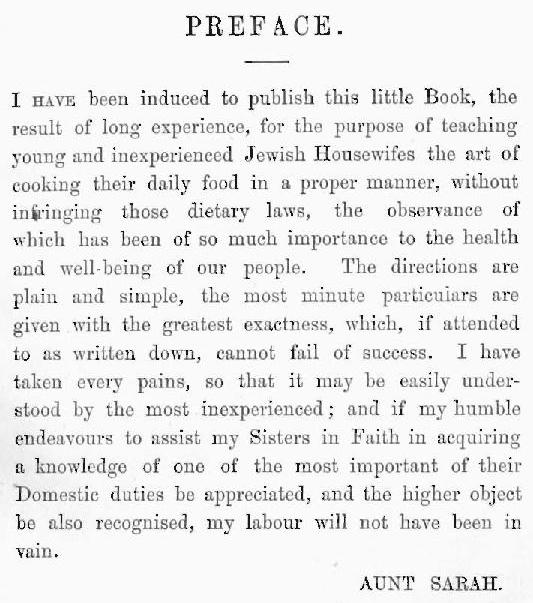
 “I have been induced to publish this little Book, the result of long experience, for the purpose of teaching young and inexperienced Jewish Housewifes the art of cooking their daily food in a proper manner, without infringing those dietary laws, the observance of which has been of so much importance to the health and well-being of our people. The directions are plain and simple, the most minute particulars are given with the greatest exactness, which, if attended to as written down, cannot fail of success. I have taken every pains, so that it may be easily understood by the most inexperienced; and if my humble endeavors to assist my Sisters in Faith in acquiring a knowledge of one of the most important of their Domestic duties be appreciated, and the higher object be also recognized, my labour will not have been in vain.AUNT SARAH”

“I have been induced to publish this little Book, the result of long experience, for the purpose of teaching young and inexperienced Jewish Housewifes the art of cooking their daily food in a proper manner, without infringing those dietary laws, the observance of which has been of so much importance to the health and well-being of our people. The directions are plain and simple, the most minute particulars are given with the greatest exactness, which, if attended to as written down, cannot fail of success. I have taken every pains, so that it may be easily understood by the most inexperienced; and if my humble endeavors to assist my Sisters in Faith in acquiring a knowledge of one of the most important of their Domestic duties be appreciated, and the higher object be also recognized, my labour will not have been in vain.
AUNT SARAH”

At the time of the book’s publication, matzo didn’t look like it does today—a piece of matzo was most often “round, irregular, or oval-shaped.”² The mechanization of matzo began with the invention of a kneading device in 1838, and progressed after the first matzo factory, Manischewitz, opened in Cincinnati in 1888. Eventually, the factory produced entirely machine-made, and square, pieces of unleavened bread.²

Aunt Sarah did not write the recipes in this book with most (non-shmurah) modern matzo in mind, and her ingredients are not always as common today as they were in the 1870s. If you try one of the recipes, let us know how it translates to the modern kitchen. And take a picture—unfortunately, this little book only includes text.

Here are some recipes to add to your holiday repertoire this year.³

Matzo Cake.

Put a matzo on a plate, strew over it almonds finely chopped; then sprinkle with brown sugar. Bake on a tin five or six minutes.

Potato Cake, or Pudding.

One pound of gratered potatoes (boiled in their skins the day before), one pound of sifted loaf sugar, three ounces of pounded almonds, the rind (gratered) and juice of one lemon, and the yolks of twelve eggs (beaten). Mix all together. Then take the whites of the eggs, beat them to a froth, and add it to the rest. Bake in a moderate oven, in small dishes, greased with salad oil.

A delicious Pudding for Passover.

Take whole matzos [a handwritten note specifies two or three], put each into a soup-plate, with sufficient cold water to make them very soft; drain off the water, leaving the matzos whole; grease a basin with dripping a quarter of an inch thick, cover it well with brown sugar, and line it with the soaked matzo the same as the paste for a steffin [another of Aunt Sarah’s recipes, basically a pie crust dough made with water, flour, and suet]. Mix well together a quarter of a pound of chopped raisins, the same of currants, ditto of chopped suet,* one ounce of preserved citron, ditto of orange and lemon (chopped), the juice of one lemon, the rind of half (gratered), half a teaspoonful of ground cinnamon, a quarter of a small nutmeg (gratered), half a teaspoonful of salt, and a wine glass of rum. Then put the mixture into the lined basin, about an inch thick; cover with the soaked matzo, strew over brown sugar; then the mixture and the matzo alternately, until the basin is full, the matzo forming the top layer. Make holes with a knife not quite to the bottom of the basin, and pour over it by degrees eight eggs (well beaten). When all is soaked into the pudding, put a little dripping over the top; then cover it with brown sugar. Bake in a moderate oven from an hour and a half to two hours, until quite brown. Turn it on to a flat dish, bottom up, and serve very hot. I must be made two hours before putting in the oven.

And Aunt Sarah’s take on the evergreen classic:

Matzo Ball Soup.

Stew slowly for six hours, in five pints of water, four pounds shin of beef, four pounds of mutton or veal, three leeks, a little celery, and a teaspoonful of salt. Strain and take off the fat.

For the Balls.—Take a teacupful of matzo meal, half a teaspoonful of salt, the same of ground ginger, one small Spanish onion chopped fine, and browned in a frying pan with a little dripping, and two teacupsful of matzo soaked in cold water and squeezed dry. Mix all together, with a half a teacupful of the broth and one or two eggs, sufficient to make it the consistence of forcemeat. Make it into balls, and boil them in the soup twenty minutes before serving.

*A common English ingredient, often found in early Jewish cookbooks, but not kosher.¹

References:

1. Marks, G. (2010). Encyclopedia of Jewish Food. John Wiley & Sons.

2. Sarna, J. D. (2005). How Matzah Became Square: Manischewitz and the Development of Machine-made Matzah in the United States. Sixth Annual Lecture of the Victor J. Selmanowitz Chair of Jewish History, Touro College, Graduate School of Jewish Studies, New York, NY. Retrieved February 22, 2013 from http://www.brandeis.edu/hornstein/sarna/americanjewishcultureandscholarship/Archive/HowMatzahBecameSquare.pdf

3. Aunt Sarah. (1872). Aunt Sarah’s cookery book for a Jewish kitchen: Containing plain and easy directions. How to cook fish, meat, poultry, and vegetables; to make pastry, puddings, sweets, preserves, and pickles, &c., with additional recipes for Passover. Liverpool: Yates and Hess.

Biblioclasts & Bibliosnitches Beware

By Arlene Shaner, Acting Curator and Reference Librarian for Historical Collections

Dr. Henry Pelouze de Forest's bookplate

Dr. Henry Pelouze de Forest’s bookplate

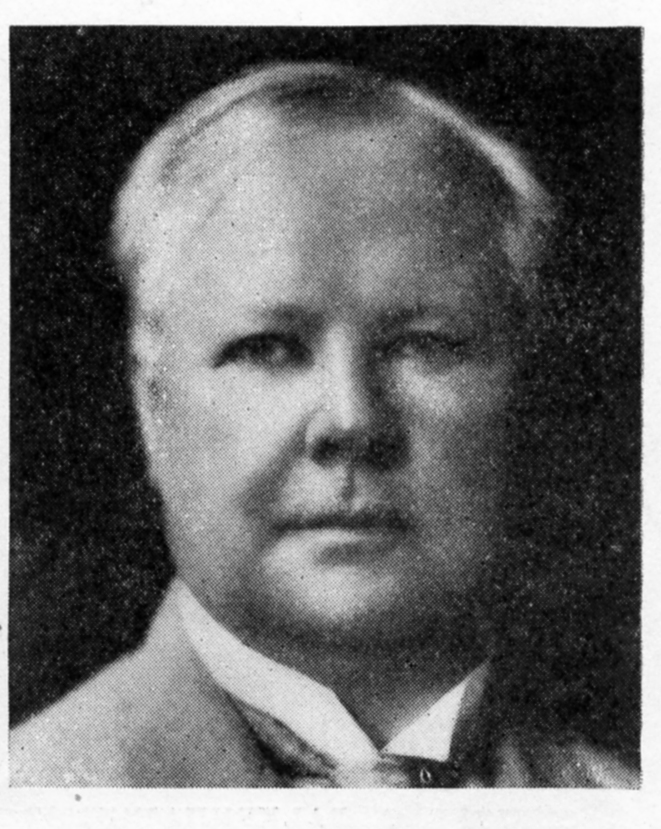
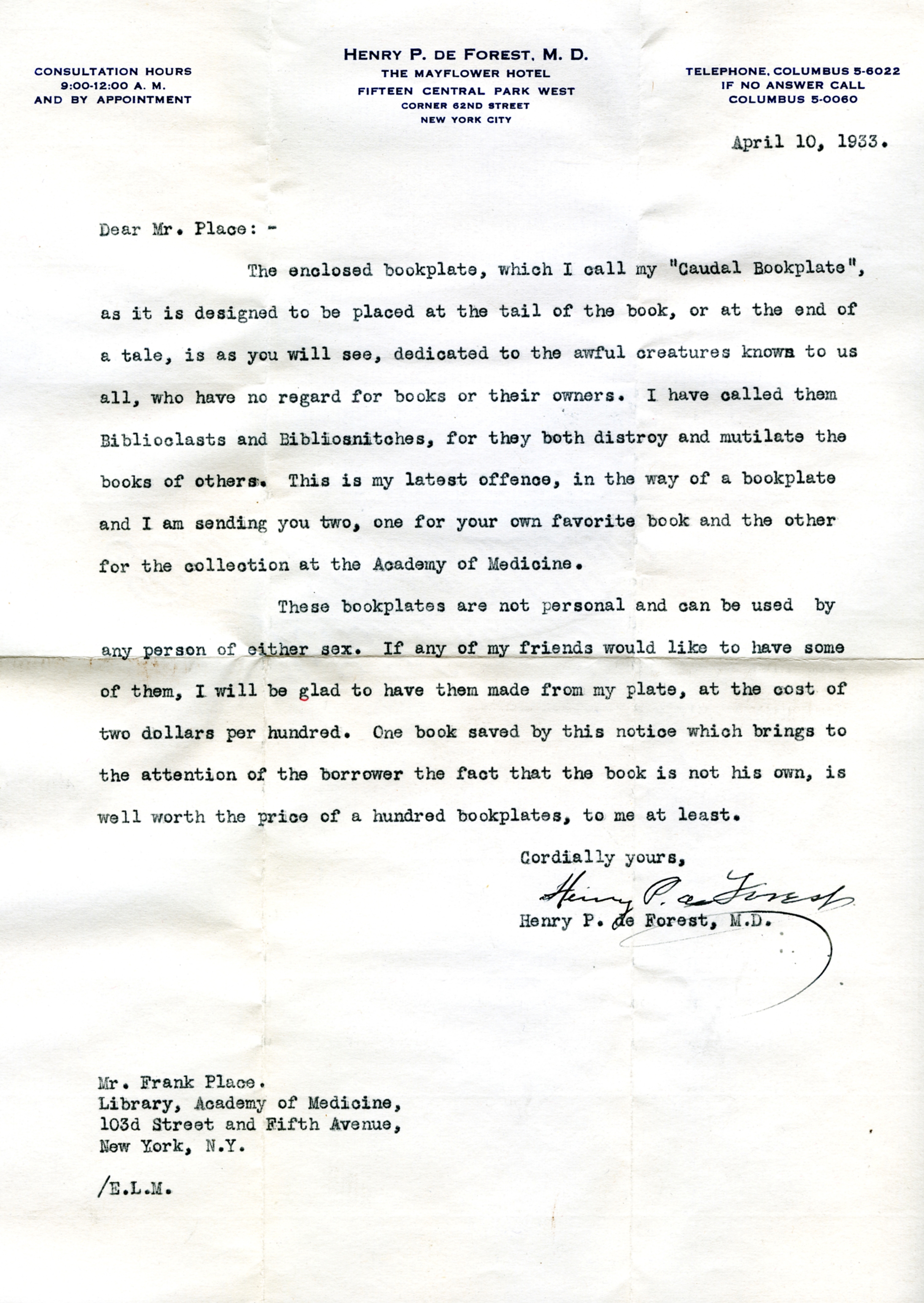
Book owners, even generous ones, worry about what might happen to their books if they loan them to others who might not treat them with the same degree of care. Dr. Henry Pelouze de Forest, a lover of books and of bookplates, had this “Caudal Bookplate,” meant to be inserted at the end of a book, made as a warning to unscrupulous borrowers in 1933. De Forest (1864-1948) graduated from Cornell in 1884 and from Columbia’s College of Physicians and Surgeons in 1890. He was associate professor of obstetrics at the Post-Graduate Hospital and Medical School from 1903 to 1921, but is probably best remembered today for his interest in personal identification. While working as a surgeon for the New York City Police Department (1902-1912), he established what is said to be the first fingerprint file in the United States and invented a dactyloscope for fingerprint examination.

Dr. Henry Pelouze de Forest

Dr. Henry Pelouze de Forest *

De Forest had several bookplates made for his own books and he sent examples of them to Frank Place, who was a librarian here at NYAM. Place collected bookplates and we have three small loose-leaf notebooks full of those he received both as gifts and by sending copies of ours in trade. This bookplate and its accompanying letter were found in the first of those small volumes. We’ll never know how many of de Forest’s friends took advantage of his offer to print up extra batches of his poetic plea that borrowers mind their manners.

Letter from Henry Pelouze de Forest to NYAM librarian Frank Place.

Letter from Henry Pelouze de Forest to NYAM librarian Frank Place. Click to enlarge.

* From the Columbia Alumni News 22:18 (Feb. 13, 1931), p. 10.