Announcing our 2016 Programming

The brochure of our 2016 programming in medicine, history, and the humanities is now available. We are excited by the range of presenters, topics, and themes we are presenting this year; we think there’s something for everyone and hope you agree.

Click to download the 2016 Cultural Programming brochure.

Click to download the 2016 Cultural Programming brochure.

This year’s special series is “Changemakers: Activism and Advocacy for Health,” showcasing the role of activism in creating change in medicine and health. Join us to hear Alice Dreger reflect on the impact of 25 years of advocacy by the Intersex Patient Rights Movement; Merlin Chowkwanyun explore New York City health activism in the 1970s and the activities of the Lincoln Collective; Diane Kiesel describe the legacy of African American obstetrician and civil rights activist Dorothy Ferebee; and Gabriela Soto Laveaga discuss medical activism in Mexico, asking what it means to be a physician activist in a middle income or poor country.

This year’s history of medicine series includes a look at the historical and cultural context of a number of today’s urgent health challenges. Sonia Shah moderates a panel exploring the history and future of emerging diseases, and the social, political, and scientific drivers that turn these new pathogens into pandemics; Alondra Nelson examines The Social Life of DNA, looking at how the double helix has wound its way into the heart of contemporary social issues around race; and Scott Podolsky analyzes the far-reaching history of antibiotics and their use, and the implications of this history for the emerging possibility of a “post-antibiotic” era.

Other highlights include our second  “After Hours” series with Atlas Obscura featuring highlights of our rare book collections, and our annual Friends of the Rare Book Room lecture with Caroline Duroselle-Melish, who explores the illustrations of last great Renaissance encyclopedia of natural history.

Our annual Friends lecture is open to all. Our Friends of the Rare Book Room also receive invites to special lectures, programs, behind-the-scenes excursions, receptions, and visits to private collections. Join the Friends at any level before the annual Friends lecture to receive our tote bag and an invitation to the post-lecture reception on April 6.

Download our 2016 programming brochure for more details about all these events and more. Additional programming, including interactive workshops and reading groups, will be announced throughout the year. Sign up here to keep up to date with the latest news.

We look forward to seeing you throughout the year!
#ColorOurCollections Roundup

By Rebecca Pou, Archivist; Johanna Goldberg, Information Services Librarian; and Anne Garner, Curator
Social Media Team, New York Academy of Medicine Library

#ColorOurCollections-bannerfinal

#ColorOurCollections week is winding down, but it has been so much fun we want to do it again. We propose making it an annual event for the first week of February.

More than 215 libraries and cultural institutions participated, representing 7 countries (United States, Canada, United Kingdom, France, Spain, Australia, and New Zealand). We’ve been absolutely blown away by the amazing coloring sheets shared by contributors and the range of their sources; coloring selections came from incunables, natural histories, botanicals, children’s classics, anatomical atlases, university yearbooks, patents, and much more. While most of the content came from printed works, manuscripts, sketches, stained-glass windows, plates, and mosaics also provided inspiration. To more fully explore the cornucopia of coloring content, just take a look at the list below.

This document includes images shared by organizations on websites, Pinterest boards, and Flickr and Facebook albums (and is organized by these locations). Many organizations shared #ColorOurCollections images one at a time via Twitter and Instagram. While these are not listed here, they are reflected in our Pinterest board.

We apologize if we inadvertently left your #ColorOurCollections contributions off this list. Please comment below with the organization name and link to your images, and we will update the list accordingly.

Thank you to the institutions that contributed to #ColorOurCollections and to all the talented coloring enthusiasts out there who participated! We hope you enjoyed learning more about our collections. Though the week is nearly over, please keep the submissions coming. With the amount of colorable content released this week, it is safe to say we can keep coloring until next year!

Coming Soon at the Center: Gessner, Coloring, Lobotomy, Digital Humanities

The coming weeks are busy ones for the Center for the History of Medicine and Public Health. We hope you’ll join us for these upcoming events.

Ann Blair

Ann Blair

This Saturday, January 30, at 11 am, Harvard historian Ann Blair will give a free Bibliography Week lecture, Credit, thanks, and blame in the works of Conrad Gessner (1516-1565).” Blair will show how the Zürich physician and natural historian used the print medium to promote his forth-coming publications. Gessner also sought contributions of manuscripts, images, and help from scholars all over Europe. Register online.

February 1-5 is #ColorOurCollections Week, a special collections coloring fest we’ve organized on social media. More than 30 institutions will share images from their collections, and followers are invited to color the images and share their results. Email us at library@nyam.org for more details; we’ll add your institution to our Twitter list if you’d like to participate. Watch the hashtag and join in the fun! And watch this space: We’ll feature coloring content on the blog all next week.

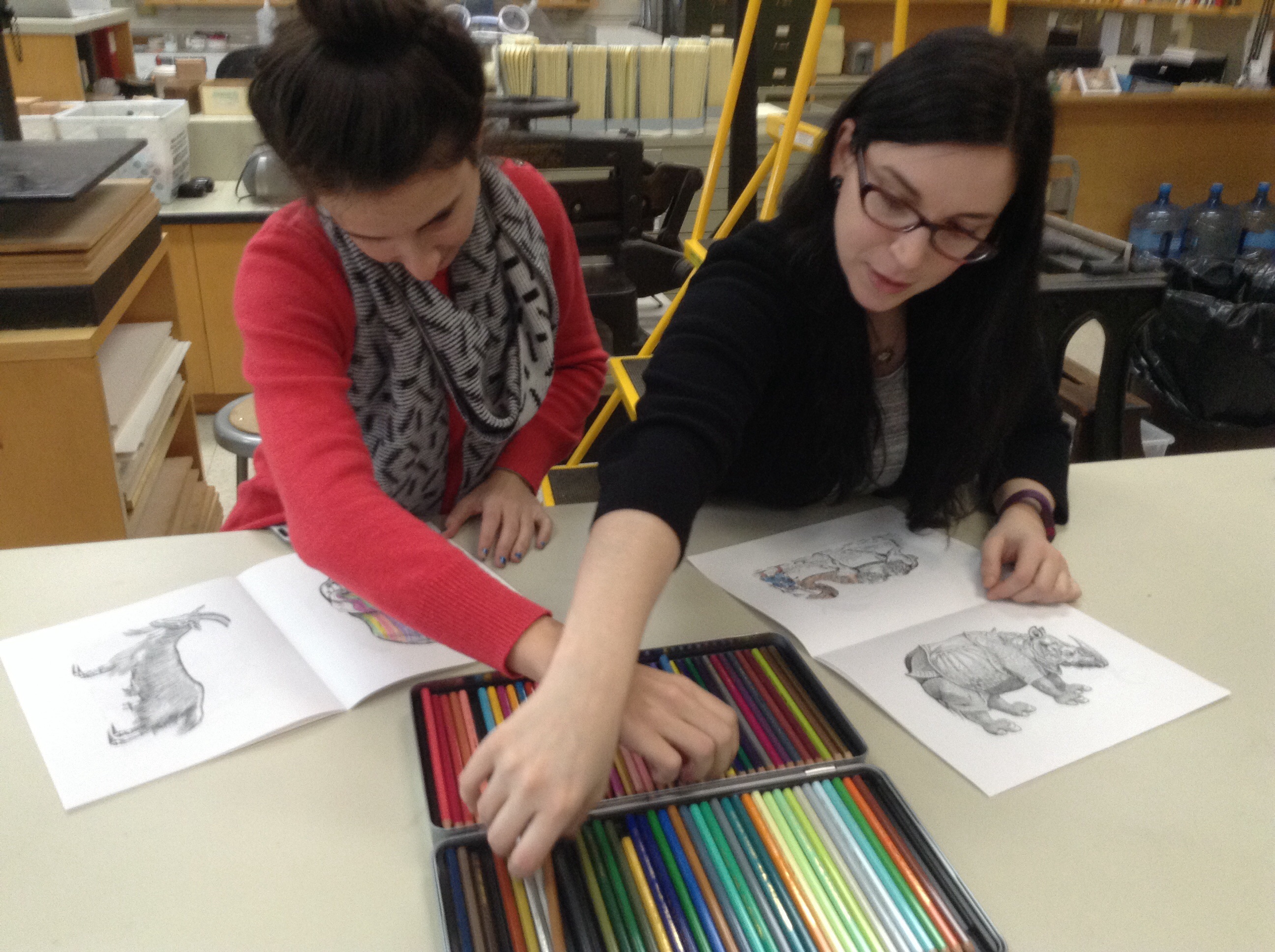
Collections Care Assistant Emily Moyer and Archivist Rebecca Pou #ColorOurCollections.

Collections Care Assistant Emily Moyer and Archivist Rebecca Pou #ColorOurCollections.

Miriam Posner

Miriam Posner

On February 9 at 6 pm, Miriam Posner, University of California, Los Angeles, will offer a free lecture Walter Freeman and the Visual Culture of Lobotomy.” Between 1936 and 1967, Freeman, a prominent neurologist, lobotomized as many as 3,500 Americans. Freeman also took patients’ photographs before their operations and years—even decades—later. Posner will detail her efforts to understand why Freeman was so devoted to photography, using computer-assisted image-mining and analysis techniques. This lecture will appeal to a wide-range of interests, including medical photography, data analysis, mid-twentieth century America, and the history of mental health. Register online.

Heidi Knoblauch

Heidi Knoblauch

The following day from 1 pm–5 pm, Posner will be joined by Heidi Knoblauch, Bard College, for a “Digital Humanities: Visualizing Data” workshop. The program will begin with a discussion of what people mean when they say “digital humanities,” followed by a hands-on section on how to find and structure data using Palladio, a tool for visualizing humanities data. The workshop costs $25 and is limited to 30 participants. Register online.

We hope to see you online and at our on-site events!

#ColorOurCollections February 1-5

As you may know by now, there is a coloring craze going on. And we want libraries and their patrons to join in the fun!

Inspired in part by a recent twitter exchange with the Biodiversity Heritage Library, we are starting a week-long special collections coloring fest on social media, using the hashtag #ColorOurCollections. There is so much great coloring content in special collections, especially when looking at early illustrated books meant to be colored by hand.

Collections Care Assistant Emily Moyer and Archivist Rebecca Pou #ColorOurCollections.

Collections Care Assistant Emily Moyer and Archivist Rebecca Pou #ColorOurCollections.

If you work in a library or special collection, share images from your collections and invite followers to share their colored copies from February 1-5. You could use images already online in your digital collections, or you could even create easily printable coloring sheets or a coloring book, which we did a few years ago.

If you are a coloring fan, grab those colored pencils and felt-tip markers and #ColorOurCollections, then share your results using the hashtag.

CamelColored

Camel from Conrad Gesner’s Historia Animalium, Liber I, 1551.

Discover the Academy Library

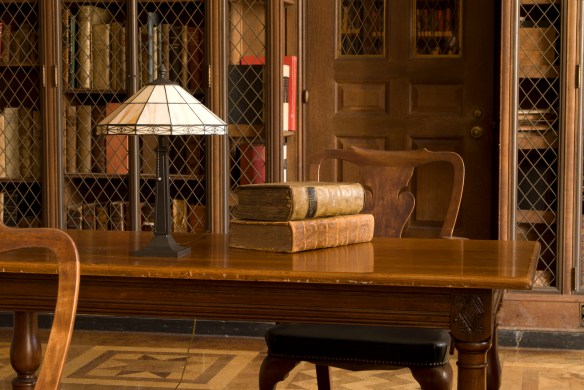
The Coller Rare Book Reading Room captured by Ardon Bar-Hama.

The Drs. Barry and Bobbi Coller Rare Book Reading Room captured by Ardon Bar-Hama.

The New York Academy of Medicine Library is a place of discovery. It’s where the scholarly and the curious alike turn to learn about the history of what keeps us well, and what makes us sick. It’s a place to discover the lessons learned in pursuit of individual health and well being, and the intricacies of the politics and policies of ensuring public health in cities, the nation and the world.

The Academy Library is where world-renowned writers, historians, documentary filmmakers, health professionals, and students come to learn, to be inspired, and to form the foundation of knowledge that opens the door to a future discovery. It’s a place where unique programming –open to all–integrates medicine with history, humanities, and the arts through its Center for the History of Medicine and Public Health.

Open to the general public, the Library houses over 550,000 volumes, an extensive rare book collection, and unique medical artifacts of historical importance that cannot be found anywhere else in the world. Won’t you join us in helping to safeguard the Library’s treasures to ensure that the opportunity for discovery is available to all?

Support the Library to preserve its collections and ensure ongoing support for its one-of-a-kind public programming. Thank you for your generosity and take a few minutes to discover for yourself a few of the Library’s many treasures through our digital gallery.

donate_buttondiscover_button

Call for Abstracts: Sixth Annual History of Medicine Night

RBR desk

The New York Academy of Medicine’s Section on the History of Medicine and Public Health invites you to submit abstracts for presentation at its upcoming Sixth Annual History of Medicine Night. This event will take place at the Academy, 1216 Fifth Avenue at the corner of 103rd Street, on March 9, 2016 from 6:00 pm–7:30 pm.

We invite all those interested in presenting to submit an abstract concerning a historical subject relating to medicine.

Please note the following submission requirements:

  • Abstracts (not to exceed 250 words) must be submitted together with authors’ contact details, titles, and affiliations.
  • Abstracts must be submitted no later than Friday, January 15, 2016

Selected speakers will be asked to prepare a presentation of not more than 12 minutes, with an additional three minutes for questions/discussion. Papers selected for presentation will be determined by a panel of History of Medicine Section members and staff of The New York Academy of Medicine.

Submit abstracts electronically to Suhani Parikh at sparikh@nyam.org.  Questions may be directed to Suhani via email or phone (212-419-3544).

Join us for First Mondays!

By Anne Garner, Curator, Center for the History of Medicine and Public Health

The Coller Rare Book Reading Room captured by Ardon Bar-Hama.

The Coller Rare Book Reading Room captured by Ardon Bar-Hama.

Books in open caseCome visit The Drs. Barry and Bobbi Coller Rare Book Reading Room for an hour on the first Monday of each month (excluding holidays). Library staff will show a selection of treasures from our collections. We will begin in the Academy lobby at noon (1216 Fifth Avenue at 103rd Street). No advance sign-up is required.

Our rare book room was built in 1933. A 2014 renovation restored the room’s historic windows, period cork floor, and unique light fixtures, bookishly designed to feature early modern printing devices.

Please note that The Drs. Barry and Bobbi Coller Rare Book Reading Room is also open to researchers by appointment on Tuesdays, Thursdays and Fridays from 10am– 4:45pm and Wednesdays from 10am– 6:45 pm. Email us at library@nyam.org or call 212-822-7315 to make an appointment.

Three giveaways, three chances to win!

By Anne Garner, Curator, Center for the History of Medicine and Public Health

EatingThroughTime-picture

Cover of Annette Lucas’ La cuisinière, cordon bleu de la famille ...Paris: E. Guérin, [1905].

Cover of Annette Lucas’ La cuisinière, cordon bleu de la famille …Paris: E. Guérin, [1905].

Set your kitchen timer: the countdown to our October 17th festival, Eating Through Time, is less than a month away. We’re looking forward to seeing you there, along with Bryant Terry, Jacques Pépin, the Snowday food truck, and a host of other culinary personalities offering talks, demonstrations, and panels.

Today we’re announcing three chances to win two VIP tickets to the festival this month. The tickets will include entrance to hear the legendary Jacques Pépin.

First up are our friends at the Brooklyn-based Food Book Fair, who will be hosting an Instagram challenge on their excellent feed starting today, September 21. Follow them at @foodbookfair for details. In addition to the tickets, you’ll win a signed copy of Pépin’s new cookbook.

Website-with-wanderlust Atlas Obscura will also launch an Instagram contest on September 30th. The winning photo will be announced on Monday, October 5th. Follow them on Instagram and Twitter for more details. You’ll also win a year’s membership to our Friends of the Rare Book Room.

And finally, we’ll be hosting our own caption contest the week of September 28th. Pull out the stops to caption an image from one of our 18th-century cookbooks, and you’ll earn two free VIP tickets for October 17th. We’re @nyamhistory on Twitter and Instagram, and you’ll find us here on Facebook.

The full schedule of Eating Through Time can be found here.

We’ve featured a handful of images from our French cookbooks below, to put you in the mood. Bon Appetit!

Frontispiece from F.J. Mayeux’s, Le petit cuisinier français contenant la cuisine, l'office, la patisserie ...Bruxelles: Ferra aine, 1823.

Frontispiece from F.J. Mayeux’s Le petit cuisinier français contenant la cuisine, l’office, la patisserie …Bruxelles: Ferra aine, 1823.

Cover of Emile Dumont’s Le parfait patissier : recettes pour la ville et la campagne : entremets sucrés, patisserie, confiserie, glaces, liqueurs, vins en futs et en bouteilles, cidre et poiré. Paris: Degorce-Cadot, [188?].

Cover of Emile Dumont’s Le parfait patissier: recettes pour la ville et la campagne : entremets sucrés, patisserie, confiserie, glaces, liqueurs, vins en futs et en bouteilles, cidre et poiré. Paris: Degorce-Cadot, [188?].

Frontispiece and title from Louis Clerc’s Manuel de l'amateur d'huitres, ou, L'art de les pêches ... : suivi des qualités alimentaires et propriétés médicales de ce mollusque, ainsi que de l'adresse des personnes qui les vendent. Paris: Chez l'Éditeur, Librairie Française Étrangère, 1828.

Frontispiece and title from Louis Clerc’s Manuel de l’amateur d’huitres, ou, L’art de les pêches … : suivi des qualités alimentaires et propriétés médicales de ce mollusque, ainsi que de l’adresse des personnes qui les vendent. Paris: Chez l’Éditeur, Librairie Française Étrangère, 1828.

Frontispiece and title page from Mademoiselle Marguerite’s Le cordon bleu : Nouvelle cuisinière bourgeoise. Paris: Baudouin, 1828.

Frontispiece and title page from Mademoiselle Marguerite’s Le cordon bleu: Nouvelle cuisinière bourgeoise. Paris: Baudouin, 1828.

Apply for our 2016 Research Fellowships

Are you working on a history of medicine project that would be enhanced by spending a month mining our collections?

NYAM Library, Rare Book Room photos by Amy Hart © 2012We are now accepting applications for the Paul Klemperer Fellowship in the History of Medicine and the Audrey and William H. Helfand Fellowship in the History of Medicine and Public Health. Each fellow receives a stipend of $5,000 to support travel, lodging, and incidental expenses for a flexible period between January 1, 2016 and December 31, 2016. Fellows are expected to spend at least four weeks in New York City, working at The New York Academy of Medicine. Besides completing a research project, each fellow will be expected to make a public presentation at the Academy and submit a final report.

Both fellowships are designed to support researchers who can demonstrate how an opportunity to immerse themselves in our rich holdings will enhance their work. Preference in the application process is given to early career scholars, although the fellowships are open to anyone who wishes to apply, regardless of academic status, discipline, or citizenship. While both fellowships are for researchers engaged in history of medicine projects, the Helfand Fellowship emphasizes the role of visual materials in understanding that history.

The application deadline is Monday, August 17, 2015. Letters of recommendation must be received by Friday, August 21, 2015. Fellowship recipients will be notified by Thursday, October 1, 2015.

Perspective applicants are encouraged to contact Arlene Shaner, Reference Librarian for Historical Collections, at 212-822-7313 or history@nyam.org with questions or for  assistance identifying useful materials in the library collections.

Find Us on Instagram

Can’t get enough of images from our collection? Want a behind-the-scenes look at the library and its events? You’re in luck: we are now on Instagram.

So far, we have used Instagram to share an image from our conservation lab, photos from the Food Book Fair, and items from our collection. There’s much more to come—we may even have a hashtag challenge or two in the pipeline.

This slideshow requires JavaScript.

Curious about our collections and happenings at the Center? Our Twitter stream is the place to be. You’ll learn about our lectures and other events, and work up an appetite. As you may know, Food is our programming theme for the year, and we’re sharing many culinary delights from our collection.

Not on Twitter or Instagram? Fear not: we are also on Facebook. Plus, you can always make an appointment to visit us in person by calling 212-822-7315 or e-mailing library@nyam.org.