What’s Happening at the Center for the History of Medicine and Public Health?

CHM-2015_Calendar_of_Events-_cover

Cover image from an undated menu of a hotel cafe outside Lisbon. Click to view brochure.

We are thrilled to share our brochure of 2015 programming with you.

A few of these events are right around the corner. We will present two panels on Sunday at the Food Book Fair: Food and Empire and Cookbooks and History. For more information and for tickets, visit foodbookfair.com.

On April 14 at 6 pm, come to our annual Friends Lecture and hear Nick Wilding, PhD, present “On the Circulation of the Book: The Early Reception of Harvey’s De Motu Cordis.” The lecture is free and open to the public; a reception for Friends of the Rare Book Room will follow.

Download the brochure to find out more about our year-long series “Eating Through Time: Food, Health, and History,” our History of Medicine Lecture Series, and our collaboration with Atlas Obscura, “After Hours: Inside the Rare Book Collection of The New York Academy of Medicine.”

We look forward to welcoming you at our events!

Presentations for History of Medicine Night: 19th and 20th Century Stories

The New York Academy of Medicine’s Section on the History of Medicine and Public Health invites you to join us for “History of Medicine Night: 19th and 20th Century Stories” on May 6, 2015 from 6:00pm–7:30 pm at the Academy, 1216 Fifth Avenue at the corner of 103rd Street. Admission is free but advanced registration is required. Register online.
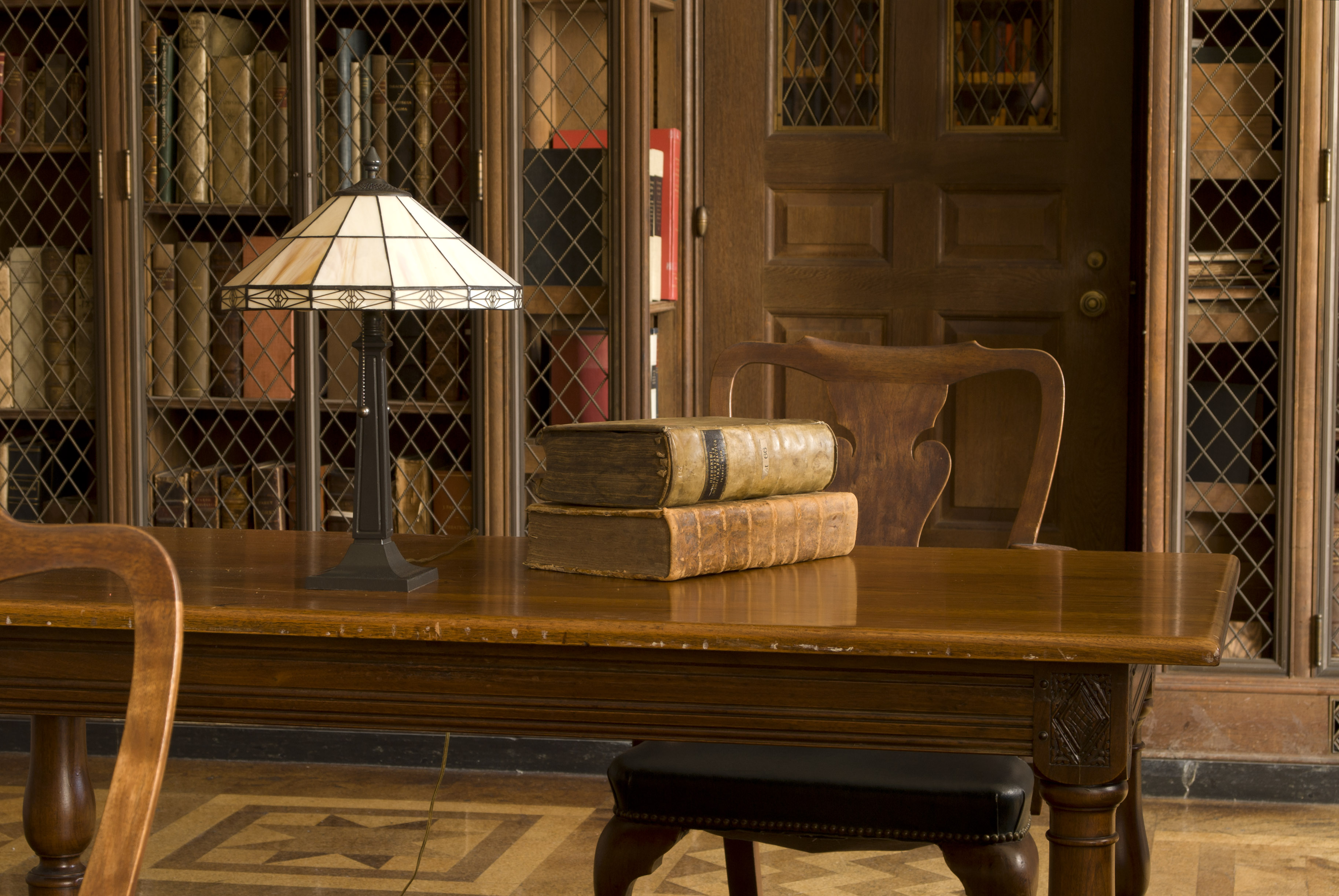
RBR deskPresenters will address historical topics relating to medicine with a focus on the 19th and 20th centuries. The evening’s presenters will be:

Constance E. Putnam, PhD
Independent Scholar (Medical Historian)
“Semmelweis Revisited”

Devon Santoro
Health Advocacy Program, M.A. expected 2016
Sarah Lawrence College
“Puffing and Passing Legislation: The History of Marijuana and Its Place in Society”

Jane Himmel
Health Advocacy Program, M.A. expected May 2016
Sarah Lawrence College
“Medical School Discrimination:  Advocacy In A Postwar World”

Georgia Gaveras, DO
Director of Training and Education in Child and Adolescent Psychiatry
Director of the Child and Adolescent Psychiatry Consultation Liaison Service
Department of Psychiatry
Mount Sinai Health System
“Art of Medicine – Medicine in Art”

Natalie Taylor
Health Advocacy Program, M.A. expected May 2016
Sarah Lawrence College
“The Unequal Burden of Censorship: Classism in the Wake of the Comstock Law”

Karen G. Langer, PhD
Clinical Associate Professor of Rehabilitation Medicine
NYU Langone Medical Center
“Fixation Found: On the Process of Anchoring Impressions into Memory”

Program Announcement: Interlibrary Snacking

As announced last month, our programming theme for 2015 is Eating Through Time.

We are thrilled to introduce a new pilot program, the Reciprocal Library Snack Cooperative, or Interlibrary Snacking, to go along with this theme. Our library boasts more than 10,000 volumes relating to food and cookery. For this new program, library staff will prepare recipes from the collection and send them to requesting libraries, who will in turn offer prepared recipes from their collections. All service providers will undergo thorough food safety training. In addition to white cotton gloves, cookbook users will receive hairnets.

Library snacks will focus on locally sourced, sustainable items. We are building a bespoke refrigeration unit based on the 1890 volume Mechanical Refrigeration and are taking into consideration cold storage advice from Into the Freezer—And Out (1946).
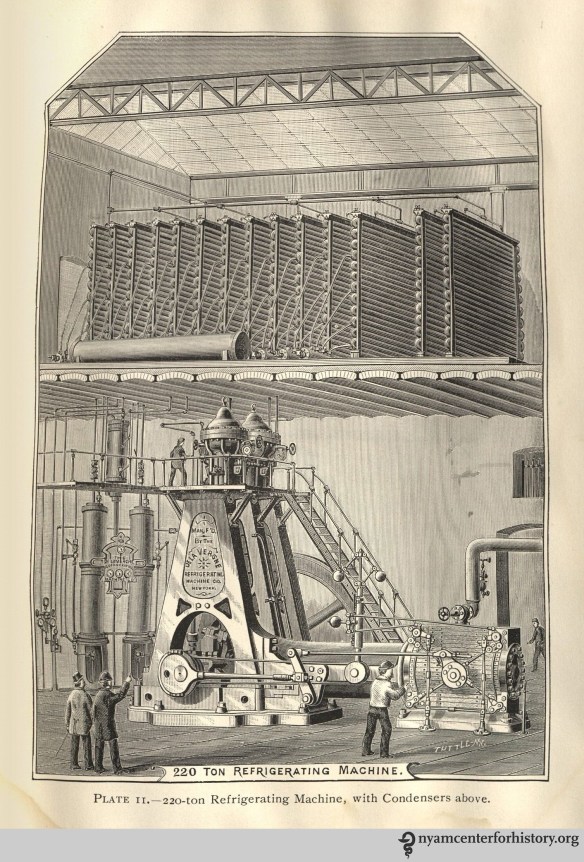
We are building a refrigeration unit based on his illustration from Mechanical Refrigeration, scheduled for completion in September 2016.

We are building a refrigeration unit, scheduled for completion in September 2016, based on this illustration from Mechanical Refrigeration.
The plan for our cold storage organization closely adheres to that shown in Into the Freezer—And Out.

The plan for our cold storage organization closely adheres to that shown in Into the Freezer—And Out.

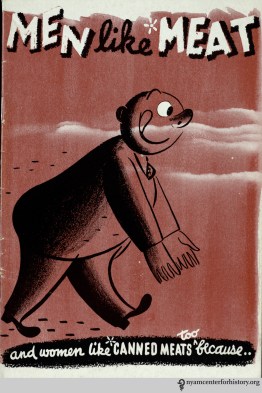
Men Like Meat, an undated pamphlet from the American Can Company. Disclaimer on back cover: "We manufacture cans. We do no canning."

Men Like Meat, an undated pamphlet from the American Can Company. Disclaimer on back cover: “We manufacture cans – we do no canning.”

Before we tackle perishables, however, our focus will be on more shelf-stable foodstuff. Our collection includes a selection of items on canning, preserves, canned meats, food drying and dehydration, and other expiration-extending technologies.

The practice of developing new technologies to enable the safe transportation of food from one place to the next is an old story. As early as the 1850s, commercially canned goods—especially sardines, tomatoes, condensed milk, and fruits and vegetables—found an eager consumer audience in the Western United States. Cowboys bought oysters from Baltimore and canned tomatoes in bulk. In the early 20th century, canning facilitated the introduction of regional fruits like the California fig and the pineapple nationwide. Coast to coast, commercial canning introduced Americans to new foods, but often at the expense of freshness and taste.1

After the 1930s, supermarket foods were increasingly packaged: boxed, frozen, canned, dried, bottled, or combined in ready-to-eat forms. Advertisers marketed these in bright colors with catchy names that increased sales and added preservatives to ensure a longer-shelf life. Convenience usually trumped taste, and boredom at the family dinner table led many families increasingly to dine out.1

Our aim will be to use technologies like canning to enhance flavor. Along with the Reciprocal Library Snack Cooperative’s mission to include local, sustainable foods, we will also embrace more traditional methods of preservation. Goodbye chemical preservatives, hello pickling! Here is an example of a recipe currently in the works.

In addition, our program will have a secondary focus on recipes featuring new cooking technologies at the time of their publication. We have already had the soft-launch of the program: Our first item sent was inspired by this recipe from 1911.
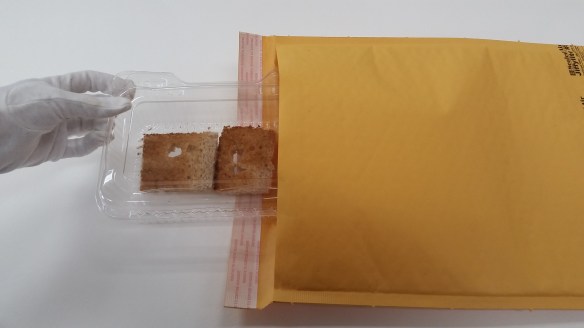
The first recipe successfully made and sent as part of the Reciprocal Library Snack Cooperative.

The first recipe successfully made and sent as part of the Reciprocal Library Snack Cooperative.2

Want to know more about food history? Attend our Eating Through Time programming.

Reference
1. Hooker RJ. Food and drink in America: A history. Indianapolis: Bobbs-Merrill; 1981.
2. Special thanks to Juan at Sterling Affair for preparing historically accurate toast.

Got Food?

Evelyn J. Kim, today’s guest blogger, is an author and writer working on issues of food and food justice through the lens of science. Trained as a historian of science, her work has been in the The New York TimesScientific American, and The Atlantic. She is our guest curator for this year’s programming, Eating Through Time.

Les Aphorismes de Brillat-Savarin. From the Margaret Barclay Wilson Collection.

Les Aphorismes de Brillat-Savarin. From the Margaret Barclay Wilson Collection.

“Dis-moi ce que tu manges, je te dirai ce que tu es” (Tell me what you eat, and I will tell you what you are)

– Jean Anthelme Brillat-Savarin (1755-1826), Physiologie du Goût ou: Méditations de Gastronomie Transcendante

“Let food be your medicine and medicine be your food” – Attributed to Hippocrates

What do you do every day, beyond sleeping, breathing and thinking? You eat! This year, The New York Academy of Medicine is proud to announce its programming theme for 2015: Eating Through Time.

CHM-ETT-Logo1_VertTop Chef. The Salt. Lucky Peach. Grub Street. Modernist Cuisine. And thousands upon thousands of food blogs. Unless you’ve been living underneath a rock, food seems to be all around us. On television, on the web, in art, in books, in science…Food seems to be having its own “moment” as form of cultural currency. But lest anyone think that this is a new phenomenon, food has always been with us, from pre-history to the present, a basis of our bodily, social, economic, and historical selves.

To that end, we are sponsoring a whole year of activities around food, including guest lectures at the Academy and panel discussions at this year’s Food Book Fair, culminating in a full-day festival at the Academy on October 17, 2015. Based on the Academy’s collection of more than 10,000 volumes on food and health, the festival will include speakers, demonstrations, and performances centered on the topic of food. Featured speakers include our keynote speaker, famed chef Jacques Pépin, food historian Dr. Ken Albala, and Nordic Food Lab’s Joshua Evans, as well as the Culinary Institute of America and Harvard School of Public Health’s Healthy Kitchens, Healthy Lives program.

This year’s programming will encompass not only contemporary debates surrounding food, medicine, and culture, but also the historical linkages that undergird much of those discussions. We will ask chefs, historians, writers, and public health experts their perspectives on not only food’s past influence but also what’s in store in the future for us as eaters and as a society.

Marx Rumpolt, Ein new Kochbuch, 1581.

Marx Rumpolt, Ein new Kochbuch, 1581.

To kick off this year’s programming, our inaugural lecture on March 17 will feature historian of science Dr. Steven Shapin from Harvard University. Dr. Shapin has written on several topics, from Dr. Robert Boyle to the role of business in scientific research, and his current interests lie in the history of dietetics. His lecture, entitled “Beef-Eaters: A Cultural History of Food and Identity” exemplifies the complicated nexus between our dietary habits and our social identitiesand is a perfect start to this year’s theme.

We’re excited about this year’s programming and we hope to see you at any or all our events. Visit www.nyam.org/events for event details and registration, and follow this blog for more delicious tidbits on our year in food.

Become a Friend of the Rare Book Room

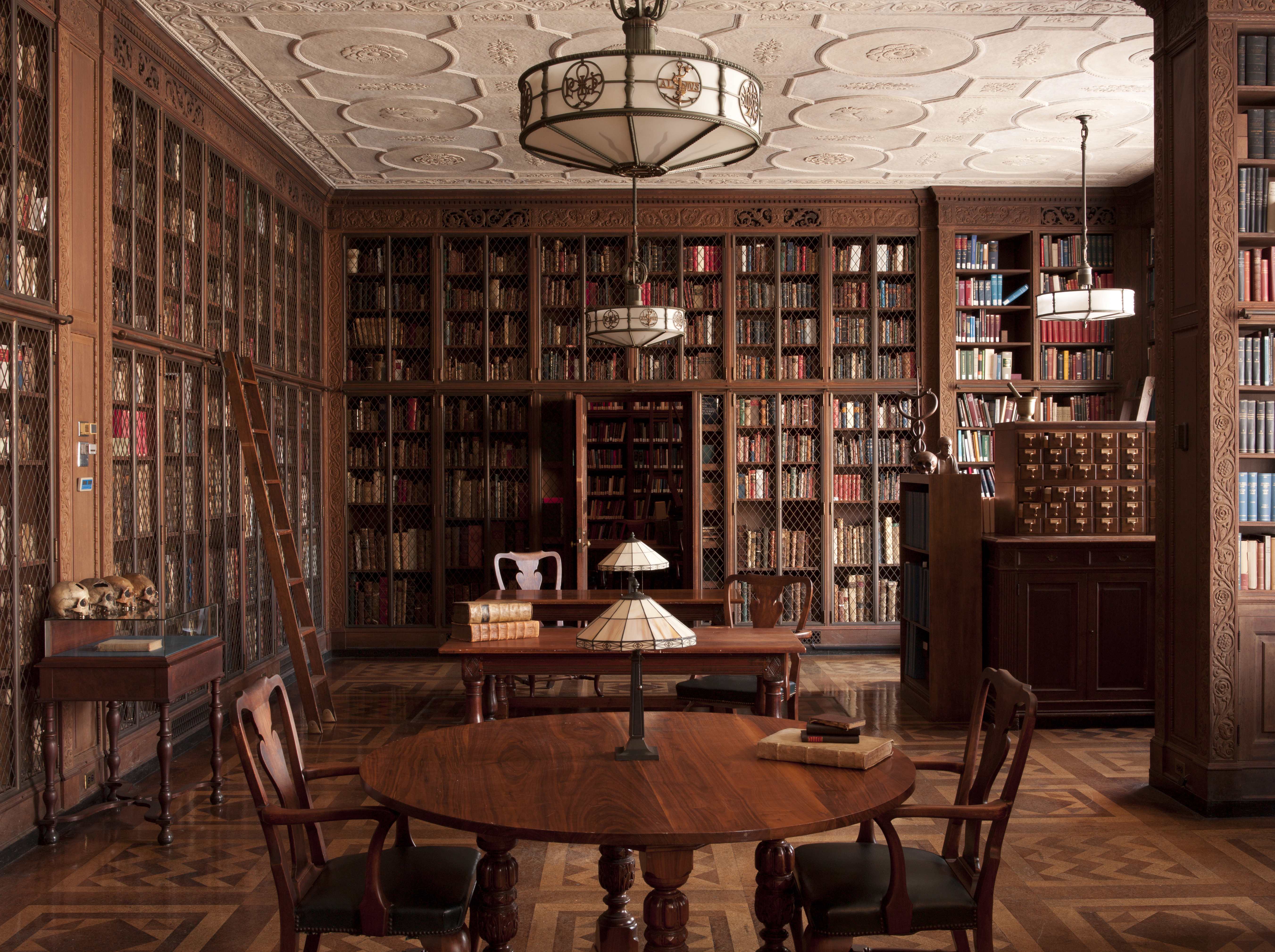
We are excited to announce the re-launch of our Friends of the Rare Book Room program, with new Friends levels and benefits bringing you access to more events and opportunities for engagement with our world-renowned collections. Our rare book room is home to some of our rarest and most significant holdings, forming the heart of our collections. You can make an appointment to visit the rare book room by e-mailing history@nyam.org or calling 212-822-7313.

NYAM_RBR_106By becoming a Friend of the Rare Book Room you’ll support our mission of preserving and promoting the heritage of medicine and health though our public programs and outreach activities; the acquisition, conservation, and cataloging of remarkable historical materials; and digitization of our key treasures. And you’ll join an engaged group of supporters, passionate about preserving our collections.

We’ll be announcing exciting new additions to our programming throughout the year, including special Friends events. In the meantime, please save the date for the March 31 and April 14:

On March 31 we will welcome Dr. Vivian Nutton, Professor Emeritus of the History of Medicine at University College, London, who will speak on “Vesalius Correcting Vesalius.”

Our annual Friends lecture on April 14 will feature Nick Wilding, our 2013–2014 Klemperer Fellow in the History of Medicine. His lecture, “On the Circulation of the Book: The Early Reception of Harvey’s De motu cordis,” will draw on research done in the rare book room.

Friends’ contributions make a huge difference to us, allowing us to better care for our collections and make them as widely accessible as possible to everyone who wishes to use them. Please consider supporting our efforts!

NYAM’s Center for the History of Medicine Joins the National Consortium for History of Science, Technology and Medicine

CHSTM LogosThe Consortium for History of Science, Technology and Medicine has now launched. The Consortium is the new national organization that has grown from the Philadelphia Area Center for the History of Science (PACHS). The Consortium encompasses 19 institutions, from Washington, D.C., through New Haven, Connecticut, as well as Kansas City and Toronto, with NYAM as one of its two New York hubs (Columbia University is the other).

The Consortium fosters research, study, and public engagement with the history of science, technology, and medicine. It supports a combined fellowship program, where awardees can work at any of the member’s institutions, now including NYAM. More information about the fellowship program can be found here. And it maintains an integrated library catalog, pulling together records from all of the Consortium partners, so that researchers can easily find the holdings of all the member institutions.

The Consortium also produces professional and public events in history. Particularly exciting for the Center is our new role in helping to run the working group for the history of medicine and health. This is one of 10 working groups set up for convening discussions. Starting up on January 16, at 3:30, the first topic is “Ebola in Historical Context,” with presenters James Colgrove of Columbia’s Mailman School of Public Health and Shobana Shankar of Stony Brook University, both at the New York Academy of Medicine; and David Barnes of the University of Pennsylvania, who will join us from Philadelphia.

To participate, one can come to NYAM, to the consortium offices in Philadelphia—which are patched together electronically—or by videoconference from elsewhere. For further details and to join, contact any one of the conveners, Nancy Tomes of Stony Book University, Keith Wailoo of Princeton, and Paul Theerman of NYAM. More information can be found at the working group website.

Fifth Annual History of Medicine Night: Call for Papers

A wooden caduceus symbol shown in NYAM rare book reading room

A caduceus symbol donated to our rare book reading room

The New York Academy of Medicine’s Section on the History of Medicine and Public Health is pleased to announce its upcoming Fifth Annual History of Medicine Night, to be held on March 11, 2015 from 6:00–7:30 pm. The event will take place at the Academy, located at 1216 Fifth Avenue at the corner of 103rd Street.

We are inviting all those interested in presenting to submit an abstract concerning a historical subject relating to medicine.

Please note the following submission requirements:

  • Abstracts (not to exceed 250 words) should be submitted together with authors’ contact details and affiliations.
  • Abstracts must be submitted no later than January 30, 2015

Selected speakers will be asked to prepare a presentation of no more than 12 minutes, with an additional 3 minutes for questions/discussion. Papers selected for presentation will be determined by a panel of History of Medicine Section members and staff of The New York Academy of Medicine.

Abstracts should be submitted electronically to Suhani Parikh at sparikh@nyam.org.  Questions may be directed to Suhani via email or phone (212-419-3544).

Innovation in Digital Publishing

By Lisa O’Sullivan, Director, Center for the History of Medicine and Public Health

Here on the blog we normally write stories based on the content in our collections, upcoming events, and other issues related to the history of medicine and health. However, we are also deeply interested in the issues facing libraries and the people who use their services.

By now it’s axiomatic that the digital world poses new opportunities and challenges for researchers, libraries, educational institutions, and publishers, which must be engaged with digital formats in a sustained and thoughtful way. The realities of this landscape encompass challenges to traditional models of publication and new expectations around access to both historic collections and new research literature. Open Access (OA) publishing and archiving is a central one of these challenges. In December 2013, we hosted an informal meeting around questions of OA at The New York Academy of Medicine.

Why is OA such a critical concern for libraries, researchers and publishers? (And why should you as a reader care?). As participants in our 2013 event discussed, issues of access to information have, ironically, been exacerbated by the growth of digital journals and electronic resources. Access to new research, whether in the sciences or humanities, is often prohibitively expensive for individuals and institutions. Authors struggle to make their work accessible to the broadest possible readership. Jill Cirasella at CUNY has produced an excellent summary of what’s at stake in discussions of OA.

The Wellcome Trust has been at the forefront in supporting open access to the research it funds in biomedical science and medical humanities, from its support of the open-access eLife journal to ensuring that all research funded by the Trust is made freely available to users. As such, we’re delighted to be working with the Trust to coordinate a panel called Innovation in Digital Publishing in the Humanities at the American Historical Association Annual Meeting taking place in New York in January.

Our panel will examine OA from a number of perspectives. However the potentials (and associated challenges) of digital publishing go beyond OA to broader opportunities for readers, publishers, and writers in the digital world, whether relating to new ways of presenting archival material online, new ways of doing and sharing research, or new ways to engage larger audiences, and we will explore some of these as well.

The panel will be chaired by Stephen Robertson, professor and director of the Roy Rosenzweig Center for History & New Media at George Mason, whose Digital Harlem project has won multiple awards for innovation in digital history. We’ve asked our speakers to start the conversation early by giving their thoughts on the biggest challenge or opportunity facing digital publishing.

This week, we’ll start with two perspectives on Open Access and its implications, from Cecy Marden (Wellcome Trust) and Lisa Norberg (Barnard College Library). We will publish thoughts from Martin Eve (University of Lincoln and Open Library of Humanities), Kathleen Fitzpatrick (Modern Language Association), and Matthew K. Gold (New York City College of Technology and City University of New York, Graduate Center) over the next few weeks. Visit our Innovation in Digital Publishing section to read them all as they go live.

Feel free to pose questions to the participants individually or as a group; they will respond here and take your thoughts into consideration for the panel itself.

The NYAM Lectures: Medical Talks by Eminent Speakers (Items of the Month)

By Latrina Keith, Head of Cataloging

WNYC-LogoThe New York Academy of Medicine and New York Public Radio (NYPR) have digitized and cataloged some 40 radio broadcasts produced by NYAM and originally broadcast over WNYC radio in the 1950s. These lectures are drawn from the more than 1,500 original lacquer discs transferred from NYAM to the NYPR Archives in 2008. The digitization and cataloging resulted from a joint project between NYAM’s Center for the History of Medicine and Public Health and the New York Public Radio (NYPR) Archives, and with a grant from METRO, the New York Metropolitan Library Council.

The New York Academy of Medicine and WNYC-FM began their radio relationship in 1946 with the launch of The Laity Lectures—later to become Lectures to the Laity—a popular series of Academy lectures and talks on culture and medicine that had started in 1935. By mid-1950, this series was joined by For Doctors Only, which aimed to bring “the best of the meetings, conferences, and roundtable discussions held at the academy” to the medical profession and also addressed critical analysis of issues of society and medicine, as well as the application of the social sciences to medicine, and provided academic presentations in the history of medicine.

The current periodicals room of the New York Academy of Medicine Library, circa ____.

The current periodicals room of the New York Academy of Medicine Library, photographed by Irving Underhill, 1872-1960.

Lecture topics include gerontology, aging, nutrition, cancer, public health, heart disease, dermatology, psychiatry, and the role of the physician and the law, among others. Along with such informative topics, there were notable guest lecturers such as American anthropologists Margaret Mead and Ralph Linton; Dr. Sidney Farber, the father of modern chemotherapy and pediatric pathology; noted gerontologist Dr. John Steele Murray; and Dr. Leona Baumgartner, the first female commissioner of New York City’s Department of Health from 1954-1962. Baumgartner will be the focus of the upcoming Iago Galdston Lecture, “Making Public Health Contagious: The Life & Career of Leona Baumgartner, MD, PhD” to be presented by Dr. Hilary Aquino on December 4, 2014 at NYAM.

Making these historical hidden treasures available to all is a great achievement for both NYAM and NYPR. We hope that one day the entire radio broadcasts will be restored for the educational and cultural benefit of all.

Vesalius 500: Art, Anatomy, and the Body

By Paul Theerman, Associate Director, The Center for the History of Medicine and Public Health

Join us this Saturday, October 18, for our second annual Festival of Medical History and the Arts, Art, Anatomy, and the Body: Vesalius 500. Register here.

Vesalius500STD_05_30_14This year, we celebrate the 500th birthday of Andreas Vesalius, the path-breaking anatomist whose 1543 book, De humani corporis fabrica (The Fabric of the Human Body), opened up new worlds in the understanding and representation of the human body. The festival’s presentations will focus on the cultural understanding of the body throughout history. We will have rare books on display, including one of our copies of Vesalius’ Fabrica; the Drs. Barry and Bobbi Coller Rare Book Reading Room will be open for visitors; and we will offer four hands-on workshops, still open for registration (festival entrance is included in the price of the workshops).

For more information, including the full schedule and participant biographies, see Vesalius 500.

To whet your appetite, look at our earlier blog posts by those joining us at the festival:

And don’t forget The Fabrica of Andreas Vesalius or our Vesalius 500 Workshops, presented by Sam Dunlap, Marie Dauenheimer, and the staff of our Gladys Brooks Book & Paper Conservation Laboratory.

Many others will present, as well:

  • Eva Åhrén on specimens in medical museums
  • Steven Assael on observing bodies
  • Alice Dreger on medical photography
  • Dima Elissa and Nuha Nazy on 3-D printing and anatomy
  • Ann Fox and Chun-Shan “Sandie” Yi on bodies in contemporary art
  • Daniel Garrison on translating Vesalius’ masterpiece
  • Heidi Latsky with Tiffany Geigel and Robert Simpson on The GIMP Project
  • Michael Sappol on making bodies transparent

See you on Saturday!