Coming Soon at the Center: Gessner, Coloring, Lobotomy, Digital Humanities

The coming weeks are busy ones for the Center for the History of Medicine and Public Health. We hope you’ll join us for these upcoming events.

Ann Blair

Ann Blair

This Saturday, January 30, at 11 am, Harvard historian Ann Blair will give a free Bibliography Week lecture, Credit, thanks, and blame in the works of Conrad Gessner (1516-1565).” Blair will show how the Zürich physician and natural historian used the print medium to promote his forth-coming publications. Gessner also sought contributions of manuscripts, images, and help from scholars all over Europe. Register online.

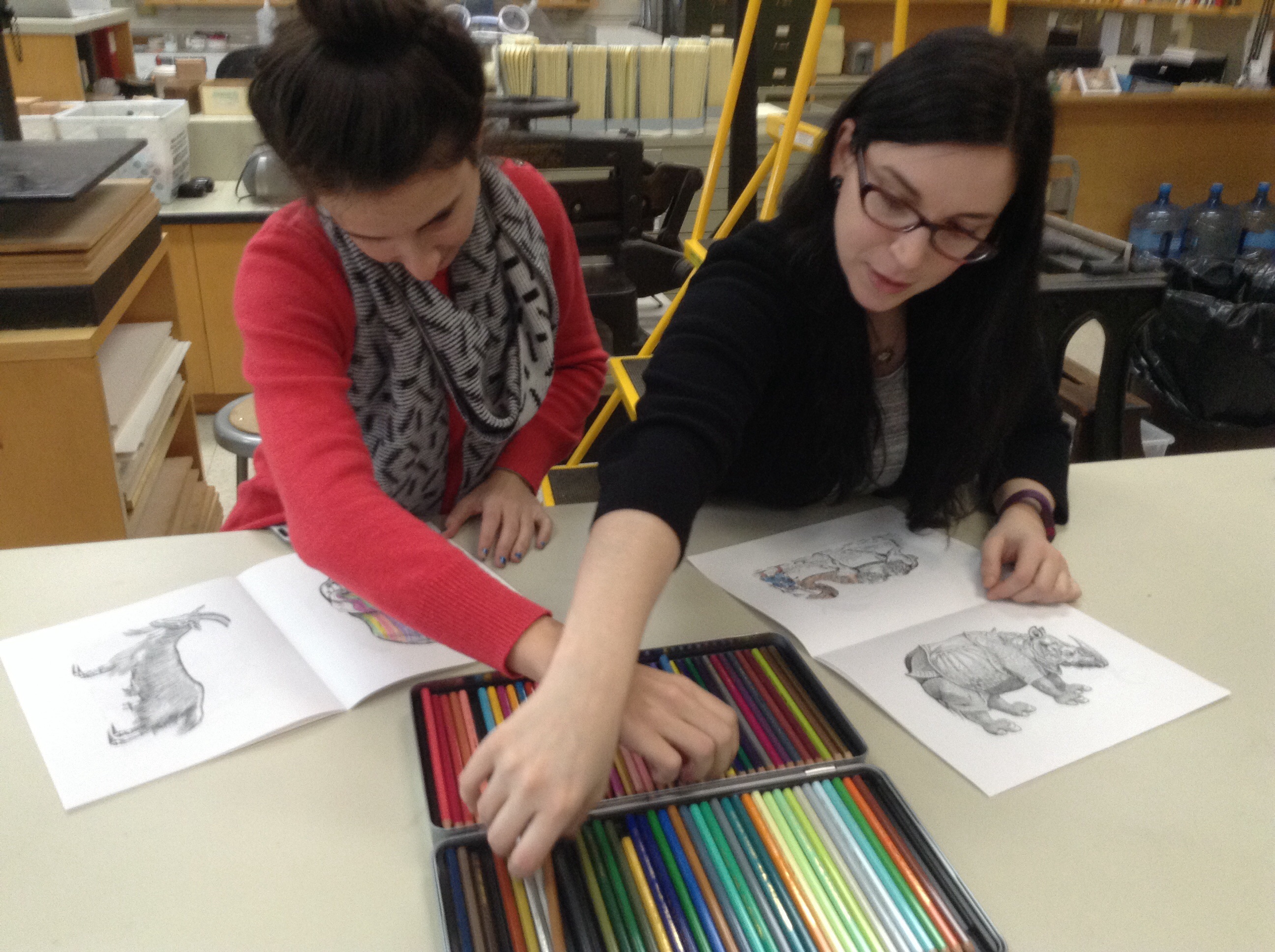
February 1-5 is #ColorOurCollections Week, a special collections coloring fest we’ve organized on social media. More than 30 institutions will share images from their collections, and followers are invited to color the images and share their results. Email us at library@nyam.org for more details; we’ll add your institution to our Twitter list if you’d like to participate. Watch the hashtag and join in the fun! And watch this space: We’ll feature coloring content on the blog all next week.

Collections Care Assistant Emily Moyer and Archivist Rebecca Pou #ColorOurCollections.

Collections Care Assistant Emily Moyer and Archivist Rebecca Pou #ColorOurCollections.

Miriam Posner

Miriam Posner

On February 9 at 6 pm, Miriam Posner, University of California, Los Angeles, will offer a free lecture Walter Freeman and the Visual Culture of Lobotomy.” Between 1936 and 1967, Freeman, a prominent neurologist, lobotomized as many as 3,500 Americans. Freeman also took patients’ photographs before their operations and years—even decades—later. Posner will detail her efforts to understand why Freeman was so devoted to photography, using computer-assisted image-mining and analysis techniques. This lecture will appeal to a wide-range of interests, including medical photography, data analysis, mid-twentieth century America, and the history of mental health. Register online.

Heidi Knoblauch

Heidi Knoblauch

The following day from 1 pm–5 pm, Posner will be joined by Heidi Knoblauch, Bard College, for a “Digital Humanities: Visualizing Data” workshop. The program will begin with a discussion of what people mean when they say “digital humanities,” followed by a hands-on section on how to find and structure data using Palladio, a tool for visualizing humanities data. The workshop costs $25 and is limited to 30 participants. Register online.

We hope to see you online and at our on-site events!

#ColorOurCollections February 1-5

As you may know by now, there is a coloring craze going on. And we want libraries and their patrons to join in the fun!

Inspired in part by a recent twitter exchange with the Biodiversity Heritage Library, we are starting a week-long special collections coloring fest on social media, using the hashtag #ColorOurCollections. There is so much great coloring content in special collections, especially when looking at early illustrated books meant to be colored by hand.

Collections Care Assistant Emily Moyer and Archivist Rebecca Pou #ColorOurCollections.

Collections Care Assistant Emily Moyer and Archivist Rebecca Pou #ColorOurCollections.

If you work in a library or special collection, share images from your collections and invite followers to share their colored copies from February 1-5. You could use images already online in your digital collections, or you could even create easily printable coloring sheets or a coloring book, which we did a few years ago.

If you are a coloring fan, grab those colored pencils and felt-tip markers and #ColorOurCollections, then share your results using the hashtag.

CamelColored

Camel from Conrad Gesner’s Historia Animalium, Liber I, 1551.

Call for Abstracts: Sixth Annual History of Medicine Night

RBR desk

The New York Academy of Medicine’s Section on the History of Medicine and Public Health invites you to submit abstracts for presentation at its upcoming Sixth Annual History of Medicine Night. This event will take place at the Academy, 1216 Fifth Avenue at the corner of 103rd Street, on March 9, 2016 from 6:00 pm–7:30 pm.

We invite all those interested in presenting to submit an abstract concerning a historical subject relating to medicine.

Please note the following submission requirements:

  • Abstracts (not to exceed 250 words) must be submitted together with authors’ contact details, titles, and affiliations.
  • Abstracts must be submitted no later than Friday, January 15, 2016

Selected speakers will be asked to prepare a presentation of not more than 12 minutes, with an additional three minutes for questions/discussion. Papers selected for presentation will be determined by a panel of History of Medicine Section members and staff of The New York Academy of Medicine.

Submit abstracts electronically to Suhani Parikh at sparikh@nyam.org.  Questions may be directed to Suhani via email or phone (212-419-3544).

Remembering “Eating Through Time”

Evelyn J. Kim, today’s guest blogger, was our guest curator for this year’s Eating Through Time Festival.

With speakers from Jacques Pepin, Tom Colicchio, Lori Silverbush, Bryant Terry, and so many others, there was something for everyone at the Eating Through Time Festival on October 17, whether one’s interests were in history, public health, or culture.

The wide range of topics speaks to the various ways we perceive food. Our first main stage speaker, food justice activist and cookbook author, Bryant Terry, succinctly expressed these perceptions: “Start with the visceral, move to the cerebral, end with the political.”

Bryant Terry speaks at the Eating Through Time Festival. Photo:

Bryant Terry speaks at the Eating Through Time Festival. Photo: Mike Cinelli.

Politics was a theme for many of our panelists. University of Maryland Law Professor Frank Pasquale emphasized the need for transparency in food regulation appointments. At the local level, Ellie Wilson, a nutritionist and policy maker for New York state, and the New York Academy of Medicine’s own Kimberly Libman focused upon the need to support more than food on plates: wellness programs and support for produce farmers are also a part of just and healthy food systems. This holistic view of changing food policy was encapsulated nicely in our screening of Lori Silverbush’s A Place at the Table. Looking at food insecurity in the U.S., producers Silverbush and Tom Colicchio underscored the need for both federal and local efforts in solving hunger.

Lori Silverbush and Tom Colicchio discuss A Place at the Table at the Eating Through Time Festival. Photo:

Lori Silverbush and Tom Colicchio discuss A Place at the Table at the Eating Through Time Festival. Photo: Mike Cinelli.

Are there other ways of tackling nutrition and health disparities in the U.S.? On our all-woman “Starting Up Health” panel, moderator Nina Meijers spoke with three start-ups on how technology can empower consumer decisions. The “Eating the Future” panel also asked similar questions regarding how new technologies, such as insect proteins and 3-D printing, could feed the world sustainably and address malnutrition concerns.

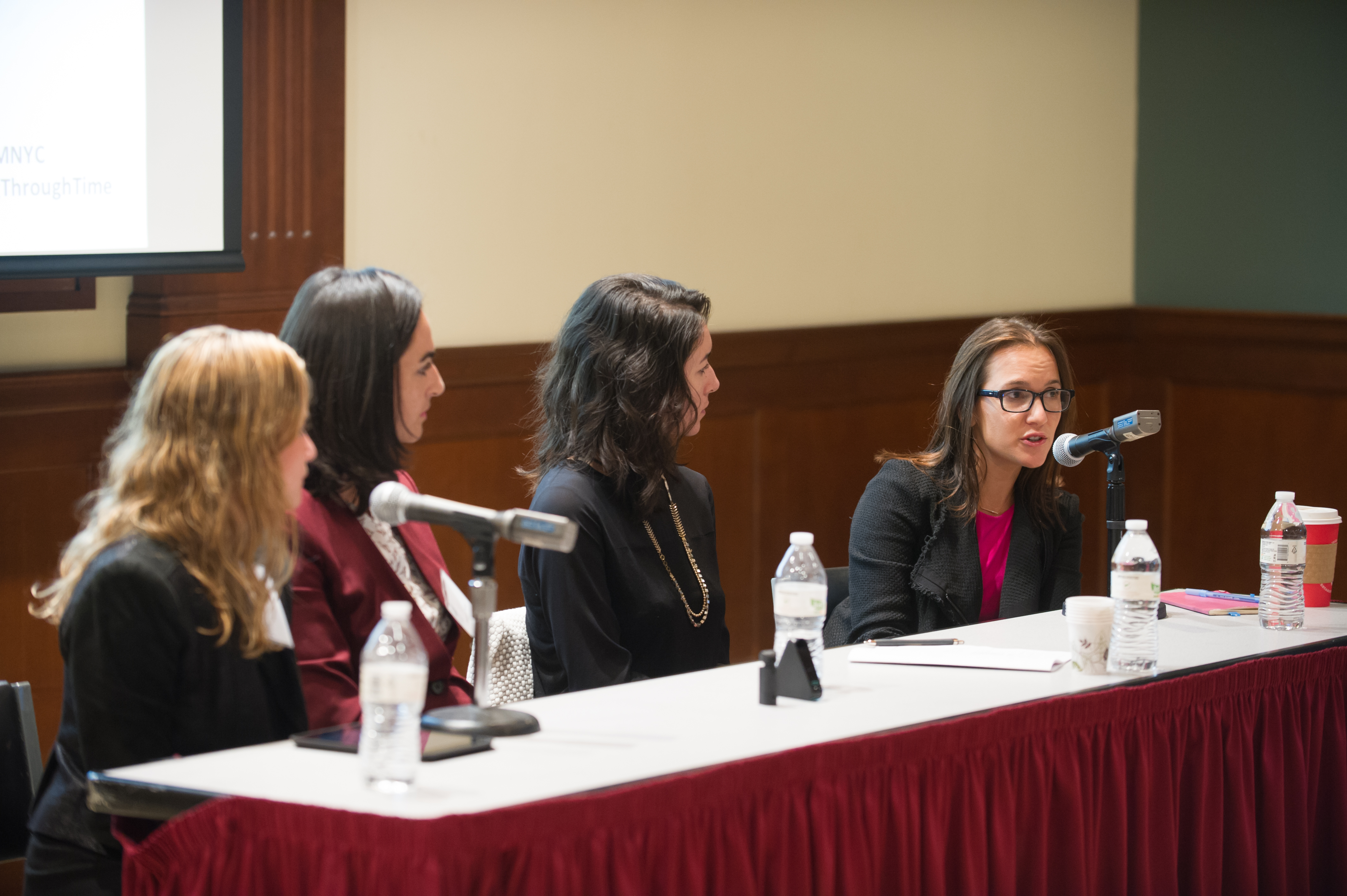
The "Starting Up Health" panel at Eating Through Time. L-R: Nina Meijers, Shireen Yates, Jasmina Aganovic, and Taryn Fixel. Photo:

The “Starting Up Health” panel at Eating Through Time. L-R: Nina Meijers, Shireen Yates, Jasmina Aganovic, and Taryn Fixel. Photo: Mike Cinelli.

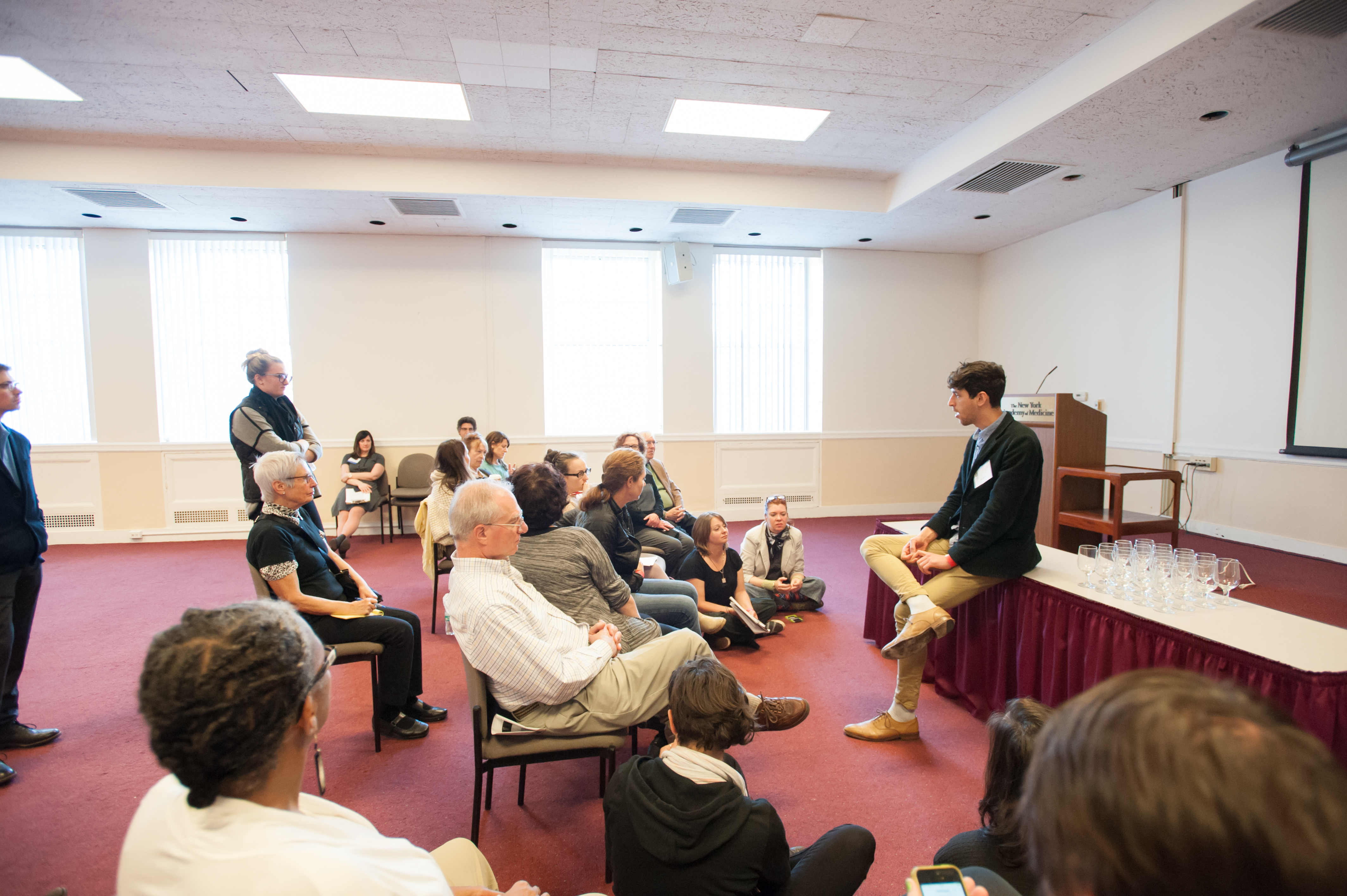
To demonstrate those possibilities, lead researcher at Nordic Food Lab, Josh Evans, proposed entomophagy as a possible response to food insecurity and sustainability dilemmas worldwide. Passing out insect-based food and beverages, Joshua proved that deliciousness and sustainability could go together. Dr. David Eisenberg called upon more doctors and health professionals to learn about food and nutrition by enrolling in cooking classes, such as Harvard Public Health and Culinary Institute of America’s collaborative program “Healthy Kitchens, Healthy Lives.”

Josh Evans leads the "Insects with Nordic Food Lab" workshop at the Eating Through Time Festival. Photo:

Josh Evans leads the “Insects with Nordic Food Lab” workshop at the Eating Through Time Festival. Photo: Mike Cinelli.

Culture and the arts can also be a conduit for action. Poet Simone Bridges and non-profit Hip-Hop Health performed pieces that could teach today’s youth about nutrition and health through the spoken word. In a historical context, culture has also been a driver of nutritional theories and practices. Historians Ken Albala presented his research on sex, power, and food in the Renaissance while Betty Fussell discussed purity and danger in food advertisements in the 20th century.

Betty Fussell presents "From Food Purity to Food Porn" at the Eating Through Time Festival. Photo:

Betty Fussell presents “From Food Purity to Food Porn” at the Eating Through Time Festival. Photo: Mike Cinelli.

The power of food is also an embodied knowledge. Betty Fussell, our oldest presenter, gave some sage advice on how food (along with naps, sex, and good friends) is a key factor in longevity not only from a nutritional, but also affective standpoint. No one could be a better spokesperson for this than our keynote speaker, Jacques Pépin. Reminiscing on his nearly eighty years, Chef Pépin’s lecture, “Food Memories,” touched on his life in food from his childhood in France to his most recent (and 14th food show!) on PBS. While Chef Pépin attributed his continued stamina to lots of wine, he also stressed the importance of the social and the sensory in his work as a chef. Despite the materiality of food, Pépin reminded us that food is ephemeral: “Food is fragile. You eat it, it goes. What remains are the memories.”

Jacques Pépin and Evelyn Kim at the Eating Through Time Festival.

Jacques Pépin and Evelyn Kim at the Eating Through Time Festival. Photo: Mike Cinelli.

I can’t thank the Academy enough for giving me the opportunity to assemble a day’s worth of programming about the issues I care about most: Food, social justice, and public health. And I certainly will have those memories for a lifetime.

For more Eating Through Time pictures, visit our Facebook page.

Cook like a Roman: The New York Academy of Medicine’s Apicius Manuscript

By Anne Garner, Curator, Center for the History of Medicine and Public Health

This is one of several posts leading up to our day-long Eating Through Time Festival on October 17, 2015, a celebration of food, cookery, and health. View the full program and register for the Festival.

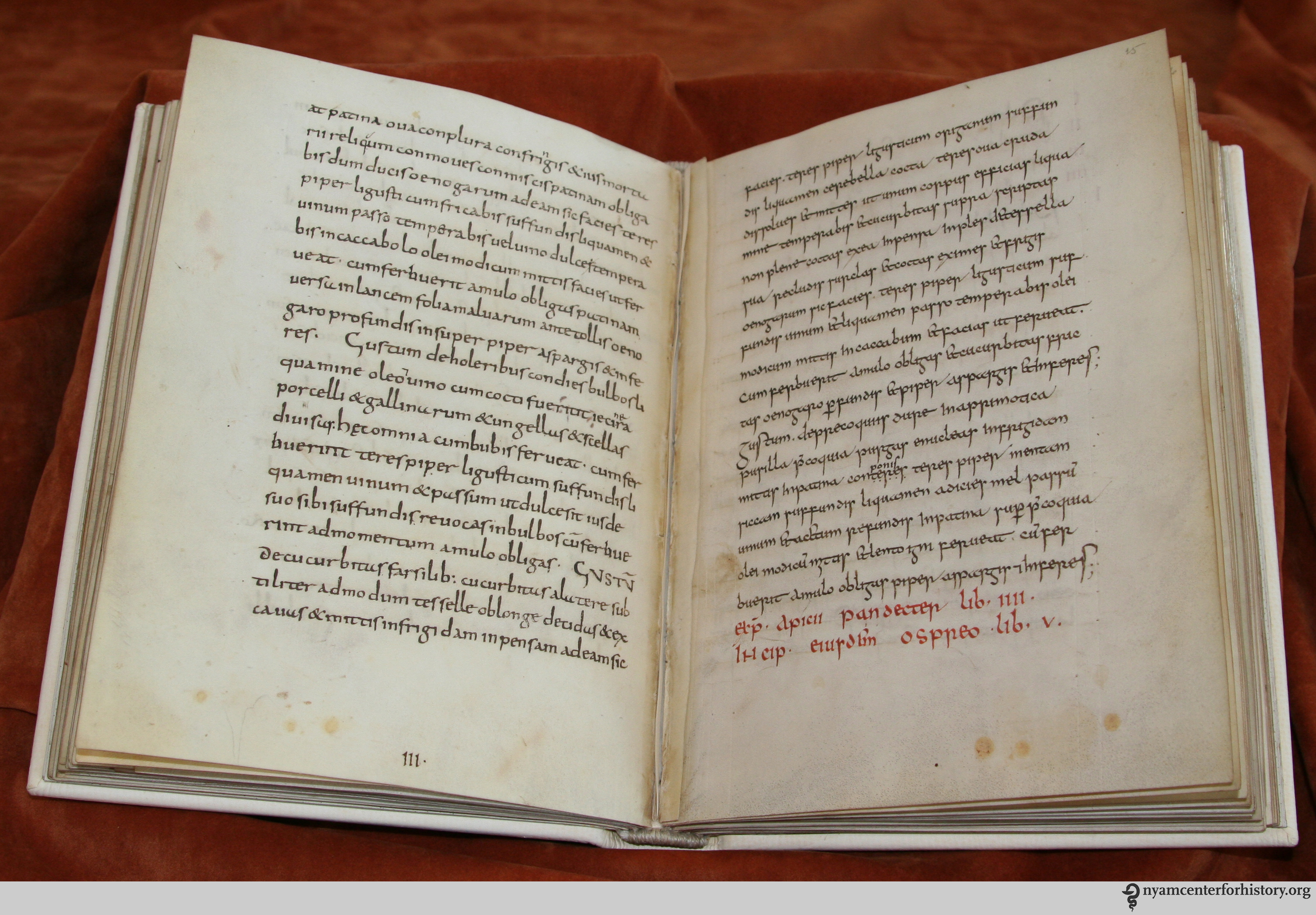
Ancient sources document the culinary excellence of one Marcus Gavius Apicius, a Roman gourmet who flourished during Tiberius’ reign (1st century CE). It isn’t clear from textual evidence that this Apicius ever wrote a book of cookery.1 And yet, the gem of our Library’s cookery collection—a 9th-century manuscript collection of Greek and Roman recipes—bears his name.

9th-century manuscript De re culininaria (sometimes De re coquinaria), attributed to Apicius.

9th-century manuscript De re culininaria (sometimes De re coquinaria), attributed to Apicius. Click to enlarge.

Our manuscript, transmitting a 4th– or 5th-century compendium of culinary and medical recipes compiled from a number of 2nd-century Roman sources, packs a powerful wow factor. It contains 500 Greek and Roman recipes from the Mediterranean basin. A handful may date as early as the 4th century BCE. As such, our manuscript is sometimes referred to as the oldest extant cookbook in the West.

This collection of recipes was likely compiled from multiple sources. The 2nd-century satirical writer Juvenal indicated that the name “Apicius” was frequently used to describe a foodie, not a specific person. Other sources suggest that the name conjured luxury and excessive eating.2

These recipes appear to be written by and for cooks. While some recipes called for cuts of meat that might have been beyond the means of the average Roman citizen, many others, including a number of meat, vegetable, and legume dishes, were well within the reach of Rome’s tradespeople, builders, artists, and modest farmers. Some of the recipes may have reflected popular dishes served in local popinae (street bars).

A closer look at book one reveals a wide range of useful directives applicable for the Mediterranean home cook. Called Epimeles (careful, or attentive), book one includes recipes for a spiced wine surprise, honeyed wine, and Roman absinthe. Here too are tips for preserving pork and beef rind, fried fish, blackberries, and truffles.

The dishes reflect the polyglot culture of the Mediterranean basin. The dominance of Greek culinary tradition in the early empire makes it likely that the Apicius began as a Greek collection of recipes, though mainly written in Latin, and adapted for a Roman palate.3 The cookbook incorporates a number of Greek terms, like melizomum (honey sauce) and hypotrimma (here a mixture of cheese and herbs), despite the existence of Latin glosses. Other words are hybrids of Greek and Latin, like tractogalatae, combining the Latin tractum (thin sheet of pastry) and gala, Greek for milk.

The Apicius manuscript is the gem of the Academy’s Margaret Barclay Wilson Collection of Cookery, acquired in 1929. Conservators restored and rebound it in 2006.

Our manuscript was penned in several hands in a mix of Anglo-Saxon and Carolingian scripts at the monastery at Fulda (Germany) around 830 CE. It is one of two manuscripts (the other at the Vatican) presumed to have been copied from a now lost common source.4

The gilt and illuminated Vatican manuscript of De re culininaria, as replicated in a 2013 facsimile.

The gilt and illuminated Vatican manuscript of De re culininaria, as replicated in a 2013 facsimile. Click to enlarge.

Images from both 9th-century iterations illustrate the different approaches to the text. The image above shows the gilt and illuminated Vatican manuscript, as replicated in a 2013 facsimile. Below is the Academy’s text. The number of cross-outs and the plain, unadorned style of the manuscript suggest it may have been a teaching tool for scribes.

The Academy’s unadorned 9th-century manuscript of De re culininaria. Click to enlarge.

The Academy’s unadorned 9th-century manuscript of De re culininaria. Click to enlarge.

Apicius has been a bestseller since the beginning of the print era, published in multiple editions since the 15th century. The Academy library holds many print editions, including two of the earliest.

This title page is from the earliest dated edition of the text, published in Milan in 1498. Pictured below is the device of the printer, La Signerre, who later set up shop in Rouen. Our copy is annotated by an early reader who adds the titles of the text’s ten books, grouped by type of dish.

Title page from the earliest dated edition of the De re culininaria, published in Milan in 1498.

Title page from the earliest dated edition of the De re culininaria, published in Milan in 1498. Click to enlarge.

The second earliest dated edition, printed in Venice, offers one of the earliest examples of a title page in printing history. It too is heavily annotated by an early food-lover, fluent in Greek and Latin.

Marginalia in our 1503 printed Apicius offers Greek glosses on Latin terms.

Marginalia in our 1503 printed Apicius offers Greek glosses on Latin terms.

Enthusiasts will find many other print descendants of this extraordinary manuscript in the Academy’s library.

The Apicius manuscript and a number of print editions of the text will be on display in the Academy Library’s Drs. Barry and Bobbi Coller Rare Book Reading Room during our October 17th festival, Eating through Time. A complete schedule of events can be found here.

References

1. Mayo, H. (2008). “New York Academy of Medicine MS1 and the textual tradition of Apicius”. In Coulson, F. T., & Grotans, A., eds., Classica et Beneventana: Essays Presented to Virginia Brown on the Occasion of her 65th Birthday. Turnhout: Brepols. pp. 111–135.

2. Christopher Grocock and Sally Grainger, eds. Apicius. A Critical Edition with an Introduction and an English Translation of the Latin Recipe Text Apicius. Devon: Prospect, 2006. p. 35.

3. Grockock and Grainger, p. 17-20.

4. Mayo, p. 112.

The Diaspora of Spam

This post, by Evelyn Kim, guest curator for our day-long Eating Through Time Festival, is one of several posts leading up to the October 17, 2015 celebration of food, cookery, and health. View the full program and register for the Festival.

For millions of Asians and Pacific Islanders, Spam makes the world go ‘round. Seemingly inconsistent with local food cultures, Spam has seeped itself into regional cuisines, including Hawaii’s Spam musubi, South Korea’s Spam jjigae, and Hong Kong’s Spam ramen. In China, Spam is considered a gourmet treat, with Spam gift boxes appearing for Chinese New Year.

How did this piece of tinned meat earn so many frequent flyer miles? The answer lies in the history of Spam. Hormel, the meat processor and eventual food giant, originally developed Spam as a means to commercialize pork shoulder, an unwanted cut at the time, in 1937.1 Originally marketed as a home alternative to butcher-sliced luncheon meat, Spam’s worldwide debut came with the United States’ entry into World War II. While spurned by American housewives, Spam was perfect for US military rations: it was shelf-stable, compact, and a cheap source of protein. And it wasn’t just for the US military. Thanks to the Lend-Lease Act of 1941, Spam was the star food aid product for Allied countries and troops, finding its way across the United Kingdom, France, and even Russia. By the end of the war, the US government had bought nearly 150 million pounds of Spam.2

Advertisement for Spam from Time Magazine, June 20, 1938. Source: Duke University Libraries.

Advertisement for Spam from Time Magazine, June 20, 1938. Source: Duke University Libraries.

The same story repeated itself in Asia, but with a twist. US troops also brought Spam with them there. But unlike European countries, where Spam’s utility and popularity waned after the war, the product remained popular in Asia and the Pacific Islands. In many places, including Hong Kong and Japan, Spam was the only meat available immediately after WWII. In the case of Korea, the Korean War insured a steady supply of Spam to the peninsula, even becoming local currency for troops and the civilian population for everything from dental care to building supplies to tactical information.3

But the question remains as to why Spam stayed so popular in Asia as opposed to Europe. Europe did not embrace Spam after the war for a number of reasons. While post-war Europe had the same problems with hunger as post-War Asia, Europe reverted to pre-war agricultural production relatively quickly. The other possibility is that the association of Spam with wartime poverty and starvation led to a backlash against the product. This was certainly the case in America. For the troops coming home, the mere mention of Spam sent them into paroxysms of disgust.

While many of the circumstances in Asia were fairly similar in the post-war era, geography and politics may explain Spam’s continued proliferation in the region. With the exception of China, all areas in which Spam was introduced during WWII have limited land for agricultural use, making meat a scarce commodity, even in the best of times.4 Compared to the price of locally produced fresh meat, Spam was relatively cheap, even after the war. For Hawaii, political conditions allowed Spam to dominate the market. Hawaii had a large population of Japanese residents during WWII. Instead of interning them like on the US mainland, the US government resorted to restricting Japanese-American dominated industries, such as fishing. Without a steady supply of locally available protein, Spam easily dominated the Hawaiian market.5

One other major factor explains Spam’s ubiquity across Asia: marketing. Hormel, like many other industries post-war, had to re-market itself. Hormel attempted to re-brand Spam as the food for the modern 1950s housewife. Unfortunately for Hormel, this effort didn’t revive Spam’s sales in North America. However, Hormel’s re-branding efforts were quite successful in Asia. Across the continent, Spam can be found in gift packs for any occasion. Furthermore, Hormel not only has added different varieties to please local markets, but in some places, like China, it has reformulated the recipe.

Spam is now available in 44 countries across the world. Hormel, in some ways, became the case study for food multi-nationals in how to introduce new food product to a global audience. Spam may have lost its battle with the American housewife, but it certainly has won the war across the globe.

References

1. Oxford Companion to American Food and Drink. Ed. Andrew Smith. (New York: Oxford UP), 2007.p. 559.

2. Yoon H. Spam: More than Junk Mail or Junk Meat. NPR. http://www.npr.org/templates/story/story.php?storyId=11714236. Published July 4, 2007. Accessed October 8, 2015. See also endnote 1.

3. Williamson L. Why is Spam a luxury food in South Korea? BBC News. http://www.bbc.com/news/world-asia-24140705. Published September 19, 2013. Accessed September 17, 2015.

4. As a side note, the popularity of pork across all Asian nations is also due to a combination of poverty and land scarcity. Pigs have a low feed conversion ratio and have a higher meat yield compared to other livestock. Sigrid Schmalzer, in her fantastic article, Breeding a Better China: Pigs, Practices, and Place in a Chinese County, 1929-1937 (Geographical Review, Vol. 92, No. 1. Jan, 2002. Pp 1-22.) discusses the importance of pigs to the Chinese diet.

5. In her book, The Food of Paradise: Hawaii’s Culinary Heritage (University of Hawai’i Press, 1996), Rachel Laudan has a full discussion of Spam’s role in Hawaii.

Physicians Discuss Aphrodisiacs

Ken Albala is Professor of History and Director of Food Studies at the University of the Pacific. He is the author or editor of 24 books on food. He conducted his dissertation research primarily at the New York Academy of Medicine. Dr. Albala will present Aphrodisiacs: The Intimate Connection Between Food and Sex in Renaissance Nutritional Theory and lead the workshop “Hands On” Early Modern Cooking at our Eating Through Time Festival on October 17.

As a scholar sometimes you have ideas that get orphaned that you come back to after many years, very randomly. Such was a paper I first delivered at a Northern California Renaissance conference in 1995 on aphrodisiacs in medical literature. In truth, I had intended to fit the topic into my dissertation and it never made it in. The paper was a way to make use of the pile of notes I had taken at the New York Academy of Medicine just a few years before. And when I say a pile of notes, I mean an entire filing cabinet full of handwritten notes taken in pencil and coded with colored crayons. There was no such thing as a laptop then.

A page of Ken Albala's notes.

A page of Ken Albala’s notes.

These notes cover about 100 books I read at the Academy between 1989 and 1993, practically every dietary text written in Europe between the mid-15th and the mid-17th century. I was a permanent fixture in what was then called the Malloch Room, now the Drs. Barry and Bobbi Coller Rare Book Reading Room. The notes became my dissertation at Columbia University and eventually morphed into my first book Eating Right in the Renaissance (UC Press, 2002). While I always kept an active interest in the history of medicine, my career since then has shifted far more toward culinary history and broader food history. Every now and then I deliver a paper or write an article involving food and medicine, and I still teach a history of medicine course, but I had completely forgotten about the topic of aphrodisiacs. In jest I have often said it would be a really interesting topic for experiential research. Alan Davidson, the late author of the Oxford Companion to food, encouraged me many times to write a serious book on aphrodisiacs, but it never came to pass.

What surprise then, when this past spring, two decades after first giving that paper, I was asked to speak in Miami on aphrodisiacs. I thought, OK, I will just go into my computer and find that paper. No evidence of it. I realized that when I wrote that paper I was still learning to type, had just sent my first email, and had still written out everything by hand. So I needed to dig through the filing cabinets to find the original paper. Then to revise and update it using my original trove of notes taken 25 years earlier. Happily the paper was a success. I also delivered it in Dublin a few weeks later, and then a publisher contacted me asking if I would like to write a book on aphrodisiacs. I think I probably will. Isn’t it funny how every stray idea eventually finds a good home?

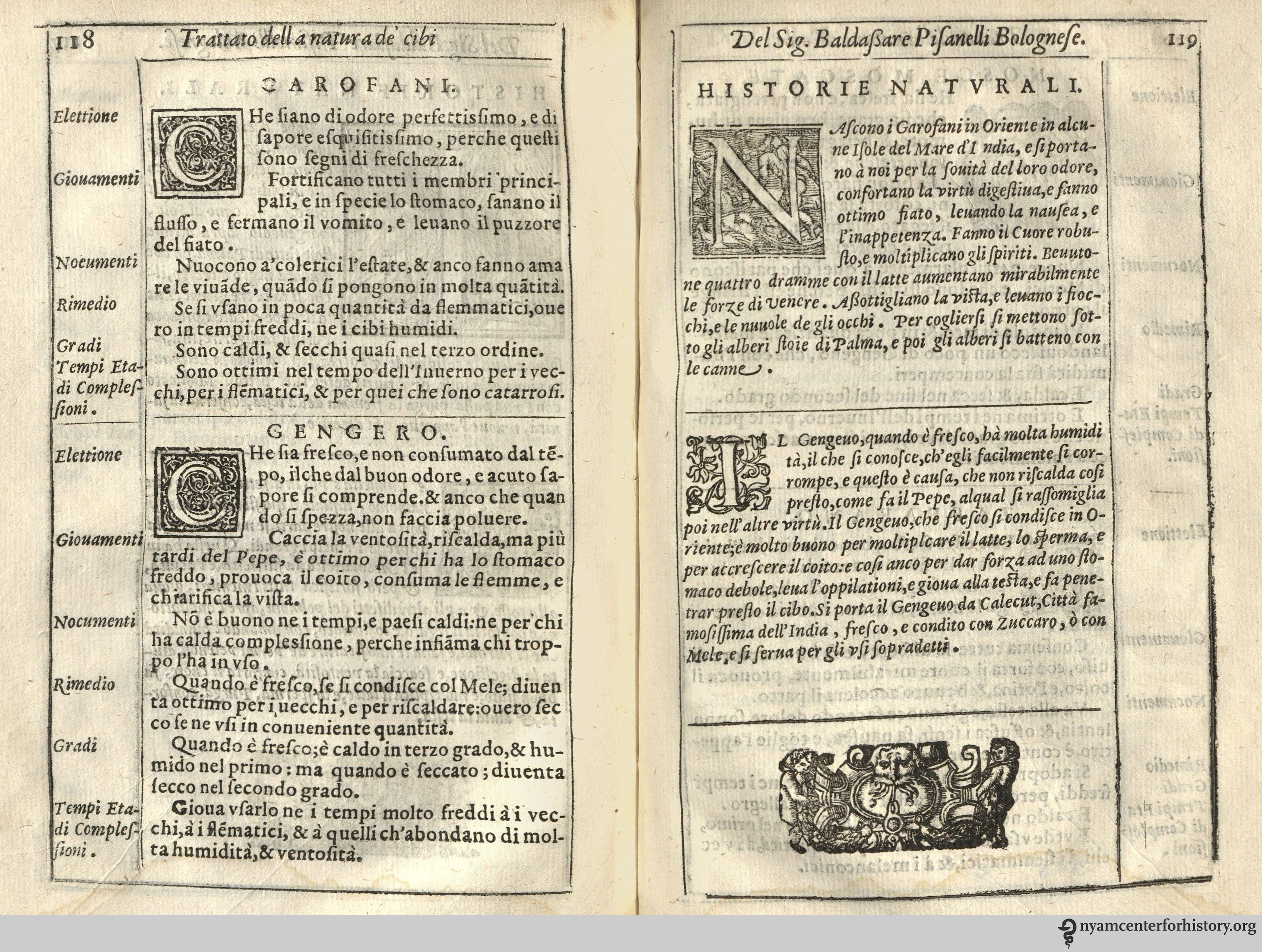
The most remarkable thing about the whole experience is that I can still hear the voices of early modern authors after all these years. I can still quote them in half a dozen languages. From the French version of Platina printed in 1507 there is “L’heure que tu sentiras ta viande estre cuite, car…l’heure est bonne pour engendrer enfans…”  (The moment you feel that your meal is digested, the time is good to produce children.) Or Girolamo Manfredi from 1474 “Imperho dicono li philosophi che chi usa molto il cohito vive poco e tosto invechia.” (Therefore philosophers say whoever has a lot of sex lives a short life and ages too soon.) Or there’s Baldassare Pisanelli who tells us that 4 drams of cloves in milk “aumento mirabilmente le forze di Venere” (greatly increase the power of Venus.) There’s also the Fleming Hugo Fridaevallis who tells us that asparagus is great for timid newlyweds “primas coniugii difficultates, et si quid minis in uxore tunc placet, dulce et amabile futurum tandem uxoris contubernium” (whoever…has conjugal difficulties at first, and if you are unable to please your wife, later she will be a sweet and loving mate).

Baldassare Pisanelli's Trattato della natura de' cibi et del bere Nel quale non solo tutte le virtù, & i vitii di quelli minutamente si palesano, 1586. His discussion of the power of cloves in milk appears top right.

Baldassare Pisanelli’s Trattato della natura de’ cibi et del bere Nel quale non solo tutte le virtù, & i vitii di quelli minutamente si palesano, 1586. His discussion of the power of cloves in milk appears top right. Click to enlarge.

Their opinions are of course very amusing, but they also give us some remarkable insights into the kinds of problems Renaissance people would have taken to their physicians. These kind of frank open discussions of sex gradually become rarer in the 16th century, no doubt under the influence of the Reformations a kind of prudery pervades the later dietaries. It took another few centuries until they discuss the topic again, in the 19th century, but all this is the subject for a book. Stay tuned.

Bee Bread

Today’s guest blog is by Josh Evans, lead researcher with Nordic Food Lab in Copenhagen. He will lead a workshop on insect eating at our October 17 Eating Through Time Festival. A version of this article was first published on the Nordic Food Lab blog.

Honeybees (Apis mellifera) have mastered feats of chemical engineering as various as they are alchemical. Their most well-known substances are of course honey, their concentrated, stable, hive-warming energy source, and wax, their pliable, moisture-proof structural material. Yet there are other substances nowadays known primarily only to beekeepers and practitioners of traditional medicines. Propolis (or ‘bee glue’) is a structural sealant and potent antimicrobial agent within the hive, and it carries a beautiful resinous aroma. Royal jelly is what all brood—the immature larvae and pupae—are first fed before being weaned onto honey (unlike the future queen, who becomes differentiated by being fed only royal jelly). It has remarkable moisturizing, emulsifying, and stabilizing properties. Even the brood are used as food in many cultures around the world and have a delicate savoriness with hints of raw nuts or avocado.

Each substance is fascinating in its own right, though pollen is particularly notable for the transformation it undergoes between its collection and storage. While bees use honey as their primary energy source, pollen is where they derive proteins, vitamins, and other vital nutrients. At first glance, bee pollen seems like quite a straightforward product—in the course of pollinating thousands of flowers every day, worker bees are repeatedly showered with grains of pollen, some of which accumulate into granules on the hairs of their hind legs. This is the pollen most commonly available on the market, largely because it is relatively easy to gather using a small device attached to the hive door that knocks the pollen off the returning bees’ legs.

But bees do not consume their pollen fresh. Instead, they take it into the hive and pack the granules into empty comb cells, mixing them with nectar and digestive fluids and sealing the cell with a drop of honey. Once processed in this way, the pollen remains stable indefinitely. Beekeepers call this form of pollen ‘perga’ or ‘bee bread.’

Bee bread in comb. Image by Chris Tonnesen. Courtesy of the Nordic Food Lab.

Bee bread in comb. Image by Chris Tonnesen. Courtesy of the Nordic Food Lab.

Fresh pollen is high in moisture and protein and, especially when brought into the hive—which stays around an internal temperature of 37˚C (98.6˚ F)—becomes an ideal environment for mold growth. The bees’ digestive fluids, however, are rich with lactic acid bacteria (LAB),1 which come to dominate the pollen substrate when it is packed together and sealed from the air with honey. The bacteria metabolize sugars in the pollen, producing lactic acid and lowering the pH from 4.8 to around 4.12—well below the generally recognized threshold for pathogenic microbial growth of 4.6.

Bee bread. Image by Chris Tonnesen. Courtesy of the Nordic Food Lab.

Bee bread. Image by Chris Tonnesen. Courtesy of the Nordic Food Lab.

These LAB come predominantly from the bees themselves, rather than, for example, the plants from which they forage,3,4 and the difference in microbial ecology of fresh pollen vs. stored is great.5 Furthermore, many of the genera which come to dominate fermented pollen are also some of those most common in fermented food products made by humans. In addition to preservation,6 the pollen fermentation process also renders its nutrients more available.2 Some proteins are broken down into amino acids, starches are metabolized into simple sugars, and vitamins become more available.7,8 In this sense, bee bread is even more health-giving than the more commonly available fresh bee pollen.

Yet the sensory transformation of the bee pollen into bee bread might be most remarkable. The floral and herbal notes of individual granules become enhanced; the powdery, sandy texture becomes firmer and moister; the acidity from the lactic acid brightens the flavor and tempers possible bitterness; and the fermentation also produces secondary aromas that generate new flavors of fruit—some, for example, gain the distinct taste of mango. The particularities of the fresh pollen, depending on the season and its plant sources, become enhanced, and new qualities that were not present before are revealed.

We have used the bee bread in different recipes: ‘Peas ‘n’ Bees,’ a soup of fresh pea juice with bee larvae, some fried until crisp and some blanched with lovage, garnished with fresh lovage and bee bread; or ‘The Whole Hive,’ a dessert of beeswax ice cream, sauce of honey kombucha and bee bread, crystallized honey crisp, propolis tincture and apple blossoms. Bee bread is also excellent at initiating the transformation of cream into crème fraîche or butter.

Peas n Bees. Image by Jonas Drotner Mouritsen. Courtesy of the Nordic Food Lab.

Peas n Bees. Image by Jonas Drotner Mouritsen. Courtesy of the Nordic Food Lab.

The Whole Hive. Courtesy of the Nordic Food Lab.

The Whole Hive. Image courtesy of the Nordic Food Lab.

Our interaction with Apis mellifera is one of the oldest co-evolutionary relationships between insects and humans—and yet there is still so much we don’t know about the bees. For example, despite the current explosion of interest among scientists to study the complex microbiota of bees, we still do not know exactly which species of microbes drive the transformation of pollen into bee bread, or exactly how.

Bee bread butter. Photo by Josh Evans. Courtesy of the Nordic Food Lab.

Bee bread butter. Image by Josh Evans. Courtesy of the Nordic Food Lab.

Though as fascinating, delicious, and versatile as the bee bread is, my favorite part about it might be the realization that humans are not the only ones who ferment our food. Apis mellifera might have gotten there long before.

Bee bread is typically available to harvest throughout the summer months. Ask a local beekeeper for more information. If you’re lucky, they might be willing to share some of this potent, delicious treat.

Acknowledgements

Thanks to Annette Bruun Jensen at the University of Copenhagen for sharing with us a wealth of information about bees and their products over the past few years. Also thanks to Oliver Maxwell and the rest of the team at Bybi in Copenhagen, who have been one of our regular suppliers of both bee brood and bee bread and who go out of their way to help us in our research. To the many more beekeepers we have worked with in Denmark, the Nordic region, and the world: we salute you!

References

1. Vásquez, Alejandra, and Tobias C. Olofsson. 2009. “The Lactic Acid Bacteria Involved in the Production of Bee Pollen and Bee Bread.” Journal of Apicultural Research 48 (3): 189–95. doi:10.3896/IBRA.1.48.3.07.

2. Mattila, Heather R., Daniela Rios, Victoria E. Walker-Sperling, Guus Roeselers, and Irene L G Newton. 2012. “Characterization of the Active Microbiotas Associated with Honey Bees Reveals Healthier and Broader Communities When Colonies Are Genetically Diverse.” PLoS ONE 7 (3). doi:10.1371/journal.pone.0032962.

3. Gilliam, Martha. 1979a. “Microbiology of Pollen and Bee Bread: The Genus Bacillus.” Apidologie 10 (3): 269–74.

4. ———. 1979b. “Microbiology of Pollen and Bee Bread: The Yeasts.” Apidologie 10 (1): 43–53. doi:10.1051/apido:19790304.

5. Gilliam, Martha, D. B. Prest, D. B. Prest, B. J. Lorenz, and B. J. Lorenz. 1989. “Microbiology of Pollen and Bee Bread: Taxonomy and Enzymology of Molds.” Apidology 20: 53–68. doi:10.1051/apido:19890106.

6. Anderson, Kirk E, Mark J Carroll, T I M Sheehan, and Brendon M Mott. 2014. “Hive-Stored Pollen of Honey Bees: Many Lines of Evidence Are Consistent with Pollen Preservation , Not Nutrient Conversion.” Molecular Ecology, no. 23: 5904–17. doi:10.1111/mec.12966.

7. Degrandi-Hoffman, Gloria, Bruce J. Eckholm, and Ming Hua Huang. 2013. “A Comparison of Bee Bread Made by Africanized and European Honey Bees (Apis Mellifera) and Its Effects on Hemolymph Protein Titers.” Apidologie 44 (1): 52–63. doi:10.1007/s13592-012-0154-9.

8. Herbert, Elton W, and H Shimanuki. 1978. “Chemical Composition and Nutritive Value of Bee-Collected and Bee-Stored Pollen.” Apidologie 9 (1): 33–40. doi:10.1051/apido:19780103.


Join us for First Mondays!

By Anne Garner, Curator, Center for the History of Medicine and Public Health

The Coller Rare Book Reading Room captured by Ardon Bar-Hama.

The Coller Rare Book Reading Room captured by Ardon Bar-Hama.

Books in open caseCome visit The Drs. Barry and Bobbi Coller Rare Book Reading Room for an hour on the first Monday of each month (excluding holidays). Library staff will show a selection of treasures from our collections. We will begin in the Academy lobby at noon (1216 Fifth Avenue at 103rd Street). No advance sign-up is required.

Our rare book room was built in 1933. A 2014 renovation restored the room’s historic windows, period cork floor, and unique light fixtures, bookishly designed to feature early modern printing devices.

Please note that The Drs. Barry and Bobbi Coller Rare Book Reading Room is also open to researchers by appointment on Tuesdays, Thursdays and Fridays from 10am– 4:45pm and Wednesdays from 10am– 6:45 pm. Email us at library@nyam.org or call 212-822-7315 to make an appointment.

Three giveaways, three chances to win!

By Anne Garner, Curator, Center for the History of Medicine and Public Health

EatingThroughTime-picture

Cover of Annette Lucas’ La cuisinière, cordon bleu de la famille ...Paris: E. Guérin, [1905].

Cover of Annette Lucas’ La cuisinière, cordon bleu de la famille …Paris: E. Guérin, [1905].

Set your kitchen timer: the countdown to our October 17th festival, Eating Through Time, is less than a month away. We’re looking forward to seeing you there, along with Bryant Terry, Jacques Pépin, the Snowday food truck, and a host of other culinary personalities offering talks, demonstrations, and panels.

Today we’re announcing three chances to win two VIP tickets to the festival this month. The tickets will include entrance to hear the legendary Jacques Pépin.

First up are our friends at the Brooklyn-based Food Book Fair, who will be hosting an Instagram challenge on their excellent feed starting today, September 21. Follow them at @foodbookfair for details. In addition to the tickets, you’ll win a signed copy of Pépin’s new cookbook.

Website-with-wanderlust Atlas Obscura will also launch an Instagram contest on September 30th. The winning photo will be announced on Monday, October 5th. Follow them on Instagram and Twitter for more details. You’ll also win a year’s membership to our Friends of the Rare Book Room.

And finally, we’ll be hosting our own caption contest the week of September 28th. Pull out the stops to caption an image from one of our 18th-century cookbooks, and you’ll earn two free VIP tickets for October 17th. We’re @nyamhistory on Twitter and Instagram, and you’ll find us here on Facebook.

The full schedule of Eating Through Time can be found here.

We’ve featured a handful of images from our French cookbooks below, to put you in the mood. Bon Appetit!

Frontispiece from F.J. Mayeux’s, Le petit cuisinier français contenant la cuisine, l'office, la patisserie ...Bruxelles: Ferra aine, 1823.

Frontispiece from F.J. Mayeux’s Le petit cuisinier français contenant la cuisine, l’office, la patisserie …Bruxelles: Ferra aine, 1823.

Cover of Emile Dumont’s Le parfait patissier : recettes pour la ville et la campagne : entremets sucrés, patisserie, confiserie, glaces, liqueurs, vins en futs et en bouteilles, cidre et poiré. Paris: Degorce-Cadot, [188?].

Cover of Emile Dumont’s Le parfait patissier: recettes pour la ville et la campagne : entremets sucrés, patisserie, confiserie, glaces, liqueurs, vins en futs et en bouteilles, cidre et poiré. Paris: Degorce-Cadot, [188?].

Frontispiece and title from Louis Clerc’s Manuel de l'amateur d'huitres, ou, L'art de les pêches ... : suivi des qualités alimentaires et propriétés médicales de ce mollusque, ainsi que de l'adresse des personnes qui les vendent. Paris: Chez l'Éditeur, Librairie Française Étrangère, 1828.

Frontispiece and title from Louis Clerc’s Manuel de l’amateur d’huitres, ou, L’art de les pêches … : suivi des qualités alimentaires et propriétés médicales de ce mollusque, ainsi que de l’adresse des personnes qui les vendent. Paris: Chez l’Éditeur, Librairie Française Étrangère, 1828.

Frontispiece and title page from Mademoiselle Marguerite’s Le cordon bleu : Nouvelle cuisinière bourgeoise. Paris: Baudouin, 1828.

Frontispiece and title page from Mademoiselle Marguerite’s Le cordon bleu: Nouvelle cuisinière bourgeoise. Paris: Baudouin, 1828.