Table Reading

Our October 2014 “Art, Anatomy, and the Body: Vesalius 500″ festival guest curator, artist and anatomist Riva Lehrer, describer her first experience with cadavers and how that shaped her thinking about bodies, anatomy, and art.
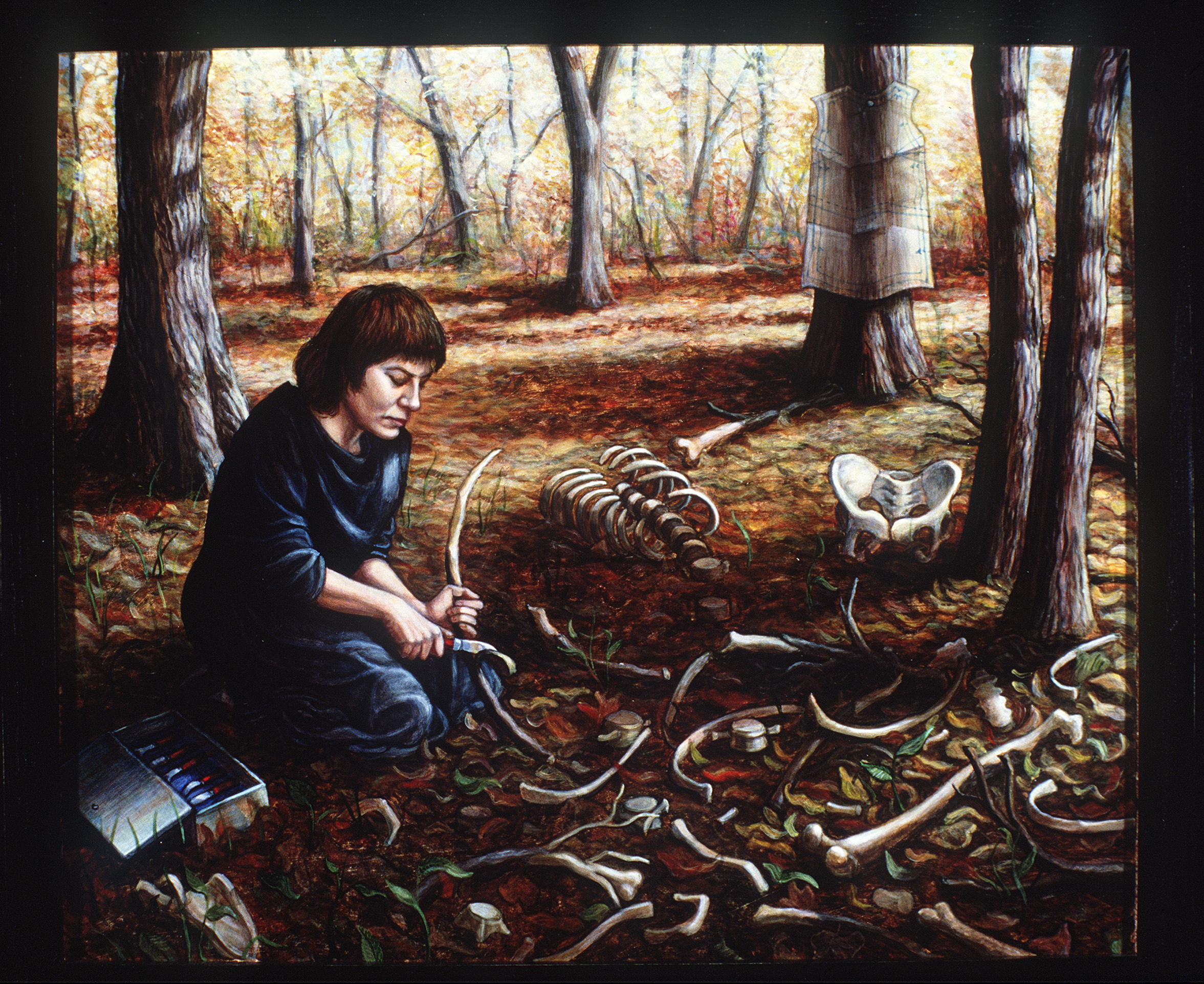
"In the Yellow Woods," by Riva Lehrer. Click to enlarge.

“In the Yellow Woods,” by Riva Lehrer. Click to enlarge.

The first time I ever saw a cadaver was a day in early September of 2006. The light was perfect—a glowing blue and gold herald of the coming Jewish New Year. I walked into lab behind Dr. Norm Lieska, head of Gross Anatomy at University of Illinois at Chicago, and a group of M1 students, all gangly in their brand-new starched white coats and spotless scrubs. The laboratory was a sort of extended corridor, comprised of a series of interlocking rooms, lit by high, industrial windows like those in an old factory. Burnished shafts of sunlight slanted across the rows of steel tables, skimming across the unzipped body bags. Each contained a cadaver that had been preserved and prepped for student exploration. For the main, though, they were pristine; head and hands demurely wrapped, all original parts on board.

I’d been warned that I might be nauseated or disgusted by the bodies. I braced myself to be sickened by the miasma of chemicals in the air. I did not expect to be overwhelmed by the sheer generosity represented in that room. Twenty-five people had decided that we needed to understand the human body in the most direct and unmediated way. They’d signed donation papers that gave us the right to read the history of their own flesh. I felt the impact of that gift even from my first steps into lab.

The dark vinyl of the body bags appeared as if gilded. This was the last moment they would all appear the same. We would pull down the zippers, and reveal the wild variations within. I am not in any way a religious person, but I thought: if I felt this kind of awe in synagogue, I’d be a very different kind of Jew. I was at the lab as part of my position as visiting artist in Medical Humanities at the Medical School of the University of Illinois at Chicago. Each cadaver in Gross Lab was assigned to a team of about 10 students; at the start of the semester I’d been assigned to one such team. These students worked on the same person for the entire year. Scalpels peeled away each archeological layer, skin down to the deepest core. It was a bizarre form of intimate knowledge—both closer and more abstract than their inhabitants had had in life. I began to focus on comparing the bodies from table to table, and to show the members of my team that each cadaver had its idiosyncrasies. None of them were ringers for the photographs in their Color Atlas of Human Anatomy.

"Theresia Degener," by Riva Lehrer. International Human Rights lawyer Theresia Degener is one of the drafters of the United Nations Convention on the Rights of Persons with Disabilities. As a member of the German generation of children whose mothers were given thalidomide, Degener  accomplishes all she wants to do through a range of inventive strategies.  Click to enlarge.

“Theresia Degener,” by Riva Lehrer. International Human Rights lawyer Theresia Degener is one of the drafters of the United Nations Convention on the Rights of Persons with Disabilities. As a member of the German generation of children whose mothers were given thalidomide, Degener accomplishes all she wants to do through a range of inventive strategies. Click to enlarge.

In all the time I was there, though, I never saw a body anything like mine. I was much too intimidated to ask why. Perhaps a body that was too different from those dissection pictures could not function as a primer? (Oddly enough, when I visited a different cadaver lab last year, a bare scoliotic spine was on a table in the back of the room, picked clean of the body in which it had dwelt).

I was the visiting artist in Medical Humanities at the Medical School of the University of Illinois at Chicago for four years, during which I taught figure drawing and portraiture for med students. I’ve gone on to teach those classes at Northwestern University School of Medicine, and as the professor of anatomy at the School of the Art Institute of Chicago (I’m on leave now to pursue other projects). Each year of teaching and study has only increased my sense of wonder at what a living body can do. All bodies (human and animal) are so densely woven with function, yet can accommodate such dysfunction.

I’ve asked my students at both medical schools whether I’m the only disabled person they interact with outside of clinical rotations. The answer is yes. I wonder if my professional presence changes what they think when they begin clinicals, though I also wonder if they begin silent diagnoses when I walk into the classroom. My SAIC students do often seem startled on their first day. (Though maybe that’s just an effect of the tables full of bones. Hard to tell with the young and ironic.) They may not have medical knowledge, but they are trained observers, and mine is the body at the center of the room, at least until our model climbs onto the platform in his/her birthday suit.
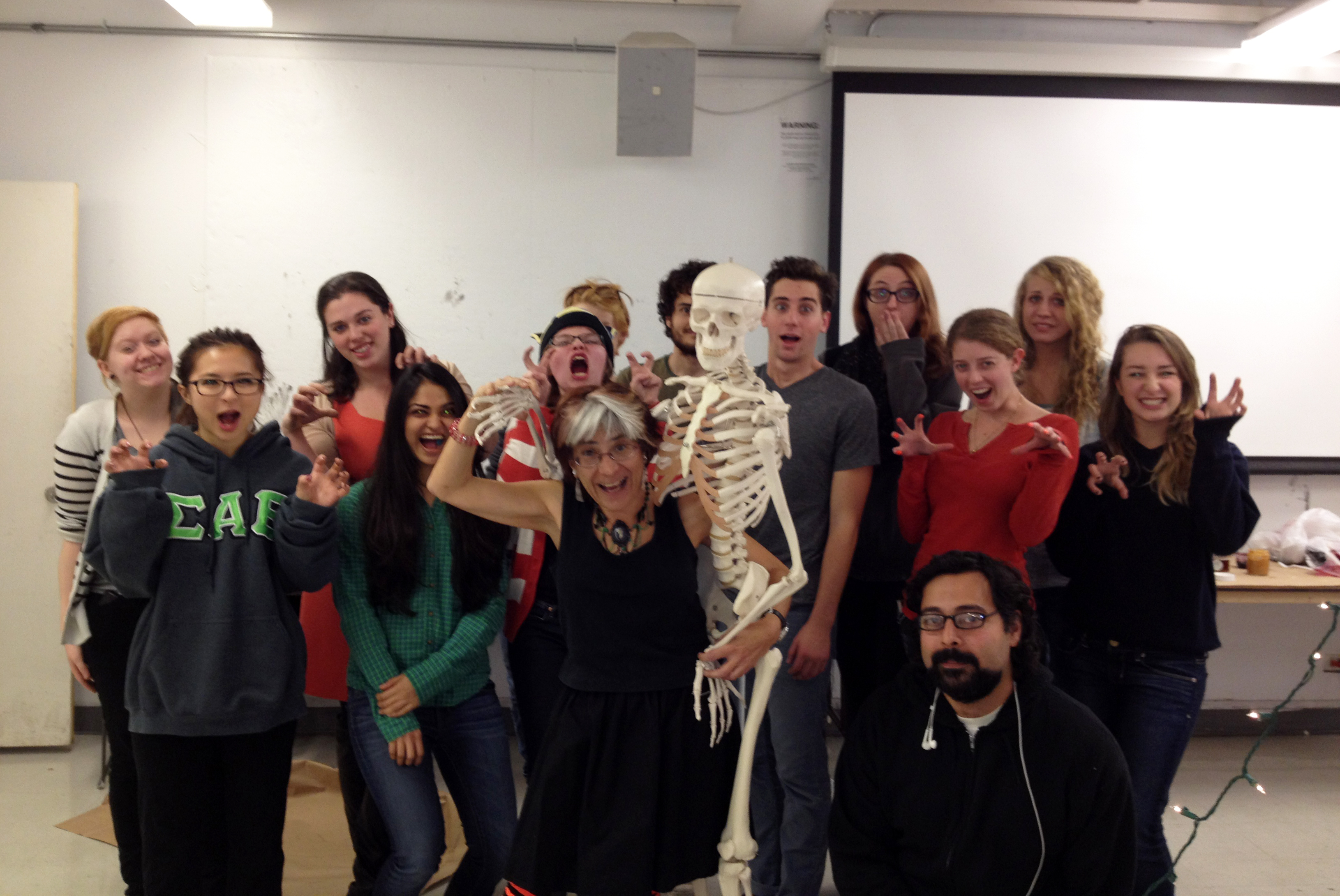
Riva Lehrer with students at SAIC in 2012.

Riva Lehrer with students at the School of the Art Institute of Chicago in 2012.

For years, I was the elephant in the room. Eventually, I stopped pretending I wasn’t there and began to use myself as an exemplar. This doesn’t come easy—sometimes, my attempts at coping through humor sound like outtakes from Young Frankenstein—but it does produce a willingness on the part of students to ask uncomfortable questions. As the cadavers prove year after year, normal is a matter of degree. Our bodies let us live so many ways. Healing is creativity made manifest.

I’m writing this just before another New Year. I hope that 2015 brings you joy of your own mysteries, and that you will follow those secret trails through your own glowing, shadowed, and gilded rooms.

Innovation in Digital Publishing: A Summary

By Cecy Marden, Wellcome Trust Open Access Project Manager

On January 5, the last day of the 2015 American Historical Association Conference, a panel of people from “other disciplines,” chaired by digital historian Stephen Robertson,  spent two hours discussing innovation in digital publishing in the humanities. The audience did an astonishing job of summarizing the discussion on Twitter which @EstherRawson kindly Storified.

Matthew K. Gold (New York City College of Technology and City University of New York, Graduate Center) kicked off proceedings talking about creating well-designed open-source platforms that trace scholarly creation in all its versions and forms. Kathleen Fitzpatrick (Modern Language Association) extended this thread to highlight the social challenges faced by scholarly societies in creating communication platforms for their members. Martin Eve (Open Library of Humanities), Cecy Marden (Wellcome Trust) and Lisa Norberg ( K|N Consultants) discussed approaches to making open-access publication financially sustainable, considering the roles played by publishers, funders, librarians, and institutions in innovative digital publishing in the humanities.

The intentionally short presentations left us with an hour and a half for discussion, which the audience had no problem filling with questions. We ranged over how to overcome the social challenges identified by Kathleen and how to preserve the increasing variety of “stuff” that constitutes scholarly communication. We looked at whether researchers are being rewarded for the innovative work they do, and the fact they are not being rewarded for ongoing projects. We ran out of time before we ran out of questions, so if the Storify, or the blog posts by the panelists, leave you with a burning question please ask it in a comment.

NYAM’s Center for the History of Medicine Joins the National Consortium for History of Science, Technology and Medicine

CHSTM LogosThe Consortium for History of Science, Technology and Medicine has now launched. The Consortium is the new national organization that has grown from the Philadelphia Area Center for the History of Science (PACHS). The Consortium encompasses 19 institutions, from Washington, D.C., through New Haven, Connecticut, as well as Kansas City and Toronto, with NYAM as one of its two New York hubs (Columbia University is the other).

The Consortium fosters research, study, and public engagement with the history of science, technology, and medicine. It supports a combined fellowship program, where awardees can work at any of the member’s institutions, now including NYAM. More information about the fellowship program can be found here. And it maintains an integrated library catalog, pulling together records from all of the Consortium partners, so that researchers can easily find the holdings of all the member institutions.

The Consortium also produces professional and public events in history. Particularly exciting for the Center is our new role in helping to run the working group for the history of medicine and health. This is one of 10 working groups set up for convening discussions. Starting up on January 16, at 3:30, the first topic is “Ebola in Historical Context,” with presenters James Colgrove of Columbia’s Mailman School of Public Health and Shobana Shankar of Stony Brook University, both at the New York Academy of Medicine; and David Barnes of the University of Pennsylvania, who will join us from Philadelphia.

To participate, one can come to NYAM, to the consortium offices in Philadelphia—which are patched together electronically—or by videoconference from elsewhere. For further details and to join, contact any one of the conveners, Nancy Tomes of Stony Book University, Keith Wailoo of Princeton, and Paul Theerman of NYAM. More information can be found at the working group website.

Fifth Annual History of Medicine Night: Call for Papers

A wooden caduceus symbol shown in NYAM rare book reading room

A caduceus symbol donated to our rare book reading room

The New York Academy of Medicine’s Section on the History of Medicine and Public Health is pleased to announce its upcoming Fifth Annual History of Medicine Night, to be held on March 11, 2015 from 6:00–7:30 pm. The event will take place at the Academy, located at 1216 Fifth Avenue at the corner of 103rd Street.

We are inviting all those interested in presenting to submit an abstract concerning a historical subject relating to medicine.

Please note the following submission requirements:

  • Abstracts (not to exceed 250 words) should be submitted together with authors’ contact details and affiliations.
  • Abstracts must be submitted no later than January 30, 2015

Selected speakers will be asked to prepare a presentation of no more than 12 minutes, with an additional 3 minutes for questions/discussion. Papers selected for presentation will be determined by a panel of History of Medicine Section members and staff of The New York Academy of Medicine.

Abstracts should be submitted electronically to Suhani Parikh at sparikh@nyam.org.  Questions may be directed to Suhani via email or phone (212-419-3544).

Innovation in Digital Publishing

By Lisa O’Sullivan, Director, Center for the History of Medicine and Public Health

Here on the blog we normally write stories based on the content in our collections, upcoming events, and other issues related to the history of medicine and health. However, we are also deeply interested in the issues facing libraries and the people who use their services.

By now it’s axiomatic that the digital world poses new opportunities and challenges for researchers, libraries, educational institutions, and publishers, which must be engaged with digital formats in a sustained and thoughtful way. The realities of this landscape encompass challenges to traditional models of publication and new expectations around access to both historic collections and new research literature. Open Access (OA) publishing and archiving is a central one of these challenges. In December 2013, we hosted an informal meeting around questions of OA at The New York Academy of Medicine.

Why is OA such a critical concern for libraries, researchers and publishers? (And why should you as a reader care?). As participants in our 2013 event discussed, issues of access to information have, ironically, been exacerbated by the growth of digital journals and electronic resources. Access to new research, whether in the sciences or humanities, is often prohibitively expensive for individuals and institutions. Authors struggle to make their work accessible to the broadest possible readership. Jill Cirasella at CUNY has produced an excellent summary of what’s at stake in discussions of OA.

The Wellcome Trust has been at the forefront in supporting open access to the research it funds in biomedical science and medical humanities, from its support of the open-access eLife journal to ensuring that all research funded by the Trust is made freely available to users. As such, we’re delighted to be working with the Trust to coordinate a panel called Innovation in Digital Publishing in the Humanities at the American Historical Association Annual Meeting taking place in New York in January.

Our panel will examine OA from a number of perspectives. However the potentials (and associated challenges) of digital publishing go beyond OA to broader opportunities for readers, publishers, and writers in the digital world, whether relating to new ways of presenting archival material online, new ways of doing and sharing research, or new ways to engage larger audiences, and we will explore some of these as well.

The panel will be chaired by Stephen Robertson, professor and director of the Roy Rosenzweig Center for History & New Media at George Mason, whose Digital Harlem project has won multiple awards for innovation in digital history. We’ve asked our speakers to start the conversation early by giving their thoughts on the biggest challenge or opportunity facing digital publishing.

This week, we’ll start with two perspectives on Open Access and its implications, from Cecy Marden (Wellcome Trust) and Lisa Norberg (Barnard College Library). We will publish thoughts from Martin Eve (University of Lincoln and Open Library of Humanities), Kathleen Fitzpatrick (Modern Language Association), and Matthew K. Gold (New York City College of Technology and City University of New York, Graduate Center) over the next few weeks. Visit our Innovation in Digital Publishing section to read them all as they go live.

Feel free to pose questions to the participants individually or as a group; they will respond here and take your thoughts into consideration for the panel itself.

Brains, Brawn, & Beauty: Andreas Vesalius and the Art of Anatomy

By Rebecca Pou, Archivist, and Johanna Goldberg, Information Services Librarian

For our October 18 festival, Art, Anatomy, and the Body: Vesalius 500, we exhibited items from the library’s collections showing the history of anatomical illustration. You can still visit the New York Academy of Medicine to view the exhibit in person on the ground floor. If you can’t make it, we offer a digital version below.

The exhibit on display at the new York Academy of Medicine.

The exhibit on display at the New York Academy of Medicine.

In 1543, Andreas Vesalius was a 28-year-old professor of surgery and anatomy at the University of Padua, one of Europe’s best known medical schools. That year, he published his most famous work, De humani corporis fabrica, translated as On the Fabric of the Human Body. Vesalius dedicated the work to Charles V; he subsequently received the appointment of physician to the imperial family.

Working from three images from the Fabrica—a skeleton, a figure of muscles, and an illustration of the brain—this exhibit shows the many ways Vesalius’ work built on past anatomists, and exerted its influence well into the future.

Images from great works in our collection, from Magnus Hundt’s 1501 Antropologium to Dominici Santorini’s 1775 Anatomici summi septemdecim tabulae, show the evolution of artistic style and scientific understanding. Some show examples of “borrowing” Vesalius’ images and placing them in new contexts.

Click an image to view the gallery.

Reflections on “Art, Anatomy and the Body: Vesalius 500”

Our “Art, Anatomy, and the Body: Vesalius 500″ festival guest curator, artist and anatomist Riva Lehrer, reflects on the event.

Riva Lehrer, left, with Lisa O'Sullivan, director of the Center for the History of Medicine and Public Health. Photo by Charles Manley.

Riva Lehrer, left, with Lisa O’Sullivan, director of the Center for the History of Medicine and Public Health. Photo by Charles Manley.

My approach as co-curator of “Art, Anatomy and the Body: Vesalius 500” was to ask how we use anatomy today to understand what it means to be human. Throughout history, we’ve used metaphor to organize our concepts of the body. We’ve imagined it as a vessel full of roiling humors, as an elaborate clock, as a regulated factory, as a robot and a computer, to name just a few. Even anatomical study is affected by metaphor and symbolism, and often guides what we see.

As science creates new perspectives on human (and non-human) anatomy, society responds by re-imagining new possibilities. When we internalize these visions we live differently in our bodies. “Art, Anatomy and the Body: Vesalius 500” brought together artists, writers, and scholars to discuss about how we see ourselves now and how we construct ourselves as public bodies.

As emcee, I had the pleasure of introducing Ann Fox, Sandie Yi, Dan Garrison, Sander Gilman, Nuha Nazy, Dima Elissa, Bill Hayes, Steven Assael and Alice Dreger, who were among the more than 25 festival participants.

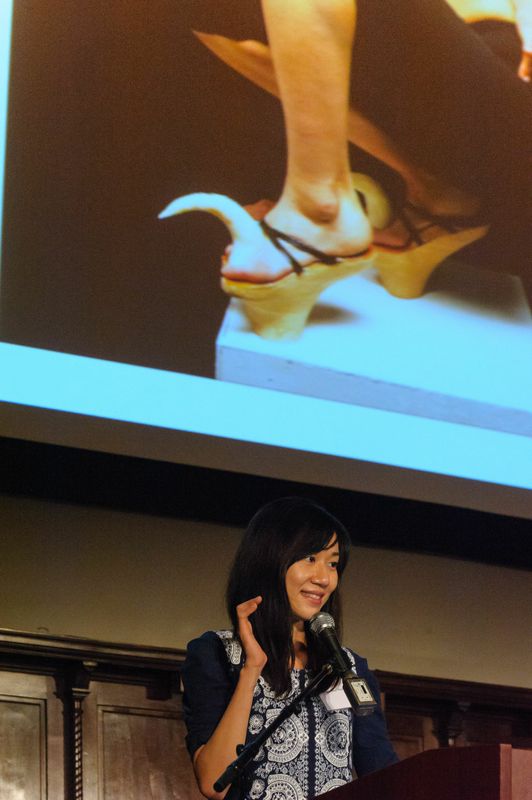
Chun-Shan “Sandie” Yi. Photo by Charles Manley

Chun-Shan “Sandie” Yi. Photo by Charles Manley

Curator Ann Fox and artist Chun-Shan “Sandie” Yi started the day with an overview of contemporary artists who explore identity through medical and anatomical imagery, including artists who tackle our continuing discomfort with HIV/AIDS, a disease that from the very first raised issues of identity and ostracism. Sander Gilman furthered our thoughts about unacceptable bodies by discussing how teaching posture in schools has been used to control and regulate bodies, and make them socially predictable.

Dan Garrison brought us back to the core of the festival via the origin of Vesalius’ Fabrica. He posited some very intriguing ideas around who Vesalius may have been; he may have had a variant body (possibly dwarfism), and this may have contributed to how he created his great work.

Dan Garrison. Photo by Charles Manley.

Dan Garrison. Photo by Charles Manley.

Identity is always a struggle between the specifics of individuality and alliance with group affiliation. This echoes the direction of modern medicine; treatments are becoming increasingly targeted to individual bodies, whether through genetics, prosthetics, or adapted drug regimens. We glimpsed this future during the ProofX presentation, with Nuha Nazy and Dima Elissa. ProofX uses 3D printing to produce extremely precise implants, surgical models, and adaptive devices for a wide range of conditions. It’s anatomical interface at an unprecedented level.

ProofX's 3D-printing demonstration.

ProofX’s 3D-printing demonstration. Photo by Charles Manley.

Bill Hayes engages medical history in order to understand his own biography. His research blends with memoir and hands-on experience, as witnessed by The Anatomist, the remarkable story of Henry Gray, author of Gray’s Anatomy. Hayes steps across the boundary between modern identity and historical precedent, here discussing the history of exercise, in order to show us how we arrived at our present state.

Anatomy and poetics also wove together in the work of Steven Assael. His paintings and drawings are highly (and gracefully) accurate, yet manage to be astute and nuanced examinations of his subjects’ personalities. He transfixed the audience by the lushness of his technique and the drama of his compositions.

Alice Dreger. Photo by Charles Manley.

Alice Dreger. Photo by Charles Manley.

Our excellent final event was a talk by bioethicist Alice Dreger. She traced the origins of contemporary medical photography as well as taking a fresh look at traditional anatomical illustration. Dreger has thought deeply about how we signal our identity through bodily choice. She raised questions about what caused doctors to lose touch with the vulnerability of people in medical settings, and to describe variant bodies in dehumanizing ways. She also pointed out that doctors often can’t admit the taboo pleasure of viewing physical anomalies, and how that covert pleasure affects their relationships with patients.

The human body has its secret, unspoken existence and its public presentation, meant to be decoded by other human beings. Anatomy would seem to be an objective bridge between the two, yet can be just as complicated and interpretive as any form of art. Our festival let us perceive the dialogue between poetics and science, and between inner and outer realities of the body.

For more images of the festival, visit our Facebook page.
Read a summary of the festival by presenter Kriota Willberg: Part 1 and Part 2
Click here for a blog from Hyperallergic.
Read “Seeing is Believing: New York Academy of Medicine’s Vesalius 500th Year Celebrations,” an article by presenter Brandy Schillace, PhD.

Polio: A Fearful Disease Nears Its End

By Paul Theerman, Associate Director, Center for the History of Medicine and Public Health

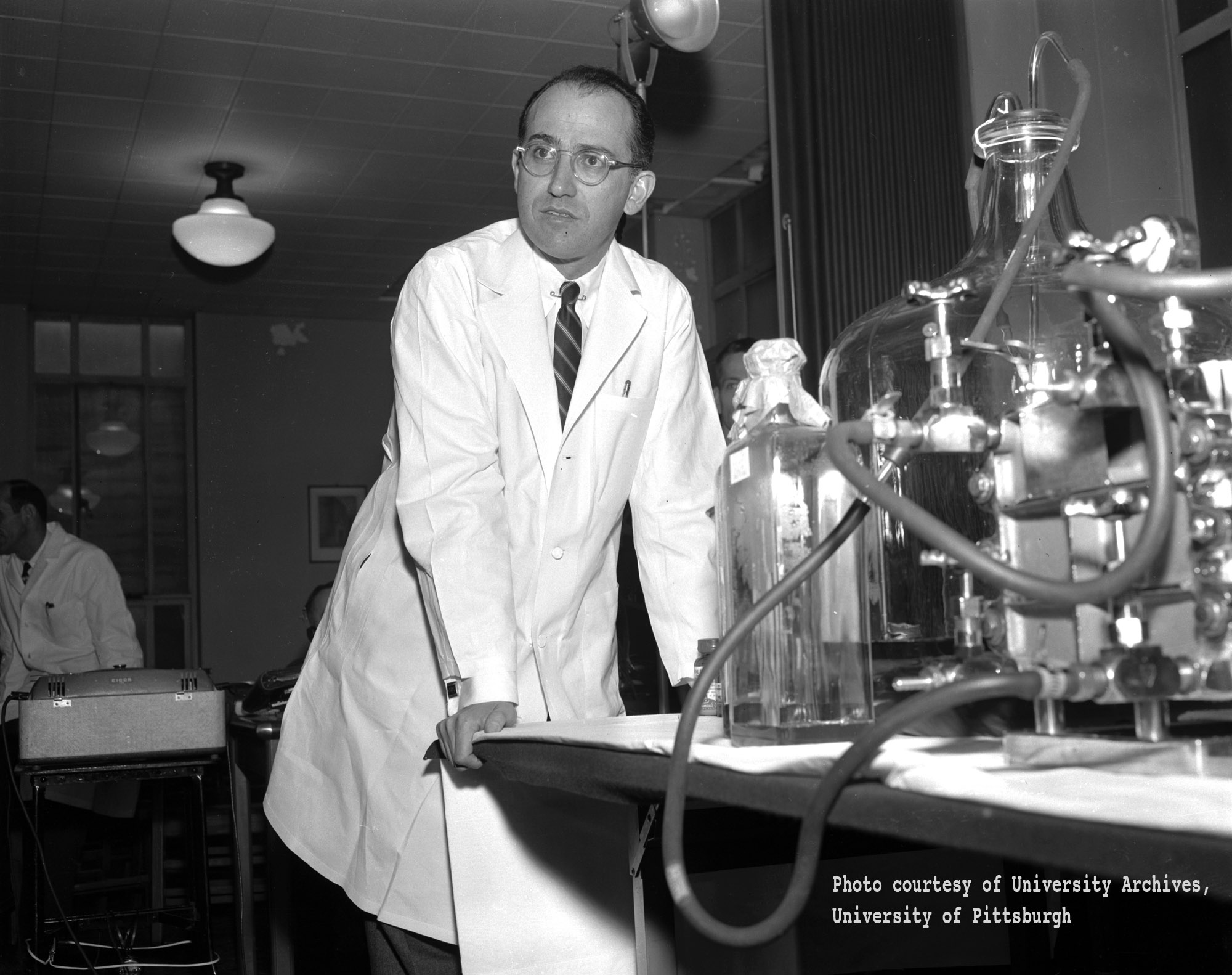
Friday, October 24, is World Polio Day. Inaugurated a decade ago, the day is promoted by the World Health Organization, UNICEF, and Rotary International to mark the coordinated battle to eradicate polio worldwide. The date for World Polio Day honors Jonas Salk, whose 1950s polio vaccine effectively ended the epidemic in the United States. World Polio Day comes just before Salk’s birthday on October 28.

Jonas Salk. Courtesy of  the Steeltown Entertainment Project. Click to enlarge.

Jonas Salk. Courtesy of the University of Pittsburgh, via the Steeltown Entertainment Project. Click to enlarge.

Jonas Salk was born in 1914, and on the centenary of his birth, many celebrations mark his achievement. Here at the New York Academy of Medicine, we are screening a documentary about Jonas Salk on November 18, The Shot Felt ’Round the World, with commentary from his son Dr. Peter Salk, Time magazine writer Jeffrey Kluger, and historian of medicine Dr. Bert Hansen. Elsewhere in New York both City College of New York and NYU Langone Medical School are hosting celebratory symposia, and the Jonas Salk Legacy Foundation maintains a list of events and exhibitions in many different venues.

Though every analogy is partial, the American polio epidemics of the 20th century bear resemblance to the current outbreak of Ebola in West Africa. Both diseases were around and known before their largest epidemics. In 1916 polio broke out in the United States, with New York City having more than 9,000 cases, a quarter of which resulted in death. Another major New York City outbreak occurred in 1931. Even by then, little was known about the disease: it fell under a category now known as “emerging infectious diseases.”1

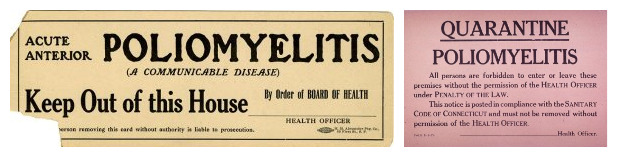
In their 1934 book, Poliomyelitis: A Handbook for Physicians and Medical Students, NYAM Fellow Dr. John F. Landon and his co-author, Lawrence W. Smith, called it a “still obscure disease” (p. vii) with a “particularly baffling” origin and means of transmission (p. 1). There were no effective treatments; the most one could do was to relieve symptoms, which included fever and strong pain, especially in the head and neck. Prevention was difficult if not impossible. Like Ebola, the disease’s spread, write Landon and Smith, could be curtailed chiefly by taking extreme care in physical contact and by quarantining active patients. The Handbook provided several practical appendices on nursing care and aseptic techniques, so caregivers could protect themselves and others from contagion. One appendix reproduced the New York City Health regulations on polio, which specified a three-week quarantine for all patients and a two-week quarantine for those in contact with them, with placarding of premises with quarantine signs.1

Two polio quarantine cards, courtesy of the National Library of Medicine.

Two polio quarantine cards, courtesy of the National Library of Medicine. Click to enlarge.

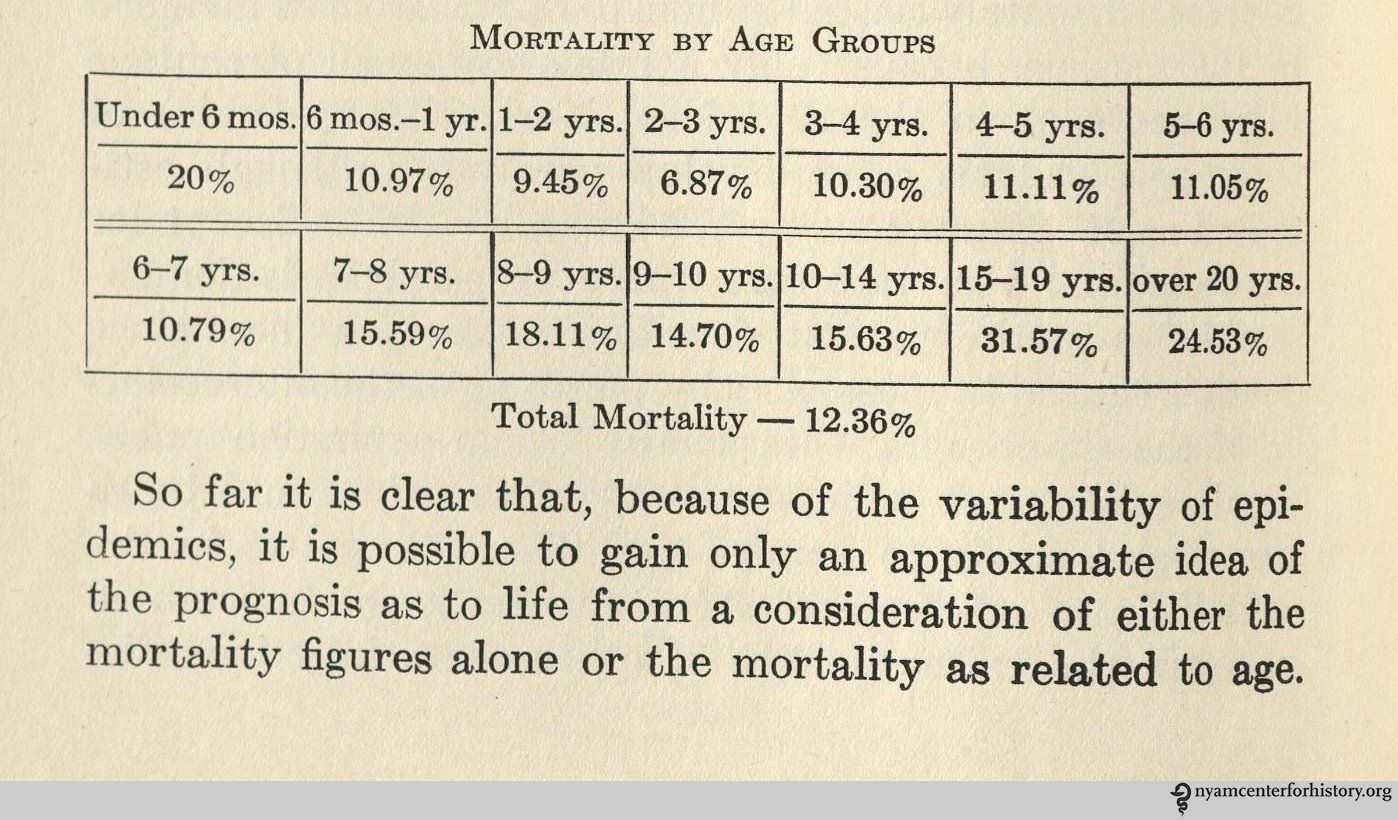
Chart from Poliomyelitis: A Handbook for Physicians and Medical Students. Click to enlarge.

Chart of the 1931 New York polio epidemic, compiled by the New York Department of Health. In Poliomyelitis: A handbook for physicians and medical students. Click to enlarge.

And like Ebola, the disease had terrible effects. The virus can enter the central nervous system, causing both temporary and at times permanent paralysis long after the disease runs its course. And even if the paralysis is temporary, post-polio syndrome can debilitate people years later. But in the early 20th century polio was often fatal, at rates that in 1931 averaged about 10% to 15% overall, but rose to over 20% for those under six months of age, and over 30% for those 15 to 19 years old (p. 158).1 By the time of the post–World War II epidemics, the death rate had dropped, but with increasing numbers of paralyzed survivors.

In 1952, polio struck the United States hard, with 58,000 affected, of which more than 3,000 died and more than 21,000 were left paralyzed to some degree or other.2 This was a huge number, even given the size of the country. Polio was four times as prevalent in the United States then as Ebola is in Liberia today. And while death rates from Ebola are higher, overall death and disability rates are comparable.

With this as a backdrop, the possibility of an effective polio vaccine was electrifying. In 1954, Jonas Salk’s promising new vaccine started widespread field testing, with over a million children taking part. On April 12, 1955, Dr. Thomas Francis Jr., director of the Poliomyelitis Vaccine Evaluation Center at the University of Michigan School of Public Health, pronounced the vaccine safe and effective. Large-scale immunization campaigns quickly started up.3–5 Polio was under control in the United States by the 1960s.

"The 1954 Poliomyelitis Vaccine Field Trial Areas." In Evaluation of the 1954 field trial of poliomyelitis vaccine: Final report. Click to enlarge.

“The 1954 Poliomyelitis Vaccine Field Trial Areas.” In Evaluation of the 1954 field trial of poliomyelitis vaccine: Final report. Click to enlarge.

The disease is one of the few for which eradication rather than control is considered feasible, a goal announced in 1988 by WHO, UNICEF, and Rotary. As of 2013, only three countries worldwide still had polio endemic in their populations—Pakistan, Nigeria, and Afghanistan—and the number of cases stood at fewer than 500, in less than a dozen countries in all.6 Yet polio is in the news again, as war has hindered vaccination programs, health workers have been put under attack, and cases have spread.7 At the eve of eradication, polio is proving difficult, even if it no longer inspires the wholesale fear that it did 60 years ago.

References

1. Landon JF, Smith LW. Poliomyelitis: A handbook for physicians and medical students, based on a study of the 1931 epidemic in New York City. New York: Macmillan; 1934. All in-text page numbers come from this handbook.

2. Salk Institute for Biological Studies. History: Polio today. Available at: http://poliotoday.org/?page_id=13. Accessed October 22, 2014.

3. Francis T. Evaluation of the 1954 field trial of poliomyelitis vaccine: Final report. Ann Arbor: University of Michigan; 1957.

4. March of Dimes. April 12 1955: Polio Announcement. 1955. Available at: https://www.youtube.com/watch?v=2LlDn_MQDkc. Accessed October 22, 2014. The March of Dimes was known earlier as the National Foundation for Infantile Paralysis, the group that underwrote much of the research and testing on polio.

5. Progress report to physicians on immunization against poliomyelitis, advance briefing. Indianapolis: Eli Lilly and Company; 1955. This report was part of the campaign and excitement around the Salk vaccine.

6. World Health Organization. Polio Case Counts. Accessed October 22, 2014.

7. For example: Gladstone R. Amid Iraq’s Political Chaos, a New Polio Vaccination Campaign Faces Challenges – NYTimes.com. New York Times. http://www.nytimes.com/2014/08/12/world/middleeast/amid-iraqs-chaos-a-new-polio-vaccination-campaign.html?_r=3. Published August 11, 2014. Accessed October 22, 2014.

Vesalius 500: Art, Anatomy, and the Body

By Paul Theerman, Associate Director, The Center for the History of Medicine and Public Health

Join us this Saturday, October 18, for our second annual Festival of Medical History and the Arts, Art, Anatomy, and the Body: Vesalius 500. Register here.

Vesalius500STD_05_30_14This year, we celebrate the 500th birthday of Andreas Vesalius, the path-breaking anatomist whose 1543 book, De humani corporis fabrica (The Fabric of the Human Body), opened up new worlds in the understanding and representation of the human body. The festival’s presentations will focus on the cultural understanding of the body throughout history. We will have rare books on display, including one of our copies of Vesalius’ Fabrica; the Drs. Barry and Bobbi Coller Rare Book Reading Room will be open for visitors; and we will offer four hands-on workshops, still open for registration (festival entrance is included in the price of the workshops).

For more information, including the full schedule and participant biographies, see Vesalius 500.

To whet your appetite, look at our earlier blog posts by those joining us at the festival:

And don’t forget The Fabrica of Andreas Vesalius or our Vesalius 500 Workshops, presented by Sam Dunlap, Marie Dauenheimer, and the staff of our Gladys Brooks Book & Paper Conservation Laboratory.

Many others will present, as well:

  • Eva Åhrén on specimens in medical museums
  • Steven Assael on observing bodies
  • Alice Dreger on medical photography
  • Dima Elissa and Nuha Nazy on 3-D printing and anatomy
  • Ann Fox and Chun-Shan “Sandie” Yi on bodies in contemporary art
  • Daniel Garrison on translating Vesalius’ masterpiece
  • Heidi Latsky with Tiffany Geigel and Robert Simpson on The GIMP Project
  • Michael Sappol on making bodies transparent

See you on Saturday!

Who Becomes a Medical Doctor in New York City: Call for Papers

RBR deskThe New York Academy of Medicine’s Section on History of Medicine is pleased to announce “Who Becomes a Medical Doctor in New York City: Then and Now—A Century of Change” to be held on December 11, 2014 from 6:00 pm–7:30 pm. The event will take place at the Academy, located at 1216 Fifth Avenue at the corner of 103rd Street.

We are inviting all those interested in presenting to submit an abstract with one aspect of how individuals were selected, or excluded from, the study of medicine in New York City over time. These might include, but need not be limited to, decisions based on academic qualification, race, sexual orientation, ethnicity, economics, and country of origin. The influence of career expectations for the profession and social and cultural factors motivating individuals to become a medical doctor may also be considered.

Note the following submission requirements:

  • Applications must include an abstract, with a 250-word maximum, and this form.
  • Abstracts must be submitted no later than October 30, 2014

The time allotted for presentation is 12 minutes with an additional 3 minutes for questions/discussion. Papers selected for presentation will be determined by a committee of History of Medicine Section members and staff of The New York Academy of Medicine.

Abstracts should be submitted electronically to Suhani Parikh at sparikh@nyam.org.  Questions may be directed to Suhani via email or phone (212-419-3544).