Mirroring Medicine: Of Mice and Men

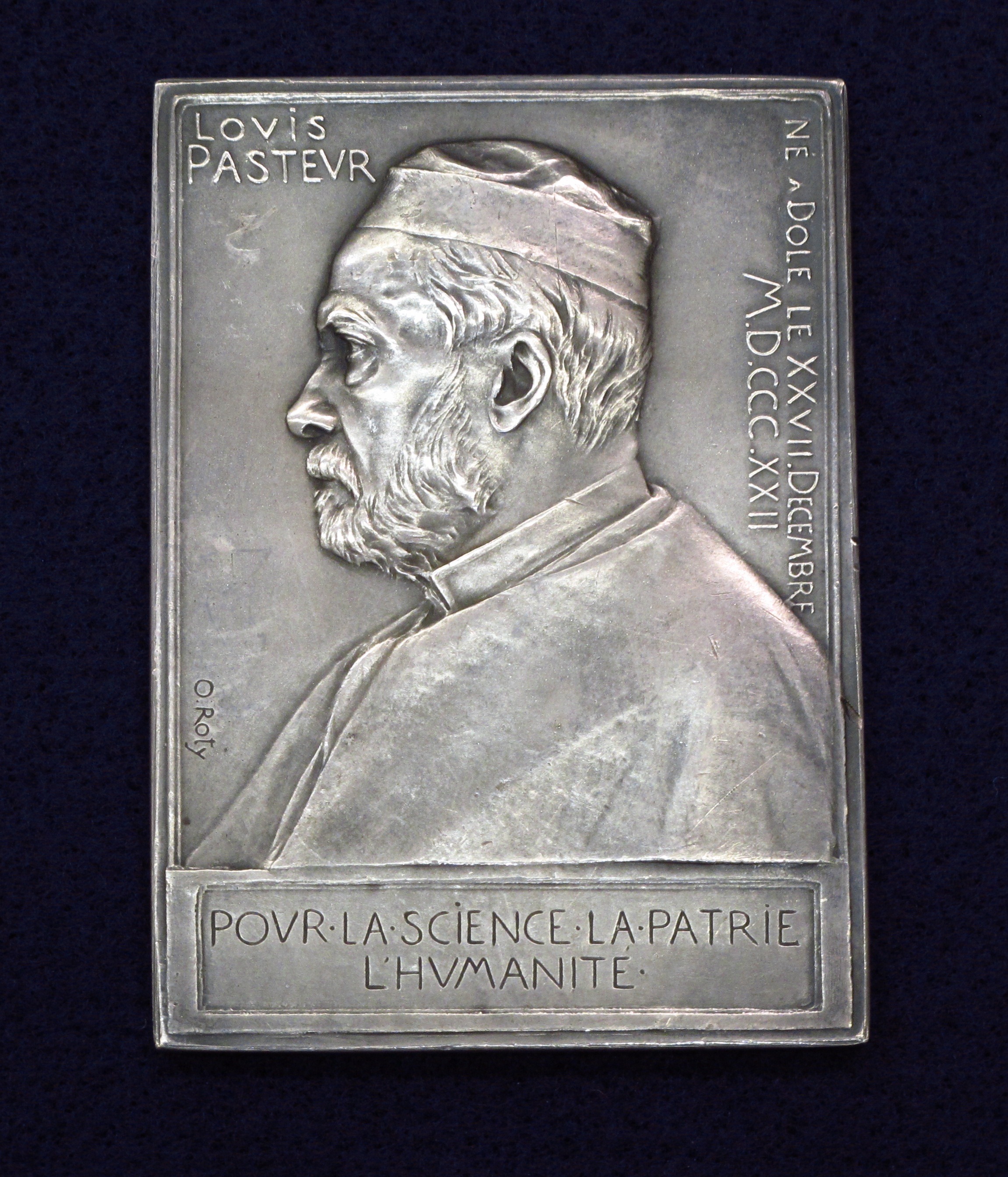
Medal issued to commemorate Louis Pasteur’s 70th birthday, 1892.

Medal issued to commemorate Louis Pasteur’s 70th birthday, 1892.

Medals, amulets, badges and prizes play many roles, whether acknowledging significant figures in their fields, commemorating events, or giving insights into beliefs about health. Over 275 medical-themed items from the collection of Dr. Ira Rezak, currently on display at the Augustus C. Long Health Sciences Library at the Columbia University Medical Center, provide a rich and varied exploration of these roles. The objects in the exhibit range from a 70th birthday medal for Louis Pasteur (1892) to a 16th century German amulet used to ward off the bubonic plague, a Canadian medal from 1994 celebrating the role of white mice in medical science, and the New York Academy of Medicine medal by Harriet Whitney Frishmuth, among many other medals representing medicine in New York.
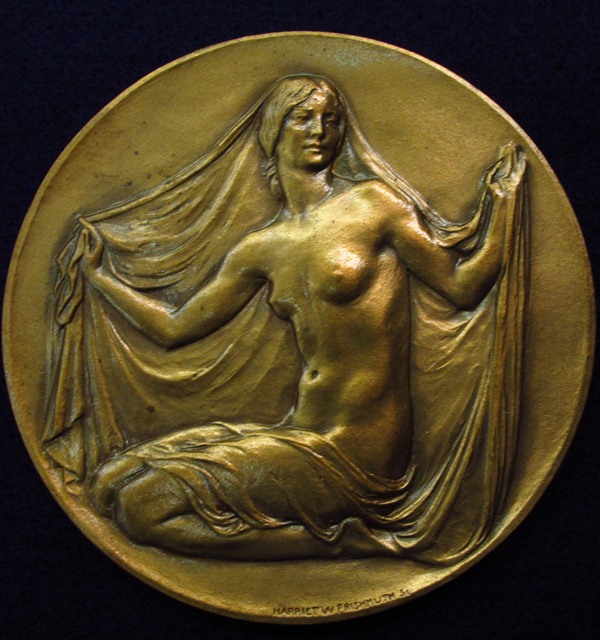
Round medal with female figure, for New York Academy of Medicine.

Medal of the New York Academy of Medicine, 1928, by Harriet Whitney Frishmuth.

The exhibition, Mirroring Medicine, is drawn from Dr. Rezak’s medal collection, formed over 50 years, and one of the most important in private hands. Dr. Rezak is a NYAM Fellow and Professor Emeritus of Medicine at the State University of New York at Stony Brook. The exhibition is on view until January 11, 2013 and is open from 7am to 9pm on Lower Level 2 of the Columbia University Medical Center’s Hammer Health Sciences Center. Individuals without Columbia University or New York-Presbyterian Hospital identification should make arrangements to visit the show by emailing hslarchives@columbia.edu.
Mad Cows and Caricatures

By Lisa O’Sullivan, Director

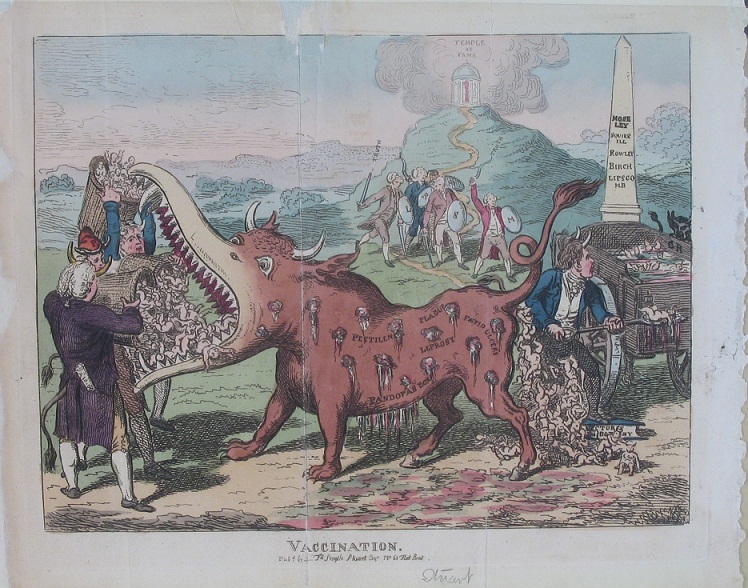
Image of monster being fed infants and excreting them with horns.

Charles Williams caricature c.1802.

This early anti-vaccination caricature shows a monster being fed baskets of infants and excreting them with horns. In the background, four prominent anti-vaccine campaigners, Benjamin Moseley, Robert Squirrell, William Woodville and William Rowley, approach with “swords of truth”. This unusual colored version of the print was originally bound as a frontispiece to the 3rd edition of William Rowley’s 1805 Cow-pox inoculation no security against small-pox infection: with above 500 proofs of failure. One of Rowley’s “above 500 proofs of failure” was the case of a boy whose face, Rowley claimed, was assuming the character of a cow.

Vaccination Williams detail

Horned baby

Next week we look forward to welcoming Mark Largent to explore more recent controversies about childhood vaccination as part of our history of medicine series. Register for this free October 17 event here.

NYC History of Medicine Events in October — Hildebrandt, Tresch, Largent, and Warner

By Lisa O’Sullivan, Director

This month sees an exciting line up of history of medicine (and science) events in NYC. In fact, almost a festival. Hope to see you at some or all…

On October 10, NYAM’s Malloch lecture series begins with an exploration of the practice of anatomy under the Third Reich, with Dr Sabine Hildebrandt discussing the impact and legacy of the 1933-1945 period. More details here.

At the NYPL’s Cullman Center, John Tresch discusses his new book “The Romantic Machine” on October 11. Tresch explores the connections between Romanticism and industrialization in Paris after Napoleon, drawing on examples from art, literature, opera, scientific discoveries, and technological advancements. Find details here.

On October 17, Mark Largent is appearing at NYAM to discuss his new book “Vaccine: The Modern American Debate”. In it he explores the history of the vaccine-autism debate and argues that it obscures a constellation of concerns held by many parents.  More details here.

And on Oct 18 the A.C. Long Health Sciences Library at Columbia will host Prof. John Harley Warner, who will speak on “The Image of Modern Medicine: Professional Identity, Aesthetic Belonging and the American Doctor, 1880-1950.” Prof. Warner focuses on the visual choices that American physicians made in representing their profession, their work, and themselves during 1880’s through the 1940’s. Details here.

Click for larger size (possibly disturbing) images from Prof. Warner’s work with James Edmonson, Dissection.


University of Pennsylvania School of Medicine, Philadelphia, 1895. European-American dissecting teams (left) and African-American teams (right) were racially segregated after the medical student body at the University of Pennsylvania was integrated. DHMC

More upcoming events can be found on our Calendar. Please feel free to get in touch at please email history@nyam.org if you have an event you would like to see featured.