Preservation Enclosures 101 (Items of the Month)

By Christina Amato, Book Conservator, Gladys Brooks Book & Paper Conservation Laboratory

How simple is a box?

It is often overlooked, but creating appropriate enclosures, or housing, for collection materials is an important part of the work of a library conservation lab. A well made box can have a huge impact on the longevity of a book. Conservators have to weigh many factors when deciding what kind of enclosure is appropriate to use. When is a clamshell box the best choice, and when would a phase box be better? Scroll down to see some examples of typical enclosures made at the Gladys Brooks Book and Paper Conservation Laboratory.

First, the clamshell box. This type of enclosure is one of the most traditional you will find in a library. Each one is custom made for each book. They provide an enormous amount of protection to the book, and can be very attractive. However, they are quite time consuming to make, and add to the width of the book. For one or two books, this may not be significant, but for a large collection, and if you have limited shelf space, it can become an issue.

Enclosures1-2_merged_watermark

Three books in clamshell boxes, left. An open box, right.

Consider the pamphlets below, which are housed in brittle and crumbling old folders. They no longer provide adequate protection to the material inside, and in some cases are actively causing damage. Clearly, new enclosures are needed. However, there are thousands of these pamphlets in the collection, and it would be impractical to create clamshell boxes for each one.

Enclosures3-4_merged_watermark

Pamphlets in need of new housing.

Enter the phase box, or wrapper. These are constructed out of a thin cardstock and take up much less room on a shelf than a clamshell box. They also take a fraction of the time to complete, though each is also custom made for the material within.

Enclosures5-6_merged_watermark

Phase boxes.

Phase boxes are a good solution for this kind of collection. However . . . are there any downsides to having rows and rows of items that look like this?
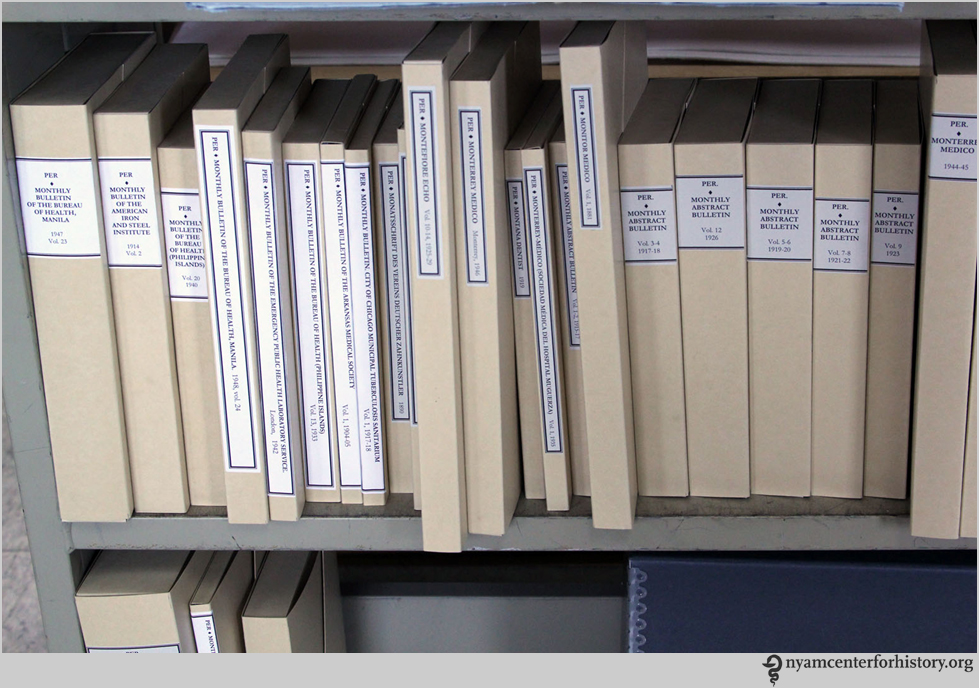
Rows of phase boxes.

Rows of phase boxes.

What if your collection looks like this?
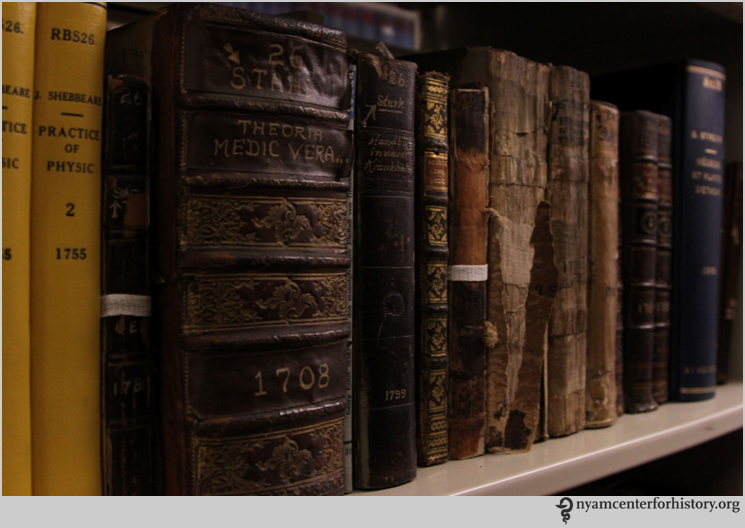
A shelf with visible spines.

A shelf of books with visible spines.

Conservators at the Folger Shakespeare Library in Washington, DC, developed a “visible spine phase box” similar to a traditional phase box, but which incorporates a clear piece of Mylar. This way, you can see what is inside the enclosure. Not only can this be more appealing visually than a row of undifferentiated cardstock, but it can be useful in monitoring the condition of a book. And, of course, it is immediately obvious if the box’s tenant has gone missing!
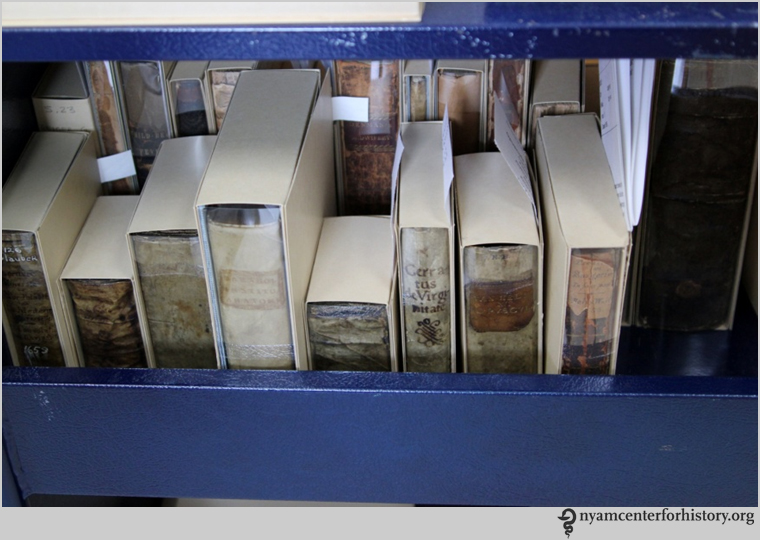
Books in visible spine phase boxes.

Books in visible spine phase boxes.

Occasionally, an item will enter the lab that doesn’t fit into any of the usual categories. Below is a Sinhalese “Ola,” or a palm-leaf manuscript, written in 1720. The mailer bag it arrived in doesn’t quite meet the standards for an adequate enclosure.

An ola in a mailer bag.

An Ola in a mailer bag.

Our solution was to make a modified clamshell box; the sides are cut away so that it is easy to reach in and safely remove the item; the cover is built up to provide room for the protruding button and string on the cover; and the sides are covered with a smooth Tyvek to protect the fragile palm leaf edges.
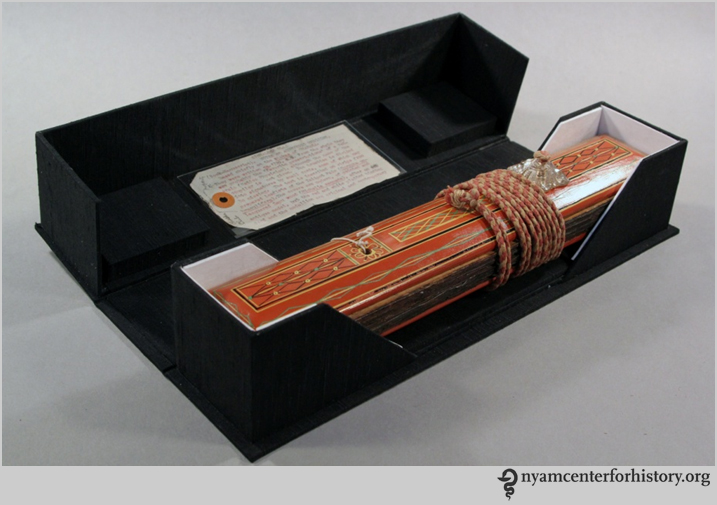
An Ola in a modified clamshell box.

An Ola in a modified clamshell box.

If you have an entire box full of Olas that require re-housing, however, like the unfortunate ones below, that may prove to be too time consuming.
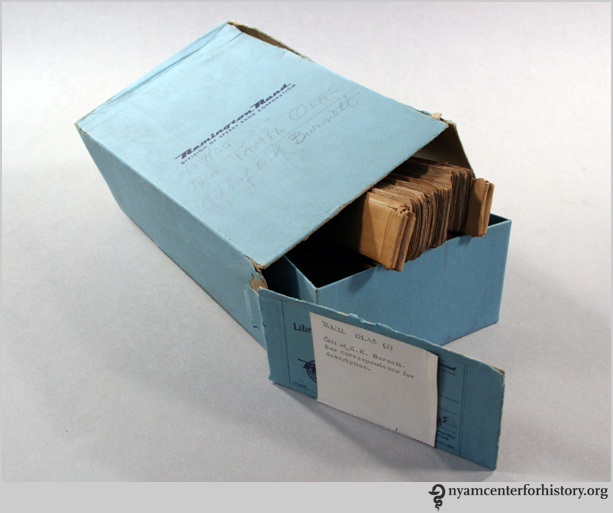
Many unfortunate Olas in need of rehousing.

Many unfortunate Olas in need of rehousing.

The solution here was to modify a commercially made enclosure with separate compartments made out of Valera foam. Each piece is protected, and using a pre-made, standard sized box saved time.
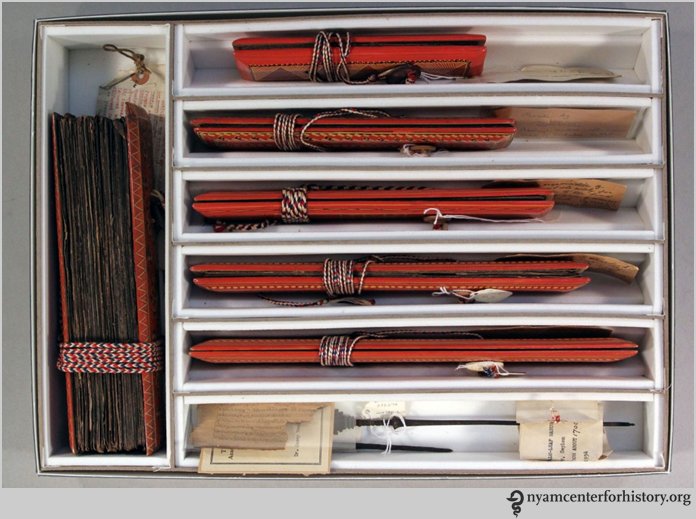
Olas in a modified commercially made enclosure.

Olas in a modified commercially made enclosure.

These are just a few of the typical sorts of enclosures you will encounter in a library. Labs will often make their own modifications and improvements. Whether it be simple or very complex, the box plays a crucial role in preserving fragile materials.
The LaGuardia Report: Exploration of a Chronic Issue in American Drug Policy

On May 1 and 2, The New York Academy of Medicine and the Drug Policy Alliance co-hosted a conference, The LaGuardia Report at 70. Featuring more than 25 speakers, including historians, policy experts, political figures, and community organizers, the conference provided a forum to understand the state of marijuana regulation and enforcement in New York and to see the current debates in the context of over a hundred years of public policy fights around drugs and drug regulation in the United States.

For the conference, we created a small exhibit featuring facsimiles of materials from the New York Academy of Medicine’s Committee on Public Health Relations archive, as well as the original 1944 report. We are pleased to share the images with you on our blog.

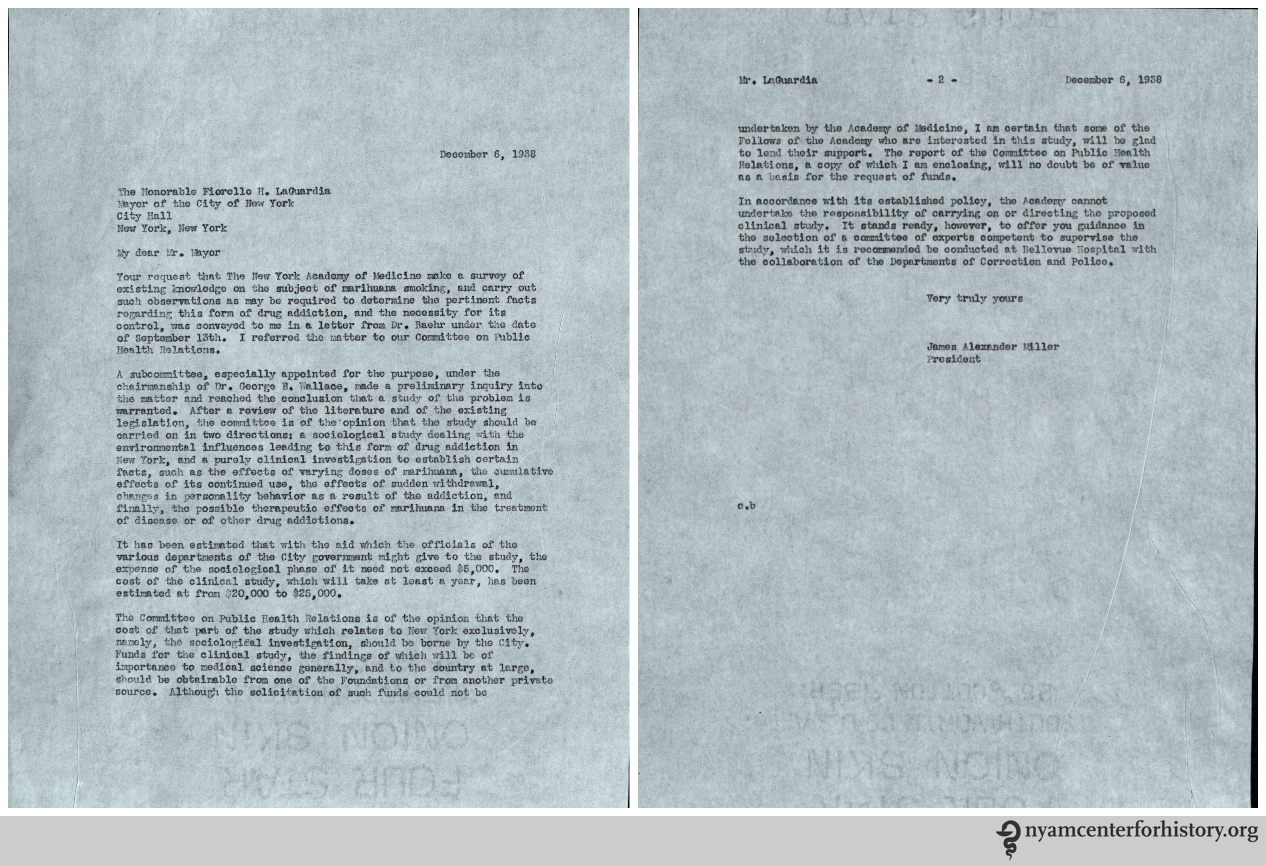
LettertoMayor_merged_watermark

In 1938, at the request of Mayor Fiorello LaGuardia, The New York Academy of Medicine’s Committee on Public Health Relations formed a subcommittee to study marijuana use in New York City. As you can see in this letter to Mayor LaGuardia from the Academy’s president, James Alexander Miller, M.D., the subcommittee determined a more extensive study was necessary. They recommended two approaches, a sociological study of marijuana use in the city and a clinical investigation of its physiological and psychological effects. (Click to enlarge.)

In the sociological study, six police officers acted as social investigators. They ventured into places where marijuana might be available and socialized with people in order to find out who was using marijuana and how it was being distributed. Olive J. Cregan was one of the investigators. This page from her report describes some of her interactions, including one in a speakeasy that she called “the worst dive I have ever seen.” While they learned a great deal about marijuana use in the city, one of the study’s conclusions was that “the publicity concerning the catastrophic effects of marihuana smoking in New York City is unfounded.”

In the sociological study, six police officers acted as social investigators. They ventured into places where marijuana might be available and socialized with people in order to find out who was using marijuana and how it was being distributed. Olive J. Cregan was one of the investigators. This page from her report describes some of her interactions, including one in a speakeasy that she called “the worst dive I have ever seen.” While they learned a great deal about marijuana use in the city, one of the study’s conclusions was that “the publicity concerning the catastrophic effects of marihuana smoking in New York City is unfounded.”

This report from the clinical team gives a sense of the reputation marijuana had at the time of the study, a view that the study eventually countered. There was great concern about marijuana’s potential for addiction and its role in crime. The study found little basis for its bad reputation.   (Click to enlarge.)

This report from the clinical team gives a sense of the reputation marijuana had at the time of the study, a view that the study eventually countered. There was great concern about marijuana’s potential for addiction and its role in crime. The study found little basis for its bad reputation. (Click to enlarge.)

LaGuardiaReportTP_watermark

The LaGuardia report, formally titled The Marihuana Problem in the City of New York, was published in 1944.

The Drs. Barry and Bobbi Coller Rare Book Reading Room – the panoramic view

The Drs. Barry and Bobbi Coller Rare Book Reading Room captured by Ardon Bar-Hama.

The Drs. Barry and Bobbi Coller Rare Book Reading Room captured by Ardon Bar-Hama. Click for the full panoramic experience.

The Drs. Barry and Bobbi Coller Rare Book Reading Room has reopened. Renovations improved environmental conditions for the collections, including a new HVAC system, restored the historic windows, and a return to the cork floor’s former glory. We are once again welcoming readers and visitors to the room and were delighted to have the chance to host the wonderful Ardon Bar-Hama, who kindly captured the space in its full panoramic glory. Click through on the image to see the interactive (and highly zoom-able) panoramic view.

On Santiago Ramón y Cajal’s 162nd Birthday

Benjamin Ehrlich, today’s guest blogger, studies the life and work of Santiago Ramón y Cajal. His translations from Charlas de café have appeared in New England Review.

The study of the brain is receiving more attention than ever from the general public, and yet “the father of modern neuroscience” remains largely under-recognized. We owe our basic knowledge of what many consider the most complex object in the known universe to a man named Santiago Ramón y Cajal (1852-1934), born on this date in 1852.

Ramón y Cajal spent his life investigating nearly every part of the nervous system in numerous species, using old-fashioned microscopes and a series of chemical staining techniques. Contrary to the paradigmatic belief at the time, the Spanish histologist found that the nervous system (including the brain) is composed of distinctly individual cells (later termed neurons) that must communicate across nearly imperceptible gaps (later termed synapses). This became the basis for the neuron theory, disproving the reticular theory, which claimed the existence inside the brain of a continuous network formed by the fibers fused together.

"A neuron with a short axon in the cerebral cortex. Golgi Method." Figure 10 from Ramon y Cajal's Histologie du système nerveux de l'homme & des vertébrés. Copyright is owned by the family of Santiago Ramón y Cajal.

“A neuron with a short axon in the cerebral cortex. Golgi Method.” Figure 10 from Ramon y Cajal’s Histologie du système nerveux de l’homme & des vertébrés (1909–1911). Copyright is owned by the family of Santiago Ramón y Cajal.

In 1888, his “pinnacle year,” the first evidence of the existence of cells in the nervous system came from the cerebellum of a baby chicken (raised in the garden behind the laboratory in his home), in which he observed some infinitely small bodies that did not physically touch each other. Ramón y Cajal started his own scientific journal, the Revista trimestral de histología normal y patológica, in which he published his new papers. The first issue was released on his birthday.

Santiago Ramón y Cajal was born in Petilla de Aragón, a poor rural village in the mountains of northern Spain, with dirt roads and fewer than a hundred stone houses.1 His autobiography (Recollections of My Life, 1917) is in the collection of the New York Academy of Medicine Library, along with editions of his scientific masterpiece (Histology of the Nervous System of Man and Vertebrates, 1904), his final testament to the neuron theory (Neuron Theory or Reticular Theory?, 1933, translated in 1954) and his guidebook for biological researchers (Advice for a Young Investigator, 1987). Spanish titles include a collection of aphorisms and meditations (Charlas de café, or Café Chats, 1921) and a detailed account of old age (El mundo visto a los ochenta años, or The World as Seen By an Eighty-Year-Old, 1932). Ramón y Cajal describes the brain as a living scene, as he watched neurons develop throughout their dramatic course. Let us celebrate his life and work, which humanize the study of the brain.

Reference
1. Calvo Roy, Antonio. Cajal: Triunfar a toda costa. Madrid: Alianza Editorial, 1999.

Celebrate Preservation Week, April 26–May 3, 2014

PreservationWeekIn 2010, the American Library Association (ALA) created Preservation Week to bring attention to the millions of items in collecting institutions that require care. Sponsored by the ALA’s Association of Library Collections and Services and partner organizations, it was designed to inspire the preservation of personal, family, and community collections of all kinds, as well as library, museum, and archive collections. The goal is also to raise awareness of the role libraries and other cultural institutions can play in providing ongoing preservation information.

What will you do to celebrate Preservation Week? Here are a few ideas.

1. Write a disaster plan for your institution, if it doesn’t have one already. If it doesn’t, you are not alone. According to a 2004 study, 78% of public libraries and 73% of academic libraries do not have an emergency plan or staff to carry it out. (Read more about it here.)

Get ahead of the game—here are some places to start:

2. Learn more about caring for your private collection materials.

Facsimile denture in custom-made clamshell box

Custom-made box for a facsimile of George’s Washington’s lower denture.

3. Make sure your collection materials are correctly housed. 

  • There are several posts about creating enclosures in our blog that you can peruse:

o Creating a box for a facsimile of George Washington’s lower denture.

o On re-housing our diploma collection.

o And be sure to check out our Item of the Month blog for May 2014, which features an introduction to enclosure basics.

  • A variety of custom enclosures are available from the following vendors:

o Archival Products (of particular note is the Academy folder, named after the New York Academy of Medicine)

o Talas

o Hollinger Metal Edge

4. Find a conservator. Of course, we don’t recommend undertaking conservation treatments unless you are a trained conservator. AIC (The American Institute for Conservation for Historic and Artistic Works) provides a searchable listing of conservation professionals working in specialties ranging from books and paper to objects and textiles. You can search by specialty or by zip code.

5. Attend a Preservation Week event. Click here for an event map and list of speakers.

Preservation week happens only once a year, but collections need constant care. We hope the above can help you get started, or serve as a reminder of the importance of preservation.

Read more about Preservation Week.

Marijuana Regulation: The LaGuardia Report at 70 (Item of the Month)

By Paul Theerman, Associate Director, Center for the History of Medicine and Public Health

Medical and recreational marijuana regulation is undergoing a sea change right now, the reworking of a drug regulation regime that goes back at least 75 years. Debates about the drug are not new, however; the New York Academy of Medicine found itself in the middle of the political discussion back in the 1930s and 40s and is now taking a look at this history.

For a hundred years, from the published attestation of the medical use of Cannabis by William Brooke O’Shaughnessy in 1839, medical marijuana use increased and came more and more under medical regulation.  Discussions around regulation usually sounded two concerns: first, that the material be unadulterated and eventually physician-prescribed, and second, that potential benefits could be seen to outweigh harms. For from the beginning, many demonized marijuana use; early on, some went so far as to lump it in with opiates and their abuse.

By 1930, the United States established the Federal Bureau of Narcotics, with increased central control as the goal and Harry J. Anslinger as the willing head. In 1937, over the objections of the American Medical Association, he had pushed through the Marihuana Tax Act. An indirect means of control—as the state governments had most authority to control medicine and drugs directly—it was in fact very effective in criminalizing marijuana. Imposing annual licensing fees on producers and prescribers, it also called for a transfer fee of $1.00 per ounce to registered users, such as physicians, but $100.00 per ounce to unregistered ones—the vast majority. This tax structure was laid down in an era when average American incomes were about $2,000 a year. And indeed, $2,000 was the amount of the fine that could be imposed, along with up to five years in jail, with seizure of the drug as well. The first dealer convicted under the act received a sentence of four years in Leavenworth Penitentiary!

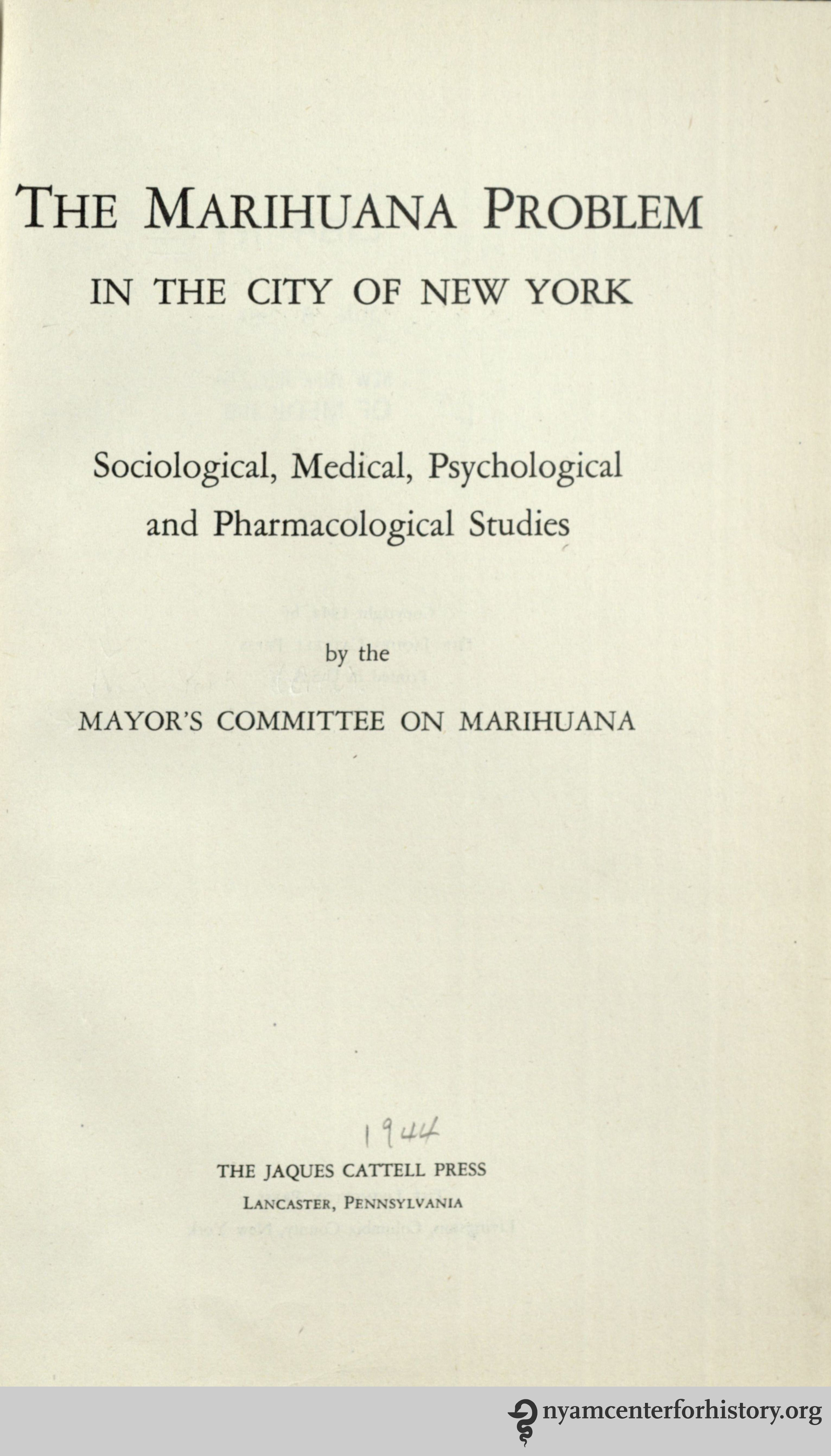
The title page of The Marihuana Problem in the City of New York.

The title page of The Marihuana Problem in the City of New York.

New York Mayor Fiorello LaGuardia was skeptical of the reasons behind this stringent control. In 1938, he commissioned a report from the New York Academy of Medicine on marijuana use. With the study supported by the Commonwealth Fund, the Friedsam Foundation, and the New York Foundation, an expert panel of researchers considered “The Marihuana Problem in the City of New York” (as their report was ultimately titled) from the viewpoint of sociology, psychology, medicine, and pharmacology. Their work continued for six years.

The report ran 220 pages, and La Guardia’s own foreword summarized the results:

I am glad that the sociological, psychological, and medical ills commonly attributed to marihuana have been found to be exaggerated insofar as the City of New York is concerned. I hasten to point out, however, that the findings are to be interpreted only as a reassuring report of progress and not as encouragement to indulgence[!]

Anslinger was furious and denounced the report, and, as painstaking and factual as it was, it had little effect on marijuana decriminalization. Eventually, the Supreme Court found the Marihuana Tax Act of 1937 unconstitutional on grounds of self-incrimination, in a suit raised by Timothy Leary in 1969. The next year, Congress passed the Controlled Substances Act, which placed marijuana in Schedule I, the most highly controlled category, used for drugs that have no currently accepted medical use and are considered liable for abuse even under medical supervision. It remains there today.

On May 1 and 2, the New York Academy of Medicine, partnering with the Drug Policy Alliance, is mounting a day-and-a-half-long conference, “Marijuana & Drug Policy Reform in New York—the LaGuardia Report at 70.” Historians and drug policy experts will gather to consider the report and its effects, look at the “drug wars” over the last century, and survey the policy landscape of the near future. Please join us; the conference is free. View the full schedule and participant information. Register here.

Lessons from the Good Doctor

To celebrate National Poetry Month, we are sharing poems from our collection throughout April.

By Rebecca Pou, Archivist

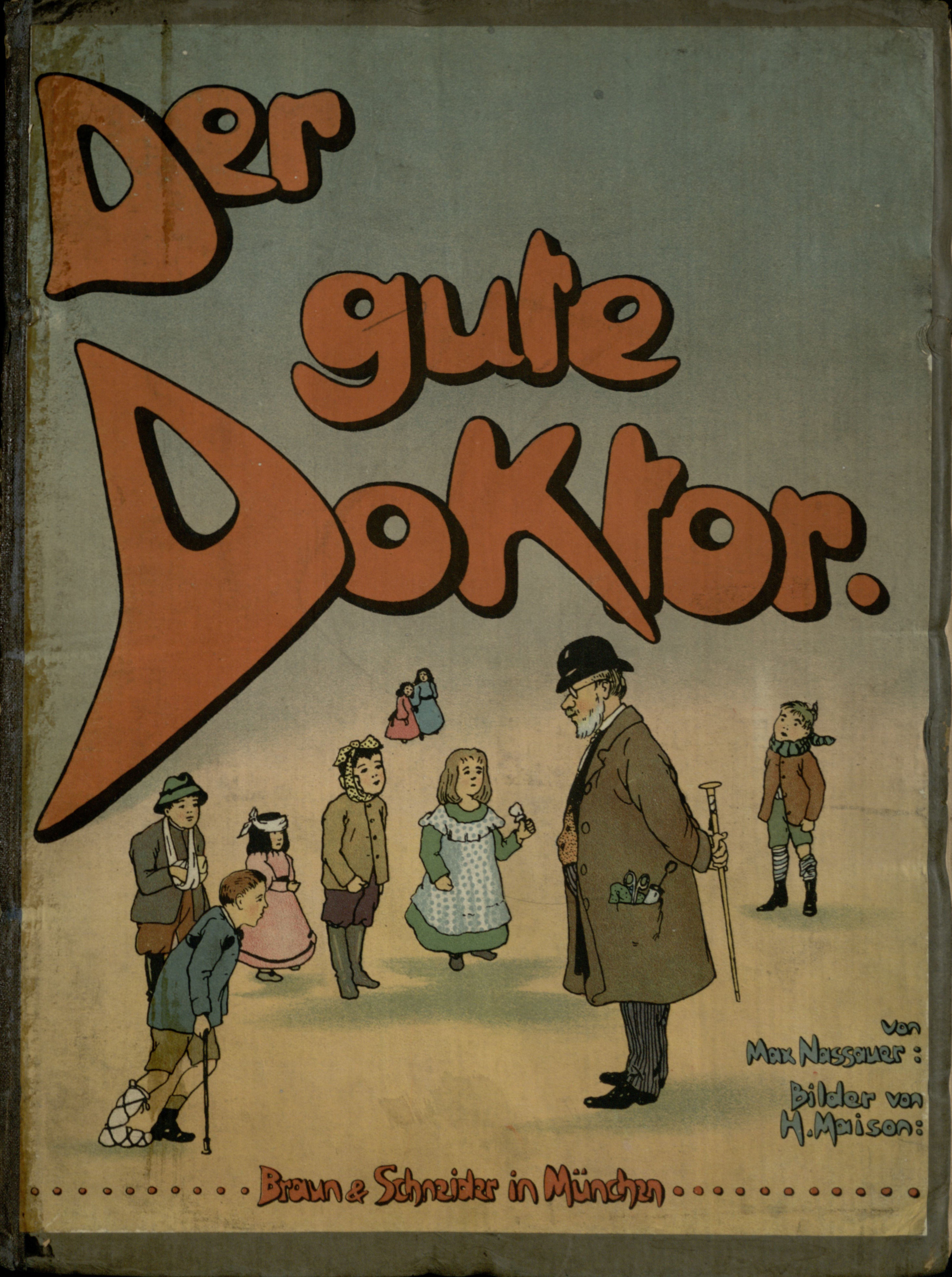
Cover of Der Gute Doktor. Click to enlarge.

Cover of Der gute Doktor. Click to enlarge.

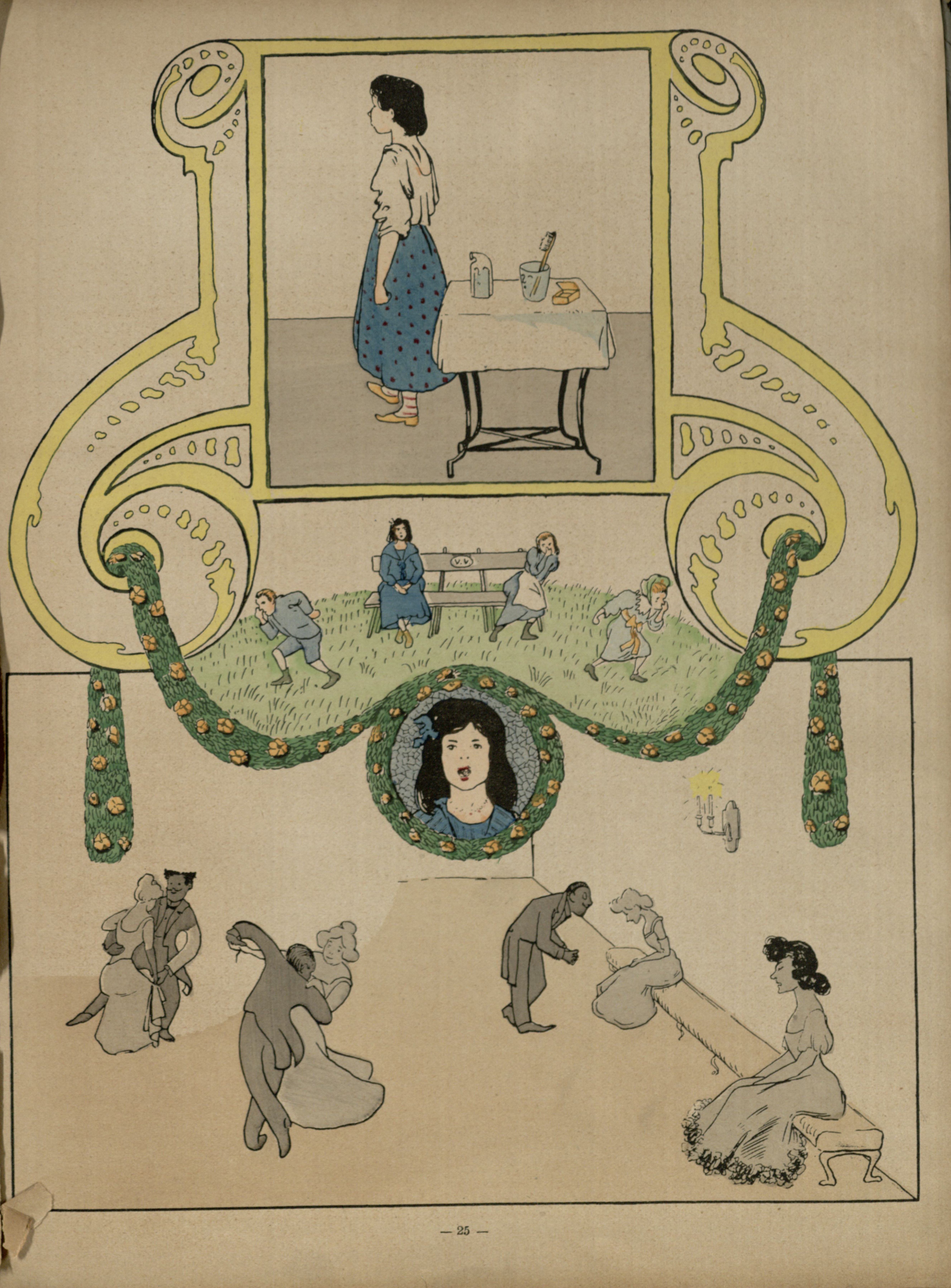
This week, we’re celebrating national poetry month with some medical children’s verse. Der Gute Doktor:ein Nützlich Bilderbuch für Kinder und Eltern (The Good Doctor: a Useful Picture Book for Children and Parents) is a colorful children’s book written by Max Nassauer, a German gynecologist and writer.1  The first edition was published in 1905; our copy is the 9th edition, probably printed in 1926.

The book contains fourteen cautionary tales with medical morals. While the stories, and especially the illustrations, are amusing, they certainly aren’t lighthearted. The consequences of poor health habits are unpleasant. One boy falls ill after walking through the rain and snow. Another gives himself a painful stomachache because he is too embarrassed to use the bathroom at school. Sometimes the repercussions for ignoring the doctor’s orders are far more tragic. In one tale, a stubborn young man refuses the doctor’s medicine and dies the next day.

I found little information on the history of medically-themed children’s tales, but Der Gute Doktor falls into the larger tradition of didacticism in children’s literature. Grimm’s Fairy Tales, translated from oral stories between 1812 and 1857, include cautionary tales, such as Little Red Riding Hood.2 Der Gute Doktor especially brings to mind another children’s book written by a German doctor, Struwwelpeter by Dr. Heinrich Hoffman, published 60 years earlier.2 Struwwelpeter includes similar tales of unruly children suffering for their bad behavior. The tale of Augustus, a boy who refuses to eat his soup and starves to death, would easily fit among the tales of Der Gute Doktor.3 Struwwelpeter was hugely popular and is one of the most well-known German children’s books.2 Undoubtedly, Nassauer was familiar with and influenced by this iconic book.

Here are a few more lessons from the good doctor (translating credit and my thanks go to Mascha Artz):

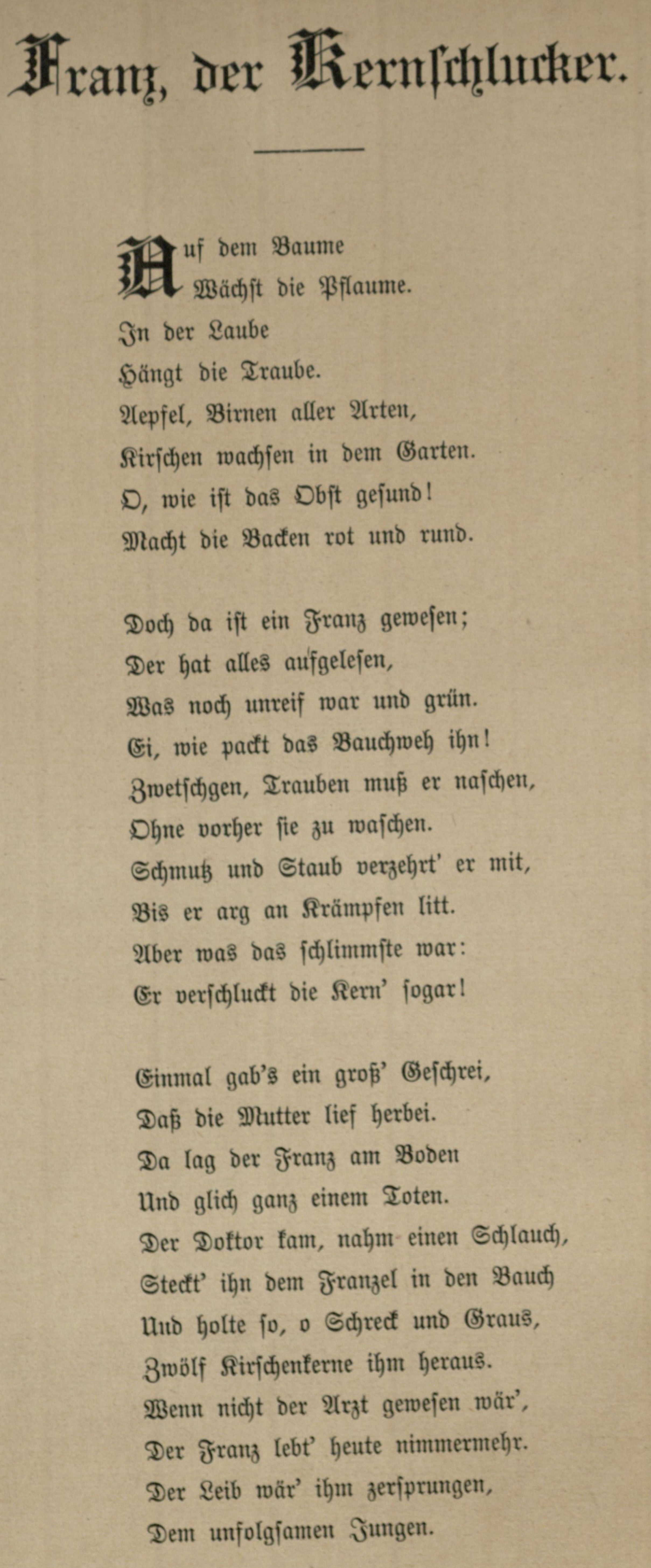
Franz, the pip swallower

The original German text. Click to enlarge.

The original German text. Click to enlarge.

On the tree
Grows the plum.
In the arcade
hangs the grape,
Apples, pears of all kinds,
cherries grow in the garden.
Oh, how fruit is healthy!
Makes the cheeks red and round.

But there has been Franz,
Who has picked up all,
That was unripe and green.
Well, how bellyache catches him!
Plums, grapes he must snack on,
Without rinsing them.
Dirt and dust he partakes,
Until of cramps he suffered.
But what was the worst:
He cursed the pips in fact!

One time there was a big bawling,
That the mother comes running.
There laid Franz on the ground
And was like dead.

The doctor came, took a tube,
Sticks it into Franz’s tummy
And takes like this, horror of horrors,
Twelve cherry pips out.
If the doctor was not there,
Franz would be living nevermore.
The belly would have burst,
his disobedient tongue

Franz, the Pip Swallower. Click to enlarge.

Franz, the Pip Swallower. Click to enlarge.

Hans, who teased the animals

The original text. Click to enlarge.

The original text. Click to enlarge.

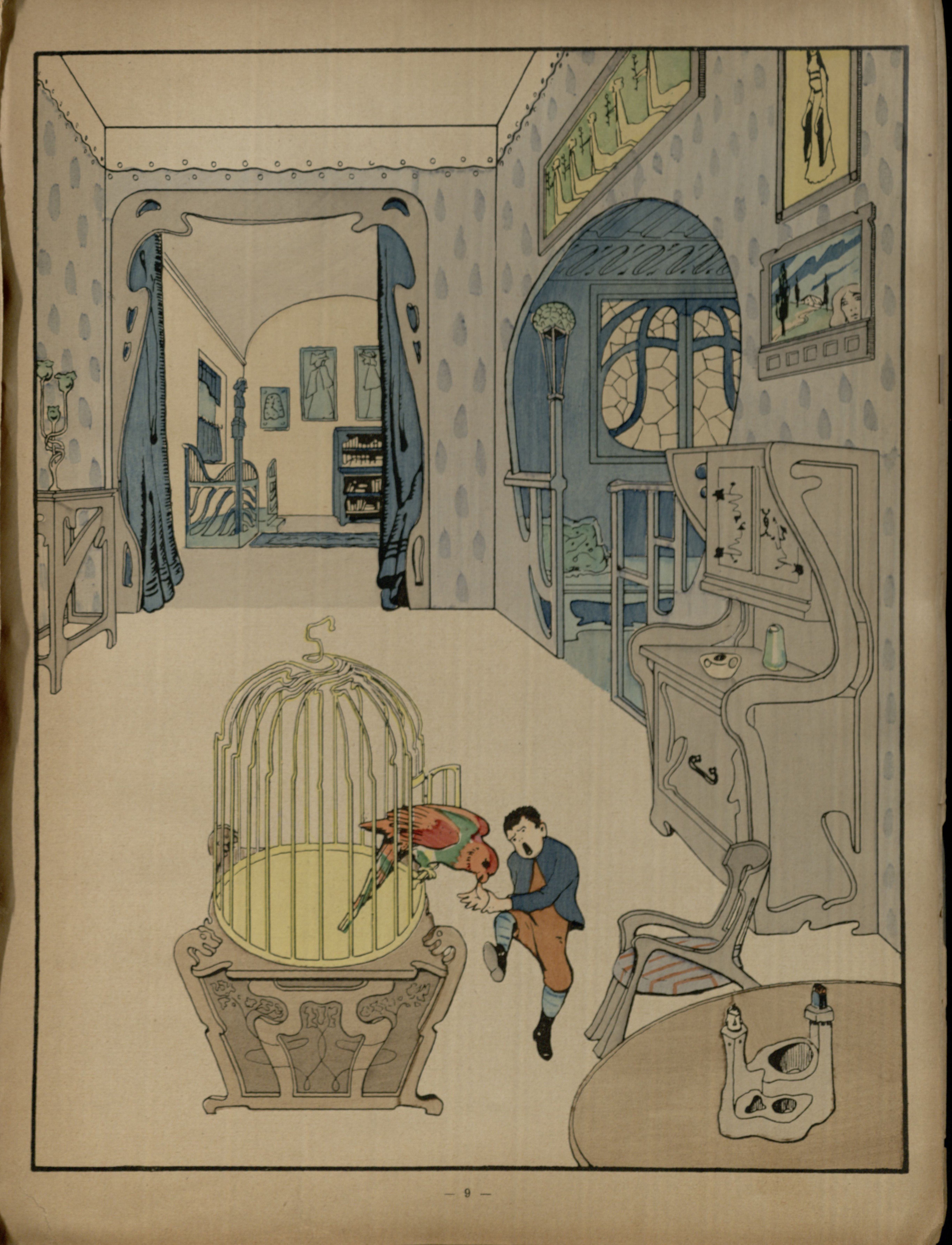
At uncle’s place there is a parrot;
who sings and talks and screeches.
It eats the fruit along with the pip.
Hans liked to watch this.
The uncle said: “Dear Hans,
Don’t touch the parrot by its tail!
Don’t go to close to the cage,
because the parrot can bite you!”
But Hans laughs and says:
“This cannot be that dangerous.”
His hand he put into the cage
and teased the parrot,
tried to grab it by the tail…
The parrot wants to hack him,
catches the finger… what crying!…
Hans’ finger is in pieces!
Blood runs down from his hand.
Hans’ limbs are shaking. –
The doctor put around his hand
Quickly a wound dressing
And gives Hans a severe look,
Nods his head and says:
“One mustn’t tease the animals!
In their fear they easily get frightened
And bite, with shock…
And crack, then the finger is gone.”

Hans, who teased the animals. Click to enlarge.

Hans, who teased the animals. Click to enlarge.

Anna who wouldn’t brush her teeth

The original text. Click to enlarge.

The original text. Click to enlarge.

Anna was perfectly healthy.
But she did not like rinsing her mouth
and she did not want to brush her teeth,
especially not using a tooth brush.
And soon she was not healthy any longer.
She smelled awful from her mouth.
The teeth rot and fell out…
How horrible Anna looked!
And all girls moved away from her
And sat down at the other corner.

And when she was older at a ball
all of her girl friends were dancing.
And nobody looked at Anna,
She did not have a single tooth left!
So she cried all day,
because nobody wanted to dance with her,
And sobs, although it doesn’t help now:
“Had I only brushed my teeth!”

Anna who wouldn’t brush her teeth. Click to enlarge.

Anna who wouldn’t brush her teeth. Click to enlarge.

 References

1. Gerabek, Werner E. (1997). Nassauer, Max.  New German Biography. Retrieved April 5, 2014 from http://www.deutsche-biographie.de/pnd116884150.html.

2. Chalou, Barbara Smith. (2006). Struwwelpeter: Humor or Horror? Lanham: Lexington Books. Retrieved April 5, 2014 from http://books.google.com/books?id=2UE2AAAAQBAJ&source=gbs_navlinks_s.

3. Hoffman, Heinrich. (n.d.)  Struwwelpeter: Merry Tales and Funny Pictures. New York: Frederick Warne & Co. Retrieved April 5, 2014 from http://www.gutenberg.org/ebooks/12116.

The Origins of “Sweat”

Guest blogger Bill Hayes, author of The Anatomist and the forthcoming Sweat: A History of Exercise, will present our 2014 Friends of the Rare Book Room Lecture, “Writing the Body,” on April 23 at 6pm. Register here.

Most of my writing has dealt in one way or the other with medical history and the human body. I don’t exactly know why or how to explain this. I don’t come from a family of doctors or scientists, for instance. But from an early age, I had a keen interest in the body. This has not changed. Sometimes I think I’m still in that stage you see babies in where they are endlessly fascinated with their own limbs. I am over 50 now, so I don’t see myself growing out of it. I look at the human body as an amazing machine and try to figure out how things work.

From the book Medico-Mechanical Gymnastics by Gustaf Zander, 1892

From the book Medico-Mechanical Gymnastics by Gustaf Zander, 1892

If I had excelled in the sciences in school, I might have gone on to become a doctor. But frankly, I didn’t even do well—I barely passed high school biology—whereas writing came easily. I followed that path instead. My interest in the body has led me to write about the science of sleep (my first book, Sleep Demons); the history of human blood (Five Quarts); and, in my last book, The Anatomist, the story behind the classic 19th-century anatomy text Gray’s Anatomy. For this, I spent a year studying anatomy alongside first-year medical students. I went from never having seen a cadaver to doing full cadaver dissection, trying to get a feel for what the original Henry Gray had done.

After finishing the book, I had time on my hands and spent hours working out at a gym. I began running again; I went to yoga classes; I swam. I got into the best shape I’d ever been in. Exercise and I had had a long history by this point, yet the notion that exercise itself might have a history—that there could be such a thing—never occurred to me until one afternoon at the gym.

I don’t recall the exact date but do know it was a cardio day, a cardiovascular workout, about six years ago. At the gym, I tend to go old school; the original StairMaster has long been my cardio machine of choice, both because it makes you sweat like nothing else and it gives you a certain psychological lift. Standing atop a StairMaster, one is a good four feet taller, allowing the illusion that you are Lord and Master of the Gym—like Sigourney Weaver when she mans the robotic killing machine in the second Aliens. You feel like you could conquer anything.

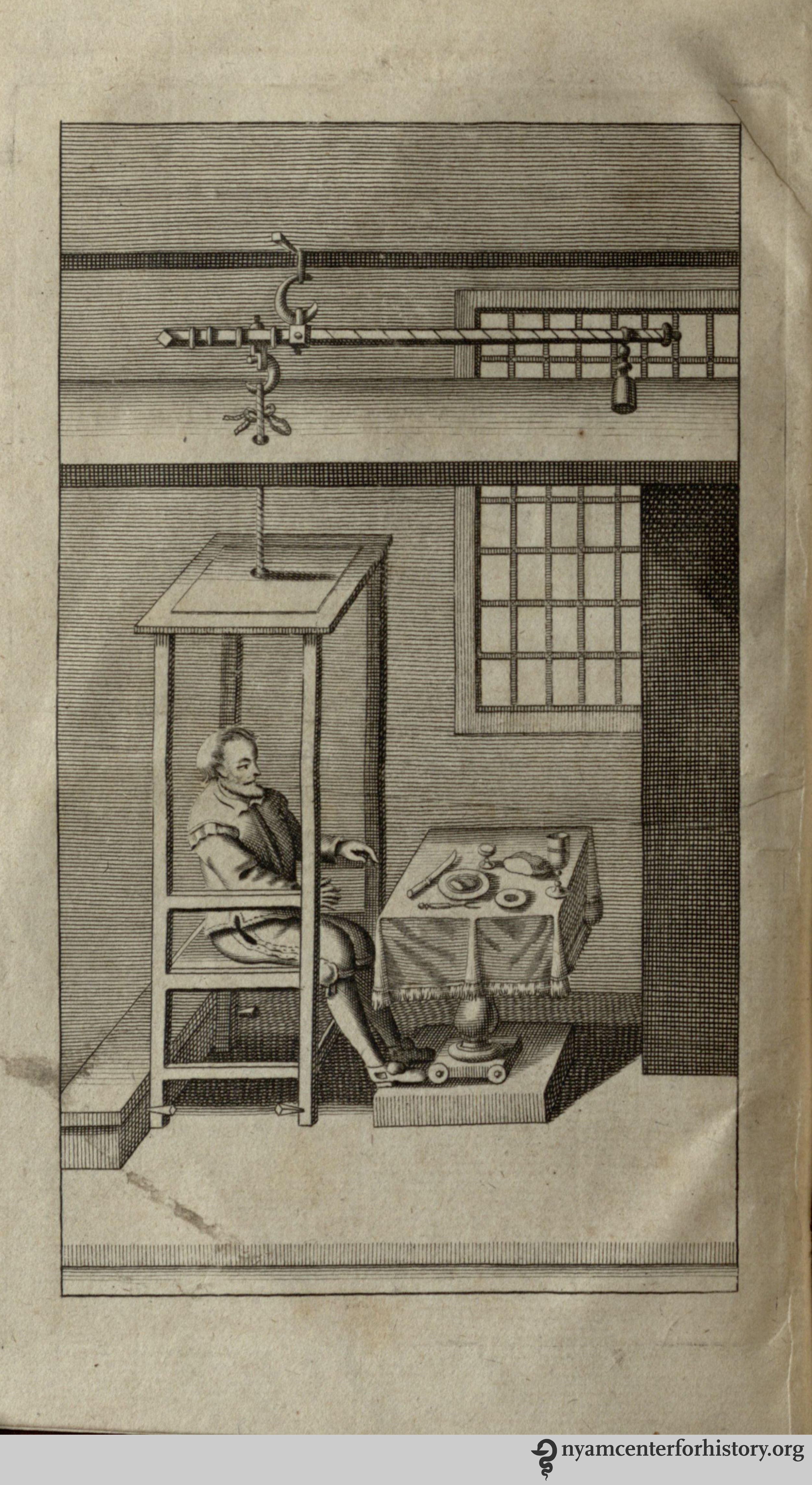
Santorius weighing himself for a metabolism experiment after eating a meal. From Medicina statica: being the aphorisms of Sanctorius, 1720. Click to enlarge.

I climbed up and punched in my usual program—Fat Burner, Level 15, 25 minutes. I arranged my towel and bottle of water, and thumbed in my iPod earphones. My finger found the machine’s START button, that small green circle, so powerfully endowed; each time you press it is a chance to wipe the slate clean and absolve yourself of somatic sins. Yet for some reason, I hesitated a moment on this particular day. I took in the scene before me—men and women of all ages and races, lifting weights, back-bending over giant rubber balls, fitting themselves into torturous-looking apparatuses, pulling themselves up on chin-up bars, dutifully doing sit-ups—and a thought popped into in my head: How did we all end up here? If one were to trace a line backward in time, where would one land?

I stood there and thought about this for a long while then pressed clear, took up my towel and water and climbed back down. What I did next was pure reflex: I went to the library. Little did I know at the time: the journey to write my next book, a history of exercise titled Sweat, had started.


Limerick Anatomy

To celebrate National Poetry Month, we are sharing poems from our collection throughout April.

By Andrew Gordon, Systems Librarian

The cover of The Limeratomy.

The cover.

Anthony Euwer, an American poet and painter, published The Limeratomy in 1917. Subtitled A Compendium of universal knowledge for the more perfect understanding of the human machine, The Limeratomy features poems “done in the Limerick Toungue” and is illustrated by Euwer himself. Its contents comprise the more conventional components of human anatomy (the eyes, the nose, the brain, the ears) alongside more intangible or abstract qualities (the soul, the conscience) and some that are more poetic than scientific (the cockles, the funny bone).

On giving anatomy the limerick treatment, Euwer writes in the preface:

In this clinic-limerique the author has endeavored to put within the common grasp, certain livid and burning truths that have been dragged from heaped-up piles of scientific expression and kultur. It is hoped that the appearance of this little volume may prove a happy psychology at this time—an age of self-examination—an epoch when the human machine is coming into its own.

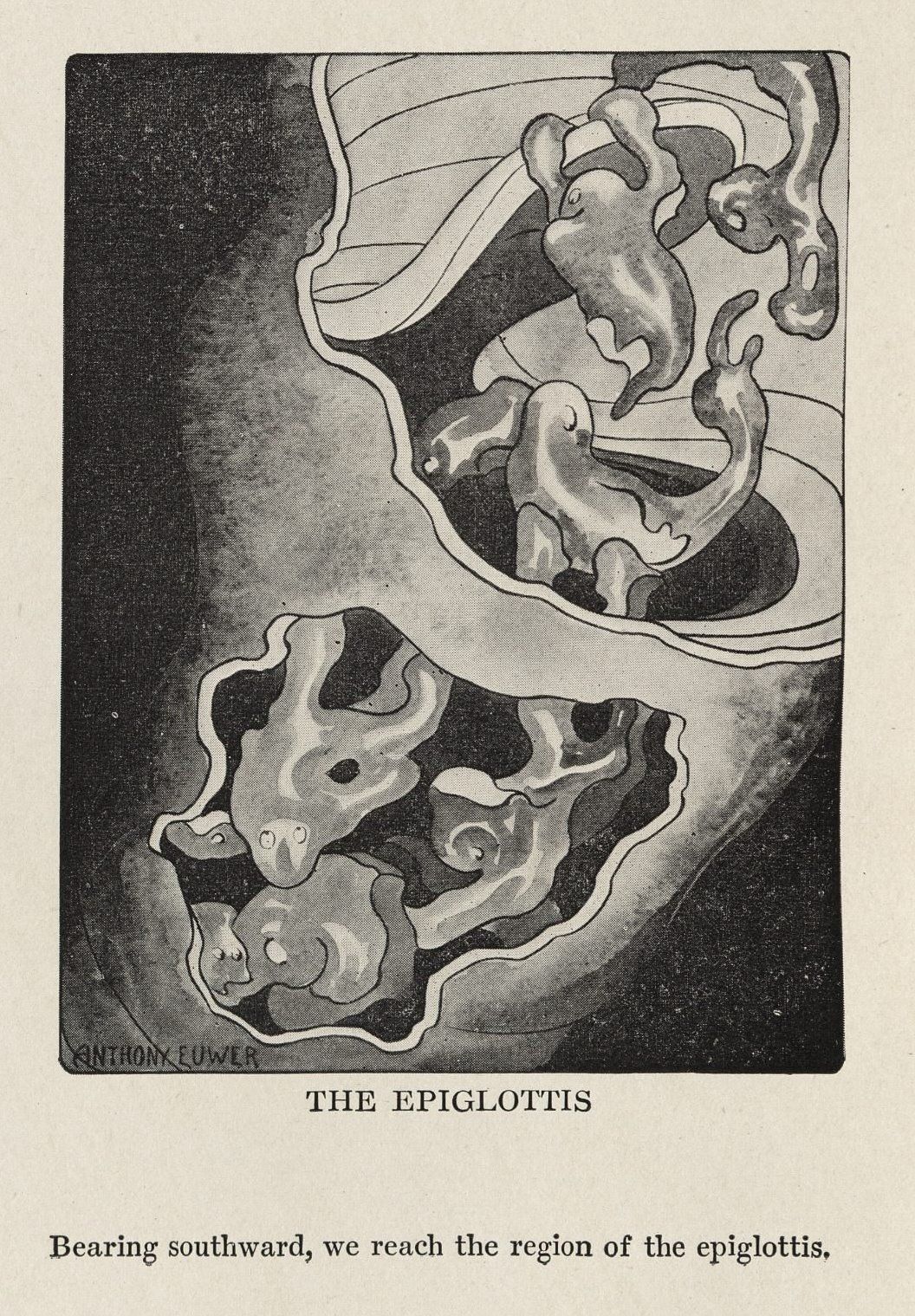
Throughout this book are not only descriptions of the anatomy, but also humorous suggestions at living healthfully. In “The Epiglottis” he writes:

Have a heart for you poor epiglottis,
Don’t crowd down your victuals, for what is
More sad than the sight
Of a wind-pipe plugged tight
When the food fails to see where the slot is.

Euwer's epiglottis illustration. Click to enlarge.

Euwer’s epiglottis illustration. Click to enlarge.

While full of humor, the pithy nature of the limerick also lends itself to concise understanding of otherwise baffling parts of the human body. In “The Medula Oblongata,” Euwer writes:

Though it sounds like a sort of sonata,
‘Tain’t confirmed by our medical data,
I’m referring of course
To that centre of force—
The medula-ah-ah-oblongata

The illustration accompanying . Click to enlarge.

The illustration accompanying “The Medula Oblongata.” Click to enlarge.

Not limited to those parts of the anatomy that exist, Euwer writes of “The Cockles”:

Now the function of cockles, we’re told
Is just to get warmed, hence I hold—
And I’m quite sure that you
Will agree with me too—
That the cockles are usu’lly cold.

The cockles. Click to enlarge.

The cockles. Click to enlarge.

There are 70 limericks in this volume. You can find them all digitized at the Internet Archive.

Wrapping Up Our Performing Medicine Festival

By Lisa O’Sullivan, Director, Center for the History of Medicine and Public Health

Thanks to everyone who joined us on Saturday, April 5 for our Performing Medicine Festival, celebrating the intersections of music, dance, and theater with health and medicine.

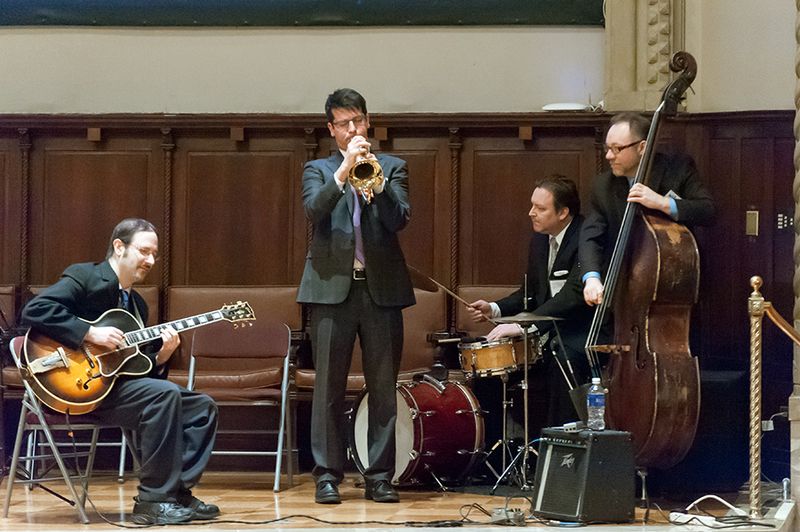
Dr. Daniel Caplivski, center, and medical musicians from Mount Sinai. Photo: Charles Manley.

Dr. Daniel Caplivski, center, and medical musicians from Mount Sinai. Photo: Charles Manley.

In the morning, medical musicians from Mount Sinai’s Icahn School of Medicine demonstrated how chamber music and jazz can improve medical students’ and physicians’ abilities to listen to their patients.

Then, Dr. Richard Kogan, clinical professor of psychiatry at Weill Cornell Medical College and artistic director of the Weill Cornell Music and Medicine Program, demonstrated his virtuosity as a pianist and physician. He explored the mental life of Robert Schumann with an extraordinary performance of “Carnaval” and incisive commentary on historical understandings of the connections between madness, creativity, and genius.

Dr. Richard Kogan. Photo: Charles Manley.

Dr. Richard Kogan. Photo: Charles Manley.

The afternoon focused on the patient experience, beginning with Brian Lobel’s humorous and touching performance about his changing responses to his experiences as a cancer patient, cancer survivor, performer, and educator, and featuring his prowess with a hula hoop. Then David Leventhal and Pamela Quinn of Dance for PD® and PD Movement Lab explored how dance can tell stories about health, identity, and illness and help people with Parkinson’s find community, beauty, and movement.

Pamela Quinn and David Leventhal of Dance for PD. Photo: Charles Manley.

Pamela Quinn and David Leventhal of Dance for PD®. Photo: Charles Manley.

The day ended with the performers in discussion with Dr. Danielle Ofri, editor-in-chief of the Bellevue Literary Review, with topics ranging from the connections between physicians and music to questions about how to embed the arts in hospitals.

Throughout the day, behind-the-scenes tours introduced visitors to the work of our book and paper conservators and to collection highlights with a musical theme.

Save the date! On October 18, we will hold our second-annual Festival of Medical History and the Arts, this time in celebration of the 500th anniversary of the birth of anatomist Andreas Vesalius. The day will be another extravaganza of lectures, performances, workshops, and demonstrations exploring art, anatomy, and the body. Keep an eye out for updates and details over the summer.             

View more photographs from the day-long event on our Facebook page.