Have You Heard of Dr. Rebecca Lee Crumpler?

by Anthony Murisco, Public Engagement Librarian

On February 8th, 2021, the city of Boston was celebrating in a big way. For Dr. Rebecca Lee Crumpler’s 190th birthday, the city had decided to declare the entire day in her honor. Despite this high honor, many still do not know who she is.  
 
The largest newspaper in Boston, The Boston Globe, introduced readers to the local hero’s story in February 2020. At the time, Crumpler and her second husband, Arthur, were buried in an unmarked grave. Noting the significance of Crumpler, the first Black female doctor in the United States, the local Hyde Park Historical Society teamed up with the Friends of the Hyde Park Library to raise money for a proper headstone.
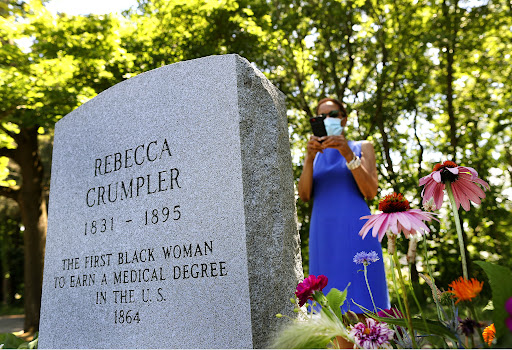
Courtesy of The Boston Globe

A follow-up in July of the same year informed the readers of a ceremony held to unveil the memorial. It also helped give a little more insight into the life of Dr. Crumpler; born Rebecca David in 1831, she was raised in Pennsylvania by her aunt. While growing up, she was shown what it meant to be a caretaker as she saw her aunt provide care for those in their neighborhood. She left for Charlestown, Massachusetts, and married her first husband, Wyatt Lee, in 1852. From working as a nurse from 1852–1860 for various doctors and their letters of recommendation, she was accepted into the New England Female Medical College. 
 
In the middle of her schooling, her husband passed away from tuberculosis. She graduated in 1864 as the first Black woman in the United States to do so, as well as the only Black woman to graduate from New England Female Medical College before it merged with another medical school in 1873. The following year, she married Arthur Crumpler. They settled and spent the rest of their lives in Hyde Park, a neighborhood in south Boston. In her 1883 book, A Book of Medical Discourses: In Two Parts, Dr. Crumpler opens with a dedication; “To Mothers, Nurses, and all who may desire to mitigate the afflictions of the human race, this book is prayerfully offered.” The Boston Globe article mentions how she faced plenty of adversity in her profession, including white pharmacists who refused to fill scripts signed by her. Despite all of this, nothing could stop her from helping the people who needed her.  

From Finding Rebecca by Shani Mahiri King and illustrated by Nicole Tadgell

Rewriting History 

It wasn’t her own education, in the very same area where Crumpler once walked, that taught Boston University Medical School student Dr. Melody McCloud about this pioneer. Rather it was when, freshly graduated, she moved to Atlanta, Georgia, around 1981. There she learned about Dr. Crumpler and the Rebecca Lee Society, an organization made up of Black female physicians. Speaking on Crumpler and other forgotten physicians, McCloud told the Boston Globe, “There are a lot of accomplishments of Blacks that are left out of the history books.” 

In her 2013 book, Hidden Figures: The American Dream and the Untold Story of the Black Women Mathematicians Who Helped Win the Space Race, writer Margot Lee Shetterly coined the titular term. The “hidden figures” in her story are three Black women, Mary Jackson, Katherine Johnson, and Dorothy Vaughan, who were instrumental in bringing the first astronauts into space. Despite being crucial to the team, they were hardly spoken of. Shetterly uncovered the story through talking to those who were there. From Johnson, she learned of Jackson; through Jackson, she got to Vaughan. The stories are passed down through the people who lived it and with the help of communities like the Rebecca Lee Society. With Shetterly’s help, Hidden Figures has been able to inspire others. It was even made into a movie! What can we do to these other “hidden” heroes? 
 
In 2020 national attention was given to the Crumplers’ Hyde Park memorial thanks to NBC Nightly News. Since then, Dr. Crumpler and her accomplishments are being recognized more and more. Symposiums are now being held in her honor, the first being at Boston University School of Medicine in conjunction with her 190th birthday. She also began popping up in an unlikely place: children’s picture book biographies. 
 
Her Own Image 

Writers and illustrators have become masterful in non-fiction storytelling for kids. . Some of these books are storytime staples. The illustrations bring history and people back to life. Can it be done for someone who has no surviving pictures?

A quick Google search of “Rebecca Lee Crumpler”

If you were to do an image search for “Rebecca Lee Crumpler,” you’d get some results. Unfortunately, none of these is the woman you are looking for! Despite commercial photography coming of age during her lifetime, any images of her have been lost to time. She is often mistakenly identified as other Black women, including Mary Eliza Mahoney. Boston University’s student-run newspaper made this mistake in its coverage of Dr. Rebecca Lee Crumpler Day, and eventually retracted and rectified its error, one of the few to do so.

From The Daily Free Press

Given the absence of portraits, how can you project this person?  

Alexandra Boiger has showed us the lives of many historical and contemporary women as the illustrator of Chelsea Clinton’s She Persisted series. For She Persisted in Science, Boiger was able to pictorialize Crumpler’s life based on her research on the “physical and emotional” state of those at the time. Boiger told the Library, via e-mail, that she was “always trying to balance the harshness of the time with the heart and love of the people and Dr. Rebecca Lee Crumpler herself.” Her images succeed in showing the care that, as Crumpler herself wrote, she was striving for.
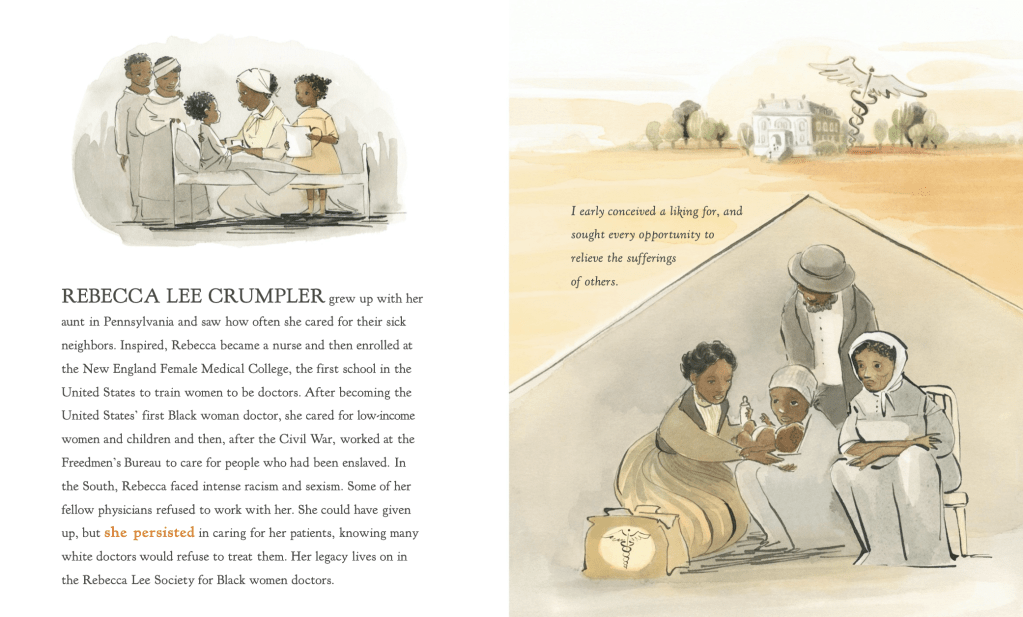
From She Persisted in Science by Chelsea Clinton and illustrated by Alexandra Boiger

Shani Mahiri King’s 2024 book Finding Rebecca is both an ode to Crumpler and an act of research. From studying Crumpler and the lives of 19th-century Black Americans, he worked with his illustrator, Nicole Tadgell, to show us how she may have lived. Tadgell herself is an accomplished illustrator with a slew of historical picture books under her belt. King paired his own findings with the direct words of Crumpler from Medical Discourses, not only to tell her story but to inspire others.

From Finding Rebecca by Shani Mahiri King and illustrated by Nicole Tadgell

King believes that more history is just waiting to be uncovered: hidden figures, histories, legends, all ready to have their stories told. The book ends with a call to action: “You too are a historian, you too are an author, and you too can help teach all of us about people who should be more famous than they are.”

References:  

“Changing the Face of Medicine | Rebecca Lee Crumpler.” Nih.gov, 3 June 2015, cfmedicine.nlm.nih.gov/physicians/biography_73.html. Accessed 26 Feb. 2025. 

Clinton, Chelsea. She Persisted in Science. Penguin, 1 Mar. 2022. 

Crumpler, Rebecca Lee. A Book of Medical Discourses, in Two Parts. 1883. Boston, Cashman, Keating, printers, collections.nlm.nih.gov/catalog/nlm:nlmuid-67521160R-bk. 

Jonas, Anne. “Boston Honors Rebecca Lee Crumpler Day — First Black Woman in the US to Receive Medical Degree.” The Daily Free Press, 8 Feb. 2021, dailyfreepress.com/2021/02/08/boston-honors-rebecca-lee-crumpler-day-first-black-woman-in-the-us-to-receive-medical-degree/. Accessed 26 Feb. 2025. 

King, Shani Mahiri. Finding Rebecca. Tilbury House Publishers and Cadent Publishing, 15 Oct. 2024. 

MacQuarrie, Brian. “Gravestone Dedicated to the First Black Female Medical Doctor in the US .” BostonGlobe.com, The Boston Globe, 17 July 2020, http://www.bostonglobe.com/2020/07/17/metro/gravestone-dedicated-first-black-female-medical-doctor-us/. Accessed 26 Feb. 2025. 

Rechtoris, Mary. “Hidden Figures’ Margot Lee Shetterly: How Writing Is a Lot like E-Discovery.” Relativity, 16 Jan. 2020, http://www.relativity.com/blog/hidden-figures-margot-lee-shetterly-how-writing-is-a-lot-like-e-discovery/. Accessed 26 Feb. 2025. 

Sweeney, Emily. “Fundraising Effort Underway in Hyde Park to Honor Dr. Rebecca Lee Crumpler, First Black Woman to Earn Medical Degree in US.” BostonGlobe.com, The Boston Globe, 10 Feb. 2020, http://www.bostonglobe.com/2020/02/10/metro/fundraising-effort-underway-hyde-park-honor-dr-rebecca-lee-crumpler-first-black-woman-earn-md-degree-us/. Accessed 26 Feb. 2025. 
Tracing the Transmission of Early Modern Recipe Knowledge in the New York Academy of Medicine Library

By Sheryl Wombell, University of Cambridge, and the Library’s 2024 Audrey and William H. Helfand Fellow.

In seventeenth-century Europe, knowledge about health and healing was shared with family, friends, and acquaintances. In the case of printed books, wider audiences were reached. A significant subset of these communications took the form of recipes: sets of instructions telling one how to make something. These might be instructions for making medicines in the home, with a range of ingredients from the inexpensive and easily sourced, to the rare and exotic products available due to expanding trade. Or they could be instructions to make culinary formulations, which were interpreted as having an impact on the body’s condition due to the lasting influence of the ancient theory of the four humours. Individual recipes, which could be as short as a line or as long as tens of pages, were gifted, traded, and passed around early modern social networks.

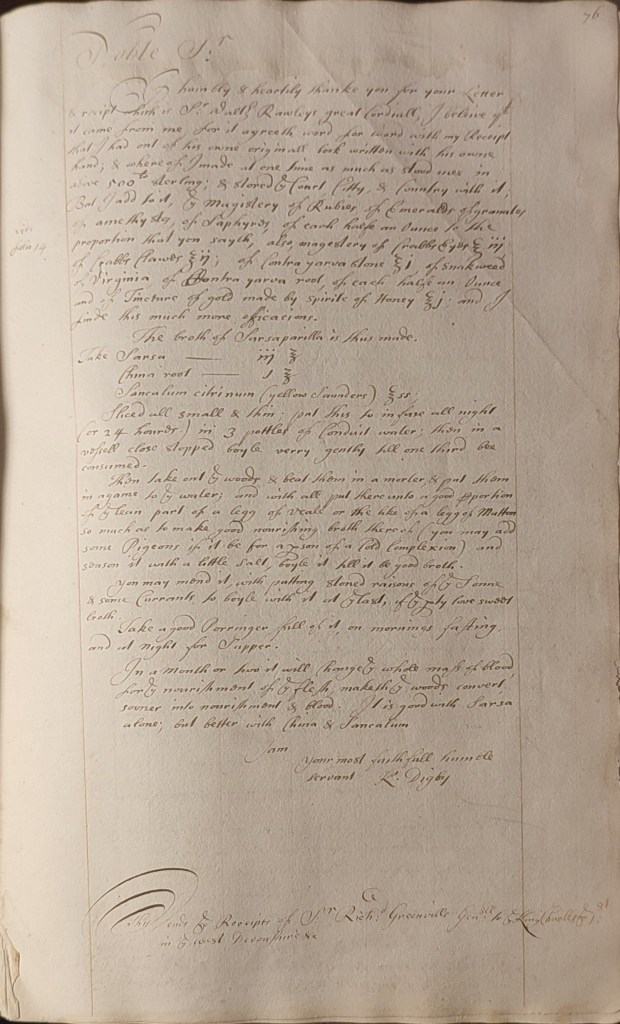
A letter penned by the courtier and privateer Sir Kenelm Digby, likely to Sir Richard Grenville, 1st Baronet of Kilkhampton, demonstrates the mobility of recipes in the mid-seventeenth century.i In it, Digby thanks Grenville for sending him a recipe for ‘Sir Walter Rawleys great Cordiall’ but questions its provenance:

I beleive th[a]t it came from me, for it agreeth word for word with my Receipt that I had out of his owne originall book written with his owne hand; & whereof I made at one time as much as stood mee in above 500 [pounds] sterling; & stored the Court, Citty, & Country with it; But I add to it, the Magistery of Rubies, of Emeralds of granales of amethystes, of Saphyres, of each halfe an Ounce to the proportion that you sayth, also, magestery of Crabbs Eyes [3 oz], of Crabbs Clawes [2 oz]; of Contra yarva stone [1 oz], of snakweed of Virginia, of Contra yarva root, of each halfe an Ounce and of Tincture of gold made by spirite of Honey [1 oz]; and I finde this much more efficacious.

The circular path of recipes that Digby describes – when a recipe he believes to be his own is unwittingly returned to him – is testament to the lively early modern traffic in recipe dissemination and collection.

Fig. 1: Copy of a letter from K. Digby in MS ‘Old Doctor 1690’, f. 76, New York Academy of Medicine Library.

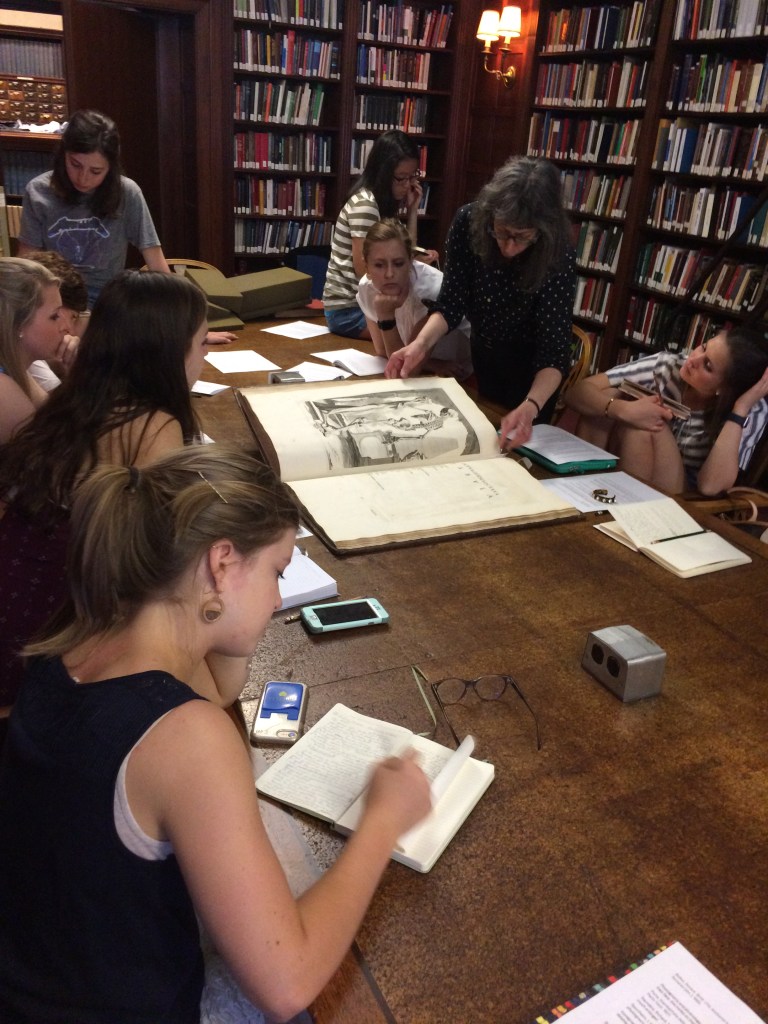
Manuscript collections of recipes survive in archives around the world, and the New York Academy of Medicine Library holds a rich cache of such volumes. Thanks to winning their Helfand Fellowship in 2024, I had the privilege of spending five weeks on a close reading of the early modern medical recipe collections at NYAM. This research forms part of my PhD project, which looks at the mid-seventeenth century production, management, and transmission of knowledge about health and healing amongst exiled and mobile elites, including Digby. While my work to date had focused on three key media – printed medical books, manuscript recipe collections, and consultation letters – somewhat in isolation from each other, at NYAM I had the time and resources to explore the relationships between these formats.

One such connection was the integration of transcribed letters into larger manuscript collections. Digby’s letter, for example, was copied into a large bound volume of recipes, letters, and transcriptions from printed books titled ‘Old Doctor 1690’. But in handling the manuscripts I was also confronted with material traces of transmission. In another manuscript, for example, is a recipe for ‘Costiveness to help’, that is, how to relieve constipation. Next to the instructions are two small, shiny blobs of dried red sealing wax. While this is not conclusive evidence that the recipes on the page were copied into a letter, it does indicate that the notebook lay open while a letter was sealed – and likely written – in its vicinity. Through this tiny physical sign, we learn something of the co-presence of writing and collecting practices across the distinct but interrelated media of letters and recipe books.

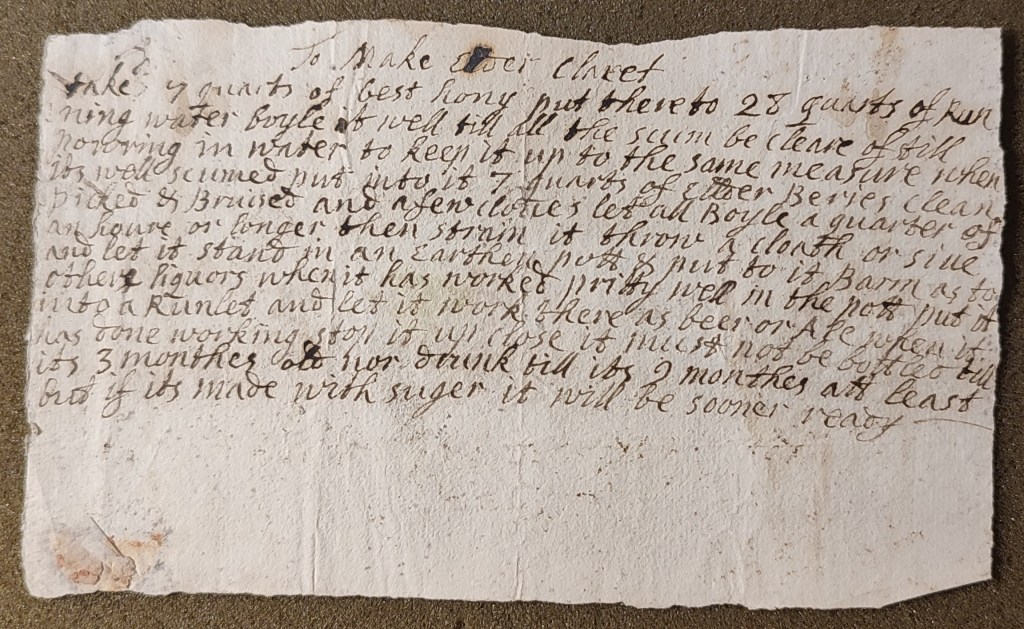
The objects of transmission themselves also appear in these recipe collections. A notebook belonging to Owen Salesbury holds a loose paper slip with instructions ‘To Make Elder Claret’ and sent ‘To Mrs Longford att her hous in Wrexham’. Folded slips could be enclosed in a larger letter, or they could constitute the entire missive. The inclusion of the address on this example suggests the latter. The contents of the slip were not transcribed into the body of the notebook but containing it within the bound volume preserved its knowledge. We don’t know precisely how or when a slip sent – or intended to be sent – to a Mrs Longford ended up in Salesbury’s manuscript, but it offers further evidence of the close connections between ephemeral letter formats and the more durable objects of recipe collections.

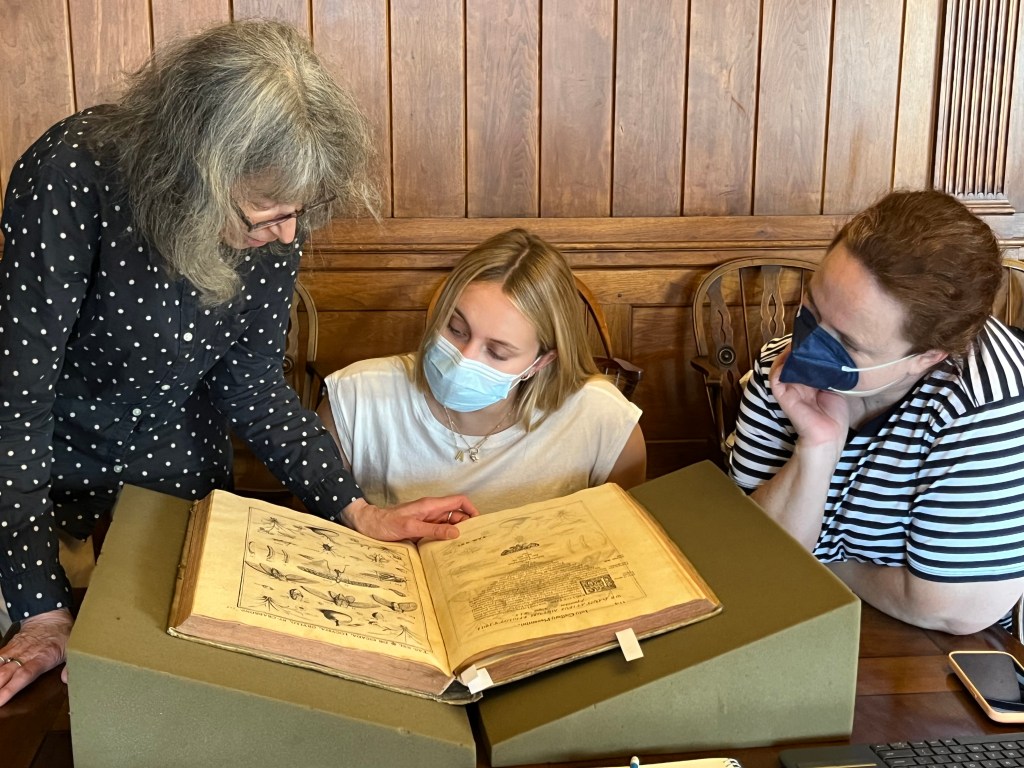
Spending time in the NYAM Library’s collections allowed me to get to grips with evidence of early modern recipe transmission. While digitised surrogates of manuscripts have been invaluable in my research, handling these collections has enriched my analysis by bringing their material qualities – size, varying durability, the spatial relationships between their contents, and signs of use – to the fore.

Further Reading:

Ken Albala, Food in Early Modern Europe (London: Bloomsbury Academic, 2003).

James Daybell, The Material Letter in Early Modern England: Manuscript Letters and the Culture and Practice of Letter-Writing, 1512–1635 (Basingstoke: Palgrave Macmillan, 2012).

Elaine Leong, Recipes and Everyday Knowledge: Medicine, Science, and the Household in Early Modern England (Chicago and London: University of Chicago Press, 2018).

Alisha Rankin, ‘Recipes in Early Modern Europe,’ Encyclopedia of the History of Science (2023), https://doi.org/10.34758/fvw2-w336.

Color Our Collections 2024


by Anthony Murisco, Public Engagement Librarian

On Monday, February 5th, we kicked off the eighth annual “Color Our Collections!” This initiative asks libraries, museums, and other cultural institutions to submit coloring books based on their collections. These coloring books don’t just live on our site for that one week; you can access them whenever you want! Over the years we have collected over 800 free coloring books for everyone to enjoy.

Maybe you need an excuse to color? Well, besides just being a fun activity, coloring has been shown to provide other benefits. Research has shown that it makes your brain feel a sense of relaxation. You don’t have to be an artist to break out crayons or colored pencils. The “low stakes” nature of the activity lets you enjoy it more. There may also be the subconscious thought of nostalgia lingering as you color; this used to be something you enjoyed! These factors combine to provide therapeutic effects to coloring (though it is important to keep in mind “therapeutic” is not the same as actual therapy!).

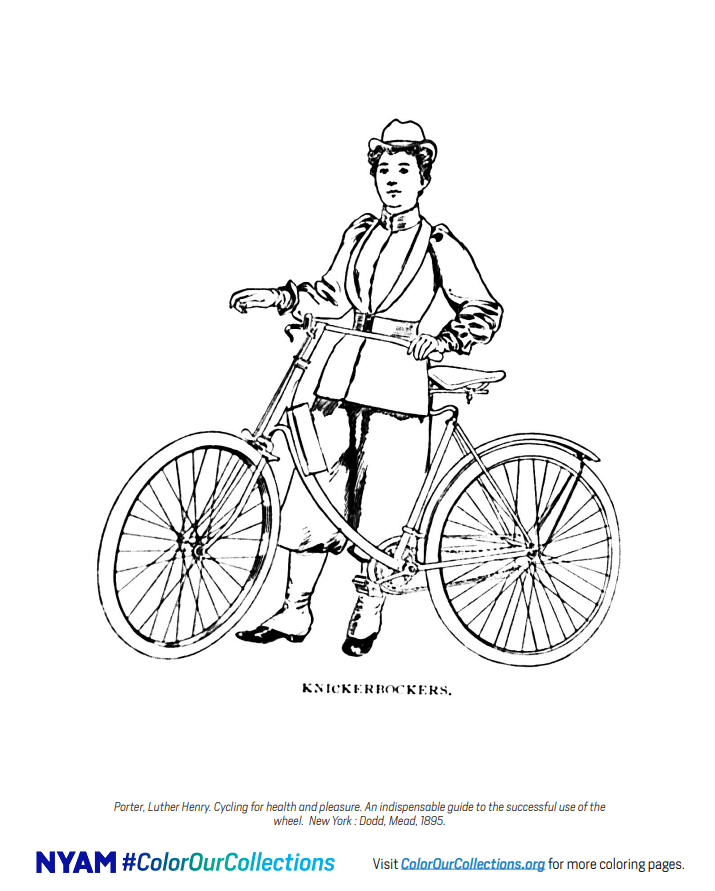
For the NYAM coloring book this year, we chose images of what it was like to be healthy in the 19th and 20th centuries. “Living Well in the 19th and 20th Century” shows activities meant to relax and help people taking care of one another, a woman ready for a bike ride, and acquaintances stopping to shoot the breeze on the grass. These are just some routes that you may take when practicing your own wellness routines.

You can use the hashtag #ColorOurCollections to show off your own work and see what others are doing.

A huge thank-you to our colleagues worldwide who have contributed coloring books to the collection. We couldn’t do it without you!

References:
Ali, Shainna. “Are Adult Coloring Books Actually Helpful?” Psychology Today, 27 Mar. 2018, http://www.psychologytoday.com/us/blog/modern-mentality/201803/are-adult-coloring-books-actually-helpful, accessed February 5th, 2024.

“3 Reasons Adult Coloring Can Actually Relax Your Brain.” Cleveland Clinic healthessentials, 26 May 2020, http://health.clevelandclinic.org/3-reasons-adult-coloring-can-actually-relax-brain, accessed February 5th, 2024.

Infectious Madness, the Well Curve and the Microbial Roots of Mental Disturbance

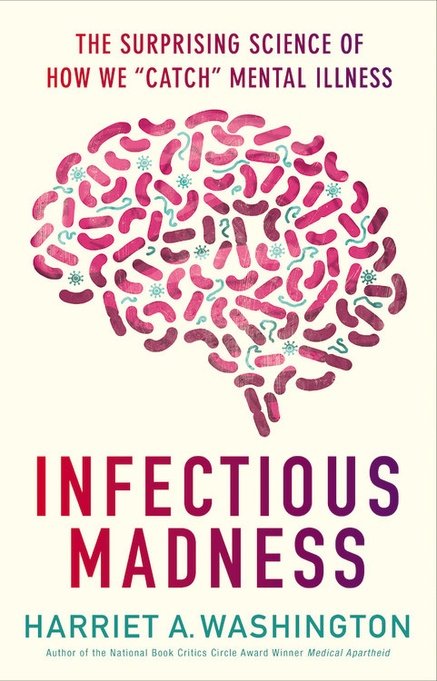
3cfce0fe054a12627f41292ec26e6b22Today’s guest post is written by Harriet Washington, a science writer, editor and ethicist. She is  the author of several books, including Medical Apartheid: The Dark History of Experimentation from Colonial Times to the Present. On Wednesday, March 15 at 6pm, Washington will discuss: “Infectious Madness, the Well Curve and the Microbial Roots of Mental Disturbance.” In this talk, based on her book Infectious Madness: The Surprising Science of How We “Catch” Mental Illness, Washington traces the history, culture and some disturbing contemporary manifestations of this ‘infection connection.” To read more about this lecture and to register, go HERE.
“Mind, independent of experience, is inconceivable.” —Franz Boas

Psychological trauma, stress, genetic anomalies and other experiences that limit the healthy functioning of the mind and brain are widely recognized as key factors in the development of schizophrenia, major depression, and bipolar disorder.  However, despite a plethora of examples and evidence of microbial disorders from rabies to paresis, infection has been slow to join the pantheon.  This aversion persists largely because the perceived causes of mental disorders have evolved not only with our scientific knowledge of medicine but also with our tenacious cultural beliefs and biases.  Instead, we have long clung to what  Robert Sapolsky calls a “primordial muck” of attribution that includes broken taboos, sin—one’s own or one’s forbears’— and even bad mothering.

Brueghel_dancingMania

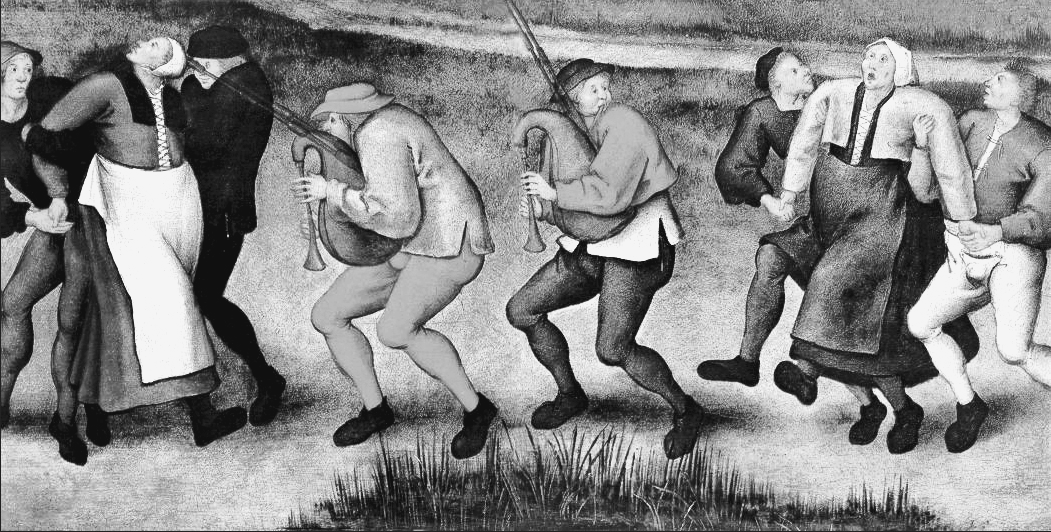
Representation of the dancing mania by Flemish painter Pieter Brueghel the Younger.Source.

Flemish painter Pieter Brueghel the Younger (1564–1636) painted the above representation of the dancing mania known as choreomania or St. Anthony’s Fire, which has seized a pilgrimage of epileptics en route to the church at Molenbeek. Such compulsive dancing was originally ascribed to satanic influence such as bewitchment, and later to a collective hysterical disorder, but is now ascribed to ergotism— the  infection of rye and other grains by the fungus Claviceps purpurea.  When people ate the tainted bread, their symptoms included compulsive dancing. Some have ascribed the mass hysteria of the Salem witch trials to ergotism.  Streptoccocal infections have also produced cases called Sydenham’s chorea.

Not all traditional “causes” of mental illness are confined to the past.  As late as the 1980s, the alternating rage, coldness and oppressive affection of domineering “schizophrenogenic mothers” was taught in psychology classes as the root of schizophrenia, just as Tourette’s syndrome initially was laid to poor parenting.

For Infectious Madness: The Surprising Science of How We “Catch” Mental Illness, I interviewed scientists working on the effects of infections on mental health such as Susan Swedo, chief of the pediatrics and developmental neuroscience branch at the National Institute of Mental Health, who studies the role of Group A strep (GAS) infections in children in rapid-onset cases of obsessive compulsive disorder, anorexia, and Tourette syndrome. Other visionary researchers, such as E. Fuller Torrey, executive director of Maryland’s Stanley Medical Research Institute, and Robert Yolken, director of developmental neurovirology at Johns Hopkins University, have for decades investigated the role of microbes in mental illness and have traced the path of viruses such as influenza, herpes simplex and Toxoplasma  gondii, among other microbes, in schizophrenia and bipolar disorder.

There are a myriad of ways in which infections cause or encourage mental disease. In order to suit its own need to reproduce within the stomach of a cat, the unicellular parasite Toxoplasma gondii changes the behavior of rodents — and incidentally, use it to gain entry. This seems strange, but changing the behavior of a host to suit its own needs is a common stratagem of parasites. The Cordyceps fungus, for example, manipulates an ant in the Amazon into climbing a tree where the fungal spores can be more widely disseminated. The spore- bearing branches extend from the corpse of the ant pictured below.

Ant1

The Cordyceps fungus manipulates an ant in the Amazon into climbing a tree where the fungal spores can be more widely disseminated. The spore-bearing branches extend from the corpse of the ant.Photograph © Gregory Dimijian, MD.

Infection, redux

“Everything has been thought of before, but the problem is to think of it again.” —Goethe

There is a long, all but forgotten history of infectious theories of mental illness. In his 1812 psychiatry text Medical Inquiries and Observations upon the Diseases of the Mind, for example, Benjamin Rush, MD, included a first detailed taxonomy of mental disorders, each with its own physical cause. He cited disruptions of blood circulation and  sensory overload as the basis of mental illness, and he treated his patients with devices meant to improve circulation to the brain, including such Rube Goldberg designs as a centrifugal spinning board, or to decrease sensory perceptions, such as a restraining chair with a head enclosure.

Restraining Chair

Pictured here is the “tranquilizing chair” in which patients were confined. The chair was supposed to control the flow of blood toward the brain and, by lessening muscular action or reducing motor activity, reduce the force and frequency of the pulse.Photograph © 2008 Hoag Levins.

Paresis, an infectious mental disorder

In 1857, Drs. Johannes Friedrich Esmark and W. Jessen suggested a biological cause for paresis: syphilis. Many researchers started to view paresis as the tertiary stage of syphilis, which often attacked the brain indiscriminately, and they began referring to it as neurosyphilis. This theory held out hope that if syphilis was ever cured, paresis could be too.

Nineteenth-century asylum keepers, however, persisted in viewing paresis as wholly mental in character. The long-standing insistence on divorcing physical illnesses from mental ones had to do with religious philosophy and culture but also with the politics of the asylum, which remained a battleground between physicians and religious and philosophical healers.

Matters were complicated by the fact that most physicians, despite the evidence that paresis was the mental manifestation of a physical disease, continued to treat paretics with the same ineffectual therapeutics given other mentally ill patients. Traditional treatments such as “douches, cold packs, mercury, blistering of the scalp, venesection, leeching, sexual abstinence, and holes drilled into the skull [trephination]” continued—without positive results. Even when toxic mercury-based treatments for syphilis were replaced by Paul Ehrlich’s safer, more effective arsenic-based Salvarsan (also called arsphenamine and compound 606), it was not used against paresis.

But in June 1917, Professor Julius Wagner-Jauregg of the University of Vienna Hospital for Nervous and Mental Diseases undertook a radical approach. He had noticed that some paretic patients improved markedly after contracting an infectious illness that gave them fevers. He decided to fight fire with fire by turning one disease against another: he sought to suppress the symptoms of paresis by infecting its sufferers with malaria.

Before Wagner-Jauregg won the Nobel and Freud forged the future of psychiatry, a paradigm shift had already taken place that transformed science’s approach to the nature of disease. It is the very framework that supports the role of infection in mental illness—germ theory. Developed by Louis Pasteur and Robert Koch, germ theory posits that specific microbes such as bacteria, viruses, and prions (infectious proteins) cause illness.

For more on this fascinating topic, join Harriet Washington on Wednesday, March 15 at 6pm.  More information can be found here

New Acquisitions at the Library

By Jarlin Espinal, Technical Services Assistant

Below is a selection of some of our recently acquired secondary sources in the history of medicine, along with blurbs about each book. Make an appointment to come and use them!

Nine of the library’s new acquisitions. Click to enlarge.

Nine of the library’s new acquisitions. Click to enlarge.

Sybil Exposed: The Extraordinary Story Behind the Famous Multiple Personality Case – Debbie Nathan

Sybil Exposed isn’t only an exposé of a blockbuster that pulled the wool over 6 million readers’ eyes … Riveting, thought-provoking and a quick read, Sybil Exposed is impossible to put down.” – The Oregonian

Representing Argentinian Mothers: Medicine, Ideas and Culture in the Modern Era, 1900–1946 – Yolanda Eraso

“Through detailed examination of a rich selection of sources including medical texts, newspapers, novels, photojournalism, and paintings, Representing Argentinian Mothers adopts an interdisciplinary approach and an innovative framework based on categories and notions drawn from the history of ideas and cultural history. By enquiring about the influence of medicine in the field of ideas, beliefs and images, Yolanda Eraso elaborates new insights to understand their interaction, which will appeal to anyone with an interest in the Medical Humanities.”

The Making of Mr. Gray’s Anatomy: Bodies, Books, Fortune, Fame – Ruth Richardson

“It is the story of changing attitudes in the mid-19th century; of the social impact of science, the changing status of medicine; of poverty and class; of craftsmanship and technology. And it all unfolds in the atmospheric milieu of Victorian London—taking the reader from the smart townhouses of Belgravia, to the dissection room of St. George’s Hospital, and to the workhouses and mortuaries where we meet the friendless poor who would ultimately be immortalised in Carter’s engravings.”

Life Writing and Schizophrenia: Encounters at the Edge of Meaning – Mary Elene Wood

“Challenging the romanticized connection between literature and madness, Life Writing and Schizophrenia explores how writers who hear voices and experience delusions write their identities into narrative, despite popular and medical representations of schizophrenia as chaos, violence, and incoherence. The study juxtaposes these narratives to case histories by clinicians writing their encounters with those diagnosed with schizophrenia, encounters that call their own narrative authority and coherence into question.”

Before Bioethics: A History of American Medical Ethics from the Colonial Period to the Bioethics Revolution – Robert Baker

“Before Bioethics narrates the history of American medical ethics from its colonial origins to current bioethical controversies over abortion, AIDS, animal rights, and physician-assisted suicide. This comprehensive history tracks the evolution of American medical ethics over four centuries, from colonial midwives and physicians’ oaths to medical society codes, through the bioethics revolution.”

Cannabis Nation: Control and Consumption in Britain, 1928-2008 – James H. Mills

“Overall, anyone with an interest in cannabis and indeed, illicit drugs more widely would find the book of interest. The meticulous research challenges commonly held perceptions. … an amusing and eminently readable piece of work.” – Mark Monaghan, Journal of Social Policy

American Pandemic: The Lost Worlds of the 1918 Influenza Epidemic – Nancy K. Bristow

“A richly detailed picture of American society as it experienced an extraordinary trauma—one that shook a newly established confidence in the efficacy of medicine and the responsiveness of civil society. Doctors, nurses, the friends and families of the sick all play a part in this carefully and imaginatively researched and lucidly written account of America’s last great epidemic.” – Charles Rosenberg, Harvard University

How Cancer Crossed the Color Line – Keith Wailoo

“A model of how to seamlessly weave together the complex intersectionality of class, gender and race. How Cancer Crossed the Color Line is a masterful account of how the reward structures of science funding, the profession of medicine, era-specific cultural stereotypes of women’s ‘proper place,’ and shifting notions of racialized bodies have all converged to shape our views of who is at risk for cancer, and why.” – Troy Duster, New York University

Medical Visions: Producing the Patient through Film, Television, and Imaging Technologies – Kirsten Ostherr

“Kirsten Ostherr shows us how we might learn to see—and to experience—health and illness differently. Medical Visions is crucial reading for anyone who practices medicine and for anyone who is, has been, or will be a patient—which is to say, all of us.” – Priscilla Wald, author of Contagious


Program Announcement: The Beginning of the Ends

CenterforBookendScholarship_logoThe Center for the History of Medicine and Public Health is excited to announce the founding of its newest program, the Center for Bookend Scholarship. Through the Center for Bookend Scholarship, we aim to foster knowledge and appreciation of the most underappreciated object in the history of the book. We will encourage scholarly and public interest in the bookend through exhibitions, public programs, and research opportunities.

Book storage methods as shown in Fasciculus Medicinae, published in 1495.

Book storage methods as shown in our 1509 edition of Fasciculus Medicinae. Click to enlarge.

Early libraries did not need bookends. People arranged books horizontally into the 16th century (and perhaps longer). Only once enough books existed to fill up a bookshelf—which only started to resemble the furniture of today in the 16th century—without falling over did libraries begin to store books vertically.1

It took even longer for people to shelve books spine-out. Many Medieval and Renaissance libraries chained books to lecterns and shelves; in order to attach the chain without causing damage, these libraries stored books fore-edge out. In the 16th century, books began to include authors and titles on their spines, though not universally, a sign that shelving practices included spine-out configurations. By the next century, nearly all books had bibliographic information on their spines.1

Bookends are a relatively new technology. The familiar L-shaped metal kind were first patented in the 1870s.1 It took some decades before the term became common parlance: the Oxford English Dictionary records 1907 as the first year the term “book end” appeared in print.2

The New York Academy of Medicine Library has long held an interest in the bookend. Since our founding in 1847, we have intentionally amassed thousands of bookends. Strengths of the collection include American and functional bookends, but we are beginning to add to our European and decorative holdings. Through the Center for Bookend Scholarship, we will now dedicate more time and attention to these objects as we move forward in building the world’s preeminent collection.

Below is a selection of bookends from our collection.

This slideshow requires JavaScript.


References

1. Petroski, H. (2000). The book on the bookshelf. New York: Vintage Books.

2. book, n. (2014). OED Online. Oxford University Press. Retrieved from http://www.oed.com/view/Entry/21412

New Acquisitions at the Library

By Jarlin Espinal, Technical Services Assistant

Below is a selection of some of our recently acquired secondary sources in the history of medicine, along with blurbs about each book. Make an appointment to come and use them!

Nine of the library's new acquisitions.

Nine of the library’s new acquisitions. Click to enlarge.

Making Women’s Medicine Masculine: The Rise of Male Authority in Pre-Modern GynaecologyMonica H. Green

“Green has painstakingly studied the content and circulation of medieval texts on women’s medicine…[and] disproves popular ideas of the Middle Ages as a Golden Age for women’s control over their own bodies.” – Medical History

The Sick Child in Early Modern England, 1580–1720 – Hannah Newton

The Sick Child in Early Modern England is a powerful exploration of the treatment, perception, and experience of illness in childhood from the late sixteenth to the early eighteenth century. At this time, the sickness or death of a child was a common occurrence—over a quarter of young people died before the age of fifteen—and yet this subject has received little scholarly attention.”

Vernacular Bodies: The Politics of Reproduction in Early Modern England – Mary E. Fissell

“Making babies was a mysterious process in early modern England. Mary Fissell employs a wealth of popular sources—ballads, jokes, witchcraft pamphlets, Prayer Books, popular medical manuals—to produce the first account of women’s productive bodies in early-modern cheap print.”

Headache: Through the Centuries – Mervyn J. Eadie

“Nobody is better suited to provide a history of headache than Mervyn Eadie, a distinguished neurologist, historian and established author. Here he provides a beautifully written, lucid account of headaches from the time of ancient Greece and Egypt to 2000 A.D.”– J. M. S. Pearce, MD, FRCP, Emeritus Consultant Neurologist, Hull Royal Infirmary, Yorkshire, England

The Perils of Peace: The Public Health Crisis in Occupied Germany – Jessica Reinisch

“In The Perils of Peace, Jessica Reinisch considers how the four occupiers—Britain, France, the Soviet Union, and the United States—attempted to keep their own troops and the ex-enemy population alive. While the war was still being fought, German public health was a secondary consideration for them: an unaffordable and undeserved luxury. But once fighting ceased and the occupation began, it rapidly turned into an urgent priority. Public health was then recognized as an indispensable component of creating order, keeping the population governable, and facilitating the reconstruction of German society.”

William Harvey: A Life in Circulation – Thomas Wright

“Thomas Wright’s book opens brilliantly and bloodily and continues in the same vein … a captivating, intellectually gripping journey into [England’s] scientific past.” – Druin Burch, Mail on Sunday

Medicine’s Michelangelo: The Life & Art of Frank H. Netter, MD – Francine Mary Netter

“This delightful book traces the extraordinary career of Frank Netter, who gave his gift of unparalleled medical knowledge to generations of medical student and their preceptors. This memoir, by his daughter Francine, helps us appreciate his lucid, lifelike art, from which we build our growing knowledge of the healing arts.” – Joseph B. Martin, PhD, MD, Edward R. and Anne G. Lefler Professor of Neurobiology, Harvard Medical School

Virus Hunt: The Search for the Origin of HIV – Dorothy H. Crawford

“This is not a book about AIDS as a disease. Rather, Dorothy H. Crawford gives us a scientific detective story. She tells how, over the past 20 years or so, scientists tracked down the origin of HIV, the virus that causes AIDS.”

Body and Soul: The Black Panther Party and the Fight Against Medical Discrimination – Alondra Nelson

“In Body and Soul, Alondra Nelson combines careful research, deep political insight, and passionate commitment to tell the little-known story of the Black Panther Party’s health activism in the late 1960s. In doing so, and in showing how the problems of poverty, discrimination, and access to medical care remain hauntingly similar more than forty years later, Nelson reminds us that the struggle continues, particularly for African Americans, and that social policies have profound moral implications.” Rebecca Skloot, author of The Immortal Life of Henrietta Lacks

Biblioclasts & Bibliosnitches Beware

By Arlene Shaner, Acting Curator and Reference Librarian for Historical Collections

Dr. Henry Pelouze de Forest's bookplate

Dr. Henry Pelouze de Forest’s bookplate

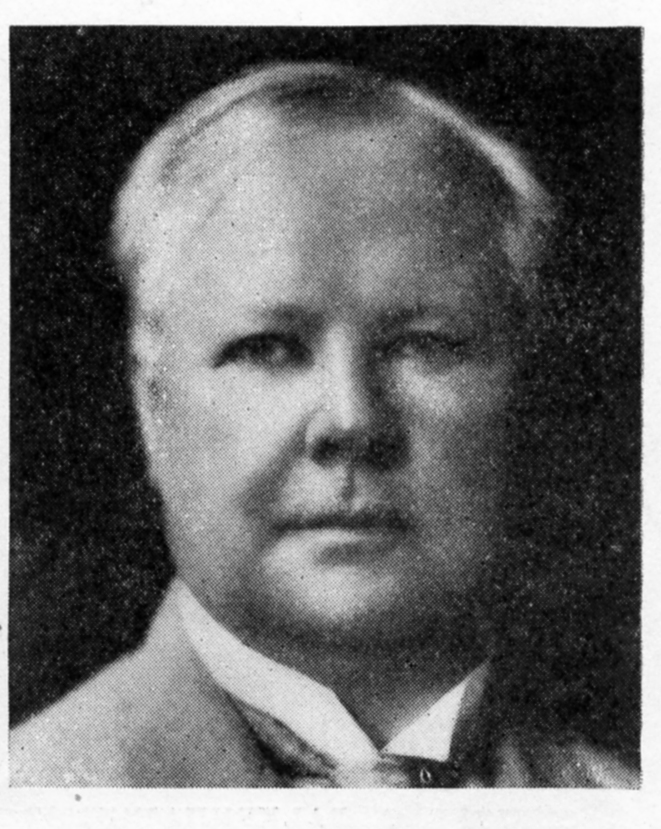
Book owners, even generous ones, worry about what might happen to their books if they loan them to others who might not treat them with the same degree of care. Dr. Henry Pelouze de Forest, a lover of books and of bookplates, had this “Caudal Bookplate,” meant to be inserted at the end of a book, made as a warning to unscrupulous borrowers in 1933. De Forest (1864-1948) graduated from Cornell in 1884 and from Columbia’s College of Physicians and Surgeons in 1890. He was associate professor of obstetrics at the Post-Graduate Hospital and Medical School from 1903 to 1921, but is probably best remembered today for his interest in personal identification. While working as a surgeon for the New York City Police Department (1902-1912), he established what is said to be the first fingerprint file in the United States and invented a dactyloscope for fingerprint examination.

Dr. Henry Pelouze de Forest

Dr. Henry Pelouze de Forest *

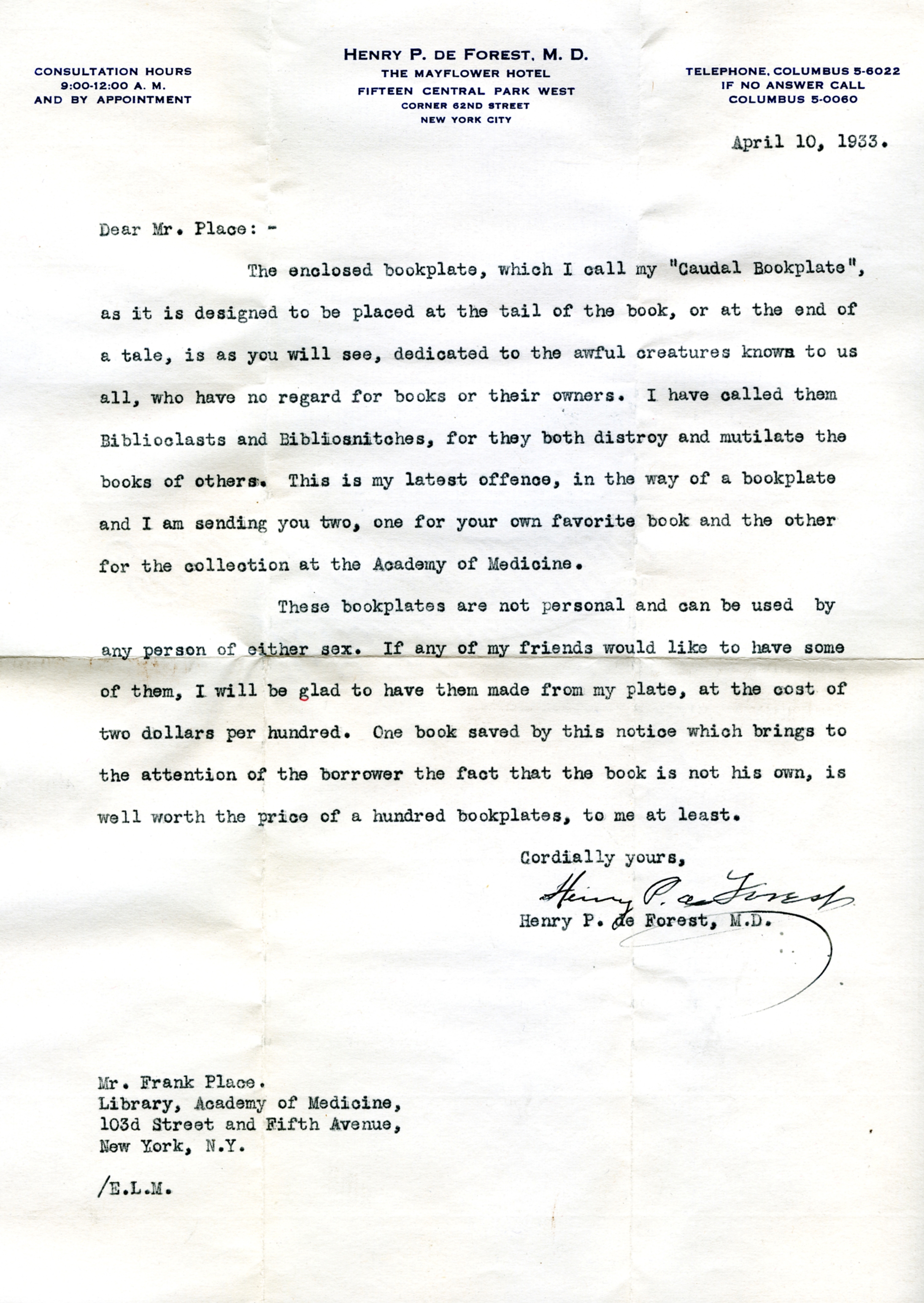
De Forest had several bookplates made for his own books and he sent examples of them to Frank Place, who was a librarian here at NYAM. Place collected bookplates and we have three small loose-leaf notebooks full of those he received both as gifts and by sending copies of ours in trade. This bookplate and its accompanying letter were found in the first of those small volumes. We’ll never know how many of de Forest’s friends took advantage of his offer to print up extra batches of his poetic plea that borrowers mind their manners.

Letter from Henry Pelouze de Forest to NYAM librarian Frank Place.

Letter from Henry Pelouze de Forest to NYAM librarian Frank Place. Click to enlarge.

* From the Columbia Alumni News 22:18 (Feb. 13, 1931), p. 10.