Seeing With New Eyes: Rediscovering Medieval Manuscripts in a Digital Age

Today we have a guest post written by Monica Green, a longtime NYAM researcher.

Several times over the past 30 years, I’ve consulted a mid-13th-century manuscript in the New York Academy of Medicine’s holdings. This large, 94-leaf, handsomely bound volume was formative to my training as a historian of medieval medical history, having been the first “real” manuscript I examined when I was beginning my researches on the so-called Trotula texts in the early 1980s.

Opening of Caelius.

Opening of Caelius, f. 61ra

Like most scholars who study the history of intellectual traditions, my eyes were on my immediate object of study—in this case, a 12th-century compendium of texts on women’s medicine and cosmetics. My peripheral vision went no further than the other texts on women’s medicine that surrounded it in the manuscript. These were certainly enthralling: they included one of only two known copies of the Gynecology of the 4th-century writer, Caelius Aurelianus. But the other contents of the manuscript, let alone its structure as a whole, were all but invisible to me.

I did come back, many years later, with some questions about one of the surgical texts in the volume.  This was the visually stunning (and rightly famous) Surgery of the early 11th-century Cordoban physician, Abu al-Qasim Khalaf ibn ‘Abbas al-Zahrawi, whose work had been translated from Arabic into Latin in Toledo.  But the NYAM manuscript was not a unique copy (al-Zahrawi’s work exists in some 33 extant Latin manuscripts), and so—my questions quickly answered—I moved on again.

But my attention was brought back to the NYAM volume again last year, because of some questions being raised by a new project.  Two problems seemed to revolve around each other:  why was there a 50-year gap between when the Arabic-into-Latin translator Gerard of Cremona died in 1187 (he was the one who had translated al-Zahrawi) and when his texts first started to be regularly used and cited?  And, secondly, why did so many copies of these works, once they did appear, seem (a) to cluster around Paris and (b) show a level of magnificence in decoration that most medical texts had never previously enjoyed?

Suddenly, the NYAM manuscript took on new significance:  the illumination and decoration, which I had previously ignored, became newly important.  And so, too, did the “minor” texts, such as the Surgery of Horses, of which this is likewise an early copy.  This really was a most unusual manuscript, I realized. And the physical character of the book—its structure and decoration as well as its contents—were key to figuring it out.  So here I am this summer, back to consult it again.

f. 77ra, opening of Trotula

f. 77ra, opening of Trotula

The gynecological unit, which I had worked with most extensively, was the most typical:  the Trotula text, for example, opens with a lovely “puzzle” initial ‘U’, but there is nothing here to distinguish the manuscript from many hundreds of others made in the same period.

Not so for the surgical section of the manuscript.  First was the cautery section:  most of what must have been about two dozen images had been cut away (yes, they had art thieves already in the Middle Ages!).  But the two images that remain show, in quite typical northern European style, images of a surgeon applying hot burning irons to the surface of the patient’s body in order to heal, respectively, sciatica and heart or stomach problems.

f. 3ra, cautery scenes
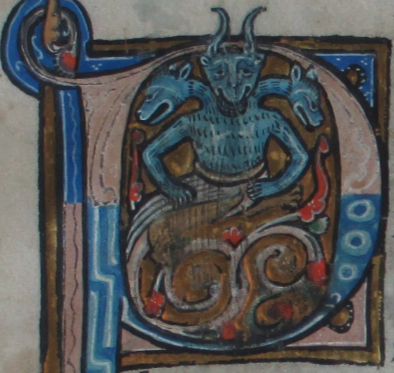
f. 3ra, cautery scenes

f. 45ra, opening of Roger, Chirurgia

f. 45ra, opening of Roger, Chirurgia

Immediately following was a sequence of other surgical texts.  Each one of them had a striking opening initial, framed in gold leaf with elegant foliated designs that are very similar to the output of an artist’s workshop in Paris associated with the name of the Johannes Grusch.  The three-headed devil that opens the Surgery of Roger Frugardi is especially memorable.
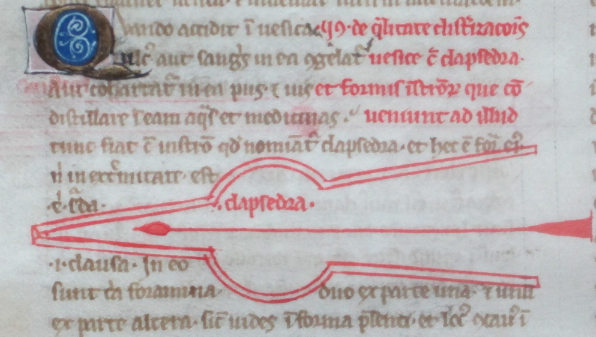


f. 23va:  sample champie initial and clapsedra

f. 23va: sample champie initial and clapsedra

But in the middle of that sequence of smaller surgical texts (all of which probably came out of southern Italy) comes the al-Zahrawi text, with its own unique decoration scheme.  Here we find throughout the text elegant gold-leaf initials, drawn against alternating light blue or rose-colored backgrounds with white ink filigree.  (Art historians call this a “champie” decoration.)  And, of course, here we find the depictions of surgical tools that characterize all the copies of al-Zahrawi’s surgical text, whether Latin or Arabic. The different decoration schemes seemed to correspond to different places from where the commissioner of this book was getting his exemplars (the manuscripts from which this manuscript was copied).

So in what sense does being in a digital age give us “new eyes”?  I had the physical manuscript right in front of me:  800 years of history that I could touch with my hands.  Nothing “virtual” about this!  Ah, but the New York Academy of Medicine was not this book’s original home.  Because so many European libraries are now making their manuscripts available digitally online, it is possible to reconstruct virtually what medieval libraries looked like, to reassemble their components and reconstruct how they came into being.  Because I could learn more about other manuscripts produced at the same time, I was now beginning to understand how extraordinary this manuscript’s medieval home had been.

The NYAM manuscript was commissioned in the mid-13th century by Richard de Fournival, a surgeon and, eventually, the chancellor of the cathedral of Amiens.  (de Fournival had gotten special dispensation from the Pope to continue his surgical practice despite his being a cleric.  His father and nephew were physicians, too.)  The NYAM manuscript captures all the international networks that de Fournival belonged to:  English, Norman, French, and Italian.  Besides being a cleric and a surgeon (and a poet and musician), de Fournival was a librarian—not simply a collector but a curator of books.  The library he created of 162 volumes (comprising many 100s of different texts) literally changed the course of history in laying the foundation for a new, more sophisticated medical system in Europe that was as influential in establishing the social worlds of physicians and other medical practitioners as it was in defining their intellectual worlds.  It was de Fournival, I was realizing, that was instrumental in rediscovering Gerard of Cremona’s translations (including al-Zahrawi’s Surgery) and introducing them into the fertile context of the Parisian academic world.

In our day, Google and PubMed and any number of Internet resources make us lose sight of where knowledge comes from.  Everything seems freely available, whenever we want it.  But books were once extraordinarily precious.  Juxtaposing the digital with the real vellum and leather and wood and gold leaf of a medieval manuscript is an excellent reminder of the cultures of learning we still share across the centuries.

Monica H. Green is a specialist in medieval medical history and the global history of health.  She would like to thank Alison Stones for the impetus to bring “new eyes” to the NYAM manuscript, and Jocelyn Wogan-Browne for making this New York sojourn possible.  And, of course, the NYAM librarians for once again making the manuscript available for study.  Green will be spending the 2013-14 academic year at the Institute for Advanced Study in Princeton.  She can be reached at monica.green@asu.edu.
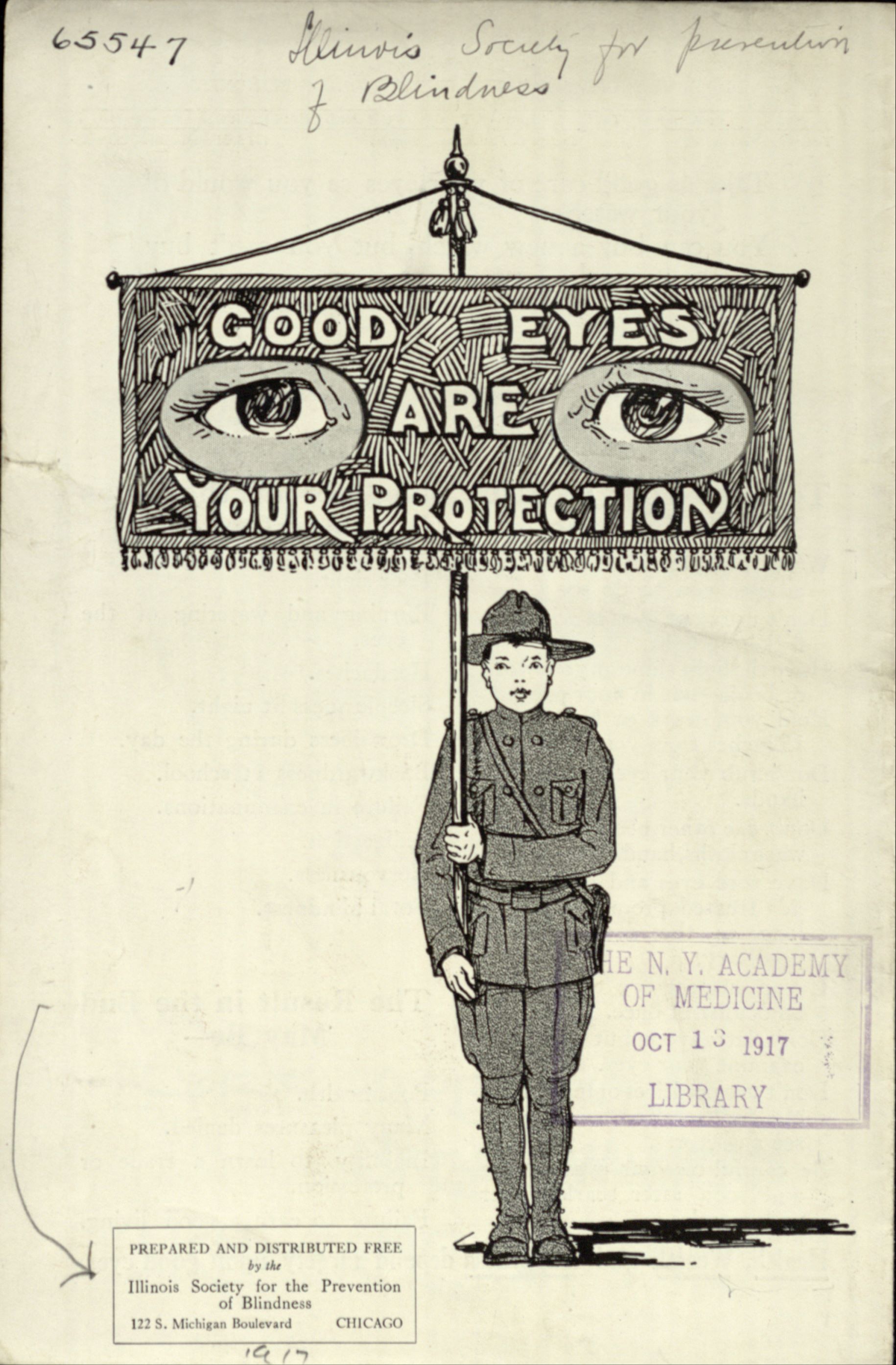
Good eyes are your protection

By Rebecca Pou, Project Archivist

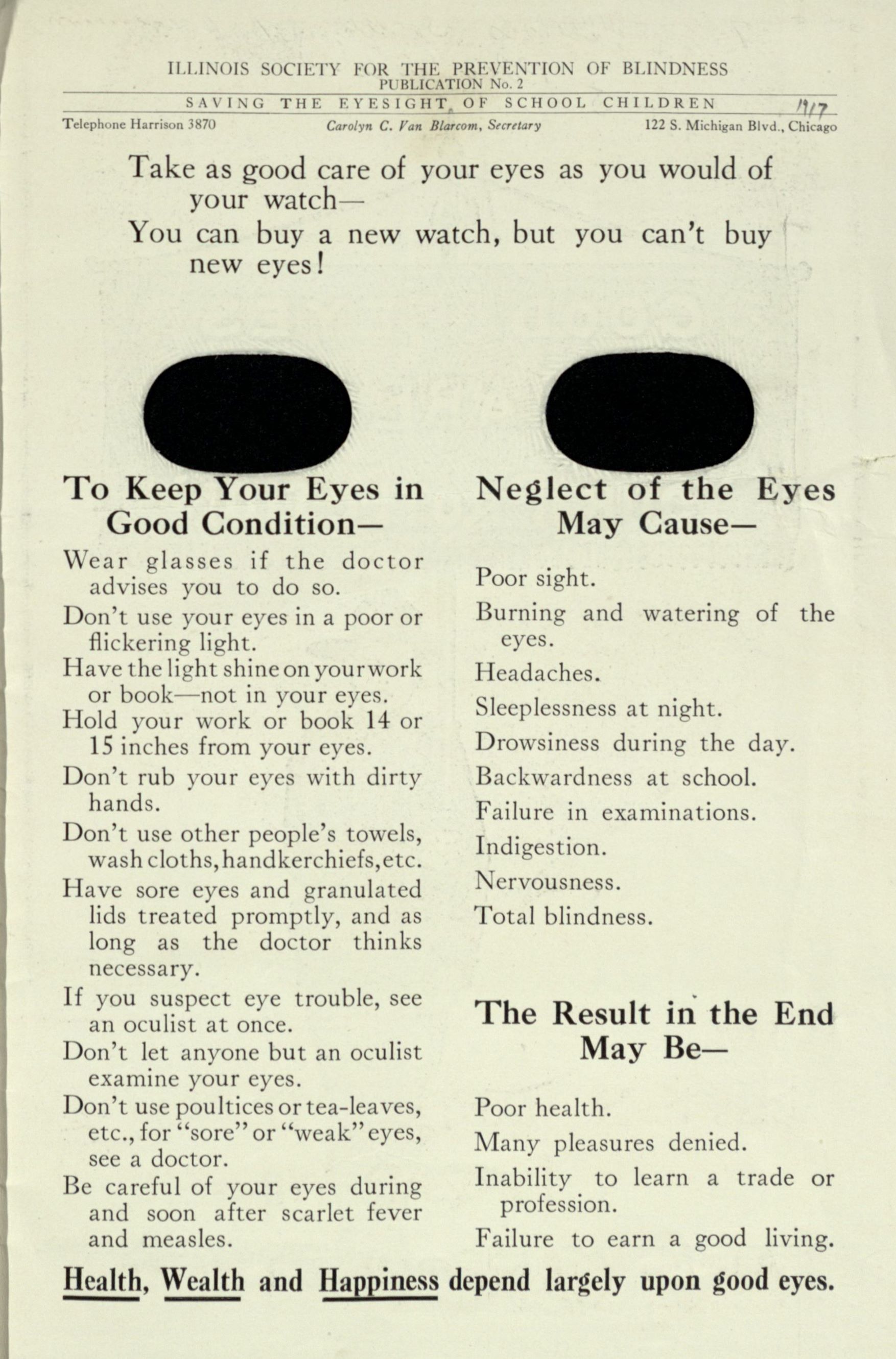
goodeyesareyourprotection“Wear glasses if the doctor advises you to do so.” “Don’t rub your eyes with dirty hands.” “If you suspect eye trouble, see an oculist at once.” This sound advice comes from a 1917 trifold leaflet aimed at school children and published by the Illinois Society for the Prevention of Blindness (ISPB), which was founded in 1916.

breadwinnersWhile the pamphlet contains helpful recommendations on eye health, the illustrations and design are particularly charming. Eyes peer out from the sign on the front cover, but we discover that those eyes belong to a boy in spectacles on the page beneath and the sign has cut outs. The eye holes must have been irresistible to children and are surrounded by guidelines for healthy eyes.

healthwealthhappiness

Click to enlarge.

The pamphlet stresses that proper eye care beginning in childhood confers life-long benefits, especially in a cartoon comparing two couples from an eye screening in childhood through old age. The pair that cares for their eyes flourishes in life, excelling in academics, extracurricular activities, and, in the case of the man, his profession. The other couple is plagued with nervousness and headaches, and both have trouble with work. While the pamphlet is aimed at children, the lesson is for parents as well. In her old age, the content woman is grateful to her mother for getting her the eye care she needed, while the unfortunate pair’s parents had dismissed the eye examiners’ recommendations.

goodcareorneglect

Click to enlarge.

And for anyone who might need further convincing, the Society contrasts good sight and bad sight in black and white.

goodsightpoorsight

In his landmark book, The Evolution and Significance of the Modern Public Health Campaign, published in 1923, C-E. A. Winslow asserts that education and changed behavior are central to modern public health efforts.  He says, “the fight must be won, not by the construction of public works, but by the conduct of the individual life.” In this pamphlet, the ISPB is clearly appealing to individuals, encouraging them to choose good care over neglect, preventing the difficulties in life caused by blindness and eye disease.

Almost a century after the publication of “Good eyes are your protection,” the ISPB still exists and maintains a website. While their efforts seem more expansive, consisting of education, research and programs, the organization remains “dedicated to the care, protection, and preservation of sight.”

Item of the month: Scrapbook of Doctor John T. Nagle, One Album, Three Perspectives

By Christina Amato, Book Conservator

Our item of the month is a scrapbook compiled by Dr. John Nagle from the years 1868-1900.  Dr. Nagle was an employee of the New York City Bureau of Vital Statistics, and the album mostly consists of newspaper clippings concerning births and deaths, diseases, methods of disposing of bodies, etc.  It is an interesting item on many different levels.  When an item comes into the conservation lab, the first thing we naturally see is damage.  The album’s spine had fallen off, many of the newspaper clippings inside were crumpled and broken, and the front cover had warped in a particularly exuberant fashion:

Foredge before treatment.

Foredge before treatment.

Most visitors to the lab who encounter the album, however, just see the charming artwork on the cover:

scrapbook after

A student of book history might be more inclined to see it as a typical example of a publisher’s cloth binding.  Starched bookcloth, which was invented in the 1820s, allowed for the mass production of embossed covers such as the one above. A heated brass die would be used to stamp the cover, and even as late as the 1870s, when Dr. Nagle started compiling his scrapbook, each detail of the die would have been hand carved.

A researcher might have a different take on this item altogether. Though mostly consisting of statistics, which are fascinating in their own right, there are several small clippings that provide intriguing clues into the nature of Dr. Nagle himself:

promenade

In addition to sunny afternoon promenades, Dr. Nagle was known to engage in daring, maritime rescues, and heated competition over the title of “handsomest man”:

swimming

handsomest man

Depending on who you ask, the most interesting thing about this album could be its physical structure, the details of the cover design, or the content.  Regardless of where your interest may lie, conservation treatment has rendered the book accessible to all.  If you are interested in seeing this item, contact us at (212) 822-7313 or history@nyam.org.

Scrapbook after conservation treatment.

Scrapbook after conservation treatment.

Uncle Sam, M.D.

By Paul Theerman, Associate Director

Health Almanac, 1920 front cover.

Health Almanac, 1920 front cover.

How to get the word out? For the last two hundred years, health has been as much about education and prevention as intervention and response. And so an intrepid young doctor in the U.S. Public Health Service (USPHS) latched onto using the almanac as a public health vehicle. Health Almanac 1920 (Public Health Bulletin No. 98; Washington, GPO, 1920) was a 12-page almanac entwined in a 56-page public health pamphlet. Amid checking for the phases of the moon or the times of sunrise and sunset, one could find short pieces giving warning signs for cancer, means to prevent the spread of malaria, the necessity of registering births, and how to build a good latrine. These and many other topics were all presented by “Uncle Sam, M.D.”; the almanac was free for the asking.

Uncle Sam Image 4--July right page

Health Hints and Notable Events for July 1920. Click to enlarge.

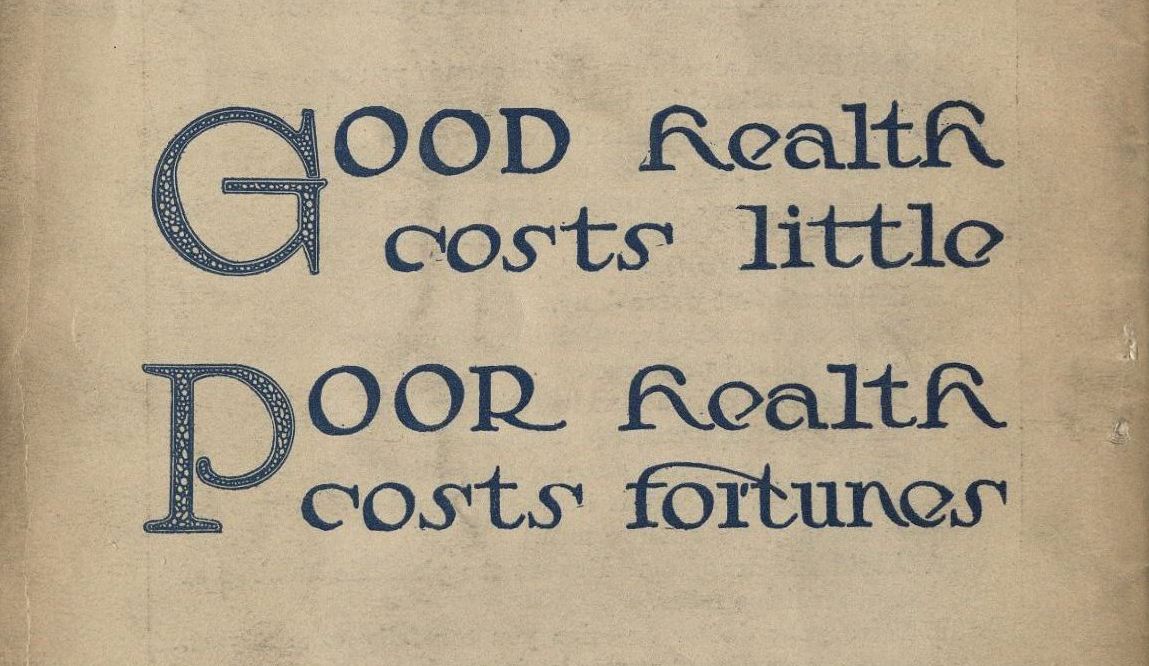
In the distant past, almanacs became linked to health through “astro-medicine” or “iatromathematics,” that is, medical astrology. Each of the signs of the zodiac was held to influence a system of the body, from Ares controlling the head to Pisces the feet, and so for everything in between. Almanacs were calendrical and astronomical, and in addition to marking sunrise and sunset, the phases of the moon, and religious holidays, they charted the day-by-day progress of the moon through the zodiac, with its supposed medical consequences. To this technical data, the most famous American almanac, Benjamin Franklin’s Poor Richard’s Almanac, added moralistic lessons and practical advice, wittily presented. Health Almanac 1920 provided these same features within the context of progressive secular government. The publication started with inspirational statements from President Woodrow Wilson, the Secretary of the Treasury, and the Surgeon General —who together formed the chain of command for the Public Health Service! Instead of a calendar of religious seasons and saints’ days, the almanac noted national days and significant events in the history of medicine and in “The Great War,” just concluded. Everywhere were health aphorisms: “Good health costs little, poor health costs fortunes” (from the back cover), and “Large fillings from little cavities grow” (April 20). Some “health hints” were quite flatly presented: “Every home should have a sewer connection or a sanitary privy” (July 20), and “Food, fingers, and flies spread typhoid fever” (July 31). Some were just to the point: “Be thrifty” (November 15) and “Wear sensible shoes” (December 18). Throughout, the almanac highlighted the role of the USPHS in promoting health.

Uncle Sam Image 2--back cover

Health Almanac, 1920 back cover.

The Health Almanac was published in 1919 and 1920—we have the 1920 edition—as was a parallel publication called the Miners’ Safety and Health Almanac, put out by the Bureau of Mines. Both were the brainchild of Dr. Ralph Chester Williams (1888–1984), then at the outset of his successful career with the Public Health Service. Born in Alabama and a 1910 graduate of the University of Alabama Medical School, Williams entered the USPHS in 1916 and was posted to the Bureau of Mines during World War I. Pulled into the Office of the Surgeon General, he edited Public Health Reports, served as Chief Medical Officer to the Farm Security Administration, as Medical Director of the USPHS’s New York City office, and starting in 1943, as Assistant Surgeon General and head of its Bureau of Medical Services. In that capacity he oversaw a third of the operations of the USPHS, including immigration inspection and USPHS hospitals. In 1951 the Commissioned Officers Association of the USPHS published his standard history, The United States Public Health Service, 1798–1950. At almost 900 pages, it dwarfs the Health Almanac 1920, but both show their author’s dedication to getting the word out about health and, not incidentally, about the agency that helped make that happen.

Item of the Month: Charles Darwin’s The Descent of Man and Selection Related to Sex

By Danielle Aloia, Special Projects Librarian

Charles Darwin. Courtesy of the National Library of Medicine.

Charles Darwin. Courtesy of the National Library of Medicine.

The Descent of Man is a groundbreaking work, as relevant today as when it was first published in 1871. The Center for History owns 8 copies of this title, published 12 years after Darwin’s most well known work, On the Origin of Species. Both books sold out quickly, a sign both of Darwin’s persuasive writing, and people’s persistent interest in their origins! In the Descent of Man, Darwin explained the development of the human species by evolutionary processes. He particularly focused on two points: whether the ability to reason and to make moral judgments could evolve in the same way as could physical forms, and how beauty and other seemingly extraneous factors could have an evolutionary role. These were contentious issues, as mental abilities seemed to be a sharp divide between humans and animals, and the existence of order, harmony, and beauty seemed inconsistent with evolution. To think that man had “evolved from apes” seemed nonsensical and was much criticized; Darwin sought to make it plausible.

Here we examine a 1915 copy of the second edition, first published in 1874, which was greatly revised and augmented with extra illustrations in comparison to the first edition. In the preface, Darwin stated, “When naturalists have become familiar with the idea of sexual selection, it will, as I believe, be much more largely accepted; and it has already been fully and favourably received by several capable judges.” He also acknowledged the criticism he received, referring to the “fiery ordeal through which the book has passed,” and welcomed the observations “of Prof. Huxley, on the nature of the differences between the brains of man and the higher apes.” In a series of debates in the early 1860s with noted anatomist Robert Owen, Darwin’s compatriot T.H. Huxley had demonstrated the essential structural continuity of human and ape brains, providing another piece to the puzzle. Darwin knew and accepted that his theories would provoke a backlash, and he modified the details as needed, but he also held steadfast to his original concepts.

A Table of the Principal Additions and Corrections to the Edition of 1874 compares the 1st edition of 1871, the 2nd of 1874, and the 2nd edition “new printing” of 1888, and is included in the opening pages. Especially interesting are: “Cases of men born with hairy bodies”, and “Resemblances between idiots and animals”.

Click to enlarge.

Click to enlarge.

The engravings reference the differences among males and females of the same species, to illustrate the concept of sexual selection. The species depicted ranged over many classes, including insects, crustaceans, reptiles, birds, and mammals. The engraving below helps to explain how the beautiful plumage of the male bird attracts the female.

darwinbirds

Click to enlarge.

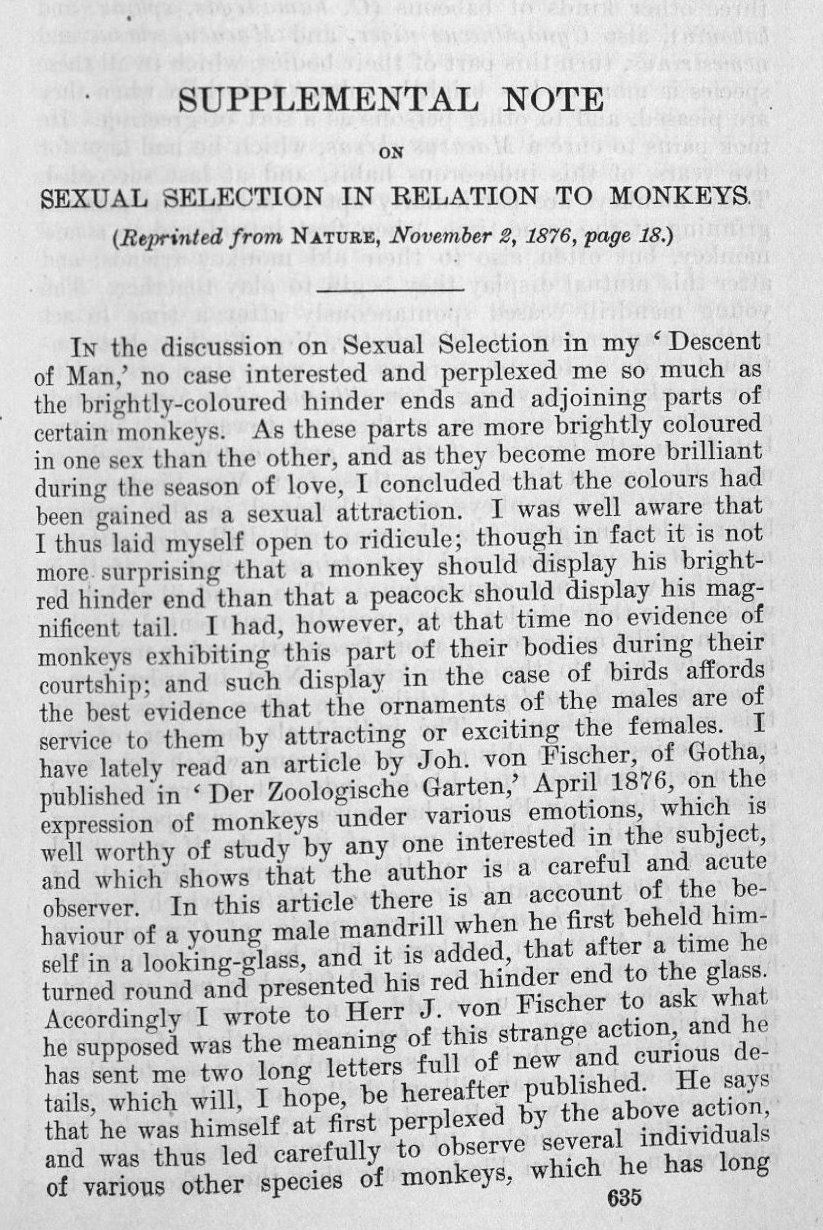
This edition also includes a reprint from an article in Nature, from November 2, 1876, which Darwin wrote to explain his misinterpretation of the “brightly-coloured hinder ends and adjoining parts of monkeys.” He was wrong in assuming that the bright color was for attracting the opposite sex. He read an article by Herr J. von Fischer, who studied monkeys, even keeping them in his house, which explained that the reason was more straightforward: the species would “turn this part of their bodies . . . to him when they are pleased, and to other persons as a sort of greeting.” Surely, Darwin was unafraid to own up to his mistakes.

Click to enlarge.

Click to enlarge.

The book also hosts a tightly-worded index of over 40 pages, where can be found references to the color of Kingfishers, dogs dreaming, and the liability of monkeys to the same diseases as man.

Click to enlarge.

Click to enlarge.

This volume of work has long been the cause of both scientific inquiry and challenge, and continues to be a work of enduring scientific importance.

Sources

Darwin, Charles. (1915). The Descent of Man and Selection in Relation to Sex. New York: D. Appleton and Company.

Alter, Stephen G. (2007). Race, Language, and Mental Evolution in Darwin’s Descent of Man. Journal of the History of the Behavioral Sciences. 43(3): 239-255.

The Darwin Centenary and “The Descent of Man.” (187-).The American Review of Reviews. 239-240.

Of Unicorns on Land and Sea

By Arlene Shaner, Acting Curator and Reference Librarian for Historical Collections

This spring the Cloisters, the branch of the Metropolitan Museum of Art that showcases the art and architecture of medieval Europe, is celebrating its 75th anniversary.  The most famous (and probably most beloved) items in the collection are the Unicorn Tapestries, the seven tapestries that tell the story of the hunt for this elusive animal.  A special exhibit about the unicorn is on display at the Cloisters through August 18th.

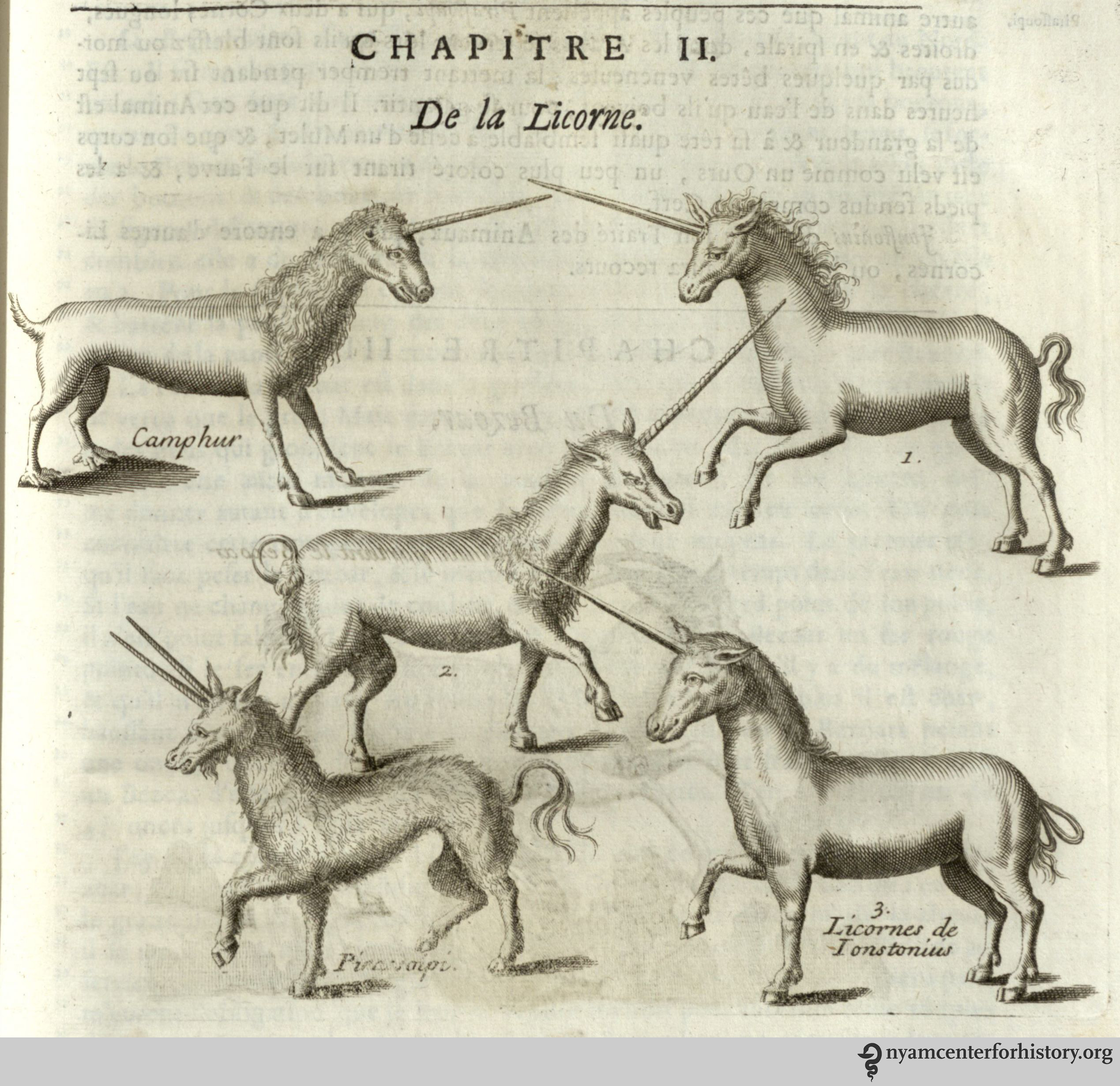
Unicorn horns and their purported medicinal uses are described in a variety of early books on drugs and natural history.  One of these, Pierre Pomet’s Histoire generale des drogues, traitant des plantes, des animaux, & des mineraux… (Paris, 1694) contains a detailed section on the unicorn, complete with an illustration of the five types of unicorns:

Pomet (1658-1699), a druggist to Louis XIV, also maintained an apothecary shop in Paris.  His Histoire was first translated into English in 1712, and appeared in a second edition in 1725.  The book contains detailed information about plant-based remedies, but also describes the compounding of various cures made from parts of exotic animals, metals, minerals, stones, and a variety of other substances.  In the case of the unicorn, Pomet admits almost immediately that what is sold by apothecaries as unicorn horn comes not from a unicorn at all, but from a fish, the narwhal, whose attributes he describes later in the animal section of the book. Of course, Pomet was wrong to describe the narwhal as a fish, as it is really a species of whale and whales are mammals.

The horns of unicorns and narwhals were believed to be effective as an antidote to all kinds of poisons and to cure various unspecified plagues and fevers.  Some people wore the horns as protective amulets, while others collected complete horns as curiosities for display.  While Pomet offers many details about both unicorns and narwhals, he hedges his bets regarding their efficacy, explaining that while some people believe in their worth, “I shall neither authorize nor contradict, having never had sufficient Experience of it.”

78 Years of Anonymity

By Johanna Goldberg, Information Services Librarian

Alcoholics Anonymous (A.A.) celebrates June 10 as the anniversary of its founding. But why and how did the organization form?

As William L White explains in Slaying the Dragon: The History of Addiction Treatment and Recovery in America, A.A.’s founding occurred soon after the end of Prohibition, a time when there were a lack of places for alcoholics to turn to for help. Most institutions specializing in sobriety closed during Prohibition, and those still open were available only for the upper echelons of society. Overcrowded hospitals and sham home cures only worsened the problem. With the repeal of Prohibition and the start of the New Deal, the time was right for A.A.¹

Alcoholics Anonymous can trace its roots to the Oxford Group, a spiritual movement begun in the early 20th century looking to heal the world “through a movement of personal spiritual change.”¹ In 1934, Bill Wilson (known as Bill W.), a co-founder of Alcoholics Anonymous, heard about the Oxford Group from a member who had stopped drinking with the group’s support. After experiencing a spiritual awakening (which may have resulted from hallucinogenic medications) while at a New York hospital to treat his alcoholism, Bill W. started attending Oxford Group meetings.¹

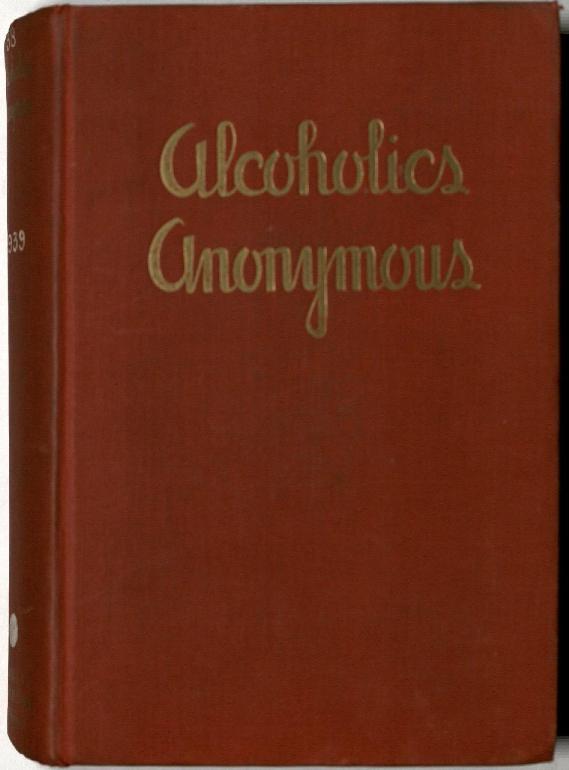
AlcoholicsAnonymousIn 1935, Bill W. met co-founder Dr. Robert Smith (known as Dr. Bob), an alcoholic trying to remain sober with the help of the local Oxford Group in Akron. The date of Dr. Bob’s last drink—June 10, 1935—marks the founding of A.A, which formally separated from the Oxford Group in 1937 (New York) and 1939 (Akron).¹ In 1939, A.A. published Alcoholics Anonymous: The Story of How Many More Than One Hundred Men Have Recovered From Alcoholism. The book listed and explained A.A.’s 12 steps for the first time. As White notes, it also “broke the mold on earlier books by writing, not only about alcoholism, but to alcoholics.”¹ And by alcoholics, laying out its central tenets in a way that makes it clear that the authors had been through a great deal before regaining sobriety:

“If you are as seriously alcoholic as we were, we believe there is no middle-of-the-road solution. We were in a position where life was becoming impossible, and if we had passed into the region from which there is no return through human aid, we had but two alternatives: one was to go on to the bitter end, blotting out the consciousness of our intolerable situation as best we could; and the other, to accept spiritual help. This we did because we honestly wanted to, and were willing to make the effort.”²

Today, we know even more about recovery from alcoholism. Treatment options still include support groups like A.A., and now also incorporate medications and behavioral therapies, often used simultaneously. In addition, the National Institute on Alcohol Abuse and Alcoholism’s (NIAAA) National Epidemiological Study on Alcohol and Related Conditions found that some people with alcohol dependence may recover without treatment.³ And researchers have identified genes that can both increase and reduce a person’s likelihood of becoming dependent on alcohol.4

The landscape of alcohol recovery has greatly altered since June 10, 1935. And yet tenets first written down in 1939 retain significance for A.A.’s more than two million members.5

For more on alcohol dependence, visit the NIAAA’s site Rethinking Drinking.

1. White, W. (1998). Slaying the dragon: The history of addiction treatment and recovery in America. Bloomington Ill.: Chestnut Health Systems/Lighthouse Institute.

2. Alcoholics Anonymous: The story of how many more than one hundred men have recovered from alcoholism. (1939). New York: Works Pub. Co.

3. In this issue. (2006).Alcohol Research & Health, 29(2), 72–73. Retrieved May 30, 2013 from http://pubs.niaaa.nih.gov/publications/arh29-2/71-73.htm

4. NIH Fact Sheets – Alcohol Dependence (Alcoholism). (n.d.). Retrieved May 30, 2013 from http://report.nih.gov/NIHfactsheets/ViewFactSheet.aspx?csid=23

5. A.A. General Service Office. (n.d.). A.A. at a Glance. Retrieved May 30, 2013 from http://www.aa.org/pdf/products/f-1_AAataGlance.pdf

Looking for Health Information Online? Don’t start with Google.

By Johanna Goldberg, Information Services Librarian

This is the first of an occasional series of blogs featuring research tips from NYAM librarians.

We’ve all done it: You leave the doctor’s office and want to know more information about a new diagnosis or other health concern. So you go to your high-tech device of choice and search the Internet.

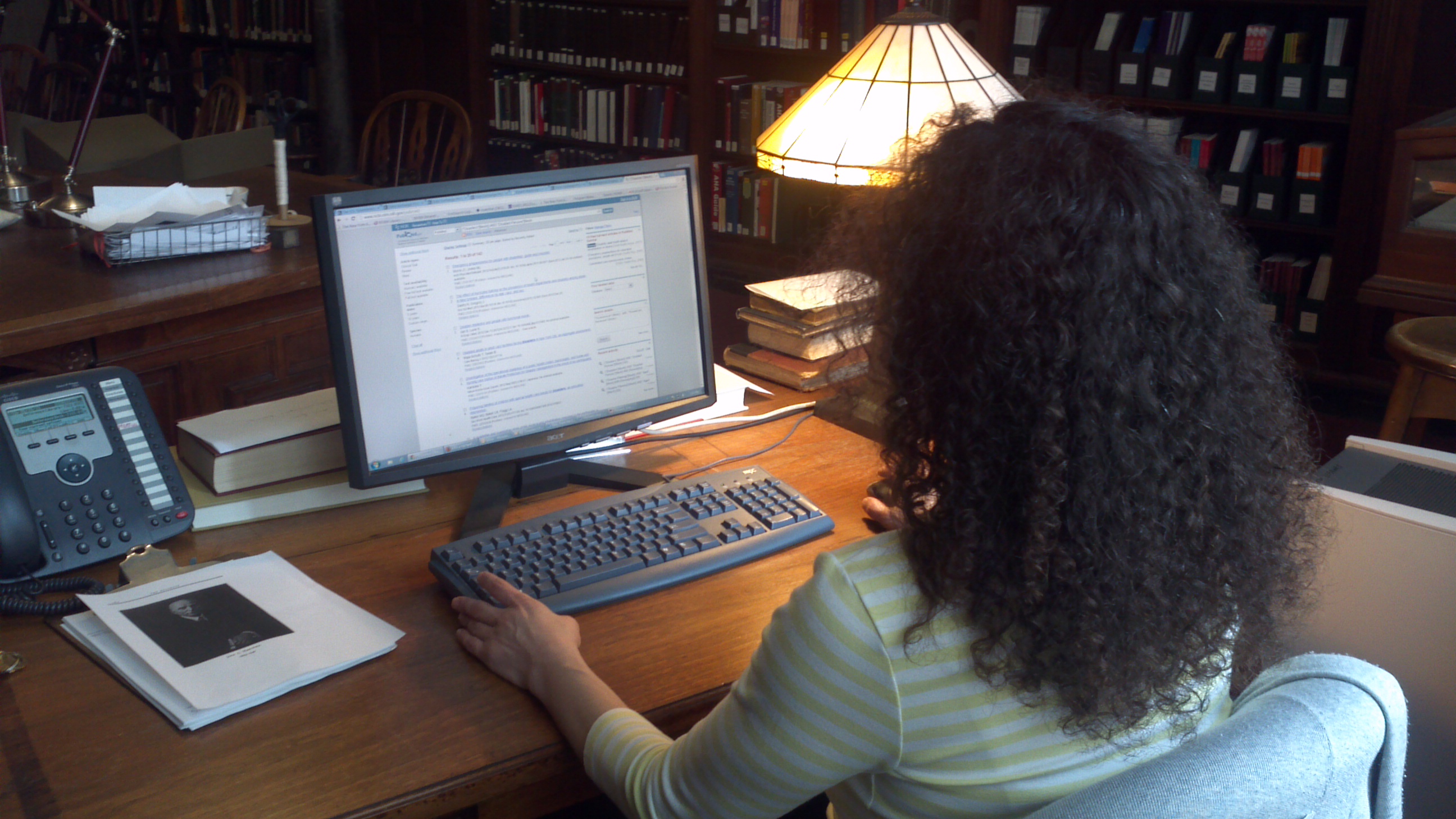
A NYAM Librarian conducts a PubMed search.

A NYAM librarian conducts a search in PubMed.


According to the latest Pew Internet research on the topic, 72% of Internet users went online to find health information in the past year. Of these people, 77% started by using a search engine.¹

But a general Internet search may not be the best way to find high quality health information online.

As we all know, anyone can put information online. Just because something is on a web page does not make it reliable. Fortunately, there are excellent sites that present a wide range of trustworthy health information.

When I look for health information online, I usually start with one of the following sites. If they link to other sources, I know the pages have been vetted:

MedlinePlus
This National Library of Medicine site provides authoritative information from government agencies and nonprofit organizations. It includes a very helpful drug and supplements guide.

HealthFinder
Health information from the U. S. Department of Health and Human Services.

Centers for Disease Control and Prevention
The CDC is especially helpful when looking for trends and statistics.

National Institutes of Health
Each NIH Institute offers a wealth of consumer health information related to its area of interest.

There are other excellent options listed on our recommended resources page under the tab “Public and Consumer Health.”

Sometimes you do need to use a search engine. As I teach my Junior Fellows students, there are questions you need to ask to assess information found online:

1. WHO wrote it? Is it an organization or an individual? What is the person or organization’s bias?

2. WHAT makes them “an expert”? What kind of organization is it? Is it written by a patient? A healthcare professional working in the field? Is there a scientific or medical advisory board assessing the information?

3. WHERE is the author located? Is the website .org, .edu, .com, .gov? Each type of site has its own reasons for sharing information.

4. WHEN was the page last updated or reviewed? Health information can change quickly. The more current, the better.

5. WHY is the information on the Internet? Is the author trying to sell a product or service or raise money? Is it there to help patients and caregivers?

6. HOW does it look? Is it easy to read? Are there lots of advertisements? Are things spelled correctly? Does it make you uncomfortable in some way?

Want to know more about evaluating online health information? MedlinePlus has you covered.

1. Pew Internet: Health (23 April 2013) Retrieved May 22, 2013, from http://www.pewinternet.org/Commentary/2011/November/Pew-Internet-Health.aspx

There is Death in the Pot

By Johanna Goldberg, Information Services Librarian

While in the stacks recently, we came across this intriguing cover.

DeathinthePot-cover


How can you not open the book? The title page did not disappoint.

DeathinthePot-titlepageFood adulteration was a dangerous problem in 19th-century London. In 1820, chemist Fredrick Accum wrote A Treatise on Adulterations of Food and Culinary Poisons, the first book of its kind to attempt to expose the dangers of the food, water, and beverage supply.¹

Among many other practices, Accum cautioned against alum in the bread supply, used to make bread whiter; fraudulent peppercorns, made of lintseed, clay, and a small bit of Cayenne; vinegar laced with sulphuric acid; red lead used to color cheese; and beer mixed with a poisonous narcotic plant, cocculus indicus.² Forty years after the book’s publication, Parliament passed the Food Adulteration Act.¹

The Royal Society of Chemistry’s Library and Information Centre offers an excellent online exhibit on the life and times of Accum (including a career-ending scandal involving mistreatment of library books). Learn more here.

Edit: A reader recognized the artwork as that of Berkeley King and kindly provided us with the following image of the cover of Accum’s Plans of the Gas Works in London, which King also designed.

AccumPlansoftheGasWorksinLondon


1. The fight against food adulteration. (n.d.). Retrieved May 16, 2013, from http://www.rsc.org/education/eic/issues/2005mar/thefightagainstfoodadulteration.asp

2. Accum, F. (1820). A treatise on adulterations of food, and culinary poisons exhibiting the fraudulent sophistications of bread, beer, wine, spirituous liquors, tea, coffee, cream, confectionery, vinegar, mustard, pepper, cheese, olive oil, pickles, and other articles employed in domestic economy, and methods of detecting them. London: Longman, Hurst, Rees, Orme, and Brown.

For your viewing pleasure

This Wednesday’s 2013 New York Academy of Medicine Gala featured the following video on the Center for the History of Medicine and Public Health. If you would like to learn more about our work or visit us in person, please email history@nyam.org and library@nyam.org.