Who Becomes a Medical Doctor in New York City: Call for Papers

RBR deskThe New York Academy of Medicine’s Section on History of Medicine is pleased to announce “Who Becomes a Medical Doctor in New York City: Then and Now—A Century of Change” to be held on December 11, 2014 from 6:00 pm–7:30 pm. The event will take place at the Academy, located at 1216 Fifth Avenue at the corner of 103rd Street.

We are inviting all those interested in presenting to submit an abstract with one aspect of how individuals were selected, or excluded from, the study of medicine in New York City over time. These might include, but need not be limited to, decisions based on academic qualification, race, sexual orientation, ethnicity, economics, and country of origin. The influence of career expectations for the profession and social and cultural factors motivating individuals to become a medical doctor may also be considered.

Note the following submission requirements:

  • Applications must include an abstract, with a 250-word maximum, and this form.
  • Abstracts must be submitted no later than October 30, 2014

The time allotted for presentation is 12 minutes with an additional 3 minutes for questions/discussion. Papers selected for presentation will be determined by a committee of History of Medicine Section members and staff of The New York Academy of Medicine.

Abstracts should be submitted electronically to Suhani Parikh at sparikh@nyam.org.  Questions may be directed to Suhani via email or phone (212-419-3544).

2014–2015 Helfand and Klemperer Research Fellows

By Lisa O’Sullivan, Director, Center for the History of Medicine and Public Health

We are pleased to announce the 20142015 Helfand and Klemperer Research Fellows: Laura Robson (University of Reading) and Heidi Knoblauch (Yale University).

Rösslin, Eucharius. The byrth of mankynde, otherwyse named the womans booke. [London : Tho. Ray[nalde]], 1545.

The Audrey and William H. Helfand Fellowship in the History of Medicine and Public Health  focuses on the use of visual materials. Laura Robson will explore how medical works in the sixteenth century used images and texts from Andreas Vesalius’ anatomical treatise, the Fabrica. She will use Geminus’s Compendiosa (1545) and Raynalde’s translation of The byrth of mankynde (1545) to demonstrate the complex relationship between anatomical image and text and to unite the history of the book with the history of the representation of the body.

Louis A. Sayre Personal Casebook with multiple photographs, drawings, and ephemera of his patient, Aldoph Roussell ca. 1867

Louis A. Sayre Personal Casebook with multiple photographs, drawings, and ephemera of his patient, Aldoph Roussell ca. 1867

Our Paul Klemperer Fellow in the History of Medicine, Heidi Knoblauch, will use Lewis Sayre’s casebooks, the Photographic Review of Medicine and Surgery, and Bellevue Hospital Records. Looking especially at images and records from the Photographic Department at Bellevue Hospital (1868−1906), the first such department in a civil hospital in the United States, she will explore how 19th- and early 20th-century medical professionals in the U.S. used photographs of patients. What did physicians intend to do with photographs? What role did patients play in the collection of photographs? Her research will track how patients and physicians conceived the confidential nature of recording, collecting, and disseminating medical information (an ongoing question for medical archivists and historians).

Keep an eye out for guest posts from our fellows, who will also present their work at the end of their fellowships.

The Drs. Barry and Bobbi Coller Rare Book Reading Room – the panoramic view

The Drs. Barry and Bobbi Coller Rare Book Reading Room captured by Ardon Bar-Hama.

The Drs. Barry and Bobbi Coller Rare Book Reading Room captured by Ardon Bar-Hama. Click for the full panoramic experience.

The Drs. Barry and Bobbi Coller Rare Book Reading Room has reopened. Renovations improved environmental conditions for the collections, including a new HVAC system, restored the historic windows, and a return to the cork floor’s former glory. We are once again welcoming readers and visitors to the room and were delighted to have the chance to host the wonderful Ardon Bar-Hama, who kindly captured the space in its full panoramic glory. Click through on the image to see the interactive (and highly zoom-able) panoramic view.

Welcome to Performing Medicine

Header for Performing Medicine FestivalOur spring 2014 festival, Performing Medicinetakes place tomorrow, April 5, 2014, from 11:00 a.m. to 6:00 p.m.at the New York Academy of Medicine. We will explore the interrelationships of medicine, health, and the performing arts at this day-long festival of actors, dancers, doctors, and musicians. Register here through today, April 4, for reduced admission.

Performers will include Dr. Richard Kogan on the mental life of famous composers; Brian Lobel and his comedic adventures as a cancer patient; David Leventhal and Pamela Quinn on dance and Parkinson’s disease with DANCE FOR PD® from Mark Morris Dance Group/Brooklyn Parkinson Group; the medical musicians of Mount Sinai on the art of listening; and musical interludes from Weill Cornell’s Music and Medicine Initiative.

Throughout the day there will be guided behind-the-scenes tours of our Dr.s Barry and Bobbi Coller Rare Book Reading Room and Gladys Brooks Book & Paper Conservation Laboratory. Spaces are limited to 20 people per tour; make sure to get your tickets soon!

This is the first of two festivals in 2014 exploring the connections between medicine, health, and the performing and visual arts. In the fall our main festival, Vesalius 500: Art and the Body, will celebrate the 500th anniversary of the birth of Andreas Vesalius and the impact of his De Humani Corporis Fabrica or The Fabric of the Human Body. Like our 2013 festival, the day will feature multiple strands of programs, performances, workshops and interactive events.

Program Announcement: The Beginning of the Ends

CenterforBookendScholarship_logoThe Center for the History of Medicine and Public Health is excited to announce the founding of its newest program, the Center for Bookend Scholarship. Through the Center for Bookend Scholarship, we aim to foster knowledge and appreciation of the most underappreciated object in the history of the book. We will encourage scholarly and public interest in the bookend through exhibitions, public programs, and research opportunities.

Book storage methods as shown in Fasciculus Medicinae, published in 1495.

Book storage methods as shown in our 1509 edition of Fasciculus Medicinae. Click to enlarge.

Early libraries did not need bookends. People arranged books horizontally into the 16th century (and perhaps longer). Only once enough books existed to fill up a bookshelf—which only started to resemble the furniture of today in the 16th century—without falling over did libraries begin to store books vertically.1

It took even longer for people to shelve books spine-out. Many Medieval and Renaissance libraries chained books to lecterns and shelves; in order to attach the chain without causing damage, these libraries stored books fore-edge out. In the 16th century, books began to include authors and titles on their spines, though not universally, a sign that shelving practices included spine-out configurations. By the next century, nearly all books had bibliographic information on their spines.1

Bookends are a relatively new technology. The familiar L-shaped metal kind were first patented in the 1870s.1 It took some decades before the term became common parlance: the Oxford English Dictionary records 1907 as the first year the term “book end” appeared in print.2

The New York Academy of Medicine Library has long held an interest in the bookend. Since our founding in 1847, we have intentionally amassed thousands of bookends. Strengths of the collection include American and functional bookends, but we are beginning to add to our European and decorative holdings. Through the Center for Bookend Scholarship, we will now dedicate more time and attention to these objects as we move forward in building the world’s preeminent collection.

Below is a selection of bookends from our collection.

This slideshow requires JavaScript.


References

1. Petroski, H. (2000). The book on the bookshelf. New York: Vintage Books.

2. book, n. (2014). OED Online. Oxford University Press. Retrieved from http://www.oed.com/view/Entry/21412

Author’s Night – The AIDS Generation: Stories of Survival and Resilience

Perry N. HalkitisPlease join us on Wednesday, March 19 at 6 pm to hear NYAM Fellow Perry N. Halkitis, PhD, MS, MPH, discuss his latest book, The AIDS Generation: Stories of Survival and Resilience. The book has just been named a finalist for a 2014 Lamda Literary Award in the biography/memoir category. To RSVP, e-mail Donna Fingerhut.

Dr. Halkitis had several motivations for writing this book, as he explains:

First, I wanted to create a historical document of the unique experiences that these men—the men of the AIDS Generation—lived through—people who lived through the darkest moments of the epidemic in the first two decades of AIDS. Second, I wanted to demonstrate the resilience of my generation of gay men and move away from research that is based on deficit models that are too often evident in the literature.  In fact, somehow the men of the AIDS Generation survived and thrived. It would be simple to say it was pure luck that they remained healthy long enough for the development of antiviral therapies. But I believe what I learned from these stories is that there is something greater at work here. These men were able to attend and care for the whole selves—social, biological, and emotional selves—which empowered them to get through to 1996, the turning point of the epidemic, and which is demonstrative of resilience and not deficit. Third, the way that the men of the AIDS Generation managed the disease helps to inform how we can work with all people who are living with HIV and other people living with challenging chronic diseases.

Dr. Halkitis is professor of applied psychology and public health and population health (Steinhardt School and Langone School of Medicine), director of the Center for Health, Identity, Behavior & Prevention Studies, and associate dean for academic affairs (Global Institute of Public Health) at New York University. He is also an affiliate of NYU’s Center for AIDS Research and Center for Drug Use and HIV Research. Dr. Halkitis has conducted HIV behavior research for the last 20 years, examining HIV in relation to other health problems.

Announcing Our Performing Medicine Festival

Header for Performing Medicine FestivalJoin us on April 5, 2014 to explore the interrelationships of medicine, health, and the performing arts with a day-long festival of actors, dancers, doctors, and musicians. Register here.

Performers will include Dr. Richard Kogan on the mental life of famous composers; Brian Lobel and his comedic adventures as a cancer patient; David Leventhal and Pamela Quinn on dance and Parkinson’s disease with DANCE FOR PD® from Mark Morris Dance Group/Brooklyn Parkinson Group; the medical musicians of Mount Sinai on the art of listening; with discussions, musical interludes from Weill Cornell’s Music and Medicine Initiative, and more.

Throughout the day there will be guided behind-the-scenes tours of our Coller Rare Book Reading Room and and Gladys Brooks Book & Paper Conservation Laboratory. Spaces are limited to 20 people per tour; make sure to get your tickets early!

This will be the first of two festivals in 2014 exploring the connections between medicine, health, and the performing and visual arts. In the fall our main festival, Vesalius 500: Art and the Body, will celebrate the 500th anniversary of the birth of Andreas Vesalius and the impact of his De Humani Corporis Fabrica or The Fabric of the Human Body. Like our 2013 Festival, the day will feature multiple strands of programs, performances, workshops and interactive events.

History Night Presentations Announced

The New York Academy of Medicine’s Section on History of Medicine will hold the “Fourth Annual History of Medicine Night – Part One: Spotlight on New York” on February 6 from 6:00 pm–7:30 pm at NYAM, 1216 Fifth Avenue at the corner of 103rd Street. Register to attend here. A second evening of presentations is being planned for spring.

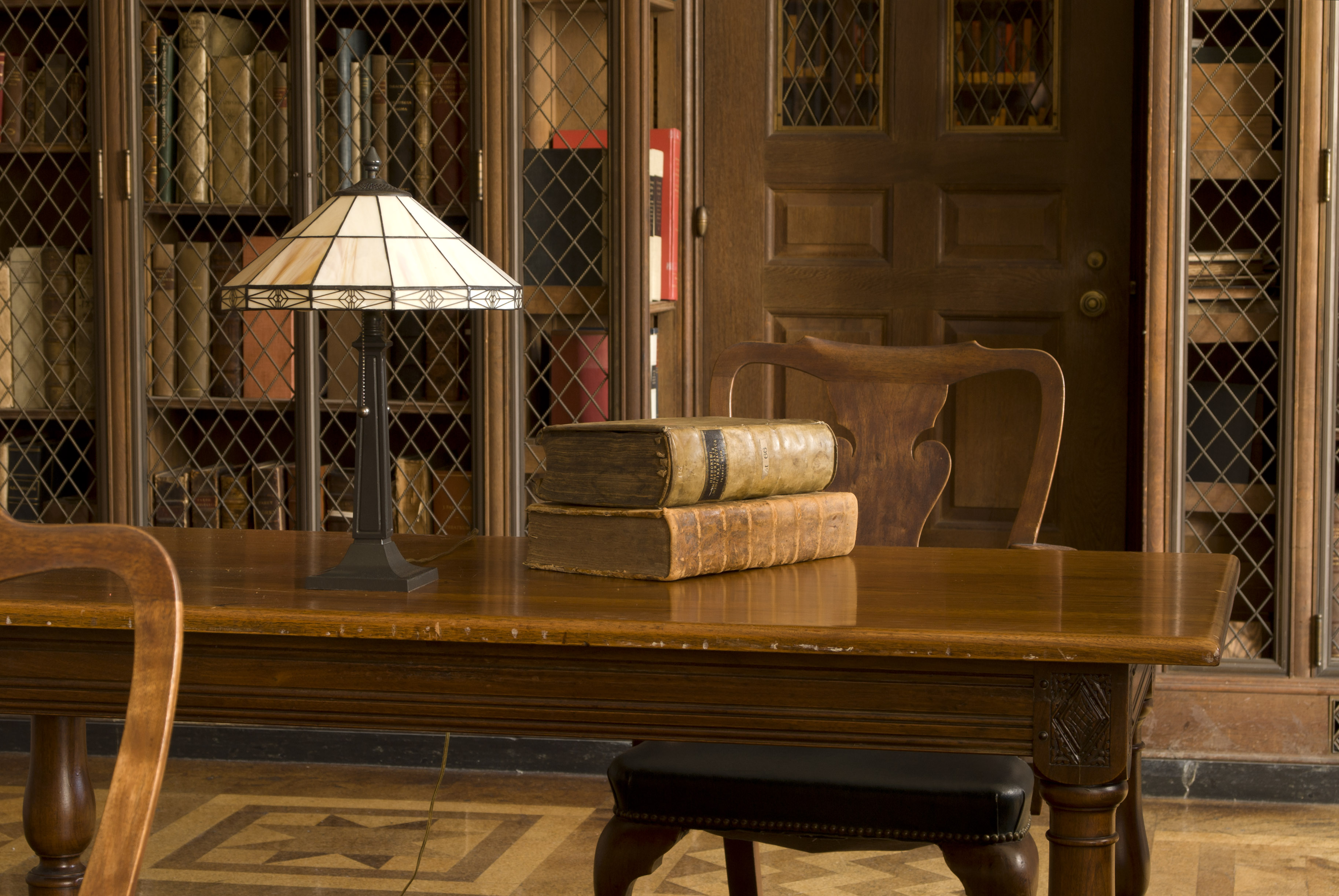
RBR deskThe night will feature the following presentations, as described by the speakers:

“Psychiatric Criminology in the Eugenic Era: The New York Police Psychopathic Laboratory, 1915-1929”
Sara Bergstresser, M.P.H., Ph.D., Columbia University, Bioethics

“First, I explore the historical background of North American and European psychiatry, criminology, and eugenics in the nineteenth century, including threads of early convergence. Next, I examine the development of eugenic psychiatry and its intersections with eugenic criminology, with a particular emphasis on New York State in the early twentieth century. I then present a case study from that time period, which is based primarily on materials from the archives of the New York Police Psychopathic Laboratory. I go on to argue that in this case the workings of psychiatric criminology were more eclectic and uncertain than they may otherwise appear based on broad descriptions of the eugenic era.”

“Not for Self but Others: The Presbyterian Hospital Goes to War”
Pascal J. de Caprariis, M.D., Lutheran Medical Center

“On March 11, 1940 the U.S. Surgeon General reached out to Presbyterian Hospital’s medical board president to develop a military hospital to support US troops in an eventual war. Structured to receive patients from combat areas and follow American troops throughout war, it was to provide complex medical and surgical care over the course of three years and two months abroad.”

“The Cancer Education Campaigns in Progressive Era New York City: The Role of Women”
Elaine Schattner, M.A., M.D., F.A.C.P., Weill Cornell Medical College

“At the start of the 20th century, myths about cancer’s causes and treatments were widespread. Fear of the disease—and of inept surgeons—was rampant. Many afflicted fell prey to hoaxers selling bogus salves, patent medicines and painless “cures.” In April 1913, a prominent New York City surgeon and gynecologist, Dr. Clement Cleveland, invited a group of well-to-do ladies, bankers and physicians to his home. They heard from statisticians and public health specialists, and considered what might be done to reduce cancer’s mounting toll. The group met formally again in June 1913 at the Harvard Club in New York City. They formed the American Society for the Control of Cancer (ASCC), which three decades later became the American Cancer Society.”

“A Diagnosis of Philanthropy: Carnegie and Rockefeller and the Medical Profession”
Catherine (Katia) Sokoloff, Sarah Lawrence College

“Through exploring the evolving interests of Andrew Carnegie and John D. Rockefeller during the Progressive Era, this paper unearths how these philanthropists and their advisers facilitated and funded the writing of the infamous Flexner Report in 1910. The report, also called Bulletin Number Four, exposed the inadequacies of medical schools and catalyzed dramatic education reforms.”

“Organizing Orthopaedic Societies in New York City in the 1880s: The New York Orthopaedic Society, the New York Academy of Medicine Section of Orthopaedic Surgery and the American Orthopaedic Association”
Jonathan B. Ticker, M.D., College of Physicians and Surgeons, Columbia University

“After the seventh general meeting of the New York Orthopaedic Society (NYOS) on January 4, 1886, steps were taken to merge NYOS into a section of the New York Academy of Medicine (NYAM). Thus, on January 29, 1886, NYOS adjourned and the NYAM Section of Orthopaedic Surgery began. On January 29th, 1887, the chairman of the Section and 15 others “[met] and [discussed] the organization of a national orthopaedic society.” This led to the founding of the American Orthopaedic Association (AOA).”

History Night: Call for Papers

RBR desk

The New York Academy of Medicine’s Section on History of Medicine is pleased to announce its Annual History of Medicine night to be held on February 6, 2014 from 6:00 pm–7:30 pm. The event will take place at the Academy, located at 1216 Fifth Avenue at the corner of 103rd Street.

We are inviting all those interested in presenting to submit a narrative on a historical subject relating to medicine for consideration.

Note the following submission requirements:

  • Applications must include an abstract, with a  500-word maximum, and this form
  • Abstracts must be submitted no later than January 15, 2014

The time allotted for presentation is 12 minutes with an additional 3 minutes for questions/discussion. Papers selected for presentation will be determined by a panel of History of Medicine Section members.

Abstracts should be submitted electronically to Donna Fingerhut at dfingerhut@nyam.org.  Questions may be directed to Donna via email or phone (212-419-3645).

Holiday News from the Center

NYAM Library, Rare Book Room photos by Amy Hart © 2012As the year comes to an end, there is a lot going at the Center for the History of Medicine and Public Health.

♦ We are planning our 2014 Festivals (there will be two! Save the date for the first on April 5. Keep an eye out for details coming early next year).

♦ On December 4, we will welcome a number of influential librarians to an informal roundtable to discuss the impact of open access publishing for libraries, researchers, and users. Simon Chaplin, Head of the London Wellcome library, will take part in this discussion, and in the evening present a lecture on the (often eccentric) history of medical tourism. Both events are free but require pre-registration (follow the links to register).

♦ For those in the scholarly world, details of our two research fellowships have just gone live:

  • The Paul Klemperer Fellowship supports research using our collections for the history of medicine. Find out more here.
  • The Audrey and William H. Helfand Fellowship supports work in the history of medicine and public health, with a particular focus on the use of visual materials. More details here.

Applications close March 4, 2014 for the 20142015 academic year. We encourage applicants to get in touch with our Reference Librarian for Historical Collections when shaping their applications.

♦ We are accepting applications for the 2014 Gladys Brooks Book and Paper Conservation Internship now through December 15, 2013. For more information about eligibility, click here.

♦ The Center is growing! We are looking for a curator to join the team to help us develop our scholarly and public presence through exhibitions, programming, and collection development. For more details see the job description here.

♦ The library closes early today, November 27, and will be closed on Thursday and Friday, November 28 and 29. We will also be closed on December 24 and 25.