Become a Friend of the Rare Book Room

We are excited to announce the re-launch of our Friends of the Rare Book Room program, with new Friends levels and benefits bringing you access to more events and opportunities for engagement with our world-renowned collections. Our rare book room is home to some of our rarest and most significant holdings, forming the heart of our collections. You can make an appointment to visit the rare book room by e-mailing history@nyam.org or calling 212-822-7313.

NYAM_RBR_106By becoming a Friend of the Rare Book Room you’ll support our mission of preserving and promoting the heritage of medicine and health though our public programs and outreach activities; the acquisition, conservation, and cataloging of remarkable historical materials; and digitization of our key treasures. And you’ll join an engaged group of supporters, passionate about preserving our collections.

We’ll be announcing exciting new additions to our programming throughout the year, including special Friends events. In the meantime, please save the date for the March 31 and April 14:

On March 31 we will welcome Dr. Vivian Nutton, Professor Emeritus of the History of Medicine at University College, London, who will speak on “Vesalius Correcting Vesalius.”

Our annual Friends lecture on April 14 will feature Nick Wilding, our 2013–2014 Klemperer Fellow in the History of Medicine. His lecture, “On the Circulation of the Book: The Early Reception of Harvey’s De motu cordis,” will draw on research done in the rare book room.

Friends’ contributions make a huge difference to us, allowing us to better care for our collections and make them as widely accessible as possible to everyone who wishes to use them. Please consider supporting our efforts!

Censoring Leonhart Fuchs: Examples from the New York Academy of Medicine

Hannah Marcus, today’s guest blogger, is a PhD candidate at Stanford University studying the history of censorship in Early Modern Europe.

In 1559, 32 years after Martin Luther started the Reformation by posting his Ninety Five Theses on the door of the Castle Church in Wittenberg, Pope Paul IV published the papacy’s first Index of Prohibited Books. The list banned more than 500 authors and proclaimed that Catholic readers could no longer own or read books written by heretics. Leonhart Fuchs (1501-1566) was one of many Protestant authors whose works were banned by the Index of Prohibited Books. And yet, Fuchs was no theologian and his published works were not about religion. Leonhart Fuchs was one of the great botanists and doctors of the 16th century.

Within months of the first prohibition, Catholic readers and ecclesiastical officials alike realized that Fuchs’s books were important resources for physicians, despite their author’s religion. Thus began a process of compromise that lasted for more than a century in Italy: with permission from Church authorities, Catholic readers were allowed to keep their copies of Fuchs’s books if they removed his name from text.

The New York Academy of Medicine Library owns a number of copies of these censored works, and these copies reveal a great deal about how Italians lived with and circumvented the culture of censorship. The order to remove Fuchs’s name could take a variety of forms, and NYAM has a remarkable assortment of examples.

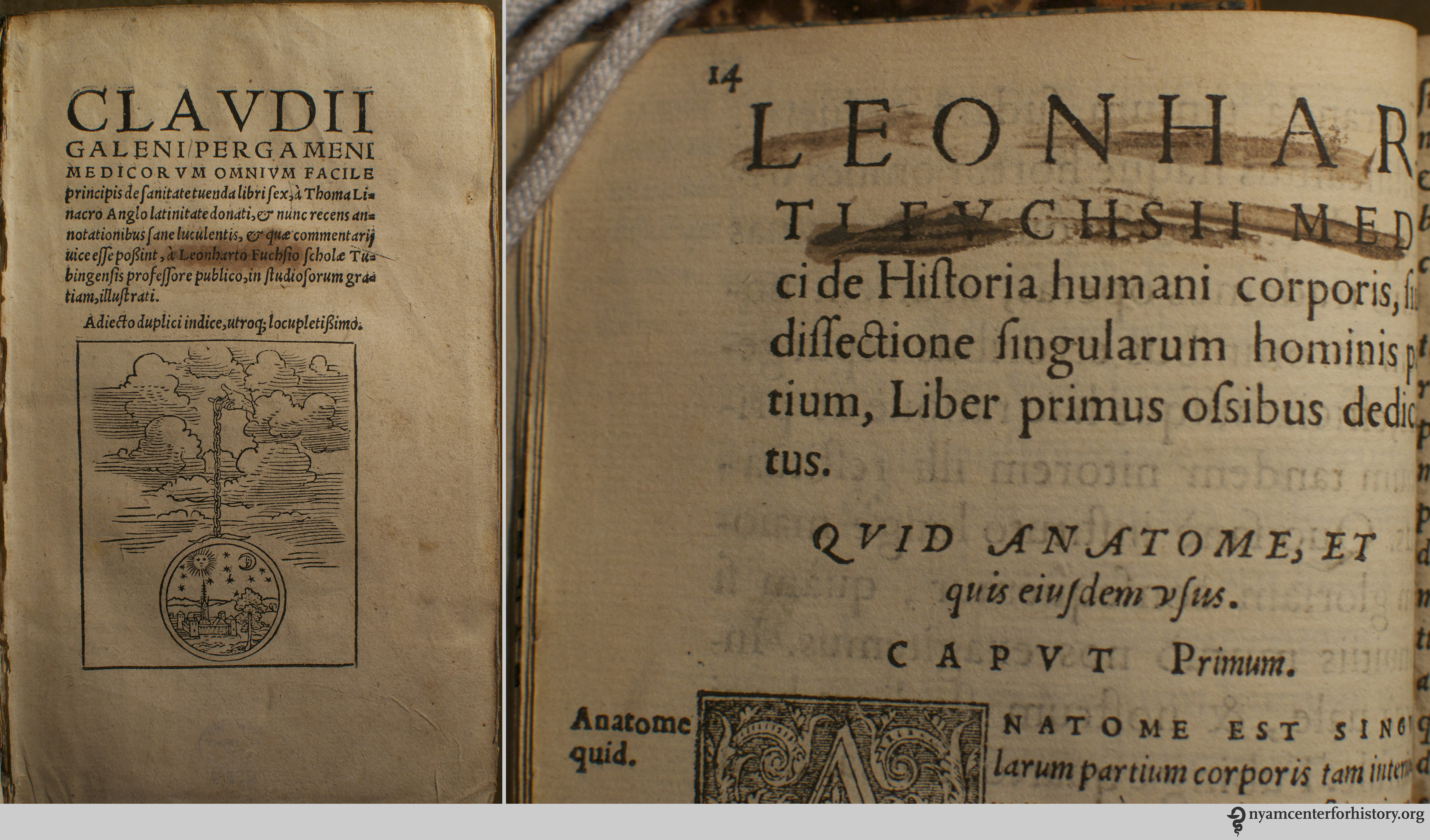
The most common way to censor a name or passage from a book was simply to cross it out with ink. In these two examples we can see copies of books from which Fuchs’s name has been blacked out with a pen and ink and then clearly washed off at a later date (on the left) and blacked out with ink using a paintbrush (right). The sloppiness of the paintbrush and speed with which the name has been canceled indicates that the expurgation, that is the removal of the name, was probably done by an inquisitor or Catholic official who was censoring many books in rapid succession.

Left, Fuch's Claudii Galeni Pergameni, 1549?. Right, NEED ID.

Left, De sanitate tuenda libri sex, 1541. Right, De humani corporis fabrica, 1551. Click to enlarge.

In contrast to the inquisitor who sloppily painted over Fuchs’s name, this book owner took pains to transform the letters of LEONHART FUCHS into a jumble of nonsense characters. This is an incredibly unusual practice, but another example of the technique can be found in a copy of Conrad Gesner’s book On Animals kept at the Stanford University Special Collections. It is likely that both books were owned and censored by the same person.

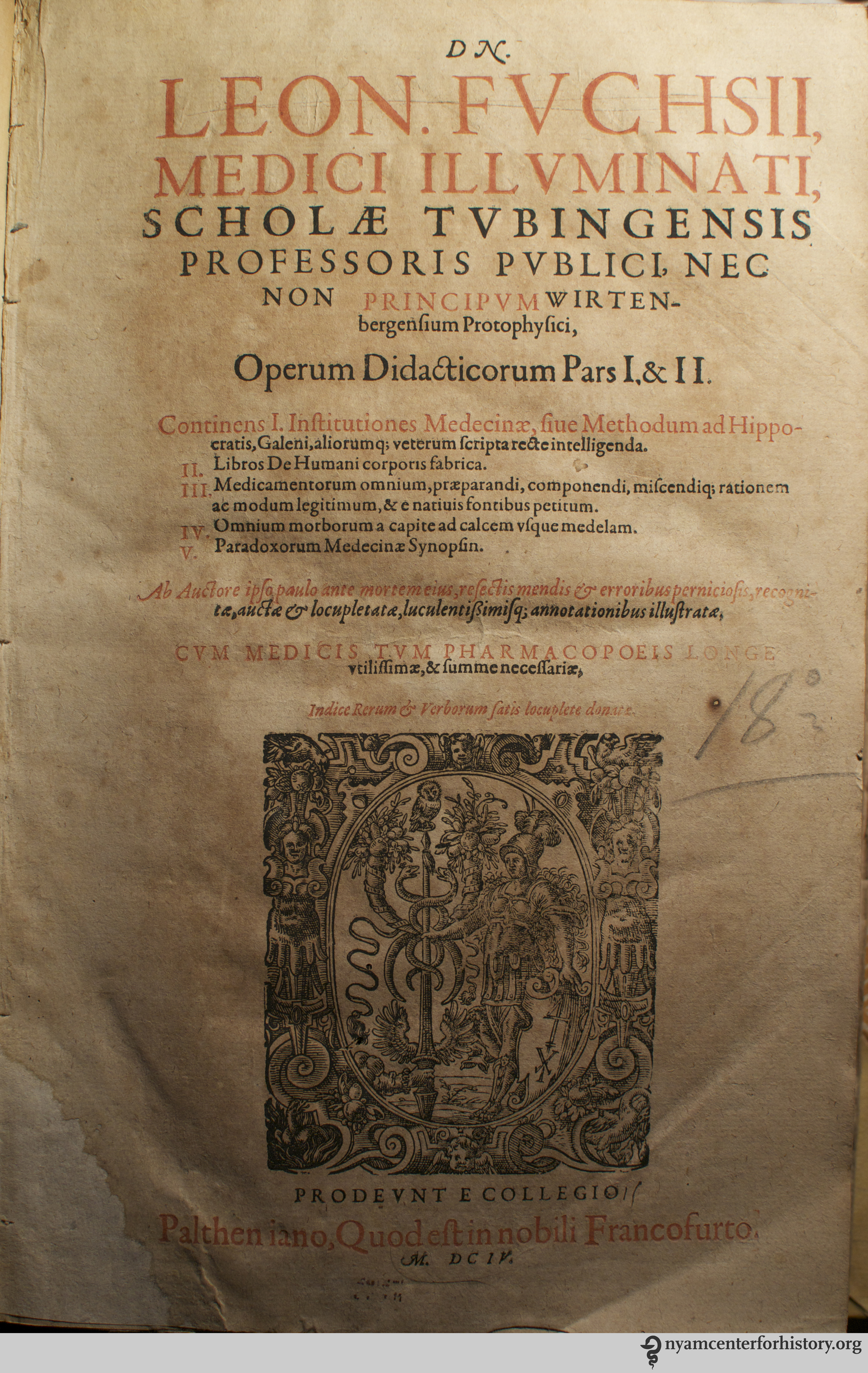
Looking at this copy of Fuchs’s works from 1604, we get the sense that the reader was more interested in complying with the letter of the law than its spirit. The thin line through the author’s name does little to mask the huge characters on the title page.

Fuchs, Operum didacticorum, 1604.

Fuchs, Operum didacticorum, 1604. Click to enlarge.

Gluing a piece of blank paper over prohibited text was another way to expurgate a book. As a technique it also left an obvious space where the prohibited words or names had been. In many examples, like that of Fuchs’s portrait from his 1542 History of Plants, a later owner has used this blank space to write in the author’s name where it was originally printed.

Fuchs, De historia stirpium commentarii insignes, 1542. Click to enlarge.

Fuchs, De historia stirpium commentarii insignes, 1542. Click to enlarge.

Censorship laws forced readers in Catholic Europe to alter their books in ways that have left lasting traces more than 400 years later. We can also see that as rigidly as these rules were laid down, their execution betrays a variety of impulses on the part of readers and censors. Expurgation was meant to correct a book and remove what was harmful, not to destroy the whole object. In a way then, expurgation made it possible for these books to avoid the inquisitors’ bonfires and find their way eventually to the corner of East 103rd Street and Fifth Avenue, bearing on their pages the scars of their histories in Counter-Reformation Europe.

Presentations Announced for the Fifth Annual History of Medicine Night: Insights from the Early Modern Period

The New York Academy of Medicine’s Section on History of Medicine will hold the “Fifth Annual History of Medicine Night: Insights from the Early Modern Period” on March 11 from 6:00 pm–7:30 pm at NYAM, 1216 Fifth Avenue at the corner of 103rd Street. Register to attend here.
RBR shelfPresenters will address historical topics relating to medicine with a focus on the Early Modern period.  This year’s presenters are:

Barbara Chubak, MD
Urology Resident (PGY-5), Montefiore Medical Center
“Imagining Sex Change in Early Modern Europe”

Jeffrey M. Levine, MD
Assistant Clinical Professor of Medicine and Palliative Care
Icahn School of Medicine at Mount Sinai
“A Fresh Look at the Historiated Initials in the De Humani Corporis Fabrica”

John E. Jacoby, MD, MPH
Assistant Clinical Professor of Medicine and Pediatrics
Icahn School of Medicine at Mount Sinai
“On the Life of Dr. Robert Levett: The Philosophy of Primary Care”

Nina Samuel, PhD
Center for Literary and Cultural Research
University of Berlin
“The Art of Hand Surgery”

Michelle Laughran, PhD
Associate Professor of History
Saint Joseph’s College of Maine
“The Medical Renaissance among Three Plagues: Epidemic Disease, Heresy and Calumny in Sixteenth-Century Venice”

Sharon Packer, MD
Assistant Clinical Professor of Psychiatry and Behavioral Sciences
Icahn School of Medicine at Mount Sinai
“Epidemic Ergotism, Medieval Mysticism & Future Trends in Palliative Care”

Part two of this lecture series, “History of Medicine Night: 19th– and 20th-Century Stories,” will take place on May 6, 2015.

Darwin and Behavior

By Paul Theerman, Associate Director, Center for the History of Medicine and Public Health

Courtesy of the National Library of Medicine.

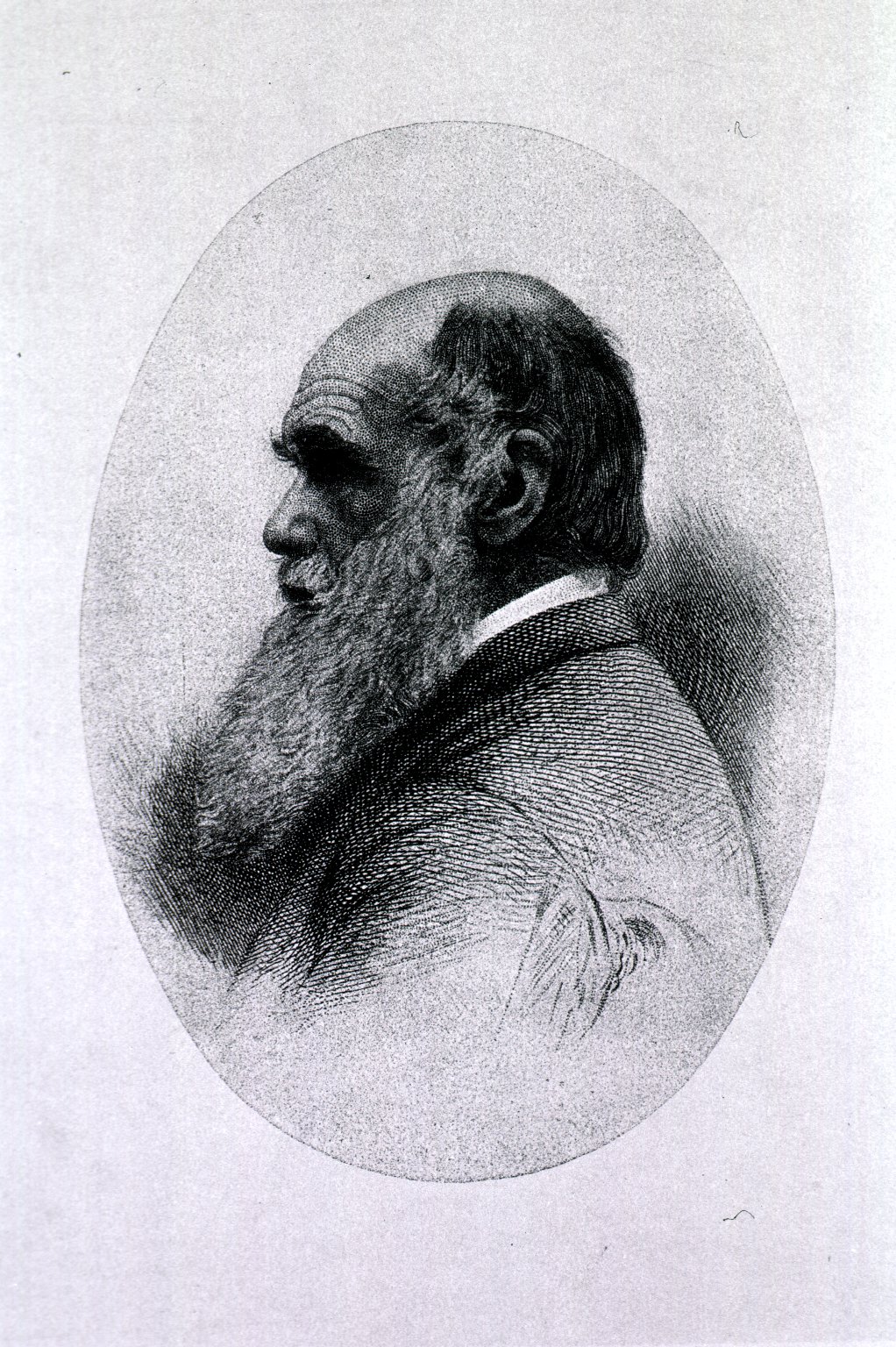
Charles Darwin. From Munchener medizinische wochenschrift, Blatt 239, 1909. Courtesy of the National Library of Medicine.

Charles Darwin was born on this day in 1809. The influence of this “most genial of geniuses,” to quote Stephen Jay Gould, continues.1

What has become more prominent in recent years is the field of evolutionary psychology, which promises a fully naturalistic account of the development of mind as well as body. But Darwin as well as other early 19th-century naturalists held that behavior was an integral part of evolution. Darwin’s precursor, Jean-Baptiste Lamarck, made behavior central to his mechanism for species change. His provided an account of the giraffe, whose incessant and continued stretching of the neck resulted in its slight lengthening, which transferred to the next generation—perhaps through the rush of “gemmules” from the somatic cells to the germ cells, as Darwin surmised in his Lamarckian moments. Over generations, this stretching led to the long-necked animal we have today. Behavior produces bodily change. Darwin posed nothing less, but he proposed the mechanism of natural selection: minute changes in the body or its use, if advantageous to producing offspring that inherit those changes, will over time fix the changes in a population.

Marsh, O. C. "Polydactyle horses, recent and extinct."  American Journal of Science and Arts. New Haven: 1879.

O.C. Marsh. “Polydactyle horses, recent and extinct.” American Journal of Science and Arts, 1879.

Early accounts, and frankly, the way that evolution is often presented in high school classrooms, tend to obscure this. Much late 19th-century work emphasized establishing the fact of evolution, while downplaying the mechanism. Naturalists often focused on comparative anatomy alone, without a behavioral component. For example, one of the more famous “proofs” of evolution is the sequence of horse skeletons that Othniel C. Marsh of Yale set out in 1879—fossil bones put side-by-side.2 Even 20 years ago or so, Gould identified three central disciplines as the cornerstones of modern Darwinism: paleontology, developmental biology, and population genetics3; none of these had much to say about the way that living creatures interact with their environment.

But Darwin did. He served as a naturalist in the field during his four-year trip around the world on H.M.S. Beagle, and he was constantly seeing the living world as a whole. Yes, the specimens he collected eventually made their way to museum drawers, but he always recorded the back story. In his most famous example—the finches of the Galápagos—he was aware of how beak shape was linked to eating patterns, a behavioral characteristic, and how both interacted with the particular environments of each island.

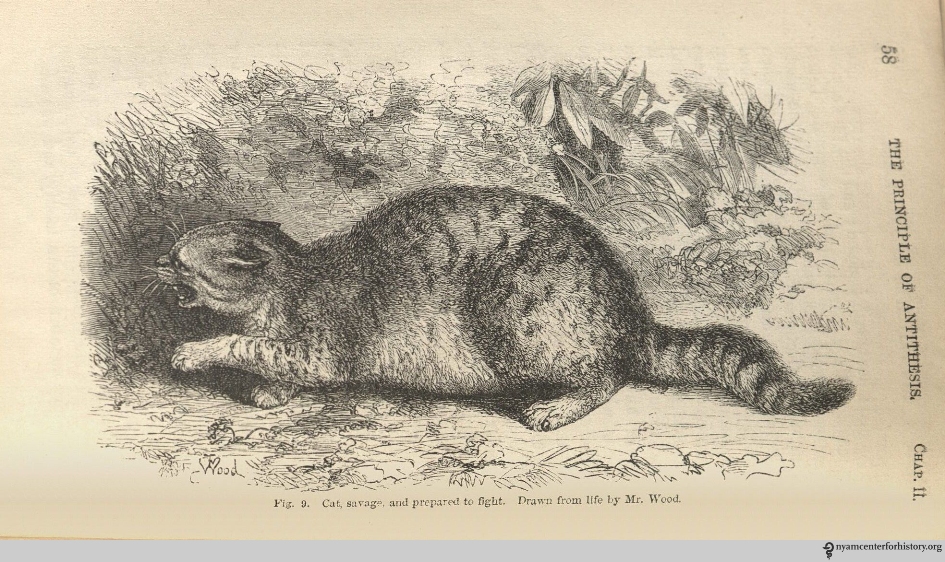
Darwin, Charles. The expression of the emotions in man and animals. London: J. Murray, 1872

Charles Darwin. The Expression of Emotions in Man and Animals. London: J. Murray, 1872

Darwin, Charles. The expression of the emotions in man and animals. London: J. Murray, 1872.

Charles Darwin. The Expression of Emotions in Man and Animals. London: J. Murray, 1872.

Darwin always explored behavior. Chapter 7 of his masterwork, On the Origin of Species (1859), was devoted to “Instinct.” In later books, notably The Descent of Man and Selection in Relation to Sex (1871) and The Expression of Emotions in Man and Animals (1872), he elaborated his discussion of the evolution of behavior. But in all these books he looked at the “higher” animals, and that could be taken to mean that some element of purposefulness was at work. That is, as with Lamarck’s giraffe, a conscious agent may seem to be choosing a particular evolutionary path, rather than a path emerging by means of natural selection and other mechanisms. So Darwin famously looked at “lower” forms, connecting in them bodily structure, behavior, and environment. He worked on the zoology of barnacles as his major contribution to understanding the Beagle specimens. Above all, he was a botanist, writing books on the movement of plants, and on insectivorous plants, among other efforts. One of his last productions was on earthworms, including “observations on their habits.” His research brought home the three-fold connection of body, behavior, and environment in the evolution of new species, even in creatures that no one could consider conscious or willful.

From Darwin, Charles. Insectivorous Plants. New York: Appleton, 1904.

Charles Darwin. Insectivorous Plants. New York: Appleton, 1904.

Here then is the origin of evolutionary psychology. From the tropisms of plants and the habits of worms, to all of living nature, it is not only that our bodies that are evolving and changing in response to nature, but how we use our bodies as well: our conscious minds, but also our perceived instincts, and even our unconscious thoughts and feelings. Evolutionary psychology is built on this.

References

1. S. J. Gould, “Darwinian Fundamentalism,” The New York Review of Books, June 12, 1997, at http://www.nybooks.com/articles/archives/1997/jun/12/darwinian-fundamentalism/, accessed February 11, 2015.

2. O. C. Marsh, “Polydactyle Horses, Recent and Extinct,” American Journal of Science, 3rd ser. 17 (1879): 499–505.

3. Ibid.

Tattoo Removal: Method or Madness?

By Danielle Aloia, Special Projects Librarian

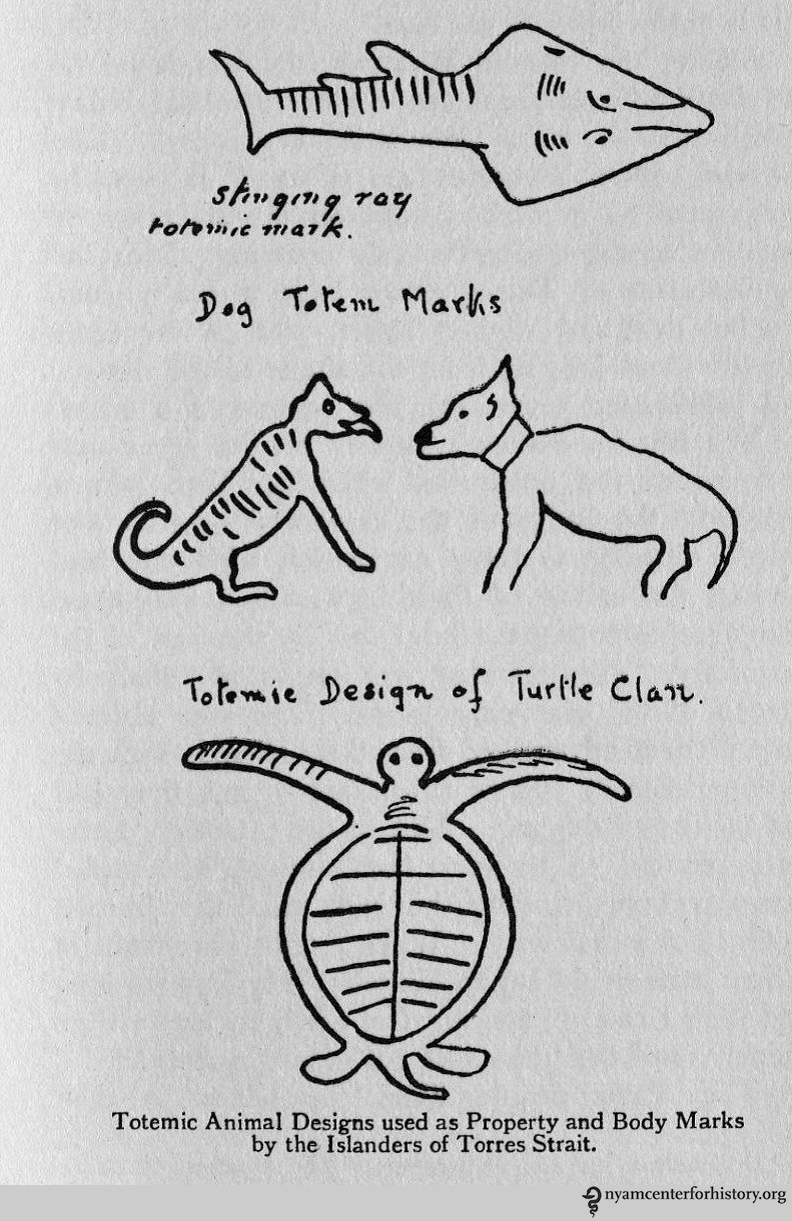
Hambly WD. The History of Tattooing and Its Significance. London: H.F. & G. Witherby; 1925.

In: Hambly WD. The History of Tattooing and Its Significance. London: H.F. & G. Witherby; 1925.

Tattoos—including body painting, puncturing, and scarring—have been around for thousands of years, going back at least to ancient Egypt. Egyptian puncture tattoos have been found dating to between 2000 and 4000 B.C.E. Tattoos have embodied cultural expression, sexual provocation, identification, and artistic expression.1

Tattoo removal may be be as old as tattoos. One of the oldest known descriptions is from c. 500, by Aetius of Amida, which is included in Medicae Artis Principes (you can read the description in translation on the Ask the Past blog). He describes a chemical procedure of potassium nitrate and turpentine. In the 1928 article “A Study of Tattooing and Methods of its Removal,” author Marvin Shie suggests that burning the design “with a hot iron” was the earliest surgical procedure and “when the dead skin sloughed off, it took the mark with it but usually left a bad scar in its place.”2

Reasons for removal are varied and personal and often motivated by wanting to “disassociate from the past.”3 In 1898, Ross Hall Skillern wrote, “After the novelty wears off, some of these [tattooed people], becoming not only tired, but ashamed of the disfigurement, immediately seek a doctor to have it removed.”4

Hambly WD. The History of Tattooing and Its Significance. London: H.F. & G. Witherby; 1925.

In: Hambly WD. The History of Tattooing and Its Significance. London: H.F. & G. Witherby; 1925.

Some of the regretful traveled far and wide for their body art. By the late 1600s, Western sailors were showing up at ports with tattoos often obtained in the South Pacific and New World. From this cultural exchange came intriguing stories of removal. As described in an article in The Atlantic, one buccaneer had the Kuna people of Panama tattoo a design into his cheek in 1681, a choice he later regretted. Unfortunately, all removal attempts failed, “even ‘after much scarifying and fetching off a great part of the Skin.’”5

Removal remained a difficult procedure even 240 years later. In the 1920s, removals were grouped under three classifications: surgical, electrolytic, and chemical.6 Most of these techniques were ineffective, leading to scars, chronic pain, and disfigurement. Surgical removal was the most invasive and left scars thought to be more unsightly than the tattoo itself.7 Electrolytic forms of removal included a heated needle inserted “into the tattoo mark a sufficient number of times to cause blanching of the surface…this forms a superficial eschar which drops off in the course of a week or so, taking the pigment with it.”8 As an alternative to these procedures, tattoo cover-ups could change or alter an unwanted design.

Here is an example of chemical removal as explained by Marvin Shie in 1928, with images:

The use of tannic acid and silver nitrate…the most satisfactory. A 50 per cent solution of tannic acid in water is then tattooed into the design…the area is also painted with the tannic acid solution…as the tattooing progresses. Then the area is washed with cold water. Sterile petrolatum is applied, to prevent discoloration…Then a stick of silver nitrate is rubbed vigorously over the area forming a think black deposit of silver tannate. This is all wiped off and washed with cold water. The point is to have the silver tannate penetrate the corium (or dermis) layer of the skin so that the tattooed area becomes hard and dry, and slowly separates from the deep layers of the corium. In about twelve days the edges are free, and in fifteen or sixteen days, the black, dry slough comes off in on piece resembling thin piece of leather. This contains the epithelium, the silver tannate in the corium, the superficial layers of the corium, and the tattoo pigment.9

This slideshow requires JavaScript.

The chemical removal process has not gone by the wayside, but is generally not a recommended procedure today.

“The scale calculates the estimated number of treatments based on a standardized set of parameters, such as the patient’s skin type, location of the tattoo, and number and density of tattoo inks.”9

“The scale calculates the estimated number of treatments based on a standardized set of parameters, such as the patient’s skin type, location of the tattoo, and number and density of tattoo inks.”10

Laser treatment has been in use since the 1970s and evolved as the preferred method of removal both because it’s relatively effective and pain-free. In order to provide the best outcome for the laser treatment, the Kirby-Desai scale was introduced in 2009. This provides the health professional with a “tool to estimate the number of treatments needed for removal” based in part on the pathology.10

If you have tattoos or are thinking about getting one, consider the long-term implications. In a 2012 Harris Poll, of the 21% of Americans polled who had a tattoo, 14% regretted getting one. Even though medical treatments for removal have advanced, they are often costly and results are not guaranteed. Always consult a health professional before making a tattoo-removal, or any medical, decision.

References

1. Hambly WD. The History of Tattooing and Its Significance: With Some Account of Other Forms of Corporal Marking. London: H.F. & G. Witherby; 1925.

2. Shie MD. A study of tattooing and methods its removal. Journal of the American Medical Association. 1928;90(2):94-99.

3. Armstrong ML, Stuppy DJ, Gabriel DC, Anderson RR. Motivation for tattoo removal. Arch Dermatol. 1996;132(4):412-416.

4. Skillern RH. Tattooing–its history, manner of introduction, and method of removal. Philadelphia Medical Journal. 1898;1(25):1166-1167.

5. Odle, M. “The human stain: A deep history of tattoo removal.” The Atlantic. Nov. 19 2013. Available at: http://www.theatlantic.com/technology/archive/2013/11/the-human-stain-a-deep-history-of-tattoo-removal/281630/. Accessed January 8, 2015.

6. Shie MD.

7. Skillern RH.

8. Ibid.

9. Shie MD.

10. Kirby W, Chen CL, Desai T. Causes and recommendations for unanticipated ink retention following tattoo removal treatment. Journal of Clinical and Aesthetic Dermatology. 2013;6(7):27-31.

Cholera Comes to New York City

By Anne Garner, Curator, Center for the History of Medicine and Public Health

In December, the Academy hosted the Commissioner’s Medical Grand Rounds Ebola: Past and Present panel discussion. In conjunction with this event, the Center for History prepared a small exhibition on the history of cholera in New York City.

Cholera first reached New York City in June of 1832. Three thousand New Yorkers died within weeks, while an estimated one third of the city’s 250,000 inhabitants fled. The disease hit the working class neighborhoods of lower Manhattan the hardest. Many city officials implicated the residents of the poorest neighborhoods for contracting cholera, blaming their weak character, instead of viewing the epidemic as a public health problem. Competing notions of the cause of the disease’s spread impeded effective response to this initial outbreak. John Snow’s research, tracing the spread of cholera to contaminated water in London, was made public in 1855. Snow’s work, combined with the establishment of the New York Metropolitan Board of Health in 1866, did much to curb the last significant outbreaks in the city, in 1866 and 1892.

[Scrapbook of Clippings]. Official Reports of the Board of Health during the Cholera, in the City of New York, in the year 1832.

[Scrapbook of Clippings]. Official Reports of the Board of Health during the Cholera, in the City of New York, in the year 1832.

[Scrapbook of Clippings]. Official Reports of the Board of Health during the Cholera, in the City of New York, in the year 1832.

The first case of cholera in New York City was reported on June 26. A scrapbook collection of broadside reports, spanning July 8–August 23, documents the catastrophic results of that first summer’s outbreak. The street addresses and the number of dead at each address are given, as well as the number of new cases and the number convalescing in hospitals at Park Street, Greenwich Street, Crosby Street, Rivington Street, the Alms-House, and elsewhere.

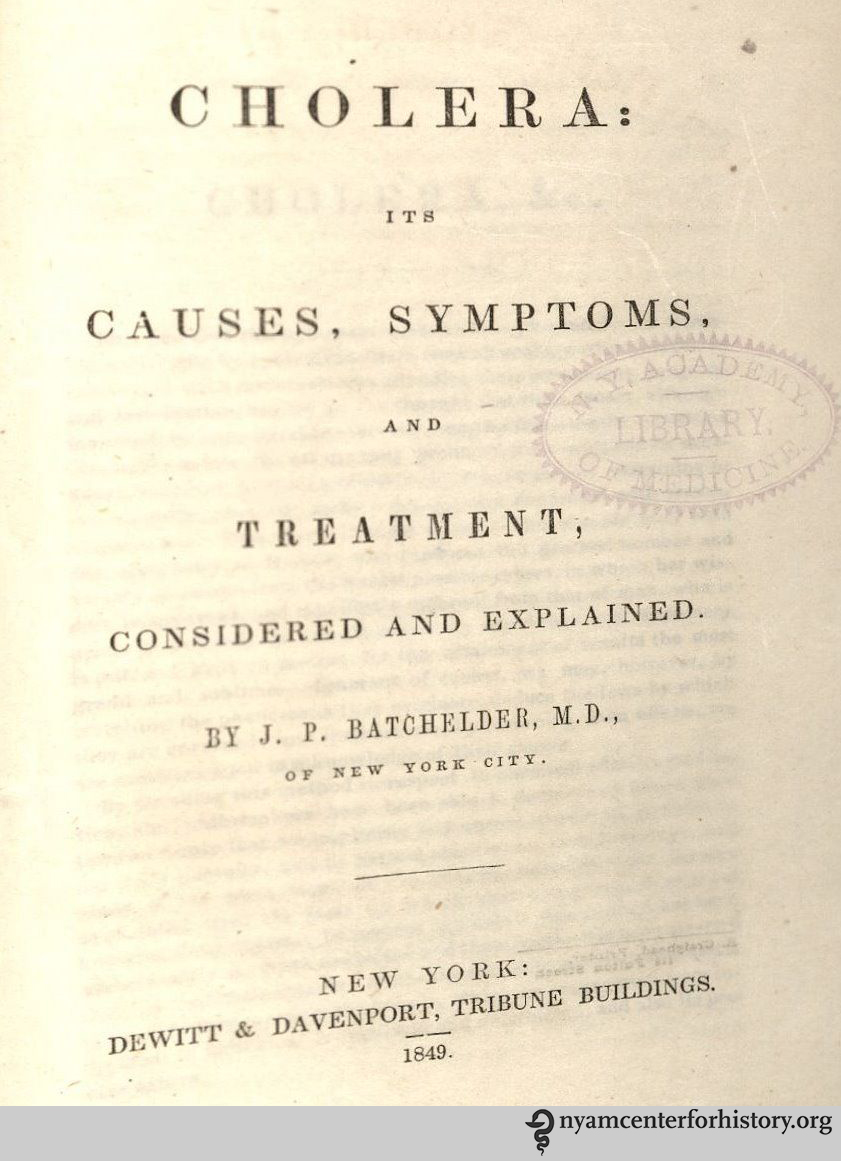
Batchelder, J. P. Cholera: Its Causes, Symptoms, and Treatment, considered and explained. New York: Dewitt & Davenport, 1849.

Batchelder, J. P. Cholera: Its Causes, Symptoms, and Treatment, considered and explained. New York: Dewitt & Davenport, 1849.

Batchelder, J. P. Cholera: Its Causes, Symptoms, and Treatment, considered and explained. New York: Dewitt & Davenport, 1849.

The 1832 arrival of cholera in the United State inspired a host of publications by physicians about the disease. By 1849, many New York physicians had accepted that cholera was “portable,” if not contagious. This pamphlet, by the eminent New York lecturer and surgeon J. P. Batchelder, documents a moment when the medical community was studying the spread of epidemic diseases in earnest, but the science was not yet understood. In a section on causes, Batchelder enumerates a long list of populations susceptible to the disease, including those suffering from hunger and those exposed to the night air. Our copy of this pamphlet was presented by the author to the Academy, and bears the Academy’s early bookplate.

[Collection of manuscript notes, related to the 1854 cholera epidemic in New York City.]

[Collection of manuscript notes, related to the 1854 cholera epidemic in New York City.]

Collection of manuscript notes, related to the 1854 cholera epidemic in New York City.

The second major outbreak of cholera in New York occurred in 1854, when the disease again reached epidemic proportions, killing 2,509. The Board of Health established temporary hospitals throughout the city to accommodate the large number of patients. This volume contains 27 orders for hospitalization during the epidemic of 1854, most of them hastily written on scrap paper. According to the notes, this patient, Mary Riley, delayed going to the hospital and died the following day at home.

“The Cholera and Fever Nests of New York City.” Illustrations from the Healy Collection. 1866.

"The Cholera and Fever Nests of New York City." Illustrations from the Healy Collection. 1866.

“The Cholera and Fever Nests of New York City.” Illustrations from the Healy Collection. 1866. Click to enlarge.

The Metropolitan Board of Health was established in 1866, the year these illustrations were published. The Board was instrumental in identifying sanitation problems that made the city’s poorest neighborhoods most vulnerable to cholera outbreaks. An early board publication describes these cholera nests in vivid terms: “There is such an utter neglect of ventilation and adequate means for daily scavenging and purification of the tenement blocks, that they invite and perpetuate the most pernicious infections…They are perpetual fever nests, ready to nourish and force into deadly activity any fomites or contagium that may chance to find lodgment in them.”1

Peters, Dr. John C. “Routes of Asiatic Cholera.” Harper’s Weekly [New York] 25 April 1885. Illustration from the Healy Collection.

Peters, Dr. John C. "Routes of Asiatic Cholera." Harper's Weekly [New York] 25 April 1885. Illustration from the Healy Collection.

Peters, Dr. John C. “Routes of Asiatic Cholera.” Harper’s Weekly [New York] 25 April 1885. Illustration from the Healy Collection. Click to enlarge.

New York physician John C. Peters produced several informative maps showing the movement of cholera across the globe. This map, originally published in 1873, tracks the path of cholera from its origins at the mouth of the Ganges to Europe and on to the Americas. Visible on Peters’ map are the five major 19th-century routes of the disease into New York, in the years 1832, 1849, 1854, 1866, and 1873.

Reference

1. Documents of the Assembly of the State of New York, Volume 4. Accessed December 23, 2014, at http://bit.ly/1CwL7Kd.

Table Reading

Our October 2014 “Art, Anatomy, and the Body: Vesalius 500″ festival guest curator, artist and anatomist Riva Lehrer, describer her first experience with cadavers and how that shaped her thinking about bodies, anatomy, and art.

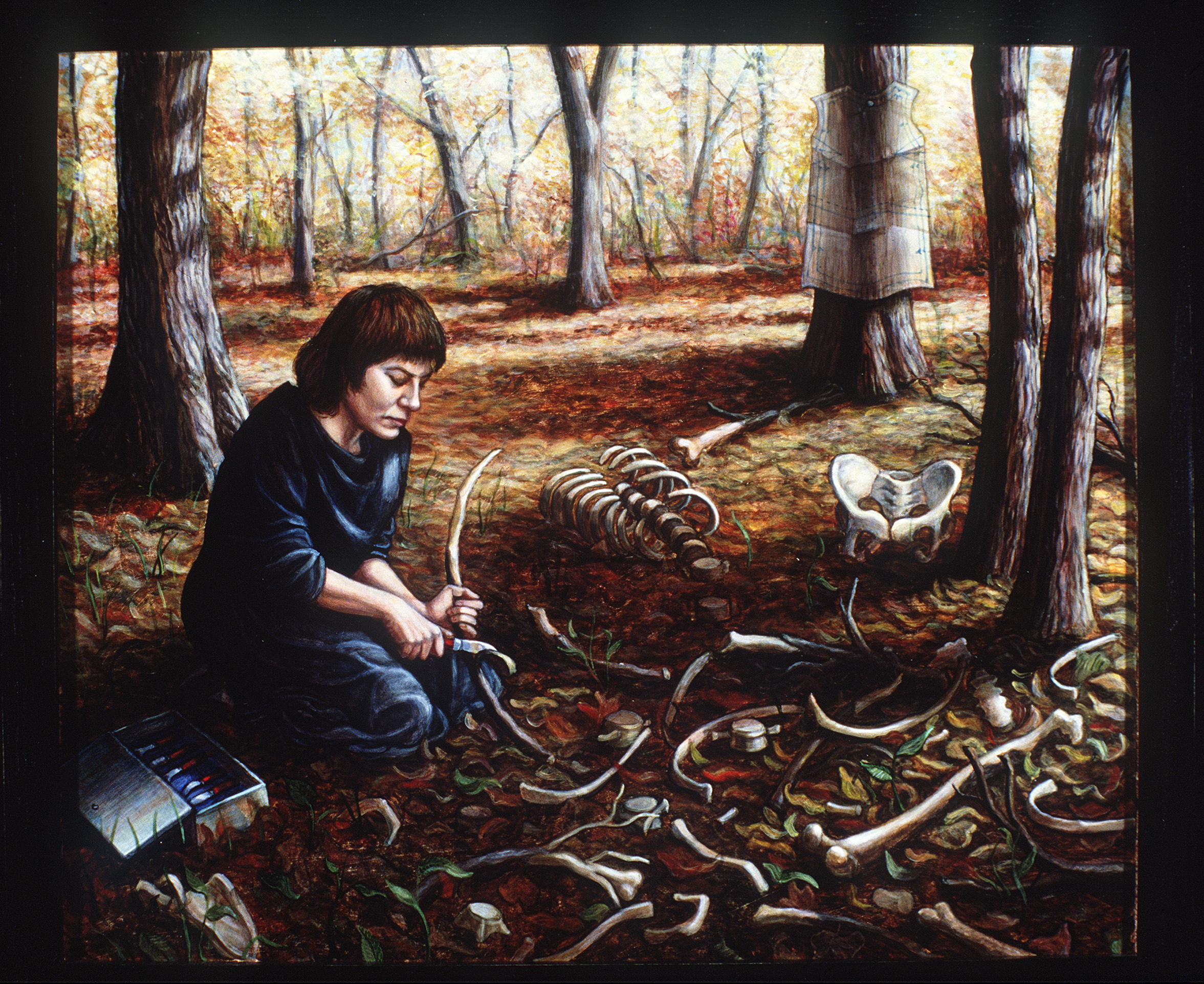
"In the Yellow Woods," by Riva Lehrer. Click to enlarge.

“In the Yellow Woods,” by Riva Lehrer. Click to enlarge.

The first time I ever saw a cadaver was a day in early September of 2006. The light was perfect—a glowing blue and gold herald of the coming Jewish New Year. I walked into lab behind Dr. Norm Lieska, head of Gross Anatomy at University of Illinois at Chicago, and a group of M1 students, all gangly in their brand-new starched white coats and spotless scrubs. The laboratory was a sort of extended corridor, comprised of a series of interlocking rooms, lit by high, industrial windows like those in an old factory. Burnished shafts of sunlight slanted across the rows of steel tables, skimming across the unzipped body bags. Each contained a cadaver that had been preserved and prepped for student exploration. For the main, though, they were pristine; head and hands demurely wrapped, all original parts on board.

I’d been warned that I might be nauseated or disgusted by the bodies. I braced myself to be sickened by the miasma of chemicals in the air. I did not expect to be overwhelmed by the sheer generosity represented in that room. Twenty-five people had decided that we needed to understand the human body in the most direct and unmediated way. They’d signed donation papers that gave us the right to read the history of their own flesh. I felt the impact of that gift even from my first steps into lab.

The dark vinyl of the body bags appeared as if gilded. This was the last moment they would all appear the same. We would pull down the zippers, and reveal the wild variations within. I am not in any way a religious person, but I thought: if I felt this kind of awe in synagogue, I’d be a very different kind of Jew. I was at the lab as part of my position as visiting artist in Medical Humanities at the Medical School of the University of Illinois at Chicago. Each cadaver in Gross Lab was assigned to a team of about 10 students; at the start of the semester I’d been assigned to one such team. These students worked on the same person for the entire year. Scalpels peeled away each archeological layer, skin down to the deepest core. It was a bizarre form of intimate knowledge—both closer and more abstract than their inhabitants had had in life. I began to focus on comparing the bodies from table to table, and to show the members of my team that each cadaver had its idiosyncrasies. None of them were ringers for the photographs in their Color Atlas of Human Anatomy.

"Theresia Degener," by Riva Lehrer. International Human Rights lawyer Theresia Degener is one of the drafters of the United Nations Convention on the Rights of Persons with Disabilities. As a member of the German generation of children whose mothers were given thalidomide, Degener  accomplishes all she wants to do through a range of inventive strategies.  Click to enlarge.

“Theresia Degener,” by Riva Lehrer. International Human Rights lawyer Theresia Degener is one of the drafters of the United Nations Convention on the Rights of Persons with Disabilities. As a member of the German generation of children whose mothers were given thalidomide, Degener accomplishes all she wants to do through a range of inventive strategies. Click to enlarge.

In all the time I was there, though, I never saw a body anything like mine. I was much too intimidated to ask why. Perhaps a body that was too different from those dissection pictures could not function as a primer? (Oddly enough, when I visited a different cadaver lab last year, a bare scoliotic spine was on a table in the back of the room, picked clean of the body in which it had dwelt).

I was the visiting artist in Medical Humanities at the Medical School of the University of Illinois at Chicago for four years, during which I taught figure drawing and portraiture for med students. I’ve gone on to teach those classes at Northwestern University School of Medicine, and as the professor of anatomy at the School of the Art Institute of Chicago (I’m on leave now to pursue other projects). Each year of teaching and study has only increased my sense of wonder at what a living body can do. All bodies (human and animal) are so densely woven with function, yet can accommodate such dysfunction.

I’ve asked my students at both medical schools whether I’m the only disabled person they interact with outside of clinical rotations. The answer is yes. I wonder if my professional presence changes what they think when they begin clinicals, though I also wonder if they begin silent diagnoses when I walk into the classroom. My SAIC students do often seem startled on their first day. (Though maybe that’s just an effect of the tables full of bones. Hard to tell with the young and ironic.) They may not have medical knowledge, but they are trained observers, and mine is the body at the center of the room, at least until our model climbs onto the platform in his/her birthday suit.

Riva Lehrer with students at SAIC in 2012.

Riva Lehrer with students at the School of the Art Institute of Chicago in 2012.

For years, I was the elephant in the room. Eventually, I stopped pretending I wasn’t there and began to use myself as an exemplar. This doesn’t come easy—sometimes, my attempts at coping through humor sound like outtakes from Young Frankenstein—but it does produce a willingness on the part of students to ask uncomfortable questions. As the cadavers prove year after year, normal is a matter of degree. Our bodies let us live so many ways. Healing is creativity made manifest.

I’m writing this just before another New Year. I hope that 2015 brings you joy of your own mysteries, and that you will follow those secret trails through your own glowing, shadowed, and gilded rooms.

That Sex Book at Downton Abbey

By Anne Garner, Curator, Center for the History of Medicine and Public Health

Mary Crawley hands Anna Bates a book by Marie Stopes in Downton Abbey.

Mary Crawley hands Anna Bates a book by Marie Stopes in Downton Abbey.

When Downton Abbey’s Mary Crawley decides to go away for the week with her beau, she sends her maid, Anna Bates, to the pharmacy equipped with a slim little volume. “I have a copy of Marie Stopes’ book,” she tells Anna. The purpose of the errand is to obtain birth control. The book that Anna shows the pharmacist’s wife is probably Wise Parenthood.1

It is early 1924. Anna’s embarrassment at her errand and the disapproval of the pharmacist’s wife are not inconsistent with the social climate of the time. By the end of World War I, attitudes towards sex and birth control were changing. And yet, the public dialogue about sexual matters was still in many ways as it had been in the previous century. During the Victorian era, notions of female identity were tied up in the absolute categories of wife and mother on the one hand, or prostitute on the other. There was little room for nuance, and public acknowledgement of the sexual lives of a large number of single and married women was completely off the table. A reticence to speak about sexual matters persisted at the family level, where sex was not typically discussed between parents and children, and, in many cases, between husbands and wives. Access to accurate medical information about sexual activity was often restricted to doctors. The effect was poor information and general anxiety on the topic.

Marie Stopes. In Marie Stopes and Birth Control, 1974.

Marie Stopes. In Marie Stopes and Birth Control, 1974.

The publication of Marie Stopes’ Married Love in 1918 marked a deliberate attempt by the author to talk to women directly about the physical aspects of married life. Within these pages, Stopes argued that sex should not only be discussed between partners, but that it should be enjoyed by both men and women equally.

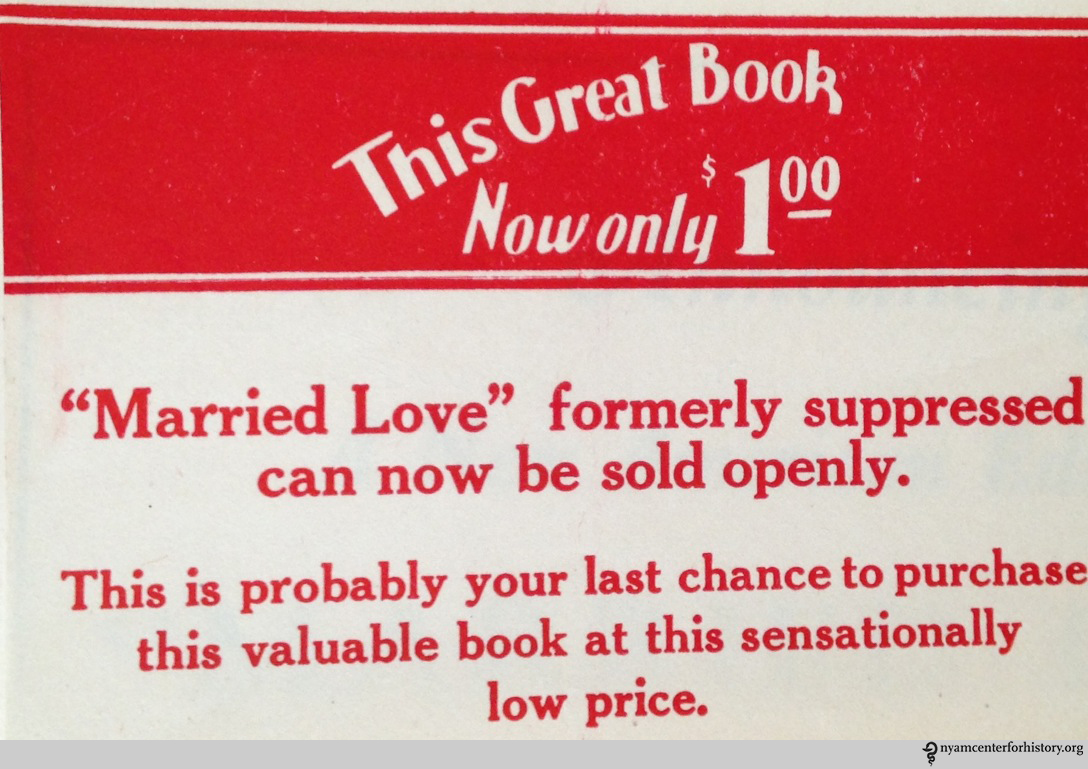
Stopes (1880-1958), a paleobotanist and campaigner for women’s rights, was the author of numerous books on social welfare, many concerning birth control (see Peter Eaton’s valuable checklist for a complete list). Married Love was a kind of self-help book designed to help couples understand each other’s physical and emotional needs. When it was published in March 1918, post-war women embraced the book. The initial 2,000 copy run sold out in the first fortnight. Eaton counts 28 editions, and translations into more than a dozen languages. By 1921, sales had topped 100,000 copies.2 An early ban of the book in America on obscenity charges was overturned in 1931, by the same judge who overturned the ban on James Joyce’s Ulysses (one of our copies contains many clippings saved by an interested reader about the many legal challenges against the book).

An ad for Married Love.

An ad for Married Love, affixed to a small announcement of the publication of “A New American Edition” in 1931, after the court decision.

The title page of Stopes’ Wise Parenthood.

In addition to lawsuits, the publication of Married Love prompted fan letters containing many questions.3 Women wanted more specific instructions on birth control methods. Stopes obliged eight months later, with the publication of Wise Parenthood in November 1918.

Wise Parenthood, a slender volume of 33 pages, describes a number of birth control options, including condoms, withdrawal, and the rhythm method. Her strongest recommendation is for a rubber cervical cap with a quinine pessary. This was smaller than the modern diaphragm, and it fit over the cervix. It was probably this cap that Mary sends Anna to secure for her; in the next episode, she gives “the thing,” as she calls it, to Anna to hide in the cottage she shares with her husband, Mr. Bates.

A reviewer for The Medical Times wrote of Wise Parenthood a month after publication:

“The author ably presents the case for birth control from the scientific point of view. She criticizes several of the more important birth control methods at present employed, and she gives a detailed description of a method which she considers reliable and safe…No medical man or medical woman should fail to secure a copy and read it carefully.”4

By the time of Wise Parenthood’s publication, the use of birth control had some traction with the upper classes. But for the poor, most likely to suffer from lack of access to contraception, it was a different story. Stopes believed that poor families—exhausted, physically spent mothers, hard-working fathers who would now need to work harder, and children—all suffered unnecessarily without access to family planning.

By the early 1920s, Stopes made advocacy of birth control for the working classes her biggest cause.5 In 1921, Stopes opened the first British family-planning clinic in north London. A staff comprised of both male and female nurses and doctors offered free birth control advice. By 1925, the clinic moved to central London, and instituted a mail-order birth control service6 (note to Anna Bates: for future reference, that mail-order service could save an awkward moment or two).

The cover of "Babies and Unrest."

The cover of “Babies and Unrest.”

Stopes founded the Society for Constructive Birth Control in 1921.7 During her lifetime, she published a number of pamphlets advocating birth control use for the poor, including “Babies and Unrest,” for the American Voluntary Parenthood League, founded in 1919 by Mary Dennett. A guide to Dennett’s papers can be found here. Stopes also wrote and edited a newsletter, “Birth Control News,” for many years.
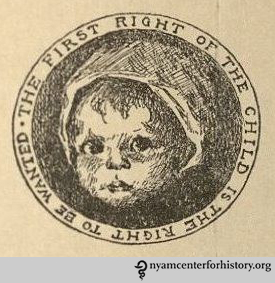
Image from "Babies and Unrest."

Image from “Babies and Unrest.”

Stopes’ legacy was not unproblematic. For much of her life, she was a supporter of the eugenics movement. In her book Radiant Motherhood (1920), Stopes advocates sterilization for those supposedly unfit for parenthood. Despite these challenging views, her birth-control activism translated to real solutions for real families, and radically improved access to contraception for working families everywhere. Her work contributed significantly to a shift towards permissiveness for family planning both in England and America.

One of our two copies of Wise Parenthood has an introduction by the English novelist Arnold Bennett. Stopes herself wrote poetry and novels, many at our library, including the poetry volume Love Songs for Young Lovers. It is worth noting that one of our copies of Wise Parenthood still bears a restricted call number left over from an earlier era (though it is now accessible to the public, bar none).

References

1.Special thanks to Arlene Shaner, reference librarian for historical collections, for her positive identification of Wise Parenthood as that sex book. Not to mention her devotion to Downton Abbey.

2. “Marie Charlotte Carmichael Stopes.” Dictionary of Medical Biography. Westport, Connecticut: Greenwood, 2007. V. 5. pp. 1195-1196.


3. Stopes-Roe, Harry Verdon with Ian Scott. Marie Stopes and Birth Control. London: Priory, 1974. P. 42.

4. As quoted in an advertisement for the 7th edition, revised and enlarged, of Wise Parenthood, in the 9th Edition (London: Putnam, 1920) of Married Love.

5. Stopes-Roe, Harry Verdon with Ian Scott, 1974. P. 43.

6. Stopes-Roe, Harry Verdon with Ian Scott, 1974. P. 43.

7. “Marie Charlotte Carmichael Stopes.” Dictionary of Medical Biography. Westport, Connecticut: Greenwood, 2007. V. 5. pp. 1195-1196.

A Letter from Benjamin Franklin

By Danielle Aloia, Special Projects Librarian and Arlene Shaner, Reference Librarian for Historical Collections

To mark Benjamin Franklin’s 309th birthday on January 17, we thought it appropriate to share some information about the Benjamin Franklin letter in our manuscript collection.

Frontispiece of The Memoirs and Writings of Benjamin Franklin, 1818.

Frontispiece of The Memoirs and Writings of Benjamin Franklin, 1818.

When we think of Benjamin Franklin, we usually remember him as a Founding Father, inventor, diplomat, printer, and publisher, but we are less likely to think of him as a medical man. In fact, he had a keen interest in public health and hygiene. He was one of the founders of the Pennsylvania Hospital, wrote a short treatise on inoculation, and even an essay about the health benefits of swimming. He also corresponded with physicians across the globe and with colleagues, family members, and others on medical topics.1

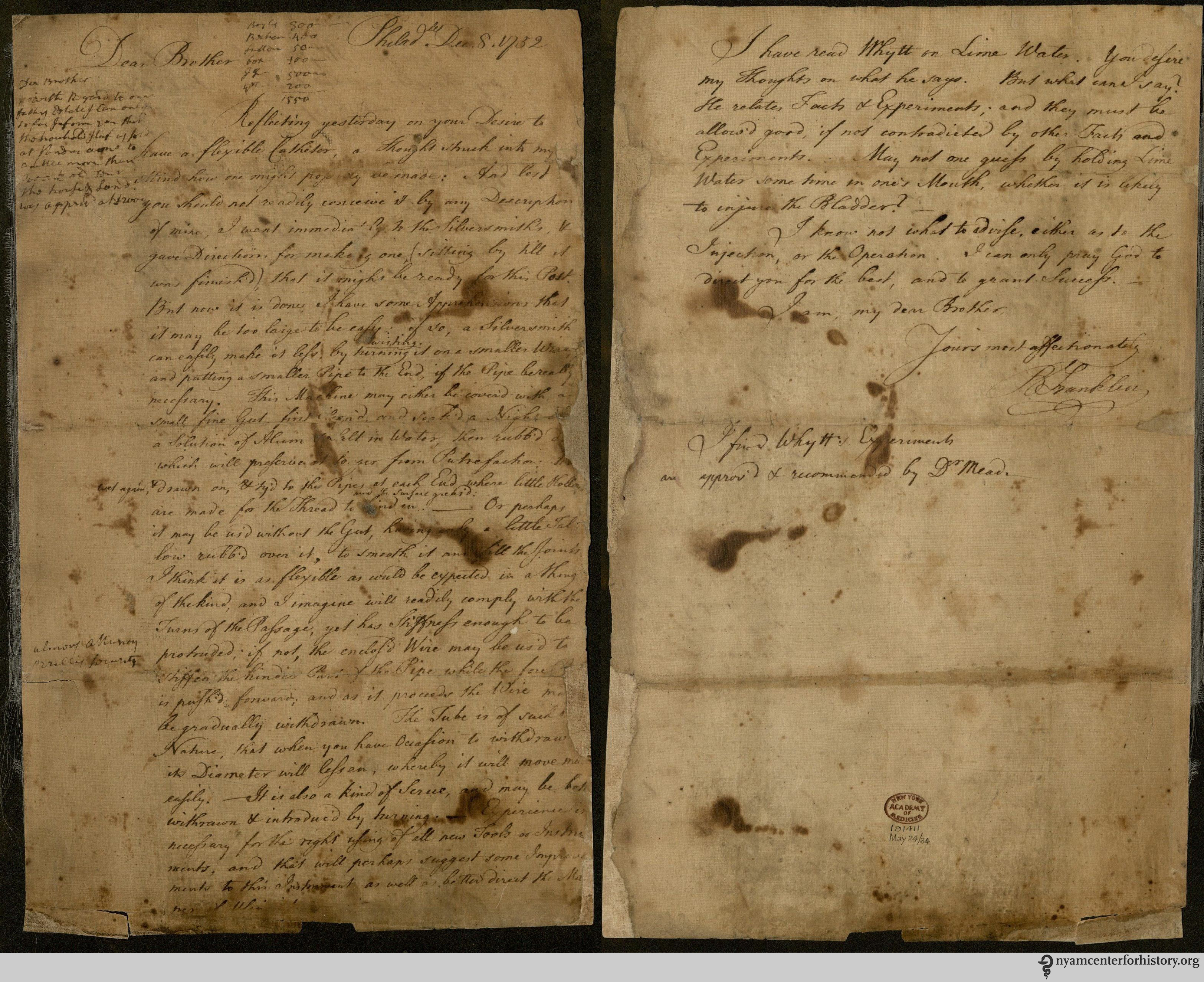
The Academy acquired a Franklin letter, dated December 8, 1752, in 1906, as a gift from Dr. William K. Otis (1860-1906), who inherited it from his father, Dr. Fessenden Nott Otis (1828-1900). Both were Fellows of The New York Academy of Medicine, the father elected in 1861 and the son 30 years later, and both specialized in treating urological disorders. Dr. F.N. Otis was a professor of venereal and genito-urinary diseases at Columbia’s College of Physicians and Surgeons. He modernized the treatment for urethral stricture by inventing both the Otis Urethrometer and the Otis Dilating Urethrotome, so it should not be a surprise that this particular letter by Franklin interested him.2,3 The letter was published in various editions of Franklins works and writings, in The Medical Side of Benjamin Franklin (1911), and as a facsimile in A Letter on Catheters (1934), with commentary by Dr. Edward Loughborough Keyes.

Front and back of Franklin's December 8, 1752 letter to his brother John. Click to enlarge.

Front and back of Franklin’s December 8, 1752 letter to his brother John. Click to enlarge.

In the letter, Franklin encloses a catheter (not in our collection) and describes its fabrication to his brother John, who was suffering from painful bladder or kidney stones: “Reflecting yesterday on your Desire to have a flexible catheter, a Thought struck into my Mind how one might possibly be made…” Worried that he might not be able to adequately convey his idea through description, Franklin goes on to tell his brother, “I went immediately to the Silversmith’s, & gave Directions for making one, (sitting by till it was finished), that it might be ready for this Post.” He then provides very complete instructions for having the size of the device adjusted by a silversmith should the diameter prove too large, and for using it. Though Franklin’s text suggests that he invented the catheter, Keyes, in the commentary published with the facsimile, quotes a letter from F.N. Otis in which Otis notes that he believes the wording in the first sentence of the letter simply demonstrates Franklin’s familiarity with a similar catheter already being used in Europe.

Transcription of Franklin's letter. Click to enlarge.

Transcription of Franklin’s letter. Click to enlarge.

At the end of the letter, Franklin shares his thoughts about Robert Whytt’s “An Essay on the Virtues of Lime-water in the Cure of the Stone” with John. Clearly both of them had read this book in an attempt to find a treatment that would offer John some relief from his ailment. Franklin responds to what seems to be an earlier query from John about the likelihood that Whytt’s method of treatment would help him. “I have read Whytt on Lime Water,” Franklin writes. “You desire my thoughts on what he says. But what can I say? He relates Facts & Experiments; and they must be allow’d good, if not contradicted by other Facts and Experiments. May not one guess by holding Lime Water some time in one’s Mouth whether or not it is likely to injure the Bladder?” As almost any elementary school student today would be able to report, all the basic elements of the scientific method are conveyed in Franklin’s elegant sentences: the question, the hypothesis, the experiments and observations, and the final conclusion.

In addition to the letter on catheters, the Academy library collections contain many published editions of Franklin’s work, along with a number of secondary sources about him. Please contact history@nyam.org or call 212-223-7313 to make an appointment to visit us if you are interested in exploring one of our most famous and engaging man of letters further.

References

1. Pepper W. The Medical Side of Benjamin Franklin. Philadelphia: W. J. Campbell; 1911.

2. Franklin, Benjamin, John Franklin, and Edward L. Keyes. A Letter on Catheters. Fulton, N.Y: Morrill, 1934.

3. Kelly H.A. Dictionary of American Medical Biography. New York: D. Appleton, 1928.

Fifth Annual History of Medicine Night: Call for Papers

A wooden caduceus symbol shown in NYAM rare book reading room

A caduceus symbol donated to our rare book reading room

The New York Academy of Medicine’s Section on the History of Medicine and Public Health is pleased to announce its upcoming Fifth Annual History of Medicine Night, to be held on March 11, 2015 from 6:00–7:30 pm. The event will take place at the Academy, located at 1216 Fifth Avenue at the corner of 103rd Street.

We are inviting all those interested in presenting to submit an abstract concerning a historical subject relating to medicine.

Please note the following submission requirements:

  • Abstracts (not to exceed 250 words) should be submitted together with authors’ contact details and affiliations.
  • Abstracts must be submitted no later than January 30, 2015

Selected speakers will be asked to prepare a presentation of no more than 12 minutes, with an additional 3 minutes for questions/discussion. Papers selected for presentation will be determined by a panel of History of Medicine Section members and staff of The New York Academy of Medicine.

Abstracts should be submitted electronically to Suhani Parikh at sparikh@nyam.org.  Questions may be directed to Suhani via email or phone (212-419-3544).