Calculating Lifetimes: Life Expectancy and Medical Progress at the Turn of the Century

By Paul Theerman, Associate Director, Center for the History of Medicine and Public Health

“We now live in a time of endless possibility. More has been learned about the treatment of the human body in the last five years than was learned in the previous 500. Twenty years ago, 39 was the number of years a man could expect from his life. Today, it is more than 47.”1

So says the fictional character Dr. John Thackery on the first episode of Cinemax’s The Knick, a show set in New York in 1900. So the years and ages are thus: in 1880 newborn boys could expect a life of 39 years; in 1900, 47 years. And that’s about right. The technical term is life expectancy—the number of years that one could expect to live, with no substantial change of conditions. Dr. Thackery refers, grandiloquently, to those substantial changes of conditions that caused a dramatic increase in life expectancy in the developed world in the late 19th and early 20th centuries, and a steady increase thereafter. By 2010 U.S. life expectancy at birth stood at about 76 years for men, 81 years for women, with an average of 79 years overall.2

William Farr. Courtesy of the John Snow Archive and Research Companion.

William Farr, circa 1850. Courtesy of the John Snow Archive and Research Companion.

The individual who put such statistical work on a firm footing, institutionally and intellectually, was William Farr (1807–1883), statistician in Great Britain’s General Register Office from 1839 to 1879. The British government set up the Register Office in 1837 as part of a reform agenda to provide for civil—rather than parish-based—registration of births, marriages, and deaths. Farr was a medical doctor of modest background who found statistics fascinating. Three times Farr prepared life tables for England and Wales, providing life expectancies divided along gender and geographical lines, and basing his work on the burgeoning data collected in his office and through the expanded decennial censuses beginning in 1841. He was also instrumental in checking and confirming John Snow’s famous geographical detection of the source of the London cholera outbreak of 1853, based on mortality statistics.3

Farr was not the first to determine how to calculate life expectancy: that feat is general accorded to Edmond Halley, the early modern astronomer who predicted the return of the comet that bears his name. But while not the first to approach the topic, Farr may have been the most serious and articulate advocate of life expectancy as a measure of national health:

Since an English life table has now been framed from the necessary data, I venture to express a hope that the facts may be collected and abstracted, from which life tables of other nations can be constructed. A comparison of the duration of successive generations in England, France, Prussia, Austria, Russia, America, and other States, would throw much light on the physical condition of the respective populations, and suggest to scientific and benevolent individuals in every country—and to the Governments—many ways of diminishing the sufferings, and ameliorating the health and condition of the people; for the longer life of a nation denotes more than it does in an individual—a happier life—a life more exempt from sickness and infirmity—a life of greater energy and industry, of greater experience and wisdom.4

A life table from Vital Statistics.

A life table from Vital Statistics. The table, published in 1843 as part of the fifth report, refers to the year 1841.

Farr expected “a noble national emulation,” that is, a competition for best life expectancy, to generate as much enthusiasm as “victories over each other’s armies in the field.” His vision—at least of comparative data—came true: today the World Health Organization provides life expectancies for 194 countries.5

The cover of the NYAM edition of Vital Statistics.

The cover of the NYAM edition of Vital Statistics.

The centrality of Farr’s work to the mission of The New York Academy of Medicine led to NYAM’s reprinting Vital Statistics: A Memorial Volume of Selections from the Reports and Writings of William Farr (1885) in 1975.

As for Dr. John Thackery’s paean to modern medicine: it is a bit misplaced. He was right in stating that medical treatments, and especially surgical techniques, made great advances in his time. But that fact didn’t account for the change in life expectancy. Instead, “old knowledge” was more important: people fell ill and died due to poor sanitation, inadequate diet, dangerous working conditions, and the risks of childbirth and infancy. For example, in 1850 life expectancy in Massachusetts for newborn boys was 38, while 20-year-olds could expect to live to 62, 40-year-olds to 68, and 60-year-olds to 76. By 1900, the comparable figures are: newborns, 48; 20-year-olds, 61; 40-year-olds, 67; and 60-year-olds, 74.6 The situation for newborns improved greatly over the course of 50 years, but for older cohorts, little changed. Over time, the great dangers in childbirth and the first years of life had been ameliorated, and better obstetrics was part of the story, but public health made the difference.

References

1. “The Knick,” Cinemax, Series 1, Episode 1 (aired August 8, 2014), as quoted in NPR, “A New Show about Doctors of Old,” broadcast August 3, 2014, http://www.npr.org/2014/08/03/337531248/a-new-show-about-doctors-of-old, accessed August 14, 2014.

2. The Henry J. Kaiser Foundation, “State Health Facts: Life Expectancy at Birth (in years), by Gender” http://kff.org/other/state-indicator/life-expectancy-by-gender/, accessed August 14, 2014.

3. This and other information on Farr are from the editors’ “Introduction” (pp. iii–xiv), and the original “Biographical Sketch” (pp. vii–xxiv, separately paginated), in Vital Statistics: A Memorial Volume of Selections from the Reports and Writings of William Farr, with an Introduction by Mervyn Susser and Abraham Adelstein, The History of Medicine Series Issued under the Auspices of the Library of the New York Academy of Medicine, no. 46 (1885; reprint ed., Metuchen N.J.: The Scarecrow Press, 1975).

4. Vital Statistics, 453, quoting the Registrar General’s Fifth Annual Report (August 1843).

5. World Health Organization, Global Health Observatory Data Repository, http://apps.who.int/gho/data/view.main.60080?lang=en, accessed August 14, 2014.

6. Historical Statistics of the United States, 1789–1945: A Supplement to the Statistical Abstract of the United States (Washington: United States Department of Commerce, Bureau of the Census, 1949), page 45, Series C 6 21. “Vital Statistics—Complete Expectation of Life: 1789 to 1945.” http://www2.census.gov/prod2/statcomp/documents/HistoricalStatisticsoftheUnitedStates1789-1945.pdf, accessed August 14, 2014.
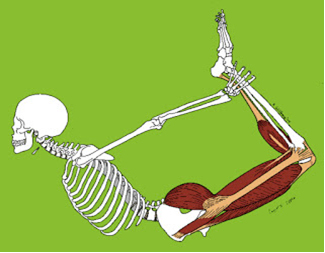
Virtual Dissection

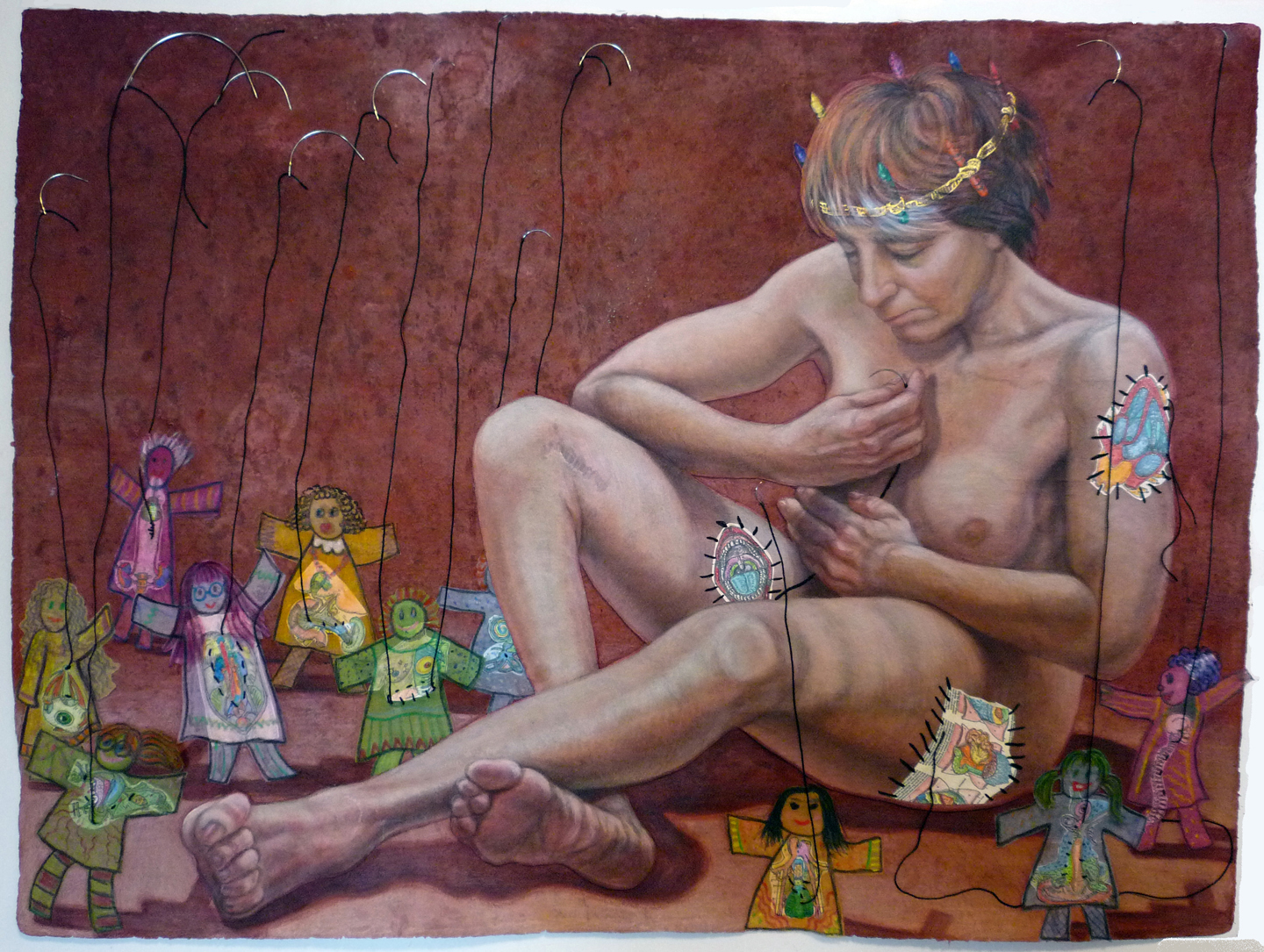
Kriota Willberg, the author of today’s guest post, explores the intersection of body sciences with creative practice through drawing, writing, performance, and needlework. She will present at our October 18th festival, Art, Anatomy, and the Body: Vesalius 500.

Artistic and clinical examinations of the body share many of the same processes. The artist and the clinician study the body’s mass, look for irregularities in its shape and color, locate bones, joints, and muscles, take notice of the breath. They watch the body and its parts move through space, assess joint alignment, and determine if their subject’s physical parts and relationships are assembled or functioning in a desirable form. The languages for and techniques of analysis vary by discipline but the object of exploration is the same.

"Dhanurasana illustration" by Kriota Willberg

“Dhanurasana illustration” by Kriota Willberg. Click to enlarge.

My careers are grounded in the exploration of the body. There was a time when I would take a morning ballet class, teach anatomy in the afternoon, and in the evening either work a shift as a massage therapist or go to a dance rehearsal. To relax on the weekends I would draw musculoskeletal anatomy illustrations for my class handouts.

Drawing, dancing, and massage all require skills in postural assessment. As a massage therapist I also palpate deeper structures, locating them under skin, fat, and other layers of muscle. As a dancer I learned to feel my musculoskeletal structures via movement exercises that isolate muscle groups or coordinate the body as a whole. Through years of building experiential and objective understanding of the body, physical assessment has become second nature to me.

Friction “…Bundle of Fibers” by Kriota Willberg.

“Friction” by Kriota Willberg. Click to enlarge.

Anatomy entertains and delights me everywhere I go. I study the foot and ankle alignment of strangers as they climb the subway steps. I monitor my two amputee cats for the development of functional scoliosis. I measure and palpate the skin and adipose of my husband, or myself, or the cats, as we sit on the couch and watch the Bond film Tomorrow Never Dies. I comment on Pierce Brosnan’s resemblance in the film to a dissected human subject illustrated in an Albinus anatomy text from 1749.

Tomorrow Never Dies from “The Anatomy of 007” by Kriota Willberg. Click to enlarge

Tomorrow Never Dies from “The Anatomy of 007” by Kriota Willberg. Click to enlarge

The world is an anatomical wonderland. Anatomy is all around us and all we have to do is see it and feel it.

"Pictorial Anatomy of the Cute" by Kriota Willberg. Click to enlarge.

“Pictorial Anatomy of the Cute” by Kriota Willberg. Click to enlarge.

I’m not unique in my perspective of the world of anatomy. There are many people in arts, sciences, and health professions who are skilled at virtual dissection. We can look at you, through your clothing, and through your skin and fat to see the muscle and bone beneath. We share the same skills and sometimes we share the same sense of humor. But our cohort is somewhat rarified. I intend to bring more people into the knowledge and skills that will enable them to join our “club.”

I train others in methods of seeing the body as a clinical or artistic tool. As a part of this instruction, I draw the body on a body. Using a live model, I locate bones and joints, tracing bony landmarks in rinseable ink. Then I locate a muscle’s attachment sites, connect them, and “flesh out” the muscle’s contours and fiber direction.

Willberg anatomy drawing. Model: Wendy Chu

Willberg anatomy drawing. Model: Wendy Chu

Willberg anatomy drawing. Model: Wendy Chu

Willberg anatomy drawing. Model: Wendy Chu

We watch levator scapula lengthen with upward rotation of the scapula. Or the hamstring elongate to seemingly impossible length as the model moves through deep hip flexion. The upper pectoralis major shortens as the lower part lengthens when the model brings her arms overhead. After 27 years of teaching, I am still entranced by these simple movements.

At the Vesalius 500 celebration on October 18, we will look at the body with the double vision of the anatomist. Part live-drawing performance, part slide show/lecture, part conversation, we will explore the (kin)esthetic relationships of our anatomy. I’ll present a narrated slideshow of artworks from A(lbinus) to V(esalius) to enhance and define actual and fanciful relationships of our parts to our whole. A live model and I will create associations between these illustrations and the living body by tracing superficial and deep connections of muscle to movement. The presentation will include opportunities for you (the audience) to ask questions and comment on your own experiences with the study of anatomy.

See you there!

Beard Dipping: New York Medicine 1900 Style

By Lisa O’Sullivan, Director, Center for the History of Medicine and Public Health

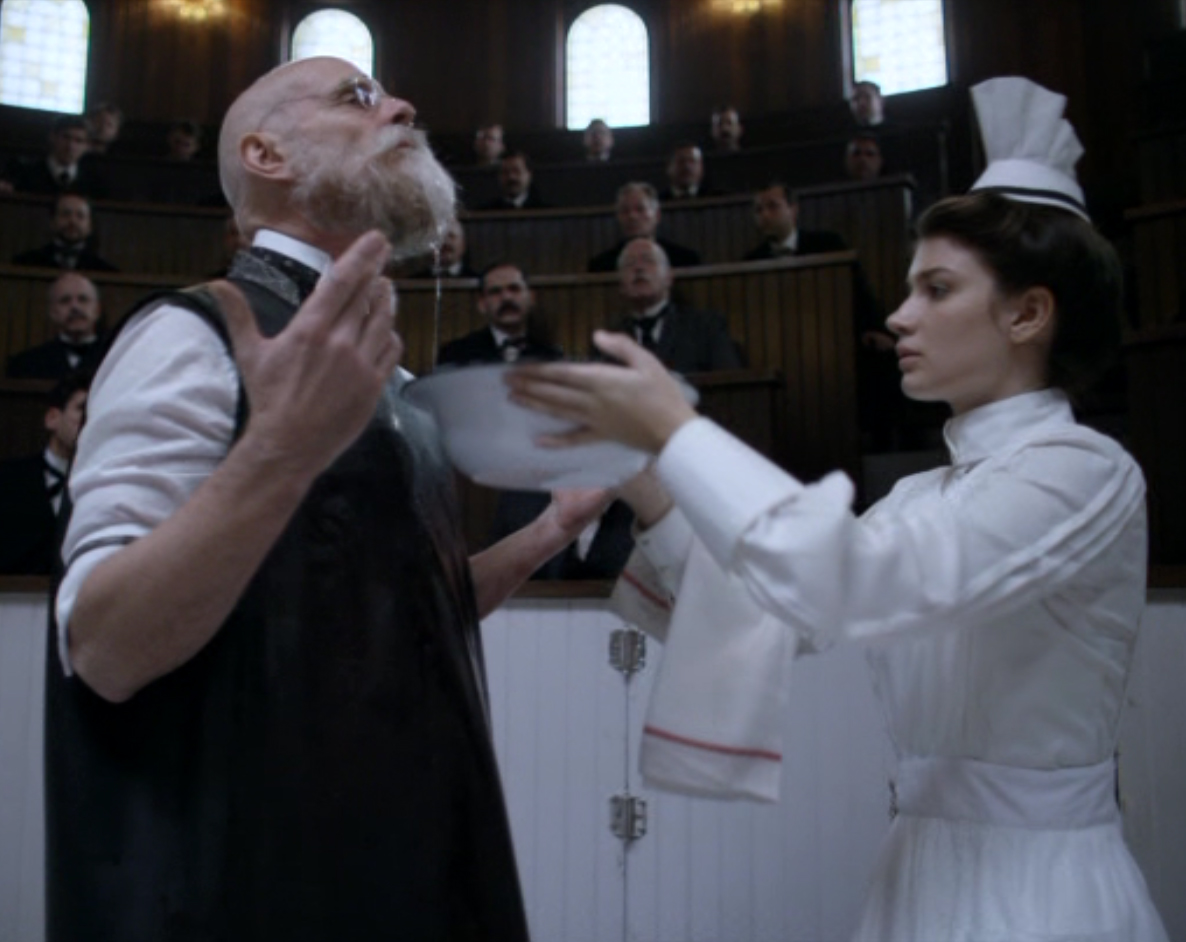
After episode one of The Knick, the question on everyone’s lips is of course: what was going on with the beard dipping? A commitment to getting the historical details right is the answer (although we hope for the actor’s sake the liquid wasn’t completely true to life).

Dr. Christiansen (Matt Frewer) preps his beard for surgery, assisted by Nurse Elkins (Eve Hewson). Courtsey of HBO-Cinemax.

Dr. Christiansen (Matt Frewer) preps his beard for surgery, assisted by Nurse Elkins (Eve Hewson). Credit: HBO-Cinemax.

The surgeons performing the emergency Caesarean early in the episode ran an operating theater following Listerian principles of cleanliness and antiseptic surgery. Joseph Lister (1827–1912) was a professor of surgery at the University of Glasgow in Scotland, who, influenced by Louis Pasteur’s germ theory, looked for methods to remove microorganisms from the environment during surgery. The introduction of chloroform and ether as anesthetic agents in the mid-19th century meant that surgery had become a much less painful process for patients (and allowed surgeons to focus on longer and more complex procedures). However, surgery remained dangerous, with postoperative infection continuing to be a serious, often fatal, problem.

Carbolic steam spray used by Joseph Lister, England, 1866-18. Courtesy of the Science Museum, London, Wellcome Images.

Carbolic steam spray used by Joseph Lister, England, 1866-1870. Courtesy of the Science Museum, London, Wellcome Images.

In 1867, Lister published an article in which he proposed using carbolic acid (already used to treat sewage) to sterilize the operating room, surgical instruments, bandages, and wounds. Surgeons were encouraged to dip their hands—and yes, their beards!—into carbolic acid before operating.

Working in the midst of a pungent yellow spray that smelled like tar was not ideal and inhaling too much carbolic acid could be dangerous. Lister continued experimenting throughout his career with new sterilization techniques. However he never embraced the idea of gowns, face masks, or gloves.

The use of gloves in surgery was introduced by William Stewart Halsted (on whom Clive Owen’s character Dr. Thackery is based) in the 1890s. A pioneer of antiseptic surgery, one of his surgical nurses (whom he later married) had a bad reaction to the mercuric chloride used as a disinfectant, so he commissioned Goodyear rubber to make her some gloves. The early use of gloves in surgery was not about patient safety, but protecting the medical team. Like any new innovation, reactions were mixed. Some individuals embraced the idea of gloves, while others continued to operate bare-knuckled.

We’re looking forward to the next episode. Let us know in the comments if you have any questions about what’s going on in the hospital and we will get back to you in a future post.

It’s All in the Details

By Arlene Shaner, Acting Curator and Reference Librarian for Historical Collections

"Male Ward E" at Hahnemann Hospital, from the Hospital's May 1901 Report.

“Male Ward E” at Hahnemann Hospital, from the hospital’s May 1901 report. Click to enlarge.

Advertising for The Knick, the HBO Cinemax series that begins tonight, is everywhere right now. The show, which centers on the world of a fictional New York hospital, The Knickerbocker, right at the turn of the 20th century, has been in our sights here in the NYAM Library for months.

Long before the episodes of any historical drama are ready to air, a tremendous amount of research goes into making sure that the settings, costumes, and stories display a level of historical accuracy that will make the show believable. It is part of our mission as a library devoted to the history of medicine to help the show’s researchers discover where the information they need can be found. We don’t do our jobs alone, though, and colleagues at many other area institutions such as the Archives and Special Collections at the Health Sciences Library at Columbia University, the Museum of the City of New York and the Mount Sinai Archives, to name just a few, offered plenty of assistance as well.

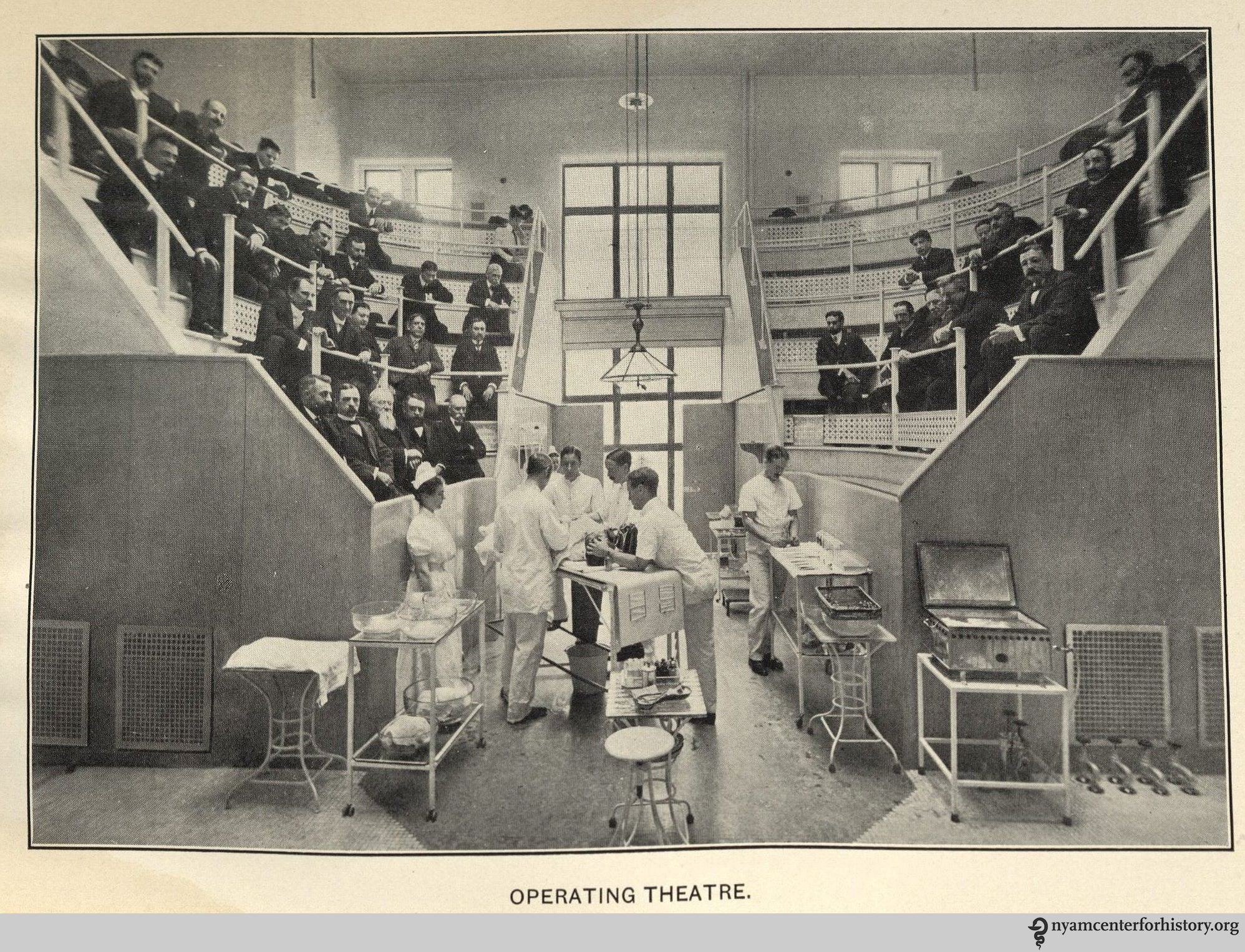
There are lots of resources in our collections that Knick researchers explored while the show was under development. A particularly rich source for images and descriptions of hospitals in 1900, the year in which the show begins, are the annual reports produced by medical institutions here in the city. Illustrations of operating theaters, like this one from the Presbyterian Hospital, help designers build accurate sets in which the drama can unfold.

Presbyterian Hospital's operating theater, an image from its 1901 annual report. Click to enlarge.

Presbyterian Hospital’s operating theater, an image from its 1901 annual report. Click to enlarge.

In some instances, written descriptions help answer questions that come up when the photographs themselves don’t provide enough information. The Hahnemann Hospital operating room in the picture below is quite distinctive in appearance, but the actual descriptions of the rooms from the Hospital Souvenir offer lots of extra details: room dimensions; lists of equipment along with information about what everything is made from and where it sits in the space itself; and explanations of how the different rooms are physically connected to each other or separated from other spaces.

A Hahnemann Hospital operating room, from its May 1906 report. Click to enlarge.

A Hahnemann Hospital operating room, from its May 1906 report. Click to enlarge.

Descriptions of Hahnemann Hospital rooms, from the hospital's 1900 Souvenir.

Descriptions of Hahnemann Hospital rooms, from the hospital’s 1900 Souvenir. Click to enlarge.

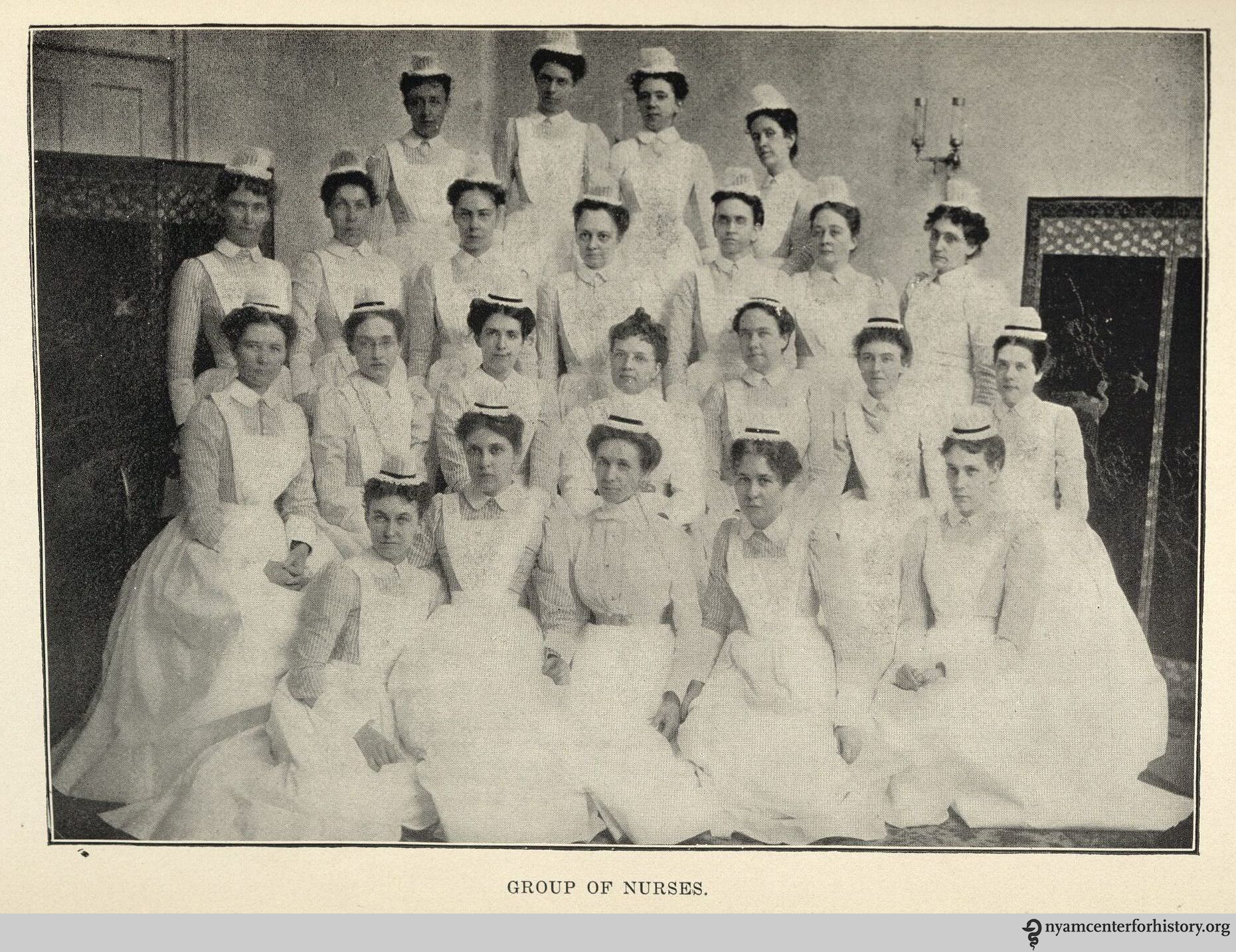
A group of nurses from the May 1901 Hahnemann Hospital report.

A group of nurses from the May 1901 Hahnemann Hospital report. Click to enlarge

Some of the photographs also show us how doctors and nurses dressed. The nurses with their long white pinafores and puffy hats certainly look more dated than the surgeons in their doctors’ whites. And if you look back at the 1901 image of the operating theater from the beginning of this post, you’ll note that even though the doctors are performing surgery that no one is wearing a mask or gloves. In the Hahnemann Hospital operating room image from 1906, only a few people have gloves on.

We’ll be posting more about early 20th century medical practice on all of our social media platforms as The Knick gets underway, so be sure to follow us on Twitter and Facebook. And check our blog on Monday to learn more about the medical history behind The Knick.

Naissance Macabre: Birth, Death, and Female Anatomy

Brandy Schillace, PhD, the author of today’s guest post, is the research associate and guest curator for the Dittrick Museum of Medical History. She will speak at our October 18th festival, Art, Anatomy, and the Body: Vesalius 500.

The dance of death: Death emerges from the ground and is greeted by a group of allegorical women, symbolizing the vices. Woodcut after Alfred Rethel, 1848. Credit: Wellcome Library, London

The dance of death: Death emerges from the ground and is greeted by a group of allegorical women, symbolizing the vices. Woodcut after Alfred Rethel, 1848. Credit: Wellcome Library, London. Click to enlarge.

The danse macabre, or dance of death, features whirling skeletons and other personifications of death stalking the living. These images appeared regularly in the medieval period, particularly after outbreaks of bubonic plague. One of the salient features was death and life pictured together, frequently in the form of a young and beautiful woman. The juxtaposition symbolized how fleeting life could be, and served as a warning against vice and vanity. While death and the maiden might remind viewers of their own mortality, another set of images became far more instructive to the preservation of life: death and the mother—the anatomy of the pregnant womb.

From Jacob Reuff’s The Expert Midwife. Image courtesy of the Dittrick Museum.

From Jacob Reuff’s The Expert Midwife. Image courtesy of the Dittrick Museum.

The 1500s saw the proliferation of full-figure anatomy. Jacob Reuff’s The Expert Midwife (and other texts like it) displayed women with their torsos peeled back, daintily displaying their inner organs. Plenty of scholarship has focused on the near-wanton and sexualized poses of these and of the “wax Venus” figures, some of whom appear to be in raptures despite being disemboweled. Male figures also appeared in full and sometimes opened—many of Vesalius’ plates in On the Fabric of the Human Body provide these interior views. The male gaze is often directed at the viewer or at the anatomy, while female figures tend to look askance (perhaps with modesty or shame at the revelation of their innards). By the 18th century, however, the whole had been replaced by sectioned and partial anatomies. No longer were the figures walking, dancing, or—in the case of women—curtseying. Instead, only the relevant bits appear in the pages of the atlas, which meant (in pregnant women) only the womb.

Easily the most famous works on pregnant anatomy in the 18th century, William Smellie’s A Sett of Anatomical Tables and William Hunter’s Gravid Uterus provide a portal for viewing key developments in the practice of 18th-century midwifery. In Tables, Smellie set out to demonstrate technique, but, as historian Lucy Inglis explained in a recent talk at the Dittrick Museum, Hunter was more interested in ensuring his fame by making scientific discoveries on the causes of maternal death in childbirth. In fact, the title Gravid Uterus suggests just how primary the womb had become; the women to whom they belonged are depicted headless, limbless, with bloodied cross-sections of stumped legs.

From Hunter’s Gravid Uterus. Image courtesy of the Dittrick Museum.

From Hunter’s Gravid Uterus. Image courtesy of the Dittrick Museum. Click to enlarge.

Neither anatomist provided entire forms—there was no expectation that they should. But Smellie’s models often included sheets of cloth to hide, but also to suggest, extremities. There is some debate about whether Hunter deliberately tried to achieve artistic or visceral impact,1 but unlike the birthing sheet, which hid the woman’s body from the midwife, the atlas rendered the female form more than denuded: It was naked of flesh, severed in places, the internal matter laid open for observation. At the same time, these female anatomies, like silent muses, were invaluable to the practice of midwifery, particularly as it pertained to difficult and dangerous cases. So what was gained—or lost—by these piecemeal renderings?

In February 2013, I worked with Lucy Inglis on a temporary gallery at the Dittrick that showcased both atlases, not for the sake of their authors, but to exhibit the work of the artist. Jan Van Rymsdyk—the artist behind the majority of figures in both atlases—had a “forensic eye.” He attended when Hunter obtained a new corpse and sketched as the dissections took place. Once, he watched a stillborn baby, more suited to the illustration, substituted within a dead woman’s womb. Lucy and I pondered the ramifications of this, the strange artificial quality of these posed cadavers. Enlightenment ideals required strict adherence to evidence, to the “real.” And yet, even here, anatomies were constructed by doctor and artist, a “dance” that renders plain the problems and process of birth at the moment of death.

In Dream Anatomy, historian Michael Sappol suggests that mastery over the dead body was akin to mastery over oneself, and even a kind of mastery over death.2 He notes, too, the attempts of early anatomy texts to shock the reader, and even the pleasure of shock; the sense that anatomists and anatomy artists wielded an erotic power in undressing the body.2 The detachment necessary to the task (and feared by a public concerned that dissection rendered doctors inhuman) cannot be universally applied to all, however. Van Rymsdyk suffered something akin to a breakdown from the hours spent hovering over dead women and their children with his palette of chalks—and Smellie turned his anatomical information into instruction for saving the lives of women and children. Even so, in the naissance macabre, artist and author reduce female anatomy to constituent parts: woman becomes womb, objectified as teaching tool…a mute muse, but a muse none the less.

References

1. McCulloch, N.A., D. Russell, S.W. McDonald. “William Hunter’s casts of the gravid uterus at the University of Glasgow.” Clinical Anatomy 14, no. 3 (2001): 210-217.

2. Sappol, M. (2006). Dream Anatomy. Washington, D.C.: Government Printing Office, 34.
Robert Hooke’s Micrographia (Item of the Month)

By Rebecca Pou, Archivist

The title page of Hooke's Micrographia.
The title page of Hooke’s Micrographia.

Robert Hooke was born on July 28 (O.S. July 18), 1635. To commemorate his birthday, we are featuring his book Micrographia as July’s item of the month.

Hooke published Micrographia in 1665 when he was 30 years old. At the time, Hooke was the curator of experiments for the Royal Society of London, which involved conducting several experiments a week and presenting them to the society. Hooke made many of the observations found in Micrographia through his activities for the society, and the Royal Society commissioned and printed the book.1

An extraordinary work, Micrographia details Hooke’s observations on objects as varied as the point of a needle, a louse, and the moon (he also utilized telescopes). The book includes 38 copperplate engravings of microscopic views based on Hooke’s drawings. Micrographia was not the first book of microscopic observations, but it was more successful and accessible than its predecessors. Who wouldn’t marvel at a close up shot of a flea?

Here is a selection of Micrographia’s plates (click to enlarge):

Fig. 1 shows a microscopic view of kettering-stone. In observation XV, Hooke notes, “We may here find a Stone by the help of a Microscope, to be made up of abundance of small Balls…and yet there being so many contacts, they make a firm hard mass…”

Fig. 1 shows a microscopic view of kettering-stone. In observation XV, Hooke notes, “We may here find a Stone by the help of a Microscope, to be made up of abundance of small Balls…and yet there being so many contacts, they make a firm hard mass…”

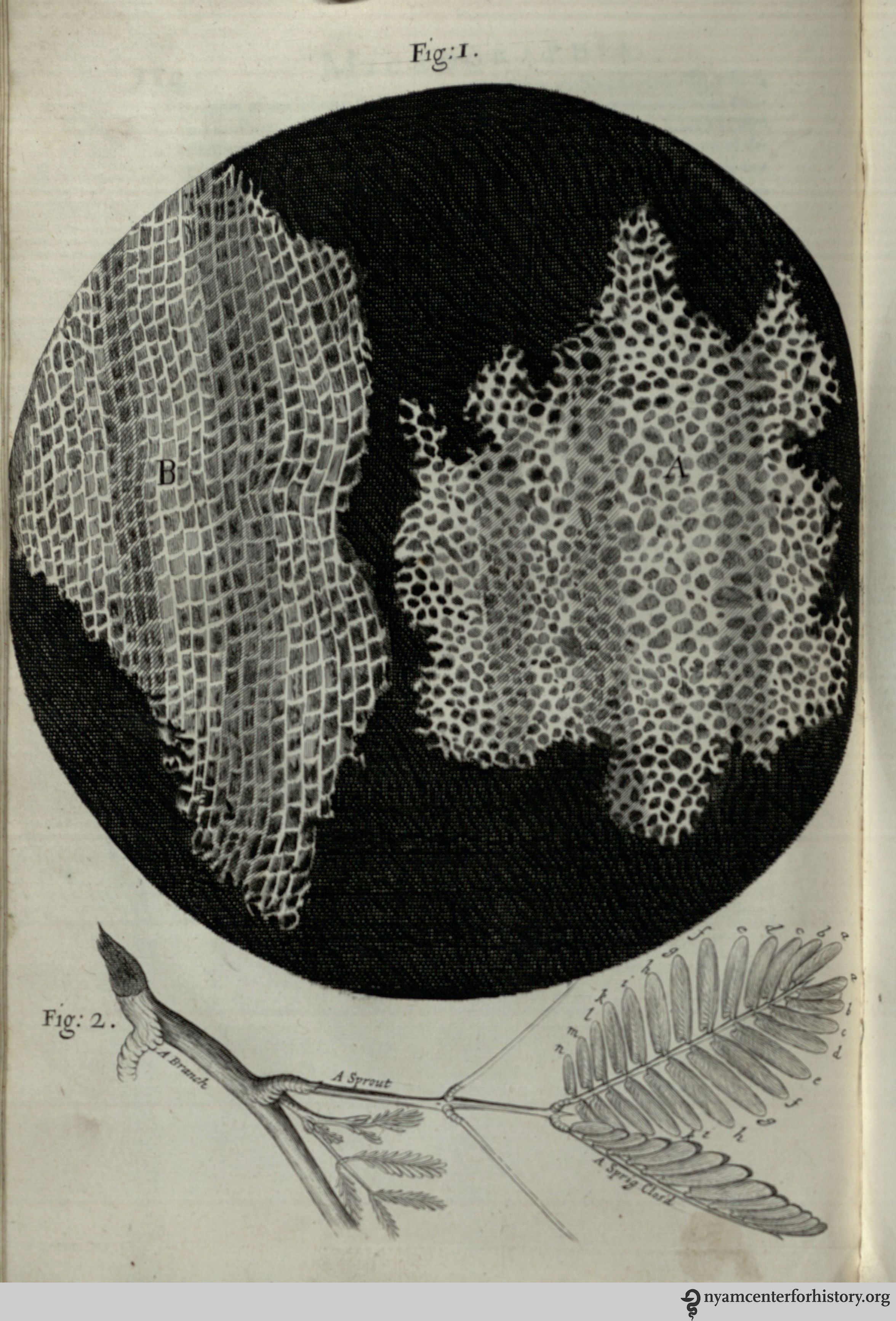
In his observation on cork, Hooke compared its structure to that of honeycomb and. He discovered plant cells, “which were indeed the first microscopical pores I ever saw, and perhaps that were ever seen…,” and coined the term “cell.”

In his observation on cork, Hooke compared its structure to that of honeycomb. He discovered plant cells, “which were indeed the first microscopical pores I ever saw, and perhaps that were ever seen…,” and coined the term “cell.”

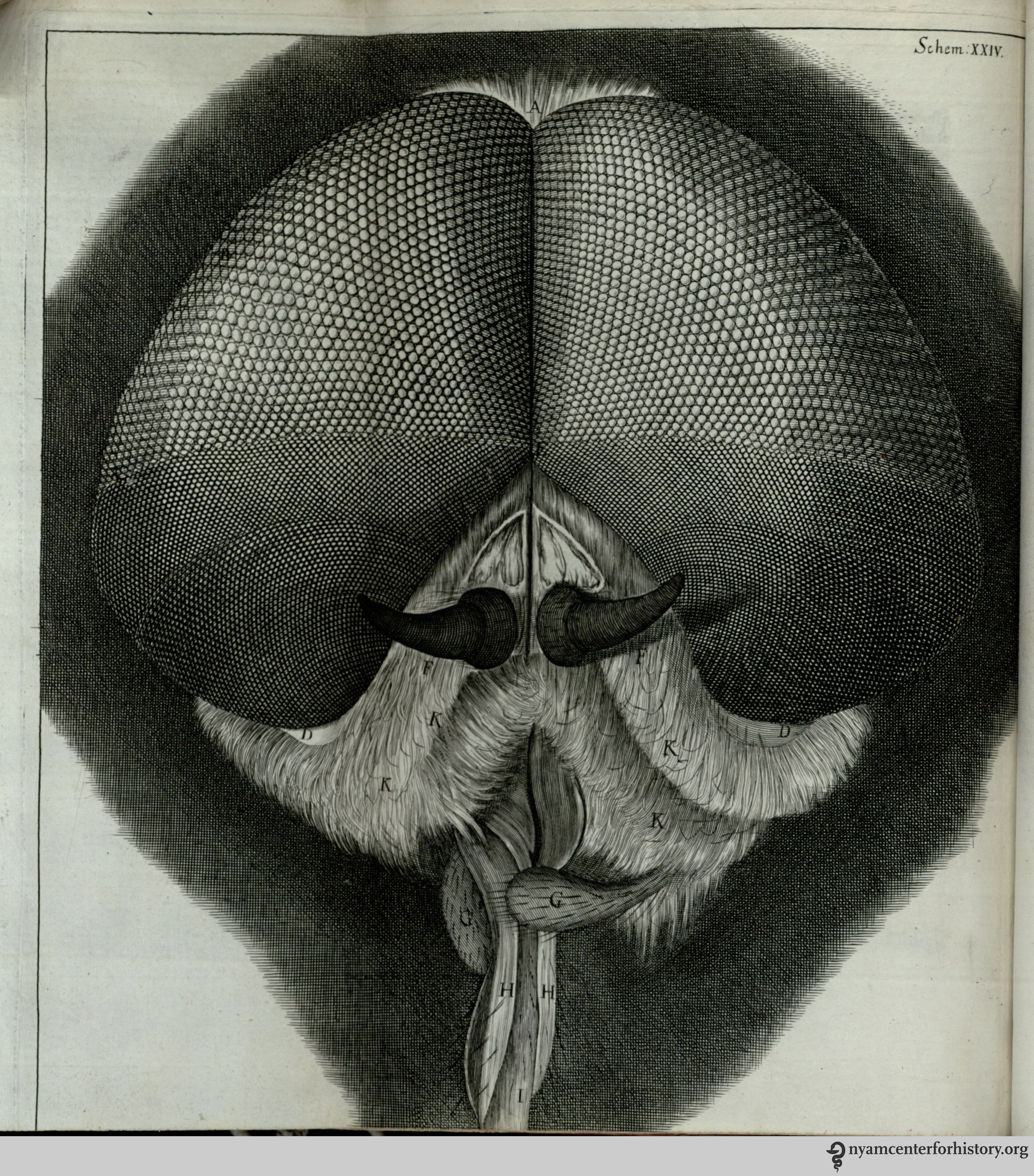
For observation XXXIV, Hooke examined the eyes and head of grey drone-fly.

For observation XXXIV, Hooke examined the eyes and head of grey drone-fly.

Hooke seemed enamored with the white feather-winged moth, calling it a “pretty insect” and “a lovely object both to the naked Eye, and through a Microscope.”

Hooke seemed enamored with the white feather-winged moth, calling it a “pretty insect” and “a lovely object both to the naked Eye, and through a Microscope.”

The flea is one of several fold-out plates in the book. Again, Hooke has a scientist’s appreciation for the insect, commenting equally on its strength and beauty. He is particularly fascinated with the anatomy of its legs and joints, which “are so adapted, that he can…fold them short within another, and suddenly stretch, or spring them out to their whole length.”

The flea is one of several fold-out plates in the book. Again, Hooke has a scientist’s appreciation for the insect, commenting equally on its strength and beauty. He is particularly fascinated with the anatomy of its legs and joints, which “are so adapted, that he can…fold them short within another, and suddenly stretch, or spring them out to their whole length.”

In the last observations, Hooke turned his attention to celestial bodies. His study of the moon lead him to believe it might be covered in vegetation. He thought the hills seen in Fig. 2 “may be covered with so thin a vegetable Coat, as we may observe the Hills with us to be, such as the short Sheep pasture which covers the Hills of Salisbury Plains.”

In the last observations, Hooke turned his attention to celestial bodies. His study of the moon led him to surmise that the hills seen in Fig. 2 “may be covered with so thin a vegetable Coat, as we may observe the Hills with us to be, such as the short Sheep pasture which covers the Hills of Salisbury Plains.”

The National Library of Medicine’s Turning the Pages project has a selection of images from Micrographia available. It is well worth flipping through; you’ll find curator’s notes and you can even open the folded plates. If you are interested in looking at Micrographia in its entirety, contact us at history@nyam.org or 212-822-7313 to make an appointment.

Reference
1. Espinasee, Margaret. Robert Hooke. London: Heinemann, [1956].

Guest curator Riva Lehrer on Vesalius 500

Our “Art, Anatomy, and the Body: Vesalius 500” festival guest curator, artist and anatomist Riva Lehrer, describes some of her thinking about bodies, anatomy and art.

In 1543, when Andreas Vesalius published his De humani corporis fabrica (On the fabric of the human body) many contemporaries refused to accept his results. They contradicted canonical texts passed down over millennia: belief and expectation trumped direct experience and observation.

It’s easy to smile condescendingly at such pig-headedness. Yet we can scarcely look in the mirror without being caught in a fog of distortion. Every day we’re overloaded with information about how we should look and how our bodies should work. There are still plenty of ways in which our biases form medicine, and medicine, in turn, forms us.

"Circle Stories #4: Riva Lehrer" 1998  self portrait

“Circle Stories #4: Riva Lehrer” (1998).

I was born with visible disabilities. My body has always been seen as lacking, in need of correction, and medically unacceptable. My parents and doctors pushed me to have countless procedures to render it more “normal” as well as more systemically functional. These were two different streams of anxiety—how I worked and how I looked— yet they became inextricably woven together. My life in the hospital gave me a tremendously intimate view of medicine, as does the fact that I come from a family of doctors, nurses, and pharmacists. It gave me an acute awareness of how medical choices control and shape our bodies.

I first studied anatomy at the School of the Art Institute of Chicago and later at the University of Illinois at Chicago, as a visiting artist in the cadaver lab. I often think about what my first anatomy professor told me, many years ago. She remarked that when she was a child, people grew into their original faces. Whatever oddities they were born with formed what they looked like, year after year. Faces were hard-won and unique. But modern dentistry, nutrition, grooming—all the large and small interventions of medicine—made people look much more alike than they did sixty years ago.

In the 21st century, medicine is not just about the “correction” of significant impairments; personal perfectibility is as much the point of modern medicine as the curing of significant diseases. We view our bodies as lifetime fixer-upper projects.

Yet, it’s that very fluidity that opens profound questions about the identities our bodies express. Technologies such as radical cosmetic surgery, cyborgian interfaces, and gender reassignment procedures raise and complicate our expectations. Medicine offers new options if the inside of our bodies does not match the appearance of the outside. We live in a state of wild restlessness, trying to see and feel who we are. We see chimeras of possibility.

"At 54" Riva Lehrer 2012 self portrait

“At 54” by Riva Lehrer (2012).

My body was not normalized through all my surgeries; yet the original body I had would not have lived. It’s been changed so many times that I can’t even guess at what it would have been. My own mutability has given me a deep interest in the two-way relationship between one’s body and the course of a life.

I teach anatomy for artists at the School of the Art Institute and am a visiting artist in Medical Humanities at Northwestern University. My studio practice focuses on the intersection of the physical self and biography. I interview people in depth about the interweaving of their bodies and their stories. These interviews become narrative portraits, as I try to understand what can be known about a life in a single portrait image.

Join us as we explore the role of anatomy in identity formation through our celebration of the 500th anniversary of Vesalius’ birth. We’ve invited artists, performers, scholars, and historians to help us ask how our imaginations form our living flesh. Let’s all look in the mirror and ask, what are we really seeing, and what do we believe we see?

Some of the issues our speakers will explore include:

""Chase Joynt" by Riva Lehrer and Chase Joynt 2014

“”Chase Joynt” by Riva Lehrer and Chase Joynt (2014).

—How do we decide what is “lifesaving” and what is “elective” surgery when it comes to identity? Transgender performer Chase Joynt questions what it means to save a life, and how his dealings with the medical establishment led him to question such choices.

—How many of us were raised with the constant imprecation to stand up straight? Sander Gilman peers into the use of posture lessons in public schools to control the American body.

—Artist Steven Assael creates dramatic portraits of New Yorkers, from street performers to elderly eccentrics. His work shows us how identity travels from the inner self to the outer shell.  Assael is a long-time professor at New York’s School of Visual Arts, one of the last bastions of serious anatomical study in the U.S.

—Famed choreographer Heidi Latsky will discuss GIMP and how she creates dance for performers with a range of movements and morphologies. A performance and film excerpt bring us into the innovative strategies used by the GIMP collective.

—Many contemporary artists use anatomy in investigations of identity and formal exploration. Curator Ann Fox will present images from an international roster of artists. She will be joined by Taiwanese artist Sandie Yi, who will show work that deals with the intense difficulties of having a physically different body in China.

"Coloring Book" Riva Lehrer 2012

“Coloring Book” by Riva Lehrer (2012).

Graphic Medicine is a consortium of comics artists who explore medicine from the standpoint of doctor, nurse, patient and family member. The founders of Graphic Medicine, MK Czerwiec and Ian Williams, will discuss how the vulnerable body is rendered in comics form. Comics allow artists to move from the inside of the body to the outside in seamless transitions, to weave together objective perspectives and highly personal, subjective experiences.

Tracking the History of Cancer Drug Development

Lourdes Sosa, today’s guest blogger, is an associate professor in the department of management at the London School of Economics and Political Science.

Have new cancer drugs entered the market targeting ever-smaller portions of the total cancer patient population? If so, is this a symptom of a high-tech market phenomenon known to economists as submarket fragmentation?1 If we accurately answer these questions, we will better understand oncology drug discovery competition and thus will offer better strategic recommendations to enhance drug discovery efficiency.

My co-authors, Prof. Roberto Fernandez (MIT Work and Organization Studies), Prof. Andrew Lo (MIT Finance), and myself, Prof. Lourdes Sosa (LSE Department of Management), set about to answer these questions more than a year ago. As we began our research, our most important first step was to identify the anticancer drugs available in the US market since the birth of chemotherapy in the 1940s. A perfect data source became the Physicians’ Desk Reference (PDR®), an annual directory of approved drugs and full prescribing information that began publication in 1947.

Our next challenge came about immediately: where could we locate an accessible repository that held the entire collection to date? Although key local libraries offered us access to a large portion of the collection in print, we found in the New York Academy of Medicine Library full access to the entire collection. Furthermore, NYAM holds the collection in microfiche format, making it easy to browse from one year to another.

Starting a year ago, we began collecting data from the NYAM Library. We are now happy to report how our study is taking shape (we are also delighted to have an avenue to thank the support of Ms. Danielle Aloia and the team of expert librarians at NYAM).

The title page and an entry in from the 1949 Physician's Desk Reference.

The title page and an entry from the 1949 Physicians’ Desk Reference.

The figure below shows the oncology drugs available in the US market from 1947 until 2001 (data entry is still in progress). The process to identify these drugs started with the Product Category Index of the PDR®, where all cancer-related drugs can be found. We then read the full prescription information included in the product information section of the PDR® to extract the actual indications approved per drug. This latter step allowed us to make a precise decision on whether the drug was a treatment for cancer (as opposed to a treatment for a side effect or complication), and if so, to define for which cancer indications the drug was approved.

Courtesy of Roberto Fernandez, Andrew Lo, and Lourdes Sosa.

Courtesy of Roberto Fernandez, Andrew Lo, and Lourdes Sosa.

As can be seen in the figure, there is a big change in reporting in 1970. Starting that year the Product Category Index of the PDR® reported a category titled antineoplastics that made it straightforward to identify relevant drugs. In contrast, the categorization used in 1947–1969 has categories such as multiple myeloma and breast carcinoma listed separately. More importantly, during those earlier years a vast majority of drugs listed as cancer-related were in fact general-purpose drugs such as steroids, analgesics, and diuretics, which just happened to be novelties in the market.

As mentioned, we used the full prescription information to discern between the cancer-treating drugs that constitute the core of our study and those of either general application (e.g., steroids) or symptom-relief purpose (e.g., anemia treatments). The actual population of cancer-treating drugs for us to use is the black portion of the above figure shown with the legend “treating drugs.”

Our next step (after completing this exercise to year 2013) will be to calculate an index of coverage that proxies for the percentage of all cancer patients that each drug can treat. We will eagerly report on our progress as soon as we have preliminary results to share.

Reference

1. Sutton, J. 1998. Technology and Market Structure: Theory and Structure. MIT Press, Cambridge, MA.

Celebrate Andreas Vesalius’s 500th Birthday With Us on October 18

On October 18, our second-annual Festival for Medical History and the Arts, “Art, Anatomy, and the Body: Vesalius 500” will celebrate the 500th birthday of anatomist Andreas Vesalius.

Vesalius’ groundbreaking De humani corporis fabrica (The Fabric of the Human Body) of 1543 is a key Renaissance text, one that profoundly changed medical training, anatomical knowledge, and artistic representations of the body, an influence that has persisted over the centuries. Our Festival is one of a global series of celebrations of his legacy.

Our day-long event will explore the intertwined histories of art and anatomy, illustration and medicine, performance and the body, body snatching and dissection, identity and intersexuality, disability and representation, and contemporary visual arts and the body. Speakers, performers, and artists will be joined by anatomical cartoonists, 3D printing demonstrations, workshops, and more. Artist and anatomist Riva Lehrer will be our guest curator. Speakers and presenters will include Daniel Garrison, Steven Assael, Sander Gilman, Brandy Schillace, Lisa Rosner, Ann Fabian, Bill HayesMichael Sappol, Chase JoyntProof X, and  Kriota Willberg (look for a full list of speakers later this summer).

Follow our blog over the summer for guest posts from Festival participants and more on the wonderful Vesalius holdings in our collection.


A Gallery of Gauzy Wings (Item of the Month)

By Arlene Shaner, Acting Curator and Reference Librarian for Historical Collections

Plate 8: Ephemera rupestris, the Rock Day Fly. Click to enlarge.

Plate 8: Ephemera rupestris, the rock day fly. Click to enlarge.

As we head into full summer, it seems appropriate to take a look at one of our many natural history books for this item of the month. Anyone who spends time outside at this time of year encounters insect life of many kinds.

While we mostly tend to avoid the bugs we encounter, many 18th century naturalists found them enticing subjects of study. John Hill (1714?-1775), the author of the charming A Decade of Curious Insects (1773), was no exception. Hill was an English apothecary and botanist with frustrated literary and theatrical aspirations. He also had a medical degree from the University of St. Andrews, but whether he actually studied to become a physician or just purchased the degree is unclear. He worked as an apothecary and created and dispensed many herbal remedies. He is most remembered now for his various botanical works, including the British Herbal (1756), a series of popular herbal medicine treatises, and the 26-volume Vegetable System (1759-1775).1,2

Hill_Title Page_watermark

Title page of A Decade of Curious Insects. Click to enlarge.

Hill had a longstanding interest in microscopic observation and revised an English translation of Jan Swammerdam’s heavily illustrated Book of Nature, or the History of Insects in 1758. In the little work that is the subject of this post, however, he made the observations himself, using a lucernal microscope probably much like the one pictured here.

All ten engravings in our copy are hand colored, although the illustrations could also be purchased separately and painted for personal education or enjoyment. As the verso of the title page notes, “Ladies who may chuse to paint these Insects themselves may have Sets of the Cuts on Royal Paper printed pale for that purpose.”

The text provides detailed descriptions of each insect, with particular attention paid to the colors of individual body parts. Sometimes Hill also offers his observations on their habits. Day-Flies, for example, “are an inoffensive race; born to pass thro’ their little stage of being, the prey to a thousand enemies; but hurtful to no creature.”

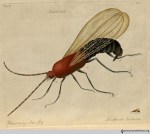
Plate 7, Ephemera culiciformis, the "white wing'd day fly." Click to enlarge.

Plate 7, Ephemera culiciformis, the “White Wing’d Day Fly.” Click to enlarge.

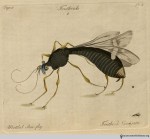
The Savages, Sphex and Sphex Spirifex, attack other insects with an unmatched intensity. In the case of the Comb-Footed Savage, “The number of other Insects these destroy, is scarce to be conceiv’d ; the mouth of their cave is like a Giant’s of old in romance ; strew’d with the remains of prey… he will kill fifty for a meal.”

Plate 3, Sphex pectinipes, the comb footed savage. Click to enlarge.

Plate 3, Sphex pectinipes, the comb footed savage. Click to enlarge.

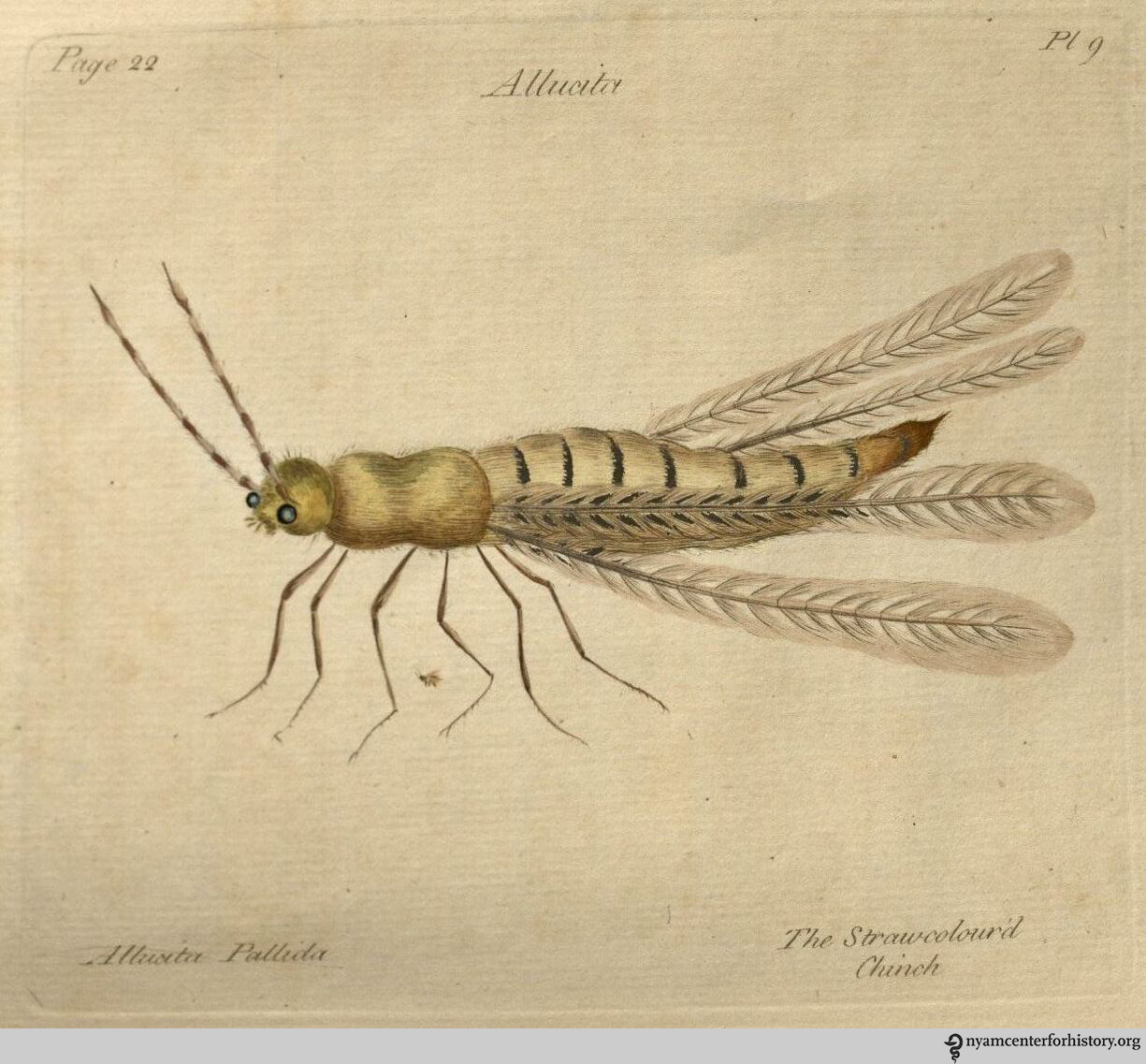
A warning, though, that anyone who enjoys inhaling the fragrance of a bouquet of flowers might be in for a dreadful surprise if the either the Straw-Colour’d or the Tawny Chinch lurks inside. According to Hill, a gentleman who suffered from headaches sneezed onto a sheet of paper one day, and a microscopical examination of the “moving particles” revealed them to be Straw-Colour’d Chinches.

Plate 9, Allucita Pallida, "The Straw-colour'd Chinch."

Plate 9, Allucita Pallida, “The Straw-colour’d Chinch.”

Hill noted that both chinches inhabit a variety of popular flowers. “Many have this pain [headache] from the smell of Flowers,” he writes. “Some have been found dead, with quantities of violets, and other Flowers, in their chamber. Physicians have attributed these deaths to the powerful odour of those Flowers; but that they should be owing to these creatures, is much more probable.”

Plate 10, Allucita fulva, the tawny chinch.

Plate 10, Allucita fulva, the tawny chinch.

Perhaps you should think twice the next time you stop to smell the roses, just in case.

The book’s illustrations are too lovely not to share. Here are the remainder (click an image to view the gallery).

References
1. Barker, G. F. R. (1891). Hill, John (1716?-1775). In Dictionary of National Biography, 1885-1900, volume 26. London: Smith, Elder & Co. Retrieved from http://en.wikisource.org/wiki/Hill,_John_%281716%3F-1775%29_%28DNB00%29

2. Gerstner, P. A. (1972). Hill, John. In Dictionary of Scientific Biography, volume VI. New York: Charles Scribner’s Sons.