Brighten the Visit With Pepsi

By Johanna Goldberg, Information Services Librarian, with Jarlin Espinal, Technical Services Assistant

This is part of an intermittent series of blogs featuring advertisements from medical journals. You can find the entire series here.

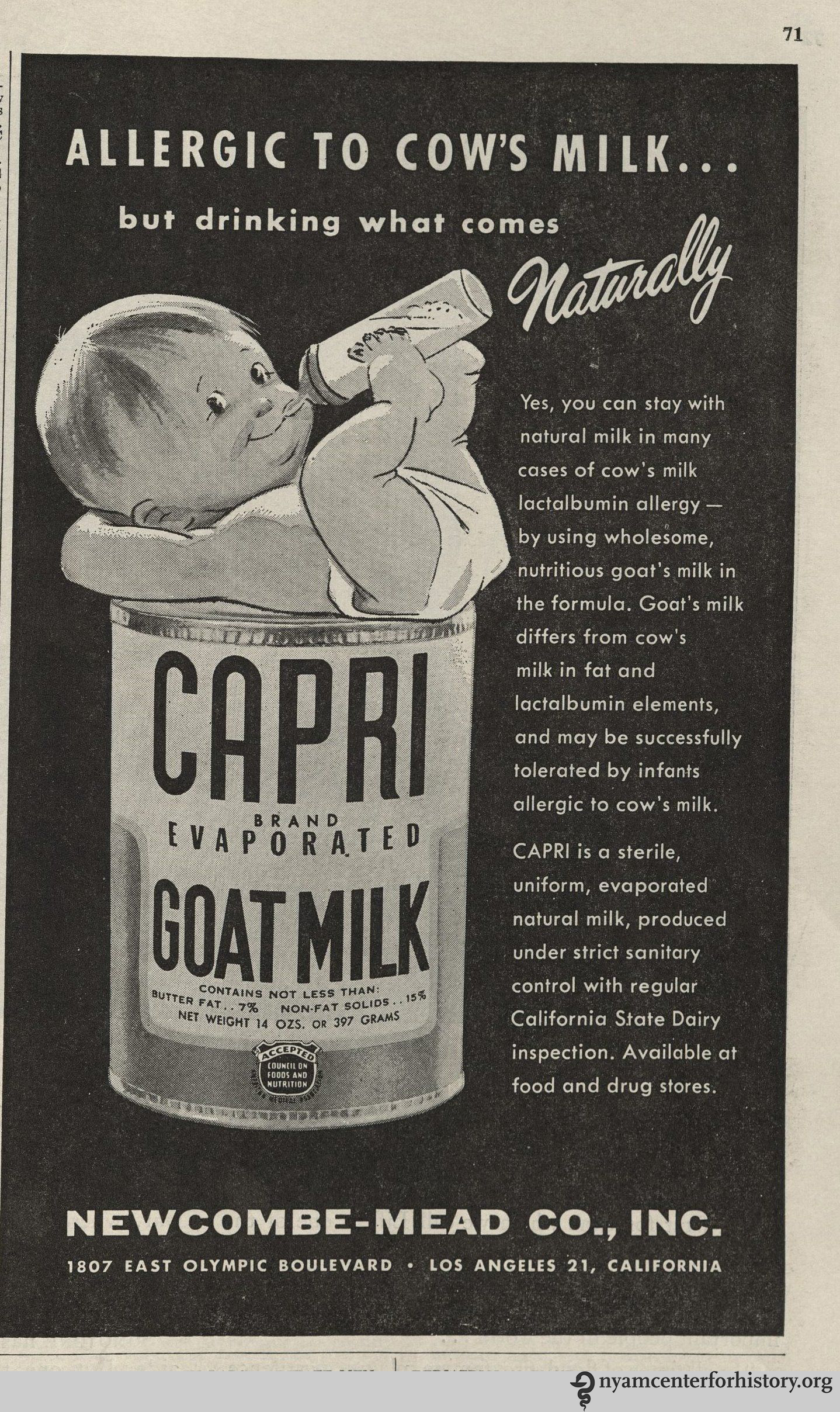
From JAMA, volume 182, number 8, November 24, 1962.

From JAMA, volume 182, number 8, November 24, 1962.

Advertisements in the Journal of the American Medical Association (JAMA), have reflected food and diet trends from the start.

In the late 1930s and early 1940s, the journal normally had two pages of ads an issue, often related to food. By the late 1940s, advertising exploded. The May 3, 1947 issue of JAMA has 130 pages of ads, with food-related items amidst the publishers, medical devices, cigarettes, cosmetics, sanitariums, hospitals, and pharmaceuticals.

The advertising boom only increased—“In 1958 the industry estimated that it had turned out 3,790,809,000 pages of paid advertising in medical journals.”1 By this time, ads for pharmaceuticals far surpassed those for food- and diet-related items, a fitting trend as “between 1939 and 1959, drug sales rose from $300 million to $2.3 billion”1

The food- and diet-related advertisements presented here fall into several categories. There are promotions from industry groups—including my favorite, in which the National Confectioners’ Association attempts to convince doctors that candy has health benefits. There are beverages, ranging from baby formula to ovaltine to soft drinks. There are items that remain familiar today and items that seem totally foreign—if someone out there has tried Embo, please let us know. And of course, there’s the intersection of pharmaceuticals and diet, as claims of appetite suppression move from ads for apples and citrus to drugs like Desoxyn.

From JAMA, volume 106, number 20, May 16, 1936.

From JAMA, volume 106, number 20, May 16, 1936. Click to enlarge.

From JAMA, volume 134, number 1, May 3, 1947.

From JAMA, volume 134, number 1, May 3, 1947. Click to enlarge.

From JAMA, volume 134, number 2, May 10, 1947. Click to enlarge.

From JAMA, volume 134, number 2, May 10, 1947. Click to enlarge.

From JAMA, volume 154, number 3, January 16, 1954. Click to enlarge.

From JAMA, volume 154, number 3, January 16, 1954. Click to enlarge.

From JAMA, volume 154, number 5, January 30, 1954. Click to enlarge.

From JAMA, volume 154, number 5, January 30, 1954. Click to enlarge.

From JAMA, volume 154, number 6, February 6, 1954. Click to enlarge.

From JAMA, volume 154, number 6, February 6, 1954. Click to enlarge.

From JAMA, volume 154, number 9, February 27, 1954. Click to enlarge.

From JAMA, volume 154, number 9, February 27, 1954. Click to enlarge.

From JAMA, volume 182, number 7, November 17, 1962. Click to enlarge.

From JAMA, volume 182, number 7, November 17, 1962. Click to enlarge.

From JAMA, volume 182, number 7, November 17, 1962. Click to enlarge.

From JAMA, volume 182, number 7, November 17, 1962. Click to enlarge.

From JAMA, volume 234, number 2, October 13, 1975. Click to enlarge.

From JAMA, volume 234, number 2, October 13, 1975. Click to enlarge.

Reference

1. Donohue J. A history of drug advertising: the evolving roles of consumers and consumer protection. Milbank Q. 2006;84(4):659–699. Available at: http://facultynh.syr.edu/bjsheeha/ADV 604/History of Drug.pdf. Accessed May 30, 2014.

A History of Blood Transfusions

By Danielle Aloia, Special Projects Librarian

World Blood Donor Day 2014June 14 is World Blood Donor Day, a date selected to coincide with the birthday of Karl Landsteiner (1868–1943), the father of blood transfusions. Landsteiner discovered the A, B, AB, and O blood types in 1901, making blood transfusions safer. His work earned him the the Nobel Prize in Physiology or Medicine in 1930.1 The Word Health Organization (WHO) created this event to honor Dr. Landsteiner and to bring attention to the need for timely access to safe blood and blood products through voluntary donations.2

Recorded evidence of blood transfusions date back to the 16th century; there has been much speculation as to who first tried it and who first succeeded. Some tales are based on evidence and some seem to have been fabricated. Dr. Richard Lower is credited with performing the first successful blood transfusion from one animal to another in the 17th century. But it wasn’t until 1818 that Dr. James Blundell, a gynecologist, made a fairly successful attempt; after the procedure, patients who had been near death showed temporary improvement. Blundell continued to improve on the process and in 1829, he published the first report on a “human life being saved by transfusion” in the Lancet.3

Figure from Dr. Blundell's article in the June 13 ,1829 issue of The Lancet, "Observations on Transfusion of Blood."

Figure from Dr. Blundell’s article in the June 13, 1829 issue of The Lancet, “Observations on Transfusion of Blood.”

From the RAMC Muniment Collection in the care of the Wellcome Library. Credit: Wellcome Library, London.

From the RAMC Muniment Collection in the care of the Wellcome Library. Credit: Wellcome Library, London.

Even after Landsteiner’s 1901 discovery, the ability to safely store and preserve blood donations took several more decades of study. During the First World War, O. H. Robinson, an army doctor,  introduced an effective anti-coagulant for long-term human blood storage.4 Percy Oliver began the first blood donor service with the British Red Cross. In the 1920s, he was asked to help with the growing need for blood and developed the first system of a volunteer donation and screening process. It wasn’t until 1941 that the Red Cross in the US started actively collecting blood from donors on request of the US government.4

This year’s World Blood Donor Day campaign highlights the importance of safe blood and the prevention of unnecessary deaths during pregnancy. The loss of blood during childbirth has been studied throughout history5 and continues to be a medical concern. About 800 women, nearly all in developing countries, die of pregnancy- and childbirth-related causes every day.2 A 2006 WHO analysis identified hemorrhaging as the leading cause of maternal deaths in Africa and in Asia.6 In developing countries donated blood is most often used for pregnancy complications7 whereas only 2.2% of donated blood in the US is used for obstetrics.8

Blood donation is one of the single most important contributions a person can make in saving the lives of others. Every two seconds someone needs blood and every pint of blood can save several lives.9 The more donated blood, the more lives saved.

References

1. NobelPrize.org. Karl Landsteiner – Biographical. Available at: http://www.nobelprize.org/nobel_prizes/medicine/laureates/1930/landsteiner-bio.html. Accessed June 11, 2014.

2. World Health Organization. Campaign essentials: World blood donor day 2014.; 2014. Available at: http://apps.who.int/iris/bitstream/10665/112768/1/WHO_World-Blood-Donor-Day_2014.1_eng.pdf?ua=1&ua=1. Accessed June 11, 2014.

3. Walker K. The Story of Blood. London: H. Jenkins; 1958.

4. Duffin J. History of Medicine: A Scandalously Short Introduction. Toronto: University of Toronto Press; 2010.

5. Schorn MN. Measurement of blood loss: review of the literature. J Midwifery Womens Health. 55(1):20–7. doi:10.1016/j.jmwh.2009.02.014.

6. Khan KS, Wojdyla D, Say L, Gülmezoglu AM, Van Look PFA. WHO analysis of causes of maternal death: a systematic review. Lancet. 2006;367(9516):1066–74. doi:10.1016/S0140-6736(06)68397-9.

7. World Health Organization. WHO | 10 facts on blood transfusion. Available at: http://www.who.int/features/factfiles/blood_transfusion/blood_transfusion/en/index1.html. Accessed June 12, 2014.

8. Whitaker B, Hinkins S. The 2011 national blood collection and utilization survey report. Washington, D.C.; 2013. Available at: http://www.aabb.org/research/hemovigilance/nbcus/Documents/11-nbcus-report.pdf. Accessed June 12, 2014.

9. Blood Centers of the Pacific. 56 Facts About Blood and Blood Donation. 2005. Available at: http://www.bloodcenters.org/blood-donation/facts-about-blood-donation/. Accessed June 11, 2014.

Coloring Our Collections

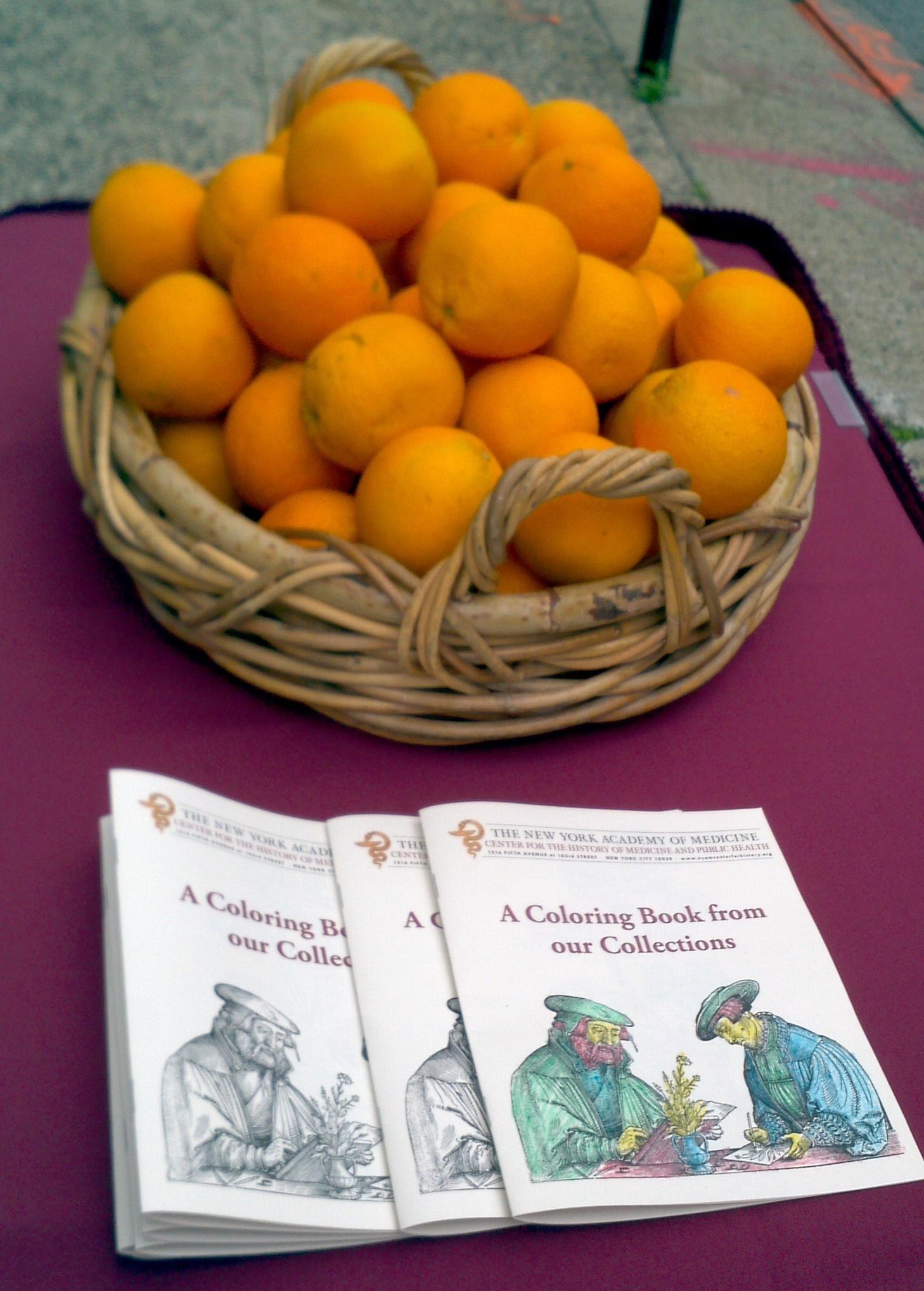
Coloring books and oranges, waiting for the start of the Museum Mile Festival.

Coloring books and oranges, waiting for the start of the Museum Mile Festival.

At last night’s Museum Mile Festival, we were thrilled to offer a coloring book featuring images from our collections, along with the oranges seen here and packets of crayons.

NYAM also partnered with community organizations to engage the festival participants in healthy eating and active living activities. Harlem Seeds demonstrated how to cook a healthy and delicious kale salad and baked apple dessert. Harlem Hospital Center’s Walk it Out and Hip Hop Public Health programs got the crowd moving with high-energy kickboxing, line dancing, and break dancing lessons.

While we can’t give you crayons or break dancing lessons through our blog, we can offer you the coloring book in PDF format. You can color images from Leonhart Fuchs’ De historia stirpium commentarii insignes . . . (1542);  Ulisse Aldrovandi’s Serpentum, et draconum historiae libri duo (1640); and two works by Konrad Gesner, Conradi Gesneri medici Tigurini Historiæ animalium Lib. I. de quadrupedibus uiuiparis . . . (1551) and Thierbuch das is ein kurtze b[e]schreybung aller vierfüssigen thiern so/ auff der erdē und in wasseren wonend/ sampt irer waren conterfactur . . . (1563).

We’d love to see your colored pages—please share them with us!

War and Veterans Health: Some History for the 70th Anniversary of D-Day

By Paul Theerman, Associate Director, Center for the History of Medicine and Public Health

June is Men’s Health Month. As a concept, men’s health—a focus on the health and wellness issues particular to men—is still new, first arising in the men’s movements of the 1960s and 1970s. The emergence of AIDS sharpened the idea of men’s health, as gay men took the brutal first hits of the pandemic. By the 1990s, though, the idea of men’s health had become more mainstream. Congress first designated an official men’s health week in 1994, sponsored by Senator Robert Dole. By the early 2000s, the CDC began to include men’s health as a separate category in its consumer health site. In 2014, NYU’s Langone Medical Center opened the Preston Robert Tisch Center for Men’s Health, the counterpart to its Joan H. Tisch Center for Women’s Health of 2011.

The original men’s health movement, though, focused on war veterans. Each war brings up the issue—for Vietnam, for example, it emerged in such popular books as Peter Bourne’s Men, Stress, and Vietnam (1970; by the physician who became President Jimmy Carter’s drug czar). An escalating cycle of concern, growth, failure, and reform—so apparent in today’s veterans health scandal—has deep roots in American military history.

The federal government first extended general health and medical benefits to veterans in 1917 due to the large number of Great War veterans.1 In 1921, this led to a separate agency, the Veterans Bureau—which, joined with two other agencies, became the Veterans Administration in 1930. The VA ran a separate hospital system, with 74 facilities by the end of 1932.1

Photograph in: Armfield BB. Organization and Administration in World War II. Washington, D.C.: Office of the Surgeon General. Department of the Army; 1963.

Photograph in: Armfield BB. Organization and Administration in World War II. Washington, D.C.: Office of the Surgeon General. Department of the Army; 1963.

World War II led to a new crisis in veterans health. In 1945, the number of living veterans from all previous wars numbered some 4 million men; World War II immediately added 15 million more.2 This surge threatened to overwhelm the system, and led to major reform of veterans health care, undertaken by Major General Paul R. Hawley.

In World War II, Hawley (1891–1966) served as the theater surgeon for the European Theater of Operations. As such he was responsible for all medical care for American armed forces fighting in Europe, with 250,000 medical men under his command. Among other accomplishments, he planned the medical support for D-Day, June 6, 1944, arranging for the construction of field hospitals (with some 11,000 beds) in Normandy right after the invasion. These hospitals began as concrete slabs to hold tents, as there were almost no existing hospitals in the landing area. He called this work “one of the finest pieces of planning in the entire campaign.”3,4

Photograph in: Wiltse C. Medical supply in World War II. Washington, D.C.: Office of the Surgeon General. Department of the Army; 1968.

Photograph in: Wiltse C. Medical supply in World War II. Washington, D.C.: Office of the Surgeon General. Department of the Army; 1968.

Indeed, planning was Hawley’s strength. In 1945, the new head of the Veterans Administration was General Omar Bradley, who had commanded American invasion forces in Europe from D-day through to German surrender. Bradley brought in Hawley to reorganize the health services. To this task, Hawley brought a keen sense of what was possible and a reliance on improving health by raising the quality of the system’s doctors. The Veterans Administration began by engaging in hospital building—by the late 1940s, the number of VA hospitals has risen to almost 100—but as a first measure, Hawley advocated using private clinics to help veterans, and he looked to county medical societies to provide the services. His vision was to have “every physician in each community designated a veteran’s physician.”5 For, ultimately, he saw the nation’s physicians and surgeons as the backbone of the system. He had great confidence in physicians’ abilities; indeed, more than any other factor, he gave well-trained doctors the chief credit for the greatly reduced casualty rates in World War II.3

Armfield BB. Organization and Administration in World War II. Washington, D.C.: Office of the Surgeon General. Department of the Army; 1963.

Photograph in: Armfield BB. Organization and Administration in World War II. Washington, D.C.: Office of the Surgeon General. Department of the Army; 1963.

And so, after revitalizing local clinics, Hawley’s chief reform was getting good doctors into veterans hospitals. He loosened the employment structure, removing it from civil service system, and increased the top salaries to about $125,000 in today’s dollars. For board-certified specialties, there was a 25% premium above that—all free of office and support expenses, as he pointed out. He allied VA hospitals with medical schools as much as possible, allowing VA physicians to teach, and he provided for expansive professional development programs. He went out of his way to secure the best physicians—his February 1946 JAMA article on the Veterans Administration2 is really an extended recruitment notice. By the time he left the position in 1947—he went on to head Blue Cross/Blue Shield and then the American College of Surgeons—Hawley had substantially raised the level of care in veterans’ health.

The Veterans Health Administration has gone through successive periods of reform since the late 1940s. The last major period was in the 1990s under Kenneth Kizer, and included implementing one of first effective electronic medical records systems, VistA. By the 2010s, though, the Administration was again overwhelmed, overseeing care for war veterans going back to World War II as well as from recent U.S. wars and incursions—and now serving both men and women. Many of the same issues are there as Hawley faced: the challenge of providing increasing numbers of veterans with the care they need. New, and newly recognized, medical conditions have stressed the system as well. One is PTSD, a consequence in previous wars but not well understood; another are the injuries from IEDs. Neither was a major factor when Hawley reformed the Veterans Health Administration, and now both are huge. We await the next cycle of reform.

References

1. Weber GA, Schmeckebier LF. The Veterans’ Administration: Its History, Activities and Organization. Washington, D.C.: The Brookings Institution; 1934.

2.Hawley PR. New opportunities for physicians in the Veterans Administration. J Am Med Assoc. 1946;130:403.

3.Hawley PR. Advances in war medicine and surgery as demonstrated in the European theater of operations. Med Ann Dist Columbia. 1946;15:99–109.

4. Hall DE. “We were ready”: Health services support in the Normandy campaign. US Army Med Dep Off Med Hist. 1993. Available at: http://history.amedd.army.mil/booksdocs/wwii/Overlord/Normandy/HallNormandy.html. Accessed June 5, 2014.

5. Hawley PR. Medical care for veterans. Ill Med J. 1945;88:294–96.

2014–2015 Helfand and Klemperer Research Fellows

By Lisa O’Sullivan, Director, Center for the History of Medicine and Public Health

We are pleased to announce the 20142015 Helfand and Klemperer Research Fellows: Laura Robson (University of Reading) and Heidi Knoblauch (Yale University).

Rösslin, Eucharius. The byrth of mankynde, otherwyse named the womans booke. [London : Tho. Ray[nalde]], 1545.

The Audrey and William H. Helfand Fellowship in the History of Medicine and Public Health  focuses on the use of visual materials. Laura Robson will explore how medical works in the sixteenth century used images and texts from Andreas Vesalius’ anatomical treatise, the Fabrica. She will use Geminus’s Compendiosa (1545) and Raynalde’s translation of The byrth of mankynde (1545) to demonstrate the complex relationship between anatomical image and text and to unite the history of the book with the history of the representation of the body.

Louis A. Sayre Personal Casebook with multiple photographs, drawings, and ephemera of his patient, Aldoph Roussell ca. 1867

Louis A. Sayre Personal Casebook with multiple photographs, drawings, and ephemera of his patient, Aldoph Roussell ca. 1867

Our Paul Klemperer Fellow in the History of Medicine, Heidi Knoblauch, will use Lewis Sayre’s casebooks, the Photographic Review of Medicine and Surgery, and Bellevue Hospital Records. Looking especially at images and records from the Photographic Department at Bellevue Hospital (1868−1906), the first such department in a civil hospital in the United States, she will explore how 19th- and early 20th-century medical professionals in the U.S. used photographs of patients. What did physicians intend to do with photographs? What role did patients play in the collection of photographs? Her research will track how patients and physicians conceived the confidential nature of recording, collecting, and disseminating medical information (an ongoing question for medical archivists and historians).

Keep an eye out for guest posts from our fellows, who will also present their work at the end of their fellowships.

New Acquisitions at the Library

By Jarlin Espinal, Technical Services Assistant

Below is a selection of some of our recently acquired secondary sources in the history of medicine, along with blurbs about each book. Make an appointment to come and use them!

Nine of the library’s new acquisitions. Click to enlarge.

Nine of the library’s new acquisitions. Click to enlarge.

Sybil Exposed: The Extraordinary Story Behind the Famous Multiple Personality Case – Debbie Nathan

Sybil Exposed isn’t only an exposé of a blockbuster that pulled the wool over 6 million readers’ eyes … Riveting, thought-provoking and a quick read, Sybil Exposed is impossible to put down.” – The Oregonian

Representing Argentinian Mothers: Medicine, Ideas and Culture in the Modern Era, 1900–1946 – Yolanda Eraso

“Through detailed examination of a rich selection of sources including medical texts, newspapers, novels, photojournalism, and paintings, Representing Argentinian Mothers adopts an interdisciplinary approach and an innovative framework based on categories and notions drawn from the history of ideas and cultural history. By enquiring about the influence of medicine in the field of ideas, beliefs and images, Yolanda Eraso elaborates new insights to understand their interaction, which will appeal to anyone with an interest in the Medical Humanities.”

The Making of Mr. Gray’s Anatomy: Bodies, Books, Fortune, Fame – Ruth Richardson

“It is the story of changing attitudes in the mid-19th century; of the social impact of science, the changing status of medicine; of poverty and class; of craftsmanship and technology. And it all unfolds in the atmospheric milieu of Victorian London—taking the reader from the smart townhouses of Belgravia, to the dissection room of St. George’s Hospital, and to the workhouses and mortuaries where we meet the friendless poor who would ultimately be immortalised in Carter’s engravings.”

Life Writing and Schizophrenia: Encounters at the Edge of Meaning – Mary Elene Wood

“Challenging the romanticized connection between literature and madness, Life Writing and Schizophrenia explores how writers who hear voices and experience delusions write their identities into narrative, despite popular and medical representations of schizophrenia as chaos, violence, and incoherence. The study juxtaposes these narratives to case histories by clinicians writing their encounters with those diagnosed with schizophrenia, encounters that call their own narrative authority and coherence into question.”

Before Bioethics: A History of American Medical Ethics from the Colonial Period to the Bioethics Revolution – Robert Baker

“Before Bioethics narrates the history of American medical ethics from its colonial origins to current bioethical controversies over abortion, AIDS, animal rights, and physician-assisted suicide. This comprehensive history tracks the evolution of American medical ethics over four centuries, from colonial midwives and physicians’ oaths to medical society codes, through the bioethics revolution.”

Cannabis Nation: Control and Consumption in Britain, 1928-2008 – James H. Mills

“Overall, anyone with an interest in cannabis and indeed, illicit drugs more widely would find the book of interest. The meticulous research challenges commonly held perceptions. … an amusing and eminently readable piece of work.” – Mark Monaghan, Journal of Social Policy

American Pandemic: The Lost Worlds of the 1918 Influenza Epidemic – Nancy K. Bristow

“A richly detailed picture of American society as it experienced an extraordinary trauma—one that shook a newly established confidence in the efficacy of medicine and the responsiveness of civil society. Doctors, nurses, the friends and families of the sick all play a part in this carefully and imaginatively researched and lucidly written account of America’s last great epidemic.” – Charles Rosenberg, Harvard University

How Cancer Crossed the Color Line – Keith Wailoo

“A model of how to seamlessly weave together the complex intersectionality of class, gender and race. How Cancer Crossed the Color Line is a masterful account of how the reward structures of science funding, the profession of medicine, era-specific cultural stereotypes of women’s ‘proper place,’ and shifting notions of racialized bodies have all converged to shape our views of who is at risk for cancer, and why.” – Troy Duster, New York University

Medical Visions: Producing the Patient through Film, Television, and Imaging Technologies – Kirsten Ostherr

“Kirsten Ostherr shows us how we might learn to see—and to experience—health and illness differently. Medical Visions is crucial reading for anyone who practices medicine and for anyone who is, has been, or will be a patient—which is to say, all of us.” – Priscilla Wald, author of Contagious


Don’t Get Left Behind in the Wind and Rain

By Danielle Aloia, Special Projects Librarian

HurricanePreparednessWeekThe Atlantic hurricane season begins June 1 and the Eastern Pacific season began May 15. With factors like global warming1 and urban sprawl2 affecting storm intensity and impact, the need to be prepared ahead of time is more important than ever.

Hurricane Georges, Gulf Coast, Sept. 28, 1998. From NASA’s Mesoscale Atmospheric Processes Branch.3

Hurricane Georges, Gulf Coast, Sept. 28, 1998. From NASA’s Mesoscale Atmospheric Processes Branch.3

Researchers have found evidence of Atlantic hurricane activity going as far back as 3,000 years ago.4 The naming of storms began in the early 19th century. As the World Meteorological Organization explains, named storms can “facilitate tropical cyclone/hurricane disaster risk awareness, preparedness, management and reduction.”5

Atlantic Names

Atlantic Pronunciation Guide (PDF)

2014 2015 2016 2017 2018 2019
Arthur
Bertha
Cristobal
Dolly
Edouard
Fay
Gonzalo
Hanna
Isaias
Josephine
Kyle
Laura
Marco
Nana
Omar
Paulette
Rene
Sally
Teddy
Vicky
Wilfred
Ana
Bill
Claudette
Danny
Erika
Fred
Grace
Henri
Ida
Joaquin
Kate
Larry
Mindy
Nicholas
Odette
Peter
Rose
Sam
Teresa
Victor
Wanda
Alex
Bonnie
Colin
Danielle
Earl
Fiona
Gaston
Hermine
Ian
Julia
Karl
Lisa
Matthew
Nicole
Otto
Paula
Richard
Shary
Tobias
Virginie
Walter
Arlene
Bret
Cindy
Don
Emily
Franklin
Gert
Harvey
Irma
Jose
Katia
Lee
Maria
Nate
Ophelia
Philippe
Rina
Sean
Tammy
Vince
Whitney
Alberto
Beryl
Chris
Debby
Ernesto
Florence
Gordon
Helene
Isaac
Joyce
Kirk
Leslie
Michael
Nadine
Oscar
Patty
Rafael
Sara
Tony
Valerie
William
Andrea
Barry
Chantal
Dorian
Erin
Fernand
Gabrielle
Humberto
Imelda
Jerry
Karen
Lorenzo
Melissa
Nestor
Olga
Pablo
Rebekah
Sebastien
Tanya
Van
Wendy

National Hurricane Center – Tropical Cyclone Names (with pronunciation guide)6

The U.S. has calculated death tolls and costs of hurricanes since 1851.7 The deadliest storm on record occurred in 1900, when the Galveston Hurricane led to the deaths of 8,000 people. In comparison, Hurricane Katrina, the third deadliest hurricane, directly claimed the lives of 1,200.7

Despite all we have learned from the past, more advanced storm-tracking technology, and improved communication strategies to alert residents of an oncoming storm, some residents choose to stay put. A 2006 Harvard School of Public Health study finds:

“One-third (33%) of residents said if government officials said they had to evacuate due to a major hurricane this season, they would not or are unsure if they would leave. Homeowners (39%), whites (41%) and long-term residents (45%) are the groups most likely to ride out a major hurricane. People with children under 18 are less likely to remain in their homes (26%). Mobile home owners are no more likely to evacuate than the general public.”8

During a storm, be prepared and listen for weather service announcements. Weather alert services come in two forms. The National Weather Service issues hurricane watches within 48 hours of the storm hitting. This allows for time to prepare your home and review your plans. Hurricane warnings come within 36 hours of the storm hitting, giving you time to finish preparing your home and evacuate, if necessary. Listen to the TV, radio, or other media tracking the storm’s progress for recommendations on what course to take. The National Weather Service alerts as to the path, speed, and wind force of the approach hurricane.

From                        “Timely Tips When Disaster Strikes,” Judge Sherman G. Finesilver (1969)

From “Timely Tips When Disaster Strikes,” Judge Sherman G. Finesilver (1969). Click to enlarge.

Here are some further resources to help prepare you for a future event:

Tropical Cyclones: A Preparedness Guide
Red Cross Hurricane Preparedness
National Hurricane Center – Be Ready
National Center for Disaster Medicine and Public Health

References

1. National Oceanic and Atmospheric Administration. Geophysical Fluid Dynamics Laboratory. (2013). Global warming and hurricanes. Retrieved May 21, 2014, from http://www.gfdl.noaa.gov/global-warming-and-hurricanes

2. National Wildlife Federation. (2006). Increasing vulnerability to hurricanes: Global warming’s wake-up call for the U.S. Gulf and Atlantic coasts. Retrieved from http://www.nwf.org/~/media/PDFs/Global-Warming/Hurricanes_FNL_LoRes.ashx

3. NASA Mesoscale Atmospheric Processes Branch. (n.d.). Hurricane Georges. Retrieved May 21, 2014, from http://meso-a.gsfc.nasa.gov/rsd/images/Georges.html

4. National Hurricane Center. (1997). The deadliest Atlantic tropical cyclones, 1492-1996. Retrieved May 21, 2014, from http://www.nhc.noaa.gov/pastdeadly.shtml

5. World Meteorological Organization. (n.d.). Tropical cyclone programme. Retrieved May 21, 2014, from http://www.wmo.int/pages/prog/www/tcp/Storm-naming.html

6. National Hurricane Center. (n.d.). Tropical cyclone names. Retrieved May 21, 2014, from http://www.nhc.noaa.gov/aboutnames.shtml

7. Blake, E. S., Landsea, C. W., & Gibney, E. J. (2011). The deadliest, costliest, and most intense United States tropical cyclones from 1851 to 2010 (and other frequently requested hurricane facts) (No. NOA A Technical Memorandum NWS NHC – 6). NOAA. Retrieved from http://www.aoml.noaa.gov/general/lib/lib1/nhclib/nwstechmemos/nws-nhc-6.pdf

8. Blendon, R. J., Benson, J. M., Buhr, T., Weldon, K. J., & Herrmann, M. J. (2006). High-risk area hurricane survey (No. 20). Harvard School of Public Health. Retrieved from http://www.hsph.harvard.edu/horp/files/2012/09/WP20HighRiskHurricane.pdf

Take a Peck of Garden Snails

By Rebecca Pou, Archivist

This Saturday, May 24, is Escargot Day. We are going to pass on the escargot and instead recognize the occasion by sharing a few medicinal receipts featuring our favorite gastropod. Fortunately for snails, we do not recommend trying the recipes.

Today, snails are most frequently consumed in upscale restaurants, but snails have historically been part of the medicine cabinet, so to speak. People most often used snails in preparations to treat consumption, but the shelled creatures were also thought to cure earaches, deformations, asthma, bronchitis, coughs, rickets, cold sores, swellings, and warts.1

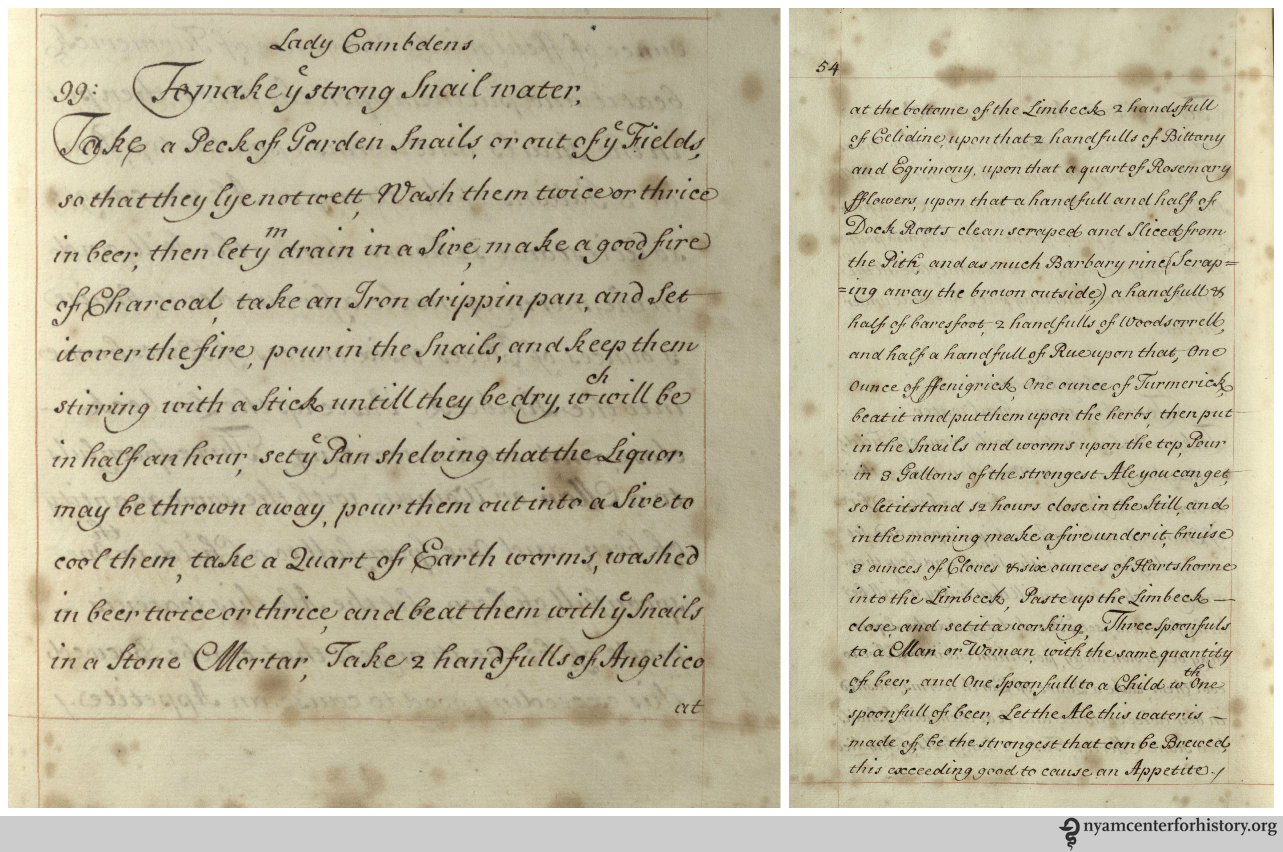
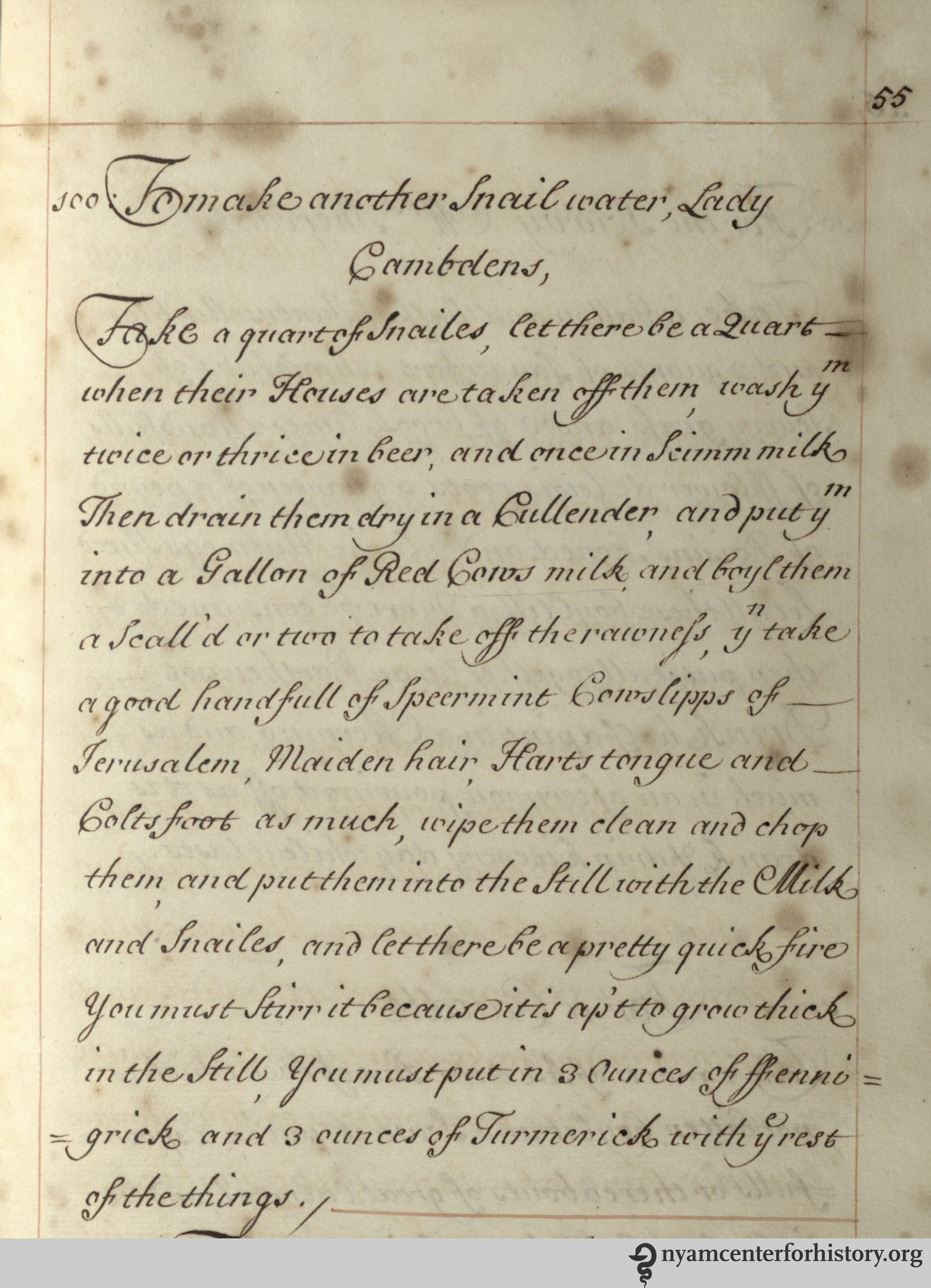
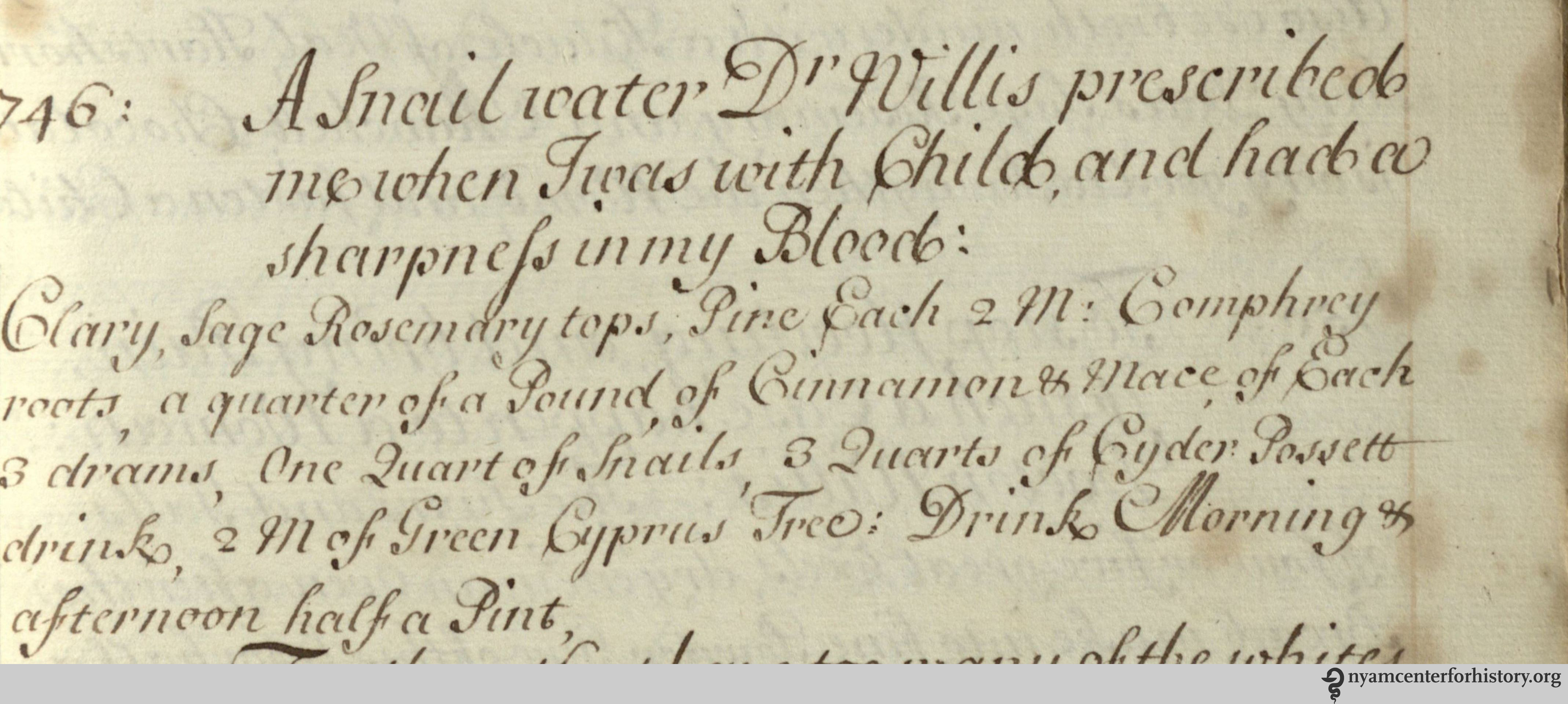
In 2013, the Center completed a project cataloging our manuscript receipt books; we came across preparations for “snail water” many times as we worked through the books. The three receipts below come from one of these manuscripts, A Collection of Choise Receipts, a late 17th-century English manuscript with exquisite penmanship, perhaps written by a professional scribe. As you can see, “sharpness in [the] blood” and appetite loss, strangely, can be added to the list of ailments snails were alleged to treat.

From A Collection of Choise Receipts. Click to enlarge.

From A Collection of Choise Receipts. Click to enlarge.

From A Collection of Choise Receipts. Click to enlarge.

From A Collection of Choise Receipts. Click to enlarge.

From A Collection of Choise Receipts. Click to enlarge.

From A Collection of Choise Receipts. Click to enlarge.

You can look at additional receipts for snail water (and more) throughout the year by visiting us. Email history@nyam.org if you are interested in consulting the collections. As a little tease, I left out the receipt for snail water with goose dung and sheep dung.

Happy Escargot Day!

Reference
1. Hatfield, Gabrielle. (2004) Snail. In Encyclopedia of Folk Medicine: Old World and New World Traditions. Retrieved from http://books.google.com.

Angelique Marguerite Le Boursier du Coudray’s Abrégé de l’art des accouchements

During the fall 2013 semester, Hunter College students in Professor Daniel Margocsy’s undergraduate seminar, Health and Society in Early Modern Europe, 15001800, visited NYAM several times to talk about rare anatomical books. Each student then studied one text in depth, learned about its bibliographical and historiographical context, and wrote a blog post about that item. We are pleased to feature two of the blog posts from the class, one last week and one today, both on books from our collections relating to midwifery.

By Rebecca Halff

The title page of Abrégé de l’art de l’accouchmens.

The title page of Abrégé de l’art des accouchements. Click to enlarge.

Simply put, the magnitude of Angelique Marguerite Le Boursier du Coudray’s 1769 Abrégé de l’art des accouchements does not slap the reader in the face. The Abrégé is a small, light, unobtrusive volume. It easily fits in one’s hands and could be squeezed into a woman’s large apron pocket. Although it contains color images—a marker of luxury in eighteenth-century France—they are few, and are used only when illustrations are absolutely necessary. If we were to liken the midwifery textbook to a woman, we would say that despite her superior intelligence and great beauty, the Abrégé is modest and self-effacing, preferring to stand discretely in a corner at parties rather than flaunt herself ostentatiously.

This trait may be the reason the academic world neglected the Abrégé for so long despite its important contributions—and the important contributions of its author—to the field of midwifery. Only in 1998 was the first scholarly biography of du Coudray written.1 It is surprising that her unique story did not attract the interest of feminist historians before then. Not only was du Coudray a high-achieving woman of the eighteenth-century, but she gained fame when men were taking over the field of midwifery. This makes her quite an anomaly: she was a powerful woman in a field in which women were steadily losing power.2

du Coudray, from the frontispiece of  Abrégé de l’art de l’accouchmens.

Du Coudray, from the frontispiece of Abrégé de l’art des accouchements. Click to enlarge.

We know nothing about du Coudray’s first twenty years of life. She likely came from a middle-class background, but her only English-language biographer explains that “because we know nothing of her biological birth, her professional birth must serve as our beginning.”3We do know that at twenty-five years old, du Coudray had graduated from the College of Surgery in Paris and completed the three years of apprenticeship required to become an accredited midwife. Within the next few years, the school of surgery on the rue des Cordeliers, which had always welcomed midwives to its surgery lectures, decided to bar its doors to them. This was only one of many new developments that sought to exclude, reject, and ultimately eliminate female midwives. Du Coudray reacted by signing a petition pressing the Faculty of Medicine of the University of Paris to provide instruction to midwives and midwifery students.4

Surprisingly, University of Paris doctors conceded rapidly to the request. Their reasons for doing so have much to do with their age-old conflict with surgeons, a group of medical practitioners usually clustered into the same humiliating category as barbers. In 1743, however, the King had elevated the status of surgeons. Given their new prestige, surgeons sought to expand their territory to the field of midwifery, squeezing out female midwives by denying them instruction, as they had done at the school on the rue des Cordeliers. But Parisian midwives had challenged surgeons with their petition, arguing that their refusal to educate midwives amounted to neglect of their professional duties. Surgeons were accused of selfishly causing a dangerous reality: midwives were not being thoroughly trained, midwifery students were not becoming officially accredited, and as a result there was a shortage of midwives in the city. Doctors stepped in both to remedy the dilemma and to make their adversaries (surgeons) look worse than they already did.5
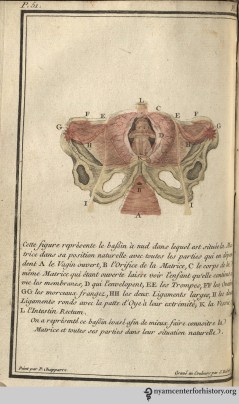
Plate III: A fetus in its natural position.

Plate III: A fetus in its natural position. Click to enlarge.

Through her involvement in this political matter, du Coudray gained a measure of renown in Paris. This was compounded by the very small number of midwives who were allowed to practice in the city—the world of Parisian midwifery was insular and intimate. Through what we today refer to as networking, Du Coudray made acquaintance and friends and formed alliances with important and well-connected medical professionals.

In 1759, King Louis XV charged du Coudray with the responsibility of educating rural midwives. In the wake of the Seven Years War, concerns had arisen over a high death toll and a simultaneous decrease in the French birth rate. Healthy pregnancies, safe deliveries, and the survival of infants suddenly became nationalist causes: France needed all the subjects it could get. The practice of midwifery became a means to support the state, and du Coudray soon became a national sensation and international symbol of French medical advancement.5
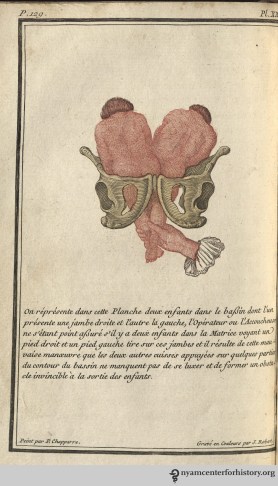
Plate XXIII deals with the difficulty of delivering twins presenting together and feet first. Click to enlarge.

At the King’s request, du Coudray began touring the French countryside to deliver medical lectures to rural midwives whose perceived incompetence was causing the deaths of French women (baby-makers) and infants (future soldiers and baby-makers). The Abrégé compiles these lectures in the order in which du Coudray delivered them. Du Coudray begins by discussing the female reproductive organs and the process of reproduction. She follows this with the issue of proper prenatal care. Finally, she instructs readers on deliveries, including how to handle common obstetric problems, for example a baby coming out feet-first, knee-first, stomach-first, or arm-first, the delivery of twins, and the delivery of a stillborn. Du Coudray concludes the Abrégé with a list of what she terms “observations”—singular cases that she believes should be noted despite their rare occurrence. These “observations” include the tale of a woman who remained pregnant for twenty-two months, and the case of a woman who began excreting the bones of a fetus as a result of an intestinal pregnancy.

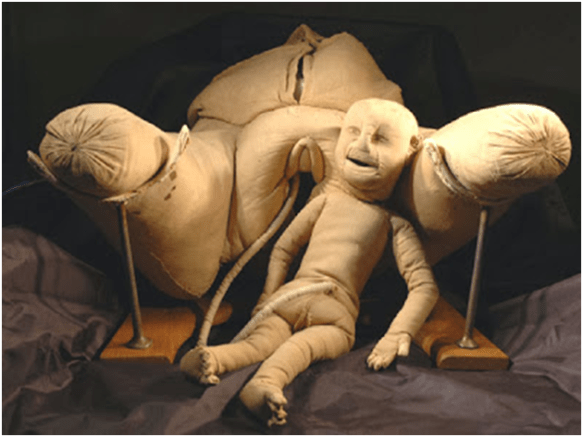
Du Coudray’s lecture series and the resulting Abrégé  were incredible feats for an eighteenth-century woman. But the King’s midwife’s most celebrated achievement was not the publication of her book, but rather the invention of her “machine,” to which she refers several times in the Abrégé. This “machine” was the first of its kind: a teaching model of the female reproductive system. It came with a leather and cloth fetus which could be placed in any number of different positions to simulate the complications of a real delivery.

Picture of Madame du Coudray’s “Machine,” from the website of Les Musees en Haute-Normandie.

Picture of Madame du Coudray’s “Machine,” from Les Musees en Haute-Normandie.

Du Coudray was a medical innovator—a forward-thinking, idealistic pioneer. She realized the need for outreach to and instruction of rural midwives, toured France’s smallest villages to deliver these lectures herself, converted her lectures into a book format, and invented an anatomically accurate “machine” to ensure the proper training of midwives before they provided medical care.

But du Coudray did not stop her discussion at prenatal care and delivery. She also denounced traditional midwifery practices that caused unnecessary deaths, offering new ideas that would result in healthier mothers and babies. For example, du Coudray criticized the common practice of removing near-dead infants from their mothers immediately, done in order to avoid distressing the already exhausted and weakened new mother. These babies—immediately seized up as lost causes—were placed as far away from their mothers as possible, often on the floor. Midwives would then take care of their adult patient, leaving the baby to slowly perish. As du Coudray tells it, midwives could prevent many of these deaths if they did not give up on feeble infants so quickly and casually. Once, she recounts, she noticed that a baby’s toe had been bitten off by the household dog without anybody even noticing. Du Coudray accuses midwives of causing needless and preventable deaths through their foolish and antiquated practices. She instructs them to immediately attempt to revive faltering babies rather than leave them to their death.
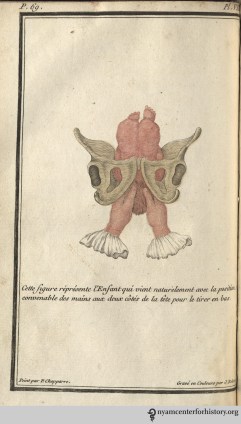
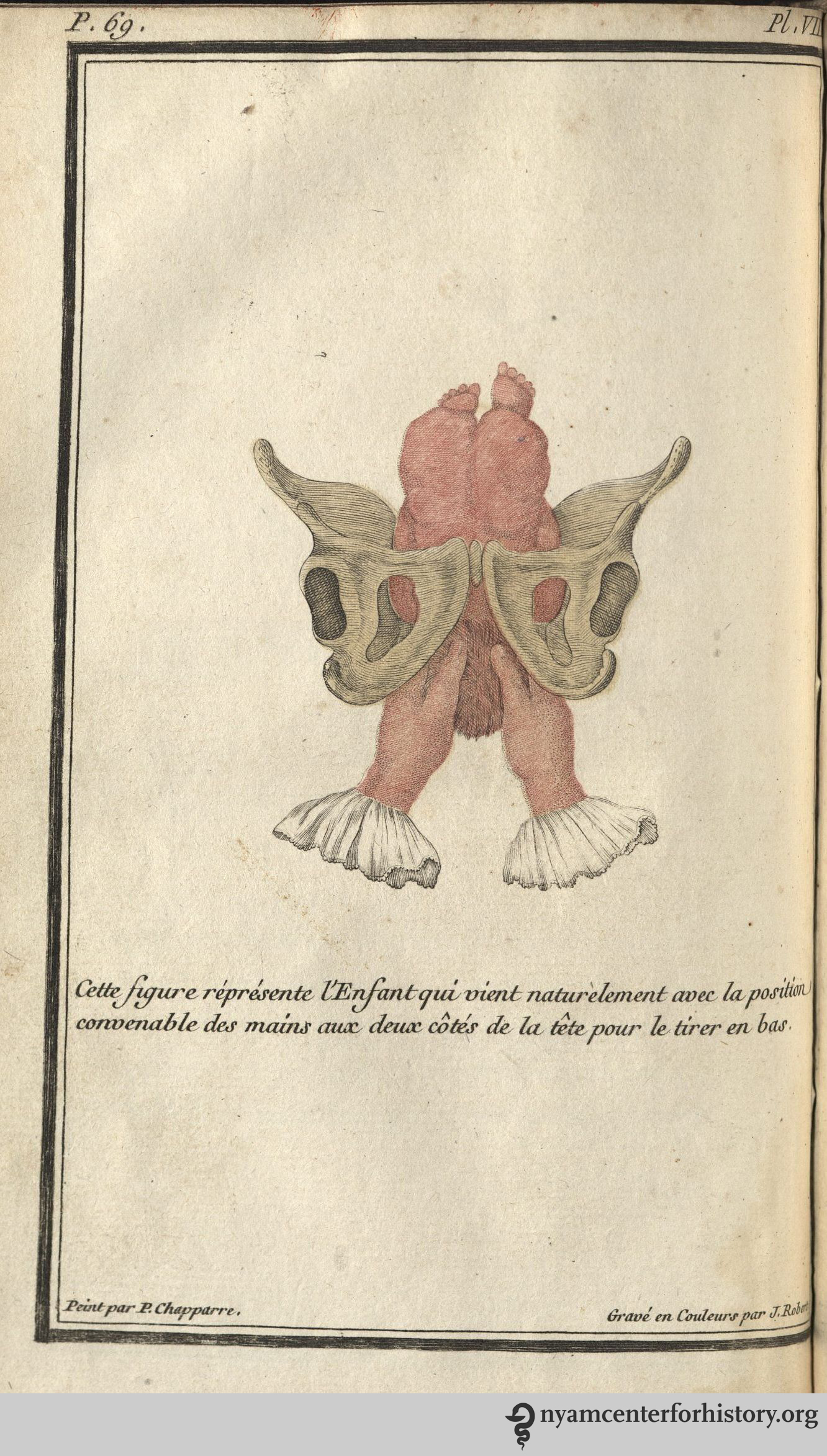
Plate VIII: The proper hand position to help the baby’s head emerge in a normal delivery. Click to enlarge.

Du Coudray was serious about her life’s work. She was simultaneously a medical innovator, concerned with advancing medical knowledge and developing new techniques, and a spokesperson for rural women who did not have access to competent midwives. But du Coudray does not present herself as either a medical innovator or a champion for ethical medicine in the Abrégé. Instead of proclaiming her passion for medicine, du Coudray downplays her agency, explaining again and again that she had no choice but to become involved in this work. Sometimes, she uses Christian rhetoric: how can we not, as good Christians, respond to the call of our brothers and sisters who need our help? Sometimes, she justifies her work by reframing it as nationalist—isn’t it a crime against France to deprive the nation of a subject? And sometimes, she cites the ineptitude of some midwives as the catalyst for her career: because of her intelligence, her natural duty is to find a way to transmit knowledge to someone with less knowledge. She even explains her greatest innovation in these terms, stating that she “perfected a machine which pity made [her] imagine.”

Like the Abrégé, du Coudray herself is self-effacing. A serious midwife who dedicated herself to her work, she cites religion, responsibility to the state, and pity for inspiring her career. Undoubtedly, she relied on this technique to get away with being a serious physician in a time when women were being pushed out of the medical sphere. She softened her persona and message to make it acceptable to male ears. But this technique did not die out with du Coudray. Women throughout history have used excuses to justify their pursuit of higher education and higher status, and will continue to do so until it is no longer necessary. Du Coudray provided the medical world with important resources, her book and her “machine.” She also left women with an example of how to achieve despite societal expectations, as she successfully gained a career she was passionate about, the mastery of her art, the esteem of her colleagues, students, and superiors, and a degree of fame and celebrity.

References

1. Nina Rattner Gelbart, The King’s Midwife: A History and Mystery of Madame du Coudray (Berkley and Los Angeles: University of California Press, 1998), 8.

2. Lisa Forman Cody, “Sex, Civility, and the Self: Du Coudray, d’Eon, and Eighteenth-Century Conceptions of Gendered, National, and Psychological Identity,” French Historical Studies 24 no. 3 (2001): 379-407.

3. Nina Rattner Gelbart, The King’s Midwife, 25.

4. Ibid., 26-42.

5. Ibid., 42-46.

6. “News,” Middlesex Journal or Universal Evening Post (London, England), Sep. 12, 1772.

The Art of Midwifery Improv’d

During the fall 2013 semester, Hunter College students in Professor Daniel Margocsy’s undergraduate seminar, Health and Society in Early Modern Europe, 15001800, visited NYAM several times to talk about rare anatomical books. Each student then studied one text in depth, learned about its bibliographical and historiographical context, and wrote a blog post about that item. We are pleased to feature two of the blog posts from the class, one this week and one next, both on books from our collections relating to midwifery.

By Sarah Hatoum

The Discovery

Title page to The Art of Midwifery, Improv'd.

Title page to The Art of Midwifery, Improv’d. Click to enlarge.

In the eighteenth century, the field of obstetrics enjoyed an influx of novel scientific observations about birth and innovations aiding the process of birth. Dutch physician Hendrik van Deventer, author of The Art of Midwifery Improv’dwas the first to give a thorough description of the pelvis and was the first to suggest that the shape and size of the pelvic bone could cause difficulty in birth (e.g. if the pelvis were too narrow, usually due to rickets—the softening and deformation of bones caused by malnutrition—a child could not be born).1 Van Deventer asserted that determining the shape and size of a pregnant woman’s pelvis and being familiar with the relationship of the fetus and pelvic bones were essential for a midwife to carry out a safe delivery. 2

In the preface of Van Deventer’s instructive, detailed, and “beautifully calf-bound octavo volume” The Art of Midwifery Improv’d,3 translated from Dutch and Latin into English in 1716, an “Eminent Physician” briefly praises the works of contemporary French physicians such as the skilled man-midwife Francois Mariceau but ultimately remarks that Van Deventer’s The Art of Midwifery Improv’d is “more perfect, more easy, better founded, and extend[s] to more Cases” than other physicians’ works.4

While this was a lofty claim, it was true that prior to Van Deventer there had been little attention paid to the structure of the pelvis. Dr. H. L. Houtzager suggests two reasons for this lack of attention prior to the eighteenth century. Since there was an accepted belief that fetuses were born “by their own strenuous efforts,” there was no reason to blame the bony structure of the pelvis for the death of a fetus. The second reason was that people did not often challenge the Hippocratic paradigm (named after the ancient Greek father of medicine, Hippocrates) that suggested that pelvic bones completely separated during birth. Van Deventer determined that the pelvis was essentially “rigid and had only one mobile part—the coccyx.” Again, following the Hippocratic idea, there would also be no cause to suggest that the pelvis could cause a malformed or fatal birth.5

The Journey

Van Deventer was born in the Netherlands in 1651, during a Dutch golden age. In his early adulthood, Van Deventer moved to Germany and joined an orthodox Protestant sect, the Labadists. Van Deventer was in good company, for two notable women, religious writer Anna Maria van Schurman and the natural-philosophical artist Maria Sibylla Merian, had also belonged to the sect.7 Van Deventer became a mentee to the parish’s medical assistant and eventually became the community’s private physician, surgeon, and man-midwife (he later wrote, five years before his death in 1724, “I have already been delivering babies for roughly forty years…”).8 Van Deventer’s time as the head physician of the Labadist community allowed him to gain hands-on experience in certain fields of medicine, most particularly, orthopedics. The Labadists maintained an ascetic diet often resulting in a vitamin D deficiency that led to bone deformation. Van Deventer thus became proficient in the field of orthopedics, invented instruments to correct bone deformities in adults as well as infants,9 and even treated the King of Denmark, Christian V, for rickets.10

In 1694, the central college of doctors in The Hague denied Van Deventer membership because he did not have the proper background (i.e. he had not studied classical Latin). As a result, he moved to Voorburg (where philosopher Baruch Spinoza lived in the 1660s and worked on his magnum opus Ethics), which was not under the Hague’s jurisdiction, allowing Van Deventer free reign; it is here that he began to educate midwives. Several years later, as a middle-aged man, Van Deventer was finally allowed to officially practice as a physician in The Hague.11

Words of Wisdom

Van Deventer applied his orthopedic knowledge to obstetrics and was the first to focus on physical structure of the pelvis and its importance in The Art of Midwifery Improv’d. The question of why Van Deventer decided to write this book as well as why he became interested in obstetrics could be because of his religious fervor. In The Art of Midwifery Improv’d, there is an emphasis on a safe, natural (i.e. without the use of forceps) deliveries because of his belief that a child is made in the image and likeness of God. Furthermore, the work concludes with an Amen. His handbook acts as a prayer for the preservation of the lives of God’s creations. Perhaps Van Deventer’s challenge of the widely accepted Hippocratic paradigm was a testament to Van Deventer’s religious conviction, and he saw himself as a martyr in the name of perfecting the art of the birth of a child made in God’s image.

Plate 4, with figures showing shows the relation of a certain position of the fetus to the pelvis. Click to enlarge.

Plate 4, with figures showing shows the relation of a certain position of the fetus to the pelvis. Click to enlarge.

Van Deventer held midwives in high esteem and was unlike some of his contemporaries who preferred “man-midwives” to female midwives. Man-midwives, from the seventeenth century onward, were fighting to gain supremacy over female midwives and believed that female midwives were “ignorant meddlers whose arrogance prevented them from calling for male assistance” and that they “lacked a theoretical comprehension of childbirth.” 12 Van Deventer was probably a supporter of female midwives because his wife was a midwife, practiced with him and may have contributed to innovative medical discoveries.13

Figure 5, Number 1 shows a placenta for a single infant. Number 2 shows a placenta for twins.

Figure 5, number 1 (bottom) shows a placenta for a single infant. Number 2 (top) shows a placenta for twins. Click to enlarge.

Many man-midwives such as Mauriceu were “confined within the horizon of traditional obstetric surgery” which Wilson ascribes to a focus on handling a dead child rather than a live one.14 Van Deventer instead focused on providing a safe delivery. He gave detailed advice that would allow midwives to perform a safe and efficient birth. First and foremost, he wrote, midwives should have knowledge of female anatomy. Thenceforth, Van Deventer wrote, midwives should know:

  • How to handle patient and child
  • How to deal with afterbirth (the placenta discharged after birth)
  • How to respond to infants positioned awkwardly in the womb during birth
  • General birth preparation
  • How to offer emotional support post-birth to mother and child15

Unlike many of his predecessors, Van Deventer’s work featured accurate illustrations of the pelvis, seen in Figure 1 below:

Figure 1: The pelvis.

Figure 1: The pelvis. Click to enlarge.

The Art of Midwifery Improv’d brought forth important ideas that had not been studied prior to its publication— particularly the importance of the pelvic bone in birth. Hendrik van Deventer laid the groundwork for a focus on orthopedics within the field of obstetrics. Safer deliveries of children and a better understanding of the process of birth came through his advice to midwives.

References

1. John Byers, “The Evolution of Obstetric Medicine,” The British Medical Journal 1, no. 2685, 15 June 1912, 1347.

2. H. L. Houtzager,“The Commemoration of the Birthday of H. Van Deventer,” Vesalius 7, 2001, 17.

3. Byers, 1347.

4. Hendrik van Deventer, The Art of Midwifery Improv’d, (London, 1716): 4.

5. Adrian Wilson, The Making of Man-midwifery: Childbirth in England, 1660-1770, (Cambridge, Massachusetts: Harvard University Press, 1995), 56 and Houtzager, 16-17.

6. L. J. Benedek-Jaszmann, “The Silversmith Who Became the Co-Founder of Modern Obstetrics,” 1980, 243.

7. Wilson, 80.

8. Qtd. in Peter M. Dunn, “Hendrik van Deventer (1651-1724) and the Pelvic Birth Canal,” Perinatal Lessons from the Past, 1998.

9. Byers, 1347.

10. Jaszmann, 243.

11. R. M. F. van der Weiden and W. J. Hoogsteder, “A New Light upon Hendrik van Deventer (1651-1724): Identification and Recovery of a Portrait,” Journal of the Royal Society of Medicine 90, October 1997.

12. Lianne McTavish. Childbirth and the Display of Authority in Early Modern France, (International Ltd., 2005).

13. Wilson, 80.

14. Wilson, 56.

15. Van Deventer, 14.