Presentations Announced for the Fifth Annual History of Medicine Night: Insights from the Early Modern Period

The New York Academy of Medicine’s Section on History of Medicine will hold the “Fifth Annual History of Medicine Night: Insights from the Early Modern Period” on March 11 from 6:00 pm–7:30 pm at NYAM, 1216 Fifth Avenue at the corner of 103rd Street. Register to attend here.
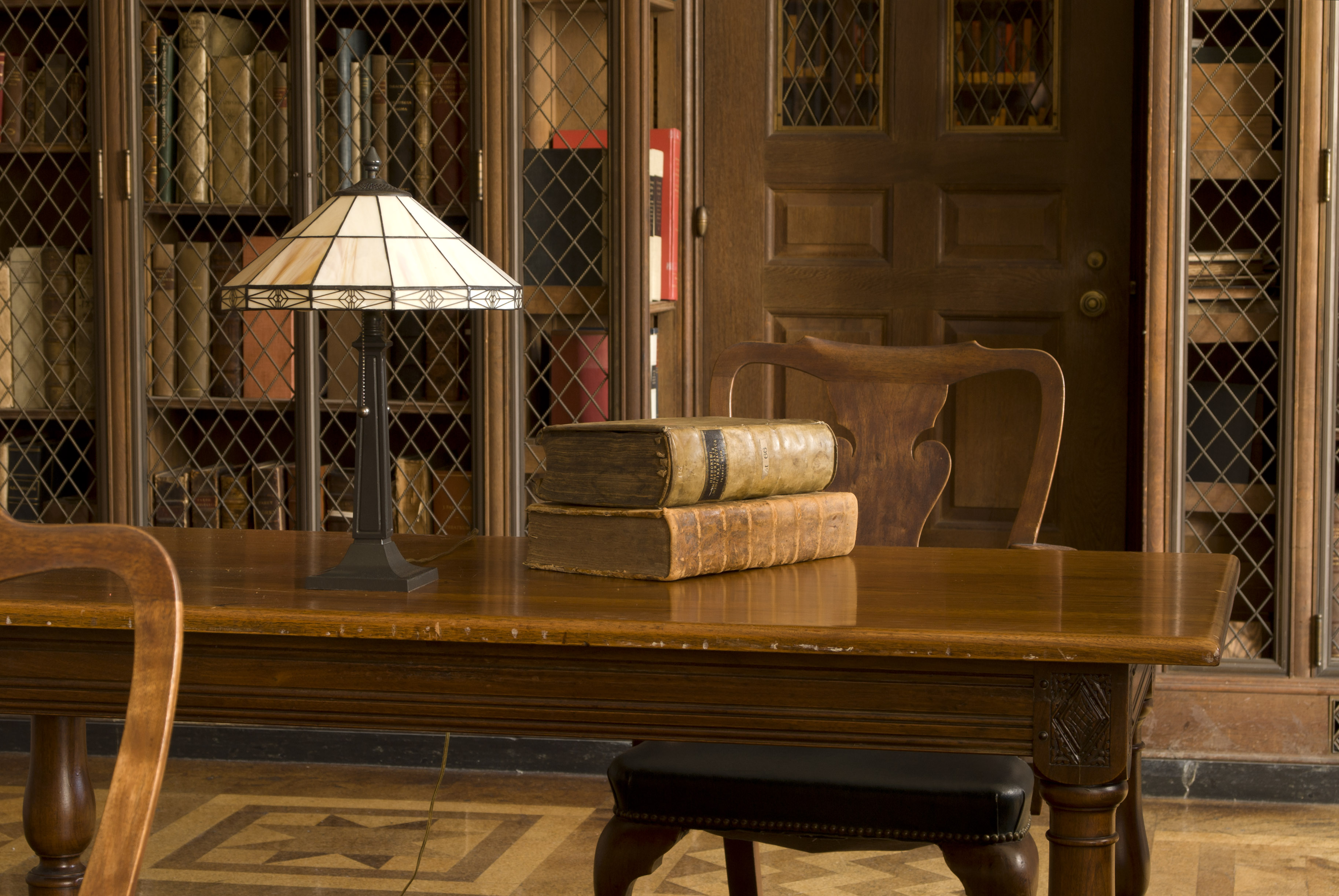
RBR shelfPresenters will address historical topics relating to medicine with a focus on the Early Modern period.  This year’s presenters are:

Barbara Chubak, MD
Urology Resident (PGY-5), Montefiore Medical Center
“Imagining Sex Change in Early Modern Europe”

Jeffrey M. Levine, MD
Assistant Clinical Professor of Medicine and Palliative Care
Icahn School of Medicine at Mount Sinai
“A Fresh Look at the Historiated Initials in the De Humani Corporis Fabrica”

John E. Jacoby, MD, MPH
Assistant Clinical Professor of Medicine and Pediatrics
Icahn School of Medicine at Mount Sinai
“On the Life of Dr. Robert Levett: The Philosophy of Primary Care”

Nina Samuel, PhD
Center for Literary and Cultural Research
University of Berlin
“The Art of Hand Surgery”

Michelle Laughran, PhD
Associate Professor of History
Saint Joseph’s College of Maine
“The Medical Renaissance among Three Plagues: Epidemic Disease, Heresy and Calumny in Sixteenth-Century Venice”

Sharon Packer, MD
Assistant Clinical Professor of Psychiatry and Behavioral Sciences
Icahn School of Medicine at Mount Sinai
“Epidemic Ergotism, Medieval Mysticism & Future Trends in Palliative Care”

Part two of this lecture series, “History of Medicine Night: 19th– and 20th-Century Stories,” will take place on May 6, 2015.

Innovation in Digital Publishing: A Summary

By Cecy Marden, Wellcome Trust Open Access Project Manager

On January 5, the last day of the 2015 American Historical Association Conference, a panel of people from “other disciplines,” chaired by digital historian Stephen Robertson,  spent two hours discussing innovation in digital publishing in the humanities. The audience did an astonishing job of summarizing the discussion on Twitter which @EstherRawson kindly Storified.

Matthew K. Gold (New York City College of Technology and City University of New York, Graduate Center) kicked off proceedings talking about creating well-designed open-source platforms that trace scholarly creation in all its versions and forms. Kathleen Fitzpatrick (Modern Language Association) extended this thread to highlight the social challenges faced by scholarly societies in creating communication platforms for their members. Martin Eve (Open Library of Humanities), Cecy Marden (Wellcome Trust) and Lisa Norberg ( K|N Consultants) discussed approaches to making open-access publication financially sustainable, considering the roles played by publishers, funders, librarians, and institutions in innovative digital publishing in the humanities.

The intentionally short presentations left us with an hour and a half for discussion, which the audience had no problem filling with questions. We ranged over how to overcome the social challenges identified by Kathleen and how to preserve the increasing variety of “stuff” that constitutes scholarly communication. We looked at whether researchers are being rewarded for the innovative work they do, and the fact they are not being rewarded for ongoing projects. We ran out of time before we ran out of questions, so if the Storify, or the blog posts by the panelists, leave you with a burning question please ask it in a comment.

Fifth Annual History of Medicine Night: Call for Papers

A wooden caduceus symbol shown in NYAM rare book reading room

A caduceus symbol donated to our rare book reading room

The New York Academy of Medicine’s Section on the History of Medicine and Public Health is pleased to announce its upcoming Fifth Annual History of Medicine Night, to be held on March 11, 2015 from 6:00–7:30 pm. The event will take place at the Academy, located at 1216 Fifth Avenue at the corner of 103rd Street.

We are inviting all those interested in presenting to submit an abstract concerning a historical subject relating to medicine.

Please note the following submission requirements:

  • Abstracts (not to exceed 250 words) should be submitted together with authors’ contact details and affiliations.
  • Abstracts must be submitted no later than January 30, 2015

Selected speakers will be asked to prepare a presentation of no more than 12 minutes, with an additional 3 minutes for questions/discussion. Papers selected for presentation will be determined by a panel of History of Medicine Section members and staff of The New York Academy of Medicine.

Abstracts should be submitted electronically to Suhani Parikh at sparikh@nyam.org.  Questions may be directed to Suhani via email or phone (212-419-3544).

Who Becomes a Medical Doctor in New York City: Call for Papers

RBR deskThe New York Academy of Medicine’s Section on History of Medicine is pleased to announce “Who Becomes a Medical Doctor in New York City: Then and Now—A Century of Change” to be held on December 11, 2014 from 6:00 pm–7:30 pm. The event will take place at the Academy, located at 1216 Fifth Avenue at the corner of 103rd Street.

We are inviting all those interested in presenting to submit an abstract with one aspect of how individuals were selected, or excluded from, the study of medicine in New York City over time. These might include, but need not be limited to, decisions based on academic qualification, race, sexual orientation, ethnicity, economics, and country of origin. The influence of career expectations for the profession and social and cultural factors motivating individuals to become a medical doctor may also be considered.

Note the following submission requirements:

  • Applications must include an abstract, with a 250-word maximum, and this form.
  • Abstracts must be submitted no later than October 30, 2014

The time allotted for presentation is 12 minutes with an additional 3 minutes for questions/discussion. Papers selected for presentation will be determined by a committee of History of Medicine Section members and staff of The New York Academy of Medicine.

Abstracts should be submitted electronically to Suhani Parikh at sparikh@nyam.org.  Questions may be directed to Suhani via email or phone (212-419-3544).

Registration Open for Vesalius 500 Workshops

Registration is now open for our hands-on art and anatomy workshops, presented as part of our Vesalius 500 celebrations on October 18, 2014. Create your own articulated anatomical figure or “exquisite corpse” at the Gladys Brooks Book & Paper Conservation Laboratory; learn Renaissance drawing techniques with medical illustrator Marie Dauenheimer; or explore the anatomy and art of the hand with physical anthropologist Sam Dunlap.

Spaces are strictly limited so register soon. Registration at one of the workshops includes free entry to the Festival. You can register for the Festival (without workshop attendance) here.

From the Cradle to the Grave: Session One: The Cradle

Moveable baby and female pelvis from one of NYAM’s 19th century obstetrics texts, Dr. K. Shibata's Geburtschülfliche Taschen-Phantom, or the Obstetrical Pocket-Phantom.

Moveable baby and female pelvis from one of NYAM’s 19th century obstetrics texts, Dr. K. Shibata’s Geburtschülfliche Taschen-Phantom (Obstetrical Pocket-Phantom).

Working with NYAM’s conservation team, celebrate Vesalius’s life with a hands-on workshop producing your own articulated anatomical figures in the Gladys Brooks Book & Paper Conservation Laboratory.

Time: 11am-1pm
Cost: $55
Includes: All materials, and free entry to the Festival.
Maximum participants: 12
Register here

During the morning’s Cradle workshop, we will construct paper facsimiles of a moveable baby and female pelvis from one of NYAM’s 19th century obstetrics texts, Geburtschülfliche Taschen-Phantom (or the Obstetrical Pocket-Phantom). The book was written by Dr. K. Shibata, a Japanese author studying in Germany, and was published first in German before being translated into English and Japanese.

Participants will have time to make at least one paper baby and pelvis, which can be produced as paper dolls or magnets.

From the Cradle to the Grave: Session Two: The Grave

An exquisite corpse made by staff of the Gladys Brooks Book & Paper Conservation Laboratory.

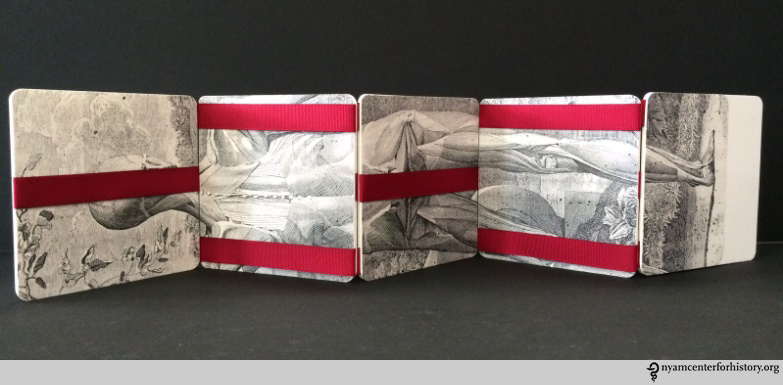
An exquisite corpse made by staff of the Gladys Brooks Book & Paper Conservation Laboratory.

Working with our conservation team, celebrate Vesalius’s life with a hands-on workshop producing your own “exquisite corpse” in the Gladys Brooks Book & Paper Conservation Laboratory.

Time: 2:30pm-4:30pm
Cost: $55
Includes: All materials, and free entry to the Festival.
Maximum participants: 12
Register here

During the afternoon’s Grave workshop, we focus on producing a Vesalian-themed exquisite (or rotating) corpse. Loosely based on the surrealist parlor game in which a picture was collectively created by assembling unrelated images, this workshop will employ a special, rotating binding structure and mix-matched facsimile images from NYAM’s rare book collections to allow students to create their own unique, moveable pieces of art.

Renaissance Illustration Techniques Workshop with Marie Dauenheimer, Medical Illustrator

Students at medical illustrator Marie Dauenheimer's workshop at last fall's Festival.

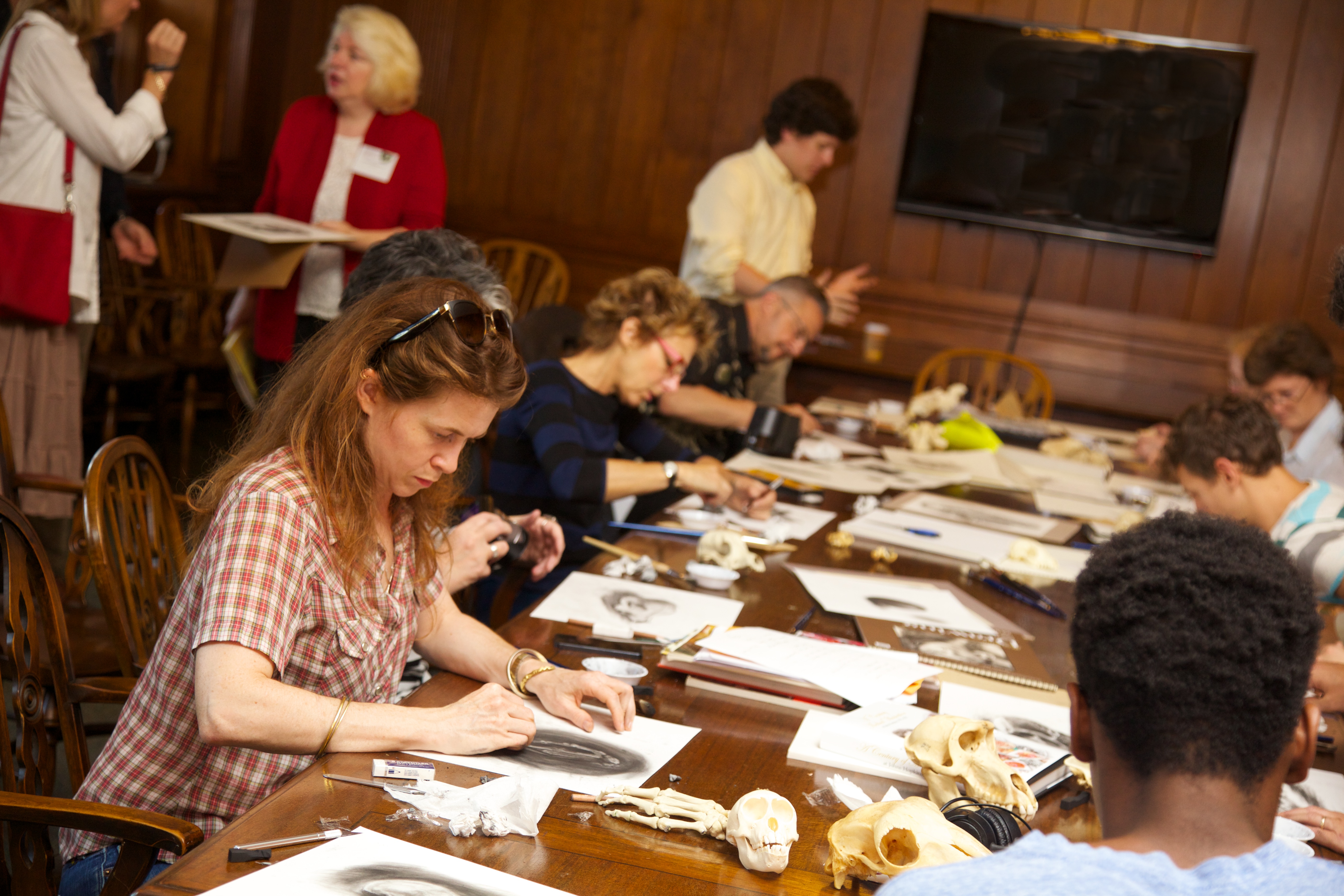
Students at medical illustrator Marie Dauenheimer’s workshop at last fall’s Festival.

Time: 10am-1pm
Cost: $85
Includes: All materials, and free entry to the Festival.
Maximum participants: 15
Register here

Artists and anatomists passionate about unlocking the mysteries of the human body drove anatomical investigation during the Renaissance. Anatomical illustrations of startling power vividly described and represented the inner workings of the human form. Leonardo da Vinci’s notebooks were among the most magnificent, merging scientific investigation and beautifully observed drawing.

Students will have the opportunity to learn and apply the techniques used by Renaissance artists to illustrate anatomical specimens. Using dip and technical pens, various inks and prepared paper students will investigate, discover, and draw osteology, models, and dissected specimens from various views creating an anatomical plate.

Understanding the Hand, physical anthropology workshop with Sam Dunlap, Ph.D.

Dr Sam Dunlop leading a workshop at last year's Festival.

Dr Sam Dunlop leading a workshop at last year’s Festival.

Time: 2:30pm-5:30pm
Cost: $75
Includes: All materials, and free entry to the Festival.
Maximum participants: 15
Register here

The hand as an expression of the mind and personality is second only to the face in the Renaissance tradition of dissection and illustration that continues to inform both art and science. Basic anatomical dissection, illustration, and knowledge continue to be fundamental in many fields from evolutionary biology to surgery, medical training, and forensic science. This workshop will offer participants the opportunity to explore the human hand and its anatomy, which will be demonstrated with at least three dissections.  Opossum (Didelphis virginiana) and orangutan (Pongo pygmaeus) forelimbs will be available along with other comparative skeletal material. We will discuss hand evolution, embryology, and anatomy, and the artistic importance of the hand since its appearance in the upper palaeolithic cave art. We will also analyze the hand illustrations of da Vinci, Vesalius, Rembrandt, and artists up to and including the abstract expressionists.

Postures of Childhood: A Conversation

This blog post presents a discussion between Riva Lehrer, artist and anatomist and our “Art, Anatomy, and the Body: Vesalius 500” festival guest curator, and Sander Gilman, distinguished professor of the liberal arts and sciences and professor of psychiatry at Emory University. Dr. Gilman will present “STAND UP STRAIGHT: Toward a History of the Science of Posture” at our October 18th festival. Register here.

Riva Lehrer:

Sander, when reading a scholar’s work, I often wonder whether it relates to personal experiences that set them on the path of intellectual obsession. For me, your work is so empathetic on the subject of difference it’s as if you’ve lived in the bodies of those you’ve written about. It’s fascinating to find out where that path started for you.

Riva Lehrer as a young child. Photo courtesy of Riva Lehrer.

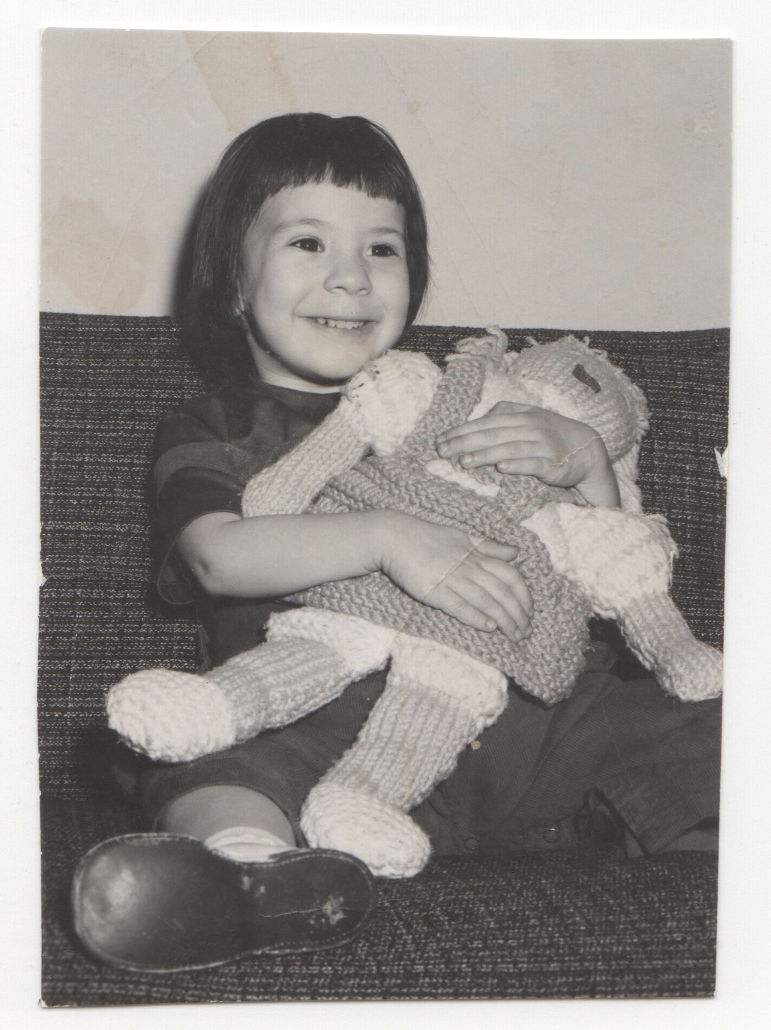
Riva Lehrer as a young child. Photo courtesy of Riva Lehrer.

It seems that both of us were confronted with the problem of difference beginning in elementary school. Mine began right away. From kindergarten through eighth grade, it didn’t matter whether I was in math class, or English, or social studies; I knew at some point an aide would show up at the classroom door and call my name. All us kids knew this; twice an hour, someone would get pulled out of class and sent to the big open room on the third floor. There, we’d get down on one of the vinyl mats on the floor and start following orders.

These were our daily physical therapy sessions. Almost every student at Randall J. Condon School for Handicapped Children went through this same routine. Most of us had some variety of orthopedic impairment. Condon punctuated our academics with treatments for these perceived aberrations. My brothers were not disabled. They went to regular schools, where their growing bodies were exercised in gym class. This may have been wretched on its own terms but was at least somewhat communal, being arranged around games and team sports. Here, in PT, it was isolating.

Sander Gilman:

Why is gym always the horror! When you are in third grade gym is a horror in most cases any way—except for the two guys you always get chose first for ALL the teams — but when you wear high boots with VERY long laces that had to be cross tied all the way to the top and those boots had metal braces in them, even going into the locker room was a horror. Last one in (on purpose) and last one dressed. And then gym itself—jump, climb, run. But you run like a duck, the gym teacher shouted: STAND UP STRAIGHT!

RL:
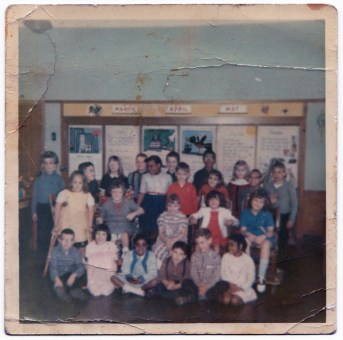
A class at the Condon School. Photo courtesy of Riva Lehrer.

A class at the Condon School, with Riva Lehrer kneeling, second from left. Photo courtesy of Riva Lehrer. Click to enlarge

Well, we never played any games together. Whenever I showed up, there’d be 8 or 10 kids already in the PT suite, mired in separate islands of exercise mats, or on high tables that put them at arm’s level with the physical therapists. We half-ignored each other, though if someone let out a loud enough squawk that faux-privacy would end. As a rule, we were an obedient lot; splaying like starfishes on huge medicine balls, lifting our knees, doing wobbly push-ups, clutching squishy objects to build up our hand strength. In the 1960s, most disabled children weren’t even given basic academic instruction; Condon was unusual in its goals to give us some kind of mainstream education. But it was clear that in the battle between teaching disabled children how to read and pushing our bodies towards normalcy, the toss would always land us back on a vinyl mat.

In that room, every weakness and failure of our bodies was brought to our attention, and then set upon by the therapists. I was told I walked as if I had a broken leg, dragging it a half-step behind me.

SG:

In truth, a duck was not wrong. I waddled without my shoes and indeed with them. Standing was hard, running was difficult and the worst part of it was being always the one who was different. I could never quite stand up the way the gym teacher or others wanted me to. Now I know that all third graders KNOW that they are too different, too visible, too comical, but somehow I knew I really was odd. STAND UP STRAIGHT! Still haunts me.

RL:

Kids at Condon used to be called abnormal. Condon was a refuge of sortsat least we weren’t called the brutal names people used outside of school. The PT suite was the only place when I ever saw some of my friends out of their wheelchairs. If a kid could stand at all, the PTs made us watch ourselves walk. (it turned our most of my friends were taller than me; my assumption that I was one of the taller kids in class was an illusion). The room was divided by long metal poles that formed a narrow corridor ending in a tall mirror. I’d start at the far end, clutching the steel poles and trying to get my legs to regulate themselves as instructed. My reflection swayed and bounced as if I were on a ship in my own personal storm.
Riva Lehrer teaching at the School of the Art Institute of Chicago, circa 2008. Photo courtesy of Riva Lehrer.

Riva Lehrer teaching at the School of the Art Institute of Chicago, circa 2008. Photo courtesy of Riva Lehrer.

Until I stopped growing (ending up at 4′ 9″), and my spine was less curved, my limp was most the obvious sign of my disability. Thing was, my limp didn’t hurt. I didn’t even feel it. I only saw it in that tall mirror, where I watched myself list and sway, buffeted by those invisible shipboard winds. I seldom thought about the way I walked at all, but my doctors did, and operated. Nothing made much difference. A year after surgery, my limp always came back, tenacious as malaria.

I am not one who thinks that impairments should not be treated, or that bodies should not be given the chance to experience individual interpretations of health. But health cannot take its bearings from the polestar of normal. Bodies should be supported and encouraged according to specific, idiosyncratic parameters. What was missing from those well-meaning treatments at Condon was any pleasure in the body itself. These were the bodies we’d had at birth. According to our parents, teachers, and doctors, we’d come ashore in broken vessels.

For us, posture regulation, gait repair, and physical therapy rested on a bedrock of shame. We were not given the option of simply loving our bodies as-is, and exercising those bodies out of delight and wonder for what our bodies could do.

SG:

The thing is that that sense of being odd never leaves you as, perhaps, we never stop being third graders when we look deep into our souls. When I started my new project on the history and meaning of posture, the title seemed obvious: STAND UP STRAIGHT! We all write autobiographies, even those who avoid writing autobiographies. That is true of artists as well as scholars.

RL:

Our early lives taught us both that crooked is a posture that tilts your head and gives you a most unexpected view of the world.

Global Celebrations of Vesalius’s 500th Birthday

By Lisa O’Sullivan, Director, Center for the History of Medicine and Public Health

From the frontispiece of Vesalius’ Fabrica.

Not in New York? Plan a trip and attend our “Art, Anatomy, and the Body: Vesalius 500” Festival on October 18! You can read our guest curator Riva Lehrer’s thoughts on the Festival here, and get a sneak peak of a virtual dissection demonstration by Kriota Willberg; and Brandy Schillace on Naissance Macabre; as well as more information about Vesalius and his Fabrica. Keep an eye out for more Vesalius 500 guest posts to come.

But, much as we’d like to see you here on October 18, you don’t have to be in New York to celebrate Vesalius’ 500th birthday.

We always welcome visitors to make an appointment to visit our rare book reading room and examine our copies of the Fabrica and its companion volume, the Epitome (in addition to the rest of our collection). Those elsewhere can find beautiful colored digital versions of the Fabrica from the University of Basel Library and the Epitome at University of Cambridge Library’s digital library. The publishers of the new English language edition of the Fabrica also have some wonderful material online.

In addition, there are multiple birthday celebrations for Vesalius across the globe this year. Travelers can visit Leuven for the Unravelling the Body. The Theatre of Anatomy at the Leuven Museum, or the international conference Towards the Authority of Vesalius: Representations of the Human Body in Antiquity, the Middle Ages and the Renaissance (Dec 3–5); join the Vesalius Continuum Conference on Zakynthos, the Ionian Island on which Vesalius died (Sept 4–8 ); visit Down to the Bones: Celebrating 500 Years of Innovation (Jul 11–Oct 9) at the University of Utah libraries; see Discovering the Human Body at Anatomical Museum in Basel, as well as the only existing skeleton known to have been dissected by Vesalius (Sept 12–Mar 2015) and explore Vesalius and His Worlds: Medical Illustration during the Renaissance at the Huntington library (Dec 12–13). Vesalius was born on Dec 31, 1514; if the events of 2014 were not enough, keep an eye out for the St. Louis meeting celebrating Vesalius in 2015 (Feb 26-28). (Apologies to anyone whose event we’ve missed! The Karger Fabrica site has a great, and constantly updated list of Vesalius 500 events.)

The Fabrica of Andreas Vesalius: Object of the Month

By Lisa O’Sullivan, Director, Center for the History of Medicine and Public Health

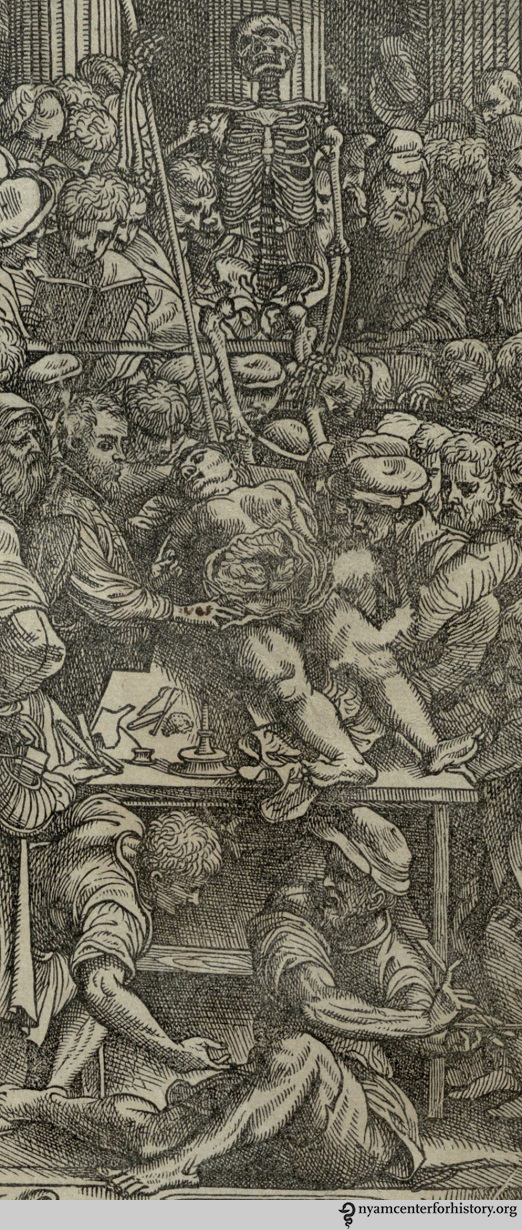
This year we are celebrating the 500th anniversary of the birth of Andreas Vesalius with our fall festival, “Art, Anatomy, and the Body: Vesalius 500” on October 18. So much has been written on the Fabrica and its importance that it can be difficult to know where to begin. Why do Vesalius and his work remain so important to contemporary scholarship and anatomical study? The answer lies in his first and most famous book, De humani corporis fabrica. The title is translated as On the Fabric of the Human Body, although the “fabrica” in the original title can be best understood in terms of “craft”, “workings,” or “fabrication.”1 In other words, in this book Vesalius is interested in the functions of the body as a living system. Seven “books,” or sections, lay out the different systems and functions of the body, beginning with bones and ligaments and ending with the brain and sensory organs.

The frontispiece to the 1543 Fabrica in our collection.

The frontispiece to the 1543 Fabrica in our collection. Click to enlarge.

As the frontispiece makes clear, Vesalius wanted the Fabrica to demonstrate the importance of reviving hands-on anatomy as central to medical knowledge and practice. The Fabrica was a landmark publication, representing a turning point in the European understanding of the body and a new level of beauty and accuracy in its depiction in anatomical texts. At the time of its publication in 1543, Vesalius was a professor at the University of Padua, one of Europe’s best known medical schools. Only 28, Vesalius came from a long line of physicians. Like many of his forebears, he subsequently entered the service of the Imperial Court of Charles V, to whom he dedicated the Fabrica. He worked closely with his printers, wood carvers, and artists to ensure the accuracy and beauty of the over 300 woodblock images in the book.2 The Fabrica was exceptional in terms of both production and content, and its iconography, principles, and pedagogical approach were rapidly incorporated into medical thinking and teaching.

While the Fabrica is now remembered as the point at which a new, “modern” emphasis on direct observation and experimentation replaced deference to ancient authorities, Vesalius was careful to ensure that his erudition in the classical tradition was on display. Quotations of Greek, Arabic, and Hebrew texts point both to his determination to show the breadth of his knowledge and to the expertise of his typesetters. Vesalius used such authorities to place himself in an established tradition, even as he questioned aspects of accepted Galenic thought.

The frontispiece to the 1555 Fabrica in our collection. Click to enlarge.

The frontispiece to the 1555 Fabrica in our collection. Click to enlarge.

Along with his systematic exploration of all aspects of human anatomy, Vesalius’s demonstration that authorities such as Galen had made errors in their claims about human anatomy (in part due to reliance on animal dissection) was one reason the book rapidly assumed such extraordinary significance (although not universal acceptance). Despite its detractors, the Fabrica had an immediate impact; even with Vesalius’ best efforts, it was plagiarized and copied throughout Europe.3

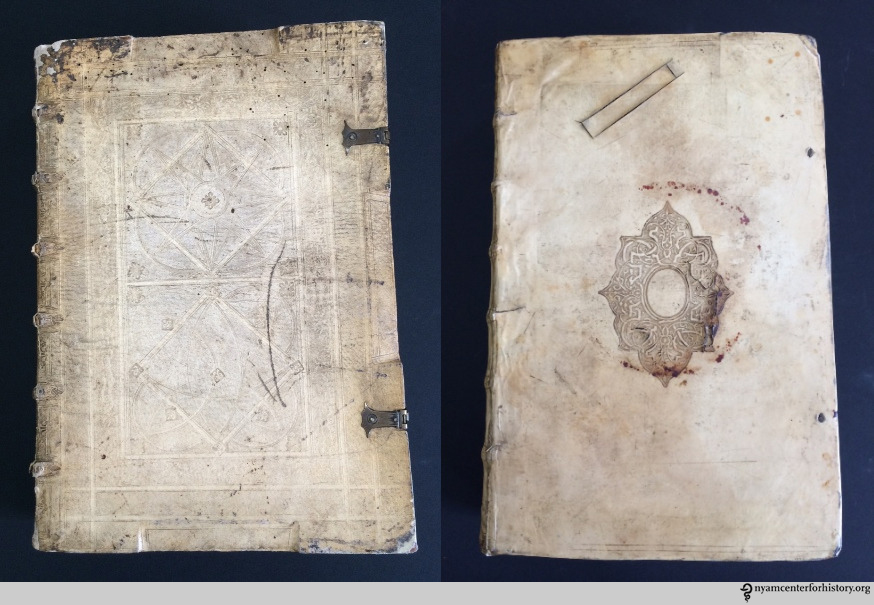
Covers of the two Fabricas in our collection. The 1543 volume, left, has alum-tawed pigskin over wooden boards with elaborate decorative tooling and stamped designs and two brass fore-edge clasps. The 1555 edition, right, is bound in a contemporary parchment binding over stiff pasteboards with a single panel stamp. Click to enlarge.

Covers of two Fabricas in our collection. The 1543 volume, left, has alum-tawed pigskin over wooden boards with elaborate decorative tooling and stamped designs and two brass fore-edge clasps. The 1555 edition, right, is bound in a contemporary parchment binding over stiff pasteboards with a single panel stamp. Click to enlarge.

We are in the enviable position of owning multiple copies of the Fabrica as well as its companion piece the Epitome, a briefer volume designed for students with enlarged illustrations to aid the identification of individual features. In addition, we also hold multiple copies of the Icones Anatomicae, an extraordinary 20th-century artifact created in 1934 by The New York Academy of Medicine and the University of Munich, using the original 1543 wood blocks to reproduce illustrations from the Fabrica and Epitome (this was the last time images were taken from the woodblocks; returned to Munich, they were subsequently destroyed by Allied bombing during WWII). All of these volumes will be available to view at the festival on October 18. You will also be able to learn more about Vesalius and his work: Daniel Garrison will discuss translating the Fabrica for the new English-language edition, Arlene Shaner will explore the story of the Icones Anatomicae, and Drs. Jeff Levine and Michael Nevins will provide a guide to the possible stories hidden in the changes made to the Fabrica frontispiece between the first and second editions.

References

1. Harvey Cushing, A Bio-Bibliography of Andreas Vesalius (New York, Schuman’s, 1943), p73; Daniel Garrison, “Why Did Vesalius Title His Anatomical Atlas “The Fabric of the Human Body”?” http://www.vesaliusfabrica.com/en/original-fabrica/inside-the-fabrica/the-name-fabrica.html

2. The identity of the artist responsible for the wood blocks remains unclear, although many have argued that Jan Stephan Calcar, a student of Titian, was responsible. See Vivian Nutton’s introduction at http://vesalius.northwestern.edu/.

3. More details about the life and impact of Vesalius can be found online in Vivian Nutton’s introduction and other essays at Northwestern’s Annotated Vesalius project: http://vesalius.northwestern.edu/ and in C. O’Malley, Andreas Vesalius of Brussels, 1514-1564 (Berkeley: University of California Press, 1964).

Guest curator Riva Lehrer on Vesalius 500

Our “Art, Anatomy, and the Body: Vesalius 500” festival guest curator, artist and anatomist Riva Lehrer, describes some of her thinking about bodies, anatomy and art.

In 1543, when Andreas Vesalius published his De humani corporis fabrica (On the fabric of the human body) many contemporaries refused to accept his results. They contradicted canonical texts passed down over millennia: belief and expectation trumped direct experience and observation.

It’s easy to smile condescendingly at such pig-headedness. Yet we can scarcely look in the mirror without being caught in a fog of distortion. Every day we’re overloaded with information about how we should look and how our bodies should work. There are still plenty of ways in which our biases form medicine, and medicine, in turn, forms us.

"Circle Stories #4: Riva Lehrer" 1998  self portrait

“Circle Stories #4: Riva Lehrer” (1998).

I was born with visible disabilities. My body has always been seen as lacking, in need of correction, and medically unacceptable. My parents and doctors pushed me to have countless procedures to render it more “normal” as well as more systemically functional. These were two different streams of anxiety—how I worked and how I looked— yet they became inextricably woven together. My life in the hospital gave me a tremendously intimate view of medicine, as does the fact that I come from a family of doctors, nurses, and pharmacists. It gave me an acute awareness of how medical choices control and shape our bodies.

I first studied anatomy at the School of the Art Institute of Chicago and later at the University of Illinois at Chicago, as a visiting artist in the cadaver lab. I often think about what my first anatomy professor told me, many years ago. She remarked that when she was a child, people grew into their original faces. Whatever oddities they were born with formed what they looked like, year after year. Faces were hard-won and unique. But modern dentistry, nutrition, grooming—all the large and small interventions of medicine—made people look much more alike than they did sixty years ago.

In the 21st century, medicine is not just about the “correction” of significant impairments; personal perfectibility is as much the point of modern medicine as the curing of significant diseases. We view our bodies as lifetime fixer-upper projects.

Yet, it’s that very fluidity that opens profound questions about the identities our bodies express. Technologies such as radical cosmetic surgery, cyborgian interfaces, and gender reassignment procedures raise and complicate our expectations. Medicine offers new options if the inside of our bodies does not match the appearance of the outside. We live in a state of wild restlessness, trying to see and feel who we are. We see chimeras of possibility.

"At 54" Riva Lehrer 2012 self portrait

“At 54” by Riva Lehrer (2012).

My body was not normalized through all my surgeries; yet the original body I had would not have lived. It’s been changed so many times that I can’t even guess at what it would have been. My own mutability has given me a deep interest in the two-way relationship between one’s body and the course of a life.

I teach anatomy for artists at the School of the Art Institute and am a visiting artist in Medical Humanities at Northwestern University. My studio practice focuses on the intersection of the physical self and biography. I interview people in depth about the interweaving of their bodies and their stories. These interviews become narrative portraits, as I try to understand what can be known about a life in a single portrait image.

Join us as we explore the role of anatomy in identity formation through our celebration of the 500th anniversary of Vesalius’ birth. We’ve invited artists, performers, scholars, and historians to help us ask how our imaginations form our living flesh. Let’s all look in the mirror and ask, what are we really seeing, and what do we believe we see?

Some of the issues our speakers will explore include:

""Chase Joynt" by Riva Lehrer and Chase Joynt 2014

“”Chase Joynt” by Riva Lehrer and Chase Joynt (2014).

—How do we decide what is “lifesaving” and what is “elective” surgery when it comes to identity? Transgender performer Chase Joynt questions what it means to save a life, and how his dealings with the medical establishment led him to question such choices.

—How many of us were raised with the constant imprecation to stand up straight? Sander Gilman peers into the use of posture lessons in public schools to control the American body.

—Artist Steven Assael creates dramatic portraits of New Yorkers, from street performers to elderly eccentrics. His work shows us how identity travels from the inner self to the outer shell.  Assael is a long-time professor at New York’s School of Visual Arts, one of the last bastions of serious anatomical study in the U.S.

—Famed choreographer Heidi Latsky will discuss GIMP and how she creates dance for performers with a range of movements and morphologies. A performance and film excerpt bring us into the innovative strategies used by the GIMP collective.

—Many contemporary artists use anatomy in investigations of identity and formal exploration. Curator Ann Fox will present images from an international roster of artists. She will be joined by Taiwanese artist Sandie Yi, who will show work that deals with the intense difficulties of having a physically different body in China.

"Coloring Book" Riva Lehrer 2012

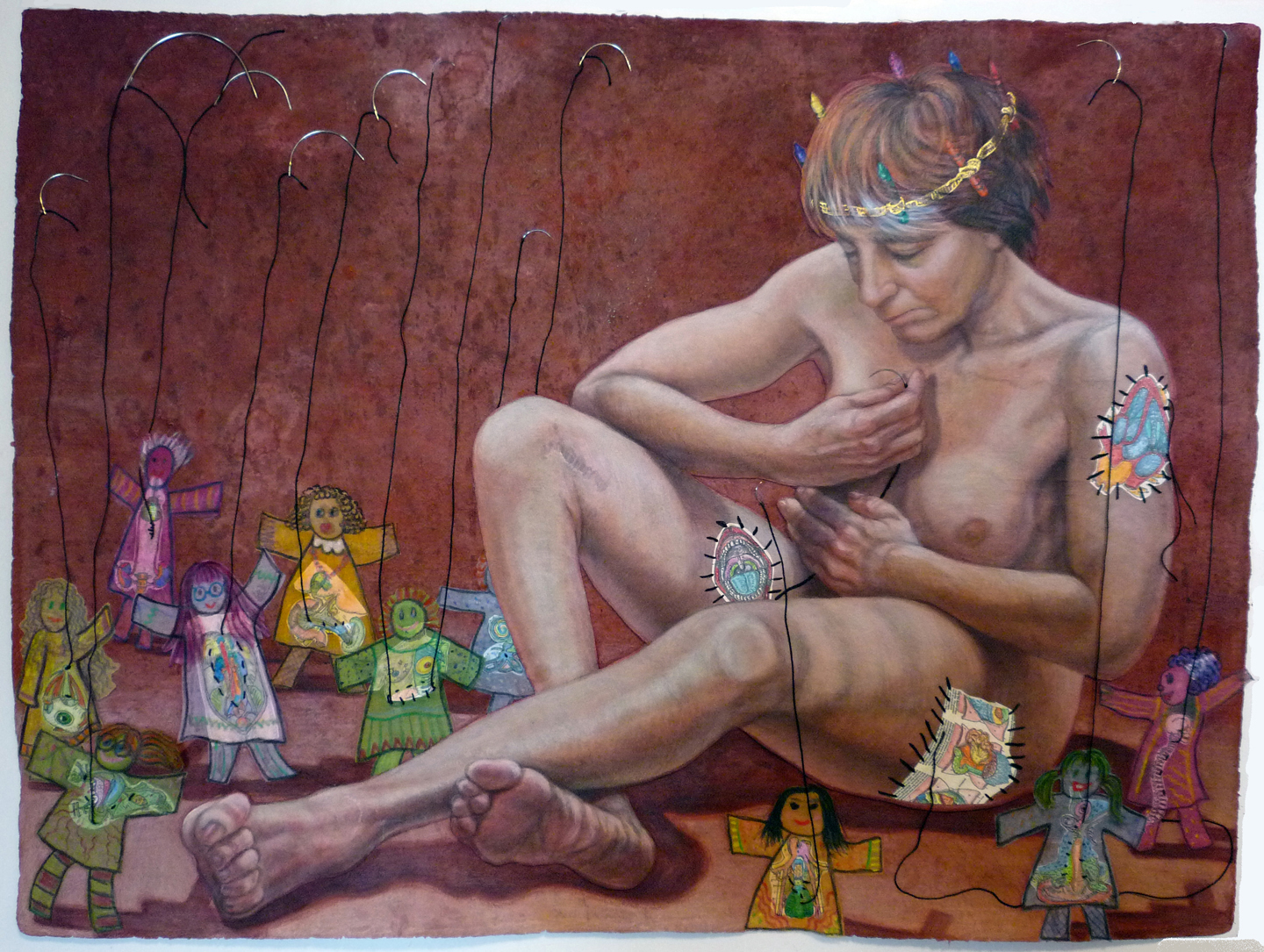
“Coloring Book” by Riva Lehrer (2012).

Graphic Medicine is a consortium of comics artists who explore medicine from the standpoint of doctor, nurse, patient and family member. The founders of Graphic Medicine, MK Czerwiec and Ian Williams, will discuss how the vulnerable body is rendered in comics form. Comics allow artists to move from the inside of the body to the outside in seamless transitions, to weave together objective perspectives and highly personal, subjective experiences.

Celebrate Andreas Vesalius’s 500th Birthday With Us on October 18

On October 18, our second-annual Festival for Medical History and the Arts, “Art, Anatomy, and the Body: Vesalius 500” will celebrate the 500th birthday of anatomist Andreas Vesalius.

Vesalius’ groundbreaking De humani corporis fabrica (The Fabric of the Human Body) of 1543 is a key Renaissance text, one that profoundly changed medical training, anatomical knowledge, and artistic representations of the body, an influence that has persisted over the centuries. Our Festival is one of a global series of celebrations of his legacy.

Our day-long event will explore the intertwined histories of art and anatomy, illustration and medicine, performance and the body, body snatching and dissection, identity and intersexuality, disability and representation, and contemporary visual arts and the body. Speakers, performers, and artists will be joined by anatomical cartoonists, 3D printing demonstrations, workshops, and more. Artist and anatomist Riva Lehrer will be our guest curator. Speakers and presenters will include Daniel Garrison, Steven Assael, Sander Gilman, Brandy Schillace, Lisa Rosner, Ann Fabian, Bill HayesMichael Sappol, Chase JoyntProof X, and  Kriota Willberg (look for a full list of speakers later this summer).

Follow our blog over the summer for guest posts from Festival participants and more on the wonderful Vesalius holdings in our collection.