16th Century Anatomy and Pornography? De dissectione partium corporis humani libri tres, Charles Estienne, 1545; Guest Post by Morbid Anatomy

Estienne5caraglio


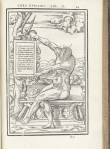
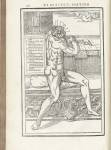
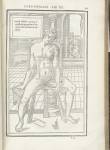
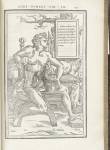
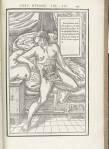
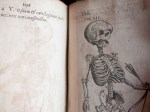
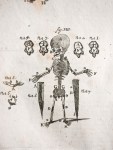
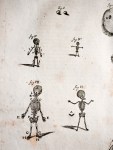
The first image above and those in the gallery below are illustrations from De dissectione partium corporis humani libri tres [Three Books on the Dissection of the Parts of the Human Body], published by Charles Estienne in Paris in 1545. Although this book came out 2 years after Andreas Vesalius’ landmark Fabrica, Charles Estienne’s Dissection was actually completed in 1539, so it is considered a work of pre-Vesalian anatomy.

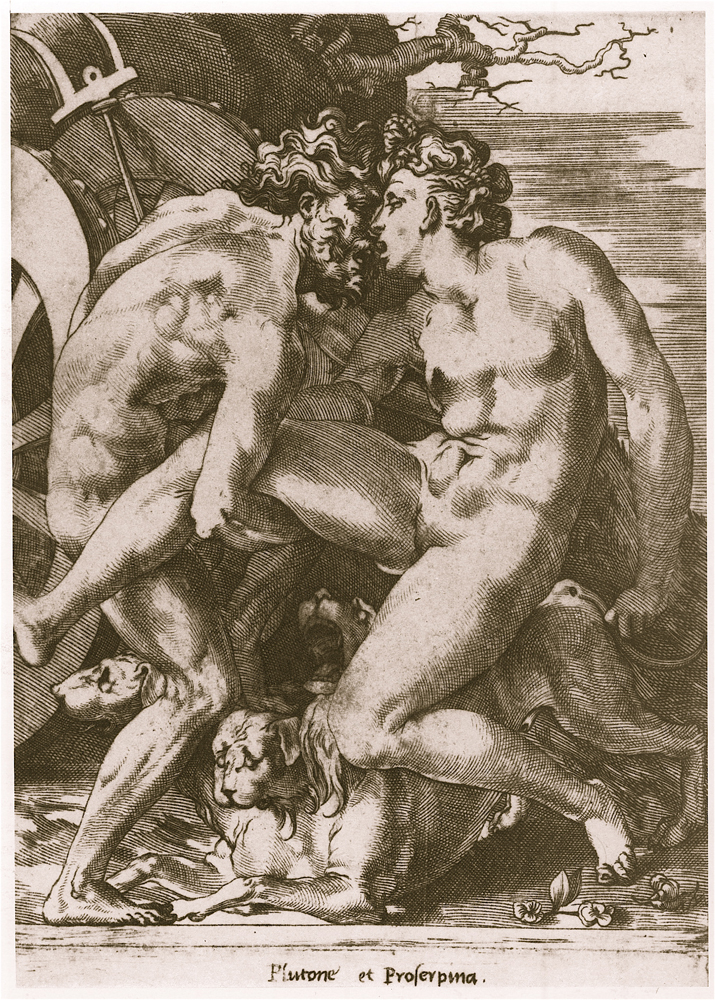
Not only are these illustrations delightfully surreal, they also have a very surprising back story, creating an unlikely link between pornography and anatomy! This is revealed in the similarity of pose between the first image, a woodcut from Estienne’s work, and the second, a slightly earlier erotic engraving.

As explained on the Christie’s auction site:

The anatomical woodcuts in De Dissectione have attracted much critical attention due to their wide variation in imagistic quality, the oddly disturbing postures of the figures in Books 2 and 3, the obvious insertion in many blocks (again, in Books 2 and 3) of separately cut pieces for the dissected portions of the anatomy, and the uncertainty surrounding the sources of the images. The presence of inserts in main blocks would suggest that these blocks were originally intended for another purpose, and in fact a link has been established between the gynecological figures in Book 3, with their frankly erotic poses, and the series of prints entitled Gli amori degli dei [The Loves of the Gods], engraved by Gian Giacomo Caraglio after drawings by Perino del Vaga and Rosso Fiorentino.

A possible explanation of this interesting connection between pornography and anatomy is that the engraver of the female nude woodcuts did not have access to a model, and for the sake of expediency copied the general outlines of the female nudes from “The Loves of the Gods,” eliminating the male figures from the erotic illustrations. Another wood engraver, perhaps [Etienne de la] Rivière, would then have prepared the anatomical insert blocks showing the internal organs.

Still another explanation might have been that in an era in which there was little graphic erotica available the author and the publishers deliberately exploited the erotic undercurrents of this anatomical work as a way of expanding the market beyond medical students. Perhaps because of the erotic undertones the book sold unusually well for a dissection manual and anatomical textbook, causing the publishers to issue an edition in French only one year later, in 1546.

All images except the second are from De dissectione partium corporis humani libri tres, using the National Library of Medicine’s fantastic online resource Historical Anatomies on the Web; you can see all the images from Estienne’s book by clicking here.

The second image is by Jacopo Caraglio (engraver), after Rosso Fiorentino (artist): “Pluto and Proserpina,” 1527, from the series, The Loves of the Gods. It was exhibited in “‘An Earthly Paradise’: The Art of Living at the French Renaissance Court,” at the Herbert F. Johnson Museum of Art, Cornell University, January 16 – April 18, 2010, and is found on the Cornell University website.

This post was written by Joanna Ebenstein of the Morbid Anatomy blog, library and event series; click here to find out more.

“Artist of Death” Frederik Ruysch at NYAM: Guest Post by Morbid Anatomy’s Joanna Ebenstein

Ruysch1

1720 frontispiece to Opera Omnia, 1721.

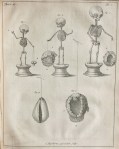
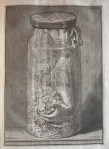
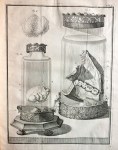
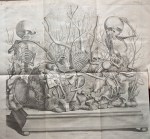
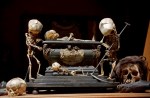
My very favorite figure operating at the intersections of art and medicine–and probably the most bizarre to the modern eye–is Dutch anatomist, artist, preparator, and early museologist Frederik Ruysch (1638-1731). A pioneer in the art of preserving the human body, he was famed for his uncannily life-like and imaginative human preparations (i.e. bits of bodies preserved for study) which he achieved through a combination of injections of colored wax and a secret alcohol-based preservation formula. He is best remembered today for his lavish memento mori-themed tableaux utilizing real human fetal skeletons and other bits of human remains (see images 15-18) which are beautifully explained by Steven Jay Gould in his book Finders, Keepers: Eight Collectors:

Ruysch made about a dozen tableaux, constructed of human fetal skeletons with backgrounds of other body parts, on allegorical themes of death and the transiency of life… Ruysch built the ‘geological’ landscapes of these tableaux from gallstones and kidneystones, and ‘botanical’ backgrounds from injected and hardened major veins and arteries for “trees,” and more ramified tissue of lungs and smaller vessels for ‘bushes’ and ‘grass.’

The fetal skeletons, several per tableau, were ornamented with symbols of death and short life–hands may hold mayflies (which live but a day in their adult state); skulls bemoan their fate by weeping into ‘handkerchiefs’ made of elegantly injected mesentery or brain meninges; ‘snakes’ and ‘worms,’ symbols of corruption made of intestine, wind around pelvis and rib cage.

Quotations and moral exhortations, emphasizing the brevity of life and the vanity of earthly riches, festooned the compositions. One fetal skeleton holding a string of pearls in its hand proclaims, ‘Why should I long for the things of this world?’ Another, playing a violin with a bow made of a dried artery, sings, ‘Ah fate, ah bitter fate.’

Rusych showcased his thousands of human preparations in his own cabinet of curiosities visited by medics and philosophers, as well as members of the aristocracy and royalty. Here, one could see not only his fantastic tableaux, but also his imaginative human specimens in glass jars, preserved organs, exotic birds, butterflies and plants. Ruysch published several lavishly illustrated guides to his cabinet; in image 1, above, you can see an allegorical view of his museum as depicted in a frontispiece to his Opera Omnia, 1721.

Very sadly, none of Ruysch’s astonishing tableaux are known to exist today, and are only known to us through book illustrations. One can get a sense of what the real thing probably looked like, however, in image 19, a contemporaneous 17th fetal skeleton tableau emblazoned with a memento-more-themed Virgil quote; this photo was featured in my recent exhibition The Secret Museum, on which you can find out more here. You can also still see visit many of Ruysch’s wet preparations in collections such as the St. Petersburg Kunstkammer (which has 916 of them), Museum Bleulandinum in Utrecht, and the Anatomisch Museum LUMC in Leiden.

All of these images, save the photo, are drawn from the exceptionally rich Ruysch holdings of the NYAM Historical collections. Hear more about Frederick Ruysch at the October 5th Festival of Medical History & the Arts, when Daniel Margoscy will speak on “The Anatomy of the Corpse: Ruysch, Descartes, and the Problem of Wax.”

This post was written by Joanna Ebenstein of the Morbid Anatomy blog, library and event series; click here to find out more.

“Most Wonderful and Glorious Collection of Anatomical Matter in the World:” Popular Anatomy at NYAM; Guest Post by Morbid Anatomy

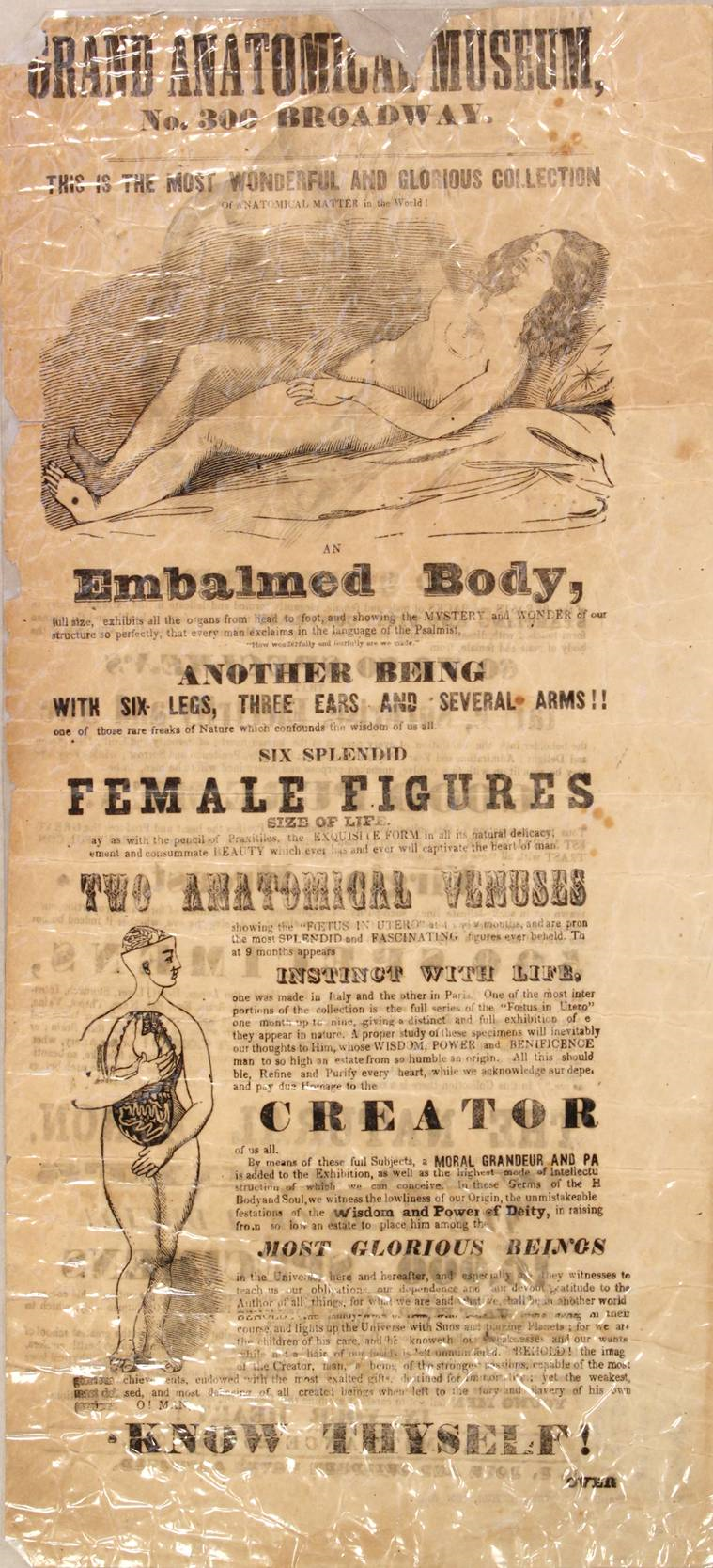
Grand Anatomical Museum

“Six splendid female figures, size of life… the EXQUISITE FORM in all its natural delicacy… and consummate BEAUTY which ever has and ever will captivate the heart of man.”

Above is a fantastic piece of ephemera housed in the NYAM Historical Collections which was recently brought to my attention by Arlene Shaner, Acting Curator of Rare Books & Manuscripts at NYAM.

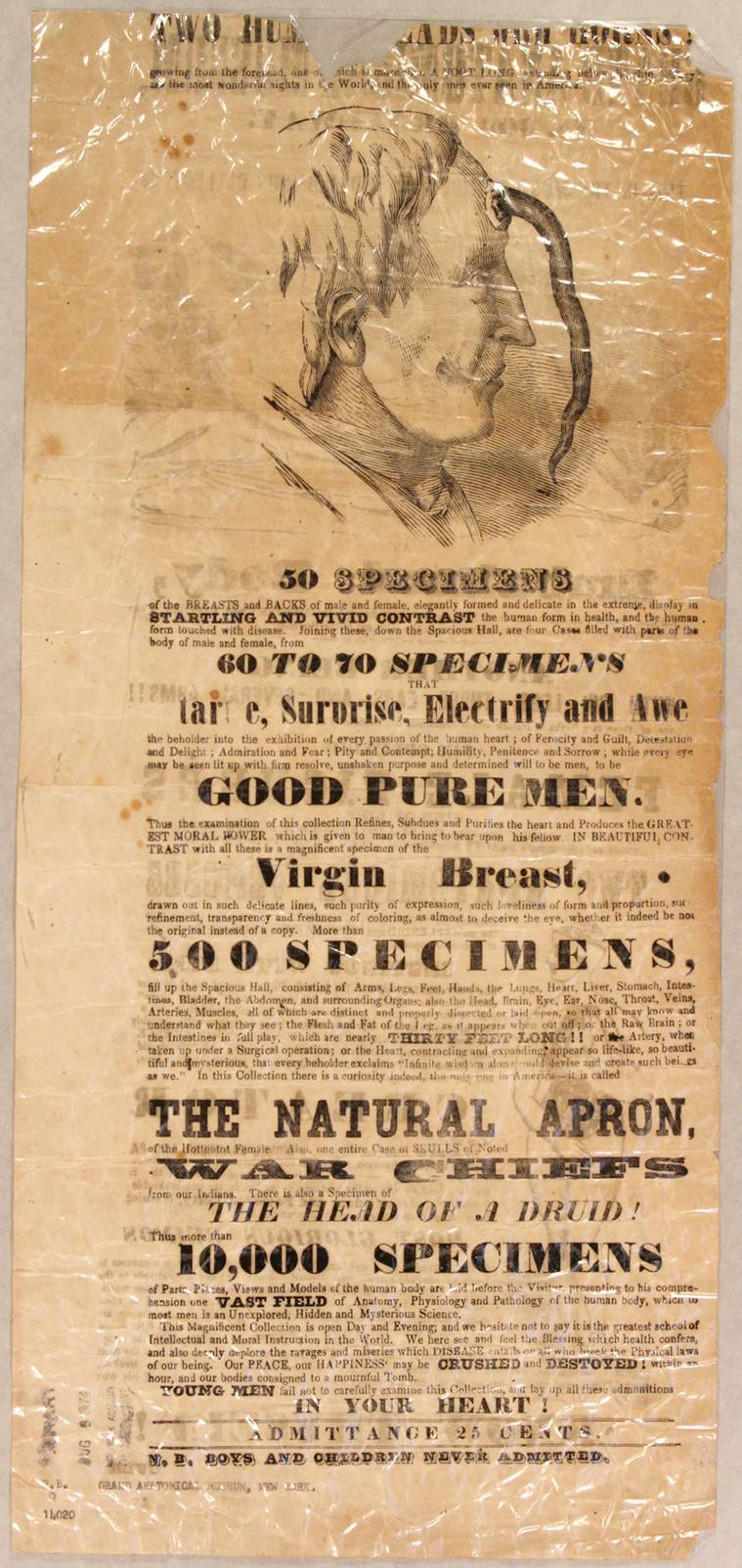
This is a handbill advertising New York City’s Grand Anatomical Museum, one of the many for-profit, open to the pubic anatomical museums which were operating in New York and other European and American cities in the 19th and early 20th centuries. These collections were popular with the general public; they were both educational and spectacular, and often showcased objects of a titillating bent such as beautiful, unclothed wax women with real hair and glass eyes called Florentine, Parisian or anatomical Venuses (more on these fabulous creatures here), human freaks and–at a time when syphilis was both widespread and incurable–lurid wax depictions of genitalia deformed by venereal disease. These last could be found, more often then not, in a special “gentleman’s only” chamber.

Such museums were initially lauded by the medical establishment as excellent for laymen and medics alike. However, by the late 19th century, they became increasing associated with “quack” medical practitioners, who would use them as an kind of advertisement for their often mercury-based cures for sexuality transmitted diseases. Eventually, most of these museums were closed down–or even destroyed–under anti-obscenity laws.

Grand Anatomical Museum 2

You can find out more about popular anatomical museums in this article and book by Michael Sappol, who will be participating in NYAM’s upcoming Festival of Medical History and Arts on October 5th.  They were also explored in The Wellcome Collection’s 2009 exhibition Exquisite Bodies (for which I acted as curatorial consultant), and Maritha Rene Burmeister’s wonderful dissertation on the topic.

This post was written by Joanna Ebenstein of the Morbid Anatomy blog, library and event series; click here to find out more.

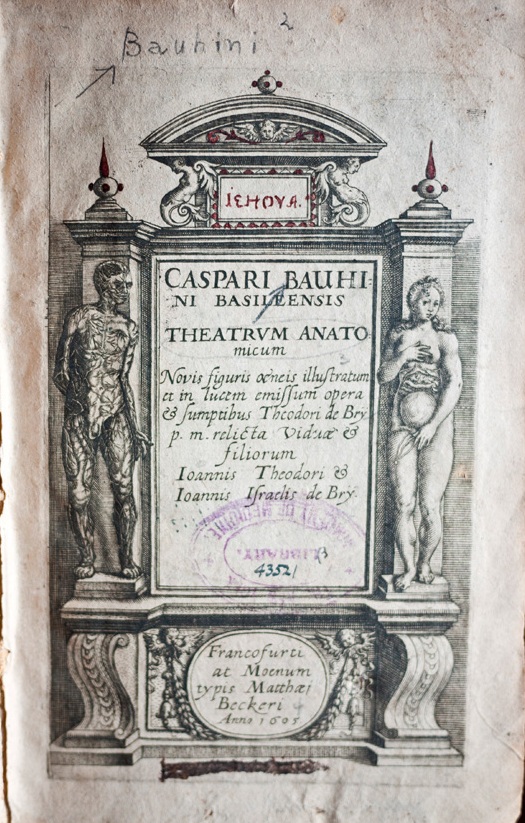
Theatrum Anatomicum, by Caspar Bauhin and Theodor de Bry, 1605 : Guest Post by Morbid Anatomy’s Joanna Ebenstein

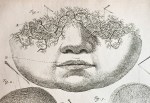
Bauhin1Here are some wonderful images from another of my favorite books in the NYAM historical collections, Theatrum Anatomicum (1605), by Caspar Bauhin and Theodor de Bry. This edition also has some especially lovely image ghosting going on.

This post was written by Joanna Ebenstein of the Morbid Anatomy blog, library and event series; click here to find out more.

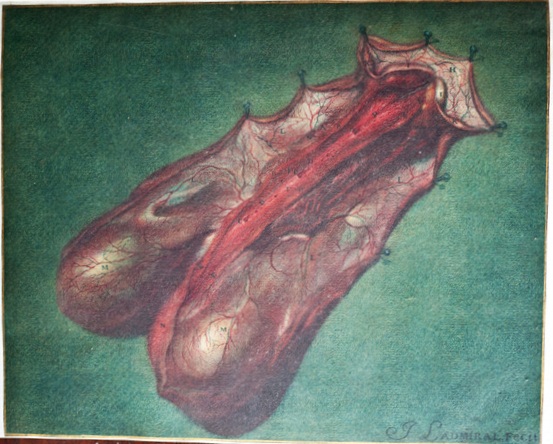
Icon durae matris in concavâ superficie visae…, Jan Ladmiral and Frederik Ruysch, 1738: Guest Post by Morbid Anatomy’s Joanna Ebenstein

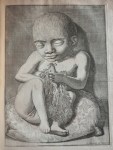
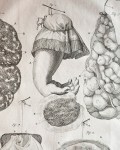
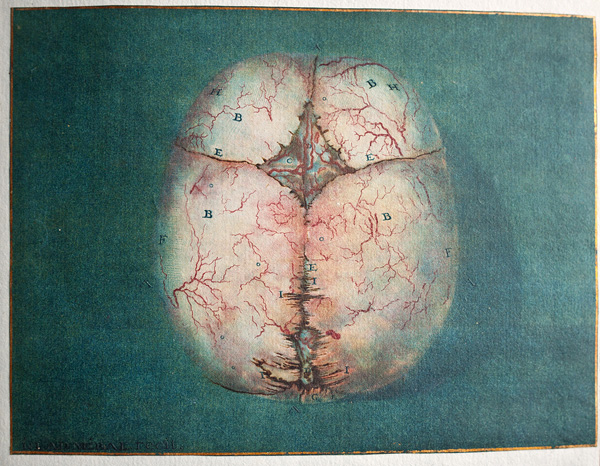
Here is a lovely small frontispiece etching and some lush and wonderful mezzotints by Jan Ladmiral, pioneer of early color printing, drawn from the NYAM copy of Icon durae matris in concavâ superficie visae, ex capite foetus humani octò circiter à conceptione mensium, desumtae; ad objectum artificiosissimè praeparatum à clarissimo viro Fred. Ruyschio by Jan Ladmiral and Frederik Ruysch from 1738.

Ladmiral1

Ladmiral3 Ladmiral2

Ladmiral4

This post was written by Joanna Ebenstein of the Morbid Anatomy blog, library and event series; click here to find out more.

“Physica Sacra,” Johannes Jacob Scheuchzer, 1731 : Guest Post by Morbid Anatomy’s Joanna Ebenstein

Image

Greetings.

My name is Joanna Ebenstein; I run a blog called Morbid Anatomy as well as the related Morbid Anatomy Library—an open-to-the-public research collection in Brooklyn, New York—and the Morbid Anatomy Presents series of lecture and workshops. All of these projects aim to explore the intersections of art and medicine, death and culture, with a particular focus on historical medical collections and libraries.

In the run-up to NYAM’s October 5th Wonder Cabinet and Medical History Festival (which I am co-curating), I have been invited to write a series of guest posts in which I will report on the treasures and curiosities I find in my explorations of NYAM’s excellent rare book and historical collections. In this, the first of that series, I would like to focus one of my favorite books—and one of the most enigmatic books of all time—Johannes Jacob Scheuchzer’s 4-volume high baroque extravaganza of art, science, mysticism, and all worldly knowledge, Physica Sacra.

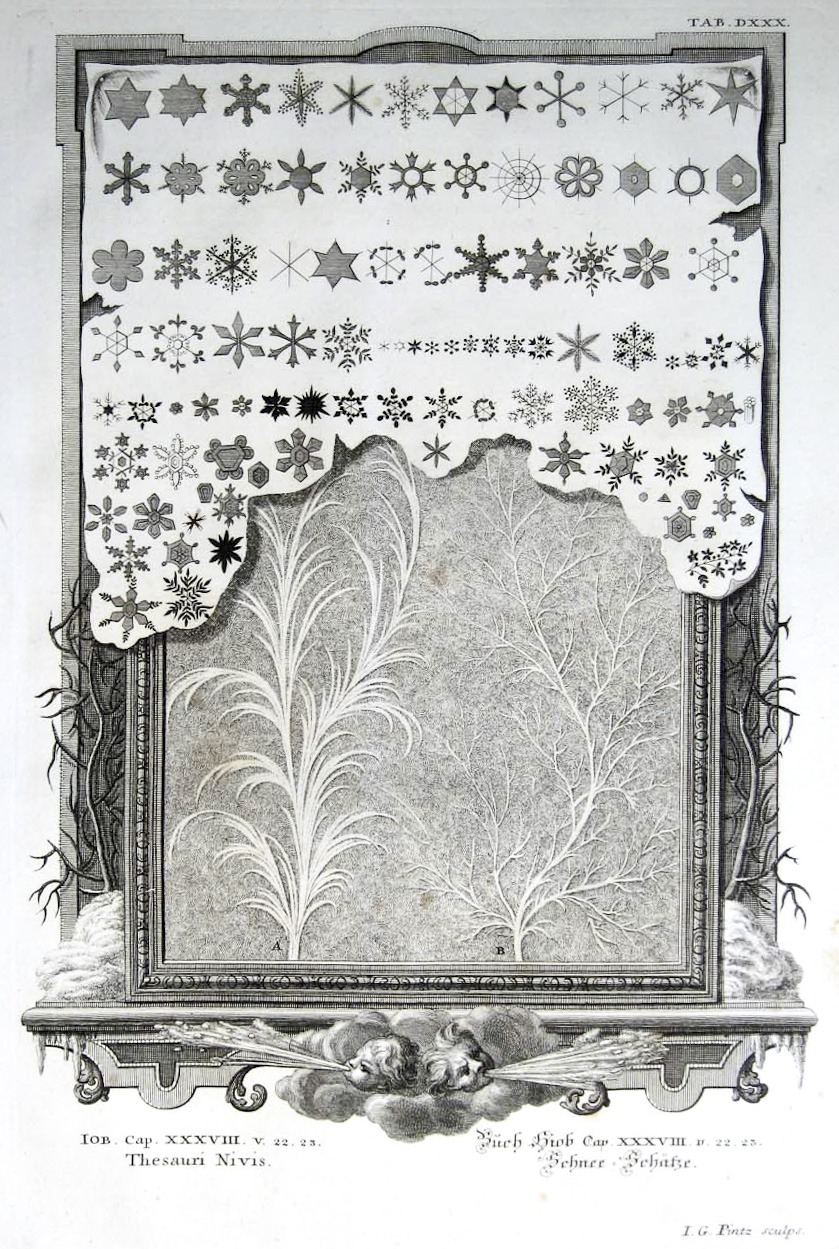
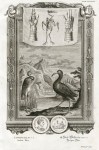
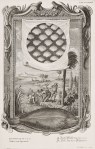
NYAMsacra7Originally published in 1731, this bizarre large-scale book features over 700 copper plate engravings. With a fine balance of careful observation and allegorical imagination, these depict—in frames each more fanciful than the last—such scenes as: lamenting fetal skeletons with the motto “homo ex humo” (‘man from the ground’, or ‘dust’); a variety of anatomical views of the human body projected on drapery or foregrounding mysterious landscapes; birds in biblical landscapes augmented by baffling cyphers; comparative snowflakes with the text “thesauri nivis” or “treasures of snow”; and much more.

These images serve as an excellent reminder that our views of science—and particularly the study of the human body—have changed over time. As explained by Martin Kemp and Marina Wallace in their book Spectacular Bodies:

The purpose of anatomical images during the period of the Renaissance to the 19th century had as much to do with what we would call aesthetic and theological understanding as with the narrower interests of medical illustrators as now understood . . . . They were not simply instructional diagrams for the doctor technician, but statements about the nature of human beings as made by God in the context of the created world as a whole . . . they are about the nature of life and death. . . .

I have not been able to find too much about this book in English, though my friend—and Wonder Cabinet speaker—Daniel Margócsy has promised a future lecture on the topic. In the mean time, Christie’s Auction House has a helpful entry on the book that explains that Johann Jakob Scheuchzer (1672–1733)—a Swiss doctor and natural scientist—”planned the Physica Sacra as an explanation of and a commentary on the Bible on natural-scientific grounds. He himself oversaw the illustrations which were largely based on his own natural history cabinet or on other famous European cabinets of rare specimens.”

Scheuchzer’s work also inspired an art exhibit at the University of Massachusetts—Dartmouth in 2007/8: “Science, Religion, Art.”  The organizers note that:

a lifelong scholar, Scheuchzer’s pursuits of knowledge were wide-ranging and diverse, from science to medicine to paleontology. Like many scientists of the late 17th and early 18th century, Scheuchzer held to the belief that the Old Testament was a factual account of the history of the earth. . . . In a period before public museums, Scheuchzer presented a seductive view of an imaginary world, viewed through lush frames depicting secondary symbols, plants, animals, heads and other objects, providing the viewer rich material for an inspired vision of the interaction between the natural and the divine powers.

Below are just a very few of my favorite images from the book, some that I photographed from the original, and others coming from the set of almost half of the 737 images from the book (!!!) so kindly provided by greyherbert’s amazing Flickr stream; you can see them all by clicking here.

Stay tuned for more posts in the days and weeks to come!

Joanna Ebenstein, Morbid Anatomy
Guest post # 1

Modeling History: Making a Stiff-Board Parchment Binding with a Slotted Spine

This post comes from the 2012 Gladys Brooks conservation intern, Morgan Adams. Morgan is currently interning in the Thaw Conservation Center at the Morgan Library & Museum

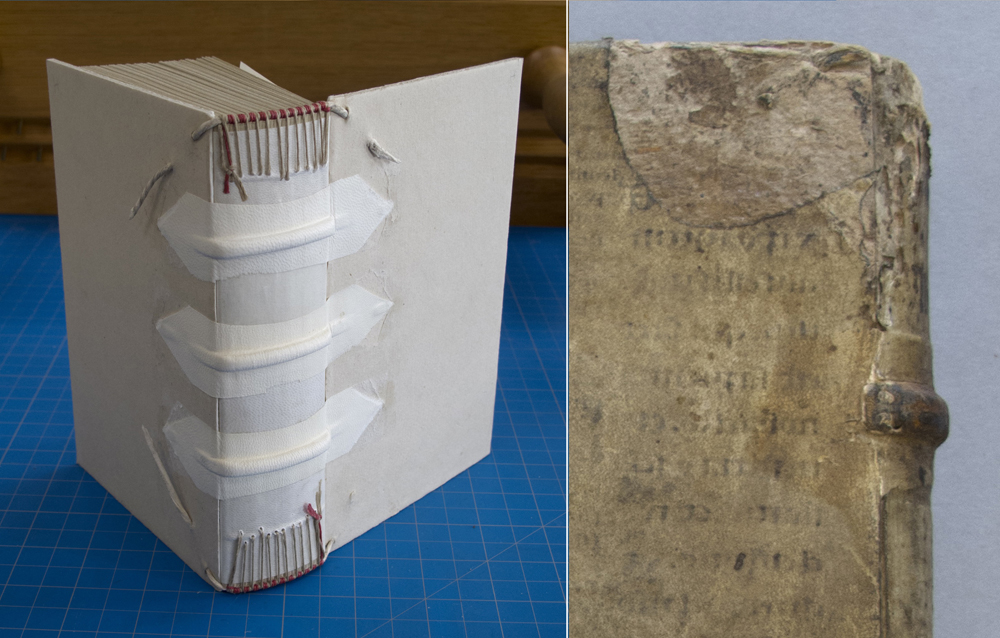
As the 2012 Gladys Brooks intern I had the pleasure of working with Senior Book Conservator Anne Hillam on a model of a stiff-boards parchment binding with a slotted spine, a style seen commonly in Italian bindings of the 16th-17th centuries.

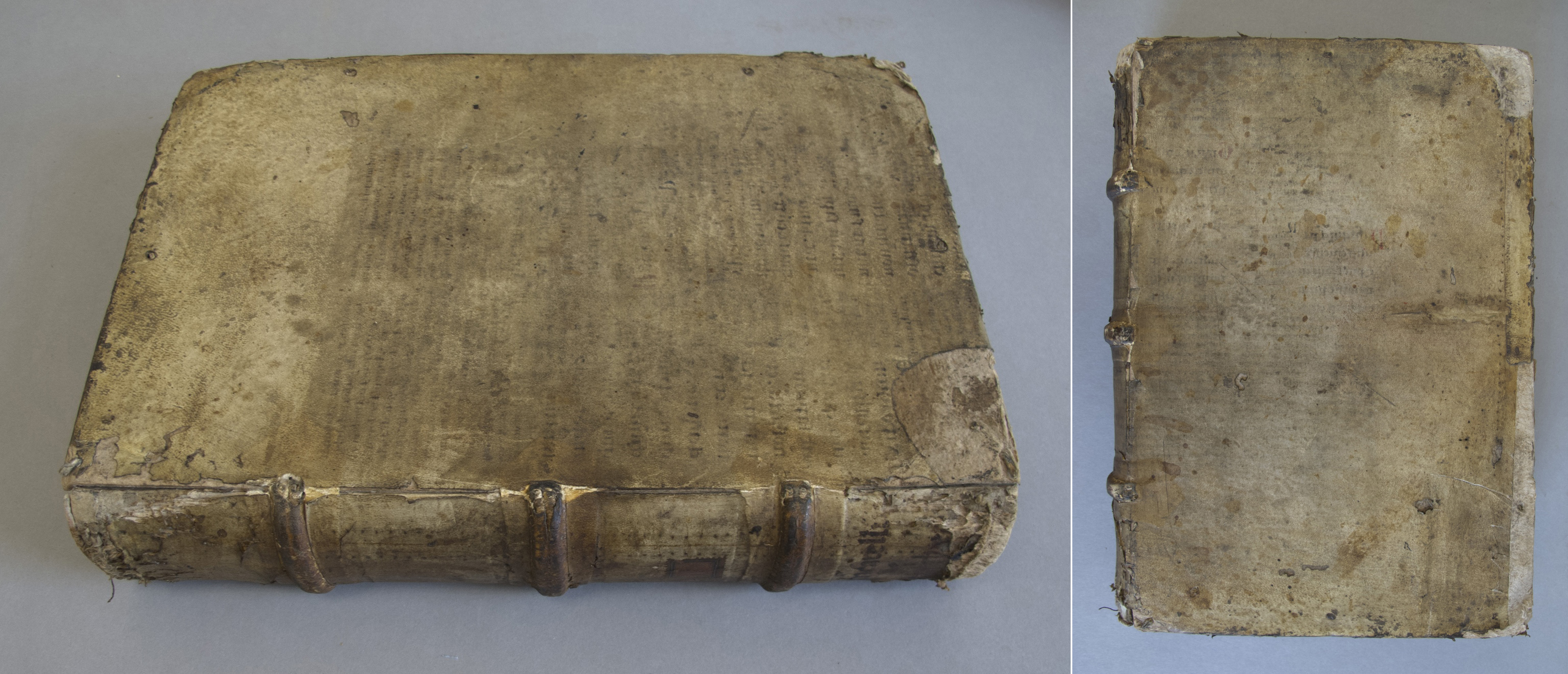
An example of a stiff-boards parchment binding with a slotted spine from the NYAM collection: Trincavello, De differentiis febrium, Venice, 1585. Left: Back cover and spine. Right: Front cover.

An example of a stiff-boards parchment binding with a slotted spine from the NYAM collection: Trincavello, De differentiis febrium, Venice, 1585. Left: Back cover and spine. Right: Front cover.

A unique feature of this binding is the juxtaposition of the parchment and alum-tawed skin used to cover the book’s spine. Slots cut in the parchment across the spine reveal the alum-tawed skin patches covering the sewing supports. It is a combination with structural as well aesthetic advantages: The alum-tawed skin provides the flexibility necessary to conform to the raised sewing supports, while the parchment provides a more durable surface to protect the bulk of the spine.

Trincavello (1585): Detail of spine showing the alum-tawed skin patch adhered over sewing support. The original color of the patch can be seen where the parchment is split along the shoulder of the spine.

Trincavello (1585): Detail of spine showing the alum-tawed skin patch adhered over sewing support. The original color of the patch can be seen where the parchment is split along the shoulder of the spine.

To prepare for this binding, we made detailed examinations of six books printed in Venice between 1508 and 1585 in the NYAM special collections. In conjunction with Sylvia Pugliese’s study of this binding style at the National Library Marciana in Venice, we selected material and structural features that exemplified the binding style. These features are highlighted in the images below, which show the steps of the binding process and the finished model.

The text block is sewn on three laminated alum-tawed supports.

The text block is sewn on three laminated alum-tawed supports.

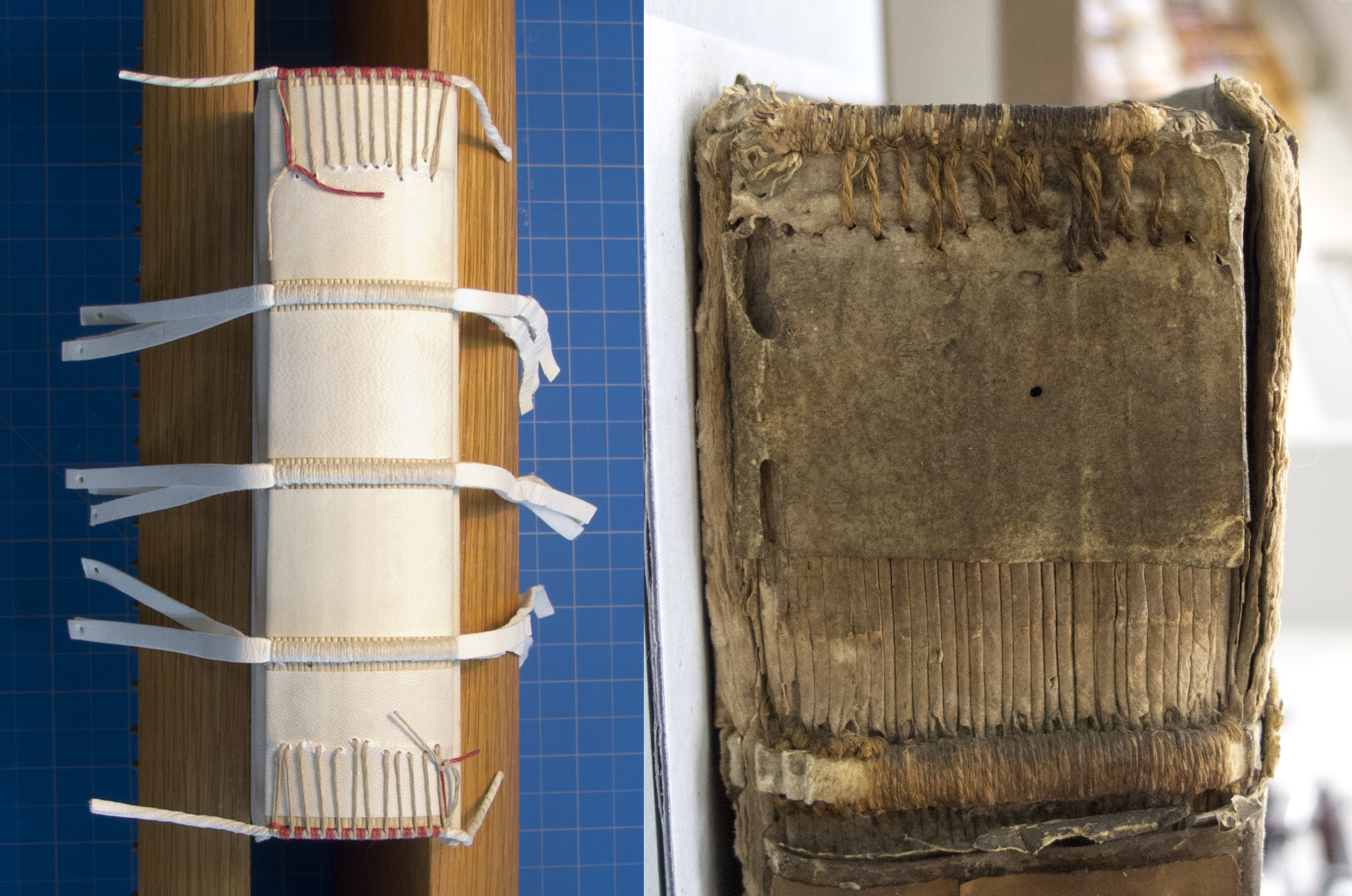
Left: The text block is rounded and backed and the spine is lined with parchment. Endbands are sewn through the spine lining on twisted alum-tawed skin supports.

Left: The text block is rounded and backed and the spine is lined with parchment. Endbands are sewn through the spine lining on twisted alum-tawed skin supports. Right: Galen, Omnia quae extant in Latinum sermonem convsera, Venice, 1556, detail of the spine showing an endband, parchment spine lining, and one sewing station.

Left: Endbands seen from above. Right: Galen (1556) detail of the front bead endband sewn in red and white thread.

Left: Endbands seen from above. Right: Galen (1556) detail of the front bead endband sewn in red and white thread.

Left: The sewing supports are laced into the boards and then covered in alum-tawed skin patches. The endband cores are also laced into the boards. Right: Trincavello (1585), detail showing the "arrow-point" shaping of the alum-tawed skin patch underneath the parchment and the endband core that has been laced through the board and trimmed off flush with the board.

Left: The sewing supports are laced into the boards and then covered in alum-tawed skin patches. The endband cores are also laced into the boards. Right: Trincavello (1585), detail showing the “arrow-point” shaping of the alum-tawed skin patch underneath the parchment and the endband core that has been laced through the board and trimmed off flush with the board.

A template is prepared for cutting the slots in the parchment. The binding is now ready to be covered.

A template is prepared for cutting the slots in the parchment. The binding is now ready to be covered.

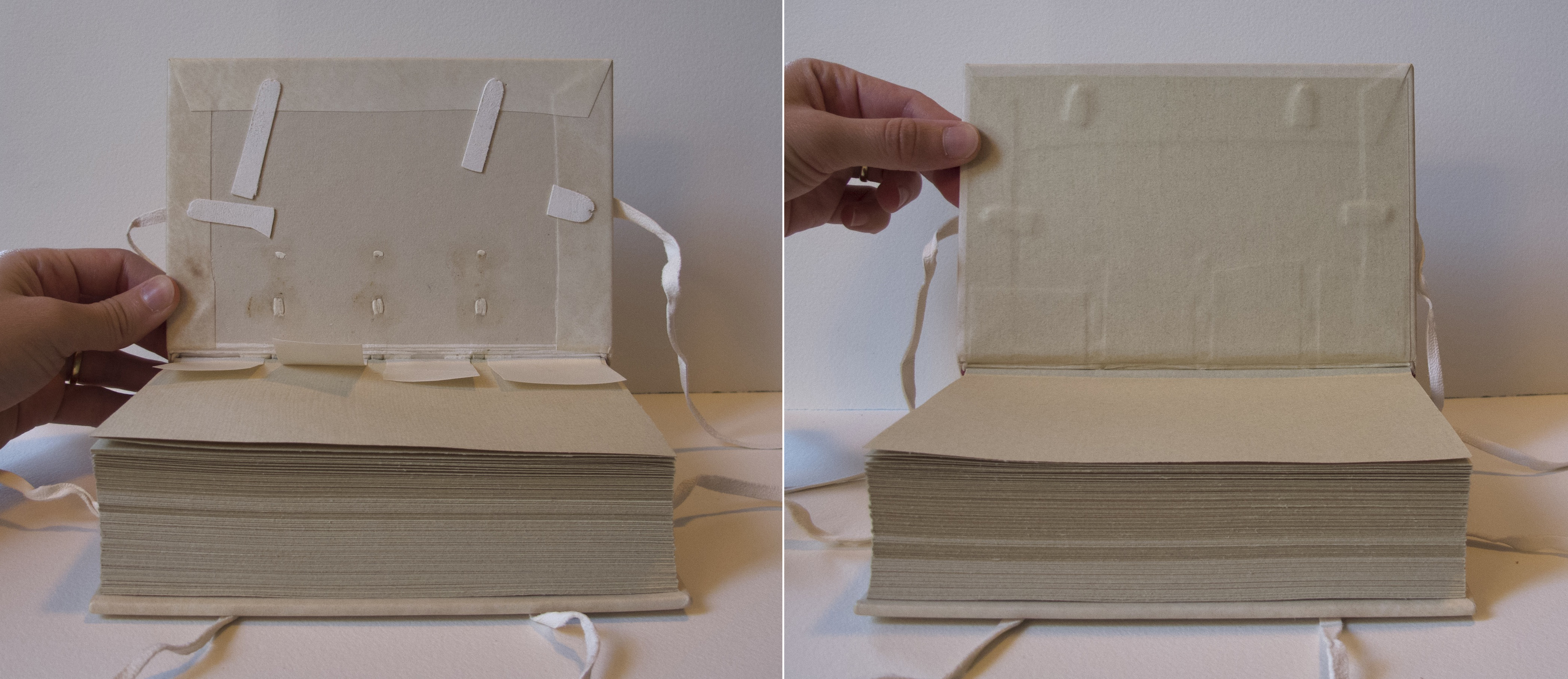
After the parchment cover is adhered, ties are laced through the boards at the fore-edge, head and tail. The parchment spine linings are adhered to the interior face of the board and the endsheet is pasted down.

After the parchment cover is adhered, ties are laced through the boards at the fore-edge, head and tail. The parchment spine linings are adhered to the interior face of the board and the endsheet is pasted down.

Trincavello (1585), The surface of the pastedown reveals the ends of ties formerly  laced through the board.

Trincavello (1585), The surface of the pastedown reveals the ends of ties formerly laced through the board.

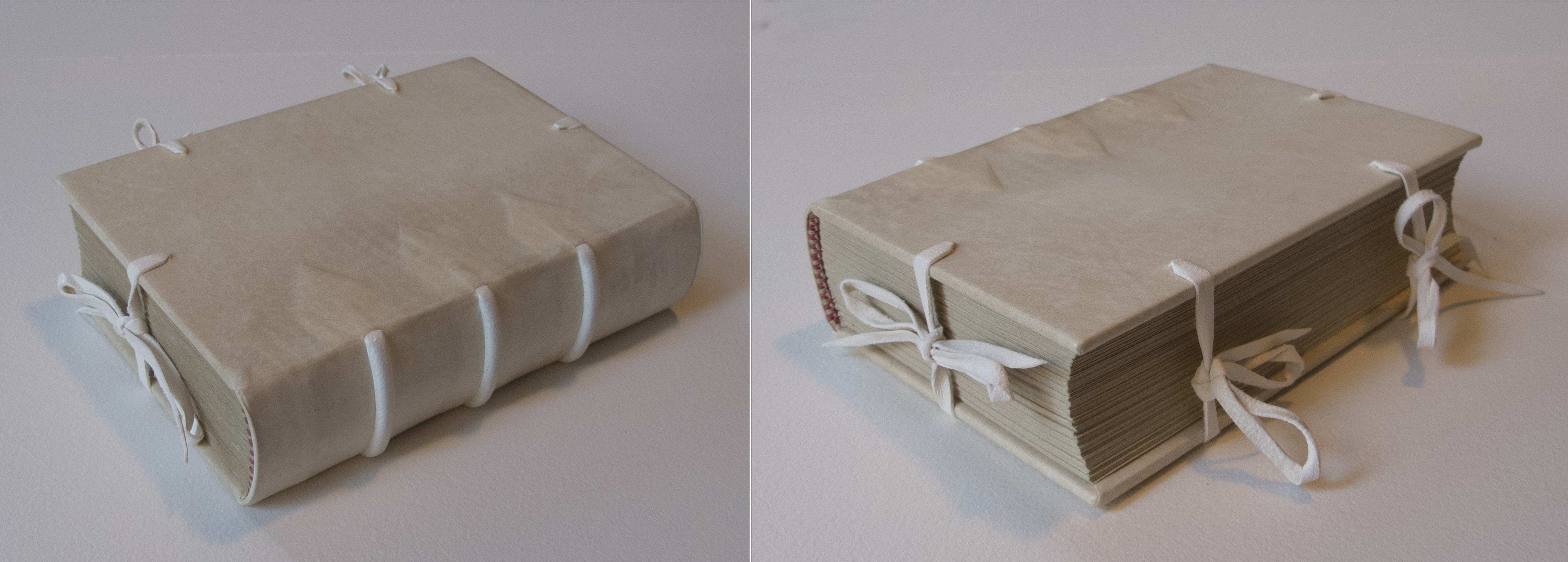
Finished model, complete with ties on fore-edge, head, and tail.

Finished model, complete with ties on fore-edge, head, and tail.

[1] Sylvia Pugliese, “Stiff-Board Vellum Binding with Slotted Spine: Survey of a Historical Bookbinding Structure,” in Papier Restaurierung – Mitteilungen der IADA, Vol. 2 (2001), Suppl., S. 93-101.

English Gingerbread Old and New

Food historian Stephen Schmidt wrote today’s post, which includes findings from research he conducted at NYAM last summer. The post was originally posted on the Recipes Project blog.

Food writers who rummage in other people’s recipe boxes, as I am wont to do, know that many modern American families happily carry on making certain favorite dishes decades after these dishes have dropped out of fashion, indeed from memory. It appears that the same was true of a privileged eighteenth-century English family whose recipe book now resides at the New York Academy of Medicine (hereafter NYAM), under the unprepossessing label “Recipe book England 18th century. In two unidentified hands.” The manuscript’s culinary section (it also has a medical section) was copied in two contiguous chunks by two different scribes, the second of whom picked up numbering the recipes where the first left off and then added an index to all 170 recipes in both sections.

The recipes in both chunks are mostly of the early eighteenth century—they are similar to those of E. Smith’s The Compleat Housewife, 1727—but a number of recipes in the first chunk, particularly for items once part of the repertory of “banquetting stuffe,” are much older. My guess is that this clutch of recipes was, previous to this copying, a separate manuscript that had itself been successively copied and updated over a span of several generations, during the course of which most of the original recipes had been replaced by more modern ones but a few old family favorites dating back to the mid-seventeenth century had been retained. Among these older recipes, the most surprising is the bread crumb gingerbread. A boiled paste of bread crumbs, honey or sugar, ale or wine, and an enormous quantity of spice (one full cup in this recipe, and much more in many others) that was made up as “printed” cakes and then dried, this gingerbread appears in no other post-1700 English manuscript or print cookbook that I have seen.

And yet the recipe in the NYAM manuscript seems not to have been idly or inadvertently copied, for its language, orthography, and certain compositional details (particularly the brandy) have been updated to the Georgian era:

25 To Make Ginger bread

Take a pound & quarter of bread, a pound of sugar, one ounce of red Sanders, one ounce of Cinamon three quarters of an ounce of ginger half an ounce of mace & cloves, half an ounce of nutmegs, then put your Sugar & spices into a Skillet with half a pint of Brandy & half a pint of ale, sett it over a gentle fire till your Sugar be melted, Let it have a boyl then put in half of your bread Stirre it well in the Skellet & Let it boyle also, have the other half of your bread in a Stone panchon, then pour your Stuffe to it & work it to a past make it up in prints or as you please.
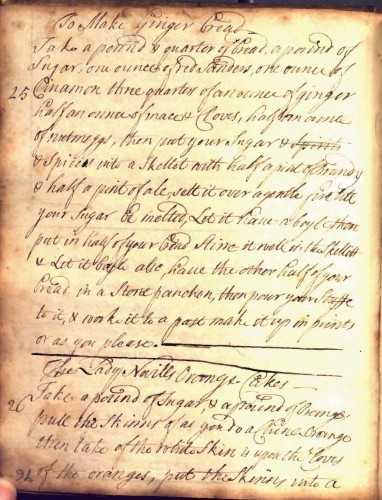
Eighteenth-century recipe book, England.

Eighteenth-century recipe book, England.

From the fourteenth century into the mid-seventeenth century, bread crumb gingerbread was England’s standard gingerbread (for the record, there was also a more rarefied type) and, by all evidence, a great favorite among those who could afford it—a fortifier for Sir Thopas in The Canterbury Tales, one of the dainties of nobility listed in The Description of England, 1587 (Harrison, 129), and according to Sir Hugh Platt, in Delightes for Ladies, 1609, a confection “used at the Court, and in all gentlemens houses at festival times.” Then, around the time of the Restoration, this ancient confection apparently dropped out of fashion. In The Accomplisht Cook, 1663, his awe-inspiring 500-page compendium of upper-class Restoration cookery, Robert May does not find space for a single recipe.

The reason for its waning is not difficult to deduce. Bread crumb gingerbread was part of a large group of English sweetened, spiced confections that were originally used more as medicines than as foods. Indeed, the earliest gingerbread recipes appear in medical, not culinary, manuscripts (Hieatt, 31), and culinary historian Karen Hess proposes that gingerbread derives from an ancient electuary commonly known as gingibrati, whence came the name (Hess, 342-3). In England, these early nutriceuticals, as we might call them today, gradually became slotted as foods first through their adoption for the void, a little ceremony of stomach-settling sweets and wines staged after meals in great medieval households, and then, beginning in the early sixteenth century, through their use at banquets, meals of sweets enjoyed by the English privileged both after feasts and as stand-alone entertainments.

Through the early seventeenth century banquets, like the void, continued to carry a therapeutic subtext (or pretext) and comprised mostly foods that were extremely sweet or both sweet and spicy: fruit preserves, marmalades, and stiff jellies; candied caraway, anise, and coriander seeds; various spice-flecked dry biscuits from Italy; marzipan; and sweetened, spiced wafers and the syrupy spiced wine called hippocras. In this company, bread crumb gingerbread, with its pungent (if not caustic) spicing, was a comfortable fit. But as the seventeenth century progressed, the banquet increasingly incorporated custards, creams, fresh cheeses, fruit tarts, and buttery little cakes, and these foods, in tandem with the enduringly popular fruit confections, came to define the English taste in sweets, whether for banquets or for two new dawning sweets occasions, desserts and evening parties. The aggressive spice deliverers fell by the wayside, including, inevitably, England’s ancestral bread crumb gingerbread.

As the old gingerbread waned, a new one took its place and assumed its name, first in recipe manuscripts of the last quarter of the seventeenth century, and then in printed cookbooks of the early eighteenth century. This new arrival was the spiced honey cake, which had been made throughout Europe for centuries. It is sometimes suggested that the spiced honey cake came to England with Royalists returning from exile in France after the Restoration, which seems plausible given the high popularity of French pain d’épice at that time—though less convincing when one considers that a common English name for this cake, before it became firmly known as gingerbread, was “pepper cake,” which suggests a Northern European provenance. Whatever the case, Anglo-America almost immediately replaced the expensive honey in this cake with cheap molasses (or treacle, as the English said by the late 1600s), and this new gingerbread, in myriad forms, became the most widely made cake in Anglo-America over the next two centuries and still remains a favorite today, especially at Christmas.

By the time the NYAM manuscript was copied, perhaps sometime between 1710 and 1730, molasses gingerbread was already ragingly popular in both England and America, and evidently the family who kept this manuscript ate it too, for the second clutch of culinary recipes includes a recipe for it, under the exact same title as the first. Remembering the old adage that the holidays preserve what the everyday loses, I will hazard a guess that the old gingerbread was made at Christmas, the new for everyday family use.

150 To Make Ginger Bread

Take a Pound of Treacle, two ounces of Carrawayseeds, an ounce of Ginger, half a Pound of Sugar half a Pound of Butter melted, & a Pound of Flower. if you please you may put some Lemon pill cut small, mix altogether & make it into little Cakes so bake it. may put in a little Brandy for a Pepper Cake

Recipe book England 18th century.

Recipe book England 18th century.

An interesting question is why the seventeenth-century English considered the European spiced honey cake sufficiently analogous to their ancestral bread crumb gingerbread to merit its name. It may have been simply the compositional similarity, the primary constituents of both cakes being honey (at least traditionally) and spices. Or it may have been that both cakes were associated with Christmas and other “festival times.” Or it may have been that both cakes were often printed with human figures and other designs using wooden or ceramic molds. Or it may possibly have been that both gingerbreads had medicinal uses as stomach-settlers. In both England and America, itinerant sellers of the new baked gingerbread often stationed themselves at wharves and docks and hawked their cakes as a preventive to sea-sickness. (Ship-wrecked off Long Island in 1727, Benjamin Franklin bought gingerbread “of an old woman to eat on the water,” he tells us in The Autobiography.) One thinks at first that the ginger and other spices were the “active ingredients” in this remedy, and certainly this is what nineteenth-century American cookbook authors believed when they recommended gingerbread for such use. But early on the remedy may also have been activated by the treacle. Based on the perhaps slender evidence of a single recipe in E. Smith, Karen Hess proposes that the first English bakers of the new gingerbread may have understood treacle to mean London treacle (Hess, 201), the English version of the ancient sovereign remedy theriac, a common form of which English apothecaries apparently formulated with molasses rather than expensive honey. I have long wondered what, if anything, this has to do with the English adoption of the word “treacle” for molasses (OED). Perhaps a medical historian can tell us.

Works Cited

Harrison, William. The Description of England. New York: Dover Publications, Inc., 1994

Hess, Karen. Martha Washington’s Booke of Cookery. New York: Columbia University Press, 1981.

Hieatt, Constance and Sharon Butler. Curye on Inglysch. New York: Oxford University Press, 1985.

“Treacle, I. 1. c.” The Compact Oxford English Dictionary. 2nd ed. 1991.

Stephen Schmidt is the principal researcher and writer for The Manuscript Cookbooks Survey, an online catalogue of pre-1865 English-language manuscript cookbooks held in the U. S. repositories, which will launch in early 2013. He is the author of Master Recipes, a 940-page general-purpose cookbook, was an editor of and a principal contributor to the 1997 and 2006 editions of Joy of Cooking, has contributed to The Oxford Companion to American Food and Drink and Dictionnaire Universel du Pain, and has written for Cook’s Illustrated magazine and many other publications. A resident of New York City, he works as a personal chef and a cooking teacher and hopes soon to complete Lemon Pudding, Watermelon Cake, and Miracle Pie, a history of American home dessert.

In Pursuit of Pure, White, and Deadly

We were lucky enough to have the “Candy Professor,” Samira Kawash, visit the library earlier this year. She generously wrote the following post for us about the book she used in her research.

Poster with text "Sweet delicious but deadly" and image of man eating ice cream cone surrounded by different foods containing sugar.

Anti-sugar poster. Courtesy of the National Library of Medicine.

A few years ago, we started hearing that our current epidemic of obesity might be due to the rapid increase in consumption of high fructose corn syrup (HFCS) since the 1970s. The sharp upturn in both overweight and HFCS certainly suggest some relation, but what is the cause? Some have pointed to the excess calories, others to excess sugar, and some believe it is actually the fructose in HFCS that makes it uniquely “obesegenic.” Are sugar calories, or fructose calories, somehow different from other kinds of calories? Increasingly, advocates of the “carbohydrate hypothesis” are saying, yes, it’s the carbs, or the sugars that are making us not only fat, but sick as well: blame diabetes, heart disease, arthritis, and allergies on too much sugar.

I’m writing a book about the social history of candy, so of course I’m interested in these attacks on sugar. And one thing I’ve learned is that these worries about refined sugar are not new. In particular, back in the 1970s there was a wave of “sugar-phobia” that produced a raft of popular anti-sugar literature like William Duffy’s Sugar Blues. Food historians who have studied this period emphasize one especially influential book by a British biochemist named John Yudkin that summarizes and interprets scientific evidence implicating sugar in a broad range of diseases. So I definitely wanted to get my hands on this book, published as Pure, White and Deadly in Britain in 1972 and as Sweet and Dangerous in the U.S. the next year.

For months, I have been searching high and low for this book. The libraries I normally use didn’t have it. Google tantalized me with a “snippet” but coyly withheld the digitized (and still copyrighted) text. Could I buy a copy? Amazon could only tell me that it’s out of print; nowhere did there seem to be a used volume for sale at any price. And it turns out I’m not the only one who is trying to get their hands on this book. Bookfinder.com’s “Bookfinder Report 2012: Out-of-print and in Demand” ranked Pure, White and Deadly as the 5th most sought after out-of-print book.
And then I found Pure, White and Deadly, in the catalog of the New York Academy of Medicine Library. An email and a subway ride later, the book was in my hands. I couldn’t have been more excited with this uncovered treasure, and I was so thankful for the welcome and assistance offered by the library staff.

I’ve since learned that the NYAM library has been pulling this book off the shelf quite frequently at the request of all sorts of researchers and scholars. I doubt whoever acquired this volume back in the 1970s could have predicted its resurgent interest nearly a half century later. Thanks to the NYAM library, I and many others have been able to read this fascinating and provocative book.

About the author: Samira Kawash’s book on the social history of candy in the United States, titled In Defense of Candy, will be published by Faber and Faber in Fall 2013.

2011-2012 Helfand Fellow

Earlier this year we were delighted to host artist and scholar Cindy Stelmackowich as our 2011-2012 Helfand Fellow. Cindy was kind enough to share her thoughts on the Fellowship, and how it fits into her research trajectory.

“Receiving the 2011-2012 Helfand Fellowship in the History of Medicine has wonderful meaning to me, on both personal and professional levels. In fact, the opportunity to conduct research in the Rare Book Room at the New York Academy of Medicine completes a circle for me; its rich holdings have been pivotal to my development as a scholar.

Antoine Toussaint de Chazal, Maladies du Poumon [Lung cancer, lung cysts], 1829-1935, lithograph, 15 x 7.5 inches, pl. ll. in Anatomie pathologique du corps humain by Jean Cruveilhier. (Paris 1829-1835).


Arriving to New York from Canada for the residency at the Rare Book Room in March and April 2012 was not the first time I had an extended stay in New York City. After I finished an M.A. in Art History in 1999 from Carleton University in Ottawa, I moved to New York and worked in a contemporary gallery in SoHo as a curatorial assistant. Visiting galleries and exhibitions was a daily activity for me. Featured at The New York Public Library at this time was an exhibition entitled Seeing is Believing – a wonderful exhibition that focused on the ways illustrations were essential in spreading new scientific and medical ideas. I was hooked! I knew at that moment that not only did I now want to complete a Ph.D, but I needed to see and learn more about the illustrations and rare books I was exposed to in that exhibition. The exhibition labels noted that a number of the medical books were from the collection of the Rare Book Room at the New York Academy of Medicine. Off I went to find this treasure-trove of a library on Fifth Avenue. Needless to say, I continued to consult The Rare Book holdings at the New York Academy of Medicine while writing my dissertation on nineteenth-century anatomical atlases; no scholarly attention had previously been conducted to analyze this specific group of important medical publications and visual diagrams.

It was thereby very heartening to receive the 2011-2012 Helfand Fellowship at a time when I had finished my dissertation and am happily preparing a book manuscript on anatomical and pathological atlases. At the end of my residency in April 2012, I presented a public presentation on my research entitled Picturing Pathology: Morbid Anatomy Diagrams, Pathological Atlases and Disease 1800–1840. This paper examined how pathological ideas were embedded in new types of visual representations and newly re-ordered types of anatomical textbooks. It focused on the complex web of interconnections among disease, the body and visual representation; how aesthetic strategies, visual codes and rhetorical tropes attempted to represent key pathological concepts, discoveries and models of perception as visual diagrams became crucial to this young discipline of pathology.

The two images included in this posting represent the new types of visual imagery that emerged within medicine at the beginning of the nineteenth century in France and Britain as new systems of pathology were developing. Doctors used these innovative pathological illustrations to teach medical students how to identify signs of morbidity and disease. The desire for precise diagrams based on minute dissections of diseased tissues was of great interest to both surgeons and medical students; physicians began to either commission artists to execute detailed diagrams to add to their novel publications or spent years executing drawings of their findings. Renowned for his artistic skill as well as his anatomical knowledge, Sir Robert Carswell for example, executed the drawings in his 1838 folio-sized atlas entitled Pathological Anatomy: Illustrations of the Elementary Forms of Diseasehimself, and, as an expert lithographer, personally transferred the drawings to stone for the lithographs used in the atlas.

Robert Carswell, Neoplasms of the peritoneum, the stomach, the kidneys, the portal vein and the lung, 1832, lithograph, 13.8 x 9 inches, plate III., in Pathological Anatomy. Illustrations of the Elementary Forms of Disease by Robert Carswell. (London 1832-1838).

My scholarly interest in  these early pathological manuals outline how the dead body was initially made into a working pathological object by the profession. Central to this work is a close analysis of the visual languages of this specific archive of pathological diagrams. In this regard, I am interested in how art – its grammar, forms, aesthetic strategies – articulated and represented pathological concepts, discoveries and models of perception in the young field of pathological anatomy. This study examines the aesthetic theories that informed the dissection diagrams’ languages of representation; such as the Western art historical models and academic techniques in the art schools where anatomical illustrators were trained. Furthermore, my project will examine the myriad of representational techniques that encoded these unique images so that the various types of morbid specimens appeared as systematic, encyclopedic collections of disease.

Thank you once again to Bill and Audrey Helfand for creating and endowing this Fellowship at the New York Academy of Medicine, and to the librarians and staff in the Rare Book (Arlene Shaner and Rebecca Pou) for making my residency fruitful and enriching.

In 2012-2013, Cindy will be a Postdoctoral Fellow with the “Situating Science Strategic Knowledge” Cluster group at University of King’s College and Dalhousie University in Halifax. Her most recent publication, “The Instructive Corpse: Dissection, Anatomical Specimens and Illustration in Early-Nineteenth Century Medical Education,” will appear in a special September 2012 issue of Spontaneous Generations: A Journal for the History and Philosophy of Science devoted to “Visual Representation and Science.” You can view some of Cindy’s artistic investigations here.