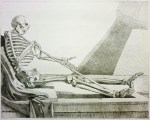
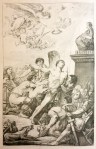
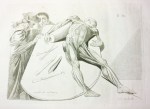
The Drs. Barry and Bobbi Coller Rare Book Reading Room – the panoramic view

The Drs. Barry and Bobbi Coller Rare Book Reading Room captured by Ardon Bar-Hama.

The Drs. Barry and Bobbi Coller Rare Book Reading Room captured by Ardon Bar-Hama. Click for the full panoramic experience.

The Drs. Barry and Bobbi Coller Rare Book Reading Room has reopened. Renovations improved environmental conditions for the collections, including a new HVAC system, restored the historic windows, and a return to the cork floor’s former glory. We are once again welcoming readers and visitors to the room and were delighted to have the chance to host the wonderful Ardon Bar-Hama, who kindly captured the space in its full panoramic glory. Click through on the image to see the interactive (and highly zoom-able) panoramic view.

Rehousing the Diploma Collection

Today’s post was written by the 2013 Gladys Brooks Conservation Intern, Caroline Evans.

The diploma collection at The New York Academy of Medicine contains over eight hundred certificates, diplomas, seals and proclamations granted by universities, professional societies and institutions across a wide geographical span. The items in the collection range from the mid-eighteenth century up to the late twentieth century. The diplomas were the subjects of a major collections care project carried out in the Gladys Brooks Book and Paper Conservation Lab by Caroline Evans (summer intern), with the assistance of Emily Moyer (Collections Care Assistant) and Allie Rosenthal (volunteer).
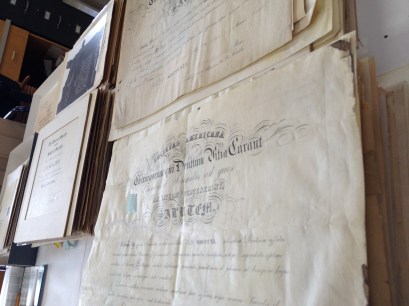
Piles of diplomas to be sorted, cleaned, and housed.

Piles of diplomas to be sorted, cleaned, and housed.

While most of the earlier diplomas are printed or written on parchment and display elaborate calligraphy, many of the later items in the collection are printed on paper. The diplomas can provide a glimpse into the changing methods of printing during this period, as well as into the preservation needs of flat paper—in some cases, for instance, some of the ink in the signatures had begun to flake, and seals on parchment were cracked. In addition to dry cleaning the diplomas and making the appropriate efforts to stabilize each of these items, we constructed folders and housing for each diploma or seal before sorting them by size, date, and granting institution.

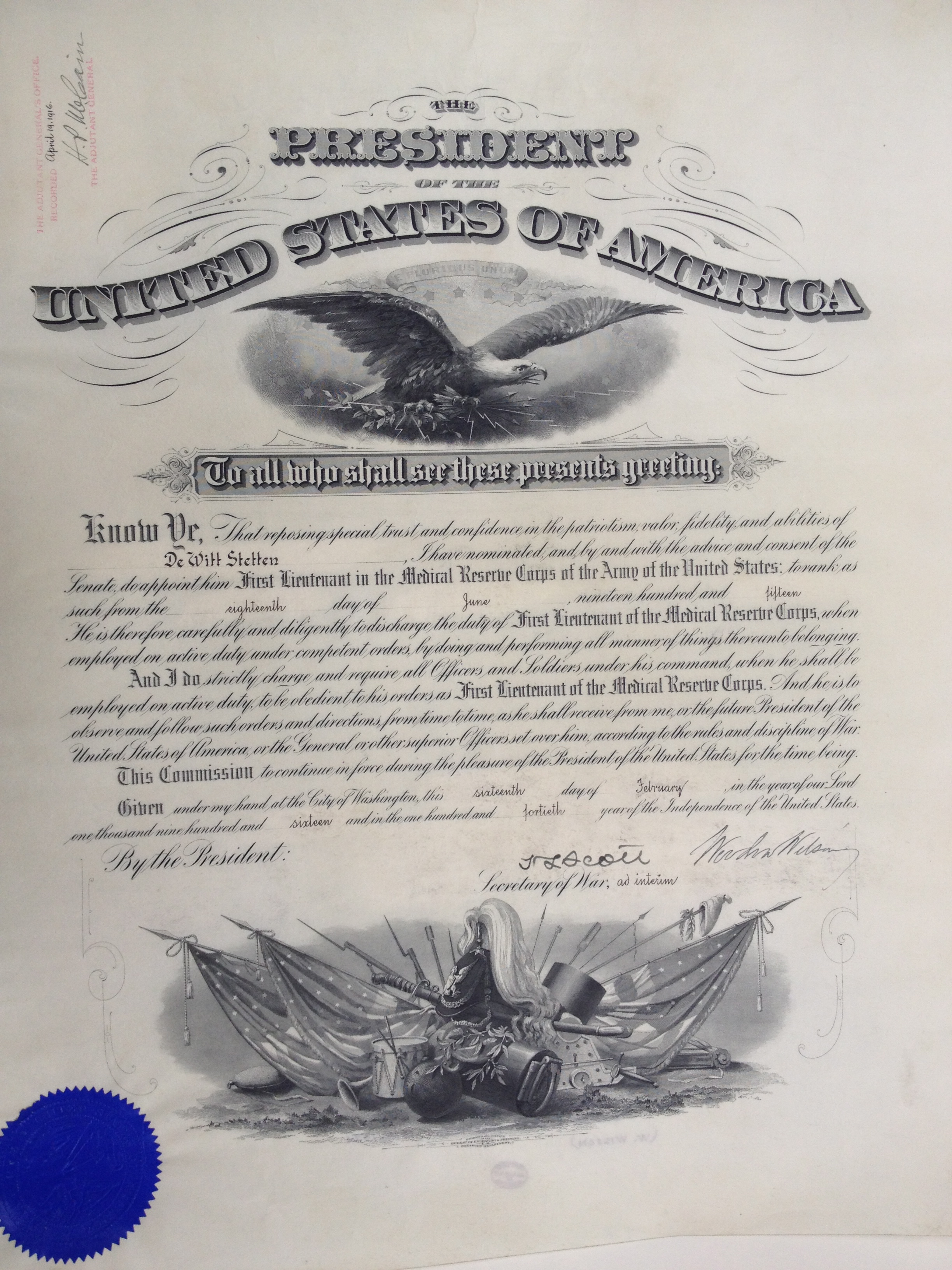
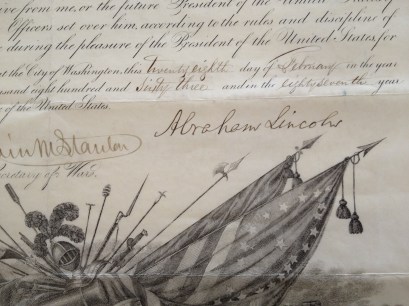
Over the course of this undertaking, some gems emerged—documents significant to the history of the Academy and to the history of medicine. Among these are certificates nominating and appointing military ranks to fellows of the Academy and other doctors serving in wartime. In addition to signatures from the “Secretary of War”, many of these documents boast signatures from various Presidents of the United States. Indeed, while sorting through the collection, we encountered wartime documents—appointments or commendations thanking military doctors for their service—with signatures from Presidents Abraham Lincoln, Andrew Jackson, Andrew Johnson, Herbert Hoover, William Howard Taft, Woodrow Wilson, and Warren G. Harding, to name a few.

Certificate signed by Woodrow Wilson.

Certificate signed by Woodrow Wilson.

Certificate signed by Andrew Johnson.
Certificate signed by Andrew Johnson.

Certificate signed by Abraham Lincoln.

Certificate signed by Abraham Lincoln.

Occasionally found tacked onto the back of certificates and acknowledgments of service were documents indicating the intersection of military service and medical research—for example, a letter from Walter Reed Hospital to a soldier encouraging him to participate in a study on the effect of injections of yellow fever. There are also a significant number of female medical professionals whose successes and contributions to the field of medicine and women’s health are commemorated in the collection. Some of these awards and diplomas are dated as early as the nineteenth century.
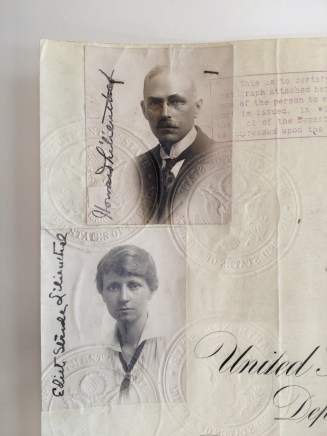
Photographs of Howard and Edith Lilienthal attached to a certificate

Photographs of Howard and Edith Lilienthal attached to a passport.

The diploma collection contains items printed in French, Portuguese, Hungarian, Latin, Hebrew and Arabic that display a variety of design styles.  One particularly beautiful certificate from 1945 was granted by the Société Impériale de Médecine de Constantinople, written in Arabic on thin paper with gold leaf.
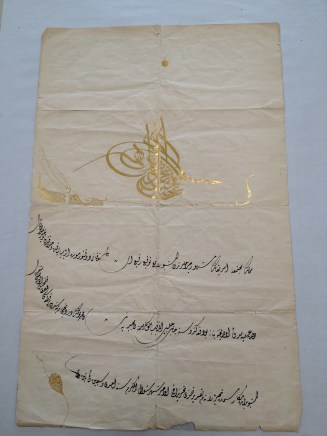
Certificate in Arabic with gold ornament

Certificate in Arabic with gold ornament

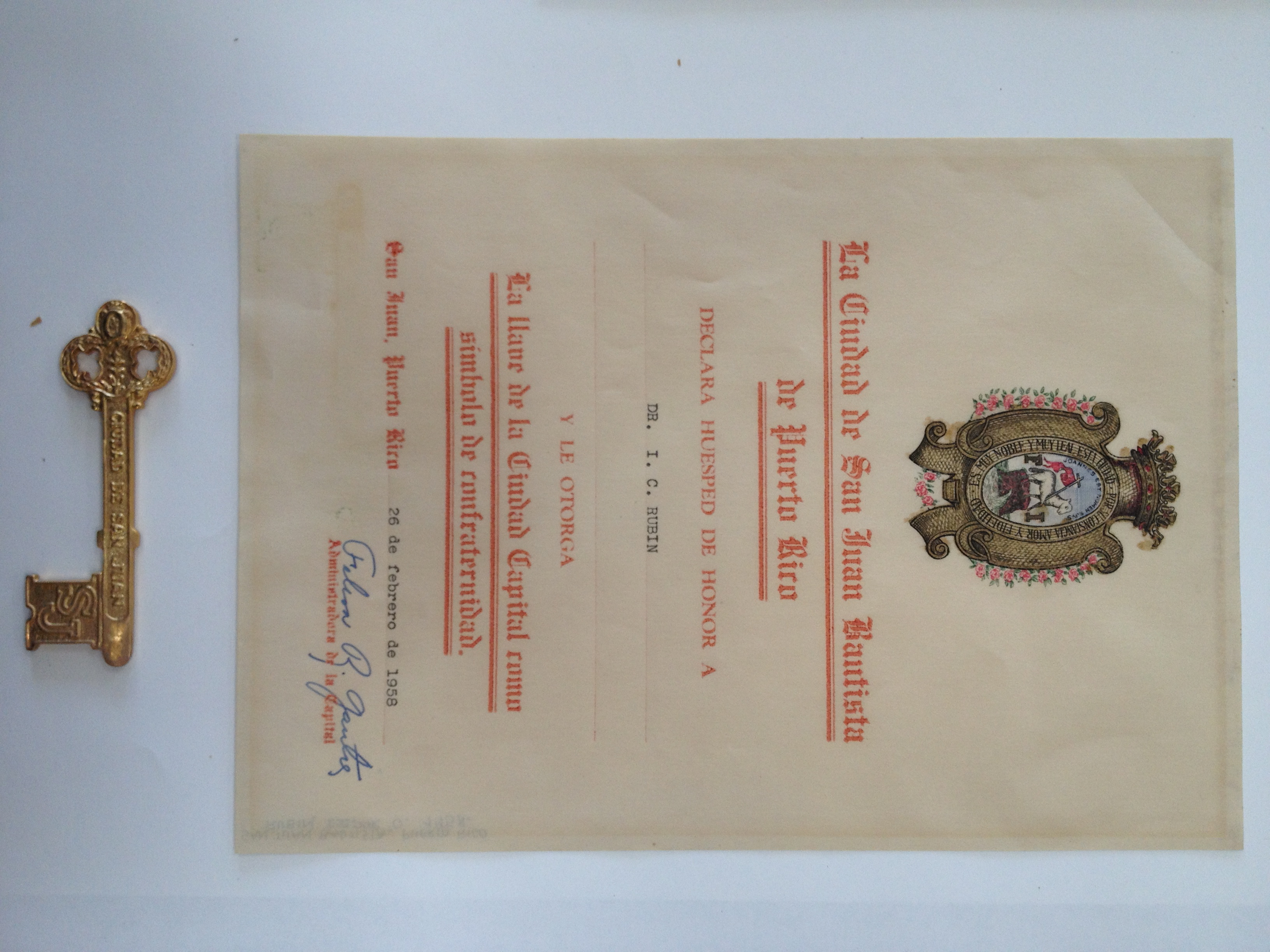
Key to the City of San Juan Batista, granted to Isidor Rubin.

Key to the City of San Juan Batista, granted to Isidor Rubin.

Some more recent certificates are printed in color, with hand-colored borders and modern, stylized type. The diplomas on paper were a special challenge to clean and house, as many of the papers had become brittle or were adhered to acidic backings. This allowed the aspiring conservators interning and volunteering in the lab ample practice with paper repair. Diplomas printed on vellum provided their own challenges, however, as humidity fluctuations over time caused some of the works to curl and stretch, obscuring and fading labels and printed text.
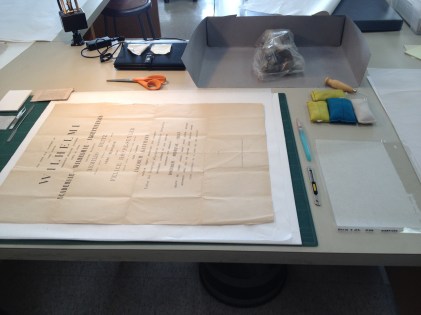
Repairing paper certificates in the conservation lab.

Repairing paper certificates in the conservation lab.

These challenges, in addition to the diverse languages present in the collection, necessitated some additional investigation for the creation of new labels for each item. In the end, though, the lab was able to create a location guide with the identifying information for each sorted, cleaned, and re-housed object, so that the diploma collection will be accessible well into the future.
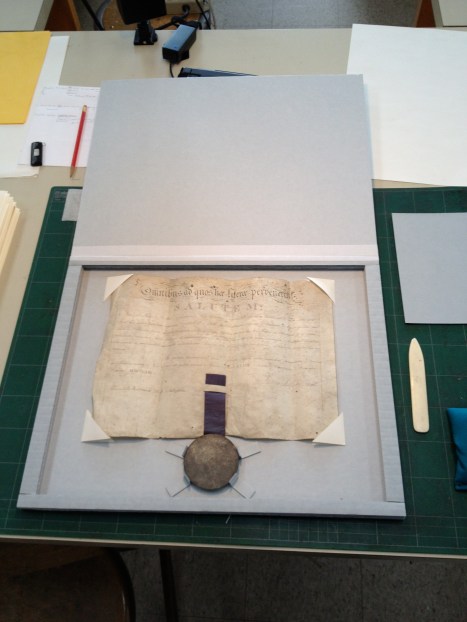
A certificate and seal, re-housed.

A certificate and seal, re-housed.

A Ceroplast at NYAM

In today’s guest post, the artist Sigrid Sarda tells us how historical collections inform her work. Visitors to our Festival of Medical History & the Arts may have seen her moulages in person, and be sure to visit her blog for information on exhibitions and more of her fabulous work.

Earlier this year, I began researching the collections at the Center for the History of Medicine and Public Health. I am an artist/ceroplast, which means wax modeler. The resources I discovered at the Center have been of great inspiration to my work.

Sigrid Sarda, "MRSA," 2013. Wax, Human Hair, Life-size.

Sigrid Sarda, “MRSA,” 2013. Wax, Human Hair, Life-size.

First, let me tell you about myself. For over 30 years I was a painter. Due to the death of my father and the psychological aftermath I experienced, I ceased painting. In its place, the obsession of the wax figure came into being. Since I was completely self-taught and only worked in this medium for a few years, it was necessary to learn more about its technique and history. Having always had a fascination with religious icons, the body (particularly skin), diseases, and later on death, as well as incorporating human remains such as teeth, bone, and hair in my work, I realized I needed a better understanding of the aesthetics and techniques of wax used in creating these life-size figures and medical moulages.

While exhibiting a waxwork in New York City, I met up with Lisa O’Sullivan, director of the Center for the History of Medicine and Public Health at NYAM, and Arlene Shaner, reference librarian and acting curator for historical collections. After discussing the exhibited piece and my ambitions working in wax Dr. O’Sullivan invited me to explore NYAM’s collections. This was an opportunity not to be missed!

Upon arriving at NYAM, I was directed to the 3rd floor of the massive Romanesque building where Arlene welcomed me. Delightful, funny, and knowledgeable, she made me immediately comfortable in the surroundings of the library and excited to view the books housed in the collection. She checked out my waxwork, we geeked out on ceroplasts, and spoke about other artists whose work dealt with death such as Joyce Cutler-Shaw.

On my second visit, filled with anticipation, I found myself greeted by marvelous books and an actual anatomical wax moulage of a diseased infant. After the initial perusal of my work, Arlene knew what was needed for my research: anatomical images and techniques, and had the books waiting for me in the formidable reading room. As a bonus she brought out the works of M. Gautier D’Agoty, the 18th-century French artist and anatomical illustrator. I pored over both heavily illustrated and non-illustrated books for hours, amassing information for future waxworks. There is truly nothing like the feel of a beautiful book in your hands. The library has become quite the addiction, what with the wonderful staff and superb collection!

Below are images from D’Agoty and various books consulted at NYAM, and above is one of my wax moulages.

Congratulations, Captioners!

At our Festival of Medical History and the Arts on October 5, we asked attendees to submit captions for three images from items in our collection. Today, we’re happy to announce the winners of the competition, who will receive high-quality prints of the captioned image. We’ve included original captions with the images, where available, to help show how they appear in context (although the Festival attendees did not get to see them).

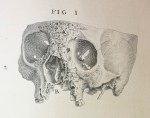
The first image comes from William Cheselden’s Osteographia, or The Anatomy of the Bones, published in London in 1733. Linda Kleinman wrote the winning caption.

“I’ve had enough of your lip!”

I’ve had enough of your lip!

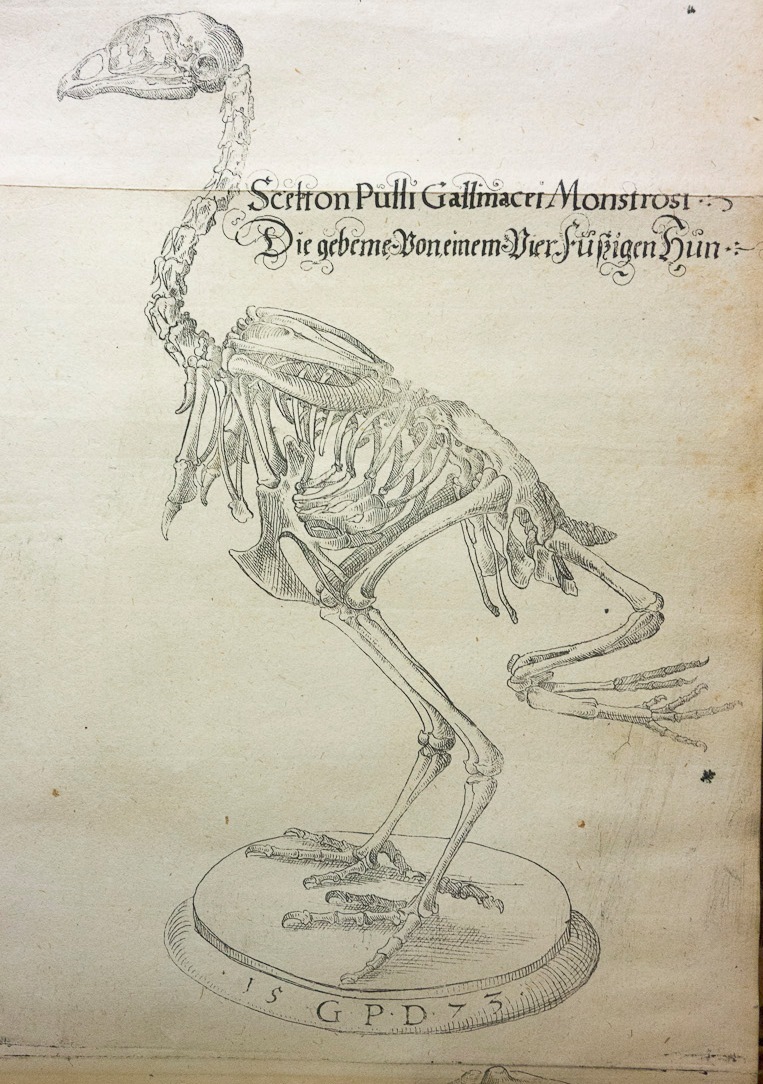
The second image appears in Konrad Gesner’s Historiae Animalium Liber IIII, published in Zurich in 1558. Samuel Luterbacher wrote the winning caption.

“I knew I should have never trusted Dr. Moreau.”

I knew I should have never trusted Dr. Moreau.

The final image, produced by Egbert van Heemskerck II circa 1730, appears in the George Osborne Mitchell Medical Scrapbook. This picture inspired the strongest pool of captions. But Iana Dikidjieva’s caption stood out from the pack.

“It appears to have been curiosity.”

“It appears to have been curiosity.”

Congratulations to the winners!

Winsome Fetal Skeletons Bearing Scythes: Monro’s Traité d’ostéologie of 1759: Guest post by Morbid Anatomy

A note from the Center for the History of Medicine & Public Health: This is the last post in Morbid Anatomy‘s guest series leading up to our Festival of Medical History and the Arts. If you’ve enjoyed these posts as much as we have, don’t despair! Tomorrow’s event holds a full day of lectures and activities from Morbid Anatomy, Lawrence Weschler, and the Center. We hope you can make it! See the full schedule here.

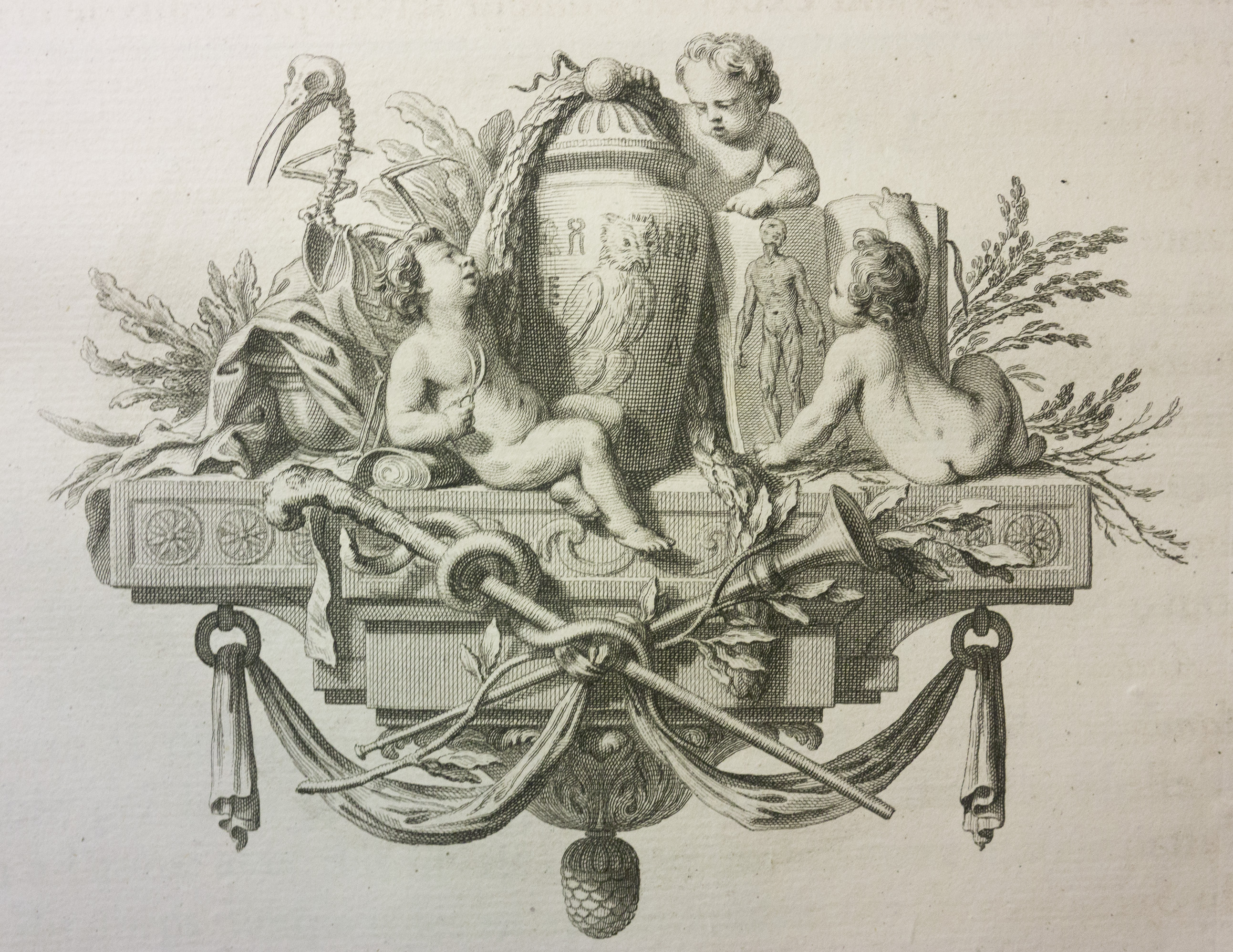
FrontispieceThe NYAM rare book collection holds a gorgeous copy of the first French edition of Alexander Monro’s (1697–1767) celebrated Traité d’ostéologie (or “Anatomy of Bones”). Monro was trained in London, Paris, and Leiden before going on to become the first professor of anatomy at the newly established University of Edinburgh. It was under his leadership, and that of his successors, that the school went on to become a renowned center of medical learning.

Monro originally published this book without images, thinking them unnecessary after William Cheselden’s lavishly heavily-illustrated Osteographia, or the anatomy of the bones of 1733 (more on that book at this recent post). The very fine copperplates you see here were added to the French edition by its translator, the anatomist Jean-Joseph Sue (1710–1792).

My favorite image in the book is a kind of memento mori–themed tableau morte of winsome, scythe-bearing fetal skeletons enigmatically arranged in a funereal landscape (images 1–3). I also love the frontispiece in which a group of plump putti proffer anatomical atlases and dissecting tools under the oversight of a skeletal bird (above).

This post was written by Joanna Ebenstein of the Morbid Anatomy blog, library and event series; click here to find out more. All images are my own, photographed at the New York Academy of Medicine.

A Renaissance Man at Work: Volcher Coiter’s “Externarum et internarum principalium humani corporis” of 1573: Guest post by Morbid Anatomy

Coiter2


Coiter10

One under-seen and fascinating book to be found in the NYAM rare book collection is Externarum et internarum principalium humani corporis partium tabulae published by Dutch Renaissance man Volcher Coiter (1534–1576) in 1573. Not only was Coiter renowned as an anatomist, surgeon, and physician accomplished in the fields of physiology, ornithology, and embryology; not only did he establish the study of comparative osteology and describe cerebrospinal meningitis before any of his peers; he was also an artist, and signed many of the finely drawn copper engravings in his books, including those you see here.


All images are my own, photographed at the New York Academy of Medicine, save the painted portrait of Coiter, which was sourced here. The caption, attributed to Dorothy M. Schullian, reads: “Coiter’s portrait (1575) in oils, attributed to Nicolas Neufchatel and representing him demonstrating the muscles of the arm, with the écorché he had constructed on his left and a shelf of medical classics behind him, is preserved in the Germanisches Nationalmuseum, at Nuremberg; there are later portraits at Weimar and Amsterdam.” (source for caption here)

Sources: Lessico Volcher CoiterWikipedia

This post was written by Joanna Ebenstein of the Morbid Anatomy blog, library and event series; click here to find out more.

Remmelin’s Dissectible Cosmic Anatomical Extravaganza: Guest post by Morbid Anatomy

Johan Remmelin (1583–1632) was town physician of Ulm and Plague physician of Augsberg. He was also the man behind both the concept and the original drawings (engraved by Lucas Kilian) for the ingenious moving-parts anatomical extravaganza Catoptrum microcosmicum, published in 1619, with numerous editions in many languages thereafter.  NYAM has both the 1619 and a 1639 edition in its rare book collection

title

This astounding book—in which flaps of paper can be drawn back to virtually dissect the human body—features a heady blend of the anatomical, the theological, and the metaphysical, beautifully expressing the worldview of Natural Philosophy, that precursor to science, which oversaw investigations into the human body in the early modern era. In this worldview, God and man, metaphor and the encountered world, were indivisible; the human being was the microcosm of all creation, so to understand the secrets of the human body would be to know the mind of God. Accordingly, as explained by Martin Kemp and Marina Wallace in their book Spectacular Bodies:

The purpose of anatomical images during the period from the Renaissance to the nineteenth century had as much to do with what we would call aesthetic and theological understanding as with the narrower intentions of medical illustration as now understood. . . .They were not simply instructional diagrams for the doctor technician, but statements about the nature of human beings as made by God in the context of the created world as a whole [as well as] the nature of life and death. . . .

It should not be surprising, then, that the dissectible humans herein are inextricably entwined with images of Jesus Christ (image 9,17); memento mori mottos (16) and imagery (images 12, 17); allusions to God and the angels (image 1); and even the head of the devil, serving as a kind of fig leaf covering the female sex organs in one instance (image 2). There are also numerous biblical references, including a serpent slithering through a human skull holding a branch from the tree of knowledge in its mouth (image 13), lest we forget that original sin introduced death and disease into our world in the first place; without it, we would still be luxuriating in Eden with no need for medicine, or, by extension, books such as this one. The book also contains the occasional inadvertent (?) eroticism, as the peeling back of obscuring layers brings you, in a sort of pre-modern striptease, to the unveiled sexual organs below (image 14 and 15).

If you page through all of the images below, you will get a sense of the carnivalesque exuberance and dynamism of this book; you can also virtually dissect them yourself by clicking here, or here, compliments of The Hardin Library of The University of Iowa, which was also a source for much of the factual content of this piece.

This post was written by Joanna Ebenstein of the Morbid Anatomy blog, library and event series; click here to find out more. All images are my own, photographed at the New York Academy of Medicine.

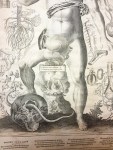
William Cowper’s Myotomia reformata: or an anatomical treatise on the muscles of the human body, Guest Post by Morbid Anatomy

Cowper01

William Cowper (c. 1666–1709) was a British surgeon and anatomist best known today for describing “Cowper’s Gland,” part of the genito-urinary system. He has also been described by at least one scholar as “the first of the surgeon-scientists of Great Britain… the first to bring the power of the experimental method to bear on practical surgical problems… [anticipating] the celebrated Hunterian school of surgery by more than half a century.” (In the last half of the 18th century, famous London surgeon John Hunter made his reputation in part by advocating for the scientific method in medicine.)

Cowper02

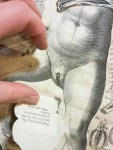
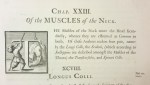
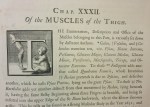
Cowper’s book Myotomia reformata: or an anatomical treatise on the muscles of the human body, first published in 1694 (NYAM’s copy is from 1724), is filled with grimly literal anatomical and dissection-themed initial capital letters, and charming, if somewhat rough, illustrations.

This post was written by Joanna Ebenstein of the Morbid Anatomy blog, library and event series; click here to find out more.

William Cheselden’s Memento Mori and Skeletons at Prayer: Guest Post by Morbid Anatomy

Cheselden 1

Cheselden 1

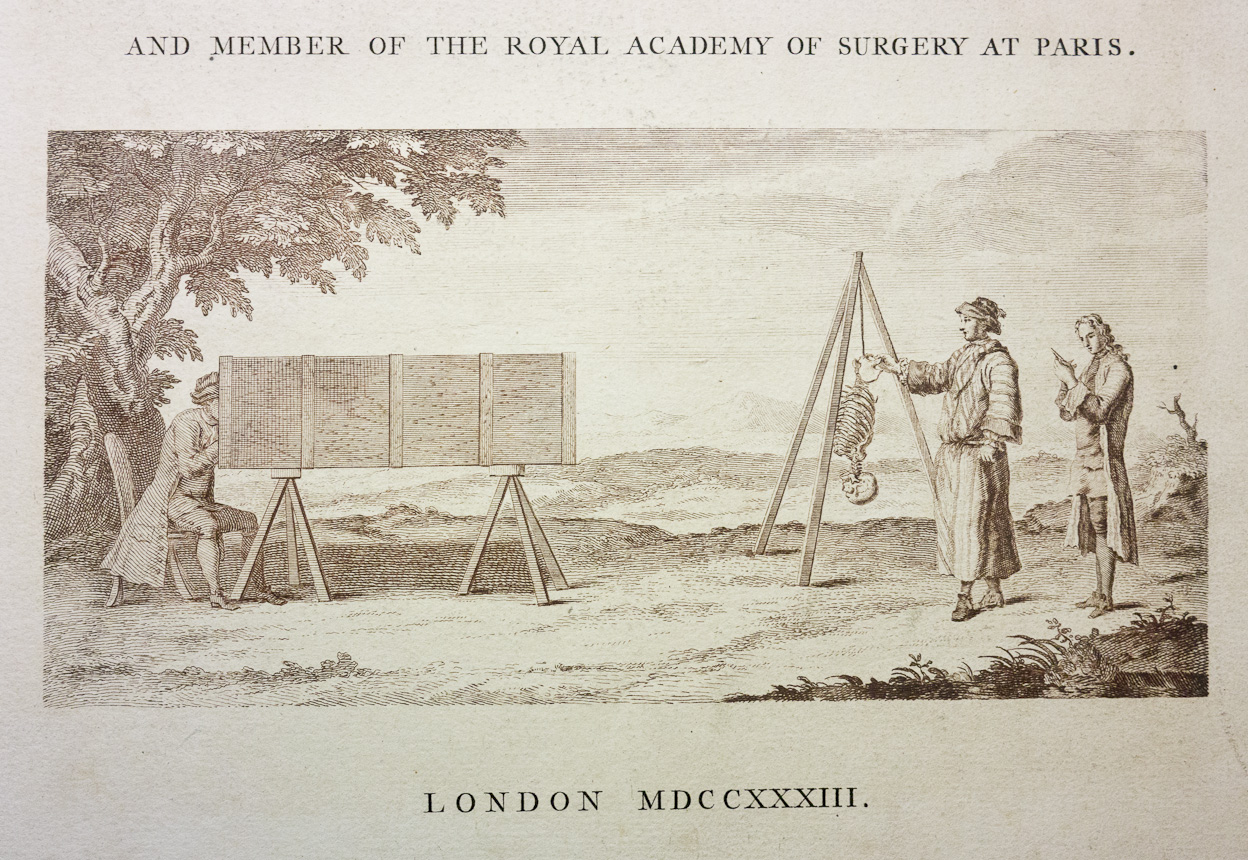
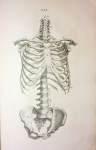
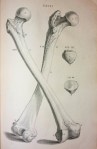
William Cheselden (1688–1752) is remembered today as one of the greatest English surgeons; he was surgeon to Queen Caroline, wife of King George II, to whom he dedicated the wonderful, epically scaled book Osteographia, or the anatomy of the bones  (1733), which is described by the NYAM Library as “one of the finest of English works containing anatomic illustrations.” The copperplate images were done by Cheselden and his engravers, Gerard van der Gucht and Mr. Shinevoet, with the use of the camera obscura—a pre-photographic drawing aid; this is delightfully alluded to in this wonderful image featured on the title page (images 1 & 2) .

Cheselden 2

Cheselden 2

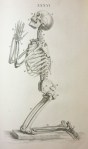
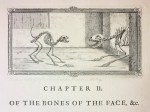
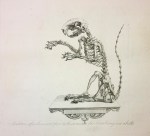
The book is best known for its large scale and exquisite renderings of skeletons brandishing bones (image 3); leaning on skulls (image 4); with “the same proportions with the venus de Medicis” (image 5); “in the same proportions and attitude with the Belvidere Apollo” (image 6); or, most famously of all, “the side view of the skeleton of a very robust man” at prayer (image 7).

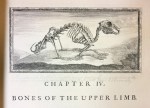
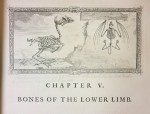
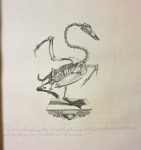
Less seen—yet equally delightful—are the wonderfully imaginative anatomically-themed initial capital letters (8-12); the playful chapter openers (13-19); the memento-mori themed end piece (30); and delicately exquisite animal skeletons (20-22) which fill the book. Despite—or perhaps because of—these luxurious touches, this large-scale atlas was a financial failure.

This post was written by Joanna Ebenstein of the Morbid Anatomy blog, library and event series; click here to find out more.

Jacques Gamelin’s Marauding Skeletons and Écorché Crucifixions: Guest Post by Morbid Anatomy

Gamelin 1

Gamelin 1

I was so excited to finally have the opportunity to pore over a book in the NYAM collection which I had long admired from afar: Jacques Gamelin‘s beautiful and lavish Nouveau recueil d’osteologie et de myologie (“New collection of osteology and mycology”) of 1779. This book, as explained to me by Arlene Shaner—acting curator and reference librarian for historical collections, at NYAM—was intended as a large scale, deluxe manual for artists interested in understanding human anatomy in order to create more convincing depictions of human figures.

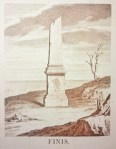
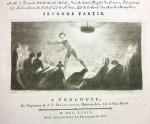
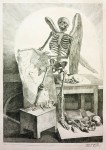
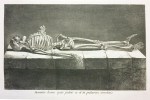
The meat of the book, as it were, is a collection of extremely virtuosic anatomical renderings (12-15) showing skinned—or écorché—human figures in a variety of poses. But what is much more interesting—at least to me—is the assortment of animated skeletons which fill the opening pages; these fanciful figures are engaging in such activities as waking up in a cemetery to the trumpet of the resurrection (text reading: surgite mortui venite ad judicium, or “Rise up, come to the judgment of the dead”; image 6); brandishing anatomical drawings in what looks to be a dissection room littered with bones (3); and raping and pillaging the parties of fashionably bewigged lords and ladies (9, 10). I am also very drawn images playing on biblical themes, such as a calm Saint Bartholomew being flayed alive (an old staple of anatomical illustration; image 11), and a skinned and anatomized Christ on the cross (12) which evokes this more literal rendition, cast from a convicted murderer just a few decades after this book was published.

Interestingly, Gamelin is best remembered today not for this book, but as a painter and engraver of battle scenes, genre scenes, and portraits. He dedicated this book to his mentor, a certain Baron de Puymaurin (image 1 and 2), who had recognized Gamelin’s artistic abilities and funded his training when his father refused to do so. It is thought that Gamelin funded the book himself after inheriting a great deal of money upon his father’s death, which perhaps accounts for its delightful eccentricity.
This post was written by Joanna Ebenstein of the Morbid Anatomy blog, library and event series; click here to find out more.