Happy Bird-day, Conrad Gesner (Item of the Month)

By Rebecca Pou, Archivist

Gesner_historiae_v3_1585_395-bMarch 26 marks the birthday of the man behind one of my favorite books in our collection.

Conrad Gesner was born in Zurich in 1516. His family was not wealthy, but thanks to various benefactors he was able to study and travel to Straussburg, Paris, Basel, and elsewhere. He became knowledgeable in many topics, including linguistics, botany, and zoology. He also received a medical degree and was a practicing physician.

His most famous work, Historia Animalium, is a well-illustrated, enormous encyclopedia on animals. The work was influential not only due to the quality and quantity of the woodcuts, but also because of its descriptions. Gesner relied heavily on existing works about animals, but he also included his own observations and enlisted many contributors who provided descriptions and specimens.1,2

Five volumes were published in total, the first in 1551 and the last, posthumously, in 1587. The first volume was on quadrupeds that gave birth to live young, the second on quadrupeds that laid eggs, the third on birds, the fourth on fish and aquatic animals, and the last on serpents. Since it is Gesner’s bird-day (get it?), we’re celebrating with some of his flying friends from Liber III of the Historia Animalium. In our copy, a 1585 edition, the woodcuts are hand-colored and many of the birds’ French names were added in by an early reader.

Click on an image to view the gallery:

References

1. Locy, William A. The growth of biology. New York: Henry Holt and Company, 1925.

2. Locy, William A. Biology and its makers. New York: Henry Holt and Company, 1915.

Recipes for Cooking by Electricity (Item of the Month)

By Johanna Goldberg, Information Services Librarian

In 2015, our programming will focus on food, including a day-long festival on October 17. This is part of a series of blogs featuring the theme.

It’s difficult to imagine a modern kitchen without electric appliances. But in the early 1900s, most people had to be persuaded to use them—often unsuccessfully.

As Doreen Yarwood explains in An Encyclopaedia of the History of Technology, electric cookers made their debuts in the 1890s and catalogs started selling them by 1900. Still, people found them difficult to use. They were unreliable and often burnt out, they weren’t aesthetically pleasing, they were difficult to clean, and it was easy to burn yourself while using them. As so few people had electric current in their homes at the turn of the century, it’s not surprising that it took three more decades for electric cooking to become commonplace.1

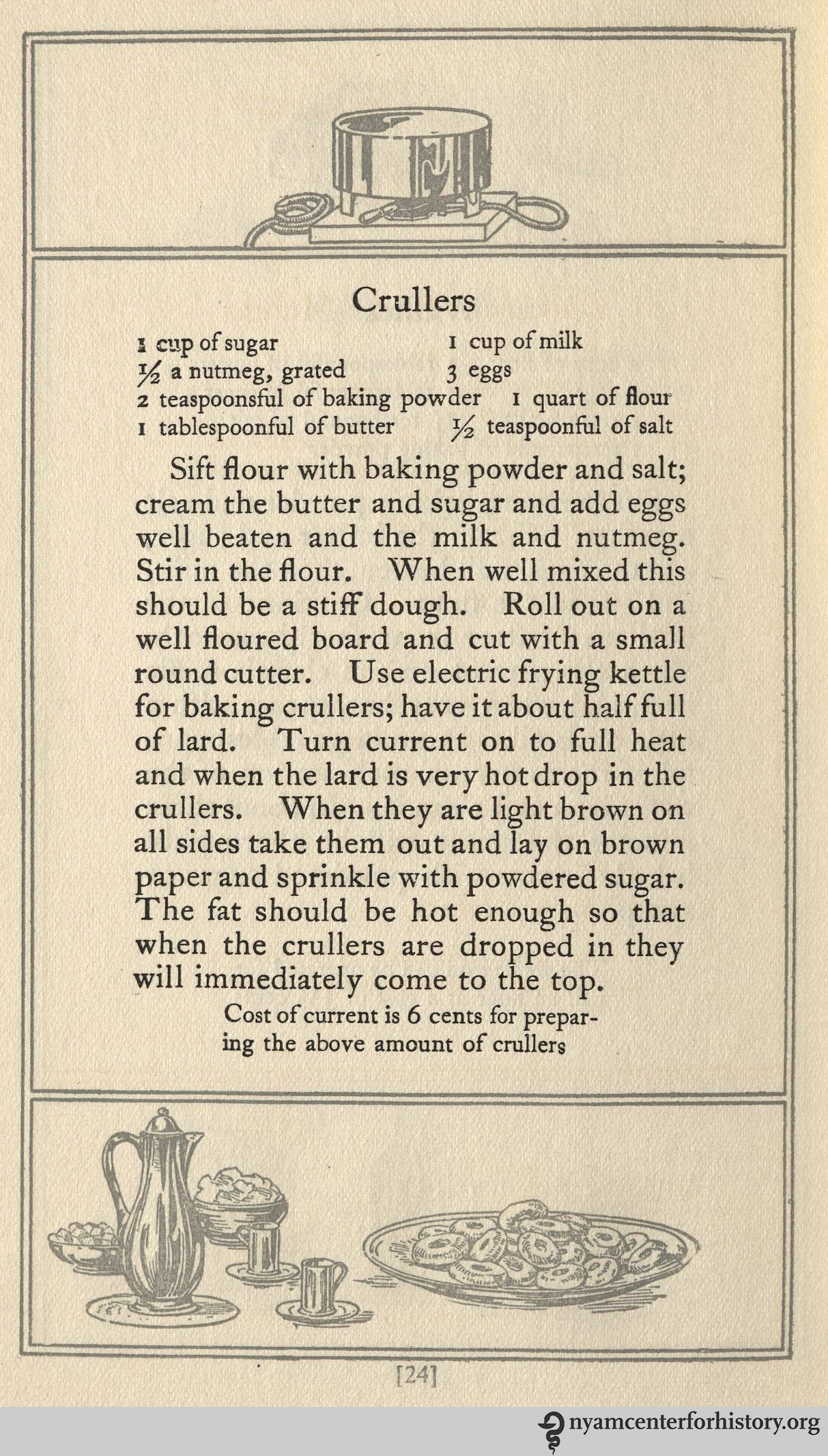
But the New York Edison Company saw an opportunity. In 1911, it published Recipes for Cooking by Electricity, a slim cookbook that not only gave recipes (ranging in cost and complexity from toast to lobster a la Newburg), but also specified the cost of the electric current used. The cookbook also included a page with tips for the care of the electric appliances, such as not immersing the heating elements in water, cleaning a warm stove top with Vaseline, and keeping a coffee percolator “sweet and clean” by rinsing it with cold water after each use and boiling water with a tablespoon of baking soda in it each week. The cookbook concludes, “It is a simple thing to cook with electricity and the cost is surprisingly small.”2

Here are some sample recipes:

Toaster_watermarkLobster_watermarkBoiledEggs_watermarkCrullers_watermarkReferences

1. Yarwood, D. (2002). The Domestic Interior: Technology and the Home. In I. McNeil (Ed.), An Encyclopaedia of the History of Technology. London: Routledge.

2. New York Edison Company. (1911). Recipes for cooking by electricity. New York: Edison Company.

A Finer Sight Can Scarcely Be Imagined: Curtis’ Botanical Magazine (Item of the Month)

By Rebecca Pou, Archivist

It’s been a cold and snowy January, and with almost two months of winter still to come I’m drawn to the botanical selections in our collection. My choice for item of the month is a periodical, the Botanical Magazine (most commonly known by its later title, Curtis’ Botanical Magazine).

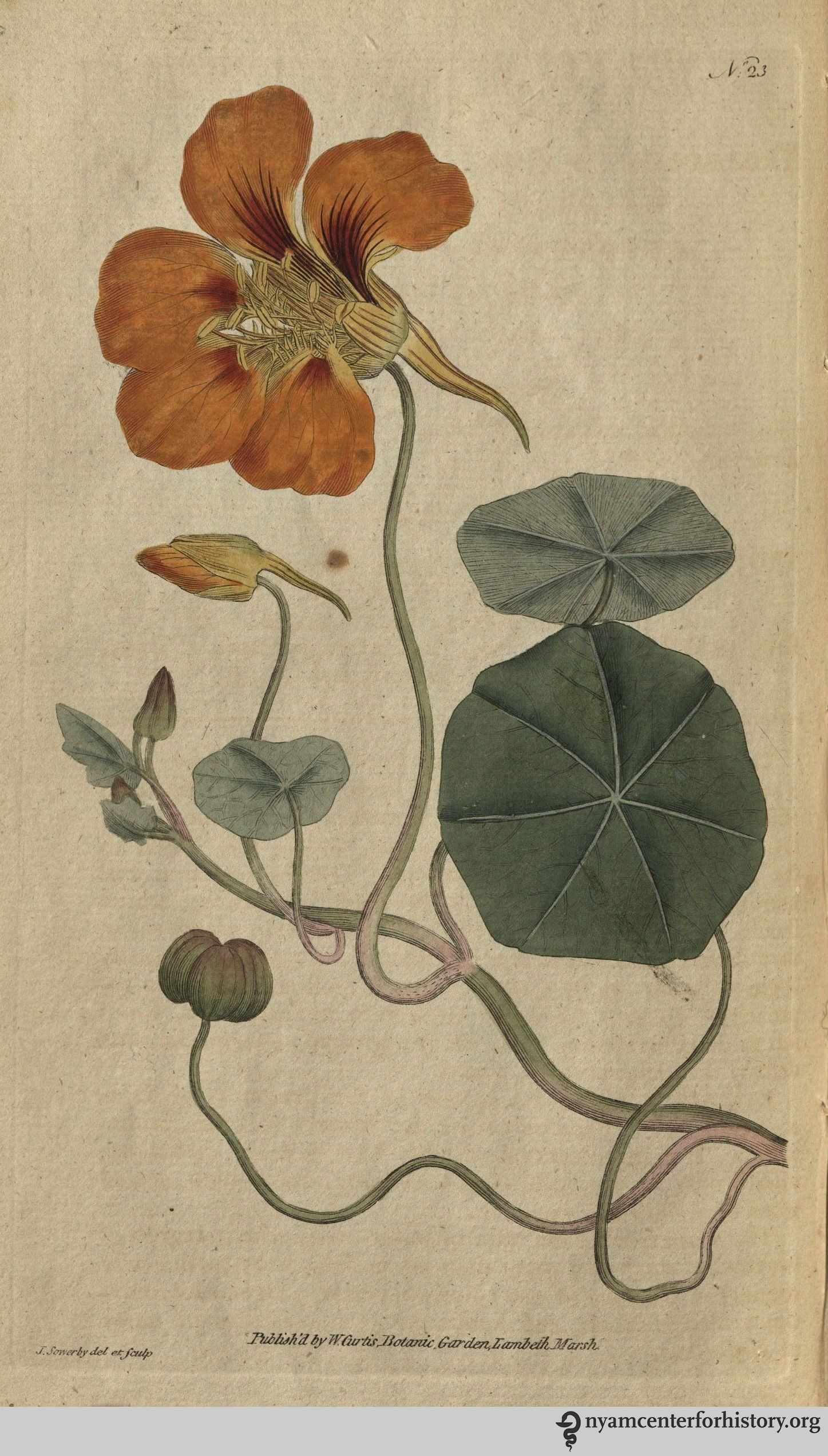
“Elizabeth Christina, one of the daughters of Linnaeus, is said to have perceived the flowers to emit spontaneously, at certain intervals, sparks like those of electricity, visible only in the dusk of the evening, and which ceased when total darkness came on.” (Plate 23, volume 1 reissue, 1793)

“Elizabeth Christina, one of the daughters of Linnaeus, is said to have perceived the flowers to emit spontaneously, at certain intervals, sparks like those of electricity, visible only in the dusk of the evening, and which ceased when total darkness came on.” (Nasturtium, plate 23, volume 1, 1793.) Click to enlarge.

In addition to being a very beautiful publication, the Botanical Magazine is notable for being the longest running botanical periodical featuring color illustrations of plants.1 The first issue of the magazine was published in 1787 by William Curtis (1746-1799) and today it is published by Kew Gardens.1,2 Curtis, an apothecary turned botanist, was the botanic demonstrator to the Society of Apothecaries at Chelsea in the 1770s.2,3 He also gave public lectures and maintained a botanic garden in London.2 Before the Botanical Magazine, Curtis began publishing the Flora Londenensis, a grand, folio-size work documenting local plant life. This proved too costly and Curtis gave up the venture in 1787.2,3

The Botanical Magazine; or, flower-garden displayed : in which the most ornamental foreign plants, cultivated in the open ground, the green-house, and the stove, will be accurately represented in their natural colours was smaller and more affordable than the Flora Londenensis; Curtis created it in response to demand for a publication concerning foreign plants.2,3 Most of the plants represented in the early volumes are from Europe, Eastern North America, and the Cape of Good Hope.   According to Hemsley, author of A new and complete index to the Botanical magazine, “Scarcely any very striking or noteworthy subjects appeared, and new species . . . were exceedingly rare,” but this did not hinder the magazine’s sales. The work was quickly a success, selling 3,000 copies a month. Volumes 1-6 were later reissued, presumably due to their popularity (some of our volumes are reprints).2

Each monthly issue contained three hand-colored plates accompanied by descriptive text.2 An exception, Strelitzia, had a fold-out plate and more in-depth description. As you will see below, variation in format was not something Curtis took lightly. The majority of the early illustrations were drawn by Sydenham Edwards.2,3 While the plates are the highlight of the magazine, Curtis’ enthusiasm for the plants is also engaging, and so each image is accompanied by a quote from the plant’s description.

Click on an image to view the gallery of plates. Enjoy, and stay warm!

References

1. Kew Royal Botanical Gardens. Curtis’s Botanical Magazine. Available at: http://www.kew.org/science-conservation/research-data/publications/curtis-botanical-magazine. Accessed January 23, 2015.

2. Hemsley, W. Botting. A new and complete index to the Botanical magazine. London: Lovell Reeve, 1906. Available at: https://books.google.com/books?id=OlhNAAAAYAAJ&pg=PR3#v=onepage&q&f=false. Accessed January 23, 2015.

3. Curtis Museum Alton. William Curtis the Botanist. Available at: http://www3.hants.gov.uk/curtis-museum/alton-history/william-curtis.htm. Accessed January 23, 2015.

“Good Cakes Like Us Are Baked With Care and Royal Baking Powder!” (Item of the Month)

By Arlene Shaner, Reference Librarian for Historical Collections

Some of the most engaging materials in the cookery collection of the New York Academy of Medicine’s Library are late 19th and early 20th century advertising pamphlets. Small books of recipes, histories of coffee, tea, spices, and other foods, and brochures touting the health benefits of one product or another offer a window into the changing tastes of the American public, new innovations in the mass production of foods, and the development of mass market advertising. A number of these pamphlets came to us as part of NYAM Fellow Margaret Barclay Wilson’s collection of books on food and cookery, donated to the library in 1929.

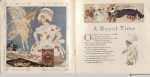
RoyalBakingPowderCo_TheLittleGingerbreadMan_1923_cover_watermarkOne charming example is The Little Gingerbread Man, published in 1923 by the Royal Baking Powder Company, located at 108 East 42nd Street in New York. Written in rhyme, the pamphlet tells the story of the land of Jalapomp, where baking has been declared illegal because of the ineptitude of the cook. Poor Princess Posy, whose birthday is approaching, worries that she won’t have a cake. Alerted to the sad state of affairs by a little Flour Fairy, the Queen of Flour Folk sends Johnny Gingerbread and his friends off in a chocolate plane to save the day. Toting a tin of Royal Baking Powder and a copy of the New Royal Cook Book for the cook, the fragrant baked treats convince the king that baking powder and new recipes will set things right before they head back home to Cookery Land.

A tin of Royal Baking Powder features prominently in most of the pamphlet’s illustrations, and the cookbook appears as well. You, too, can try your hand at making some of the Royal treats, as almost every page also contains a recipe for baked goods, including one for gingerbread men. Readers of the pamphlet (or their mothers, since the book itself was clearly meant for children) could obtain free copies of the New Royal Cook Book by writing to the company as instructed on the final page of the story.

Although she is uncredited, the author of the pamphlet was probably Ruth Plumly Thompson, who wrote more than 20 volumes of the Oz series, a continuation the stories told in L. Frank Baum’s The Wonderful Wizard of Oz and its many sequels. The illustrations are attributed to Charles J. Coll.

Click the images to read the full pamphlet:

The Bookplates of Medical Men (Item of the Month)

By Erin Albritton, Head of Conservation, Gladys Brooks Book & Paper Conservation Laboratory

Book owners have forever endeavored to find ways to identify volumes as their own. With the invention of the printing press, however, books became more plentiful and an owner’s need to identify his or her own copy even more pressing. The earliest examples of printed bookplates (also known as ex-libris) come from Germany and date to the 15th century, just as printing began to take off in Europe. Over the following centuries, the use of bookplates became widespread throughout Europe and eventually followed colonists to America.1

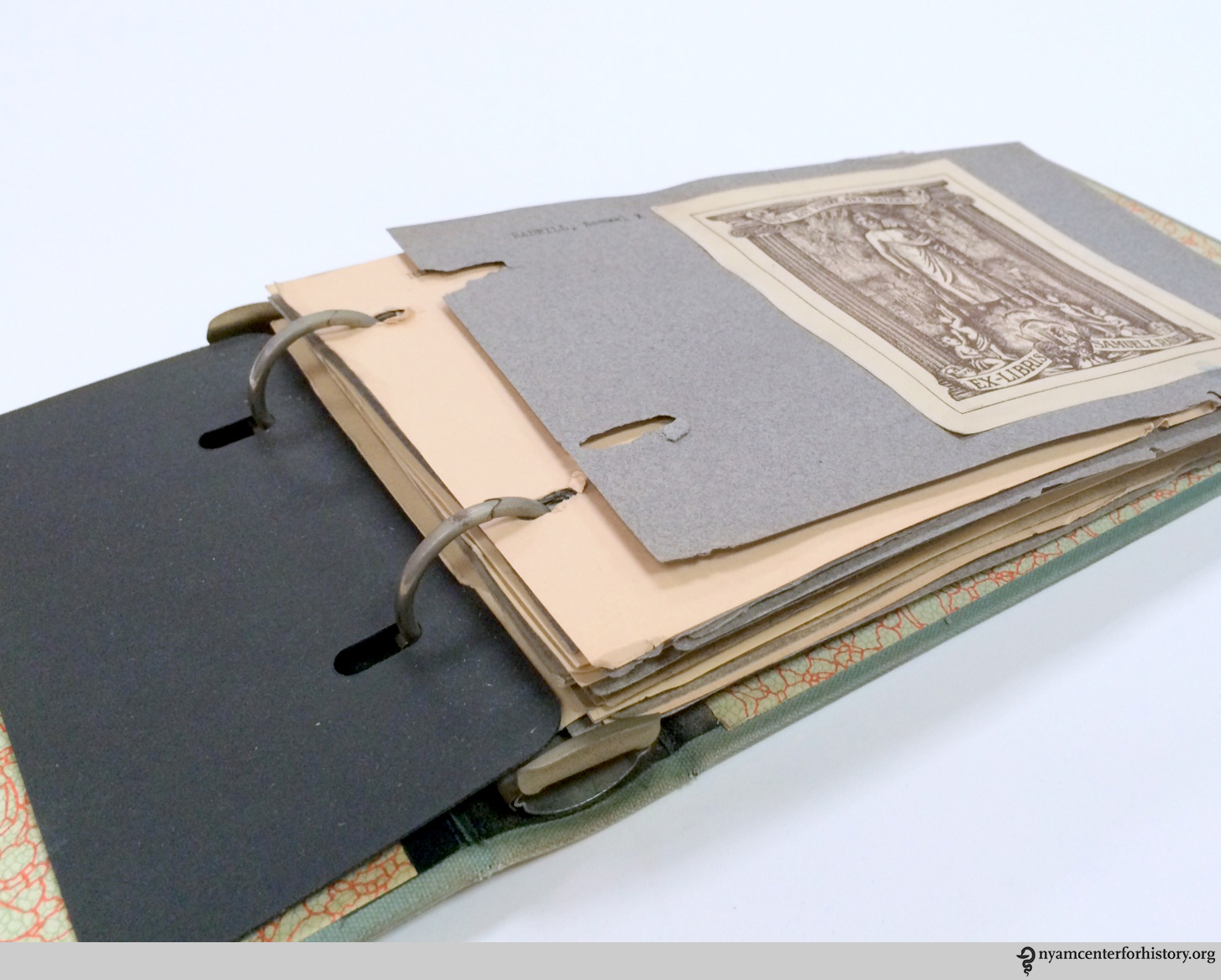
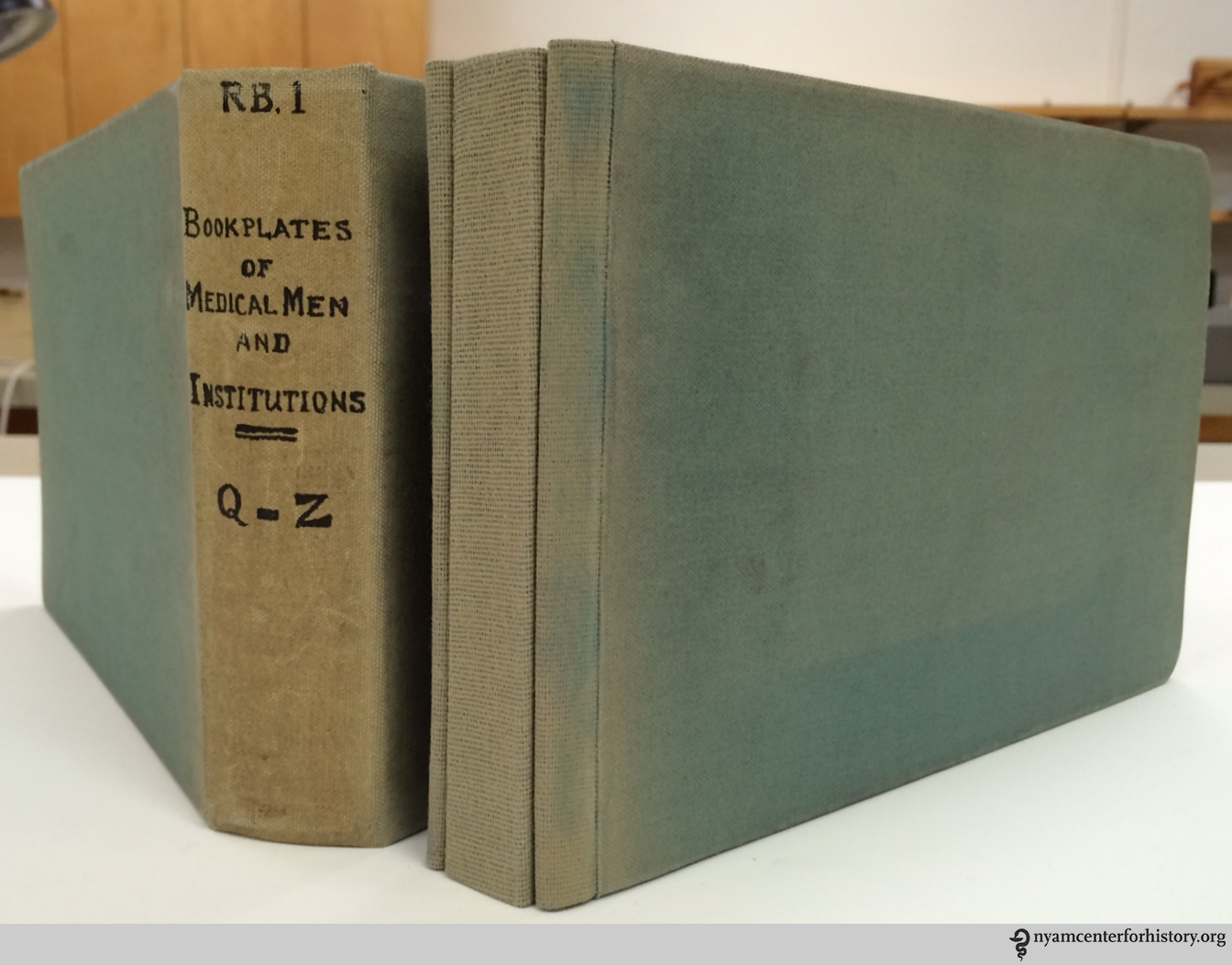
In the summer of 2014, conservators in the Gladys Brooks Book & Paper Conservation Laboratory began treating three scrapbooks containing 184 bookplates.2 Frank Place, Jr., NYAM’s reference librarian from 1905 to 1945, collected them and donated the books to the library sometime in the mid-20th century. In compiling his collection, Mr. Place mounted the bookplates onto recycled paper pamphlet covers (measuring approximately 5.25” x 8”) and stored them alphabetically in two-ring binders,3 which were actively damaging the plates’ fragile paper supports and making it difficult to use the collection.

Binder showing ring mechanism and resulting damage to paper supports.

Binder showing ring mechanism and resulting damage to paper supports.

Example of pamphlet cover Mr. Place reused as a support for his bookplates.

Example of pamphlet cover Mr. Place reused as a support for his bookplates.

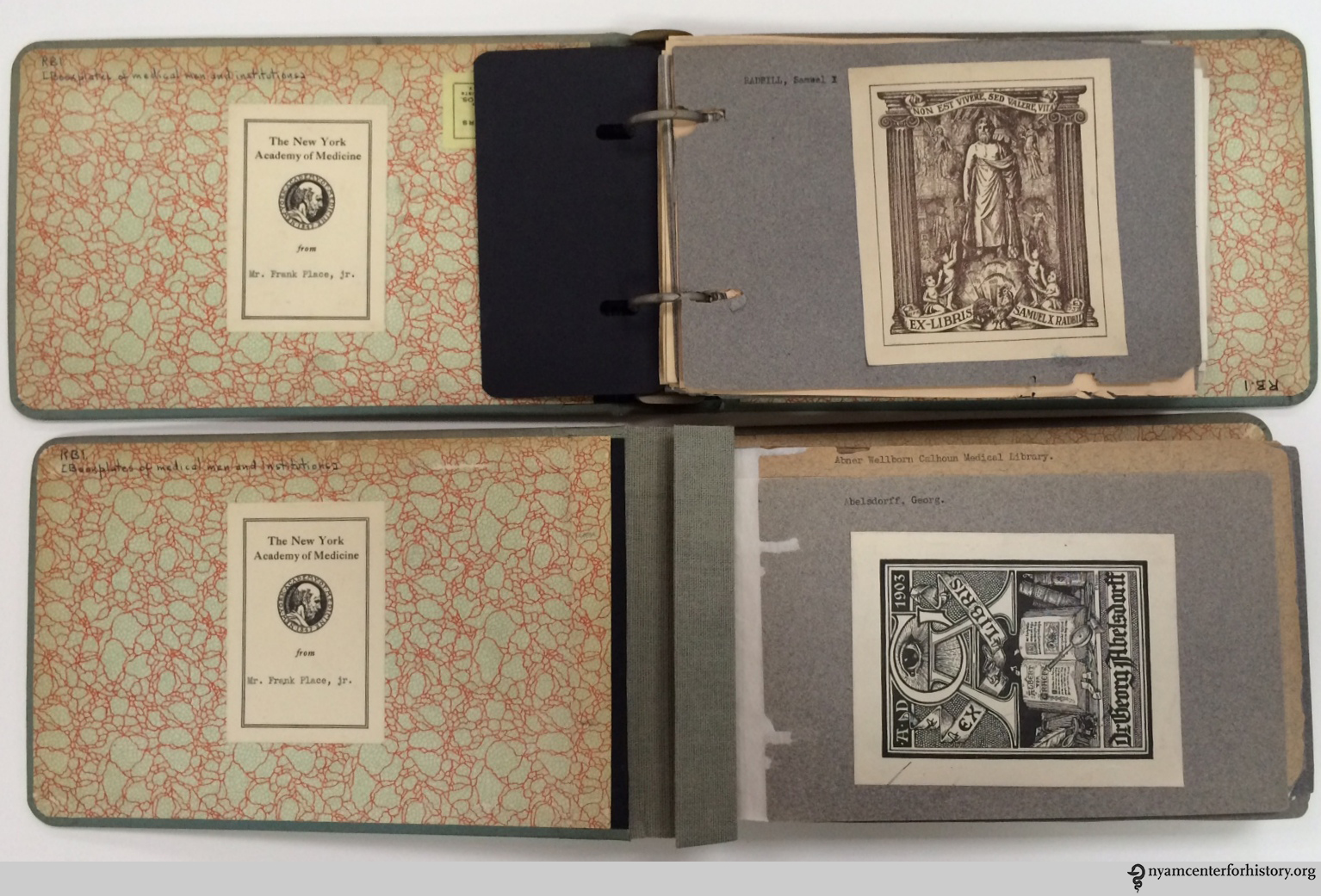
To remedy these issues and minimize the risk of future damage, conservators modified the binders while retaining as much of the original binding structure as possible, replacing the ring mechanisms with fixed posts and hinging the paper supports onto stubs.

Top: Volume 3, before treatment, in its original ring binder. Bottom: Volume 1, after treatment, in a modified post binding with hinged plates.

Top: Volume 3, before treatment, in its original ring binder. Bottom: Volume 1, after treatment, in a modified post binding with hinged plates.

Before and after binder modification.

Before and after binder modification.

Because the original binder spine pieces were too big for the modified structures, conservators encapsulated the pieces in Mylar and affixed them to protective four-flap enclosures.

Mylar-spine wrappers with encapsulated original spine pieces.

Mylar-spine wrappers with encapsulated original spine pieces.

Mr. Place’s charming collection in NYAM’s library offers a window into what some scholars have referred to as the “golden age of bookplate enthusiasm,”4 which spanned from the end of the 19th century through the first decades of the 20th century. During this time, societies for the collection and exchange of ex-libris sprang up across Europe and the United States. Collectors prized plates for their aesthetic value as miniature pieces of art and often acquired them, not for use in identifying their books, but for the sole purpose of organizing, exhibiting, and exchanging them with others. Many collectors limited their acquisitions to bookplates representing a particular theme and, here, it is no surprise that Mr. Place specialized in the plates of medical practitioners and institutions. Correspondence (included in the scrapbooks) between Mr. Place and other collectors (specifically H. M. Barlow, secretary at the Royal College of Physicians, and Dr. Henry de Forest, a prominent New York physician5) indicates that he was not only interested in growing NYAM’s collection but, in the spirit of the times, was also an active contributor to the collections of others.

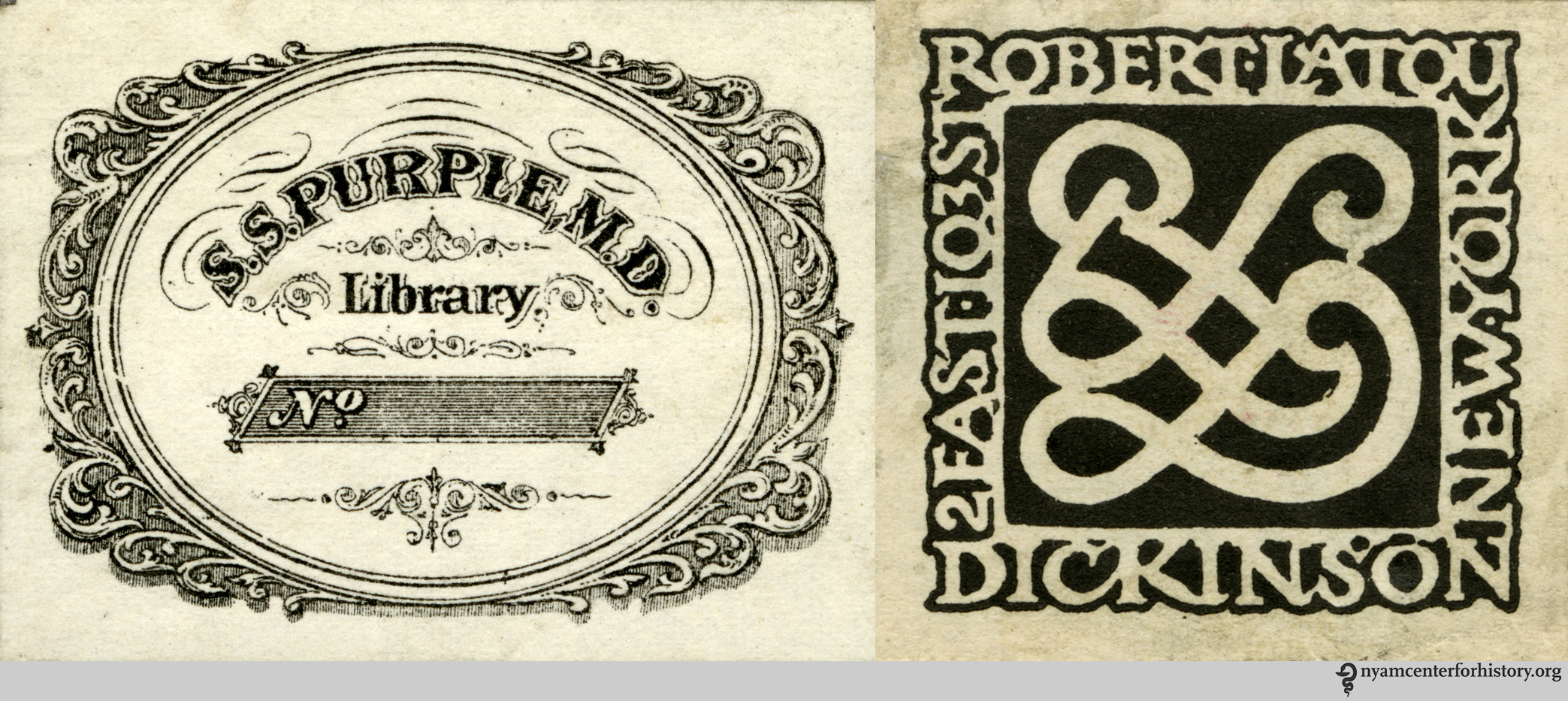
While small by comparison to other collections, Mr. Place’s scrapbooks offer some wonderful examples of the broad ranging sizes and styles of bookplates—from modest ornamental name labels:

Ornamental name labels of (left) Samuel Smith Purple, MD and (right) Robert Latou Dickinson, MD.

Ornamental name labels of (left) Samuel Smith Purple, MD and (right) Robert Latou Dickinson, MD.

to elaborately illustrated panels, depicting anything from coats of arms to the owner’s occupation and hobbies. Not surprisingly, in the case of medical bookplates, images such as Hippocrates, microscopes, and the caduceus, along with skeletons, skulls, and beakers tend to figure prominently.

This slideshow requires JavaScript.

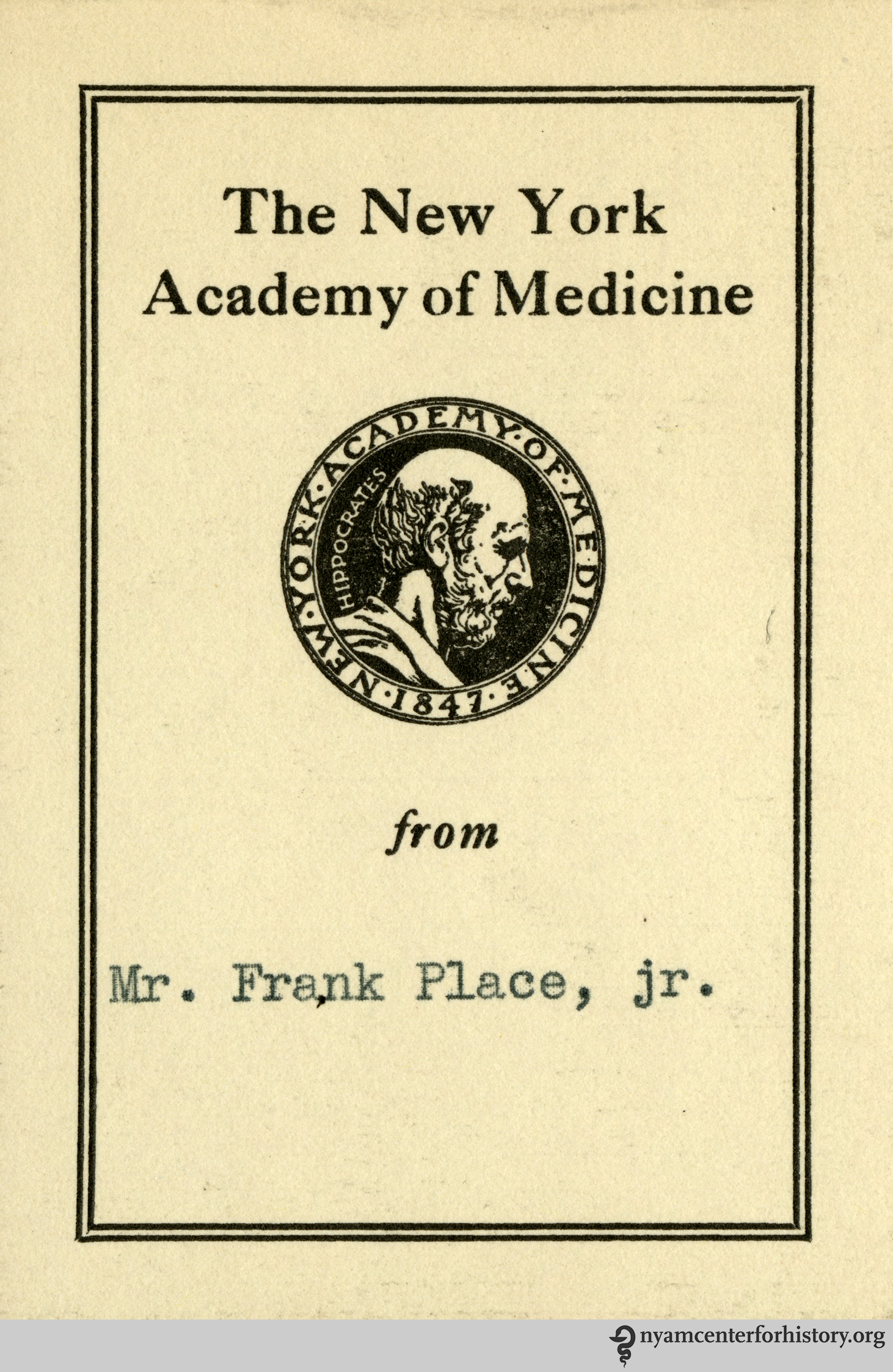
NewYorkAcademyOfMedicine_watermarkIt is a pity we do not know whether, in addition to collecting, Mr. Place ever commissioned his own miniature work of art to grace the inside covers of his personal volumes. Thanks to a bookplate, however, we are forever reminded of his contribution of this delightful little collection to NYAM’s library.

Treatment of the third and final scrapbook is in process and the entire collection will be available for use in early 2015. In the meantime, a list of all 184 bookplates can be obtained by contacting history@nyam.org or calling 212-822-7313.


Notes

1. The oldest known American bookplate dates to 1679 and takes the form of a simple label indicating the owner’s name. Curtin, R. G. (1910). “The Book-Plates of Physicians, with Remarks on the Physician’s Leisure-Hour ‘Hobbies’.” Philadelphia: J.B. Lippincott Co. (Reprinted from International Clinics, Vol. II, 20th Series), p. 239.

2. Thanks to Saira Haqqi, 2014 Gladys Brooks Book Conservation Intern, for her work conserving volume 2 of this collection.

3. In an address to the Historical Section of the Philadelphia College of Physicians on November 22, 1907, physician and bookplate collector Roland G. Curtin advises collectors to hinge their plates onto paper cards (measuring 7.5” x 9.5”) and to keep the cards loose, thus enabling the inspection of the backside of plates as well as the display of single plates without endangering the entire collection. Ibid. 253. It seems likely that Mr. Place read Dr. Curtin’s address (a reprint, cited above, was accessioned into NYAM’s collection in 1910) and was endeavoring to follow this advice when arranging his own collection.

4. Pincott, A. “American Bookplates.” Rev. of American Bookplates by W.E. Butler. Print Quarterly, Vol. 18, No. 3 (Sept. 2001), p. 351. http://www.jstor.org/stable/41826267.

5. See blog post by Arlene Shaner, Reference Librarian for NYAM’s Historical Collections, discussing a bookplate and correspondence from Dr. Henry de Forest: https://nyamcenterforhistory.org/2013/03/06/biblioclasts-bibliosnitches-beware/.

The NYAM Lectures: Medical Talks by Eminent Speakers (Items of the Month)

By Latrina Keith, Head of Cataloging

WNYC-LogoThe New York Academy of Medicine and New York Public Radio (NYPR) have digitized and cataloged some 40 radio broadcasts produced by NYAM and originally broadcast over WNYC radio in the 1950s. These lectures are drawn from the more than 1,500 original lacquer discs transferred from NYAM to the NYPR Archives in 2008. The digitization and cataloging resulted from a joint project between NYAM’s Center for the History of Medicine and Public Health and the New York Public Radio (NYPR) Archives, and with a grant from METRO, the New York Metropolitan Library Council.

The New York Academy of Medicine and WNYC-FM began their radio relationship in 1946 with the launch of The Laity Lectures—later to become Lectures to the Laity—a popular series of Academy lectures and talks on culture and medicine that had started in 1935. By mid-1950, this series was joined by For Doctors Only, which aimed to bring “the best of the meetings, conferences, and roundtable discussions held at the academy” to the medical profession and also addressed critical analysis of issues of society and medicine, as well as the application of the social sciences to medicine, and provided academic presentations in the history of medicine.

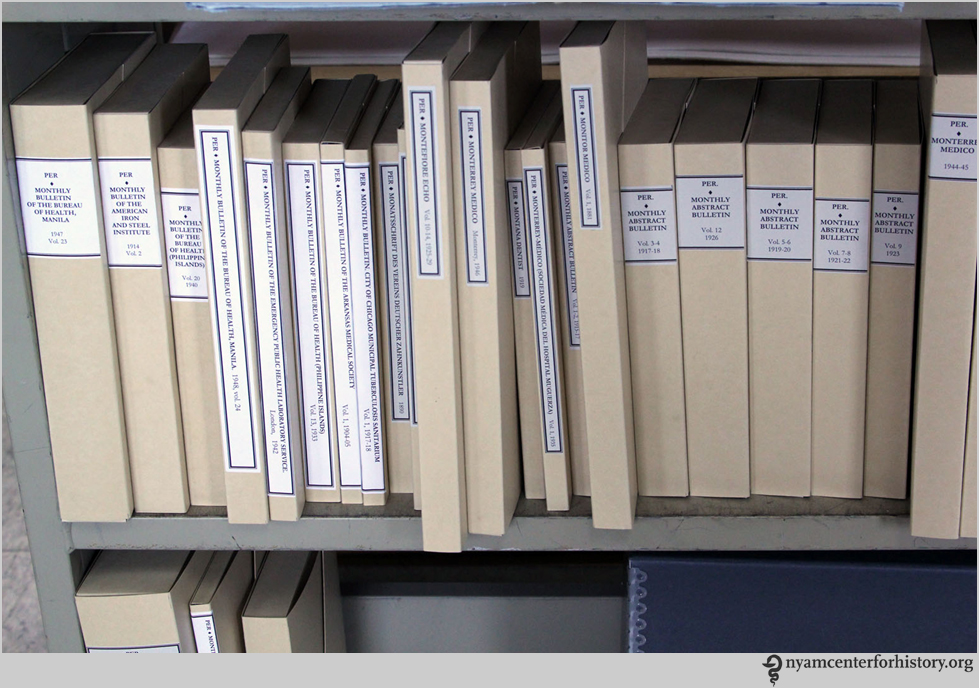
The current periodicals room of the New York Academy of Medicine Library, circa ____.

The current periodicals room of the New York Academy of Medicine Library, photographed by Irving Underhill, 1872-1960.

Lecture topics include gerontology, aging, nutrition, cancer, public health, heart disease, dermatology, psychiatry, and the role of the physician and the law, among others. Along with such informative topics, there were notable guest lecturers such as American anthropologists Margaret Mead and Ralph Linton; Dr. Sidney Farber, the father of modern chemotherapy and pediatric pathology; noted gerontologist Dr. John Steele Murray; and Dr. Leona Baumgartner, the first female commissioner of New York City’s Department of Health from 1954-1962. Baumgartner will be the focus of the upcoming Iago Galdston Lecture, “Making Public Health Contagious: The Life & Career of Leona Baumgartner, MD, PhD” to be presented by Dr. Hilary Aquino on December 4, 2014 at NYAM.

Making these historical hidden treasures available to all is a great achievement for both NYAM and NYPR. We hope that one day the entire radio broadcasts will be restored for the educational and cultural benefit of all.

A Lifetime of Healthiness? The Golden Health Library’s “Seven Ages of Man” (Item of the Month)

Cara Kiernan Fallon, this post’s guest author, is a history of science PhD candidate at Harvard University.
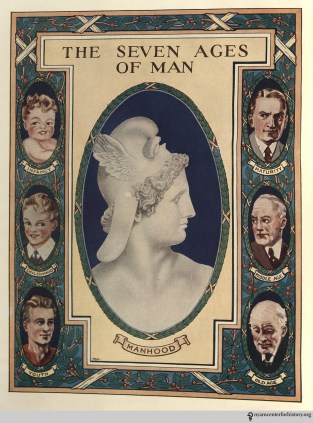
"The seven ages of man." From The Golden Health Library.

“The seven ages of man.” From The Golden Health Library. Click to enlarge.

Childhood can be full of “vigor and zest” but “Middle age is the time when our sins against the laws of health find us out,” warned physicians writing for The Golden Health Library’s inaugural volume. Published in the late 1930s, The Golden Health Library offered readers five volumes of advice on the “principles of right living” so they could secure health throughout their lifespans.1 Authors included physicians, nurses, professors, and even birth control advocates like Margaret Sanger. September, Healthy Aging Month, is the perfect time to revisit this publication.

Part of the New York Academy of Medicine’s extensive collection of health guides, public health pamphlets, and medical magazines, The Golden Health Library highlights the growing health concerns associated with longer lives and an emerging notion of the elasticity of health in later life. Although originally published in the United Kingdom, people on both sides of the Atlantic expressed concerns over health into old age as they were living longer than ever before. Between 1901 and 1931, the population over age 65 nearly doubled from 1.8 to 3.5 million in the United Kingdom, and went from 3 million to 6.6 million in the United States.2 Life expectancy at birth, a figure largely affected by infant and childhood mortality, grew dramatically along with the expanding older population. With more people surviving childhood and living decades longer, a new wave of health concerns—and health advice—came with it.
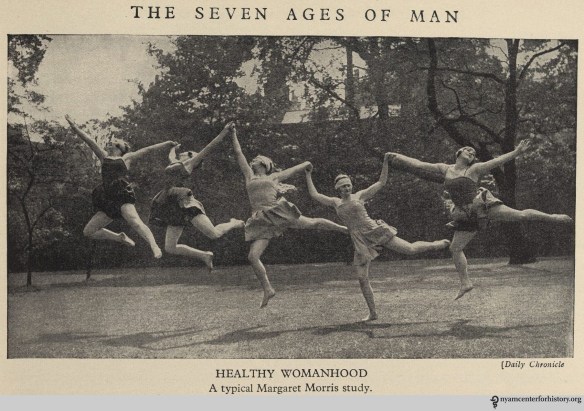
"Healthy womanhood." From The Golden Health Library. Click to enlarge.

“Healthy womanhood.” From The Golden Health Library. Click to enlarge.

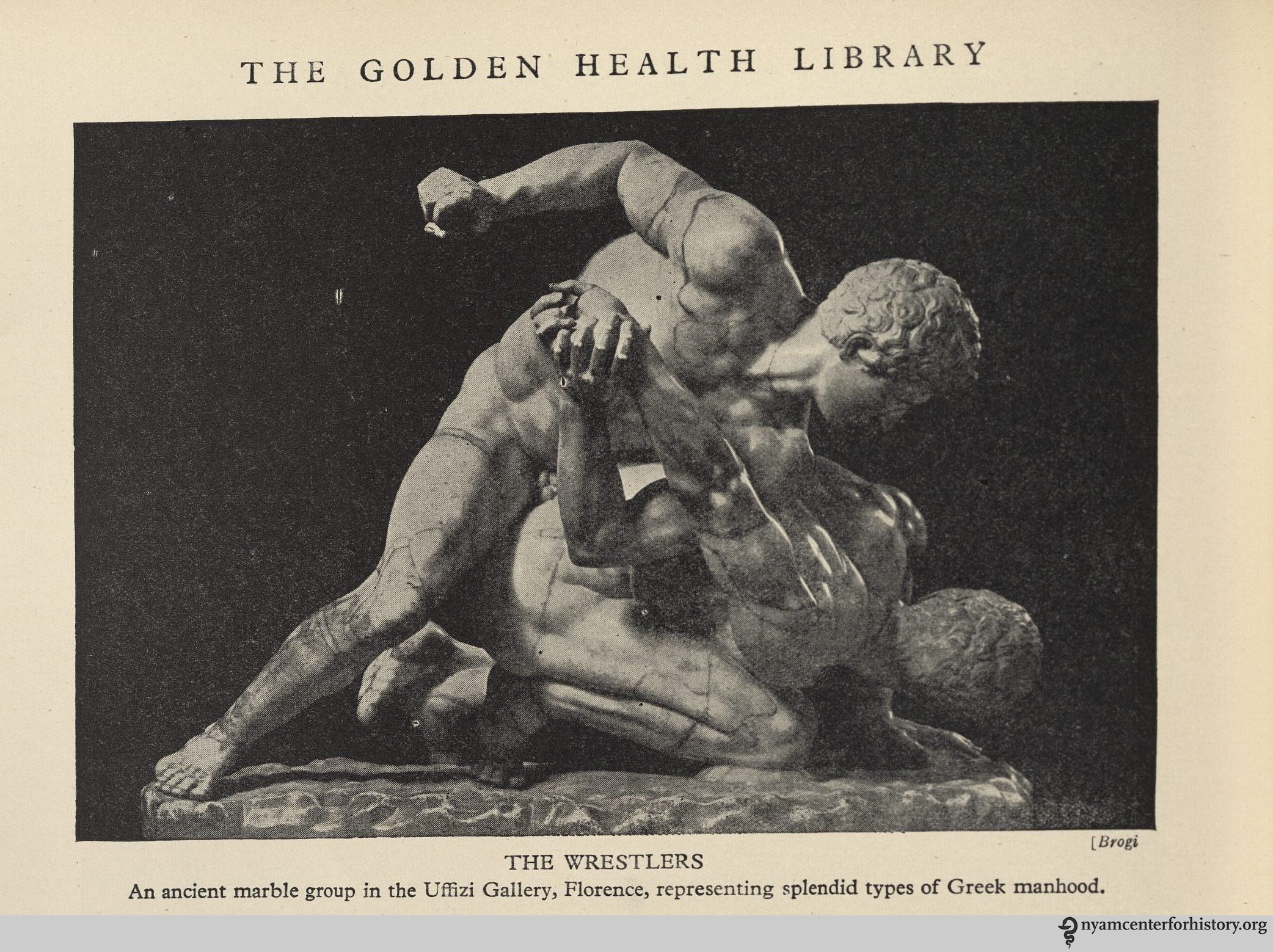
"The wrestlers." From The Golden Health Library.

“The wrestlers.” From The Golden Health Library. Click to enlarge.

In a section directly addressing health throughout the life course—“The Seven Ages of Man”—The Golden Health Library provided a series of articles on maintaining health in each of seven stages of life: infancy, childhood, adolescence, maturity, middle age, elderly age, and old age. Physicians identified “the elderly age” as a “very elastic” time between middle age and old age (87). Rather than following an arc of growth to decline, “The Seven Ages of Man” presented the elderly age as an expandable period of potential health, one determined by physical condition rather than a particular chronological period. Men who followed the rules of health and hygiene, and who had “lived wisely…may feel justified in expecting to live for the full period of life free from disease… and to die of old age” (88). Moderate diet, exercise, rest, and regular medical examinations would also ensure a “healthy elderly age for all women—the best antidote to old age” (91).
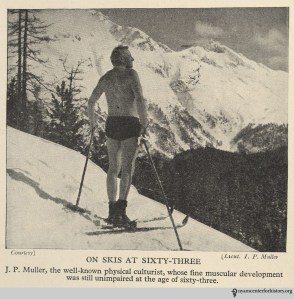
"On skis at 63." From The Golden Health Library.

“On skis at 63.” From The Golden Health Library. Click to enlarge.

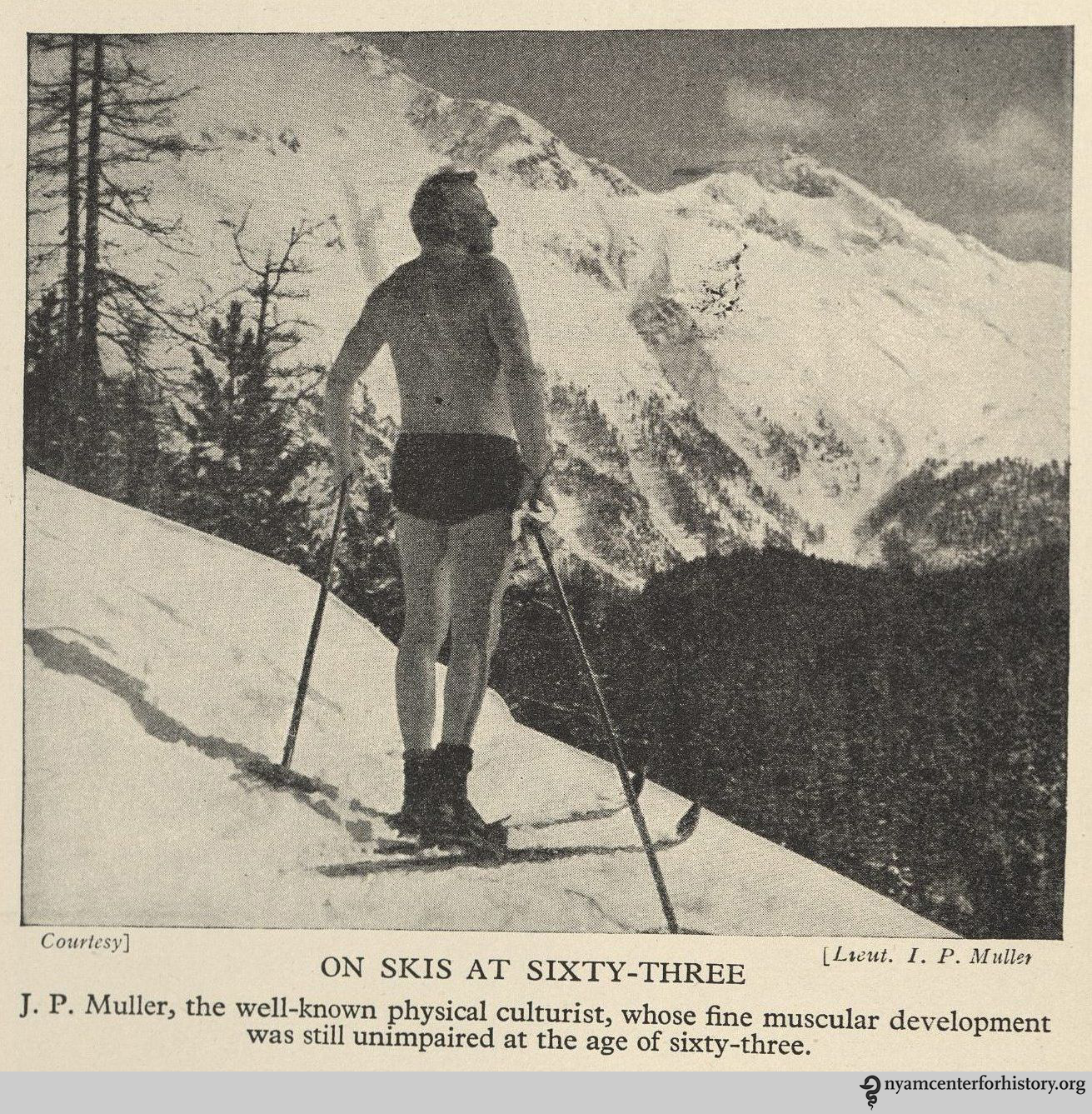
The idea of a healthy and elastic elderly age reflected important new concepts emerging in the 20th century. As people around the globe reached sixty, seventy, and eighty years of age in quantities never before seen, later life became a period of great diversity in physical, mental, social, and economic conditions. Readers were told that the “vigour and ability to do physical or mental work efficiently varies enormously in different people” but the “idea that advanced age in man must necessarily involve an arm-chair existence…is obsolete” (87, 89). Instead, it argued that “men are now never too old to lead an active life” (89). To demonstrate this new ideal, images of athleticism filled the pages of the elderly age. Fitness guru J. P. Muller was shown skiing in his undergarments at 63, and Lord Balfour was shown swinging for a tennis ball at the age of 80, both depicting the possibilities of health and vigor.
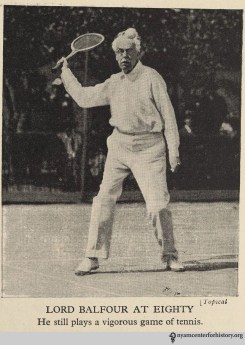
"Lord Balfour at eighty." From The Golden Health Library.

“Lord Balfour at eighty.” From The Golden Health Library. Click to enlarge.

Yet, the mid-century concept of a healthy elderly age also narrowly imagined health through a masculine body with physical freedom and strength. Despite women’s greater longevity—the article reminded readers that women lived on average five years longer than men at the time—the article offered no images of women living actively in the elderly age. Could no women be found to depict an ideal of healthy aging? Or did notions of health and age have different meanings for women than for men? Women may have been told they could achieve a healthy elderly age, but none could be found in these pages.

While the idea of healthy habits leading to a healthy older age offered a new optimism for the aging process, it also overlooked the powerful social and cultural influences on the biology, ability, and mobility of individuals. Recommendations throughout the lifespan for clean milk, sunny outdoor play, access to healthy foods, exercise, and regular physical exams reflected not merely physiological processes but more complex social and economic opportunities. Although the authors indicated that health throughout life was a matter of willpower, they acknowledged that few reached a disease-free old age. Were the ideals too lofty or were the challenges too great? Had their model failed to account for the complexities of health beyond a controllable regimen?

"A fine old age." From The Golden Health Library.

“A fine old age.” From The Golden Health Library. Click to enlarge.

“The Seven Ages of Man” offers an intriguing look into the early notions of healthy aging in the mid-20th century. While it responded to the growing population of older individuals, offering opportunities for self-determination and responsibility, it also reduced healthy aging to a matter of knowledge, willpower, and habit.

Decades later, efforts to improve the quality of life of older individuals continue to grow with the expanding population. Through its healthy aging initiatives and participation in Age-friendly NYC, the New York Academy of Medicine aims to address not only the physical components of aging but also issues of employment, housing, social inclusion, community health services, and many other social, psychological, and economic concerns for seniors. Looking back to The Golden Health Library allows us to explore the formative stages of important themes today – the growing belief in the elasticity of later life, the new emphasis on “healthy” and “active” aging, and the changing understandings of the powerful social and cultural influences on biology.

References

1. Browning, E., Stanford Read, C., Williams, L. L.B., Crawford, B. G. R., Arbuthnot Lane, W., Somerville, G. (193?). The seven ages of man. In W. Arbuthnot Lane (Ed.), The golden health library (pp. 48–96). London: William Collins Sons & Co. All parenthetical page numbers refer to this publication.

2. For the United Kingdom, see the Office for National Vital Statistics, Chapter 15 Population: Age distribution of the resident population, 15.3(a). For the United States, see the Center for Disease Control and Prevention, National Vital Statistics System, Population by Age 1900 to 2002, No. HS-3.

Robert Hooke’s Micrographia (Item of the Month)

By Rebecca Pou, Archivist

The title page of Hooke's Micrographia.

The title page of Hooke’s Micrographia.

Robert Hooke was born on July 28 (O.S. July 18), 1635. To commemorate his birthday, we are featuring his book Micrographia as July’s item of the month.

Hooke published Micrographia in 1665 when he was 30 years old. At the time, Hooke was the curator of experiments for the Royal Society of London, which involved conducting several experiments a week and presenting them to the society. Hooke made many of the observations found in Micrographia through his activities for the society, and the Royal Society commissioned and printed the book.1

An extraordinary work, Micrographia details Hooke’s observations on objects as varied as the point of a needle, a louse, and the moon (he also utilized telescopes). The book includes 38 copperplate engravings of microscopic views based on Hooke’s drawings. Micrographia was not the first book of microscopic observations, but it was more successful and accessible than its predecessors. Who wouldn’t marvel at a close up shot of a flea?

Here is a selection of Micrographia’s plates (click to enlarge):

Fig. 1 shows a microscopic view of kettering-stone. In observation XV, Hooke notes, “We may here find a Stone by the help of a Microscope, to be made up of abundance of small Balls…and yet there being so many contacts, they make a firm hard mass…”

Fig. 1 shows a microscopic view of kettering-stone. In observation XV, Hooke notes, “We may here find a Stone by the help of a Microscope, to be made up of abundance of small Balls…and yet there being so many contacts, they make a firm hard mass…”

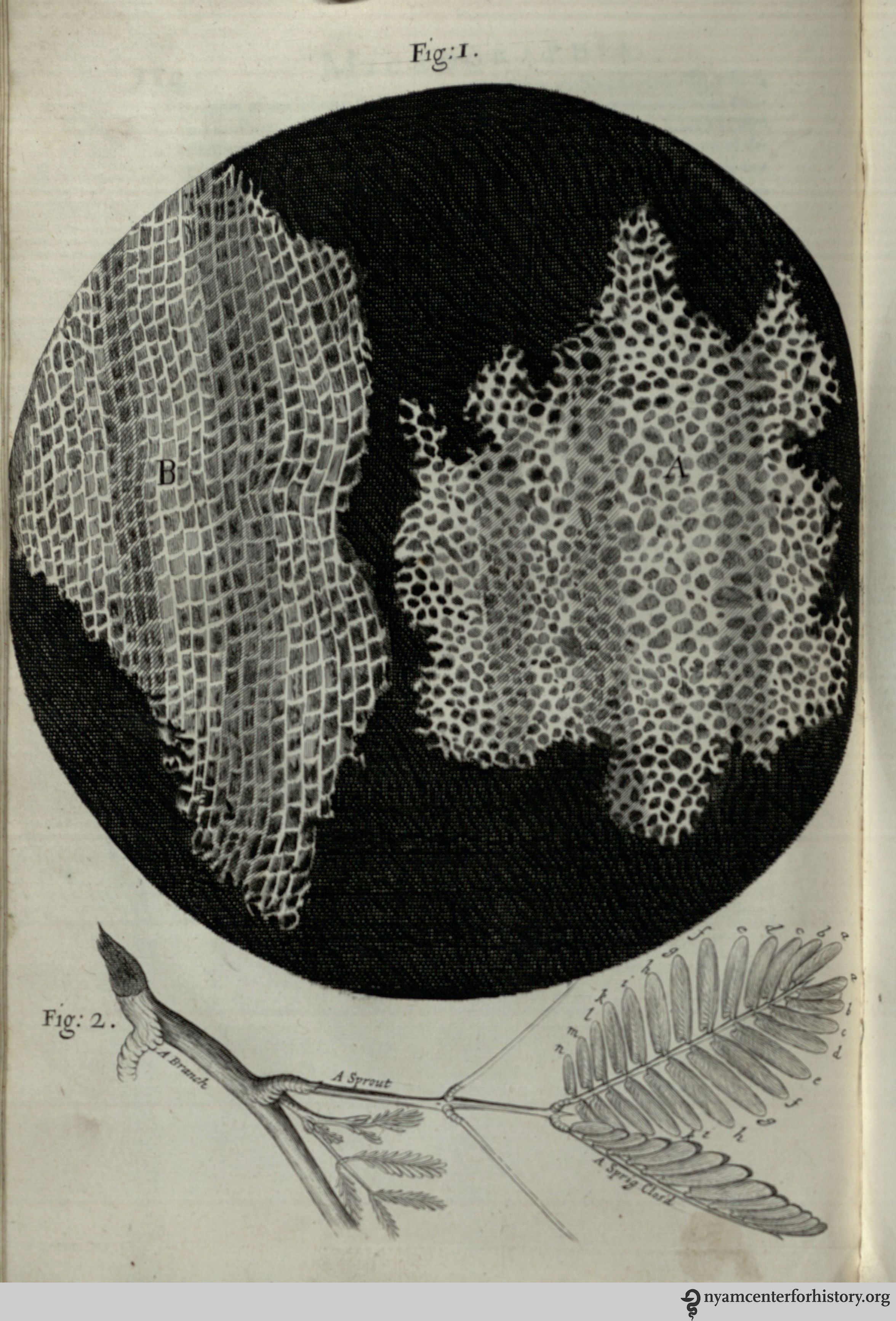
In his observation on cork, Hooke compared its structure to that of honeycomb and. He discovered plant cells, “which were indeed the first microscopical pores I ever saw, and perhaps that were ever seen…,” and coined the term “cell.”

In his observation on cork, Hooke compared its structure to that of honeycomb. He discovered plant cells, “which were indeed the first microscopical pores I ever saw, and perhaps that were ever seen…,” and coined the term “cell.”

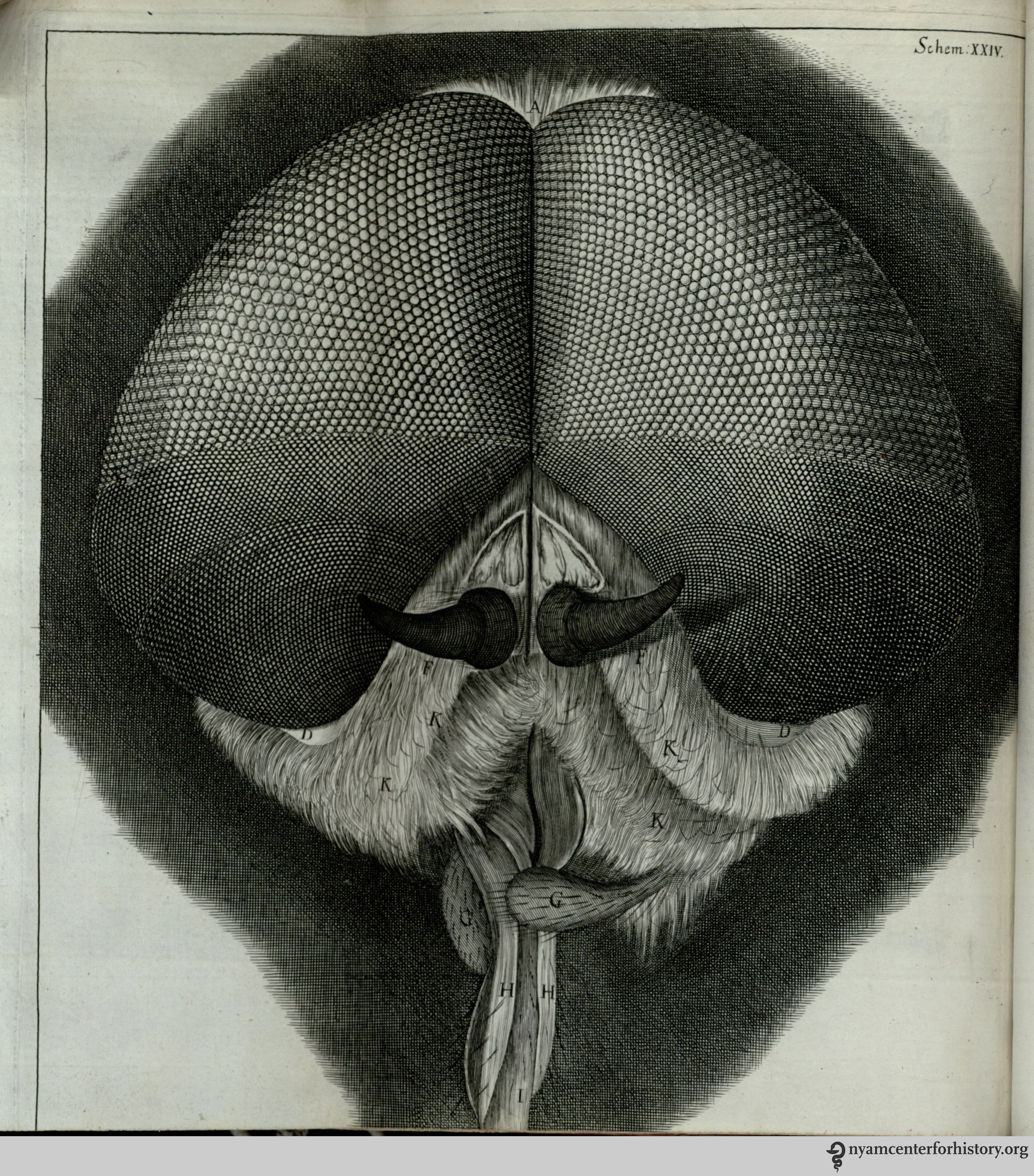
For observation XXXIV, Hooke examined the eyes and head of grey drone-fly.

For observation XXXIV, Hooke examined the eyes and head of grey drone-fly.

Hooke seemed enamored with the white feather-winged moth, calling it a “pretty insect” and “a lovely object both to the naked Eye, and through a Microscope.”

Hooke seemed enamored with the white feather-winged moth, calling it a “pretty insect” and “a lovely object both to the naked Eye, and through a Microscope.”

The flea is one of several fold-out plates in the book. Again, Hooke has a scientist’s appreciation for the insect, commenting equally on its strength and beauty. He is particularly fascinated with the anatomy of its legs and joints, which “are so adapted, that he can…fold them short within another, and suddenly stretch, or spring them out to their whole length.”

The flea is one of several fold-out plates in the book. Again, Hooke has a scientist’s appreciation for the insect, commenting equally on its strength and beauty. He is particularly fascinated with the anatomy of its legs and joints, which “are so adapted, that he can…fold them short within another, and suddenly stretch, or spring them out to their whole length.”

In the last observations, Hooke turned his attention to celestial bodies. His study of the moon lead him to believe it might be covered in vegetation. He thought the hills seen in Fig. 2 “may be covered with so thin a vegetable Coat, as we may observe the Hills with us to be, such as the short Sheep pasture which covers the Hills of Salisbury Plains.”

In the last observations, Hooke turned his attention to celestial bodies. His study of the moon led him to surmise that the hills seen in Fig. 2 “may be covered with so thin a vegetable Coat, as we may observe the Hills with us to be, such as the short Sheep pasture which covers the Hills of Salisbury Plains.”

The National Library of Medicine’s Turning the Pages project has a selection of images from Micrographia available. It is well worth flipping through; you’ll find curator’s notes and you can even open the folded plates. If you are interested in looking at Micrographia in its entirety, contact us at history@nyam.org or 212-822-7313 to make an appointment.

Reference
1. Espinasee, Margaret. Robert Hooke. London: Heinemann, [1956].

A Gallery of Gauzy Wings (Item of the Month)

By Arlene Shaner, Acting Curator and Reference Librarian for Historical Collections

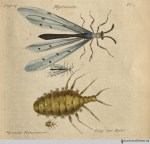
Plate 8: Ephemera rupestris, the Rock Day Fly. Click to enlarge.

Plate 8: Ephemera rupestris, the rock day fly. Click to enlarge.

As we head into full summer, it seems appropriate to take a look at one of our many natural history books for this item of the month. Anyone who spends time outside at this time of year encounters insect life of many kinds.

While we mostly tend to avoid the bugs we encounter, many 18th century naturalists found them enticing subjects of study. John Hill (1714?-1775), the author of the charming A Decade of Curious Insects (1773), was no exception. Hill was an English apothecary and botanist with frustrated literary and theatrical aspirations. He also had a medical degree from the University of St. Andrews, but whether he actually studied to become a physician or just purchased the degree is unclear. He worked as an apothecary and created and dispensed many herbal remedies. He is most remembered now for his various botanical works, including the British Herbal (1756), a series of popular herbal medicine treatises, and the 26-volume Vegetable System (1759-1775).1,2

Hill_Title Page_watermark

Title page of A Decade of Curious Insects. Click to enlarge.

Hill had a longstanding interest in microscopic observation and revised an English translation of Jan Swammerdam’s heavily illustrated Book of Nature, or the History of Insects in 1758. In the little work that is the subject of this post, however, he made the observations himself, using a lucernal microscope probably much like the one pictured here.

All ten engravings in our copy are hand colored, although the illustrations could also be purchased separately and painted for personal education or enjoyment. As the verso of the title page notes, “Ladies who may chuse to paint these Insects themselves may have Sets of the Cuts on Royal Paper printed pale for that purpose.”

The text provides detailed descriptions of each insect, with particular attention paid to the colors of individual body parts. Sometimes Hill also offers his observations on their habits. Day-Flies, for example, “are an inoffensive race; born to pass thro’ their little stage of being, the prey to a thousand enemies; but hurtful to no creature.”

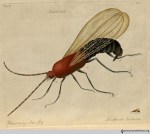
Plate 7, Ephemera culiciformis, the "white wing'd day fly." Click to enlarge.

Plate 7, Ephemera culiciformis, the “White Wing’d Day Fly.” Click to enlarge.

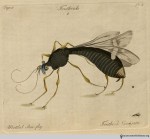
The Savages, Sphex and Sphex Spirifex, attack other insects with an unmatched intensity. In the case of the Comb-Footed Savage, “The number of other Insects these destroy, is scarce to be conceiv’d ; the mouth of their cave is like a Giant’s of old in romance ; strew’d with the remains of prey… he will kill fifty for a meal.”

Plate 3, Sphex pectinipes, the comb footed savage. Click to enlarge.

Plate 3, Sphex pectinipes, the comb footed savage. Click to enlarge.

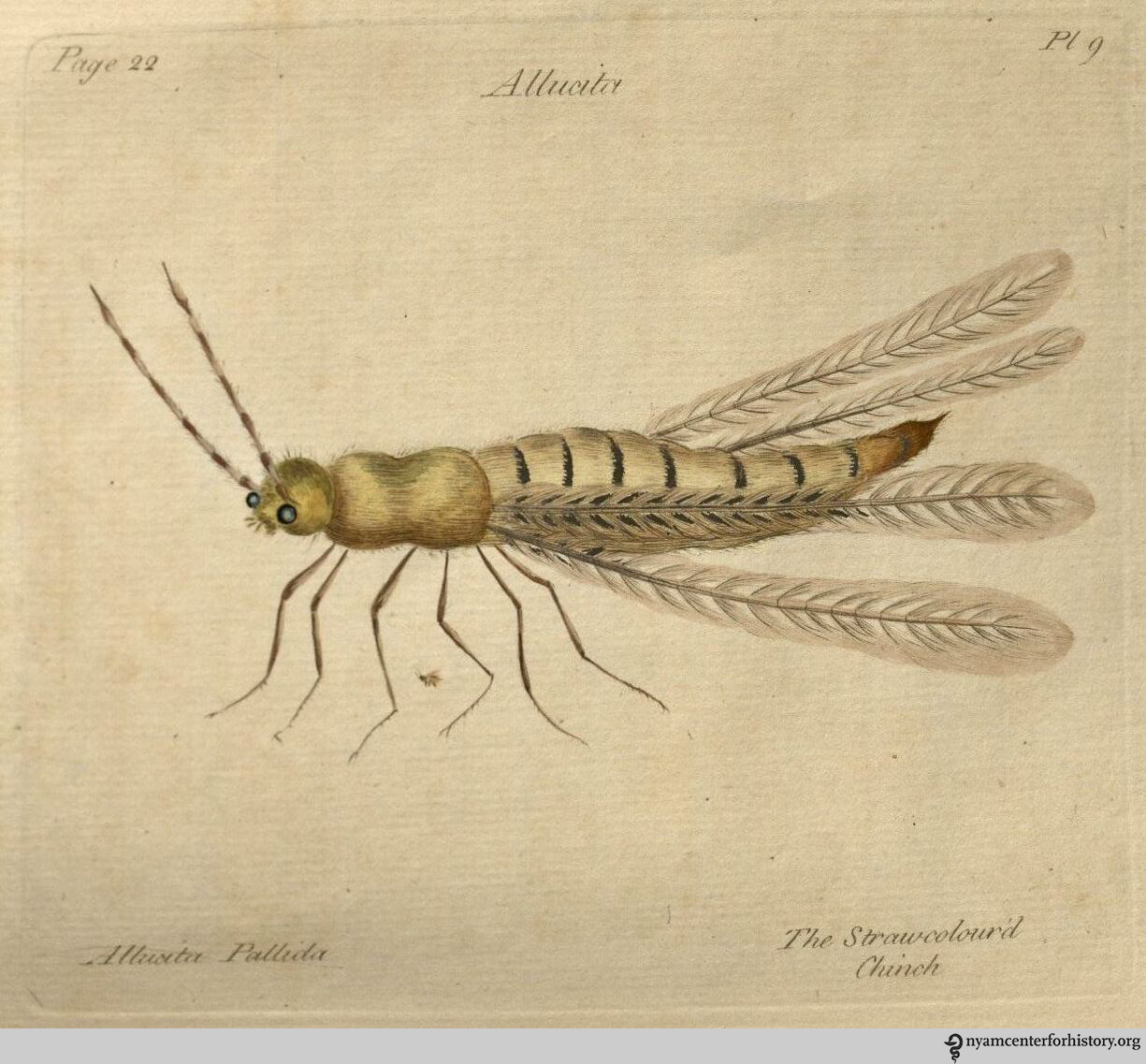
A warning, though, that anyone who enjoys inhaling the fragrance of a bouquet of flowers might be in for a dreadful surprise if the either the Straw-Colour’d or the Tawny Chinch lurks inside. According to Hill, a gentleman who suffered from headaches sneezed onto a sheet of paper one day, and a microscopical examination of the “moving particles” revealed them to be Straw-Colour’d Chinches.

Plate 9, Allucita Pallida, "The Straw-colour'd Chinch."

Plate 9, Allucita Pallida, “The Straw-colour’d Chinch.”

Hill noted that both chinches inhabit a variety of popular flowers. “Many have this pain [headache] from the smell of Flowers,” he writes. “Some have been found dead, with quantities of violets, and other Flowers, in their chamber. Physicians have attributed these deaths to the powerful odour of those Flowers; but that they should be owing to these creatures, is much more probable.”

Plate 10, Allucita fulva, the tawny chinch.

Plate 10, Allucita fulva, the tawny chinch.

Perhaps you should think twice the next time you stop to smell the roses, just in case.

The book’s illustrations are too lovely not to share. Here are the remainder (click an image to view the gallery).

References
1. Barker, G. F. R. (1891). Hill, John (1716?-1775). In Dictionary of National Biography, 1885-1900, volume 26. London: Smith, Elder & Co. Retrieved from http://en.wikisource.org/wiki/Hill,_John_%281716%3F-1775%29_%28DNB00%29

2. Gerstner, P. A. (1972). Hill, John. In Dictionary of Scientific Biography, volume VI. New York: Charles Scribner’s Sons.

Preservation Enclosures 101 (Items of the Month)

By Christina Amato, Book Conservator, Gladys Brooks Book & Paper Conservation Laboratory

How simple is a box?

It is often overlooked, but creating appropriate enclosures, or housing, for collection materials is an important part of the work of a library conservation lab. A well made box can have a huge impact on the longevity of a book. Conservators have to weigh many factors when deciding what kind of enclosure is appropriate to use. When is a clamshell box the best choice, and when would a phase box be better? Scroll down to see some examples of typical enclosures made at the Gladys Brooks Book and Paper Conservation Laboratory.

First, the clamshell box. This type of enclosure is one of the most traditional you will find in a library. Each one is custom made for each book. They provide an enormous amount of protection to the book, and can be very attractive. However, they are quite time consuming to make, and add to the width of the book. For one or two books, this may not be significant, but for a large collection, and if you have limited shelf space, it can become an issue.

Enclosures1-2_merged_watermark

Three books in clamshell boxes, left. An open box, right.

Consider the pamphlets below, which are housed in brittle and crumbling old folders. They no longer provide adequate protection to the material inside, and in some cases are actively causing damage. Clearly, new enclosures are needed. However, there are thousands of these pamphlets in the collection, and it would be impractical to create clamshell boxes for each one.

Enclosures3-4_merged_watermark

Pamphlets in need of new housing.

Enter the phase box, or wrapper. These are constructed out of a thin cardstock and take up much less room on a shelf than a clamshell box. They also take a fraction of the time to complete, though each is also custom made for the material within.

Enclosures5-6_merged_watermark

Phase boxes.

Phase boxes are a good solution for this kind of collection. However . . . are there any downsides to having rows and rows of items that look like this?
Rows of phase boxes.

Rows of phase boxes.

What if your collection looks like this?

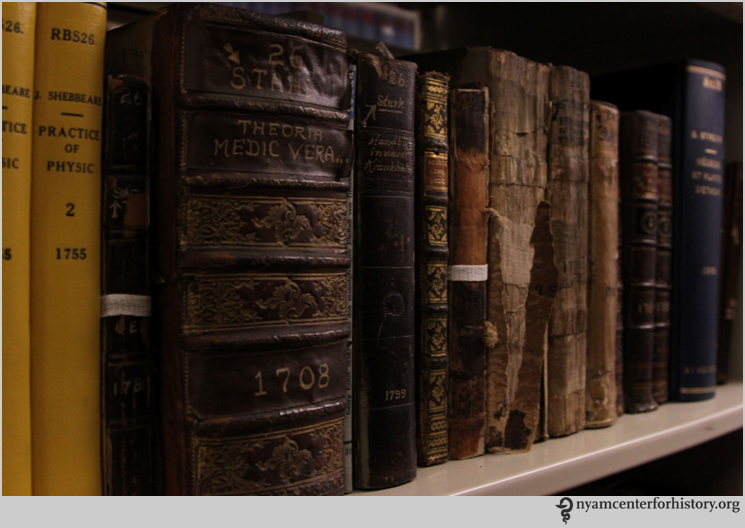
A shelf with visible spines.

A shelf of books with visible spines.

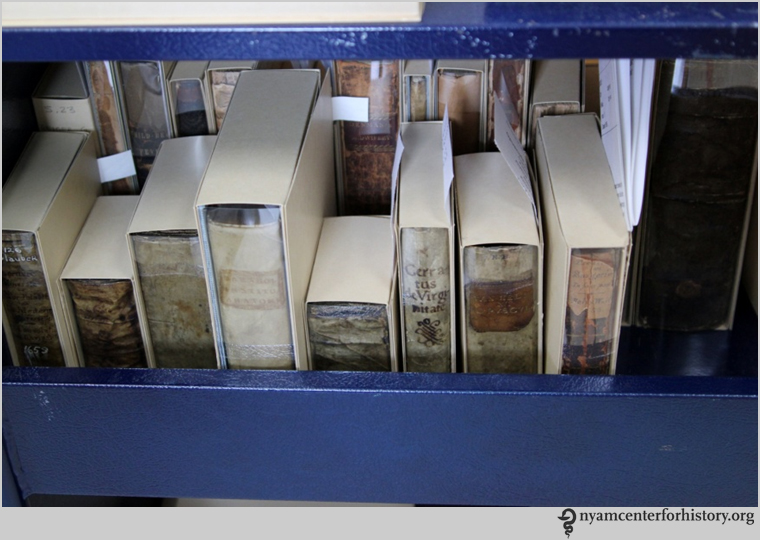
Conservators at the Folger Shakespeare Library in Washington, DC, developed a “visible spine phase box” similar to a traditional phase box, but which incorporates a clear piece of Mylar. This way, you can see what is inside the enclosure. Not only can this be more appealing visually than a row of undifferentiated cardstock, but it can be useful in monitoring the condition of a book. And, of course, it is immediately obvious if the box’s tenant has gone missing!

Books in visible spine phase boxes.

Books in visible spine phase boxes.

Occasionally, an item will enter the lab that doesn’t fit into any of the usual categories. Below is a Sinhalese “Ola,” or a palm-leaf manuscript, written in 1720. The mailer bag it arrived in doesn’t quite meet the standards for an adequate enclosure.

An ola in a mailer bag.

An Ola in a mailer bag.

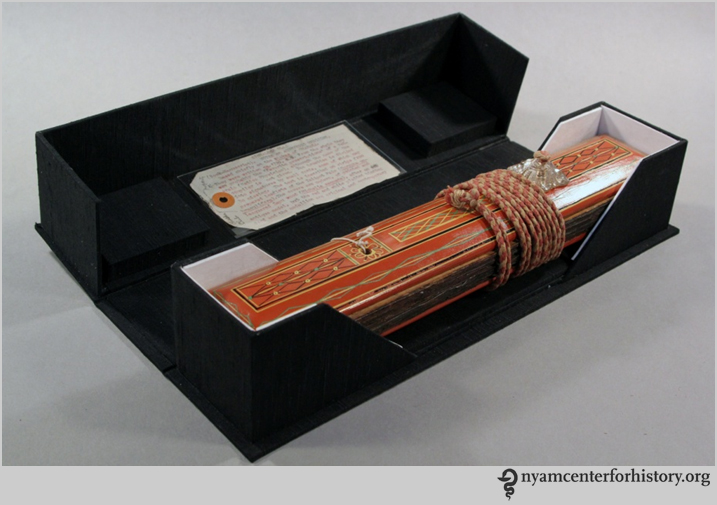
Our solution was to make a modified clamshell box; the sides are cut away so that it is easy to reach in and safely remove the item; the cover is built up to provide room for the protruding button and string on the cover; and the sides are covered with a smooth Tyvek to protect the fragile palm leaf edges.

An Ola in a modified clamshell box.

An Ola in a modified clamshell box.

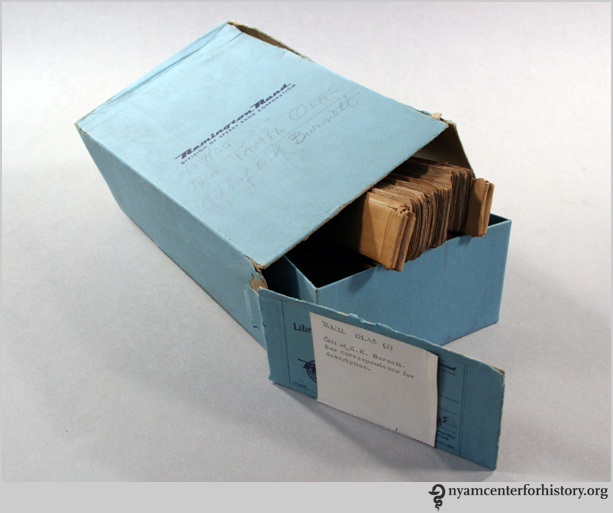
If you have an entire box full of Olas that require re-housing, however, like the unfortunate ones below, that may prove to be too time consuming.

Many unfortunate Olas in need of rehousing.

Many unfortunate Olas in need of rehousing.

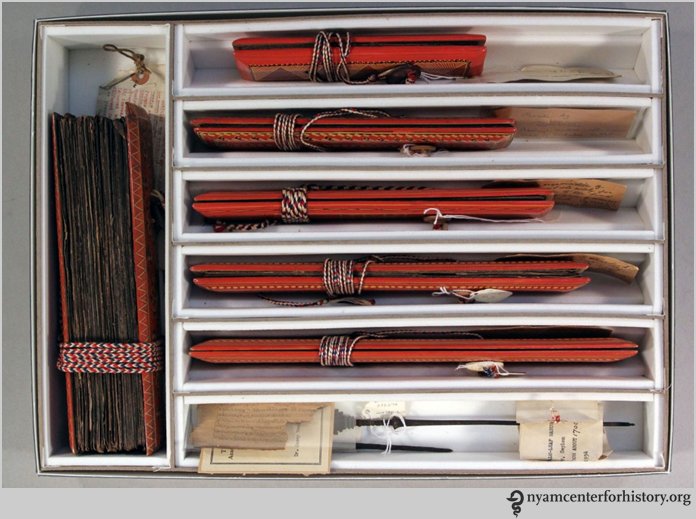
The solution here was to modify a commercially made enclosure with separate compartments made out of Valera foam. Each piece is protected, and using a pre-made, standard sized box saved time.

Olas in a modified commercially made enclosure.

Olas in a modified commercially made enclosure.

These are just a few of the typical sorts of enclosures you will encounter in a library. Labs will often make their own modifications and improvements. Whether it be simple or very complex, the box plays a crucial role in preserving fragile materials.