“Artist of Death” Frederik Ruysch at NYAM: Guest Post by Morbid Anatomy’s Joanna Ebenstein

Ruysch1

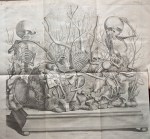
1720 frontispiece to Opera Omnia, 1721.

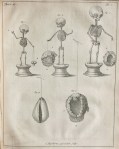
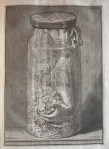
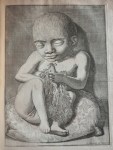
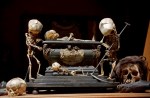
My very favorite figure operating at the intersections of art and medicine–and probably the most bizarre to the modern eye–is Dutch anatomist, artist, preparator, and early museologist Frederik Ruysch (1638-1731). A pioneer in the art of preserving the human body, he was famed for his uncannily life-like and imaginative human preparations (i.e. bits of bodies preserved for study) which he achieved through a combination of injections of colored wax and a secret alcohol-based preservation formula. He is best remembered today for his lavish memento mori-themed tableaux utilizing real human fetal skeletons and other bits of human remains (see images 15-18) which are beautifully explained by Steven Jay Gould in his book Finders, Keepers: Eight Collectors:

Ruysch made about a dozen tableaux, constructed of human fetal skeletons with backgrounds of other body parts, on allegorical themes of death and the transiency of life… Ruysch built the ‘geological’ landscapes of these tableaux from gallstones and kidneystones, and ‘botanical’ backgrounds from injected and hardened major veins and arteries for “trees,” and more ramified tissue of lungs and smaller vessels for ‘bushes’ and ‘grass.’

The fetal skeletons, several per tableau, were ornamented with symbols of death and short life–hands may hold mayflies (which live but a day in their adult state); skulls bemoan their fate by weeping into ‘handkerchiefs’ made of elegantly injected mesentery or brain meninges; ‘snakes’ and ‘worms,’ symbols of corruption made of intestine, wind around pelvis and rib cage.

Quotations and moral exhortations, emphasizing the brevity of life and the vanity of earthly riches, festooned the compositions. One fetal skeleton holding a string of pearls in its hand proclaims, ‘Why should I long for the things of this world?’ Another, playing a violin with a bow made of a dried artery, sings, ‘Ah fate, ah bitter fate.’

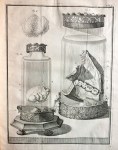
Rusych showcased his thousands of human preparations in his own cabinet of curiosities visited by medics and philosophers, as well as members of the aristocracy and royalty. Here, one could see not only his fantastic tableaux, but also his imaginative human specimens in glass jars, preserved organs, exotic birds, butterflies and plants. Ruysch published several lavishly illustrated guides to his cabinet; in image 1, above, you can see an allegorical view of his museum as depicted in a frontispiece to his Opera Omnia, 1721.

Very sadly, none of Ruysch’s astonishing tableaux are known to exist today, and are only known to us through book illustrations. One can get a sense of what the real thing probably looked like, however, in image 19, a contemporaneous 17th fetal skeleton tableau emblazoned with a memento-more-themed Virgil quote; this photo was featured in my recent exhibition The Secret Museum, on which you can find out more here. You can also still see visit many of Ruysch’s wet preparations in collections such as the St. Petersburg Kunstkammer (which has 916 of them), Museum Bleulandinum in Utrecht, and the Anatomisch Museum LUMC in Leiden.

All of these images, save the photo, are drawn from the exceptionally rich Ruysch holdings of the NYAM Historical collections. Hear more about Frederick Ruysch at the October 5th Festival of Medical History & the Arts, when Daniel Margoscy will speak on “The Anatomy of the Corpse: Ruysch, Descartes, and the Problem of Wax.”

This post was written by Joanna Ebenstein of the Morbid Anatomy blog, library and event series; click here to find out more.

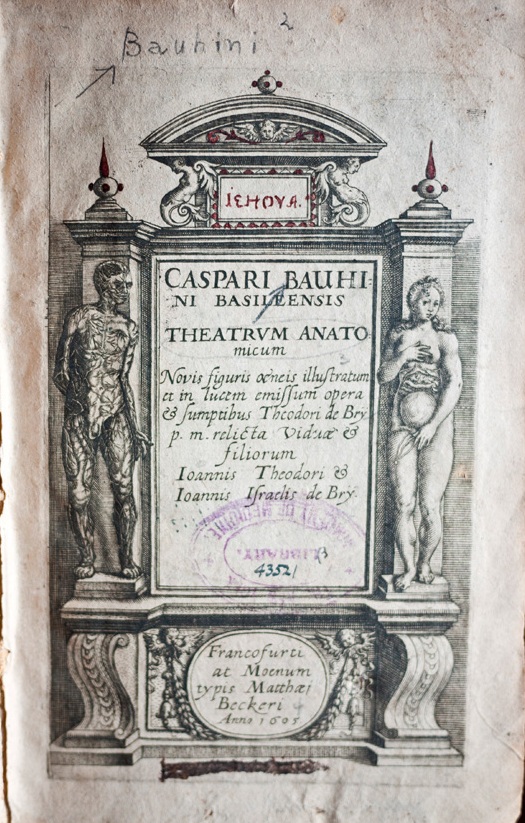
Theatrum Anatomicum, by Caspar Bauhin and Theodor de Bry, 1605 : Guest Post by Morbid Anatomy’s Joanna Ebenstein

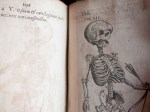
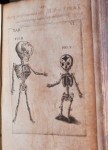
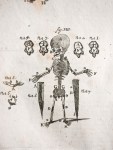
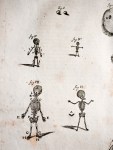
Bauhin1Here are some wonderful images from another of my favorite books in the NYAM historical collections, Theatrum Anatomicum (1605), by Caspar Bauhin and Theodor de Bry. This edition also has some especially lovely image ghosting going on.

This post was written by Joanna Ebenstein of the Morbid Anatomy blog, library and event series; click here to find out more.

Icon durae matris in concavâ superficie visae…, Jan Ladmiral and Frederik Ruysch, 1738: Guest Post by Morbid Anatomy’s Joanna Ebenstein

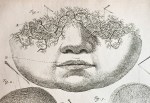
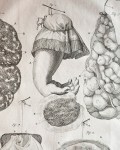
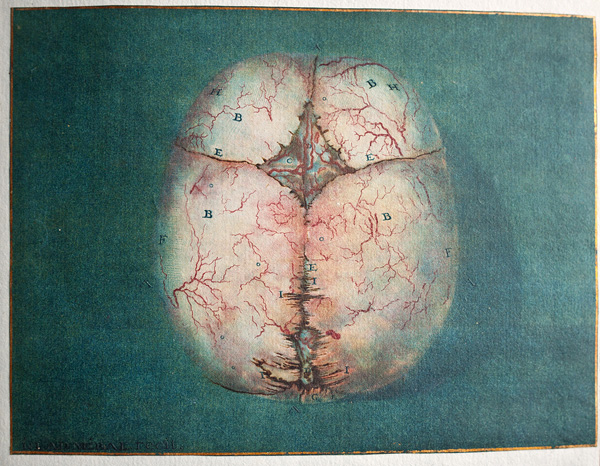
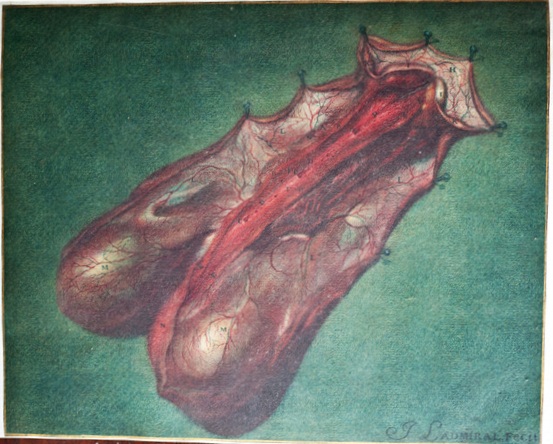
Here is a lovely small frontispiece etching and some lush and wonderful mezzotints by Jan Ladmiral, pioneer of early color printing, drawn from the NYAM copy of Icon durae matris in concavâ superficie visae, ex capite foetus humani octò circiter à conceptione mensium, desumtae; ad objectum artificiosissimè praeparatum à clarissimo viro Fred. Ruyschio by Jan Ladmiral and Frederik Ruysch from 1738.

Ladmiral1

Ladmiral3 Ladmiral2

Ladmiral4

This post was written by Joanna Ebenstein of the Morbid Anatomy blog, library and event series; click here to find out more.

Item of the Month: The Medical Museum, Mythology and Medicine

By Arlene Shaner, Acting Curator and Reference Librarian for Historical Collections

Medical Museum title page 1763

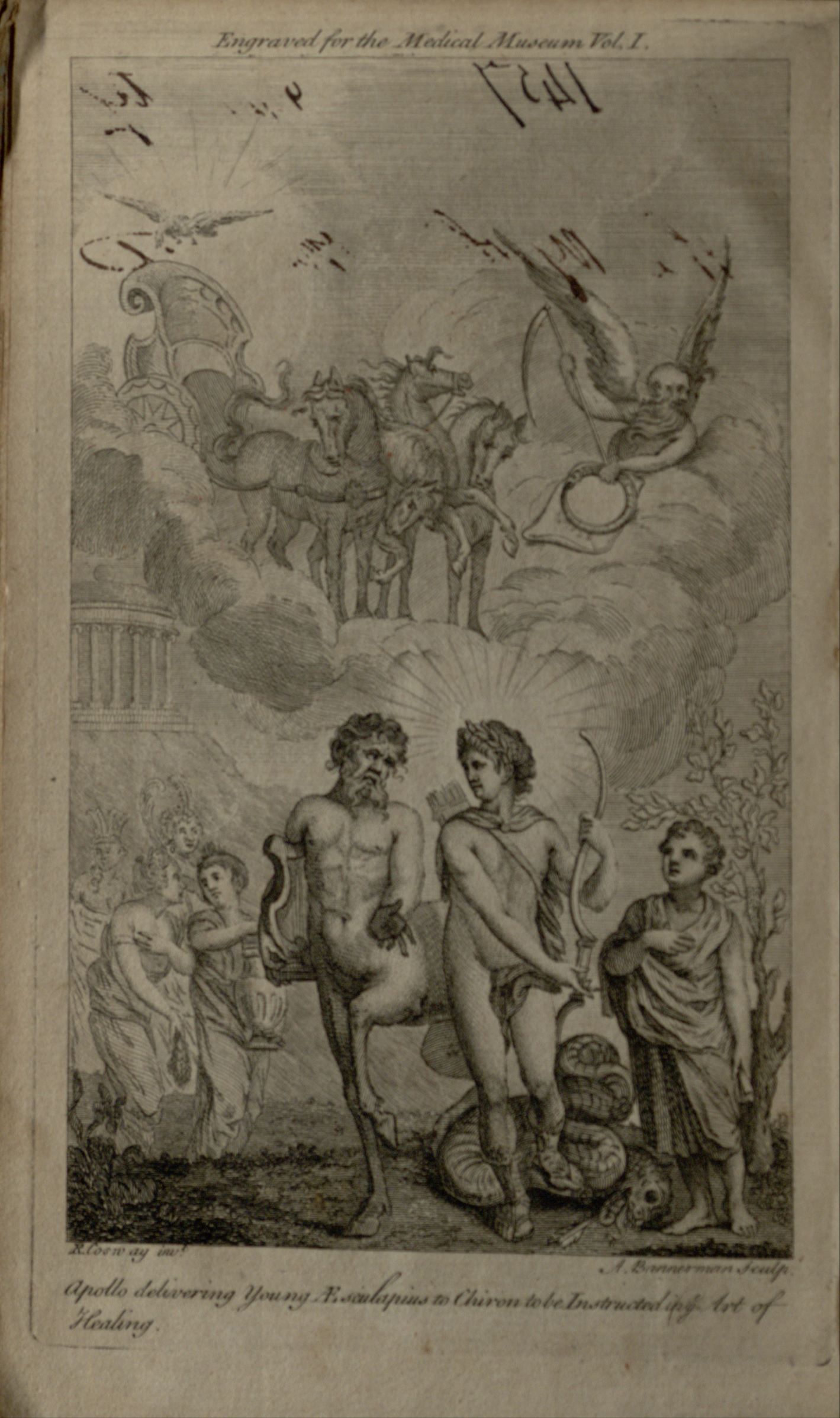
Recently, while looking for something in the rare periodicals collection at NYAM, I came across a charming allegorical frontispiece that appeared in the first volume of The Medical Museum, a short-lived journal that appeared in three volumes published in London 1763 and 1764.  The editors of the journal, who described themselves as “Gentlemen of the Faculty,” remain unknown.  The subtitle and the introduction make clear that they viewed themselves primarily as the collectors and disseminators of already published works from a variety of sources. 

Even 18th century people struggled to make sense of an overwhelming amount of information.  “Many physical people very justly complain of the great expense attending the purchase of medical treatises, especially foreign ones… the pains and time to select and examine the matters that may concern their profession, are with many too much to be dispensed with,” (ix) they noted, while explaining the task they had chosen for themselves, that of serving as the selectors of the most useful materials from disciplines ranging from anatomy, medicine, chemistry, botany and other assorted sciences.  Works from a remarkable range of publications appear in the Museum, many of them translated from their original languages into English to make them more accessible, as the compilers hoped their journal would find an audience among the public, not just among medical men.

Medical Museum frontispiece 1763

The first volume contains a specially engraved frontispiece that shows Apollo bringing his son Asclepius to the centaur Chiron to learn about the art of medicine.  Coronis, Asclepius’ mother, was either killed by Apollo for being unfaithful to him or died in childbirth, and Apollo rescued the unborn baby from her womb.  Needing someone to raise the boy, Apollo handed him over to Chiron, who taught him the healing arts.  Asclepius went on to father many daughters, some of whom are also remembered for their connections to medicine and health.  One of his daughters, Hygeia, is the goddess of health, while another, Panacea, is the goddess of universal remedies.

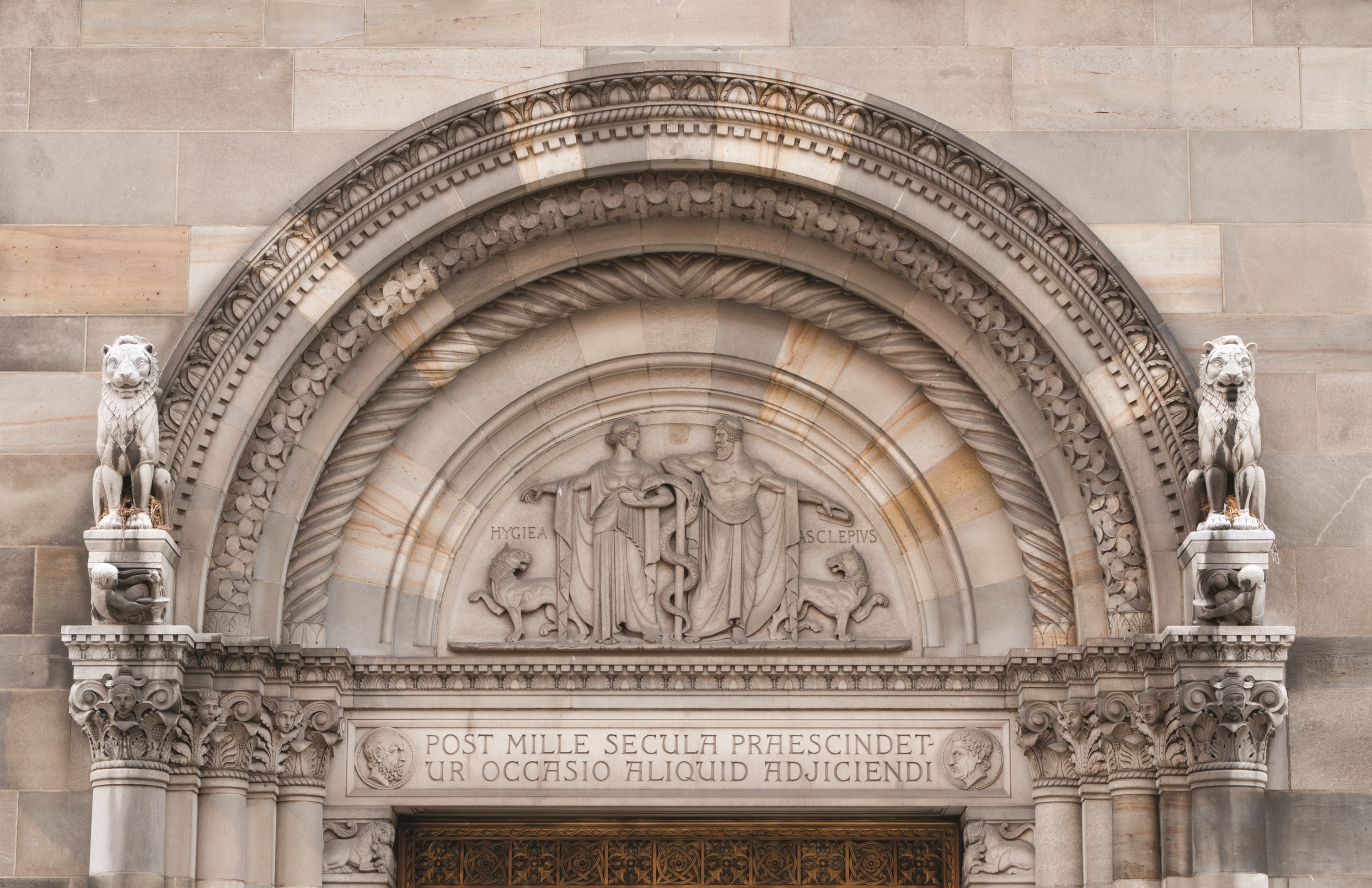
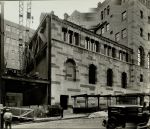
If you visit The New York Academy of Medicine’s building, you will see that Asclepius and Hygeia were important touchstones for NYAM and for the building’s designers as well.  An ornamental frieze above our front door depicts the two of them together, attended by their snakes and dogs, a visual reminder of the classical heritage of medicine.

A&H

“Physica Sacra,” Johannes Jacob Scheuchzer, 1731 : Guest Post by Morbid Anatomy’s Joanna Ebenstein

Image

Greetings.

My name is Joanna Ebenstein; I run a blog called Morbid Anatomy as well as the related Morbid Anatomy Library—an open-to-the-public research collection in Brooklyn, New York—and the Morbid Anatomy Presents series of lecture and workshops. All of these projects aim to explore the intersections of art and medicine, death and culture, with a particular focus on historical medical collections and libraries.

In the run-up to NYAM’s October 5th Wonder Cabinet and Medical History Festival (which I am co-curating), I have been invited to write a series of guest posts in which I will report on the treasures and curiosities I find in my explorations of NYAM’s excellent rare book and historical collections. In this, the first of that series, I would like to focus one of my favorite books—and one of the most enigmatic books of all time—Johannes Jacob Scheuchzer’s 4-volume high baroque extravaganza of art, science, mysticism, and all worldly knowledge, Physica Sacra.

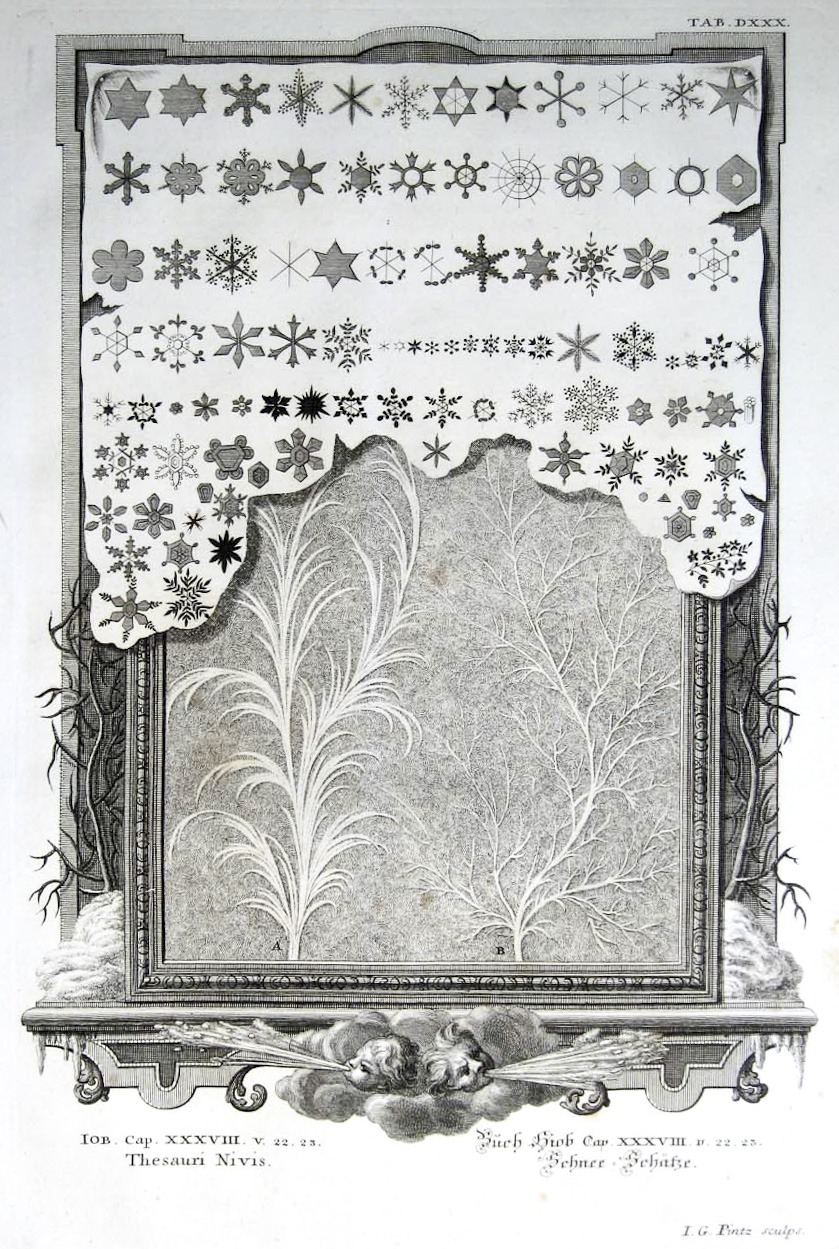
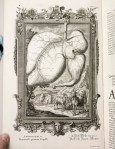
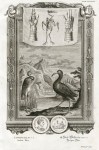
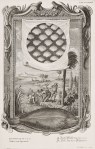
NYAMsacra7Originally published in 1731, this bizarre large-scale book features over 700 copper plate engravings. With a fine balance of careful observation and allegorical imagination, these depict—in frames each more fanciful than the last—such scenes as: lamenting fetal skeletons with the motto “homo ex humo” (‘man from the ground’, or ‘dust’); a variety of anatomical views of the human body projected on drapery or foregrounding mysterious landscapes; birds in biblical landscapes augmented by baffling cyphers; comparative snowflakes with the text “thesauri nivis” or “treasures of snow”; and much more.

These images serve as an excellent reminder that our views of science—and particularly the study of the human body—have changed over time. As explained by Martin Kemp and Marina Wallace in their book Spectacular Bodies:

The purpose of anatomical images during the period of the Renaissance to the 19th century had as much to do with what we would call aesthetic and theological understanding as with the narrower interests of medical illustrators as now understood . . . . They were not simply instructional diagrams for the doctor technician, but statements about the nature of human beings as made by God in the context of the created world as a whole . . . they are about the nature of life and death. . . .

I have not been able to find too much about this book in English, though my friend—and Wonder Cabinet speaker—Daniel Margócsy has promised a future lecture on the topic. In the mean time, Christie’s Auction House has a helpful entry on the book that explains that Johann Jakob Scheuchzer (1672–1733)—a Swiss doctor and natural scientist—”planned the Physica Sacra as an explanation of and a commentary on the Bible on natural-scientific grounds. He himself oversaw the illustrations which were largely based on his own natural history cabinet or on other famous European cabinets of rare specimens.”

Scheuchzer’s work also inspired an art exhibit at the University of Massachusetts—Dartmouth in 2007/8: “Science, Religion, Art.”  The organizers note that:

a lifelong scholar, Scheuchzer’s pursuits of knowledge were wide-ranging and diverse, from science to medicine to paleontology. Like many scientists of the late 17th and early 18th century, Scheuchzer held to the belief that the Old Testament was a factual account of the history of the earth. . . . In a period before public museums, Scheuchzer presented a seductive view of an imaginary world, viewed through lush frames depicting secondary symbols, plants, animals, heads and other objects, providing the viewer rich material for an inspired vision of the interaction between the natural and the divine powers.

Below are just a very few of my favorite images from the book, some that I photographed from the original, and others coming from the set of almost half of the 737 images from the book (!!!) so kindly provided by greyherbert’s amazing Flickr stream; you can see them all by clicking here.

Stay tuned for more posts in the days and weeks to come!

Joanna Ebenstein, Morbid Anatomy
Guest post # 1

Eighty Years and Counting

Gallery

This gallery contains 4 photos.

By Arlene Shaner, Acting Curator and Reference Librarian for Historical Collections Many of you are aware that the Malloch Suite of rare book rooms (the Coller Rare Book Reading Room and the Seminar Room) has been under renovation since early … Continue reading

Seeing With New Eyes: Rediscovering Medieval Manuscripts in a Digital Age

Today we have a guest post written by Monica Green, a longtime NYAM researcher.

Several times over the past 30 years, I’ve consulted a mid-13th-century manuscript in the New York Academy of Medicine’s holdings. This large, 94-leaf, handsomely bound volume was formative to my training as a historian of medieval medical history, having been the first “real” manuscript I examined when I was beginning my researches on the so-called Trotula texts in the early 1980s.
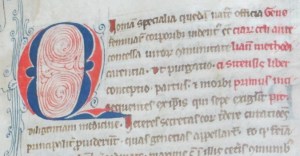
Opening of Caelius.

Opening of Caelius, f. 61ra

Like most scholars who study the history of intellectual traditions, my eyes were on my immediate object of study—in this case, a 12th-century compendium of texts on women’s medicine and cosmetics. My peripheral vision went no further than the other texts on women’s medicine that surrounded it in the manuscript. These were certainly enthralling: they included one of only two known copies of the Gynecology of the 4th-century writer, Caelius Aurelianus. But the other contents of the manuscript, let alone its structure as a whole, were all but invisible to me.

I did come back, many years later, with some questions about one of the surgical texts in the volume.  This was the visually stunning (and rightly famous) Surgery of the early 11th-century Cordoban physician, Abu al-Qasim Khalaf ibn ‘Abbas al-Zahrawi, whose work had been translated from Arabic into Latin in Toledo.  But the NYAM manuscript was not a unique copy (al-Zahrawi’s work exists in some 33 extant Latin manuscripts), and so—my questions quickly answered—I moved on again.

But my attention was brought back to the NYAM volume again last year, because of some questions being raised by a new project.  Two problems seemed to revolve around each other:  why was there a 50-year gap between when the Arabic-into-Latin translator Gerard of Cremona died in 1187 (he was the one who had translated al-Zahrawi) and when his texts first started to be regularly used and cited?  And, secondly, why did so many copies of these works, once they did appear, seem (a) to cluster around Paris and (b) show a level of magnificence in decoration that most medical texts had never previously enjoyed?

Suddenly, the NYAM manuscript took on new significance:  the illumination and decoration, which I had previously ignored, became newly important.  And so, too, did the “minor” texts, such as the Surgery of Horses, of which this is likewise an early copy.  This really was a most unusual manuscript, I realized. And the physical character of the book—its structure and decoration as well as its contents—were key to figuring it out.  So here I am this summer, back to consult it again.
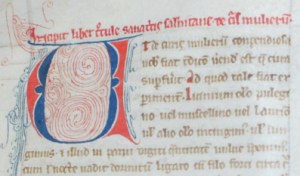
f. 77ra, opening of Trotula

f. 77ra, opening of Trotula

The gynecological unit, which I had worked with most extensively, was the most typical:  the Trotula text, for example, opens with a lovely “puzzle” initial ‘U’, but there is nothing here to distinguish the manuscript from many hundreds of others made in the same period.

Not so for the surgical section of the manuscript.  First was the cautery section:  most of what must have been about two dozen images had been cut away (yes, they had art thieves already in the Middle Ages!).  But the two images that remain show, in quite typical northern European style, images of a surgeon applying hot burning irons to the surface of the patient’s body in order to heal, respectively, sciatica and heart or stomach problems.
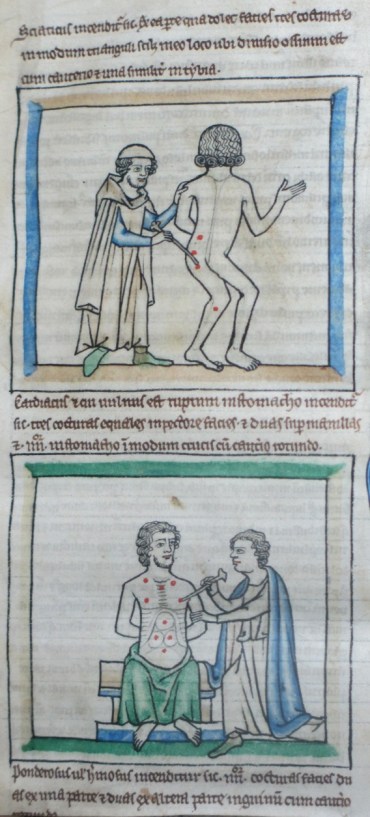
f. 3ra, cautery scenes

f. 3ra, cautery scenes

f. 45ra, opening of Roger, Chirurgia

f. 45ra, opening of Roger, Chirurgia

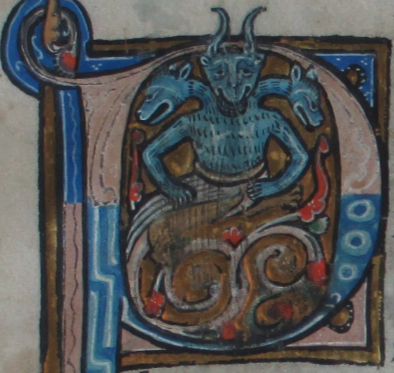
Immediately following was a sequence of other surgical texts.  Each one of them had a striking opening initial, framed in gold leaf with elegant foliated designs that are very similar to the output of an artist’s workshop in Paris associated with the name of the Johannes Grusch.  The three-headed devil that opens the Surgery of Roger Frugardi is especially memorable.
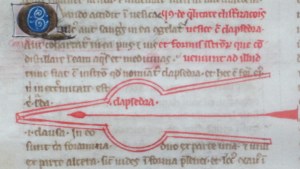


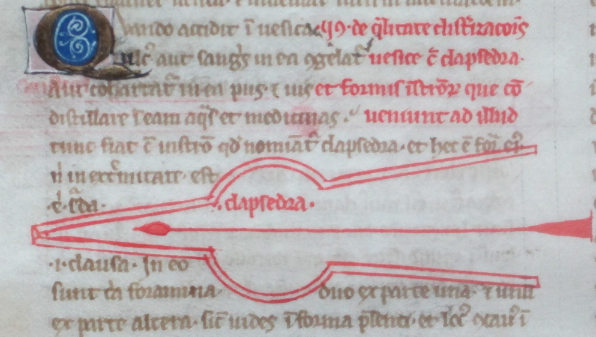
f. 23va:  sample champie initial and clapsedra

f. 23va: sample champie initial and clapsedra

But in the middle of that sequence of smaller surgical texts (all of which probably came out of southern Italy) comes the al-Zahrawi text, with its own unique decoration scheme.  Here we find throughout the text elegant gold-leaf initials, drawn against alternating light blue or rose-colored backgrounds with white ink filigree.  (Art historians call this a “champie” decoration.)  And, of course, here we find the depictions of surgical tools that characterize all the copies of al-Zahrawi’s surgical text, whether Latin or Arabic. The different decoration schemes seemed to correspond to different places from where the commissioner of this book was getting his exemplars (the manuscripts from which this manuscript was copied).

So in what sense does being in a digital age give us “new eyes”?  I had the physical manuscript right in front of me:  800 years of history that I could touch with my hands.  Nothing “virtual” about this!  Ah, but the New York Academy of Medicine was not this book’s original home.  Because so many European libraries are now making their manuscripts available digitally online, it is possible to reconstruct virtually what medieval libraries looked like, to reassemble their components and reconstruct how they came into being.  Because I could learn more about other manuscripts produced at the same time, I was now beginning to understand how extraordinary this manuscript’s medieval home had been.

The NYAM manuscript was commissioned in the mid-13th century by Richard de Fournival, a surgeon and, eventually, the chancellor of the cathedral of Amiens.  (de Fournival had gotten special dispensation from the Pope to continue his surgical practice despite his being a cleric.  His father and nephew were physicians, too.)  The NYAM manuscript captures all the international networks that de Fournival belonged to:  English, Norman, French, and Italian.  Besides being a cleric and a surgeon (and a poet and musician), de Fournival was a librarian—not simply a collector but a curator of books.  The library he created of 162 volumes (comprising many 100s of different texts) literally changed the course of history in laying the foundation for a new, more sophisticated medical system in Europe that was as influential in establishing the social worlds of physicians and other medical practitioners as it was in defining their intellectual worlds.  It was de Fournival, I was realizing, that was instrumental in rediscovering Gerard of Cremona’s translations (including al-Zahrawi’s Surgery) and introducing them into the fertile context of the Parisian academic world.

In our day, Google and PubMed and any number of Internet resources make us lose sight of where knowledge comes from.  Everything seems freely available, whenever we want it.  But books were once extraordinarily precious.  Juxtaposing the digital with the real vellum and leather and wood and gold leaf of a medieval manuscript is an excellent reminder of the cultures of learning we still share across the centuries.

Monica H. Green is a specialist in medieval medical history and the global history of health.  She would like to thank Alison Stones for the impetus to bring “new eyes” to the NYAM manuscript, and Jocelyn Wogan-Browne for making this New York sojourn possible.  And, of course, the NYAM librarians for once again making the manuscript available for study.  Green will be spending the 2013-14 academic year at the Institute for Advanced Study in Princeton.  She can be reached at monica.green@asu.edu.

Item of the Month: Charles Darwin’s The Descent of Man and Selection Related to Sex

By Danielle Aloia, Special Projects Librarian

Charles Darwin. Courtesy of the National Library of Medicine.

Charles Darwin. Courtesy of the National Library of Medicine.

The Descent of Man is a groundbreaking work, as relevant today as when it was first published in 1871. The Center for History owns 8 copies of this title, published 12 years after Darwin’s most well known work, On the Origin of Species. Both books sold out quickly, a sign both of Darwin’s persuasive writing, and people’s persistent interest in their origins! In the Descent of Man, Darwin explained the development of the human species by evolutionary processes. He particularly focused on two points: whether the ability to reason and to make moral judgments could evolve in the same way as could physical forms, and how beauty and other seemingly extraneous factors could have an evolutionary role. These were contentious issues, as mental abilities seemed to be a sharp divide between humans and animals, and the existence of order, harmony, and beauty seemed inconsistent with evolution. To think that man had “evolved from apes” seemed nonsensical and was much criticized; Darwin sought to make it plausible.

Here we examine a 1915 copy of the second edition, first published in 1874, which was greatly revised and augmented with extra illustrations in comparison to the first edition. In the preface, Darwin stated, “When naturalists have become familiar with the idea of sexual selection, it will, as I believe, be much more largely accepted; and it has already been fully and favourably received by several capable judges.” He also acknowledged the criticism he received, referring to the “fiery ordeal through which the book has passed,” and welcomed the observations “of Prof. Huxley, on the nature of the differences between the brains of man and the higher apes.” In a series of debates in the early 1860s with noted anatomist Robert Owen, Darwin’s compatriot T.H. Huxley had demonstrated the essential structural continuity of human and ape brains, providing another piece to the puzzle. Darwin knew and accepted that his theories would provoke a backlash, and he modified the details as needed, but he also held steadfast to his original concepts.

A Table of the Principal Additions and Corrections to the Edition of 1874 compares the 1st edition of 1871, the 2nd of 1874, and the 2nd edition “new printing” of 1888, and is included in the opening pages. Especially interesting are: “Cases of men born with hairy bodies”, and “Resemblances between idiots and animals”.

Click to enlarge.

Click to enlarge.

The engravings reference the differences among males and females of the same species, to illustrate the concept of sexual selection. The species depicted ranged over many classes, including insects, crustaceans, reptiles, birds, and mammals. The engraving below helps to explain how the beautiful plumage of the male bird attracts the female.

darwinbirds

Click to enlarge.

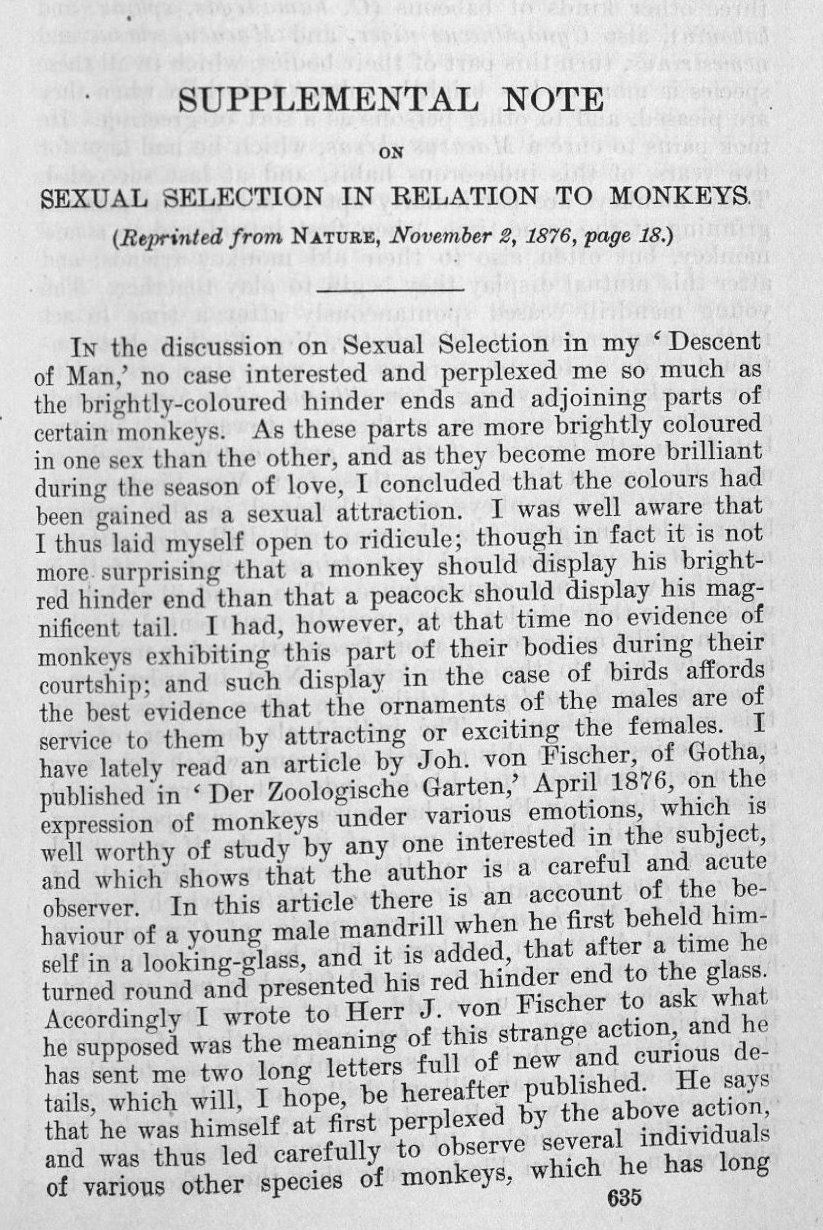
This edition also includes a reprint from an article in Nature, from November 2, 1876, which Darwin wrote to explain his misinterpretation of the “brightly-coloured hinder ends and adjoining parts of monkeys.” He was wrong in assuming that the bright color was for attracting the opposite sex. He read an article by Herr J. von Fischer, who studied monkeys, even keeping them in his house, which explained that the reason was more straightforward: the species would “turn this part of their bodies . . . to him when they are pleased, and to other persons as a sort of greeting.” Surely, Darwin was unafraid to own up to his mistakes.

Click to enlarge.

Click to enlarge.

The book also hosts a tightly-worded index of over 40 pages, where can be found references to the color of Kingfishers, dogs dreaming, and the liability of monkeys to the same diseases as man.

Click to enlarge.

Click to enlarge.

This volume of work has long been the cause of both scientific inquiry and challenge, and continues to be a work of enduring scientific importance.

Sources

Darwin, Charles. (1915). The Descent of Man and Selection in Relation to Sex. New York: D. Appleton and Company.

Alter, Stephen G. (2007). Race, Language, and Mental Evolution in Darwin’s Descent of Man. Journal of the History of the Behavioral Sciences. 43(3): 239-255.

The Darwin Centenary and “The Descent of Man.” (187-).The American Review of Reviews. 239-240.

There is Death in the Pot

By Johanna Goldberg, Information Services Librarian

While in the stacks recently, we came across this intriguing cover.

DeathinthePot-cover


How can you not open the book? The title page did not disappoint.

DeathinthePot-titlepageFood adulteration was a dangerous problem in 19th-century London. In 1820, chemist Fredrick Accum wrote A Treatise on Adulterations of Food and Culinary Poisons, the first book of its kind to attempt to expose the dangers of the food, water, and beverage supply.¹

Among many other practices, Accum cautioned against alum in the bread supply, used to make bread whiter; fraudulent peppercorns, made of lintseed, clay, and a small bit of Cayenne; vinegar laced with sulphuric acid; red lead used to color cheese; and beer mixed with a poisonous narcotic plant, cocculus indicus.² Forty years after the book’s publication, Parliament passed the Food Adulteration Act.¹

The Royal Society of Chemistry’s Library and Information Centre offers an excellent online exhibit on the life and times of Accum (including a career-ending scandal involving mistreatment of library books). Learn more here.

Edit: A reader recognized the artwork as that of Berkeley King and kindly provided us with the following image of the cover of Accum’s Plans of the Gas Works in London, which King also designed.

AccumPlansoftheGasWorksinLondon


1. The fight against food adulteration. (n.d.). Retrieved May 16, 2013, from http://www.rsc.org/education/eic/issues/2005mar/thefightagainstfoodadulteration.asp

2. Accum, F. (1820). A treatise on adulterations of food, and culinary poisons exhibiting the fraudulent sophistications of bread, beer, wine, spirituous liquors, tea, coffee, cream, confectionery, vinegar, mustard, pepper, cheese, olive oil, pickles, and other articles employed in domestic economy, and methods of detecting them. London: Longman, Hurst, Rees, Orme, and Brown.

For your viewing pleasure

This Wednesday’s 2013 New York Academy of Medicine Gala featured the following video on the Center for the History of Medicine and Public Health. If you would like to learn more about our work or visit us in person, please email history@nyam.org and library@nyam.org.