Beard Dipping: New York Medicine 1900 Style

By Lisa O’Sullivan, Director, Center for the History of Medicine and Public Health

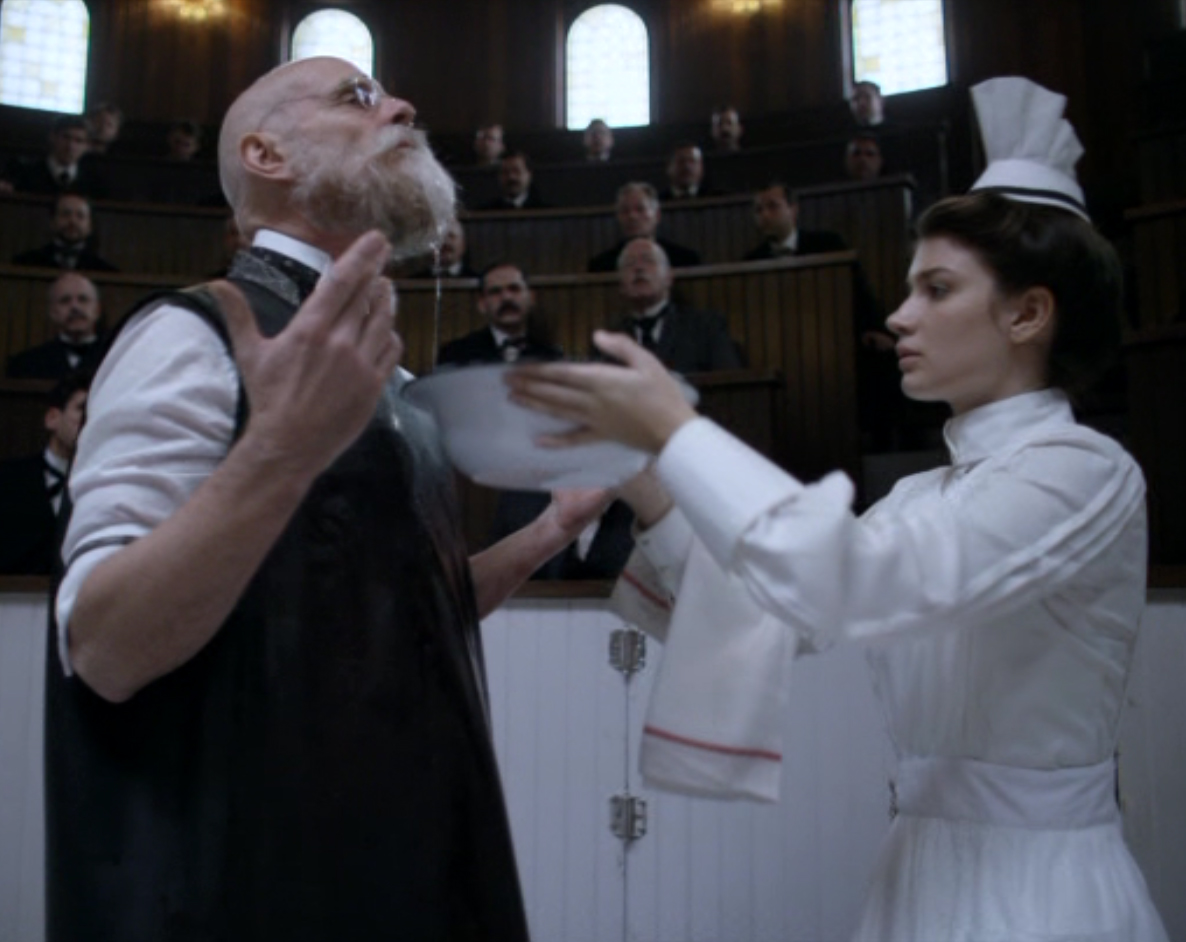
After episode one of The Knick, the question on everyone’s lips is of course: what was going on with the beard dipping? A commitment to getting the historical details right is the answer (although we hope for the actor’s sake the liquid wasn’t completely true to life).

Dr. Christiansen (Matt Frewer) preps his beard for surgery, assisted by Nurse Elkins (Eve Hewson). Courtsey of HBO-Cinemax.

Dr. Christiansen (Matt Frewer) preps his beard for surgery, assisted by Nurse Elkins (Eve Hewson). Credit: HBO-Cinemax.

The surgeons performing the emergency Caesarean early in the episode ran an operating theater following Listerian principles of cleanliness and antiseptic surgery. Joseph Lister (1827–1912) was a professor of surgery at the University of Glasgow in Scotland, who, influenced by Louis Pasteur’s germ theory, looked for methods to remove microorganisms from the environment during surgery. The introduction of chloroform and ether as anesthetic agents in the mid-19th century meant that surgery had become a much less painful process for patients (and allowed surgeons to focus on longer and more complex procedures). However, surgery remained dangerous, with postoperative infection continuing to be a serious, often fatal, problem.

Carbolic steam spray used by Joseph Lister, England, 1866-18. Courtesy of the Science Museum, London, Wellcome Images.

Carbolic steam spray used by Joseph Lister, England, 1866-1870. Courtesy of the Science Museum, London, Wellcome Images.

In 1867, Lister published an article in which he proposed using carbolic acid (already used to treat sewage) to sterilize the operating room, surgical instruments, bandages, and wounds. Surgeons were encouraged to dip their hands—and yes, their beards!—into carbolic acid before operating.

Working in the midst of a pungent yellow spray that smelled like tar was not ideal and inhaling too much carbolic acid could be dangerous. Lister continued experimenting throughout his career with new sterilization techniques. However he never embraced the idea of gowns, face masks, or gloves.

The use of gloves in surgery was introduced by William Stewart Halsted (on whom Clive Owen’s character Dr. Thackery is based) in the 1890s. A pioneer of antiseptic surgery, one of his surgical nurses (whom he later married) had a bad reaction to the mercuric chloride used as a disinfectant, so he commissioned Goodyear rubber to make her some gloves. The early use of gloves in surgery was not about patient safety, but protecting the medical team. Like any new innovation, reactions were mixed. Some individuals embraced the idea of gloves, while others continued to operate bare-knuckled.

We’re looking forward to the next episode. Let us know in the comments if you have any questions about what’s going on in the hospital and we will get back to you in a future post.

It’s All in the Details

By Arlene Shaner, Acting Curator and Reference Librarian for Historical Collections

"Male Ward E" at Hahnemann Hospital, from the Hospital's May 1901 Report.

“Male Ward E” at Hahnemann Hospital, from the hospital’s May 1901 report. Click to enlarge.

Advertising for The Knick, the HBO Cinemax series that begins tonight, is everywhere right now. The show, which centers on the world of a fictional New York hospital, The Knickerbocker, right at the turn of the 20th century, has been in our sights here in the NYAM Library for months.

Long before the episodes of any historical drama are ready to air, a tremendous amount of research goes into making sure that the settings, costumes, and stories display a level of historical accuracy that will make the show believable. It is part of our mission as a library devoted to the history of medicine to help the show’s researchers discover where the information they need can be found. We don’t do our jobs alone, though, and colleagues at many other area institutions such as the Archives and Special Collections at the Health Sciences Library at Columbia University, the Museum of the City of New York and the Mount Sinai Archives, to name just a few, offered plenty of assistance as well.

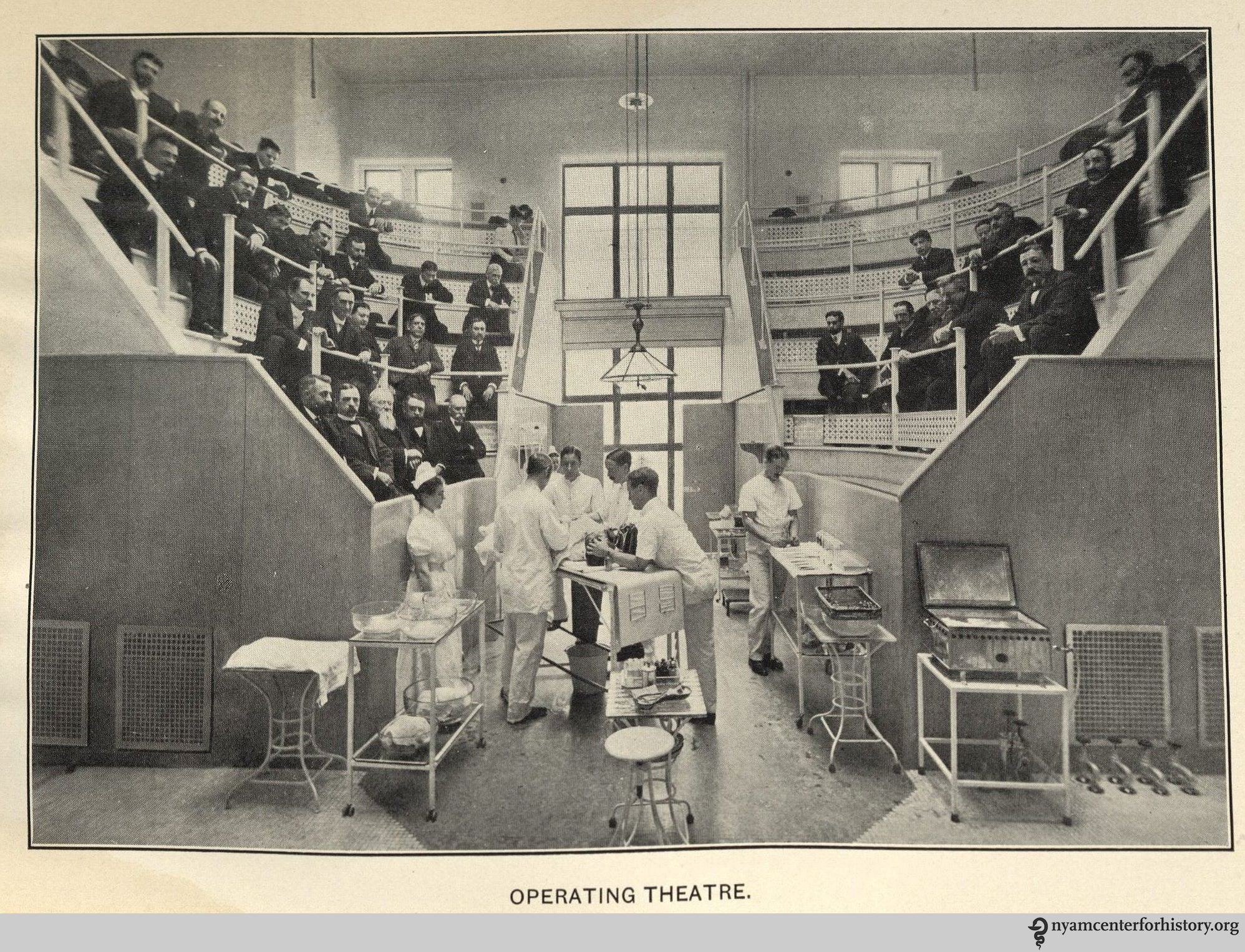
There are lots of resources in our collections that Knick researchers explored while the show was under development. A particularly rich source for images and descriptions of hospitals in 1900, the year in which the show begins, are the annual reports produced by medical institutions here in the city. Illustrations of operating theaters, like this one from the Presbyterian Hospital, help designers build accurate sets in which the drama can unfold.

Presbyterian Hospital's operating theater, an image from its 1901 annual report. Click to enlarge.

Presbyterian Hospital’s operating theater, an image from its 1901 annual report. Click to enlarge.

In some instances, written descriptions help answer questions that come up when the photographs themselves don’t provide enough information. The Hahnemann Hospital operating room in the picture below is quite distinctive in appearance, but the actual descriptions of the rooms from the Hospital Souvenir offer lots of extra details: room dimensions; lists of equipment along with information about what everything is made from and where it sits in the space itself; and explanations of how the different rooms are physically connected to each other or separated from other spaces.

A Hahnemann Hospital operating room, from its May 1906 report. Click to enlarge.

A Hahnemann Hospital operating room, from its May 1906 report. Click to enlarge.

Descriptions of Hahnemann Hospital rooms, from the hospital's 1900 Souvenir.

Descriptions of Hahnemann Hospital rooms, from the hospital’s 1900 Souvenir. Click to enlarge.

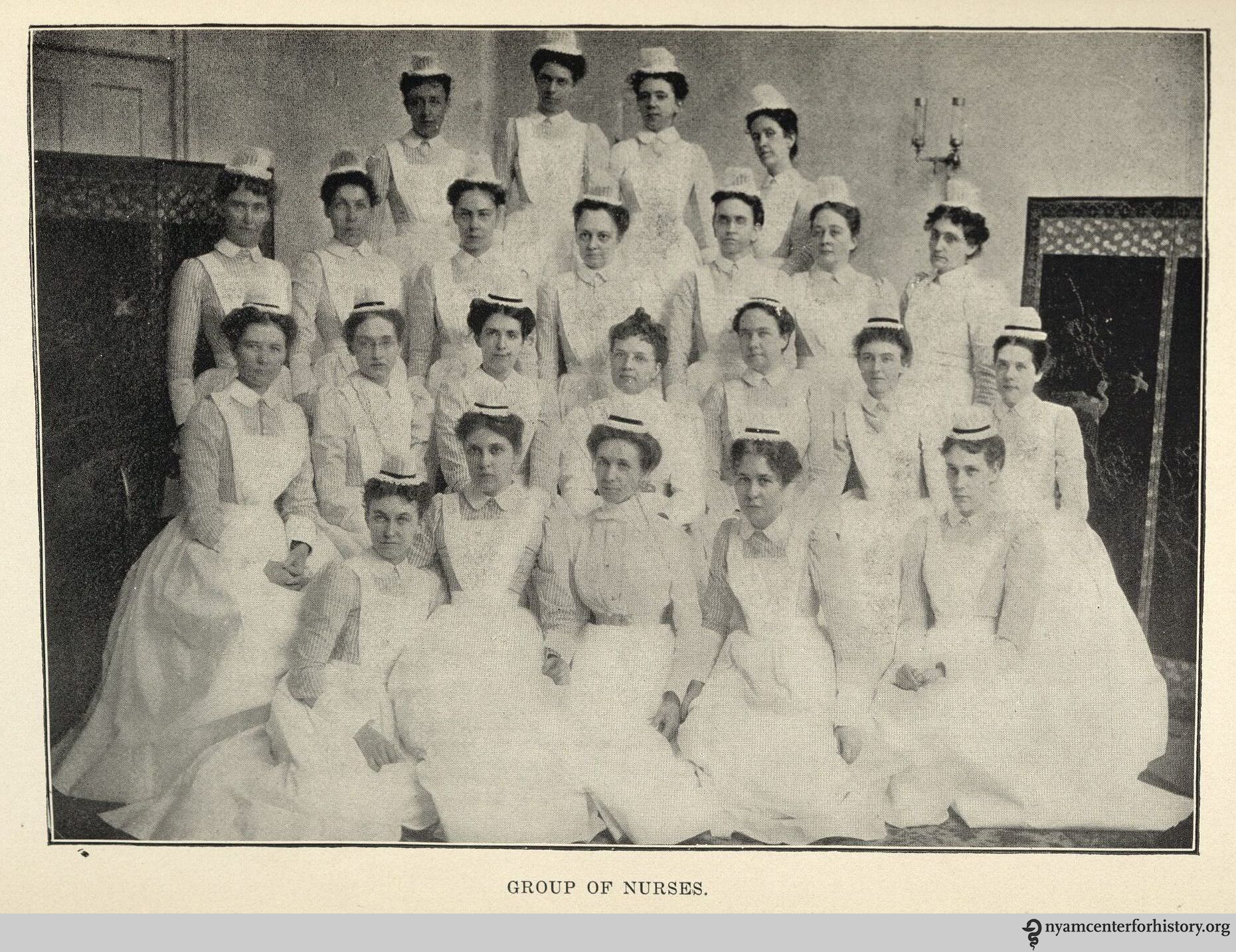
A group of nurses from the May 1901 Hahnemann Hospital report.

A group of nurses from the May 1901 Hahnemann Hospital report. Click to enlarge

Some of the photographs also show us how doctors and nurses dressed. The nurses with their long white pinafores and puffy hats certainly look more dated than the surgeons in their doctors’ whites. And if you look back at the 1901 image of the operating theater from the beginning of this post, you’ll note that even though the doctors are performing surgery that no one is wearing a mask or gloves. In the Hahnemann Hospital operating room image from 1906, only a few people have gloves on.

We’ll be posting more about early 20th century medical practice on all of our social media platforms as The Knick gets underway, so be sure to follow us on Twitter and Facebook. And check our blog on Monday to learn more about the medical history behind The Knick.

Naissance Macabre: Birth, Death, and Female Anatomy

Brandy Schillace, PhD, the author of today’s guest post, is the research associate and guest curator for the Dittrick Museum of Medical History. She will speak at our October 18th festival, Art, Anatomy, and the Body: Vesalius 500.

The dance of death: Death emerges from the ground and is greeted by a group of allegorical women, symbolizing the vices. Woodcut after Alfred Rethel, 1848. Credit: Wellcome Library, London

The dance of death: Death emerges from the ground and is greeted by a group of allegorical women, symbolizing the vices. Woodcut after Alfred Rethel, 1848. Credit: Wellcome Library, London. Click to enlarge.

The danse macabre, or dance of death, features whirling skeletons and other personifications of death stalking the living. These images appeared regularly in the medieval period, particularly after outbreaks of bubonic plague. One of the salient features was death and life pictured together, frequently in the form of a young and beautiful woman. The juxtaposition symbolized how fleeting life could be, and served as a warning against vice and vanity. While death and the maiden might remind viewers of their own mortality, another set of images became far more instructive to the preservation of life: death and the mother—the anatomy of the pregnant womb.

From Jacob Reuff’s The Expert Midwife. Image courtesy of the Dittrick Museum.

From Jacob Reuff’s The Expert Midwife. Image courtesy of the Dittrick Museum.

The 1500s saw the proliferation of full-figure anatomy. Jacob Reuff’s The Expert Midwife (and other texts like it) displayed women with their torsos peeled back, daintily displaying their inner organs. Plenty of scholarship has focused on the near-wanton and sexualized poses of these and of the “wax Venus” figures, some of whom appear to be in raptures despite being disemboweled. Male figures also appeared in full and sometimes opened—many of Vesalius’ plates in On the Fabric of the Human Body provide these interior views. The male gaze is often directed at the viewer or at the anatomy, while female figures tend to look askance (perhaps with modesty or shame at the revelation of their innards). By the 18th century, however, the whole had been replaced by sectioned and partial anatomies. No longer were the figures walking, dancing, or—in the case of women—curtseying. Instead, only the relevant bits appear in the pages of the atlas, which meant (in pregnant women) only the womb.

Easily the most famous works on pregnant anatomy in the 18th century, William Smellie’s A Sett of Anatomical Tables and William Hunter’s Gravid Uterus provide a portal for viewing key developments in the practice of 18th-century midwifery. In Tables, Smellie set out to demonstrate technique, but, as historian Lucy Inglis explained in a recent talk at the Dittrick Museum, Hunter was more interested in ensuring his fame by making scientific discoveries on the causes of maternal death in childbirth. In fact, the title Gravid Uterus suggests just how primary the womb had become; the women to whom they belonged are depicted headless, limbless, with bloodied cross-sections of stumped legs.

From Hunter’s Gravid Uterus. Image courtesy of the Dittrick Museum.

From Hunter’s Gravid Uterus. Image courtesy of the Dittrick Museum. Click to enlarge.

Neither anatomist provided entire forms—there was no expectation that they should. But Smellie’s models often included sheets of cloth to hide, but also to suggest, extremities. There is some debate about whether Hunter deliberately tried to achieve artistic or visceral impact,1 but unlike the birthing sheet, which hid the woman’s body from the midwife, the atlas rendered the female form more than denuded: It was naked of flesh, severed in places, the internal matter laid open for observation. At the same time, these female anatomies, like silent muses, were invaluable to the practice of midwifery, particularly as it pertained to difficult and dangerous cases. So what was gained—or lost—by these piecemeal renderings?

In February 2013, I worked with Lucy Inglis on a temporary gallery at the Dittrick that showcased both atlases, not for the sake of their authors, but to exhibit the work of the artist. Jan Van Rymsdyk—the artist behind the majority of figures in both atlases—had a “forensic eye.” He attended when Hunter obtained a new corpse and sketched as the dissections took place. Once, he watched a stillborn baby, more suited to the illustration, substituted within a dead woman’s womb. Lucy and I pondered the ramifications of this, the strange artificial quality of these posed cadavers. Enlightenment ideals required strict adherence to evidence, to the “real.” And yet, even here, anatomies were constructed by doctor and artist, a “dance” that renders plain the problems and process of birth at the moment of death.

In Dream Anatomy, historian Michael Sappol suggests that mastery over the dead body was akin to mastery over oneself, and even a kind of mastery over death.2 He notes, too, the attempts of early anatomy texts to shock the reader, and even the pleasure of shock; the sense that anatomists and anatomy artists wielded an erotic power in undressing the body.2 The detachment necessary to the task (and feared by a public concerned that dissection rendered doctors inhuman) cannot be universally applied to all, however. Van Rymsdyk suffered something akin to a breakdown from the hours spent hovering over dead women and their children with his palette of chalks—and Smellie turned his anatomical information into instruction for saving the lives of women and children. Even so, in the naissance macabre, artist and author reduce female anatomy to constituent parts: woman becomes womb, objectified as teaching tool…a mute muse, but a muse none the less.

References

1. McCulloch, N.A., D. Russell, S.W. McDonald. “William Hunter’s casts of the gravid uterus at the University of Glasgow.” Clinical Anatomy 14, no. 3 (2001): 210-217.

2. Sappol, M. (2006). Dream Anatomy. Washington, D.C.: Government Printing Office, 34.

Robert Hooke’s Micrographia (Item of the Month)

By Rebecca Pou, Archivist

The title page of Hooke's Micrographia.

The title page of Hooke’s Micrographia.

Robert Hooke was born on July 28 (O.S. July 18), 1635. To commemorate his birthday, we are featuring his book Micrographia as July’s item of the month.

Hooke published Micrographia in 1665 when he was 30 years old. At the time, Hooke was the curator of experiments for the Royal Society of London, which involved conducting several experiments a week and presenting them to the society. Hooke made many of the observations found in Micrographia through his activities for the society, and the Royal Society commissioned and printed the book.1

An extraordinary work, Micrographia details Hooke’s observations on objects as varied as the point of a needle, a louse, and the moon (he also utilized telescopes). The book includes 38 copperplate engravings of microscopic views based on Hooke’s drawings. Micrographia was not the first book of microscopic observations, but it was more successful and accessible than its predecessors. Who wouldn’t marvel at a close up shot of a flea?

Here is a selection of Micrographia’s plates (click to enlarge):

Fig. 1 shows a microscopic view of kettering-stone. In observation XV, Hooke notes, “We may here find a Stone by the help of a Microscope, to be made up of abundance of small Balls…and yet there being so many contacts, they make a firm hard mass…”

Fig. 1 shows a microscopic view of kettering-stone. In observation XV, Hooke notes, “We may here find a Stone by the help of a Microscope, to be made up of abundance of small Balls…and yet there being so many contacts, they make a firm hard mass…”

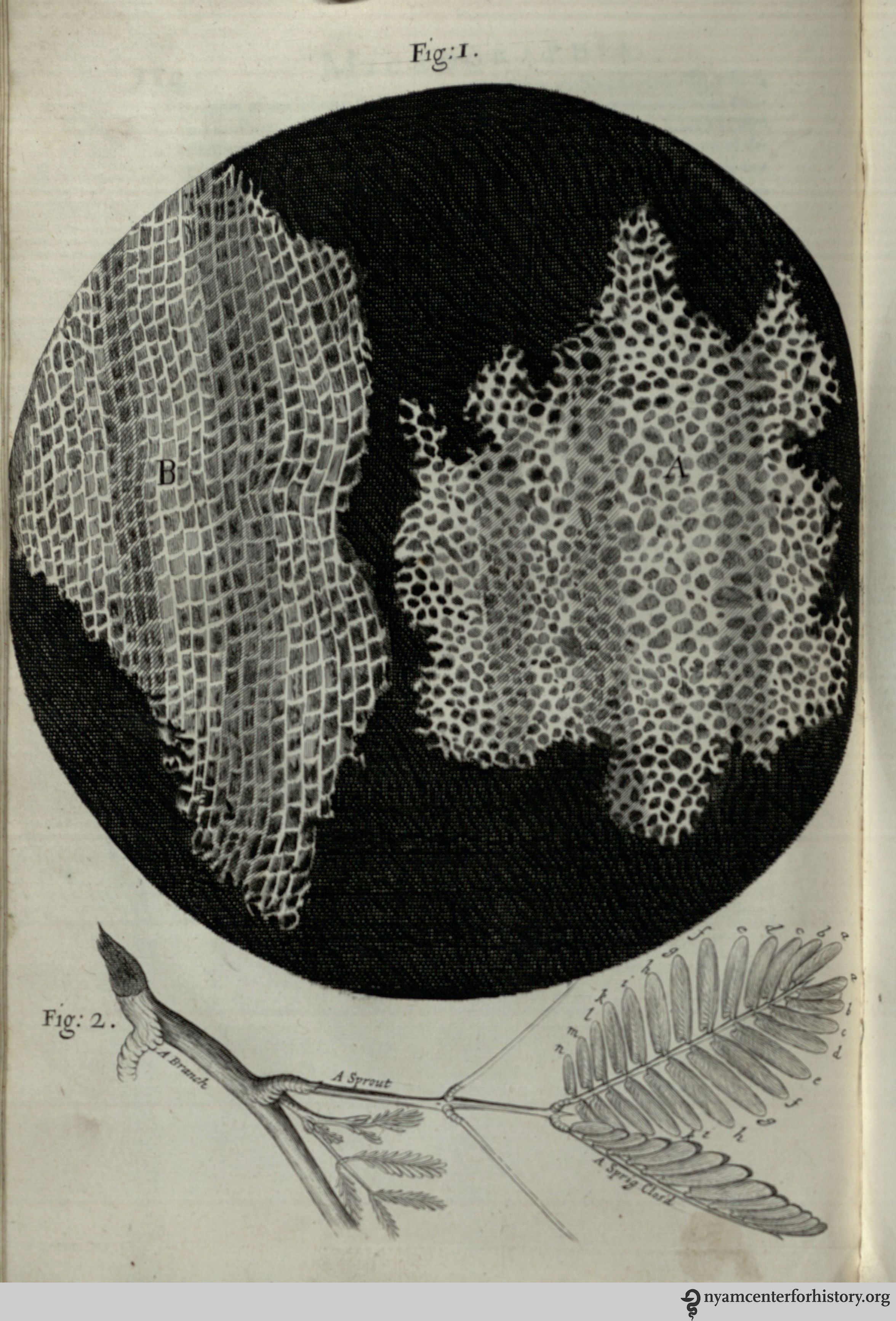
In his observation on cork, Hooke compared its structure to that of honeycomb and. He discovered plant cells, “which were indeed the first microscopical pores I ever saw, and perhaps that were ever seen…,” and coined the term “cell.”

In his observation on cork, Hooke compared its structure to that of honeycomb. He discovered plant cells, “which were indeed the first microscopical pores I ever saw, and perhaps that were ever seen…,” and coined the term “cell.”

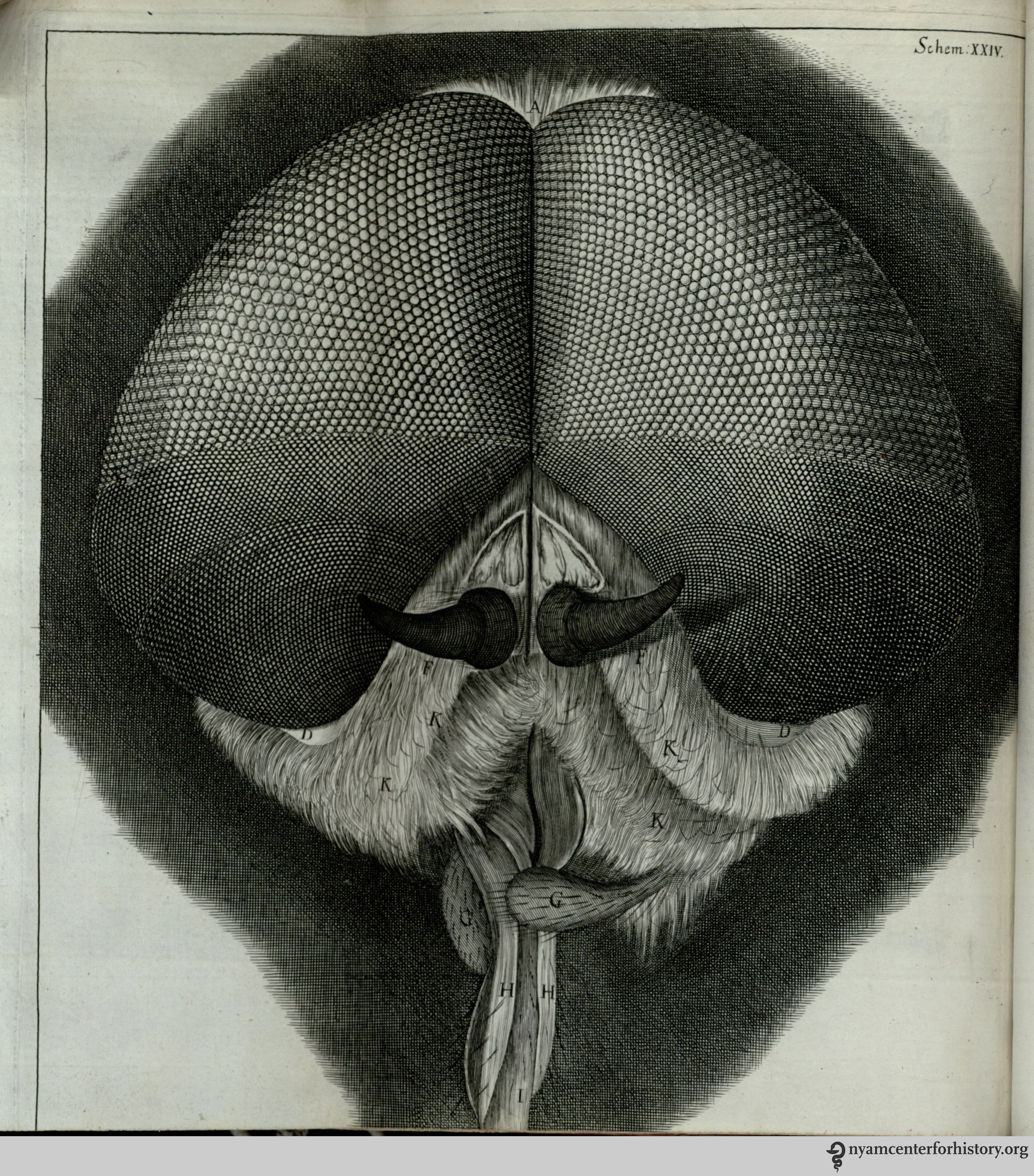
For observation XXXIV, Hooke examined the eyes and head of grey drone-fly.

For observation XXXIV, Hooke examined the eyes and head of grey drone-fly.

Hooke seemed enamored with the white feather-winged moth, calling it a “pretty insect” and “a lovely object both to the naked Eye, and through a Microscope.”

Hooke seemed enamored with the white feather-winged moth, calling it a “pretty insect” and “a lovely object both to the naked Eye, and through a Microscope.”

The flea is one of several fold-out plates in the book. Again, Hooke has a scientist’s appreciation for the insect, commenting equally on its strength and beauty. He is particularly fascinated with the anatomy of its legs and joints, which “are so adapted, that he can…fold them short within another, and suddenly stretch, or spring them out to their whole length.”

The flea is one of several fold-out plates in the book. Again, Hooke has a scientist’s appreciation for the insect, commenting equally on its strength and beauty. He is particularly fascinated with the anatomy of its legs and joints, which “are so adapted, that he can…fold them short within another, and suddenly stretch, or spring them out to their whole length.”

In the last observations, Hooke turned his attention to celestial bodies. His study of the moon lead him to believe it might be covered in vegetation. He thought the hills seen in Fig. 2 “may be covered with so thin a vegetable Coat, as we may observe the Hills with us to be, such as the short Sheep pasture which covers the Hills of Salisbury Plains.”

In the last observations, Hooke turned his attention to celestial bodies. His study of the moon led him to surmise that the hills seen in Fig. 2 “may be covered with so thin a vegetable Coat, as we may observe the Hills with us to be, such as the short Sheep pasture which covers the Hills of Salisbury Plains.”

The National Library of Medicine’s Turning the Pages project has a selection of images from Micrographia available. It is well worth flipping through; you’ll find curator’s notes and you can even open the folded plates. If you are interested in looking at Micrographia in its entirety, contact us at history@nyam.org or 212-822-7313 to make an appointment.

Reference
1. Espinasee, Margaret. Robert Hooke. London: Heinemann, [1956].

Guest curator Riva Lehrer on Vesalius 500

Our “Art, Anatomy, and the Body: Vesalius 500” festival guest curator, artist and anatomist Riva Lehrer, describes some of her thinking about bodies, anatomy and art.

In 1543, when Andreas Vesalius published his De humani corporis fabrica (On the fabric of the human body) many contemporaries refused to accept his results. They contradicted canonical texts passed down over millennia: belief and expectation trumped direct experience and observation.

It’s easy to smile condescendingly at such pig-headedness. Yet we can scarcely look in the mirror without being caught in a fog of distortion. Every day we’re overloaded with information about how we should look and how our bodies should work. There are still plenty of ways in which our biases form medicine, and medicine, in turn, forms us.

"Circle Stories #4: Riva Lehrer" 1998  self portrait

“Circle Stories #4: Riva Lehrer” (1998).

I was born with visible disabilities. My body has always been seen as lacking, in need of correction, and medically unacceptable. My parents and doctors pushed me to have countless procedures to render it more “normal” as well as more systemically functional. These were two different streams of anxiety—how I worked and how I looked— yet they became inextricably woven together. My life in the hospital gave me a tremendously intimate view of medicine, as does the fact that I come from a family of doctors, nurses, and pharmacists. It gave me an acute awareness of how medical choices control and shape our bodies.

I first studied anatomy at the School of the Art Institute of Chicago and later at the University of Illinois at Chicago, as a visiting artist in the cadaver lab. I often think about what my first anatomy professor told me, many years ago. She remarked that when she was a child, people grew into their original faces. Whatever oddities they were born with formed what they looked like, year after year. Faces were hard-won and unique. But modern dentistry, nutrition, grooming—all the large and small interventions of medicine—made people look much more alike than they did sixty years ago.

In the 21st century, medicine is not just about the “correction” of significant impairments; personal perfectibility is as much the point of modern medicine as the curing of significant diseases. We view our bodies as lifetime fixer-upper projects.

Yet, it’s that very fluidity that opens profound questions about the identities our bodies express. Technologies such as radical cosmetic surgery, cyborgian interfaces, and gender reassignment procedures raise and complicate our expectations. Medicine offers new options if the inside of our bodies does not match the appearance of the outside. We live in a state of wild restlessness, trying to see and feel who we are. We see chimeras of possibility.

"At 54" Riva Lehrer 2012 self portrait

“At 54” by Riva Lehrer (2012).

My body was not normalized through all my surgeries; yet the original body I had would not have lived. It’s been changed so many times that I can’t even guess at what it would have been. My own mutability has given me a deep interest in the two-way relationship between one’s body and the course of a life.

I teach anatomy for artists at the School of the Art Institute and am a visiting artist in Medical Humanities at Northwestern University. My studio practice focuses on the intersection of the physical self and biography. I interview people in depth about the interweaving of their bodies and their stories. These interviews become narrative portraits, as I try to understand what can be known about a life in a single portrait image.

Join us as we explore the role of anatomy in identity formation through our celebration of the 500th anniversary of Vesalius’ birth. We’ve invited artists, performers, scholars, and historians to help us ask how our imaginations form our living flesh. Let’s all look in the mirror and ask, what are we really seeing, and what do we believe we see?

Some of the issues our speakers will explore include:

""Chase Joynt" by Riva Lehrer and Chase Joynt 2014

“”Chase Joynt” by Riva Lehrer and Chase Joynt (2014).

—How do we decide what is “lifesaving” and what is “elective” surgery when it comes to identity? Transgender performer Chase Joynt questions what it means to save a life, and how his dealings with the medical establishment led him to question such choices.

—How many of us were raised with the constant imprecation to stand up straight? Sander Gilman peers into the use of posture lessons in public schools to control the American body.

—Artist Steven Assael creates dramatic portraits of New Yorkers, from street performers to elderly eccentrics. His work shows us how identity travels from the inner self to the outer shell.  Assael is a long-time professor at New York’s School of Visual Arts, one of the last bastions of serious anatomical study in the U.S.

—Famed choreographer Heidi Latsky will discuss GIMP and how she creates dance for performers with a range of movements and morphologies. A performance and film excerpt bring us into the innovative strategies used by the GIMP collective.

—Many contemporary artists use anatomy in investigations of identity and formal exploration. Curator Ann Fox will present images from an international roster of artists. She will be joined by Taiwanese artist Sandie Yi, who will show work that deals with the intense difficulties of having a physically different body in China.

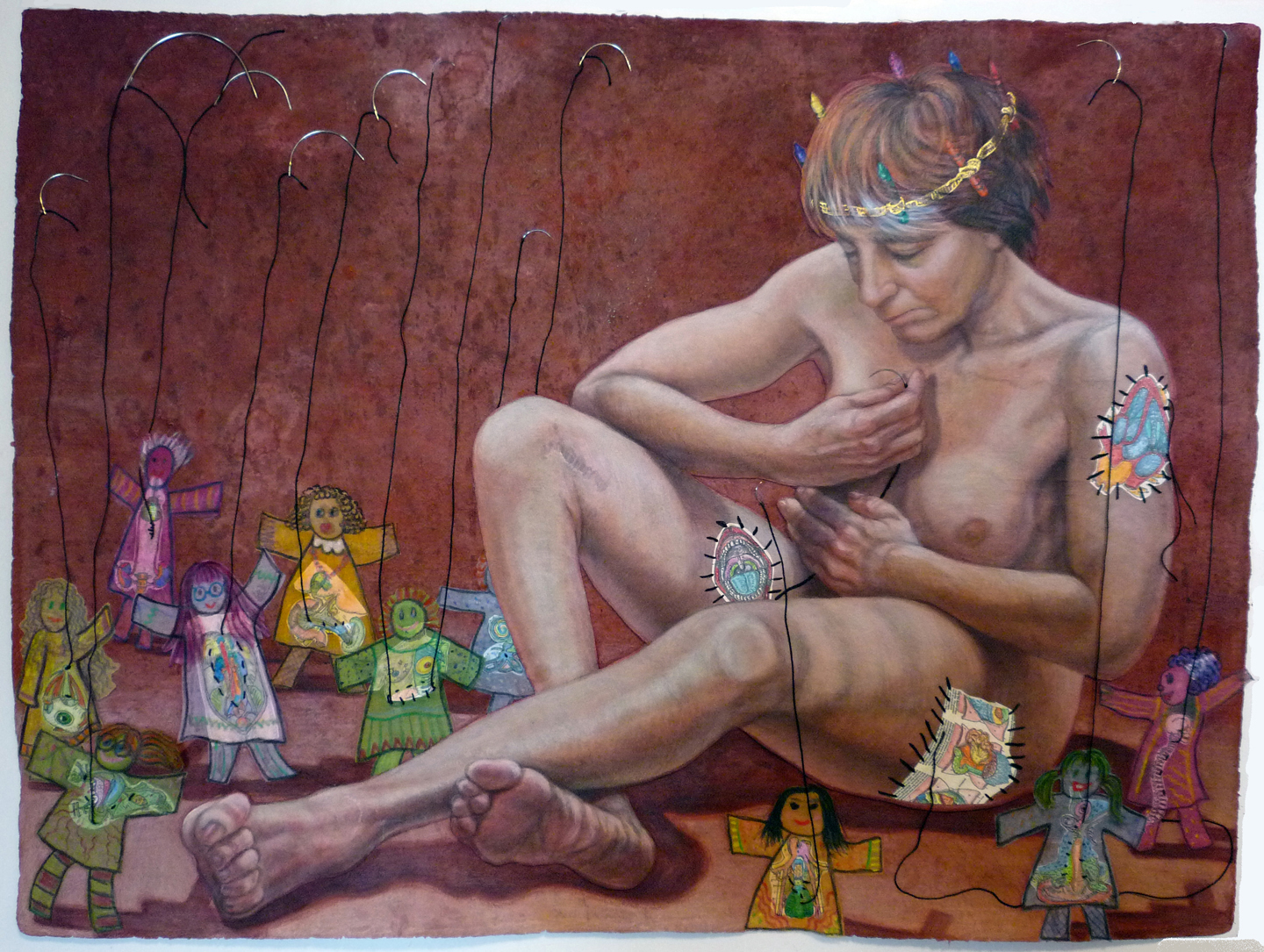
"Coloring Book" Riva Lehrer 2012

“Coloring Book” by Riva Lehrer (2012).

Graphic Medicine is a consortium of comics artists who explore medicine from the standpoint of doctor, nurse, patient and family member. The founders of Graphic Medicine, MK Czerwiec and Ian Williams, will discuss how the vulnerable body is rendered in comics form. Comics allow artists to move from the inside of the body to the outside in seamless transitions, to weave together objective perspectives and highly personal, subjective experiences.

Tracking the History of Cancer Drug Development

Lourdes Sosa, today’s guest blogger, is an associate professor in the department of management at the London School of Economics and Political Science.

Have new cancer drugs entered the market targeting ever-smaller portions of the total cancer patient population? If so, is this a symptom of a high-tech market phenomenon known to economists as submarket fragmentation?1 If we accurately answer these questions, we will better understand oncology drug discovery competition and thus will offer better strategic recommendations to enhance drug discovery efficiency.

My co-authors, Prof. Roberto Fernandez (MIT Work and Organization Studies), Prof. Andrew Lo (MIT Finance), and myself, Prof. Lourdes Sosa (LSE Department of Management), set about to answer these questions more than a year ago. As we began our research, our most important first step was to identify the anticancer drugs available in the US market since the birth of chemotherapy in the 1940s. A perfect data source became the Physicians’ Desk Reference (PDR®), an annual directory of approved drugs and full prescribing information that began publication in 1947.

Our next challenge came about immediately: where could we locate an accessible repository that held the entire collection to date? Although key local libraries offered us access to a large portion of the collection in print, we found in the New York Academy of Medicine Library full access to the entire collection. Furthermore, NYAM holds the collection in microfiche format, making it easy to browse from one year to another.

Starting a year ago, we began collecting data from the NYAM Library. We are now happy to report how our study is taking shape (we are also delighted to have an avenue to thank the support of Ms. Danielle Aloia and the team of expert librarians at NYAM).

The title page and an entry in from the 1949 Physician's Desk Reference.

The title page and an entry from the 1949 Physicians’ Desk Reference.

The figure below shows the oncology drugs available in the US market from 1947 until 2001 (data entry is still in progress). The process to identify these drugs started with the Product Category Index of the PDR®, where all cancer-related drugs can be found. We then read the full prescription information included in the product information section of the PDR® to extract the actual indications approved per drug. This latter step allowed us to make a precise decision on whether the drug was a treatment for cancer (as opposed to a treatment for a side effect or complication), and if so, to define for which cancer indications the drug was approved.

Courtesy of Roberto Fernandez, Andrew Lo, and Lourdes Sosa.

Courtesy of Roberto Fernandez, Andrew Lo, and Lourdes Sosa.

As can be seen in the figure, there is a big change in reporting in 1970. Starting that year the Product Category Index of the PDR® reported a category titled antineoplastics that made it straightforward to identify relevant drugs. In contrast, the categorization used in 1947–1969 has categories such as multiple myeloma and breast carcinoma listed separately. More importantly, during those earlier years a vast majority of drugs listed as cancer-related were in fact general-purpose drugs such as steroids, analgesics, and diuretics, which just happened to be novelties in the market.

As mentioned, we used the full prescription information to discern between the cancer-treating drugs that constitute the core of our study and those of either general application (e.g., steroids) or symptom-relief purpose (e.g., anemia treatments). The actual population of cancer-treating drugs for us to use is the black portion of the above figure shown with the legend “treating drugs.”

Our next step (after completing this exercise to year 2013) will be to calculate an index of coverage that proxies for the percentage of all cancer patients that each drug can treat. We will eagerly report on our progress as soon as we have preliminary results to share.

Reference

1. Sutton, J. 1998. Technology and Market Structure: Theory and Structure. MIT Press, Cambridge, MA.

Brighten the Visit With Pepsi

By Johanna Goldberg, Information Services Librarian, with Jarlin Espinal, Technical Services Assistant

This is part of an intermittent series of blogs featuring advertisements from medical journals. You can find the entire series here.

From JAMA, volume 182, number 8, November 24, 1962.

From JAMA, volume 182, number 8, November 24, 1962.

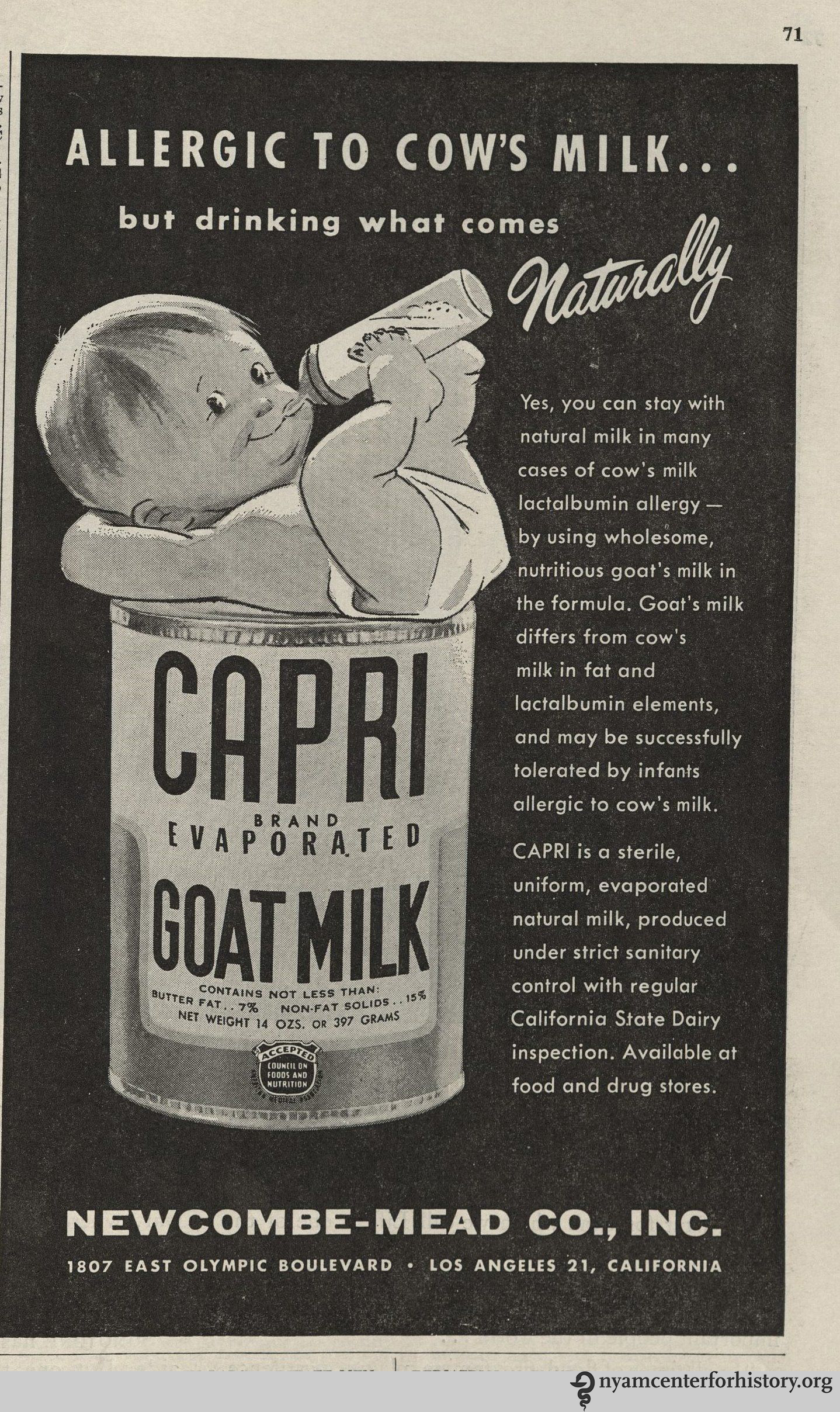
Advertisements in the Journal of the American Medical Association (JAMA), have reflected food and diet trends from the start.

In the late 1930s and early 1940s, the journal normally had two pages of ads an issue, often related to food. By the late 1940s, advertising exploded. The May 3, 1947 issue of JAMA has 130 pages of ads, with food-related items amidst the publishers, medical devices, cigarettes, cosmetics, sanitariums, hospitals, and pharmaceuticals.

The advertising boom only increased—“In 1958 the industry estimated that it had turned out 3,790,809,000 pages of paid advertising in medical journals.”1 By this time, ads for pharmaceuticals far surpassed those for food- and diet-related items, a fitting trend as “between 1939 and 1959, drug sales rose from $300 million to $2.3 billion”1

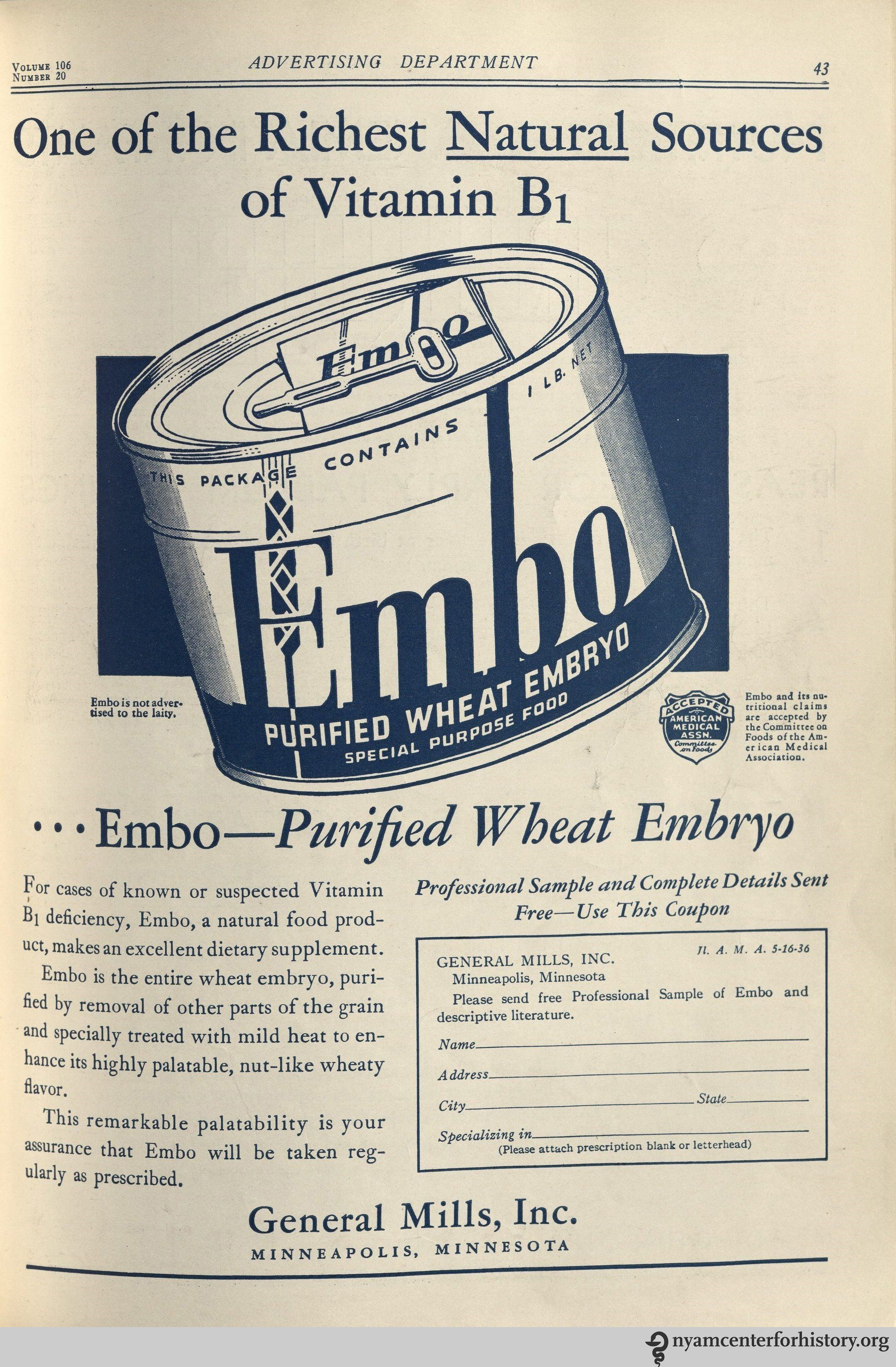
The food- and diet-related advertisements presented here fall into several categories. There are promotions from industry groups—including my favorite, in which the National Confectioners’ Association attempts to convince doctors that candy has health benefits. There are beverages, ranging from baby formula to ovaltine to soft drinks. There are items that remain familiar today and items that seem totally foreign—if someone out there has tried Embo, please let us know. And of course, there’s the intersection of pharmaceuticals and diet, as claims of appetite suppression move from ads for apples and citrus to drugs like Desoxyn.

From JAMA, volume 106, number 20, May 16, 1936.

From JAMA, volume 106, number 20, May 16, 1936. Click to enlarge.

From JAMA, volume 134, number 1, May 3, 1947.

From JAMA, volume 134, number 1, May 3, 1947. Click to enlarge.

From JAMA, volume 134, number 2, May 10, 1947. Click to enlarge.

From JAMA, volume 134, number 2, May 10, 1947. Click to enlarge.

From JAMA, volume 154, number 3, January 16, 1954. Click to enlarge.

From JAMA, volume 154, number 3, January 16, 1954. Click to enlarge.

From JAMA, volume 154, number 5, January 30, 1954. Click to enlarge.

From JAMA, volume 154, number 5, January 30, 1954. Click to enlarge.

From JAMA, volume 154, number 6, February 6, 1954. Click to enlarge.

From JAMA, volume 154, number 6, February 6, 1954. Click to enlarge.

From JAMA, volume 154, number 9, February 27, 1954. Click to enlarge.

From JAMA, volume 154, number 9, February 27, 1954. Click to enlarge.

From JAMA, volume 182, number 7, November 17, 1962. Click to enlarge.

From JAMA, volume 182, number 7, November 17, 1962. Click to enlarge.

From JAMA, volume 182, number 7, November 17, 1962. Click to enlarge.

From JAMA, volume 182, number 7, November 17, 1962. Click to enlarge.

From JAMA, volume 234, number 2, October 13, 1975. Click to enlarge.

From JAMA, volume 234, number 2, October 13, 1975. Click to enlarge.

Reference

1. Donohue J. A history of drug advertising: the evolving roles of consumers and consumer protection. Milbank Q. 2006;84(4):659–699. Available at: http://facultynh.syr.edu/bjsheeha/ADV 604/History of Drug.pdf. Accessed May 30, 2014.

A History of Blood Transfusions

By Danielle Aloia, Special Projects Librarian

World Blood Donor Day 2014June 14 is World Blood Donor Day, a date selected to coincide with the birthday of Karl Landsteiner (1868–1943), the father of blood transfusions. Landsteiner discovered the A, B, AB, and O blood types in 1901, making blood transfusions safer. His work earned him the the Nobel Prize in Physiology or Medicine in 1930.1 The Word Health Organization (WHO) created this event to honor Dr. Landsteiner and to bring attention to the need for timely access to safe blood and blood products through voluntary donations.2

Recorded evidence of blood transfusions date back to the 16th century; there has been much speculation as to who first tried it and who first succeeded. Some tales are based on evidence and some seem to have been fabricated. Dr. Richard Lower is credited with performing the first successful blood transfusion from one animal to another in the 17th century. But it wasn’t until 1818 that Dr. James Blundell, a gynecologist, made a fairly successful attempt; after the procedure, patients who had been near death showed temporary improvement. Blundell continued to improve on the process and in 1829, he published the first report on a “human life being saved by transfusion” in the Lancet.3

Figure from Dr. Blundell's article in the June 13 ,1829 issue of The Lancet, "Observations on Transfusion of Blood."

Figure from Dr. Blundell’s article in the June 13, 1829 issue of The Lancet, “Observations on Transfusion of Blood.”

From the RAMC Muniment Collection in the care of the Wellcome Library. Credit: Wellcome Library, London.

From the RAMC Muniment Collection in the care of the Wellcome Library. Credit: Wellcome Library, London.

Even after Landsteiner’s 1901 discovery, the ability to safely store and preserve blood donations took several more decades of study. During the First World War, O. H. Robinson, an army doctor,  introduced an effective anti-coagulant for long-term human blood storage.4 Percy Oliver began the first blood donor service with the British Red Cross. In the 1920s, he was asked to help with the growing need for blood and developed the first system of a volunteer donation and screening process. It wasn’t until 1941 that the Red Cross in the US started actively collecting blood from donors on request of the US government.4

This year’s World Blood Donor Day campaign highlights the importance of safe blood and the prevention of unnecessary deaths during pregnancy. The loss of blood during childbirth has been studied throughout history5 and continues to be a medical concern. About 800 women, nearly all in developing countries, die of pregnancy- and childbirth-related causes every day.2 A 2006 WHO analysis identified hemorrhaging as the leading cause of maternal deaths in Africa and in Asia.6 In developing countries donated blood is most often used for pregnancy complications7 whereas only 2.2% of donated blood in the US is used for obstetrics.8

Blood donation is one of the single most important contributions a person can make in saving the lives of others. Every two seconds someone needs blood and every pint of blood can save several lives.9 The more donated blood, the more lives saved.

References

1. NobelPrize.org. Karl Landsteiner – Biographical. Available at: http://www.nobelprize.org/nobel_prizes/medicine/laureates/1930/landsteiner-bio.html. Accessed June 11, 2014.

2. World Health Organization. Campaign essentials: World blood donor day 2014.; 2014. Available at: http://apps.who.int/iris/bitstream/10665/112768/1/WHO_World-Blood-Donor-Day_2014.1_eng.pdf?ua=1&ua=1. Accessed June 11, 2014.

3. Walker K. The Story of Blood. London: H. Jenkins; 1958.

4. Duffin J. History of Medicine: A Scandalously Short Introduction. Toronto: University of Toronto Press; 2010.

5. Schorn MN. Measurement of blood loss: review of the literature. J Midwifery Womens Health. 55(1):20–7. doi:10.1016/j.jmwh.2009.02.014.

6. Khan KS, Wojdyla D, Say L, Gülmezoglu AM, Van Look PFA. WHO analysis of causes of maternal death: a systematic review. Lancet. 2006;367(9516):1066–74. doi:10.1016/S0140-6736(06)68397-9.

7. World Health Organization. WHO | 10 facts on blood transfusion. Available at: http://www.who.int/features/factfiles/blood_transfusion/blood_transfusion/en/index1.html. Accessed June 12, 2014.

8. Whitaker B, Hinkins S. The 2011 national blood collection and utilization survey report. Washington, D.C.; 2013. Available at: http://www.aabb.org/research/hemovigilance/nbcus/Documents/11-nbcus-report.pdf. Accessed June 12, 2014.

9. Blood Centers of the Pacific. 56 Facts About Blood and Blood Donation. 2005. Available at: http://www.bloodcenters.org/blood-donation/facts-about-blood-donation/. Accessed June 11, 2014.

Coloring Our Collections

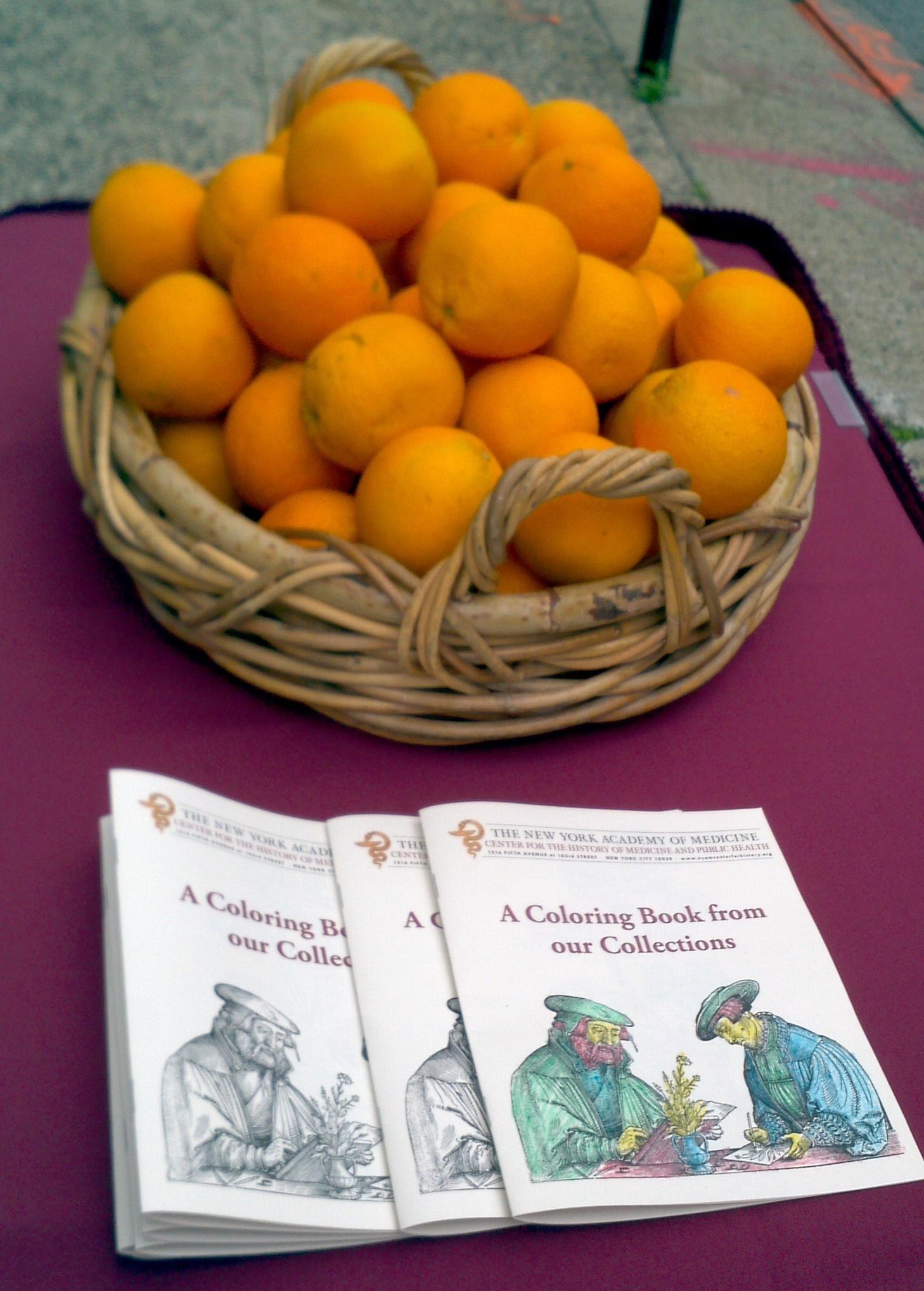
Coloring books and oranges, waiting for the start of the Museum Mile Festival.

Coloring books and oranges, waiting for the start of the Museum Mile Festival.

At last night’s Museum Mile Festival, we were thrilled to offer a coloring book featuring images from our collections, along with the oranges seen here and packets of crayons.

NYAM also partnered with community organizations to engage the festival participants in healthy eating and active living activities. Harlem Seeds demonstrated how to cook a healthy and delicious kale salad and baked apple dessert. Harlem Hospital Center’s Walk it Out and Hip Hop Public Health programs got the crowd moving with high-energy kickboxing, line dancing, and break dancing lessons.

While we can’t give you crayons or break dancing lessons through our blog, we can offer you the coloring book in PDF format. You can color images from Leonhart Fuchs’ De historia stirpium commentarii insignes . . . (1542);  Ulisse Aldrovandi’s Serpentum, et draconum historiae libri duo (1640); and two works by Konrad Gesner, Conradi Gesneri medici Tigurini Historiæ animalium Lib. I. de quadrupedibus uiuiparis . . . (1551) and Thierbuch das is ein kurtze b[e]schreybung aller vierfüssigen thiern so/ auff der erdē und in wasseren wonend/ sampt irer waren conterfactur . . . (1563).

We’d love to see your colored pages—please share them with us!

War and Veterans Health: Some History for the 70th Anniversary of D-Day

By Paul Theerman, Associate Director, Center for the History of Medicine and Public Health

June is Men’s Health Month. As a concept, men’s health—a focus on the health and wellness issues particular to men—is still new, first arising in the men’s movements of the 1960s and 1970s. The emergence of AIDS sharpened the idea of men’s health, as gay men took the brutal first hits of the pandemic. By the 1990s, though, the idea of men’s health had become more mainstream. Congress first designated an official men’s health week in 1994, sponsored by Senator Robert Dole. By the early 2000s, the CDC began to include men’s health as a separate category in its consumer health site. In 2014, NYU’s Langone Medical Center opened the Preston Robert Tisch Center for Men’s Health, the counterpart to its Joan H. Tisch Center for Women’s Health of 2011.

The original men’s health movement, though, focused on war veterans. Each war brings up the issue—for Vietnam, for example, it emerged in such popular books as Peter Bourne’s Men, Stress, and Vietnam (1970; by the physician who became President Jimmy Carter’s drug czar). An escalating cycle of concern, growth, failure, and reform—so apparent in today’s veterans health scandal—has deep roots in American military history.

The federal government first extended general health and medical benefits to veterans in 1917 due to the large number of Great War veterans.1 In 1921, this led to a separate agency, the Veterans Bureau—which, joined with two other agencies, became the Veterans Administration in 1930. The VA ran a separate hospital system, with 74 facilities by the end of 1932.1
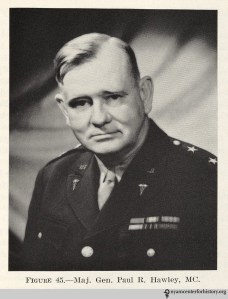
Photograph in: Armfield BB. Organization and Administration in World War II. Washington, D.C.: Office of the Surgeon General. Department of the Army; 1963.

Photograph in: Armfield BB. Organization and Administration in World War II. Washington, D.C.: Office of the Surgeon General. Department of the Army; 1963.

World War II led to a new crisis in veterans health. In 1945, the number of living veterans from all previous wars numbered some 4 million men; World War II immediately added 15 million more.2 This surge threatened to overwhelm the system, and led to major reform of veterans health care, undertaken by Major General Paul R. Hawley.

In World War II, Hawley (1891–1966) served as the theater surgeon for the European Theater of Operations. As such he was responsible for all medical care for American armed forces fighting in Europe, with 250,000 medical men under his command. Among other accomplishments, he planned the medical support for D-Day, June 6, 1944, arranging for the construction of field hospitals (with some 11,000 beds) in Normandy right after the invasion. These hospitals began as concrete slabs to hold tents, as there were almost no existing hospitals in the landing area. He called this work “one of the finest pieces of planning in the entire campaign.”3,4

Photograph in: Wiltse C. Medical supply in World War II. Washington, D.C.: Office of the Surgeon General. Department of the Army; 1968.

Photograph in: Wiltse C. Medical supply in World War II. Washington, D.C.: Office of the Surgeon General. Department of the Army; 1968.

Indeed, planning was Hawley’s strength. In 1945, the new head of the Veterans Administration was General Omar Bradley, who had commanded American invasion forces in Europe from D-day through to German surrender. Bradley brought in Hawley to reorganize the health services. To this task, Hawley brought a keen sense of what was possible and a reliance on improving health by raising the quality of the system’s doctors. The Veterans Administration began by engaging in hospital building—by the late 1940s, the number of VA hospitals has risen to almost 100—but as a first measure, Hawley advocated using private clinics to help veterans, and he looked to county medical societies to provide the services. His vision was to have “every physician in each community designated a veteran’s physician.”5 For, ultimately, he saw the nation’s physicians and surgeons as the backbone of the system. He had great confidence in physicians’ abilities; indeed, more than any other factor, he gave well-trained doctors the chief credit for the greatly reduced casualty rates in World War II.3

Armfield BB. Organization and Administration in World War II. Washington, D.C.: Office of the Surgeon General. Department of the Army; 1963.
Photograph in: Armfield BB. Organization and Administration in World War II. Washington, D.C.: Office of the Surgeon General. Department of the Army; 1963.

And so, after revitalizing local clinics, Hawley’s chief reform was getting good doctors into veterans hospitals. He loosened the employment structure, removing it from civil service system, and increased the top salaries to about $125,000 in today’s dollars. For board-certified specialties, there was a 25% premium above that—all free of office and support expenses, as he pointed out. He allied VA hospitals with medical schools as much as possible, allowing VA physicians to teach, and he provided for expansive professional development programs. He went out of his way to secure the best physicians—his February 1946 JAMA article on the Veterans Administration2 is really an extended recruitment notice. By the time he left the position in 1947—he went on to head Blue Cross/Blue Shield and then the American College of Surgeons—Hawley had substantially raised the level of care in veterans’ health.

The Veterans Health Administration has gone through successive periods of reform since the late 1940s. The last major period was in the 1990s under Kenneth Kizer, and included implementing one of first effective electronic medical records systems, VistA. By the 2010s, though, the Administration was again overwhelmed, overseeing care for war veterans going back to World War II as well as from recent U.S. wars and incursions—and now serving both men and women. Many of the same issues are there as Hawley faced: the challenge of providing increasing numbers of veterans with the care they need. New, and newly recognized, medical conditions have stressed the system as well. One is PTSD, a consequence in previous wars but not well understood; another are the injuries from IEDs. Neither was a major factor when Hawley reformed the Veterans Health Administration, and now both are huge. We await the next cycle of reform.

References

1. Weber GA, Schmeckebier LF. The Veterans’ Administration: Its History, Activities and Organization. Washington, D.C.: The Brookings Institution; 1934.

2.Hawley PR. New opportunities for physicians in the Veterans Administration. J Am Med Assoc. 1946;130:403.

3.Hawley PR. Advances in war medicine and surgery as demonstrated in the European theater of operations. Med Ann Dist Columbia. 1946;15:99–109.

4. Hall DE. “We were ready”: Health services support in the Normandy campaign. US Army Med Dep Off Med Hist. 1993. Available at: http://history.amedd.army.mil/booksdocs/wwii/Overlord/Normandy/HallNormandy.html. Accessed June 5, 2014.

5. Hawley PR. Medical care for veterans. Ill Med J. 1945;88:294–96.