Marijuana Regulation: The LaGuardia Report at 70 (Item of the Month)

By Paul Theerman, Associate Director, Center for the History of Medicine and Public Health

Medical and recreational marijuana regulation is undergoing a sea change right now, the reworking of a drug regulation regime that goes back at least 75 years. Debates about the drug are not new, however; the New York Academy of Medicine found itself in the middle of the political discussion back in the 1930s and 40s and is now taking a look at this history.

For a hundred years, from the published attestation of the medical use of Cannabis by William Brooke O’Shaughnessy in 1839, medical marijuana use increased and came more and more under medical regulation.  Discussions around regulation usually sounded two concerns: first, that the material be unadulterated and eventually physician-prescribed, and second, that potential benefits could be seen to outweigh harms. For from the beginning, many demonized marijuana use; early on, some went so far as to lump it in with opiates and their abuse.

By 1930, the United States established the Federal Bureau of Narcotics, with increased central control as the goal and Harry J. Anslinger as the willing head. In 1937, over the objections of the American Medical Association, he had pushed through the Marihuana Tax Act. An indirect means of control—as the state governments had most authority to control medicine and drugs directly—it was in fact very effective in criminalizing marijuana. Imposing annual licensing fees on producers and prescribers, it also called for a transfer fee of $1.00 per ounce to registered users, such as physicians, but $100.00 per ounce to unregistered ones—the vast majority. This tax structure was laid down in an era when average American incomes were about $2,000 a year. And indeed, $2,000 was the amount of the fine that could be imposed, along with up to five years in jail, with seizure of the drug as well. The first dealer convicted under the act received a sentence of four years in Leavenworth Penitentiary!
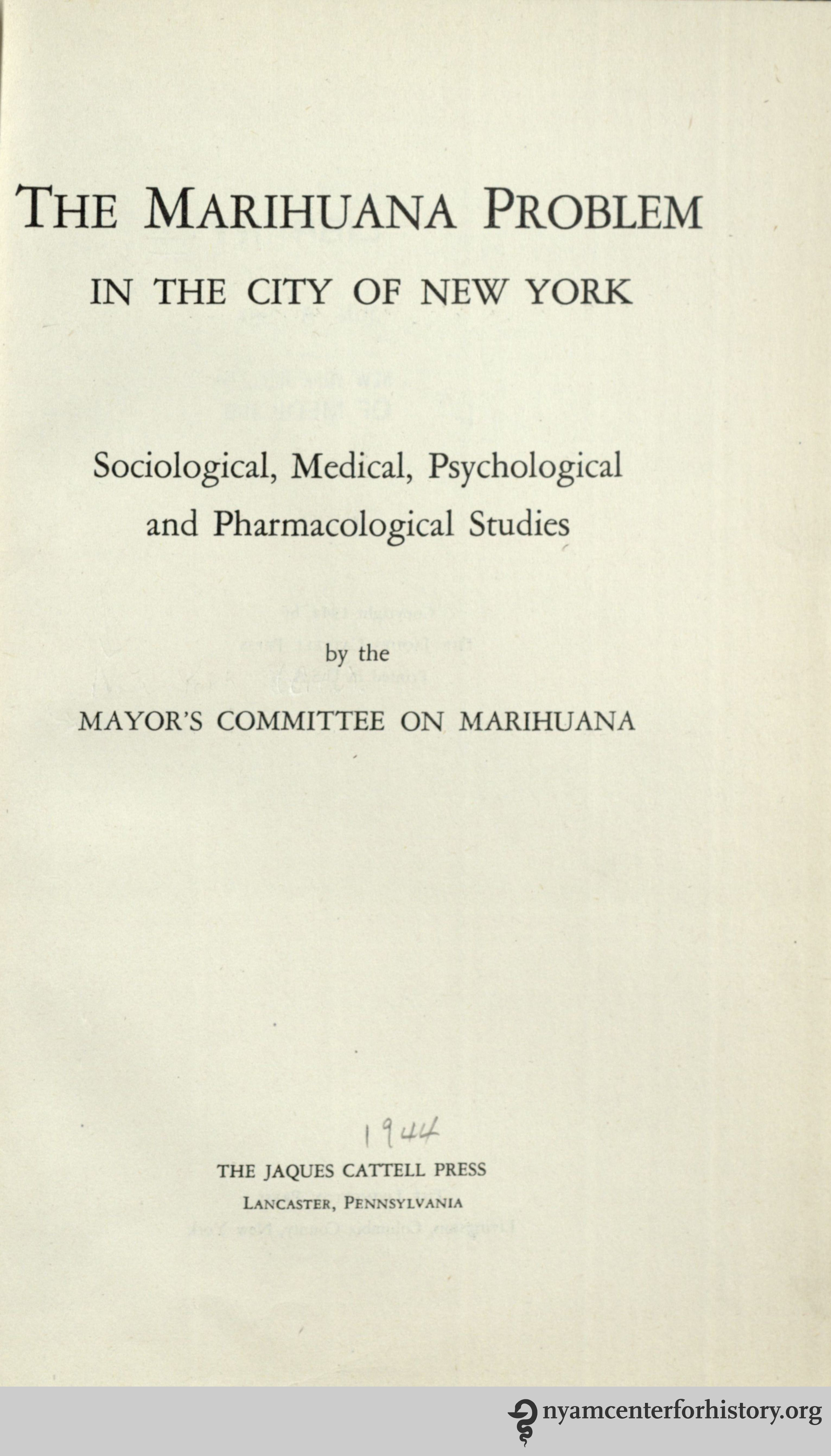
The title page of The Marihuana Problem in the City of New York.

The title page of The Marihuana Problem in the City of New York.

New York Mayor Fiorello LaGuardia was skeptical of the reasons behind this stringent control. In 1938, he commissioned a report from the New York Academy of Medicine on marijuana use. With the study supported by the Commonwealth Fund, the Friedsam Foundation, and the New York Foundation, an expert panel of researchers considered “The Marihuana Problem in the City of New York” (as their report was ultimately titled) from the viewpoint of sociology, psychology, medicine, and pharmacology. Their work continued for six years.

The report ran 220 pages, and La Guardia’s own foreword summarized the results:

I am glad that the sociological, psychological, and medical ills commonly attributed to marihuana have been found to be exaggerated insofar as the City of New York is concerned. I hasten to point out, however, that the findings are to be interpreted only as a reassuring report of progress and not as encouragement to indulgence[!]

Anslinger was furious and denounced the report, and, as painstaking and factual as it was, it had little effect on marijuana decriminalization. Eventually, the Supreme Court found the Marihuana Tax Act of 1937 unconstitutional on grounds of self-incrimination, in a suit raised by Timothy Leary in 1969. The next year, Congress passed the Controlled Substances Act, which placed marijuana in Schedule I, the most highly controlled category, used for drugs that have no currently accepted medical use and are considered liable for abuse even under medical supervision. It remains there today.

On May 1 and 2, the New York Academy of Medicine, partnering with the Drug Policy Alliance, is mounting a day-and-a-half-long conference, “Marijuana & Drug Policy Reform in New York—the LaGuardia Report at 70.” Historians and drug policy experts will gather to consider the report and its effects, look at the “drug wars” over the last century, and survey the policy landscape of the near future. Please join us; the conference is free. View the full schedule and participant information. Register here.

Item of the Month: Posters from the Special Programme on AIDS, World Health Organization, 1987–1995

By Paul Theerman, Associate Director

The WHO Special Programme on AIDS was the first response of the United Nations to the pandemic that had gained world attention by the mid-1980s.1 The offspring of the first two international conferences on AIDS, in Atlanta in 1985 and in Paris the following year, the Programme was founded in February 1987. The Programme’s dynamic director, Jonathan M. Mann, had great hopes and grand plans for combating AIDS through a coordinated worldwide response—the only feasible way to control the virulent and widely spreading disease, he thought. From the beginning he also saw the AIDS outbreak as a focus for engaging global human rights issues. Under Mann, the WHO moved beyond its role of technical advisor to national governments, for it tried to take a directive role, actively engage non-governmental organizations, and promote non-discriminatory policies towards AIDS sufferers. Between 1987 and 1989, the Special Programme—which also came to be known as the Global Programme on AIDS—developed a comprehensive strategy for attacking the virus.

AIDSWorldwideEffortSIDAUnEsfuerzo

These two posters—one design in two languages—come from the heady days of the Programme’s beginning. Produced in 1987, these posters announced its slogan, “AIDS: A worldwide effort will stop it.” The posters’ design inadvertently reveals how difficult it was to talk about AIDS in the 1980s. AIDS seemed different from other diseases. First of all, it was a pandemic experienced in the west, perhaps the first such experience since the polio epidemic in the early 1950s, and before that, the influenza pandemic in 1918–19. With the rise of antibiotics and vaccination, widespread disease outbreaks in the developed world were no longer supposed to happen! As Dr. Gerald Friedland, a doctor on the front lines during the height of the pandemic, said at an event at Columbia University earlier this month, the disease caused the “inverse of the life cycle,” as it mostly impacted young people, leading to parents burying their children. “The only thing comparable was war.”

With AIDS, neither antibiotics nor vaccination worked, so epidemiologists were forced back to classic means of halting pandemics: stopping the means of transmission. Here also AIDS proved difficult. Those means—chiefly sexual contact and sharing needles—provoked strong reactions. Coupled with a long latency and an invariably fatal outcome after a horrific decline, AIDS did not have a simple profile.

The posters display that cultural unease. The UN commissioned noted New York graphic designer Milton Glaser, an internationally known logo and poster designer, with such readily recognizable designs as “I ♡ NY,” Esquire and New York magazines, and Sony, among many others. Certainly Glaser knows about the power of images to convey meaning. For these UN posters, he combined three elements, two hearts and a skull, to make a W—presumably to stand for “world” in the World Health Organization, and to reference the caption, “A worldwide effort will stop [AIDS].” But it’s not clear—and it doesn’t work in the Spanish version of the poster. Even more puzzling is the relationship of the hearts to the skulls. Is it cautionary: in the midst of love—erotic love, that is—lurks death? Is it hopeful: compassionate hearts will combine to crush AIDS? Is it both? Glaser produced a striking image, but he also produced an ambiguous one. By 1991, the red ribbon had been introduced as the predominant AIDS symbol, and it soon the supplanted the “heart-and-skull-W,” even at the UN itself.

The year that this poster came out proved to be the Programme’s high point. In 1988 a new director-general came to the World Health Organization. AIDS could not have two masters. By late 1989, the Programme’s efforts, strategies, and budget were brought up short, and Mann departed in 1990. The Programme limped along for another five years, until replaced by UNAIDS, the locus for United Nations action today. In the words of Mann’s successor,  Michael H. Merson: the Programme “was unable to muster the necessary political will . . . , and its effectiveness was compromised by . . . an increasing preference of wealthy governments for bilateral aid programs.”2 That seems where matters stand now, as we approach World AIDS Day, December 1. The story of the Special Programme on AIDS is a cautionary tale of the difficulties of grappling with a worldwide disease in a disjointed world.

References

1. Much of the history of the Special Programme on AIDS is found in two article by its founding director: Jonathan M. Mann, “The World Health Organization’s global strategy for the prevention and control of AIDS,” in AIDS—A Global Perspective [Special issue] Western Journal of Medicine 1987 Dec; 147:732–734; and Jonathan M. Mann and Kathleen Kay, “Confronting the pandemic: the World Health Organization’s Global Programme on AIDS, 1986–1989,” AIDS 1991; 5 (suppl. 2): S221–S229.

2.  Michael H. Merson, “The HIV–AIDS pandemic at 25—the global response,” New England Journal of Medicine 2006; 354:2414–2417 (June 8, 2006), quotation from page 2415.

Item of the Month: “Better Babies” on Things Which Are Bad For All Babies

By Johanna Goldberg, Information Services Librarian

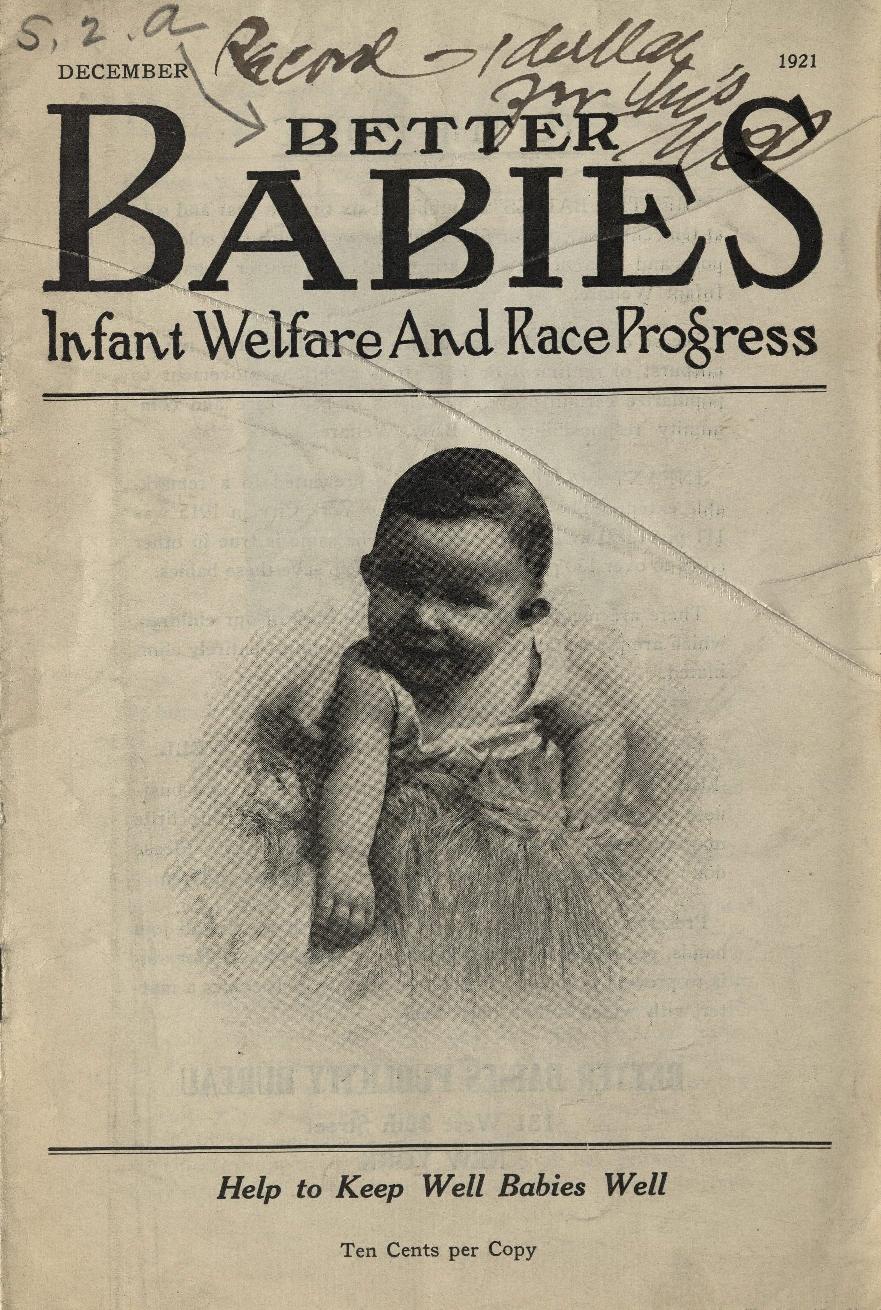
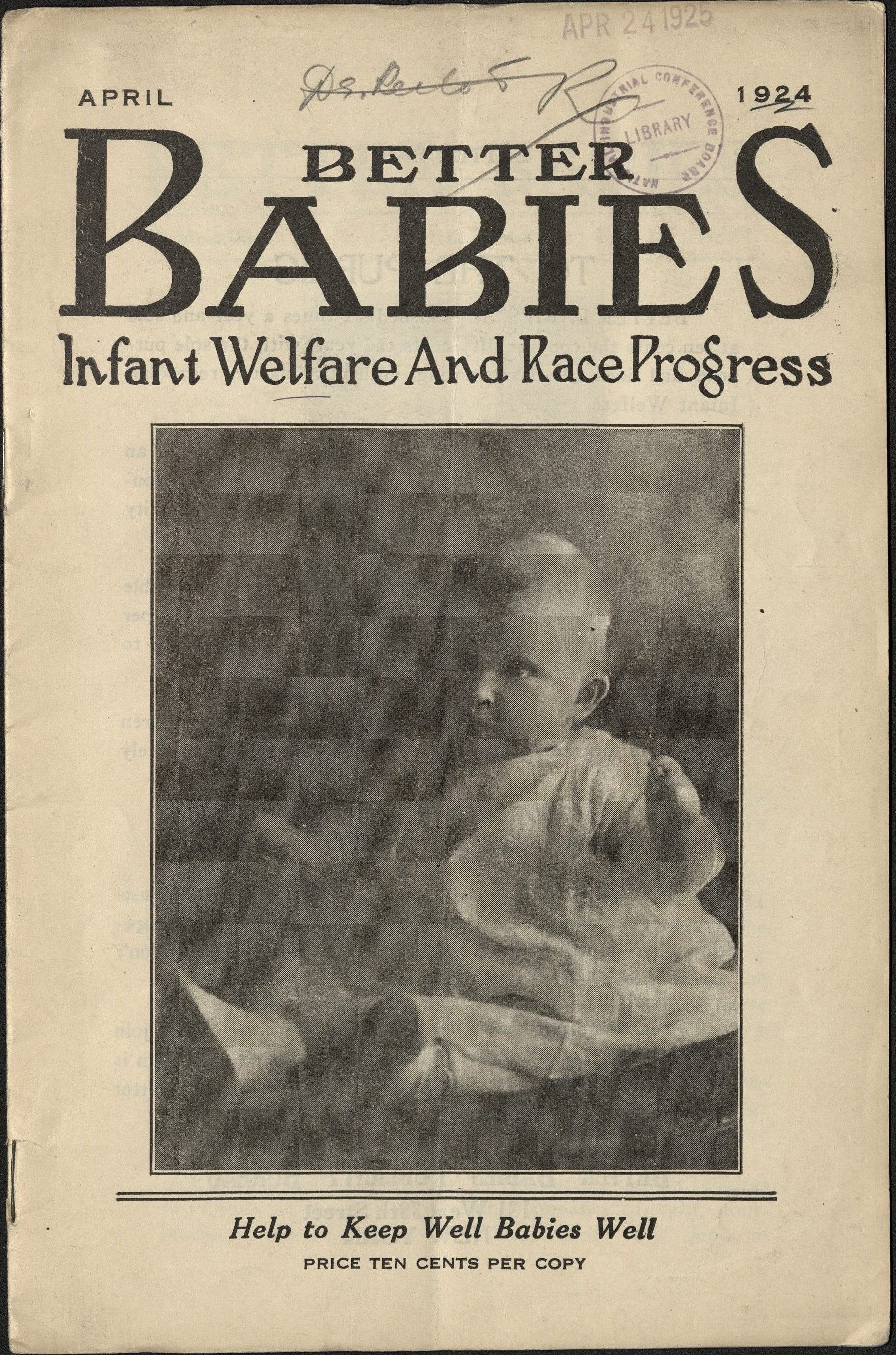
When in the stacks recently, I came across two slim issues of “Better Babies: Infant Welfare and Race Progress,” one published in December 1921 and the other in April 1924.

BetterBabies_Cover-1921

BetterBabies_Cover-1924

While the title suggests an interest in eugenics, the two issues in our collection focus solely on ways to keep babies healthy, including articles on clothes for children, playgrounds and public health, the benefits of breast feeding, and disease prevention.

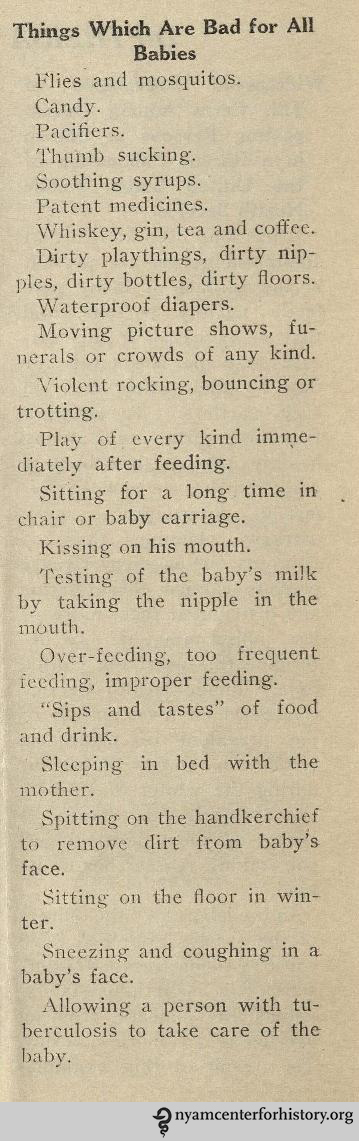
This last topic inspired the following list, published in the 1924 issue. As it is (coincidentally) Baby Safety Month, it seems appropriate to share it.

Which piece of advice is your favorite?

Item of the Month: The Medical Museum, Mythology and Medicine

By Arlene Shaner, Acting Curator and Reference Librarian for Historical Collections

Medical Museum title page 1763

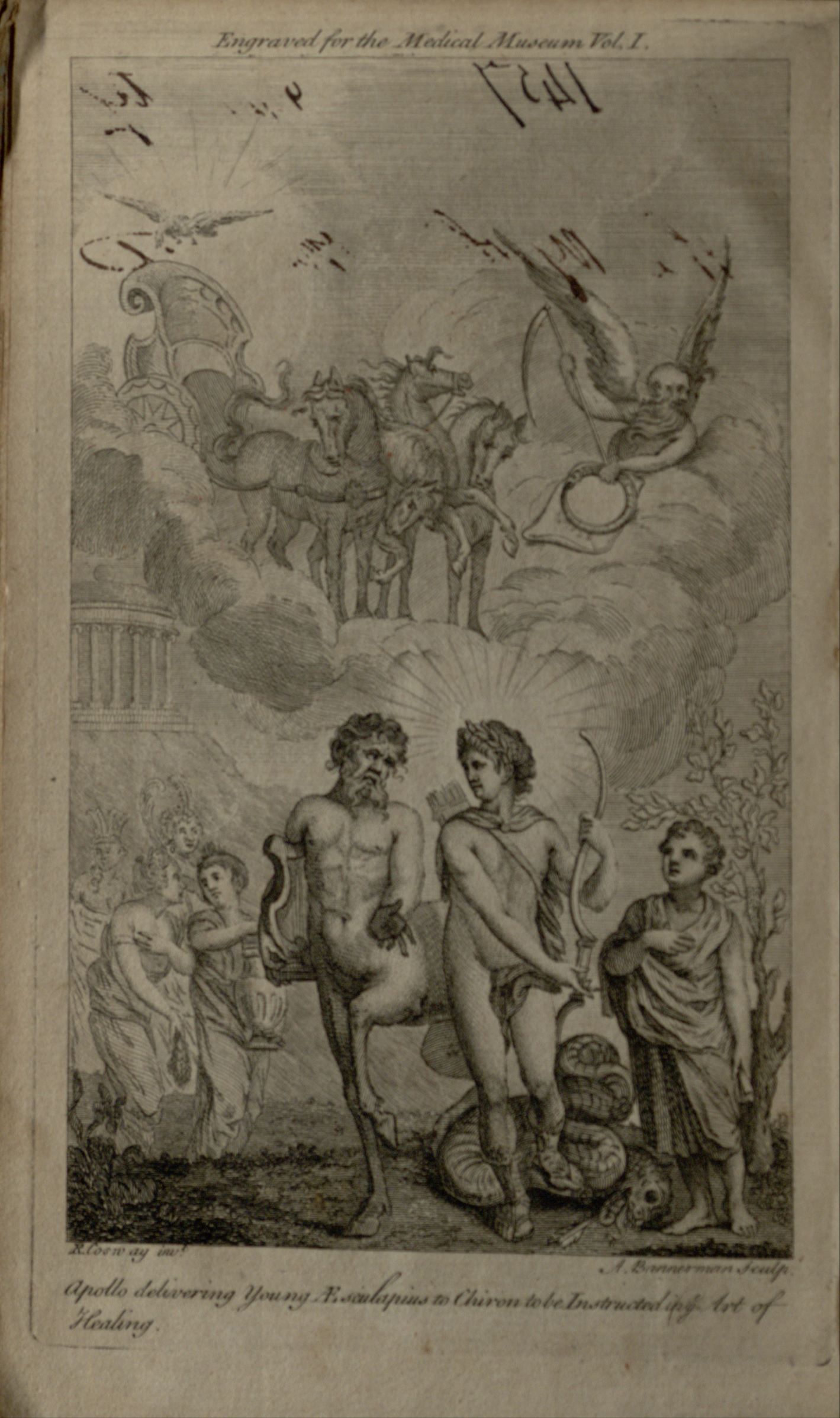
Recently, while looking for something in the rare periodicals collection at NYAM, I came across a charming allegorical frontispiece that appeared in the first volume of The Medical Museum, a short-lived journal that appeared in three volumes published in London 1763 and 1764.  The editors of the journal, who described themselves as “Gentlemen of the Faculty,” remain unknown.  The subtitle and the introduction make clear that they viewed themselves primarily as the collectors and disseminators of already published works from a variety of sources. 

Even 18th century people struggled to make sense of an overwhelming amount of information.  “Many physical people very justly complain of the great expense attending the purchase of medical treatises, especially foreign ones… the pains and time to select and examine the matters that may concern their profession, are with many too much to be dispensed with,” (ix) they noted, while explaining the task they had chosen for themselves, that of serving as the selectors of the most useful materials from disciplines ranging from anatomy, medicine, chemistry, botany and other assorted sciences.  Works from a remarkable range of publications appear in the Museum, many of them translated from their original languages into English to make them more accessible, as the compilers hoped their journal would find an audience among the public, not just among medical men.

Medical Museum frontispiece 1763

The first volume contains a specially engraved frontispiece that shows Apollo bringing his son Asclepius to the centaur Chiron to learn about the art of medicine.  Coronis, Asclepius’ mother, was either killed by Apollo for being unfaithful to him or died in childbirth, and Apollo rescued the unborn baby from her womb.  Needing someone to raise the boy, Apollo handed him over to Chiron, who taught him the healing arts.  Asclepius went on to father many daughters, some of whom are also remembered for their connections to medicine and health.  One of his daughters, Hygeia, is the goddess of health, while another, Panacea, is the goddess of universal remedies.

If you visit The New York Academy of Medicine’s building, you will see that Asclepius and Hygeia were important touchstones for NYAM and for the building’s designers as well.  An ornamental frieze above our front door depicts the two of them together, attended by their snakes and dogs, a visual reminder of the classical heritage of medicine.

A&H

Item of the Month: Charles Darwin’s The Descent of Man and Selection Related to Sex

By Danielle Aloia, Special Projects Librarian

Charles Darwin. Courtesy of the National Library of Medicine.

Charles Darwin. Courtesy of the National Library of Medicine.

The Descent of Man is a groundbreaking work, as relevant today as when it was first published in 1871. The Center for History owns 8 copies of this title, published 12 years after Darwin’s most well known work, On the Origin of Species. Both books sold out quickly, a sign both of Darwin’s persuasive writing, and people’s persistent interest in their origins! In the Descent of Man, Darwin explained the development of the human species by evolutionary processes. He particularly focused on two points: whether the ability to reason and to make moral judgments could evolve in the same way as could physical forms, and how beauty and other seemingly extraneous factors could have an evolutionary role. These were contentious issues, as mental abilities seemed to be a sharp divide between humans and animals, and the existence of order, harmony, and beauty seemed inconsistent with evolution. To think that man had “evolved from apes” seemed nonsensical and was much criticized; Darwin sought to make it plausible.

Here we examine a 1915 copy of the second edition, first published in 1874, which was greatly revised and augmented with extra illustrations in comparison to the first edition. In the preface, Darwin stated, “When naturalists have become familiar with the idea of sexual selection, it will, as I believe, be much more largely accepted; and it has already been fully and favourably received by several capable judges.” He also acknowledged the criticism he received, referring to the “fiery ordeal through which the book has passed,” and welcomed the observations “of Prof. Huxley, on the nature of the differences between the brains of man and the higher apes.” In a series of debates in the early 1860s with noted anatomist Robert Owen, Darwin’s compatriot T.H. Huxley had demonstrated the essential structural continuity of human and ape brains, providing another piece to the puzzle. Darwin knew and accepted that his theories would provoke a backlash, and he modified the details as needed, but he also held steadfast to his original concepts.

A Table of the Principal Additions and Corrections to the Edition of 1874 compares the 1st edition of 1871, the 2nd of 1874, and the 2nd edition “new printing” of 1888, and is included in the opening pages. Especially interesting are: “Cases of men born with hairy bodies”, and “Resemblances between idiots and animals”.

Click to enlarge.

Click to enlarge.

The engravings reference the differences among males and females of the same species, to illustrate the concept of sexual selection. The species depicted ranged over many classes, including insects, crustaceans, reptiles, birds, and mammals. The engraving below helps to explain how the beautiful plumage of the male bird attracts the female.

darwinbirds

Click to enlarge.

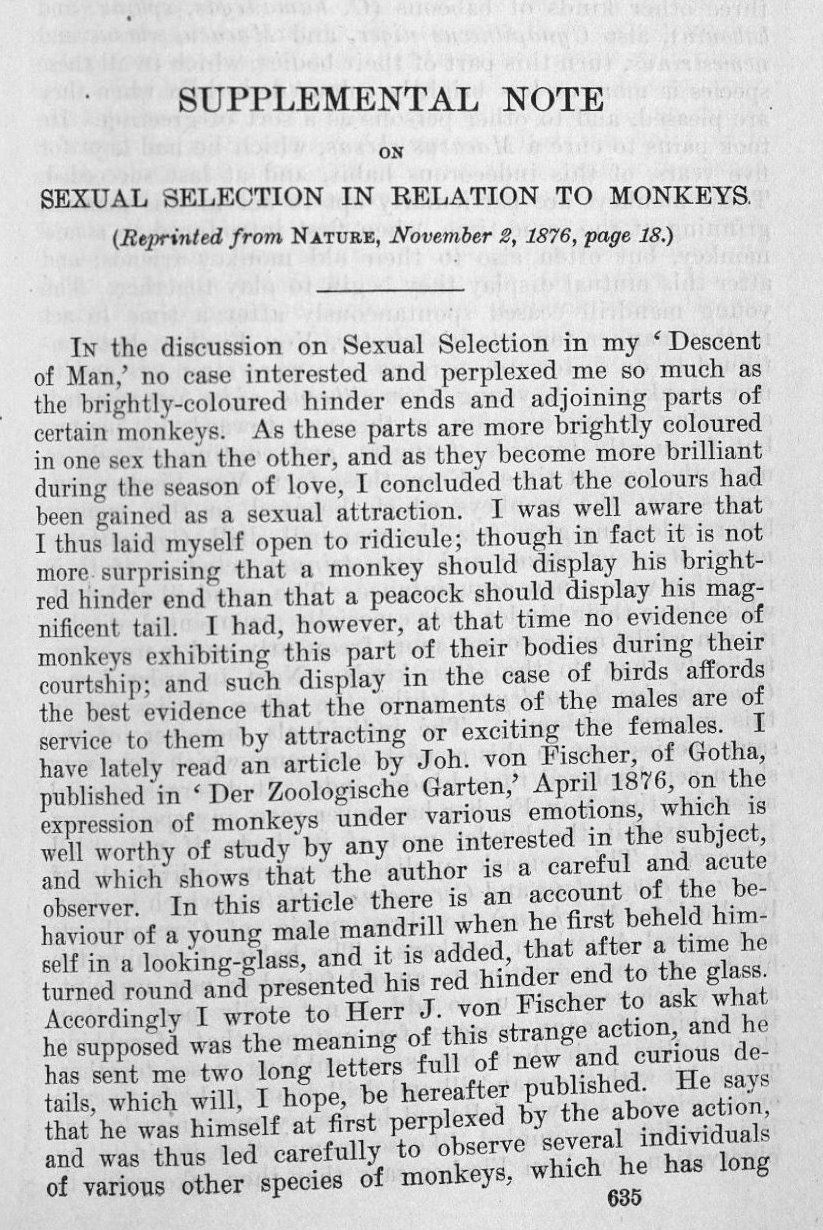
This edition also includes a reprint from an article in Nature, from November 2, 1876, which Darwin wrote to explain his misinterpretation of the “brightly-coloured hinder ends and adjoining parts of monkeys.” He was wrong in assuming that the bright color was for attracting the opposite sex. He read an article by Herr J. von Fischer, who studied monkeys, even keeping them in his house, which explained that the reason was more straightforward: the species would “turn this part of their bodies . . . to him when they are pleased, and to other persons as a sort of greeting.” Surely, Darwin was unafraid to own up to his mistakes.

Click to enlarge.

Click to enlarge.

The book also hosts a tightly-worded index of over 40 pages, where can be found references to the color of Kingfishers, dogs dreaming, and the liability of monkeys to the same diseases as man.

Click to enlarge.

Click to enlarge.

This volume of work has long been the cause of both scientific inquiry and challenge, and continues to be a work of enduring scientific importance.

Sources

Darwin, Charles. (1915). The Descent of Man and Selection in Relation to Sex. New York: D. Appleton and Company.

Alter, Stephen G. (2007). Race, Language, and Mental Evolution in Darwin’s Descent of Man. Journal of the History of the Behavioral Sciences. 43(3): 239-255.

The Darwin Centenary and “The Descent of Man.” (187-).The American Review of Reviews. 239-240.