The Women’s Prison Association and “The Modern Way” (Item of the Month)

By Anne Garner, Curator, Center for the History of Medicine and Public Health

orange-is-the-new-blackHow do the experiences of the inmates of Orange Is the New Black’s fictional Litchfield Prison differ from those of incarcerated women a century before? “The Modern Way,” a pamphlet published in 1913 by the New York State Women’s Prison Association, offers a snapshot of the conditions in New York State prisons one hundred years ago. Today, as Netflix drops season three of the series, we thought it would be instructive to have a closer look at this remarkable feminist pamphlet, produced by New York’s oldest advocacy group for women.

Cover of "The Modern Way."

Cover of “The Modern Way.”

As with Orange Is the New Black, “The Modern Way” begins by telescoping the faces and stories of individual prisoners—in this case, the residents of an unnamed “Workhouse” 20 minutes from New York City’s Fifth Avenue.

It is 1913. There’s Maggie, “a strong sturdy woman of forty,”1 in and out of prison for public drunkenness for the last two years. She plans to drink again as soon as she’s released, even as she’s resigned to serving more jail time as a consequence. Jennie, age 37, has been in and out of Workhouse for two decades, incarcerated for the same cause. When interviewed, she says she’s done with jail. But without the guidance of a rehabilitating hospital, she claims she can’t stay away from the saloon.

And then there’s Mary, described by the warden as “one of the best dispositioned women [she] ever knew.” She’s the mother hen of the group, “stopping to comfort a sobbing prisoner, now scolding a vigorously quarrelsome one.” This model inmate keeps a medal in her cell, earned the day she was working on Riker’s Island in 1904 and brought in three drowning passengers from the steamship PS General Slocum (two survived). When interviewed, she’s back at the Workhouse again, after a trip to the saloon.2

Mary. In "The Modern Way," 1913, page 2.

Mary. In “The Modern Way,” 1913, page 2.

What binds together these three inmates is the impossibility of creating a new identity once they’ve served their sentences—which may remind OITNB fans of inmate Tasty’s plight. As Mary says, “A girl can’t do it once she has gone wrong. The plain clothes fellows remember you and they follow you up. There isn’t any use trying.”3

In 1912, New York State committed 20,616 women to correctional institutions.4 Unlike contemporary men’s prisons, prisons established for women in the late 19th and early 20th century were not philosophically bent towards reform.5 In most cases, as with the unnamed Workhouse featured in the pamphlet, prisons for women had no chaplain, physician, or teacher, unlike their male counterparts. Medical care was especially scarce. The Workhouse, a facility that accommodated 15,818 prisoners in 1911, had only thirty beds available for sick patients.6 With resources so limited, the Workhouse routinely discharged hundreds of women with no healthcare at all.

"Workhouse—Cell for Women." In "The Modern Way," 1913, page 11.

“Workhouse—Cell for Women.” In “The Modern Way,” 1913, page 11.

The inequitable treatment of male and female prisoners is a particular sticking point for the authors of “The Modern Way,” who are dismayed by the sexism inherent in the current penal system:

No crime which a man may commit excludes him from readjustment, rehabilitation. Alcoholism and immorality unless excessive are ignored and condoned, but the conviction by the Courts of a girl charged with loitering or a woman charged with intoxication places a ban upon her, ostracizes her from Society, is remembered against her through life no matter how correct her after life may be [italics theirs].7

They argue that female inmates need a setting hospitable to rehabilitation, a place “far-removed from temptation and made attractive by healthy employment and friendly supervision of [the prisoners’] moral and physical well-being.”

By 1908, the Women’s Prison Association had successfully lobbied for 315 public acres for such a place, the State Farm for Women Misdemeanants, in Valatie, New York.8 The site was planned in accordance with the early 20th-century trend of cottage-designed prisons, which placed inmates in small cottages scattered across a rural setting. The cottages were set up like small homes, with a dining room, kitchen, and sitting room. Household tasks were divided among the women. The idea was to engender self-esteem in the inmates, who then might be better positioned to take on these roles once released.9

"Cottage on State Farm for Women."  In "The Modern Way," 1913, page 14.

“Cottage on State Farm for Women.” In “The Modern Way,” 1913, page 14.

Bordered by the foothills of the Adirondacks, the Berkshires, the Matteawan Mountains, and the Catskills and Helderbergs, State Farm in Valatie offered tillable land, ample space, and a healthy environment. At completion, the farm was projected to have 27 buildings on the cottage plan, and would stress rehabilitation and careful supervision by an all-female staff (except for typically male roles, i.e. leadership roles like warden). Prisoners over 30 who had been convicted five times in two years qualified for accommodation.10

"Inmates' Room, State Farm for Women." In "The Modern Way," 1913, page 17.

“Inmates’ Room, State Farm for Women.” In “The Modern Way,” 1913, page 17.

When “The Modern Way” went to print, two cottages were ready for occupancy. Fifteen hundred New York women were eligible. According to the pamphlet’s writers, every farm implement had been purchased, and the grounds were populated with horses, cattle, and poultry.11 And yet, the pamphlet’s frustrated authors argued, the land remained vacant. Appeals to two different governors and the Senate Finance Committee to fund the opening of the cottages all stalled.12 At the close of “The Modern Way” we are left wondering what happened to State Farm. Was it ever operational?

"Cattle on State Farm for Women." In "The Modern Way," 1913, page 20.

“Cattle on State Farm for Women.” In “The Modern Way,” 1913, page 20.

The answer was yes. State Farm at Valatie was completed in 1914. But in total, the Columbia County facility accommodated only 146 inmates. These were mostly white women between the ages of 30 and 60, accused of public drunkenness. Funding was always scarce. By 1918, all the inmates had been paroled, and the grounds were turned over to a treatment center for women suffering from venereal disease.13 The efforts of the Women’s Prisoners’ Association to install State Farm as a viable alternative to the Workhouse model appears to have been only successful in the short term. Nevertheless, “The Modern Way” captures an important moment in the history of the Women’s Prison Association of New York, an organization still very active in lobbying for the rights of women prisoners today.

References

1. Women’s Prison Association of New York. “The Modern Way.” New York: The Association, [1913.] p. 14.

2. Women’s Prison Association of New York, p. 3-4.

3. Women’s Prison Association of New York, p. 9.

4. Women’s Prison Association of New York, p. 15.

5. Banks, Cyndi. Women in Prison: A Reference Handbook. Santa Barbara, CA: ABC-CLIO, 2003. p. 36.

6. Women’s Prison Association of New York, p. 12.

7. Women’s Prison Association of New York, p. 14.

8. Women’s Prison Association of New York, p. 16.

9. Dodge, L. (2005). Cottage system. In M. Bosworth (Ed.), Encyclopedia of prisons & correctional facilities. Thousand Oaks, CA: SAGE Publications, Inc. Accessed at http://dx.doi.org/10.4135/9781412952514.n77 on June 8, 2015. For more on the cottage model, see “Preparing Delinquent Women for the New Citizenship,” by Dr. Mary B. Harris, in The Delinquent Girl and Woman. New York: National Committee on Prisons and Prison Labor, 1919.

10. Women’s Prison Association of New York, p. 18 and Dodge, 2005.

11. Women’s Prison Association of New York, p. 22.

12. Women’s Prison Association of New York, p. 20-22.

13. Banks, 37.

An Eye for Conservation: William Clift, Fenwick Beekman, and John Hunter

By William Buie, MA (History), Rutgers University-Camden, Spring Intern

“After [John] Hunter’s death, his great rambling mansion, three blocks thrown into one, passed through many hands. Till 1806 the Museum was still filled with his collection. … And there is a tradition that Stevenson drew from them his picture of the house and museum of Dr. Jekyll.” (Paget 1897, 155)1

Author Robert Louis Stevenson’s description of Dr. Jekyll’s fictional residence caused some of his contemporaries to suspect that he had used the real home and museum of the pioneering 18th-century Scottish surgeon John Hunter as a model; whether or not this was really the case is up for debate.

Dr. Jekyll and Mr. Hyde. Color lithograph by National Printing & Engraving Company, 188?. Courtesy of the Library of Congress Prints and Photographs Division.

Dr. Jekyll and Mr. Hyde. Color lithograph by National Printing & Engraving Company, 188?. Courtesy of the Library of Congress Prints and Photographs Division.

Stevenson did not mention Hunter in any of his notes. Yet the rumor became so widespread that Stephen Paget casually referred to the “tradition” in his 1897 biography of John Hunter.2 Speculation continues well into the 21st century.3 We may never know for sure if Dr. Jekyll and Mr. Hunter both lived at No. 28, Leicester Square, but we can get a sense of what the residence looked like thanks to one of the few surviving design plans, in the library’s collection.

Pencil copy of William Clift's drawing of the "Ground plan of Mr. Hunter's Premises level with Street, or Parlour-Floor level."

Pencil copy of William Clift’s drawing of the “Ground plan of Mr. Hunter’s Premises level with Street, or Parlour-Floor level.” Click to enlarge.

Much of what we know about Hunter’s Leicester Square residence comes from a ground floor plan reproduced from memory by William Clift, Hunter’s assistant and the first conservator of the Hunter Museum. Clift was born 1775 in Bodmin, a town in Cornwall, England. He had a difficult upbringing. He lost his father, Robert Clift, at a very young age. According to Clift, his mother Joanna Courts occasionally “starved herself to save threepence a week” in order educate her son. She died when Clift was eight, leaving him “cast adrift on the wide wide world.”4 He eventually found work under a nurseryman named George King, a man given to occasional brandy-fueled outbursts. Out of the blue one day, an inebriated King chased Clift through the nursery. Clift managed to escape despite that fact that his pursuer was riding a horse. Clift drew a caricature of the incident sometime later and used it to entertain his coworkers. King became aware of the drawing and fired Clift.

Luckily, Nancy Gilbert of Priory, Bodmin became aware of Clift’s circumstance. Gilbert was a childhood friend of Anne Home, whom Hunter had married in 1771. Gilbert knew that the surgeon needed a new assistant and recommended Clift to Hunter, who gave him the job. On February 14, 1792, his and Hunter’s birthday, Clift arrived at the Leicester Square residence. In addition to the clothes on his back, he had only “four changes of shirts and neckcloths” to his name.4

Hunter was an accomplished anatomist, surgeon, lecturer, and a pioneer of evidence-based medicine.  During his lifetime, Hunter developed new methods for treating gunshot wounds and venereal disease. He stressed experimental research and encouraged his students to pay close attention to the way that the human body responded damage. Because of that approach, Hunter is now known as the pioneer of “scientific surgery.” He was also an avid collector of animal and plant specimens. His museum contained approximately 14,000 preparations of more than 500 different species.5

John Hunter, "engraved by W. O. Geller from the original picture by Sir Joshua Reynolds in the Royal College of Surgeons," 1836.

John Hunter, “engraved by W. O. Geller from the original picture by Sir Joshua Reynolds in the Royal College of Surgeons,” 1836.

Clift worked for Hunter for less than two years, but the days were full. Each morning, Clift assisted with dissection and the preparation of specimens for display. He put his  penmanship to use each evening when Hunter required he take dictation, copy his employer’s nearly illegible notes, and answer personal correspondence. The sudden death of Hunter on October 16, 1793 threatened to cast Clift adrift once more. Although Hunter’s income was steady and substantial, he borrowed from creditors to keep a ready supply of cash to cover household expenditures. Following his death, Mrs. Hunter left the house and rented out her room. She allowed only Clift and Elizabeth Adams, who worked as the Hunter’s housekeeper, to remain on staff. Clift was to look after the museum for a salary of £21 a year.6

Recognizing the intellectual value of Hunter’s manuscripts and collection of specimens, Clift set himself to the task of preserving them. He copied by hand nearly half of Hunter’s manuscripts. He also cared for the specimens in Hunter’s museum. Clift dutifully and quietly carried on for six years. His efforts were rewarded when the British government bought the collection in 1799 and transferred its care to the Royal College of Surgeons. A board of curators assembled by the RCS appointed Clift the official conservator of the museum. During his time as conservator, Clift cared for the physical condition of the collection and maintained its original order.7

Clift oversaw the Hunter Collection for the next 42 years, during which time the RCS transferred the materials from Leicester Square to a new building near Lincoln’s Inn Fields. Late one night after the move, as his time as conservator was coming to an end, Clift drafted the ground floor plan that we have today.8 Simon Chaplin, director of culture & society of the Wellcome Trust, has conducted extensive research into Hunter and the Leicester Street house and considers the drawing to be fairly accurate.9 Given that no complete plan exists for the Leicester Square property for the time when the Hunters lived there, Clift’s plan remains one of the best representations that we have today.

"Ground Plan of Mr. Hunter's Premisis, level with Street or Parlour-Floor level." Copied from original in Royal College of Surgeons.  Click to enlarge.

“Ground Plan of Mr. Hunter’s Premisis, level with Street or Parlour-Floor level.” Copied from original in Royal College of Surgeons. Click to enlarge.

Scholars typically describe the Leicester Square property as made up of two separate buildings that were originally separate structures. However, it may be helpful to think of the property as composed of four structures. There were two main buildings. Twenty-eight Leicester Square faced west. Thirteen Castle Street faced east. Situated between the two main buildings were two smaller structures. One building contained Hunter’s picture gallery. The other contained his “conversatione room,” lecture theater, and museum. The second and third floors of the Leicester Square building contained the Hunters’ private rooms. Mr. and Mrs. Hunter conducted many of their public affairs on the ground floor. It was there that Anne Home, a well-educated poet with connections in London’s literary and artistic scene, entertained guests. The Castle Street (now Charing Cross Road) building contained Hunter’s dissecting room, preparations room, a dining room for students, and a room for housekeeper Elizabeth Adams.10

Portrait of Dr. Fenwick Beekman. In Annan, G. L. (1961) "The Fenwick Beekman Collection." Bulletin of the New York Academy of Medicine 37(4):  277–280.

Portrait of Dr. Fenwick Beekman. In Annan, G. L. (1961) “The Fenwick Beekman Collection.” Bulletin of the New York Academy of Medicine 37(4): 277–280.

A guide to the Fenwick Beekman Collection of images is now available online here. Before I discovered who Beekman was, the images collected appeared to have been randomly assembled. Biographical research revealed that Beekman was the foremost private collector of material related to 18th-century Scottish physician John Hunter. Beekman spent years researching and writing about him. When Beekman donated his Hunterian collection in 1960 it was considered the best in private hands. Only the Royal College of Surgeons could boast of a superior collection of Hunter-related materials. It is thanks to Beekman that the New York Academy of Medicine came to own a copy of Clift’s ground plan, along with the other items related to Hunter. After researching Beekman, I began looking into the history of each item in the collection. Thematically, the images reflect the diverse interests of Beekman and Hunter. In addition to the various images, there are several handwritten letters by Hunter that shed light on the early days of his career. I came away from the collection informed and entertained. I have no doubt others will as well.

References

1. Stephen Paget, John Hunter, Man of Science and Surgeon, (London: T. Fisher Unwin, 1897), 155.

2. Simon David John Chaplin, “John Hunter and the ‘Museum Oeconomy’, 1750-1800” (PhD diss., University of London, 209).

3. Lloyd Axelrod, “Strange Case of Dr. Jekyll and Mr Hyde – and John Hunter,” The American Journal of Medicine 125 (2012): 618.

4. Arthur Keith, “The Dicary Lecture on the Life and Times of William Clift, First Conservator of the Museum of the Royal College of Surgeons of England. Given in the Theatre of the Royal College of Surgeons, Friday, December 7th, 1923,”The British Medical Journal 2 (1923): 1127, 1128.

5. “John Hunter,” The Royal College of Surgeons, accessed April 23, 2015, https://www.rcseng.ac.uk/museums/hunterian/history/johnhunter.html.

6. Keith, “Life and Times of William Clift,” 1127-29.

7. Ibid, 1129; Jessie Dobson, “William Clift, F.R.S., First Conservator of the Hunterian Museum,” Proceedings of the Royal Society of Medicine 48 (1955): 324-325.

8. Keith, “Life and Times of William Clift,” 1129.

9 Chaplin, “John Hunter.”

10. Ibid.

Did Corsets Harm Women’s Health?

By Johanna Goldberg, Information Services Librarian

“It is difficult to imagine a slavery more senseless, cruel, or far-reaching in its injurious consequences than that imposed by fashion on civilized womanhood during the past generation. Her health has been sacrificed, and in countless instances her life has paid the penalty; while posterity has been dwarfed, maimed, and enervated, and in body, mind, and soul deformed at its behests. … [T]he tight lacing required by the wasp waists has produced generations of invalids and bequeathed to posterity suffering that will not vanish for many decades. By it, as has been pointed out by the authorities cited, every vital organ in the body has been seriously affected.”1

The title page of

The title page of “Fashion’s Slaves,” 1892. Click to enlarge.

So writes Benjamin Orange Flower in “Fashion’s Slaves,” a 32-page pamphlet published in 1892 as an appeal for women’s dress reform. One of the many causes Flower takes up is the corset, expressing his concern that the undergarment causes damage to internal organs. He continues, “If women will continue this destructive habit, the race must inevitably deteriorate.”1

Certainly, many women felt fettered by their restrictive clothing or there would never have been a dress reform movement. But just how damaging were corsets?

Not all corsets were alike. Tight lacing—cinching a corset to achieve a very small, or wasp, waist—began in the 1820s and 1830s after the advent of corsets made with metal eyelets. Medical professionals came out strongly against the practice.2 As shown in dramatic X-ray images in Ludovic O’Followell’s Le Corset, tightly laced corsets could change the shape of the rib cage,3 but there is no evidence that women had lower ribs removed to decrease their waists.4

Click on an image to view the gallery from Le Corset.

By measuring 19th-century corsets and dresses, historians have determined that women probably did not cinch their waists below 20 inches.4 (By comparison, today many U.S. stores list their XXS waist size at 23.5 inches.5,6) While many waists were still quite small, they may never have gone to the 14-inch extremes reported in women’s magazines, regardless of what fashion drawings depicted.4

A tightly laced corset could reduce lung capacity, irritate skin, and weaken back and chest muscles used to being supported.2 Whether tight lacing caused long-term health issues, like reduced pelvis size, constipation and digestive issues, and reproductive problems ranging from miscarriage to uterine prolapse, is more difficult to assess and remains unclear.2,4,7

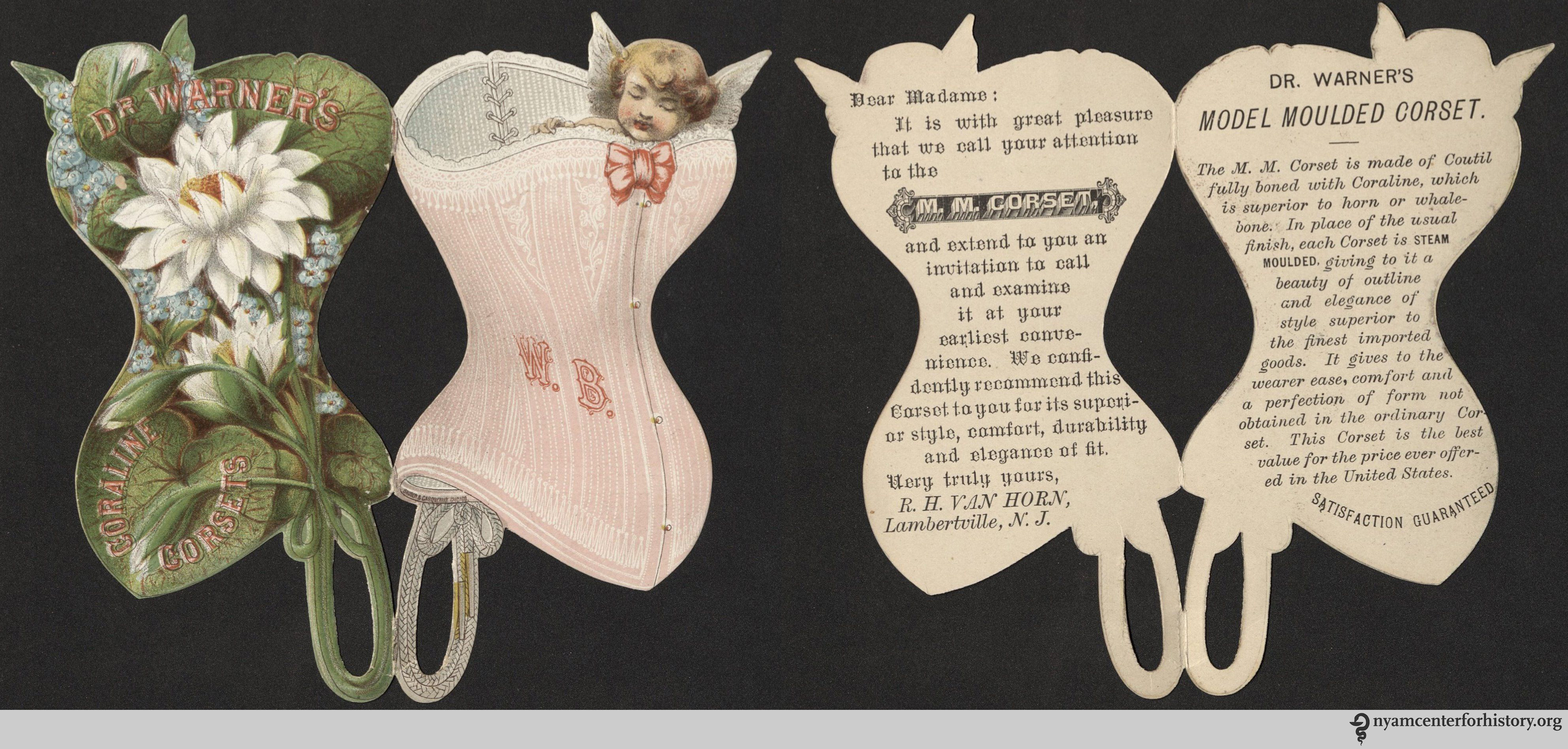
Dr. Warner trade card, inside and out. An 1883 article from Godey’s Lady’s Book and Magazine hailed Dr. Warner’s Coraline Corset as a model of comfort, superior to whalebone and horn corsets, and endorsed the model as a substitute for tight-laced models: “They have demonstrated that tight lacing is not essential to grace or beauty of form; and while impractical dress reformers have been preaching reforms which no one would adopt, Warner Brothers, by introducing properly fitting corsets, have given practical aid to the health and comfort of several million ladies.”8

Dr. Warner trade card, inside and out. An 1883 article from Godey’s Lady’s Book and Magazine hailed Dr. Warner’s Coraline Corset as a model of comfort, superior to whalebone and horn corsets, and endorsed the model as a substitute for tight-laced models: “They have demonstrated that tight lacing is not essential to grace or beauty of form; and while impractical dress reformers have been preaching reforms which no one would adopt, Warner Brothers, by introducing properly fitting corsets, have given practical aid to the health and comfort of several million ladies.”8 Click to enlarge.

Many health problems once blamed on the corset are now clearly not the fault of the undergarment. Death caused by postpartum infections, or childbed fever, became relatively rare with the advent and spread of antiseptic techniques. With the discovery of the tubercle bacillus in 1882, it became clear that corsets did not cause the disease. Incidence of breast cancer did not decrease after corsets that did not compress the breasts came into vogue. As Gerhart S. Schwartz wrote in a 1979 Bulletin of the New York Academy of Medicine article, “one disease after another found an explanation which was unrelated to the corset.”9

Many of the doctors against tight lacing, including O’Followell, did not condemn corsets as a whole. Instead, they championed designs less tightly laced. Several pamphlets in our collection feature what they claim to be medically sound corsets.

In one, “La Grecque Corset as an Aid to the Physician and Surgeon,” printed circa 1911, the van Orden Corset Company advertises corsets that pull in the abdomen while reducing strain on abdominal muscles.10

Incorrect and correct pressure applied by corsets. In

Incorrect and correct pressure applied by corsets. In van Orden Corset Company, “La Grecque Corset as an Aid to the Physician and Surgeon,” circa 1911. Click to enlarge.

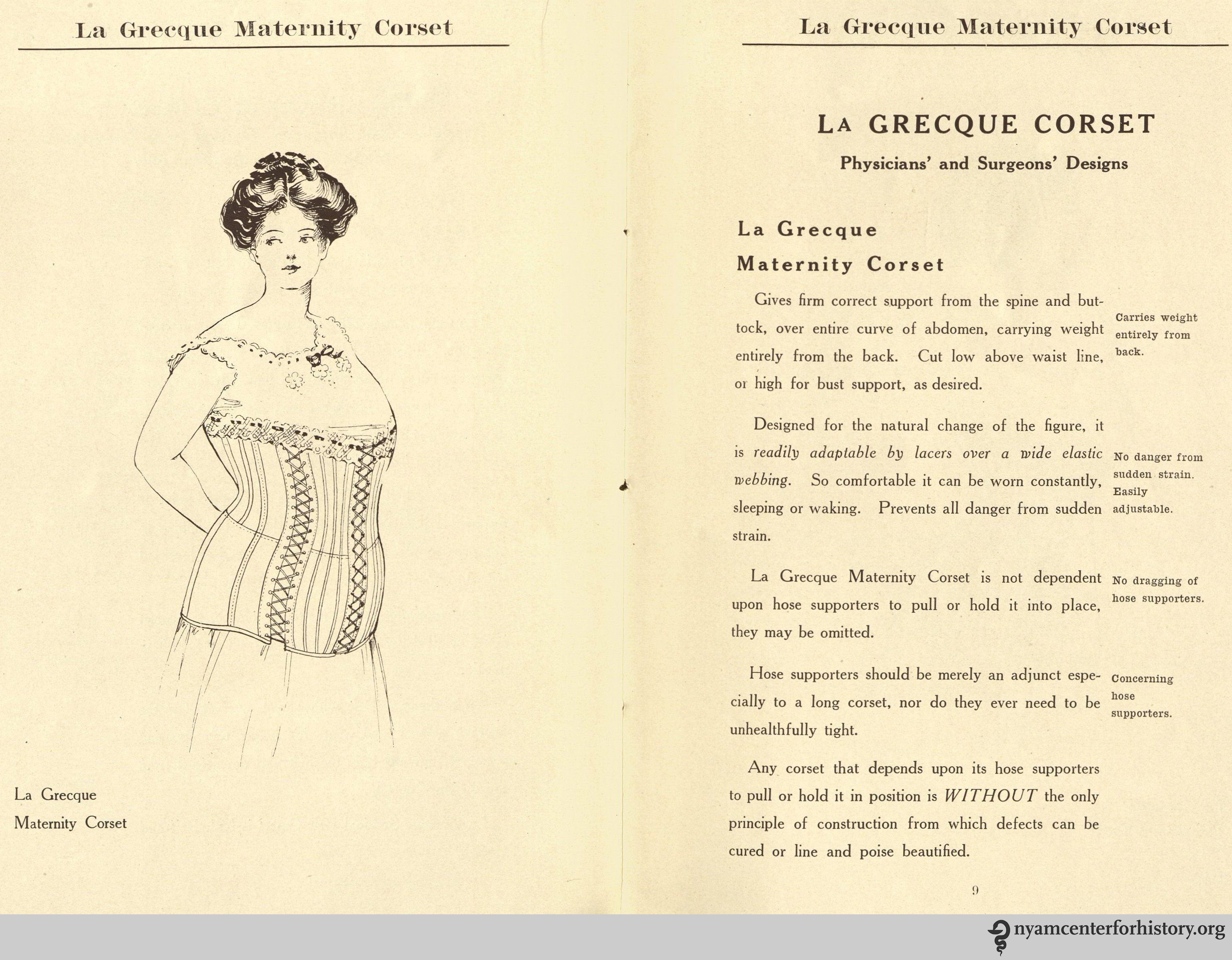
The pamphlet also features a maternity corset, “designed for a natural change of figure.”10 Corsets for maternity came on the market in the 1830s, and were often tightly laced.11 Yet the medical literature of the period does not discuss dangers of maternity corsets to the fetus or the mother,11 either due to taboos of the time or because negative impacts were rare or unreported. The maternity corset advertised by the van Orden Corset Company, from the early 1900s, was not tightly laced, taking advantage of new elasticized fabrics to expand as needed.10

La Grecque Maternity Corset. In

La Grecque Maternity Corset. In van Orden Corset Company, “La Grecque Corset as an Aid to the Physician and Surgeon,” circa 1911. Click to enlarge.

Corsets from a Surgical Standpoint,” from H. W. Gossard and Company (still in business today as a lingerie company), describes to physicians the benefits of prescribing their pliable front-laced corsets. These corsets, they claimed, improved posture and “preserve[d] the lines demanded by fashion, but without discomfort or injury.”12

Figures 5 and 6 in

Figures 5 and 6 in H. W. Gossard and Company, “Corsets from a Surgical Standpoint,” 1909. Click to enlarge.

Both of these pamphlets were published at the end of an era. The advent of elasticized fabric paved the way for the creation of an early bra, displayed by Herminie Cadolle at the Exposition Universelle in 1889.13 The corset’s final death knell was World War I. Women could not work in factories or the field while wearing restrictive clothing. Once household staff went to work for the war effort, upper-class women had no one to help them dress. Girdles and bras took over the corset’s supporting role, about 20 years after Flower’s calls for the end of the “destructive habit” of corsetry.1,13

References

1. Flower BO. Fashion’s slaves. Boston: Arena Pub. Co.; 1892.

2. Starr M. Vintage X-rays reveal the hidden effects of corsets. CNET. 2015. Available at: http://www.cnet.com/au/news/vintage-x-rays-reveal-the-hidden-effects-of-corsets. Accessed May 14, 2015.

3. O’Followell L. Le corset; histoire, médecine, hygiène. volume 2. Paris: Maloine; 1908.

4. Davis L. No, corsets did not destroy the health of Victorian women. io9. 2014. Available at: http://io9.com/no-corsets-did-not-destroy-the-health-of-victorian-wom-1545644060. Accessed May 14, 2015.

5. LOFT: Size Chart. Available at: http://www.anntaylor.com/catalog/sizeChartPopup.jsp. Accessed May 18, 2015.

6. Gap – women’s size chart. Available at: http://www.gap.com/browse/sizeChart.do?cid=2081. Accessed May 18, 2015.

7. Klingerman KM. Binding femininity: An examination of the effects of tightlacing on the female pelvis. 2006. Available at: http://etd.lsu.edu/docs/available/etd-04072006-115441/unrestricted/Klingerman_thesis.pdf. Accessed May 14, 2015.

8. Coraline: Its discovery and use in the manufacture of corsets. Godey’s Lady’s B Mag. 1883:468–469. Available at: https://books.google.com/books?id=nXA-AQAAMAAJ&pgis=1. Accessed May 18, 2015.

9. Schwarz GS. Society, physicians, and the corset. Bull N Y Acad Med. 1979;55(6):551–90. Available at: http://www.pubmedcentral.nih.gov/articlerender.fcgi?artid=1807654. Accessed May 14, 2015.

10. La Grecque corset as an aid to the physician and surgeon. New York: van Orden Corset Co.; 1911?

11. Summers L. Bound to please: A history of the Victorian corset. Oxford, New York: Berg; 2001.

12. Corsets from a surgical viewpoint. Chicago: Gossard Co.; 1909.

13. Fontanel B. Support and seduction: The history of corsets and bras. New York: Abrams; 1997.

Aging Through Time

By Danielle Aloia, Special Projects Librarian

“Ah, but I was so much older then
I’m younger than that now”
– Bob Dylan, My Back Pages

May celebrates Older Americans Month, which this year focuses on promoting health and community engagement of seniors across the nation. Today, 14.1% of the U.S. population is aged 65 and older1 and by 2030, 20% of the population will be over 65.2 We are living longer, healthier, and more productive lives than ever before.

Over the years there has been investigation into aging and the life course, reflecting beliefs informed by the average lifespans of the time. The Art of Invigorating and Prolonging Life by William Kitchiner, published in 1821 in the U.K. and two years later in the U.S., suggested that life is divided into three stages, each stage requiring a different regimen of “food – clothes – fire – air – exercise – sleep – wine – &c.”3 Kitchiner cautions that people only realize the importance of these elements after they become enslaved to other, detrimental, habits. They may need to proceed gradually with his recommendations in order to correct the bad habits and form new ones.

The first stage of life is a period of preparation, from birth to 21. In this stage, people should take in as much healthful food as can be digested for the body to convert into Chyle (bodily fluids). The second stage, the period of active usefulness (ages 21-42), should include plenty of “hard exercise in the open air” to restore the body’s constitution. In the third stage, the period of decline, the rate of decline is based on the strength of the constitution built during the active stage of life. Without “due attention to Diet &c., the Third period of Life is little better than a Chronic Disease.”4

Pages 34-35 of Kitchiner, The Art of Invigorating and Prolonging Life, 1823 edition.

Pages 34-35 of Kitchiner, The Art of Invigorating and Prolonging Life, 1823 edition. Click to enlarge.

According to Kitchiner, by 42 years of age humans are on the decline; they are ancient by 63. Put in context, life expectancy in the 1900s for men was 46.3 in the U.S.and 44 in the UK.5,6 But still, Kitchiner believed it was never too late to make up for lost time.

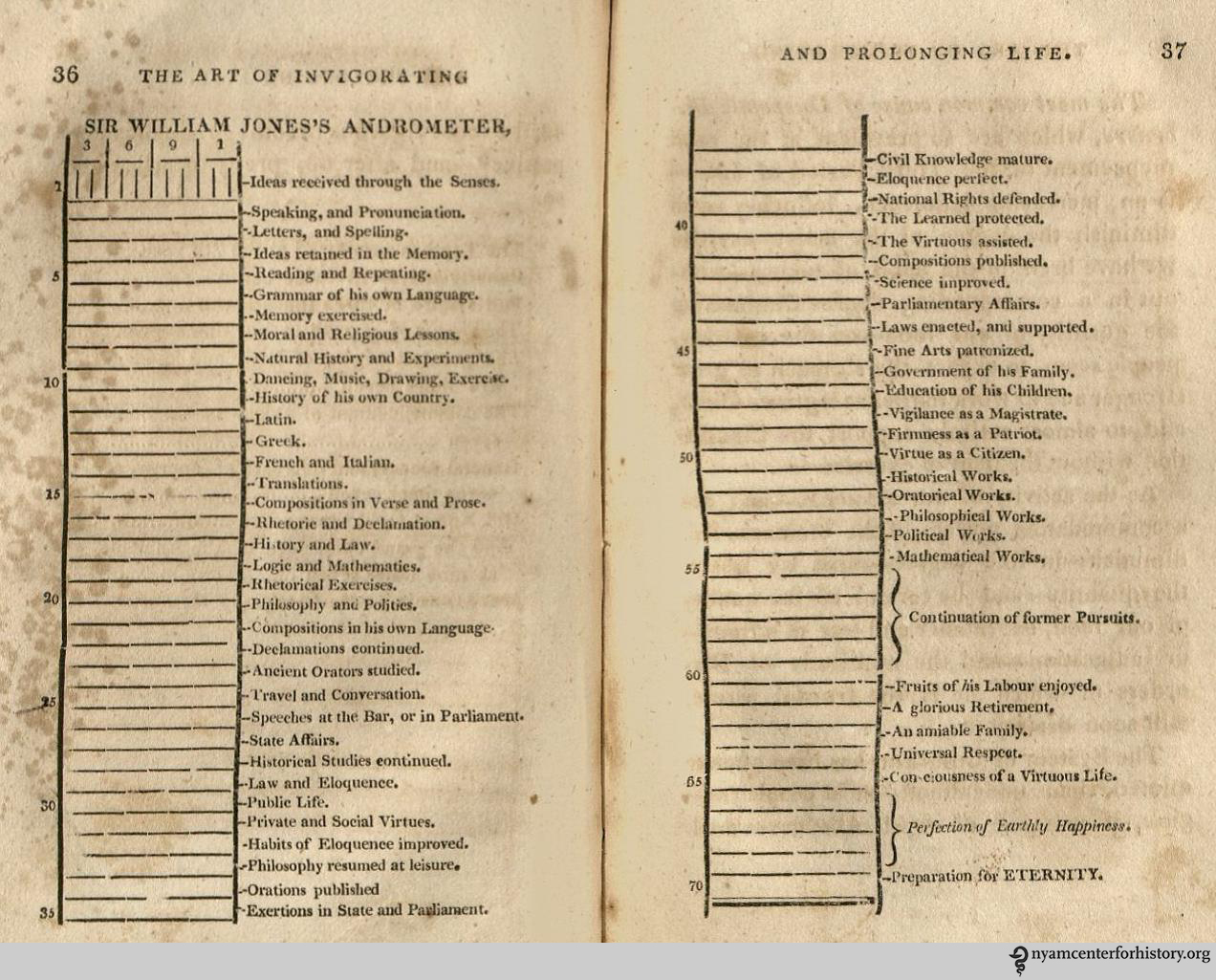
Kitchiner incorporated William Jones’s andrometer,7 a chart intended as a tool for people to gauge their progress through life.8

William Jones' Andrometer, on pages 36-37 of Kitchiner, The Art of Invigorating and Prolonging Life, 1823 edition.

William Jones’ Andrometer, on pages 36-37 of Kitchiner, The Art of Invigorating and Prolonging Life, 1823 edition. Click to enlarge.

Unfortunately, Jones passed away in his late 40s and Kitchiner in his 50s. Sadly, neither got to experience “a glorious retirement” or the “universal respect” due after the age of 60.

More than 100 years later, in 1974, a new benchmark showed similarities to Kitchiner’s book while offering a 20th-century outlook. D. D. Stonecypher published Getting Older and Staying Young: A Doctor’s Prescription for Continuing Vitality in Later Life to give readers reliable and practical advice about aging, because “the quality of one’s later years grows out of the choices the individual makes.”9 In 1974 life expectancy in the United States was 68.2 for men and 75.9 for women.10

Stonecypher had specific audiences in mind for his work: middle-aged readers wondering about their aging bodies who may be modifying activities in order to preserve their vigor; older readers looking to gain insights into preserving mental and physical vitality; and younger readers who wished to assist the elderly and gain insight and perspective on their own aging process. He also notes another type of reader, the policy maker or community worker who “holds the key to the mounting social problems of aging.”

Stonecypher offered the following questionnaire as a way for readers to assess the probability of living a long life, but goes on to explain that medical science was advancing so rapidly it could be possible to double the life span to over 100 years. Citing that in classical Greece and Rome average life expectancy was 18 years, he writes that by the 1800s it had doubled to 35 years and between 1800 and 1970 it doubled again to 72 years.

In Stonecypher, Getting Older and Staying Young, 1974.

In Stonecypher, Getting Older and Staying Young, 1974.

In 2013, life expectancy in the United States was 76.4 for men and 81.2 for women,11 a substantial increase even from 1974. The longer one lives the more productive one may need to be: “a glorious retirement” may not be the answer to a healthy old age. Stonecypher tries to persuade his audience: “It is prejudice that has justified the compulsory retirement, inadequate pensions, the ostracism, and the other stresses which have come to seem a normal part of life after 65.”

This year, the Medicare, Medicaid and the Older American Act celebrates its 50th anniversary.12 The Act led to programs that have ensured access to health care, community services, and protections of the rights of elders. We have come a long way, but have even more work to do to support health and productivity of seniors as the population ages.

References

1. U.S. Census Bureau. State and County QuickFacts. http://quickfacts.census.gov/qfd/states/00000.html. Accessed May 21, 2015.

2. U.S. Census Bureau. An Aging Nation: the Older Population in the United States. Washington, D.C.: U.S. Census Bureau; 2014. http://www.cdc.gov/nchs/data/nvsr/nvsr62/nvsr62_07.pdf. Accessed May 21, 2015.

3. Kitchiner William. The Art of Invigorating and Prolonging Life. Philadelphia : H. C. Carey & I. Lea; 1823.

4. Ibid.

5. U.S. Census Bureau. United States Life Tables, 2009.. Washington, D.C.: U.S. Census Bureau; 2014. http://www.cdc.gov/nchs/data/nvsr/nvsr62/nvsr62_07.pdf. Accessed May 21, 2015.

6. England. Office for National Statistics. Mortality in England and Wales: Average Life Span, 2010. England: Office for National Statsitcs; 2012. http://www.ons.gov.uk/ons/dcp171776_292196.pdf. Accessed May 22, 2015.

7. Mental Floss. The Andrometer: an 18th-Century Measuring Stick for Success in Life. http://mentalfloss.com/article/58057/andrometer-18th-century-measuring-stick-success-life. Accessed May 21, 2015.

8. Jones, William. The works of Sir William Jones, Volumes 1-2, 1807. http://books.google.com/books?id=PW5KAAAAYAAJ&printsec=frontcover&source=gbs_ge_summary_r&cad=0#v=onepage&q&f=false. Accessed May 21, 2015.

9. Stonecypher D. D. Getting Older and Staying Young. [1st ed.]. New York : Norton; 1973.

10. U.S. Census Bureau. United States Life Tables, 2009.. Washington, D.C.: U.S. Census Bureau; 2014. http://www.cdc.gov/nchs/data/nvsr/nvsr62/nvsr62_07.pdf. Accessed May 21, 2015.

11. U.S. Census Bureau. Health, United States, 2014. Washington, D.C.: U.S. Census Bureau; 2014. http://www.cdc.gov/nchs/data/hus/hus14.pdf. Accessed May 21, 2015.

12. 2015 White House Conference on Aging. http://www.whitehouseconferenceonaging.gov/about/index.html. Accessed May 21, 2015.

Conan Doyle’s Poison Pen and “The Adventure of the Devil’s Foot”

By Anne Garner, Curator, Center for the History of Medicine and Public Health

“Upon my word, Watson!” said Holmes at last with an unsteady voice, “I owe you both my thanks and an apology. It was an unjustifiable experiment even for one’s self…A candid observer would certainly declare that we were [mad] before we embarked upon so wild an experiment. I confess that I never imagined that the effect could be so sudden and so severe.”

                                                –Arthur Conan Doyle, “The Adventure of the Devil’s Foot” (1910)1

Illustration from the 1910 publication of "The Adventure of the Devil's Foot" in The Strand magazine.

Illustration by Gilbert Holiday from the 1910 publication of “The Adventure of the Devil’s Foot” in The Strand magazine.

Nineteenth- and twentieth-century botanical dictionaries lack any mention of radix pedis diaboli. Curious readers will need to turn instead to fiction to find it, and to the Sherlock Holmes stories of Sir Arthur Conan Doyle. Conan Doyle’s short story, “The Adventure of the Devil’s Foot,” was published in 1910, and pivots on this fictional poisonous plant.

In the story, the plant—devil’s foot root—is little-known even in West Africa, its point of origin. Its transport to England is the work of the story’s lion-hunting physician, Dr. Leon Sternsdale.

The case involves the mysterious injuries sustained by four siblings (two are fatal). En route to the story’s solve, Holmes detects a strange brown powder on the smoke-guard of a lamp at the scene. Soon after, he proposes that he and Watson undertake a medical experiment to determine the powder’s effects on the body. The always accommodating Watson assents. Holmes then lights the lamp, burning the powder with the window and door ajar for ventilation.

The impact is immediate: Watson describes a “turmoil in his brains” and a mounting loss of control of both mind and body. At the last minute, Watson marshals his reason and tackles Holmes, pushing him out of the room, where the pair of them lie breathless on the grass outside as the fumes and the poison recede. Holmes’ suspicions are confirmed: the powder is toxic, and he’s able to link the deaths to the devil’s foot root, with the help of Sternsdale.

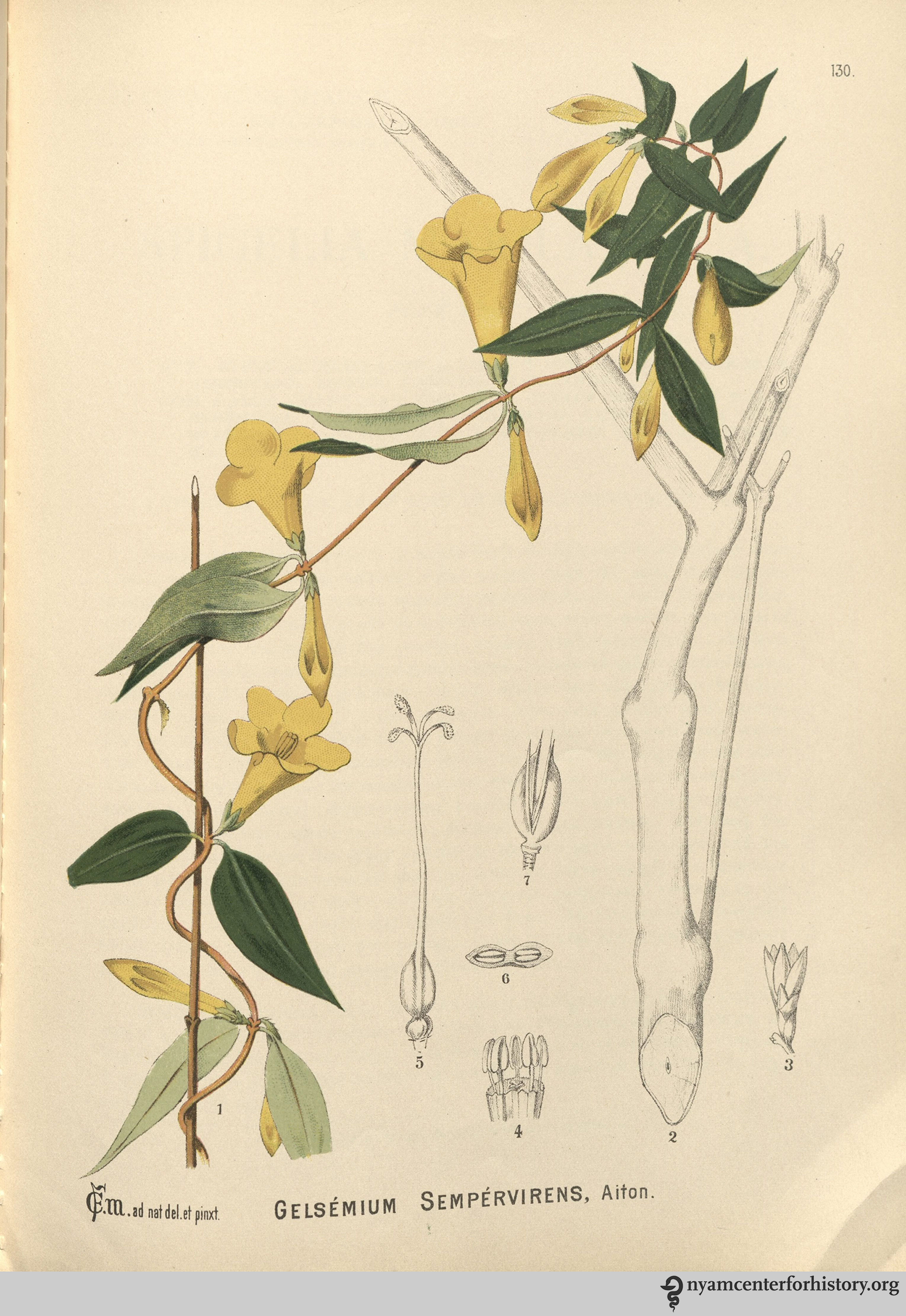
As a third-year medical student at the University of Edinburgh, Doyle embarked on his own experiment with a toxic root. Gelsemium (sometimes gelseminum), a dried rhizome of yellow jasmine, was rumored to have been discovered by a Mississippi planter who accidentally made a tea for his master using the root, and cured him of his fever (though with side effect—loss of muscle control).2

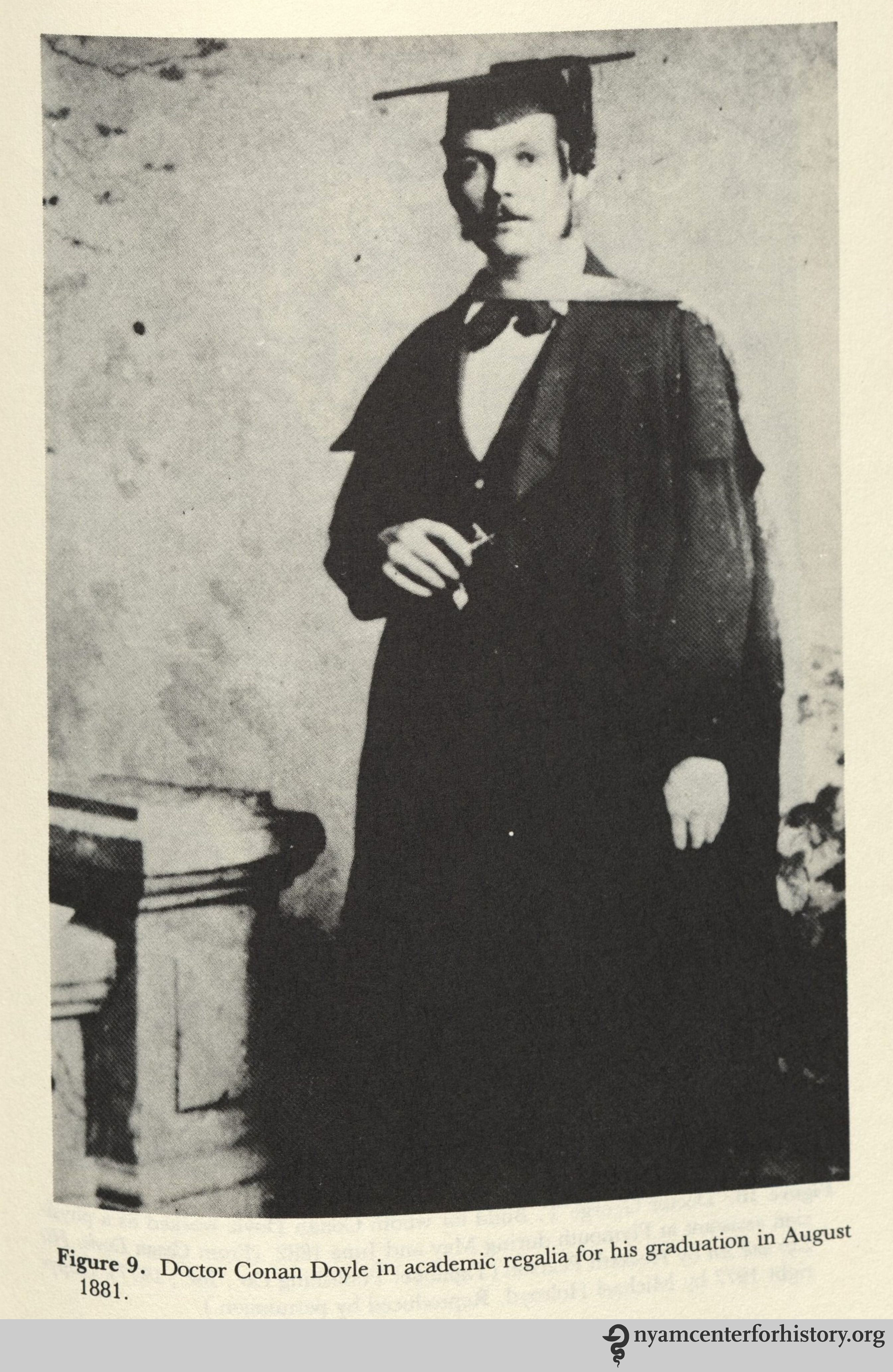
Doctor Conan Doyle in academic regalia for his graduation in August 1881. In Rodin and Key, Medical Casebook of Doctor Arthur Conan Doyle: From Practitioner to Sherlock Holmes and Beyond, 1984.

Doctor Conan Doyle in academic regalia for his graduation in August 1881. In Rodin and Key, Medical Casebook of Doctor Arthur Conan Doyle: From Practitioner to Sherlock Holmes and Beyond, 1984.

By the mid-19th century, gelsemium had gained a reputation with a handful of medical practitioners in the Midwest as a remedy for pneumonia, pleurisy, and other ailments. In 1879, Doyle, who had been taking a tincture of gelsemium for some time to combat neuralgia, began to experiment with it, incrementally increasing his dosage.3

Doyle published his findings in a letter to the editor in the September 20, 1879 issue of the British Medical Journal, under his initials, A.C.D. Doyle writes that he was “determined to ascertain how far one might go in taking the drug, and what the primary symptoms of an overdose might be.” He concludes that gelsemium, like opium, could be tolerated with increased exposure, though at 200 minims Doyle ceased his experiments because of debilitating stomach issues.4

Gelsemium. In  Millspaugh, American Medicinal Plants, 1887.

Gelsemium. In Millspaugh, American Medicinal Plants, 1887.

Holmes and Watson’s symptoms in the “Adventure of the Devil’s Foot” in some ways conjure the effects of the gelsemium described by Doyle in the BMJ. Watson reports a “freezing” loss of muscular control and partial paralysis as well as loss of the senses. Doyle recounted similar symptoms after ingesting gelsemium. At the highest dosages, Doyle reported severe depression. Watson, too, describes feelings of dread:

“A thick, black cloud swirled before my eyes, and my mind told me that in this cloud, unseen as yet, but about to spring out upon my appalled senses, lurked all that was vaguely horrible, all that was monstrous and inconceivably wicked in the universe.”5

Self-experimentation was common during Conan Doyle’s lifetime. And yet, it’s somewhat surprising that Conan Doyle endeavored to take on this project. As historians Rodin and Key note, Conan Doyle writes in his autobiography, “I had…no great interest in the more recent developments of my own profession, and a very strong belief that much of the so-called progress was illusory.”6 Why then, was Conan Doyle so determined to ascertain the limits of the drug, particularly when he knew of life-ending overdoses? (At peak dosage, Doyle took 2 1/2 times the fatal amount.)

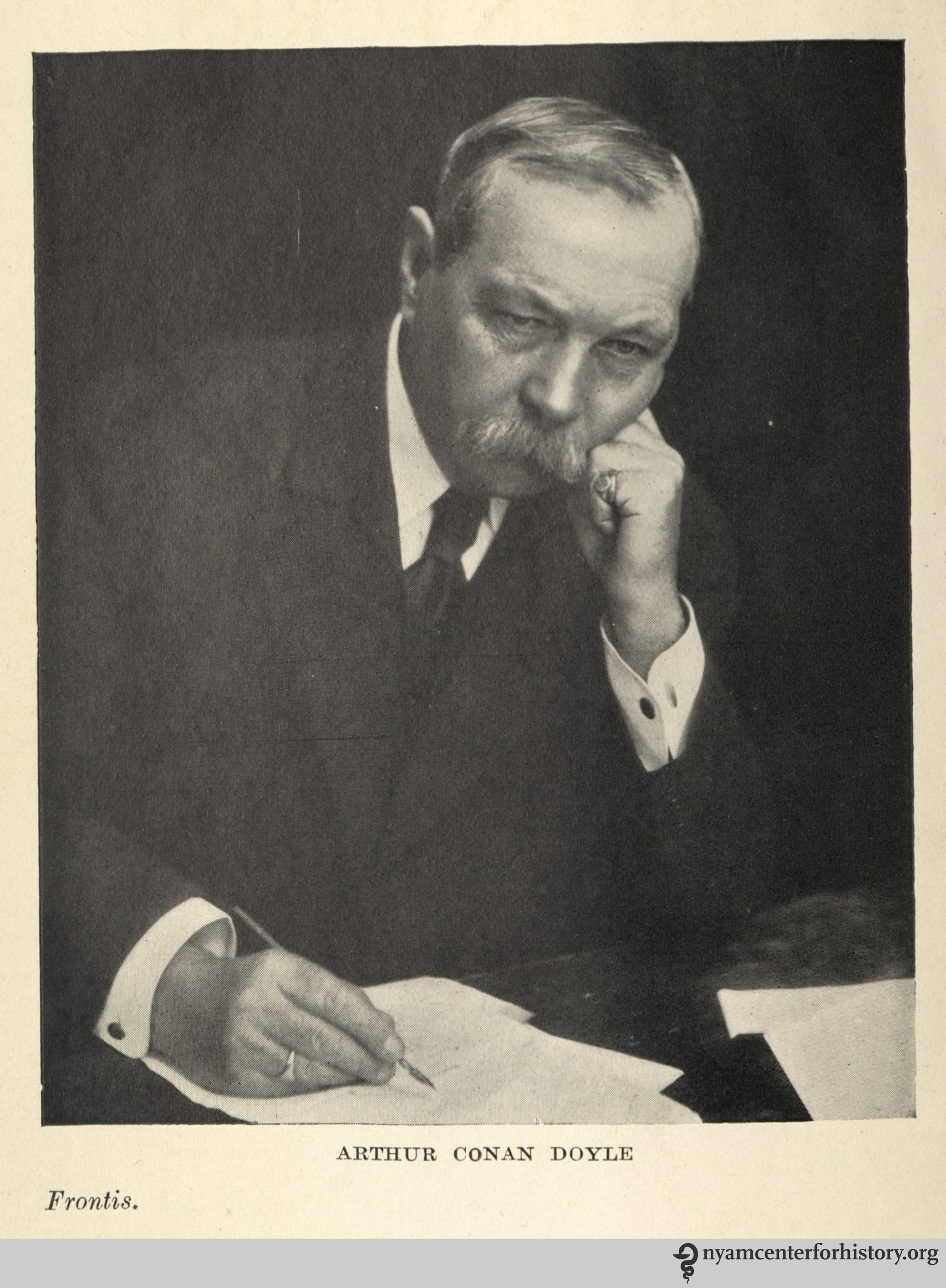
Arthur Conan Doyle. In his Memories and Adventures, 1930.

Arthur Conan Doyle. In his Memories and Adventures, 1930.

The answer is not clear, but may suggest an early fascination with poisons, which decorate so many of Conan Doyle’s Holmes and Watson stories. As a medical student at the University of Edinburgh, Conan Doyle studied with several eminent toxicologists, including Sir Robert Christison and Sir Thomas Richard Fraser.7 Conan Doyle’s service as ship surgeon on a voyage to West Africa may also have familiarized him with poisons that inspired the “devil’s foot root” of the Holmes story.

Rodin and Key suggest that not only was Conan Doyle interested in poisons, but he was also a risk-taker. They write that the experiment was a “reflection of the bravado, the sense of the dramatic, and the spirit of adventure already noted in many of his endeavors—experiences as a ship’s surgeon and involvements in war and sports.”8 Conan Doyle bestowed these qualities on his crackerjack gumshoe. In “Devil’s Foot,” Holmes admits that testing the poison is somewhat reckless—and yet we can’t imagine him behaving otherwise.

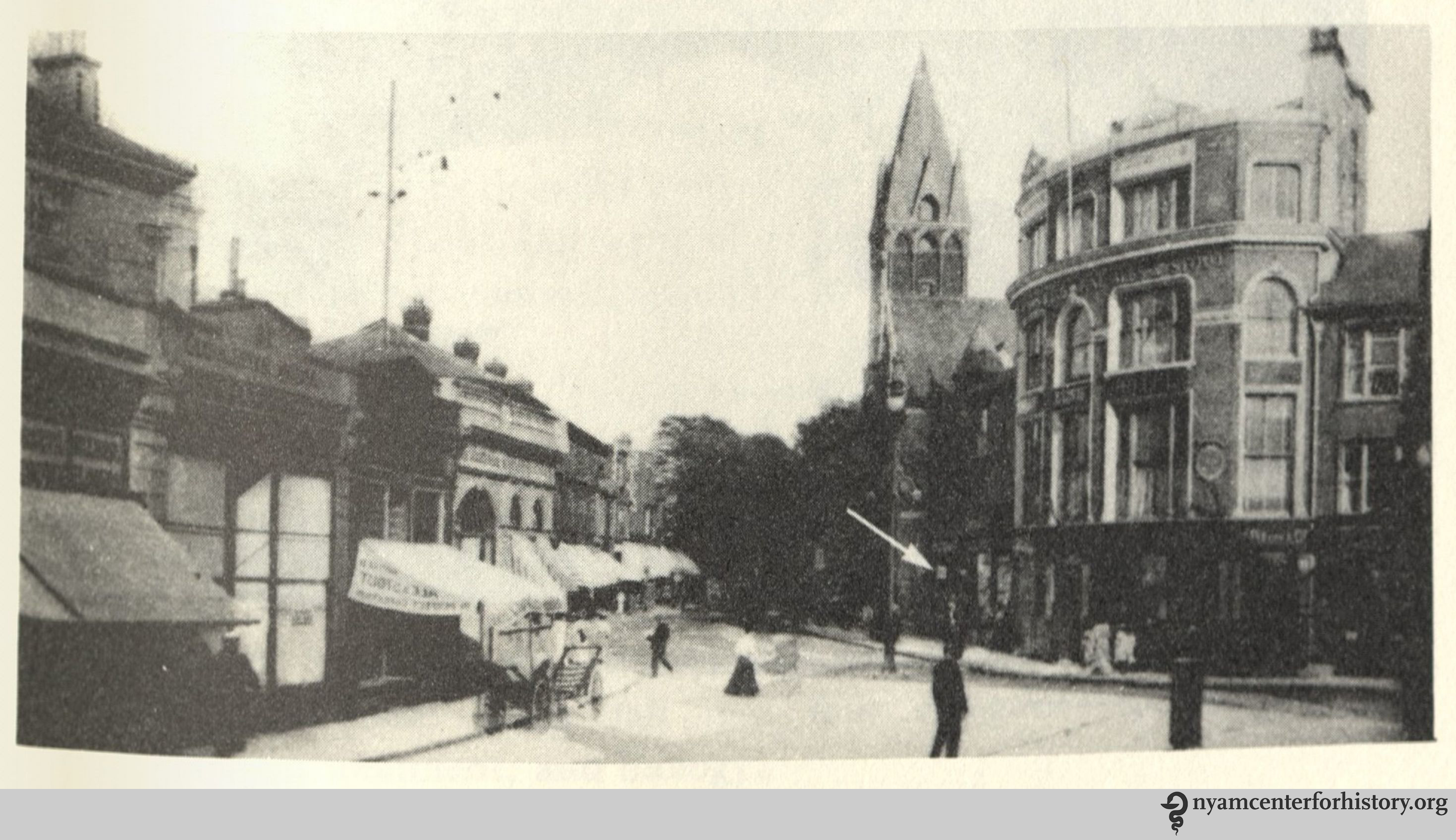
a street where Arthur Conan Doyle had his first medical practice, where he created the character Sherlock. In Rodin and Key, Medical Casebook of Doctor Arthur Conan Doyle: From Practitioner to Sherlock Holmes and Beyond, 1984.

Southsea. No. 1. Bush Villas is the site of Doctor Arthur Conan Doyle’s practice, 1882-1890. He created Sherlock Holmes here. In Rodin and Key, Medical Casebook of Doctor Arthur Conan Doyle: From Practitioner to Sherlock Holmes and Beyond, 1984.

We recommend commemorating Arthur Conan Doyle’s birthday, May 22, 1859, with a story or three from Round the red lamp: Being facts and fancies of medical life, with other medical short stories, available online, originally published in 1894 and reissued in 1992.

References
1. Conan Doyle, Arthur. “The Adventure of the Devil’s Foot.” His Last Bow. 1910. Project Gutenberg 15 May 2015. http://www.gutenberg.org/ebooks/2349

2. Alvin E. Rodin and Jack D. Key. Medical Casebook of Doctor Arthur Conan Doyle: From Practitioner to Sherlock Holmes and Beyond. Malabar, FL: Robert E. Krieger Publishing, 1984. p. 82.

3. D[oyle], A[rthur] C[onan]. “Gelseminum as Poison.” British Medical Journal 2: 483, 1879.

4.D[oyle], A[rthur] C[onan].

5. Doyle, Arthur Conan. “The Adventure of the Devil’s Foot.” His Last Bow. 1910. Project Gutenberg. 15 May 2015. http://www.gutenberg.org/ebooks/2349

6. Rodin and Key, 82.

7. Billings, Harold. “The material medica of Sherlock Holmes.” Baker Street Journal 55: 2006. 37-44.

8. Rodin and Key, 82.

Damien the Leper (Part 3 of 3)

This is part three of a guest post written by Anna Weerasinghe, a graduate of Harvard Divinity School studying the history and theology of Hansen’s disease. Read part one and part two.

In March 1888, Damien received a visit from Dr. Prince A. Morrow, a prominent New York dermatologist and syphilologist best known today as an early proponent of sex education.1 Morrow, then a fellow at the New York Academy of Medicine, had written the month before requesting an account of the progression of Hansen’s disease from Damien’s earliest symptoms through to its (at the time) inevitable conclusion. Damien, who was now so far along in his illness that he could no longer hold a pen, dictated the full account.2

Damien weeks before his death, photographed by William Brigham.

Damien weeks before his death, photographed by William Brigham.” In Daws, Holy man: Father Damien of Molokai, 1973.

Damien described the beginnings of the illness as an itching on the skin of his face and legs. Then, in the early 1880s, he began to experience a dull, throbbing pain in his left leg that eventually gave away to numbness. In the beginning of 1885, Damien accidentally scalded his foot with boiling water. He felt nothing. One of the earliest signs of Hansen’s disease is loss of sensation in the extremities, and Damien began to suspect the worst. Examination by doctors confirmed his suspicions: he had Hansen’s disease.3

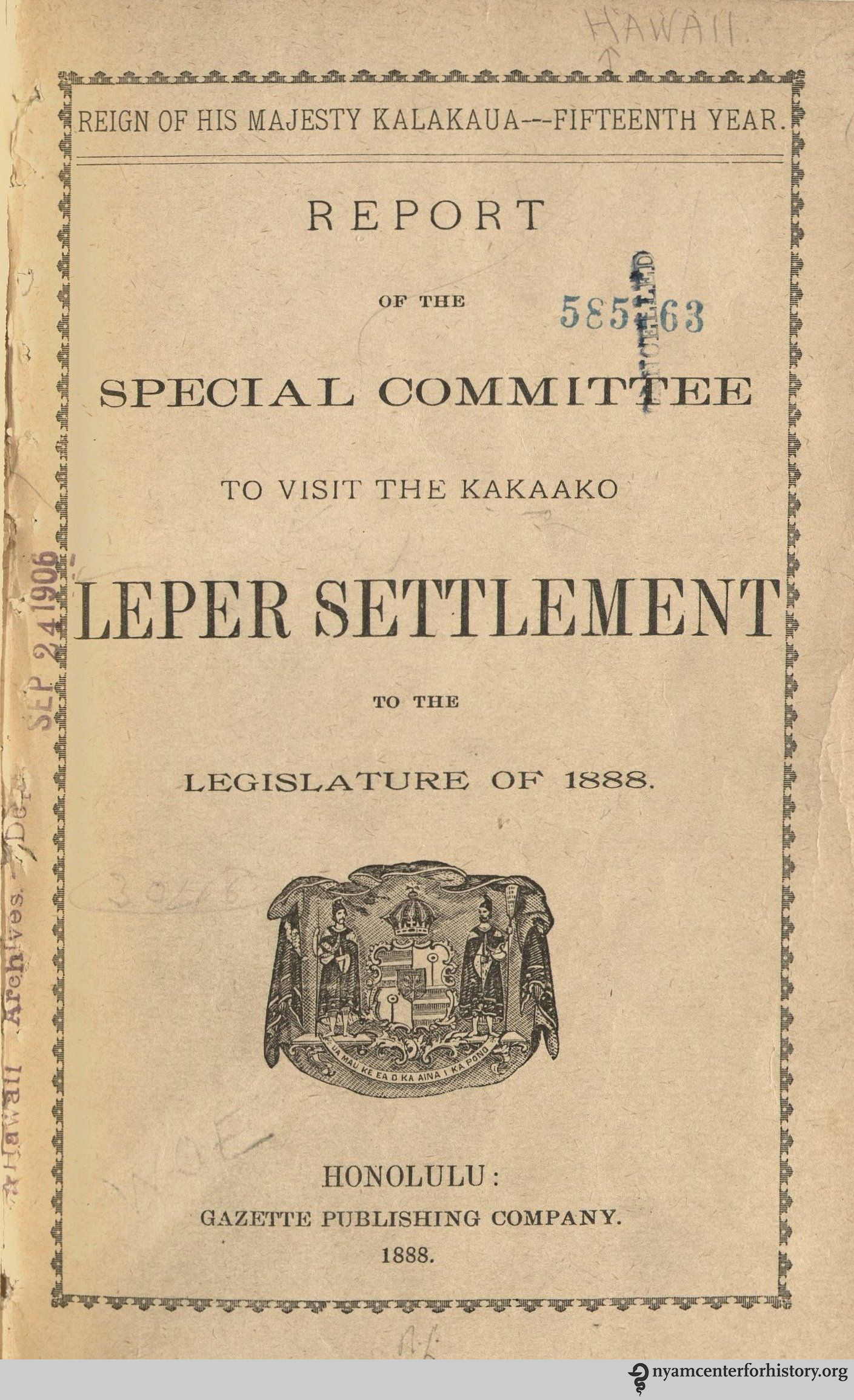
It was a devastating diagnosis. Being diagnosed with Hansen’s disease in Hawaii during the 19th and early 20th centuries was akin to being charged with a crime. Those afflicted with Hansen’s disease were legally required to turn themselves over to state incarceration at the Molokai settlement, leaving behind their families, friends, property, and livelihoods. The government enforced occasional sweeps of the island to ferret out ill people who were unwilling to turn themselves in.4

It is now known that Hansen’s disease is not a particularly contagious bacterial infection. About 95% of the population is naturally immune to Mycobacterium leprae, and most of the remaining 5% experience a relatively mild version of Hansen’s disease called tuberculoid leprosy. A small number of infected individuals, including Damien, are not so lucky. Due to a combination of genetic susceptibility and long-term exposure, possibly exacerbated by poor sanitation, Damien contracted the most serious form of Hansen’s disease: lepromatous. If left untreated, lepromatous Hansen’s disease causes large, insensate skin lesions eventually leading to extreme disfiguration of the extremities and face; nerve damage; breakdown of muscle tissue; and death.5

As if the disease weren’t terrible enough, the isolation of Hansen’s disease patients produced even more anguish. A 1907 government pamphlet on the Molokai settlement remarks, “the separation which the disease causes in families and among friends, is its most distressing feature.”6 By blaming the disease for the “distressing” practice of incarcerating victims of Hansen’s disease, Hawaiian policymakers and medical leaders abdicated responsibility for their actions. It was not the disease that separated sufferers from their healthy families, it was the tight grip of social mores and the law.7

Of course, the law did not affect the Hawaiian population equally. Even at the time of the Molokai settlement’s peak population (just over 1, 200 Hansen’s disease patients), only a tiny percentage was white.8 This disparity was most likely due to lower levels of genetic resistance among indigenous Hawaiians, compounded by poverty, as well as poor access to clean water, sanitation, and professional medical services.9 At the time, however, the high rate of infection among the native Hawaiian population was used to prop up colonialist bias and moral judgment.

Damien on his deathbed, photographed by the settlement physician, Sidney Bourne Swift. In Daws, Holy man: Father Damien of Molokai, 1973.

Damien on his deathbed, photographed by the settlement physician, Sidney Bourne Swift. In Daws, Holy man: Father Damien of Molokai, 1973.

Leprosy has had a moral dimension for almost as long as it has existed as a human disease. Like many illnesses, leprosy was often seen as a sign of divine displeasure and sinfulness. Throughout medieval and early modern times, leprosy was connected in particular to sexual deviancy and was even thought to be a venereal disease linked to syphilis.10

While the medical field had largely discarded this theory by the end of the 19th century, the close association between sexual immorality and leprosy was still a widely held belief among the white population of Hawaii. Indigenous Hawaiians, with their freewheeling approach to sex, were clearly at fault for their own sickness. Even Damien drew the connection: “It is an admitted fact,” he wrote, “that the great majority, if not the total number of all pure natives, have the syphilitic blood, very well developed in their system…as we are now, it developed it self [sic] in some instance in the way of what we called leprosy.”11

Damien was a man of his time, as this unflattering quote proves, but he was an extraordinary one. Others bemoaned the sorry state of leprous Hawaiians from a safe distance. Dr. Morrow’s interest in the Molokai settlement, for example, extended only as far as his scientific curiosity.12 But when someone asked Damien if he wanted to be cured of his leprosy, his answer was no: not if the price of the cure was abandoning Molokai and his work among his fellow sufferers.13 It was this very flawed, very human bravery—what some called recklessness—that made Damien a popular saint and martyr long before his canonization.

In previous posts, we have seen Damien through the eyes of his most vocal critics and poetic admirers, religious authorities, and now medical experts. He was a man who attracted the words of others, through his work, his circumstances, and his personality. But of himself, Damien typically had little to say. “As for me,” he wrote to his older brother during his 11th year as pastor of the Molokai settlement, “I am still almost the same, except for my beard which is beginning to turn a little grey.”14

References

1. For a full discussion of Morrow’s contribution to the early sex education movement in the United States, see Bryan Strong, “Ideas of the Early Sex Education Movement in America, 1890-1920,” History of Education Quarterly, 12 (1972): 129-61.

2.Gavan Daws, Holy Man: Father Damien of Molokai (New York: Harper & Row, 1973), 226-227.

3.Daws, Holy Man, 160-163.

4. Daws, Holy Man, 142-150.

5. Warwick J. Britton, “Leprosy,” Encyclopedia of Life Sciences, online ed. (John Wiley & Sons, Ltd., 2002), 1.

6. Hawaii Board of Health, The Molokai Settlement, Territory of Hawaii: Villages Kalaupapa and Kalawao (Honolulu, issued by the Board of Health of the Territory of Hawaii, 1907), 3. Emphasis added.

7. While segregation of Hansen’s disease patients has long been considered unnecessary and unethical, particularly with the development of effective antibiotic treatment, recent studies suggest that segregation may never have been a successful method for reducing the incidence of Hansen’s disease. New research has shown that the bacteria responsible for Hansen’s disease can survive for long periods of time inside amoebae that are commonly found in standing water and soil. This may explain why leprosy incidence in the Hawaiian Islands only began to decrease in the 1910s, when improvements in quality of life and sanitation began to trickle down to the wider Hawaiian population. See William H. Wheat, Amy L. Casali, Vincent Thomas et al. “Long-term Survival and Virulence of Mycobacterium leprae in Amoebal Cysts,” PL0S Neglected Tropical Diseases, Vol. 8, No. 12 (2014).

8. Daws, Holy Man, 250.

9. In addition, white sufferers of Hansen’s disease had greater mobility and often left the Hawaiian Islands to seek treatment in the U.S. or abroad. One government doctor even proposed setting up an official fund to pay the fares of diseased white men to leave Hawaii. Daws, Holy Man, 148.

10. Saul Nathanial Brody, The Disease of the Soul: Leprosy in Medieval Literature (Ithaca: Cornel University Press, 1974), 41; 60-61. See also Luke Demaitre, Leprosy in Premodern Medicine: A Malady of the Whole Body (Baltimore: Johns Hopkins University Press, 2007), 209.

11. Daws, 148-149.

12. Dr. Morrow ultimately advocated against the U.S. annexation of Hawaii from a sanitation perspective. See Prince A. Morrow, “Leprosy and Hawaiian Annexation,” The North American Review, Vol. 165, No. 49d2 (Nov. 1897).

13. Daws, Holy Man, 216.

14. Daws, Holy Man, 137.

Tapes, Health, and History: Gaining Reel (to Reel) Experience at the New York Academy of Medicine

By Michelle Krause, Spring Intern

Intern Michelle Krause with audio-visual materials in the library's collection.

Intern Michelle Krause with audio-visual materials in the library’s collection.

I am a graduate student in the Moving Image Archive Program at New York University’s Tisch School of the Arts. To complete the program, students must complete two semester-long internships and one full-time summer internship. This semester I completed my first internship for the program at the New York Academy of Medicine, under the supervision of Archivist Rebecca Pou.

When the opportunity presented itself to intern at the New York Academy of Medicine, I immediately applied for the position. I come from a family of doctors and am extremely interested in the medical field. I knew I would be fascinated to work on preserving a collection of audiovisual materials relating to medicine.

I was fortunate to work with three collections throughout my internship at the Academy. The largest collection I worked with consisted of 447 magnetic recording tapes (in reel-to-reel format) of medical lectures recorded in the late-1950s to the mid-1970s at the New York Academy of Medicine. My duties included organizing the materials and corresponding the reels with their appropriate series. After this task was complete, I catalogued all of the information on each reel into an item-level spreadsheet.

Labeled reels.

Audio reels in the library’s collection.

Throughout the course of my internship, I gained and strengthened numerous skills; for example, collection management, inspection, cataloging and knowledge regarding audiotape reels. Before embarking on this internship, I had no experience in collection management (I would eventually take a course on the topic during the spring semester), however after having completed the internship I feel completely confident in the field. It was especially helpful that Rebecca allowed me to choose my own method of assessing and cataloging the collection; as a result I felt confident in my choice of action, simultaneously improving my skills as a cataloguer.

An audio reel.

An audio reel.

I devoted countless hours to inspecting the audiotape reels, which emphasized to me that it is necessary to perform tasks slowly if one wishes to complete a thorough assessment of a collection. Completing this internship has increased my knowledge of magnetic recording tape, especially in reel-to-reel format, as well as how to correctly identify damage to audiotape reels. I could not have asked for a better internship or supervisor this semester so I can only hope that my experience this semester is repeated in future internships. Because of my work with the collection, the library now has a clearer picture of what these collections contain, and can move forward with work to preserve them and make them more accessible.

Fascinating Mad Men-Era Advertisements

By Anne Garner, Curator, Center for the History of Medicine and Public Health

This is part of an intermittent series of blogs featuring advertisements found in our collection. You can find the entire series here.

In American Journal of Obstetrics and Gynecology 83, no. 3 (1962).

In American Journal of Obstetrics and Gynecology 83, no. 3 (1962).

Nobody conjures the ’60s better than Matthew Weiner and the writers, designers, and stylists of AMC’s Mad Men. We’ll miss the quotidian details: the trash left behind at the Draper family picnic, that unbelievable maternity dress of Trudy’s, the choking smoke of Mohawk’s planes, Metro-North’s trains, and Don’s automobiles. When Sally Draper puts a plastic dry-cleaning bag over her head and her mother scolds her—not out of fear for her safety and only for dumping her dry-cleaning on the floor—we’re gob-smacked. These moments crystallize the seismic shifts that have occurred in cultural expectations over the last fifty years.

The Academy Library has strong holdings in the major journals of the 19th and 20th centuries. Journals were then, as they are now, the primary place of publication for innovations and discoveries. In addition, the advertisements aimed at the professional readers of these journals offer insights into changing cultural beliefs. Most libraries excised the advertisements, especially if they were gathered in a separate section of the journal. The Academy tradition was to keep the advertising, and these ads are now heavily used by historians.

The images and texts in these advertisements provide artists, writers, and historians with richly-textured cultural context. There is much to be learned, for example, from looking at the way antidepressants were marketed to women in the twentieth century, at the early advertisements for the birth control pill, and at tobacco advertising aimed directly at physicians as consumers.  Here, a look at a Flavorwire piece we wrote using ads entirely from our collections and relating them to Mad Men.

The Good Man of Religion (Part 2 of 3)

This is part two of a guest post written by Anna Weerasinghe, a graduate of Harvard Divinity School studying the history and theology of Hansen’s disease. Read part one and part three.

Our last post saw Protestants Robert Louis Stevenson and the Rev. Dr. Hyde in a pitched, public battle for religious missionary Father Damien’s reputation. But what did fellow Catholics think of Damien?

Bishop Hermann Koeckmann and Father Leonor Fouesnel. In Daws, Holy man: Father Damien of Molokai, 1973.

Bishop Hermann Koeckmann and Father Leonor Fouesnel. In Daws, Holy man: Father Damien of Molokai, 1973.

“Good man of religion, good priest,” wrote Father Fouesnel, the vice-provincial of the mission at Honolulu, “but…sometimes indiscreet zeal leads him to say, to write, and even to do things which ecclesiastical authority can only criticize.”1 Damien was constantly at loggerheads with his superiors Fouesnel and Hermann Koeckemann, bishop of the Congregation of the Sacred Hearts on Hawaii, throughout his time at the Molokai leper settlement, and this is was nothing new.

Damien, born Jozef de Veuster on January 3, 1840 to a farming family in Tremelo, Belgium, was driven, strong, and competitive from a young age. He followed his elder brother Auguste into the Congregation of the Sacred Hearts of Jesus and Mary in 1860 and quickly strove to surpass him. When Auguste fell ill and was unable to make the trip to Hawaii to begin his mission, Damien literally jumped at the chance to take his place. He even went over the head of his direct superior by writing a letter to the father-general of the Congregation, much to his superior’s annoyance. By October 1863, he was onboard a ship destined for Hawaii. He was only 23 years old and had yet to be ordained.2

Damien at twenty-three, just before he left Europe. In Daws, Holy man: Father Damien of Molokai, 1973.

Damien at twenty-three, just before he left Europe. In Daws, Holy man: Father Damien of Molokai, 1973.

This first step towards Molokai set the tone for Damien’s often-fraught relationship with his superiors throughout his life. Damien was impolitic, demanding, and at times even imperious. He did not request supplies or aid, he demanded them; when he got the desired materials or money, he used them as he saw fit without waiting for approval. His intentions were generally good: for example, Damien once took lumber intended for the chapel in Pelekunu, a town on the other side of Molokai, to perform much-needed repairs on the chapel at the leper settlement instead.

But the biggest bone of contention was Damien’s extraordinary international media presence, particularly towards the close of the 1880s when Damien’s terminal Hansen’s disease diagnosis had been confirmed and publicized. This massive surge in popularity was accompanied by an equally vast outpouring in donations, directed not towards the Congregation’s mission, but to Damien himself.

“I see with displeasure,” wrote Bishop Koeckemann in early 1887, “that the newspapers which admire you exaggerate and put things in a false light, without taking account of what the government and others do—the mission also has its share.” Koeckemann and Fouesnel were convinced that Damien was fanning the flames of publicity, writing “to the four winds” about the miserable state of the leper settlement and insinuating that the mission and the government were shirking their duties.3

Damien was taken aback by his superior’s disapproval as much as by the media attention. He believed his actions to be encouraging charity, not publicity—and in fact, only a few letters by Damien were published during his life. His circumstances, rather than his words, were what aroused public interest. The press presented Damien as a hero of self-sacrifice: losing first his freedom of movement, then his health, and finally his life.

Still, after Damien’s death, neither Koeckemann nor Fouesnel were interested in pursuing a sainthood for Damien. All agreed that, after the press had labeled Damien a “hero” and “martyr of charity,” everything had been said. “The rest,” Koeckemann concluded, delicately leaving out all mention of Damien’s personal faults, “only complicates matters.” As Koeckemann’s successor, Bishop Gulston Ropert observed, “Even the beginnings of the process of beatification would have to wait until everyone who knew Damien well was dead.”4

Indeed, the process of Damien’s canonization did not begin until 1977, when Pope Paul VI declared him to be venerable (the first step towards full sainthood). It would take another three decades and two posthumous miracles for Damien to be officially recognized as the patron saint of Hansen’s disease patients.5

The feast day chosen for the new Saint Damien was not the day of his death, as is typical for Catholic saints. Instead, Damien is venerated on May 10, the anniversary of his arrival on the island of Molokai—a moment that many regarded as a death sentence far worse than physical death.6 In the final post, we will look at Hansen’s disease on Hawaii, as well as the progression of Damien’s own illness and death.

Read part three.

References

1. Gavan Daws, Holy Man: Father Damien of Molokai (New York: Harper & Row, 1973), 136.

2. Philibert Tauvel, Rtather Damien: Apostle of the Lepers of Molokai, Priest of the Cognregation of the Sacred Hearts (London: Art and Book Co., 1904), 29-31.

3. Daws, 191.

4. Daws, 245-246. Beatification is the second of three formal steps in the process leading towards sainthood.

5. Rachel Donadio, “Benedict Canonizes 5 New Saints,” The New York Times, October 11, 2009. For more about the second miracle, which was documented in the Hawaii Medical Journal, see “Vatican Affirms Miraculous Healing Attributed to Blessed Father Damien.” Catholic News Agency. May 1, 2008.

6.In fact, at the time when Damien left for Molokai, the government of Hawaii was deliberating a law that would declare confirmed Hansen’s disease victim legally dead. Daws, 73.

Sigmund Freud on War and Death

By Paul Theerman, Associate Director, Center for the History of Medicine and Public Health

4.Sigmund Freud (1856–1939), photograph by Max Halberstadt, n.d., from NLM’s Images from the History of Medicine, Image Order Number B012346.

Sigmund Freud (1856–1939), photograph by Max Halberstadt, n.d., from NLM’s Images from the History of Medicine, Image Order Number B012346.

Sigmund Freud was born this day in 1856. Just one hundred years ago, a scant six months or so into the Great War, he set down Reflections on War and Death, his thoughts on the meaning of the war that had already spun out so violently—and that had more than three years yet to go.

Freud was at the top of his career in 1915. He started carving out the distinct field of psychoanalysis in 1895, with Studies in Hysteria, followed by The Interpretation of Dreams (1899), The Psychopathology of Everyday Life (1901), Three Essays on the Theory of Sexuality (1905), and numerous other books and articles. From 1902 he had gathered a group of physicians that became the nucleus of the psychoanalytic movement. In 1909, Freud undertook a triumphal tour of the United States. He founded The International Psychoanalytical Association in 1910; the American and New York groups came about the following year. And in 1912, Freud founded Imago: zeitschrift für anwendung der psychoanalyse auf die geisteswissenchaften, a journal that applied psychoanalysis to history, philosophy, and the social sciences. It was in Imago that the essay, “Reflections on War and Death” appeared, as “Zeitgemäßes über Krieg und Tod.”1

In his essay, Freud wished to present a worldly estimation of the carnage gripping Europe. He wrote, “The civilized world-citizen . . . may find himself helpless in a world that has grown strange to him when he sees his great fatherland disintegrated, the possessions common to mankind destroyed, and his fellow citizens debased.”2 While regretting the violence that the war had unleashed, he also professed not to be particularly surprised. European civilization was not nearly as moral as people had believed, he wrote. He contrasted two forms of moral development. One was hard won by deep psychic change: the transformation of evil and selfish impulses to beneficent social ends under the influence of “the love needs of man interpreted in the widest sense.”3

Sigmund Freud, “Zeitgemäßes über Krieg und Tod,” Imago: zeitschrift für anwendung der psychoanalyse auf die geisteswissenchaften 4(1) (1915): 1-21.

Sigmund Freud, “Zeitgemäßes über Krieg und Tod,” Imago: zeitschrift für anwendung der psychoanalyse auf die geisteswissenchaften 4(1) (1915): 1-21.

The second form, indistinguishable from the first in peacetime, was enforced by a system of rewards and punishments that elicited moral behavior: good conduct is rewarded, and bad punished. However, in the chaos of wartime, the system showed itself for the sham that it was: no shame attached to the horrendous acts perpetrated between warring states. Freud explained this with the scant consolation: “our mortification and painful disappointment on account of the uncivilized behavior of our fellow world citizens in this war were not justified. . . . In reality they have not sunk as deeply as we feared because they never rose as high as we believed.”4

Cover of Freud's Reflections on War and Death, translated by A. A. Brill and Alfred B. Kuttner (New York: Moffat, Yard, and Company, 1918).

Cover of Freud’s Reflections on War and Death, translated by A. A. Brill and Alfred B. Kuttner, 1918.

In 1918, the year after America joined the war, Abraham Arden Brill (1874–1948), one of the founders of the psychoanalytic movement here, and Alfred B. Kuttner (b. 1886), a literary figure and film critic, translated and published Freud’s work, with this introductory note:

This book is offered to the American public at the present time in the hope that it may contribute something to the cause of international understanding and good will which has become the hope of the world.

This hope was based in a clear-eyed look at the basest human instincts, and the insight that change meant resolution at a deep psychic level, not to be gained by simple moralizing or hand-wringing. The last 100 years have produced a dispiriting number of examples of the failures to which Freud pointed. And the book remains in print to this day.

References

1. Imago 4(1) (1915): 1-21.

2. Sigmund Freud, Reflections on War and Death, translated by A. A. Brill and Alfred B. Kuttner (New York: Moffat, Yard, and Company, 1918), p. 16.

3. Freud, Reflections on War and Death, 21.

4. Freud, Reflections on War and Death, 29.