Chinese Opium Dens and the “Satellite Fiends of the Joints”

By Anne Garner, Curator, Rare Books and Manuscripts

Dr. John Thackery (Clive Owen) visits an opium den. Cinemax, 2014

Dr. John Thackery (Clive Owen) visits an opium den in The Knick. Cinemax, 2014

Dr. John Thackery passes through a number of dimly-lit opium dens in the heart of New York’s Chinatown during the course of The Knick. What were these dens really like—and who frequented them?

In the mid-19th century, the Chinatowns of America were largely isolated communities, populated by immigrants brought by labor brokers to work on the Central Pacific Railroad or other jobs. Many of these workers planned to return home after several years; there was little desire to assimilate. Scholar Gunther Barth has suggested that with the safety of a familiar culture came familiar vices.1

A large number of Chinese immigrants came from Canton, a region with a rich history of opium-smoking. As the Chinese presence spread east, opium dens cropped up in the Chinatowns of every major American city.

American Opium-Smokers Interior of a New York Opium Den/ Drawn by J.W. Alexander. [New York] : Harper and Brothers, Oct. 8, 1881. Courtesy of Images from the History of Medicine (NLM).

American Opium-Smokers Interior of a New York Opium Den/ Drawn by J.W. Alexander. [New York] : Harper and Brothers, Oct. 8, 1881. Courtesy of Images from the History of Medicine (NLM).

H. H. Kane wrote in 1882 that the first white American to smoke opium did so in San Francisco’s Chinatown in 1868.2 Until then, opium smoking had been strictly confined to the areas of Chinese settlement. By 1875, the practice was widespread enough that San Francisco passed a law prohibiting opium dens. This ordinance was America’s first anti-narcotics law.

The San Francisco ordinance coincided with an increasing anxiety among whites in large urban areas that the low-paid Chinese would threaten wages and standards of living. At the time, the country was mired in a deep recession. The federal Page Act, passed the same year as the San Francisco law, similarly targeted Chinese immigrants, aiming to “end the danger of cheap Chinese labor and immoral Chinese women.”3
Beginning with Virginia City the following year, local ordinances banning opium-smoking quickly passed across the U.S. These laws were largely ineffective. Law enforcement, focused on prosecuting Chinese dens known to attract white clientele, only drove whites deeper into Chinatown, and to smoke at higher rates.4

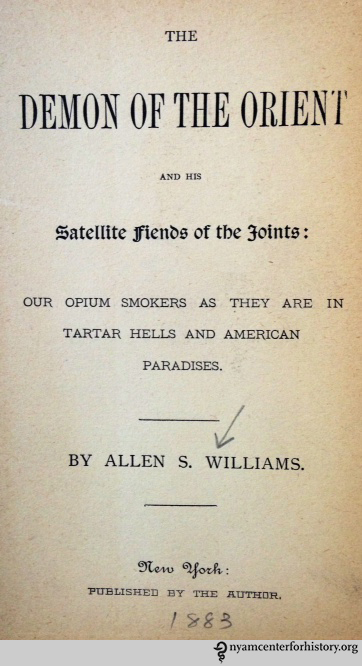
As opium use among whites increased, community leaders began to signal a concern about the morals of white women. Philadelphia missionary Frederic Poole cautioned that white women exposed by the Chinese to opium-smoking were at risk of “a life of degradation.”5 In 1883, Reverend John Liggins wrote of the dangers of the many New York City dens found in Mott and Pearl Streets (still the heart of Chinatown today), and quoted Kane that the habit, learned from the Chinese, contributed to “the downfall of innocent girls and the debasement of married women.”6 The same year, Allen S. Williams wrote in an early book on the opium-smoking habit about New York’s Chinatown dens:

Chinamen flit noiselessly by in ghostly, fluttering garments, and startle the Caucasian intruder by the very suddenness of their unsympathetic companionship…. the Chinese opium joint…is run for the sole purpose of pandering to a vicious taste whose indulgence is injurious to society.7

On the left coast, The Wasp, a popular San Francisco paper, sent two “reporters” to that city’s Chinatown in 1881, and published their findings:

In reeking holes ‘two stories’ underground, where the light of heaven and healthy atmosphere never penetrate, we found human beings living—if it may be called living, which is at best but an existence—as contentedly as rats in a sewer, whose habitation theirs so much resembles. The opium smokers’ resorts were among the first visited…a person once there, he may well desire to make himself oblivious of such surroundings and raise himself to a temporary heaven of his own, but how white men, and even white women, can bring themselves to descend to such filthy holes, where the reeking slime courses down the walls and the air is heavy with foetid odors, is a mystery to any well-regulated mind.8

The Wasp article offers an especially disturbing example of how many Americans implicated the Chinese as a group with standards and moral habits far inferior to those of whites. As early as the 1880s, opium dens run by the French and even white American-born women could be found in New York and Philadelphia, but the imagery continued to portray them as exclusively Chinese-owned and -operated. “It’s a poor town now-a-days that has not a Chinese laundry, and nearly every one of these has its lay-out [pipe plus accessories],” wrote one white traveler in 1883.9

Fig. 2—Smoker's Outfit. In Opium-Smoking in America and China.

Fig. 2—Smoker’s Outfit. In Opium-Smoking in America and China.

The framing of opium smoking as a Chinese problem continued as the century drew to a close. Temperance advocates and moral reformers identified opium smoking with indolence and passivity, qualities out of sync with a culture that emphasized hard work and a fast-paced industrial society. These kinds of characterizations became an important way to generate public revulsion for an immigrant group perceived to threaten both economic and social stability, and to gain traction for legislative action.10

The antagonisms toward the Chinese and attendant immigration restrictions resulted in a Chinese immigrant population that decreased by 1920 to less than half of what it was in 1890.11 The last opium den in New York was raided in 1957. Decades before, many of Chinatown’s dens, largely abandoned because of the rise of opium derivatives morphine and heroin, had all but disappeared.

References

1. Courtwright, David. Dark Paradise. Opiate Addiction in America before 1940. Cambridge: Harvard, 1982. 68.

2. Kane, H.H. Opium-Smoking in America and China. New York: G.P. Putnam’s, 1882. 1.

3. Peffer, George Anthony. Forbidden Familes: Emigration Experiences of Chinese Women Under the Page Law, 1875-1882. Journal of American Ethnic History, Vol. 6 No. 1, Fall, 1986.

4. Courtwright, 79.

5. Courtwright, 78.

6. Liggins, John. The Spread of Opium-Smoking in America. New York: Funk & Wagnalls, 1883. 20.

7. Williams, Allen Samuel. The Demon of the Orient and his Satellite Fiends of the Joints. New York: [the author], [1883]. 12.

8. The Chinese in California, 1850-1925.

9. Courtwright, 73.

10. Musto, David F. The American Disease. Origins of Narcotic Control. New Haven: Yale, 1973. 294-300.

11. Courtwright, 85.

Who Becomes a Medical Doctor in New York City: Call for Papers

RBR deskThe New York Academy of Medicine’s Section on History of Medicine is pleased to announce “Who Becomes a Medical Doctor in New York City: Then and Now—A Century of Change” to be held on December 11, 2014 from 6:00 pm–7:30 pm. The event will take place at the Academy, located at 1216 Fifth Avenue at the corner of 103rd Street.

We are inviting all those interested in presenting to submit an abstract with one aspect of how individuals were selected, or excluded from, the study of medicine in New York City over time. These might include, but need not be limited to, decisions based on academic qualification, race, sexual orientation, ethnicity, economics, and country of origin. The influence of career expectations for the profession and social and cultural factors motivating individuals to become a medical doctor may also be considered.

Note the following submission requirements:

  • Applications must include an abstract, with a 250-word maximum, and this form.
  • Abstracts must be submitted no later than October 30, 2014

The time allotted for presentation is 12 minutes with an additional 3 minutes for questions/discussion. Papers selected for presentation will be determined by a committee of History of Medicine Section members and staff of The New York Academy of Medicine.

Abstracts should be submitted electronically to Suhani Parikh at sparikh@nyam.org.  Questions may be directed to Suhani via email or phone (212-419-3544).

The Talented Dr. Knox

Lisa Rosner, PhD, author of today’s guest blog, will present “The True and Horrid Story of the Burke and Hare Anatomy Murders” at our October 18th festival, Art, Anatomy, and the Body: Vesalius 500.

Engraving of Dr. Robert Knox. From our online collection The Resurrectionists.

Engraving of Dr. Robert Knox. From our online collection The Resurrectionists.

Dr. Robert Knox, the anatomist whose cadaver purchases kept William Burke and William Hare in the murder business, has always been an enigma. Born in Edinburgh, Scotland, he served in the army and studied in Paris before returning home to set up a private anatomical school. He taught hundreds of students, lecturing twice a day in addition to holding separate dissection classes. He was curator of the surgical museum, wrote articles on human and comparative anatomy for scientific societies, and was in the process of seeing several books on anatomy through publication. His supporters claimed he knew nothing about the murders; his detractors argued that he simply turned his blind eye—for he had lost an eye to smallpox as a child.

Plate II in Knox's Man: His Structure and Physiology, shown flat and with lifted parts. Click to enlarge.

Plate II in Knox’s Man: His Structure and Physiology, shown flat and with lifted parts. Click to enlarge.

What we can see, using the extensive collection of Robert Knox materials in the New York Academy of Medicine Library, is just how talented an anatomist Robert Knox was. His edition of Hippolyte Cloquet’s A System of Anatomy is more than just a translation: it is instead a critical analysis of contemporary anatomical knowledge, enriched by examples from Knox’s own research and teaching. The same is true of his edition of Friedrich Tiedemann’s The Plates of the Human Arteries, prepared with two of his students, Thomas Wharton Jones and Edward Mitchell. The catalogue he prepared for the anatomical and pathological museum of the Royal College of Surgeons of Edinburgh is filled with his detailed insights: on anomalies of the biceps flexor cubiti, on the precise position relative of a fatal brain tumor, and on popliteal aneurism. Knox discussed the implications of these, and many more of his anatomical and surgical observations, in several series of articles for the London Medical Gazette. We can follow his teaching methods in The Edinburgh Dissector, the handbook he wrote for the use of his dissecting classes. “Nobody could ever say that he gave a dry lecture, or one that was not specially instructive,” reported his former student, Henry Lonsdale. Even in the midst of the detailed description that makes up most of the Edinburgh Dissector, Knox’s love of his subject shines through, as in his description of the bones of the foot, which “when well formed yields in beauty and perfection to no part in the human body.”

Could such a passionate observer of all subjects anatomical really have missed the fact that sixteen of his own “subjects” had been murdered? Contemporaries from Home Secretary Sir Robert Peel (founder of the London Metropolitan Police) to the Edinburgh evening papers refused to believe it and called for wider investigation. On the advice of legal counsel, Knox refused to answer any questions—just as he had refused to ask any, his professional rivals muttered darkly, when presented with Burke’s and Hare’s murder victims. There was no real case against him, and there are no records of any deliberations by the prosecuting attorneys. We will probably never know what Knox knew or when he knew it.

"Execution of the notorious William Burke the murderer, who supplied Dr. Knox with subjects." Engraved print in The Resurrectionists collection. Click to enlarge.

“Execution of the notorious William Burke the murderer, who supplied Dr. Knox with subjects.” Engraved print in The Resurrectionists collection. Click to enlarge.

The anatomical career of the talented Dr. Knox survived the Burke and Hare scandal, but it did not long survive the change in medical teaching and practices that followed it. He had a second career as a public teacher and lecturer: his books A Manual of Artistic Anatomy and Great Artists and Great Anatomists: A Biographical and Philosophical Study sold very well. But he never achieved the academic position he had striven for, and his research agenda, like his sixteen most famous subjects, died at the hands of Burke and Hare.

For more on Robert Knox and the Burke and Hare murders, visit our online collection, The Resurrectionists.

The Advent of the New York Surgical Society

By Paul Theerman, Associate Director, The Center for the History of Medicine and Public Health

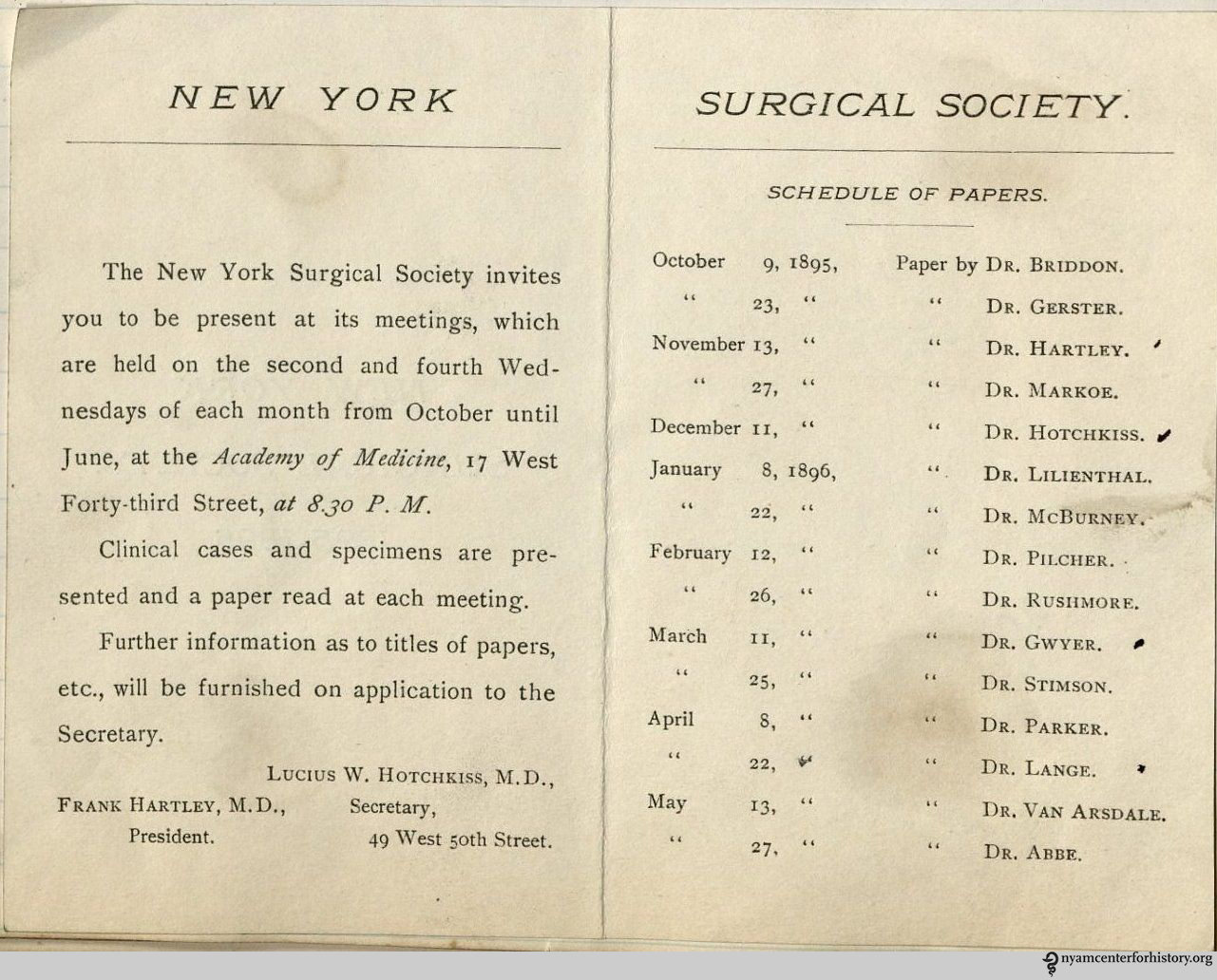
In last Friday’s episode of The Knick, the main character, Dr. John Thackery, worries about being upstaged at an upcoming meeting of the New York Surgical Society. Indeed, that was (and is) a real society. It met at the New York Academy of Medicine, and NYAM’s archives hold its early minute books.

A portrait of Dr. Robert Fulton Weir.

A portrait of Dr. Robert Fulton Weir.

The New York Surgical Society was founded in 1879 at the home of prominent surgeon Dr. Robert Fulton Weir, later a president of The New York Academy of Medicine. By the early 20th century, membership had grown from an initial 12 members to 60. Its early founders were also instrumental in the establishment of the American Surgical Association in 1880. The surgeon on whom the Thackery character is based, Dr. William Halsted, was a member, as he worked in New York until joining the faculty at Johns Hopkins in 1889.

Schedule of papers in the New York Surgical Society Minutes, 1880-1897.

Schedule of papers in the New York Surgical Society Minutes, 1879-1897. Click to enlarge.

The rise of surgical societies reflected a two-fold movement: the increasing prominence of surgery within the medical profession, coupled with increasing medical specialization overall. That is, surgery was becoming glamorous, and more and more surgeons wanted to mingle, and learn from, like-minded professionals. General medical societies date at least from the 1840s—NYAM and the American Medical Association were both founded in 1847, and the College of Physicians of Philadelphia a full 60 years before that. But in the 1870s and 1880s, specialized medical societies began to flourish, motivated by sociability and professional advancement. Presenting papers on their work, members began building a publication record and a reputation. Societies prized innovation and skill—in some organizations, priority for one’s work could be established through the minute books of the meetings, even before publication.

The New York Surgical Society still exists. Find out more about it here.

On Presenting Resisterectomy

Chase Joynt, co-author of today’s guest blog with Dr. M. K. Bryson, will present Resisterectomy at our October 18th festival, Art, Anatomy, and the Body: Vesalius 500.

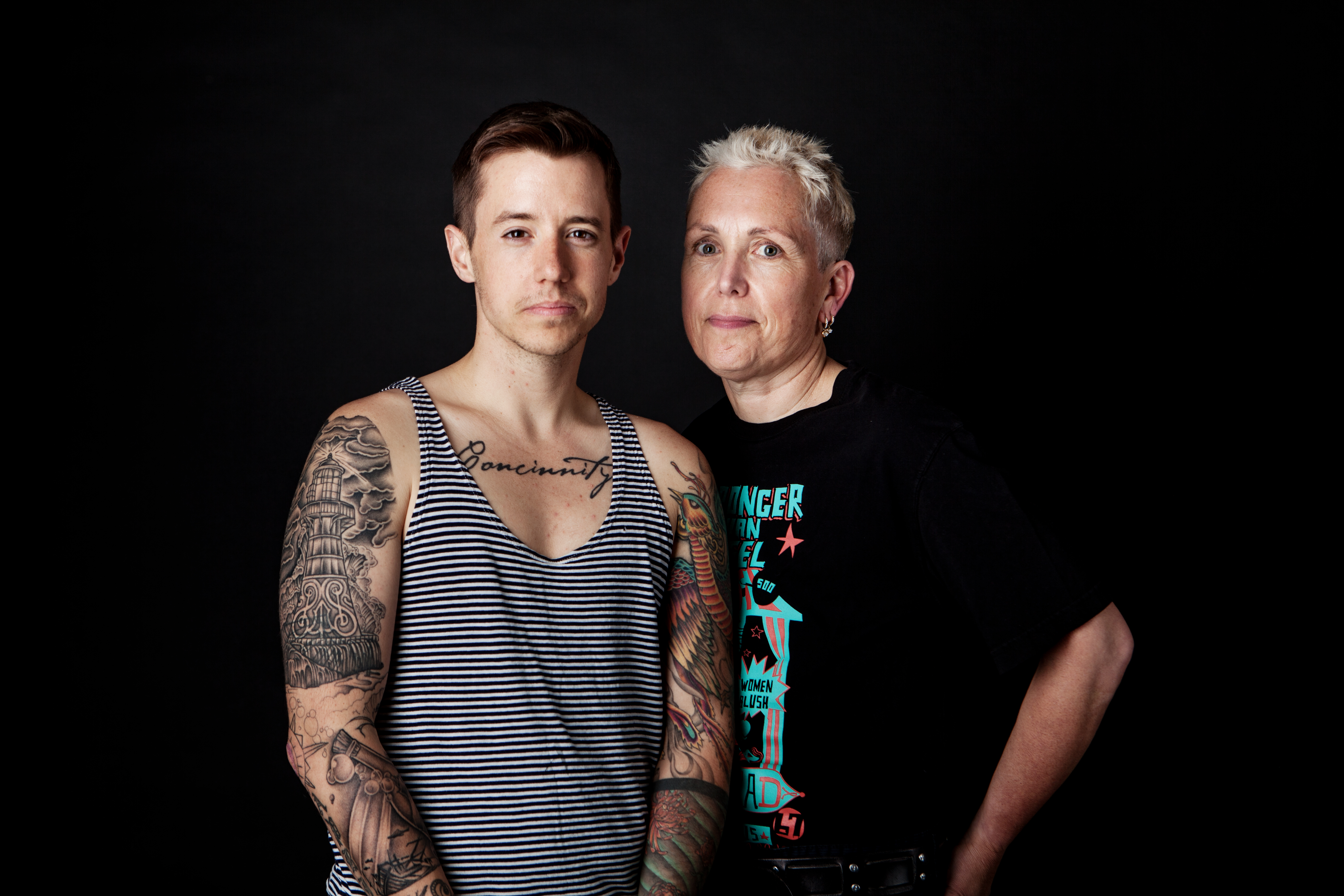
Chase Joynt, left, and Dr. M. K. Bryson, right.

Chase Joynt, left, and Dr. M. K. Bryson, right.

Chase Joynt:

I announced my desire to find a collaborator for my then-still-hypothetical project Resisterectomy at every available opportunity. Lulls in dinner party conversation were filled with the always laughter-stopping question: “Does anyone know someone who has had a mastectomy and a hysterectomy who might be willing to talk about their experiences?” Anecdotes shared about eccentric distant relatives who happened to be both cancer survivors and watercolor painters were followed up with: “Do you think that person might be interested in working on a project with me?” And friends unfamiliar with the artistic process of starting a project from a place of utter-not-knowing (and/or perhaps at best “a hunch”) continued to entertain my quest suspiciously, albeit with sympathy. The most frequent reactions to my casual inquiries were blank stares and occasional bursts of conversational sarcasm directed at the seemingly impossible identifactory requirements of the project’s specificity. One day however, after lobbing the question into a blue-couch-filled Toronto living room, I was met with an animated, sarcasm-free answer: “You need to talk to my friend Mary Bryson.” Within hours of sending Mary the initial “Hello, how are you, might you be interested in chatting about these things?” e-mail, I was met with some necessary and critical resistance.

Dr. M. K. Bryson:

When I first heard from Chase (“I am looking for a woman who has had both a mastectomy and a hysterectomy.”), I was simultaneously deeply skeptical and intensely interested in his project. And even though I really did not, and do not, “feel like a woman” I assumed that because of Chase’s up-front trans* alliances, the complexities of our potential dialogue would find plausible vocabularies if not any shared experiences. I don’t in any case expect shared experiences no matter how self-evident they may appear to be. And besides, I had by then had at least a year’s worth of experiences interviewing participants in the Cancer’s Margins research project—Canada’s first ever nationally funded research project focused on LGBT experiences of breast and gynecologic cancer.

I knew several things by then about bodies, cancer, and the impact of mastectomy and hysterectomy. For one thing, my research interviews confirmed what I learned from my own cancer experiences—that for people with histories that overlap in minor or major ways with trans* health, the simple “fact” of the double-duty these surgeries take up—that mastectomy and hysterectomy are both cancer surgeries and also surgeries related to trans* health—means that these surgeries are already much more culturally complex than is typically within healthcare providers’ understanding and training. I knew that gender is very definitely implicated in how cancer patients experience cancer-related treatments and surgeries generally, and very specifically, that cancer patients’ histories of gender will shape what is meaningful about mastectomy and hysterectomy in ways that reveal the impact of trans* culture in the larger world of gender. I have always been very fond of exploring both/and relationships that organize how people located in precarious communities experience our lives and therefore, how organizations and institutions that create systems of care need to think about caring for marginalized people.

CJ:

It has been two years since our first meeting, and Resisterectomy continues to tour galleries, festivals, and schools internationally. In May 2014, we were invited to present the work as a part of the Sexuality Studies Summer School at the University of Manchester. Unbeknownst to the organizers, the occasion marked the first time since its creation that we were able to talk about the work together in public. As a result of living and working on opposite coasts, we rely on Skype and DropBox for our project-related intimacies, and I often tour and speak alone. Presenting a collaborative work alone is a complicated and precarious endeavor. How can I speak to the specificities of the project without problematically narrating (and therefore truncating) the experiences of someone else? And yet simultaneously, how can I protect that person by speaking to the assumptions so easily made about their experiences on account of their physical absence from these encounters? After our presentation in Manchester, Mary approached me at the reception with a smile, “I didn’t know you talked about the fact that this project was hard!” I smiled, “If there is one thing that every person in every room has thus far agreed upon, it is that talking about this project is hard,” I said.

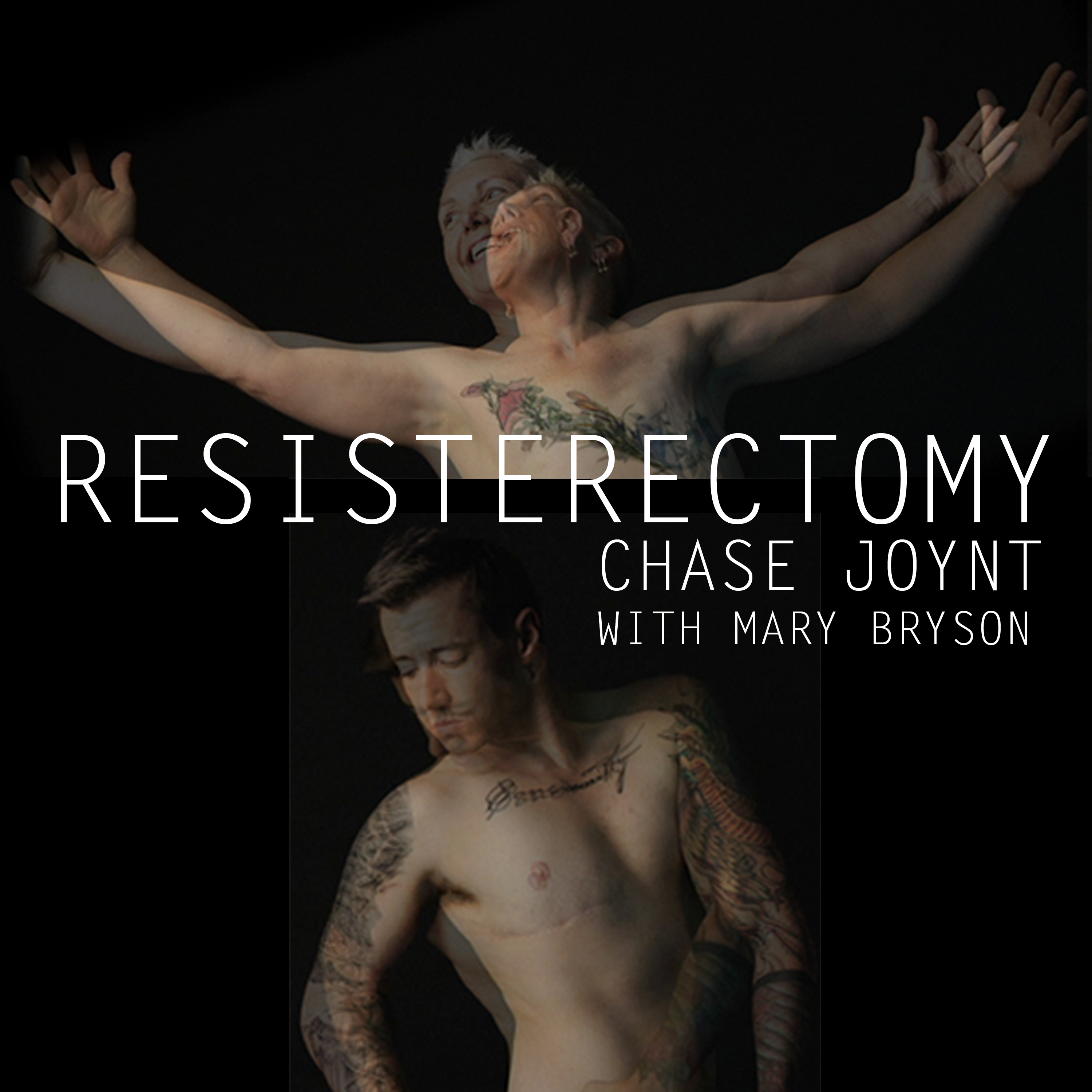
JOYNT_RESIST_POSTER

Resisterectomy poster.

MKB:

I have been thinking for a while about the academic work that I am doing concerning cancer, gender, and marginalization under the general umbrella of “An Archive of the Talking Dead.” There is something absolutely unique in my experience of talking about cancer research and cancer experiences compared to talking about any other difficult, painful, or harrowing experience. North America is in many ways a culture obsessed with cancer and with mortality—and specifically, with avoiding cancer despite the fact that almost everything we do, like aging or driving a car, is something over which we have almost no control, and which increases our risk of cancer. In Resisterectomy, there is for most people who view the multimedia installation, a story of a trans* person (Chase) and a story of a cancer patient (Mary), both of whom have had a mastectomy and a hysterectomy. But that’s not how I see it at all. I am a trans* person for whom, having a mastectomy did double-duty as breast cancer surgery. However, when Chase and I are in the same space – either because our photographs are hanging on the wall, or our faces broadcast on a screen where the Resisterectomy video feed is playing, then the inevitable assumptions about Who-is-What overwrite what can be made visible in those spaces, and the play with what might be possible is cloaked by conventions. And so there we are.

What is a residual for me, every time I hear about one of Chase’s adventures installing Resisterectomy, or talking about the art with folks, is that he and I have enacted a mode of caring for each other’s responses. Resisterectomy then acts as a kind of Live Case History where a very diverse group of people gets to think, again, about things—about stories—that might benefit from a hell of a lot more energy and creativity. Chase and I took a huge risk in just saying, “Hello. Let’s compare notes. And actually, let’s mix up these stories we think we already know how to tell.” Let’s take great care in the curation of difficult stories—from the Archive of the Talking Dead… Any doctors or nurses in the house? Pay special attention. How could you talk to your patients as if you might be very surprised to learn who they are, and how their life stories are impacted by the changes health inevitably brings? And most of all, learn to enjoy how hard it needs to be. Learn to love what you don’t yet know about me.

Dusting off a Treasure: Cleaning and Rehousing the Ladd Collection

By Emily Moyer, Collections Care Assistant

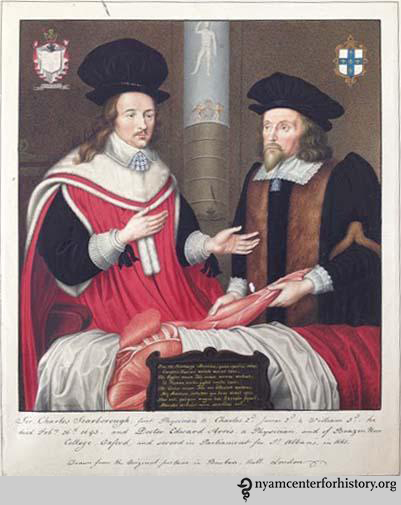
English Physicians Charles Scarborough and Edward Arris performing an anatomical dissection in 1651. After an original watercolor by G.P. Harding. Click to enlarge.

English Physicians Charles Scarborough and Edward Arris performing an anatomical dissection in 1651. After an original watercolor by G.P. Harding. Click to enlarge.

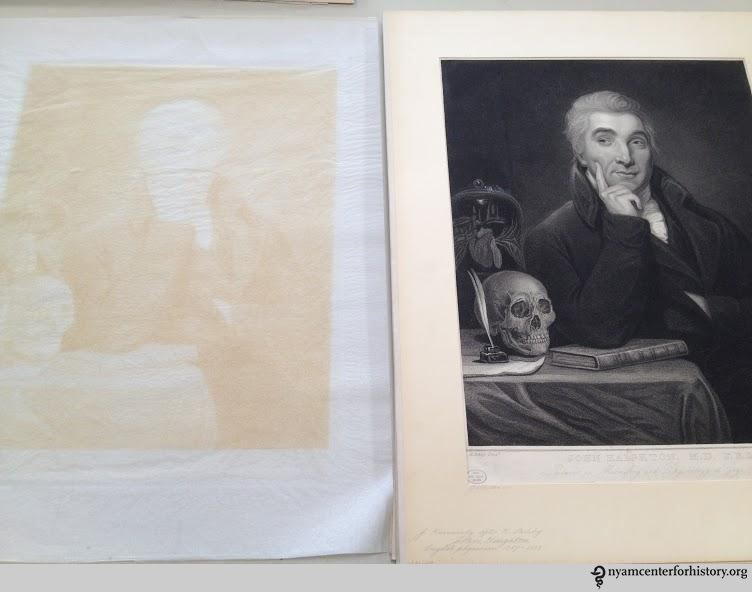
Accepted as a gift by The New York Academy of Medicine in 1975, the Ladd Collection comprises 671 prints dating from the early 17th century to the first half of the 19th century. The prints, which demonstrate a variety of printing processes including etching, engraving, mezzotint, stippling, lithography, and hand coloring, primarily depict people who have made historically significant contributions to the fields of science and medicine, as well as some medical institutions, procedures, and other health-related topics. William S. Ladd, a former dean of Cornell University Medical College, accumulated the collection during the first half of the 20th century, purchasing many of the prints as deaccessioned duplicates from the Ashmolean Museum at Oxford University.

Georg Faber von Rottenman. Engraving by Bernard Strauss. Von Rottenman was a maker of pills in Ratisbon ca. 1648. Click to enlarge.

Georg Faber von Rottenman. Engraving by Bernard Strauss. Von Rottenman was a maker of pills in Ratisbon ca. 1648. Click to enlarge.

Erich Meyerhoff, librarian of Cornell’s Medical Library from 1970 to 1986, recognized the research value of the collection and suggested it be given to the NYAM Library because, as he stated in his correspondence to NYAM librarian Alfred Brandon in 1975, “[NYAM] has the most important collection in the history of medicine in our region, which includes an extensive collection of portraits listed in its ‘Portrait Catalog.’”

The Ladd Collection was previously housed in a basement storage room in 27 flat-file drawers, which were overstuffed, dirty, and causing damage to the portrait mats. Our goals for the project—which began in January 2014 and finished in August 2014—were to clean the portraits, rehouse them to prevent further deterioration, and increase access to the collection by creating a digital inventory and location guide.

Click an image to view the gallery:

To begin, all of the portraits were dry cleaned using a smoke sponge.

SmokeSponge_watermark

Cleaning with a smoke sponge.

Many of the portraits also needed new mats (because the originals were either damaged or unacceptably acidic), as well as new interleaving tissue to replace tissue that had become stained and torn.

Portrait in need of a new mat and interleaving tissue.

Portrait in need of a new mat and interleaving tissue.

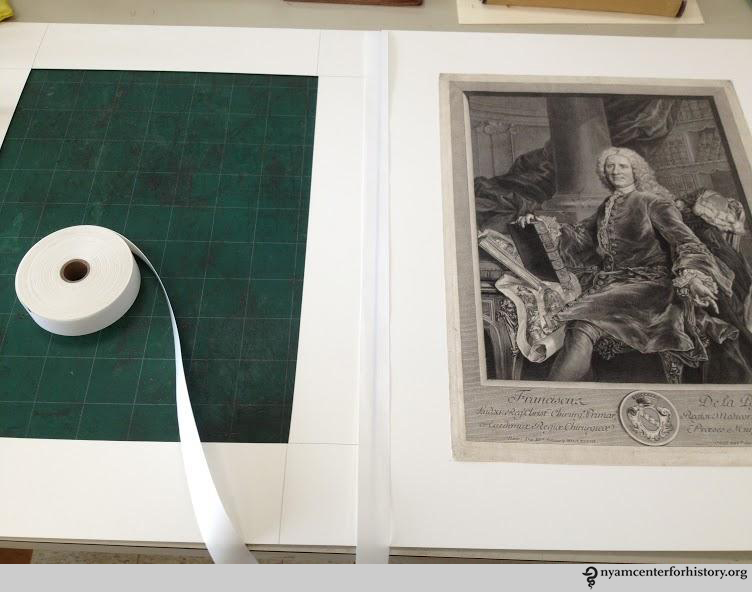
We created new window mats for the portraits and hinged them to archival mat board supports using Japanese tissue and wheat starch paste. Because the prints themselves are in good condition, very few needed extensive repairs.

Cutting new mats.

Cutting new mats.

New window mat hinged to archival mat board supports.

New window mat hinged to archival mat board supports.

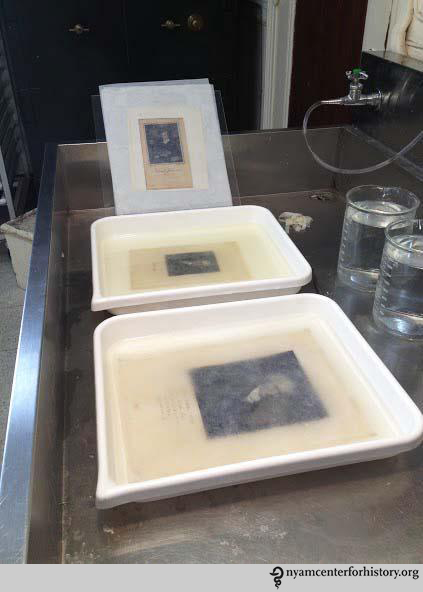
That said, about 10 of the portraits needed washing in order to remove thickly applied, brittle adhesive residue that was causing damage to the edges of the prints. First, we tested the inks for solubility to determine whether an aqueous treatment was appropriate. Once we determined that the inks were stable, we washed the prints in a slightly alkaline bath.

Prints in a slightly alkaline bath.

Prints in a slightly alkaline bath.

Rather than returning the collection to flat-file drawers, the conservation team made the decision to rehouse the matted prints (alphabetically and according to size) in acid and lignin-free, custom-ordered drop-front boxes from Talas that will be stored in climate-controlled conditions in NYAM’s recently renovated rare book storage stacks.

Prints rehoused in drop-front boxes.

Prints rehoused in drop-front boxes.

Although the collection had been described and cataloged at the time of its acquisition in 1975, it had no online presence and was virtually undiscoverable to the average user. Thus, over the course of the project, staff completed a digital inventory and location guide with the aim of increasing accessibility. This will be made available online soon.

The end result.

The end result.

These prints have importance not only because of their subject matter but also because of their aesthetic and art historical value. As a result of this project, scholars of the history of medicine, art, and printing can now use these prints as primary resources in their studies.

To view the collection or to access the collection guide, contact history@nyam.org or call 212-822-7313.

Revisiting the Fabrica Frontispiece

Jeffrey M. Levine, MD, AGSF, author of today’s guest post, will present “Revisiting the Frontispiece: Vesalius’s Jewish Friend and the Impact of the Inquisition” with Michael Nevins, MD, at our October 18th festival, Art, Anatomy, and the Body: Vesalius 500.

Between the first edition in 1543 and the second edition in 1555, the frontispiece of Andreas Vesalius’ classic masterpiece, De humani corporis fabrica, was recut with many subtle variations in both style and content. I am thrilled to be presenting “Revisiting the Frontispiece: Vesalius’s Jewish Friend and the Impact of the Inquisition” at Art, Anatomy, and the Body: Vesalius 500 with my colleague and mentor, Dr. Michael Nevins. Together we will examine and compare the frontispieces and offer theories as to why differences appear. We propose, for example, that some changes to the second edition were in reaction to the Inquisition, which was revived by Pope Paul III.1

Today’s guest post introduces selected features of the frontispiece of the Fabrica’s first edition. This intricate and multilayered composition features the master Vesalius dissecting a young female corpse, her abdomen flayed open. They are surrounded by a multitude of spectators crowded into a three-tiered wooden scaffold built into a semicircular amphitheater of Corinthian columns. At top-center is the decorative escutcheon that bears the name of the book and the author. Above is the family coat-of-arms of Andreas Vesalius flanked by two putti, the chubby male children who were often a feature of Renaissance art, and two gargoyles. Below is the face of Jupiter, the Roman king of gods.

The frontispiece to the 1543 Fabrica in our collection.

The frontispiece to the 1543 Fabrica in our collection. Click to enlarge.

The frieze sitting atop the columns contains symbols including a bucranium, or ox skull with garlands hanging from its horns, which was the symbol of the University at Padua,2 and a winged lion representing the evangelist St. Mark, the symbol of neighboring Venice.3 The columns are flanked by two men, one naked with tense muscles and a worried look, the other relaxed and smartly dressed.

To the right of the skeleton bearing a risus sardonicas, a man in a truncated conical hat recoils as if in terror, squinting and raising his left hand in a defensive gesture. In his 1964 biography of Vesalius, Charles O’Malley identifies this figure as Vesalius’s Jewish friend, Lazaro de Fregeis, who assisted with the Hebrew nomenclature in the Fabrica.4 The only woman other than the corpse appears as a mysterious figure peeking between the columns. There are two Franciscan Monks among the spectators, neither exhibiting much interest in the dissection. Below right is a pickpocket caught in the act. On the opposite side, a leashed monkey screams in protest, and under the table two men fight over the dissecting tools.

There is much more to learn about the frontispiece of the first edition of the Fabrica, and even more when compared to the second edition. To find out more about the changes to the second edition frontispiece, and how they may have contained coded messages reflecting tensions of 16th-century Italian society, particularly in the context of the situation of European Jewry, come to our presentation at the New York Academy of Medicine’s Vesalius 500 celebration on October 18.

References

1. Historical overview of the Inquisition. 2001. Available at: http://galileo.rice.edu/lib/student_work/trial96/loftis/overview.html. Accessed September 23, 2014.

2. Padova Terme Euganee. University of Padua – Palazzo Bo. Available at: http://www.turismopadova.it/en/university-padua-palazzo-bo. Accessed September 23, 2014.

3. Imboden D. Winged Lion of St. Mark. Durant Cheryl Imboden’s Venice Visit. Available at: http://europeforvisitors.com/venice/articles/winged_lion_of_st_mark.htm. Accessed September 23, 2014.

4. O’Malley C. Andreas Vesalius of Brussels, 1514-1564. Berkeley: Univ. of California Press; 1964.

A Lifetime of Healthiness? The Golden Health Library’s “Seven Ages of Man” (Item of the Month)

Cara Kiernan Fallon, this post’s guest author, is a history of science PhD candidate at Harvard University.

"The seven ages of man." From The Golden Health Library.

“The seven ages of man.” From The Golden Health Library. Click to enlarge.

Childhood can be full of “vigor and zest” but “Middle age is the time when our sins against the laws of health find us out,” warned physicians writing for The Golden Health Library’s inaugural volume. Published in the late 1930s, The Golden Health Library offered readers five volumes of advice on the “principles of right living” so they could secure health throughout their lifespans.1 Authors included physicians, nurses, professors, and even birth control advocates like Margaret Sanger. September, Healthy Aging Month, is the perfect time to revisit this publication.

Part of the New York Academy of Medicine’s extensive collection of health guides, public health pamphlets, and medical magazines, The Golden Health Library highlights the growing health concerns associated with longer lives and an emerging notion of the elasticity of health in later life. Although originally published in the United Kingdom, people on both sides of the Atlantic expressed concerns over health into old age as they were living longer than ever before. Between 1901 and 1931, the population over age 65 nearly doubled from 1.8 to 3.5 million in the United Kingdom, and went from 3 million to 6.6 million in the United States.2 Life expectancy at birth, a figure largely affected by infant and childhood mortality, grew dramatically along with the expanding older population. With more people surviving childhood and living decades longer, a new wave of health concerns—and health advice—came with it.

"Healthy womanhood." From The Golden Health Library. Click to enlarge.

“Healthy womanhood.” From The Golden Health Library. Click to enlarge.

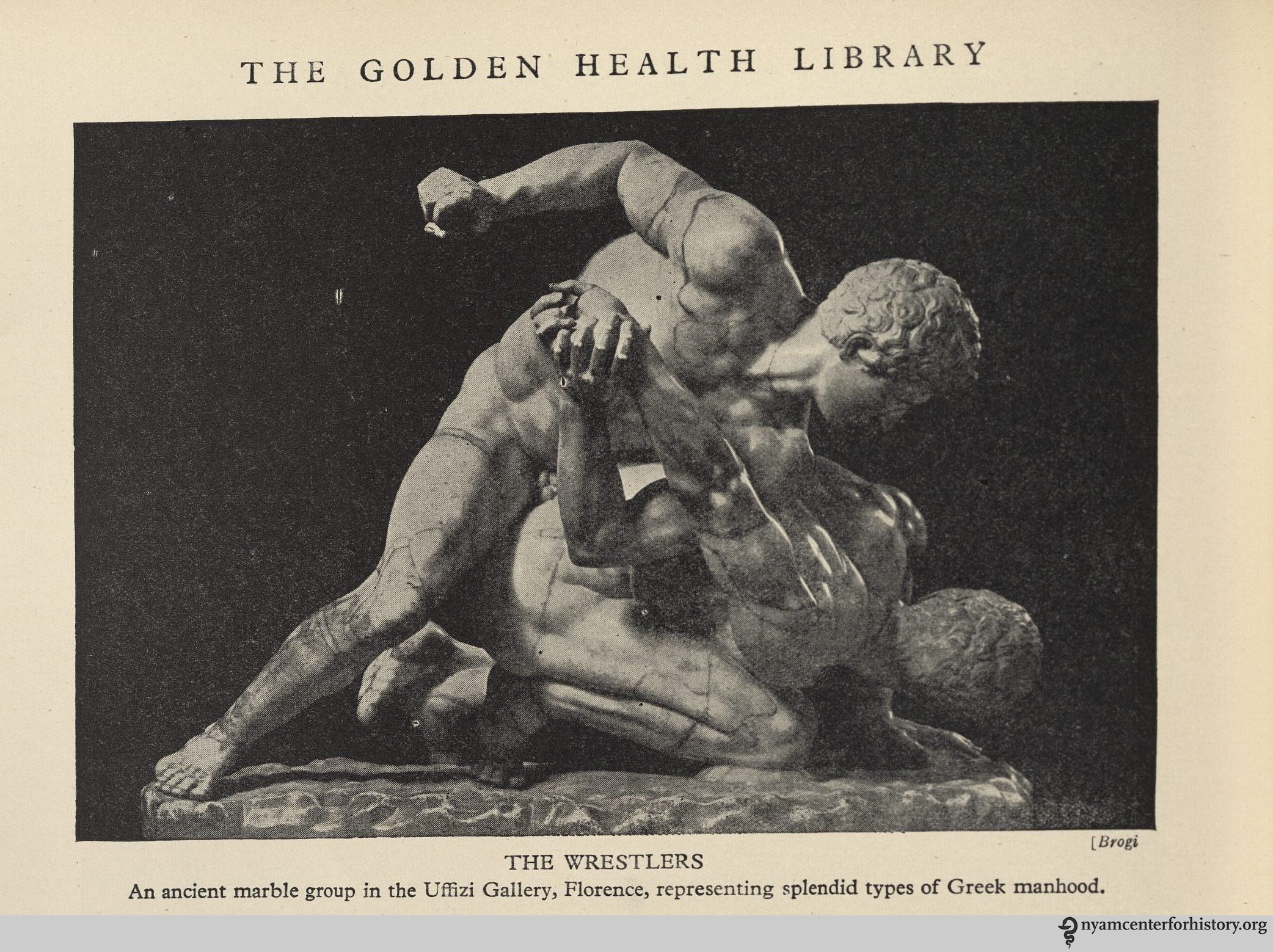
"The wrestlers." From The Golden Health Library.

“The wrestlers.” From The Golden Health Library. Click to enlarge.

In a section directly addressing health throughout the life course—“The Seven Ages of Man”—The Golden Health Library provided a series of articles on maintaining health in each of seven stages of life: infancy, childhood, adolescence, maturity, middle age, elderly age, and old age. Physicians identified “the elderly age” as a “very elastic” time between middle age and old age (87). Rather than following an arc of growth to decline, “The Seven Ages of Man” presented the elderly age as an expandable period of potential health, one determined by physical condition rather than a particular chronological period. Men who followed the rules of health and hygiene, and who had “lived wisely…may feel justified in expecting to live for the full period of life free from disease… and to die of old age” (88). Moderate diet, exercise, rest, and regular medical examinations would also ensure a “healthy elderly age for all women—the best antidote to old age” (91).

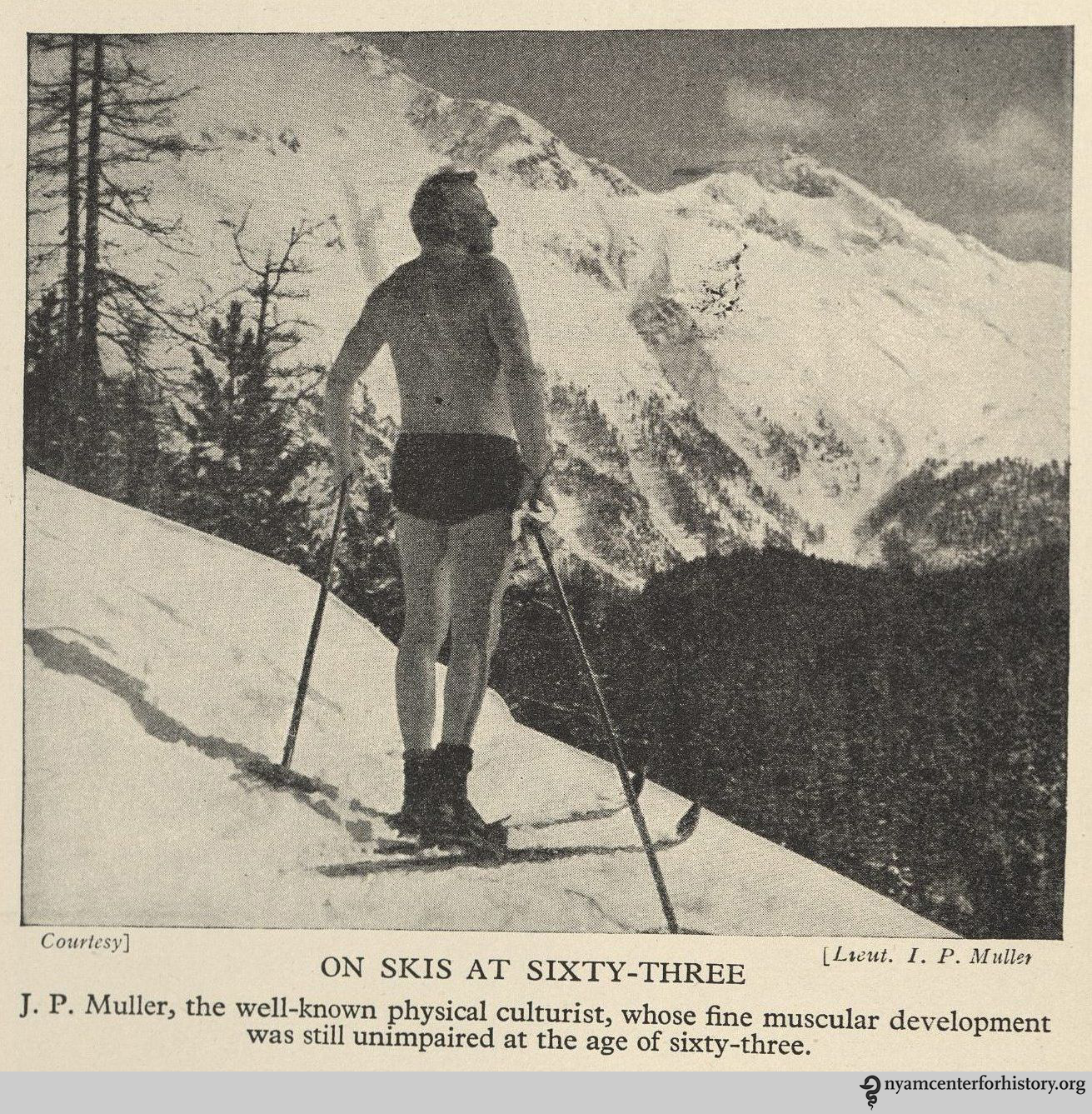
"On skis at 63." From The Golden Health Library.

“On skis at 63.” From The Golden Health Library. Click to enlarge.

The idea of a healthy and elastic elderly age reflected important new concepts emerging in the 20th century. As people around the globe reached sixty, seventy, and eighty years of age in quantities never before seen, later life became a period of great diversity in physical, mental, social, and economic conditions. Readers were told that the “vigour and ability to do physical or mental work efficiently varies enormously in different people” but the “idea that advanced age in man must necessarily involve an arm-chair existence…is obsolete” (87, 89). Instead, it argued that “men are now never too old to lead an active life” (89). To demonstrate this new ideal, images of athleticism filled the pages of the elderly age. Fitness guru J. P. Muller was shown skiing in his undergarments at 63, and Lord Balfour was shown swinging for a tennis ball at the age of 80, both depicting the possibilities of health and vigor.

"Lord Balfour at eighty." From The Golden Health Library.

“Lord Balfour at eighty.” From The Golden Health Library. Click to enlarge.

Yet, the mid-century concept of a healthy elderly age also narrowly imagined health through a masculine body with physical freedom and strength. Despite women’s greater longevity—the article reminded readers that women lived on average five years longer than men at the time—the article offered no images of women living actively in the elderly age. Could no women be found to depict an ideal of healthy aging? Or did notions of health and age have different meanings for women than for men? Women may have been told they could achieve a healthy elderly age, but none could be found in these pages.

While the idea of healthy habits leading to a healthy older age offered a new optimism for the aging process, it also overlooked the powerful social and cultural influences on the biology, ability, and mobility of individuals. Recommendations throughout the lifespan for clean milk, sunny outdoor play, access to healthy foods, exercise, and regular physical exams reflected not merely physiological processes but more complex social and economic opportunities. Although the authors indicated that health throughout life was a matter of willpower, they acknowledged that few reached a disease-free old age. Were the ideals too lofty or were the challenges too great? Had their model failed to account for the complexities of health beyond a controllable regimen?

"A fine old age." From The Golden Health Library.

“A fine old age.” From The Golden Health Library. Click to enlarge.

“The Seven Ages of Man” offers an intriguing look into the early notions of healthy aging in the mid-20th century. While it responded to the growing population of older individuals, offering opportunities for self-determination and responsibility, it also reduced healthy aging to a matter of knowledge, willpower, and habit.

Decades later, efforts to improve the quality of life of older individuals continue to grow with the expanding population. Through its healthy aging initiatives and participation in Age-friendly NYC, the New York Academy of Medicine aims to address not only the physical components of aging but also issues of employment, housing, social inclusion, community health services, and many other social, psychological, and economic concerns for seniors. Looking back to The Golden Health Library allows us to explore the formative stages of important themes today – the growing belief in the elasticity of later life, the new emphasis on “healthy” and “active” aging, and the changing understandings of the powerful social and cultural influences on biology.

References

1. Browning, E., Stanford Read, C., Williams, L. L.B., Crawford, B. G. R., Arbuthnot Lane, W., Somerville, G. (193?). The seven ages of man. In W. Arbuthnot Lane (Ed.), The golden health library (pp. 48–96). London: William Collins Sons & Co. All parenthetical page numbers refer to this publication.

2. For the United Kingdom, see the Office for National Vital Statistics, Chapter 15 Population: Age distribution of the resident population, 15.3(a). For the United States, see the Center for Disease Control and Prevention, National Vital Statistics System, Population by Age 1900 to 2002, No. HS-3.

A Medical Symphony: Celebrating African Americans in New York Medicine

By Lisa O’Sullivan, Director, Center for the History of Medicine and Public Health

The Knick’s Dr. Algernon Edwards struggles for acceptance as a medical professional, even when his expertise and knowledge outstrips many of his colleagues. How unusual was his experience as an African American practicing medicine in turn-of-the-century New York? As medical training and practice became more heavily regulated in the latter half of the 19th century, access to the professions was constrained by issues of ethnicity, gender, class, and religion.

Gerald Spencer. From A Medical Symphony.

Gerald Spencer. From A Medical Symphony.

A slim green volume in our collections gives a small glimpse into some of the many stories of pioneering African American medical professionals. Our copy of the 1947 book Medical Symphony: A Study of The Contributions of The Negro to Medical Progress in New York is signed by author Dr. Gerald A. Spencer, a fellow of the New York Academy of Medicine. The volume brings together lectures and articles in which Dr. Spencer explores the attempt by African Americans to, in his words, join in “striving for medical symphony in which all races and creeds will be given the fullest opportunities to study and to make their unhampered contributions.”1

As Dr. Spencer describes, in the last quarter of the 19th century, around 12 African American physicians had graduated from schools in New York and other northern states. Together, they founded the McDonough Memorial Hospital, which commemorated David McDonough. McDonough, born a slave, was selected for an education by his owner as part of a bet to establish the potential of African Americans for learning. McDonough not only succeeded in his studies, but went on to gain his freedom and practice on the staff at the New York Hospital and New York Eye and Ear Infirmary. While it only operated between 1898 and 1904, McDonough Memorial Hospital established itself as being open to physicians, nurses, and patients of every background and nationality. Also established in 1898, the Lincoln Hospital Training School for Nurses in the Bronx was the only place for African American nurses to train after the closure of the McDonough Memorial Hospital until the opening of the Harlem Hospital School of Nursing in 1923.

Lincoln Hospital Training School for Nurses, Class of 1907. From A Medical Symphony.

Lincoln Hospital Training School for Nurses, Class of 1907. From A Medical Symphony.

Integration in New York hospitals, public health agencies, and medical societies was limited in the first decades of the 20th century, but by the 1940s, when Dr. Spencer wrote his volume, integration was making inroads in the city’s institutions. Dr. Spencer wrote Medical Symphony to emphasize the many African American physicians rising to positions of prominence within the hospital system, the enormous public health impact of trained nurses, and acceptance into learned societies.

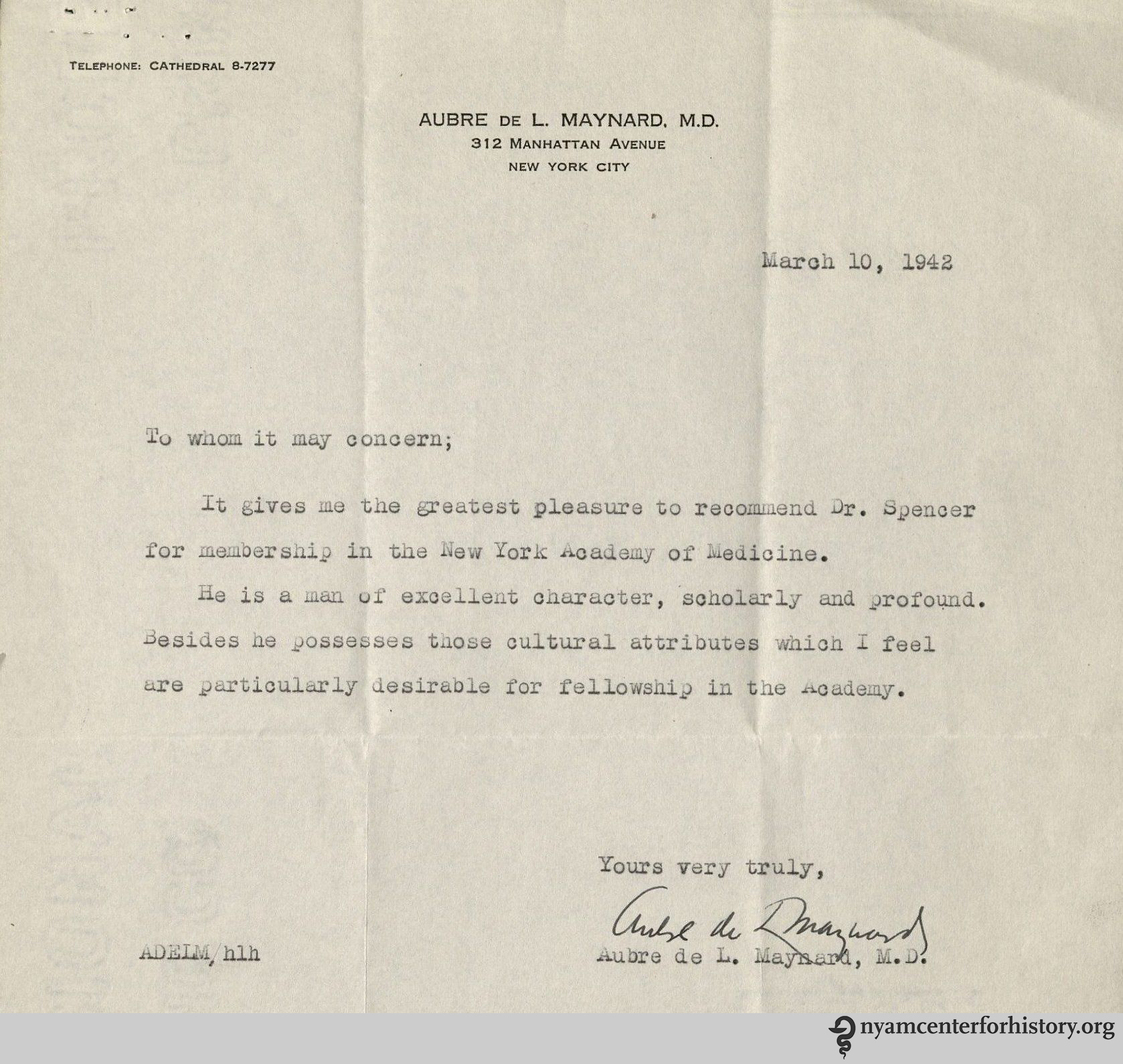
Dr. Aubre De L. Maynard's recommendation letter of Dr. Spencer.

Dr. Aubre De L. Maynard’s recommendation letter of Dr. Spencer. Click to enlarge.

Dr. Spencer was from St. Lucia in the British West Indies and studied at the College of the City of New York before receiving a medical degree from the University of Lyon, France, in 1932. Many students of African descent found the barriers to an education less intractable in European medical centers. Dr. Spencer became a resident physician at the Skin and Cancer Hospital in New York, and visiting dermatologist at Harlem Hospital. He also became a fellow of the New York Academy of Medicine in 1942, described by one of his referees as a “man of excellent character, scholarly and profound.”2

Disparities in access to health care, and access to the health professions, have not disappeared over time. However, Medical Symphony reminds us of the many stories of success that can be celebrated. For those interested in learning more about who became a doctor in New York over time, join us at “Who Becomes a Medical Doctor in New York City: Then and Now – a Century of Change” on December 11.

References

1. Spencer GA. Medical symphony: a study of the contributions of the Negro to medical progress in New York. New York: 1947.

2. Spencer, GA. Application for fellowship form. Letter from Aubre de L Maynard, MD, March 10, 1942. New York Academy of Medicine Archives.

Introducing Graphic Medicine

Ian Williams and MK Czerwiec, authors of today’s guest post, co-run the website GraphicMedicine.org. They will present “Graphic Medicine and the Multiplanar Body” at our October 18th festival, Art, Anatomy, and the Body: Vesalius 500.

The 2010 Comics & Medicine gathering before Senate House.

The 2010 Comics & Medicine gathering before Senate House.

In the summer of 2010 a group of scholars, health care professionals, and comics artists gathered in Senate House, London. This brutal-looking art deco building, said to have inspired George Orwell’s “Ministry of Truth,” represented Gotham City Courts in the films Batman Begins and The Dark Knight. Those gathered, however, were not particularly interested in superheroes. They focused on graphic memoirs of illness, a modern phenomenon born of the counterculture in the 60s and 70s that has gathered momentum over the last 20 years.

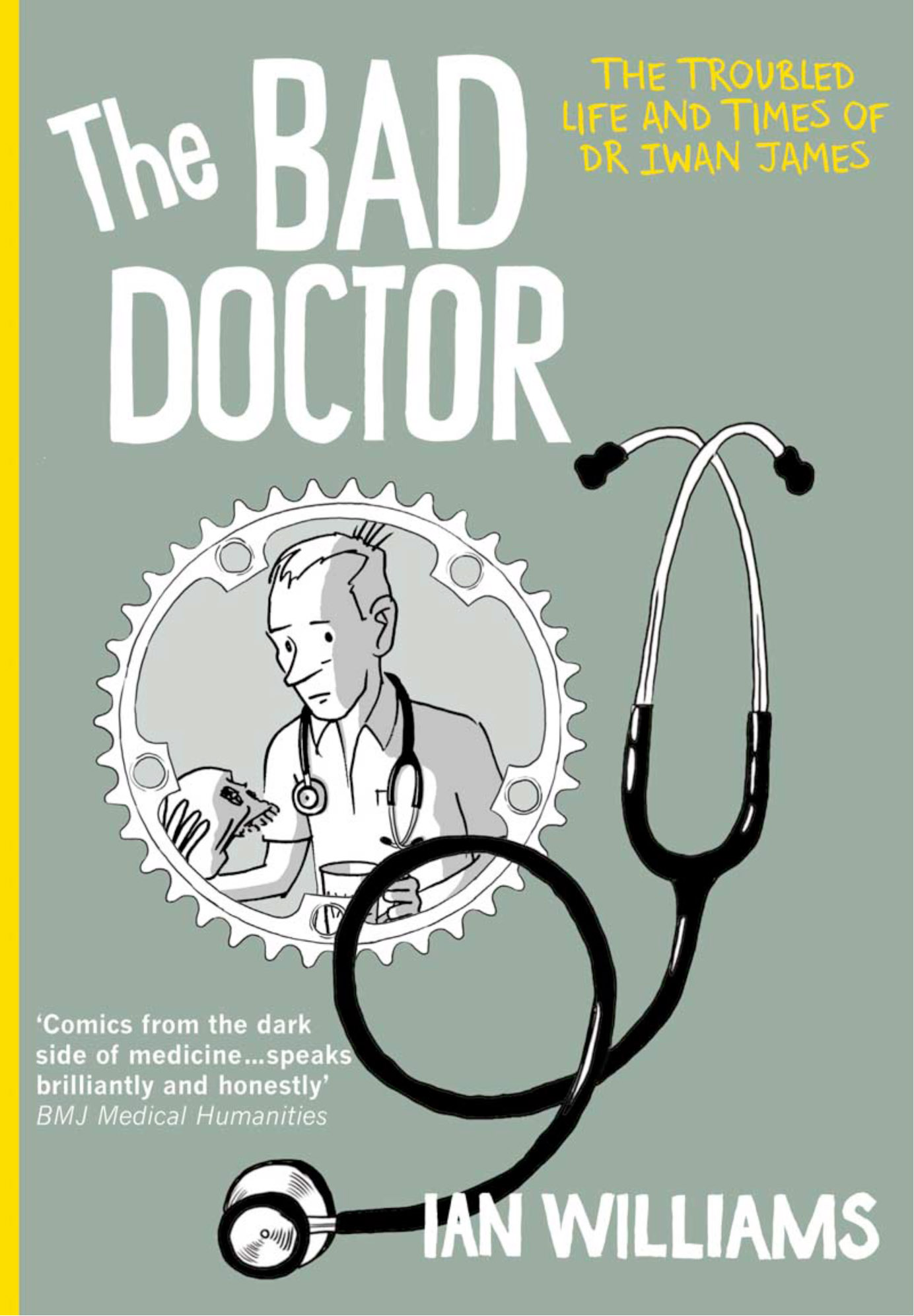
Among the 75 delegates from around the world were the authors of this blog entry. The lead organizer of the conference was Ian Williams, a doctor and comics artist, creator of The Bad Doctor (2014, Myriad Editions). MK Czerwiec (pronounced sir-wick), aka Comic Nurse, has been making comics about her work in HIV/AIDS and hospice care since the late 1990s as a way of processing these caregiving experiences. We have now worked together for four years, talking and writing about the interplay between the comics and health care. We make comics, collaboratively and separately, and will give a talk on October 18th at “Art, Anatomy, and the Body: Vesalius 500” about Graphic Medicine, the field we helped pioneer.

The Bad Doctor. Cover by Ian Williams.

The Bad Doctor. Cover by Ian Williams.

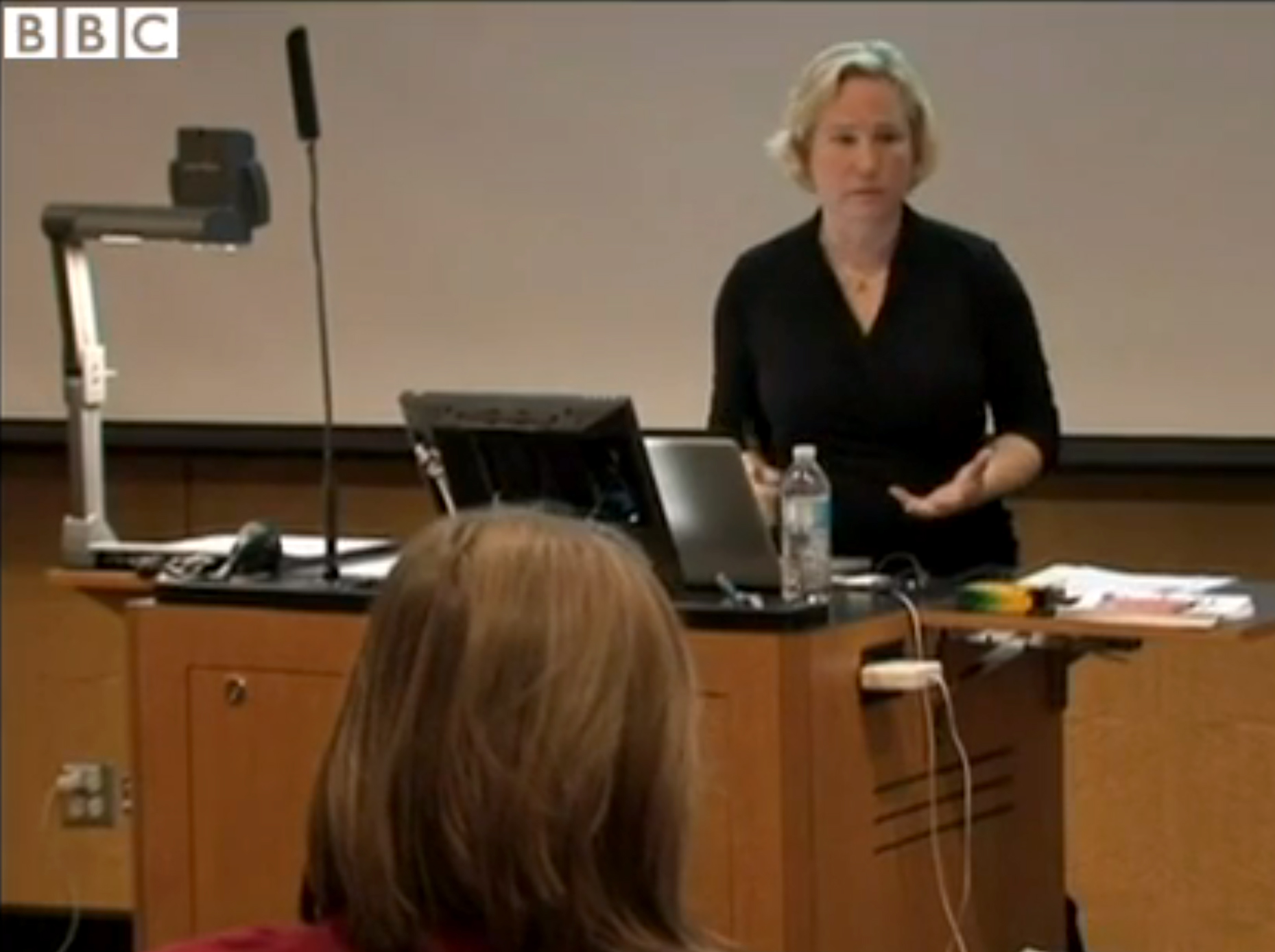
MK Czerwiec teaching at Northwestern Feinberg Medical School. Still from BBC story by Katie Watson.

MK Czerwiec teaching at Northwestern Feinberg Medical School. Still from BBC story by Katie Watson.


Often when we describe Graphic Medicine, people say that comics must make an excellent educational medium for patients, especially those with poor literary skills and marginalized groups such as drug addicts, teenage mothers, or the mentally ill. While comics have certainly been used to reach these audiences, the idea behind this response is freighted with assumptions about comics, their target demographics, and the literacy skills or aesthetic proclivities of the social groups so named.

Stack of medically-themed graphic novels. Photo by Ian Williams.

Stack of medically-themed graphic novels. Photo by Ian Williams.

We regard comics as a sophisticated, rich, and adaptable system through which to explore the complex issues of health care. Our primary interest has been the use of graphic illness narratives to provide new knowledge about the illness experience and commentary on the pervading cultural conceptions of disease and health care. We are also interested in the psychological process of making comics. We have also been teaching using comics—both making them and reading them—in medical schools in the US and UK.

Binky Brown Meets The Holy Virgin Mary cover by Justin Green

Binky Brown Meets The Holy Virgin Mary cover by Justin Green

In 1972 Justin Green became the first comics artist to unburden his psychological troubles onto the page, creating Binky Brown Meets the Holy Virgin Mary. This inspired subsequent generations of artists to articulate their corporeal experiences in words and pictures, a process that Elisabeth El Refaie refers to as “pictorial embodiment.”1 More than 40 years later, the myriad comics titles that appear each year include stories of disease or trauma, known as “graphic pathographies,”2 in which the authors give highly subjective accounts of their own illnesses or caregiving experiences. The production of these works involves the repeated drawing of the author’s or subject’s body over a prolonged period, which may have interesting effects on how the artist perceives the body. The relentless decision-making process forces the artist to examine fears, suffering, anger, disgust, disappointment, and grief and distill the whole into a succinct series of sequential panels through which to transfer the narrative to the reader.

2014 Comics & Medicine poster. Art by Lydia Gregg.

2014 Comics & Medicine poster. Art by Lydia Gregg.

Since the London gathering, we have held international conferences in Chicago, Toronto, Brighton, and Baltimore. The movement is growing and what was initially viewed by some as a novelty interest is gaining respect in academia. As the nature of literacy changes, moving from the textual towards the image, comics is once again in ascendance, gaining new readers who might have previously dismissed the medium.


References

1. El Refaie, E. (2012). Autobiographical comics: Life writing in pictures. Jackson: University Press of Mississippi.

2. Green, M. J., & Myers, K. R. (2010). Graphic medicine: Use of comics in medical education and patient care. BMJ, 340, c863.