History Night Presentations Announced

The New York Academy of Medicine’s Section on History of Medicine will hold the “Fourth Annual History of Medicine Night – Part One: Spotlight on New York” on February 6 from 6:00 pm–7:30 pm at NYAM, 1216 Fifth Avenue at the corner of 103rd Street. Register to attend here. A second evening of presentations is being planned for spring.
RBR deskThe night will feature the following presentations, as described by the speakers:

“Psychiatric Criminology in the Eugenic Era: The New York Police Psychopathic Laboratory, 1915-1929”
Sara Bergstresser, M.P.H., Ph.D., Columbia University, Bioethics

“First, I explore the historical background of North American and European psychiatry, criminology, and eugenics in the nineteenth century, including threads of early convergence. Next, I examine the development of eugenic psychiatry and its intersections with eugenic criminology, with a particular emphasis on New York State in the early twentieth century. I then present a case study from that time period, which is based primarily on materials from the archives of the New York Police Psychopathic Laboratory. I go on to argue that in this case the workings of psychiatric criminology were more eclectic and uncertain than they may otherwise appear based on broad descriptions of the eugenic era.”

“Not for Self but Others: The Presbyterian Hospital Goes to War”
Pascal J. de Caprariis, M.D., Lutheran Medical Center

“On March 11, 1940 the U.S. Surgeon General reached out to Presbyterian Hospital’s medical board president to develop a military hospital to support US troops in an eventual war. Structured to receive patients from combat areas and follow American troops throughout war, it was to provide complex medical and surgical care over the course of three years and two months abroad.”

“The Cancer Education Campaigns in Progressive Era New York City: The Role of Women”
Elaine Schattner, M.A., M.D., F.A.C.P., Weill Cornell Medical College

“At the start of the 20th century, myths about cancer’s causes and treatments were widespread. Fear of the disease—and of inept surgeons—was rampant. Many afflicted fell prey to hoaxers selling bogus salves, patent medicines and painless “cures.” In April 1913, a prominent New York City surgeon and gynecologist, Dr. Clement Cleveland, invited a group of well-to-do ladies, bankers and physicians to his home. They heard from statisticians and public health specialists, and considered what might be done to reduce cancer’s mounting toll. The group met formally again in June 1913 at the Harvard Club in New York City. They formed the American Society for the Control of Cancer (ASCC), which three decades later became the American Cancer Society.”

“A Diagnosis of Philanthropy: Carnegie and Rockefeller and the Medical Profession”
Catherine (Katia) Sokoloff, Sarah Lawrence College

“Through exploring the evolving interests of Andrew Carnegie and John D. Rockefeller during the Progressive Era, this paper unearths how these philanthropists and their advisers facilitated and funded the writing of the infamous Flexner Report in 1910. The report, also called Bulletin Number Four, exposed the inadequacies of medical schools and catalyzed dramatic education reforms.”

“Organizing Orthopaedic Societies in New York City in the 1880s: The New York Orthopaedic Society, the New York Academy of Medicine Section of Orthopaedic Surgery and the American Orthopaedic Association”
Jonathan B. Ticker, M.D., College of Physicians and Surgeons, Columbia University

“After the seventh general meeting of the New York Orthopaedic Society (NYOS) on January 4, 1886, steps were taken to merge NYOS into a section of the New York Academy of Medicine (NYAM). Thus, on January 29, 1886, NYOS adjourned and the NYAM Section of Orthopaedic Surgery began. On January 29th, 1887, the chairman of the Section and 15 others “[met] and [discussed] the organization of a national orthopaedic society.” This led to the founding of the American Orthopaedic Association (AOA).”

History Night: Call for Papers

RBR desk

The New York Academy of Medicine’s Section on History of Medicine is pleased to announce its Annual History of Medicine night to be held on February 6, 2014 from 6:00 pm–7:30 pm. The event will take place at the Academy, located at 1216 Fifth Avenue at the corner of 103rd Street.

We are inviting all those interested in presenting to submit a narrative on a historical subject relating to medicine for consideration.

Note the following submission requirements:

  • Applications must include an abstract, with a  500-word maximum, and this form
  • Abstracts must be submitted no later than January 15, 2014

The time allotted for presentation is 12 minutes with an additional 3 minutes for questions/discussion. Papers selected for presentation will be determined by a panel of History of Medicine Section members.

Abstracts should be submitted electronically to Donna Fingerhut at dfingerhut@nyam.org.  Questions may be directed to Donna via email or phone (212-419-3645).

Congratulations, Captioners!

At our Festival of Medical History and the Arts on October 5, we asked attendees to submit captions for three images from items in our collection. Today, we’re happy to announce the winners of the competition, who will receive high-quality prints of the captioned image. We’ve included original captions with the images, where available, to help show how they appear in context (although the Festival attendees did not get to see them).

The first image comes from William Cheselden’s Osteographia, or The Anatomy of the Bones, published in London in 1733. Linda Kleinman wrote the winning caption.

“I’ve had enough of your lip!”

I’ve had enough of your lip!

The second image appears in Konrad Gesner’s Historiae Animalium Liber IIII, published in Zurich in 1558. Samuel Luterbacher wrote the winning caption.

“I knew I should have never trusted Dr. Moreau.”

I knew I should have never trusted Dr. Moreau.

The final image, produced by Egbert van Heemskerck II circa 1730, appears in the George Osborne Mitchell Medical Scrapbook. This picture inspired the strongest pool of captions. But Iana Dikidjieva’s caption stood out from the pack.

“It appears to have been curiosity.”

“It appears to have been curiosity.”

Congratulations to the winners!

Thank You! Festival of Medical History and the Arts Wrap-Up

By Lisa O’Sullivan, Director, Center for the History of Medicine and Public Health

Whew!

Our first Festival of Medical History and the Arts was a great success; more than 1,000 people attended and responded enthusiastically to our mix of talks, demos, films, etc. Now that we have had a chance to draw breath, here are a few details from the day:

It’s hard to pick highlights, although of course Dr. Oliver Sacks speaking about his intellectual influences and the patients who inspired his Awakenings was hugely exciting for all of us. We are grateful to Dr Sacks and all the speakers who came and shared their knowledge.

Our guest curators did an amazing job. Lawrence Weschler’s Wonder Cabinet started with a (big) bang, a banjo-accompanied cosmic/neuronal slapdown, and ended with fascinating insights from Riva Lehrer into how an artist’s body can affect her art and her anatomy teaching. In between, spectators had the chance to get a glimpse into the experience of having an epileptic fit; share anatomical adventures; and witness some cringe-inducing treatments suffered by monarchs through the ages.

The cosmic/neuronal smackdown.

The cosmic/neuronal smackdown. Photo by Amy Hart.

Joanna Ebenstein’s Morbid Anatomy presentation of 12(!) talks throughout the day were standing-room only, forcing us to move to a larger room, which filled up just as quickly. The day started with Mexican traditions around death, took a detour to human zoos, wax anatomical models, medical library pleasures, memento mori, and skull theft before ending with the little-discussed practice of bookbinding with human skin.

Sigrid Sarda gives a medical wax moulage demonstration.

Sigrid Sarda gives a medical wax moulage demonstration. Photo by Amy Hart.

Our conservation team prepared a wonderful exhibit of models demonstrating development of the book over time (no human skin involved), as well as a whimsical look at the life of miniature books. We put highlights from our collections on display, and welcomed visitors to our conservation laboratory. Meanwhile, visitors could learn the art of making anatomical wax moulage and see Gene Kelly struggle with combat fatigue.  And the after party cocktails and cartoons were just the things needed to wind down after the long day.

Cocktails and cartoons at the after party.

Cocktails and cartoons at the after party. Photo by Amy Hart.

With so many people, some events did fill up. Particular apologies to those who couldn’t make it on a behind-the-scenes tour. With such overwhelming demand, we’re planning to make them a much more regular feature, so if you missed out you’ll get another chance at a future event. Our two anatomical workshops were also full; for those of you in New York, we are investigating offering courses on a more regular basis, so please let us know if you are interested!

A tour of the Gladys Brooks Book & Paper Conservation Laboratory. Photo by Amy Hart.

A tour of the Gladys Brooks Book & Paper Conservation Laboratory. Photo by Amy Hart.

Pictures from the day are up on our Facebook page, and winners of the caption competition and the raffle will be announced soon.  Meanwhile, keep an eye out for more details of our Performing Medicine mini-fest, coming in the spring. Hope to see you then, if not before for some of our stand-alone events!

Winsome Fetal Skeletons Bearing Scythes: Monro’s Traité d’ostéologie of 1759: Guest post by Morbid Anatomy

A note from the Center for the History of Medicine & Public Health: This is the last post in Morbid Anatomy‘s guest series leading up to our Festival of Medical History and the Arts. If you’ve enjoyed these posts as much as we have, don’t despair! Tomorrow’s event holds a full day of lectures and activities from Morbid Anatomy, Lawrence Weschler, and the Center. We hope you can make it! See the full schedule here.

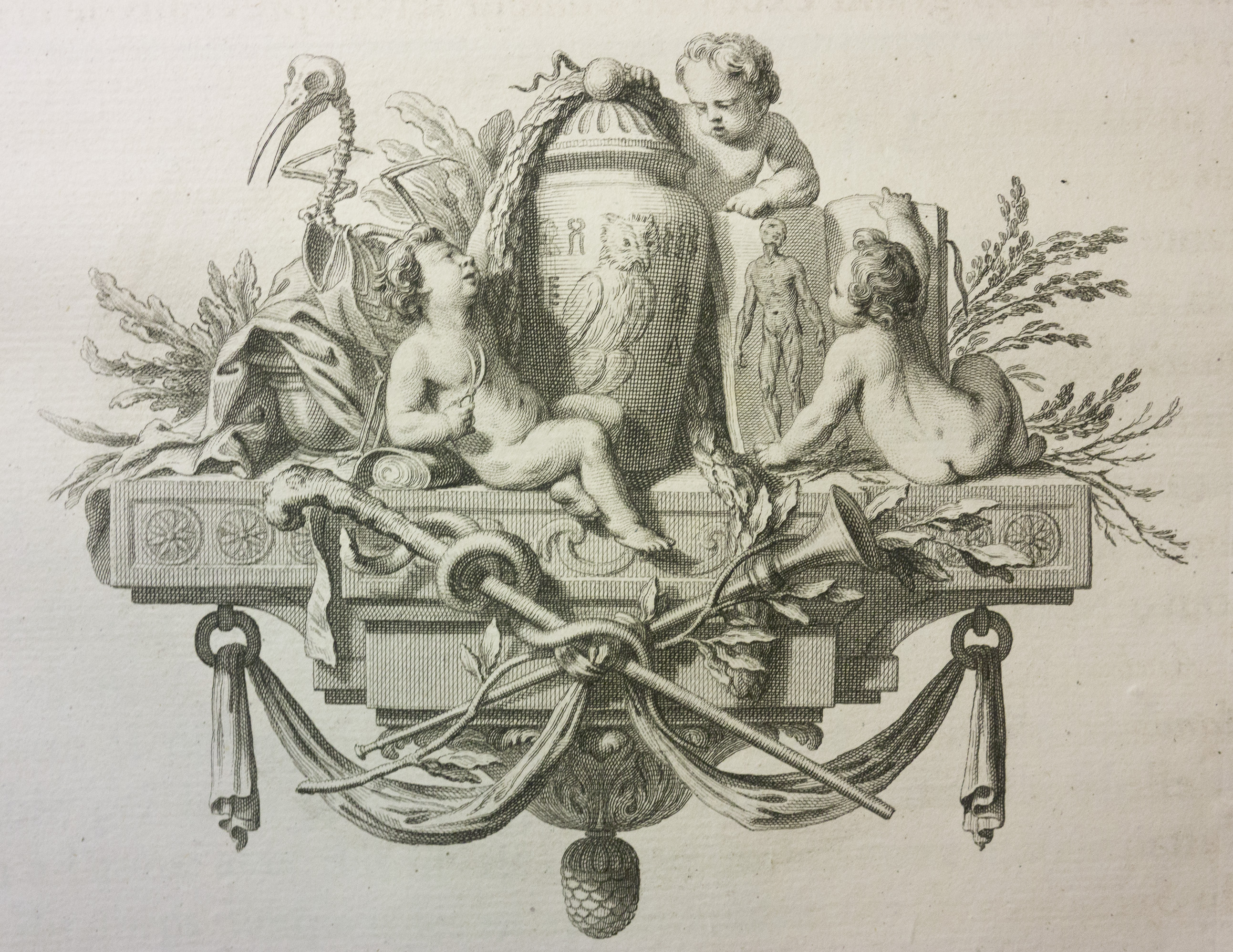
FrontispieceThe NYAM rare book collection holds a gorgeous copy of the first French edition of Alexander Monro’s (1697–1767) celebrated Traité d’ostéologie (or “Anatomy of Bones”). Monro was trained in London, Paris, and Leiden before going on to become the first professor of anatomy at the newly established University of Edinburgh. It was under his leadership, and that of his successors, that the school went on to become a renowned center of medical learning.

Monro originally published this book without images, thinking them unnecessary after William Cheselden’s lavishly heavily-illustrated Osteographia, or the anatomy of the bones of 1733 (more on that book at this recent post). The very fine copperplates you see here were added to the French edition by its translator, the anatomist Jean-Joseph Sue (1710–1792).

My favorite image in the book is a kind of memento mori–themed tableau morte of winsome, scythe-bearing fetal skeletons enigmatically arranged in a funereal landscape (images 1–3). I also love the frontispiece in which a group of plump putti proffer anatomical atlases and dissecting tools under the oversight of a skeletal bird (above).

This post was written by Joanna Ebenstein of the Morbid Anatomy blog, library and event series; click here to find out more. All images are my own, photographed at the New York Academy of Medicine.

Festival of Medical History & the Arts

We are excited to announce our first all-day extravaganza, co-curated by Lawrence Weschler, Morbid Anatomy, and the Center, and featuring esteemed speakers, artists workshops, behind-the-scenes tours, and more. Please check the Festival of Medical History & the Arts page and schedule for more information.

save the date Oct 5

Mother Eve’s Pudding Redux

Image

By Erin Albritton, Head of the Gladys Brooks Book & Paper Conservation Laboratory

Last month, we kicked off National Poetry Month by sharing a rhyming recipe for Eve’s Pudding from our manuscript collection. Although charming, the recipe lacked the level of specificity to which most modern cooks have become accustomed. To solve this problem, cooking teacher and food historian Steve Schmidt (who will be delivering NYAM’s Friends of the Rare Book Room lecture on May 23rd) was kind enough to send along the following adaptation, together with a recipe for Cold Sweet Sauce that is scrumptious when drizzled over the top:

For the pudding:
3/4 cup (3 ounces) fine dry bread crumbs, plus a handful for coating the basin or bowl
1/3 cup plus 1 tablespoon (3 ounces) sugar
1 Tbsp all-purpose flour
1 tsp grated or ground nutmeg
1/2 tsp ground cinnamon
1/2 tsp salt
3 medium (about 1 1/4 pounds) firm, dry apples, such as Golden Delicious
2/3 cup (3 ounces) currants
3 large eggs, beaten until light and frothy
6 Tbsp (3 ounces) unsalted butter, melted and cooled
1 Tbsp strained fresh lemon juice

For the Cold Sweet Sauce:
1 stick of butter
2/3 cup confectioners’ sugar
1-2 Tbsp of brandy or lemon juice
A pinch of nutmeg

Very generously grease a 5- to 6-cup heatproof bowl or pudding basin with butter or solid vegetable shortening. Sprinkle the inside of the bowl with a handful of dry bread crumbs, tilt the bowl in all directions until coated and then tap the excess crumbs out.

Mix the 3/4 cup crumbs, sugar, flour, nutmeg, cinnamon, and salt in a bowl. Peel the apples and grate on the shredding plate of a box grater down to the cores. Stir the apples and currants into the crumb mixture, then the beaten eggs, then the melted butter and lemon juice. Pack the mixture into the prepared bowl, cover tightly with foil, set an upside-down plate on top of the foil, and steam the pudding for 3 hours in sufficient simmering water to reach halfway up the sides of the bow

While the pudding is steaming, make sauce by melting butter and whisking in sugar, brandy and nutmeg. Remove the pudding from the pot and let rest 15 minutes before unmolding. Drizzle (or drench!) with sauce and enjoy.

Below is a photo essay documenting one staff member’s kitchen adventure making this recipe (click to enlarge and open photo gallery). The next time you’ve got a couple of hours and find yourself craving a delicious dessert (with a bit of history), give Eve’s Pudding a try . . . you’ll be glad you did!

“Nature” and Motherhood

By Arlene Shaner, Acting Curator and Reference Librarian for Historical Collections

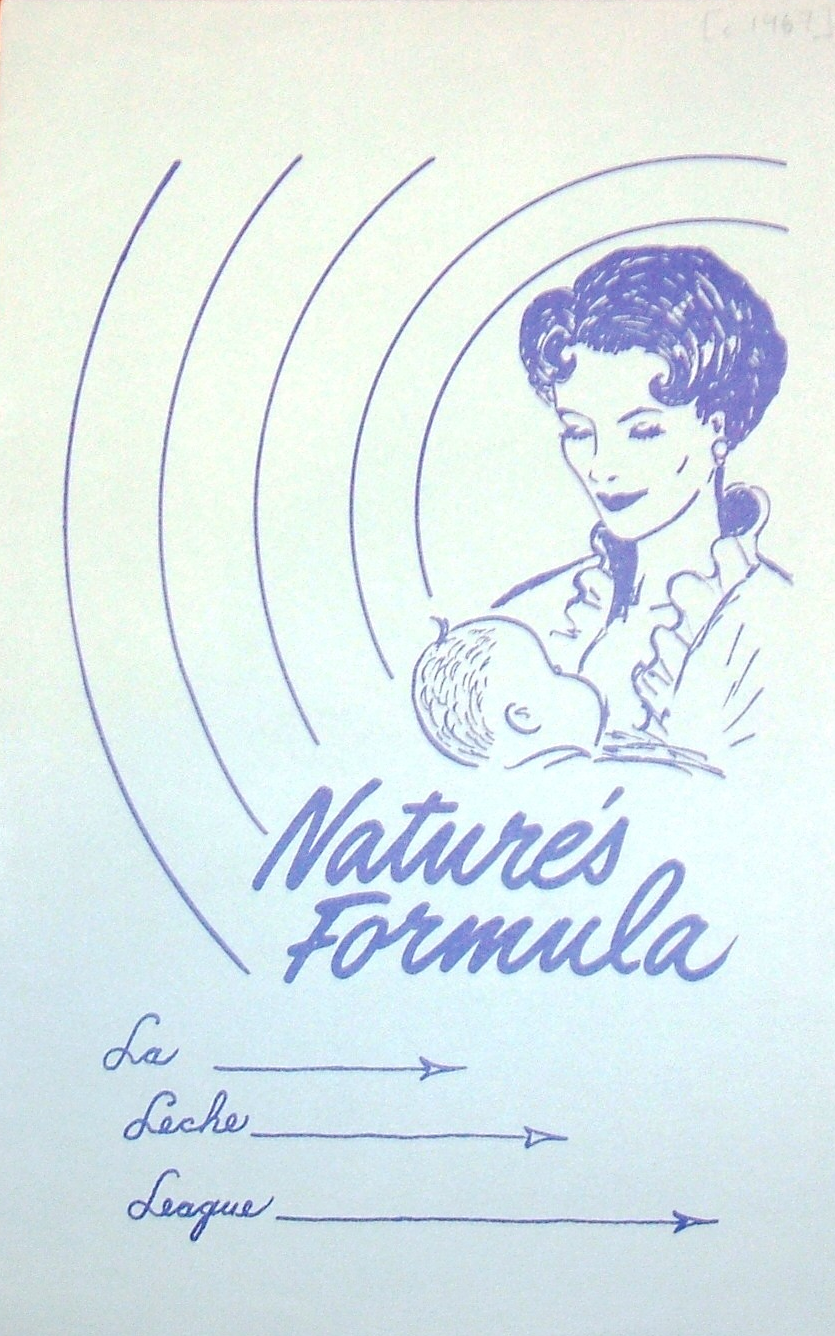
Image courtesy of Jessica Martucci.

Image courtesy of Jessica Martucci.

Our special mini-series issues related to environmental history, A World Not Quite Fatal: New Views on the History of Environmental Health, continues this Thursday, January 17, 2013, with a talk by Jessica Martucci from Mississippi State University about breastfeeding and fears of environmental contamination. Both human and animal studies from the mid-20th century suggested that toxins such as DDT might be concentrated in mother’s milk and could be transmitted to their babies. The La Leche League published a pamphlet called “DDT and Mother’s Milk” in 1972, encouraging mothers to continue to breastfeed their babies despite these concerns. Professor Martucci will look at how discussions surrounding the possible transmission of toxins through breastfeeding formed part of a larger conversation about both the “nature” of motherhood and infant feeding and a developing movement of environmental activism.

Jessica Martucci is an Assistant Professor in the History Department and Gender Studies Program and is associate member of the Center for the History of Agriculture, Science, and the Environment of the South at Mississippi State University. She received her B.A. in Biology and Environmental Studies at Oberlin College, and her M.A. and Ph.D. in the History and Sociology of Science at the University of Pennsylvania. She is currently finishing her first book project, Back to the Breast: Natural Motherhood and Breastfeeding in the 20th Century.

To register for this event, click here.

History Night: Seeking Submissions

RBR deskThe New York Academy of Medicine (NYAM) Section on the History of Medicine and Public Health is pleased to announce its Third Annual History Night to be held on April 8, 2013, 6:00 pm – 8:00 pm. The event will take place at NYAM located at 1216 Fifth Avenue at the corner of 103rd Street.

We are inviting all those interested in presenting to submit papers on topics in the history of medicine and public health for consideration. Papers submitted previously at other educational events are eligible for submission. The time allotted for those papers chosen for presentation will be 15 minutes, with an additional 3-5 minutes for Q & A.

A panel of members of the NYAM Section on the History of Medicine and Public Health will select the papers to be presented.

The submission deadline is February 1, 2013. Papers may be submitted electronically to Donna Fingerhut at dfingerhut@nyam.org. Questions may be directed to Donna at 212-419-3645.

Putting Asthma on the Map

By Arlene Shaner, Acting Curator and Reference Librarian for Historical Collections

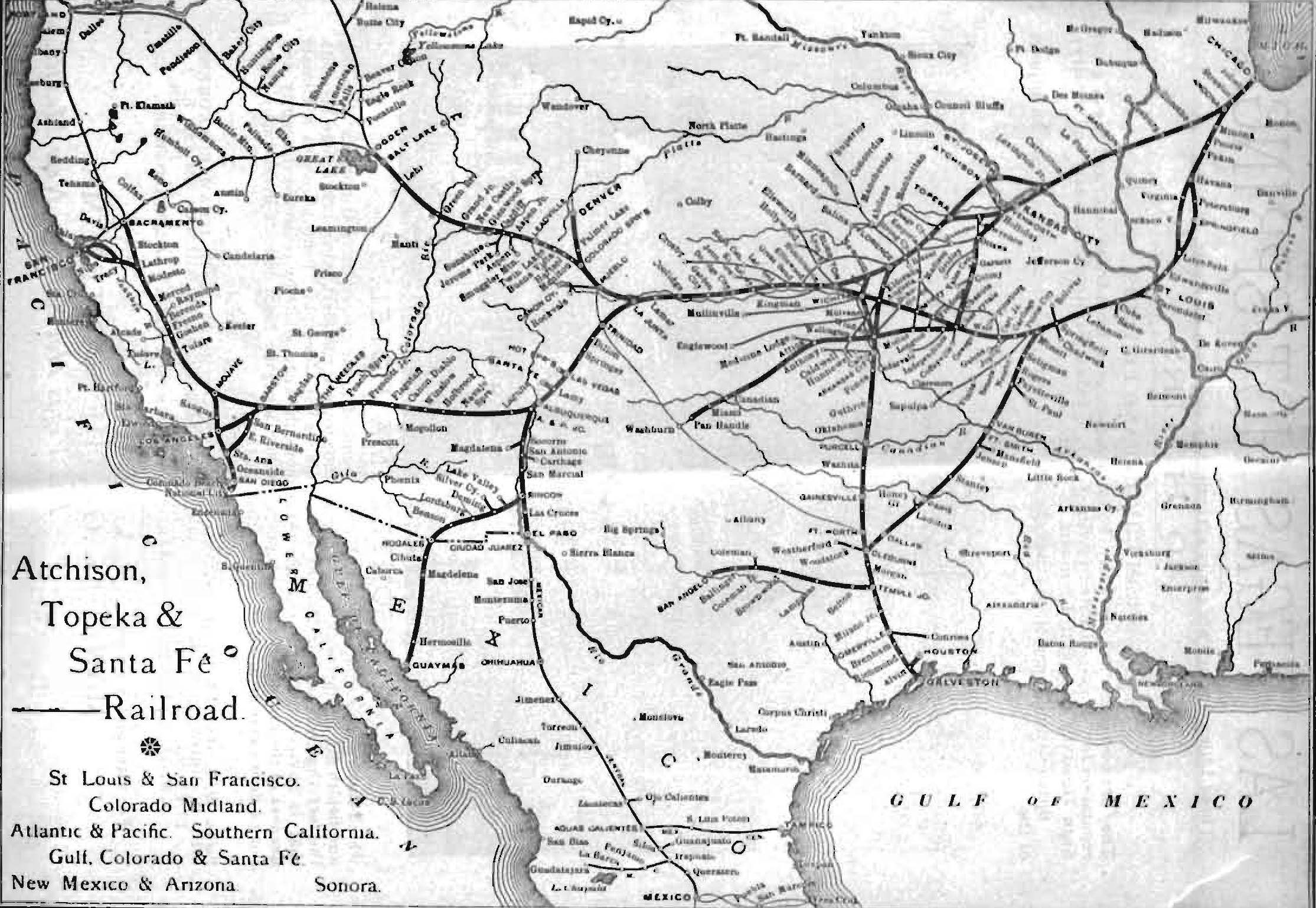
Southwest Map

Map from The South-west and New Mexico for phthisis, weak lungs, asthma, bronchitis, etc. Chicago: American Health Resort Association, 1891.

On Wednesday, December 12, 2012, Carla Keirns, MD, PhD, from the Stony Brook University School of Medicine will present this year’s John K. Lattimer Lecture, “Putting Asthma on the Map: Weather, Pollen, Pollution and the Geography of Risk.”

Dr Keirns will discuss how the patient’s environment has been central to the prevention and treatment of asthma since antiquity, and how, beginning in the 19th century, physicians learned to use measurements of humidity, sunlight and rainfall to predict places and seasons that would be safe for asthmatics. During the same period, indoor and outdoor risks such as pollen and dust began to mark regions and spaces as risky or dangerous, and led to efforts to escape attacks through travel or fortifying the home environment against triggers. Recent efforts to predict or create safe places have turned again to the outdoors, both through national regulation of air pollution and the efforts of minority communities and their academic and activist partners to document the disproportionate environmental risks faced by their members.

Register for the event here.