A Letter from Benjamin Franklin

By Danielle Aloia, Special Projects Librarian and Arlene Shaner, Reference Librarian for Historical Collections

To mark Benjamin Franklin’s 309th birthday on January 17, we thought it appropriate to share some information about the Benjamin Franklin letter in our manuscript collection.

Frontispiece of The Memoirs and Writings of Benjamin Franklin, 1818.

Frontispiece of The Memoirs and Writings of Benjamin Franklin, 1818.

When we think of Benjamin Franklin, we usually remember him as a Founding Father, inventor, diplomat, printer, and publisher, but we are less likely to think of him as a medical man. In fact, he had a keen interest in public health and hygiene. He was one of the founders of the Pennsylvania Hospital, wrote a short treatise on inoculation, and even an essay about the health benefits of swimming. He also corresponded with physicians across the globe and with colleagues, family members, and others on medical topics.1

The Academy acquired a Franklin letter, dated December 8, 1752, in 1906, as a gift from Dr. William K. Otis (1860-1906), who inherited it from his father, Dr. Fessenden Nott Otis (1828-1900). Both were Fellows of The New York Academy of Medicine, the father elected in 1861 and the son 30 years later, and both specialized in treating urological disorders. Dr. F.N. Otis was a professor of venereal and genito-urinary diseases at Columbia’s College of Physicians and Surgeons. He modernized the treatment for urethral stricture by inventing both the Otis Urethrometer and the Otis Dilating Urethrotome, so it should not be a surprise that this particular letter by Franklin interested him.2,3 The letter was published in various editions of Franklins works and writings, in The Medical Side of Benjamin Franklin (1911), and as a facsimile in A Letter on Catheters (1934), with commentary by Dr. Edward Loughborough Keyes.
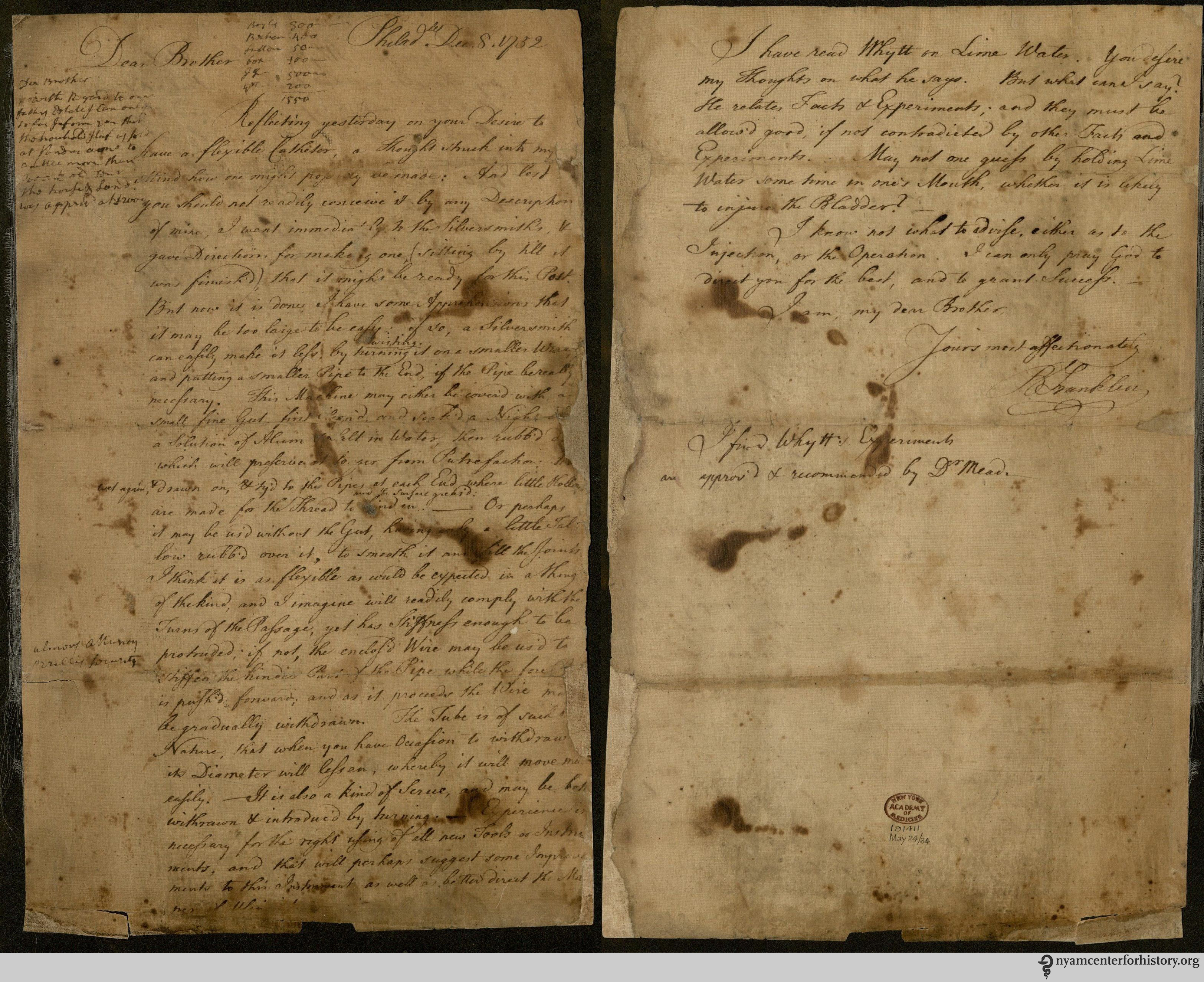
Front and back of Franklin's December 8, 1752 letter to his brother John. Click to enlarge.

Front and back of Franklin’s December 8, 1752 letter to his brother John. Click to enlarge.

In the letter, Franklin encloses a catheter (not in our collection) and describes its fabrication to his brother John, who was suffering from painful bladder or kidney stones: “Reflecting yesterday on your Desire to have a flexible catheter, a Thought struck into my Mind how one might possibly be made…” Worried that he might not be able to adequately convey his idea through description, Franklin goes on to tell his brother, “I went immediately to the Silversmith’s, & gave Directions for making one, (sitting by till it was finished), that it might be ready for this Post.” He then provides very complete instructions for having the size of the device adjusted by a silversmith should the diameter prove too large, and for using it. Though Franklin’s text suggests that he invented the catheter, Keyes, in the commentary published with the facsimile, quotes a letter from F.N. Otis in which Otis notes that he believes the wording in the first sentence of the letter simply demonstrates Franklin’s familiarity with a similar catheter already being used in Europe.

Transcription of Franklin's letter. Click to enlarge.

Transcription of Franklin’s letter. Click to enlarge.

At the end of the letter, Franklin shares his thoughts about Robert Whytt’s “An Essay on the Virtues of Lime-water in the Cure of the Stone” with John. Clearly both of them had read this book in an attempt to find a treatment that would offer John some relief from his ailment. Franklin responds to what seems to be an earlier query from John about the likelihood that Whytt’s method of treatment would help him. “I have read Whytt on Lime Water,” Franklin writes. “You desire my thoughts on what he says. But what can I say? He relates Facts & Experiments; and they must be allow’d good, if not contradicted by other Facts and Experiments. May not one guess by holding Lime Water some time in one’s Mouth whether or not it is likely to injure the Bladder?” As almost any elementary school student today would be able to report, all the basic elements of the scientific method are conveyed in Franklin’s elegant sentences: the question, the hypothesis, the experiments and observations, and the final conclusion.

In addition to the letter on catheters, the Academy library collections contain many published editions of Franklin’s work, along with a number of secondary sources about him. Please contact history@nyam.org or call 212-223-7313 to make an appointment to visit us if you are interested in exploring one of our most famous and engaging man of letters further.

References

1. Pepper W. The Medical Side of Benjamin Franklin. Philadelphia: W. J. Campbell; 1911.

2. Franklin, Benjamin, John Franklin, and Edward L. Keyes. A Letter on Catheters. Fulton, N.Y: Morrill, 1934.

3. Kelly H.A. Dictionary of American Medical Biography. New York: D. Appleton, 1928.

Hoping for the Best, but Preparing for the Worst: A Disaster Preparedness Workshop

By Emily Moyer, Collections Care Assistant, The Gladys Brooks Book & Paper Conservation Laboratory

Puzzling over what to do with materials.  Alan Galicki supervises, far right.

Puzzling over what to do with materials. Alan Balicki supervises, far right.

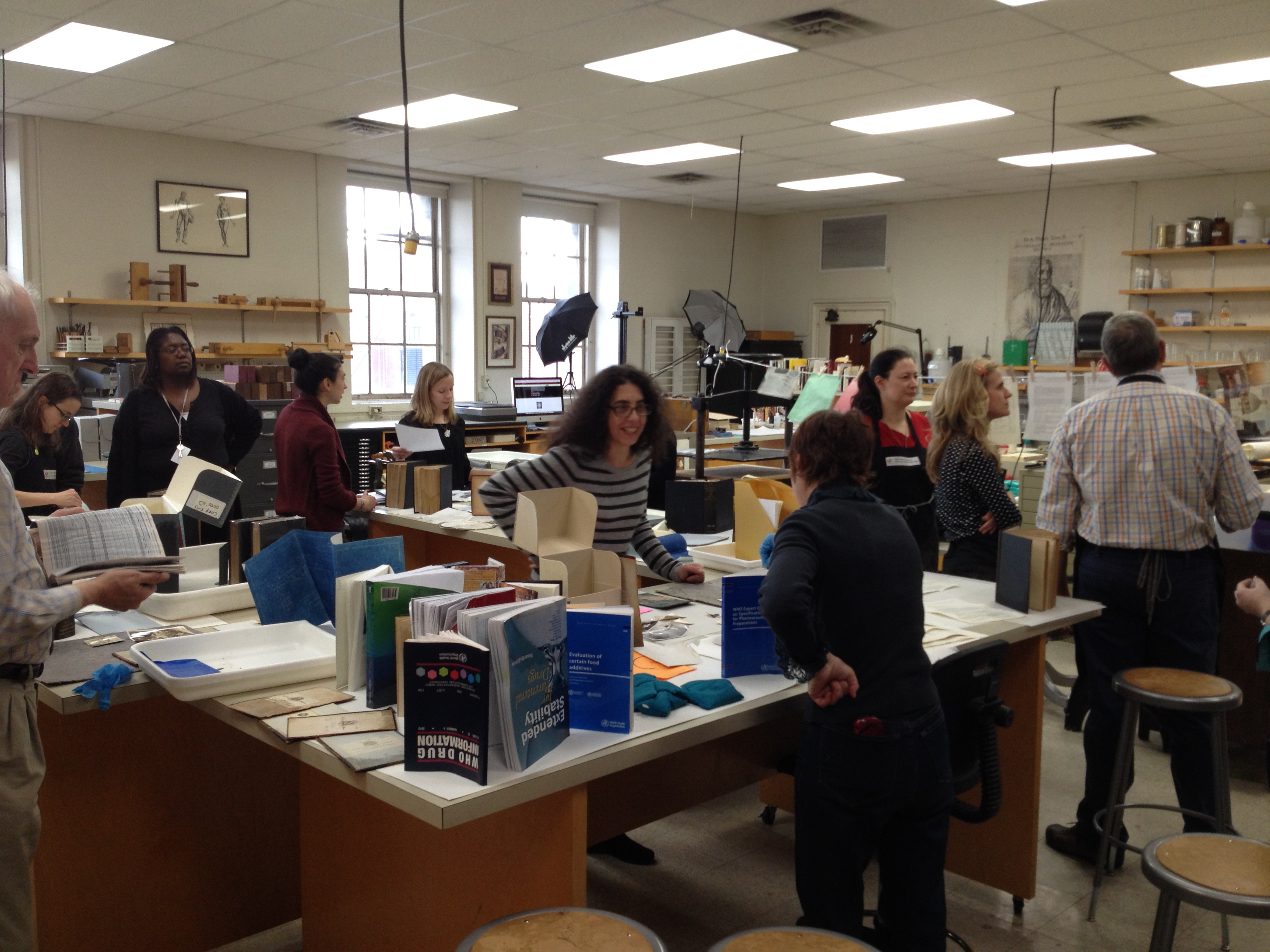
On December 11, Alan Balicki, chief conservator at the New York Historical Society, came to NYAM’s Gladys Brooks Book & Paper Conservation Laboratory to lead an afternoon workshop about the importance of disaster planning, response, and recovery. The Conservation Lab recently rolled out a comprehensive Collections Disaster Plan detailing the proper protocols for dealing with disasters and Alan’s workshop was a great way to cap off this project.

Facilities staff experiment with draping techniques to protect against a leak.

Facilities staff experiment with draping techniques to protect against a leak.

The most common risk that libraries face is flooding due to pipe leaks or severe weather conditions. All the staff from Center for the History of Medicine and Public Health as well as several members from the Facilities Department had the opportunity to see what happens when materials get wet (all items used were set to be discarded). Center staff members were also able to engage in hands-on experimentation on how to dry different items based on their materiality and to ask questions in a non-disaster setting. Staff were encouraged to return to the lab the next day to see how the items had dried and engage in conversation about best practices.

Wet items everywhere!

Wet items everywhere!

VHS, film, and photographs.

VHS, film, and photographs.

We experimented with a variety of materials, including coated paper, leather covers, colored paper, shrink wrapped materials, photographs, audio-visual materials, and blueprints. Staff practiced interleaving soaked books, draping with plastic, and basic techniques for dealing with wet and fragile materials. Workshop participants dried materials using best practices (fanning and interleaving) as well as unorthodox methods (keeping the materials wet and closed) in order to compare the results. It was very instructive to witness how thoroughly books soaked up surrounding water, and how quickly coated paper began to “block,” or stick together, when wet. It was not surprising that some colored papers and Post-it notes bleed when wet, but seeing how quickly and dramatically they reacted to water was a good cautionary lesson. Conversely, it was encouraging to see how effectively shrink wrapping protected items from water.

Paper, cloth, and leather materials.

Paper, cloth, and leather materials.

Alan gave a thoughtful presentation on real-world dangers faced by libraries, and impressed the group with his capable and pragmatic approach to disaster planning. Thanks to everybody for a great learning experience, and especially to Alan for his time and expertise.

NYAM’s Culinary Highlights

On Monday, The Recipes Project featured an interview with Curator Anne Garner about the print and manuscript historical recipe books in our collection. We’re delighted to republish the interview, conducted by Michelle DiMeo, on our blog.

Could you give us an overview of the print and manuscript historical recipe books in NYAM’s collection? Can you offer any search tips for finding them in your catalog?

At the heart of our culinary holdings is the Collection of Books on Foods and Cookery, presented to NYAM by Margaret Barclay Wilson in 1929. Wilson was professor of physiology and honorary librarian at Hunter College; she also advised the city of New York on food economy during wartime.

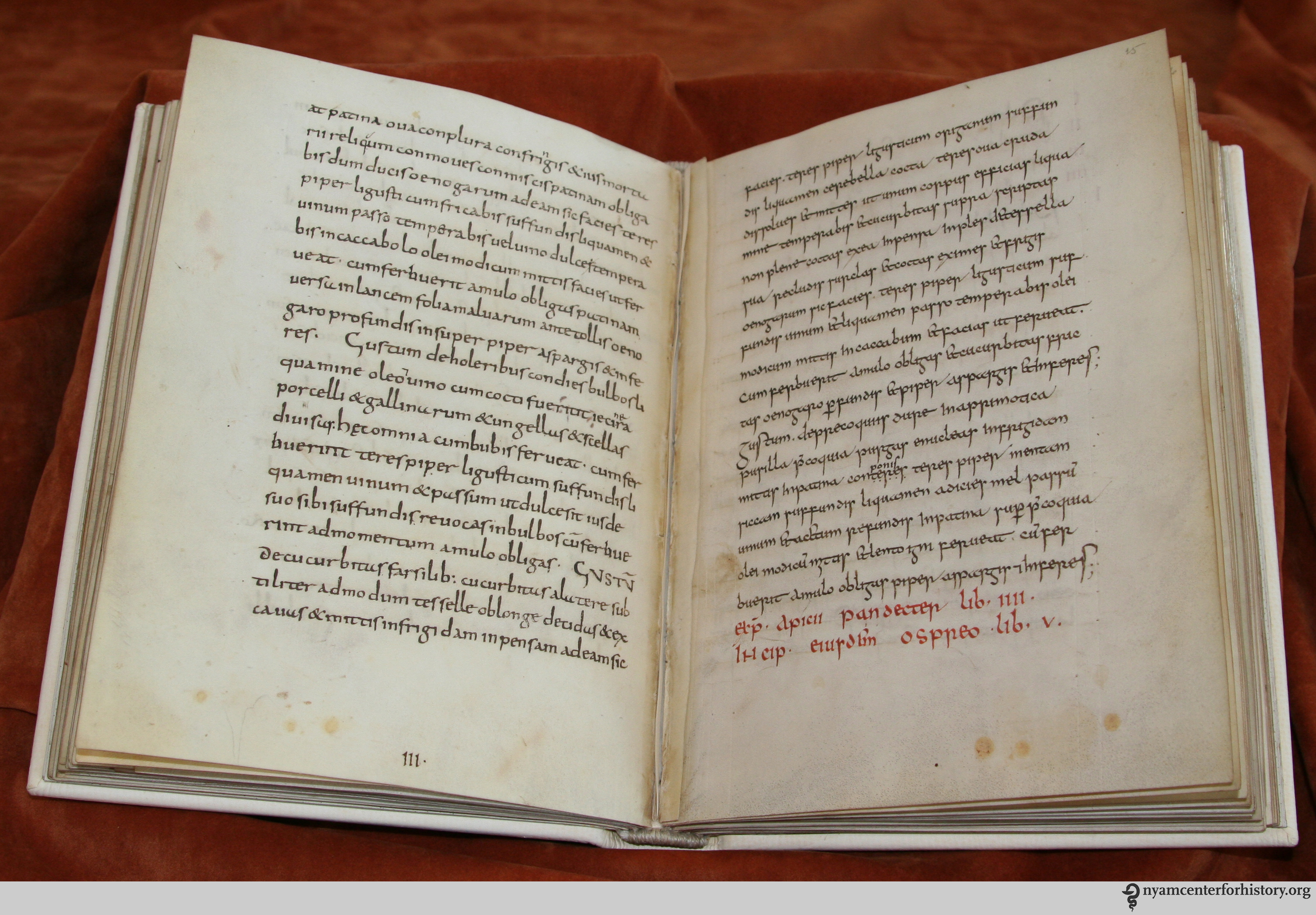
The Wilson collection includes about 10,000 items, including the Apicius manuscript (see below), menus and pamphlets that demonstrate the way cookery changed over time, and a large collection of printed books, beginning in the 16th century. Included here are works by Scappi, Platina, and Carême as well as many other milestones in culinary printing.  Especially exciting are the wide variety of everyday cookbooks we own that show what daily cooking was like in a range of households, across the world. Using our collections, you can also trace the changes that occur when people have access to new innovations—refrigeration, for example, or the gas range.

9th-century manuscript De re culininaria (sometimes De re coquinaria), attributed to Apicius.

9th-century manuscript De re culininaria (sometimes De re coquinaria), attributed to Apicius.

We have strong collections related to diet regimens and cooking for health, as well as cookbooks published during wartime when resources were scarce. More general texts on home economics and household management include much on cooking. Books on farming, viticulture and beer-making round out our strong print holdings.

The centerpiece of our food manuscripts is Apicius’ De re culinaria, one of two existing copies of an early Roman cookbook mixed with medical recipes, agronomical observations, and house-keeping advice. Our copy was penned at the monastery at Fulda (Germany) around 830 AD.

NYAM holds some significant early modern manuscript recipe books. Can you tell us more about these and give a couple of highlights?

Our library holds 36 manuscript receipt books, dating from the late 17th through the 19th century. The bulk of the manuscripts are German and English. The remaining manuscripts are American, Austrian, French, and Dutch. One of my favorites is the Choise Receipt book from 1680, which includes recipes for fruit preserves, baked goods, mead and beer, as well as hearty pudding and meat dishes. You’ll also find here a recipe ensuring a quick childbirth—central ingredient, baked eel livers!—as well as many other medical recipes. A tantalizing recipe for a “gam of cherries” is notable because the OED dates the earliest usage of “jam,” in any form, to 1736, almost sixty years after the date of this manuscript.

Index of late 17th-century manuscript A Collection of Choise Receipts.

Index of late 17th-century manuscript A Collection of Choise Receipts.

Elizabeth Duncombe’s manuscript offers recipes from a later period (1791). Food historian Stephen Schmidt has cooked several of these recipes, with delectable results! Highlights include a fish sauce more French than English in spirit (akin to today’s beurre blanc), and recipes for pigeon, hedgehog and potted mushrooms. References to milking and to cows suggest that this was the cookbook of a farm household, and not a city residence.

Could you tell us a bit more about the Pine Tree Manuscript Receipt Book Project?

The 36 early modern manuscripts described above were all in need of both conservation and cataloging. All items needed basic stabilization and dry cleaning; in some cases, the bindings needed to be replaced with historically and structurally suitable materials. All can now be used by the public without worry of further damage. They’ve also been cataloged, and can be found by searching online here.

Both the conservation work and the cataloging was funded by the Pine Tree Foundation, overseen by Szilvia Szmuk-Tanenbaum. Szilvia is a bibliophile and a culinary enthusiast, and has been wonderfully generous to us.

I heard that “Food” is NYAM’s 2015 programming theme. Do tell us more! How will recipes be included?

We’re thrilled that our 2015 programming will focus on the history of food and food systems, working with historian and writer Evelyn Kim. Throughout the year there will be food-related events, culminating in our October Festival where we will offer a mixture of talks, demonstrations, and workshops, with noted chefs and writers. In April, we will also be participating in the Food Book Fair in Brooklyn. We will be drawing on our historical cookery collection for insights into changing ideas about food and health, nutrition, diets and more. Watch our blog for images, recipes and details of lectures and workshops to come.

NYAM’s Center for the History of Medicine and Public Health (which includes the Library) hosts the blog Books, Health, and History. Could you give us an overview of some blog posts that were related to historical recipes?

Food historian Stephen Schmidt did a wonderful post for us on a recipe for bread crumb gingerbread. The recipe can be found in a manuscript cookbook from the early 18th century but is adapted from a much older recipe for a contemporary audience. Schmidt writes about the evolution of gingerbread as a stomach settler in the 17th-century to its 18th-century incarnation as a sweet dessert cake, made with molasses. Our manuscript offers recipes for both the old and the new gingerbread. Schmidt speculates that the old was probably made at Christmastime, the new, in everyday cooking.

Another highlight includes a blog featuring a staff member’s photo-documented chronicle of her experiences making Mother Eve’s Pudding, featured in this recipe book, and a post on the recipe itself, which is cleverly—and sometimes cryptically—told in verse. Other highlights include posts offering recipes for an authentic 1914 Thanksgiving dinner and on a pamphlet, the “Canape Parade,” featuring a procession of winsome vegetables.

A recipe in verse for Mother Eve’s Pudding, late 18th-century.

A recipe in verse for Mother Eve’s Pudding, late 18th-century.

Louis Braille and His System: The Quest for a Universal Script

By Paul Theerman, Associate Director, Center for the History of Medicine and Public Health

“Louis Braille,” in J. Alvin Kugelmass, Louis Braille: Windows for the Blind. Frontispiece by Edgard Cirlin.

“Louis Braille,” in J. Alvin Kugelmass, Louis Braille: Windows for the Blind. Frontispiece by Edgard Cirlin.

January 4 is the birthday of Louis Braille (1809–1852), the founder of the embossed dot system of representing letters that bears his name. Started in France and adopted world-wide, by the mid-20th century Braille had become the hope for a universal system of writing for the blind, a dream that by the early 21st century had faded away.

Born sighted, at the age of three Braille was blinded in an accident. He was sent to one of the premier schools for teaching the blind, the Institution Royale des Jeunes Aveugles, in Paris, where he excelled and became a teacher at an early age. By the time he was 16, Braille worked out his system of encoding language in raised dots. It swept away other systems, which usually tried to retain the shape of the letters of the Latin alphabet, using either large metal type or embossed letters, chiefly for the benefit of the teachers and patrons.1

Braille’s innovation was related to “night writing,” a system developed by Charles Barbier in the French infantry in Napoleonic times to communicate without sound as part of tactical warfare. Night writing was phonetic, however—perhaps on the premise that most soldiers were illiterate. Louis Braille was literate, and intended his system for the literate. Each written letter corresponded to some arrangement of six dots, arrayed three high and two wide. With 6 dots to work with, there were 64 distinct possibilities—more than enough for letters, numbers, punctuation, and more. And encoding was simple: the dots were raised on the page by pressing or punching through from behind, allowing the blind to write as well as read.

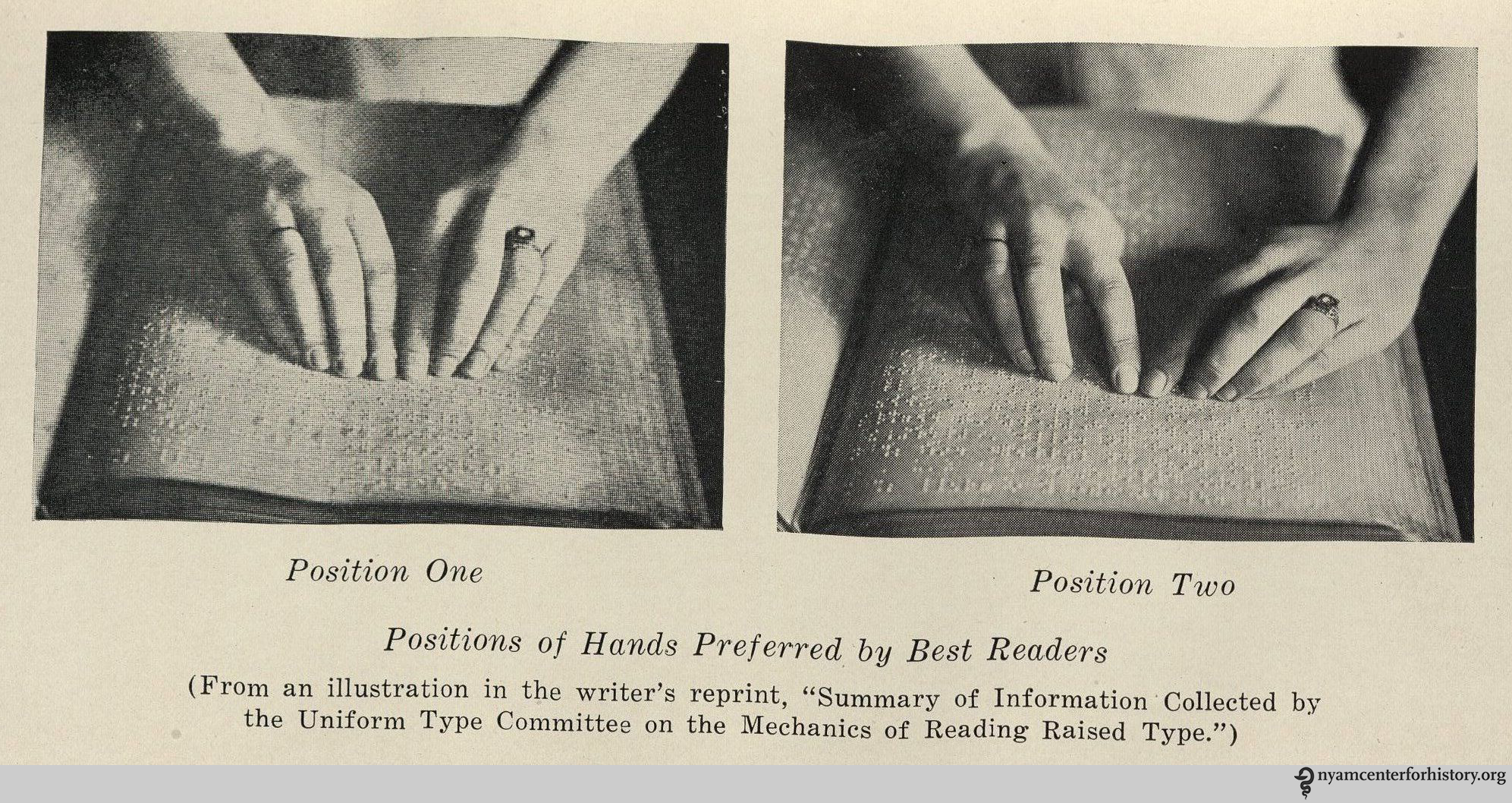
“Position of Hand preferred by Best Readers,” in Kathryn E. Maxfield, The Blind Child and his Reading, opposite p. 54.

“Position of Hand preferred by Best Readers,” in Kathryn E. Maxfield, The Blind Child and His Reading, 1928, opposite p. 54.

A competing English system of encoding text for the blind, using symbols close to legible letters. In William Moon, Light for the Blind, 1879, opposite page 66. Click to enlarge.

A competing English system of encoding text for the blind, using symbols close to legible letters. In William Moon, Light for the Blind, 1879, opposite page 66. Click to enlarge.

Braille’s system eventually forced out its competitors. But as the system spread, problems of local use arose. Although Western European languages all used the Latin alphabet, different languages have slightly different character sets: some added umlauts, accents, and cedillas; others dropped letters; and yet others added non-Latin letters.

Early on, British English Braille and American English Braille diverged. Though British and American printed English share a single alphabet, it is subtly different from French. At the time, the French considered W almost as a “loan letter,” and it was made an addition to the regular alphabet. Thus French Braille followed that order and set up the letters so that X followed V, and W was last. Nineteenth-century British Braille followed the French pattern, while American Braille put the W after V, while using the French Braille character for X. Thus W, X, Y, and Z were differently rendered in British Braille and American Braille, and Braille productions of the two countries were mutually incomprehensible. (A similar situation had developed between Egyptian Arabic and Algerian Arabic.) An 1878 conference sorted it out, enshrining Louis Braille’s original transliterations as the international standard. 2

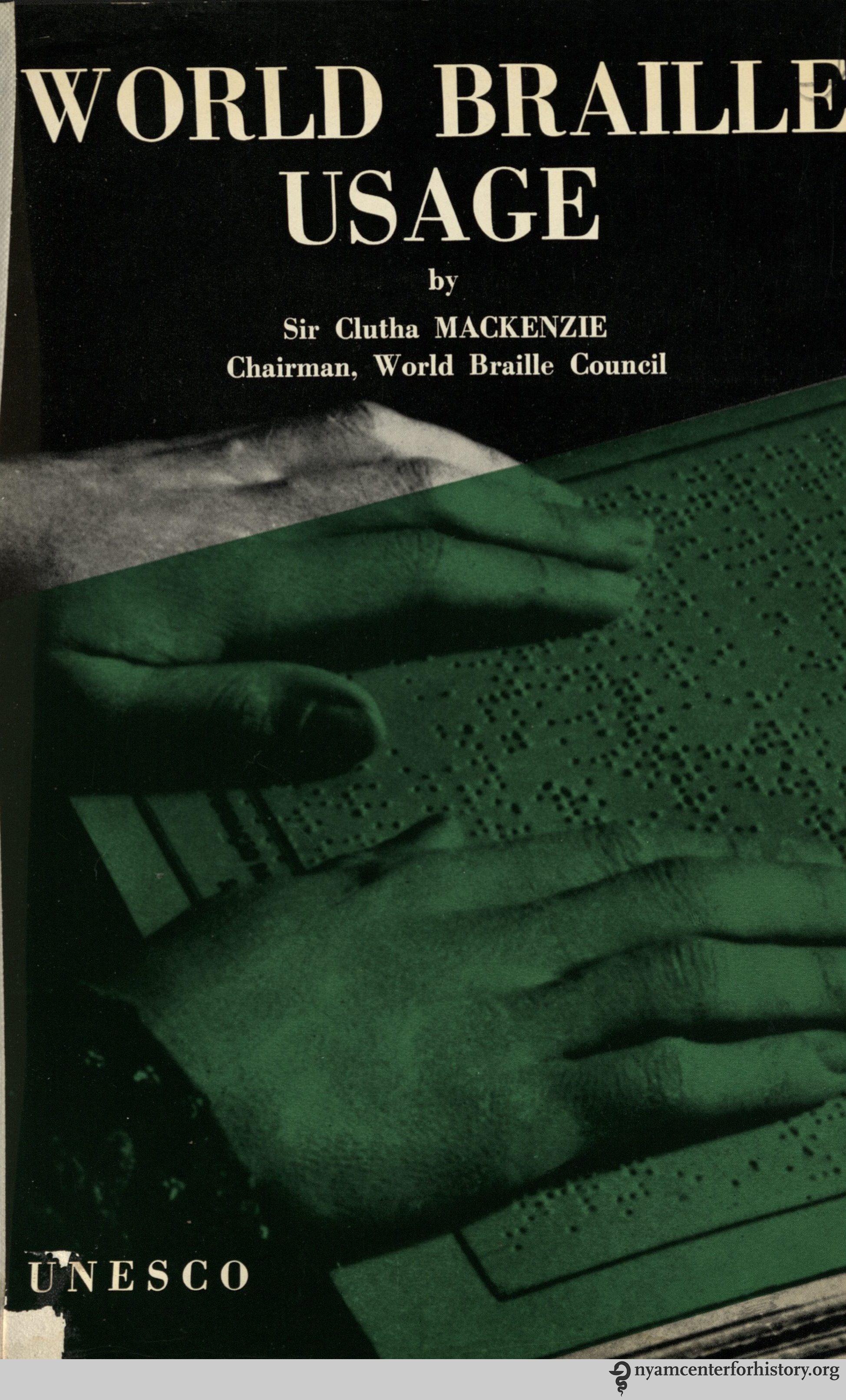
Braille systems extended worldwide, encompassing not only alphabetic systems using Latin, Cyrillic, Arabic, and Hebrew letters, but also ideographic ones. Chinese Braille made the letters represent spoken Chinese words, conveying meaning by a combination of phonetic expression and context. Local usages remained a problem, though, and by the middle of the 20th century, the community of instructors of the blind were looking for “world Braille.” Initially prompted by the proliferation of Braille systems in India, UNESCO organized a meeting in Paris in 1950. The conference led to the establishment of the World Braille Council, which chose Sir Clutha Nantes Mackenzie (1895–1966) as its chair.3 Mackenzie was well known in the Braille world. A New Zealander, blinded at the battle of Gallipoli in World War I, he was director of the New Zealand Institute for the Blind from 1921–1938, and then variously worked in India, the United States, China, Malaysia, Uganda, Egypt, Aden (now Yemen), and Ethiopia on issues of blindness.4

“World Braille Chart,” World Braille Usage, 1953 p. 74. The full chart is four pages, extending to the right to cover Arabic, Hebrew, Devanagari, Swahili, and Indonesian, and down to cover the balance of the Latin alphabet, along with accented letters and a few marks of punctuation, 44 Braille characters in all.

“World Braille Chart,” World Braille Usage, 1953, p. 74. The full chart is four pages, extending to the right to cover Arabic, Hebrew, Devanagari, Swahili, and Indonesian, and down to cover the balance of the Latin alphabet, along with accented letters and a few marks of punctuation, 44 Braille characters in all.

Cover of World Braille Usage, 1953.

Cover of World Braille Usage, 1953.

In 1953 he and the Council issued World Braille Usage: A Survey of Efforts towards Uniformity of Braille Notation (Paris, UNESCO), both a history of the development of Braille and, as its subtitle indicates, a survey of usage and a plea for uniformity. Two further editions of the report—1990 and 2013—expanded greatly the countries and languages covered. The 2013 edition presented different Braille renderings for 133 languages. But by that edition, the authors also acknowledged that the long-sought uniformity was not to be found. Unlike the earlier works, no attempt was made in the book’s organization to show commonalities of Braille letters across languages: instead each language is separately represented. “While there is still interest in universal agreement on characters that are used throughout the world, the emphasis now is on unification within languages, as driven by Braille authorities and other organizations.”5 The work was decentered from Europe: Latin letters were no longer the standard, and, instead of the World Braille Charts that marked the 1953 edition—derived from Louis Braille’s French—the 2013 editions began with a Braille “International Phonetic Alphabet.” Unity proved elusive, when faced with linguistic self-determination.

What is the future of Braille? Text-to-speech technologies have reduced Braille fluency. But technology has also increased Braille usage, with better ways of producing Braille texts, as well as ways of interacting with computers and smart phones.6 Nonetheless, over the last 50 years, American Braille literacy has dropped from 50% in school-age blind children, to about 10%. As a medium of cultural expression, Braille’s future is far from certain. But it’s had a 180-year run, quite remarkable for a technology!

References

1. The Moon System of Embossed Reading, developed by Englishman William Moon (1818–1894), used simplified letters based on the Latin alphabet, but Braille proved better for most.

2. Other complications came as some assigned the Braille letters with the fewest dots to the most common letters—much like Morse code assigns the shortest symbols to the most common letters—and thus both changed Braille’s assignments, and made the new ones language-dependent, as letter frequency differs between languages.

3. See Gabriel Ferrer, The Story of Blindness (Cambridge: Harvard University Press, 1956), pp. 116–17; “International Meeting on Braille Uniformity,” in World Braille Usage (Paris: UNESCO, 1953), pp. 141–45.

4. “Sir Clutha Nantes Mackenzie,” An Encyclopedia of New Zealand 1966, in http://www.teara.govt.nz/en/1966/mackenzie-sir-clutha-nantes, accessed December 18, 2014.

5. World Braille Usage, 3rd (Washington, DC: UNESCO, 2013), p. viii. http://www.perkins.org/assets/downloads/worldbrailleusage/world-braille-usage-third-edition.pdf, accessed December 18, 2014.

6. Ibid., pp. viii-ix.

The Doorstep of America

By Johanna Goldberg, Information Services Librarian

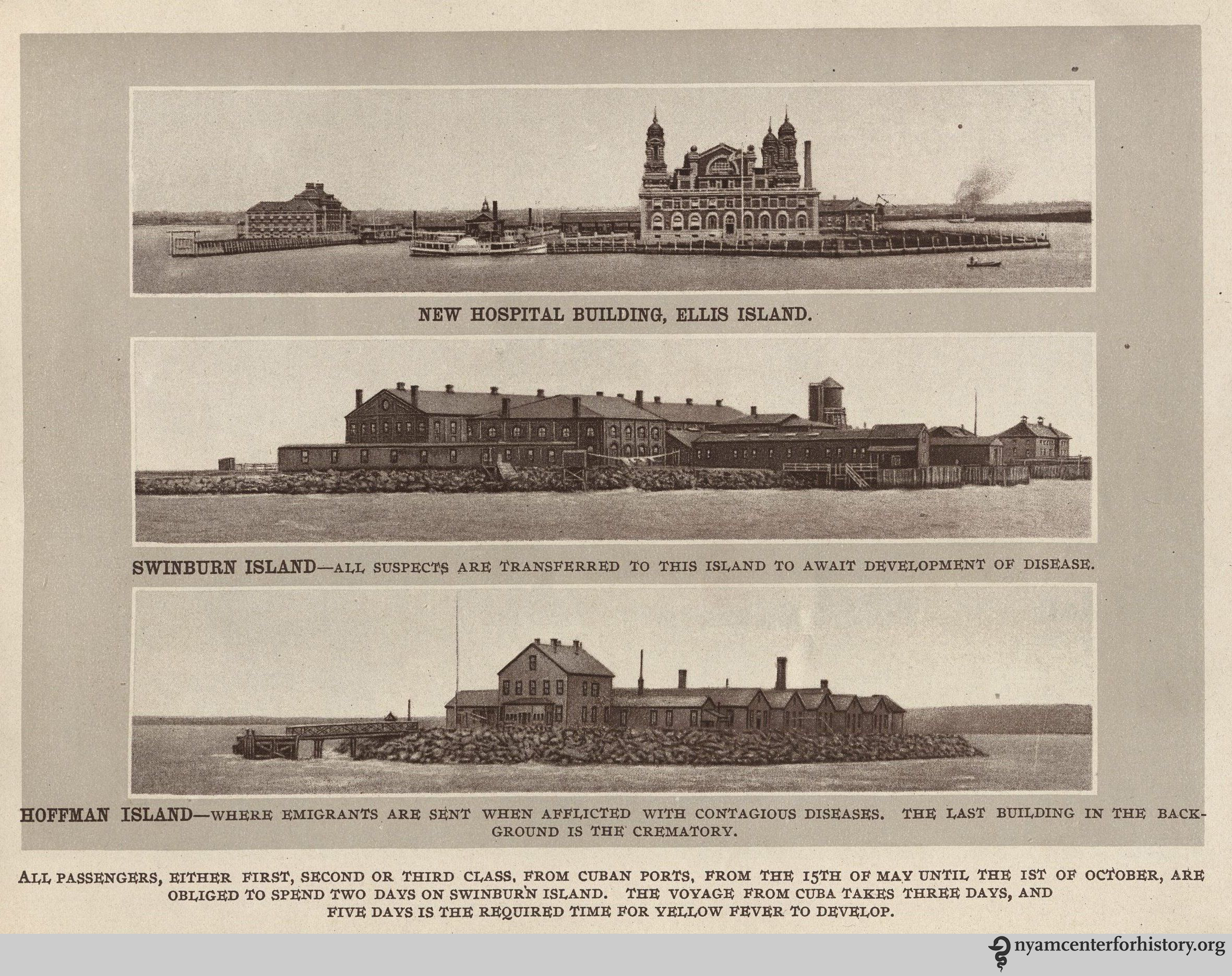
Ellis Island opened on January 1, 1892, a gateway to the United States for 700 immigrants on three steamships that first day.1 By its close in 1924, more than 12 million people had passed through to America.2

Landing at Ellis Island. From Quarantine Sketches. Click to enlarge.

Landing at Ellis Island. From “Quarantine Sketches.” Click to enlarge.

About 10 years after Ellis Island’s opening, The Maltine Company, a patent medicine manufacturer, released “Quarantine Sketches: Glimpses of America’s Threshold,” a pamphlet oddly juxtaposing photographs of Ellis Island with advertising for its products. The full pamphlet can be viewed online:

It begins with the text:

Hundreds of thousands—men, women, and children—pass over, or are detained at, the Doorstep of America every year. In this pamphlet are illustrated the various precautions which the Government takes to insure desirable material for future citizenship.

One such precaution described in the pamphlet was the two-day quarantine of all passengers arriving from Cuba between May 15 and October 1, an effort to prevent the spread of yellow fever in the United States. But for all other steerage passengers, the procedure was different.

The hospital at Ellis Island. From "Quarantine Sketches." Click to enlarge.

The hospital at Ellis Island. From “Quarantine Sketches.” Click to enlarge.

During the “Line Inspection,” United States Public Health Service physicians reviewed each entrant as he or she walked past. According to a 1917 article, the process typically took two to three hours.3 Those who passed the initial review continued on to the Immigration Service, “who take every means to see that he is not an anarchist, bigamist, pauper, criminal, or otherwise unfit.”3 Those who did not pass the inspection, about 15–20% of immigrants in 1917, were routed to the Public Health Service.3

From Mullan EH. "Mental examination of immigrants: Administration and Line Inspection at Ellis Island." Public Health Reports. 1917; 32(20): 734.

From Mullan EH. “Mental examination of immigrants: Administration and Line Inspection at Ellis Island.” Public Health Reports. 1917; 32(20): 734. Click to enlarge.

There, physicians assessed immigrants for “speech, pupil symptoms, goiters, palsies, atrophies, scars, skin lesions, gaits, and other physical signs,” along with “signs and symptoms of mental disease.”3 Some got sent to Ellis Island’s hospital (one of the best in the country), some to a detention room for further assessment.4

Filing past the doctors. From "Quarantine Sketches." Click to enlarge.

Filing past the doctors. From “Quarantine Sketches.” Click to enlarge.

Would-be immigrants could be deported for medical reasons—in 1898, 18% of deportations were medical; this rose to 69% in 1916.4 Even so, most immigrants entered the United States: in 1914, the peak year for deportations, only 2.5% of passengers were forced to return to their country of origin.4

Detention pen for immigrants awaiting deportation. From "Quarantine Sketches." Click to enlarge.

Detention pen for immigrants awaiting deportation. From “Quarantine Sketches.” Click to enlarge.

Today, you can visit Ellis Island without going through a Line Inspection. You can even book a Hard Hat Tour to see the previously closed-to-the-public hospital complex. Can’t make the trip? Take a look at Hyperallergic’s recent Ellis Island hospital portraits.

References

1. Landed on Ellis Island – new immigration buildings opened yesterday. A rosy-cheeked Irish girl the first registered — Room enough for all arrivals — Only railroad people find fault. New York Times. http://query.nytimes.com/mem/archive-free/pdf?res=9802E3D8163BEE33A25751C0A9679C94639ED7CF. Published January 2, 1892. Accessed November 19, 2014.

2. National Parks of New York Harbor Conservancy. Ellis Island. Available at: http://www.nyharborparks.org/visit/elis-faq.html. Accessed November 24, 2014.

3. Mullan EH. Mental examination of immigrants: Administration and Line Inspection at Ellis Island. Public Health Reports. 1917;32(20):733–746. doi:10.2307/4574515. Available at http://www.ncbi.nlm.nih.gov/pmc/articles/PMC1999723/. Accessed November 21, 2014.

4. Yew E. Medical inspection of immigrants at Ellis Island, 1891-1924. Bull N Y Acad Med. 1980;56(5):488–510. Available at: http://www.pubmedcentral.nih.gov/articlerender.fcgi?artid=1805119&tool=pmcentrez&rendertype=abstract. Accessed November 21, 2014.

“FEAR Narcotic Drugs!” The Passage of the Harrison Act

By Anne Garner, Curator, Center for the History of Medicine and Public Health

Ad published in American Druggist and Pharmaceutical Record, volume 36, number 6, March 25, 1900.

Ad published in American Druggist and Pharmaceutical Record, volume 36, number 6, March 25, 1900.

One hundred years ago today, Congress approved the Harrison Narcotics Tax Act. The Act’s passage critically impacted drug policy for the remainder of the century, and the habits of physicians with regard to prescribing and dispensing medicine.

By 1900, use of narcotics was at its peak for both medical and non-medical purposes. Advertisements promoting opium- and cocaine-laden drugs saturated the newspapers; morphine seemed more easily obtainable than alcohol; and widespread sale of drugs and drug paraphernalia gained the attention of medical professionals and private citizens alike.1 State regulations failed to effectively curb distribution and use.2

Physicians and pharmacists recognized they had an image problem. In 1901, the American Pharmaceutical Association formed a committee to study the country’s drug problem and recommended the ban of non-medical drug use.3 The American Medical Association seconded the APA’s pitch and strongly advocated for federal legislation.4

Hamilton Wright. In Morgan, Drugs in America. A Social History 1800-1980.

Dr. Hamilton Wright. In H. Wayne Morgan, Drugs in America. A Social History 1800-1980, p. 99.

This groundswell in support of federal action among local medical professionals also had roots overseas. In the aftermath of the Spanish-American war, the U.S. inherited control of the Philippines, and with it a serious opium problem. An American missionary, Charles Henry Brent, convened a commission in 1903 that recommended narcotics be subject to international control.5 Roosevelt seized on these findings, recognizing an opportunity to improve relations with China. In 1908 he initiated an international conference in Shanghai to talk about the narcotics problem. The President sent Brent and Hamilton Wright, U.S. Opium Commissioner, to represent the U.S.6 Wright, an outspoken, charismatic, and controversial figure, was central to the eventual passage of the Harrison Act.

Passage of a federal law would not be easy. In April of 1910, at Wright’s behest, Representative David Foster proposed a bill banning the non-medical use of opiates, cocaine, chloral hydrate, and cannabis, with harsh penalties for violations. The purchase of patent medicines containing any of these ingredients would require tax stamps and strict record-keeping. Proponents of the bill stressed the link between criminalization and drug use. Despite Wright’s best efforts, the uncompromising Foster bill garnered strong resistance from manufacturers and druggists, and died in Congress.7

A clipping from the library's Healy Collection,  which contains 19th century images, mostly clipped from Frank Leslie’s Illustrated News and Harper’s Weekly. Click to enlarge.

A clipping from the library’s Healy Collection, which contains 19th century images, mostly clipped from Frank Leslie’s Illustrated News and Harper’s Weekly. Click to enlarge.

Two more international conferences followed, at The Hague in 1911 and 1912. Soon after, Wright renewed his commitment to pass federal anti-drug legislation. A new bill proposed by Tammany representative Francis Burton Harrison, again at Wright’s urging, looked very similar to the Foster bill. But after two years of negotiations in Congress, the final legislation incorporated several key compromises. Physicians could dispense medication to patients without record-keeping. Patent medicines with legal amounts of narcotic substances could be sold by mail order or in general stores. Cannabis and chloral hydrate were omitted from regulation. With these concessions, opposition from pharmaceutical and medical professionals softened, agreement was reached, and the bill was signed into law on December 17, 1914.8

The immediate impact of the Act’s passage was confusion. The law offered only vague implementation guidelines. Was it largely a taxation measure, or was it intended to monitor and regulate professional activity? The Act’s major ambiguity related to the authority of physicians to prescribe maintenance doses of narcotics to already-addicted patients. Two 1919 Supreme Court cases clarified the issue. U.S. vs. Doremus found the Harrison Act constitutional and validated the government’s ability to regulate prescription practices for addicts. Webb et al. vs. U.S. denied physicians the power to provide maintenance doses.

The Supreme Court decisions forced addicts to locate new sources. They turned to the black market, where they paid top dollar. Petty crime increased.9 Penalties for violation of the Harrison Act were harsh. In the early years of the law, conviction numbers were relatively low—most years fewer than 500—but by 1919, the year of the Supreme Court rulings, convictions showed a marked upward trend. By 1923, convictions were approaching 5,000 per annum.10

The effect of the legislation on addicts was not viewed unsympathetically by the medical establishment, or even by law enforcement. Even the head of New York’s dope squad, Lieutenant Scherb, seemed concerned: “Many of [the addicts] are doubled up in pain at this very minute and others are running to the police and hospitals to get relief….the suffering among them is really terrible.”11 Beginning in 1919, authorities and public health officials cooperated to develop 44 addiction recovery facilities. These new facilities were short-lived, and most had closed by 1921. Unpopular with the public, many shut down because the lion’s share of patients found themselves back on the streets again.

NYAM holds a scrapbook of newspaper clippings from 1926-1927 illustrating that drug abuse was still front and center in America’s mind well after the Harrison Act’s passage.12 Most articles framed narcotic users as criminals: what was once a legal pastime was now seen as a major threat to American society. One clipping quotes Harvey Waite of the Association for the Prevention of Drug and Narcotic Addicts of Michigan: “Drug addicts are a menace to the peaceful citizens of the United States because from them come the most notorious criminals and lawbreakers.”

From the library's scrapbook of 1926-1927 newspaper clippings. Click to enlarge.

From the library’s scrapbook of 1926-1927 newspaper clippings. Click to enlarge.

The Harrison Act’s most lasting impact was in how it shifted the public conversation from a discussion about regulating a legal activity to eliminating an illegal one. The Act would form the cornerstone of all drug legislation to come, including the Controlled Substance Act of 1970.

References

1. Musto, David F. The American Disease Origins of Narcotic Control. New York: Oxford, 1999. Pp. 3-8.

2. Morgan, H. Wayne. Drugs in America. A Social History 1800-1980. Pp. 101-102.

3. Morgan, p. 102.

4. Musto, p. 56-57.

5. Courtwright, David T. Dark Paradise Opiate Addiction in America before 1940. Cambridge: Harvard, 1982.

6. Morgan, 99-100.

7. Musto, 47-48.

8. Morgan, 106-108 and Musto, 59-61.

9. Hodgson, Barbara. In the Arms of Morpheus. The Tragic History of Laudanum, Morphine, and Patent Medicines. Buffalo: Firefly, 2001. P. 128.

10. Erlin and Spillane, pp. 44-45.

11. The New York Times, April 15, 1915.

12. [Narcotics]. Clippings from newspapers from Dec. 1926-Sept. 1932. [New York?, 1926-1932]. 3 v. Email history@nyam.org to request.

Three Archival Collections Now More Accessible

By Rebecca Pou, Archivist

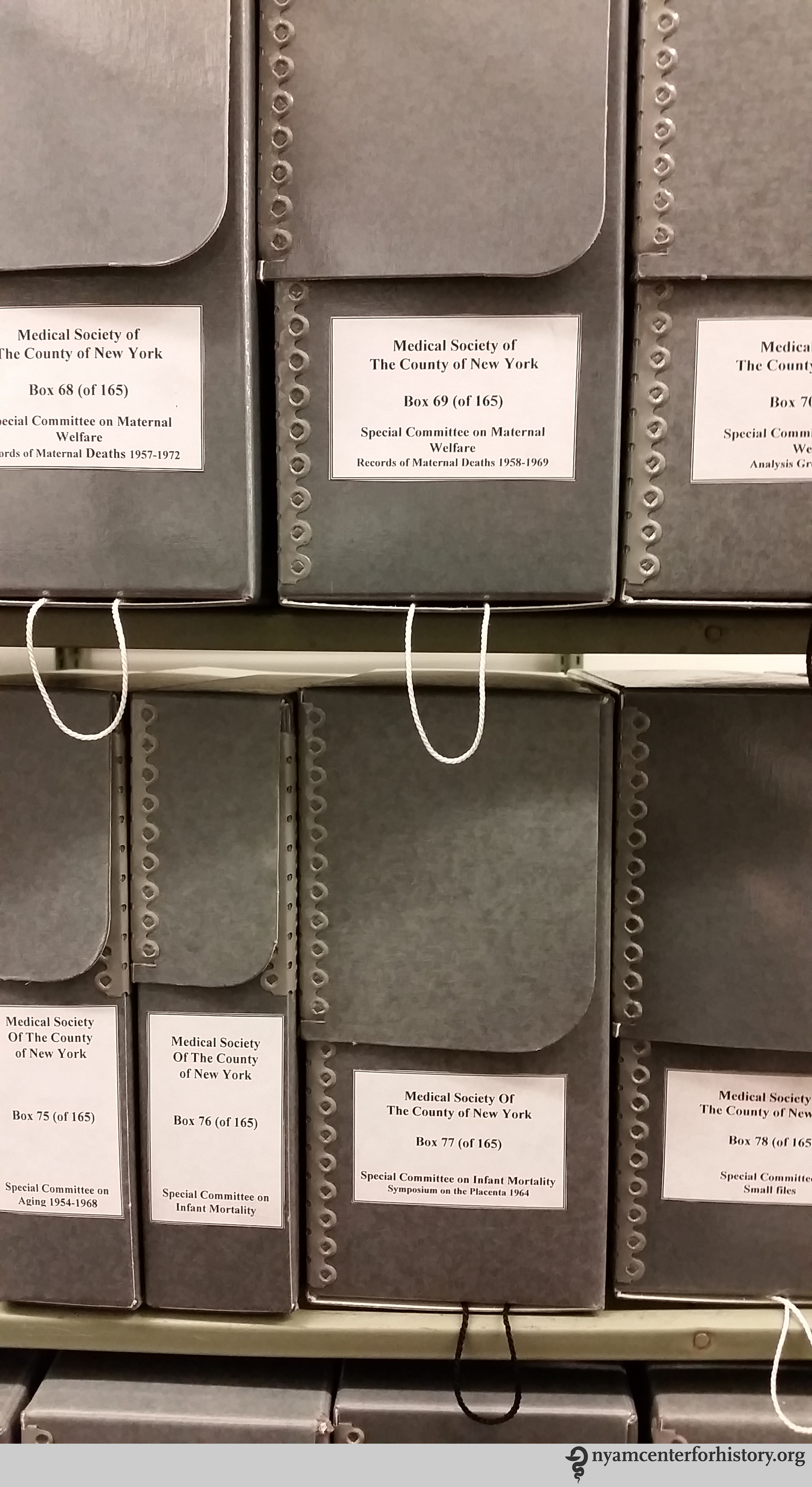
Three of our archival collections are more accessible: their finding aids are available online, both on our Archives and Manuscripts page and in our online catalog.

MedicalSocietyOfTheCountyofNYCollection_watermarkMedical Society of the County of New York Records, 1806-1989
The Medical Society of the County of New York was founded in 1806 and exists today as the New York County Medical Society. At 68 linear feet, it is one of our largest collections. The records document the society’s changing role over time. In its early years, the society regulated the medical profession in Manhattan; by the 20th century, it focused on education and public health concerns.

The Charaka Club Records, 1898-2012
The Charaka Club is a small, New York-based society of doctors interested in the historical, literary, and artistic aspects of medicine. The collection contains minutes, correspondence, publications, talks, and other materials. The talks, some which were not published in the club’s Proceedings, may be especially interesting.

Physicians Relief Fund Records, 1974-2005
The Physicians Relief Fund was a charitable organization that provided financial relief or loans to physicians and their dependents in times of need.

If you are interested in using any of these collections, please contact us at history@nyam.org. More finding aids will become available online in 2015.

From Master Dissector to Accomplished Author: Johann Gottlieb Walter

By Tatyana Pakhladzhyan, Rare Book Cataloger

Johann Gottlieb Walter, born on July 1, 1734, was a German physician and anatomist. He was born in Königsberg, studied medicine there, and received a medical degree at Frankfurt (Oder) in 1757. Walter continued his study in Berlin under Johann Friedrich Meckel the Elder, who appointed Walter prosector in the anatomical theater of the Medico-surgical College in 1760. After Meckel’s death in 1774, Walter became the college’s first professor of anatomy and obstetrics. He also held the chair of anatomy at Frankfurt University. Walter died in Berlin on January 4, 1818.1

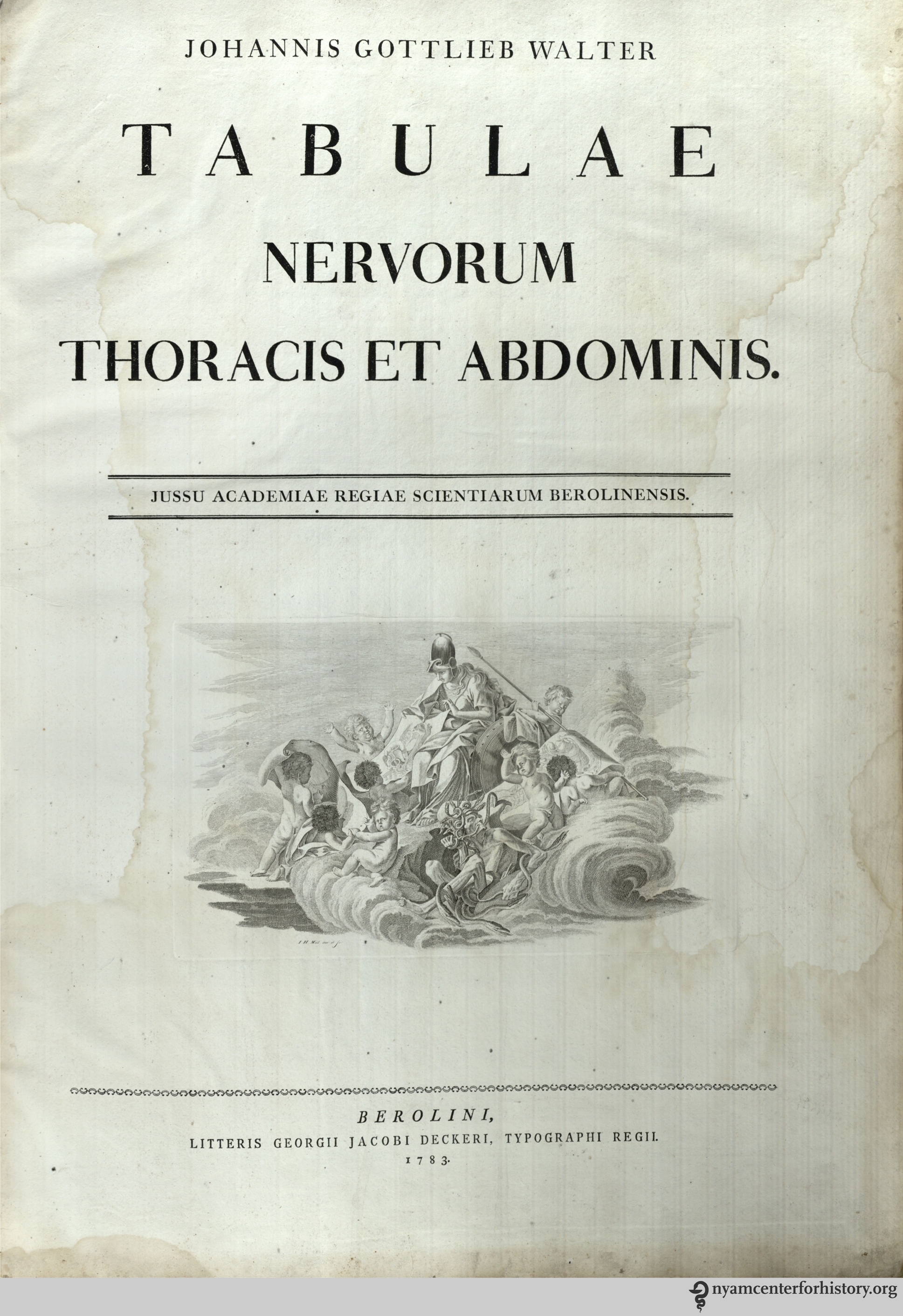
The title page of Tabulae nervorum thoracis et abdominis. Click to enlarge.

The title page of Tabulae nervorum thoracis et abdominis. Click to enlarge.

In 1783, Walter’s Latin-language Tabulae nervorum thoracis et abdominis was published in Berlin. He had reputedly dissected more than 8,000 cadavers, and he maintained a collection of nearly 3,000 anatomical specimens purchased by the King of Prussia for the Anatomical Museum of the University of Berlin.2 Walter’s great skill as a dissector and his ability is well demonstrated in the illustrations of this text.

Walter dedicated this work to William Hunter, John Hunter, and Petrus Camper. William Hunter (1718–1783) was a Scottish anatomist and physician. He was a leading teacher of anatomy, who guided and trained his more famous brother, John (1728-1793), one of the most distinguished scientists and surgeons of his day. The Hunterian Society, founded in 1819, was named in John’s honor, and the Hunterian Museum at the Royal College of Surgeons of England preserves his name and his collection of anatomical specimens. Petrus Camper (1722–1789) was a Dutch physician and anatomist interested in comparative anatomy and paleontology; he also invented the measure of the facial angle. Camper was also a sculptor and a patron of art.

This book contains four numbered plates depicting the nervous system of the thorax and abdomen, each accompanied by an outline drawing. All plates are signed by “I.B.G. Hoppfer, ad nat. delin” and “I.H. Meil, sculp.” “Ad nat. delin” indicates that Hoppfer drew from nature, while “sculp.,” or sculptor, would today mean “engraver.” Plates I-II are dated 1777; plates III- IV were completed in 1778.

This slideshow requires JavaScript.

An English-language translation of Walters’s Tabulae was published in 1804, entitled Plates of the Thoracic and Abdominal Nerves, reduced from the original as published by order of the Royal Academy of Sciences at Berlin. The NYAM library owns this English translation as well.

The 2014 New York State Discretionary Grant for the Conservation and Preservation of Library Research Materials funded the conservation and rehousing of 24 oversize 19th-century German illustrated medical atlases, including Johannis Gottlieb Walter Tabulae nervorum thoracis et abdominis. Although all of the atlas volumes were represented in the library’s card catalog, they had not been entered into NYAM’s online catalog prior to the grant’s completion.

References

1. Julius Pagel: Walter, Johann Gottlieb. In: Allgemeine Deutsche Biographie (ADB). Band 41, Duncker & Humblot, Leipzig 1896, p. 26.

2. Bibliographic note in NYAM’s copy of Tabulae nervorum thoracis et abdominis.

Canapé Parade

By Johanna Goldberg, Information Services Librarian

Thanksgiving means many things: spending time with family, reflecting on what you’re thankful for, looking back at American history. But the essence of the holiday can be stated in three words: food, football, and parades.

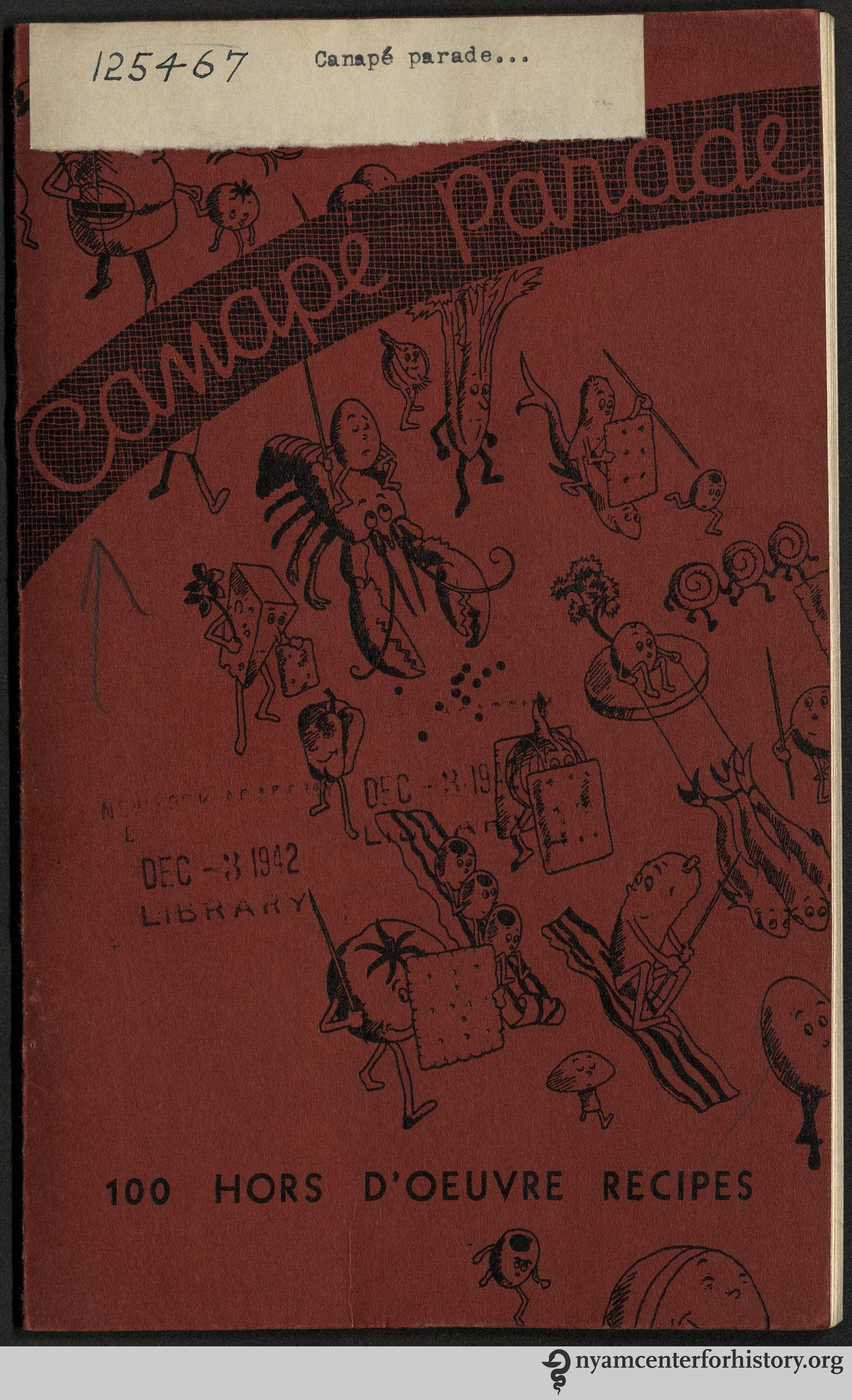
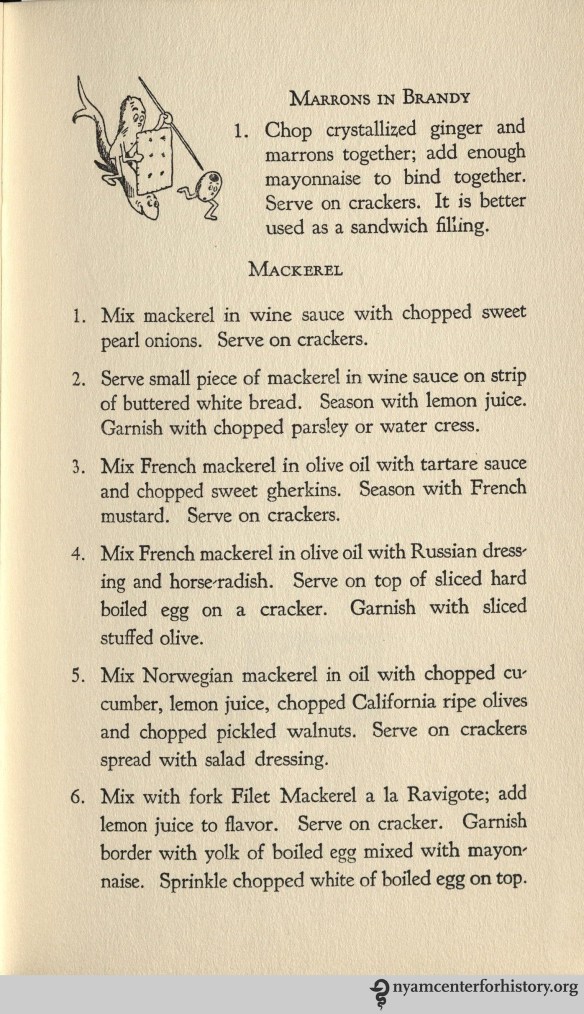
Our collection contains a whimsical pamphlet that combines two of the three (sorry, football fans): “Canapé Parade: 100 Hors d’Oeuvre Recipes,” published in 1932. (We have the fourth printing, from November of that year.)

The cover of Canapé Parade. Click to enlarge.

The cover of Canapé Parade.

The personality-filled canapés from the cover reappear throughout the pamphlet, illustrating recipes like bloater paste, Japanese crabmeat, herring, and marrons in brandy. Unfortunately, the pamphlet does not credit the illustrator.

None of the recipes specify ingredient amounts, “as the consistency and proportion of ingredients used will vary according to the individual palate.” The recipes take a semi-homemade approach, adding minimal fresh items to packaged food before spreading on crackers. The cookbook also advises that “the majority of these hors d’oeuvres also make excellent sandwich fillings to be served between thinly sliced bread at afternoon tea or buffet suppers.”

Enjoy the recipes on parade below (click to enlarge and view the gallery):

For more traditional Thanksgiving recipes, read Thanksgiving, 1914 Style.

Tobaccoism: “Rapidity in the Spread of a Disease-Producing Vice”

By Danielle Aloia, Special Projects Librarian

SmokeoutLogoThe third Thursday of November was designated the Great American Smokeout back in 1976. Since then it has gained national attention and helped precipitate smoke-free policies in public spaces and workplaces. It is a day to commit to quitting smoking with the theory that if you can last one day without lighting up, then you can last a lifetime.

Efforts to end tobacco consumption have a long history. Cigarettes grew in popularity during the 1850s, in tandem with the rise of Antitobaccoism movement.1 This movement was taken on by Seventh-day Adventists, whose most outspoken figure was Dr. John Harvey Kellogg.

John Harvey Kellogg, MD (1852– 1943). E. E. Doty, photographer. Source. Prints and Photographs Collection, History of Medicine Division, National Library of Medicine.

John Harvey Kellogg, MD (1852– 1943). E. E. Doty, photographer. Source. Prints and Photographs Collection, History of Medicine Division, National Library of Medicine.

The Adventists believed in a healthful lifestyle, including abstinence from coffee, alcohol, tea, and tobacco. Kellogg termed this “biologic living.”2 He and his compatriots established the American Health and Temperance Association in 1878 to expose the health risks of tobacco and other stimulants. Later, he became a member of the Committee of Fifty to Study the Tobacco Problem, presumably established after the First World War, when a “condition known as ‘soldiers’ heart’” affected British veterans.3 Kellogg also established a hydrotherapy sanitarium and wrote numerous books on healthful living. Today he is best remembered as the co-founder of Kellogg’s, a cereal company that grew out of his sanitarium’s dietary work.

Kellogg wrote Tobaccoism, or How Tobacco Kills in 1922, citing prior studies to document the ill-effects of tobacco on the biological system. This exhaustive account may be the result of his work on the Committee. Tobaccoism likely led Utah Senator Reed Smoot to introduce a bill into Congress including tobacco regulation into the scope of the Food and Drug Act of 1929, an effort that ultimately failed.4

Included in the book are some horrific images of the effects of tobacco on the human body. Unfortunately, the images are not sourced and it is hard to determine their derivation. In the text for the section “Damage Tobacco Does to the Liver,” Kellogg references, among others, a Graziani who showed “tobacco causes changes in the liver, particularly hemorrhages and areas of necrosis.” Part of the text of “Tobacco Cancer” reads: “Dr. Bloodgood, Professor of Surgery in Johns Hopkins University, in the study of 200 cases of cancer of the lip, finds smoking a common factor.”

Kellogg, John Harvey. Tobaccoism or How Tobacco Kills. Battle Creek, MI: Modern Medicine Publishing; 1922.

Kellogg, John Harvey. Tobaccoism, or How Tobacco Kills. Battle Creek, MI: Modern Medicine Publishing; 1922.

Kellogg gave figures for the growth in the tobacco habit by manufactured cigarettes per year, via the Census Bureau (the large increase in production from 1910 to 1920 has a lot to do with the First World War, when soldiers received unrestricted cigarette rations):

1902—2,971,360,447
1906—4,511,997,137
1910—8,644,557,090
1920—62,000,000,000

According to Kellogg, this meant there were 460 cigarettes for every man, woman, and child, a disturbing “rapidity in the spread of a disease-producing vice.”5 He wrote Tobaccoism in part to slow this growth by making sure people understood that tobacco was harmful and its effects irreversible.

Even with a long history of Antitobaccoism, smoking remains the leading cause of preventable death in the U.S., with 443,000 deaths annually.6 In 2011, there were over 290 billion cigarettes sold.7

There’s no better time to quit smoking than right now.

References

1. Reducing Tobacco Use. Centers for Disease Control and Prevention; 2000. Available at: http://www.cdc.gov/tobacco/data_statistics/sgr/2000/complete_report/pdfs/chapter2.pdf.

2. Marino RV. Tobaccoism revisited. J Am Osteopath Assoc 2003;103(3):120-121.

3 Lock, S. (ed.), Reynolds, L.A. (ed.), Tansey, E.M. (ed.). Ashes to Ashes: The History of Smoking and Health. Amsterdam: Rodopi; 1998.

4. Fee, Elizabeth, Brown, Theodore M. John Harvey Kellogg, MD: Health Reformer and Antismoking Crusader. American journal of public health 2002;92(6):935. Available at: http://www.ncbi.nlm.nih.gov/pmc/articles/PMC1447485/pdf/0920935.pdf.

5. Kellogg, John Harvey. Tobaccoism or How Tobacco Kills. Battle Creek, MI: Modern Medicine Publishing; 1922.

6. Broken Promises to Our Children: The 1998 State Tobacco Settlement Fifteen Years Later. Washington, DC: Tobacco-Free Kids; 2013:87. Available at: http://www.tobaccofreekids.org/content/what_we_do/state_local_issues/settlement/FY2014/StateSettlementReport_FY2014.pdf.

7. U.S. Centers for Disease Control and Prevention. Economic Facts About U.S. Tobacco Production and Use. Smoking and Tobacco Use 2014. Available at: http://www.cdc.gov/tobacco/data_statistics/fact_sheets/economics/econ_facts/index.htm#sales.