History Night Presentations Announced

The New York Academy of Medicine’s Section on History of Medicine will hold the “Fourth Annual History of Medicine Night – Part One: Spotlight on New York” on February 6 from 6:00 pm–7:30 pm at NYAM, 1216 Fifth Avenue at the corner of 103rd Street. Register to attend here. A second evening of presentations is being planned for spring.
RBR deskThe night will feature the following presentations, as described by the speakers:

“Psychiatric Criminology in the Eugenic Era: The New York Police Psychopathic Laboratory, 1915-1929”
Sara Bergstresser, M.P.H., Ph.D., Columbia University, Bioethics

“First, I explore the historical background of North American and European psychiatry, criminology, and eugenics in the nineteenth century, including threads of early convergence. Next, I examine the development of eugenic psychiatry and its intersections with eugenic criminology, with a particular emphasis on New York State in the early twentieth century. I then present a case study from that time period, which is based primarily on materials from the archives of the New York Police Psychopathic Laboratory. I go on to argue that in this case the workings of psychiatric criminology were more eclectic and uncertain than they may otherwise appear based on broad descriptions of the eugenic era.”

“Not for Self but Others: The Presbyterian Hospital Goes to War”
Pascal J. de Caprariis, M.D., Lutheran Medical Center

“On March 11, 1940 the U.S. Surgeon General reached out to Presbyterian Hospital’s medical board president to develop a military hospital to support US troops in an eventual war. Structured to receive patients from combat areas and follow American troops throughout war, it was to provide complex medical and surgical care over the course of three years and two months abroad.”

“The Cancer Education Campaigns in Progressive Era New York City: The Role of Women”
Elaine Schattner, M.A., M.D., F.A.C.P., Weill Cornell Medical College

“At the start of the 20th century, myths about cancer’s causes and treatments were widespread. Fear of the disease—and of inept surgeons—was rampant. Many afflicted fell prey to hoaxers selling bogus salves, patent medicines and painless “cures.” In April 1913, a prominent New York City surgeon and gynecologist, Dr. Clement Cleveland, invited a group of well-to-do ladies, bankers and physicians to his home. They heard from statisticians and public health specialists, and considered what might be done to reduce cancer’s mounting toll. The group met formally again in June 1913 at the Harvard Club in New York City. They formed the American Society for the Control of Cancer (ASCC), which three decades later became the American Cancer Society.”

“A Diagnosis of Philanthropy: Carnegie and Rockefeller and the Medical Profession”
Catherine (Katia) Sokoloff, Sarah Lawrence College

“Through exploring the evolving interests of Andrew Carnegie and John D. Rockefeller during the Progressive Era, this paper unearths how these philanthropists and their advisers facilitated and funded the writing of the infamous Flexner Report in 1910. The report, also called Bulletin Number Four, exposed the inadequacies of medical schools and catalyzed dramatic education reforms.”

“Organizing Orthopaedic Societies in New York City in the 1880s: The New York Orthopaedic Society, the New York Academy of Medicine Section of Orthopaedic Surgery and the American Orthopaedic Association”
Jonathan B. Ticker, M.D., College of Physicians and Surgeons, Columbia University

“After the seventh general meeting of the New York Orthopaedic Society (NYOS) on January 4, 1886, steps were taken to merge NYOS into a section of the New York Academy of Medicine (NYAM). Thus, on January 29, 1886, NYOS adjourned and the NYAM Section of Orthopaedic Surgery began. On January 29th, 1887, the chairman of the Section and 15 others “[met] and [discussed] the organization of a national orthopaedic society.” This led to the founding of the American Orthopaedic Association (AOA).”

History Night: Call for Papers

RBR desk

The New York Academy of Medicine’s Section on History of Medicine is pleased to announce its Annual History of Medicine night to be held on February 6, 2014 from 6:00 pm–7:30 pm. The event will take place at the Academy, located at 1216 Fifth Avenue at the corner of 103rd Street.

We are inviting all those interested in presenting to submit a narrative on a historical subject relating to medicine for consideration.

Note the following submission requirements:

  • Applications must include an abstract, with a  500-word maximum, and this form
  • Abstracts must be submitted no later than January 15, 2014

The time allotted for presentation is 12 minutes with an additional 3 minutes for questions/discussion. Papers selected for presentation will be determined by a panel of History of Medicine Section members.

Abstracts should be submitted electronically to Donna Fingerhut at dfingerhut@nyam.org.  Questions may be directed to Donna via email or phone (212-419-3645).

A Ceroplast at NYAM

In today’s guest post, the artist Sigrid Sarda tells us how historical collections inform her work. Visitors to our Festival of Medical History & the Arts may have seen her moulages in person, and be sure to visit her blog for information on exhibitions and more of her fabulous work.

Earlier this year, I began researching the collections at the Center for the History of Medicine and Public Health. I am an artist/ceroplast, which means wax modeler. The resources I discovered at the Center have been of great inspiration to my work.

Sigrid Sarda, "MRSA," 2013. Wax, Human Hair, Life-size.

Sigrid Sarda, “MRSA,” 2013. Wax, Human Hair, Life-size.

First, let me tell you about myself. For over 30 years I was a painter. Due to the death of my father and the psychological aftermath I experienced, I ceased painting. In its place, the obsession of the wax figure came into being. Since I was completely self-taught and only worked in this medium for a few years, it was necessary to learn more about its technique and history. Having always had a fascination with religious icons, the body (particularly skin), diseases, and later on death, as well as incorporating human remains such as teeth, bone, and hair in my work, I realized I needed a better understanding of the aesthetics and techniques of wax used in creating these life-size figures and medical moulages.

While exhibiting a waxwork in New York City, I met up with Lisa O’Sullivan, director of the Center for the History of Medicine and Public Health at NYAM, and Arlene Shaner, reference librarian and acting curator for historical collections. After discussing the exhibited piece and my ambitions working in wax Dr. O’Sullivan invited me to explore NYAM’s collections. This was an opportunity not to be missed!

Upon arriving at NYAM, I was directed to the 3rd floor of the massive Romanesque building where Arlene welcomed me. Delightful, funny, and knowledgeable, she made me immediately comfortable in the surroundings of the library and excited to view the books housed in the collection. She checked out my waxwork, we geeked out on ceroplasts, and spoke about other artists whose work dealt with death such as Joyce Cutler-Shaw.

On my second visit, filled with anticipation, I found myself greeted by marvelous books and an actual anatomical wax moulage of a diseased infant. After the initial perusal of my work, Arlene knew what was needed for my research: anatomical images and techniques, and had the books waiting for me in the formidable reading room. As a bonus she brought out the works of M. Gautier D’Agoty, the 18th-century French artist and anatomical illustrator. I pored over both heavily illustrated and non-illustrated books for hours, amassing information for future waxworks. There is truly nothing like the feel of a beautiful book in your hands. The library has become quite the addiction, what with the wonderful staff and superb collection!

Below are images from D’Agoty and various books consulted at NYAM, and above is one of my wax moulages.

“A Passionate Statistician”: Florence Nightingale and the Numbers Game

In conjunction with its exhibit, “Extraordinary Women in Science & Medicine: Four Centuries of Achievement,” the Grolier Club is holding a symposium on October 26, 2013, to which all are welcome. The exhibition and symposium explore the contributions of 32 women, one being Florence Nightingale, to science and medicine. The exhibition features NYAM’s copy of one of Nightingale’s statistical charts. In today’s blog post, Natasha McEnroe, director of London’s Florence Nightingale Museum, explains their significance.

Florence Nightingale. Reproduced by courtesy of the Florence Nightingale Museum.

Florence Nightingale. Reproduced by courtesy of the Florence Nightingale Museum.

The Victorians loved nothing better than to measure and classify, trying to discover natural laws through the data they recorded, and Florence Nightingale (1820-1910) was no exception in sharing this general enthusiasm. Having gained celebrity status from her nursing work at the infamous Barracks Hospital at Scutari, the British base hospital in the Crimean War (1853-1856), Nightingale returned to England with her health permanently broken down. Determined that the appalling treatment of the soldiers during the war should not be repeated, she spent the rest of her life conducting a political campaign for health reform from her bedroom. One of the ways her campaigning was groundbreaking was in the use of statistics.

Reproduced by courtesy of the Florence Nightingale Museum.

St Thomas’ Hospital, London, home of the Nightingale Training School for nurses. Reproduced courtesy of the Florence Nightingale Museum.

Nightingale’s love of mathematics was apparent from an early age and was an interest  encouraged by her father, who took the responsibility of educating his daughters into his own hands. Her parents’ social circle brought the young Nightingale into contact with many of the most brilliant minds of the age, including Charles Babbage, whose own passion for numbers (and not a little pedantry) is shown in a letter to Alfred Tennyson in response to the poem The Vision of Sin:

‘In your otherwise beautiful poem, one verse reads,
Every moment dies a man,
Every moment one is born.

…If this were true, the population of the world would be at a standstill. In truth, the rate of birth is slightly in excess of that of death. I would suggest that the next version of your poem should read:
Every moment dies a man,
Every moment 1 1/16 is born.
Strictly speaking, the actual figure is so long I cannot get it into a line, but I believe the figure 1 1/16 will be sufficiently accurate for poetry.’

Just weeks after her return from the Crimean War in 1856, Nightingale secured a Royal Commission from Queen Victoria investigating the health of the British Army. Nightingale herself was involved in every step of the Commission’s investigations, working with the statistician William Farr to illustrate graphically that more British troops died of disease during the war than in battle. Farr encouraged Nightingale to compare statistics on mortality rates of civilians with that of soldiers, showing that whether at war or at home, soldiers demonstrated a higher mortality rate.  He wrote to Nightingale, “This I know…Numbers teach us whether the world is ill or well governed.”  Nightingale pioneered what is now called evidence-based healthcare and in 1858 she was the first woman elected to the Royal Statistical Society.

Chart from Florence Nightingale’s A contribution to the sanitary history of the British army during the late war with Russia (London, 1859)

Chart from NYAM’s copy of Florence Nightingale’s A contribution to the sanitary history of the British army during the late war with Russia (London, 1859).

A devout woman, Nightingale saw statistics as having a spiritual aspect as well as being the most important science, and believed statistics helped us to understand God’s word. Influenced by the ethos of Victorian vital statistics, her greatest legacy can be seen in improved public health, reformed nursing education, and in her innovative polar area graphs and other work in statistics. In Nightingale, this most eminent of Victorians, we can see the combination of the two great passions of her age—a compulsion to classify and a desire to improve by reform. What made Nightingale remarkable were the personal qualities of fierce intelligence and energy that enabled her to pursue these passions with the immense determination for which she was famed.

A Renaissance Man at Work: Volcher Coiter’s “Externarum et internarum principalium humani corporis” of 1573: Guest post by Morbid Anatomy
Coiter2


Coiter10

One under-seen and fascinating book to be found in the NYAM rare book collection is Externarum et internarum principalium humani corporis partium tabulae published by Dutch Renaissance man Volcher Coiter (1534–1576) in 1573. Not only was Coiter renowned as an anatomist, surgeon, and physician accomplished in the fields of physiology, ornithology, and embryology; not only did he establish the study of comparative osteology and describe cerebrospinal meningitis before any of his peers; he was also an artist, and signed many of the finely drawn copper engravings in his books, including those you see here.


All images are my own, photographed at the New York Academy of Medicine, save the painted portrait of Coiter, which was sourced here. The caption, attributed to Dorothy M. Schullian, reads: “Coiter’s portrait (1575) in oils, attributed to Nicolas Neufchatel and representing him demonstrating the muscles of the arm, with the écorché he had constructed on his left and a shelf of medical classics behind him, is preserved in the Germanisches Nationalmuseum, at Nuremberg; there are later portraits at Weimar and Amsterdam.” (source for caption here)

Sources: Lessico Volcher CoiterWikipedia

This post was written by Joanna Ebenstein of the Morbid Anatomy blog, library and event series; click here to find out more.

William Cowper’s Myotomia reformata: or an anatomical treatise on the muscles of the human body, Guest Post by Morbid Anatomy

Cowper01

William Cowper (c. 1666–1709) was a British surgeon and anatomist best known today for describing “Cowper’s Gland,” part of the genito-urinary system. He has also been described by at least one scholar as “the first of the surgeon-scientists of Great Britain… the first to bring the power of the experimental method to bear on practical surgical problems… [anticipating] the celebrated Hunterian school of surgery by more than half a century.” (In the last half of the 18th century, famous London surgeon John Hunter made his reputation in part by advocating for the scientific method in medicine.)

Cowper02

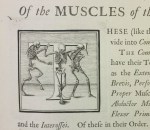
Cowper’s book Myotomia reformata: or an anatomical treatise on the muscles of the human body, first published in 1694 (NYAM’s copy is from 1724), is filled with grimly literal anatomical and dissection-themed initial capital letters, and charming, if somewhat rough, illustrations.

This post was written by Joanna Ebenstein of the Morbid Anatomy blog, library and event series; click here to find out more.

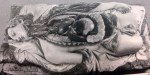
17th Century Anatomical Striptease: Guest Post by Morbid Anatomy

Tab VI

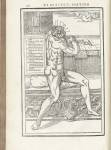
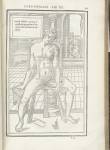
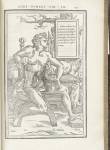
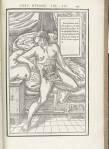
Another series of most wonderful and enigmatic anatomical illustrations in the New York Academy of Medicine historical library collections are to be found in De humani corporis fabrica libri decem, tabulis XCIIX aeri incisis … exornati … Opus posthumum and Tabulae anatomicae (Venice, 1627) by Adriaan van de Spiegel (1578–1625), Giulio Cesare Casserio (1533–1616), and Daniel Bucretius (d. 1631). In this complex effort, van de Spiegel produced the text; Casserio commissioned the plates (for his own unrealized work); and the whole was published through the editorial offices of Bucretius, after both van de Spiegel and Casserio had died.

Tab XVI

These illustrations are described beautifully by Michael Sappol in the exhibition text for his National Library of Medicine exhibition  “Dream Anatomy” where he placed them under the header “Show-off Cadavers” and described them thusly:

The emergence of anatomical illustration in the period 1500-1750 coincided with a larger phenomenon, a new definition of personhood that was performed at court, in salons, coffeehouses, country estates, theaters, marketplaces, and at court. Inevitably anatomists took up, commented on, and played with, the contemporary obsession with self-fashioning and individuality—it was an era of manners, wit, foppishness, and coquetry. In the works of Giulio Casserio, John Browne and Pietro da Cortona, the illustrated anatomy book is a stage featuring posing, prancing cadavers. Animated with an exuberant vitality, the corpses perform an anatomical show for the reader’s gaze.

The images in this post are from the Tabulae anatomicae and show the anatomized body engaging in a sort of exuberant anatomical striptease. All images are drawn from the National Library of Medicine’s brilliant online exhibition Dream Anatomy; click on the exhibition name to see more!

Tab XV

Michael Sappol will be both speaking and screening films from the National Library of Medicine as part of the October 5th NYAM Festival of Medical History & the Arts; more on that here. Hope very much to see you there!

This post was written by Joanna Ebenstein of the Morbid Anatomy blog, library and event series; click here to find out more.

Item of the Month: “Better Babies” on Things Which Are Bad For All Babies

By Johanna Goldberg, Information Services Librarian

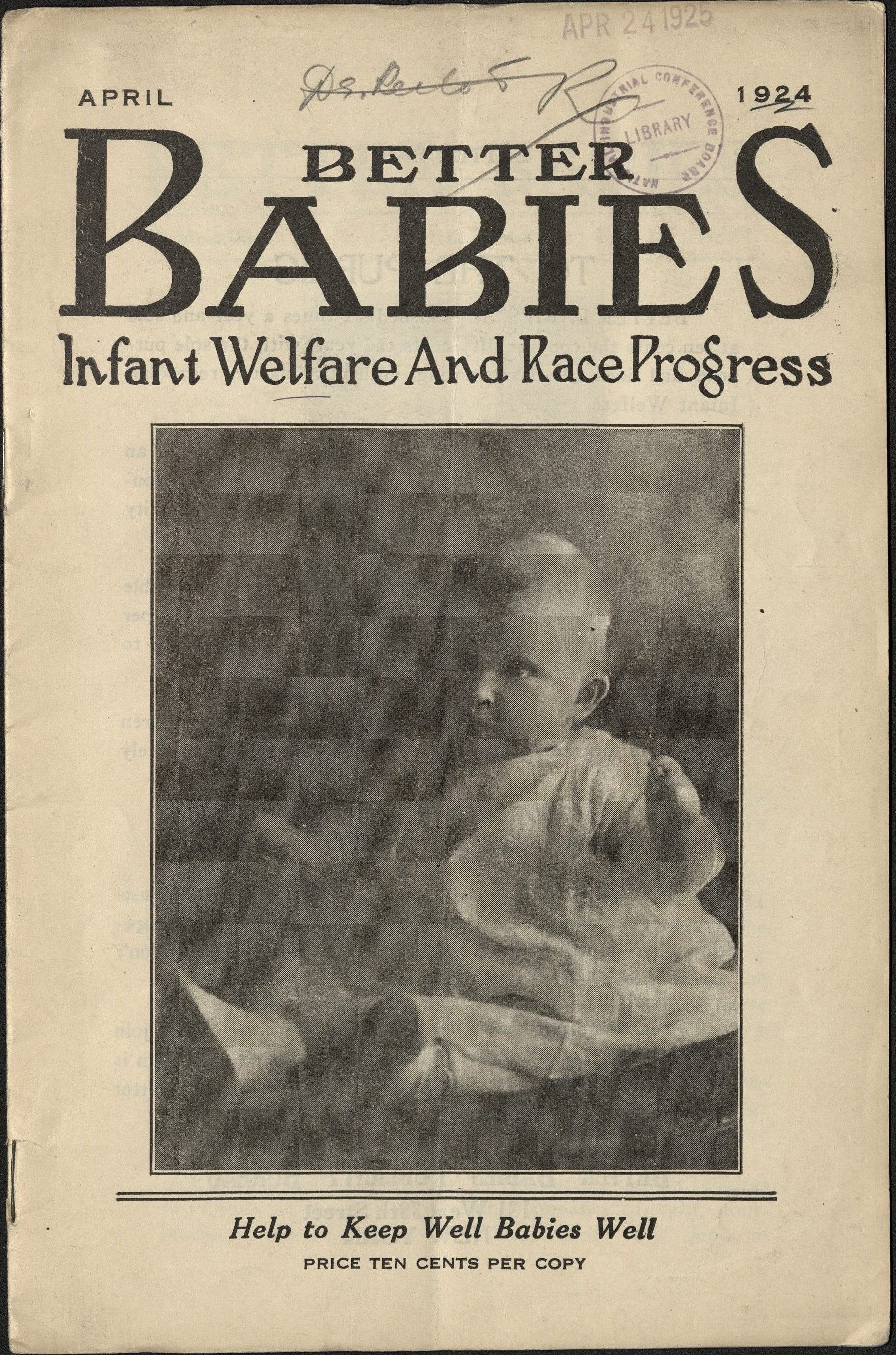
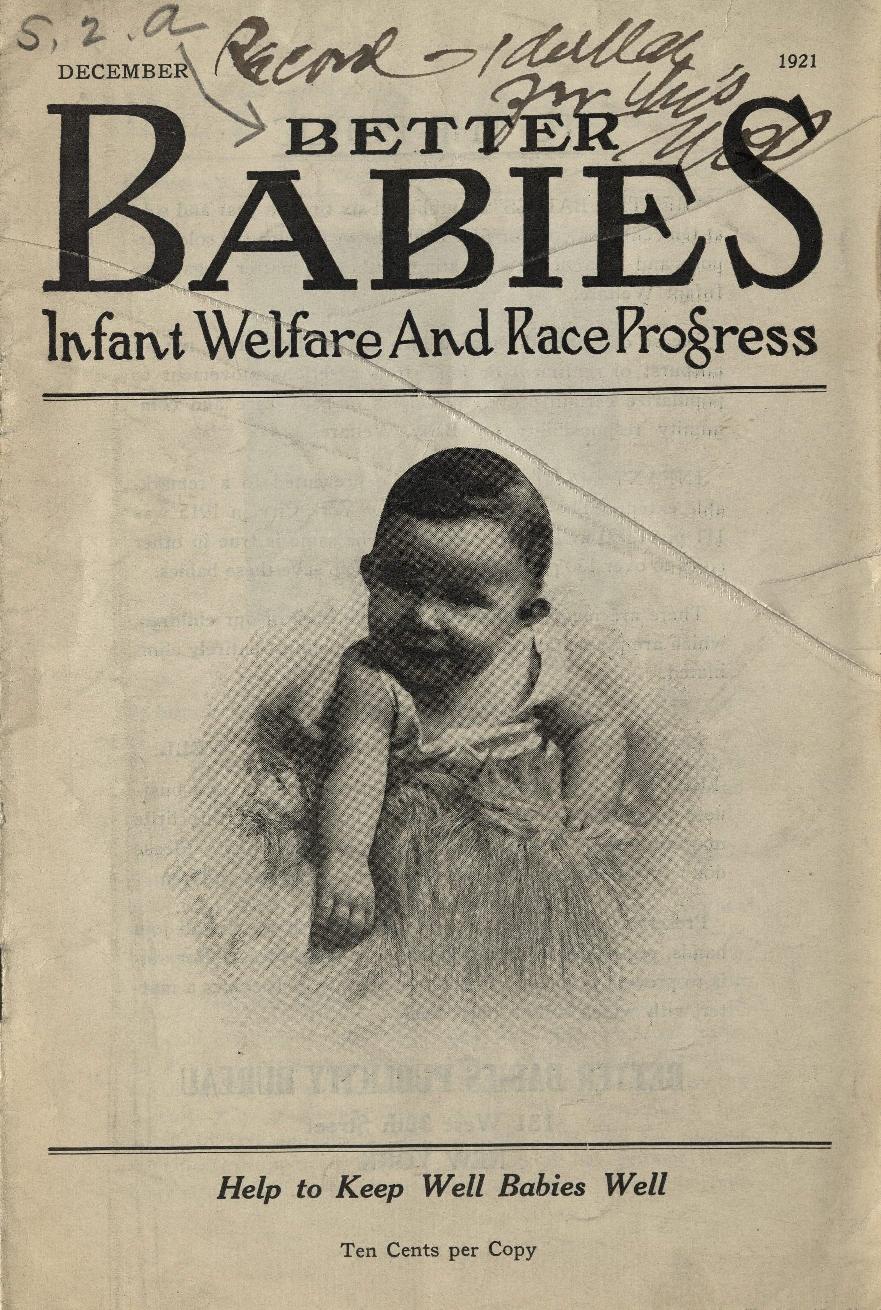
When in the stacks recently, I came across two slim issues of “Better Babies: Infant Welfare and Race Progress,” one published in December 1921 and the other in April 1924.

BetterBabies_Cover-1921

BetterBabies_Cover-1924

While the title suggests an interest in eugenics, the two issues in our collection focus solely on ways to keep babies healthy, including articles on clothes for children, playgrounds and public health, the benefits of breast feeding, and disease prevention.

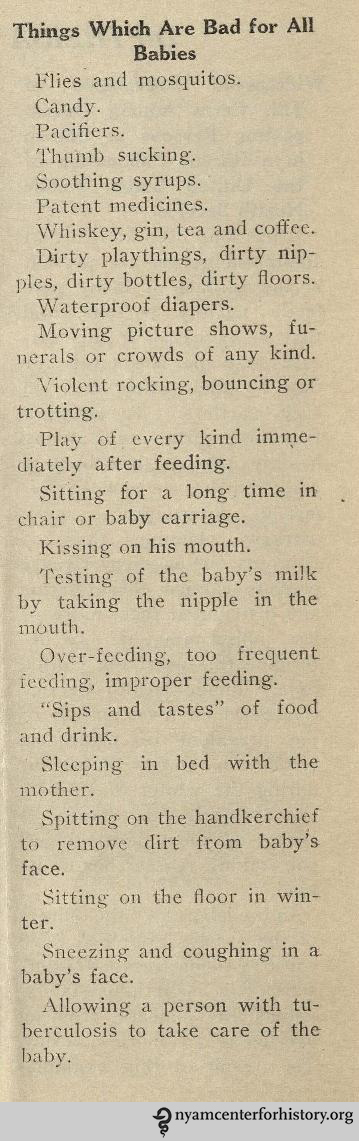
This last topic inspired the following list, published in the 1924 issue. As it is (coincidentally) Baby Safety Month, it seems appropriate to share it.

Which piece of advice is your favorite?

16th Century Anatomy and Pornography? De dissectione partium corporis humani libri tres, Charles Estienne, 1545; Guest Post by Morbid Anatomy

Estienne5caraglio


The first image above and those in the gallery below are illustrations from De dissectione partium corporis humani libri tres [Three Books on the Dissection of the Parts of the Human Body], published by Charles Estienne in Paris in 1545. Although this book came out 2 years after Andreas Vesalius’ landmark Fabrica, Charles Estienne’s Dissection was actually completed in 1539, so it is considered a work of pre-Vesalian anatomy.

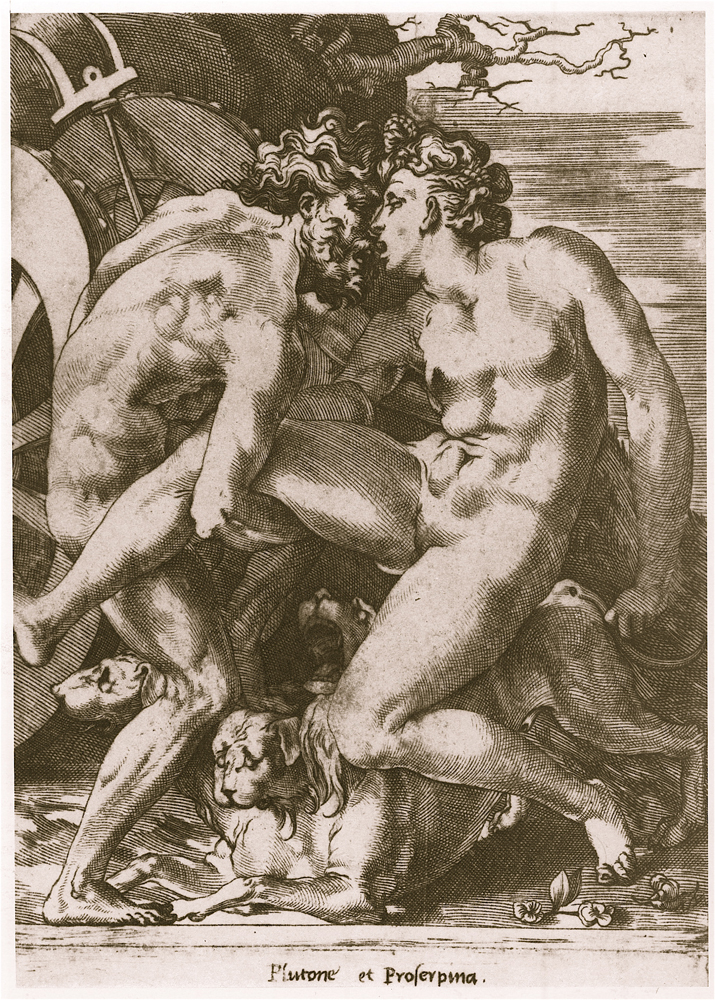
Not only are these illustrations delightfully surreal, they also have a very surprising back story, creating an unlikely link between pornography and anatomy! This is revealed in the similarity of pose between the first image, a woodcut from Estienne’s work, and the second, a slightly earlier erotic engraving.

As explained on the Christie’s auction site:

The anatomical woodcuts in De Dissectione have attracted much critical attention due to their wide variation in imagistic quality, the oddly disturbing postures of the figures in Books 2 and 3, the obvious insertion in many blocks (again, in Books 2 and 3) of separately cut pieces for the dissected portions of the anatomy, and the uncertainty surrounding the sources of the images. The presence of inserts in main blocks would suggest that these blocks were originally intended for another purpose, and in fact a link has been established between the gynecological figures in Book 3, with their frankly erotic poses, and the series of prints entitled Gli amori degli dei [The Loves of the Gods], engraved by Gian Giacomo Caraglio after drawings by Perino del Vaga and Rosso Fiorentino.

A possible explanation of this interesting connection between pornography and anatomy is that the engraver of the female nude woodcuts did not have access to a model, and for the sake of expediency copied the general outlines of the female nudes from “The Loves of the Gods,” eliminating the male figures from the erotic illustrations. Another wood engraver, perhaps [Etienne de la] Rivière, would then have prepared the anatomical insert blocks showing the internal organs.

Still another explanation might have been that in an era in which there was little graphic erotica available the author and the publishers deliberately exploited the erotic undercurrents of this anatomical work as a way of expanding the market beyond medical students. Perhaps because of the erotic undertones the book sold unusually well for a dissection manual and anatomical textbook, causing the publishers to issue an edition in French only one year later, in 1546.

All images except the second are from De dissectione partium corporis humani libri tres, using the National Library of Medicine’s fantastic online resource Historical Anatomies on the Web; you can see all the images from Estienne’s book by clicking here.

The second image is by Jacopo Caraglio (engraver), after Rosso Fiorentino (artist): “Pluto and Proserpina,” 1527, from the series, The Loves of the Gods. It was exhibited in “‘An Earthly Paradise’: The Art of Living at the French Renaissance Court,” at the Herbert F. Johnson Museum of Art, Cornell University, January 16 – April 18, 2010, and is found on the Cornell University website.

This post was written by Joanna Ebenstein of the Morbid Anatomy blog, library and event series; click here to find out more.

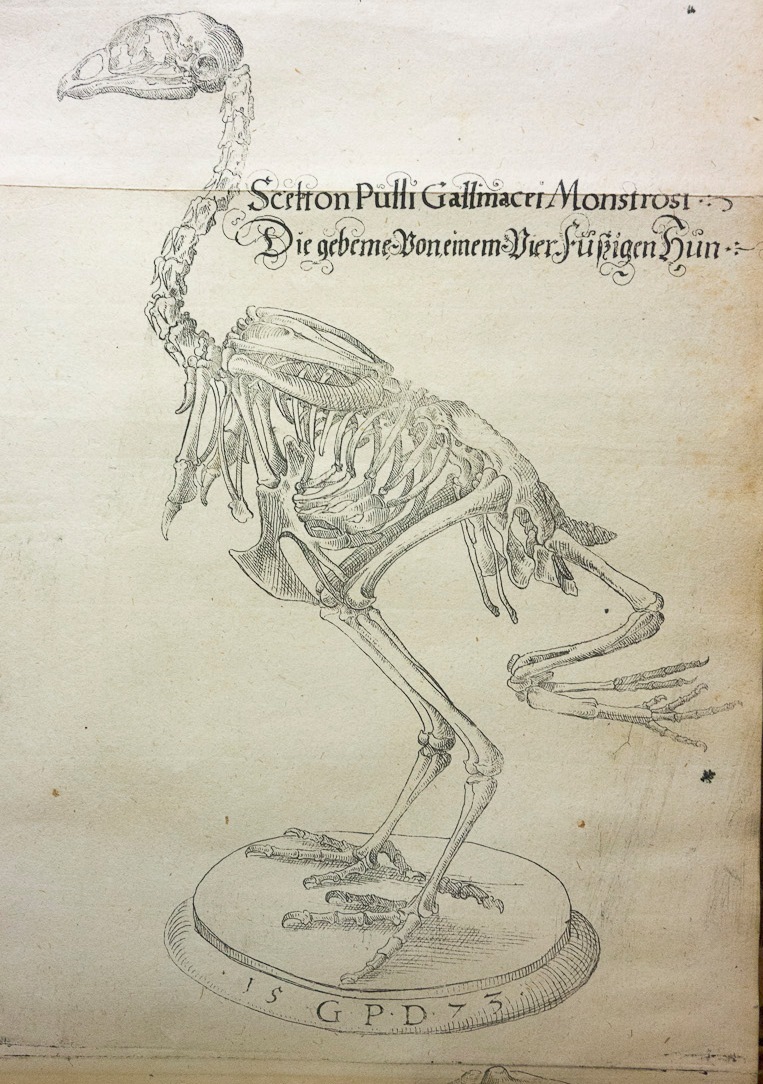
“Physica Sacra,” Johannes Jacob Scheuchzer, 1731 : Guest Post by Morbid Anatomy’s Joanna Ebenstein

Image

Greetings.

My name is Joanna Ebenstein; I run a blog called Morbid Anatomy as well as the related Morbid Anatomy Library—an open-to-the-public research collection in Brooklyn, New York—and the Morbid Anatomy Presents series of lecture and workshops. All of these projects aim to explore the intersections of art and medicine, death and culture, with a particular focus on historical medical collections and libraries.

In the run-up to NYAM’s October 5th Wonder Cabinet and Medical History Festival (which I am co-curating), I have been invited to write a series of guest posts in which I will report on the treasures and curiosities I find in my explorations of NYAM’s excellent rare book and historical collections. In this, the first of that series, I would like to focus one of my favorite books—and one of the most enigmatic books of all time—Johannes Jacob Scheuchzer’s 4-volume high baroque extravaganza of art, science, mysticism, and all worldly knowledge, Physica Sacra.

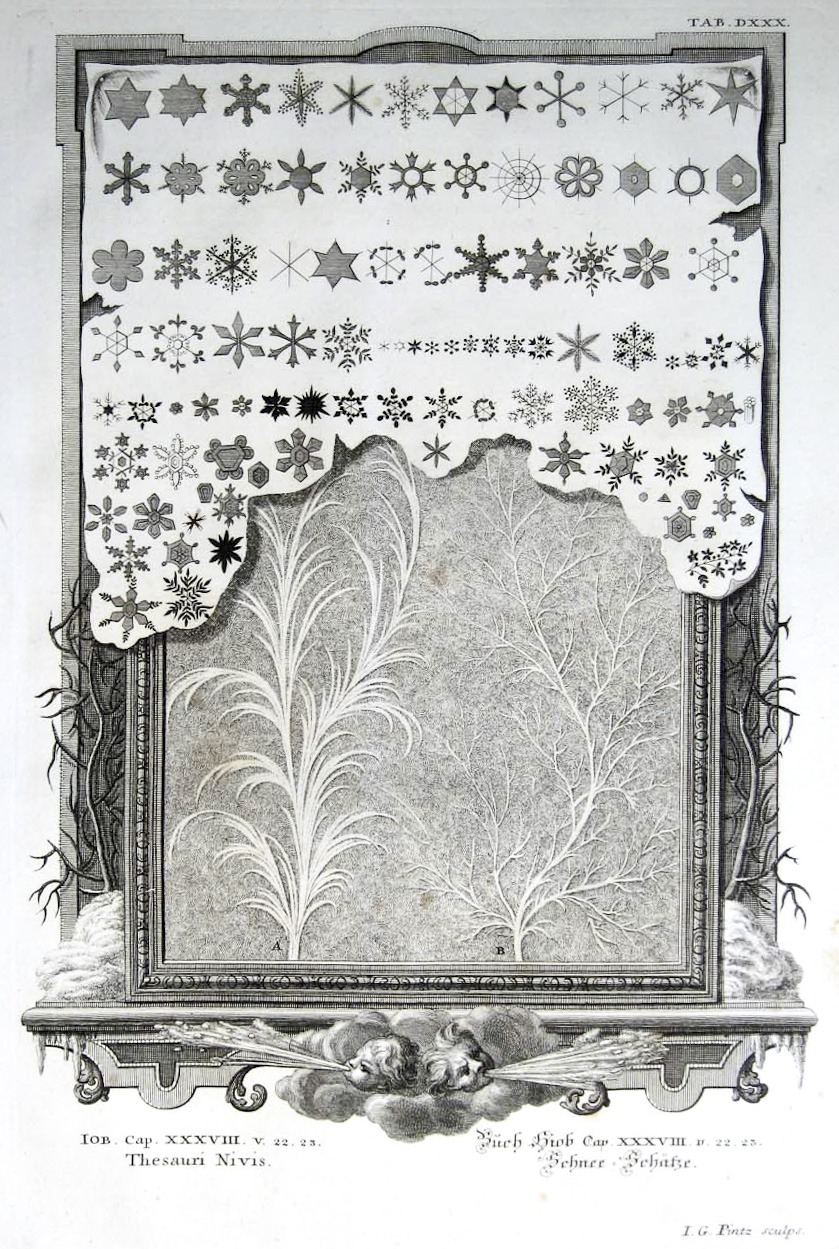
NYAMsacra7Originally published in 1731, this bizarre large-scale book features over 700 copper plate engravings. With a fine balance of careful observation and allegorical imagination, these depict—in frames each more fanciful than the last—such scenes as: lamenting fetal skeletons with the motto “homo ex humo” (‘man from the ground’, or ‘dust’); a variety of anatomical views of the human body projected on drapery or foregrounding mysterious landscapes; birds in biblical landscapes augmented by baffling cyphers; comparative snowflakes with the text “thesauri nivis” or “treasures of snow”; and much more.

These images serve as an excellent reminder that our views of science—and particularly the study of the human body—have changed over time. As explained by Martin Kemp and Marina Wallace in their book Spectacular Bodies:

The purpose of anatomical images during the period of the Renaissance to the 19th century had as much to do with what we would call aesthetic and theological understanding as with the narrower interests of medical illustrators as now understood . . . . They were not simply instructional diagrams for the doctor technician, but statements about the nature of human beings as made by God in the context of the created world as a whole . . . they are about the nature of life and death. . . .

I have not been able to find too much about this book in English, though my friend—and Wonder Cabinet speaker—Daniel Margócsy has promised a future lecture on the topic. In the mean time, Christie’s Auction House has a helpful entry on the book that explains that Johann Jakob Scheuchzer (1672–1733)—a Swiss doctor and natural scientist—”planned the Physica Sacra as an explanation of and a commentary on the Bible on natural-scientific grounds. He himself oversaw the illustrations which were largely based on his own natural history cabinet or on other famous European cabinets of rare specimens.”

Scheuchzer’s work also inspired an art exhibit at the University of Massachusetts—Dartmouth in 2007/8: “Science, Religion, Art.”  The organizers note that:

a lifelong scholar, Scheuchzer’s pursuits of knowledge were wide-ranging and diverse, from science to medicine to paleontology. Like many scientists of the late 17th and early 18th century, Scheuchzer held to the belief that the Old Testament was a factual account of the history of the earth. . . . In a period before public museums, Scheuchzer presented a seductive view of an imaginary world, viewed through lush frames depicting secondary symbols, plants, animals, heads and other objects, providing the viewer rich material for an inspired vision of the interaction between the natural and the divine powers.

Below are just a very few of my favorite images from the book, some that I photographed from the original, and others coming from the set of almost half of the 737 images from the book (!!!) so kindly provided by greyherbert’s amazing Flickr stream; you can see them all by clicking here.

Stay tuned for more posts in the days and weeks to come!

Joanna Ebenstein, Morbid Anatomy
Guest post # 1