Dusting off a Treasure: Cleaning and Rehousing the Ladd Collection

By Emily Moyer, Collections Care Assistant
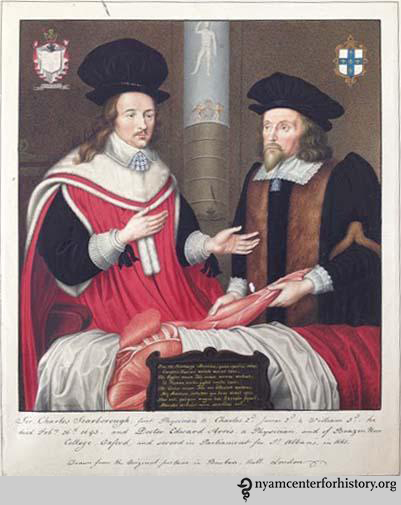
English Physicians Charles Scarborough and Edward Arris performing an anatomical dissection in 1651. After an original watercolor by G.P. Harding. Click to enlarge.

English Physicians Charles Scarborough and Edward Arris performing an anatomical dissection in 1651. After an original watercolor by G.P. Harding. Click to enlarge.

Accepted as a gift by The New York Academy of Medicine in 1975, the Ladd Collection comprises 671 prints dating from the early 17th century to the first half of the 19th century. The prints, which demonstrate a variety of printing processes including etching, engraving, mezzotint, stippling, lithography, and hand coloring, primarily depict people who have made historically significant contributions to the fields of science and medicine, as well as some medical institutions, procedures, and other health-related topics. William S. Ladd, a former dean of Cornell University Medical College, accumulated the collection during the first half of the 20th century, purchasing many of the prints as deaccessioned duplicates from the Ashmolean Museum at Oxford University.

Georg Faber von Rottenman. Engraving by Bernard Strauss. Von Rottenman was a maker of pills in Ratisbon ca. 1648. Click to enlarge.

Georg Faber von Rottenman. Engraving by Bernard Strauss. Von Rottenman was a maker of pills in Ratisbon ca. 1648. Click to enlarge.

Erich Meyerhoff, librarian of Cornell’s Medical Library from 1970 to 1986, recognized the research value of the collection and suggested it be given to the NYAM Library because, as he stated in his correspondence to NYAM librarian Alfred Brandon in 1975, “[NYAM] has the most important collection in the history of medicine in our region, which includes an extensive collection of portraits listed in its ‘Portrait Catalog.’”

The Ladd Collection was previously housed in a basement storage room in 27 flat-file drawers, which were overstuffed, dirty, and causing damage to the portrait mats. Our goals for the project—which began in January 2014 and finished in August 2014—were to clean the portraits, rehouse them to prevent further deterioration, and increase access to the collection by creating a digital inventory and location guide.

Click an image to view the gallery:

To begin, all of the portraits were dry cleaned using a smoke sponge.

SmokeSponge_watermark

Cleaning with a smoke sponge.

Many of the portraits also needed new mats (because the originals were either damaged or unacceptably acidic), as well as new interleaving tissue to replace tissue that had become stained and torn.
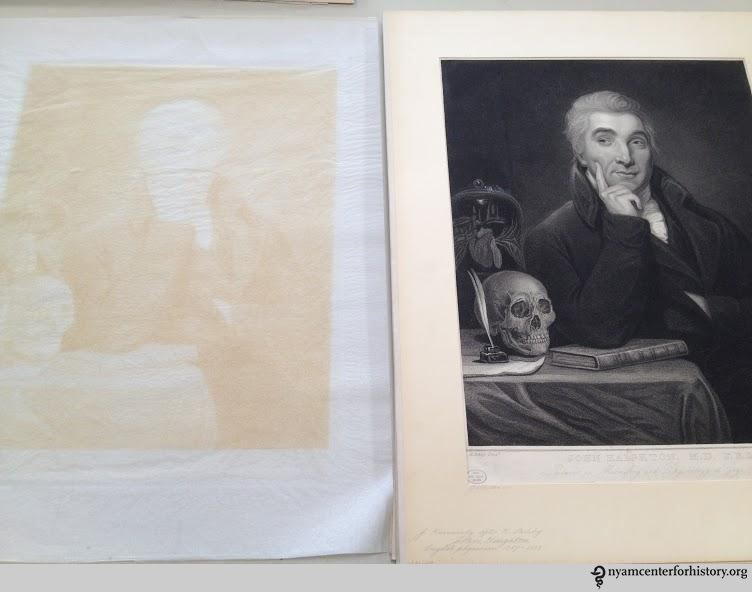
Portrait in need of a new mat and interleaving tissue.

Portrait in need of a new mat and interleaving tissue.

We created new window mats for the portraits and hinged them to archival mat board supports using Japanese tissue and wheat starch paste. Because the prints themselves are in good condition, very few needed extensive repairs.

Cutting new mats.
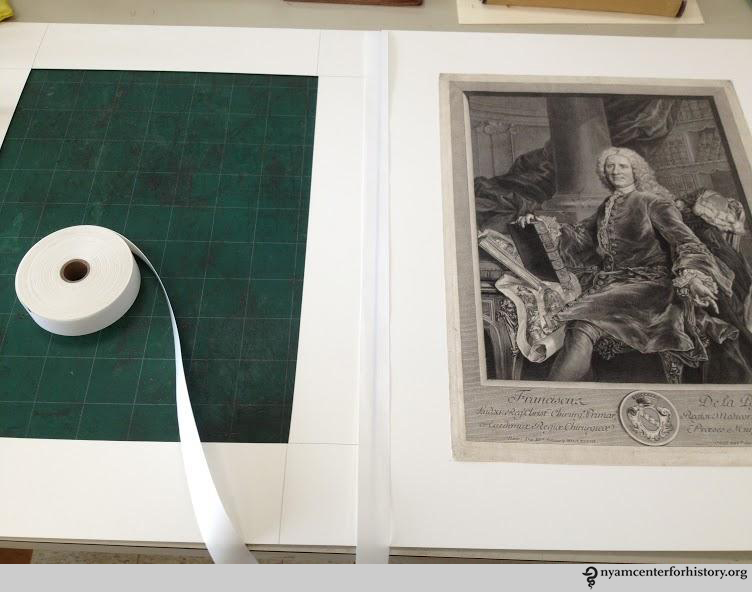
Cutting new mats.

New window mat hinged to archival mat board supports.

New window mat hinged to archival mat board supports.

That said, about 10 of the portraits needed washing in order to remove thickly applied, brittle adhesive residue that was causing damage to the edges of the prints. First, we tested the inks for solubility to determine whether an aqueous treatment was appropriate. Once we determined that the inks were stable, we washed the prints in a slightly alkaline bath.
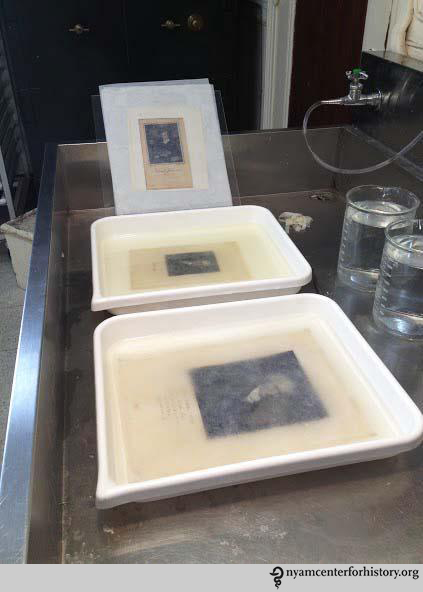
Prints in a slightly alkaline bath.

Prints in a slightly alkaline bath.

Rather than returning the collection to flat-file drawers, the conservation team made the decision to rehouse the matted prints (alphabetically and according to size) in acid and lignin-free, custom-ordered drop-front boxes from Talas that will be stored in climate-controlled conditions in NYAM’s recently renovated rare book storage stacks.

Prints rehoused in drop-front boxes.

Prints rehoused in drop-front boxes.

Although the collection had been described and cataloged at the time of its acquisition in 1975, it had no online presence and was virtually undiscoverable to the average user. Thus, over the course of the project, staff completed a digital inventory and location guide with the aim of increasing accessibility. This will be made available online soon.

The end result.

The end result.

These prints have importance not only because of their subject matter but also because of their aesthetic and art historical value. As a result of this project, scholars of the history of medicine, art, and printing can now use these prints as primary resources in their studies.

To view the collection or to access the collection guide, contact history@nyam.org or call 212-822-7313.

Revisiting the Fabrica Frontispiece

Jeffrey M. Levine, MD, AGSF, author of today’s guest post, will present “Revisiting the Frontispiece: Vesalius’s Jewish Friend and the Impact of the Inquisition” with Michael Nevins, MD, at our October 18th festival, Art, Anatomy, and the Body: Vesalius 500.

Between the first edition in 1543 and the second edition in 1555, the frontispiece of Andreas Vesalius’ classic masterpiece, De humani corporis fabrica, was recut with many subtle variations in both style and content. I am thrilled to be presenting “Revisiting the Frontispiece: Vesalius’s Jewish Friend and the Impact of the Inquisition” at Art, Anatomy, and the Body: Vesalius 500 with my colleague and mentor, Dr. Michael Nevins. Together we will examine and compare the frontispieces and offer theories as to why differences appear. We propose, for example, that some changes to the second edition were in reaction to the Inquisition, which was revived by Pope Paul III.1

Today’s guest post introduces selected features of the frontispiece of the Fabrica’s first edition. This intricate and multilayered composition features the master Vesalius dissecting a young female corpse, her abdomen flayed open. They are surrounded by a multitude of spectators crowded into a three-tiered wooden scaffold built into a semicircular amphitheater of Corinthian columns. At top-center is the decorative escutcheon that bears the name of the book and the author. Above is the family coat-of-arms of Andreas Vesalius flanked by two putti, the chubby male children who were often a feature of Renaissance art, and two gargoyles. Below is the face of Jupiter, the Roman king of gods.

The frontispiece to the 1543 Fabrica in our collection.

The frontispiece to the 1543 Fabrica in our collection. Click to enlarge.

The frieze sitting atop the columns contains symbols including a bucranium, or ox skull with garlands hanging from its horns, which was the symbol of the University at Padua,2 and a winged lion representing the evangelist St. Mark, the symbol of neighboring Venice.3 The columns are flanked by two men, one naked with tense muscles and a worried look, the other relaxed and smartly dressed.

To the right of the skeleton bearing a risus sardonicas, a man in a truncated conical hat recoils as if in terror, squinting and raising his left hand in a defensive gesture. In his 1964 biography of Vesalius, Charles O’Malley identifies this figure as Vesalius’s Jewish friend, Lazaro de Fregeis, who assisted with the Hebrew nomenclature in the Fabrica.4 The only woman other than the corpse appears as a mysterious figure peeking between the columns. There are two Franciscan Monks among the spectators, neither exhibiting much interest in the dissection. Below right is a pickpocket caught in the act. On the opposite side, a leashed monkey screams in protest, and under the table two men fight over the dissecting tools.

There is much more to learn about the frontispiece of the first edition of the Fabrica, and even more when compared to the second edition. To find out more about the changes to the second edition frontispiece, and how they may have contained coded messages reflecting tensions of 16th-century Italian society, particularly in the context of the situation of European Jewry, come to our presentation at the New York Academy of Medicine’s Vesalius 500 celebration on October 18.

References

1. Historical overview of the Inquisition. 2001. Available at: http://galileo.rice.edu/lib/student_work/trial96/loftis/overview.html. Accessed September 23, 2014.

2. Padova Terme Euganee. University of Padua – Palazzo Bo. Available at: http://www.turismopadova.it/en/university-padua-palazzo-bo. Accessed September 23, 2014.

3. Imboden D. Winged Lion of St. Mark. Durant Cheryl Imboden’s Venice Visit. Available at: http://europeforvisitors.com/venice/articles/winged_lion_of_st_mark.htm. Accessed September 23, 2014.

4. O’Malley C. Andreas Vesalius of Brussels, 1514-1564. Berkeley: Univ. of California Press; 1964.

A Lifetime of Healthiness? The Golden Health Library’s “Seven Ages of Man” (Item of the Month)

Cara Kiernan Fallon, this post’s guest author, is a history of science PhD candidate at Harvard University.

"The seven ages of man." From The Golden Health Library.

“The seven ages of man.” From The Golden Health Library. Click to enlarge.

Childhood can be full of “vigor and zest” but “Middle age is the time when our sins against the laws of health find us out,” warned physicians writing for The Golden Health Library’s inaugural volume. Published in the late 1930s, The Golden Health Library offered readers five volumes of advice on the “principles of right living” so they could secure health throughout their lifespans.1 Authors included physicians, nurses, professors, and even birth control advocates like Margaret Sanger. September, Healthy Aging Month, is the perfect time to revisit this publication.

Part of the New York Academy of Medicine’s extensive collection of health guides, public health pamphlets, and medical magazines, The Golden Health Library highlights the growing health concerns associated with longer lives and an emerging notion of the elasticity of health in later life. Although originally published in the United Kingdom, people on both sides of the Atlantic expressed concerns over health into old age as they were living longer than ever before. Between 1901 and 1931, the population over age 65 nearly doubled from 1.8 to 3.5 million in the United Kingdom, and went from 3 million to 6.6 million in the United States.2 Life expectancy at birth, a figure largely affected by infant and childhood mortality, grew dramatically along with the expanding older population. With more people surviving childhood and living decades longer, a new wave of health concerns—and health advice—came with it.

"Healthy womanhood." From The Golden Health Library. Click to enlarge.

“Healthy womanhood.” From The Golden Health Library. Click to enlarge.

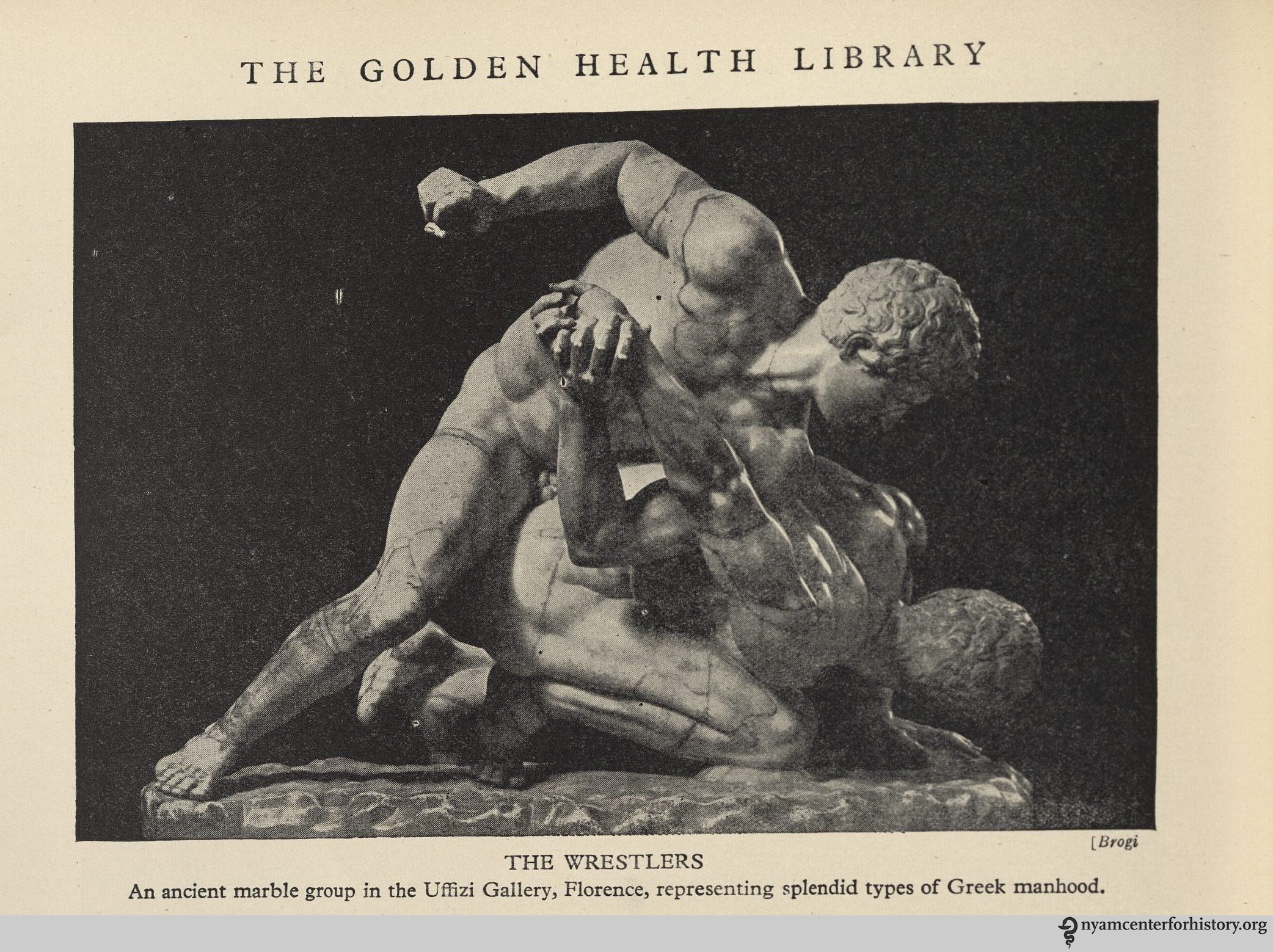
"The wrestlers." From The Golden Health Library.

“The wrestlers.” From The Golden Health Library. Click to enlarge.

In a section directly addressing health throughout the life course—“The Seven Ages of Man”—The Golden Health Library provided a series of articles on maintaining health in each of seven stages of life: infancy, childhood, adolescence, maturity, middle age, elderly age, and old age. Physicians identified “the elderly age” as a “very elastic” time between middle age and old age (87). Rather than following an arc of growth to decline, “The Seven Ages of Man” presented the elderly age as an expandable period of potential health, one determined by physical condition rather than a particular chronological period. Men who followed the rules of health and hygiene, and who had “lived wisely…may feel justified in expecting to live for the full period of life free from disease… and to die of old age” (88). Moderate diet, exercise, rest, and regular medical examinations would also ensure a “healthy elderly age for all women—the best antidote to old age” (91).

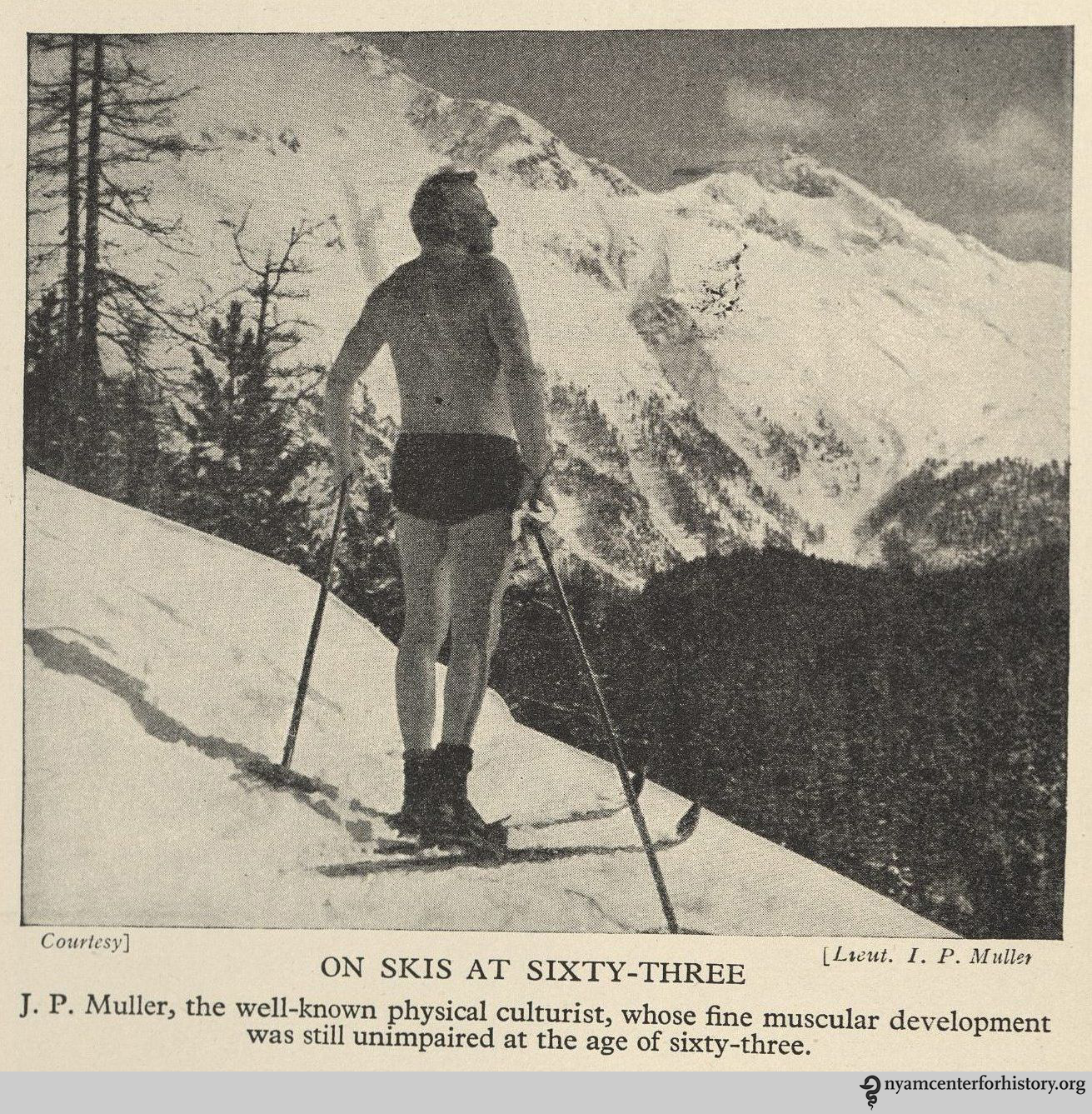
"On skis at 63." From The Golden Health Library.

“On skis at 63.” From The Golden Health Library. Click to enlarge.

The idea of a healthy and elastic elderly age reflected important new concepts emerging in the 20th century. As people around the globe reached sixty, seventy, and eighty years of age in quantities never before seen, later life became a period of great diversity in physical, mental, social, and economic conditions. Readers were told that the “vigour and ability to do physical or mental work efficiently varies enormously in different people” but the “idea that advanced age in man must necessarily involve an arm-chair existence…is obsolete” (87, 89). Instead, it argued that “men are now never too old to lead an active life” (89). To demonstrate this new ideal, images of athleticism filled the pages of the elderly age. Fitness guru J. P. Muller was shown skiing in his undergarments at 63, and Lord Balfour was shown swinging for a tennis ball at the age of 80, both depicting the possibilities of health and vigor.

"Lord Balfour at eighty." From The Golden Health Library.

“Lord Balfour at eighty.” From The Golden Health Library. Click to enlarge.

Yet, the mid-century concept of a healthy elderly age also narrowly imagined health through a masculine body with physical freedom and strength. Despite women’s greater longevity—the article reminded readers that women lived on average five years longer than men at the time—the article offered no images of women living actively in the elderly age. Could no women be found to depict an ideal of healthy aging? Or did notions of health and age have different meanings for women than for men? Women may have been told they could achieve a healthy elderly age, but none could be found in these pages.

While the idea of healthy habits leading to a healthy older age offered a new optimism for the aging process, it also overlooked the powerful social and cultural influences on the biology, ability, and mobility of individuals. Recommendations throughout the lifespan for clean milk, sunny outdoor play, access to healthy foods, exercise, and regular physical exams reflected not merely physiological processes but more complex social and economic opportunities. Although the authors indicated that health throughout life was a matter of willpower, they acknowledged that few reached a disease-free old age. Were the ideals too lofty or were the challenges too great? Had their model failed to account for the complexities of health beyond a controllable regimen?

"A fine old age." From The Golden Health Library.

“A fine old age.” From The Golden Health Library. Click to enlarge.

“The Seven Ages of Man” offers an intriguing look into the early notions of healthy aging in the mid-20th century. While it responded to the growing population of older individuals, offering opportunities for self-determination and responsibility, it also reduced healthy aging to a matter of knowledge, willpower, and habit.

Decades later, efforts to improve the quality of life of older individuals continue to grow with the expanding population. Through its healthy aging initiatives and participation in Age-friendly NYC, the New York Academy of Medicine aims to address not only the physical components of aging but also issues of employment, housing, social inclusion, community health services, and many other social, psychological, and economic concerns for seniors. Looking back to The Golden Health Library allows us to explore the formative stages of important themes today – the growing belief in the elasticity of later life, the new emphasis on “healthy” and “active” aging, and the changing understandings of the powerful social and cultural influences on biology.

References

1. Browning, E., Stanford Read, C., Williams, L. L.B., Crawford, B. G. R., Arbuthnot Lane, W., Somerville, G. (193?). The seven ages of man. In W. Arbuthnot Lane (Ed.), The golden health library (pp. 48–96). London: William Collins Sons & Co. All parenthetical page numbers refer to this publication.

2. For the United Kingdom, see the Office for National Vital Statistics, Chapter 15 Population: Age distribution of the resident population, 15.3(a). For the United States, see the Center for Disease Control and Prevention, National Vital Statistics System, Population by Age 1900 to 2002, No. HS-3.

A Medical Symphony: Celebrating African Americans in New York Medicine

By Lisa O’Sullivan, Director, Center for the History of Medicine and Public Health

The Knick’s Dr. Algernon Edwards struggles for acceptance as a medical professional, even when his expertise and knowledge outstrips many of his colleagues. How unusual was his experience as an African American practicing medicine in turn-of-the-century New York? As medical training and practice became more heavily regulated in the latter half of the 19th century, access to the professions was constrained by issues of ethnicity, gender, class, and religion.

Gerald Spencer. From A Medical Symphony.

Gerald Spencer. From A Medical Symphony.

A slim green volume in our collections gives a small glimpse into some of the many stories of pioneering African American medical professionals. Our copy of the 1947 book Medical Symphony: A Study of The Contributions of The Negro to Medical Progress in New York is signed by author Dr. Gerald A. Spencer, a fellow of the New York Academy of Medicine. The volume brings together lectures and articles in which Dr. Spencer explores the attempt by African Americans to, in his words, join in “striving for medical symphony in which all races and creeds will be given the fullest opportunities to study and to make their unhampered contributions.”1

As Dr. Spencer describes, in the last quarter of the 19th century, around 12 African American physicians had graduated from schools in New York and other northern states. Together, they founded the McDonough Memorial Hospital, which commemorated David McDonough. McDonough, born a slave, was selected for an education by his owner as part of a bet to establish the potential of African Americans for learning. McDonough not only succeeded in his studies, but went on to gain his freedom and practice on the staff at the New York Hospital and New York Eye and Ear Infirmary. While it only operated between 1898 and 1904, McDonough Memorial Hospital established itself as being open to physicians, nurses, and patients of every background and nationality. Also established in 1898, the Lincoln Hospital Training School for Nurses in the Bronx was the only place for African American nurses to train after the closure of the McDonough Memorial Hospital until the opening of the Harlem Hospital School of Nursing in 1923.

Lincoln Hospital Training School for Nurses, Class of 1907. From A Medical Symphony.

Lincoln Hospital Training School for Nurses, Class of 1907. From A Medical Symphony.

Integration in New York hospitals, public health agencies, and medical societies was limited in the first decades of the 20th century, but by the 1940s, when Dr. Spencer wrote his volume, integration was making inroads in the city’s institutions. Dr. Spencer wrote Medical Symphony to emphasize the many African American physicians rising to positions of prominence within the hospital system, the enormous public health impact of trained nurses, and acceptance into learned societies.

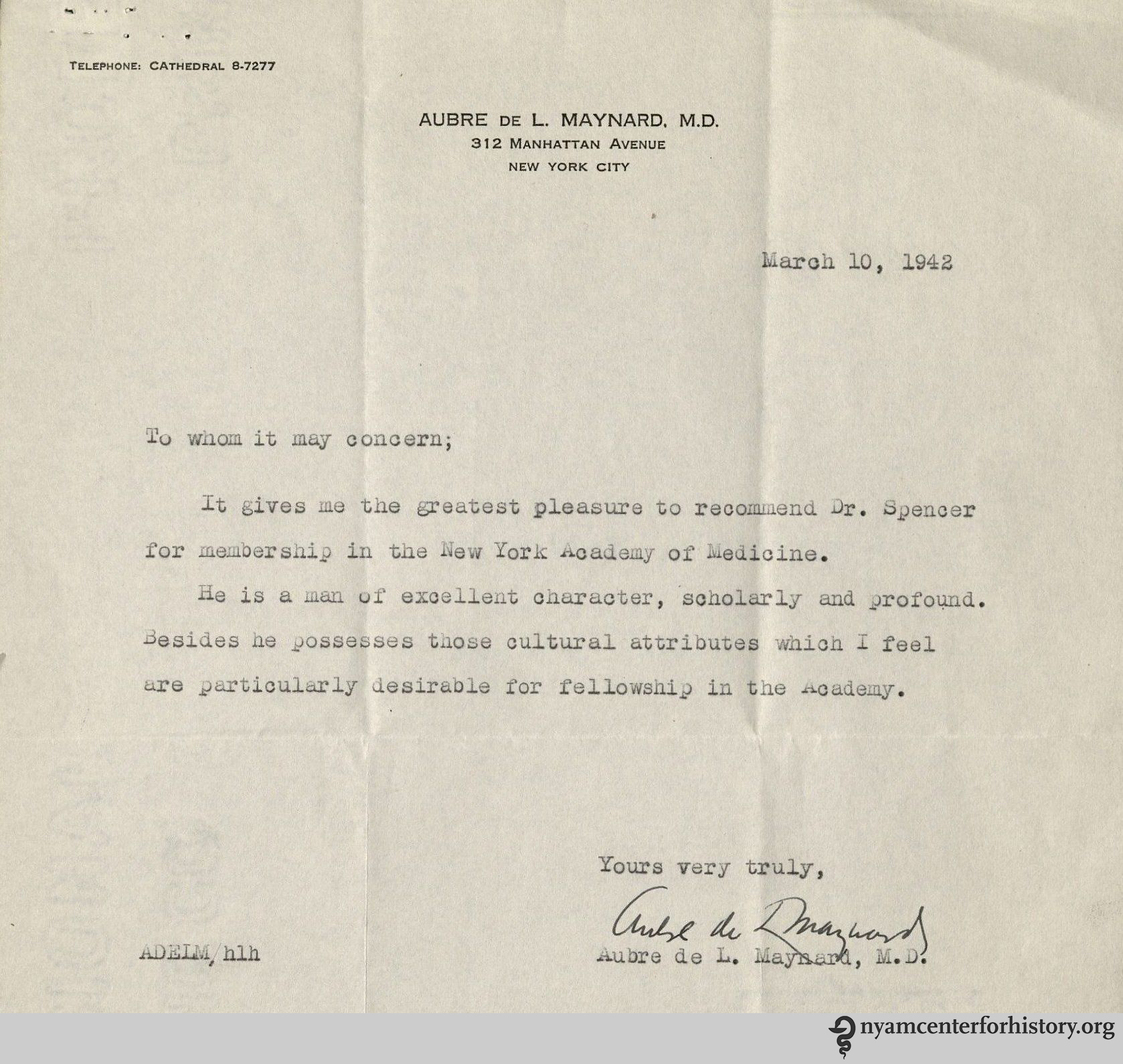
Dr. Aubre De L. Maynard's recommendation letter of Dr. Spencer.

Dr. Aubre De L. Maynard’s recommendation letter of Dr. Spencer. Click to enlarge.

Dr. Spencer was from St. Lucia in the British West Indies and studied at the College of the City of New York before receiving a medical degree from the University of Lyon, France, in 1932. Many students of African descent found the barriers to an education less intractable in European medical centers. Dr. Spencer became a resident physician at the Skin and Cancer Hospital in New York, and visiting dermatologist at Harlem Hospital. He also became a fellow of the New York Academy of Medicine in 1942, described by one of his referees as a “man of excellent character, scholarly and profound.”2

Disparities in access to health care, and access to the health professions, have not disappeared over time. However, Medical Symphony reminds us of the many stories of success that can be celebrated. For those interested in learning more about who became a doctor in New York over time, join us at “Who Becomes a Medical Doctor in New York City: Then and Now – a Century of Change” on December 11.

References

1. Spencer GA. Medical symphony: a study of the contributions of the Negro to medical progress in New York. New York: 1947.

2. Spencer, GA. Application for fellowship form. Letter from Aubre de L Maynard, MD, March 10, 1942. New York Academy of Medicine Archives.

More Music From Your Cash Register: American Pharmacy at the Turn of the Century

By Johanna Goldberg, Information Services Librarian

This is part of an intermittent series of blogs featuring advertisements from medical journals. You can find the entire series here.

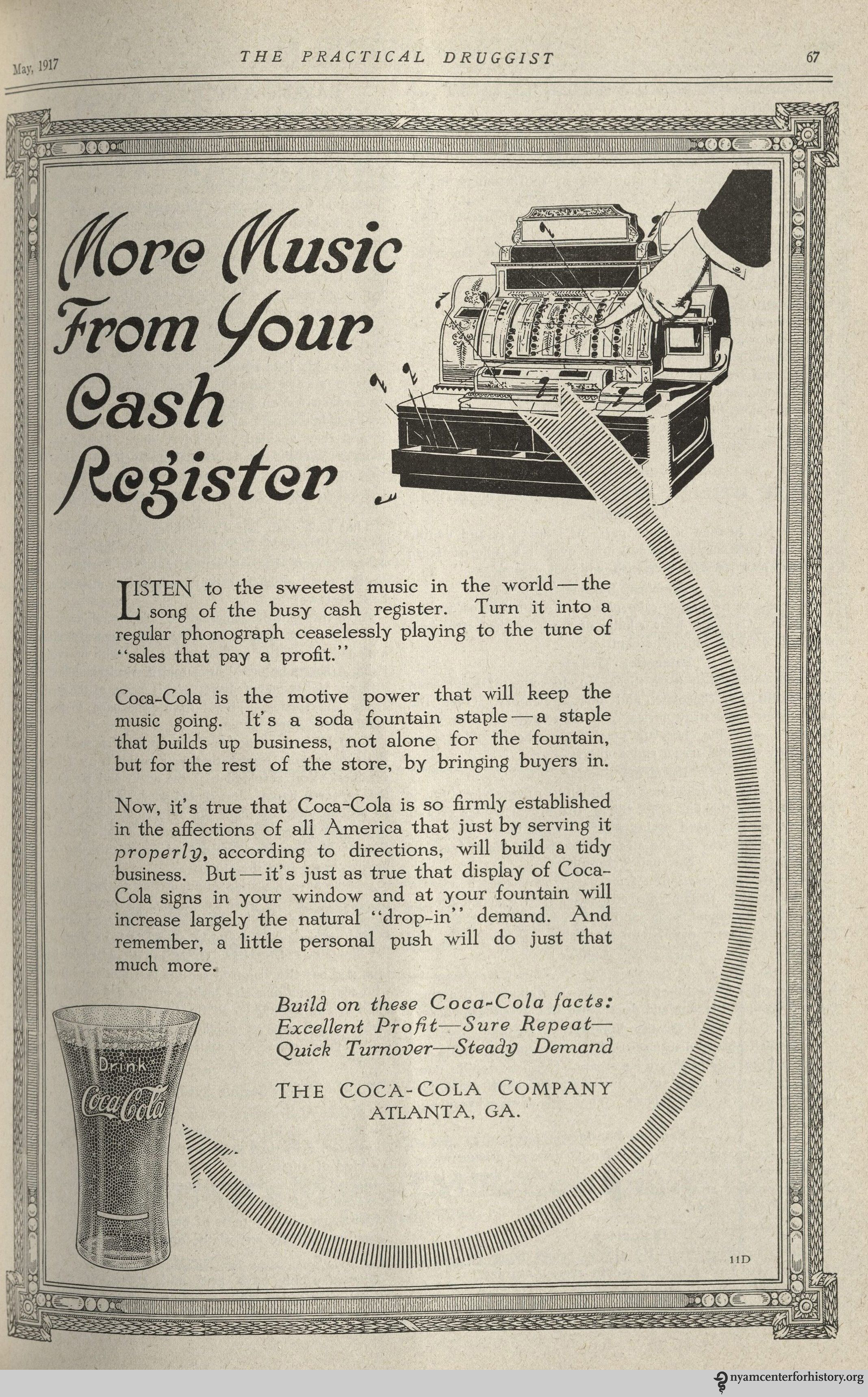
Ad published in The Practical Druggist and Review of Reviews, volume 35, number 5, May 1917. Click to enlarge.

Ad published in The Practical Druggist and Review of Reviews, volume 35, number 5, May 1917. Click to enlarge.

By the late 1800s, a pharmacist (or druggist) stood at an interesting intersection in the marketplace. Both business person and medical professional, the pharmacist had to balance the responsibilities of dispensing medicine with the need to keep a business afloat.

This was in part due to changes in the field. As Gregory Higby explains in a Bulletin for the History of Chemistry article, “With most basic preparations now available from drug companies, anyone with enough courage and capital could open up a drugstore. The number of pharmacists grew enormously, and the quality of prescriptions dispensed declined accordingly.”1 Fortunately, this decline led to increased industry regulation.

The first pharmacy school in the United States, the Philadelphia College of Pharmacy, opened in 1821, a year after the formation of the U.S. Pharmacopeia.2 By the end 1870s, state laws began regulating pharmacy throughout the Unites States, including state licensing exams for pharmacists.1 Not everyone attended a pharmacy school before taking the exam; a correspondence course option existed, as advertised in The Practical Druggist in 1917.

Ad published in The Practical Druggist and Review of Reviews, volume 35, number 2, February 1917.

Ad published in The Practical Druggist and Review of Reviews, volume 35, number 2, February 1917.

Ad published in The Practical Druggist and Review of Reviews, volume 22, number 2, August 1907. Click to enlarge.

Ad published in The Practical Druggist and Review of Reviews, volume 22, number 2, August 1907. Click to enlarge.

Drugs, too, came under closer scrutiny. In 1848, Congress passed the Drug Importation Act, which aimed to prevent the importation of tainted drugs from abroad. In 1906, Congress passed the Food and Drug Act, setting up the regulatory charge of the Food and Drug Administration and requiring the listing of alcohol and opiates on ingredient labels.3,4 In 1912, the Sherley Amendment prevented drug labels from including false health claims.3 Cocaine was available over-the-counter until 1916; heroin and other opiates could be sold legally in the United States until 1920.5,6

The pharmacy had “developed the warmth and hospitality of a country store,” with tobacco counters, home goods for sale, and, beginning in 1835, soda fountains.7 The soda fountain business turned pharmacy shops into social centers; as they grew in popularity, store owners added seats and tables, devoting large parts of the store to the soda fountain business (a trend that lasted into the 1960s).7

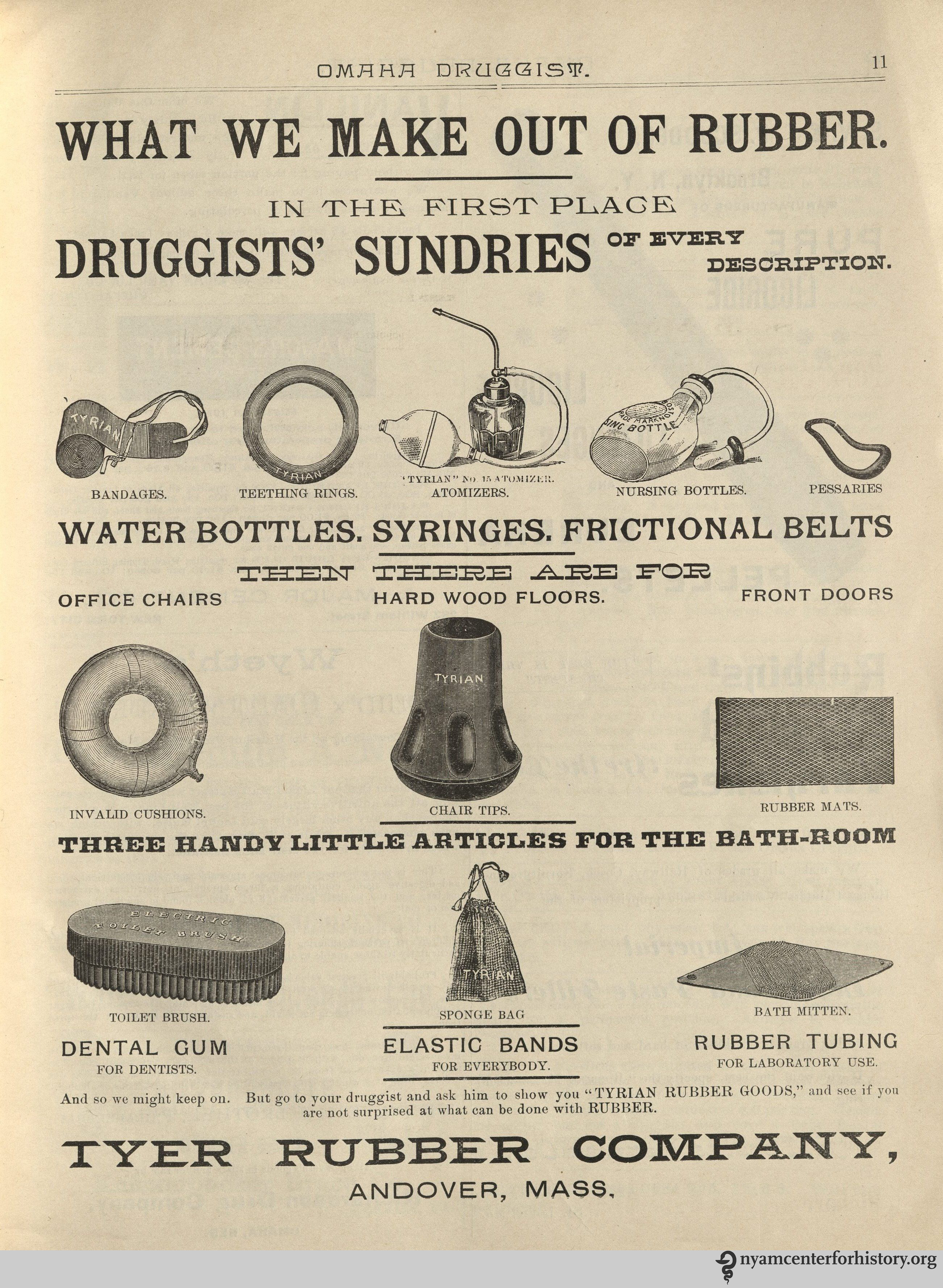
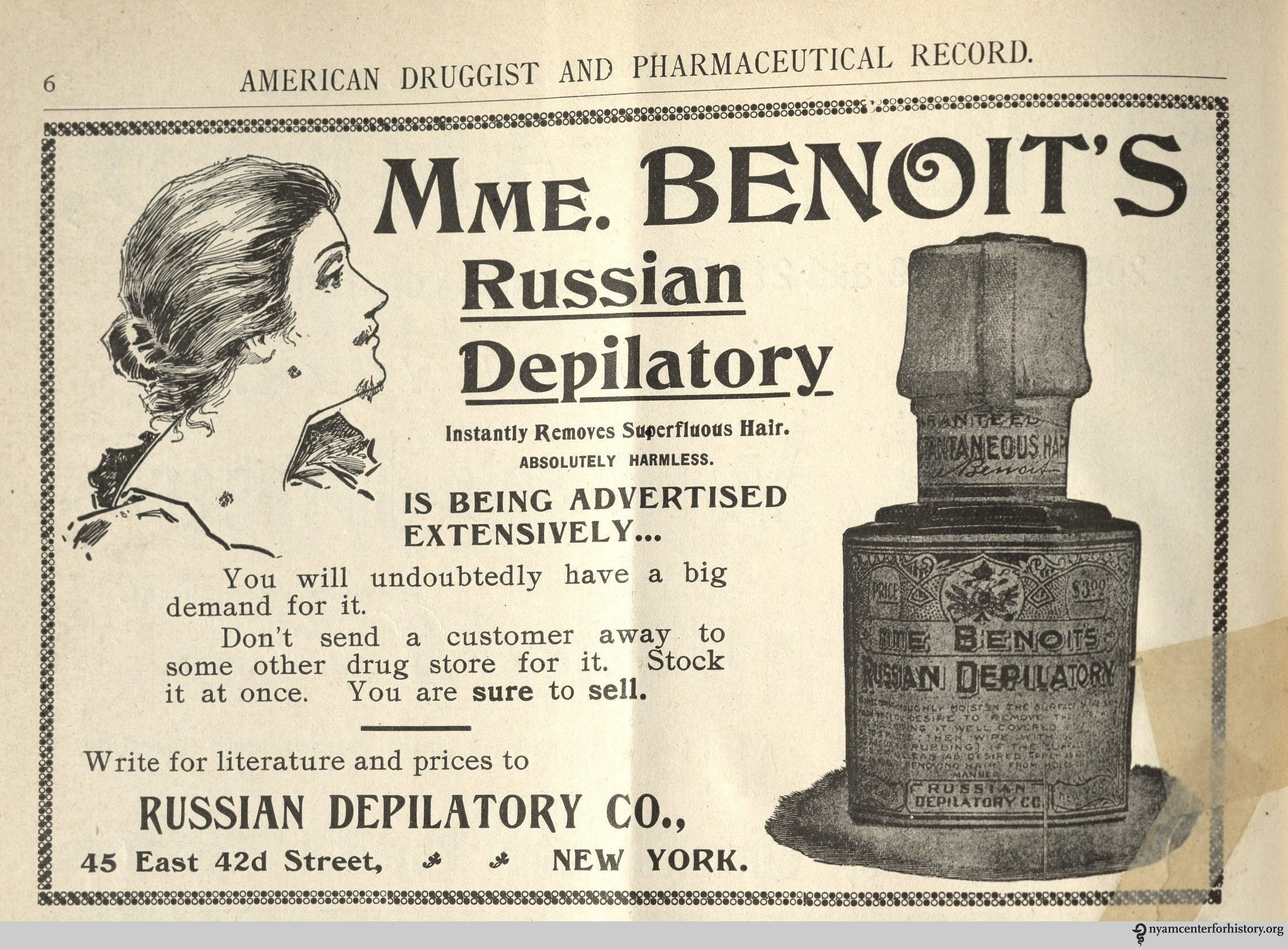
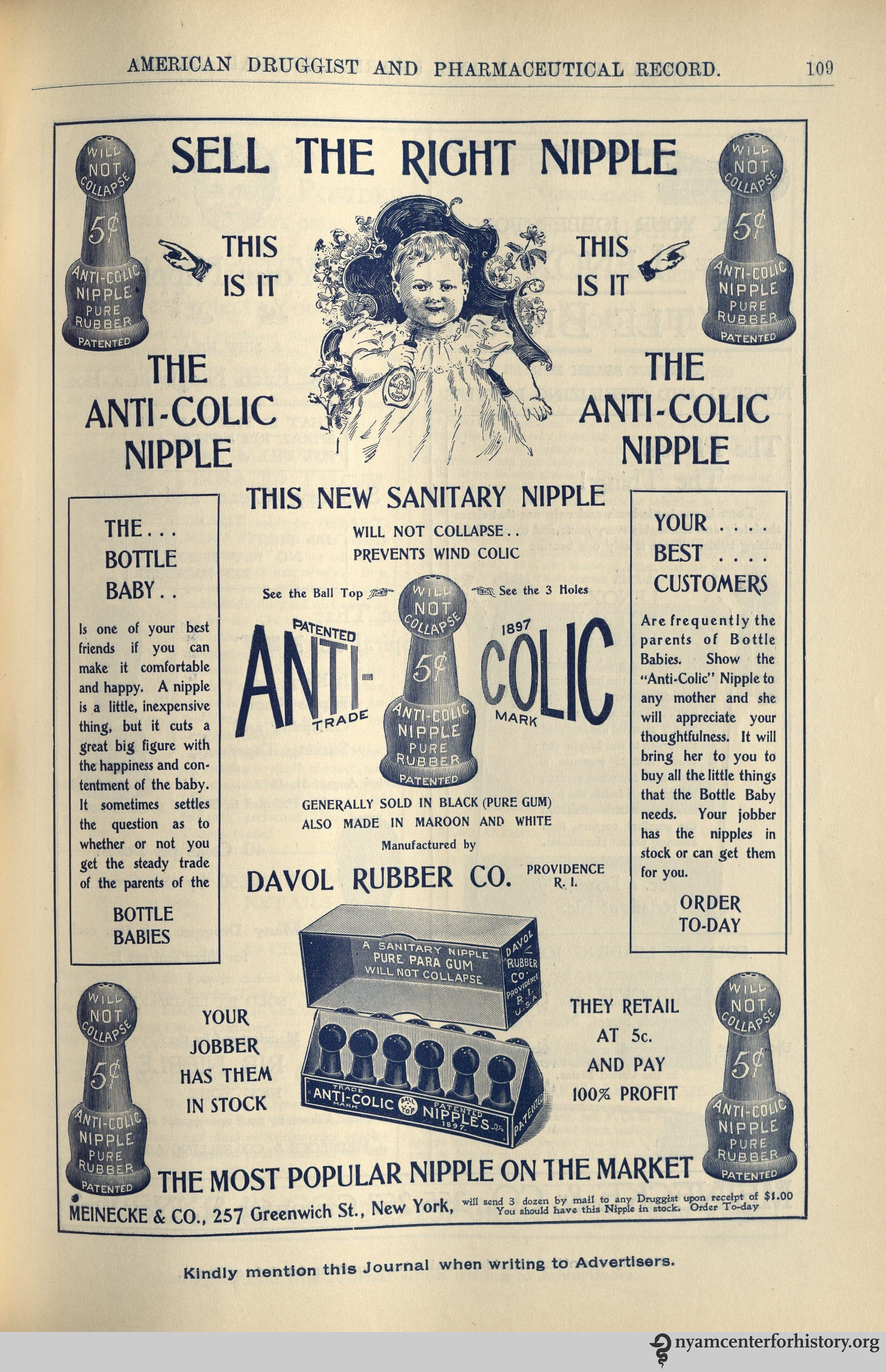
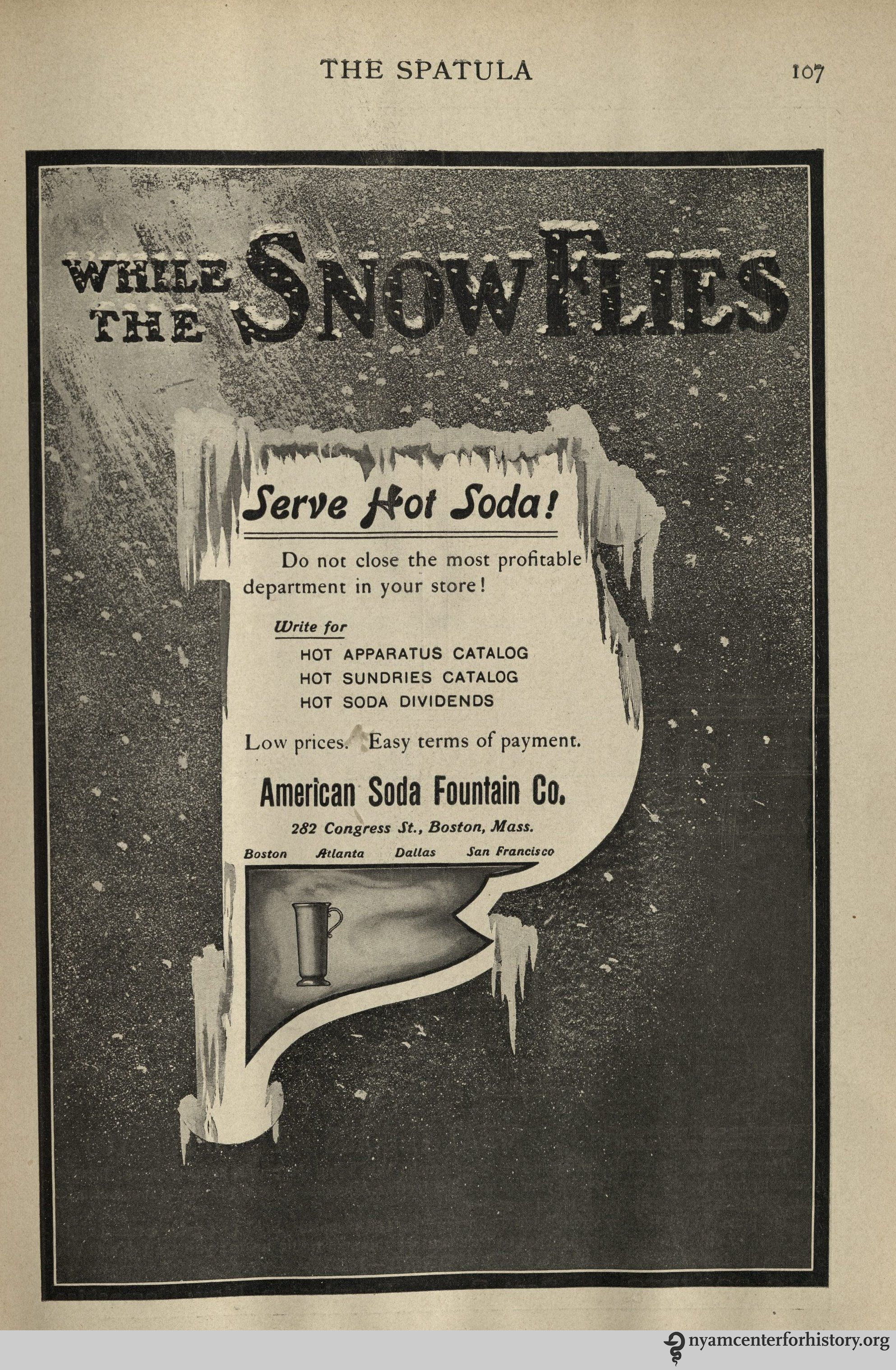
Enjoy these ads showing the wide variety of merchandise available to pharmacists, presented chronologically. Click on an ad to enlarge the image.

Ad published in Omaha Druggist, volume 7, number 1, January 1894.

Ad published in Omaha Druggist, volume 7, number 1, January 1894.

Ad published in Omaha Druggist, volume 7, number 4, April 1894.

Ads published in Omaha Druggist, volume 7, number 4, April 1894.

The cover of The Practical Druggist and Review of Reviews, volume 3, number 1, January 1898.

The cover of The Practical Druggist and Review of Reviews, volume 3, number 1, January 1898.

Ad published in The Practical Druggist  and Review of Reviews, volume 5, number 5, May 1899.

Ad published in The Practical Druggist and Review of Reviews, volume 5, number 5, May 1899.

Ad published in American Druggist and Pharmaceutical Record, volume 36, number 2, January 25, 1900.

Ad published in American Druggist and Pharmaceutical Record, volume 36, number 2, January 25, 1900.

Ad published in American Druggist and Pharmaceutical Record, volume 36, number 2, January 25, 1900.

Ads published in American Druggist and Pharmaceutical Record, volume 36, number 2, January 25, 1900.

Ad published in American Druggist and Pharmaceutical Record, volume 36, number 6, March 25, 1900.

Ad published on the cover of American Druggist and Pharmaceutical Record, volume 36, number 6, March 25, 1900.

Ad published in American Druggist and Pharmaceutical Record, volume 36, number 6, March 25, 1900.

Ad published in American Druggist and Pharmaceutical Record, volume 36, number 6, March 25, 1900.

Ad published in American Druggist and Pharmaceutical Record, volume 45, November 7, 1904.

Ad published in American Druggist and Pharmaceutical Record, volume 45, November 7, 1904.

Ad published in The Practical Druggist, volume 22, number 2, August 1907.

Ads published in The Practical Druggist and Review of Reviews, volume 22, number 2, August 1907.

Ad published in The Practical Druggist and Review of Reviews, volume 22, number 4, October 1907.

Ad published in The Practical Druggist and Review of Reviews, volume 22, number 4, October 1907.

Ad published in The Spatula, November 1910.

Ad published in The Spatula, November 1910.

Ad published in The Practical Druggist, volume 35, number 1, January1917.

Ad published in The Practical Druggist and Review of Reviews, volume 35, number 1, January 1917.

Ad published in The Practical Druggist and Review of Reviews, volume 35, number 2, February 1917.

Ad published in The Practical Druggist and Review of Reviews, volume 35, number 2, February 1917.

Ad published in the Omaha Digest, volume 32, number 4, April 1919.

Ad published in Omaha Druggist, volume 32, number 4, April 1919.

References

1. Higby GJ. Chemistry and the 19th-century American pharmacist. Bull Hist Chem. 2003;29(1):9–17. Available at: http://www.scs.illinois.edu/~mainzv/HIST/bulletin_open_access/v28-1/v28-1%20p9-17.pdf. Accessed August 21, 2014.

2. pharmacy. Encycl Br. 2014. Available at: http://www.britannica.com/EBchecked/topic/455192/pharmacy/35617/History-of-pharmacy. Accessed August 21, 2014.

3. Food and Drug Administration. A history of the FDA and drug regulation in the United States. 2006. Available at: http://www.fda.gov/downloads/Drugs/ResourcesForYou/Consumers/BuyingUsingMedicineSafely/UnderstandingOver-the-CounterMedicines/ucm093550.pdf. Accessed August 21, 2014.

4. Baker PM. Patent medicine: Cures & quacks. Available at: http://www.pilgrimhallmuseum.org/pdf/Patent_Medicine.pdf. Accessed August 22, 2014.

5. Miller RJ. A brief history of cocaine. Salon. 2013. Available at: http://www.salon.com/2013/12/07/a_brief_history_of_cocaine/. Accessed August 27, 2014.

6. Narconon International. History of Heroin. Available at: http://www.narconon.org/drug-information/heroin-history.html. Accessed August 27, 2014.

7. Richardson LC, Richardson CG. The pill rollers: A book on apothecary antiques and drug store collectibles. Harrisonburg, Va.: Old Fort Press, 1992.

Postures of Childhood: A Conversation

This blog post presents a discussion between Riva Lehrer, artist and anatomist and our “Art, Anatomy, and the Body: Vesalius 500” festival guest curator, and Sander Gilman, distinguished professor of the liberal arts and sciences and professor of psychiatry at Emory University. Dr. Gilman will present “STAND UP STRAIGHT: Toward a History of the Science of Posture” at our October 18th festival. Register here.

Riva Lehrer:

Sander, when reading a scholar’s work, I often wonder whether it relates to personal experiences that set them on the path of intellectual obsession. For me, your work is so empathetic on the subject of difference it’s as if you’ve lived in the bodies of those you’ve written about. It’s fascinating to find out where that path started for you.

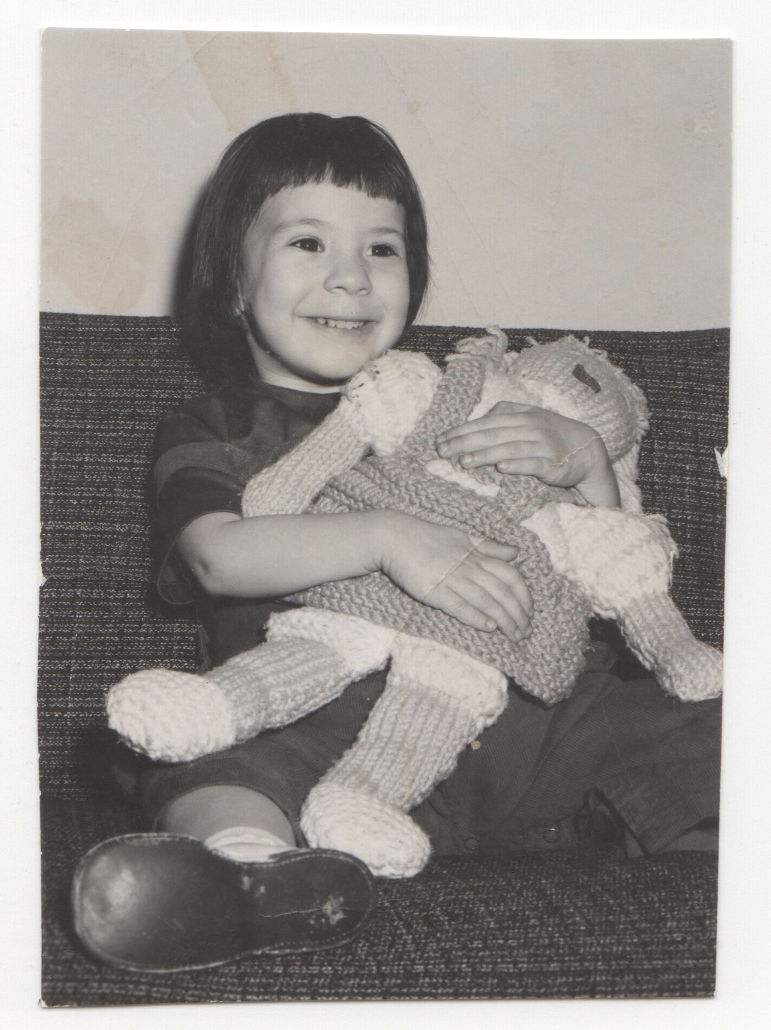
Riva Lehrer as a young child. Photo courtesy of Riva Lehrer.

Riva Lehrer as a young child. Photo courtesy of Riva Lehrer.

It seems that both of us were confronted with the problem of difference beginning in elementary school. Mine began right away. From kindergarten through eighth grade, it didn’t matter whether I was in math class, or English, or social studies; I knew at some point an aide would show up at the classroom door and call my name. All us kids knew this; twice an hour, someone would get pulled out of class and sent to the big open room on the third floor. There, we’d get down on one of the vinyl mats on the floor and start following orders.

These were our daily physical therapy sessions. Almost every student at Randall J. Condon School for Handicapped Children went through this same routine. Most of us had some variety of orthopedic impairment. Condon punctuated our academics with treatments for these perceived aberrations. My brothers were not disabled. They went to regular schools, where their growing bodies were exercised in gym class. This may have been wretched on its own terms but was at least somewhat communal, being arranged around games and team sports. Here, in PT, it was isolating.

Sander Gilman:

Why is gym always the horror! When you are in third grade gym is a horror in most cases any way—except for the two guys you always get chose first for ALL the teams — but when you wear high boots with VERY long laces that had to be cross tied all the way to the top and those boots had metal braces in them, even going into the locker room was a horror. Last one in (on purpose) and last one dressed. And then gym itself—jump, climb, run. But you run like a duck, the gym teacher shouted: STAND UP STRAIGHT!

RL:

A class at the Condon School. Photo courtesy of Riva Lehrer.

A class at the Condon School, with Riva Lehrer kneeling, second from left. Photo courtesy of Riva Lehrer. Click to enlarge

Well, we never played any games together. Whenever I showed up, there’d be 8 or 10 kids already in the PT suite, mired in separate islands of exercise mats, or on high tables that put them at arm’s level with the physical therapists. We half-ignored each other, though if someone let out a loud enough squawk that faux-privacy would end. As a rule, we were an obedient lot; splaying like starfishes on huge medicine balls, lifting our knees, doing wobbly push-ups, clutching squishy objects to build up our hand strength. In the 1960s, most disabled children weren’t even given basic academic instruction; Condon was unusual in its goals to give us some kind of mainstream education. But it was clear that in the battle between teaching disabled children how to read and pushing our bodies towards normalcy, the toss would always land us back on a vinyl mat.

In that room, every weakness and failure of our bodies was brought to our attention, and then set upon by the therapists. I was told I walked as if I had a broken leg, dragging it a half-step behind me.

SG:

In truth, a duck was not wrong. I waddled without my shoes and indeed with them. Standing was hard, running was difficult and the worst part of it was being always the one who was different. I could never quite stand up the way the gym teacher or others wanted me to. Now I know that all third graders KNOW that they are too different, too visible, too comical, but somehow I knew I really was odd. STAND UP STRAIGHT! Still haunts me.

RL:

Kids at Condon used to be called abnormal. Condon was a refuge of sortsat least we weren’t called the brutal names people used outside of school. The PT suite was the only place when I ever saw some of my friends out of their wheelchairs. If a kid could stand at all, the PTs made us watch ourselves walk. (it turned our most of my friends were taller than me; my assumption that I was one of the taller kids in class was an illusion). The room was divided by long metal poles that formed a narrow corridor ending in a tall mirror. I’d start at the far end, clutching the steel poles and trying to get my legs to regulate themselves as instructed. My reflection swayed and bounced as if I were on a ship in my own personal storm.

Riva Lehrer teaching at the School of the Art Institute of Chicago, circa 2008. Photo courtesy of Riva Lehrer.

Riva Lehrer teaching at the School of the Art Institute of Chicago, circa 2008. Photo courtesy of Riva Lehrer.

Until I stopped growing (ending up at 4′ 9″), and my spine was less curved, my limp was most the obvious sign of my disability. Thing was, my limp didn’t hurt. I didn’t even feel it. I only saw it in that tall mirror, where I watched myself list and sway, buffeted by those invisible shipboard winds. I seldom thought about the way I walked at all, but my doctors did, and operated. Nothing made much difference. A year after surgery, my limp always came back, tenacious as malaria.

I am not one who thinks that impairments should not be treated, or that bodies should not be given the chance to experience individual interpretations of health. But health cannot take its bearings from the polestar of normal. Bodies should be supported and encouraged according to specific, idiosyncratic parameters. What was missing from those well-meaning treatments at Condon was any pleasure in the body itself. These were the bodies we’d had at birth. According to our parents, teachers, and doctors, we’d come ashore in broken vessels.

For us, posture regulation, gait repair, and physical therapy rested on a bedrock of shame. We were not given the option of simply loving our bodies as-is, and exercising those bodies out of delight and wonder for what our bodies could do.

SG:

The thing is that that sense of being odd never leaves you as, perhaps, we never stop being third graders when we look deep into our souls. When I started my new project on the history and meaning of posture, the title seemed obvious: STAND UP STRAIGHT! We all write autobiographies, even those who avoid writing autobiographies. That is true of artists as well as scholars.

RL:

Our early lives taught us both that crooked is a posture that tilts your head and gives you a most unexpected view of the world.

Patient Photographs and Medical Collecting

Heidi Knoblauch, the author of today’s guest post, is our 2014–2015 Klemperer Research Fellow. She is a Ph.D. candidate in the History of Science and Medicine Department at Yale University.

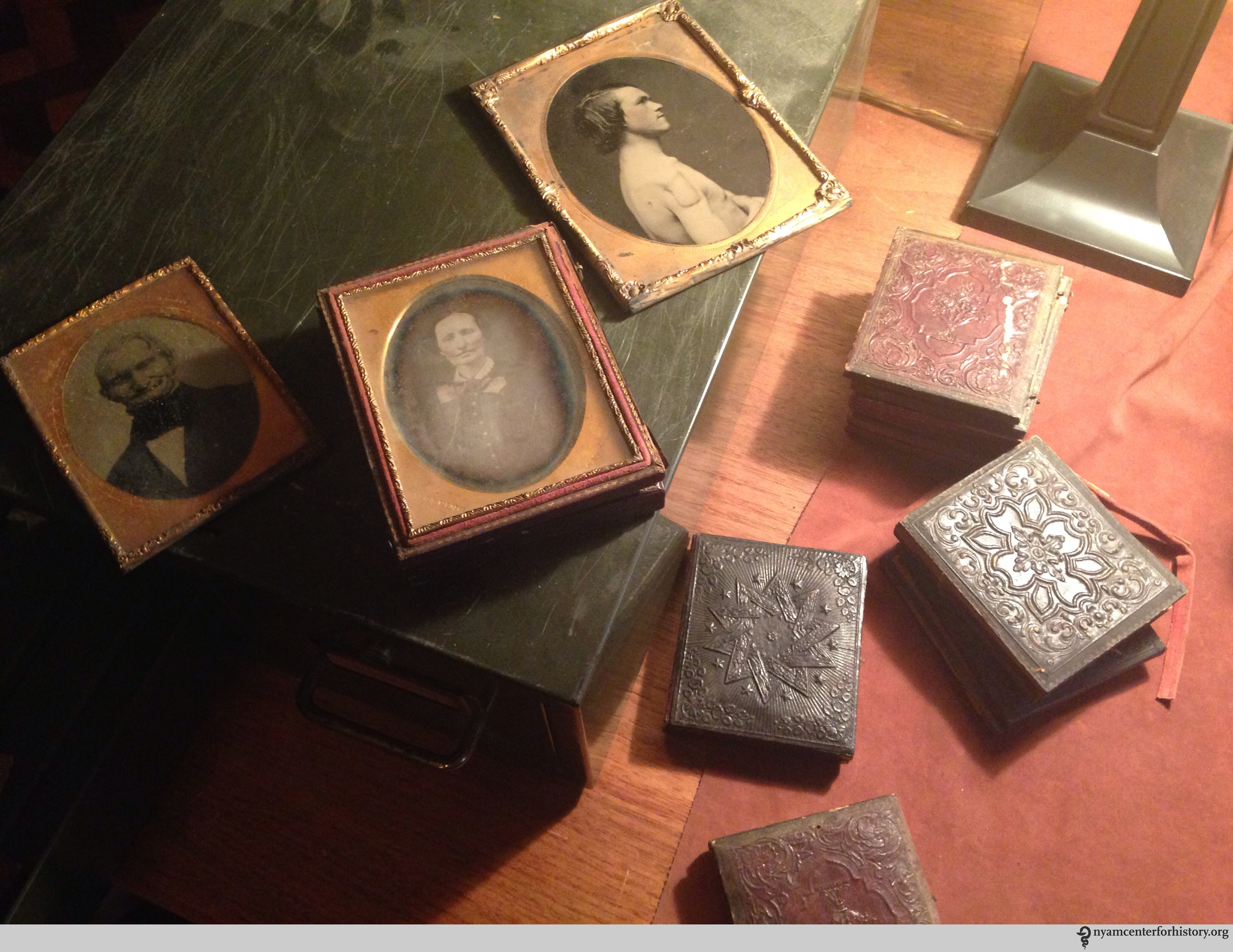
Tucked away in the New York Academy of Medicine’s special collections is a small green metal box, simply labeled “daguerreotypes.” The box contains twelve photographs and one painting. A few are images of doctors, but most are of patients.

The small green metal box, simply labeled “daguerreotypes.” Photo by Heidi Knoblauch.

The small green metal box, simply labeled “daguerreotypes.” Click to enlarge. Photo by Heidi Knoblauch.

You would not necessarily know these photographs were of patients unless you looked closely for a misshapen nose, outline of an excision, or nondescript facial scars. The subjects’ posing more closely resembles 19th-century photographic portraits circulated between family members than the poses we currently associate with a clinical image. These poses are accentuated by the fact that most of the photographs are housed in hinged frames with gold matting.

These photographs straddle the line between the medical and the personal that was becoming more defined during the 19th century. They blend intentional subjectivity with a new technology used to make what contemporary physicians described as a “more perfect record.”

During the 19th century, medical men collected photographs of patients and pasted them into personal scrapbooks, case records, and put them on display. These personal collections of notable cases represent not only the use of photographic technologies in consultation, but also the continuation of an engrained practice of collecting that began long before the advent of the daguerreotype. Like all archives and collections, they highlight the inclusion of things meant to be remembered and exclusion of things meant to be forgotten.

Another view of the special collection. Photo by Heidi Knoblauch.

Another view of the special collection. Click to enlarge. Photo by Heidi Knoblauch.

Tracking the social practices associated with amassing medical collections is crucial for understanding this small box of photographs, almost all of which lack identifying information. These photographs have the potential to help us sketch out the formation of communities of collecting and exchange during the middle of the 19th century and to think about how doctors interpreted their relationships with their patients.

The famed surgeon Valentine Mott was one of many physicians who collected surgical and pathological specimens—including the images in the small green box. His museum, which was located at the University Medical College, was composed mainly of pathological specimens from surgical operations, collected in part from his students, who submitted dissections through an annual competition. Like many of his contemporaries, Mott thought collecting would advance the surgical art. In 1858, he declared that his collection was “believed to be the largest that any American surgeon had the occasion to form.”

Mott also sought photographs from his students. Although most of the examples in the small box are unmarked, one of Mott’s students, Edward Archelaus Flewellen, labeled a photograph he sent Mott: “A.P Jackson, Thomaston, Georgia. A supposed case of subcutaneous aneurism by anastomosis. Referred to Dr. Mott by E.A. Flewellen.”

In 1856, Flewellen sent a letter with this daguerreotype to his instructor to obtain a consultation for his patient. Flewellen told Mott that he “did this reluctantly” because he was sure that Mott was “taxed by frequent consultation by many of the thousands of students who have had the pleasure and benefits of [his] instruction.” But, Flewellen added, he believed that Mott would find this an interesting and rare case.

Dr. Edward Archelaus Flewellen's note and photograph, sent to Dr. Valentine Mott. Photo by Heidi Knoblauch.

The note and daguerrotype Dr. Flewellen sent to Dr. Mott. Click to enlarge. Photo by Heidi Knoblauch.

Flewellen’s patient, A.P. Jackson, was a 33-year-old mechanic from Georgia who developed a tumor over his right eye when he was very young. Flewellen described the case in great detail, saying that he had watched the tumor grow for the past five years. Flewellen asked Mott what surgical treatment he would recommend to “rid this poor young man of this hideous deformity” and then promised to send Mott another daguerreotype of Jackson if the surgery was successful so Mott could contrast the before and after photographs. There is no record of Mott replying to Flewellen.

Patient photographs began to represent a new type of scientific aesthetic practice, aligned with graphs and charts, during the 1870s. Patients contributed photographs to their case records during the 19th century, but by the 1890s patients became less willing to actively participate in creating a photographic record of their disease. Today, many patients—especially in genetics, plastic surgery, and dermatology departments—have their photographs taken by a physician or technician (with a digital camera of course) to include in their electronic medical record. Yet employing a professional photographer to take a photograph with the express purpose of mailing it to a physician would seem odd to most people today.

Concerns about privacy surfaced at the end of the 19th century, which changed the way patients thought about photography in the clinic. Standards for clinical photography emerged during the 1920s and, because of this, we would find it strange to have a clinical photograph taken with a piece of bone or a bullet. Photographs are now more sterilized than they were in the 19th century and, unlike in the case of Flewellen, patients are rarely told to dress up before being photographed. The culture of photography has changed and, with it, the way physicians use photographs has shifted.

“The Pest at the Gate”: Typhoid, Sanitation, and Fear in NYC

By Lisa O’Sullivan, Director, Center for the History of Medicine and Public Health

The relationship between medicine and public health could be a complex one at the turn of the last century. In particular, the question of how to deal with infectious disease epidemics demanded that medical professionals and city officials grapple with sanitation and cleanliness, city infrastructure, water supplies, and garbage and sewage. Epidemics also raised questions of individual autonomy and the proper role of government. In response to these issues, Boards of Health emerged in many American cities in the second half of the 19th century. The New York Metropolitan Board of Health was the first, founded in 1866 after a campaign by Dr. Stephen Smith and The New York Academy of Medicine.

Poultney Bigelow, The Pest at Our Gates, ([New York] : Merchants’ Association of New York, [1908])

Bigelow Poultney, The Pest at Our Gates, (New York: Merchants’ Association of New York, 1908)

Relations were often fraught between the different groups responsible for the city’s health. Many physicians resented the interference of city-nominated health officials (many of whom they considered corrupt and/or incompetent) into the medical domain; health officials blamed doctors for failing to report cases of infectious diseases; and families regarded hospitals with suspicion and did their best to keep their ill relatives out of them.

The diseases most feared by New Yorkers included cholera, typhus, and typhoid fever. Between 1898 and 1907, at least 635 New Yorkers died from typhoid, with cases of the disease in the thousands.1 Typhoid spreads through water supplies contaminated with infected fecal matter. It can be transmitted via contaminated food or water, and more rarely, through direct contact with someone infected with the disease. As such, sources of the illness in late 19th-century New York were many and largely invisible, as the investigative journalist and author Poultney Bigelow described in 1908 in “The Pest at Our Gates”: typhoid sources ranged from the “placid, perilous Potomac” to “the deadly house fly,” “the fish and oyster menace” and the “perils that lurk in ice.”2 Fear of typhoid pushed public health initiatives and legislation to ensure safe water and food, adequate plumbing, and proper sewage control.

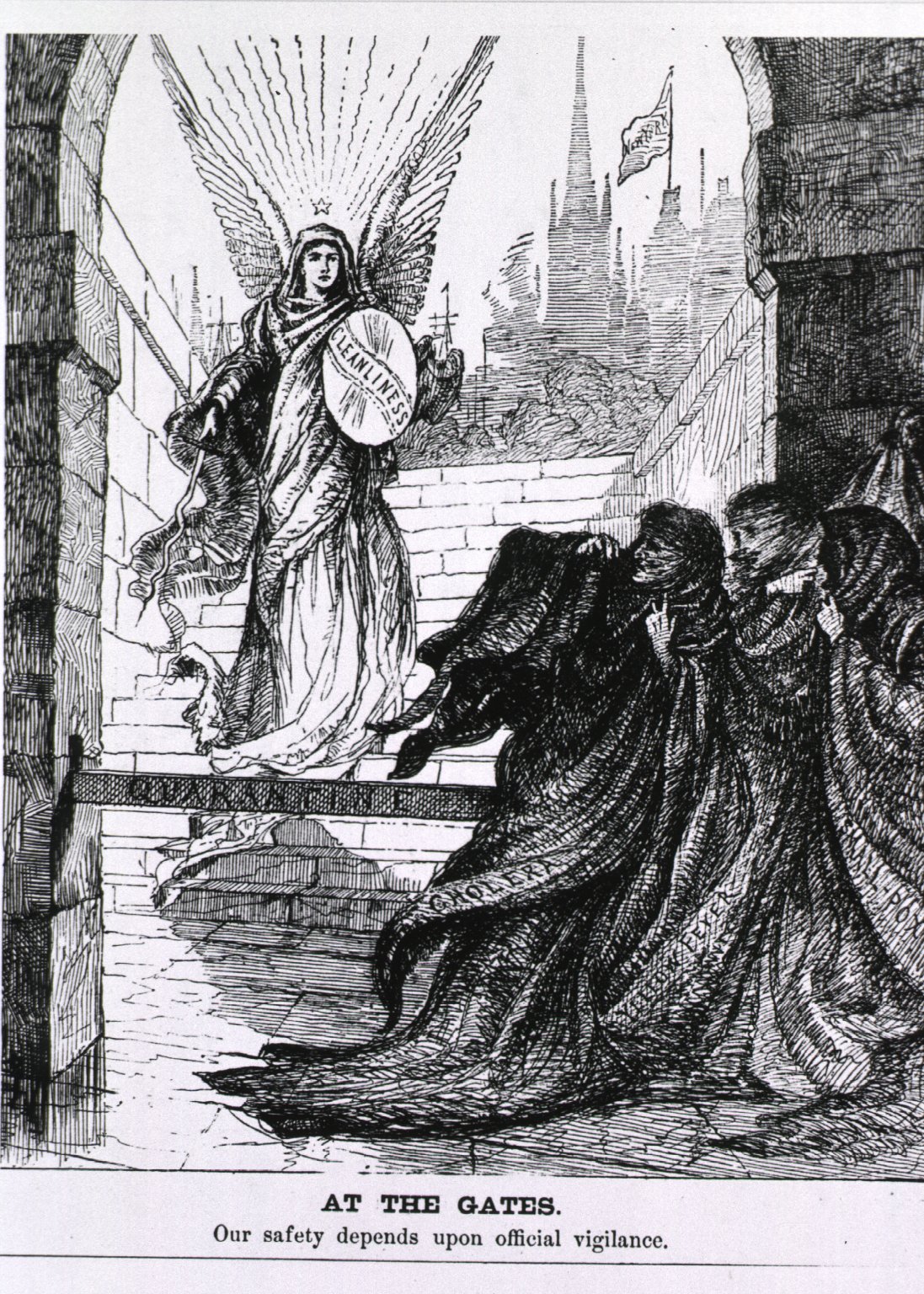
The specters of cholera, yellow fever, and smallpox recoil in fear as their way through the Port of New York is blocked by a barrier on which is written "quarantine" and by an angel holding a sword and shield on which is written "cleanliness." Courtesy of the National Library of Medicine.

Cholera, yellow fever, and smallpox recoil in fear as a quarantine barrier and an angel holding bearing a shield of cleanliness blocks their way through the Port of New York. Image courtesy of the National Library of Medicine.

Fear of infectious disease often overlapped with fears about the changing face of the city and nation. As Alan M. Kraut explores in Silent Travelers: Germs, Genes and the Immigrant Menace, the relationship between immigration and public health in the United States has historically been informed by nativist debates about the identity of the nation and its ethnic makeup, fears about the potential limitations of scientific medicine, and the public health impact of immigration.3 As the gateway to America for hundreds of thousands of new immigrants, New York City became a focus for questions of quarantine and infectious disease. Epidemics, particularly of cholera, prompted many public health reforms in the city, especially increased scrutiny of immigrant arrivals at quarantine stations, including Ellis Island, where officials assessed arriving immigrants for their physical and mental health between 1892 and 1924.

In the case of typhoid, the specter of the foreigner as the reservoir of disease came to be personified by the Irish-born Mary Mallon, so-called “Typhoid Mary.” Mallon was a cook whose employment history in the kitchens of wealthy New Yorkers matched a spate of typhoid outbreaks in those same households in 1906. Mallon was a healthy carrier of typhoid, and was put under enforced quarantine by the Board of Health, which she vigorously resisted. On her release in 1909 she took multiple aliases and continued to work as a cook until 1915, when she was again detained and kept in isolation until her death in 1932. To some, Mallon was “the most dangerous woman in America”; to others, she was a symbol of the undermining of individual liberties by the government.4

In the case of typhoid fever, a combination of new vaccine technology and improved sanitation measures (particularly water chlorination) saw cases in the United States drop dramatically in the early 20th century. However, as is the case for many preventable infectious diseases, typhoid remains a problem in parts of the world with less developed public health infrastructure. On a global scale, medical and governmental responses to public health issues continue to exist in an uneasy tension with broader political and social concerns.

References

1. John Duffy,  A history of public health in New York City (New York: Russell Sage Foundation, 1968), p566

2. Poultney Bigelow, The Pest at Our Gates, (New York: Merchants’ Association of New York, 1908)

3. Alan M. Kraut, Silent Travelers: Germs, Genes and the Immigrant Menace (New York: Basic Books, 1994), pp 1-9

4. Judith Walzer Leavitt, Typhoid Mary: captive to the public’s health (Boston: Beacon Press, 1996); Alan M. Kraut, Silent Travelers: Germs, Genes and the Immigrant Menace (Baltimore: Johns Hopkins University Press, 1995), 97-104.


The Fabrica of Andreas Vesalius: Object of the Month

By Lisa O’Sullivan, Director, Center for the History of Medicine and Public Health

This year we are celebrating the 500th anniversary of the birth of Andreas Vesalius with our fall festival, “Art, Anatomy, and the Body: Vesalius 500” on October 18. So much has been written on the Fabrica and its importance that it can be difficult to know where to begin. Why do Vesalius and his work remain so important to contemporary scholarship and anatomical study? The answer lies in his first and most famous book, De humani corporis fabrica. The title is translated as On the Fabric of the Human Body, although the “fabrica” in the original title can be best understood in terms of “craft”, “workings,” or “fabrication.”1 In other words, in this book Vesalius is interested in the functions of the body as a living system. Seven “books,” or sections, lay out the different systems and functions of the body, beginning with bones and ligaments and ending with the brain and sensory organs.

The frontispiece to the 1543 Fabrica in our collection.

The frontispiece to the 1543 Fabrica in our collection. Click to enlarge.

As the frontispiece makes clear, Vesalius wanted the Fabrica to demonstrate the importance of reviving hands-on anatomy as central to medical knowledge and practice. The Fabrica was a landmark publication, representing a turning point in the European understanding of the body and a new level of beauty and accuracy in its depiction in anatomical texts. At the time of its publication in 1543, Vesalius was a professor at the University of Padua, one of Europe’s best known medical schools. Only 28, Vesalius came from a long line of physicians. Like many of his forebears, he subsequently entered the service of the Imperial Court of Charles V, to whom he dedicated the Fabrica. He worked closely with his printers, wood carvers, and artists to ensure the accuracy and beauty of the over 300 woodblock images in the book.2 The Fabrica was exceptional in terms of both production and content, and its iconography, principles, and pedagogical approach were rapidly incorporated into medical thinking and teaching.

While the Fabrica is now remembered as the point at which a new, “modern” emphasis on direct observation and experimentation replaced deference to ancient authorities, Vesalius was careful to ensure that his erudition in the classical tradition was on display. Quotations of Greek, Arabic, and Hebrew texts point both to his determination to show the breadth of his knowledge and to the expertise of his typesetters. Vesalius used such authorities to place himself in an established tradition, even as he questioned aspects of accepted Galenic thought.

The frontispiece to the 1555 Fabrica in our collection. Click to enlarge.

The frontispiece to the 1555 Fabrica in our collection. Click to enlarge.

Along with his systematic exploration of all aspects of human anatomy, Vesalius’s demonstration that authorities such as Galen had made errors in their claims about human anatomy (in part due to reliance on animal dissection) was one reason the book rapidly assumed such extraordinary significance (although not universal acceptance). Despite its detractors, the Fabrica had an immediate impact; even with Vesalius’ best efforts, it was plagiarized and copied throughout Europe.3

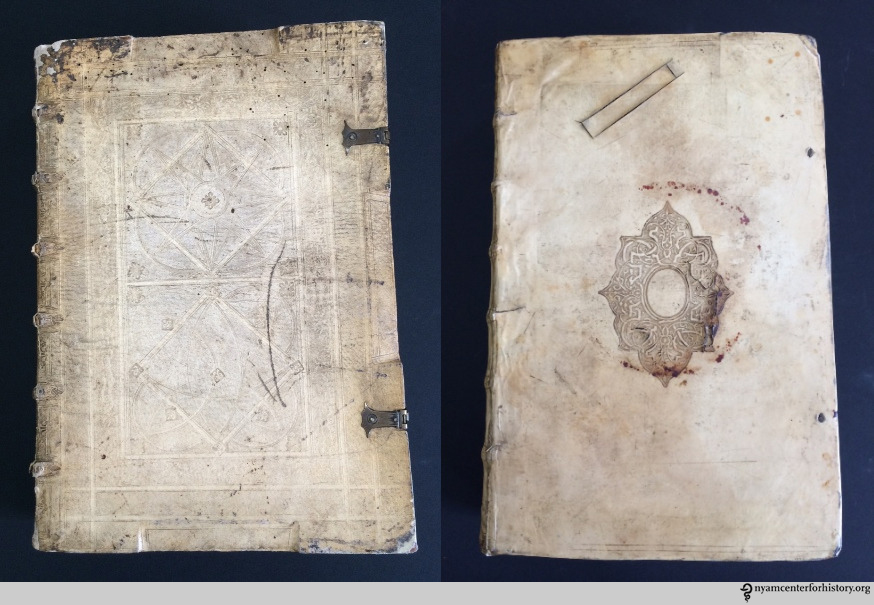
Covers of the two Fabricas in our collection. The 1543 volume, left, has alum-tawed pigskin over wooden boards with elaborate decorative tooling and stamped designs and two brass fore-edge clasps. The 1555 edition, right, is bound in a contemporary parchment binding over stiff pasteboards with a single panel stamp. Click to enlarge.

Covers of two Fabricas in our collection. The 1543 volume, left, has alum-tawed pigskin over wooden boards with elaborate decorative tooling and stamped designs and two brass fore-edge clasps. The 1555 edition, right, is bound in a contemporary parchment binding over stiff pasteboards with a single panel stamp. Click to enlarge.

We are in the enviable position of owning multiple copies of the Fabrica as well as its companion piece the Epitome, a briefer volume designed for students with enlarged illustrations to aid the identification of individual features. In addition, we also hold multiple copies of the Icones Anatomicae, an extraordinary 20th-century artifact created in 1934 by The New York Academy of Medicine and the University of Munich, using the original 1543 wood blocks to reproduce illustrations from the Fabrica and Epitome (this was the last time images were taken from the woodblocks; returned to Munich, they were subsequently destroyed by Allied bombing during WWII). All of these volumes will be available to view at the festival on October 18. You will also be able to learn more about Vesalius and his work: Daniel Garrison will discuss translating the Fabrica for the new English-language edition, Arlene Shaner will explore the story of the Icones Anatomicae, and Drs. Jeff Levine and Michael Nevins will provide a guide to the possible stories hidden in the changes made to the Fabrica frontispiece between the first and second editions.

References

1. Harvey Cushing, A Bio-Bibliography of Andreas Vesalius (New York, Schuman’s, 1943), p73; Daniel Garrison, “Why Did Vesalius Title His Anatomical Atlas “The Fabric of the Human Body”?” http://www.vesaliusfabrica.com/en/original-fabrica/inside-the-fabrica/the-name-fabrica.html

2. The identity of the artist responsible for the wood blocks remains unclear, although many have argued that Jan Stephan Calcar, a student of Titian, was responsible. See Vivian Nutton’s introduction at http://vesalius.northwestern.edu/.

3. More details about the life and impact of Vesalius can be found online in Vivian Nutton’s introduction and other essays at Northwestern’s Annotated Vesalius project: http://vesalius.northwestern.edu/ and in C. O’Malley, Andreas Vesalius of Brussels, 1514-1564 (Berkeley: University of California Press, 1964).

Calculating Lifetimes: Life Expectancy and Medical Progress at the Turn of the Century

By Paul Theerman, Associate Director, Center for the History of Medicine and Public Health

“We now live in a time of endless possibility. More has been learned about the treatment of the human body in the last five years than was learned in the previous 500. Twenty years ago, 39 was the number of years a man could expect from his life. Today, it is more than 47.”1

So says the fictional character Dr. John Thackery on the first episode of Cinemax’s The Knick, a show set in New York in 1900. So the years and ages are thus: in 1880 newborn boys could expect a life of 39 years; in 1900, 47 years. And that’s about right. The technical term is life expectancy—the number of years that one could expect to live, with no substantial change of conditions. Dr. Thackery refers, grandiloquently, to those substantial changes of conditions that caused a dramatic increase in life expectancy in the developed world in the late 19th and early 20th centuries, and a steady increase thereafter. By 2010 U.S. life expectancy at birth stood at about 76 years for men, 81 years for women, with an average of 79 years overall.2

William Farr. Courtesy of the John Snow Archive and Research Companion.

William Farr, circa 1850. Courtesy of the John Snow Archive and Research Companion.

The individual who put such statistical work on a firm footing, institutionally and intellectually, was William Farr (1807–1883), statistician in Great Britain’s General Register Office from 1839 to 1879. The British government set up the Register Office in 1837 as part of a reform agenda to provide for civil—rather than parish-based—registration of births, marriages, and deaths. Farr was a medical doctor of modest background who found statistics fascinating. Three times Farr prepared life tables for England and Wales, providing life expectancies divided along gender and geographical lines, and basing his work on the burgeoning data collected in his office and through the expanded decennial censuses beginning in 1841. He was also instrumental in checking and confirming John Snow’s famous geographical detection of the source of the London cholera outbreak of 1853, based on mortality statistics.3

Farr was not the first to determine how to calculate life expectancy: that feat is general accorded to Edmond Halley, the early modern astronomer who predicted the return of the comet that bears his name. But while not the first to approach the topic, Farr may have been the most serious and articulate advocate of life expectancy as a measure of national health:

Since an English life table has now been framed from the necessary data, I venture to express a hope that the facts may be collected and abstracted, from which life tables of other nations can be constructed. A comparison of the duration of successive generations in England, France, Prussia, Austria, Russia, America, and other States, would throw much light on the physical condition of the respective populations, and suggest to scientific and benevolent individuals in every country—and to the Governments—many ways of diminishing the sufferings, and ameliorating the health and condition of the people; for the longer life of a nation denotes more than it does in an individual—a happier life—a life more exempt from sickness and infirmity—a life of greater energy and industry, of greater experience and wisdom.4

A life table from Vital Statistics.

A life table from Vital Statistics. The table, published in 1843 as part of the fifth report, refers to the year 1841.

Farr expected “a noble national emulation,” that is, a competition for best life expectancy, to generate as much enthusiasm as “victories over each other’s armies in the field.” His vision—at least of comparative data—came true: today the World Health Organization provides life expectancies for 194 countries.5

The cover of the NYAM edition of Vital Statistics.

The cover of the NYAM edition of Vital Statistics.

The centrality of Farr’s work to the mission of The New York Academy of Medicine led to NYAM’s reprinting Vital Statistics: A Memorial Volume of Selections from the Reports and Writings of William Farr (1885) in 1975.

As for Dr. John Thackery’s paean to modern medicine: it is a bit misplaced. He was right in stating that medical treatments, and especially surgical techniques, made great advances in his time. But that fact didn’t account for the change in life expectancy. Instead, “old knowledge” was more important: people fell ill and died due to poor sanitation, inadequate diet, dangerous working conditions, and the risks of childbirth and infancy. For example, in 1850 life expectancy in Massachusetts for newborn boys was 38, while 20-year-olds could expect to live to 62, 40-year-olds to 68, and 60-year-olds to 76. By 1900, the comparable figures are: newborns, 48; 20-year-olds, 61; 40-year-olds, 67; and 60-year-olds, 74.6 The situation for newborns improved greatly over the course of 50 years, but for older cohorts, little changed. Over time, the great dangers in childbirth and the first years of life had been ameliorated, and better obstetrics was part of the story, but public health made the difference.

References

1. “The Knick,” Cinemax, Series 1, Episode 1 (aired August 8, 2014), as quoted in NPR, “A New Show about Doctors of Old,” broadcast August 3, 2014, http://www.npr.org/2014/08/03/337531248/a-new-show-about-doctors-of-old, accessed August 14, 2014.

2. The Henry J. Kaiser Foundation, “State Health Facts: Life Expectancy at Birth (in years), by Gender” http://kff.org/other/state-indicator/life-expectancy-by-gender/, accessed August 14, 2014.

3. This and other information on Farr are from the editors’ “Introduction” (pp. iii–xiv), and the original “Biographical Sketch” (pp. vii–xxiv, separately paginated), in Vital Statistics: A Memorial Volume of Selections from the Reports and Writings of William Farr, with an Introduction by Mervyn Susser and Abraham Adelstein, The History of Medicine Series Issued under the Auspices of the Library of the New York Academy of Medicine, no. 46 (1885; reprint ed., Metuchen N.J.: The Scarecrow Press, 1975).

4. Vital Statistics, 453, quoting the Registrar General’s Fifth Annual Report (August 1843).

5. World Health Organization, Global Health Observatory Data Repository, http://apps.who.int/gho/data/view.main.60080?lang=en, accessed August 14, 2014.

6. Historical Statistics of the United States, 1789–1945: A Supplement to the Statistical Abstract of the United States (Washington: United States Department of Commerce, Bureau of the Census, 1949), page 45, Series C 6 21. “Vital Statistics—Complete Expectation of Life: 1789 to 1945.” http://www2.census.gov/prod2/statcomp/documents/HistoricalStatisticsoftheUnitedStates1789-1945.pdf, accessed August 14, 2014.